English · Read online
The Religion Mafia & Us
This English text is a machine translation of the Turkish original and may contain errors.
Preface
10 December 2003
In this book I will try to deal with subjects that concern everyone personally and affect the whole world. As I write about the experiences I myself have gone through, I will also use proofs from what we call the Holy Scriptures—the Torah, the Psalms, the Gospel, and the Quran. While reading this book, be sure to keep the Holy Scriptures and the Quran beside you, and open and read the passages indicated. Decide for yourself whether all of this is truly so. My aim with this book is not to draw anyone into a mosque, a church, a synagogue, or any other temple; on the contrary, through this book I want to speak to those who are already there.
My aim—if it is possible—will be, through this book, to encourage people to use the freedom God has given to humanity. These are only my wishes and desires. It is not my aim to anger many people or to earn the hatred of many; and if I am to win anything, I will strive to win people over to the Lord, their Creator God. I began to write these pages inspired by the words of God, and setting out from the fact that they fit our own time so well.
And Jehovah saw that the badness of man was abundant in the earth and that every inclination of the thoughts of his heart was only bad all the time… And God saw the earth and, look! it was ruined… After that God said to Noah: “The end of all flesh has come before me, because the earth is full of violence as a result of them; and here I am bringing them to ruin together with the earth.” (New translation of the Holy Scriptures, Genesis, chapter 6, verses 5 and 12–13) …O my God, forgive… and increase the wrongdoers in nothing but destruction. (The Quran, the Surah of Noah, Surah 71, verse 28.)
The words above are God’s own, taken from the Torah, the Psalms, the Gospel, and the Quran, which He caused to be written through His prophets. Just as we can read of their relevance to our own time in the words of many prophets, here I will try to show you only one more verse. In the book of Matthew in the Gospel, Jesus Christ says the following about the last days:
For just as the days of Noah were, so the presence of the Son of man (that is, Jesus Christ) will be. For as they were in those days before the flood, eating and drinking, men marrying and women being given in marriage, until the day that Noah entered into the ark; and they took no note until the flood came and swept them all away, so the presence of the Son of man will be. Matthew, chapter 24, verses 37–39
Please consider whether the things you are reading concern you personally. If you doubt that God is personally concerned with all of
humanity one by one and with the earth, read these words:
Not a leaf falls but that He knows it. The Surah of the Cattle, Surah 6, verse 59
But the very hairs of your head are all numbered. The book of Matthew in the Holy Scriptures, chapter 11, verse 30.
Think of the trees on the earth—can you count the number of leaves that fall from them?
Now think of all the people on the earth, and of how many hairs fall from them each day and how many new ones grow in their place; well, can you count these? In truth it is something impossible for us. And that too in this technological age we live in. It might even seem pointless. What mother or father, however much they love their child, has counted its hairs and knows the exact number at every moment? Does all this seem absurd to us? Perhaps, but what is meant to be conveyed is that our Creator knows all of this. We read the verses above that show this to be so. Alongside hundreds of verses, are not even these two verses alone proof of how powerful He is and how very closely He is personally concerned with all His creatures? Would a God who is concerned with the number of hairs on each of our heads not be concerned with the things that pass through our hearts, with what we do, with what we will do, with what we say? Yes, God attaches far more importance to our deeds, our thoughts, the reasons behind our behavior, and the things we set up in our hearts.
We have surely heard something about these things ever since childhood. Even if we are not religious, and even if we have been badly burned by those who pass themselves off as devout, let us be concerned with God in the way He expects of us—even if not in the way He is personally concerned with us. We cannot count our Creator’s hairs; that would be absurd. But if we set aside time and seek the true knowledge, this will mean life for us.
Through this book, I will advise you to read the things I want to tell you thoughtfully. Because it concerns you personally. We may say that many things—for example, politics, the Turkish-Kurdish problem, America and Iraq, poverty, hunger, the problems between men and women, the course of the world—do not concern us. Often they truly do not. Because generally there is nothing we can do about them. Even if we make great efforts, we cannot change them.
But the subjects spoken of here, whoever you may be, concern you personally—yes, they concern all of humanity. Because the relationship between you and God means, for you, either eternal life or receiving an eternal sentence. And while we cannot change many things, we can change ourselves. Because we live in a time just like the days of Noah.
The interpretations and understandings you will read are not prophecy. That is, God did not speak to me personally in words as He did with His prophets. But by researching the words of the prophets, I am striving to arrive at a correct understanding.
God also foretold that these things would be so in our day. In the Holy Scriptures, in the book of Daniel the prophet, chapter 12, verse 4, God says:
“As for you, O Daniel, make secret the words and seal up the book, until the time of the end. Many will rove about, and the true knowledge will become abundant.”
It is precisely because we live in the time of the end that I will try to pass on the knowledge I possess to everyone.
For you behold his calling of you, brothers, that not many wise in a fleshly way were called, not many powerful, not many of noble birth; but God chose the foolish things of the world, that he might put the wise men to shame; and God chose the weak things of the world, that he might put the strong things to shame; and God chose the ignoble things of the world and the things looked down upon, the things that are not, that he might bring to nothing the things that are, in order that no flesh might boast in the sight of God. 1 Corinthians 1:26–29 (Holy Scriptures)
Where nothing is stated about the source of a given verse, it is taken from the old and new translations of the Holy Scriptures. As for the Quran, where again nothing is stated, most of the verses given belong to the translation of Osman Nebioğlu and a very few to that of Süleyman Ateş. Where there are other sources, I will note them in my book as I write. The names of the persons mentioned in the book have also been changed.
How It Began
Just as one comes to understand the true nature of something, so in my youth, when I was 22 or 23, I felt as though I had grasped the true nature of this world and had come to hate it. Even though I had no knowledge of God, I believed that a power existed. When I lay down in my bed, exhausted, I began to speak with God within myself, and I said: “My God, if You exist and if it was You who gave me this life, please take it back from me, I do not want it. I know that as long as I live, only bitter events await me. The days on which I truly laugh can perhaps be counted on one hand. Please, when I sleep in my bed now, let me never wake again. I am not a good person, I have many faults and evil sides. I know these too. Did You not give us this life as a gift? Yet I do not want it. And so that I may not suffer, take it from me without letting me feel it.”
I no longer had any purpose in this world. Eating, drinking, saving up, building, gathering, marrying—these alone could not be a purpose. For humanity had always done these things and yet had never been happy. All the troubles that are endured, the oppressions, the wickedness, the jealousies, the wars, the hatreds—all of them were for these things. In short, the saying “the whole world revolves around money and pleasure” was not spoken in vain. It was ugly, repulsive, but the truth lying beneath it described the state humanity was in. These were things that had been tried by so many generations over thousands of years. Was I going to be the one to change them! But one thing threw me into doubt. If I had now become this purposeless, if nothing the world offered me held any interest, and if for these reasons death seemed to me the best of paths, then perhaps this was so only in my own eyes. Besides, was there not something in this world that I did not know, but which, once I knew it, would make me think quite differently? Was I the only wise one who wished to die and be delivered? For if God existed, did He not know us? Did God create us only to suffer and to hear our pleas to die by His hand? Even though such questions did not pass through my mind back then quite so clearly, I believed that there might be an open door somewhere in my thoughts, and that at the very least God would know of it. After all, if I was asking Him for death, and if He was God, could He not also bring about deliverance?
But why should I be delivered? My trouble was not, after all, like some illness, a bodily affliction, imprisonment, or the death of those I dearly loved. Of course, at a young age I was under very great burdens that were hard to bear. We had to live in a foreign country, as persons of a country that was not at all loved. Marriages, then separations, discord, trying to live between two countries, going to school, and in the end writhing beneath a debt as large as a mountain. Were these worth the troubles that had to be endured? For what should I struggle on? Was this all that life meant?
In my daydreams, it was as though the world lay before me, and I had attained whatever there was to be attained, yet in the end I had never been able to be happy. When I lay down, I would sink into daydreams. Whatever a person can imagine, those very things I came to possess. But as I drifted into these daydreams, I had slowly begun to grow realistic. Even in my dreams, problems kept arising. Although I could do everything I wanted, even there those problems could not be solved. Of course, these dreams were not like the dreams of a three-year-old child. In truth, they were things I wanted to attain and to do in the future. Do we not all first dream of the thing we wish to possess? Mine was exactly the same. Sometimes, in order to escape the foreign country where we were not loved, I would strive to turn the country we had come from into a paradise; at other times I would think of a car I wanted to own, or a girl I liked, or of possessing an intelligence no one else had. Again in my dreams, while my enemies melted away before me, I could give everything to those I loved. And yet neither I nor those in my dreams were happy.
I had set myself the goal of becoming very rich, of becoming the richest man in the world. But in reality the rich were not happy. They openly confessed this themselves. Those few of the world’s wealthy whose lives I had read about were sincere when they said, “Give me happiness, and I will give all that I have.” Most of the heroin and drug problems came from the children of these rich families. I saw that those who had everything were more unhappy than those who had nothing. What purpose, then, could there be for me anymore? I was very pessimistic, and now there was only death in my mind. Still, thinking that I could not know everything, at the end of my prayer to God I fell asleep saying: “If You do not kill me, if You do not take my life, then please change my life.”
Within me there was the feeling that there certainly existed someone who was listening to me. And this was God. I was so certain I would die that when I woke in the morning I was greatly astonished at why I had not died, but then at once I rejoiced. For I said, “Then my life is going to change.” I could not think about how it would happen or when it would happen. For God, everything was possible. He could change my life. Believing this, I went to work that morning.
I Get Acquainted with the Bible
Voices I did not want kept passing through my mind. I kept telling myself, “Maybe I am going crazy.” But I was praying to God. Because these blasphemies in my mind were things that came against my will. And my prayer to God was: “O God, accept these prayers they taught us but of which I do not even know the meaning, and save me from these troubles.”
There were Arabic surahs we had memorized in primary and middle school. When I recited them, I used to think I was doing something very valuable. These were surahs like the Arabic Fatiha, Kevser, Elham. And there was the habit left over from childhood of saying “Bismillahirrahmanirrahim” more times than I could count. Even that—I did not know what it meant. I believed it must surely be something very good, but I did not know its meaning. I learned its Turkish only much later. It means “In the name of God, the Merciful, the Compassionate.” But I saw that hardly anyone else knew this either. Rather, no one I knew knew it. So it turned out that in this matter they were no different from me. And what is more, they had been saying this word all the way up to the ages of 60 or 70 in their lives without knowing its meaning. They too believed they were saying great words, and probably imagined that with these words they were becoming divine. The word was certainly great and meaningful, but not for the one saying it nor for the one listening. Because neither did the one know the sense of what he was saying, nor the other the meaning of what he was hearing. In this situation there is no difference between them and a parrot. A person may be saying beautiful things, but with these things whose meaning he does not know he builds up neither himself nor the listener. These words become meaningless for them. Or rather, it is as though they were a good-luck charm, or an evil-eye bead, or like those little Qurans they hang in cars as mascots. All of these are done for such purposes as being protected, having good luck brought to them, being successful, having their wishes granted. By expecting from such things the help that should be expected from God Himself, people are in fact putting those things in the place of God. That is, they are setting up partners with God. In short, they are making idols of those things. Yet the Quran, with countless verses, emphasizes that setting up partners with God is very bad and wrong. It even says “do not marry” such people. I once opened a page of the Quran by chance, and there it was written:
Do not marry women who set up partners with God, (or men) unless they believe. A believing woman (or man) is better than a woman who sets up partners with God, even if this woman (or man) pleases you. (Osman Nebioğlu Translation, Bakara 221. The words in parentheses were written to help in understanding the Quran; they are not written in the Quran.)
As I indicated in the parentheses, of course this is a rule valid for both sexes. Because I think it would not be wrong to say that this setting up of partners, or equating God with something else, is written almost everywhere in the Quran.
As for preaching in languages that are not understood, and praying to God by this means, the apostle Paul speaks of it in the Bible in his 1st letter to the Corinthians, and by the spirit he received from God he says: 1 Cor. 14:4-33
...he that speaketh in a (foreign) tongue edifieth himself; (he himself knows the meaning, but if the people, the congregation, do not know) but he that prophesieth edifieth the church. (Church: in the sense of congregation, the company of believers) Now I would that ye all spake with tongues, but rather that ye (should) prophesy (proclaim the word of God to the people in the congregation in a known language): for greater is he that prophesieth than he that speaketh with tongues, except he interpret, that the church may receive edifying (be built up and strengthened spiritually). Now, brethren, if I come unto you speaking with (unknown) tongues, what shall I profit you, except I shall speak to you either by revelation, or by knowledge, or by prophesying, or by doctrine? And even things without life giving sound, whether pipe or harp (a musical instrument), except they give a distinction in the sounds, how shall it be known what is piped or harped? For if the trumpet give an uncertain sound, who shall prepare himself to the battle? So likewise ye, except ye utter by the tongue words easy to be understood, how shall it be known what is spoken?... Verse 16 -Else when thou shalt bless with the spirit (in a foreign tongue), how shall he that occupieth the room of the unlearned say Amen at thy giving of thanks, seeing he understandeth not what thou sayest? For thou verily givest thanks well, but the other is not edified…Verse 22 -Wherefore tongues are for a sign, not to them that believe, but to them that believe not: but prophesying serveth not for them that believe not, but for them which believe. If therefore (now) the whole church (congregation) be come together into one place, and all speak with tongues, and there come in those that are unlearned, or unbelievers, will they not say that ye are mad? But if all prophesy, and there come in one that believeth not, or one unlearned, he is convinced (convicted) of all, he is judged (examined) of all: and thus are the secrets of his heart made manifest; and so falling down on his face he will worship God, and report (declare openly) that God is in you of a truth…verse 33 -for God is not the author of confusion, but of peace (salvation).**
The same thought is also supported in the Quran, and it is said to the Arab society thus:
We sent it down as an Arabic Quran, that you might understand and reflect. Yusuf Surah:2
As can be understood from these verses too, importance is given to that language being clearly understood by this society. Of course, for the Arabs it will be an Arabic Quran! Again, in verse 44 of the Fussilet Surah (the 41st surah):
If We had made it a Quran in a foreign tongue, they would have said: “Why have its verses not been made clear? What kind of thing is this? An Arabic-speaking people being addressed in a foreign tongue.”
If these words had come in a language that is not understood, it would not have been emphasized in the Quran that the Arabs would be justified in their accusation, “What kind of thing is this? An Arabic-speaking people being addressed in a foreign tongue.” But God, sending it to people not so that His word would go ununderstood, but on the contrary so that it would be understood, again says in verse 3 of the Zuhraf Surah (43):
We made it an Arabic Quran, that you might understand it. (All the verses are the Osman Nebioğlu Translation.)
Yes, so that it might be understood. But with us, effort was made so that it would not be understood, and effort is still being made. Christianity lived through the same problems for thousands of years. In history they used to burn alive those who read the Bible, those who dared to translate it. In this matter the Muslims simply come a bit later in terms of time, that is all. To oppose the reading and understanding of these books, more or less the same systems and methods have always been applied. Just think: if it is said, “You must read the Bible and the Quran only in their original languages”—and this logic exists both in Christianity and in Islam—then we would have to learn Hebrew and Aramaic and Greek and Arabic. For my own part, I see this as almost impossible. I have been living in Germany for about 35 years, but I still cannot say, “I have mastered even perhaps half of German as I have my own mother tongue.” Just think: if, in order to read and understand God’s words, I had to know four languages better than my mother tongue! And with my own mother tongue, that makes five. So that we would never understand the words God spoke to us, such prohibitions have been instilled into societies through the policy of remaining ignorant and keeping others ignorant, a policy carried on since the feudalism of the early and middle ages. In fact, the aim lying beneath it is exactly as Jesus Christ said:
Woe to you, scribes and Pharisees (a religious sect of that time), hypocrites! For you shut the door of the Kingdom of the Heavens in people’s faces; you yourselves do not go in, nor do you let those who want to enter go in! Woe to you, scribes and Pharisees, hypocrites! You travel over seas and continents to turn a single person to your religion. And when he becomes a convert, you make him twice as much a subject of Gehenna as yourselves. Matthew 23:13-15 (New Translation Bible)
Whether Christianity or Islam or the other religions on the face of the earth, did they not produce works matching these words? Have their attitudes and behaviors for thousands of years not shown these things?
As a child I would take a prayer bead in my hand and inwardly say “Bismillah, Bismillah” hundreds, thousands of times. It is very laborious work. Back then I was only 8 or 9 years old. I would open my hands toward the sky and pray secretly, as if hidden inside my quilt. I would look at my little hands and think to myself, “Will these hands, when they grow up, pray like this too?” The reason I asked this question was the people I saw around me. The more I looked at their lives, at the things they did, the less I believed they could pray by opening their whole hearts to God in sincerity. I do not mean people who pray for show, or who pray because it is a custom, or who pray because it has become a habit, or perhaps those who open their hands in prayer out of fear of society. In my eyes they were as if doing a job. Just as I went to school every day, and others went to work, and the woman at home cooked, so too, it seemed to me, that person prayed. It was as if it had become a custom for them. Rote lying down and standing up, over and over. Without knowing or understanding what they said. Surely there are believers among them too. And this resembles my saying “Bismillah” countless times! What I mean is, in my thinking at that childhood age, praying was as though a children’s business. That is, it was a childish thing. When one grows up one becomes strong and powerful, and would not feel the need to pray. Is he still a child, that he should pray to God! And I was also afraid it would be seen as something to mock. Because even in the movies, when a bad man is cornered and about to be killed, words like “Say your prayers now” would be said. Praying was as though a mockery.
Anyway, from time to time I will come back to the experiences I gained in childhood. But in those troubles in my 22nd and 23rd years I was praying to God with all my heart. Even if I recited Arabic prayers whose meaning I did not know, like a parrot, beforehand I would open my heart to Him. Afterward too I would beg Him with those things whose meaning I did not know, to help me. First I would plead with words I myself understood, and then the Arabic ones. And I would ask forgiveness for those things I said without understanding, but I would also beg Him to understand me. It was as if I had set this rule myself. For I did not know what to do. I was married, but to whom could I tell these things? Aside from my fear that they would call me crazy, who would understand me and listen to me anyway! Only God. Yes, if God existed, He would understand. In fact I even began to pray prayers like this:
“O God, I cannot even find my way out in my imaginings; how am I to know what to ask for? So let whatever You find right be what happens to me,” I would say.
In the old days, in my prayers I would always specify exactly what I wanted God to give me. Now I understand that, for us, God was as if the genie that came out of Aladdin’s lamp. God could give us our wishes, but if this wish were wrong, if in the end it would bring not good but on the contrary would put me into a dead end, I ought to have thought about it very carefully. That is why, in our wishes to God, it was as if we were not praying but rather commanding. Specifying the wishes we wanted to obtain as a condition, “let it be exactly this way, or that way.” The genie in Aladdin’s lamp was also very powerful, but Aladdin had to state his wishes to it word for word without making a mistake. Like the instructions a commander gives to his soldier, as if with the anxiety the commander feels lest a mistake occur. Without realizing it, we resemble this very much in our relationship with God. That is, God has only power, but we are smarter than He! Does this meaning not emerge, do our hearts not speak this way? In our wishes and requests we always beg for things to be according to our desire. We are scared to death of saying to God, “Let Your will be done.” Because somewhere in our mind, in our subconscious, there is this thought: “The things that are God’s will are boring, joyless, they bring unhappiness.” Who wants God’s will anymore! In fact, in a way, we mean to say: “You give me what I want, and do not interfere with the rest.” Those who have children—or since all of us were children once—we know these situations well from the things we asked of our mothers and fathers, the things we insisted on. For example, with something we insisted on, sometimes they try to show us the harmful side effects of that thing we wanted. They try to explain with examples. Pleading, they say, “Please don’t do that!” No, we want neither to hear nor to listen at all. Using all our tantrums and their love as well, we finally obtain that thing we wanted. And in the end, even when we see that they were right and that we were wrong, we do not even want to show it at all. Because if we once grant that they were right, then we would have to do the same for our mother’s and father’s other wishes. And parents are not always right. Well, this war begins like this even in childhood. Will our relationship with God be any different from this? Who believes that God is full of love and concerns Himself with us in a way that will bring eternal benefit to humanity? I mean not only in word, but with the whole heart. Out of ignorance there are also those who rebel, saying: “If there is a God, why does He not intervene in all these events happening on the earth, these injustices, cruelties, wars, tortures, quarrels, deaths?” Actually it is a fitting question. I too will, as much as possible, give place to such subjects from time to time in my book.
I was in a spiritual crisis, but these prayers of mine did not go unanswered. One day, one Sunday, while I was home alone, in the morning the door was knocked. When I opened it, an old man and a woman were telling me something. I did not understand what they were saying, but I invited them inside. I thought that whatever they were going to say, let them say it sitting inside. Besides, keeping those people at the door was very shameful to me. This too must be a lesson in hospitality we received from my mother. I never saw any harm come of it. Bless my mother. It is good that she instilled such good things in us. The people I had thought might be insurance agents turned out to be Jehovah’s Witnesses.
Even though we grew up in Germany, we did not possess a German vocabulary regarding religious matters. We did not know what “prophet” is in German. If I say that we knew no German other than that God is “Gott” and the church is “Kirche,” I probably would not be lying. Even the German for “mosque” we learned only many years later. At schools, at workplaces, the belief in Muhammad was deliberately mocked. When one looked carefully at German society, I would notice that they were ahead of us in technical matters, in matters of wealth, but that in matters of humanity they were not at all so full of love. On the contrary, in the book they held in their hands and said they believed in, it was not even possible to come across a trace of the hospitality of Abraham, the forgiving love of Jesus Christ, the humility that is God’s command. There were people who were good, but very, very few. And they too had almost no relationship with religion or anything! Well then, what about us, that is, us Muslims? We were certainly different, but before God the two societies were neither different nor better than one another. What I mean is this: in outward appearance, yes, but in our inner nature we were no different from one another. Whether the Muslim or the Christian. Especially when one looks at these societies with God’s eye, which could be said to be better? Envy, hostility without cause, egoism, love of money, self-interest coming to the very forefront, lying without blinking—such things were similar characteristics of both societies. The difference was only in talent, knowledge, skill, economic advantages. Otherwise we were all fundamentally the same. Would it not be more correct to say all of humanity? The Ottoman state too was once very strong and powerful. Times changed, and it became a different state. In history there are a great many states and nations like this. In that era, whichever one was strong, the people of that nation would begin to imagine themselves excessively to be something. Whether they call themselves a special race, or a superior type of humanity without peer among the others, or whether they are like this because, being so very valuable, their gods, their God, is only with them. And the other people are worthless, filthy, guilty, brainless, evil creatures. Once such a mentality has begun in nations and societies, it generally means their end is coming too. These are not my views; they are historical knowledge and facts.
We must seek the difference not in communities, but personally in ourselves. If we ourselves are also doing these things we see, criticize, and call bad, then it means we will take on the same stains that those persons, societies, religions, nations, organizations, and organizations we condemn have taken on. If this is a matter of power, that is a separate subject. And this means: “I may do it, but you may not.” A world of humanity that says, “I make the law, I put up a red light—that is for you, not for me.” It means, “If you don’t stop I will burn you, but I never stop; that does not concern you.” If calling to account is a matter of power, then the powerful one calls to account, and the powerless one has no right to it. Unless another power grants him this right, that is separate. In fact, in most places there is almost no justice at all. These are not the problem of one nation or one religion individually. The Muslim and the Christian and the Jew and the Hindu and the Buddhist, the Turk, the Kurd, the German, the American, the Englishman, and however many religions and nations there are—all of them. That is, the problem is in the human being, in us ourselves, personally in our own selves.
Yes, when the Witnesses came, I listened to them. I also understood that they were speaking about religious matters. I thought they had come from a church or something. I had only heard in theory about separate sects and religions, but I had never personally met any of them. In any case, the side that interested me was not what stood behind the persons, but those people themselves whom I was speaking with face to face. With this mind and outlook I still strive to carry on my relationship with people. For me, what is important should be that person himself. Not the religion, language, race, money, poverty, ignorance, or label he possesses. It is easy to talk big like this, but in reality it is also a great truth that people are influenced by outward appearance, by the indoctrination of societies, and by a host of other reasons. Indeed, if this influence did not exist, I do not think it would be easy—as though sitting in an armchair moving figures back and forth—to drag those whole nations, those masses of people, to death in the name of fatherland and nation. It is as if humanity is on a chessboard, and we are the pawns. And all the effort is to save the king. Whatever the cost! Well, is the world not governed precisely according to the rule of this game? When I first learned this game, everything seemed to me as if it were real. I did not want to lose even a single one of my pieces. I was the king, and were they protecting me? How could I push them to death? Even though I was 21 at the time, this was a childlike feeling. The friend who taught me this game would give tactics like, “Just do it this way or that way.” And when I would say, “But then you will break that piece,” he would say, “Let it be broken, what of it? What matters is that you protect your king and win the game. You are not playing backgammon; the point is not collecting many pieces. Sometimes you can lose the game even if you have all your pieces. Watch out for the king.” And I would say, “Of course, yes, that’s right” and so on, but my feelings inside were something else; I kept thinking to myself, “Ah, another one is going to die; how am I to push him to death!” I could not explain this to that friend of mine. When I looked at real life, I saw that the world too is just like that chess game. Even if I played this game, for this very reason I would never like it. Why were those figures different? Were they not all human? Why are they not all pawns? Or why are they not all kings? In the old days if someone wrote such a thing, they would throw him in prison as a communist! I told you I am someone very witless by this world’s standards—well, here are your proofs. And there is more: if you endure this book to the end and read it, I may even turn out to be the person you will hate most.
Let us return again to our conversation with the Witnesses. As I listened to them, I kept thinking to myself, “I’ll ask these people a question or two, and after that they’ll just run off and go.” Our religion-class teacher in primary school came to mind. At the end of the lesson he had asked, “Do you have any questions?” Not a peep from anyone, a silence. And I—three years later I had returned again from Germany to Turkey. Having lost three years, instead of the last grade of middle school I started from the fifth grade of primary school. Wherever I had left off while in Turkey, when I came from Germany I started again from there. Because in the report card we got from Germany we had almost no grades at all! How could there be. You go as a laborer to a country whose language you do not know at all. And we are their children. Going to school is compulsory, but getting grades is not compulsory! Just go and do whatever, as if. That is, whether you sleep or lose yourself in daydreams! The teacher explains, but you must sit like that without understanding anything, without even a peep, for years, every day. When I remember it, I am amazed at how patient we were. This too is the German mind and conscience!
Turkey, supposedly taking pity on us, sent teachers! And there was also an afternoon school. Once a week a Turkish teacher was going to come. I was glad. “Oh, he’ll teach us German and we’ll talk and get along with the people here,” I would say. As it turned out, the teacher who came did not even know how to get on a bus. He could not make himself understood to buy a ticket. They knew hardly even a single word of German. As it turned out, these teachers were coming to help us all the way from Turkey, to save us so that our culture would not be lost!!! Once I got a beating in his class because I laughed too much. How the Germans were good, and where did this man come from—how upset I was. At least the Germans did not beat you directly like this. They took out their frustrations in another way. Alongside this, there were also one or two German teachers who were very decent, sensible, and did their duty not for your sake or mine but because they loved it, because it was right. You know there is a saying, “If you are to be hanged, be hanged with a Frankish cord”—well, like that. Perhaps there was no love in them either, but was it their self-respect that made them do these things, a sense of righteousness, or was it the proper conscience-training they had received that moved them? I do not know, but they were valuable people. If they did something good and taught us something, they did it by sacrificing their own time, not because they were obliged to. How laws later came about so that these foreign children were given an education, I do not know. I did not know then, and I do not know now. I only relate what I lived, what I saw, what I perceived. While not a single teacher would even condescend to us, if one among them—and moreover one who ought to have the most work and the least time, the school principal—did this, then even at the age of 10 a person understood that that person was making a sacrifice and was valuable. The only thing I know is that neither Germany nor Turkey gave those children any education or instruction. The Germans brought the foreign workers and their children, but they ardently thought of one single point: “Let our work be done the cheap way.” Seeing those foreigners’ children as a burden, a tiresome responsibility, a great trouble, society only fanned hatred against those children. When I look at what became of those children when they grew up, I am still amazed. I thought they would turn out very terrible; I still think so. Each of them did everything they could to keep those children from advancing beyond becoming at most a lathe operator, a construction worker, a garbage collector, a cleaner. Amazingly, they did not quite succeed. Actually, looking at the Black people in America, they should have understood that this would not be possible. And besides, a Hitler does not always come along and say, “Let us wipe out all these who are awakening, and bring new servants, new attendants to serve us”! The Germans later also spoke of the human rights being done to the Kurdish people in Turkey, and they fed terrorists and gave aid in money. And they too, with that money, bought bombs and weapons and set them off in Turkey. Knowing these things is no longer a secret. Even those who do these things say so openly themselves.
Anyway, let me say and come back again to the subject of the religion class, in the fifth grade. Yes, the teacher’s saying “Ask whatever you want” seemed to me as if it were sincere, and when I saw that everyone stayed silent, my aim was both to save the situation and to ask a question I truly wanted to know. And indeed I asked it. “Teacher, why do we memorize prayers in Arabic and not in Turkish?” I said. Without saying anything, he made a gesture with his hand as if to say “sit down,” and I sat down at once. They must have taken courage from me, because right away another one of those children, three years younger than me, raised his hand and asked a question similar to this. I was in the position of one of the top students in the class, so the teacher did not show his wrath directly to me. But against the child who asked that question, you know how they say “he narrowed his eyes and opened his mouth”—exactly like that. I understood that a share of the thrashing was falling to me too. How he shouts and rages at us. “As if there were such a thing as prayer in Turkish!” and a whole lot of words I can no longer remember. I sank into the ground from shame. Oh, why on earth did I ask such a question, I would almost crawl under the desk. It was good that the bell rang. But I understood one thing: in religion class there were no questions or anything. Like “nod your head, take your salary.” Take your grade, pass the class. In what year was the Battle of the Trench fought? When was the migration from Mecca to Medina? Recite Kevser, let’s see. When the first prophethood came, how old was the prophet? “I’ll burn anyone who doesn’t know at least five long Arabic surahs,” he would say. These, then, were our religion classes. There was no spiritual value at all. The sense and feeling given toward God was below zero. In their teachings there was everything except God. And when they did attempt to teach God, He was as though only a power watching over us in order to give punishment. As time went on and I gained knowledge, I understood that even that principal, who taught only the religion classes, did not know the answer to the question I had asked. What could the man do; however the order came from the Ministry of Education, that is how he taught.
So, after these experiences, I kept saying, “I’ll ask the Witnesses a question and get rid of them.” It was not that I was fleeing from gaining knowledge about God. But from childhood no one had introduced God to us. I have told you what our religion classes were like. Our knowledge could only be within the bounds of our imaginings, and so I too knew God however I imagined Him to be. And only I knew this. As a friend of mine who became a doctor said—while explaining a subject with a question and answer, “How many Gods can there be?”—he cut me off and said, “There are as many Gods as there are people; because the God in each one’s head is different.” My situation was probably like that too. The God I pictured in my head was surely different from everyone else’s. And everyone else’s was different from mine. Once, regarding praying, my stepfather said, “While God is dealing with the affairs of so many people, is He going to listen to your prayer too—would He have time for it?”, and I looked at his face to see whether he was mocking. But he was very serious and sincere. It was certain that he believed in God that way. This too was the God in his head. Although I attributed this to my father’s ignorance, later I would even learn that people living in places like Europe and America—and among them the Jehovah’s Witnesses, who are the most assertive in research—in their knowledge about God, believed that “God does not see everything, indeed does not even look.” And if you are among them, you must accept this belief by force. And whoever does not accept it, they cast out from among them. And they do this by making it so that “you can never be saved again.” Anyway, let me not mix these subjects in already. I will touch on these subjects in detail later.
I asked my question of the Witnesses who came to our house in those distressed days of mine. “Why do you wear a cross around your neck?” I said. I was expecting him to get angry, or rather to speak nonsense. Because we, raised as Muslims, had learned these customs of the Christians as idolatry. But he, quite calmly: “We do not wear a cross or anything around our neck,” he said. “Come on now,” I said, “in the movies, on the streets, that thing people put on—isn’t it a cross? Isn’t it the thing that symbolizes Jesus’ death?” And he objected, “No, we do not do such things.” “Either he doesn’t understand me, or he is lying right to my face,” I thought to myself. But he gave me an example by asking me a question. “Whom do you love most?” he said. And I had said, “I love my mother.” “Well, if someone had killed your mother with a knife, or with a pistol, would you now wear a model of that instrument around your neck?” he said, and I had said “no.” “Well then, those who wear it, in the churches and everywhere—what are they?” When I said this, he said, “We have nothing to do with them. They do not live according to God’s will,” and he opened and read one of the ten commandments God gave to Moses, where it was written:
You shall not make for yourself any graven image, or any likeness of anything that is in heaven above, or that is in the earth beneath, or that is in the water under the earth; you shall not bow down to them, nor serve them, for I the LORD your God am your God...Exodus 20:4-5, it was written. And I read these writings from the Turkish Bible they had ordered for me at a very cheap price—it must have been 16 marks at the time. This book that I call very cheap, I have given as a gift to almost everyone throughout my life. Some people from whom I asked for the money unfortunately never brought it and paid! From one—who was even a Jehovah’s Witness—even though I was so shameless as to ask, he still did not give it. Anyway, the question I asked in the conversation and the answer I received, and their showing it right there from the source, had pleased me very much and I was also very surprised. Because I had not expected it at all. Until then I had always believed there was no logic in religions. But this question and answer were very logical. Of course I had not immediately come to believe in them from one question and answer. I asked one more question. Again, as far as we knew, in every church there is a picture as if of Jesus, or a statue crucified on a cross. And whoever enters makes with his hands a cross-shaped sign over his chest. This gesture is called making the sign of the cross, or whatever it is. To us this too is idolatry, whereas among the Muslims there are no pictures or anything in the mosques. You have surely seen such churches and those people in movies and such. In line with this, the Christians also worship Jesus like God. “Like” is too much; actually they worship Him as God. They believe there are three Gods. They emphasize that these three are one. In fact, to explain this they take three matchsticks and ask, “How many matches do I have in my hand?” You say, “Three.” Then, uniting them all and lighting them, they ask again, “How many fires do you see?” You say, “One.” “Well, the three Gods are like this too,” they say! This too is a very good example for describing demagoguery (Demagoguery: trying to make a false thing appear as if it were true; a synonym is verbal trickery). God, Jesus Christ, and the Holy Spirit—these three, according to them and their understanding, are God, and for thousands of years this is still so. I think that on this matter, only the Witnesses, as Christians, believe in a single God. Later I must also state in this way the view of a pastor who wrote that there are others and who criticized me. My second question was: “Why do you worship Jesus?” And they said: “We do not worship Jesus; only God is worshiped, no one else is worshiped or served.” And they explained to me that there are not three Gods as the Christian churches teach. And moreover by showing it with verses. For example, on the night Jesus is betrayed and about to be killed, praying to God, he pleads thus:
“O Father, if it is not possible for this to pass without my drinking it, let Your will be done,” he prayed. (Matthew: 26:42) If Jesus were like the Almighty God, would God pray to God? And on top of that, would He say “Let Your will be done”? Of course there is no such absurd thing. Again, in another place, Jesus:
“Hear, O Israel; the Lord our God is one Lord...” (Mark 12:29), by saying this, openly repeating the words in the writings known as Moses’ ten commandments, draws attention to the fact that God is one, but that there is no such absurdity as three. The Jews too believe that God is a single God, and so do the Muslims. I was very much affected by these verses that the Witness spoke and read by showing them from the source. Had the book in my hand not been in Turkish, I would have said they were deceiving me, or he was making it up out of his head, or something. But against the proofs they brought, I could say nothing. In fact we too believed this way, but we had no knowledge based on proofs. The questions I asked were actually throwing stones at the Christians. And the logical and proven answers he gave were satisfying. While I was saying I would drive them off, if I am not mistaken we talked for 4 hours or so that day. In response to their saying “We will come again” as they left, I said, “Of course, do come.”
They left, but I thought that they might have talked with me like this because they were sharp, intelligent, and knowledgeable. They also knew the book in their hands well. Before anything else, I absolutely had to read this book. Only after that could I decide whether they were speaking truly, or falsely or lying. But the most important thing was that I had greatly enjoyed such a conversation, the things explained, the questions and answers. Otherwise, if it had not drawn my interest, I would not have gone into an investigation merely to test those people, to see whether they were speaking truly or falsely. First of all, the subject that had been raised was a serious subject and concerned all of humanity, and it was certainly worth investigating. Indeed, once I took the Bible in my hand, I thought to myself thus: “I have read so many books, some of them even trash. We live in this country; if someone were to ask me questions like: What did those people believe? What does Christianity mean?—I ought at least to be able to answer. For this reason alone, was this book not worth reading?” One of the most important reasons was that we had suffered greatly from the religious ones. And against them we could not speak at all. When they said, “Infidel, unclean, giaour, heretic, sin,” I did not know what to say. Again I thought to myself: “Let me read this book, and thus, in the event of an injustice, I can strike them only with their own weapons.” Well, I had quite a few reasons to read it. But about one single reason, I had never been able to think that this book would play a great role in changing my life. And most importantly, that it would make me happy.
In the Bible in my hand there were many old Turkish words, and I did not understand most of them. And I had a problem with those “and and ands” that occurred frequently at the beginning. There was no accustomed book style (manner of narration). But later I read as if those “ands” were not there. It was understood more easily. In any case, after the first two pages those “ands” suddenly decreased. I decided to read the Bible. These people paid me a few more visits, and the desire to read this book now became even more definite in me. Every time they came, I would ask questions. The man was of spiritual disposition, logical, and calm. His wife did not talk much. And when she did talk, I would notice that she did not understand me. The man grasped what I meant more quickly, and gave wise answers too.
Now that I think about it, the Bible had come into my hands and I was going to be able to read it. But the Quran—no one gave it to us and said, “Read it, and ask about the places you don’t understand.” I only remember the Quran being at home, hanging on the wall inside a cloth fabric in the shape of a large envelope. Even then we could not touch it, lest we be struck down! And so that it would not strike us if we touched it, some naphthalene, or sugar, or whatever, had been filled into the cloth cover. My mother was not a woman who would do such things. She was a true native of Istanbul, an islander, but she was not Greek. Leftovers from the Ottomans. Those covers to be hung on the wall for the Quran were surely sold ready-made, and they had bought it like that. In any case, that Quran which I took in my hand many years later was not even possible to read. It was only in Arabic. It was not even certain whether it was a Quran. Because I had seen many such Arabic books. They too were not Qurans. In our society, whatever Arabic thing we saw, we would come across words like, “Careful, don’t touch it, you’ll be struck,” or “sin.” My mother was not a religious person, nor was my father. I will never forget: one day my father woke me in the dead of morning and said, “Come on, son, get up, we’re going to the mosque.” Sleepily I said, “Why?” At that time too we had gone on leave from Germany to Turkey for the first time after 3.5 years. My father lived in Turkey. He never came to Germany to work or anything. Only many years later he came just to visit. Whispering, he had said, “It’s the holiday, son, get up.” In any case I had not seen my father for a long time. Saying no seemed very shameful to me. Just as I was getting up, I heard a voice from the direction of my mother’s bed, saying “Where to?” “We’re supposed to go to the mosque, Mom,” I said. My mother shouted at my father. When she said, “Lie down, son, let them go to the mosque in the dead of morning with the shit on their behinds,” I was rejoicing, “Oh, I got out of it,” but on the other hand I was also sad that my father got the thrashing. My mother and father were in any case two people with a very terrible cultural difference. Especially my mother would generally say what she thought openly and without any hesitation. While one came from the very bosom of Anatolia, the other was born in Istanbul, had received that upbringing and education, and came from a family of good manners. However much they had been forced to struggle with hardships, their educations and cultures were very different. Years later, while talking with my father about religion, I asked a question about this matter. “You actually don’t have much to do with religion or anything, so why did you want to take us to the mosque when we were children?” I said. It was only on the holiday, and even that happened only once in my life. My father said: “Son, everyone was going, that’s why.” That is, it was because it was a custom. And the great majority surely went for the same purpose. Perhaps, without exaggeration, one could say all of them. It was fear of society that gathered them there, not love of God. They do not know Him, that they should love Him. They do not know Him, that they should become acquainted. Indeed, they did not want to know or become acquainted at all—and that is a separate subject. Again one of the subjects I will surely touch on later.
I Am Determined to Read the Holy Scriptures
Every day, as I read the Holy Scriptures, I felt a great pleasure. Before I became acquainted with the Holy Scriptures, when I went home from work I usually did not know how I would pass my time. But now I would go home with such joy at the thought that I was going to read the Holy Scriptures. On weekends, when I was together with friends and heard them say they were bored, I would think to myself, “How can a person be bored when there are the Holy Scriptures?” I knew I could not explain this to them. In fact, while reading this book I only kept silent. I mentioned it to no one. First I had to be convinced myself. And even if I were convinced, I also had to possess knowledge. Although I was reading these books with the aim of opposing them, on the contrary a great love and faith was developing within me. If I say that the most joyful and happiest time of my life was spent reading the Holy Scriptures, believe me, I would be speaking very truly. You know how, if someone were to tell you to go back and ask which time of your life you would like to return to, I would surely say “to none of them,” but if they asked, “what made you happiest?”, then I would answer, “reading the Holy Scriptures.”
My relationship with the Witnesses had begun little by little with this elderly couple. But it was, I think, our third or fourth meeting, and I was going to ask them about the spiritual crisis that disturbed me and the voice within me. As I say, a person cannot talk about such things with anyone. And a person does not always have around him someone who is intelligent, sensible, knowledgeable, and above all loves you. If someone has intelligence they lack love; if they love you they are foolish! And afterward you also get labeled a madman. Perhaps I really was mad. But would a madman know that he was mad? Whether he would notice that he himself was mentally ill, I do not know. How would I know—I was not going mad and coming to my senses again every day, so that I would have such experiences. Besides, I was someone who found things like spirits, jinn, and fairies to be utter nonsense.
Thinking to myself, “these people are strangers anyway, and no matter what I say no one will hear it; perhaps they can even help me,” and hesitantly, I told the man my trouble. Probably because I had always been affected by the questions I asked and the answers I received, I had begun to feel a certain trust toward this man. I did not want my wife or anyone else to be at home at that moment. My wife and I had divorced, but we were still living together. She had never had any interest in such topics anyway. That day too, if I am not mistaken, she had gone to the swimming pool. Or rather, I had strongly encouraged her to leave the house. She usually worked, but that day, as if out of stubbornness, she happened to be at home. Anyway, she left too, and I opened up my trouble to the man—his name was Josef. “I have never told this to anyone, but I suppose I can tell you,” I said. “I hear voices within me that I do not want. And sometimes it even says wicked words against God. It disturbs me. It does not matter if I suffer, but I do not want those words spoken against God. How can this happen when I do not want it? Or is this the beginning of some illness?” I said. I expected Josef to laugh mockingly and give empty advice. Although he had surprised me on many topics, he surprised me on this one too. After listening to me, he seriously opened the Holy Scriptures and told me to open mine as well. The place he opened was the Matthew section of the Gospel. He began to read from there. It was written as follows: Matthew 4:1-11
Then Jesus was led up by the Spirit into the wilderness to be tempted by the Devil. And after he had fasted forty days and forty nights, he was hungry. And the Tempter (the Devil-Satan) came and said to him: If you are the Son of God, tell these stones to become bread.
But Jesus answered and said: It is written, “Man must live, not on bread alone, but on every word that comes from the mouth of God.” Then the Devil took him into the holy city and set him upon the tower of the temple and said to him: “If you are the Son of God, throw yourself down; for it is written: ‘He will command his angels concerning you, and they will carry you on their hands, that you may not strike your foot against a stone.’”
Jesus said to him: It is also written, “You must not put the Lord your God to the test.”
The Devil also took Jesus to a very high mountain and showed him all the kingdoms of the world and their glory, and the Devil said to him: If you fall down and worship me, I will give you all these things. Then Jesus said to him:
Go away, Satan, for it is written: “It is the Lord your God you must worship, and it is to him alone you must render sacred service.” Then the Devil left him, and behold, angels came and were ministering to him.
Josef looked at me and asked: “Who was speaking with Jesus here?” “Satan,” I said. “Do you think it was like speaking with a man standing face to face with him?” he said. “Wasn’t it?” I said. “It could be so if he wanted, but this one we call Satan is a spirit creature, that is, one who, while being an angel, rebelled and revolted against God. We humans, however, cannot see spirit creatures with our eyes,” he said. “Satan spoke with him here, but this conversation was taking place in Jesus’ mind; we must not necessarily look for someone physical standing before him. In fact, it was in the minds of the prophets too that speech occurred; that is exactly what it means to receive revelation from God. They heard this voice whether they were walking on the road, or lying down, or sitting. They even saw visions about the future, as if watching television. For God everything is possible. These books show this to us,” he said. “Well, since the voices in my mind are wicked, do these voices come from Satan?” I said. “It need not necessarily be Satan. When you read the Gospel, it speaks many times of Jesus rescuing people who were under the oppression of demons,” he said, and I said, “and who are the demons?” “They too are spirit creatures, and all of them were once angels. But by being disobedient to God, they came to follow the path of Satan. Satan is the first of these, the Devil, which in its dictionary meaning is rendered as one who rebels, a rebel. Because of his rebelling and revolting against God, they gave him the name Devil or Satan,” he said, and he showed still other proofs demonstrating the existence of Satan. For example, the first two pages of the book of Job in the Holy Scriptures speak of a dialogue between Satan and God that took place before the angels. There a case that Satan raised is dealt with. That case is this: “that every person, or every person under suffering and oppression, would curse God if he had no benefit from serving Him.” As proof, permission is granted for Job to be tested. And God wins the case. These events took place around 1600 B.C. What befell Job is still a very great source of encouragement to us in bearing up under sufferings. Since we still speak of the sufferings he endured even in our time, this means that God did not permit Satan to test Job in vain.
All that was recounted was a great revolution in my soul and mind. When I said, “But I do not believe in Satan,” Josef again said something very sensible. “The better we know our enemy, the more prepared, careful, and watchful we are so as not to be defeated. But not accepting even the existence of our enemy, however weak he may be, causes him to defeat us all the more easily. Your not believing in Satan is precisely what Satan most wants. Because whatever he makes you do, you will think you did it yourself. Naturally, since you do not believe in his existence…” Whether the words I have written here were exactly, word for word, like this, I do not know, but since this teaching is the teaching of the Witnesses you can research it and find it in their publications. But it was true. As for me, it was as if a very great burden had been lifted from me. Even though the voices did not completely disappear, I not only no longer paid attention to those voices, I had also learned where they came from. I was reading the Holy Scriptures almost every day anyway. I was finding the proofs of this truth that had been explained to me in that very book too. As I read, I would come to possess even more knowledge about this Satan in the future.
Some people say, “There is no such thing as Satan; this is only humans’ tall tale. He is a made-up creature onto which they want to cast off their own evils.” Yes, in truth a person is responsible for his own deeds. Whoever it may be, he cannot escape by casting it onto someone else. But a bad friend also leads a person into crime very easily. In the courts, this and similar cases have been seen many times. Even though they committed the same crime, the judge does not give them all the same punishment. The greatest punishment is given to the one who incited the crime, the one who led it. See what God also says on this matter:
Do not be misled. Bad associations spoil useful habits. 1 Corinthians 15:33
Is it not truly so? Once again, Josef had asked me a question: “Who governs this world?” And I, after thinking briefly, had said, “God.” And he said: “Then God governs very badly.” Yes, but this is the fault of us humans, I said. Yes, it was also the fault of humans, but not only of humans; there was also a power causing all this filth.
In my youth I had read almost every book of Aziz Nesin. In a novel called Tatlı Betüş, the heroine of the novel, a woman named Betüş, would say: “Ah! If only I could find the source of this filth.” Yes, according to the novel, the woman had risen from the lowest place, from being a servant girl, to become the mistress of prime ministers and presidents. Both at home and abroad. Although the woman was in fact filled with a desire for revenge, whenever she thought she had truly found the person on whom she wished to take revenge, she saw that he too was, in a way, helpless like herself, at times full of love and having foolish sides, and that alongside his good qualities he too, like every person, had his evil ones. Moreover, while evil was being done to those people, they too were doing evil to others. In short, it was not a single person who had brought the whole world to this state. That is why the woman said, “Ah! If only I could find the source of the filth.” And at that time I too had said to myself, “the woman is actually right—where might the source of the filth be?” Surely it was not only that woman, the heroine of the novel, but the author Aziz Nesin himself who did not know this source, or did not want to know it.
The Holy Scriptures and the Quran give the full answer to these questions. They are the most reliable sources humankind possesses on earth, making known God’s purpose concerning the earth and mankind, and events past and future. Moreover, they also explain the source of this filth that dominates the earth. These books are like the instruction manual for something. Through these books, God has given to mankind, in the form of a message, the answers to countless questions such as how we should live in the world, how we can overcome problems, and what our expectations should or should not be.
Right now it is as if I can hear the voices of so many people who will oppose this idea. But when all those who oppose it are asked, “what is better and truer?”, they begin to explain by plunging into philosophy. They go on and on with stories of evolution from Darwin, from the ape to the human, of how the cell went from being a single one to becoming like this, and so forth. How do they know the history of a single cell, how it multiplied, who created that cell? On this matter too they make Darwin answer. This man called Darwin was an ordinary researcher; he has valuable findings, but also many errors. Alone in the mountains, on the islands, in the forests, by himself, with his observations—yes, with only what he saw with his eyes—he puts forth a thesis. Back then, this man even had to dive into the sea with the naked eye. The means available at that time were only that much. This thesis is not like today, where, with the help of present-day laboratories that dazzle the eye with such great technology, the genes that make a human from a human are researched. He looks at nature with his eyes; how he can look and push aside the truth of God and say merely that we came from a cell, from explosions—that I can understand; but the point I cannot understand is a man putting forth a thesis from his observations, and the whole world going wild over it and snatching it up—that is what my mind cannot grasp! Alongside this, there are also those who say that even Darwin himself did not make such a claim. Well, that may be. Everyone, like Darwin or anyone else, is free to speak, and it should be so. And whatever Darwin says after those experiences of his, let him say it. But its being greeted and welcomed as though it were a great glad tiding for humanity, its being accepted in schools and throughout the whole world as though it were a real teaching—this simply will not enter my thick head! (In the U.S.A. and some countries, teaching this in schools is forbidden.) It is like the teaching of old that the world was a flat plate on the back of a tortoise or on the horns of an ox. And the most curious part is that even those who pass for religious, those who believe in God, began to teach this theory of Darwin. Those who strive to fit the truth of Adam and Eve to Darwin’s theory are not few either. But I must also point out that if there had been no Darwins, if everyone had simply sat back and said, “this is true and there is no truth other than this,” first, there would be no freedom, and second, we who are called humans would never have been able to develop. Even if this development often came onto the stage in the form of evil, can we not say that we also learned much from the evils? If it were not so, God would not permit evil. And I have also learned this: a person saying “only what I say, or only what suits my head, is true” means nothing but throwing humanity into a dungeon, imprisoning it. It may be that I do not accept Darwin’s theory, but that does not mean everything this man says is wrong for me. It is such despotic lawmakers, those who have made a hobby of ruling over people, those who argue that everything except themselves is wrong—and who not only argue but even wage war, commit torture—who have brought about the world we possess today. When one looks at history, humans have been doing the same things for thousands of years. Our thick heads refuse to grasp it, we cannot see the truth, we do not want to see it, and most importantly, they do not show it to us.
For all these reasons, one must also salute Darwin. The man did research. At the very least, I too know what it is to do research. Who can say, “only my research is an absolute truth”? All of us have at some point seen how the thing we thought most true was, much later, sometimes so wrong or worthless, or not such a marvelous piece of knowledge, view, invention, or belief after all. If a person cannot even use ten percent of human intelligence, then there is still ninety percent of empty space. God has given no one the right to put these abilities of a person into the freezer, into deep-shock freezers. As for us, we will see that in religions, in science, and in the relations of nations with God, the very opposite is the case. Those called men of science have devoured one another out of jealousy. They have entered into mutual rivalry, saying, “whose word is true.” As for the religionists, they have been even more terrible. The war of the men of science with one another pales to nothing beside them. As for states and kings, they have seen religion as a very fine source for making fools of people, and they have collaborated with them accordingly. Where the power of that state made collaboration with the religionists impossible, it destroyed the religionist too. As in the case of the big fish and the little fish, the big one swallowed the small one. And the one bigger than it swallowed it too. And it was not only fish that did this, but humans! And when, by doing these things, humanity thought itself very mighty, intelligent, and capable, it in fact proved only that they were fish-brained.
I must make these explanations. Otherwise it would be difficult for me to explain to you my case, the disputes, the arguments, and the subject dealt with in this book. Because the principle is the same; the topics may change. Those will only be details.
While reading the Holy Scriptures, I kept saying it finishes very quickly. But the thinness of its paper and the smallness of the writing had deceived me. In fact, it would have been more correct for me to say, I wish it would never end. When I was working, I would come home from work, eat, go straight to bed, and from where I lay I would continue reading the Holy Scriptures. Until I fell asleep, which depended on how tired I was.
I worked at a physically heavy job. The place where I worked had once gone bankrupt, and I had worked there every summer vacation until it went bankrupt. In my student years this workplace had been of great benefit to me. Even if the money I earned working there during the summer vacations was not enough for the whole winter, it could still cover many of my needs, even things that could be called luxuries. I had first started that job at fourteen years old. When I reached the age of 21, it had declared bankruptcy. Then, when they started up again as a small family enterprise, they had hired only a woman who had worked there for years and me. That is, just two workers, and the other three were the owners of the firm. One of their sons was my age. We worked together. While working, at one point I asked him whether he knew the Witnesses. “Oh no! Did they come to you too?” he said. “Yes, but why?” I asked. “Whatever you do, don’t let them into your house or anything,” he said. “Why, what do they do? Are they thieves, murderers, or what?” I said hesitantly. But what could I lose? “No, but once they start coming, they keep coming forever,” he said. His grandmother had believed them too, and had even waited for the world to end in 1974-75. But no end or anything came. Since she, like many others, had been disappointed on this matter, she never wanted to see them again. Of course, while telling this, he was both emphasizing that his grandmother had been deceived and that those religions carried fraudulent and empty beliefs. If that was the whole risk, it was not important to me.
I am telling these things here simply, writing them like this, but back then I was as if living in a world veiled with fog. I had no experience, no knowledge. At those ages a person cannot foresee what things do to a person, how, and what kind of traces they can leave. Work, eat, drink, sleep; work, eat, drink, sleep. Then get up again, work, eat, drink, sleep—and on top of that, a world of debt. According to my calculations at that time, these debts, if we never ran a deficit, would only finish 6 years later. And that was according to my calculation! Actually, 25 years have passed in between, and my debts still have not finished! Never mind—it would be a lie if I said a person gets used to it; I never, ever liked it, nor could I get used to debt. But I took on debt very easily. In a life like this, I likened myself a little to animals. But when I looked at the other countries of the world, they were full of hunger, misery, and want. And I was better off than they were. Was I perhaps ungrateful? Was it ingratitude to think this way? There were people whose entire lives passed like this, with work and home, eating and sleeping. In fact, I used to say about the Germans, “these people live only to work; they do not work in order to live.” But this was the face they showed to us and to one another, as I later understood. Yes, they were not irresponsible and lazy like our society. For example, being a prostitute was not so shameful, but sleeping was very shameful to them! While they were rushing about hurriedly, saying they had no time at all, some of them would go off to a hobby, to a place where liquor is drunk for hours, or to sleep. If you go to their homes unannounced, they will hardly even open the door when the bell rings outside of certain hours—that too is a matter of culture. In reality, though, like every human, they were lazy people who hated working. But outwardly they have the sickness of always giving the impression of working. With our nation it is exactly the opposite. In their eyes it is as if there is nothing as shameful as working. We had friends, and we would go to visit their workplaces. If someone was working, when we said, “Wow! Are you working?”, they would give answers like, “no, dear, just puttering around,” and would take pride in saying that they were actually doing nothing. Whereas, even though he was working, he would claim not to be working; as if only workers work, he had set up such an arrangement that he has the air of doing nothing at all. It is as if by earning money through working he is being diminished, and the skill lies in earning money without working! When they gather together, they go on and on recounting—sometimes even lying—where they drank rakı, which woman they slept with, the meals they ate. The women of the European are of this mindset too. If she works, she works without letting her husband so much as sniff a penny. They always prefer more to take. As for the Germans, once they gather together, they start talking about their work. They go on and on about how they work, what job they do, technical subjects. Theirs too is sometimes even a lie, but their topics are that different. Of course, their most common topic is running down foreigners. On this matter they encounter no opposition. In that moment they are all in unity and brotherhood. And yet, even if these brothers have known one another for forty years, they have not even drunk a single coffee in one another’s homes! The worst of all is, as a foreigner—especially as a Turk—to converse with a German you have just met. You can never have a normal conversation with them. They start explaining that “they actually love foreigners, that they have no bad relations with anyone, that it is not you but the other foreigners who are not so good.” The same line to every foreigner: “Not you, but the other Turks...” As if there is no other topic. Their first question, too, if you happen to meet on the road, in the elevator, wherever, and you smile, is immediately: “Where do you come from?” You understand what they mean, but out of mischief I would say the name of the village where we lived. If he was persistent: “Nooo, I meant which country do you come from,” he would say, and when I told him, his face would sour like this. However much he holds himself back, he gives himself away. Then he pulls himself together and starts explaining again. He has neighbors on the back street, and they are Turks too! Is there any place without Turks? They have even gone to the Eskimos and are doing fishing. A friend of mine who worked on a passenger ship, whom I met while in America, had told me this. So the fact that Turks are everywhere is nothing new. He goes on again, “I have even been to Turkey,” he says. The conversation only goes in this direction. As I say, it is as if there is no other topic in the world. Or perhaps they really cannot find another topic. What is there for them to talk about with us? There is only one topic, and that is that you will recite your identity card. And when they see one another, not a peep is heard. It is as if refrigerators have gathered together. From then on, it depends on their star signs. If they are deep-freezers, not even a knife can pry their mouths open.
Our people, on the other hand, suddenly warm up and immediately get familiar. I thought about these things too. These men were perhaps once like this as well. That is, like us, but they saw that it did not work. They withdrew from one another entirely. It is not nice to clash with anyone either. He merely returns your greeting, and that is that. Such are our relations on a narrow street where I have lived for 21 years. Even if you lived there for 50 years, it would still always stay the same. But the information they have about you stops your mind. People I have never known, whom I thought I had never seen, know me and recognize me by heart. What I do, what I am or am not occupied with. This means that news, gossip, and broadcasting are working powerfully! Some do not even give a greeting. As for the easterners, they stare straight into your face like that. Even if you greet them, they do not respond, but continue to stare straight into your face. I have seen this at cockfights—those preparing to attack, staring and staring at one another. As I said, there are very few valuable people, but this is so in every society. Humanity, unfortunately, has now become like this.
When I went to Turkey for a job, I asked the youngsters on a tourist boat which country the best tourists came from. But they started explaining from the very opposite end. The worst ones were the local tourists. Especially those coming from Istanbul, who were conceited and had gaudy airs. The Russians were both ill-mannered and filthy. They would throw their garbage into the middle of the sea. He did not spare their women a word—they were all whores! The Arabs would come to eat their meals in pajamas. He went on counting off the Poles and so on, and again in the end he said the best were the Germans—except for those coming from the east—and the English. And I had the same experience. Along with being very self-interested, the Germans were generally well-mannered and did not behave crudely. Our best experiences at the workplace we set up too would be with the German customers. I will never forget: in the early 1990s, while driving to Turkey, we had waited at the Romanian border for something like 26 hours, and while waiting in that filth and want, a suffocation like death came over me. There was no toilet, no water, nothing to meet a person’s most natural needs. I had talked with a German truck driver waiting in the line on the opposite side, and I would not have been as glad to see my own mother’s son. From my 3-to-5-minute conversation with him, it was as if my morale had been restored. That he was German or whatever did not concern me in the least. The man’s truck was clean, and he himself was clean. In that filth and want, however he had managed it, he had shaved, and with a spotless jerry can he was even washing his face on the roadside. These were the things that drew me to that man. When a friend and I first met, I had begun to befriend him just because he was clean. And yet he was not a good, trustworthy person. Never mind—he was clean. That cleanliness and fastidiousness of his covered over many of his bad qualities for me.
Do not, by any means, read what I have written as “strict rules and everyone is like this.” These are only my impressions, the negative and positive sides of these cultures that I have seen and lived through. Surely there are also many people who are outside this generalization.
Being Perfect
Back then, and even now, I have rarely met anyone who loves the Witnesses. This drew my interest all the more. The accusations made against them also seemed, to me, quite baseless. Besides, what really interested me was not the Witnesses themselves. I simply took great pleasure in coming to know God. When I read the events recounted in the Holy Scriptures or in any other book, I always try to put myself in the place of those people. I try to be a thief with the thief and a policeman with the policeman, so that I can understand them better. Because whatever anyone has done, I want to know the reason for questions such as why they did it and what drove them to do it — and, above all, I want to understand. For instance, when I read of the disobedience of Adam and Eve toward God, I first became Eve and then Adam. Even when I was not reading, I would think about it. What would I have done in such a situation if I were Eve? Why did she not run at once to her husband and tell him, but instead ate? And why did Adam eat? Again I would say to myself, “If it were me, before eating I would certainly have told God, and I would have said, ‘This thing that talks as if it were a serpent is troubling us.’” But did Eve not know that a serpent cannot speak? Did all the serpents in the garden speak? I kept saying, surely not. A serpent had no such trait. In fact, I would later learn from the Quran that God had warned them against Satan. Someone who does not read the Quran and stays only in the Holy Scriptures does not know this truth. In Surah al-A‘raf 7:22, after Adam and Eve had eaten of the forbidden fruit, God:
“...did I not forbid you that tree? Did I not say that Satan is your open enemy?” He rebukes them thus. This means that God had told them beforehand that Satan was their enemy and that they should not listen to him. The Holy Scriptures, meanwhile:
“For the Sovereign Lord Jehovah will not do a thing unless he has revealed his confidential matter to his servants the prophets,” says Amos 3:7. This statement in the Holy Scriptures likewise supports the above verse of the Quran. Indeed, it would be more correct to say, “this is a principle of God.”
These truths of course shed light on many questions. How can Eve now say to Adam, “Look what this is telling me”? Because she knows what answer she will get. Adam was created first. We do not know how many years later Eve was created. But Adam’s experience was greater than Eve’s. His relationship with God was also greater than Eve’s. That is why Satan too dealt first with Eve. In experience, in knowledge, in strength, Eve was not like Adam. And what could Adam say to God? God had already warned them both beforehand. If he were to say, “My God, this thing is telling us such and such,” would God not ask, “Did I not tell you not to listen to it?” Besides, if God had already told them beforehand the things they needed to know, it is meaningless to ask a question whose answer is already known. In short, Eve knew very well that the person speaking behind the serpent was Satan. That is why she pondered it secretly. She did not take that fruit and eat it right away, but in her thoughts she dwelt on Satan’s words so much that she could no longer resist. Let us read from the passage itself how the Holy Scriptures describe Eve’s situation.
And the woman saw that the tree was good for food and that it was pleasing to the eyes and desirable to make one wise, and she took of its fruit and ate it, and she also gave some to her husband when he was with her, and he ate it. Genesis 3:6 .
Later, in the New Testament, what would befall Eve and those like her, how this thing called sin first begins in a person’s mind and then can come to dominate a person, is described toward the end of the New Testament in the Letter of James 1:14-15 as follows:
But each one is tried by being drawn out and enticed by his own desire. Then the desire, when it has become fertile, gives birth to sin; and sin, when it has been accomplished, brings forth death.
Surely Eve permitted exactly such a development. Until the thought of sin that Satan had planted within her ripened, she dwelt on it in her mind. And this led not only herself but all of humanity to death. As for why Adam listened to his wife’s word and ate, we can only speculate. In the Holy Scriptures and in the Quran, Adam’s thoughts about “why he listened to his wife’s word and took and ate a thing that was forbidden” are not explained in depth. Perhaps Adam expected that fruit to produce the effect of death immediately. Because God had said, “In the day you eat of it you will certainly die.” (Genesis 2:17) Yet for them, a day in their minds was the 24 hours in which the world they lived on rotated around its axis. But was the place where God dwells the earth, that the unit of time He calls a “day” should be 24 hours? Of course God knew that we — and Adam back then too — misunderstand certain things. It is precisely through such things that our faith, our patience, our power of endurance, and our love are tested. In truth, from the moment they ate of the forbidden fruit they lost eternal life and became mortal, but they would notice this only later. Indeed, by Eve saying “here, look, I ate it” and giving some to him as well, she showed as it were that nothing had happened to her, that she had not died in that moment. This is where trust in God was at issue. If in that moment she had trusted God more than herself and her own doubt, then she surely would not have eaten. At the very least, even if she doubted that God had lied, could she not have said this openly to God before eating? Yes, she could have. Besides, here is something else I thought: if the woman had eaten of that fruit and thrown herself to the ground writhing in agony, would Adam still have taken and eaten it? I kept saying, surely not. Because certain religious organizations (the Witnesses) try to stage a scenario like “let this world sink” from the old Turkish films, saying, “Adam ate it because he loved his wife, and since his wife was going to die anyway, so that they would die together”!
In fact, the following verses give us the impression that in Adam and Eve’s relationship with God, they had a relationship like that of a friend, of a father and son. Contrary to what they teach us, we do not have a Creator who has fixed His eye upon us merely to punish and pass judgment. We see that this good relationship was spoiled only after they sinned. When Adam hears God coming, he hides. This means that God was in continual dialogue with Adam. From the sounds in the garden, Adam understands that the one coming is God. (Genesis 3:8) At the same time, Adam’s hiding clearly shows that, even though he was perfect, he did not possess much knowledge about God.
Here we must give a brief explanation of what “perfect” means. Because many people confuse being perfect — that is, being flawless, sinless — with being like Almighty God! To be perfect does not mean to know everything. Knowledge is an infinite thing, just like coming to know our Creator. Just as He introduces Himself as “a God who has no beginning and no end,” so too the acquiring of knowledge will have no end.
Then what does it mean to be perfect? To be perfect means to be sinless in God’s eyes; it does not mean to know everything. Because, with our present knowledge, do we not find Adam’s hiding very childish? Can one hide from God? But Adam did not have, as we do, written books spanning more than four thousand five hundred years on the subject of humanity and God alone. (Torah – Psalms – Gospel – Quran) Adam did not possess, as we do, this historical knowledge covering thousands of years of what passed between humanity and God. We, too, have been able to come to know God only thanks to these lived examples and experiences. Let me put it this way: in the matter of knowledge about God, we possess incomparably more knowledge than Adam. But our knowing more than Adam back then does not make us perfect; and Adam back then knowing little compared to us now does not make Adam imperfect. In short, knowledge is not a measure of perfection. With these explanations I also emphasize that this knowledge can very easily be found in our time. But to acquire it, one must read and think. And unfortunately very few people do this.
Actually, continually acquiring new knowledge is a very delightful thing. Otherwise everything would be very tedious. Indeed, for us it would mean — there is nothing new anymore. If we knew everything and nothing remained for us to learn, what would we do after that? On the other hand, for many people acquiring knowledge is like sheer torture. They say, “Shoot me, kill me, but do not tell me to learn anything.” This too has many causes. First, in our world acquiring knowledge is always full of a host of barriers — forced, joyless, meaningless, punitive, and belittling to the person. And the greatest cause is the pressure of time. Everything has to be done in a hurry! Because life is short. Consider a person. He starts school at seven. Every day he is taught things according to an organized plan. Even if within this education he goes all the way to university and finishes that too, the person does not know how bread is made, nor can he make it. And if he can, he has surely learned it somewhere other than school. Even in the simplest, trivial ailments involving his own body he again does not know what to do. In the past, humanity did not have such a great opportunity for knowledge. Now we have the knowledge and the means to investigate the structure of the tiniest cell and to know how it can be multiplied. I describe it this way with my ignorant mind, and it is certain that they are much further along. But the things taught in schools are a disgrace. In the exam of the second year of high school, where I had a make-up in biology, I drew the inside and structure of a slug! Yet I knew nothing useful about my own body. Whatever we did know was hearsay knowledge picked up from our surroundings, from our families. Perhaps in advanced countries computers and such are taught, and while those little children who are sharp as poison in technical matters astonish us, if one looks carefully one sees that those children cannot do the simplest things. For instance, he cannot put his dirty laundry into the washing machine and wash it. And if he does wash it, he makes a mess of it. Those who cannot even manage to put on their own socks split hairs at the computer! What I mean is this: they have no knowledge of the things necessary for daily life, but perhaps they learn many things not necessary for life and happiness. Life is short, yet they fill our minds with garbage. With the education systems they have set up, our minds must be filled as if by force with garbage, or with a heap of useless odds and ends. And this generally comes about only in theory. The useful things they teach are very, very few. But God certainly created man to be always acquiring knowledge, and to do this with pleasure. He was to apply what he knew, and from this both he and those around him would derive benefit and happiness. The proof of this appears both in the Quran and in the Holy Scriptures as follows:
Now the Lord God was forming from the ground every wild animal of the field and every flying creature of the heavens, and he began bringing them to the man to see what he would call each one; and whatever the man would call each living creature, that became its name. And the man named all the domestic animals and the flying creatures of the heavens and every wild animal of the field...Genesis 2:19-20 And in the Quran:
He said, “O Adam, inform them of their names.” And Adam informed them. al-Baqarah 2:33.
Think of all those animals — the angels themselves are amazed at the wise names Adam gave to those animals according to their traits. And it is certain that Adam carried out this task he received from God with joy.
In the Quran, more light is shed on this subject. Upon God’s saying, “I am going to place upon the earth a governor” (a human being) (in al-Baqarah verse 30), the angels, as if opposing God’s creation of man, knowing that this human would be a creature who would start wars and cause corruption on the earth, mean to say, is this to be done? And they ask a question as if in opposition to it. God, however, answers by saying, “I know what you do not know.” (Surah al-Baqarah, 2:30)
The Christian world makes these verses a subject of criticism, saying, “Since man had not yet been created on earth, how did the angels know what humans would do?” God’s relationship with His creatures is in a way that is greatly liberating and instructive — otherwise, could the angels have asked Him this question? Moreover, the angels possessed knowledge of the things that humanity would do in the future. And this while the being called man did not yet even exist.
Later, in God’s relationship with Abraham as well, we see the same freedom and the value He gave him. And this in a relationship with an imperfect person — that is, a flawed, sinful one. Yes, in one place God:
And the Lord said: Am I keeping hidden from Abraham what I am doing? Genesis 18:17 He says, and He tells him what He is going to do. Indeed, if you read this passage in its place — concerning God’s destruction of the cities of Sodom and Gomorrah because of their sins — while Abraham speaks as if doubting God’s justice, he also, as it were, bargains with God. He asks questions, saying, “How many people, or how many righteous ones, will You kill?” Why would God, who did not hide His purpose from Abraham back then, hide from the angels the realities that would come to pass in the future? From these verses we clearly understand that God has from time to time made known to His creatures His purpose, the things that would come to pass in the future, in advance. Indeed, what do the whole of the Holy Scriptures and the Quran speak about? Do they not also speak of events that will occur in the future? God makes known to people the changes that will occur in the heavens in the future, the angels who are demons, Satan’s future end — and this is not absurd, so why is it absurd for the angels to receive knowledge from God about humans? In fact, through these things we see both the value God gives to His creatures and how free and at liberty He leaves them. We do not have a despotic God. We know that the angels were created before man. Why are Christians and those who criticize the Quran so astonished that God spoke to His angels about the human He would create on the earth, and then gave them knowledge in the form of prophecy about what that humanity would do? For this reason too, the Quran is nonsense to them! If God’s having foretold the future is nonsense, then what is the entire Holy Scriptures? And when one asks such a question, they stare blankly and shake their heads senselessly! That was for the Christians; I will touch upon the absurdities of those who pass for Muslims in later chapters.
Yes, I had said there is a pressure of time in the matter of learning. In his short life a person is to learn, to plunge into life and earn money, and then, with the old age that follows, to withdraw his hands and feet from everything. If this happens at 60 — and while in some countries it is later, in Turkey it can even be much earlier. Anyway, let us say 60 on average. Generally he starts school at 7. This means that within 53 years a struggle begins and everything ends. A terribly short time. And within this, if he also goes to those long schools, like medicine and such, he is done for. He will only start on life, on earning money, at 25. If he is male, there is also the matter of military service and so on. Then, penniless, or with great debts, set up a workplace and work, my dear, work, pay off the debt. Can he marry at thirty? And if he marries, that too is another conflagration! The years we call the finest will pass by in an instant. He will grow decrepit, he will move toward the age at which he begins to take no more pleasure in anything, and what comes after that is well known. These are not our subject, but it is a fact that a person has very little time in his life for learning. And if we throw into the mix the technology of our time that changes every week, then, if one is not careful, you may almost have to call someone from the street just to turn on the television! Try keeping pace with learning every new thing that comes out!
Again, after all these explanations, if we return to perfection: for a perfect person to commit a sin — that is, to step outside the will of God — he must force himself. Just as for us committing a sin is easier than not committing it, for a perfect person the situation is exactly the opposite. But this does not mean that he can never commit a sin. It only means that, unlike us now, he does not suffer in order to do what is right. On the contrary, he does it as if by his nature, willingly. As for us, especially if we have no experience or training in the matter of righteousness, we writhe when we are about to do a good thing. Doing the right thing comes very hard to us, as if we were suffering. Is it not because of this that people flee from God into every nook and cranny? Even though God does not ask impossible things of humanity, His requests come hard to imperfect, sinful us. The truth, however, is the opposite: doing His requests is far easier than going the way this world goes. In fact, the greatest obstacles arise from the order of the world, from its being Satan’s world. And because God knows this, He has given us commandments, laws, and counsels that make things easy for us while we live within that order.
Consider this: which is easier, to tell a lie or to tell the truth? In fact, telling the truth is easier. Because there is no need for caution. Whatever a thing is, it is told exactly as it is. But once a person has told a lie, he then knocks himself out so as not to give himself away in everything, in every matter connected to it. However much he knocks himself out, he still gives himself away. Its coming to light is only a matter of time. Of course, people often do not tell the truth out of fear of the punishment it would bring, out of fear of paying its price, and they resort to lying. The pressures are great. Who has never told a lie? In fact we have all told lies, and knowingly and unknowingly we still tell them. The proportions may certainly differ. If we were to reckon it in proportion, if 90 percent of the speech of the biggest liar is baloney, then the proportion of baloney in even the best and most truthful person in this world can never be zero. Surely he too told lies and still does. And knowingly, at that! The perfect person, however, does not lie. Because concerning lying it says in the New Testament, “Satan is the father of the lie.” (John 8:44) That is, this “lie” first came out of him and spread. Since it is also a thing that God does not accept, the perfect person cannot lie. Unless he forces himself and commits a sin, that is another matter. That is, a perfect person would have to do this thing by forcing himself. And then he is no longer called perfect — that is, flawless. He loses this trait; he becomes flawed — that is, imperfect.
On the subject of Adam and Eve again, a very large portion of Christians interpret that forbidden fruit as actually being sexual intercourse. A person who does not know, or one who does not think deeply, accepts this at once. But this idea has a host of weak points. If that forbidden fruit was sexual intercourse, why did God create and give Adam someone of a different sex? Could He not have made yet another male as a helper? And most importantly, God gave Adam the woman, married them, and also gave commands such as this:
God created man in his own image; in God’s image he created him. Male and female he created them. And God blessed them, saying: “Be fruitful and become many. Fill the earth...” Genesis 1:27-28
If sexual intercourse is the forbidden fruit, how could God command these people, “Be fruitful and become many”? That is, would He both command them to do it and also place a prohibition on it? And the one who married them was God Himself.
So my ear was always open to such absurd interpretations spread by Christianity. Besides, a person learns and develops through these interpretations. Because these interpretations impelled me to investigate all the more. Otherwise, just for myself, for my own belief, the very first book — that is, Genesis, written by Moses, or by its new Turkish name the book called Yaratılış — had been sufficient for me. Different people mean different points of view. The questions of people with different thought, culture, and knowledge are also far more varied. These were questions and answers that perhaps I myself would never have thought of. But as I said, whether while debating or while conversing, whether while listening or while learning, I took pleasure in it. Even sometimes while quarreling. But seeing that those people, who made great sacrifices for their faith, regarded man more than God, sometimes both angered and astonished me. And most of the time I could not understand it. I still cannot understand those who choose the fear of man in place of God. And they choose that fear willingly! They put themselves into the Middle Ages within religion. While one says, what pains, what ordeals, what tortures humanity suffered over thousands of years to break the chains of those religionists of the Middle Ages — and thank God they broke them — you go and willingly put yourself into that same environment again! I saw these situations a great deal among people who pass for deeply religious. And I would see it most of all in my relationship with the Witnesses while I was among them.
Tarık Akan had a film. The film’s name must be “Yol.” In that film the subject was a prisoner coming out of prison on a week’s leave to his home, to his village. While he was in prison his wife made a mistake and slept with someone else — that is, committed adultery. Even though the husband did not want to, we regarded the fear of society that made him abandon his wife to death in the snow as “thoughtlessness, the ignorance of Anatolian society.” Seeing that the people of countries like Europe and America had come under still greater, more ignorant pressures than such pressures would astonish me much more. This meant humanity was the same everywhere. Of course it should be the same, because did we not all descend from a single human couple? Our resembling one another is also normal. I write these things so that those who fancy themselves something may be ashamed. They have fallen into far worse situations than the societies they look down upon. Moreover, they do this willingly. Most of the people in Anatolia do whatever they do under the pressure of compulsion. They have become the unwilling slaves of the wrong customs of that society. But what is to be said of those people in Europe and America enslaving themselves willingly to a human being just like themselves?! Their shouting about democracy and freedom is in fact a slyly forcing of people into utter slavery. In my book I will try to show such matters with examples.
As I described in the subject of Adam and Eve, this is exactly how I read the Holy Scriptures — thinking deeply. What I have written was of course not understanding I gained immediately upon a first reading. I have only given one example. When I first read it, the passages that stuck most in my mind were, as with everyone, the ones that drew my own interest in my own way. There were certain passages whose meaning, however many times I read them, I would grasp better only while living through those events. There is learning a thing only in theory, and there is applying it in practice. Although they are different, they are both things bound to each other. How will you apply what you do not know, and if you do not apply it, how will you understand it and gain experience?
This should not mean that, in order to understand what sin is, everyone must inevitably commit sin. I have never jumped into fire, but if I jump I will die. And to understand this I do not need to jump into fire. Even if I never do it, I know this. But there is this difference: I cannot have the experience of someone who burned in the fire and died. I can only understand that it is not at all pleasant. It is the same with the angels. There are many angels who, though they saw and learned what sin is, have never committed sin. (Genesis 3:22) They do not need to gain experience of sin by doing the same things as those who commit sin. Because of what they have seen, they know what sin is. And their knowing this does not mean that they have committed sin. Let me put it this way: a person who has never suffered pain does not know what pain means. But if he sees someone who has suffered pain, he sees its effects on him — even if he himself does not feel it — just as in the example of the fire. Would a person burn his finger just because he was very curious? If he sees before him someone who has died in the fire, would he say, “Wait, let at least my finger burn”? In my opinion, someone with sound thinking would not do this. But these are only examples. As they say, there is no fault in an analogy — I used these examples as analogies. Otherwise, if you apply them word for word to the things in our present world, these examples become very absurd. So let us not generalize the follies humanity commits from time to time as though they were a measure.
In short, to be perfect — that is, to be flawless — means a person who has not committed even a single sin in God’s eyes. Sin, in turn, means doing what is evil in God’s eyes. As I said, let us by no means confuse knowledge with perfection. Both a perfect person of little knowledge and a perfect person of much knowledge have committed no sin. Let us also not confuse flawlessness with the concept of the Almighty. A flawless person does not mean one who is capable of everything — that is, for whom everything is possible, for whom there can be nothing he does not know. This is a trait belonging to God alone. When Adam and Eve were created, both were perfect. But their abilities in every matter were limited. And limited abilities do not make a person sinful. If he commits no sin, this shows that he is still perfect. Only three people possessing this trait have lived on the earth until now: Adam, Eve, and Jesus Christ. None of these three had a bodily father; they were created directly by God. (Genesis 1:27; Hebrews 7:26-28; 9:14-28; John 1:13; Surah Al ‘Imran verse 59) In Paradise, God will grant humans the opportunity to return once again to this state of being perfect. There will again be no compulsion — through free will and by choice. (Revelation 21:1-8)
Adam's Sin
December 23, 2003
About a year had gone by. I was beginning to reach the last part of the Holy Book. In my dealings with this married couple who came to visit us, I always had questions. Not only for my own sake, but I would also think, what if someone were to ask me such a question, and I was curious about the answer. Josef always answered these questions. His wife was with us, but Josef's faith about God was different from his wife's. In Josef you could feel the presence of a love for God, a longing, but I could not say the same things about his wife. Not every person is the same, after all. So while one loves little, another can love much. My own wife's relationship with God would not turn out to be like mine later on. Whether this is good or bad, I do not know. Everyone should love God as it comes from within, sincerely, with the whole heart. Not through pressure, force, fear, show, or for the sake of gaining some advantage. And for it to be this way, everyone must be free in this matter, and must also grant freedom. Because that person cannot be saved by my pressure. As they say, “There is no beauty by force,” so too God cannot be made beloved by force. One can only be encouraged, heartened, taught, inspired, but force must not be used for any of this. Force can be used by a person in his own name, to have his own wishes carried out, in the name of the law, for justice, for the interests of the workplace and so on, and it may even be of use. But no one can force anyone to love God. Because although perhaps everything can be obtained by force, love cannot be obtained. That is why no one should be pressured in this matter either. On the contrary, force may bring about the very opposite reactions.
Unfortunately, the things I see in religious people and in their children always sadden me. Muslim girls of eight or ten years old veiled up like bogeymen, the Witnesses taking their children to meetings and conventions and those children sitting for hours without making a peep… You say, “Well done, children,” but see those children years later, when they have grown up. Many of them have unsolvable problems, psychological breakdowns, abnormal behaviors. These religions, in the name of God, have brought upon people's heads not salvation but a host of psychological illnesses that bring thoughts of death, because of those callous pressures based on their own interests. By this I do not wish to stress that societies that are not religious are without problems in their thinking, their lives, and the education they give. However, I ask: in a person's relationship with God, with the knowledge he learns from Him and applies in his life, should not all these problems decrease? It was said that in France the Jehovah's Witnesses were not accepted as an official religion because they ranked among the highest in cases of suicide. That the Witnesses keep such disgraces of theirs very hidden, yet are a religion drunk on constantly praising themselves, I would learn later on. There would be yet another thing I would learn: that following behind any religion, institution, organization, or person would bring no salvation. God expresses this with very meaningful, concise words on this subject. Look how He speaks through Moses:
For this commandment which I am commanding you today is not too difficult for you, nor is it far away. It is not up in the heavens, so that you have to say: "Who will ascend into the heavens for us and get it and cause us to hear it, that we may carry it out?" Nor is it beyond the sea, so that you have to say: "Who will cross over to the other side of the sea for us and get it and cause us to hear it, that we may carry it out?" But the word (saying) is very near you, so that you may do it, it is in your mouth and in your heart. Deuteronomy, that is, the Repetition of the Law, 30:11-14
So then, to do God's will is neither there nor here; it is within us, in our mouth and in our heart. Neither in the tabernacle of worship of that time, nor in a religious institution, nor within an organization. In that case, who can force this thing that is within us? Only we ourselves again, and that only if we so wish. A person can certainly turn himself away from evil things by forcing himself, but can someone else do this? He thinks he does, that is all. But he cannot do it forever. Because what God wants from us is not show or a business card, but us, our very selves.
At last I had finished reading the Holy Book from beginning to end. I had to go to do military service. There was a short paid military service granted to those of us living abroad. I had also enrolled for it a year earlier. Reading the whole Holy Book had caused me to make willing changes in myself. While reading the Holy Book, I had gone nowhere, neither to a religious institution nor to a meeting, neither to a mosque nor to a church. Even if those Witnesses, that married couple, insisted that I come to their congregation, I always put them off by saying, “Let me first finish this book.” Yet Josef's wife, for some reason that I could not understand at the time, was not much in favor of my reading the Holy Book or anything. Saying, “Even if you read these things, you will not understand them,” she argued that she herself had not been able to understand either, and that she had only reached understanding through the congregations. Being thick-headed, I paid no attention at all! I love it when people set down rules! It rests on the logic that if it is so for oneself, it must be so for everyone. And I would later learn that these logic lessons were being taught to them by their organizations in the congregations they attended! To put it briefly and roughly, in their teachings those organizations instill in them the saying: “You cannot understand without us, you cannot have faith without us, and you cannot be saved without us.” That is why they say plainly: “No one but us can make an interpretation and say this book is understood in such-and-such a way.” And they give what they say not as advice, but as a command. If a person wishes to remain there, he is obligated to carry out this command unconditionally. They defend the logic in this teaching with all their might. I lived and saw that they are like this, being among them actively for about 15 years and 20 years in total, but never being one of them. You too will see this in the documents I have written under the title “Court Records,” which is the last topic in Part 2 of the book.
There is also an astonishing thing, that not even the prophets said the words these Witnesses I mentioned above say. Of course they did not say them, for God did not tell them to say such a thing, so how could they say it? Jesus, who is read about in the Gospel, who offered himself as a sacrifice, is the only person shown to be a savior for all humankind. And this too is a gift from God to humankind. Those who read these words for the first time surely understand nothing. Islam does not know, and does not want to know, what the death of Jesus mentioned in the Gospel and the grace of God mean. But does Christianity know it? Even among these Christians there are thousands of sects. Every head lets out its own voice. Just like Islam and the other religions. That is why I am now obliged to explain this subject as briefly as possible.
God sends Jesus Christ from the heavens to the earth. Yes, you read it correctly. When I say from the heavens, Jesus was the first angel living in the heavens and created by God. (Proverbs of Solomon 8:22-31 ; John 1:1-14 ; 8:57-58 ; Al-Imran, 2:55 and 59) That is, in his first creation he was a spirit creature. There are many verses proving this. I cannot give them all, but for now I will point out one or two by writing them out where they occur. Actually, the greatest proof is the Holy Book and the Quran in their entirety. And you need to read these yourselves. This is not a matter that can be settled by sitting where we are and listening to those who issue fatwas. If we start saying, no, this one says such-and-such, no, that one says such-and-such, we begin not to draw near to God but to move away from Him. Let us listen to everyone, but let us also do something ourselves. For instance, let us open and read those books that are called holy. Let us pray to God to give us understanding. Let us also listen to people, and let us investigate whether their words are in accord with what is written or not. And let the measure always be the words of God, not of man. (1 John 4:1)
We read that Jesus Christ was created earlier, from the very beginning, in these verses:
The LORD created me first when He began His work of creation, before the earth existed, in the very beginning, from time indefinite, I took my place. Proverbs of Solomon 8:22-23
The prophet Solomon wrote these words in the nature of a prophecy. The person mentioned above cannot possibly be Solomon himself. Because, as is known, Solomon was born on earth as the son of David. In the Gospel we read this time from Jesus' own words that God created him before the world existed. In John 8:58, when the Jews asked him: "You are not yet fifty years old, and have you seen Abraham too?" Jesus said: "Before Abraham came to be, I am." I need not give much information on this subject, because the Gospel and all the holy writings support this idea. The Quran does not write that Jesus came from the heavens, but it does speak of Jesus being someone like Adam. I noticed that many Muslims seek information on this subject. They would ask the meaning of the verse that reads: "With God, Jesus is like Adam." (Al-Imran, 3rd Sura, verse 59)
Adam, as we know, had no bodily father. He had a spiritual Father, and that was God. (See Luke 3:38) Jesus' situation is the same. And this had to be so. That is, God had to send someone sinless and perfect like Adam, so that a sacrifice could be given in exchange for Adam's guilt. Muslims do not understand this either. What does it mean for God to give a ransom, that is, a sacrifice that is the counterpart of something? Actually, it is very simple. God had said to Adam: "If you eat from this tree, you will die." They ate, and they had to die. Because God does not lie. (See Titus 1:2) If He were to say, "Come now, you have eaten, but I forgive you anyway, just do not do it again," then God would be a liar, and this too would not be just. Even if God forgave, there had to be a price for it. Indeed, all the holy writings give humankind a message in this direction. When we speak of God's justice, this too is illuminated. The part that seems contrary to us is asking why God cannot break His own commandments. That is, if what made Adam mortal was eating from the forbidden tree, and if this brought death, and if God did not want this, then why did Jesus and so on have to come and be a sacrifice for salvation? This is what they cannot understand: that God cannot break His own principles. Human beings make laws, but the one who makes the law is the first not to abide by those laws himself! This is expected of a human being, but not of God. Otherwise, who would have any trust left in Him? And could this whole universe, the sky and the stars, the galaxies, function, turn, and work by lying and deceit, by dishonesty, by bribery?
The first humankind had become mortal and had fallen from perfection. And the children who would be born of them would inherit this from one another. Naturally, the children of persons who are flawed or imperfect are also imperfect, that is, flawed. If being flawed brought death, then this death too would pass from their parents Adam and Eve to all of them. Like a contagious genetic disease. Is this our own thought? No, the Holy Writings, and especially the Gospel, explain these things exactly this way.
This sin that brought death to humankind had to have a counterpart. Otherwise humankind would always be mortal, and this was not something God wanted. God created man immortal. He put eternity within them. (See Ecclesiastes 3:11) That is why humankind can never accept death and never grow used to it. This feeling of eternity is a feeling God gave us. God could not lie, but among humankind it was ceasing to exist. That is why, if someone like Adam gave his life as a sacrifice in payment for Adam's sin, God could then remove the effect of this death that sin had brought. Because in the Gospel, in the book of Romans, the apostle Paul writes:
For the wages sin pays is death (Romans 6:23). So this is a justice, a rule, a law, a principle of God. At the same time God has yet another rule, which also appears in the book of Romans, chapter 6, verse 7:
For the one who has died has been acquitted from sin it reads. That is, the one who dies has paid the price of sin. Since all humankind dies, they pay the price of their sins. But then, where does being resurrected, our hope of resurrection, come from? Well, this too stems from God sending Jesus Christ to the earth to be the counterpart of, to be sacrificed for, the sin of the humankind descended from Adam. This is the reason for Jesus Christ's death as well. God sent him to the earth as a sacrifice for the sins of humankind. And Jesus knew this before he came. Because Jesus did this not under any force or pressure, but of his own free will and desire. Because he loved God and humankind. How do we know? Let us read again from the Proverbs of Solomon, this time verses 8:30-31:
I was beside Him as a master worker; And I was His delight day by day. I rejoiced before Him always, I rejoiced over His inhabited earth, and my delight was with the sons of men. Jesus spoke this way while in the heavens and had this heart attitude. And he looked with this eye upon humankind, which had by then fallen from perfection, become evil, and sinful. Whereas beside this, Satan, who was an angel in the beginning, looked upon humankind with hatred and rage. But Jesus' delight was with the sons of men. (On this subject, please read Job 1:6-11, 2:1-10 in the Holy Book, and in the Quran the verses of the 7th sura from 11 to 19, the verses of the 15th sura from 28 to 43, and the verses of the 38th sura from 71 to 85)
So then, the perspectives of the intelligent creatures in the heavens can also differ. This fact too proves that they possess a free will just as we do. Some see them as robots, as if they had no freedom of choice. Whereas these angels, who are as numerous as the armies of the heavens, possess a creation far superior to man in intelligence, ability, and experience.
Let us come now to the first man who caused this sin to pass on to mankind, and to its proof in the Gospel:
Therefore, just as sin entered into the world through one man, and death through sin, so death spread to all men because they had all sinned it is explained, in the Gospel, in Romans 5:12. After the death that came from Adam, it explains the event that led to salvation through Jesus Christ as follows:
So, as through one offense the result to men of all sorts was condemnation, so too through one act of righteousness the result to men of all sorts is their being declared righteous for life. For just as through the disobedience of the one man many were made sinners, so also through the obedience of the one man many will be made righteous.
…verse 21: So that, just as sin ruled through death, so too undeserved kindness might rule through righteousness leading to everlasting life through Jesus Christ our Lord. Romans 5:18, 19, 21. If you noticed, it reads "leading to everlasting life." These words above are God's justice in line with His will and purpose.
To some, the meaning of these writings above seems very absurd. Especially because of the faith based on the defective education and knowledge they have received for years, they see it as a terrible absurdity. So as not to be defeated by the enmity of the so-called Christians, in the mosques they have always issued fatwas: “They altered the Gospel, watch out, do not read it, and even if you read it, do not believe it!” If the Gospel is the word of God and it was altered, and God permits this, then this rule must also apply to God's other holy books. That is, to the Quran and the Torah. In that case they too have been altered. The most interesting part is that no such warning appears in the Quran at all, not in the slightest. On the contrary, the Quran always supports the Torah and the Gospel and encourages, indeed commands, reading them. There are a great many verses on this subject. In one of them it is written:
"If you are truthful people (if you are truthful of word), bring the Torah and read it" (Al-Imran) 3:93, end of the verse. (Compare with Sura 2:4 ; 5:59 ; 7:157 ; 10:37 ; 21:24 and 29:46. The numbers of the suras were written following the customary order of the Quran. Not according to the chronological order in the Yaşar Nuri translation.)
These verses in the Quran present the Torah, the Psalms, and the Gospel, that is, the Holy Book, as a proof, and point to them as evidence that they are the word of God. Far from saying they were altered, on the contrary, “open and read those books, so that you may understand that this book too could come from none other than God,” the Quran confirms them as proof. So then, those books are evidences, proofs that we should regard as trustworthy witnesses in a sense. Well then, in spite of all this, where does this constantly mentioned “it was altered” come from? Indeed, this thought must have a root. What is the meaning of the Council of Nicaea, a whole bunch of Gospels and so on? I do not know what the true aim of the people gathered at those councils was. Does anyone know? But this much is certain, that their aim was to recognize certain specific ones among the many translations that emerged and not recognize the others. In a short and concise explanation, this is how it is. Well then, is not the same battle present in Islam too? In my many arguments with those who pass as Muslims, when I read as proof from the Osman Nebioğlu translation of the Quran in my hand, I would show those who opposed me the Quran translated by Süleyman Ateş, who was the head of religious affairs at the time, and they would not believe that one either and would attack the person of the translator. They would even say, with curses: “The Quran translated by those people is not to be read.” Actually, for those people the real problem was not the translations; their real problem was the things written inside the Quran or the Holy Book. Do you know how many Qurans there are translated into Turkish alone? I do not know whether their number is less than or more than the Gospels at the Council of Nicaea, but it would be fitting to say there is not much difference. Some say, “This is exactly why we say, let us read it in Arabic.”
If there is one thing that is certain, it is that not every language is of the same richness. Especially our Turkish, beside the other languages, remains very new and childlike. A thing that is expressed with one word in one language may in another language force a person even to build a sentence to describe it. Especially, some things are not understood at all. For example, in Turkish the word “O” (he/she/it) applies to a man, to a woman, and to an object alike. But in other languages that we call rich, there are words that express all these differences. There are separate words or personal pronouns, whether for a woman, for a man, or for an object. That is, with that one word this is understood at once. But what difference does it make? Does that person not know, in his own mother tongue, that all these are meant by this word “O”? Does he not understand it from the sentence? If he does not understand it and yet insists on understanding, let him investigate, let him look at other translations. If he still does not find it, then let him investigate more deeply. Alongside various different translations, let him investigate what this means in that original language. Well, I ask you, how many times does a person fall into such a difficulty while reading the whole Quran? Especially if he is reading it for the first or second time? But because of this, that person cannot be expected to learn another language. To know God, his Creator, to know what is right, however poor his own language may be, this will be sufficient. Besides, it is a thousand times better than not reading at all. I will touch on the details of this subject again later, in connection with the prophecy about Muhammad.
In Arabia they drive American cars, they ride in Japanese jeeps, there is German and French technology. Their armies are equipped with tanks and rifles invented by Americans and Russians. All these things are explained, repaired, translated, and used by an Arab mechanic, engineer, teacher, soldier. Nuclear power plants are even built, and Arab engineers run them. You know what happens with the tiniest mistake in such nuclear power plants! All these complicated things, which very few people in the world can understand, the Arabs too translate into their own language, understand, and even build. But why is it impossible to translate those words that appear in the Quran with the words we use every day in current events?! Why should words like “Do not steal, do not lie, do not do evil, if you are truthful bring the Torah, the Gospel, and read them” be entirely untranslatable?! Even if you speak with university graduates who have no relationship whatsoever with God, near or far, and speak to them about the Gospel, the Torah, they oppose you with this absurd logic, that is, that the Quran must absolutely be read in Arabic! If a university graduate says this, then imagine the so-called ignorant portion of them.
If this language is a problem, then it must apply to everything. In that case let us learn nothing. Neither in schools nor in workplaces. Because whatever has been invented and brought forth in the whole world, the ones who discovered those things did not all speak the same language. If God's word can only be read and understood in whatever language it was written at the time, and it is said that it cannot be read or understood in another language, that there would be errors, then apart from things invented by Turks, we should learn all knowledge in those languages! Otherwise, would there not be great errors? Especially do not let any Turkish engineer even come near those nuclear power plants. Television, radio, satellite dishes, mobile phones, cars, medicine and medical science, hospitals, blood pressure and blood sugar measuring devices… and so on, neither buy these nor benefit from these nor believe their Turkish versions! Because they would be erroneous! What does one call such logic? I politely call it absurdity. If we hold such a logic, then it means we are the ones committing this absurdity. But do not forget, this logic destroyed Empires! It was the holders of this logic who had Çelebi's head cut off for saying he had made wings and would fly. And even though it was entirely his own invention, without translation, without error, the people with this mindset opposed his flying, and the people who now sell us as servants to foreign countries also came out of these mindsets. That is, there were no infidels in the Çelebi affair! This time they dragged Satan into it! True, Satan surely played a large role, it is certain that he played a large role in cooperation with those religious people who had the heads of men like Çelebi cut off! And he still plays it.
In short, everyone should, if possible, read and understand God's word in his own language. And for this reason every effort must be used. Beside this, the churches of the Christian world made certain alterations in the Holy Book in line with their own teachings. They wrote and translated some places in the Holy Book not as they were written there, but in a way that would support their own interpretations. But since these situations did not remain hidden and were heard by everyone, in the end those religions, sects, and organizations that did this were disgraced to the point that they had to gather and destroy those books. That is, like counterfeit money, everyone knew, everyone heard, it did not remain hidden. God permitted such things. Why? Actually because God was not saying that this knowledge could be found all that easily by those who seek Him. In the Proverbs of Solomon 2:4-5 it reads:
If you keep seeking for it as for silver, And you keep searching for it as for hidden treasures, You will understand the fear of the LORD, And you will find the very knowledge of God it reads.
This verse stresses that we must seek God as one searches for silver, hidden treasures, a hoard. Does God not know that seeking gold, silver, treasure is not easy? But if we seek God in this way, we can also be sure we will find Him. And this is not impossible. Satan and the people who follow him want to make it impossible, that is all.
Muslims also suppose that all Christians know the Gospel and read it. As if reading the Gospel! For centuries they burned alive those who dared to read those books. The European religionists of that time likewise spared no evil within their power against anyone who translated the Holy Book! Only over these last two centuries can we say that the Holy Writings were translated and distributed in many languages to nearly every corner of the world. And these things were done by paying very great prices. But still, the one who reads has always been opposed, exactly as in Islam. Even now, after those historical truths that humankind has experienced, the Muslim fanatics keep tearing themselves apart, “The Quran cannooot be translated! Read it in Arabiiic!” The aim is, watch out, do not let them learn. For if they once learn, how will that ignorant spittle-preacher of theirs go on foisting himself off on that society?! For him this means his bread, his interest, his prestige are gone. What saddens me more than their tearing themselves apart is those who look at their doings and move away from God. Or I am astonished at those who, influenced by the ignorant pressures of those spittle-slingers, take into their hands that book they say they “believe in” and yet somehow do not read it in their own language, seeing this as though it were an impossible thing. And should someone happen, sincerely, to set out to seek God, they immediately send him off to an Arabic course! Indeed, even if there is the tiniest spark within that person, they strive to extinguish it too, and generally they do extinguish it. As if that person were going to Arabia to do trade! Or as if God had things like “do not steal, do not lie, do not kill, treat one another well” and so on written in his own language in such a way that they could not be translated, so that he must learn a language! As if God only knows Arabic and does not know any other language! Or as if He were only the God of the Arabs?
Years ago a piece of news appeared in the newspaper. A friend of mine who came from Turkey told me about it. Two Arabs come to Turkey. The two are friends. On Friday they say to each other, “Come, let us go to the mosque.” And, if I am not mistaken, this situation takes place in Istanbul-Sultanahmet. Anyway, the two of them go to the Friday prayer for their religious worship. The preacher in the mosque is reciting the Quran in Arabic. The weather is summery, the mosque is full, there is hardly even room outside. Our Arabs are in the outside portion of the mosque. As the Quran is being recited in Arabic, our Turks are swaying with sighs and groans, some are even weeping. As the preacher recites, they have been swept up in ecstasy! Some are drowning in tears of grief! The Arabs keep looking and giggling. In the end, probably unable to hold it in any longer, they burst out laughing. Our Turks fell upon the men, “Oh, so you're the ones laughing!” The men barely escaped with their lives and were taken to the police station. The chief inspector listened to the situation and, through an interpreter, asked them: “What is this rudeness you have done? Is one to mock in a mosque? Why did you laugh?” The men, roughed up, shredded, in a bloody state, say: “No, sir, we did not go to the mosque to mock or anything, we had gone for our religious worship,” and continuing, “the preacher was reciting verses from the Quran, and some of the people beside us grew grieved and even began to weep. We were astonished why they were weeping. What the preacher was reciting was nothing to weep over. Because the preacher was reciting how the spoils taken as plunder in war would be divided. That is why we were seized with laughter, wondering why these people were weeping.” The inspector surely understood the case and said: “Even so, one does not laugh in our mosques.” What could the man say, if he spits upward it is his mustache, if he spits downward it is his beard.
So our fellow went to the mosque. He also carried out his duty. Oooh! Surely your fellow's feet have lifted right off the ground, he is flying now! Just wait and see him later on. In his own eyes, no one anymore is righteous and worthy of paradise! Even among those in the mosque only some are righteous, not all. The rest of the world is utterly perverse, God is going to rain stones down on their heads! Especially if he wept too, oh dear, dear, dear! By doing this, these people think they have even put God in their debt! Do they mean to say, “Look how great the things are that we do before You”?! He never asks himself why he is weeping so, sobbing away. There is something within him, but what is it? Neither does he himself know it, nor does he want to know. But he weeps, and he is nodding his head too! He also went to the mosque, duty accomplished. Just do not do this business in Turkish. And their fear is not that the meaning of the Quran will be spoiled; their fear is that the things they have created in their imaginations according to their own fancies will be spoiled, that is what they are afraid of!
Man alive, what is the meaning of your reciting away in Arabic to the congregation about the spoils of war on a Friday?! Build up those people, inspire them toward the things that are good. He himself is in ruins, how is he to build up the congregation? Is not Jesus' saying about such people entirely fitting: "Let them be. They are blind guides of blind men. And if a blind man guides a blind man, both will fall into a pit" (Matthew 15:8)?
The more ignorant people are, the smaller the values in their brains, and if they give room only to those, the narrower and tinier the frame in which they remain within the world they build for themselves. With this their range of vision also narrows. Everything is only as large, or as small, as the things they have placed in their minds. And as long as stepping outside of that seems to them very troublesome, boring, and meaningless, they will be forced to live in that world they have built within their cramped minds. Looked at from another angle, because of the insecurity they feel, in order to fill that void, that insecurity, they look for a wall to lean their backs against, so that they may feel themselves secure. That is why people choose to enter religions, to become members of a party, great wealth, people with labels, to make friends and acquaintances, kinship unions, and so on… The aim is always to be secure. In the expectation, “What if I have need of it someday.” Of course, if possible again, giving nothing and always taking! And these relationships too are not out of love with the whole heart. They are always done artificially, full of self-interest, out of fear and with hypocrisy. Throughout my whole 15 years of school life, and later in the military and in dealings with people, the thing I saw and that struck me was that a person shows respect by force. In schools it was expected of us to show respect by force. If we were wearing a jacket, when we saw a teacher, they expected by force that we button up, stand, and give a salute. None of them expected love. Actually, was not the most important thing love? However much pressure they apply by force, the things that would be obtained through love cannot be obtained. Our Creator God says that it is so, and He gives it great importance. In fact, God does not even look at a sacrifice, that is, a gift, brought by force, unwillingly (please read Genesis 4:3-7). Well, do we humans not know this? Those things they taught us as respect, do them to someone in Europe and America, and he'll bare his backside and laugh at you. They are both taught by force and things that will hold nowhere and be understood nowhere except among themselves. I am not in favor of selling off the values one possesses by looking to America and Europe. However, if they are not values but are absurdities anyway, I say we should now rid ourselves of harmful things that do not serve humankind.
Alongside all this, one must also confess the following truth. People find it hard, and are afraid, to step outside their habits. And if one does step outside of it and rebels, he does not do so for the sake of a good thing. They show their courage on the evil path, not in the direction of goodness and righteousness. And those who do what is right, what is true, what is beneficial, are also a very small minority. For example, a Witness, after rebelling against the meaningless pressures of the organization and leaving there, comes out of there and enrolls in a party that supports the Nazis!!! The example they call “what fasting, what pickled cabbage” fits this exactly. Even though such things happen among a very small minority, by this I want to explain that people do not behave in harmony with the things they rebel against. Moreover, people are terrified to make decisions even in their own name. To escape from responsibility, whichever institution or organization they feel sympathy for according to their pleasure and their interest, they endure every kind of slavery by belonging themselves to it.
We were in the second grade of primary school, at the most the third, and a story was told. It was also written in our textbooks. About a wager that took place between the wind and the sun. The wind argues that it is superior to and stronger than the sun. They make a bet over who is stronger. And they will test this on a human being. Because the wind says: “I can take the clothes off that man's back,” and first the wind begins and gradually increases its storm upon that person. As the wind grows, the man clings all the more to his clothes, to his collar. He looks for a hollow to hide in. However much the wind struggled, it could not take the clothes off the man in any way. The opposite happens. The man hides in a hollow, a cave; he clings just as much more to his clothes, to his collar. It comes to the sun's turn, and the sun begins to give its warmth, its rays, upon the man. First the man begins slowly to take off his overcoat, then his jacket, and even down to his shoes.
I do not know what everyone makes of this, but I, with my child's mind at that time, had concluded that far more things can be obtained through goodness and love. Even if the wind had taken the clothes off that man by force, tearing them, the man would not have been happy, he would have struggled all the more. But with what the sun did, the person undressed willingly. In any case, I think the book's aim too was to portray the sun as full of love and the wind as forceful violence. Whereas in truth both were a violent power. Both were showing their strength in line with their aims. While one power is resisted, before the other power it is as if the person willingly carries out its desire. But in neither case is a real freedom left to the person. Whether wind or sun, under the compulsion of both, the person did not do this feeling any comfort. Outwardly there is merely a deception, as if that person were doing it willingly against the sun's compulsion. Whereas the one who undresses undresses because he is stifled by the heat, and the one who covers up covers up in order to protect himself from the wind. Most of the time we must dwell not on what is done, but on why it is done.
All those advertisements, films are prepared on the basis of this principle. The aim is to make people want to do that thing, because they cannot force it anyway. Do not politicians gather votes this way too? Actually politics works in a very unjust way. They set certain men before people and say choose them. Whereas they are each worse than the next. Even if you choose no one at all, one of them absolutely comes to power. Even if you do not vote, even if 50 percent of the people do not use their votes, whoever the total majority is with is elected. And by this it means that those who did not like that person, or who did not choose that person, have no other chance either. Never mind, the politicians do not want love from us, they want votes so that they may come to power! Love them or do not love them! As if he cares much about this! Is it even possible anyway? Who has ever been loved by everyone, that politicians should be loved!
Think whatever you think, weigh it from whichever side you weigh it, humankind cannot bring an absolute solution, and has not been able to. History and our own time are the proof that this is so. That is why, when a person enters into certain events, he cannot say “surely this one is guilty or that one is guilty.” Many situations turn out just as Nasreddin Hodja said in a case, “you are right, you are right, and you too are right.” For us humans it is a difficult situation. That is why God, through the Holy Books, tells us “not to be hasty in judging.” (Gospel-Romans 14:13) But what I want to say here is that although this situation is valid for everyone, it is not valid for God. He is flawless in His judgment and in what He does. If He gave a commandment regarding humankind, this commandment can be applied to every person and is beneficial for every person. Whatever society, whatever culture it may be. Whatever geographical structure one may have. Whether young or old, whether woman or man, these judgments, which are valid for everyone, are never like man's.
While explaining one subject, another subject opens up. I hope you will not have difficulty joining together these subjects that are mentioned in a disjointed way. Because if I do not explain the words and expressions I use, you will never be able to understand what I mean. These words and expressions that are not used in everyday life, once a person begins to gain knowledge about God, he is forced to learn. I know, it is almost like another language. In time I would also learn how these are expressed in German, but willingly. As I said, I am not a writer or anything. See this book too as though it were a memoir kept as a diary by a person. However that person felt, in line with his abilities, however he wrote as it came from within him, perceive it that way. Do not look for its literary value. But rather, look to the truths it contains, the secrets, the answers to the questions, and to hearing the voice of the conscience within you. Investigate whether the things told are really so or not. Open and read, and learn from, those books you say you “believe in”; and whatever you decide, live accordingly.
The military service I went to was two months. Actually, exactly 56 days. Especially the first days passed as if each one were a whole year. Whereas I can say they treated us very well in the military. The paid soldiers were treated well. But the situation of the 18-month conscripts was very different from ours. And the greatest discord stemmed from those paid soldiers who came along with us. Because I had studied at a boarding school, I knew what it meant to live in communal places. I could never grow used to living in such communal places. Military service, boarding school, hospital, children's homes; who knows what prisons are like? Surely worse than all of them must be prison and the children's home. At least the home where they placed me as a child was like that. I was about three years old. I stayed in those homes for about 2-3 years. I was beaten nearly every day. At night I wet myself. To get up in the middle of the night to go to the toilet the lights would come on, and I would surely be beaten. And also during everyday events. Whether because I did not eat, or because I laughed, or sat, or wept, or walked, or stood still, I was always beaten. Not knowing the reason, and also being beaten for things beyond one's control, there is probably nothing so bad. Those hurt the most of all. The beatings I got for the offenses I committed never hurt. Even if they hurt, they did not reach my heart. But because of the beatings I got through no fault of my own, I did not know what to do. There was no right or wrong for which they were hitting me. In the middle of the night they would raise us for the toilet. The dormitory is a big room. Rows upon rows of barred children's beds, arranged so that each one's feet come to the head of the one in front. Our eldest was six years old. There are four or five beds lined up like this by the window. Then a gap in between for walking. Right after that, two rows of beds side by side without a gap. Again in the same arrangement. As far as I recall there were five or six rows. We were about 25-30 children boarding at the Istanbul-Kasımpaşa child protection institution. Perhaps there were also those who came in the daytime, but very few. Even though I remember it as if faintly, bad events never, ever leave a person's mind. Because I wet myself I would wake, half-asleep, to slap after slap. Wherever it landed I would be struck. I am soaked in urine up to the waist. The underclothes are taken off. It is a pair of underpants and a vest anyway, and half the vest is wet with urine. After all the children's toilet business was finished, I, and sometimes perhaps one more child, would not be sent to our beds while naked on the stone. We would crouch on the stone, our bottoms naked, pull our half-wet, urine-soaked vest down over our knees, put our heads on our knees, and sleep. I loved this situation very much. However hard the conditions were, at least I was not getting beaten. I was content with any punishment. As for how much time or how many hours passed, how would I know with my mind back then. Well, the one lying in that bed leaned against the wall across from all the beds, her head covered, the demon over us, if she took pity, would say with hatred, “come on, go to your bed.” The urine in the bed has become ice-cold and wet. And the most comfortable place to lie, the middle, is full of urine. In that tiny bed I would now look for a dry spot without making a sound, but I could never find one. However far to the edge I fled, one half of my body would still remain in that cold, wet urine. My earliest childhood passed like this in several various homes. The year was 1964, each one was worse than the next. The homes I saw even in American films about those years were horrific. Of course, this always applies to those who have no one. Otherwise there surely also existed homes where children's every wish was granted. Those were the homes for children who had someone.
My mother had gone to Germany to work. And my father, for some reason unable to care for me, they put me in a home. Among three siblings I am the youngest. In Germany they always take on women for work first! For some reason it is still so! Probably for these employers and for the workers working there too, sexual pleasure came first. Even if she could do nothing, for them even a feast for the eyes is enough. And I do not know whether it is because women are not as clever or as rebellious as men in seeking their rights, in rebelling, that this situation is so. Most importantly, a woman means cheap labor compared to a man. Are you a woman? They give you work at once. If you are a man, you are done for. Whatever the heaviest and dirtiest work is for a man, only that. I am not saying this holds for everyone, but I saw it this way in every case. Are there not also foreign men with very good jobs? For some reason I never came across any! Germany, to employ her in its country, takes first the woman with three children; why should it think of her husband, her children? What does it care about the rest! As for my mother, because they found infection in her urine, she had them pull out her teeth right down to the roots. Her sound teeth! Whatever she did or had done, a foreign substance still showed up in her urine. In the end she gave the urine of a cleaner there and saved the job, and they gave a report that she is sound and can go to Germany. In order to come to Germany at that time, one went into debt up to the throat. Every day they go and wait for hours in queues. And to Germany at those times one went by the black train. I knew none of these things, nor did I understand them. As I said, my age was three. Only the bad events made a place in my mind, that is all. Later, when I saw my mother, I called her “auntie.” I did not even know she was my mother. Every Sunday was visitors' day. My father would come once a month. Sometimes every two weeks, sometimes every week, and sometimes not at all. One could be together for two or three hours. Money was always collected from the visitors who came. Whether by how much each could give, I do not know, but they would send a child around for the money to be tossed into something like a hat. Sometimes I would think, was my father not coming for this reason, or because he thought of no one but himself? If it were me, I say, “I would not have left my child in such places.” But when I think of that time, I say, “I do not know.” As if I simply had to live that painful life. With that money too they supposedly buy the children something. If a five-kuruş cookie falls to me, the one lira that was tossed remains with the home. The old rule; they take ten, twenty, a hundred, and give one!
You are a tiny child. You have no protection at all. You are in a place that does not have even the “L” of love. Only, I can never forget, there was a Miss Oya. She was a wealthy lady. Whether she had no children at all, or could not have any, I do not know exactly. But for all the children that woman was the greatest joy and a very great deliverance. We called her Miss Oya, but she was not really such a young person either. Who knows what has become of her now. She was our savior. Sometimes she would gather us all, turn off the lights. Miss Oya had a toy train, it would go along with red lights burning in front and on its sides. It was one of those old black trains, and in front of the train there was a piece of metal like gold, sharpened into the shape of the tip of an arrow. None of us could touch that train, it was forbidden. In any case I never felt any desire to touch that train. Watching, and not getting beaten, was enough for me. Those who beat us were afraid of Miss Oya. In her presence they could not strike us even a flick. This meant everything to me. What would I do touching the train. But afterward, if that dormitory demon of a corrupt soul had for any reason been watching us from afar, later she would beat us soundly, shove and push us around, saying, “Why did you get spoiled with Miss Oya?” That is, the end of Miss Oya's visit to us would again turn to poison. But generally this beating episode did not always happen. Probably they were afraid the children would tell. So it was that the military reminded me, while writing this book, of those days too. Not because they treated me badly in the military, but because I lived a very bad childhood in those homes. Those places were not as their name suggests. It was supposedly a child protection institution; they were institutions of not protecting children. They were homes of torture.
If I said the military service passed easily, it would be a lie. In my opinion, days do not pass easily in any place where there is no freedom. But although it was not a matter of life and death, there were also times in those two months when I pleaded much with God. And God had delivered me from those bad situations, I believe this. Having read the Holy Book had made very great changes in me. Within me there was a desire to change myself, to live according to the words of God. The friends I made there, every weekend when we went out on leave, would look for a brothel or a woman of the streets. I did not want to do such things. And this is what surprised me. Because in the old days I would have gone ahead of them all. I believed that a woman none of them could find because they were soldiers, I would have found if I wanted. But a love for God, a longing, had developed within me. As I said, I never went to prayer at the mosque, to worship at the church, or anything; but I paid more attention to doing the things that are right. Because after reading the Holy Book, the education I got from it was not bowing down again and again before God, or making the sign of the cross at church. These things did not please God. In God's eyes righteous deeds, honesty, loving and forgiving people were far more valuable. Actually, true worship was these things. With my knowledge at that time I did not find going to the mosque or church to be wrong, but I did not go either. There was no warmth in the atmosphere of those places. In those communities it was as though the God I had read of and learned about was not there at all. If I wanted to serve God, to speak with Him, I thought and believed that I could do this always and everywhere. But I did not have knowledge such that I could rely on myself. I also felt that the things I knew would not please everyone. Especially in a Muslim society, I knew that entering into arguments on this subject, or when I said “I have read the Torah, the Gospel,” those people would not look upon this very favorably. That is why I stayed silent. But to my very close friends I had stressed that I wanted to serve God. Because they were in a constant sickness of seeking a woman, which even seemed normal to me on their behalf. If I were in their place, I would perhaps have done the same. But I thought they were like this because they did not know the things I knew. Within me there was a belief, “If they had known, they surely would not have done it either.” This would be a belief that would greatly disappoint me later on. Knowing the truth did not always change people in a good direction.
There were places in the Holy Book that remained in my mind, that I could not forget. While reading these I was gaining experiences. The Holy Book made me think about myself, about people, about the reasons behind events. Most of all it introduced me to God and His qualities. As I said, while reading something I always tried to put myself in the place of those people. This is both enjoyable and works into a person's soul, and moreover the things read gain meaning. Most of all, a person begins to know himself. One time, while reading the Holy Book for the first time, I came to the subject of David's son Solomon becoming king. Solomon offers many sacrifices to God. And God, appearing to him in his dream, says: "What shall I give you, ask." (1 Kings 3:5) I was about 22 years old at that time; I think Solomon was a little younger than I when he became king. I do not know exactly, but it must be about 21. While reading these lines I stopped reading and paused like this. I asked myself: "If it had been me, and God had given me such a choice, what would I want?" I said, and I began to think within myself, "well, I would probably want to be very rich, along with a whole lot of beautiful women." When I say probably, I mean at least for now. Does a person's wanting ever end! These things were passing through my brain only for a very short moment. I did not yet know what was written in the book, what Solomon would ask, and so on. Every now and then, pausing at such places important to me, with such questions, while wanting to know what I myself would do, I was also very curious to see what that person standing before God would do. Again I continued reading. And Solomon said to God:
…And now, O LORD my God, You have made Your servant king in place of my father David; but I am only a little child; I do not know how to go out and come in. And Your servant is in the midst of Your people whom You have chosen, a great people that cannot be counted or numbered for multitude. Give, then, to Your servant an understanding heart to judge Your people, that I may discern between good and bad; for who is able to judge this great people of Yours? 1 Kings 3:7-9
While reading these lines I could not hold myself and said, "Ptooey." As if burning within me, I was saying, "Well, look at what this one asks for!" Whereas the young fellow asks for neither women nor wealth nor fame and glory, but says "give an understanding heart, that I may discern between good and bad." Within me I said, "What a mad man this Solomon is too." Indeed, just when the opportunity has come right before him, when he could so nicely take whatever he wanted for free, look at the things he asks for! Does such a lottery come up for a person every day? How many times does God come and say: "Ask whatever you want and I will give it"? After saying, "You have ruined a sackful of figs, Solomon," I again continued reading the book. And God answers Solomon as follows:
Solomon's request pleased the LORD. God said to him: "Since you have asked for this and have not asked for yourself long life, riches, or the death of your enemies, but in their place you have asked for wisdom (discernment) for a righteous administration, I will do what you ask. I will give you a heart so full of wisdom and insight that no one has been like you before you, nor will anyone like you arise after you. I will give you also the things you did not ask for. As long as you live, you will attain a wealth and honor that other kings will not reach. And if you, like your father David, keep my rules and my commandments and walk in my ways, I will also give you long life."1 Kings 3:10-14
When I read these lines I was very ashamed and also very moved. I began to weep. I could not hold myself from weeping. Because I was alone at home, I could freely give vent to such feelings of mine. While I wept both because I was ashamed of my own thoughts, most of all it was God's words that had moved me. How generous God was. At the same time, how much He was one who delighted in righteousness. Merciful and understanding too. This time within me I was saying to Solomon's wise, responsible request, at that young age, “Bravo indeed.”
Then I thought a great deal about why I would ask for such foolish things and did not think like Solomon, did not look at events from that angle. Actually Solomon knew God far better than I did. His father David was both king and prophet. Through him and through the education he received in line with his desires, Solomon had become a person of wisdom. Solomon did not give so much importance to the desires of his body, to fleshly things and so on. Those were things that would come about by their nature anyway. Despite this, these feelings and this understanding do not remain permanently in a person automatically. We have to struggle. As for Solomon, later in his old age he acted lax in this matter, and because he did not lend an ear to God's counsels and made marriages with foreign women who did not know God, those women dragged Solomon into sin.
As for me, just as I did not know God, the God I pictured in my mind was, as I said, like the giant in Aladdin's lamp. Whatever you wished for at that moment, you wished it. And even if you wished for a wrong thing, this is your fault, then you are done for. That is why I thought, more accurately believed, that we humans must be very careful about what we will ask for. Whereas the real God was very different. Just as He knew us very well, He was one who strove to correct our mistakes. He was a God who did not rejoice in our foolishness but, on the contrary, helped us in order to deliver us from that situation. A God who, whatever we may have done, when we turn to Him in repentance with our whole heart, does not shove us away with the back of His hand. He even says to the prophet Ezekiel: "The one who turns away from his sins, his past sins I will not remember." (Ezekiel 3:18-21) He does not even bring them to mind. As for us humans, how different we are. Even if we seem to have forgiven someone, at the first opportunity we throw his past mistakes in his face. We humiliate that person, drive him into the ground. Whereas God, though He sees, hears, and knows everything stark naked before Him, when we turn to Him repenting with our whole heart of the baseness, the dishonor, the shamelessness we have done before Him, and whatever worse there could be, He says "I will not remember your sins." Which of us, or who, which father can love this much? I am not comparing God with humans, but I write so that we may understand God. What we are like toward Him, and how He behaves toward us. As for me, while reading the Holy Book I would fall into such situations often. By this means I would also begin to know myself. These books that I call the words of God would answer for me the questions of "why and for what reason." This book wrote of things over which I wept much, read very moved, and even at times filled with rage, while at other times I could not hold myself from laughing. As I find the opportunity, with God's help I will try to tell you these memories of mine. Why I grew angry, why I laughed, why I wept; and even sometimes, perhaps, why I did not understand.
I Get to Know the Quran
Military service was over. All the friends I had met there and had always been together with were leaving before me. Because they had arrived before me. Two of them left two days earlier, and one a day earlier. But all of them waited for me before going. We met at a hotel. How beautiful freedom is. To sit down, to drink even a glass of tea, but freely, not under pressure, not intimidated. Of course I wanted them to wait for me, but I couldn’t bring myself to tell them to wait. That felt like a selfish wish to me. But because they waited for me, I was both glad and grateful. Generally everyone had just cleared off. As for us, we said we would go together, first to Antalya and then to Alanya. For two months we had all lived together under certain conditions, but now the conditions, the circumstances, were different. I don’t know whether we wanted to get to know one another this way too. Perhaps ours was simply sharing our joy, without thinking about anything. They went straight to a brothel in Antalya. I said I wouldn’t go. There was one more friend; he even had two wives. One Turkish, one German; he was going to live with the German by civil marriage, and with the Turkish woman by religious marriage. Later I heard that he was never able to be happy at all. Anyway, this friend seemed somewhat religious. Whether he practiced this religiousness out of love, I doubt it. Maybe he had been raised that way and that was why, I don’t know. He had no knowledge of God whatsoever. But when I said “I won’t go,” he too was influenced and said, “I won’t go either.” The other two friends kept insisting, “please come and take a look.” And I turned it into a joke, saying, “I wouldn’t come just for his sake anyway.” They realized we were determined and went. We were waiting in the car. Quite a while passed, hours went by, and they didn’t come. The one beside me began to grow curious. Every now and then he said, “come, let’s go take a look and see what happened to them.” But I kept putting it off, because for me going there meant a very great temptation. In the end he couldn’t bear it any longer and said, “come on, let’s go.” And I, always trying to put it off, kept saying, “you go then, and I’ll just wait here alone in the car; maybe they’ll come in the meantime and you won’t have gone for nothing, and I’ll send one of them right after you,” but it was in vain. I would have to go no matter what. Fine, I said, and inside I was thinking: “Are you this weak? Wherever it may be, if a person is valuable, places and conditions do not spoil that value.” And again inside I mused: “When gold falls into the mud, is its quality spoiled?” So we went into those houses no matter what; we looked into each one, where are they, or did something happen. All those women were looking at us invitingly, and each one more beautiful than the last. “How easy it would be to spend a night with them,” I was thinking. Yet if a person saw such women on the street, he would say inside, “a thing like this could never happen.” But here these women became yours for money, as if they were rental cars. There is perhaps a car a person may never be able to buy, but when he rents it, well, for that day it becomes his. And can a person really be compared to a car? Sadly, that is how it is. As much as we looked, I came out as though I were ice, but inside me volcanoes were erupting. We couldn’t find our friends, we went to the car, and they too came out one by one afterward.
I myself was amazed at this business. In astonishment I kept thinking to myself, how was this possible, that I came back without doing anything. I was glad; having a strong will made me glad. Reading the Holy Scriptures just once had produced in me this desire, these changes. In the course of a year while I was reading the Holy Scriptures, those elderly Witnesses had perhaps come, all of them, ten times. But that the knowledge I gained lying in my bed while reading would change me, I could never have imagined.
Later, one more day, we stayed together in Alanya and then parted from one another. I was going to go to Gemlik, to an apartment my mother had rented without ever having seen it. They had moved there from Istanbul while I was in the military. It was a sooty, hazy December. The house, the furniture, everything was every which way. It was in no way a place to come to just after military service and relax. My mother very much loved that kind of disorder, scattering things about, changing homes frequently. As far as I remember from childhood, we were always moving and changing homes. It’s as if we roamed every district of Istanbul. Surely there were reasons for it too. The furniture didn’t fit into the 130-square-meter apartment! My mother was also living with a man. Agricultural Engineer Nihat Bey had worked in many posts, and after his retirement he had served as a manager at the Ülker factory. I used to call him Nihat baba. He was someone who talked a great deal, someone who adored talking rather than listening. Both of them were elderly. When the man’s belongings were combined with my mother’s, of course the accumulation of two households over the years wouldn’t fit into one apartment. The work fell to me again. Anything can be done, so long as the other person is pleased and values what you have done. My wanting an orderly, comfortable environment was not only for myself; I believed it was comfortable for those people too. Yet my mother placed no value at all on such things. In these kinds of struggles I have waged since childhood, I saw that people have sides that differ greatly from one another; even if it is your mother, your sibling, even your own child, this is so. While someone you have never known, from far away, likes the very things you like and thinks like you on many subjects, those with whom you live so closely, with whom you share the same home, family, and upbringing, are so opposed to one another that a person falls into astonishment. Even so, the person I loved most in the world was my mother. But this love, more than happiness, generally gave pain. After the things I saw from those people in the orphanages, my mother seemed to me like an angel. When I wet myself, she never once even scolded me. My mother was the only one who understood that this situation was not within my control. Perhaps that is why I felt such gratitude. Except for two times, my mother had never beaten any of us. Both of those times were directed at me. The first time she was right, but the second time I still can’t say she was right. My mother too, like every person, was a human being with faults as well as good qualities. In my opinion she was even better toward us, that is, toward her children. She was hospitable toward everyone, generous. She didn’t like going to visit anyone, but she would feed and give drink to everyone, whoever came, and send them off that way. Then she was happy. So the feeling of Jesus Christ’s, “there is more happiness in giving than there is in receiving” (Acts 20:35), naturally weighed heavier in my mother. The majority of humanity, however, has developed within themselves exactly the opposite feeling. For them, the principle “receiving is happier than giving” holds true! Most of all for those who are religious! It may be that the great majority of people are like this, but for religious ones to be so is even more perverse. Because God is generous and loves the one who is generous. So why is it that religious people, on the contrary, love money most of all? While to satisfy a person we call worldly you have to give a great deal, a religious person makes do with very little. But just make sure you give, and let him take! The dream of nearly all young Witnesses while preaching from door to door is to enter through the door of a rich person, and for that rich person to believe what he is told. Of course the underlying thought is obvious. Once this thought has become the principle of their governing bodies, why should he himself think any differently? They too are in the same daydreams! And once he finds such a person, what will he expect from him? All the waters of the dam will now turn and flow toward them. Mostly it has indeed been so. The one who is rich, who must of course be generous, will now share everything he has with them. Does approaching people with this hope please God? But if you pay attention, the Witnesses play no games of chance. Neither lottery nor lotto; even if it were free, they avoid games of chance. Except for those who do it in secret, that is not known. While they believe these to be sin, then what about this! Are only the Witnesses like this? As I said, I have not encountered a single generous person among those who pass themselves off as religious, at least I have not. Among them there were good ones too, wise ones too, knowledgeable ones too, but there was no generous one. Surely such a one exists too, but I did not see him! But I must also say this, that among them very, very few have hosted someone in their home lovingly, without expecting anything. Most importantly, they gave that guest a sense of ease. In my roughly twenty years of association, I have encountered at most two or three families who were like this. But generally they place a great deal of value on material things. The one who knows God clings, as it were, even more tightly to material values. Yet God teaches exactly the opposite values. He wants spiritual things to be valued. For example, Jesus in Matthew 6:19-21 says:
“Stop storing up for yourselves treasures on the earth, where moth and rust consume, and where thieves break in and steal. Rather, store up for yourselves treasures in heaven, where neither moth nor rust consumes, and where thieves do not break in and steal. For where your treasure is, there your heart will be also.”
So it means that whatever we value as treasure, our heart is there too. If so, from this explanation, from my own experiences, from the realities in history, isn’t it clear where the hearts of the religious are? For years they come to your home, they eat and drink, and you only find out even where they themselves live years later. Supposedly they make God known. Yet when you look at their deeds, you say to yourself, “this can’t be.” Inside you muse, “God doesn’t tell people to do such things, nor has He.” When, after a hundred incidents, you can’t bear it any longer and explode, and tell one of them what is inside you, you become the bad one again. Why did you say it. As I said, people have done everything for money. What have wars been fought for, after all? Napoleon too, speaking this truth while conversing with statesmen at a table, put it into words. When he said, “We fight only for money,” the Englishman, belittling him, replied, “We fight for our honor and dignity,” whereupon Napoleon slapped back the answer: “Everyone fights for what he does not have!”
As for those who see money as a master, Jesus Christ:
“No one can slave for two masters; for either he will hate the one and love the other, or he will stick to the one and despise the other. You cannot slave for God and for Riches (mammon, wealth)” says in Matthew 6:24. While these verses direct a person to be measured toward material values, they also absolutely emphasize not confusing God and material things with one another. In the Quran too it is continually said that we should not value this world’s goods and wealth. (Al-Baqarah (2):200) A speaker at one of the Witnesses’ conventions said the following: “Money is a very bad master but a very good servant.” However much they give such sermons for their own benefit, this saying was very true. So it means it depended on with what eye we regarded it. If we hold money above everything, that means it is our God. If we hold pleasure above everything, then this time that means it is our God. If we regard ourselves above everything, then we make ourselves God and deify ourselves. More precisely, whatever and whomever we hold above everything, that means it is our God. If we hold the true God above everything, that means we have put faith in God and have accepted His laws and principles. No one should be expected to say, “I worship money.” A person shows this by his deeds. This value of holding above everything, people can sometimes give to their car, their wife, their jewels, and indeed to the ambition of making a career. In that case the person has put his career, his wife, his car, his jewels, even following fashion, in the place of God, has made an idol of it. For this reason the Holy Scriptures say:
“And to love Him with one’s whole heart and with one’s whole understanding and with one’s whole strength and to love one’s neighbor (people) as oneself is worth far more than all the whole burnt offerings and sacrifices” is written in the Gospel, Mark 12:33. By this God indicates that we must give Him our whole strength, understanding, and heart lovingly, with a willing soul. We must approach Him in this way. Not with hypocrisy, as though we were doing some drudgery. In any case, none of these verses give room to egoism, selfishness, or self-interest. Some regard these as worthless little details. Yet these are the fruits of that person, that religion, that state, and so on. A tree cannot be thought of as consisting of a single fruit. It has many fruits that are alike. The more rotten its fruits, the more that tree is called a tree that bears bad fruit. Stinginess, lying, behaving mercilessly, being far from love, being unjust, lying, is each of these not bad fruit, then what is it? All of us have bad fruits. But shouldn’t those who say “without us you cannot be saved” be paid even more attention on these matters? Shouldn’t good fruits be sought in them? This is exactly why religions, whichever it may be, have throughout history produced very bad fruits. But Jesus Christ, so that we would not be deceived, lays down a beautiful rule. By saying “By their fruits you will recognize them” (Matthew 7:15-20), He holds a light up for us and gives us a measure.
In that newly moved-into, wretched environment, I don’t really know whether I had the opportunity to talk with my mother about my beliefs, about the things I had newly begun to learn. But a few days later it surely happened. Did they receive it as, “here’s a new notion,” again I don’t know. But in the future, whatever I did, right or wrong, in line with my knowledge concerning God, my mother would be among those who opposed it most. We were not religious at all. In the world, a hatred toward the religious had in any case already begun in the 20th century. The countries we call communist had broken off all their claws. We cannot call them unjust, but neither can we call them just. Alongside the dry wood they surely burned the green as well. In our own case too, the coming of Atatürk and the republic to Turkey meant the taking away of the power of the religionists from their hands. This too was something many people received with sympathy. After all this, my mother’s generation naturally looked with a cold eye upon things done in the name of religion. I still concede they were quite right. They arrived at this conclusion without making great investigations as I did, by what they heard, what they saw, by their natural feelings.
A person opposes some things but cannot explain them. Or, to understand some things, one need not see very, very many negative events. With tiny, nauseating things a person immediately takes a stance against that thing. Just because he has no knowledge on the subject does not necessarily mean that he is mistaken. Are decisions made in ignorance like games of chance? It is hard to lay down a definite rule. There are many good things we do unknowingly. We have done them without even predicting their outcome. Alongside this there are bad things done, and these yield, or have yielded, good results. For example, in an event that occurs in the Holy Scriptures and in the Quran, the brothers’ selling of Joseph as a slave was a bad thing, yet God steers it in a way that will yield good results. (Genesis 45:5-8) But the thing the brothers who sold him did was surely bad. By these things I am not supporting a fatalistic notion. Moreover, whether good or bad, we will be held personally responsible for what we do. Just because the thing we did was bad and God steered it toward good does not mean we are saved, or that the evil we did was even good. It is God who steers a bad thing toward the good direction; the evil, however, comes out of us. God does not make us do the evil; we ourselves do it. The one who corrects, who extends a helping hand, is only God. Sharper questions will arise in connection with this subject, and I will deal with these too in later topics. For example: if Jesus Christ had to die as a sacrifice, had to give himself up, then why are those who killed him guilty? I will surely touch upon the answers to this and similar questions. I do not want to leap from branch to branch too much in my book. If possible, I want to gather the topics in particular places, but I also see that I have not managed it. My aim is to strive so that this book will be in a form everyone can understand. Because the words used in connection with these subjects, as I said, are not often used in our everyday life. For this reason I am often obliged to make explanations. I hope that this time too the other topic isn’t flying out of your mind.
I had come to Turkey having taken a leave of three months total. Two months had passed in the military, and one week in coming and going on the roads. I could stay with my mother only three more weeks. Although I hadn’t asked her for it, and at a time I hadn’t expected, before bed my mother brought a red book and said: “Take this Turkish Holy Quran; it was mine, let it be yours.” With feelings I couldn’t understand, I took it at once. Would this book, like the Holy Scriptures, draw my interest? More than anything, it was an important book for me. In any case, all my knowledge came from the Holy Scriptures, which I had finished reading in a year. I began to read the Quran too. It was written in a different style. It didn’t have the style of the Holy Scriptures. But the events recounted in the Quran I understood at once. In the Quran the events were very short, indeed recounted in a way that someone who does not know the Holy Scriptures could not understand at all. Events recounted like a long story in the Holy Scriptures were told disjointedly in the Quran. Çetin Altan had a book called “Kopuk Kopuk” (“Disjointed”); that came to my mind. This book of mine, in my opinion, could also be called disjointed. With that Quran that came into my hands, I was, without knowing it, going to fall into the midst of great debates, conflicts, hatreds. I, however, did it with pleasure and still feel pleasure. A prophecy concerning Jesus Christ is emphasized, and it reads, “They hated me without cause.” In these words I have found much courage, consolation, strength. But my having these feelings does not necessarily show that the things I do and believe are right. For the sake of their beliefs, people have done such absurd, such bad things, knowingly or unknowingly. They too have expressed the strength, faith, and support they received in the very same way. Yet when one looks at history, a person says, “God absolutely cannot have supported what those people did.” Yet those people always attributed this support and this strength to God. Because I knew this even in those days, I never tried to leave my faith to my feelings and the like. You will say, can there be faith without feeling. I cannot say that there absolutely is not, one hundred percent. I tried to obtain my belief as impartially as I could, giving room to reason, to knowledge, to research, and most importantly to these books, which we might call the documents in our hands. Perhaps without being aware of it, I strove for it to be scientific, that is, proven. Because in science there is no feeling. That is, a person saying, “I feel that the world is round,” would be unscientific. Or saying, “I have an inner sense that says two times two is four,” even if the result is true, these things cannot be proven by feelings alone. Religions, unfortunately, are very poor in these matters. If you seek, if you ask for the answer to something, whoever that authorized clergyman is cannot say, “I don’t know the answer to this.” He says a great deal, none of it is an answer, but he does not say “I don’t know,” he cannot say it. Why this is a matter of pride, I cannot know. And he is also afraid of stepping outside the religious knowledge taught to him. If his own religious authorities have told him “the answer to such-and-such question is this,” then that’s that. Whether it is right or wrong, the answer to that question is that, for him. Whether he understands it or not is not important. And he cannot explain it either. He says, “this is this, that’s that,” and continues that way. And if a sincere person, one who seeks the answers to questions with his whole heart, comes before him, even the most honest and diligent among them searches and searches and gives you the answer, saying, “here, in our book this explanation is given on this subject.” You read it, and in that answer you see, and point out, a host of inconsistencies and gaps. This time that person stamps you with words like “proud, conceited, stubborn, brainless.” And you ask, as if pleading: “Please, perhaps I may be understanding, thinking wrongly, but can this subject not also be thought of the way I say? Am I the only one who thinks this way?” Once you’ve said that, very few, but so few as to be almost none, show enough courage to say sincerely, “it may be, I understand you.” Even that one, in the end, says, “but you should still believe what we have shown.” Yet even if a person says, “all right, since you want it that way, then I too will believe that way,” can you call this a true faith? Can there be love in such a faith?
The subjects I mentioned above have turned out like some mysterious description. When I explain them by giving examples, I believe you will understand better. Here, by reading the Quran, I was, without knowing it, going to enter into the very midst of these events I have spoken of.
Did Jesus forbid marriage to many women?
In my writings I do not say things like, “By reading the Holy Scriptures I freed myself from all sins” or anything of the sort. When I came back from military service, every time I came to Turkey I would send a card to my former, divorced wife, with whom I used to be together. If I am not mistaken, we had not seen each other at all for a year. She knew that I had married someone else, but every time I went to Turkey we would still be together. On this subject there is a whole lot of advice, such as, “This is not a sound relationship, not a healthy marriage.” We knew that too. But we believed more in what were then, to our minds, the answers to questions such as, “What was so healthy anyway? Which relationship was necessarily the more right one? Which of them had brought eternal happiness?” That is, we were living with the feeling and the desire to value the happiness of the moment. As for the consequences it would bring, we could not determine those anyway. This way of thinking is given to a person by the world. Because no one is any more consistent. And those who are more consistent are so tiresome, so tiresome, that when I would hear—through some news I never expected—that they were occupied with even more disgraceful things, and that they even took pleasure in them, I would say, “My own mind is still the best after all.” I believed that the saying, “A market of minds has opened and everyone has bought his own mind,” was not an empty word. By this I am by no means saying, “I am the most intelligent person.” It is certain that there are people far more intelligent, wise, and knowledgeable than I am. In fact, there have even been times when I saw everyone else as the most intelligent and myself as very stupid. But about himself—about his own life and his choices, about his faith and his love, in short about his life—in the end a person must decide for himself. This has nothing to do with how much more intelligent or how stupid others may be. Just as in the end everyone is responsible for himself, and everyone will give an account to God bearing his own burden, so too the decisions about himself must be made by himself in person. In practice, however, this is something almost no one does. Because we are influenced by the words of our wife, our mother-in-law, our child, our boss, our friend, our religion, even by some writer in a newspaper or magazine, we obediently do those things even if we do not actually want them. Many reasons lie beneath this situation as well, but I do not want to stray too far from our subject, so let us just say “never mind” and move on.
Something I never expected happened: at night there was a knock at the door. My mother opened it and said to me, “Your wife has come.” Neither she nor I was expecting it. When I came back from the military I had sent her a card. My reason for sending the card was that I knew when she heard I had come, she would say, “Why! Couldn’t a person at least send even a card?” Actually I did not much care what people would say. If a thing has a right side to it—especially if the thing I was doing seemed to me merciless and ill-mannered—should my love for God keep me from doing what is good? On the contrary, for me, not sending her a card would in my view have been great rudeness. I still think so. Along with this, sometimes things that appear good can actually lead us into painful, bitter events, even into death. There were already many wrong things in my life—wasn’t that the very reason I had asked God for death? So the things I had done and believed had brought me to that point. In those days I could not see events so clearly and plainly. But I had by now learned that I could no longer have a relationship with a woman I was not married to. At the very least we should not have had a relationship like that of husband and wife. When my mother said, “Your wife has come,” my face went as white as if it were drained of blood. Because I knew what was going to happen. And yes, it did. How could I say “no” to that woman? The moment she got my card she set out on the roads. She had come from hundreds of kilometers away, and she stood at the door with a smiling face, and I could not say no, I was ashamed. As if I did not want it myself? I had been willing since yesterday, but what troubled me was the knowledge of God I now possessed. I said to my mother, “Mother, what am I going to do now?” She said, “What will you do, son—you’ll do what you’ve always done.” I said, “But God does not want such things.” She said, “Son, let your sin be upon me, go on now, it’ll be shameful.” But my heart absolutely did not accept those words, “Let your sin be upon me.” My mother saw such things as quite normal. But the logic that God would attribute a sin committed by one person to someone else was not in me. Was not everyone responsible for himself, for what he did? In a different event Jacob’s mother gives her son the same answer. (Genesis 27:8-13) Yes, in the first testing I had won, but in the second testing I had not succeeded. On the day I came out of the military, when conditions were even more favorable, I had stood with firm, unshaken faith; but this situation, though it was different, was wrong for me, and I was defeated.
Now that I have opened up this subject, I will not pass over an important truth. After twenty years had gone by, when a friend who had left the Jehovah’s Witnesses of his own will asked me a question about marriage to many women, I was about to give the stock answer I knew. But that question occupied my mind. Christians defend marriage to a single woman. For thousands of years they have taught this, and taught it as “God’s command.” In fact, never mind a single woman—even marriage for the clergy is forbidden. That is why priests and nuns do not marry. Actually this is a Catholic custom, not God’s command. Jesus the Messiah’s words on this subject are exactly as follows:
Whoever divorces his wife, except on the ground of fornication, and marries another commits adultery; and whoever marries a divorced woman also commits adultery. His disciples said to Jesus: “If this is the situation of a man with his wife, it is not advisable to marry.” But Jesus said to them: “Not all men can accept this saying, but only those to whom it has been given. For there are eunuchs who were born so from their mother’s womb, and there are eunuchs who were made eunuchs by men, and there are eunuchs who have made themselves eunuchs for the sake of the kingdom of the heavens. Let him who can accept it accept it. Matthew 19:9-12
Priesthood and nunhood came into being based on these verses. They imagine that by not marrying they can draw closer to God. They do not say no one may marry, otherwise no people would be left in the world. But they say, “Whoever wishes to be close to God, once he has begun this office, may no longer marry.” Slyly, they make being close to God look like an office whose terms are harsh and difficult. On the surface there seems to be freedom, but those religions forcibly impose this on people’s consciences. A Jehovah’s Witness too is not obliged to do pioneering, but the training they receive drives them, in conscience, to do it. In this business of manipulating the conscience—that is, of putting people deliberately under influence and steering them—religions and politicians are very skilled. If these words of Jesus above are understood this way, then why were many of Jesus’ disciples married? For example, the Apostle Peter and others. Were these men then not close to God? Yet Jesus did not lay down a rule saying, “Forbid marriage to those who wish to draw near to God.”
However, marriage brings responsibilities. For some people, the time, energy, and every kind of labor to be devoted to these responsibilities may be needless and meaningless. If instead a person wants to devote more time to God and to spiritual things, the Gospel says, “then let him not marry.” But this is something only that person can know. It is not God’s command, nor a rule He has laid down. And it is also wrong to say, “Every married or single person is unable to draw near to God spiritually.” Yet at the beginning God said, “Be fruitful and multiply.” Nowhere is it written that He has canceled this command. Alongside this, there is also no command saying you must necessarily marry, you must have children. In short, on this subject God leaves people free. The urge within us, whatever sex we may be, is very great anyway. Whoever can overcome this urge, let him not marry. That is something for him to decide. But to get into bed with whomever you find here and there is also adultery. The word “adultery” (zina) that appears in the Holy Scriptures and in the Quran, we understand to mean all sexual relations outside of marriage. The act of marriage, on the other hand, takes place differently according to the laws of each country. To marry in an African tribe may be different from marrying in Europe. For God, what matters is not cultures and customs, but that marriage be a prerequisite for sexual relations. And however that comes about makes no difference. The laws and cultures of each country may differ, but it is nonetheless healthier for people to marry before the relationship. For instance, the marriage of Abraham’s son Isaac did not take place with such great rules. Even so, they became husband and wife. (Genesis 24:65-67) In the dictionary, to marry is explained as follows: “The union of a man and a woman for the purpose of founding a family.” (Turkish Dictionary—Kemal Demiray) God too sees marriage as a covenant between a woman and a man—that is, a pledge, an agreement. Look at what God says through His prophet Malachi:
…Because Jehovah has borne witness between you and the wife of your youth, that woman with whom you have dealt treacherously, though she is your companion and the woman with whom you made your covenant. Malachi 2:14
Here God is clearly speaking of the covenant between two people—that is, of the giving of a pledge. In this matter let us by no means think of things like today’s marriage registry offices, the approval of civil servants, churches, imams, and so on. In ancient times, in the thousands of years of human history, marriage was not at all bound to such formalities. Generally the aspect of this subject that concerns states is with respect to taxes and law. Briefly and simply, to marry may be called: “The union of a man and a woman through the pledge they give to each other for the purpose of founding a family.” God too places great value on this pledge. Relationships apart from this are characterized as adultery. Whether one is a man or a woman, this holds for both sexes. Because in the Torah, in one of the laws known as the “Ten Commandments,” it says, “You shall not commit adultery,” and this command was abolished by neither the Gospel nor the Quran. (Exodus 20:14) So then, what exactly does “to commit adultery” mean? Many people cannot define it. In fact it would be more accurate to say that “everyone makes up the meaning off the top of their head.” On this subject even the religions have done, and are doing, terrible things. We defined adultery, with a simple explanation, as “sexual relations outside of marriage.” Christianity, on this subject, cannot say definitively what ought to be done. Sometimes it has been said, “A relationship between two single people is not adultery,” and sometimes, “If it is done anally, and there is no intercourse with the woman’s reproductive organs, it is not adultery”! That this is exactly so, proven as I have written it, is recorded in our twentieth century in the decision of the governing body of the Jehovah’s Witnesses—the most assertive among them—by Raymond Franz, himself a former member of that governing body, in his book. In those days, these decisions were not a secret matter anyway. Later this situation changed among the Witnesses. In the twentieth century, if a religion that says, “Among Christians we are the most correct,” looks at the thing called adultery with this eye, you can imagine the understanding of adultery held by the so-called modern religions of our time. Again, some religions do not regard oral sex alone as adultery! Yet Jesus the Messiah brings to this subject of adultery a rule that seems very strict for our time, but is perfectly clear.
You have heard that it was said, “You shall not commit adultery.” But I say to you: Everyone who keeps looking at a woman (or a man) with lust for her (or him) has already committed adultery with her (or him) in his heart. Matthew 5:27-28
Can this matter be explained any more clearly than this? Never mind God looking at what we do—think of how greatly He attends even to the things that pass through our minds. So then, you will say, “Who can do this?” Even though it seems very hard, if we want to, we can do it. Even though such a change will not come about in a single day, we can work to cast this trait off ourselves, just as we do with our many other weak sides. The prophet Job developed a method of his own, and says:
I have made a covenant with my eyes; how then could I gaze at a virgin? (Job 31:1) I say, “To apply this rule literally in our time, one would have to be blind.” But rather than the literal application of this matter, what is very important are the precautions a person takes and the attitude of heart he develops along these lines. If a definite rule must be laid down, it is, as Jesus the Messiah said, to master our own heart, our eyes, our desire. Very many people, on the contrary, are ruled by their eyes and desires. They are like three-year-old children who do not know what they want and cannot restrain themselves—indeed, in this matter, sometimes like animals.
Jesus, on the other hand, is against divorcing and being divorced. In the Torah and in the Quran this business of divorce comes about in a simple way. A person separates from a spouse he does not want by giving her a certificate of divorce. In the Quran it is additionally required that the one who divorces not take back the things he gave to that woman, and that he be generous for her livelihood. For example, in Surah An-Nisa 4:20-21:
If you wish to exchange one wife for another, and you have given the first a great amount of wealth, do not take back any of it. Would you take it by slandering her or by charging her with an open sin? And how could you take it (what you gave) back, when you have become one flesh with one another, and they have taken from you a solemn pledge? **
Although there are many verses about marrying and separating, the general idea in the Quran resembles the verse above. That these verses speak of spouses having given each other a great pledge is also very important for the meaning of marriage. Again, among all the Holy Scriptures, only the Quran brings a rule and limits marriage to four women. Yes, you did not misunderstand. When I say it sets a limit, this limit on the number in such marriages exists solely in the Quran. Neither did Jesus set such a limit, nor is there such a limit in the laws of Moses. But even before there was any king in Israel, concerning the king who would rule Israel, God says he should not multiply “gold”—that is, wealth that corrupts a person—nor “horses,” which are war power for self-reliance, nor, in the sense of excessive pleasure, should he “multiply wives.” (Deuteronomy 17:14-17) Again, no number is specified. But the thousand women that Solomon took must certainly be understood as many. Indeed, these thousand women lead him into sin. And his being led into sin was due not so much to the number of a thousand women, but to the fact that the women he took worshiped not the true God but various idols, other gods. Rather than supporting his faith, on the contrary, Solomon took as wives and married people who did not believe in the God he had faith in—which was a great mistake. Many women, that is, pleasure, wealth, and power—all these are factors that easily lead a person’s heart astray. And that it is so, and would be so, God foretold beforehand.
In the Gospel, the Apostle Paul gives counsel on this subject to his young disciple Timothy. This counsel becomes, for Christians, a rule concerning marriage—and a very definite rule at that. Look, there it is written exactly as follows:
If any man is reaching out for the office of overseer, he desires a fine work. The overseer should therefore be irreprehensible, a husband of one wife, moderate in habits, sound in mind, orderly, hospitable, qualified to teach. He should not be a drunken brawler nor a smiter; but reasonable, not quarrelsome, and free from the love of money. He should be a man presiding over his own household in a fine manner, having children in subjection with all seriousness. For if any man does not know how to preside over his own household, how will he take care of the congregation of God? He should not be a newly converted man, for fear that he might get puffed up with pride and fall into the judgment passed upon the Devil… 1 Timothy 3:1-6
Here Paul, by the spirit he received from God, lays down an ideal standard for the person who is to be an overseer. But people, as in every matter, love restrictive, definite rules. Or else, on the contrary, they love every kind of madness that recognizes no limit at all. Generally they are far from wise, moderate conduct. Because a wise, sensible person is not a harsh legalist who leads to ruin, but soft yet consistent, one who knows what he is doing and what he wants. Christianity, on the other hand, laid down harsh rules upon these verses. These were rules they could not carry out, could not keep. They forbade marriage, and burned with lust for one another among themselves. Men fell into bed with men, women with women. Saying, “In serving God we will do even more than what God asks,” they became a laughingstock and utterly disgraced. And under their influence, societies and nations grew up that recognized no rule at all, knew no God, and opposed everything that is right. Our condition is plain to see—is there any need to describe our world?
Let us come to Paul’s saying that “the person who is to be an overseer should be a husband of one wife.” So it is clearly understood from this verse too that among the Christians of that time—that is, among the followers of Jesus the Messiah—there were also men married to many women. Nowhere in the Gospel, in no book of it, is there a command that those married to many women should, after becoming Christian, separate from their wives. Those who pass for Christian, however, present the situation of those people as though “they were already married anyway, and this was an error stemming from the old law—that is, from the law God gave to Moses.” But neither before nor after is there any rule—and there still is none—saying you must be the husband of one wife, or that a person who has taken and takes more than one woman cannot be a Christian and is no longer a follower of Jesus. Here Paul is speaking of the qualities that persons who are to lead or serve in the church or congregation should possess. As I said, it is emphasized that the overseer should be in an ideal condition. Because Paul and God know that the head of a family with many wives will also have many troubles and problems. These are reasons that will create obstacles for that person in helping others in spiritual matters. But this does not mean that these people married to many women are evil monsters. It certainly does not mean that God hates men with many wives. Jesus the Messiah was against divorce, and the only reason that could exist for divorce was one of the spouses committing adultery. He said nothing against marrying, against marrying many women. Again, one criticism that would be raised against these things I have written is also:
…Some Pharisees who came to Jesus, with the aim of testing Him, asked this: “Is it lawful under the Holy Law for a man to divorce his wife on any sort of ground?” Jesus answered: “Have you not read the Scriptures? The Creator from the beginning ‘made them male and female,’ and said: ‘For this reason a man will leave his father and mother and stick to his wife, and the two will be one flesh.’ So that they are no longer two, but one flesh. Therefore, what God has yoked together, let no man put apart.” Matthew 19:3-6.
Again the verses here are against separating, against divorce. Based on these verses they say, logically, that God created one man and one woman. They defend the view that He did not create two, three, four women for one man. Once I too used to agree with this logic. At the beginning I did not think God wanted marriages to many women to exist. But did everything really develop in accordance with what God wanted, so that we should look only for this and lay down laws of our own? It is certain that Adam had a great many children. With this the following question arises: Did Adam have one son and one daughter? Did Eve always bear one son and one daughter? No. Even at that time these people had more than one wife. (Genesis 4:19) Adam too afterward had many sons and daughters. (Genesis 5:4) They too surely were not always born according to an order of one male and one female. If we say that marriage to many women has existed ever since sin began, we will have spoken more truly. One of the finest examples is Hagar, the servant girl that his wife Sarah gave to Abraham. If marriage to many women had been a sin, Abraham, who is known as the friend of God, would surely have refused it.
In the laws we call the law of Moses (which were God’s laws, but because they were given through Moses people say it this way), it is written there: “A priest who is to serve at the altar must have no defect, must have no bodily blemish.” Indeed, there was not even to be any excess on his body. For example, a priest with six fingers was not to serve at the altar. Let us indicate some of these places by writing them out from their source.
Jehovah says to Moses: “Say to Aaron, ‘No one of your offspring throughout their generations who has a defect may approach to present the food offering of his God. For no man who has a defect may approach: a blind man or a lame one or one with a slit nose or one of his members too long, a man who has a broken foot or a broken hand, or a hunchback or a dwarf or one with a defect in his eye or eczema or scab, or one with his testicles crushed. No man of the offspring of Aaron the priest who has a defect may approach to present the offerings made by fire to Jehovah. Because he has a defect, he may not approach to present the food offering of his God. Leviticus 21:16-21
From these verses God emphasizes what qualities the priest serving at the altar should have. God had arranged the priesthood in Israel to pass from father to son, beginning with Aaron. It says that if a person is a priest and also has these blemishes, he may not take on the duty at the altar—that is, of presenting the sacrifices and offerings before God, of slaughtering them, of burning them, and so on. So then, is God here disparaging the blind, the lame, the disabled? Absolutely not. Because in the Gospel we read many times that Jesus the Messiah always showed mercy to the blind, the lame—in short, to the disabled—and healed them. But a defective priest serving in God’s work, in the place where the people have gathered for worship, would draw attention to these defects of his and thereby scatter the people’s spiritual attention. Also, flawlessness is sought in a person who serves God. None of us is flawless—that meaning should not be drawn. But even in the eyes of us humans, we cannot appoint a person called defective to represent God before the eyes of all the people. For example, a blind, lame, or sick animal is also not given to God as a sacrifice. Yet that animal is going to be slaughtered—indeed, in some cases, wholly burned. That is, no one will even eat its flesh. What harm would it do, then, if we slaughtered this animal as a sacrifice to God? It would be disrespect. This shows the value we give to God. The people of Israel did this foolishness, so what did God say to them?
…And when you present a blind animal as a sacrifice, is it as if it is nothing bad! And when you present a lame and a sick one, is it as if it is nothing bad! Come now, present it to your own governor; will he be pleased with you? Or will he receive you with favor? Malachi 1:8
Is it not reasonable? The cleaner and purer the appearance and conduct of the priest who is to mediate between God and people, the more this brings glory to God. This situation also affects the people there. For example, in Turkey—and perhaps in the whole world—it is not normal for any officer in his uniform to carry huge loads of goods and sacks in front of the public, and it is also forbidden by law. This law was enacted not to protect the officer, but to protect the dignity of that country’s military army. Or it is likewise forbidden for a general to go among the public in his uniform. I am explaining this by speaking of everyday life; special circumstances are different. For example, a general cannot get on a bus, a ferry, a train in his uniform and go home. That is why they have official cars and drivers. These laws were made not for the personal comfort of those high-ranking officers, but so that the army would not lose its dignity in society. It is the same for statesmen. That is why, when a person sees even a colonel, he automatically feels respect. In Germany, on the other hand, the dignity of a policeman can be likened to the dignity our officers possess. The aim in all these things is not merely to give glory to those persons, but rather to ensure that trust and respect are given to the things those persons represent. Otherwise those persons are no different from us. What makes them different from us are the duties they hold and represent. From all these explanations, God did not lay down any such military rule saying it is correct for these things to be so, or that they must necessarily be so. Rather, I have given such examples to help our understanding of the qualities that priests should possess. For example, in the officer-army dignity example I just gave, there are also other experiences that would raze those rules to the ground. When we look at the prophets and at the life of Jesus the Messiah, we read that even without all these enumerated rules, those persons had respected places in society—and in a way that would astonish us. Even though they were beaten, spat upon in the face, and killed, they won the respect of society not on the basis of the rank they held, but through the very characters they reflected. (Matthew 7:28-29; John 7:46)
The purpose of the laws of Moses was given by God to educate people, to make them understand higher values, and to prepare them for the Messiah. Let us by no means expect that the same laws will also be applied in heaven. (Matthew 19:8; Ephesians 2:14-15; Galatians 3:11-12 and 24-25)
If we consider, both in the laws given to Moses and in the writings of the Apostle Paul, what qualities the persons who are to take on special duty in serving God should possess, in both cases superior qualities are sought, and persons suited to these conditions. And a person who does not possess these conditions is by no means far from God, cast out. We also cannot understand the words in some verses literally. For example, if from Paul’s words, “a husband of one wife, having children in subjection,” we understand that this is necessarily a quality one who is to serve as an overseer, as a follower of Jesus, must certainly possess, then we would have to say that those who are married and childless also cannot come to this office! For that would follow: if these are conditions that must be fulfilled to the letter as a rule, then it should be so. Indeed, Paul is writing this letter at that time to Timothy, who, as he was not married, normally also had no children. So we must weigh and understand these rules in a way that is in harmony with the whole book. In fact, what Paul means by those verses is: “If he has a wife, it should be one; if he has children, he should be able to keep them in subjection.” Whether or not he has a wife or children is not an impediment, but if he does have them, then by ourselves adding an “if” beside those words, we can arrive at an easier understanding in grasping the meaning of those verses.
In Moses’ time some qualities required of priests were of course different from those required of ordinary people. Although there are very many long laws on this subject, I recommend that you read only Leviticus chapter 21. A few of the simplest examples: it is written there, the wife a priest takes must be a virgin. (Leviticus 21:7) Later it says, one who has a defect in himself, in his body, may not perform the duty of the priesthood by presenting God’s offerings and may not approach the altar. (Leviticus 21:17-22) But does the fact that this person does not possess these qualities mean he is someone God hates? Of course not—in fact that person is still a priest; even if he does not take on duties in these places, he receives and eats a share of the holy things. (Leviticus 21:22) I said that God established the duty of the priesthood according to an order passing from father to son. That is why in the writing it says “the sons of Aaron,” and by this the priests are meant. All the children and lineage of Aaron were automatically priests. But one among them would be High Priest and would remain in that office until he died. The papacy too came into being taking inspiration from this rule. Although such things were abolished with Jesus the Messiah, Christians resort now to the laws of Moses, now to the laws of Jesus, however it suits them.
A person who, because of the reasons written here, cannot fulfill the requirements of the priesthood at the altar is by no means evil, deserving of death, or anything of the sort. In the same way, a person who cannot fulfill Paul’s rules to Timothy about those who are to be overseers or servants is neither cursed nor evil nor deprived of God’s mercy. He too is a believer in Jesus and God—indeed a servant of God. Of course every believer should expend all his effort for superior qualities. While this holds in many matters, if circumstances and conditions are inclined toward marriage to many women, this is a responsibility only that person can know. But he is not for this reason far from God. There is no rule written in the Holy Scriptures that came through Jesus, Moses, or Muhammad saying that he is far off.
From these verses too we understand that it was certain that among the followers of Jesus at that time there were believers married to many women. Again, as I said, Christians say, “But these people married under the old knowledge, so that is why it was this way.” Yet in the present day, they strive to make those who married many women under the old knowledge divorce them if they convert to Christianity! Why is no tolerance shown to that? In Mexico, in Africa, and in many other places, the Witnesses, the church, and however many pass for Christian will not accept these people who are married to many women among them unless they divorce, and they strive to train their consciences too, saying, “You will perish and die.” And with which one should that man begin this business of casting off? Would God want such a thing? Should the word of God be a reconciler of people, or a divider? Yet Jesus is against divorce in definite words, and we read plainly in Malachi 2:16 that God “hates divorce.” Only adultery can alter this situation. Separation is permitted in cases of very severe incompatibility, but not divorce. In the verses these people are moreover encouraged to come together again. The verses of 1 Corinthians 7:8-15 already give detailed information on this subject.
It has been said, whoever divorces his wife, let him give her a certificate of divorce. But I say to you that whoever divorces his wife, except for the ground of fornication, makes her an adulteress (drives her into adultery); and whoever marries a divorced woman commits adultery. Matthew 5:31-32
Despite these words of Jesus, the Christian religions still pressure people, saying, “There is no divorce; if you do not separate from the other women and remain with a single woman, you will die”! There is no definite command saying do not take many women, live with a single woman. If there is a limit, again, as I said, that too is in the Quran. It is written, “Do not take more than four; if you content yourselves with one, it will be better for you.” (Surah An-Nisa) 4:3 and 19, 20, 21 and (Al-Ahzab) 33:50.
The subject of divorce in the Quran is like the laws Moses brought. But the reason for this too is stated by Jesus. He says, “The reason God permitted divorce was because of the hardness of your hearts.” (Matthew 19:7-8) If God is going to show this indulgence to the Arabs and to those who will become Muslim as well, who are we to view this mercy, this indulgence, with an evil eye!
Basing our faith on wrong foundations, we cannot lay down limits and rules for everyone. Neither of the two books supports this thought and belief. Nor is the Quran a book that refutes the Holy Scriptures. Indeed, one who reads the Quran also becomes aware of this:
And let the people of the Gospel judge by what God has sent down in it… (Al-Maidah) 5:47
When God said: “O Jesus! I will cause your term to be fulfilled and raise you up to Myself (to My presence). I will cleanse you and deliver you from those who disbelieve. And I will place those who follow you above those who disbelieve until the Day of Resurrection. (Al-Imran) 3:55
With this verse in Surah Al-Imran too, it clearly does not say those who follow Jesus the Messiah will be kept above the disbelievers “until the Quran comes,” but until the Day of Resurrection—that is, the Day of the resurrection—up to that day. Muslims, however, teach, “After the Quran came, the Gospel’s authority also ended.” In the Quran, among all people, Jesus the Messiah alone is the one who was raised up to God’s presence, who is living, and who was resurrected and saw no decay. And this is not in the Muslims’ belief, but in the Quran itself! Those who know flee from these truths. Why is it that people are ashamed of the truths God has taught! Again I want to point out: are these people afraid they will be defeated by the Christians? By speaking, by accepting the truth of God, does a person become defeated? In short, the Quran openly supports living according to the rulings of the Gospel.
On the other hand, those who say, “I am a Christian,” play certain word games on the subject of marriage and point to this verse. There:
Jesus answered and said: “Have you not read that the One who created them from the beginning made them male and female, and said, ‘For this reason a man will leave his father and mother and cleave to his wife; and the two will be one flesh’? So that they are no longer two but one flesh. Therefore, what God has yoked together, let no man put apart.” Matthew 19:4-5
Taking up the words here, he will cleave to his wife, they say, “Look, it does not say ‘to his wives’ there, it says ‘to his wife.’” That is, because the woman is used in the singular form here, they point out that this meaning too arises. Whether a man has one wife or five wives—indeed even a thousand wives like Solomon—that person has become one flesh with those women. He has become one flesh with each of them. When the number increases, this rule is not broken. There are families with one child, and there are families with five children. There are even families with no children at all. What makes them a family is not the number of children.
But the spirit says expressly that in later times some will fall away from the faith (turn away), paying attention to misleading spirits and teachings of demons, their consciences seared by the hypocrisy of liars, forbidding to marry… 1 Timothy 4:3
These teachings of demons, about which Paul prophesied beforehand as a warning, the Catholic church later put into practice in the form of priesthood and nunhood. According to them, this too stemmed from Paul’s counsel! (All of 1 Corinthians chapter 7) But Paul, instead of marrying merely for the sake of custom or because of social pressure, told people who possessed this will of self-control—and that only as advice—to remain single. He by no means said, “Do not marry, but behind the thick church walls you have built, burn with lust for one another, man with man, woman with woman.” The church, with such prohibitions, actually encouraged those people into perversion. For this reason God warns people definitely and severely, saying:
I bear witness to everyone who hears the words of the prophecy of this book: If anyone adds anything to these, God will add to him the plagues that are written in this book; and if anyone takes away from the words of the book of this prophecy, God will take away his share from the tree of life and from the holy city, which are written in this book, says Revelation 22:18-19. A similar verse appears in Deuteronomy 4:2.
Even though God has commanded so definitely that nothing be added to His laws, His words, we humans, by loading more made-up burdens and rules on our own backs, imagine we are somehow serving God better? Briefly and plainly, this amounts to saying: “My God, with what You asked of us You could not really know what is exactly right and good—look, I will do You something better,” and by this we are only being impudent and ill-mannered. Even knowledgeable, sincere believers shrink from opposing such rules that they have made up. Because the answer is ready: “What do you mean—just because we want to serve God better, you view this with an evil eye!” they say, and they silence those persons. The Witness is like this, and so is the Catholic, the Protestant, the Muslim, the Jew.
Among Jehovah’s Witnesses too, rules similar to those of the Catholics were in force for a long time regarding marriage. One quality expected of those who wished to spend all their time in this work was that they remain single. Yet if those verses were understood exactly literally, should not the situation be the complete opposite? According to the verse, should they not all have a single wife and children? Until the time of Martin Luther, until around the seventeenth century when the Catholic church went through a division into the form of the Protestant church, priests, or the class called clergy, could not marry. Yet if that person loved God and, taking on duty in such a work, was devoting his life to helping people come to know God, he immediately came face to face with a meaningless law—one stemming from a human command, one very hard to keep, saying he may not marry. These practices in the religions were satanic, selfish human commands that put people needlessly in a difficult position. Among the Catholics, the same rules are still in force. Now, among the Witnesses, marriage is free, but those who have children, or who have small children—with a few countries being the exception—are not accepted for working in a full service. (Blessed are those who are not accepted!) As for marriage: when their own president Knorr, if I am not mistaken in the 1950s, could not hold out and married, then it became free for all of them! By not obeying the rules they themselves laid down, they make a laughingstock of themselves. Might not a person make a mistake and misunderstand the Holy Scriptures? Of course he might—but in all their writings that have come out until now, you cannot come across a single such apology. So it seems they have no mistakes at all!
Some, however, cite examples to argue that marriage to many women cannot be right, pointing to Jacob’s jealousy problems with his wives, to the problems between Hagar and Abraham’s wife Sarah, and to the wives who caused Solomon to go astray.
First let us point out a few things. If the problem is jealousy, then let no one have more than one child either. Because quarreling and jealousy among siblings is something that always exists. If we set about laying down prohibitions to prevent jealousy, we would have to lay down many more meaningless laws. For example, that some women want no other woman more beautiful than themselves to exist.
If Hagar became small in the eyes of her mistress, that is, of Abraham’s wife Sarah, because she became pregnant—if being looked down upon is a problem, then let no one ever marry at all. Because many women have not merely looked down upon their husbands, and husbands upon their wives, but from time to time have even hated each other, and still do.
Again, if going astray from God, as with Solomon, is a problem, God brings clarity to this too, saying in the Gospel, “Let your marriages be in the Lord.” In the Quran, as I mentioned, it says, “Do not marry those who do not believe.” But applying this rule too by looking at a person’s label of piety would be very wrong. In devotion to God and in righteousness, I have known countless men and women who pass for pious but who have been a stumbling block to their wives and husbands in many matters. They are pious only on the label. In reality, by their deeds they possess an understanding, a knowledge, a belief, and a spirit very far from God. If I apply this situation to our time, I say that marriage seems almost impossible. From how many people can I expect belief in the very things I have written in this book? God does not say, “He must believe exactly as you do.” He says, “Marry someone who believes in the Lord, who has faith.” And everyone must make this search in line with his conscience and his means, without deceiving himself either. Let us also not forget: in our time, finding someone who is “in the Lord” will be like looking for a needle in a haystack.
For example, the Witnesses, basing themselves solely on these verses, generally marry a Witness like themselves. But on this subject I see them not as people who are in the Lord, but on the contrary as people who are opposed to the Lord’s will. Like the women who worshiped other gods that Solomon took. I believe they are people who will lead a person away from the true God. Because what they serve and worship is not God but their organization. They too are helpless, and most often self-interested and evil people. They will surely be very angered by this saying. But the same thing holds for the Muslim, Jewish, and Christian world too. They too, like the Witnesses, say they supposedly worship God. But the greatest glory the Muslims give to Muhammad, the Jews to Moses, and the Christians, calling him God, to Jesus—and they worship them. A Muslim cannot even say just “Muhammad.” Sallallahu Alayhi wa Sallam (SAV). This is called invoking a blessing. According to them, to even take Muhammad’s name into one’s mouth without invoking a blessing is disrespect and a sin. How many people know the Turkish of this blessing? I still do not know it exactly. It could be translated as something like, “May the peace of God be upon you.” Do those people imagine they are glorifying God with words they do not know, do not understand? With words that come out of his mouth like a parrot, words he does not understand, whom can a person glorify? If, while speaking with those persons, you ask, “Which is greater in majesty, God or Muhammad?” they say, “God, of course—God forbid, what a thing to say.” Then, if you say, “So then, when you express God with a single word, why is it not disrespect, but merely saying ‘Muhammad’ without invoking this Arabic blessing is disrespect?” they stare at your face in bewilderment, and then, full of rage, they hate you. All these religionists are the same on certain subjects! They get very angry with me, saying, “What kind of talk is that about the Prophet Muhammad, just saying ‘Muhammad’? As if he’s your friend, that you speak of him like that?” At the very least one must say “the Prophet.” So then, why does no one ever say “the Prophet God”? If this word “Prophet” is so good and must necessarily be said, is not God more worthy of it? These pious ones resemble bank advertisements. You know—the kind where they say, “Really there’s no difference between us, but we’re such-and-such a bank.” Which is more valuable? To invoke a blessing without even knowing its meaning, attaching to that person a whole lot of names and epithets like a surname while living very far from Him and never applying His words; or to value what that person said, taking the trouble to learn what God’s true will is, and living according to that truth? They know nothing but to teach rule upon rule! In Jesus’ time too the Jews had fixated on Moses—as though Jesus were against Moses. The tactic is always the same, but to such people Jesus gives a very fitting answer:
Do not think that I will accuse you before the Father; the one who accuses you is Moses, in whom you have put your hope. For if you had believed Moses, you would believe me also, for he wrote about me. But if you do not believe his writings, how will you believe my words? This saying in John 5:45-47—as much as it applied to the so-called followers of Moses who then defended God, so equally does it apply to the present-day so-called Christians who defend Jesus, and to the so-called Muslims who defend Muhammad. Among all these religions I have named, which one believes in the true God? Someone from within which one should one marry? Which of these is in the Lord? In my view, frankly, none of them is carrying out God’s will in belief and works. As for the naturally good individuals here and there, you can find them not only in those religions, but everywhere among those who do not believe in God as well. And this too, as I said, is like looking for a needle in a haystack.
Let us come back again to this marriage to many women. Why did I touch on this subject of marrying many women? Is it to defend my own being together again with the woman I had separated from? No. For years, ever since I began my researches about God, even at the very start of the road, I always saw that behavior as a sin I was committing. Even with this knowledge I still cannot say it is right. Even though we had once been married. In fact I say that neither then nor after the divorce did we ever have an aim suited to the meaning of the marriage that God expects of us. And these unions after divorce give both sides hopes that will come to nothing, and drive the relationship even more into an impasse. Furthermore, I have no intention of taking other women for the present either. But my aim is to bring to light something that is wrong. I have known many people who threw the Quran out of their hands, saying, “How can God say you may take four women!” They said the reason was that “they could not believe in such a God.” This, of course, is always defended by women, and some men supposedly support it too. Could those men dare to do anything else but support it! Our subject is really not this, and these things do not much concern me.
Christianity, in a manner that flatters women’s feelings, has for centuries opposed the Quran with these arguments. They defend being the husband of one wife, but it is these very Christians who hate covered women who do not bare their backsides! And the name they give it is: you worship Satan, while we worship Jesus? They follow him, of course! Those German bosses who will not even hire a woman with a covered head, in their lives fall into bed with many women, and many of them have illegitimate children. That can happen and it does—what is it to us! The part that concerns us is that the covered person he sees is a pagan, while he himself is a believer, bound for heaven! Why doesn’t she sit on his lap too, instead of playing the role of chastity with her headscarf! And if she is ugly by his standards, unkempt—she’s finished. In Germany, alongside the Turks who wear headscarves, the Bulgarians, Romanians, Russians who know nothing of what God is were immediately met with sympathy—why? Because even if they cannot do anything, through them they can bathe their eyes. Besides, a Christian and a person who does not believe in God are not distinguished by outward appearance. But the one who wears a headscarf is noticed!
So then, what shall we say about those who are covered? What of the believers who cover their heads but wear skin-tight jeans underneath, with a cigarette in hand, getting into a Mercedes? Are they so very chaste? We read about the affairs among them only when they burst into the open, in newspapers and magazines. The German knows this, and everyone knows it too. Again, none of this really concerns me. The part that grieves me most is that these people always use God’s name as a screen, and I am ashamed of that. And people’s hatred, in my view, is for this reason. Not for their headscarves. If those covered ones were always trustworthy in their word, doing their work with love and from the heart, honest, truly chaste, knowledgeable, clean, and gentle, would not the whole world feel sympathy for them? I do not mean that doing what is right necessarily gathers sympathy—perhaps people would hate them even more, but then that would be a hatred without cause. Whereas now! Moreover, the papacy, which represents Christianity, hates everyone from whom it and its interests gain nothing.
Because of this “at most one wife” rule that the Christian world made up, I believe that throughout history many people were forced to suffer meaningless pains. In our time this does not seem to be a problem. But if we go back a little in history, many women, because of the Christian pressure of society upon them, could not find a home to shelter in, a family, an order of marriage, and could not form a relationship with their chastity intact. How could they? The Christian clergy opposed marriage to many women. The prostitution that increased in Europe, the sexually transmitted diseases that emerged—and even more, mental illnesses—are all due to the rules of these false religionists, based on human teachings. Ever since the human world was founded, there have been wars in every age. These wars both lasted for years and left many women without men, widowed. So wars will happen, hundreds of thousands of men will die, but the single-woman rule the religionists made up themselves will not be broken! And shamelessly, those so-called followers of Jesus who say, “Marriage to more than one woman is a sin,” will bless and consecrate those very wars and soldiers! What drives those widowed women, girls, and married men that remain into adultery before God is, again, the rules these religionists made up. For very long ages people went off to these wars, and millions of them never came back again. Epidemics, women’s illnesses lasting many years, famines—which mean harsh conditions—destitution, women who could not bear children, and so on, drove women to prostitution and men to adultery. It was not only the woman who was barren—even if the man was, that man became aware of it only after taking three or five women. In those days there was no such thing as medicine, or it was very primitive compared to our time. Feminist women look at this situation with rage and say, “Why, if the man is barren, is another husband not brought to the woman?” Because, while the man was striving for the entire livelihood and bearing that responsibility, I cannot imagine anyone bringing a stud man into the house with her own money! Exceptions aside, neither would a man do this, nor would a woman who had that man’s means.
At the end of wars, sometimes in a village a handful of men and a great many widowed women and girls remained. It should not be hard to guess what those widowed women and girls did with such a very small number of men. What was done was done anyway. Why did those religionists place obstacles to this, and instead of marrying them honestly and chastely, turned it into a form that would forever stain those persons’ consciences before God? This stained conscience means that after a while the person sinks in the matter of faith. That is, when our conscience troubles us, the more we suppress its voice, and are forced to suppress it, a day comes when we become insensible in the matter of faith too, in the matter of God’s promises and the hope He gives. Actually this is precisely the satanic aim in those human commands: to create a false conscience in people and try to tear them away from God. Look, this truth is written in the Gospel:
…Hold faith and a good conscience; some, thrusting the good conscience aside, have sunk in the matter of faith. 1 Timothy 1:19
The aim is to create an uneasy conscience in people by making up absurd, unkeepable, or very heavy commands out of their heads. And it is far simpler for them to enslave someone whose conscience is uneasy, because it is easier to dominate a person who always feels guilt. With very few exceptions, in every age the real task of the religionists has been to lead people away from God and to make donkeys of them for themselves. Yes, and we, on the other hand, have always seen them as God’s representatives, God’s men, holy ones. And now again the men of the same religion perform marriage between man and man, and bless them too, saying, “May God let you grow old on one pillow”! In every age they know well how to keep up with the fashion—as long as you remain their donkey.
Let us come to the answer to the questions in the thoughts of the feminists connected with this subject. For example, up to now I have neither seen nor heard of a single man who was married to many women—and also in need. There are said to be gigolos who live off women’s money. These are all things that happen in relationships outside of marriage. I am not treating the nonsense and immorality that people do for pleasure with this subject. Many women have always sought a door for themselves, and they found it alongside those men they call “evil monsters”! Yet who is compelling that woman to marry that monster? Women both feel jealous and wage war, and yet cannot give up that door for anything! What is this called? Those poor women who work in the fields, cut trees in the forests, do all the housework! The field she works is the field of the evil man she lives with, the house whose work she does is again that evil man’s, and with the firewood she cuts she will again warm herself in that evil man’s house. Like the Turks saying to the Germans, “If it weren’t for us, you couldn’t have developed.” Yes, surely those women work hard and the men use this. They are self-interested, far from justice and most of all from love. Or the Germans, having the Turks do the dirtiest and heaviest jobs they themselves would not do, and, because these people did not know the language or their rights, cheating them badly, secured benefits for themselves for a long time. In many matters, too, and moreover with hatred! But if the Turk had not come, someone else would have, and they would have been cheated. If it is desired that the situation be seen from this angle, in reality it is so. What person does not think of himself? I have compared the woman who comes as a bride to a home with nothing, and the person who comes as a worker to a country with nothing, so that the situations may be better understood. According to which country’s people are living by God’s word, “You shall love your neighbor as yourself”? So a woman is to have houses, fields, inns, and bathhouses, and hand them over to a man to consume! And make that man say, “Bread from the hand, water from the lake”! If you have heard or seen such a thing, then bravo, truly. I have neither heard nor seen it. And if there is such a case, the woman surely has some other need. Let us not think of this need necessarily as money. Generally, for some reason, this generosity is always done, and has always been done, by men. Again, exceptions have surely existed. Fine, honest women worth a hundred men on their own have lived, and do live. Is there no woman who is honorable, who values not money and interest but love and righteousness? Whoever says, “No, there has never been,” is lying. I am always speaking of the general majority, not of beings and facts that have to be searched out with a microscope. These words of mine do not hold so much for married couples under normal conditions—that is, where both are poor and lonely, one man and one woman. They now, even if rarely, even if they sometimes hate each other, drag each other along. Actually these situations are most often a matter of need, helplessness, destitution, self-interest. It is not a man-woman problem but a human problem. Whoever holds the power, the powerless has been crushed beneath him. Whether this is the man’s domination over the woman, or the woman’s over the man, it has been no different at all. Are egoism, self-interest, jealousy, hatred, cruelty found only in the man, or in the woman too? Surely they are found in both sexes. Again, generally, women have always aimed to take from the man, while the woman has given nothing at all. Because a woman cannot rely on her strength like a man, she is always intent on extracting something. So that, if she is left out in the open, she will not be in need. Again the matter is fear—the fear of being in need.
Satan frightens you with the prospect that you will be poor. He commands you to stinginess. But God promises you forgiveness and mercy. Al-Baqarah (2):268
Generally, because of this fear too, women have resorted to every means—like every frightened, helpless person. Narrow-minded, spider-headed people imagine that by dividing people according to their sexes they will solve the problems of the world.
In some regions such as Mexico and Africa where the Jehovah’s Witnesses preach, there have also been men and families married to many women who, listening to these things and being affected, felt love for God, a great warmth. Even though these women snarl at one another, their one and most important complaint about that man is generally, “He should have taken only me—why are the others here too.” Otherwise they are all satisfied with that man. Even if they throw insults behind his back, they will not give up that door. Sometimes an entire family like this believes in God, in the God the Witnesses present, and puts faith in Him. And that is when the problem begins. The man must separate from all of those women except one. In fact neither the women nor the man wants this. It has many economic, legal, and spiritual effects. Indeed each of them also has children. That is all right—if God has wanted such a thing, saying you must separate, then whatever the case, I too am in favor of its being done. But if there is no such thing—if it is not God but only a human teaching—that is what grieves me. Often those persons are branded, “not worthy of God,” and again their consciences are stained. Or that entire large family breaks apart even though none of them wants it. Even with their quarrels, their fights, their jealousies, their inability to bear one another, they had become a family; like Jacob’s family, a family defending its common interests. (Genesis 31:1-16) Then come and divide these people in God’s name! By what right and in whose name does one do this business? Knowing what? Based on what? The book in his hand does not say such a thing. Do they say, “But those men are not Jacob”? What is it to them who is who? Will he give an account on that man’s behalf? But everyone will surely give an account concerning the things he strove to have done that do not belong to God. That is why:
“My brothers, you know that we teachers will undergo a heavier judgment; for this reason, let not many of you become teachers. For we all stumble many times,” says the Gospel in James 3:1-2. And in the world too, it is the Witnesses who are most eager for this business of teaching. I am not disparaging being a teacher; I am drawing attention to the responsibilities it brings.
Yet for thousands of years women have needed the protection of a man. However much that man abused this, because there was no other recourse, women were forced to endure this situation. At the same time, men too were forced to endure women. But those women, gathered in a family community, did this with their chastity, their honor, and most importantly with a good and clean conscience before God—and that is what matters. Sharing one man among many women did not tear them away from God. (All of 1 Samuel chapter 1) Being alone, loneliness, responsibility, is for those women the most painful of all. Indeed, often it means plain death or prostitution for them. On this subject the Holy Scriptures have told the stories of experiences lived by certain believers. For example, Ruth, the great-grandmother of David. The Holy Scriptures write the events that befell her under this name. If you are curious, please read that passage, a total of three and a half pages, from its source. More than anything, those people thought not only of their own pleasures, but also of the God they loved and the people they loved. To those persons a family, a man’s protection, and the surname he gave were very valuable. Words expressing these feelings appear in the verse Isaiah 4:1 of the Holy Scriptures:
On that day seven women will take hold of one man, saying, “We will provide our own food and our own clothing; only let us be called by your name. Take away our disgrace!” If this appears as a prophecy, then it means these words also have a real side.
For some reason people have always viewed the freedom God gave with an evil eye. They have added laws on top of it themselves. Alongside this, the condition of those girls and women who lived in abundance became haughty, their noses stuck up in the air. (Isaiah 3:16) The women who struggled in poverty and need to get a bite of bread and to enter under a roof, to have a nest to be protected in, were far more numerous. Yet who is compelling them to marry at all? Could not God have laid down definite rules? But if He has given us freedom, laws suited to our harsh conditions on earth, why do we disparage God or distort His commands?
Think of a husband and wife who love each other. But the woman is barren, they cannot have a child. The man’s line will die out and disappear, and all his property will be scattered. He takes another woman to bear him children. So then, should he throw the other one he loves out the door? No, God has no such absurd command either. Only humans lay down such laws. As in the example I gave above and recommended you read, the relationship of the prophet Samuel’s mother and father was like this. This subject is written in the first chapter of 1 Samuel. Because the man took another woman, neither did that woman hate her husband, nor did the man stop loving his wife because she was barren. We also gave the example of Abraham and of Jacob. There are thousands, tens of thousands of such people. This was so only in the matter of barrenness. And if we consider women who were ill, the number increases even more. Were there not women who had bleeding or some other kind of illness for years? (Mark 5:25) Should these people have been thrown out the door? Or should the man have bowed his neck and resigned himself to everything? Because of the laws the Christians made up, those men neither bowed their necks and accepted this, nor did they stay without a woman. They committed adultery in secret, living with a bad conscience toward God. And jealousy is so great and blind that it makes many women today say, “What can I do—whether I’m this way or that way, you’ll have to put up with me.” Not everyone—not every woman is so selfish, so meaninglessly jealous and blind. In places where God’s laws are applied, people have felt no need for such secret adultery and fornication. By marrying, they preserved a good conscience and did not sink in the matter of faith. Those men are neither so dishonorable nor so unchaste as people strive to make them out to us. If they are already dishonorable and unchaste, this has nothing to do with whether or not they marry many women. In the Holy Scriptures and in the Quran we read again and again of the marriages of many prophets to many women. A man’s marrying many women does not make him dishonorable. And whoever the man a woman marries may be, sharing him with many women does not make that woman a whore either. In both cases these people are not committing adultery before God. Humanity, however, has for centuries lived with a morality and a logic that are completely the opposite, under the influence of the religions.
Let us come to the moral aspect of this business. That too is the wish of women—perhaps of every woman—not to share her husband with another wife. Who does not understand this? But this, as we said, cannot always and in every age retain its validity for these conditions and situations—and has not been able to. Indeed, women have struggled hard not only against other women, but also to drive away whatever and whomever the man now loves, out of jealousy that the man’s love will be divided. According to many women, the man should love only the things she wants, and should live at her feet only for her. If these self-centered, sick feelings we call egoism exist in men too, they are not, generally in our time, as extreme as they are in women. Such women are really not looking for a husband, but for a collared dog on their neck; but the leash of the collar too must be solely in their own hands!
In the old days—and perhaps still in many places—to have children meant power, strength, a future, blessing. Even in our present time, only in very few countries in our world is there no need for this situation. But for the great majority, mothers and fathers become dependent on their children in their old age. Even if not materially, they are also dependent spiritually. The ones who love them, from whom they see benefit, who are closest to them, are again their children. Children are still people’s life insurance for the future, their closest ones, and the only beings on earth who love them or do not love them, but with whom they can be indulged. This is so in rich Europe, and in poor Africa and in Turkey too. However worthless those children may be, we all know that in old age this is sought for the parent not necessarily by their money, their wealth, their strength, but sometimes by their mere existence. That our time gives many very distorted examples on this subject too does not change these truths of the past. There are many reasons we could enumerate that even compel a man to take many women. Our present time looks at this subject only as sexual pleasure. That is why women fill with rage and jealousy. And men may really be seeking only their own pleasure. So then, what are women seeking? In this world, was it only men who became addicted to fun and pleasure? If the subject that gathers all the anger is pleasure, in our time women are, on every kind of pleasure and entertainment, incomparably farther ahead than men.
We humans have forgotten all the historical truths; only our present situation concerns us. With our eyes and understanding darkened, we can even purse our lips and say, “How astonishing that God would say marry many women,” and even say, “I don’t believe in such a God”! What a narrow point of view. As I said a little while ago, in those days a nest meant everything to women. A roof to slip their heads under, someone they could call “my husband”—even a man, no matter how many wives he had—was very essential. Now, women of our time say, “I’d die before I’d do such a thing.” And God never compelled any woman by saying, “Go and marry this man or that man no matter what.” And did the men take those women by force? Even though from time to time this pressure still exists in many places, this was not peculiar to those times. Besides, what has changed with the present time? In those days girls married someone according to the taste of their fathers, their mothers. That is, the woman or the girl, whatever she was, married unwillingly. Now women and girls have gone out on the hunt for a rich man, or, saying, “For money I’ll endure all sorts of conditions for a certain time,” they marry and have children in order to collect alimony. If, one way or another, women were always forced to marry unwillingly for the sake of this materialism, if willingly or unwillingly they spent themselves for the sake of interest, what shall we say? Shall we now make a distinction between man and woman? A person who does not value love should bear the burden of the thing she does value. Instead of blaming all men for the relationships she endured for money, wealth, interest, with hatred, without love, should not those persons blame their very selves? The man too has had other problems, different burdens. Whether we are man or woman, none of us has a life without hardship, without trouble, without problems. If our wife or husband turned out badly, shall we make a distinction of sex? Then would not the children too say, “Why wasn’t I born the child of such-and-such a rich man, of such-and-such a king”? Or could not the children of those kings, those rich people, also say, “I wish my mother and father had eaten onions, but had loved me and had time for me”? Examples like this can be multiplied. Did not our mothers and fathers too have many mistakes, behaviors we sometimes could never understand? There are also those who hate their mother and father because of these. But all these events neither deprive us of the wish to become mothers and fathers, nor do they give us any guarantee that we will not make even other and more wrong mistakes than they did. We are all the same, and none of us has the right to swell up over another. Whether little or much, let us not be eager to dominate. Because with whatever we dominate over another, we too will be dominated—let us not forget. (Matthew 7:1-2 and again Matthew 6:14-15)
Concerning marriage, which would have been better? For God to give restrictive laws, or to leave it free? “Well, but because He left it free, men go astray this time,” will you say? Who is telling you, “Marry” that perverted man? If you married knowingly, why are you still complaining? Even if you have no recourse at all, are you the only one living in helplessness on this earth? As if the married couples of one wife are so very happy? Whom is God compelling by saying, “You must marry”? But our being chaste and honest, and our having a good relationship with God, is vital. As I said again, being married to many women, and that man being shared among many women, does not spoil this situation. Besides, which wealthy woman has such a problem? It is not necessary to view one’s material condition as a problem and to do everything to obtain wealth. The main idea of our whole subject anyway is, “How can we, if possible, please God without committing sin?” isn’t it? A person who does everything and endures everything to become wealthy, just as he spoils his relationship with God, is already building walls of bronze between Him and himself.
However and from whatever angle I think about it, I cannot find a fault in the freedom God has permitted us. And what’s more, who are I or we? Priests who could not obey the laws they laid down themselves and burned with lust for one another, and the children that those nuns buried by breaking through the church walls! Was it any better to place people under such troubles? An Indian ascetic who counted sleep a sin, and who cut off his eyelids because he could not hold out and slept—this too stems from the same spirit. From whom do such oppressive commands come? These are nothing but commands they made up themselves, coming not from God but from demons, from Satan. And in a sense God wanted it to be so. So then, why would God want such a thing?
On this subject the people of Israel who went astray from God are an example to all humanity. They were no different from us. We too are no different from them. Their experiences became an example to all humanity. Blessed is the one who understands! Look at what God says about Israel, about that people who stubbornly walked in their own ways:
In the wilderness I said to their sons: Do not walk in the laws of your fathers, and do not keep their judgments, and do not defile yourselves with their idols. I am Jehovah your God; walk in my laws, keep my judgments and carry them out… …But the sons rebelled against me; they did not walk in my laws and did not keep my judgments to carry them out—those judgments which, if a man carries them out, he will live by them… … (24-26) …their eyes were on the idols of their fathers. So I too gave them laws that were not good and judgments by which they could not live. And I let them become defiled by their offerings—by making every firstborn pass through the fire—that I might make them desolate, so that they would know that I am Jehovah. Ezekiel 20:18,21,24-26
This explanation of God’s here should be a very fine lesson to us. Actually, the absurd teachings, the disgusting practices, that those who say, “I believe in God,” possess were due to their own sins. And God, watching this situation, does not rescue them out of that filth—He only permits it. But He also states the reason. He says, “Because they did not listen to me.” By saying, “So I too gave them laws that were not good and judgments by which they could not live,” let us not imagine that God Himself gave them the unkeepable judgments. God did not stop them in the judgments and practices they made up out of their own corrupt hearts; He only permitted it. So that, because of these laws they made up themselves, they would perish, become defiled, and see and understand that those judgments were not the will of Jehovah. In our time too, why should these situations not be so? God is still the same then as now, is He not? Does God change? No—Jehovah Himself says in Malachi 3:6, “I do not change.” How will these religions, religionists, and humanity escape from the coming judgment? Will Jehovah not scatter them too to the four corners of the wind? If God did this to Israel, whom He called “my chosen,” will He not do even more to us?
By the things I have recounted, do I mean to say to people, “Multiply your wives”? No, this is something everyone must decide for himself; the thing I want to explain is only to show, based on the documents in our hands, the wrongness and the absurdity of what has been taught to us. God and Jesus the Messiah were against divorce. Those so-called pious ones, religionists, by placing obstacles before the persons in this situation who wish to draw near to God, and by making them divorce, scattered their nests and their family unity. And they did these things in God’s name at that. I am against this. If, after the Gospel, God again permits divorce in the Quran, this too, like the ancient Israelites, is due to the hardness of heart of the Arabs, or of people. (Matthew 19:3-12)
On the subject of marriage there is counsel from Paul in the Gospel. And very wise counsel too. But as I said, it is only counsel, not God’s command. Nor can it hold for everyone. Only those who can accept it and do it gladly do it. On this subject the Apostle Paul writes as follows:
As for virgins, I have no command from the Lord concerning them. But by the Lord’s mercy, as one who is trustworthy, I give what I think. So I think that, on account of the present distress, it is good for a person to remain as he is. Do you have a wife? Do not seek to be divorced. Do you have no wife? Do not seek a wife. But if you do marry, you have not sinned. And if a virgin marries, she has not sinned. However, those who marry will meet with distress in this life. And I am wishing to spare you these distresses.
Brothers, this is what I mean to say: The time is short. From now on, let those who have wives be as though they had none, and those who mourn as though they did not mourn, and those who rejoice as though they did not rejoice, and those who buy as though they did not possess, and those who make use of the world as though they did not make full use of it. For the present form of this world is passing away.
I want you to be free from anxiety. The unmarried man is anxious for the things of the Lord, thinking how to please the Lord. But the married man is anxious for the things of the world, thinking how to please his wife, and so his interest is divided. The unmarried woman or virgin is anxious for the things of the Lord, so as to be holy both in body and in spirit. But the married woman is anxious for the things of the world, thinking how to please her husband. I am saying this for your own good, not to restrict your freedom. I want you to live in a fitting manner, devoted to the Lord without distraction. Gospel—1 Corinthians 7:25-35
Supposedly basing itself on these verses, the Church charted a path for itself according to the order of priesthood and nunhood. They went behind those great thick-walled structures, as though built to stand a thousand years without ever falling. They did not marry, they forbade marriage, and they did very disgusting things. Leaning against those buildings, they also robbed the people around them. They took the last morsels from their hands. Those places became nests of torture. Did they imagine they were following Paul? Paul sacrificed himself for the sake of people. He strove that not the slightest harm might come to them. He did not hide himself behind thick walls. He lived together with those people. For their sake he was stoned, whipped, and in vast, boundless shipwrecks he spent days having given up hope of his life. He worked for his livelihood. Though he had the right to be a burden, he was a burden to no one. (2 Corinthians 11:20-29 and 2 Thessalonians 3:7-9) These people were accepted by God; God showed His works upon them and set His seal upon them (approved them). But most of those who dressed themselves up as though they were these people were frauds, merciless, cruel. Those who are still striving to suck people’s blood come from among these. In the buildings they call the house of God, they rob people. Not only materially, but by taking whatever they have spiritually as well. And when they are done with their business, they fling that person away like a piece of garbage. Are these the ones who walk according to Paul’s counsel and are like Paul! We have seen, we see, and what is unseen will also by no means stay hidden. And the end of them all is very, very near. Do not be surprised if one day all the nations gather together and cast off from themselves all those religions, characterized in Revelation, known as the last little book of the Holy Scriptures, as “Great Babylon” or the “harlot,” and everything belonging to them. There are prophecies that write that the destruction of all religions will come in a single day, suddenly. Because they all behaved exactly like a harlot; they sold themselves, righteousness, justice, faith, mercy, and love for God. And most often for the sake of things called nothing at all. (Revelation 14:6-8 and 18:1-24)
If we briefly gather up the whole subject and repeat it: for a Christian, there is no limit in the Gospel saying how many women you may marry. God did not lay down such a limit. Concerning divorce, Jesus the Messiah lays down a limit in the Gospel, saying, “Do not divorce except for adultery, and do not marry a divorced person either.” (Matthew 19:3-12) Again, this “divorced person” means someone who divorced following his own whim, apart from adultery. There is no limit saying how many women you may or may not marry. He may take as many as he wants, but divorce would not be as easy as it used to be—this too he should not forget. If a person wishes to live according to the rulings of the Gospel as a follower of Jesus the Messiah, his being married to many women is not an impediment. But it is not ideal for the one who serves as an overseer to have more than one wife. Yet this person can take on many duties and responsibilities in that congregation, that community. Only for the person who is to serve as an overseer (supervisor)—that is, in many communities of believers in certain regions—is having many wives a hindering situation. But all these things do not make a person far from God. In the laws given to Moses too it says that a defective person cannot serve as a priest at the altar. But it does not say that a person who does not possess these conditions is far from God. Even if he cannot take on duty in these places, he is still a priest of God. The only book that sets a limit on the number of marriages is the Quran. There, there is a limit of up to four. Again, as counsel it says, “If you keep to one, it will be good for you.” That is all. (An-Nisa, Surah 4:3 and 19-21; Al-Ahzab, Surah 33:50)
Again I have seen certain sincere Muslims always seeming, as it were, ashamed on this subject. Those who defend Christianity, in order to prove that the Quran was sent down by Satan, cling to this subject of marriage to many women. “Why has God again permitted marriage to many women in the Quran?” The supposed aim is to prove that this book cannot be from God. If this is the whole criterion, then from whom is the Holy Scriptures? As an answer to those who say it cannot be from God, it is very fitting to say, “The same laws, principles, and freedom are there too.”
In the Quran, other details are gone into more concerning the subjects of marrying and separating. (Al-Baqarah) 2:221-242 Since the subject of marriage has been opened here, while it is on my mind, I too would like to draw attention to one of the absurdities Muslims commit regarding this subject. In Al-Baqarah, 2:229, it says:
“Divorce is twice. After that, either keeping together in kindness or parting in a good manner is required. It is not lawful for you to take back anything you have given them.”
And in Al-Baqarah, 2:230, it says:
Again, if the man divorces his wife (a third time), she is no longer lawful to him until she has married another husband. If this husband then divorces her, there is no sin upon them in remarrying the first husband, provided they think they can keep within the bounds of God.
Basing themselves on these verses, Muslims have resorted to the very ludicrous methods we know of from Ottoman times. Although the verses above grant the right of divorce, they are in favor of its being in a limited manner. To say to a woman, “You are divorced,” and to divorce her arbitrarily, or in anger, however it suits one, finds no approval in the Quran either. The aim is to ensure that these rights, or this indulgence, between husband and wife are not abused. It aims to put respect between spouses and mastery over one’s desire in the foreground. Here divorce twice is spoken of. That incompatibility between spouses, and that divorce is the easiest solution, the apostles in Jesus’ time also knew. (Matthew 19:9-10) But according to the words of Jesus the Messiah, only “adultery” could be a valid reason for divorce. On this subject the Apostle Paul also says, “If the spouse of an unbeliever leaves, let him leave.” But he also states, “If he wishes to remain, let him not separate.” He does not grant that person the right of divorce just because the other did not believe. And he clearly states that Paul says this not as God’s command, but based on his own preference. We can be sure that God approves these thoughts too. But even so, the obligation to live with an unbeliever, someone living contrary to God’s commands, is not a law of God. (1 Corinthians 7:10-16)
Muslims have understood, understand, or want to understand this divorce literally. That is, a man saying this word three times, “You are divorced, you are divorced, you are divorced,” in anger or for whatever reason—even if this is the first divorce—means to them that he has divorced three times. In my view this too is illogic; again word games are being played. If that person has a reason to separate, or the anger of the moment, he will say this word that comes to his mouth three times, even five times. In the Quran, though, what is spoken of is an actual separation, a divorce. Whether this divorce lasts a day, or ten days, or a year, it is so. After this they can reconcile again. The same situation can happen one last time again, but on the third there is no longer any reconciliation. Even if both sides wish it, their wishes are not enough to cross this limit. If the law is like this, who would dare to make such a mistake again in his life? If that woman has no value at all for her husband anyway, her separating and marrying someone else should not grieve him. But on the contrary, if the woman is valuable to that husband, if separating will be very hard for him, then they need to be careful about what they say and the decisions they will make. God says here that He can only overlook their making such a mistake twice. According to these rules too, divorce does not find so much support. In the laws of Moses these subjects are not as detailed as in the Quran. Instead there are other details. Anyway, our subject is the practices of Muslims. In Turkey, with the Republic, these subjects were closed off, disappeared, as it were. The staunch religionists of the Islamic world, however, still apply this rule as in the practice of Ottoman times.
If a man has either divorced his wife twice or said “you are divorced” three times, the matter is finished. But if the man is later remorseful, then people begin to seek ways out. The imam, like the politician, as in democracy—do the ways out ever end! According to the Quran, the woman must necessarily marry someone else and then be divorced from him too, so that the man can take back the wife he divorced. But this is marriage—who knows when the man who takes her will separate from that woman? And this business can drag on for a long time. Most importantly, his wife will get into that man’s bed. Ah, the man is finished. They have found the way out. They hire a man for money. This man will remain married to the woman for one night and then separate afterward. It is all planned, of the kind they call a rigged fight. Whether the man is now trustworthy and so on are separate matters. In these affairs many disgraceful things have also been experienced. The name of this act is “hülle” (the intervening marriage), and the one who does it is called a “hülleci.” In Europe he is called a gigolo, and that fellow does his job however he does it. In our Islam, under the name of hülle, they supposedly play an Ali Cengiz trick on God. This too is probably the Muslim version of the business! In the Quran, though, no such swindle is ever written. Yet God, with this rule, actually closes off all the ways to those persons’ marrying again. Since the marriages of such people, though shown so much indulgence, are finished off with a moment’s anger, or with whatever, how many times should this be? Who marries again and then separates and goes back to that person? These are only very rare exceptions. With such cunning, people have only striven to distort God’s commands. So then, whom did they deceive? Only themselves. And to the ignorant, uninformed public they have palmed off such things as, “It is written in the Quran, it is God’s command.” Do they imagine God is like themselves? Let us not look at the entertainers and such of our time who appear in glossy, illustrated newspapers and magazines. Let us not look for normality in their relationships under this thing called marriage. Yet in the Torah it is written thus on this subject:
“If a man divorces his wife, and she goes from him and becomes another man’s wife, will the man ever return to that woman again? Would not that land become greatly defiled?” they say…. This is how it appears, in Jeremiah 3:1.
In the Quran there are verses written against those who distort God’s words. Basing themselves on these verses, Muslims say, “They corrupted God’s books,” and push the Torah and the Gospel aside. So then, what are they doing themselves in this case? Distorting God’s word through the interpretations and practices made is one thing, and changing those words on the books, in the writing, is another. And if these claims of theirs about the Torah and the Gospel were true, this would have to be in harmony with all the verses in the Quran too. In countless places in the Quran, though, there are a great many verses such as: “Bring the Torah and read it; let the people of the Gospel live by the rulings given to them; the word of God cannot be corrupted.” In the example of hülle I gave above, and in all the other wrong practices, it is not the books that have been corrupted, but the people themselves. It is their own distorted teachings, which they corrupted and attributed to God. With these examples we call Ali Cengiz tricks, people deceived themselves and corrupted themselves. Otherwise God’s word was not corrupted. Look at what the Quran writes about the corruptions connected with this subject and many other subjects.
Do you then hope that they will believe you? Yet there is a group among them who, after hearing and understanding the word of God, knowingly corrupted it. (Al-Baqarah) 2:75
Does this verse mean only the Muslims? If we look at the preceding verses, it speaks of Moses and of Israel too. On other subjects it speaks of the Christians too. When we plainly read these verses and look at all the religions, we cannot see a single religion that has not corrupted God’s word. As I said, moreover, the meaning of this saying, “after hearing and understanding the word of God, knowingly corrupted it,” must be understood as corruption not on the book, but in interpreting, teaching, and practicing those books in a corrupt and distorted manner. I do not mean the mistakes that are made. The verse anyway speaks not of a mistake, but of something done knowingly, deliberately. A person may misunderstand, or because of his misunderstanding may have wrong practices and wrong expectations too. Religions too can misunderstand. As if there are no things that I misunderstand? If I say there are none, what difference would remain between me and these religions I disparage? There is misunderstanding a thing sincerely, and there is deliberately distorting it. So then, how can this be proven? Does not everyone, every religion, say the same thing? Do they not all say, “We are the most truthful and sincere”? Actually, about what they are, did not Jesus the Messiah give us the point of view that will help us discern, by saying, “By their fruits you will recognize them”? (Matthew 7:15-20)
What I cannot understand is that, on the subject of marriage that I have spoken of as the very simplest, and on subjects like these, people put God to the test, to interrogation, and even, as it were, drag Him to the seat of judgment. Whether: “How can God give such a freedom?” or: “If it is so, then I do not believe in that God either,” or: “If God exists, why does He permit such things?” Do we for once realize who we are? What do we imagine ourselves to be? Do we see ourselves as somehow more just than God? Or are we somehow more merciful, more full of love than God? And what do we even know? Do we know ourselves, that we can speak so easily on behalf of all people’s needs, spiritual feelings, loves, and hatreds? Did we create all humanity? Are we their owner? However much power we may possess, can we make even our own child, at the very simplest, do everything we want? Can the American president make him? Can he who burns and destroys countries, drags presidents out of pits and hangs them, get a word through to his child—even a word that is for the child’s own good? To tear down, to burn, to destroy—anyone can do this, because it is the easiest. Can he teach what love is? Can he make himself loved? Let him try by force and see whether it will happen. Can he draw out what lies inside people, in their hearts? People’s greatest skill has always been to destroy. Let them build for once, and let us see! Yet the names of merciful kings have been remembered more after them. The names of the others have been forgotten. Can those who defy God defy someone like themselves, a fellow human? Let him go and vent his rage on his own governor, and drag him to interrogation! Or on his president, or his boss—and if his power is not enough for any of them, then let him start with the smallest. While people cannot even get their rights from one another, who are they, that we defy God? Just because He too gave humanity freedom. Just because He compels no one. How ill-mannered we are. Oh please, let us believe in God! As if without us God cannot establish paradise! As if, if we do not believe and accept, the world will end. People rip themselves apart crying “freedom, freedom,” and yet always strive to portray the one who gives freedom with an evil eye.
Among the coming subjects, in the one titled “Equality or Freedom?”, I will try to shed perhaps a little more light on this problem by looking at it from a different angle.
But Only God Understands!
My military service was over, and I had returned to Germany again. Along with me I had brought a Quran in the translation by Osman Nebioğlu, which my mother had given me. I went to my workplace, both to say hello and to let them know I was back. New Year’s was very near. They told me that “they had assumed I would never come back, and that is why they had hired someone else.” More precisely, they politely let me go. They even handed me some New Year’s money. Anyone would surely be upset by such a situation. As for me, while I was only upset over why they had acted so unfairly, on the other hand I was also very glad. A job like that could be found anywhere. It was not a special place. But I had worked there since childhood, since I was 14, during every school holiday. Among them, the father, who was the real boss, always treated me kindly and with understanding. During my student years, while I went to school all winter long, the money I earned there during the summer holidays was very useful to me.
About a year after this polite dismissal, they called me back again, and I went, thinking that if they had some trouble I would help them out. I had assumed it was temporary. As it turned out, they wanted me to work permanently, but I did not accept. I was already working at another, half-day job. Besides, I did not want to go back to the old troubles either. I was one worker and all of them were bosses. All the heavy and dirty work of the workplace was on my back. Their homes were right next to the workplace. Their sons, who would go home for lunch, would sometimes get hooked on a film on television and not come back for two hours, and then, so the work would get finished, we would work faster than the machine. Before I went into the army, I had spoken with the father about problems like these. It was impossible for me to keep working at this pace until retirement. Saying, let them think it over and make a decision by the time I return from the army, I had parted from them. I had also told them that, if they let me go, so their conscience could be at ease, I would not seek any rights or anything of the sort. Because my aim was not to threaten anyone. I was in favor of both my own peace and that of others. It was actually for this reason that they had let me go, not because they didn’t believe whether I would come back or not. Their sons’ situation was certainly different from mine. But during the times he didn’t come, I would chop wood for the boiler room. Calling it “wood” is a bit of an understatement; it would be more accurate to say logs. Huge tree trunks. To keep it cheap, they would buy the thickest trees in the forest. And I was the one who had to split them so they would fit into the boiler-room furnace. That boiler had a mouth large enough for a thin person to climb inside. But when the trees were too thick they wouldn’t go in, and even if they did, they couldn’t be shoved all the way in. The inside was as big as an oven. In winter, during the 45-minute lunch break, I would eat my meal and, because it was warm, lie down there for half an hour or so. I regarded this workplace as sheer misery. It could quite fairly be called wood-hauling drudgery. Actually, at that workplace we made chipboard panels with genuine wood veneer for walls and ceilings. We accomplished this by putting ready-made chipboard through many processes. Before they went bankrupt, the work that about 12 workers used to do in a single day, we two or three people, working each day in a different section, would finish in a week. The chipboard had to pass through many sections and processes before it became ready. In fact, at the pace we worked, that job would have been finished in three and a half days. But, as I said, the boss’s son had, in his head, divided all the work into five workdays. He wouldn’t come, he’d come late, he’d get hooked on a film, and so on. During the remaining intervals, I was responsible for the entire factory. That is, cleaning up his mess, chopping wood, and a whole lot of drudgery work that had to be done. On Saturdays I would also go to the forest and cut the huge logs into slices about a meter long each, large enough to fit into the boiler. Then we would bring them to the factory. Later, those logs from the forest came straight in front of the factory by trucks. This was more comfortable for me and a saving of time for them. Working in the forest was much harder. I would sweat in the heat and strip off, and then the flies would swarm over me to suck my blood. On one occasion I nearly cut off my own leg. With a chainsaw in one hand, while trying to swat away that blood-sucking fly with the other, the saw slipped from my grip and shot in between my two legs. Had it come at an angle or in some other wrong way, cutting off my leg entirely would have been nothing at all.
When I finished reading the Holy Bible in one year, this was the job I was working. While working, a person also has plenty of time to think. I used to get very tired at work. A person could see nothing of life. Just work and sleep, work and sleep. Morale has a great effect too. I even know of times when the boss’s son came to work without having slept, straight from the discotheques till morning. As I said, his situation was comfortable in every respect. After all, he was fulfilling his responsibility toward his father. And the work got done one way or another, but how! I thought a lot, and I also got angry at this situation, wondering why they were piling so much on me. And yet, nobody said to me, “Why didn’t you do this or that?” There was no one interfering at all. And I couldn’t just pass the time doing nothing simply because that was the situation, could I? Some people do this job very beautifully. While working, they pass their time so calmly and comfortably that, without getting tired and without ever pushing themselves, this too is an art. Germans know this art very well. If we think logically, it ought to be so. Does work ever come to an end? If it did, then a person would be left unemployed. That is, there wasn’t much logic in my pace of working. I would go to work spotlessly clean from home. But that boy coming to work late, leaving me alone, meant that the drudgery work was about to begin for me. Splitting logs with a sledgehammer, I would sweat like water. My clothes would stick to me. Then, whenever he showed up for work, at that very moment I would drop it all and go back to working with him again. He rested and comfortable, I drenched in sweat with zero morale. But as I said, when I thought about it, I would say that if I were in that boy’s place I might perhaps do the same thing, and inwardly I would try to grant that he had a point. And even if, in terms of character, I might not do what he did, I still thought that most everyone would act like him. The men had hired me as a worker. I wasn’t working there for free, after all. During work hours one works. Well then, why was I getting angry, because the work was heavy? Who would take me on for easy work? In Turkey, when we were children, there were laborers and workers under my father’s command. As a child, I didn’t see those people as pitiable at all, or think how bad their situation was, and so on. Nor did it ever cross my mind whether they were being wronged or anything like that. That wasn’t something an eight- or ten-year-old child would think about anyway. But we possessed that spirit. Those people were from below, and we were from above. That is the angle from which the matter is viewed. Not only me, but everyone. In my young age I too was perhaps under the influence of that spirit in them. Why should the Germans be any different? I believe this, that sometimes they were better than us. Had they come to work in our country, like us, who knows what we would have done to them! But that generation left over from the war has passed, and in its place a new German generation, some of them coming from the east, has sprung up. Germany filled up with managers and employers who were purely self-interested, deceitful, lying without any shame, and full of hatred. Love had never been within them in any case, but there were things called uprightness and humanity. Now, from their courts to their lawyers, from their hospitals to their doctors, injustice, discrimination between people, hatred, bribery, and every kind of dishonesty are far more excessive. Well, where does this not exist? In a punishment that was to be given to David the prophet, despite the options placed before him, his plea to God when he said, “let me not fall into the hand of man” is such a wise request. (2 Samuel 24:10-14) Perhaps everyone understands someone stealing bread because he went hungry, but nevertheless that thief will serve his punishment. Well then, will those things the Germans did, which I am trying to show understanding for, remain forever unpunished! Just as all the other nations serve the punishment for the evils they committed unwisely, why should the Germans not serve it? We humans are on the earth, while the Lord is in the heavens. A day will come when everyone will give an account to Him; of this I am certain. (Ecclesiastes 5:2 and 12:14)
You have come to a country as the child of a foreign worker; what could you expect from them anyway? I think it would have been better if the Germans didn’t have this senseless hatred of theirs, too. They both brought in workers so that foreigners would do such dirty and heavy jobs, and at the same time they didn’t even want to see their faces, even on the street. They looked for very superior qualities in them. If I were to list the qualities they sought from foreigners: For one, all of their women had to be beautiful. They had to walk around in bikinis and, at the very least, make their men swoon inside. As for the male workers they brought in, they had to be very docile, clean, and also very honest, never telling a single lie. Furthermore, their heads had to work well, and they had to have talents too. Well, would people possessing all these qualities come to your country to do hauling and shovel dung? I always liken the Germans, or rather this type of person, to those Turkish girls seeking a husband in the marriage advertisements. I used to read these marriage ads a lot as a child, at ages 14 to 17. They came out once a week anyway. In those ads, the qualities sought from men were generally exactly as follows:
He should be handsome, tall, and an architect, engineer, or at least a graduate of a college, should have finished his military service, and should also own a car and a house. He should be jovial, witty, romantic, and not someone who splits hairs. He should not be at all attached to his mother and so on, and should be someone who loves only her!!!
All of these were the qualities the man she would marry should at the very least possess. As for herself:
Those around her said she was very beautiful. She loved outings, long travels, the theater, and music very much. In her free time she read books and listened to music. She also exercised and paid great attention to her figure. She wanted to share her life with a spouse she could lean on and trust!!!
Yes, all the ads are more or less exactly like this, or something similar. As can be understood from the ad, they only want to take, always to take. Both when describing herself and when sketching the model of the spouse she will have, she is always thinking of taking. These are the foolish ones, of course. The clever one doesn’t announce what she wants with ads and such; she has already found herself someone like that. And she knows very well where to find him. And once she’s had a child by him, then, how strange, incompatibilities suddenly begin. Whatever the man has, according to his means, whatever he has saved and earned over the years, the woman takes a large slice of that cake and leaves. After all, she has to look after her child! And the laws they call civilized only encourage those people to do this.
But with these ads, too, I used to think this: “Fine, the man should be such and such, all well and good, but in return for all these talents and qualities you demand, what are you offering him besides the thing inside your underwear? What sort of superior qualities do you have that the man should take you too? True, men too generally seek only one thing! If they are like that, isn’t it natural for women to be like this too?”
As I said, since the woman is of a weaker creation, so that she won’t be in need later on, her head works rather more toward her own interest. As for women who work and earn enough money, they either don’t marry or their marriages exist only on paper. And meanwhile, if a good material opportunity happens to come along, one has never encountered a woman who lets it slip. The matter isn’t only in German-Turkish relations and such, nor only in male-female relations; we humans are like this. With this example I wanted to emphasize how people think first and foremost of their own interests, and don’t value the person across from them at all, don’t even want to understand them. “What can I get”—that is the whole of their thinking. I don’t say “what does one give,” always what one gets. And even if one does get it, then they hate. Is humanity happy being like this? No, a person cannot say yes. The apostle James says this:
What is the source of the quarrels and the fights among you? Is it not from your cravings that are at war within your members? You desire, and yet you do not have. You go on murdering and coveting, and yet you cannot obtain. You keep on fighting and quarreling. You do not have because you are not asking. And when you do ask, you do not receive, because you are asking for a wrong purpose, that you may spend it upon your cravings… …That is why the Scripture says: “God opposes the proud, but he gives undeserved kindness to the humble.” Gospel—James 4:1-6. What do you say, don’t these verses put into words exactly some of humanity’s problems?
In Germany, before elections, in order to come to power, most politicians promise the evils they will do to foreigners. Most of all the parties under the name of “Christian”! And by foreigners they generally mean Turks. It’s not as if they’re going to mean the Frenchman, the Englishman, the American! For this reason alone they gather a great many votes and come to power. I always used to think to myself, “How easy the German politicians’ job is.” How many whoppers our Turkish politicians have to tell in order to come to power. “How can I fabricate a lie for this people,” the poor things nearly kill themselves! What is it the people generally like? One must find that, they figure, and then throw out, “I’ll make everyone a millionaire.” Did they really lie, though? At one time, with inflation, the value of money fell so much that even an eight-year-old boy shining shoes became a millionaire—true. In America the situation is somewhat different; there, if you want to become president, it’s enough to tell the American people, “Whom shall I make war on and bring you the cream of that place, and I’ll take less tax from you.” Let’s come back again to the Germans’ hostility toward foreign Turks. But are these hostile feelings of the Germans unjustified? Although hostility has no justification whatsoever, in them too there are of course some sides one can understand, some points one can grant. But you see, there’s no ease without trouble or problems. Solomon says this with his wisdom:
Where there are no oxen the crib is clean; but much increase is by the strength of the ox. (Proverbs of Solomon 14:4. In the new-translation Holy Bible this passage has been translated in an unintelligible way! The verse in the old translation is as I have written it, in a more understandable form.)
Do these Germans who pass for Christians not know this verse? And besides, if there were no foreigners at all, would the Germans be so very happy? Certainly not—and that, in fact, is the very side that angers me. Well, don’t the politicians know that this is how it is? Purely to gather votes, they exploit the people’s mistaken and evil hatred, and moreover give promises along those lines. And don’t think they fail to carry out those promises once they come to power. They carry them out with great pleasure, too. The German people are also sometimes like sheep. Stand on the road to his house and demand a road tax; the man believes you and pays without objecting. In short, what I mean is that they trust their rulers this much. Such nations are rarely encountered in the world. With us it’s exactly the opposite. Is some beneficial thing going to be done? First our people oppose it! Whether they understand it or not, once and for all they object. For example, are their rulers going to give them a throne of gold? Fine, but from them there comes an objection first! And they too have a point. The man has always been swindled, poor thing; how could he now look kindly upon the one giving him that throne? He’s afraid of what kind of stick might come out from under it. In the Germans the situation has come out reversed, that is, actually straight, but reversed according to us. However crazy and mad their rulers may be, they have always thought of the people’s interests! Like Hitler, who in the end burned the people along with himself, but never mind, they called it “an occupational hazard.” When I look at such matters with human eyes, I say they’re all in the right. When I look with the eye of God, in the light of the Holy Scriptures, I say they’re all in the wrong, full of evil, and mistaken. And that this is how it is regarding all the nations, God says so anyway.
“Come near, you nations, to hear; and you peoples, listen well; let the earth hear and all that fills it, the productive land and all its produce. For Jehovah has indignation against all the nations, and rage against all their army…” (Isaiah 34:1-2) says God, and He also writes what will come upon their heads. A few more verses for you to look up and read from where you are: Jeremiah 10:1-3, Jeremiah 17:5
It is very easy to speak ill of people. And if it happens to be a Turk, speaking ill of him is easy too. I was reading a magazine handed out on an airplane. The writer was complaining that proper German isn’t spoken in Germany. The problem, as always, is again the Turks; the Turks supposedly know neither Turkish nor German properly. And the writer, seeing this situation, got angry out of the love of homeland he possessed. Those dishonorable writers of theirs, who get angry over all this, don’t stop at screaming at the top of their lungs, “Why isn’t Kurdish spoken in Turkey, why isn’t a state given to the Kurds, why are they being oppressed?”—they even put bombs in their hands and send those Kurds off saying, “Set these off in Turkey.” While living in Turkey, I never saw anywhere the kind of hostility shown toward Turks in Germany being done to the Kurds in Turkey. Rather, we see even worse things done to the Jews in films. You’ll strive to make sure those Turks are always the very last, whether in their schools, in their workplaces, or as a society, and then your love of homeland will well up, wondering why he can’t speak German well! I had written about what they teach us in German schools. And after all that, they go and stand up to America over the Iraq war, using human rights as a pretext. As if they themselves are very humane and compassionate, and will teach America humanity! And America is going to swallow that. They think they’ve got a Turk in front of them. In a disaster during a storm in America, supposedly only the whites and those with money were rescued first, while the blacks and the poor were left for last. Our German neighbor who lived next to us came running to tell me this news angrily. When I said, “I know, I know, and I know it best from my own experiences,” he understood at once and dropped the subject. He himself is someone I get along with and like. At that moment the Germans were in a rush to point to America as the culprit for this tension arising from their saying “no” to America over the Iraq war in their relations. Of course everyone sees and understands injustices, but not when they’re the ones committing them. These are the people who, against the splinters they cannot tolerate seeing in others, cannot see and pick out the beams in their own eyes. You hate the Turk, and whether in the workplace, on the street, at school, or wherever it may be, you think first of your own benefit at their expense and act accordingly—so why should the situation in America be any different? What is the difference between you? If the power he has were now in your hands, after the Jews you would invent soap-making and burning machines for the Turks. Though they have already begun to burn them, and evidently the time for the soap machines hasn’t quite fully ripened yet! America at least discriminates against no one except for the sake of its own interest. Whatever it does, its aim is interest, profit; can the same be said of the Germans? Among the people who, purely for the sake of senseless hatred, show the spirit of burning alive, annihilating, and waging wars of massacre against a person they’ve never met, even though they’ve seen no evil at all in that very person—where do the Germans rank in the world? No, this is the very thing he can’t understand. If he’s not on good terms with someone, he’ll now hunt for a fault in him. And America is supposedly some fool who doesn’t know these things!
The Turk came to Germany to do hauling work and put his child into German schools. I too went to those schools. I had written down exactly what we, who didn’t know even a single word of German, were taught. As I keep saying, these are of the sort who want to take a lot without giving anything. Perhaps you’ll say everyone does this; that’s true too, brother, but one shouldn’t take sides this much. Russians claiming to be German also came to Germany. And only from Russia? They came from Romania, from everywhere. These men speak German worse than those Turks. And these are Germans! The gates of East Germany opened, and people who had never worked retired with forged documents. Everyone in Germany knows this. Each of them had their teeth and their crowns done for free. The German health insurance funds went bankrupt. But no—no one mentioned these people with a single word. On top of it all, their economies were ruined supposedly because someone stood up to America. And for all of this too, it’s always the Turks who are to blame! The easterners aren’t like sheep the way the westerners are, either. Since they came from a communist regime, nearly all of them are quarrelsome and also inclined to dishonesty. And on top of all this, they still constantly complain about the western Germans. Again, not a peep. On the contrary, everywhere they’re granted priority. It’s always the poor Turks who are bad! And for years, without any shame, they deduct a solidarity tax for East Germany even from the wages of all those bad Turks. If the Germans’ own children bring home a bad grade in German class, the fault is again the Turks’! Indeed, so as to drive the Turks out, they’ve now practically raised a whole banner of every kind of vileness, with the backing of their laws as well. And in order to knead the people like dough and shape them however they like, in television programs they try to present as a problem why the Turks don’t integrate themselves into German society. Let them first integrate among themselves, with one another, so that we too may see and be ashamed. Let them first become friends with one another and get along, so that we may learn how they do it. But apparently the whole problem is the headscarf. Look at the magnitude of the problem! The Turks are supposedly ignorant. Well then, what were the Jews back in the day? Weren’t these same Germans the ones who burned them in furnaces there too, over “why aren’t there any ignorant men, workers, laborers among them”? They did the same things to the Italian and the Spaniard as well. Here I’m not defending the Turk either, but I’m saying, “where are these men headed with this hatred, again?” If America hadn’t invested in Germany after the Second World War because of the Russians and had a terrifying share in its recovery, today the Germans would be either a Czechoslovakia or, at best, like that East Germany. Let people fatten up a little, and see how very pleased with themselves they become. As for this anger of mine, it’s neither out of love of homeland nor out of hatred for the German, but rather over the hostility and injustices done to people. Whether he is German or Turk or American or even a Gypsy; a human is a human, and for the injustices done to him everyone will give an account to God before the judgment seat. (Ecclesiastes 12:14) Especially in the year 2008, after the policy pursued by Mrs. Merkel, the homes of Turks are burned every day, with children and all, alive, and it isn’t even made known to anyone. As the father burns, he throws his baby out the window from however many floors up to a policeman below, and by chance the policeman is able to catch it and the baby is saved. No picture, no stance, not a sound in the world. But let a hooligan Turkish youth beat up an old German at a metro station, and the German parliament rises to its feet! While the Turk is given 10 to 20 years in prison, in the arson of the Turks in Solingen, where nearly all of a whole family, together with their babies, died, the most that was given to those youths was 15 years. Now those men are outside and working as authorized officials in social institutions. The Turk, with the 20 years he got for the two kicks he threw, will have a hard time getting out of there. And besides, no one who burns Turks anymore is either caught or deemed to deserve punishment. This too is the Germans’ weakness as a nation. Every nation has all sorts of weaknesses. Whatever is experienced in history, they keep circling back and clinging to the same things again; the rest is whopper.
To return again to the subject of work, the jobs I worked in Germany were generally always like this. They were very hard, always had to be done with the body, and were worked with the morale given by the people I mentioned above. But when I thought, I always thought from both sides. I would both put myself in their place, and then put them in my place. One day I said to myself, “What is it you even want?” What, was it that, just because you work very fast and the jobs get finished, these men were going to say to you, come sit with us and have some tea or coffee? What would it have hurt if we sat down for ten minutes and chatted, like a friend, a companion? Again I would say “no” to myself. If they began to do such a thing for their workers, then that factory wouldn’t stay standing and many other problems would arise too, I would console myself. And the workers in question were just me; there was no other anyway. “As if by doing it the other way they kept it standing—they went bankrupt anyway,” I would also pass through my mind. (In fact, many years later I heard that the son had sunk their entire fortune, and that they had become enemies among themselves. The father, at 71, was getting up at five in the morning to deliver newspapers.) Even if I tried to defend them back then, I saw that I ended up in a dead end on their behalf too. That is, out of my anger and exhaustion, I was both speaking ill of the people I wanted to speak ill of and unable to speak ill of them. Or even if I strove to grant them a point, this time they always came out in the wrong. I would pass all these things through my mind to myself. As I said, the thing I can least bear is baseless hatred. The many such hostilities full of hatred and contempt that the boss’s son recounted, I never welcomed at all. Sometimes I wouldn’t speak at all, and I would let the sourness of my face show, too. They also saw it and were surely disturbed by this situation. The father was a gentlemanly man. Circumstances and troubles perhaps pressed hard on him too. “That’s my son, what can I do?” he would say.
Because I read the Holy Bible every day, I was also learning many of God’s beautiful qualities. In the end, while splitting logs, I arrived at this conclusion for myself: “Only God can understand me, and no one other than Him can, and I can only work in His service,” I said. With this I was in a way emphasizing a dream that could never come to pass. This was merely an ideal wish for me, that’s all. It wasn’t that, just because I was reading the Holy Bible, I had begun, under the influence of the subjects, to fancy myself a prophet or an angel or the like. And besides, how could a human ever see like God? God sees down to a person’s most secret feelings. No one is obliged to prove anything to Him. Because He already knows everything as it is. Before Him there’s no need at all for long, drawn-out proofs, disputes, defenses, or explanations. And this quality that I wanted, or that I awaited, existed only in God. In the book of Job it says this about God on this matter:
Even when you say you do not see him, your case is before him, so wait for him. (Job 35:14) As for us, there’s a notion within us that no one sees us, knows us, or hears us. Yet in the book of Psalms, called the Zabur, it again says exactly this:
Can the One who made the ear not hear? Can the One who formed the eye not see? Psalm 94:9
Trusting in God is a very beautiful thing. But if it is from the heart, sincere, and with love, it becomes eternal. I would come to understand many things later, in time. As much as I understood and learned, I felt within me a great love toward God. This love was something entirely different. I have loved my mother, my child, my wife, my friend, and other people and things I loved. These loves were always feelings that gave a person pain. What if something happens to that person, what if they fall ill, what if I lose them. Why is he doing wrong so plainly, right before my eyes? Why is he sad and there’s nothing I can do either? Why doesn’t he love me too? Why did he do me this wrong? Why doesn’t he understand me? A whole host of such misgivings and expectations give a person pain. And the most painful is when both sides feel a great love toward each other. Surely some unhappy event, one way or another, befalls those people, and everything ends in an instant. For example, a sudden accident, illness, prison, separation, war, death, and a whole host of other unimaginable things like destitution and misery slip in between. Then you go on burning. That fire within you doesn’t die out. When they brought word to Jacob that “your son Joseph is dead,” who knows how much that poor man suffered. In the Scripture it says, “And all his sons and all his daughters rose up to comfort him; but he refused to be comforted.” (Genesis 37:32-35) Are there people who cannot understand these feelings? Perhaps only among the people of countries in monetary wealth, and even that one perhaps doesn’t understand. He doesn’t want to understand, because they too, out of fear that love will bring bitterness, are in an effort to kill off these feelings entirely. Moreover, they regard this as a success.
Loving God, however, is something entirely different. You have no worry whatsoever about Him. The only worry is, “What if I sin and forsake Him,” a person says. Yes, because it has always been like this. God forsakes no one. It has always been people who forsake Him first. This precedence always belongs to people, not to God. Thousands of examples could be given on this matter. That is, a person doesn’t fear at all that he will be forsaken. If there is a spirit of insecurity, it too is an insecurity a person feels about himself. A person says to himself, “What if I too do what they did and forsake God?” This too is a love full of pain, you’ll say. Yes, our world is not paradise, and in the love of God there are such pains too. But the greatest difference compared to other loves is this: that everything here is in the person’s own hands. That is, it isn’t unjust like the other loves. However much you value and cling to this love, that love gives you that much happiness. If you don’t forsake Him, God never forsakes you. And its most beautiful side is that He surely loves you. Whatever you may be, of whatever nation, country, culture, language, race, or sex of human you may be, He loves you. Because you are the work of His hands. He created you. You need never grieve about Him. You have no fear at all that He might make a mistake. Things like dying, falling ill, having evil done to Him, suffering, hating you for no reason, being unable to understand you, not hearing your voice, being ungrateful, and so on, do not apply to God either. In short, in the Quran it says many times “He has no partner and no equal,” and this word is a very true reality. There is nothing that is a partner to Him. How happy are those who feel, taste, and live this love.
Put Off the Old Man From Yourselves
Saturday, January 10, 2004
When I came back to our home in Germany after military service and after my mother, I was met with a very interesting scene in the bathroom. In the middle of the bathroom stood dirty laundry piled up like a pointed mountain. I looked to see whose it might be—it was all my wife’s. A person could not go through that much laundry in a week or so. I had been away for three months, and my wife had not washed a single load of laundry for three months! And there is an automatic washing machine and all. She just hadn’t washed it. It’s as though it is my destiny to see something interesting everywhere I go! My mother’s moving, and then this kind of situation when I return home. And these are just the ones that are immediately visible. When I was at home, I was the one who washed the laundry in the machine. Not everyone attached the same importance to the things I considered important. That is why the people around me just love to make me out to be some kind of madhouse lunatic, and my mother most of all! And life is always full of nasty surprises. But do take the things I’m recounting here merely as a joke.
I think about how, even without being taught, some things are simply present or absent in people by nature. I am writing this not to understand it in the sense of fatalism, but to emphasize that the weaknesses everyone must struggle against exist by nature, from birth. Those books that we believe to be the word of God are constantly encouraging us to make changes toward being good, indeed to change our personalities entirely. For instance, on this subject a verse came to my mind. The apostle Paul says the following to the believers in Ephesus:
...put away the old man, which is corrupt according to the deceitful lusts, in accordance with your former manner of life; and be renewed in the spirit of your mind; and put on the new man, which after God is created in righteousness and true holiness. Ephesians 4:22-24, old translation.
The apostle Paul, inspired by God’s spirit, commands a change that everyone must make. That is, he says we must cast off our former personality like an old garment, and put on, like a new garment, the personality that accords with God’s will. To whom is he writing this? Only to that small community living in Ephesus at the time? No—in fact, to all humanity. No one is born automatically with only good qualities. Nor is anyone born entirely, from head to toe, with bad qualities. However great the influence of the environment we live in may be, God emphasizes that everyone must most certainly struggle in order to be freed from the negative effects it produces in us. And is it only the influence of our environment? Setting aside the inheritance of sin we received from our very forefather Adam, our own sins also play a very great role. However strong we may be against outside influences, in reality our defeat by the weaknesses within us—in our own selves, in our flesh—comes about more easily. Who does not have these weaknesses? This is so whether we are the child of the greatest king seated on a throne, and it is so whether we are a street child belonging to parents who cannot find a slice of bread. In short, by coming into the world we are born into the midst of a war. If we love life and love God, we must most certainly fight this war. And this war is not fought with cannons and rifles. It is a spiritual war; it is not like a war of flesh and blood. For this reason, the sole cause of the evil things that dominate our earth—injustice, wars, hatreds, jealousies, dissatisfaction, corruption, and so on—is not man alone. As I mentioned at the beginning of my book, what must one be in order not to see that a spiritual being is very influential in this matter? Perhaps in order not to see, not to understand, one would have to be blind and lacking in understanding. Because the book says plainly:
Finally, be strong in the LORD and in His mighty power. Put on the whole armor that God provides, so that you can stand against the schemes of the Devil.
For our struggle is not against people, but against the rulerships, against the authorities, against the powers of this dark world, against the spiritual armies of wickedness in the heavenly places. For this reason, take up the whole armor of God, so that you may be able to resist in the evil day and, having done everything necessary, to stand your ground.
So stand firm, having girded your loins with truth, having put on the breastplate of righteousness, and having shod your feet with the readiness to spread the good news of peace. In addition to all of this, take up the shield of faith, with which you can extinguish all the flaming arrows of Satan. Take the helmet of salvation and the sword of the spirit, that is, the word of God. With every kind of prayer and supplication, pray at all times under the direction of the spirit. To this end, stay awake with complete devotion, making supplication for all the holy ones. Ephesians 6:10-18
In the old days, the knights who went to war with sword and shield would protect their waists, their chests, from their heads down to their feet. They wore heavy armor so that they would not easily be wounded. Setting out from this comparison, the apostle speaks not of literal armor, but of protection related to spiritual values. For example, he speaks of girding ourselves with truth. Do we love the truth? He likens righteousness to armor. Yet as armor humanity has always resorted to lies. They have tried to protect themselves with lies. This armor of righteousness must also be placed on the chest, because both the lie and righteousness come from the heart. Lies are certainly not a protection for us, and will not be. Yet we imagine they are, in the short term. By saying “we must shod our feet with the good news of peace,” he means that our steps must direct us toward spreading the good news called God’s good news. And in order to be able to do this, we must first learn ourselves the good news we are going to proclaim. And after that, we must not be lazy shepherds who sit in place with that knowledge only pasturing themselves; we must do something. (The whole of Ezekiel chapter 34) And by this I do not mean resembling the Witnesses who go from door to door hypocritically with the Bible in their hands. What they believe is: “Everyone, every religion is bad, only we are right and good. You may disparage everyone, but do not say a single word to us”—if that isn’t hypocrisy, then what is it? In this way, let alone saving people, even if those people were worthy of salvation, in time, through the teachings of that organization, they become nothing but hypocritical, deceitful, faithless; and since the person is forced to sell himself completely for the organization, he comes to resemble only that harlot mentioned in the apostle John’s book of Revelation. (The whole of Revelation chapters 17 and 18) In short, if we want to remain in such places, we would also have to throw into the trash the words Paul spoke above. Those organizations already force a person into this. Let us not confuse the work of carrying the good news that God intends by looking at the Witnesses and their like. (Matthew 23:15) A person can develop faith in and love for God only with a free will, without being under fear and pressure. God does not want to force anyone. Had He wished, He Himself possesses the greatest power and might in this matter. That is why we must proclaim the good news we have learned to people as good news, in a manner worthy of and fitting to its name. To make a person accept, systematically and insidiously, by force, by pressure, by threat, something he does not believe; to stereotype all of his beliefs; and to produce out of those people a huge hypocritical army—that is not what it means to spread the good news, the glad tidings. And it is certainly no achievement. Because our world has more than enough disciplined, obedient armies, and is even overflowing with them. And the state we are in with these achievements we have obtained is plain to see. When I speak of force and pressure, let us not always understand these as necessarily some kind of brute force. To know human psychology and play with people’s consciences, to shape them purely for the sake of our own aims, is not, in our time, such a great feat of skill. Jesus Christ proclaimed this good news in a most beautiful manner; let us take Him as our example. (The whole of Matthew chapters 5, 6, and 7)
In addition to all of these, whatever it may be that would break our every courage, we must use faith like a shield. A shield becomes a bulwark, a protection, for a person, to block the blows that come. Can you imagine how many attacks someone who loves truth, reality, and peace will be subjected to? Once, a former American president’s asking, “Do you know what is more terrifying than a lie?” and answering, “The truth,” is a description that fits the course of our world. Because those people were deeply immersed in these affairs, they saw and knew very well what they were saying on this subject. However pleasant the qualities listed above may seem to us, when they are put into practice they will from time to time greatly enrage the people around us. That is why our faith must protect us like a shield not only against the anger directed at us, but in every kind of difficulty. Here too I am obliged to explain. People regard stopping up their ears to the true accusations directed at their own wrongdoings and at the religions to which they belong as the “shield of faith.” This in fact shows the very opposite—not our faith, but our lack of faith in the very things we are defending. A good and strong faith is developed by being open to every idea. Hiding, fleeing, plugging one’s ears are signs of faithlessness. And this situation generally stems from ignorance and indifference. I have not read of any prophet or man of God fleeing from such things. Keeping away from evil is one thing; a person speaking about and defending his faith is another thing. The Witnesses or fanatical religionists most of the time perceive these in a completely jumbled way. (1 Peter 3:15) These things are done by those who are afraid of, and who hate, the truth, the reality.
The apostle emphasizes that we must take the word of God as our sword, and that we must express this with every kind of prayer to God. Why does he say every kind of prayer here? Why doesn’t he say to repeat the same things like a parrot? Because situations and conditions will always develop in a different way. We will perceive those events in different ways. Here we must take care that our prayers always come from within, from our hearts, sincerely. Moreover, through prayers, in those things we plead for from God, we will also be building up ourselves.
For example, when we pray to God for paradise to come as soon as possible and for God’s will to be done on earth as well, we know that whether we pray for it or not, God will one day establish paradise anyway. Well then, why do we pray for something that is certainly going to happen? In reality, by this we are emphasizing how much we want that thing; we show how much we value that thing from our hearts, and by this we prepare ourselves for that desire and longing.
A father has ordered and purchased a bicycle for his child. But until it arrives, he has to wait a few days. Won’t the child now stand in front of bicycles similar to that one and look and look for a long time? Yet it has been bought, it will most certainly come, and he will ride it. Should he just sit and wait and not care at all? Is there such a child? Never mind children—I know men aged 45 who, though refined and well-off, have taken a flashlight and gone in the middle of the night to look at the new car or motorcycle they bought in the garage. Don’t these things show the value those people place on these things from the heart? Well, the apostle likewise encourages us so that our prayers may serve to express the things we value from the heart. Only let us be careful: OUR LORD is not the genie in Aladdin’s lamp. Rather than our prayers being merely our selfish desires, let us first consider whether or not they accord with God’s will.
And finally, the apostle encourages us to stay awake with complete devotion to these things. With complete wholeness, not in a divided way; with all sincerity, not half-heartedly.
So this is how the war we must fight ought to be. All of us are within this battlefield. Is it only those who believe in God who fight a war? In my opinion, the situation of those who do not believe and who fight a war for the ambitions directed at their own whims and desires is even harder. The nations of the world fight this war every day. Those wars of theirs become the subject of films, stories, and novels. The war for bread, the war for career, the war for advantage, the war of the sexes, the war for money, the war of nationalism and racism... Would there be an end to the list! Living is not easy.
Well then, can one remain passive, wanting to do nothing at all? By hiding on an island, in a place where no one is, in palaces with thick stone walls, in castles, in temples, can a person say, “I have stayed away from this war”? No. By this, at most, one only stays away from societies, from people. There are many who think, “Isn’t this enough?” The Holy Scriptures speak of three basic influences that affect us in a bad, negative direction. Our own self, that is, our flesh. The second is the influence of the world, that is, all the things that are in this world, the organized world system in which we live. As the third cause, Satan and his demons, that is, the spiritual beings in heaven. (Bible—James 3:15)
According to these truths, how are we to flee from ourselves, from our own selves? For those we call the heavenly spiritual creatures, Satan and the demons, neither an island nor a castle nor places like the depths of the earth are any concealment for them. Furthermore, if we are also to add our own weaknesses to these, it means we have no chance at all of fleeing. Some, in order to escape from all of it, choose death. I too had chosen this path. But I was hopeless, ignorant, helpless. I no longer had the strength to live with the things I possessed. But after I came to have knowledge, I understood that I had been mistaken. I thought, “Dying should not be this cheap.” Since I had put death in my pocket, then living the life after this for God would be far more meaningful and joy-giving than dying. And the most precious impulse is the love a person feels. Yes, when you love someone you come to life. I had felt this love, this indescribable admiration, toward God. And while striving to know Him, I was coming to know myself.
“What is this ‘knowing yourself’ supposed to mean!”—this seems funny to many people. In reality, we do not know ourselves. We only think we do. All of us, when faced with even a simple situation, will say beforehand, “If it were me, I would do this or that.” But when that situation occurs, one sees that one does very different things. One even does things one never thought of. People fall into such delusions countless times in their lives. And is it even possible for us humans to fully weigh all events, and also ourselves? We have emotions, we have fears, we have interests, we have pleasures—that is, we have our flesh—we have the anger we cannot hold in, we have our jealousies, our laziness, our gluttony, our greed, and on and on. These affect us so much that we do that very thing—the thing about which we said, “I would do this, I would do that”—in a completely different way. And this happens precisely when we are in the midst of the event. For the one who is outside of it, the situation is very simple and easy. I have known and heard of people with very strong faith who have passed through great trials, and yet, over very simple things, in an instant they cast away everything—all their faith, their love. To us it is very simple, but for that person to be brought down, to fall, it turns out this was enough. That is why let us not make light of the wrong things we try to hide. Those things we call so tiny, without our being aware of it, grow within us over time so much that a day comes when they confront us as a giant. We are defeated, when we least expect it, by that once-tiny thing within us. The germs that enter our bodies are also small, and their effects too begin small at first. Doctors, with their experience and knowledge, give medicines and antibiotics that will defeat that germ. Because they know that the smaller the germ is when they defeat it, the easier the patient’s recovery will also be. But if it is left alone, those illnesses that begin as though most insignificant can even lead a person to death. The various sins that arise in us can also be likened to this. If we do not take precautions and defeat it right at the start, it will defeat us. If we again consider the situation of Eve, our first mother, she too allowed this germ to grow within her. Here the thing that is like a germ was to possess a quality that belongs to God, by trespassing His command. In time it grew so much in her thoughts that, instead of resisting it, on the contrary she came to desire it terribly. She yielded to that desire that ruled over her flesh, and she took the fruit that was forbidden to eat, and she ate it. And she did not stop at eating; she drew her husband too into the same disobedience. She gave to him as well, and he ate too.
When I was at boarding school, the students would smoke cigarettes in the toilets. I did not smoke. If only you could have seen the offering of cigarettes they always made to me. Those various American cigarettes, charcoal-filtered cigarettes, menthol cigarettes, cigarettes with I-don’t-know-what. In those days I would say, “Even the school principal himself has not seen this many kinds of cigarettes.” But the moment I started smoking and got used to it, that is when no one would give me even the cheapest, most basic, filterless cigarette. Why did they suddenly become stingy? Or rather, why had they been so generous before? Because every time they smoked, looking at someone in front of them who was not like them disturbed their consciences. Because they themselves had been defeated by something that is evil. But that person who did not smoke, who did not do what they did—as long as he remained resolute—they would feel a disturbance in their consciences. That is why with constant insistence they were as if saying, “You do what we do too, be one of us.” The moment you became like one of them, they say “Ah!” and are relieved inside. They are satisfied, saying, “So it turns out we are not the only ones defeated like this.” Their spirits rise. Now that you have become like one of them, in place of a cigarette you can lick your palm. Later on I did the same things too. To my friend who stood in front of me saying, “I don’t smoke,” I would insist without stopping that he smoke. The moment he too was defeated and became like me, I said, “Ah! So it turns out I’m not the only one who does this crooked thing,” and my conscience was relieved. “Do not be misled. Bad associations spoil good habits”—it was not in vain that God said this through His prophet servants. (1 Corinthians 15:33) Eve too most certainly gave that fruit to her husband with a feeling similar to this. She did not want to remain alone in the thing she had done and been defeated by. I have used only the example of a cigarette. If you wish, you may also use examples like hashish, heroin, prostitution, theft, brawling, murder, alcohol, belief, and so on. On every subject that disturbed their consciences, people have encouraged one another to do the same things. If someone was himself defeated at the start by something he did not want, generally he wants others to be defeated too. People have carried out such encouragements upon one another for thousands of years. This is an evil, a weakness, that is in our flesh. And people have hated those who remained resolute and were not defeated. This is also the reason they killed the prophets. Already, while a person had nearly worn himself out searing that troubled conscience of his until it became unfeeling, someone comes along and tries to make those consciences of theirs work again. There are now two choices: either to destroy those filthy deeds, or to destroy the one who condemns those deeds. And humanity, most of the time, has destroyed the people who condemn those deeds rather than the filthy deeds themselves.
The Quran, the Witnesses, and Hospitality
January 11, 2004 – Sunday
By now I had plenty of time. I had read the Quran too. It was not as long as the Holy Scriptures. It was a book roughly the size of the Gospel. I read it very quickly. As I said, I was no longer working either. If I said I was reading books all day and all night, that would be a bit of an exaggeration, but if I said I was reading on average eight hours a day, I would not be lying. The Quran was written in a different style, that is, in a different manner of narration. There, the events passed in a disjointed, fragmentary way. Because I had read the Holy Scriptures beforehand, I also knew in detail how the events mentioned there had actually taken place. For this reason, all those events being mentioned would immediately come alive before my eyes. To myself, I would think, “how will those who read no book other than this one, and who do not believe in that other one, grasp these events and their meanings?” Because Muslims do not even acknowledge the Holy Scriptures. Granted, by their works they do not acknowledge the Quran either, but never mind. Because according to them the Holy Scriptures are the book of the infidels! They even shrink from taking it into their hands. In schools, in religion classes, in mosques, in writings and magazines, they have always received information in this direction. As for the question, “How many of those who say ‘I am a Muslim’ have read the Quran in their own language, and, if possible, investigated it?”—it is better if we do not even ask it. The answer is terrifying, because they are so few as to be almost none.
Before I read the Quran and the Holy Scriptures, I felt nothing toward them. More precisely, I neither believed nor disbelieved. What could I say about things I did not know? As far as I had learned from the Witnesses and from Josef, the Quran was not the word of God. Those people, on the other hand, had left a good impression on me regarding the Holy Scriptures. It could be so; if the Quran were not from God, I would think to myself, “they are telling the truth.” I thought that they had surely investigated and learned. Then why did I read the Quran? More than anything, there was one thing I knew very well. First of all, I would explain this truth to those closest to me, to my loved ones. And they—my mother, my father, my wife, my siblings, and many of my other acquaintances—were all Muslims. I could also predict how they would react to me. Whether they believed or not, when I said “the Gospel—the Torah,” they would say, “you should have read your own book first, son.” They would use the Quran, just as my brother did, merely as a shield to argue against me. Besides these reasons, the most important reason was myself. I said, “even I would ask.” Would a person leap headlong into another religion without investigating the religion in which he was born and raised? And if he did, that person would be someone thinking only of himself, a foolish one. Because everyone would ask him “why?” Yet more than the question of “why,” helping those people is also an important reason. If a person is striving to establish a good connection between himself and God, he learns that he is also obliged to love people. In fact, these should always be the traits of people who investigate sincerely and from the heart in order to find the truth. These reasons compelled me to read the Quran. When I say compelled—even if I had had no reason at all, after reading so many books, it would have been very shameful not to read the book that hundreds of millions of people say “I believe in.” I had begun reading the Holy Scriptures with this very thought. Why should the same thought not hold true for the Quran?
In my book I will speak much of the Jehovah’s Witnesses. My real aim is not so much to disparage them, but only to present them as an example along the path they follow. Their behaviors, their attitudes, their reactions, their manner of belief, and so on—in short, out of many, they will be just one example. To me, none of them is much different from another. As the Witnesses are, so are the Muslims, and so are the Christians and the Jews. The only difference is in how seriously that person takes this business. According to my beliefs and views, the spirit that predominates in them is also from the same source. But this source is not God. Because at bottom, all their works resemble one another. Whatever they do, they do not do it because they love God. They do not know Him, so how could they love Him! They do not want to know Him, so how could they know whether or not they would love Him. The difference between them has become something like a matter of color and taste. Color all the religions according to their varieties, and choose the color you like. The one who is inside that religion, however, cannot even use this freedom of choosing among the colors; because that colored ribbon is tied to him from birth. And without ever thinking or investigating whether it is right or wrong, he clings and binds himself to it, like his own name.
The more intense a person’s attachment to a religion or a sect, the more difficult—indeed impossible—it becomes to prove something to him, to explain, to convince. Bring whatever proofs you wish. However many verses you show him from the book he believes in, and however much you try to explain it to him with sufficient logic and examples, that person will neither listen, nor investigate, nor read. Because he has, as it were, handed his belief over into the proxy of other people. This situation can be likened to hiring a lawyer. The person who hires a lawyer gives his lawyer a document called a power of attorney. This is a contract stating that you have authorized that lawyer to act in your name. Otherwise that lawyer would not be able to represent you before the law. From then on, whatever that lawyer says or does in your name, it means you have accepted it. In just this way, people, in their relationship with God, hire people like themselves, religions, organizations, sects, and orders, as though they were lawyers, and they authorize them. Their behavior and beliefs come to mean: “You believe on our behalf, you have faith on our behalf, you explain these books on our behalf, and whatever you say, we will do.” But does a person put a lawyer in between himself and his father, who gives him everything? Those people say they do this because they are afraid of making mistakes in their relationship with God. The example I gave of the lawyer is very fitting for that. A lawyer, too, is hired so that we do not make mistakes before the law. It may be that a person can establish a relationship with his father in such a formal way. But that person must then also not expect anything more from his father than to be treated with the same formality. As I said, all of this stems from a lack of love. And such people deceive themselves, saying, “in any case, they will give account on our behalf.” Yes, let us say they will give account for themselves and for you—but will this save you and make you sinless? By doing what they say and obeying them, will you be cleansed of all those crimes just because they made you do them? In the example of Adam and Eve, were they able to save either themselves or their children with such a defense?
In the past, if someone had explained these things to me this way, I would not have believed it; I would have said this man is crazy—but humanity is in exactly this condition. Open the history books about these matters and read them. For thousands of years they show those rulers, priests, hodjas, rabbis, organizations, and so on as having been imposed upon people like a plague. Even if this has a partly true side, in reality: it was the people themselves who were very eager to bring such people over their heads, saying, “Have the authority to do everything for us.” And the people they brought to power, in time, made their lives a misery. I will return to the details of these matters often in the future, also adding the pages I have published on the internet.
I had read the Quran, but of course I had not understood all of it. Perhaps, as with the Holy Scriptures, I had understood a great deal and at the same time nothing at all. But if any picture remained in my mind about these two books, it was that I could find nothing to object to. When I say something—I found neither the things the Muslims say against the Holy Scriptures, nor the things the Christians say about the Quran, nor anything else bad. Most important of all, this book did not even write down all the rules, laws, and festivals that the Muslims hold to with such great importance. I might not have understood it. They had been occupied with this business for years, and I thought, “they surely know better than I do.”
I began to speak of these matters to my brother, who was closest to me and a year and a half older than I. When we came together on weekends, I would tell him that these books were interesting books, and I would recount the events in them to him as stories. These matters were surely something different for him, as they were for me. However, my brother was someone who had no faith in God or anything of the kind. He had never had any interest in it. Neither as a child nor later did I ever even see him praying. I cannot say the same for my elder sister. She was three years older than I. She was a believer. But later I would come to see that she believed not in the true God, but, like so many others, only in a God she had created out of her own head and heart. In twenty years of experience, my encountering—or even hearing about—people who want to believe in God in the way that God has revealed Himself would not amount to even the fingers of one hand. They say you cannot tell who has faith or who has money. This saying too surely has a true side. We are human, and we look at people with that eye. The LORD, however, sees people with an entirely different eye. So take these words of mine only as my own feelings, views, and experiences. I would very much wish to have been mistaken on many matters. Because the matters that will be mentioned here are painful, bitter, ugly, terrifying things—indeed, in my view, more terrifying than death. That is why I have very much wanted to be mistaken about the things you will read in this book.
My brother began to grow very bored of the things I was telling him. He would say, “isn’t there any other subject?” I wondered what on earth we used to talk about, apart from the times when we were not fighting. What was there, really, in these subjects? Weren’t these subjects more valuable than passing our time with utterly empty things? And besides, these were things he had never known, never heard of. They concerned him personally as well. Having no one of his own, on weekends he would come to me out of necessity, when he was bored. He would generally spend the weekend with us, and on Sunday evening he would leave after a fight. It was generally always like this. Friday would be fine, and on Sunday, once his business was done, another fight, another curse, as he was leaving. The Holy Scriptures, the Quran, and these subjects were different from all of that. And as for people, I believed within myself, “no one can be evil; it is only that they do not know, and that is why they do wrong.” I had a firm conviction: “this brother of mine, too, if he learns, will surely become good, will learn goodness and love it, because it is not man but God who wants these things.” I no longer let myself be upset by the things he did. Ever since childhood, our relationship as siblings had passed in constant fighting and quarreling. From now on, I thought, let me make a change—perhaps they too will be influenced—and I began to show great tolerance. Rather than flaring up and getting angry immediately, I strove to become a calm, gentle person. I was to strive to hold to these standards not only toward my relatives, but toward everyone. Sometimes it was not at all easy. Those who saw this change, however, began to swell up against me all the more. And the one who did this to me most of all was the person I called my brother.
One day he telephoned me again. “Say, these men have even learned Turkish in order to turn us away from our religion,” he was saying. In an excited and at the same time mocking voice. “And they are boys as young as us,” he said, adding, “but they don’t even believe in the Quran.” As if he believed in it himself! I said: “Let them in and just listen.” He said: “I don’t have time now, but come on such-and-such a day,” adding, “and on that very day I’ll leave the house so they can’t find me.” I was practically begging, “don’t do that, just listen.” What else did he have to do? He was living in a room of six or seven square meters, spending all his earnings—and just as much again in borrowed money—on his pleasures and his car. “If you come too, I’ll listen,” he said. Just then it was snowy winter, and the distance between us was fifty kilometers. Though I did not want to, I said, “all right, I’ll come.” On that very day we were waiting in his room when the bell rang. Since he lived on the top floor, when someone came it naturally took a while for that person to climb up. And I was astonished when I saw them. Two German youths, about twenty or twenty-one years old, were speaking Turkish. I had seen such a thing for the first time. Our brother-in-law was German, but even after twenty years I had never seen him form a single sentence in Turkish. He would only say certain words now and then. Moreover, the Germans hardly ever wanted to take the trouble, on any matter, for the smallest useful thing in Turkish. Those first Turks who came to Germany, thinking there were pictures of cows on the cans, bought and ate dog food. Later on, pictures of dogs were put on those cans. But these very young boys were going door to door in a place like Germany to proclaim what they believed. And for this they had learned Turkish. What German would do—or had done—such a thing! I was very impressed by this diligence of the Witnesses. We began to talk. One of them had a very bad accent, but once you got used to it, it became understandable. From the other’s speech you could hardly tell he was German at all. We welcomed them very warmly, and since they went along with this atmosphere, a pleasant mood arose among us. There was nothing in the room but a single bed, so my brother and I sat on the floor. The conversation passed with mutual questions of getting acquainted. Our curiosity was greater than theirs, so we were asking them questions—how they had learned Turkish, why Turkish and not some other language, and the like. And they would explain. I kept waiting for them to enter into matters concerning God. One way or another, we got into the subject. Our fellow immediately said “the Quran.” His aim was only to argue. If only I did not know him! Among those who pass for Muslims, there is hardly anyone who does not resort to this method. In my opinion their aim is not to ask questions and learn, but to argue. I too had argued, but in a different way and with a different aim. Everyone asks a few questions, however absurd they may be by their own lights. And the answer he receives either influences him for the better or angers him. I took the Quran out of my bag. My aim was to try to show that both books write the same things. But when that boy with the bad accent saw the Quran in my possession, I also saw his face screw up.
I think we talked in that tiny room for an hour or two. Then, since there was a pizzeria in the building right next door, we went there. I did not want to eat anything, but I ordered a drink. Back then I still smoked. When I lit a cigarette I also offered them one. I knew the Witnesses only from that old husband and wife who came to me, and I also knew that they believed smoking to be a sin. According to our upbringing at the time, I offered it anyway out of courtesy. They said, “we never use tobacco; God does not like such things.” Around then my brother had also quit smoking. He would quit and start again. Sometimes he would not smoke for a whole year and then start again. Since this happened often, we had gotten used to it. Only, whatever he himself does, he wants everyone else to do too. If he has quit smoking, you must quit too! In this very incident, he made an issue of my smoking, and mockingly threw stones at me in front of them. And they, getting caught up in that mood, took his side. Despite this, what the Witnesses said about smoking was true. But their being against me pleased my brother very much. Ever since our childhood, he loved to disparage me. As I said, since he had no one of his own, he would generally befriend my friends, and then because of him I would be forced to break with them. Or he would always disparage me behind my back, like an enemy of mine. When I paid attention, though, I saw that he was actually doing this to everyone. It was not only toward me. But sometimes I also saw that he did it very slyly and with malicious intent. That is, a person speaks in a moment’s anger, blusters and rants, and even if it is under the influence of anger, these are words that come from within. But if the fuel in this one was anger, that fuel never ran out! I did not mind him, because I knew my brother! But I did pay attention to what the others were doing. At first glance they had felt sympathy not for me but for him, and besides, they had seen the Quran in my hand. And by nature he was calmer than I, with a two-faced makeup. This too, in my opinion, made him appear gentle. Of course I was very glad of this situation. To myself I would say: “Never mind, let him learn, let him just get started, however it turns out.” After the pizzeria, we went to my house, fifty kilometers away. We sat until midnight. There were not many deep spiritual subjects. One of them was named Bernd; the one with the bad accent was named Schmid. If I am not mistaken, Schmid was around nineteen or twenty at the time. His outward appearance resembled a Turk very much. And this, in my opinion, was his greatest problem. Bernd was probably two years older than he. Bernd was a calm, gentle-natured person. If I said he was someone in whose presence everyone would feel at ease, I probably would not be making a mistake. In my view, when this goes to excess, it too can become a great trap for a person. At that time I never imagined that our association with this friend would continue to this day, despite a host of obstacles and prohibitions. Although he loved money and his own interest in money-related matters very much, his calm and gentle nature covered over these bad traits of his. I always tried to see the good sides of them. Though from time to time, for their own interest, I told them their faults to their faces, neither they changed nor did I.
Before we parted at midnight, they said that there were also meetings held in Turkish. They wanted us to come there. This had caught our interest. Because whenever religion was mentioned, only old people came to mind. That young people, our own age, valued God even if only in appearance, was not an everyday event to be met with in the street. The others who came to me had also often invited me to the meetings held in their own language, that is, in German, but I had not wanted to go. So as not to be rude, I went once. At their meetings, naturally, the people close to them were also their own age. There were young people too; they had come to the meeting with their parents. And besides, to me they were strangers. Or perhaps I perceived that atmosphere. But the things spoken and so on had not interested me all that much. It was not in my own language; to understand, I first had to think. And meanwhile I would miss the other words. Because these subjects had to reach a person’s heart. They were not simple, superficial things that you understand without thinking. When someone says apple or pear, I picture it immediately; I have no need to think at all. But these subjects were not as simple as apple or pear. And even though we had lived in Germany for years, this language being used was hardly ever used in daily life. That is, for us it was like a new language. That is why, when it was said “there is a Turkish meeting too,” we became interested. But the most important reason was Bernd and Schmid. Otherwise we would not have gone to that meeting—a round trip of a full 200 kilometers away—at the crack of dawn on a Sunday. Moreover, their momentary friendship had pleased us. Whereas they were giving reports for these visits they made to us, and doing all of this with an understanding of it as duty and obligation! For me, because God would be involved in the business, going there was very important.
For my own part, I was impressed by the togetherness of this first meeting of ours. For example, the matter of smoking. Even though they did it as if mocking, influenced by my brother, they were right. I did not suppose that anyone was thinking of me anyway. Even if the subject was argued against or mocked, the subject that was mocked was true. This situation had been troubling me anyway. So that it would not smell of smoke, I never smoked in the living room and in many parts of the house. I would either go down to the cellar and out into the garden and smoke there, or I would smoke in the kitchen. There we had a stove, and when you held the tip of the cigarette to its opening, it drew all the smoke inside. Those who saw this would laugh with me: “Yours isn’t smoking, it’s torture.” The smell of the cigarette was also unpleasant afterward. And sometimes I know that I prayed to God even while I had a cigarette in my hand. When I say prayed to God, it would be more accurate to say I talked with Him.
We are not even required to assume a special posture while praying. The forms of prayer that the Muslims, the Christians, indeed the Jews perform are not God’s command; at most they are only their own arrangement. If I say it is to provide order in worshiping in public places, then why do they worship in that same way at home too? If I say it is because it comes from within them, that is also impossible to believe. In the Holy Writings, including the Quran, there is no fixed rule as to the form of worship. The intent of the verse that says to bow down in prostration is in the sense of respect. It is not a description of the ritual prayer or anything of the kind. Salât means to exalt; and “to rise for the salât” means “to rise to worship, to exalt God.” Again I state: there are no fixed rules for the form of worship. If we absolutely must look for a rule, it is to approach God with a whole heart full of love and respect, and to do this business with a sincere spirit rather than with the body. This is what God expects from people as worship. On this matter, since the Jews, like the Muslims, defend, with knowledge stemming from the old law, worshiping God in a certain place and form, Jesus the Messiah answers a woman who believed thus as follows (for certain rules were valid only until Jesus came):
“…But the hour is coming, and now is, when the true worshipers shall worship the Father in spirit and in truth; for the Father seeketh such to worship him. God is a Spirit: and they that worship him must worship him in spirit and in truth,” He says, in the Gospel—John 4:19-26.
This, then, is the true form of worship. A person must come before God with words that come from his spirit, from within, not with words he does not understand. Yet on this subject of the rules of worship alone, the Muslim world has, under the names of “ritual prayer and supplication,” rule-bound books two or three times thicker than the Quran. Not a single rule written in them can they reconcile with the verses of the Quran. To those children who have never read the Quran in their own language and have never even been encouraged to read it, they teach how the ritual prayer is performed—with thick-bound volumes, with figures drawn in black outline, with rules determined down to their very forms. In short, on the subject of how one worships God, they have striven for years, unflinchingly and untiringly, to cram into those tiny minds the endless, meaningless, rigid rules they made up out of their own heads. Some send their children at the age of seven to those mosques, to what they call Quran courses, and expect them to receive an education there until military-service age. And the education they too receive there is almost nothing but learning these rules. When those children perform their ablutions, with which hand will they hold which part first! Is he in a state of ablution, or has his ablution been broken? If he goes into the sea, is his fast broken by swimming? These are the things taught to children of ten, twelve, or sixteen years of age. And this is not counting the beatings those children take and the punishments they receive for the sake of these things. This is only the bodily rules of the ritual prayer, and on top of that there are the supplications of this business, to be recited in Arabic, which he does not understand and never will understand. And if he goes still further, he is to learn Arabic like a native tongue, so that he can read the Quran! And then someone like me is supposed to get up and speak of “the love of God”! And doesn’t the reader think to himself, “Is this business really that simple? We couldn’t even finish the ‘how to perform the ritual prayer’ book without mistakes in our whole youth”? In Islam, from childhood on, God begins to be introduced with these encouragements—and, if you dare, to have that introduced God made lovable.
You read these things that are written and think these people are ignorant, don’t you? You say, “does this brainlessness exist only in our own country?” Come and see the religious ones in America, in Europe. In this book I will speak, ceaselessly and often, of the Jehovah’s Witnesses, of the numerically largest of the Christian religions. Will you call them “ignorant” too? I do not know whether they are clever or ignorant, but seeing that they rule the world, they know very well what they are doing. And is the aim of all these religions really to make God lovable? Are they truly working hard for that? Before deciding in haste what they are working for, come, let us look at their fruits, as Jesus the Messiah said. (Matthew 7:15-23) How many people are there on the earth who know God and truly love Him and feel this love? But how many billions of people are there who, because of religions, of the religious ones, and unfortunately by their means, have drawn away from God in hatred? In your view, in which of these have they succeeded? In making God lovable, or in tearing people away from Him and making them hate Him? Whichever they have succeeded in, this is their fruit and the thing they have striven to accomplish. And besides, the numerical majorities that automatically appear on identity cards and in statistics regarding religions are not a proof of love.
Let us come again to the subject of worship, to the bowing in worship. People have bowed down in prostration even before kings. In Genesis 18:2 it says that the prophet Abraham bowed to the ground even before men he had invited whom he did not know at all. Among the Chinese, the Japanese, in the Far East, bowing before people is still a display of respect. Among us the situation is not much different either. Before God, of course, one bows. Indeed, it is above all before Him that one bows. But this shows our respect; it does not show that worship must absolutely have a certain form. In some translations of the Gospels, the original of the verses that read “worshiped before Jesus” means “prostrated, bowed.” Because the first Gospel was set down in Greek, and in Greek the words for prostrating and for worshiping were understood in synonymous senses, some translations, in order to support Christianity’s absurd doctrine of the Trinity, translated this word as “worship.” Whereas Jesus made no one worship him; on the contrary, he emphasized that if there is one who ought to be worshiped, it is God, and he always showed this in his life. (Matthew 26:38-44; John 20:17) In short, prostrating and worshiping are not the same thing. Even if the same bodily posture is assumed, this business is not done with the same attitude of heart. Even if I bow before many people out of respect, I do not do this before any person with the same attitude of heart with which I do it before God. And that is why the form of our body in worship is not important. Far more important is the love and respect that we feel from the heart toward God. And this too is not necessarily evident from outward appearance. A person can talk with God and pray while sitting, walking, lying down, eating, working, and in every other situation I have not named. Alongside this, of course, God is also worshiped in a quiet, closed room, in a respectful posture, and in a public place too. What I wish to say by these things is that there is no fixed bodily rule or place for approaching God. Again, as I said, if we absolutely want to set a rule, it is love, respect, and exalting God by doing His will. And these too are not immediately evident through the forms taken from outward appearance.
Anyway, let me continue my account without flying from subject to subject. Yes, I would talk with God at every opportunity and open my heart to Him. Now, sometimes, when I did this even with a cigarette in my hand, I began to feel uneasy. Only, it was not in the sense of disrespect. For example, talking with God within myself while eating did not disturb me. But smoking was, in my view too, something God did not want. Who—no matter what age he reaches—wants his child to be addicted to cigarettes? I am speaking of normal people. By now they have even begun to write openly on the packs, “smoking kills.” I can never say that God “wants” us to push ourselves toward death in this way. The Witnesses are unjust and wrong in many respects, but on this matter of smoking I grant that they are right. But they are not the only religion on this subject. The Mormons (this too is a religion)—setting cigarettes aside, they regard even drinking black tea or coffee as a sin. By this they mean to indicate that black tea and coffee are harmful to human health. It is not only the Witnesses who avoid certain foods and drinks; there are even more fanatical ones—that is what I want to emphasize. Yes, I had to quit smoking. Not merely because I was thinking of myself, but first of all I had to do this because I loved God.
My first wife smoked a great deal. Once I had said, “do you love me?” She had said, “yes.” When I said, “well then, do you love me more than this cigarette?” she, understanding the situation, tried to dismiss the subject, saying, “don’t talk nonsense, what has one to do with the other?” I wanted her to quit, or at least to cut down. She smoked those never-ending, sour-smelling Maltepe cigarettes. And this would come to almost one, indeed sometimes even two packs a day. The very question I had asked my wife then came to my mind too. So if I too could not quit smoking, then—by my own logic—I loved the cigarette more than God. Well, so it was, I had asked my wife this by the same logic. Whereas I generally smoked five or six cigarettes a day, and even those with holders that trapped the nicotine and tar. Those holders were not like the ones today. I cleaned them out myself with spirit, opening up the inside. Even when I went into the army, I took the holder and the materials needed for cleaning it with me. Sometimes, when it fills up and that nicotine comes into your mouth, do you know what a disgusting bitterness of taste it has? Those who have smoked with a holder know. It is not even the size of a drop; yet, though it is as small as a mote, it is horribly disgusting. And this is what we draw into our lungs! Perhaps you have heard that a single drop of nicotine kills a rabbit.
Being together with a woman who smelled of cigarettes was ugly. In the matter concerning my wife’s quitting smoking, at one point I had been thinking of myself too. Whereas God thinks only of our good. Quitting smoking was painful and hard for me. While I was pleading with God in a very great distress, a voice, as if from my conscience, spoke these words: “Are you now asking help from a God for whose sake you cannot yet even sacrifice a cigarette?” That day I gave my word and I quit smoking. Still, 24 years have passed, and I have not smoked even a single one. Sometimes in my dreams I see myself smoking. I wake in fear, and when I realize it was a dream, I rejoice.
Back then I had given God my word, “I will quit smoking,” but I clenched my teeth with difficulty for only a week or two. Within myself I kept thinking of smoking again. I even deceived myself, saying: “But I gave my word, I did not swear an oath.” However, at that time my going to the meetings of the Witnesses was of great benefit to me on this subject. Just as I was thinking these very things, the speaker that Sunday gave a talk on “the importance of giving one’s word.” He showed, right from the text with verses, that “God requires the soul of the person who gives his word and does not keep it.” Giving one’s word for God was very important. It was actually the same in meaning as swearing an oath. An oath is made in the name of God, and giving one’s word appears to be merely something used among people. But in both cases, when a person does not keep it, he becomes plainly a liar, and this is a thing God hates. There are many mistakes and sins we commit, but if we are not deliberately practicing as much as we know, and are doing exactly the opposite, then we must surely pay the price. And generally this price is very heavy. From that talk I listened to, I too now had sufficient knowledge on the subject of smoking and, connected to it, on the subject of the word I had given to God. I still see this talk as though it had been given only for me. From all the things I listened to throughout the talk, and the proofs I read from the Holy Scriptures, I learned that I now had to erase smoking thoroughly from my mind. Because I too had given my word. The person who gave the talk was an ordinary one. In later years I paid attention to him at conventions and so on, wondering whether it had been the speaker’s ability that had influenced me. No—on the contrary, he was not at all a talented speaker or anything of the kind. But the verses he showed and the idea he defended in connection with this subject were true. And these were what had influenced me. Later on I would come to know talented speakers too. However effective they may be, if the person is not resolved to change himself, then for the listener that speaker becomes like a good singer. In short, if a person does not give those words a place in his heart, their effect is also zero. (Ezekiel 33:31-32) So it means I was influenced by the words rather than by the speaker. Moreover, this subject of smoking never appears in the Holy Scriptures either. It does not say plainly, “do not smoke.” There was no such thing as cigarettes back then, so how could it say it? But there is a principle, and it is in 2 Corinthians 7:1: “Keep your body and your spirit clean.” That cigarettes keep the human body clean can most certainly not be said. In the same way, eating and feeding others spoiled food is not right either. Cases of dire necessity excepted—but to eat, or to sell, spoiled meat needlessly, out of laziness, or out of stinginess, is like smoking cigarettes, hashish, heroin. Or to offer people food prepared in filth is the same thing. Of the things I have listed, only the doses and effects differ. One who steals a bicycle and one who steals a car are both thieves. Because the car is more valuable, that person is neither more of a thief, nor is the one who steals the bicycle any less of one. Only, the penalty those persons will pay before the law differs in material terms. But this does not save them from being thieves. Because theft, whatever its amount and value, does not conform to God’s principles. Just as, for someone meticulous who tries to keep his body clean, his smoking cigarettes would leave no meaning to this meticulousness and cleanliness.
Actually, besides the health problems of this cigarette, wasn’t its smell also disturbing me? Not only the smell of cigarettes; when I was cooking too, if I had put the lid on the pot—and I put it on so that the smell would not escape—when I needed to check the food, I would hold the pot or pan out the window toward the street and open its lid that way. When a big cloud of smoke came out, I would always rejoice like a child. “Oh! Otherwise this greasy vapor-smoke would have spread through the room, and we would have stunk to high heaven.” Later we got exhaust fans and connected them to the chimney so the smell would go out, but even so it doesn’t work completely. There are very expensive ones, ones with powerful motors. In my opinion, even if the smell doesn’t go a hundred percent, a person can reduce it to very little. My wife, however, to whom I have now been married for nearly twenty-five years, still pays no attention at all to such things. Go into the closed bathroom—if she is cooking, you will know it from the smell. What I mean to say is that not every person perceives such disturbances of smell the same way. Although the greatest reason that drew me away from cigarettes was my giving my word, I have naturally also tried to express how I loathed cigarettes.
On winter days, in those big four- or five-story department stores with escalators, as some people passed by me I would smell the food odor on their clothes. Some Turks generally smelled of grease and cigarettes. In the very cold winter months, even many people’s clothes smelled this way. Because it is cold, they don’t air the place out. And another reason this problem arises is that Turks mostly cook their food at home. Germans don’t really cook food at home in the pot-and-pan manner. Especially if both husband and wife are working. They generally eat salami, sausages, or ready-made things. And since döner has come to nearly every village, they solve that food problem too by getting döner, chicken, or pizza. As for the old-timers—if a German doesn’t stink up his home with sauerkraut, the German national dish, then he is no German anyway. Young people always take the easy way. Generally they all buy very expensive kitchens for their homes, but out of fear that work will come of it, they can’t even make coffee for anyone. It cannot be said that the Turks were not affected by this situation either. This state of doing nothing suited the new generation growing up here too. Their famous hospitality thus went down the drain. In fact this ought to be within a person. Generosity, self-sacrifice, love—if these are done by force, the quality is spoiled. At the same time they bring unhappiness, and even turn into hatred. This was so while living in Turkey too. Those people practiced hospitality by force, out of fear of society, out of fear of gossip. How many do it from within, gladly, feeling happiness? Whatever people are going to do, they do it looking at the person before them. If, in their view, the guest is a valuable person, the rule holds that where a goose is to come, a chicken is not begrudged. Many people are also aware that this is how it is. That is why, if you show someone great value in a hospitable way, that person takes the honor upon himself and thinks to himself, “look how valuable I must be, that they treat me this way.” People have become so corrupted, their consciences so seared, that either they are shown no value at all, or, when someone gives value at random, they again take the honor not upon the one who gave value, but upon themselves. In their view everything rests on self-interest. The Germans, on the other hand, are terrified when someone treats them well out of the blue. They become uneasy, wondering what this person is going to want from me. So as not to remain in debt, they look right away to give something they see as a corresponding return—a drink, some chocolate, or the like. And by now, weighing it so that it is of equal value to whatever you gave them or whatever you did. Of course it is good for people to give one another things, to show their appreciation and gratitude. But whether or not this is done with such an attitude of heart, you soon come to understand in time. Just as you almost never see that person again, so too there is, as it were, ice between you. You understand that whatever it was you did, in reality by the thing he gives he means as it were to say, “take this and shut your mouth; I owe you nothing at all.” These are the proud, just Germans! And there are also the shameless ones among them, who are just like a cooper’s adze that cuts only toward itself. Once he senses that you are generous, in everything he takes from you he assumes the posture of doing you a favor as well. That is, even his greeting you is, in his view, a great favor, a gift! That is why we Turks have practically stopped short of licking their behinds. And they, for their part, have made a show of feeling obliged to endure every heartfelt thing those Turks did. That is, if the man is offering halva—here, take, eat—and on top of that he insisted, the German swallows it with great difficulty, as it were. And sometimes they are right to feel bothered by this senseless insistence. These are problems valid for both cultures. The Turk gives halva, and to please him gives wine too. And afterward, once he has seen his smiling face, he surely comes back with some trouble of his! With endless, never-ending troubles. Once a person sets about disparaging a society, if he is impartial he sees that both sides have many shortcomings. The color and form may differ. But generally the Germans are afraid of someone who behaves well and with a smiling face right away. I too am afraid, thinking, wait and see what will come of it. But since I myself know these situations, I have tried not to be defeated by such feelings of mine. And God, from time to time, indeed emphasizes that it is very wrong—or can be—for us to act according to our emotions and feelings. (Jeremiah 17:9)
People are always disparaging one another. Perhaps this is the easiest thing. Say of a person you have never known that he is bad, and this will surely stick to him. But this does not mean that you are someone who understands everything at a glance from a distance. Yes, humanity may be faulty, flawed, and even bad. And that is why your views about that person may hold true, more or less, like the fortune-teller women. But until we look at people always with an eye for how they have a fault, why is one never looked at with an eye for how one has good sides? It is hard to find a person’s good trait, but hard things bring happiness. To tear down is very easy, but to build; the hard thing is to build. In the building of a bridge, thousands of workers, engineers, tools, and equipment labor, and finishing it takes years. But to tear it down, sometimes even a single person is enough. Placing the bombs where he will place them and tearing it down does not take that person even a few hours. Sometimes even pressing a button is enough to destroy it. To be constructive, to build, is hard, but beautiful; to tear down is easy and ugly. We live in a time when much effort is spent for human relationships to come to such a destructive state. Human relationships and friendships of long years are also just like the building and tearing down of the bridge in this comparison. Relationships that have been good for years, indeed for a whole lifetime, vanish in an instant. The self-sacrifices, the friendships, the beautiful words, the loves, the times together that the two sides showed one another—it is very easy to tear all these down in an instant with a single wrong behavior or word. It can still be repaired, but this, like building, is hard and toilsome. Most of the time people flee from this toilsome work. Feeding feelings such as hatred, malice, pride, anger, resentment, and jealousy seems, for some reason, easier to them.
On the subject of hospitality, Abraham came to my mind. He bows down and pleads before people he does not know at all, saying to them: “Pass not away, I pray thee, from thy servant: let a little water, I pray you, be fetched, and wash your feet, and rest yourselves under the tree: and I will fetch a morsel of bread, and comfort ye your hearts; and after that ye shall pass on,” in Genesis 18:1-8. These are people Abraham had never seen or known. Abraham, on the other hand, was a very rich man; “the land could not bear his wealth,” it says in the book. He has many flocks, animals, male and female slaves. If we were to compare him with the rich of our time, next to them Abraham would actually remain very poor. The three thousand, five thousand sheep, donkeys, and calves that he possessed at that time are, today, a fortune that is the savings of many people not only in wealthy countries but in our country too. The form is different. Instead of a flock of sheep, he has money in the bank, a house, a car, a pension, and so on. In those days these people lived in tents in the desert. There is a saying that they wrung their bread from a stone—well, that is how they earned it. In our time, obtaining fine flour with money is the cheapest of food items. Coarse or whole-grain flour is hardly even sold. In Abraham’s time, even being able to make that fine flour was a terrible labor. And look at his humility—he says to those who came, “come, eat a morsel of bread and comfort your hearts.” Meanwhile he runs at once to his wife and says: “Make ready quickly, prepare cakes from the finest flour.” He runs to the herd and selects a calf from the herd, and gives it to his servant, commanding, “slaughter the young calf and prepare it quickly.” Can you picture all these scenes before your eyes? In the heat of the day, Abraham, sitting calmly at the door of his tent, upon seeing these visitors springs into terrible action. He runs here and there, gives orders to his wife, to his servant.
Now to which woman could one give orders, “make cakes at once for these men I don’t know at all”! And if such an order were given, wouldn’t that woman, instead of dough, shove the husband himself into the oven and make cakes of him in the oven?! And again: wouldn’t she say, “What is this state of yours toward these men passing in the street, from whom you have no interest at all—have you gone mad, man!”? A woman like Sarah does not say this. She is one who, from her heart, from within, addresses her husband even as “my lord.” (Genesis 18:12 and 1 Peter 3:5-6.) How different these examples are from the people of our time, from the religious ones, and above all from the understanding and practices of the women of the Jehovah’s Witnesses, who claim that no one but themselves will be saved.
If you noticed, we said, “Abraham has a host of slaves and concubines too.” If such a thing existed in our time, even the best among them would not personally get up and invite those people, but would send his slave and have him say: “Go ask what they want.” Look at the respect in this man, and above all at the love. If he had not loved, he could not have done it at all. That he loves people is certain, because he too is human. Well then, what kind of woman was his wife? Was she some bald, blind, mangy creature? Or was she in such dire need, having no one of her own, that she was forced to obey Abraham? On the contrary. It says in the verse that when Sarah went with her husband Abraham to Egypt, “in all Egypt there was no woman fairer to look upon than she.” Indeed, because Abraham was afraid of his wife’s beauty, so that they would not kill him and take his wife from his hand, he instructed his wife Sarah, “say that this is my brother.” And his wife understood the situation. In the present time, imagine a husband saying such a thing to his wife! For one thing, that man becomes zero in the woman’s eyes. For another, the woman opens her mouth and shuts her eyes. She would start off with, “are you a pimp, you!”—and the rest you can imagine for yourself. And they do this not because they are chaste or anything of the sort; on the contrary, this type of woman is far more expert at arousing men. This fashion is famous in Europe. Once the woman sees another man before her who stirs her, there is nothing she won’t do with the man beside her. And she does this not because she loves the one beside her very much, but to stir up the one before her. As if these women have no homes. And at home they are like cat and dog with each other. That great show is done either to arouse the ones outside, or because they do not want to rein in their animal urges!
The fact, recounted in Genesis 12:10-20, that the king of Egypt took Abraham’s wife Sarah as a wife should not immediately be taken to mean that Sarah went into the king’s bosom. Because when kings married someone, they did not immediately lie with her in bed that very night, as in our time. In any case the king had a host of wives and concubines too. In the Book of Esther, chapter 2 verse 12, it is written that this was the custom of kings. I do not know whether they had more mastery over their appetites and were calmer than the kings of our time, but the haste and impatience of our time they surely did not have. And besides, God is concerned with Abraham and Sarah. Moreover, God would not have permitted such a thing. If it is said, “The God who permits everything in our time—why did He not permit it back then?”—back then too He permitted it, but with Abraham, whom He had chosen, God had a plan. Furthermore, such events were written in the Holy Scriptures also to make God known. And besides, had such a thing happened, it would surely have been recorded in the text. For example, a man lies with Jacob’s daughter without marrying her, and he loves her very much. The man’s father and the man come and plead: “Please give your daughter as a wife to my son.” Even so, two of her brothers, in anger, put all the men living in that city to the sword by a trick, saying, “why did he lie with our sister before marrying her?” That is, they slaughter them, they shed innocent blood. (Genesis 34:18-31) What I wish to say here is that those people did not have the morality, as exists now, for a woman to go into the bosom of someone whose very name she does not know. When I say those people, I mean those who know God. For all these reasons, before Sarah could have such a relationship with the king of Egypt, God had taken His precaution. Otherwise that precaution would have had no meaning either. And the king, upon learning of this situation, immediately gives Abraham’s wife back, because he plainly says that he did not know. (Please look at Genesis 12:10-20 and the verses of Genesis chapter 20.)
Alongside this, there were also societies living at the same time that had sunk very low in terms of morality. For example, the cities of Sodom and Gomorrah. As for the man who entered the city, they—far from inviting him into the house and giving him food and drink—attacked to rape him as well. In fact, those people Abraham had unknowingly invited were also angels. Abraham too surely realized later that they were angels, but it is certain that until they came to him and he invited them, he did not know such a thing. And the angels’ task was to bring out and rescue Abraham’s nephew Lot and his family from there, before burning and destroying Sodom and Gomorrah. The people of Sodom and Gomorrah, however, would show an entirely different reaction to those angels. They would want to rape them. They were surely not like Abraham. Even though the angels struck that city’s people who attacked the house with blindness, it says in the text, “yet still they did not leave off, until they wearied themselves seeking the door.” Genesis 19:11
Look at their diligence! Had I been inside that city, in the midst of that very perverse people, then at the latest when I went blind, I would at least have shown a reaction of bewilderment and fallen into worrying about my own plight. As with what they say, “there is death but no turning back,” for the sake of their perverse aims even blindness means nothing to them. And what they attacked and wanted to obtain were not beautiful, wonderful women, but hairy, bearded men. Men are attacking in order to have relations with men. So it seems people can go this far astray. But Lot was different. He brings his daughters outside and says: “Take my daughters who have not known a man; do to them what is good in your eyes, but do nothing to these men.” (Genesis chapter 19 in its entirety.) Who now would set about protecting a guest who came to his house in this way? No one? Then woe to us. So it means that a person saying, “he does it this way, that one does it that way, and we are influenced,” is an excuse. The valuable person can preserve his value everywhere. If we are not doing it, if no one is doing it, this saves neither us nor anyone. “Only the one who does what is right and just shall be saved”—God had these cities of Sodom and Gomorrah set down as an example for us human beings. (1 Corinthians 10:11) Furthermore, by offering his daughters to those people, the prophet Lot perhaps thought he might be able to restrain them. Lot, being one who lived among them, knew that they could not do such a thing to his own daughters. Because the daughters were already living in that city, and if they had had such an intention, that perverse people could have done it at any time. In short, Lot was not offering, “take my daughters, do what you want,” to every so-and-so who piped up at his door. In any case the men, understanding Lot’s purpose in this manner of warning, grow all the angrier at him. (Genesis 19:6-9)
So it means that, as many suppose, no one can claim about Abraham’s attitude and behavior, “everyone was like that back then anyway.” In those days, in some places, there was perhaps an even more terrible savagery and lawlessness than there is now. We read too that this was so. But it was not as widespread as in our present time. Now everything is global, that is, it happens on a worldwide scale.
Behind goodness an excuse is always sought. As I mentioned above, is a person smiling, hospitable, generous, gentle-natured? All right, for them there is surely a reason for this situation. Either he is this way for his own interest, or surely something will come out from under this business. They cannot comprehend this behavior of a person that stems from expecting nothing, from being this way simply because it is right, and from loving people. And if a person’s upbringing and culture are not really of the guest-loving sort, and if love is not within him either, he himself looks with a bad eye upon those who show this love and strives to belittle them. Like the bad conscience my smoking friends at school had during the times when I did not smoke. This too is a method people use, because they themselves do not do the good traits they see in those before them. If even one in forty of their own kind behaved well like this, then surely something negative also occurred. That is, that person’s good intention and love have been abused. That is why they belittle that feeling, saying, “love, what’s that supposed to be!” He himself does not feel it, and if he has always seen it thus in his surroundings, then by now this coldness is, for him, a rule, an unchanging law. And in his view no one has the thing called love. Unfortunately the general thinking is like this. There are also reasons that push those people to this thinking. There is no one whose head the humble people, inclined to goodness, are not walked all over. Such well-intentioned people are zero in their eyes anyway. Even though they hate the people who bluster and rant, they show more respect to them and take them as examples. Within themselves they think: “Never mind, let them hate me too, but let me also be held in regard.” People find it easier to get themselves accepted through the way of hatred rather than the way of love. They take such people as examples and emulate them. They force themselves to be like that too.
Just as I was checking these very lines, something happened to me. My seventy-four-year-old father was going to come to Germany, to me, as a guest. Does a person say to his father, “no, don’t come”? Could there be such rudeness? But for him to come, he needs to get a visa. We are on the phone, and my father said to me: “They say that if you make the request from there, it will be much easier and quicker.” “All right, father, I’ll do whatever is needed, whatever I can,” I said. We telephoned the relevant office. They told us what was required. I write it down exactly: A wage certificate showing the last three months. The lease of the home you live in, how many square meters it is, and so on. We took these with us and went. In our household my wife works, and only half-days. But our way of life and so on is comfortable, and we are well off. We live without asking for or taking anything from anyone. The official in charge looked at the wage certificates and said, “this won’t do.” He does calculations with the figures he writes one under another on the papers. And again, again, he goes and says, “it won’t do, your income is too little”! “So can we not invite a guest to our home?” we said. “In this situation you cannot,” he says. “And besides, our father is not in need of us. On the contrary, in terms of wealth he is far richer than we are,” we said. “That doesn’t matter,” the man says. I turned to my wife and said: “This is freedom for you—you can’t even invite a guest to your home.” The official hears it and has lowered his head to the papers, but it is clear he is angry at me too. “The laws are like this; there is nothing I can do,” he said. Every civil servant’s word of “no” comes out this way. And we are supposedly German citizens. My wife, moreover, was born and raised in Germany. When we went outside, I turned to my wife and said this: “Actually this law is applied only to visa countries, that is, to the peoples of poor countries. For instance, even if an American were living under a bridge, this law would not hold for him. Or an Englishman who has nothing would come swinging his arms freely, and no one would even find it in himself to have the right to ask him such absurd questions. ‘Do you have money in your pocket?’ Or ‘however much does the household you’re going to stay with earn?’ and the like.” The people of rich countries do not love guests anyway, and generally they are not hospitable either. Nor are there such restrictions for them. It is the poor, the wretched, who love the guest. It is the people of a poor nation who are hospitable. And they too come up against the legal prohibition that says, “if you don’t have enough money, you can’t bring a guest either”! Humanity already lives in a debased state—isn’t that enough, that they also support it with such despicable laws? Now if the questions he asked were of the sort, “Does your father have a criminal record or anything? Was he caught doing anything unlawful? Is he going to want any kind of help from us? Has he ever asked?”—that I would understand. That state which says “you don’t have enough money” takes tax from us every year, however little or much it may be; and it is again we who pay for health insurance, medicine, and whatever else there is. This is the state that says you don’t have enough money to invite a guest, but when it comes to tax says, “then your money is enough, you must pay.” As it happened, the party governing this state at the time was also “the Social Democratic Party!” When we went outside I again grumbled to myself to my wife: “We speak of Abraham’s hospitality, but if you don’t have money the German state says, “you can’t even be hospitable”.”
On the other side, terrorists, human butchers, swindlers, and forgers seek asylum in Germany—let us not even speak of those who stay ten to a room in one or two rooms. Aside from the money each of them hides under his pillow, Germany gives them aid money per head as well. Never mind; they still stay ten to those two rooms. We, thank God, work and have worked from the day we came, asking for nothing, without even being able to take the fruit of our own hands. And to us they say, “no, you can’t even invite a guest, you don’t earn enough.” Whereas I myself have seen many who live off Germany’s back. People over sixty years of age who have sought asylum and receive money every month without working or doing anything. This is the Germany that pensions off the people of an eastern state with millions of people—people who never worked, who were of not one penny’s benefit to that German treasury—and exchanges their worthless money one-to-one. Even they, when they came, first of all hated the Turks, saying: “Why didn’t they go back when we came, to open up jobs for us!”
In our world, whatever you take up, it is generally always upside down. Logic cannot grasp these situations. But we understand those people too. Because we too, from time to time, think this way, behave this way, talk this way, and we too, unfortunately, are no different from them. But it is obligatory for us to be different. If we want to find favor in God’s eyes, we cannot go along the road this world goes. If we do go, our being saved is very—indeed very—doubtful. The difference is right here: in knowing and understanding this knowledge, and in the person’s surely feeling the necessity of changing some things in himself. Some criticize the whole world and want to change it. Which is easier? Changing the whole world, or changing our own selves?
Jehovah's Witnesses!
Wednesday, January 28, 2004
I had really liked the Witnesses' meetings. In the orderly, clean, and odorless meeting halls I felt at ease. Another interesting side of it was that the people at these meetings came from mixed nations, and by Germany's standards they were people of the very lowest class. Turks, Kurds, Armenians, Arabs, even Turkish-speaking Germans—all of them together had adapted to this order and cleanliness. But in overall numbers the Turks were a small minority. And yet it was a meeting held in Turkish; for some reason the number of Turks stayed in the minority. It was the same at the Turkish conventions. In a convention hall for a thousand people, perhaps only a hundred were genuine Turks. The reason I say “genuine Turk” is this: some of the others were Turkish citizens too, but all of them had previously come from Christianity and were not ethnically Turkish anyway; Armenians, Greeks, Assyrians, for example. Actually, which one of us is originally from where? The one thing I know is that we all descend from Adam and Eve. What I want to convey here is that there were very, very few people who had been Muslims and become Jehovah's Witnesses. And they did not concern me in the least. A person was precious in God's sight. Besides, having seen enough from the Germans of what it means to make distinctions between nations, we had by now come to loathe such feelings. So I think it would be no lie if I said I hate nationalism. Or rather, making distinctions and taking sides, calling the good bad and the bad good—that, to my mind, is where all the vileness lies. Among the Witnesses this seemed at first glance to be absent, but under the influence of society, even the German Witnesses had within them that sickness of looking down on foreigners with a small and contemptuous eye. Still, compared to other Germans, this was a slight influence. And that was normal too. Because in my own eyes there were plenty of things about our own society that I found absurd and disliked. There is a saying attributed to Muhammad: “I am an Arab, but the Arab is not of me”—I used to apply this to myself as well, and when I saw it in nearly every Turk's hatred of one another, I ended up keeping it hidden within me. All the Turks practically hated one another. Because they had no other option, they could not separate from one another, but it was not out of love. If we look at it through this eye, it would not be wrong to say that in fact all the peoples of the world hate one another. The things they defend and cling to are not out of any love for one another; humanity only defends and loves its own advantages and interests.
I will never forget: while I was walking around with the uncle of a friend of mine who had come from Turkey to Germany to buy machinery, he kept telling me how untrustworthy Turks were, their dishonesty, their filth. Actually, when I thought about it, most of the things he was condemning he did himself. I did not want to hurt him, of course, and when I said, “Brother, actually maybe we too, without realizing it, are making the same mistakes,” my man immediately understood what I meant, and hotly said: “I know, if the Turk is base, then I am the basest of them all”—and however much I tried to restrain myself, I had laughed a great deal at that sincere remark of his. The Turk's greatest enemy, in my view, was again the Turk. That is why no state sees us as dangerous. Let them once see a solidarity, a unity—then a different kind of hatred begins. Indeed, because there is such a unity among the Turkish religionists, the German state and all of Europe immediately took a stance against them. In such situations not only the German but all the states of the world take a stance. This holds for every nation and community that is a minority in a given place. For example, the hatred and enmity felt toward the Jews in Hitler's Germany stems from these very reasons. Perhaps the Turks' enmity toward one another was, without our realizing it, a kind of protection for us in these foreign lands. But whatever results enmity brings, it is a most disgusting thing. Since the state knows the inner truth of the matter, it does not treat that nation so badly, but this time it is society that becomes wicked and full of hatred. And the politicians say, “I can gather votes to my advantage out of such extreme feelings,” and take no measure against this enmity. And anyway, what measure could they take? Should they proclaim, “This nation is already hostile to one another, so don't you go being hostile toward them too”! Especially when the politician's greatest source of vote-gathering comes by this path! Moreover, with Merkel's coming to power all these rules broke down too, and with the policy the state launched against the Turks under the name of “integration,” we returned to the anti-Jewish hostility of the 1930s.
A story came to my mind. A country's king had people of mixed nations rounded up—for whatever reason—and as punishment thrown into a deep pit. Germans, Englishmen, Americans, Frenchmen, and among them two Turks as well. After some time the king pardoned them all and said, “Open the lid over the mouth of the pit, let them all climb out and go.” Since the pit was deep, one could only save himself by stepping on another's hand and shoulder to climb out. One by one they climbed out. At the very end, from the mouth of the pit a hand, a foot, a head would appear, and then immediately vanish again. Everyone stared in astonishment and said, “Why can't these ones manage to get out?”—whereupon someone there said: “The ones in the pit are Turks; when one wants to climb out, the other pulls him back down, that's why.” Unfortunately, as a nation we are in a situation just like this joke.
In Istanbul we used to take the ferry a lot. Those old ferries were left over from the '50s and '60s. At one point they had put a magnificent, newly restored ferry into service. And it was classic, its interior fittings and all done very beautifully. It called to mind the 1800s. I know I was captivated. But on the very second day I boarded the ferry, and it was as if bandits had passed through a war zone and entered the ferry. The seats, the cushions cut with a knife! Those polished woods gouged with iron! I cannot describe how furious and how sad I was.
In our country these enmities begin already in the upbringing at home. Again, one day, while going to school by suburban train, I saw my friend at the station, and he got into the same car. By chance there was no one else besides us. My friend was very surprised at this and, to be sure, looked from one end of the compartment to the other and said to me: “There really is no one else besides us.” And I had said, “Well, so what shall we do about it?”—when right at that moment he went flying, shouting “haaaaay!” and running, feet-first onto the seats. All the seats were covered with his dusty footprints. On the green leather they showed clearly. When I said, “What are you doing, have you gone mad?” he, taken aback by my question, answered breathlessly, “There's no one here anyway.” And he stared blankly into my face! Look at the logic! And yet he wasn't a bad kid either. At that moment I do not know why he took such delight in that kind of frenzy.
Our conscience-education is either zero or absurd, remote from all logic. In God's name, either it's: “Be quiet, don't do that, it's a sin, heretic, infidel”; or, as a reward, the houris in paradise, and as punishment, the fires of hell, the cauldrons of tar. These are our religious education. As for our famous National Education at school, it's taught as: “Button up your jacket, stand up, stand at attention when you see me, don't answer back, even if you're at your last breath, stand up when you see an old man on the bus or the train, give up your seat.” Those young, young children come out at the crack of dawn from destitution, from shanties, from holes I couldn't even call homes. Until evening they are made to work—in whosever hands they happen to be, conscientious or unconscientious—at the worst, filthiest, and heaviest jobs. The only place the poor wretch can sit and rest is those vehicles of public transport. He even runs ahead of his friends so he can grab a spot he wants and sit down. With his last strength he manages this too, and sits. And then some old codger plants himself over his head. Within that poor wretch a host of struggles begins. Should he pretend not to see, or should he play at being asleep? In the end he is defeated, cannot bear it, gets up and says, “Sit down, uncle” or “Sit down, auntie.” And the one standing over him gives such a look, as if to say, “Why did you wait so long, you wretch,” as though these seats were his by right alone. And yet when buying the ticket, both of them pay the same money. This is our understanding of respect, and the conscience-education we give those children. Yes, perhaps he gets up, but with hatred. In Europe, by contrast, the elderly are given almost no value at all. The two things they value most are small children and small dogs! Over there, if once in a million a young person gets up and gives his seat to an elderly one, that person is very grateful and gives thanks. Because they are not raised with such an obligation and conscience. So the young person's getting up and giving his seat shows only his own initiative and feelings. Because he did it with no obligation and no social pressure, the other person appreciates it greatly. They too, of course, have their own conscience-education in other matters—which I cannot understand, just as with us—where through social pressure they instill in a person a sense of obligation. Just as with us, when they bring religion and God into the matter no one dares make a peep, and people commit every kind of filth by taking refuge in those names, so with them nationalism and patriotism function in the very same way. They commit every kind of filth by hiding behind those words, and their conscience-education is received in that way too. There are, of course, many more things like this.
By the example I gave about the elderly, do I mean to be disrespectful? Absolutely not. Not once have I ever, ever heard an elderly person say to a young one who gives up his seat like that: “Bless you, my son, my child, sit down. You young ones are already worn out from morning till night.” Or, “Thank you so much, my child, thanks,” or, “Please don't get up, son; I'm already retired and I've come out just to stroll and take the air, your conditions are harder.” The only ones the young people give their seats to are those made-up ladies and girls—which they do gladly anyway—and they say: “Oh, thank you so much,” or “Merci,” and that is enough for the boy or the young man, because he is doing it gladly.
We teach respect for elders but also love for the young. Those poor wretches, though, do not see even the “L” of love. Within them, unnoticed, only a hatred grows. What would it cost that so-called elder to humble himself a little and show gratitude, and the love he does not have? Look, now comes the most interesting part of the matter. Those children grow up passing through this destitution and hardship, and a day comes when they themselves grow old too. And they do the very same things to someone else. Yet why don't you do for them the very thing you once wanted for yourself? Or why do you do to another the very thing you did not want done to you? Just because nobody else is doing it? Advance alone on the path you believe in—what would it cost? Have you never heard the saying that even if you burn, you hold up a light for those behind you? No; he too thinks of his momentary comfort. Let the vicious circle keep turning. And yet one of the two greatest commandments says: “You shall love your neighbor as yourself,” says God. Who does this? Matthew 22:36-40 writes as follows:
One of them, a legal expert in the Law, in order to test Jesus, asked him: "Teacher, which is the most important commandment in the Law?" Jesus answered him: "You shall love the Lord your God with all your heart, with all your soul, and with all your mind. This is the first and most important commandment. And the second, which is like it, is this: You shall love your neighbor (people) as yourself. On these two commandments hang the whole of the Law and the words of the prophets." In this love, is there any distinction of language, race, color, nation, native, foreigner, sex, religion, small, great, old, young, beautiful, ugly, clever, stupid, or any other kind of distinction? Give the answer yourselves.
The Witnesses had won my sympathy. These were not things that were natural in the environment we knew. But in time I would come to see other religions as well that were within the same order and cleanliness.
At the Witnesses' meetings I attended, the very subjects I had been reading about in the Holy Scriptures were being discussed. Yet outside, in daily life, no one talked about these subjects. They neither knew this book nor wanted to know it. All the thoughts of the friends around me at that time were, as it is written in the Gospel, either in their stomachs or in their shameful parts. (Philippians 3:19) They lived, as it were, for this, worked for this, gave battle for this. But these feelings exist in animals too. So then, what set us apart? If it is intelligence, we were using our intelligence for these very things. And if animals do not use intelligence, they at least have their instincts. In short, we had no superiority over the animal. On the contrary, the animals are more virtuous, more peaceable, more content than we are. Some people use this word “animal” as an insult to one another. In their own responsibilities—that is, in living in harmony with nature—the animals are far superior to us humans. As human beings, we did not fulfill our responsibility toward this earth that God gave us as a gift. On the contrary, we especially abused it. But this cannot be said of the animals. Is there any evidence to prove the opposite?
When we began attending those meetings regularly every Sunday, some of the Witnesses would come over to us at the end of the meeting. They wanted to talk with us and encourage us. As for me—since I had read the Quran but could find no bad reason against it—I would ask them questions about the Quran. Because I thought they surely knew this book and would show it to me. I spoke about this subject with Josef once or twice. But Josef had never read the Quran, and perhaps had never even seen it. For him, everything outside the Holy Scriptures was simply wrong. Although he influenced me on many subjects, I had understood that I could learn nothing from him on this one. So within the Turkish-language meetings, I thought, “These people have surely lived through the problem regarding the Quran, and so they must know it.” I had a notion within me that those places were the very source of knowledge on this subject. And yet, along with this, I had no fanatical thought or belief such as “this Quran must be true” or “it has to be true.” Nor did I have such a feeling about the Holy Scriptures. Even though I did not know either book, I had neither the prejudice that “these are very, very true” nor the contrary thought that “throw these out, they're wrong.” Least of all was I, as our Turks so often are, a supreme criterion regarding a book I had never even taken into my hand. I had begun first with the Holy Scriptures—let us say this was perhaps a coincidence—and after that the Quran. As I read and understood the Holy Scriptures, I felt sympathy and came to love them very, very much. A person cannot possess such feelings without becoming acquainted with the thing itself. The Quran, for its part, only confirms those books that came before it. God has this done according to the culture, the style—that is, the manner of expression—of an illiterate person in Arabia. This is a rule, a method God uses that holds for all the prophets. The prophets receive the revealed words from God, yes, but generally these words are in harmony with their own manner of expression. (1 Corinthians 14:26-33) For example, those first four writers in the Gospel—Matthew, Mark, Luke, and John, whom we call the apostles—recorded the same event in a manner that fit their own style and point of view. And God wills that it be so. Look at what the Quran writes on this subject:
We have made it (the Quran) easy in your tongue, so that they may reflect and take heed. Quran, Ad-Dukhan 44:58
As for the knowledge within the Quran not belonging to Muhammad—with each investigation I confirmed this with ever greater certainty. It is not possible for a single person to write such truths. And another interesting side of the matter is that that person, that is, Muhammad, passes away without having written anything at all. As we have said, he did not know how to read or write anyway. This entire Quran remained in the memory of those people. It is said, “The Arabs have a truly astonishing capacity for memorization.” In my view this exists not only among the Arabs but in every human being. It is enough that a person be under those conditions. For example, when I was a child there was a man I used to go to in order to exchange black-market German marks. He was illiterate. I learned of it later from my friend. In fact he was his uncle. According to what they said, he had hundreds of telephone numbers in his memory. Not just telephone numbers, but names, addresses, and many other things—this man had to commit to memory. He had no other option. His learning to read and write, that could have been his other option. For some reason he did not do that either. And yet he drove a car (without a license), bought houses, opened businesses. He was not some strange fellow either. In his own way he was quite successful. At a time when hardly everyone in Turkey owned a car, this man drove a Mercedes. The venerable Muhammad was a merchant too. Even though he could not read or write, it is certain he used his capacity for memorization. On a German television program called “Wetten dass,” I once saw a man who knew that thick two-volume telephone directory by heart. From whatever page you named someone's name, he immediately said the telephone number—a frightening thing. I was also amazed at the things people spend their talents on. What I want to convey by this is that it was quite normal for the Quran to be in the memory of Muhammad and his companions. To “complete a recitation” also means to recite the Quran by heart from beginning to end. And in Arabic, at that. Again, if I am not mistaken, the writer Aziz Nesin accomplished this feat at a very young age. I recall he was younger than six, but not exactly. Four or five—I forget. It was written in the book about his life. If a child that young can accomplish this, then for those people to hold in their minds words that are in their own language was, I think, even easier.
Yes, I had said the Quran's manner of expression was fragmentary. And anyway, if God, by means of Muhammad and the Quran to which revelation was granted, was going to make certain truths heard, then in doing so why would He render invalid those writings He had earlier had His prophets record, and have an entirely different book, or an exactly identical book, written again? For this reason the Quran speaks of the old events only in the manner of a reminder, in a brief passing mention. The original is already in the Holy Scriptures—God says, “Open it, read it.” In verses 2:4, 3:3, 5:48, 5:68, 10:37 it writes as follows on this subject: (If I write the verses briefly in the form 2:4, the meaning will be the 4th verse of the 2nd sura, that is, Surah al-Baqarah. It will continue in the same sense with other verses. For example, 3:3 means the 3rd sura, Surah Al-i Imran, and its 3rd verse.)
—And We have sent down to you the Quran as truth, confirming the books sent down before it and standing as a guardian over them. Quran 5:48
—He gave you the Book as truth, confirming what came before it! Surah 3:3
—Those who believe in what is sent down to you (that is, the Quran revealed to Muhammad) and in what was sent down before you (the Holy Scriptures; the Torah, the Psalms, the Gospel) and who inwardly believe in the Hereafter as well. Surah 2:4
…Say: "If you are truthful people, bring the Torah and read it." Surah 3:93
—It cannot be said that this Quran is from anyone other than God. It only confirms what came before it and explains the Book. Surah 10:37
—Say: "O people of the Book! Unless you carry out the Torah, the Gospel, and the ordinances sent down to you from your Lord, you rest upon nothing." Surah 5:68
There are so very many verses that, rather than attempt to write them all, I recommend that you too read this book. In the whole of the Quran you will not come across even the smallest trace, the slightest doubt-casting subject against the Holy Scriptures. Rather, with great righteousness and truth, what it criticizes and takes to task are the Christian world and the Jews. And also the unbelievers and the Arab society of that time. Again, contrary to what many Muslims claim, the words "the Holy Scriptures have been altered by people, they have been corrupted" do not appear even once in that book. It does not even hint at such a thing. On the contrary, the Quran always uses those books as proof. Both against the Jews and against those who are Christians. With words like "Bring it, then, and show it from your book," or "they will find nothing else in their own books," or "Bring the Torah and read it," it awakens in us the conviction that we can trust these books very much. If God, in the Quran, in Surah ar-Rum, verses 55-56, draws attention to a prophecy belonging to a far-distant time—to the Day of Resurrection, to the unbelief of people after they are raised—then why would He not also draw attention to the earlier time, that is, to the time we live in, and warn humanity that "they will corrupt these books"? Whereas, on the contrary:
"We, yes, We, have sent down this Book. And doubtless We ourselves shall be its guardian" (Surah 15:9)—by saying this, God gives an assurance in the Quran as well. The Muslims say: "This assurance holds only for the Quran and does not include the books God had recorded through His other prophets." And yet again, this time the prophet David, in the book of the Holy Scriptures known as the Zabur, in the book of "Psalms" (meaning: divine words sung to the accompaniment of a musical instrument), prophesying by God's spirit, says:
The words of the Lord are pure words; …You will keep them, O Lord; You will preserve them from this generation forever. Psalms 12:6-7 (old translation). Are the words that appear in the Quran valid for the Quran, while the word of God that appears in the Holy Scriptures is invalid for the Holy Scriptures?
When the prophet Daniel said he did not understand the words, the prophecies, that were told to him by Gabriel, the angel said to him:
And I heard, but I did not understand; and I said: My lord, what shall be the end of these things? And he said: "Go, Daniel, for these words are closed up and sealed until the time of the end." Daniel 12:8-9
But you, O Daniel, keep these words secret and seal the book until the time of the end; many shall search, and knowledge shall increase. Daniel 12:4
Even though 600 years after the Daniel who wrote these words, Jesus the Messiah came, Jesus never said: "You corrupted Daniel's words in 600 years." Not only Daniel's, but the words of Moses, written more than 1,500 years before him, he also never said "you altered." And yet Jesus was one who spoke the errors and sins of people without any hesitation. Had such a thing been done, would he have kept silent and concealed those people's sin in this matter? On the contrary, Jesus always condemned the Jews on the basis of those very verses, showed them their errors. Again, if we pay attention to the words spoken to Daniel, the angel there says: "…Many shall search, and knowledge shall increase." If these books were going to be altered, then neither the searching nor these prophecies would have any meaning. If there were no truth in it at all, on what basis would these men search out the sealed, that is, hidden, words? And if God were not going to preserve these words, from where would people find the knowledge at the time of the end by means of these corrupted words? Because the prophet Daniel did not live until the time of the end. The saying "…O Daniel, keep these words secret until the time of the end" does not show that Daniel would do this work. Rather, God is indicating that these words would be preserved and that the meanings of the prophecies in certain places would remain hidden. Again in the Gospel Jesus says:
"Heaven and earth will pass away, but my words will never pass away," in Matthew 24:35. If people are able to corrupt these words, on what basis do God and His prophet-servants make such promises?!
As I said, there are many such verses. Do not expect me to write them all. But in response to the Muslims' claim of saying “these books were altered but the Quran was not altered, because God promised,” I have written briefly. Again, as I said, if when God promises in the Quran He keeps His word, does He not keep it when He promises in the Holy Scriptures? What absurd logic this is. Would God preserve the Quran as His own word, while the Holy Scriptures are whose word that He would not preserve them? We are speaking of a book that has impartially recorded the beginning of the creature called man, who created him, that Creator's purpose regarding humanity, and moreover the thousands of years of human history. Why would God permit such a book—which encompasses hundreds, thousands of years of human history, which treats those people's experiences, whether in matters that befell them concerning their Creator or in matters that passed among themselves, which deals with humanity's and God's experiences—to be erased and destroyed? Again, God, who had recorded, so that we might take a lesson, so much counsel and admonition, the prophecies that would be fulfilled in the future, and the events that many prophets lived through—God, who had all of these written down for this purpose, saying:
"And these things happened to them as examples, and were written down as counsel for us, upon whom the ends of the ages have come" (1 Corinthians 10:11)—why would God, after that, say of such a precious book, "throw it in the garbage, or do to it whatever you wish"? Since He says this nowhere, yet if we are the ones claiming it, then surely it is that there are some mistaken thoughts, feelings, and beliefs of ours that we ought to throw in the garbage. And this is not a product of God and of the truth. Again, if we think logically, if the word of God has been corrupted—and moreover if there is no such thing as the word of God at all, because this is claimed from time to time not only by Muslims but by Christians too—then on what basis will God judge people? On what basis will He find us guilty or in the right? If I am guilty, I too would say, "I didn't know," and this would be my excuse. Would not everyone come before God with the same excuse? Would God permit it to be so? Would the God whom we call just do such a thing? If humanity, whom we call unjust, does not do this, why would God do it? Which country's laws are hidden from its citizens? Whether one reads them or not, applies them or not—these are not valid reasons. Rather, whether one has read them or not, whether one knows them or not, when a person is being judged before the law, excuses like "I didn't read those laws, and besides, people have corrupted them" not only do not save that person but are not accepted as an apology either. Because ignorance too is not always an excuse. Otherwise everyone would say it. If a person gives such value to the laws he himself has enacted, why would God give less value than us to the laws and principles He has given us? Apart from all this, God also gives man the law of conscience. Even if that community or those persons are without knowledge, the conscience they possess guides them in distinguishing good from bad. God will therefore judge those persons we call bookless and without knowledge according to their consciences. Gospel—Romans 2:14-16. And that conscience is as simple, as known and understood by everyone, as: "Why did you not do to others the things you wanted done to yourself?" Or "Why did you do to others the things you did not want done to yourself?"
Our faith must be in harmony not with the words of this one or that one, but with those books we hold in our hands and call the ones we believe in, the ones we say are “the word of God.” For us to throw the Quran in the garbage by looking at the Muslims, the Gospel by looking at those who say “I am a Christian,” the Torah by looking at the Jews—all out of ignorance—would be no wise manner of conduct at all. On the contrary, by looking at them we see how much more trustworthy these books are. For do they not hold these books in their hands and preach at the top of their lungs the things they believe? But when we take the book in their hands and look inside it, our seeing that they do not live according to those books is precisely what makes us feel even greater confidence in the words in those books.
Just think for a moment: if these people had altered the books in question, would they not have had to make the alterations to suit their own whims? For example, even though it is written in the book in their hands, “you shall love even your enemy” (Matthew 5:43-48), the First and Second World Wars generally broke out among countries that pass for Christian. Instead of applying the teaching of Jesus the Messiah, who said, “if your enemy is hungry, feed him, give him drink” (Romans 12:20), they fed and gave one another drink with the most powerful bombs! If I were to go into the details in the other religions as well, I think this book would neither be finished nor would there be ink enough to write it. Just because people hold it in their hands and say they believe in it does not make that book trustworthy or untrustworthy. I write these explanations so that, in my debates with the Witnesses, you may better understand their logic and mine.
When I first began attending the meetings, a lady came over to me. Somehow the subject got stuck on Islam again. I remember saying: “But these people don't believe in Islam.” She said, “Actually, we are Muslims,” and went on. She explained that as a matter of word meaning, “Müslüm” means “the believing,” “man” means “man,” and so “Müslü-man” means “the man who believes.” She said she would also give me a little booklet written on this subject. I had read that booklet. I understood what she meant. In fact, she too had understood what I meant, but with such duels of knowledge they wanted to avoid the truly sensitive subject. In my view, the reason they avoid this subject is that if they state their belief, they fear both losing you and the reaction of the person opposite them. At the same time they do not want to hurt him. As for me, I was determined. All I wanted was to know the truth, whatever it was. The lady said: “Let me call my husband so you can discuss these subjects with him.” The Witnesses are not lax in relations between men and women like the majority of other Christians. In fact, they expel from among them anyone who has an extramarital relationship, that is, who commits what is called adultery. No one talks with such a person anymore, sits and eats a meal with them, and so on. This belief of theirs rests on verses like:
But now I am writing you this: do not associate with anyone who, while being known as a brother, is sexually immoral, greedy, an idolater, a reviler, a drunkard, or a swindler—do not even eat with such a one. As in 1 Corinthians 5:11.
People have most often used commands like these however it suited them. Although in general people do not show one another this decency and fidelity, these are rules that every person wants applied to themselves. Who wants to be cheated on by their spouse? Or who does not want to be the only one, the first, for the spouse they marry out of love? Among us, men expect the woman they will marry to be a virgin. If she is not, then that woman is a whore or dishonorable. Or if it's a man—however many women he has slept with, as many as he wanted, brings no stain upon that man! When God said “you shall not commit adultery,” did He mean only women? There is no such absurd rule. The same moral rules apply to both sexes. When the man does it he is innocent, but when the woman does the same thing, does she become dishonorable and guilty? I do not mean to emphasize here that women, girls, are under pressure. They too, in fact, commit adultery even more than men, and possess this spirit as well. Even if the man does this because he does not want, or is not able, to rein in his feelings most of the time, the women often do it without even taking pleasure in it. Let us not even get into what even the most covered-up among them do with one another. In Europe and America, cultures have developed somewhat differently. Again, from what I have seen I would say, among the Germans more than seventy percent of women raise children without a father. The laws too push those women into this. Because to become pregnant by someone—especially by someone with money—is like the greatest jackpot for those women. That man can then never manage to get himself free of it. They make that person pay a very great price. The man is not incompatible or wicked or anything. The woman has planned it in this direction from the very beginning. And the laws—the laws of that state that says “we are civilized Christians”—assist this situation too. For the money they will get from the state, almost all of the socially poorer German girls make children as quickly as they can. And the state, saying “our lineage is dying out,” has hordes of riffraff make children and raises a new generation among people who have less than zero family training. Besides, when there is total freedom, why would those women, those girls, live under the responsibility of a marriage? Moreover, marital relations—because of the responsibility they bring—seem tedious to these people rather than giving them happiness. If a woman can earn ten lira going out to be a housemaid rather than cooking a meal in her own home, she will buy ready-made food from outside with that ten lira, but still she does not want to do anything in her own home. She is willing to work, sometimes even to be a housemaid! Because in her eyes, the people of her own home are not worthy of the work she would do there. And besides, there is no money to be earned in this housework. Working women also have their excuse—now you cannot even ask her for a glass of water, because she is working. This way one is supposedly made equal to the men! If working is such a highly superior privilege granted to these men, then why do they hate the man who doesn't work?! What absurd feelings, beliefs, and customs we humanity have. Relationships that ought to be based on love turn out, on the contrary, always to have self-interest underneath them. Who can love whom—or, after these realities, even if someone does have a genuine love for another, can he make that person believe it? Love is the word most used in these marital relationships, but it has no substance. Ninety percent of men, perhaps even more, are already slaves to their sexual drives. Even the most self-disciplined has, in this matter of women, been defeated by his body's desires. On this subject neither man nor woman is any better, or any worse, than the other. All of them are far from God's moral standards. If spiritual help is to come to us from these religions and states, then it is normal for our condition to be as it is. And God, through the prophet David, gives voice to a very bitter truth:
God looked down from the heavens upon the sons of men, to see whether there was anyone who had understanding and sought God. They had all turned back; together they had become corrupt; there was none who did good, not even one. Psalms 53:2-3, and the same thought appears in the verses of 14:2-3.
Yes, God says there is not even one. So then, these puffed-up ones—by what righteousness of theirs and trusting in what do they do this, without shame? Again, on what basis, without shame, can they say: “Unless you go through us, you cannot be saved”?
If morality—not only in man-woman relations but all human relations—has come to rest on deceiving one another, on tricking, on self-interest and fraud, then God's demands too have become, for people, impossible, outmoded, backward notions. In another reality, however much those people think of their own pleasures, however absurd they find God's demands, they very much enjoy having the things written there done to themselves. They do not want to do it themselves, but they not only put up no resistance to whoever does it to them—they even want it to be so. What supposedly modern woman says to her husband: “Now and then, go to other women, dear”! What man says to his wife: “Dear wife, it's good for you to have relations with other men now and then”! I am speaking of normal people. There are also people whose wives, their own daughters, make porn films before their very eyes, and they perceive this as art! The consciences of such people in this matter have been so cauterized that they have become numb, insensible. So let us not expect from those persons the feelings I mentioned a moment ago.
There are also many who, with feelings entirely opposite to this example, present themselves as though they believe in God and wrap their wives head to toe in a covering. God's command on this subject has suited them well. In fact he does it for himself, because he is jealous and cannot trust. He will not be able to tolerate being cheated on, and so he loves these laws of God's very much. Whether he actually loves God, though, is very, very doubtful. The God who wants those women to cover themselves, who is against dressing in a way that provokes sexual feelings, is also against lying, deceiving, fraud, quarrels, brute force, and ignorance. But these people's mouths are full of curses. Their eyes and hearts are scorched with lust. Like the Witnesses, they breathe hostility toward anyone not of their own. Though let me note this too: the Witnesses, alongside these people's bigotry and crudeness, sometimes remain in this matter far more civilized than them, almost like angels—that's another matter. But all their love is for who-knows-what body parts. They cannot stomach being cheated on, yet all those who have the opportunity, when they very easily take another man's wife into their bed, feel themselves all the more a man. There is nothing so fine as cheating on a woman's husband and sleeping with her. Does he think his own wife won't do the same thing? She does, but he doesn't find out. Let him keep busy covering up his own wife as much as he likes. When Europeans went off to war in the Middle Ages, they used to put locks on who-knows-what parts of their wives, and keep the key themselves! Who knows what they got up to in the bondage of these feelings. In my view, this insecurity they possess stems from the absence of love toward one another.
We did not invent these sexual feelings, this pleasure, nor did we ourselves acquire these feelings on our own. God gave these feelings and desires to humanity as a gift, for the purpose of our being happy. So that we would use them in a moral way, in a trust-inspiring way, in the way of love. I am speaking of healthy happiness; perversion and fleeting pleasures are not happiness. On the contrary, they leave lasting, harmful marks on people. And such immoral pleasures are the things God has condemned. On this subject I myself have committed much sin. To say it was out of ignorance, out of unawareness, is—pardon me—no excuse. Alongside this, to give oneself a false adornment as if one were spotlessly clean is also very disgusting.
Although the Witnesses' practices on this subject surely appear pleasant, once you get inside them, my hearing that they interfere even in the bedroom relations of husband and wife—even expelling some from among them over such matters as exactly what may and may not be done—did not fail to turn my stomach. And the funniest side of it: they expelled both husband and wife because an elder (the one who leads the believers at the meeting, who may even be quite young in age) had hung an erotic picture in his bedroom. Apparently there were images in the picture that called to mind perverse relations or something. Alongside this, I had also written that “they did not permit a woman who wanted to leave her husband because he had had anal relations with another woman to do so.” Because, since he had not had relations with the reproductive organs, it was not counted as adultery! Wow! It's a situation like the one they describe in Turkish, “what fasting is this, what cabbage pickle is that.” The Witnesses' governing body in America later changed this thinking of theirs. But the expelled were expelled and gone. And moreover, this was done with the belief that “that person we expelled because they did not obey us will never be saved again, and God will destroy them on the last day”! Through the training they had given for years, they had already shaped their members' consciences with “God will destroy them on the last day.” And these expelled people too, in the bondage of that warped training they had received for years and the false conscience they possessed, by being cut off from that community, quickly incline toward making mistakes and errors. Because from the very beginning what they were taught about what they should do is always to take orders.
The ability to govern oneself, however haltingly, exists in every normal person. And the greatest feat of these people is to take away this quality that a person has in hand. Now that person, at every step he takes from then on, asks the question, “What should I do?” And in time, the many errors those expelled people make greatly gladden that governing body of the Witnesses. They boast, saying: “Look, this is the kind of people we expel from among us.” In any case, the ones who are always guilty are those at the very bottom. They divide themselves into those from below and those from above. Has the organization made a mistake, gotten stuck in a false belief, or have the expected things failed to come to pass? Well, these ones above are never guilty! Did a woman want to leave her homosexual husband because her stomach couldn't take it, and did they expel that woman saying “no, it can't be done”?—well, always, but always, those persons are guilty. That is, those from the very bottom.
In about twenty years I neither saw nor heard them apologize. When the date they proclaimed for “the end is coming” failed to come to pass, those who lost confidence in that organization they had pinned their hopes on and abandoned it, left and went—“why did they leave?”—again they are the guilty ones! At one time it was they themselves who struggled to make those very ones at the bottom accept this false teaching, and forcibly at that. According to them, it is not the one who proclaims this lie who is guilty; the one who does not believe this lie, or who believed it and then, upon seeing it come to nothing, abandoned them—these are the real guilty ones, the ones bound for hell! Just as with the man-woman relations I mentioned a moment ago. Like the logic where adultery is a crime not when the man does it but when the woman does it. So with these ones too, whatever those at the very top do is never counted a crime, but if those at the very bottom do the same thing, they deserve death.
At one time, too, these Witnesses were against organ transplants. Can you imagine—if you give authority to these religions, they will meddle even in your kidney, your liver, your heart, and whatever else you have! To keep people faithful to these commands, they killed many people—that is, they caused their deaths. Later, if I am not mistaken, in the '80s they proclaimed freedom, saying: “This is a matter of conscience.” Look at the cleverness, the cunning. If they were to say, “We made a mistake,” then they would be forced to admit that they could be mistaken on many other subjects too. They say this in word, but in practice this truth has no function whatsoever. And in order not to take onto their own backs the burden of those people who died, they resort to a proclamation of this kind. In the sense of: “It's a matter of conscience—actually, don't do it, but if you do, you are responsible. That is, we were not mistaken in the commands we gave in the past.” This both makes them appear innocent and clean regarding what they did in the past, and makes them more tolerant. By this means they also free themselves of the debt of an apology toward those people whose deaths they caused, whom they expelled from among them. This cleverness of theirs is not divine either, but satanic. Like many things in their practices. Don't be at all surprised if they soon make such a proclamation about blood transfusions too. They did it for organ transplants and many other things; why wouldn't they do it for blood? So many such fanatics have appeared on our earth. And those members say: “Come what may, we are with you.” Do not on any account see this zeal of theirs as a special faith belonging only to them. Throughout history and in our own day, those who possess such a mindless, thoughtless, soulless, fanatical faith are not only the Jehovah's Witnesses. The world is practically overflowing with just such people, and is vomiting itself up. And those people who are expelled for reasons like these become, in great disappointment, all alone, like ownerless sheep, the prey of wolves and monsters. And yet the stumbling block that caused that person to fall was placed there by themselves. About such ones, Jesus spoke these fitting words:
It is unavoidable that there should be traps that make a person stumble into sin. But woe to the one who serves as the means of these traps! It would be better for such a one to have a millstone hung around his neck and be thrown into the sea than to make one of these little ones stumble into sin. Luke 17:1-2
When I heard these words back then, I did not care in the least. I would say, “What is the bad side of these men supposed to be—expelling from among them?” and I would think to myself: “Wow! So if being expelled from among these people is such a bad thing, how precious they must be.” And yet we had become accustomed to those extreme religionists we read about in the papers—the ones who behead their fellow travelers who don't conform to them, who tear off arms, who bury people alive, who throw bombs and so on. On this subject every religion has its evil oppression. Its forms change in proportion to its power. Alongside these, the Witnesses were, in my eyes, very refined. Their worst side was expelling from among them, apparently! Later I would see with my own eyes—even upon my own self—that it did not stop at just this much, and what psychological destruction their pressure on people wrought.
You know how you take a medicine but without reading its side effects. And, as if out of spite, that side effect breaks out in your own constitution. Yes, well—no one can know in advance in whom it will break out. But as long as its side effect does not appear, a person does not see that medicine as dangerous at all. And this was so with that first indifferent thought of mine on this subject. But this side effect—the practices in all the religions, their striving to shape people with their interests, their ignorance, their selfishness—was a side effect that had appeared not only in me but in all people. I gave the example of medicine, but in fact they give poison. As I said, I am showing the Witnesses here as just one example from among them.
The Witnesses first make you put ice between yourself and the people around you. And in doing this they are not entirely in the wrong either. Truly, as was the case with my own friends too, their thoughts were always bodily desires and material things. In part, more or less, I was no different. Such people, besides not giving you much, also take away the few good things you have. This is a problem the whole world knows. Even the worst person among people has a complaint about someone. They lament to one another, “I don't have a single good friend whom I love.” Whomever a person talks with about such matters, it is also very easy to find supporters who share the same opinion. But for the Witnesses, the distinction between good and bad is made by looking from a single angle. About everyone not of their own, they believe and make others believe: “He is dangerous, untrustworthy, and bad. If he continues like this and does not come to us, God will destroy him on the last day anyway.” Even the most experienced among them, who have been in it for years, though they do not think this way about a relative who is not a Witness and who has better qualities than themselves, will nevertheless outwardly defend that this is what they believe.
They want you to use, always in the service of that governing body, your love, obedience, faith, self-sacrifice, self-control in your relationship with God, your money, your time, your hobbies, and whatever else that is better and that you love comes to your mind. What is the most correct thing for you to do or not to do with these things you hold—again, they determine that. If a Witness were to read these words now, they would get angry and say, “how absurd.” But if they can look at events sincerely and impartially, they will also accept that it is the truth—though I have not seen such a one, or it is very rare. And such people they expel from among them anyway. In their life, in their relationship with them—how they shape their lives, their time, their pleasures, their sacrifices, their obedience, right down to what they should and should not read, to the things they can and cannot buy, even to the matter of how it will be in the bedroom in the husband-wife relationship—dominating over them, it is always this governing body that plays the role. The only difference is that someone might perhaps come forward here who rejects what I have written and says, “I do these things not for them but for God.” But when asked, “Who decides what you will do, right or wrong, for God?” if he can answer at all, the answer amounts to: “the faithful and discreet slave.” And that is the nickname of their organization in America. If he says anything else, he has lied, or that person is not a Witness. In any case they demand this condition of the person as a spoken pledge, by way of baptism, at the very moment he takes his first step. They ask two questions of the person who is to be baptized and join them. The first concerns God and faithfulness to Him, and the second condition—and this is the terrifying one—is his definitively accepting that “their governing body is God's sole organization on earth.” Anyone who does not accept it they will not baptize and will not take among them anyway. The Catholic or Protestant churches from which they came out have, more or less, baptized these people with the same questions. Yet if a person's pledge to God, being baptized, is in the form of immersion in water, this is a symbolic event expressing that he has been washed of his sins, showing that he has repented and wants to conduct the life he will live according to God's will. (Romans 6:4, Ephesians 2:12, 1 Peter 3:21) Can you imagine—at this important step the person takes in his relationship with God, they insert themselves into the process, and moreover they take a pledge from him, so that afterward—just think—how hard it becomes for him to go back on this pledge. To explain it crudely, the form of this pledge could also be interpreted as: “I repent of my sins and believe in God. I promise to keep His commandments, and to remain bound to Satan as well”!!! Believe me, the matter is exactly this cross-wired and tangled. In a pledge to be given to God, a third person, institution, organization, religion inserted into the middle here on earth means only this. Even if the third person causing this distortion were an angel, it means this. Look at what the apostle Paul writes plainly in the Gospel:
I am astonished that you are so quickly turning away from the one who called you by the grace of the Messiah, to a different gospel (good news). In reality there is no other gospel. There are, however, those who want to confuse your minds and distort the gospel of the Messiah. Whether we ourselves or an angel from heaven should declare to you a gospel contrary to the one we declared, let him be cursed! As we have said before, so now I say again: If anyone declares to you a gospel contrary to the one you accepted, let him be cursed! Am I now seeking the approval of men, or of God? Or am I trying to please men? If I were still trying to please men, I would not be a slave of the Messiah. (Galatians 1:6-10) Paul and God's true servants always strove to please God rather than men. These words are proof of it. They never regarded it as a right to insert themselves as a third person between the servant and God. This right, in fact, God gave to no one except Jesus the Messiah. Even Jesus the Messiah cannot say of someone who is faithless, wicked, and deserving of destruction: "Come what may, I will save him." That would mean his denying his own self. (Please take a look at and read the verses 2 Timothy 2:12-13; 1 Corinthians 11:3; 2 Corinthians 11:1-21; Galatians 5:1) The fact that the Jehovah's Witnesses have repeatedly changed this baptismal oath from the date of their founding until now is not in vain either. Because in the Gospel there is nowhere written, and there does not exist, a demand for a pledge or oath of this kind.
You know how there are certain cunning salesmen. Of them it is said: “Whatever they sell, there's a catch lurking underneath it.” This might even be a trip, for example. For instance, the catch lurking beneath a journey that looks very cheap is that the one who takes the trip is obliged to accept being included in a tour. My wife and I were buying such a travel ticket—or rather, we did buy it. Thank goodness the gentleman who sold the ticket was an Egyptian, so we were able to cancel it right away. For example, they were selling a Germany-Antalya ticket for three people for one week for 500 euros. Supposedly with everything included. There is one condition, and that is that when you get there you must, without fail, take part in a one-day tour. And this they do not say openly. It is something that happens only once you get there. You have to pay another 90 euros per person. From the one who doesn't want to go they take 89 euros! That is, you're not obliged, you're free to go or not go! But whether you go or not, you're obliged to pay this money. Look at the freedom! The ticket is actually not 500 but 770 euros. But look at how the first advertisement was! In fact, when you calculate it, it even comes out more expensive than the normal-priced trips. After we bought this ticket, in the end we noticed it by chance. The Witnesses' condition too says: “If you want to draw near to God, you must, but absolutely must, come to know me as well.” Put more plainly, this means: on the road that goes to God, you must load all of my burden onto your back too. If, despite the burden, that road really did go to God, a person would still endure it—but it doesn't go there.
This problem exists not only in our time but has existed ever since humanity has existed. Take even the smallest African tribe—even there they have their spiritual leading figure. And all his work, too, is to influence that tribe's belief, its spirit, according to his own head and his own interests. And so he rules it. They call him either a sorcerer or he has some other name. In other places their name and their label change too, of course. He becomes a Bishop, a Cardinal, a Pastor, an Imam, a Sheikh, a Priest, a Rabbi, etc. As if there were any name, any title, left. They stick labels on one another according to their level of education and culture. Among the Witnesses these titles are each in one's own language, but the meaning is more or less the same as the others'. They do not say “Pastor” (shepherd), “Cardinal” (high, at the very top), “Catholic” (universal), but they say “shepherd,” they say “elder,” they say “circuit overseer,” they say “faithful and discreet slave” (Matthew 24:45-51). And they also say “organization”—and every religion is already, in its own measure, organized. Of course, everyone will take a label according to their craft. The butcher doesn't give himself a greengrocer's label, after all. Even if he's a bad butcher, his label must still be the name of that trade.
For the sake of freeing us from the burdens of such parasites, ticks, and bloodsuckers, Jesus says this:
"Come to me, all you who are weary and heavily burdened, and I will give you rest. Take my yoke upon you and learn from me. For I am mild-tempered and lowly in heart. And so your souls will find rest. For my yoke is kindly and my load is light." Matthew 11:28-30. The Witnesses, without shame, read these very verses to those who come among them and attribute them to themselves. That is, they make people believe by saying, over and over: come to us; look at what it says here in the Book; this is us, our burden is light.
But do not imagine, of course, that they make you do these things by force of arms. Just like those hustlers selling travel tickets, there is no compulsion but you are compelled. Open brute force is not permitted by the laws of our time anyway. Because there are also much larger rival religions very much like them—for example, Catholicism, Protestantism, Islam, Judaism—with whom they are already always in a kind of war. And there is a saying, “two acrobats can't perform on one rope.” Since they have passed along the same roads, they know one another very well. Whoever has more power crushes the other. The Witnesses speak a great deal of the persecutions they have seen in other countries from the peoples and the laws belonging to the Catholic and Protestant churches. Were the Witnesses to possess the same power, I believe they would not grant even the chance of life and breath to anyone who is not of them, who opposes them. Their appearing charming and in favor of peace toward the outside stems from their not having the strength to fight. It is not out of their love, or out of applying God's commandments. That this is so is plainly proven by their practices toward one another within their ranks. Because toward one another they do have power. Whatever that power may be, they do not shrink from using it mercilessly and without any thought at all. If all their power amounts to is expelling you, cutting off your ties with those around you, then that is what they do. This physical sanction, and the spiritual sanction, is an intensive meeting-education. The education given there is to make people slaves to themselves, to their organization. Their outwardly apparent love for one another stems from their need for one another, from fear of loneliness, from being so much in the minority in the societies they live in. Their love is like the hospitality I mentioned in our country or in other countries of a similar culture. Generally it is two-faced and not from the heart. That is, it does not rest on love.
"I give you a new commandment: love one another. As I have loved you, so you too must love one another. If you have love for one another, by this all people will know that you are my disciples," (John 13:33-34) says Jesus the Messiah. Yet apart from that first impression, once I got inside them, it was not at all hard to see how much the Witnesses' love rested on self-interest and two-facedness. If they are careful toward one another, this too is because they are afraid, but again not because they love. A large part of their time is spent only within this community. In one's relations with the persons of that tiny community, of course no one wants to be on bad terms with anyone. This situation resembles the East Germans running down the West Germans. Those from the East describe how among them there was a solidarity, a helpfulness. Even if someone came in the middle of the night, they would help one another, they say. As if this society had any other choice? The state and the circumstances pushed them into that situation. If someone had a trouble, the first person to extend a hand of aid would be his neighbor. And their calling one another good or bad is according to this measure. Whoever it may be—can you do the best by way of help?—then you are good, that means. What kind of character you have, your personality, your thoughts and beliefs, your love and your hatred are of no importance. What matters is that at that moment you're helping, that's it. And when his own throat is squeezed, this time he too will ask you for help. Their measures of calling someone good or bad depend solely on these things. This wheel keeps turning like this. This is a compulsory need of the people of poor countries, of oppressed societies. In Turkey too people help one another, help complete strangers. With the logic of "never mind, maybe one day I too will have need of him," a person can do this even for someone he does not love, even for someone he sees as an enemy. There is no love in it at all. Within his self there lies no feeling of loving that person as a fellow human like himself. The East Germans again complain, "in the West things are different," and continue their complaint. "Here if you knock on someone's door in the middle of the night, who knows how furious that person would get," they say. Say his car broke down. In the West, though, the situation is different, they say. If your car broke down, the neighbor says "call the breakdown service." Why are you waking him? "If you have no money to eat, go ask the state for social assistance. Rather than asking me for a loan, go borrow from your bank," he says. The Westerners have tied many more human needs like these to institutions, rather than to kissing hands and hems. Of course, until when they will keep doing this is a mystery too. The Easterner is helpful because he has no other choice. The Westerner, because his expectation of help is not from individuals, doesn't want to help anyone either. And this understanding of help also always carries the sense that "it must be free." And there are not few who love what's free, of course. Well, if the comparison is permissible, the Witnesses' love toward one another is exactly like this. But someone might say: "Brother, is helping bad, whatever kind it may be?" Yes, I too know that helping is good, whether willingly or unwillingly, and moreover this is a command of God's. But the thing I want to draw attention to is people's two-facedness and what the real aim is. Of course, not every person who smiles at me means he loves me—everyone knows this too. Nor can it be said that every person who helps necessarily does it out of love. Going further, let me say this: even if a person sacrifices himself unto death, this does not necessarily mean he did that thing out of love. Perhaps these words seem very absurd to you now. When I first read them, they seemed so to me too. Let me still try to explain what I mean by writing the verses related to this subject. In the Gospel, 1 Corinthians 13:1-3, it writes as follows:
If I speak with the tongues of men and of angels but do not have love, I am no different from a sounding brass or a clanging cymbal. If I could prophesy and know all the mysteries and possess all knowledge, and if I had faith enough to move mountains, but did not have love, I am nothing. If I gave away all I possess as charity, and handed over my body to be burned, but did not have love, it would be of no benefit to me at all.
I have thought about these verses a great deal. How can a person spend all he has to feed the poor and yet not have love? How can a person sacrifice his body to be burned and do this without love? And this person is a man of faith at that. He possesses such powerful faith that he can even move mountains. This person may even be a prophet, but whether or not he has love is something in his own hands—like the prophet Jonah, for example. This prophet's experience appears in the book of Jonah in the Holy Scriptures. The subject is very short and profound in meaning.
God is going to destroy a city because of its sins. And He appoints Jonah to proclaim this in that city. But Jonah does not go to the city God told him to; he boards a ship going in the completely opposite direction and practically flees. During his voyage God makes great waves. The fear of death seizes all those on the ship. Those people investigate why and from whom this thing has come upon them. So then, according to what those sailors understood from their years of experience, this situation is not a natural one. They ask Jonah too, and Jonah tells everything, and then adds: “Throw me into the sea and you will be saved,” he says. The men, growing even more afraid, this time try to row to reach land. But the waves become even more violent, and in the end they listen to what Jonah said and throw him into the sea. And the waves stop, and the sea grows calm. And God prepares a great fish, and this fish swallows Jonah. Jonah stays three days in the fish's belly. During that time he pleads with God and repents. And the fish vomits Jonah onto the land. God gives Jonah the same command again. This time Jonah goes and, proclaiming in the city, says: “Forty days more, and the city of Nineveh will be overthrown.” (Jonah 3:4) Then he goes to watch how the city will be destroyed and sets up a booth somewhere outside the city. But when the people of the city and the king hear this news, they all repent. A fast is proclaimed throughout the whole country. Let neither beast nor man eat food; let them humble themselves before God, it is said. It is proclaimed that everyone pray to God with all their might, and turn from their evil ways and from violence. “Perhaps God will change His mind and have mercy on us, and turn from His burning anger, and we will not be destroyed,” they say. God sees their repentance and that they have turned from their evil ways, and He gives up the calamity He was going to bring against that city and forgives that people. (Jonah 3:6-10)
The interesting side of the matter—and its connection to our subject of love—begins here. When Jonah sees that God has done nothing to that city, he becomes very angry. He becomes so angry and worn out that he wishes for death. He begins to rebel and to contend with God. Look, I will write Jonah's words exactly from their place:
Jonah was greatly displeased at this and became angry. He prayed to the LORD thus: "Ah, O LORD, is this not what I said while I was still in my own country? That is why I tried to flee to Tarshish. I knew that you are a God who is gracious, compassionate, slow to anger, abounding in love, who relents from punishing. O LORD, please, now take my life. For it is better for me to die than to live."
Jonah 4:2-3
Did anything in Jonah's words draw your attention here? Jonah is in fact very angry and is contending with God. There is a situation so wearying to his very soul that he could die of it. That this is so is understood better not merely by reading these verses but by reading the whole of the subject—those few pages—and then Jonah's feelings become clearer. With these words Jonah is also stating why he is accusing God. Are the places I underlined evils, in Jonah's eyes? Yes, in his anger Jonah is speaking of God's being forgiving, of His having compassion, of His not becoming angry very quickly, of His abounding (boundless) love, and of His relenting from punishing. Because he knew these things, he tried to flee elsewhere without listening to God. And yet don't angry people say bad things to one another? But what is bad about these things Jonah listed? In our view, none of them, but in his own eyes Jonah sees these attributes of God as bad. He is angry, saying, “Why are you forgiving these people?” He even wants to die from anger, saying, “Why did you say you would destroy them and then not burn and destroy them?” He speaks, as it were, with hatred of God's excessive love. Because Jonah looks at that people solely from his own point of view and without feeling any love. And so their not being destroyed seems to Jonah, in a way, like time and trouble gone to waste. And besides, Jonah, being a rigid stickler for rules, cannot understand at all the love of God, who relents from destroying those wicked people. Yet he is very grieved over the destruction, again in a single day, of the gourd vine that had sprung up in one night to give him shade, though he had put no labor into it. He grieves over the gourd vine—or the castor-oil plant, as it appears in the new translation of the Holy Scriptures—not because he loved it, but because it protected him from the burning sun and would no longer give shade. (Jonah 4:10) Moreover, that Jonah was an upright and rigid stickler for rules we also understand from his behavior on the ship. By saying to those on the ship, “Throw me overboard and you'll be saved,” he does not in fact hide this truth from those people. Jonah is not a man who thinks only of himself. That he was excessively just and upright is certain, but he was poor in love. But God, too, by means of this experience Jonah went through, taught him a great many things. Otherwise Jonah would not have recorded these things. Because against Jonah's anger, God's logic of love is far superior. In response to this anger of his, God answers as follows:
And the LORD said: "You feel pity for the gourd vine, for which you did not labor and which you did not grow, that gourd which came up in a night and perished in a night; and should I not feel pity for Nineveh, that great city, in which there are more than 120,000 people who cannot tell their right hand from their left, and also many animals?" Jonah 4:10-11
That love has no connection with knowledge, with faith, with the rank of prophethood, is certain. So then, how can a person sacrifice himself, his life, without loving? The verse says "if you hand over your body to be burned." For whom is this an easy thing? Yes, even if a person does this thing that is so hard, it does not necessarily mean he did it out of love. So then, why does a person make such a sacrifice, and without loving? There can be many reasons. A person may do this purely for his own honor. He does it out of heroism, or because he finds it right. At that moment he saw no other way out, or his brain has been washed—that is, he has been manipulated. And besides, there are so many people who perform such acts of heroism. On this subject a story the Muslims tell came to my mind. Although this story is not written in the Quran or anything, I like it very much, and moreover it is meaningful.
In Muhammad's time the Muslims were at war with their enemies. During the war, the very brave and daring conduct of one of them drew his comrades' attention. This man, with drawn sword, from atop a horse, from a camel's back, plunging in and out from the enemy's rear, seemed to defy death. In the verses that came at that time too, people were being urged not to cowardice but to fight in order to defend themselves. Again, if we read from the Quran, God does not speak very well of the many who were afraid and turned back. Anyway, the Muslims win the war, and some approach that man who had shown such courage and praise his courage rooted in faith, his zeal, his efforts. They pay him compliments like, “If there weren't people like you, what would we have done?” And he answers as follows: “I know nothing of that; do you see that date-palm grove? Well, that is me,” he says. And continuing, when he says, “If we had lost this war, my date grove would have been gone,” all those who had been praising him there stand frozen.
I do not know whether this story really happened. But its underlying meaning draws attention not to what people do but to what they do it for. In old Turkish this is called “saik,” and its meaning is “the disposition of the heart.” What kind of heart-disposition a person does a thing with is called his saik. So then, that man's saik—his showing courage against those striving to destroy the Muslims—was not because he loved the Muslim or Islam; he loves his date grove, his own interests. For that man it might be a date grove; for another it might be other things.
A short time after I got in among the Witnesses, Bernd asked me to help him wallpaper the walls of his house. “Of course I'll come,” I said, and I went. I was around 24 at the time. While we were working together, I asked Bernd a question. “Bernd, do you love me?” I said. Now that I think about it, it means that back then I had become aware of something. I had become aware, since I asked such a question. The things these people did seemed very precious in my eyes. Love, the love that comes from the heart, appears differently in everyone. Sometimes this is very hard to understand. Especially in a person who knows the Holy Scriptures, it is even harder to understand. That is why I asked this question openly. There was surely a doubt within me, which is why I had asked. Bernd gave a very clear and plain answer. “I cannot love you, because you are not my brother,” he said. That is, I was not a Jehovah's Witness. Frankly, I had not expected such an open and blunt answer either! But he said the thing that came from his heart. Years later, when we spoke about this matter, he defended himself by saying, “we had been given such a teaching.” In my view, in him too there was the excuse of laying the responsibility for the love that was not within them onto the training they had received. Because to rein in a love that exists is a very hard thing. Indeed it is sometimes impossible. A person cannot ask this question of just anyone. This was told to me by a classmate. “Just as everyone flees from such questions, talking about these things takes courage,” he had said. I was very happy about our togetherness with the Witnesses. Perhaps 6 or 8 months or so had passed since we met. Yes, we had had our debates, whether about the Quran or about other subjects, but within the bounds of decency and with respect. And besides, I had come to love them very much. On the first night I met them, I had given them my suits that I never wore and that had become too small for me. In that moment expecting nothing at all. Whatever I had, I wanted to share it with them. Let this not be understood in the sense of gushing sentimentality. As people of a Mediterranean country, we love very quickly and quarrel very quickly too. I always tried not to be that way. I always strove to avoid being one who loves people with a momentary feeling and hates them with a momentary feeling. In short, I was continuing our togetherness with them with these feelings. And besides, weren't these people coming and preaching to me in order to save my life? Would this be possible without love? So it turns out it is possible. All these door-to-door preaching activities of theirs, doing so-and-so many hours a month, their zeal, their efforts, their toiling—all of it may rest on anything, but it did not rest on the love of people. But my love did not depend on Bernd's loving me. Neighborhood children ask one another: “Do you love me?” If the other child says “no,” then he too says, “well, I don't love you either.” If he had said “yes,” grinning, this time he would again say “me too.” That is, whatever the other one says, he says exactly “me too.” But true love is not something that depends on whether the other one loves or not. And besides, is there any such thing as a condition for love? Look at what John says on this subject:
In this is love: it is not that we loved God, but that He loved us and sent His Son as an atonement for our sins. Beloved, if God so loved us, we too ought to love one another. No one has ever at any time seen God; if we love one another, God abides in us and His love is made complete in us. 1 John 4:10
The Witnesses want to understand this word "one another" as meaning only those of their own. Although their thoughts on this subject are confused too, at bottom their practice is exactly like the words Bernd said to me. Let us see whether Jesus the Messiah left such an example. While nailed to the cross, without even excluding those around him who hated him:
"Father, forgive them, for they do not know what they are doing," he says in Luke 23:34.
I have often used these words and feelings about the Witnesses from time to time: “My God, forgive them, for they do not know what they are doing.” I am not a loving, good person either, but I also cannot solve the meaning of hating for no reason. Even if I feel nothing toward someone who is good to me—even if that situation troubles me—rather than wounding that person's love, it is better for me to never see that person at all. Since I cannot overcome my own feelings, why should that person be wounded on account of my weakness? Many years later, when we talked about this matter, Bernd this time said, “Astonishing—how could I have said such a thing?”
I had said, “Bernd is a very calm, decent person who puts everyone at ease.” That is why I had also written that everyone loves him and is comfortable around him. He never goes after anyone, never picks at his wound, never steps on his tail, and so on. I heard everyone who knew Bernd speak well of him. Everyone loves Bernd, but did Bernd love everyone? In my view this too is still one of his greatest deficiencies. And perhaps this act of loving is, for him too, one of God's hardest commands. Not only for Bernd, but for me, for all of us, for all humanity, it is so. But all the problems, too, stem from this. Especially some people—Bernd included—no matter what you do for years, no matter how much you love them, no matter how good and generous you are toward them, they never love, never can love. The training they received and so on cannot, in my view, be an excuse. In the Holy Scriptures it speaks of the friendly love between David and Jonathan, the son of King Saul. Despite the very great age difference between them, and despite the enmity of Jonathan's father Saul toward David, the writing says: “Jonathan loved David very much, and David loved Jonathan.” (1 Samuel 18:1-4; 19:1-7; 20:17 and 41-42; 2 Samuel 1:11-12) In love there is in fact no excuse; only hatred finds excuses.
There are people I have known who do not believe in God at all. These people actively engage in many sacrifices. Aid organizations, gatherings, people's problems, the struggle against hunger, help for people living in Africa, and so on. In short, a host of social activities. And yet that person says he believes in nothing. With death, everything will be over for him. That is, he does not do what he does as a command of God's or anything. When such people are paid attention to, it is also plainly seen that they do all these things not out of love for people. All their motives are to seek their own honor in people's eyes and, most of all, to feel a satisfaction with themselves. For example, in middle school and high school we had many rich women teachers. The teacher's salaries they received would not have been enough even just for the makeup they had done. But still they worked. These people were not at all the type to love their students. Nor can I say they loved working, but that they hated sitting idle at home was certain. Not working at all, or living with the label of housewife, greatly diminished them. Nor can we regard the sacrifices of people with intense social activities as a rule based on love. And besides, being constantly praised and honored pleases them very much too. These people whose photos we see posed and posed in the newspapers, with the checks they hold in their hands at donations made to charities—in my view they don't necessarily do this out of love. Nor should this mean they hate everyone. Just because a person feels no love does not mean he must immediately possess its very opposite, hatred.
Alongside this, even if that person's love existed at the start, if he is not careful he will already lose this feeling very quickly. Because these tasks are organized in such a way that it is like a worker on an assembly line every day continually gathering, or bringing together, the same things. However much love he has, the organized situation he is in takes that love within the person and destroys it, makes it monotonous. When a person comes face to face with the same things every day continually, in time he will surely lose that first sensitivity. Especially if, as “the self-sacrificing ones,” these things must continually be done by certain particular people, all of this will one day become a burden to them, unbearable.
A situation similar to what I have written befalls Moses. The Israel of that time is estimated to have been around six million at the least. There are 600,000 soldiers ready for war alone. These have their families who cannot go to war, their children, their sisters, their mothers, their grandfathers, their grandmothers. And moreover the families of that time were large. We say this number, by estimate, was at least 3 to 6 million. Moses was in charge of bringing all these people out of slavery in Egypt. And Moses is also the only man to bring a solution to all their troubles, their quarrels, and every kind of problem in the wilderness. Look at what Moses says to God after a while, unable to bear it any longer; let us read it from its place:
"I cannot carry this people alone; I cannot bear all this burden. If you are going to deal with me like this, if I have found favor in your eyes, please kill me at once, so that I do not have to see my own ruin." (Numbers 11:14-15), he says.
Moses becomes aware of a danger, and that is the danger of the love within him being destroyed. Because Moses is not, in character, one who would lord it over others, who would crush them. Far from lording it over those people, on the contrary he had made himself, as it were, a slave, a servant to them. At each foolishness of the Israelites, at their errors, when some evil befalls them, his heart burns. When God becomes angry at Israel and wants to destroy them, Moses always intervenes and, with very logical reasons, practically struggles to save that people from God. And God acts according to his words. That Moses was such a person God of course knew too, but so that we too might know it, and that it might serve as an example, God has it recorded. Otherwise, the meaning “people rule God” should not be drawn from these events. For Moses, that nation's problems, its troubles, become a burden impossible to carry any longer. And yet, had Moses wanted to, could he not have loaded himself onto the backs of that people? That he was not of a character to do this we understand anyway when we read all those records. He would have died, but still he would not have done such a thing.
Just think of this man. Back then there were no computers, telephones, radios, fast cars, airplanes, and so on as there are now. There wasn't even paper. This man we call Moses concerns himself one by one with the troubles of all these people. Every day, for forty years. When I think of how, even though the richest religious institutions of today possess computers, telephones, electronic mail, the ability to fly in a single day to countries across continents, air-conditioned cars, and so on, they still make excuses about helping one another...! They do not want to listen to one another's troubles, do not even want just to listen. The cases and troubles that the people of that time brought before Moses sometimes seem so unimportant to us. For example: the matter of “how the girls in a family who have no brothers at all will share the inheritance if they marry.” Moses himself does not know the answer to this either; he asks God. And God answers, and this answer becomes law. Do either God or Moses scold those people, saying “why do you come with such a matter”? No, He tries to understand each one, one by one. These are sacrifices that seem impossible for us today. These things I have written are, of course, examples utterly at odds with those hustlers who proclaim themselves prophets, who say, “We are the only channel God established on earth; unless you go through us, you cannot be saved.” If you wish, you can open and read the verses related to this subject from their place. Exodus 18:13-25, 32:30-33.
Moreover, when God wants to destroy that nation, we see Moses' true love and his concern for that people even more. At that time God's offer to Moses is exactly this:
I have seen this people; behold, it is a stiff-necked (stubborn) people; let me alone, that I may destroy them and blot out their name from under the heavens; and I will make of you a mightier and greater nation than they. Deuteronomy 9:13-14.
Think of the honor God gave Moses. In whatever era, would not even the person we think is the very best say, in the face of these words of God's, “You know best, my God; let your will be done”? But no—what does Moses do? He goes up the mountain, fasts forty days and forty nights, prostrates himself before God, and then recounts these events again in his own words to Israel like this:
"Because of all the sin you had committed by doing what was evil in the LORD's sight, provoking him to anger, I fell down before the LORD forty days and forty nights, as I had the first time; I ate no bread and drank no water. For I was afraid before the fierce fury of the LORD's anger against you, that He might destroy you. But the LORD listened to me this time as well," he says, in Deuteronomy 9:18-19.
What did Moses say, that God listened to him? Let us read Moses' words again from their place:
From the day I knew you, you have continually rebelled against the LORD. "Because the LORD had said He would destroy you, I fell down before Him forty days and forty nights. I pleaded thus with the LORD: 'O Sovereign LORD, do not destroy your people, your own inheritance, whom you redeemed by your great might and brought out of Egypt with your mighty hand. Remember your servants Abraham, Isaac, and Jacob. Do not regard the stubbornness of this people, their wickedness, their sin. Otherwise the people of the country from which you brought us out will say, "Because the LORD was not able to bring them into the land He promised, and because He hated them, He brought them out to destroy them in the wilderness." Yet they are your own people and your inheritance, whom you brought out with your great power and your mighty hand.'" Deuteronomy 9:24-29
This is what true love is. Of such a one we say, “he was doing it out of love.” And these things he did did not go to waste either. Moses did not, in the end, offer himself up as a sacrifice and burn in the fire, but he showed his love in an active way. A person literally burning is of benefit neither to himself nor to others. As we read in 1 Corinthians 13:1-3 when beginning this subject of love, the fact that the one who sacrifices his body to be burned has no love will bring him no benefit at all. In fact, in our time these self-immolations became a fashion for a while. Who and what such displays benefited, or benefit, is another matter. When we think about these events, think about them deeply, we understand better why God's apostle described love the way he did. Whatever we do, at the very least our relationship with God should not be superficial. For show, out of fear of society, for self-interest, and whatever else may come to mind—if in the end what we do does not rest on love, it will bring that person no benefit at all. The Witnesses, to fill their hours and hand in a report; the other, to collect money for the mosque, thinking a bit will be left over for himself too; and some, to spread their own fringes even wider—the things they do! Why, there's no shortage of them in the world. But love is in none of them. I do not mean individual persons; I want to emphasize what has generally come out, for humanity, from the fruits of these religions all over our earth.
I have not seen even a millionth of the qualities of Moses written above in the Witnesses' governing body. Not toward me, but toward one another. And moreover they see Moses as someone small and unimportant. According to them, the one supposedly worthy of the greatest value is Jesus. Let us say they are correct and in the right. Jesus truly was a flawless, sinless one. Consider the things told about Moses, and if Moses was such a one, then consider what kind of one Jesus the Messiah was. And after that, compare it while considering these swindlers saying of themselves: “Unless you go through us, you cannot be saved; we are the only channel God uses”!
In those Awake! magazines of theirs, the experiences that have happened to the Witnesses are also written. It speaks of how they stayed alive in the difficult situations that befell them, and so on. Generally, in these experiences I have read, I have always seen not a helping hand extended to them by one of their own, but always those persons' own efforts. And most especially, of that governing body I have neither seen nor heard any benefit at all, at all. They issue law upon law, but only look at the matter of who is to be expelled from among them. And those at the bottom are busy with every kind of service, printing what is written in the printing houses. Their greatest benefit to one another is these magazines they print. In fact, on the contrary, I have seen, lived, read, and heard that the teachings in those magazines, rather than any active benefit, only cause harm—yes, cause harm, and lay upon people's backs, with commands that push those people to death, burdens impossible to carry. At one time, a fawning letter that they first wrote with two-facedness to a madman like Hitler—which no Witness knows about—and then a second letter that drove that madman so wild as to make him take special aim against the Witnesses, went from these people's governing body, from America. “Look how greatly manly our governing body was toward Hitler”—and shamelessly they still read a copy of this second letter at their conventions. Back then, in America with their own backs safe, they supposedly played the man. The aim was not to help those living there; with the letters they wrote, they only sought their own interest, whim, and pride. And yet the things that befell the Witnesses in the Germany of that time—those who died, who were tortured, who became for nothing the target of the whole people's hatred—these they still publish as exciting experiences. This is not only the mistake in Hitler's Germany; right up to our own time, over the years, similar terrible fruits were borne in the situation in Malawi too. They have no love, so as to fear making mistakes. In upcoming subjects, on account of my wife, I will also publish the letter we sent to the Witnesses' governing body related to this matter. In that letter, quoting also from the book of Raymond Franz—who served them for more than 40 years and rose all the way to the governing body, and whom they then expelled from among them—I will try to give more space to these subjects.
The Witnesses, expending great effort, preach door to door. Distributing magazines, brochures, little booklets, they arrange family gatherings to draw people to themselves. All their thoughts, efforts, and energies are to preach and gather people to their own meetings, and in the end to have them be baptized so as to make them members of their own. As for their tired and unwilling ones, they have a single aim: to preach and fill hours. Whether the person opposite listens or not, whether he comes or not, he still goes preaching door to door. In fact, when the hours he scheduled for that day are about to end, if the person at the door he knocks on listens to him and starts asking questions, he says to himself, “damn.” As soon as possible he tries to make an appointment and get going. The organization is not at all fond of these types either. The organization's aim is to draw fresh forces inside by way of baptism. Because, as I mentioned above, with the words far from God's will that they take from people's mouths at baptism, they try in a way to gain mastery over those people's souls. Those people have now become just like leavened dough, and moreover have now reached a state ready to be baked. From then on they use them however they like, again and again. Do not see these as things that exist only in our time. Even if the technology and the time have changed, humanity's makeup has not changed. In Jesus' time too there were such religions and sects. Against such zealous, two-faced people, Jesus says very fine, fitting words:
"Woe to you, scribes and Pharisees (a religious sect among the Jews of that time), hypocrites! You shut the door of the Kingdom of the heavens in people's faces; you yourselves do not go in, nor do you let in those who want to go in! Woe to you, scribes and Pharisees, hypocrites! You travel over seas and continents to make a single convert to your religion. And when he becomes a convert, you make him twice as much a child of hell as yourselves." Matthew 23:13-15
After that, lording it over those persons is easy too. Is not the pledge given at baptism open and clear? For that person to go back on this pledge, something truly great must happen. Generally, most of those expelled from among them are expelled over adultery. Every year you hear that, well, 300,000 people had their ties cut off; ninety percent of this had committed adultery. These figures were like this at the beginning of the 1990s; now it has perhaps doubled. After that come theft and other petty crimes. And there are very few who apostatize. The meaning of apostasy is being within them and then opposing them, no longer accepting some of their practices and things they say. Those who criticize what they do, ask questions, take them to task—these are the most dangerous. That thief, that scoundrel, that adulterer—all of them, it doesn't take a year or two before they come back to the same congregation, the same meeting. You look and they've become a brother, as if fallen from the sky! And there is also, again among these Witnesses, a good deal of the sexual violation of young children. No one hears of these, knows of them, talks of them; even thinking of such a thing is a great sin. They do not want such things even to cross their members' minds. Because they are charged with protecting them! But nevertheless, from among them every year 300,000-400,000 have confessed and, saying it openly, done such things. Those who don't say it, who do it in secret, are in my view far more than two or three times this number. Unless it is stated openly, if this situation has not also caught the eye of the curious sleuths among them, they don't even want to know. Because they boast of these ratios. “Look how low the crime rates are among us.” Otherwise, if they reached the numbers of the ratios of those Catholics, those Protestants, at whom they cast stones, what would they do! The consciences of these crime-committers I mentioned bring all of them back again one day. And they open their arms to these ones. But those apostates neither committed adultery nor stole nor violated a little child nor committed any other shameful crime. Their greatest crime was asking questions and striving to show the errors of these people. These never came back, and they never took these ones back. In this book of mine I will give only a few examples I know best. Among these, the closest examples to me are Bernd and my own wife. Bernd, I must confess, I pushed from behind. They expelled him from among them because he said, “Why do you say God does not always see the future?” In this book I have already published his letter and our lady's letter just as they are. But our lady, for some reason, they simply cannot expel, and they don't answer either! You will read about it later on. There are tens of thousands like these. Raymond Franz too they expelled because “why did he eat a meal with his employer who had apostatized”! The real reasons are surely something else. And the real reasons, as I said, are not bowing down to these people. Beginning to say no longer “yes” but at last “no.”
I learned the things I have written very, very many years later. And moreover, even though I never, ever bowed down to them. While I was inside them, I too would have applied many of the absurdities they do, believing them to be God's command. That I got to see and understand, until recent times, many of their dirty laundry, I regard as a gift from God. The Witnesses behave with extreme caution toward those not of their own, and place a terrifying wall of secrecy in between. That is why seeing and understanding their inner face takes time. As I said, there is a terrifying secrecy about the workings of this governing body. I liken them to the mafia. The things these people do are not, and cannot be, the things men of God would do. The thing I cannot understand is how truly stupid, lazy, and naive we humans can be. We are stupid—we don't know what we're doing; we are lazy—we don't investigate; we are naive—we just believe. Or rather, we want to believe. Even when we cannot believe, we force ourselves to believe. In order not to have these traits, I struggled hard and strove eagerly to investigate. Perhaps for everything else, yes, but in the matter of God, I kept away from swallowing every morsel just like that, without investigating. Still, I do not think I was one hundred percent successful.
People take on such great risks—and moreover, sometimes for nothing, they make life poison for themselves. While they are together with friends, with persons they neither love nor even know, because another man beside them harassed some other man's wife, or because that other one beside them picked an unjust fight with someone else, they have defended him even though inwardly they did not think he was right. If the situation escalates, they die and they kill too. They go to prison, to the grave. Sometimes they are crippled for life. This whole notion stems from the loyalty of “whatever the one beside me does, I won't abandon him.” Even though the one beside him is one hundred percent in the wrong and ill-mannered, what has the person proven, as it were, by defending him? Is this what righteousness, loyalty, manliness is? Alongside this, as in the example I gave, if you talk with a person who is ready, without a thought, to ruin his life over all these things—if you speak to him about God to encourage him, explain to him, say “read,” say “investigate”—he simply will not believe. He is scared to death of making a mistake. Not merely because he doesn't believe, doesn't find it right; to believe things that are true seems to him like a betrayal of his own religion. These religions, as I used in the comparison, are just like a bad friend. While people die for nothing over the wrongness of friends, religions, states, leaders, politicians they do not even love; for the sake of righteousness, of eternal life, for some reason they behave very cautiously, splitting hairs, not even willing to lift a finger!
The Witnesses, going door to door, want to tell people the things they supposedly believe and, by this means, to open their eyes. They strive to prove how wrong and evil the fruits religions have borne. On the subjects they raise about those religions, they are also right most of the time. Those bloods spilled underground in wars throughout history, those societies that have suffered bitter agony for the sake of religion—they try to explain how, like a spiritual narcotic, opium, heroin, all this has taken people under its influence. There are people they have visited like this for years. When they talk among themselves about them, they speak while shaking their heads meaninglessly, “how is it that he still doesn't come out of that religion,” and they say they can't understand them at all. And they themselves—well, what are they themselves like? They cling to that governing body, perhaps in a more incomprehensible way, more mindlessly, with a more fanatical stubbornness, than the members of all the other religions. At least the others listen from time to time, even if only occasionally, to another belief; these ones don't even deign to do such things. These people who say to others, “Take these, take our books, our publications, read them, work on them, underline them,” out of one tiny picture of another religion, or of a book that seems as if it might be against their own religion, shrink even from taking it into their hands. When the same thing is done to these people who go door to door correcting everyone, they not only never listen to the person opposite but show him no tolerance at all. And sometimes, when in a preaching they knock on the door of a fanatical person who has their own mindset, those persons chase them off, set their dogs on them from behind, and scold them right through the windows. And they, for their part, recount such ones at their conventions, saying: “How wicked this world's humanity is.”
Of course, this should not mean at all that they listen to nothing. They listen to plenty of absurd, nonsensical things and persons. What I mean is that they are scared to death of those who know them, who are logical, who speak on subjects effective enough to reach the heart. For them this is a great danger. Why do they not understand or cannot accept it when other people do the very thing they themselves do every day?
Do not, on any account, understand these words of mine again as holding true for absolutely all of them. That there are, even if very, very few, valuable people among these too is a fact. But this is the case throughout the whole world. The reason I speak of these people is neither to make them very, very good nor very, very bad. I want to explain that the “we are utterly different” belief in the education they give is not true and cannot be true. Living under one flag, one community, one religion, one administration does not automatically make all those people the same. Just because a person entered that religion, came to you, he is not necessarily like you, after all. Are all the people who use things of the same brand of the same character? It is only in these advertisements that they strive to show it so, that's all. It is never the truth either. Armies, the military, nationalism, religions, or whatever else there is that is organized, defends this logic. It says: “If someone is inside us, he is of us, he should think like us, believe like us, take pleasure like us, etc.” It is not at all true. They too know it is not true, but their aim is indoctrination. I call this the mold logic. Mao's requiring everyone in China to wear the same clothing comes out of this logic too, not merely out of poverty. According to them, however, these are equality, justice, and all that jabber. In reality, so that he can put everyone into a mold he desires, so that governing and keeping them under control is easy. And all this too is not because they are equal or just or anything. Rather, it is so that, in line with their advantages and interests, they can far more easily gain mastery over those people and lord it over them more easily and comfortably. Again, this should not mean that everything Mao did was wrong. Had Mao not existed, the Englishman, the American, the European would by now have torn China to shreds, would have destroyed that nation with opium and every kind of degradation.
The Witnesses meet three times a week. Twice for two hours and once for one hour. Alongside this, they have conventions three times a year, each lasting at least two days. The district conventions generally last three days. In the old days they even used to hold conventions lasting a week, ten days. Since there are no meeting halls in every village, the nearest hall you have to go to is half an hour or an hour away. And of course you don't go exactly on time; you go ten or fifteen minutes early too. And once the meeting is over, you don't flee at once, that would be improper. Again at least another fifteen minutes to half an hour of conversation, and the return home. What with putting on a tie, a jacket, a skirt, a blouse, getting dressed up and so on, altogether it means that for just that one day, such a meeting takes five hours. These are general figures. It can even be much more. It also depends on which country they are in. I have spoken of the setup in Germany.
And besides, they are expected to preach as much as possible. That is, they aim to draw people to their meetings, going door to door with the Holy Scriptures in hand. In the old days each of those called pioneers had to do this work at least 90 hours a month. Again, let there be no misunderstanding—none of them is under compulsion! In our time, no one—except in a very few exceptional countries—is obliged to become a member of a religion under compulsion, as is imagined. Some of the reasons that push the Witnesses to do these things are either their own environment, or the ceaseless conscience-education they receive, expectations, the eagerness to label, fleeing from other responsibilities, or fear. Still, these can only be some of the reasons. And all of these they present to the person under the name of “God wants it this way.” With this conscience developed in a person in a very short time, the person is now expected also to go preaching door to door, and to gather fruit. And the fruit is drawing new customers by preaching. I say customers, because the organization knows very well that everyone newly arrived behaves more generously in dropping money in the box. It cannot be denied that money too is the greatest problem of every institution, organization, and state established in the world. And the money collected is of two kinds among the Witnesses. One box for that meeting or convention hall, and the other box for the one belonging directly to the governing body in America. I never, ever dropped money into that box going to America. Because the expenses of those meeting halls and so on are always met by the poor wretches within them. They cannot get a single penny from that governing body in America. Or, until they do, their bellies probably burst. They even hit them over the head, saying, “Why can't you cover your own expenses for your needs?” But all the buildings, the properties bought, are always provided, materially and morally, by the means of those poor wretches. In their construction they work for free, with the power of faith. Not even a single outside foreign worker is hired. And the ownership of all those buildings belongs to the governing body in America. Even though this situation changes on paper according to the laws and order of each country, the one who always has the real say is that governing body. Just think—these people are now entering among the giant property owners in New York. What becomes of these monies is explained to no one. Even within them, those who know exactly what happens are only a countable few. The figures of asset-wealth they proclaimed at some past time in their reports are very laughable. They do the valuation so cunningly. For example, is a building's sale value a million? They show its value as a hundred thousand. And they aren't lying either, because that building costs them this money. With the feeling of “you are serving God,” in all the work they have always made their own members work for free. But all they spend is the money for materials. The architect, the engineer, the worker—all of these are of their own. Of course the cost of the work then comes out terribly low. This way they save both on tax and on many things. But when that thing is sold, no one hears of it. Because then the place shown as worth a hundred thousand goes for a million. The monies they collect from those people they manage as their heads see fit. In recent years, like everyone, they too lost a lot of money on the stock exchange. Who knows how many millions with their dollars. Let's not get too tangled up. Alongside these, they expel from among them a widowed, destitute woman because “why do you work at the cleaning job at the military barracks?” Because, according to them, the military and soldiering are Satan's work. As for themselves, hoping for gain, they have made very large investments on the stock exchange in the same place as firms that make war materiel. Like everyone, they too lose from time to time. But to that widow, the earning of money urgently needed only for her livelihood, her survival by doing cleaning work, is shown as forbidden because it comes from defense, from the military. About such ones, Jesus the Messiah's saying:
"Yes, they bind up heavy and hard-to-carry burdens and lay them on people's shoulders, but they themselves are not willing to move them with their finger," (Matthew 23:4)—is it not very fitting?
The people they least love, like Hitler, are the old, the sick, the troubled—in short, whatever the reason, people who cannot go preaching. Even if, unlike Hitler, they cannot kill and burn these people, they do not much love them and do not set aside time for them. Again, as I said, I am not speaking of individual persons. What I have recounted is the policy of the governing body that dominates over them. Their wanting to encourage, in their magazines, “let us visit the elderly” and so on, is a pose. Why? Because they have laid such a burden on their members' backs that for that person to also visit an elderly, needy one—of whatever kind—demands a terribly great sacrifice. What did we say a moment ago—you do the calculation. Going to meetings twice a week, from five to ten hours, including dressing, undressing, and special preparation at home. This makes about 40 hours a month. Again, each week what they call the one-hour book study (research) takes two, two and a half hours. This makes 8-10 hours a month. And, excluding preparations, let's say at worst preaching takes 5-10 hours a month. Those who do these five, ten hours are the unwilling elderly. The young, so that their chances in marriage will be greater too, choose the pioneering that is 90 hours a month. Now it has become 70 hours; in my time, as I said, it was 90 hours. Let's do a rough calculation: 90 + 40 + 10 = 140 hours. This is the time a pioneer spends monthly for preaching and worship. And again, this counting of hours does not begin from the moment that pioneer steps out his own front door. He must count his hours only once he begins ringing the doorbells of the houses he goes to! At the conventions they get very angry at those who add up and record their preaching hours together with long car journeys. For the worst of them—that is, the one who is not a pioneer—together with the meetings and preaching, this work takes 55-60 hours of his time a month. Within this time there is not yet included the conventions, the service meetings, his working on that magazine like studying a lesson at home for the Sunday magazine study, his underlining the important places in order to give answers, and so on. That is, these preparations are not included in this time. And besides, at those meetings of theirs they have their preaching schools. In turn, each one is to give a talk of at least five minutes on the stage. I haven't yet calculated these preparations. I know people who give their whole day, or every free moment throughout a whole week, in order to give a five-minute talk. Alongside all this, these people must also work at a job and secure their livelihood. If their mother and father are Witnesses and have money too, those children remain pioneers for long years out of longing for the aid that will come from mother and father. Because that mother and father boast among one another by this means: “Look at what kind of children we raised.” And once they've found an open door in the place they go to, now their greatest profit is what they eat and drink there for free. And this too is a thing left to the mercy and generosity of the host.
People sometimes resemble vermin. That is, they are masters at adapting according to the harshness of conditions. They go to the homes of the generous people they know according to a weekly plan. Two generous-family visits are not made on the same day. Because after leaving that place where he has filled his belly, there is no room left in his stomach to eat a meal somewhere else, so as to go! For this reason he apportions his plans in an orderly way, so that his belly is filled the whole week without strain. And with these, he means to save nearly more than 80 percent of the food expenses. These things I've recounted are like this in Turkish circles. The Germans won't give one another even a glass of tap water. Who knows what other methods they've developed in those circles too. Whether good or bad—lazy—a large part of the Witnesses' time passes like this.
Under these conditions, who can any longer go visiting those elderly, those in need? And besides, if this needy one we mentioned is again a Witness like themselves. That is, he will not be able to show this visit in his report as “I preached” either. They call those not of their own “worldly,” and if he isn't going to write a report for such a one, he doesn't even stop by at all. Except for the well-larded doors! And “report” means the explanations, on paper, that every Witness is obliged to hand in once a month, about the hours he did related to preaching throughout that month, the magazines and books he distributed. Again, when I say “obliged,” always understand this thing like this: there's a saying in Turkish, “either you herd this camel or you leave this land,” and by this the Witnesses too are, frankly, saying “either you do what we want or you leave us.” This appears in the form of all kinds, all sorts, of pressures. And moreover these are pressures that seem sweet. Do not expect them necessarily to resort to brute force and so on. For example, did you miss a meeting once? Right away, by phone, or at the next meeting, they ask. “What's the matter? Did something happen?” Supposedly they do all this because they are curious, because they love one another. And no one wants to lie either. And besides, doesn't this person want to serve God? In about 20 years I have neither seen nor heard a Witness who, to this question, says, “Well, I just didn't feel like coming that day.” If even a Witness we don't know had said it, it would be heard—I haven't heard it. Such an answer is a great impropriety. Still, if someone does such a thing, then his heart-disposition is questioned, his reasons are investigated, and if necessary he is visited at home. If they see in that person an unwillingness they won't like, then everyone's attitude toward him changes in an instant. If necessary he is sent flying out of their midst with a kick, so that he doesn't become leaven for the others—this is God's nation, is it easy to belong to it?!! All these things I've recounted are known too by those decrepit hundred-ish-year-olds who govern in the governing body. However much they have made visiting the elderly into such a hard thing, to the many woman and man fellow-believers who give 24-hour service to those decrepit ones in that governing body, the right to enter paradise will be granted as a gift! They don't have to go preaching either. Because the work they do is more precious and sacred than anything!
They possess a terrifying intelligence-gathering network. For example, let me tell it with a bit of exaggeration: if a Witness in Africa slapped his wife, this would be heard and talked about among many Witnesses in Europe. They're scared to death of gossip too!!! My believing in the Quran and how ardently I defended it—nearly all the Witnesses who attend the Turkish-language meetings throughout Europe have heard of it. These religionists have so many interesting sides that recounting them would never end. Yes, I said religionists—I didn't say only the Witnesses. The Witnesses, as I said, are only an example. They are all more or less the same. These situations change in proportion to each one's power, force, cleverness, culture, and means of enforcement. All of this is always done, and made to be done, in God's name. As they come to mind, I will again recount their interesting sides later on.
By what I've recounted above, I want to emphasize this. When a person enters into such an intensive religion, that person has almost no private life left at all. There's no time left for one to exist. Yes, perhaps people can have plenty of free time—well, this too is what that governing body wants. What does that governing body not want! Your blood, your soul, all your time, from your relations with the wife in your bosom to what job you can or cannot work at. From the person's organs to his freedom of mind, thought, and belief; from his soul, to his stepping, his speaking, to his hair, his beard, the clothes he'll wear. The clothing of the person who is to give a talk must, of necessity, be a suit; there is a rule for each thing. That person can now think of nothing else. And all the education they receive is: “We are the most correct; the end is coming soon and God will destroy everyone except us; so go and preach this to everyone.” Waking and sleeping, they keep turning the person around always in this circle. Like a mill-horse! Everything in this world is bad. The only refuge is themselves. God, by means of His spirit, is giving them His commands one by one and on time. These are His sole chosen organization on earth. Always in the direction of the same aim, keep multiplying these talks. They have a 1,400-page Holy Scriptures in their hands—is there no subject? All the good qualities written in that book are in them; all the bad things belong to those religions, people, worldly ones not of them!
If three or five people a person runs into in separate places on the street say, “Where is your head, I don't see it,” even if that person believes none of them, once he gets home he will surely look in the mirror. He'll feel for his head with his hand once on the way. I'm not saying it so you'll laugh; this is human psychology. In the old days, in the time before communism, in China they used to torture the communists. Of course they carried out psychological tortures too. For example, they performed experiments on people they had sentenced to death. To carry out the execution, they take the man from his cell. How the man who is going to die feels—well, you imagine that. They seat this man in a chair and bind his hands, feet, and eyes. The officials around him draw a line each on the man's wrists with the back of the knife—that is, the unsharp side—as if cutting his wrists. Then they skillfully trickle warm water down from his wrists. And this they do so it will give the sensation of blood flowing from his cut wrists. And the officials carrying out this torture finish that person off completely with words like: “What a lot of blood flowed! Hasn't he died yet? I'd say he's got a minute left at most.” And he, unable to bear this situation, his heart stops and he dies. And yet nothing of him is bleeding, nothing of him has been cut, but he thinks so. And this can kill him. With the persons opposite influencing him with things like “how much blood he's lost,” the person is thoroughly drawn into that situation. And he too, not because his blood has actually run out but with the effect fear gives him of “my blood has run out, I have to die,” his heart cannot bear it and, stopping, he dies. As with every knowledge, they again use the knowledge in the world of psychology to people's harm. To manipulate people—that is, to change their thoughts and minds by influencing them in every way—they expend great efforts. The religions of economically more advanced countries use, as it were, devilish psychological methods of influence upon people. The religions of ignorant societies content themselves with brute force. Brute force is in fact less dangerous than the others. Those who resort to brute force are unable to influence those persons' souls anyway. But those who systematically apply spiritual, psychological pressure completely win those persons over. And moreover without even feeling any need to use force. Just as in the example of the sun and the storm. Yet both are a great power. As I said, these methods are things no man of God would do, would resort to. Because if God wished, influencing people would be so easy—but He does this in a very different way. He always leaves people and angels free in deciding.
On this subject too there are many examples. For instance, as in God's relationship with Pharaoh, the Egyptian king of Moses' time. Many people either misunderstand these verses or don't understand them, can't make sense of them. I will write this example to show God's manner of pressure upon people. My aim is to emphasize how far we humans are from God. We are so foreign to the methods He wants from us and applies Himself that I want to explain this.
God appoints Moses to save the people of Israel from slavery in Egypt. These events take place around 1500 B.C. The Egypt of that time is also a world power. That is, there is none stronger than it. Moses, with his elder brother Aaron, is to go with the staff in his hand to the king of this country and say, “Set the people of Israel free.” And is that man going to say “all right” right away? Of course not; indeed, by this means, with many miraculous plagues, God wants to make that king submit. These are many physical sanctions. The rivers become blood and the Egyptians are left without water. Frogs overrun everywhere. Locusts harm the whole country. Hail falls and causes much loss of property and life. Gnats appear, and everywhere in the country, and the people, suffer agony from itching. Deep darkness covers Egypt for three days and three nights. And in the last plague that makes the king submit, God's striking of the firstborn in Egypt occurs. Among them Pharaoh's son dies too. But while each of these plagues is unfolding, the king of Egypt says to Moses: “All right, I'll set Israel free; plead with your God so this plague leaves me.” And Moses pleads with God, and the plague leaves. But Pharaoh does not keep his word each time and goes back on it. Then another plague comes. Look, the verses that cause his going back write exactly as follows:
…As the LORD had said, Pharaoh's heart hardened and he did not listen to them. Exodus 8:19
…and this time too Pharaoh hardened his heart, and did not let the people go. Exodus 8:32
But when Pharaoh saw that there was relief, he hardened his heart as the LORD had said, and did not listen to them. Exodus 8:15
Now comes the interesting verse:
And the LORD hardened Pharaoh's heart; he did not listen to them, as the LORD had said to Moses. Exodus 9:12
…But the LORD hardened Pharaoh's heart, and he did not let the children of Israel go. Exodus 10:20
In some events Pharaoh's stubbornness is in question, while in some events God hardens Pharaoh's heart! When I first read these verses I was astonished. If God wants Israel to be set free, then why does He afterward harden Pharaoh's heart? I knew that for God everything was possible. Since that was so, I would think to myself, shouldn't He soften that king's heart rather than harden it? For a long time, of course, I did not understand what this meant. The Witnesses didn't know either. I have prayed to God a great deal to give me understanding and wisdom. And I believe that He always gave it, even though I did not deserve it. This change the person himself comes to know and understand, if that person does not become ungrateful, of course. As John says:
…and whatever we ask we receive from Him, because we keep His commandments…And by this we know that He abides in us: by the spirit He gave us. 1 John 3:22 and 24b.
Yes, let us come to why God hardened Pharaoh's heart. Actually, what does God's hardening a person's heart mean?
First let us consider Pharaoh's feelings toward those plagues. Surely at the start he was merely angry against these plagues. This man was someone accustomed to fighting and to winning those wars. He had an enemy of flesh and blood before him. He knew what he had to do, how he had to fight. But now the person he sees as his enemy is God, and in this situation his hands are tied. He summons his sorcerers; if Moses turned a staff into a snake, he wants them to do it too. And they do it. Up to a certain limit; after that they too cannot do it and accept that in this matter there is the finger of God. (Exodus 8:19)
In the face of those miraculous plagues God performed, no human can stay cool-headed; he is afraid. And moreover these are things that have never happened anywhere in the world at any time. Pharaoh too, at times, according to the severity of the plague, was afraid, and his very soul was greatly distressed. Not every time. Because sometimes this hardness of his heart was of his own, while sometimes God hardened his heart. Let us not put all these verses in the same vessel. Let us understand it exactly as it is written. For example, if it writes so for that event, then it is so; and if it writes something else for the other event, then it is in another way. That is, the meaning of every sentence written is different. If in a few places it appears that God hardened Pharaoh's heart, let us not understand that God hardened his heart in all the events. Wherever, whenever, it is written, only then does God harden his heart.
By this, God is showing that He is against something. God does not want the decision Pharaoh made through his heart softening out of fear, and so He takes the fear within him away. The decision he makes under the effect of fear is not precious in God's eyes. But decisions taken with free will, coming from the heart, without any pressure, because they are right and when he has understood his error—these are precious in God's eyes. That in the face of those miracles and plagues every person, whoever he may be, would fall into terror, God too knows very well. That person saying “yes,” making such a decision, out of fear and pressure is very natural, but not genuine. His making that decision with his free will, without the pressure of fear, coming from the heart, is a true decision. God attaches great importance to this. And so He takes away the fear within him. And this too, in his case, appears in the book as “God hardened his heart.” Indeed, what led Pharaoh in the end all the way to destruction was his ever-stubborn, arrogant, egotistical, despotic, self-satisfied spirit.
In another example, after the Israelites came out of Egypt, God Himself speaks with so many people at once. God says all those commands known as the Ten Commandments in such a way that the whole of the people of Israel can hear. Because they heard God's words aloud, all those people are afraid enough to die.
...and when the people saw it, they trembled and stood at a distance. They said to Moses: You speak with us and we will listen; but let not God speak with us, lest we die.
And Moses said to the people: Do not fear, for God has come to test you, and so that the fear of Him may be before you, that you do not sin. Exodus 20:19-20
This people, who voiced such fears to Moses, in a very short time—and moreover in less than 40 days—would make a golden calf and worship it as God! How could these people, with whom God Himself spoke, do such a thing? To us it seems impossible while we read it, but let us not forget, we too are the same. It is only because when we read it in the book we can look at the whole of the events that it seems impossible to us. We cannot understand those people. If, when we look impartially, we come face to face with a similar such event and situation, we will see that we too resemble those people. The thing that caused them to do such a folly, such an unreasonable thing, happened with that fear leaving their hearts. And that fear within them left because of their corruption, because they felt no love and appreciation for God. After that, whatever that person's character was, that is exactly what he immediately became again. Like Pharaoh. When the fear was taken away—that is, when his heart hardened—that is when Pharaoh showed his real character. There's a saying, “they made a gypsy a leader, and the first thing he did was hang his father.” Let it not be understood that by this saying I'm running down the gypsies or anything; this has become a proverb. Its meaning is to show the heart-disposition that comes to light with the sudden elevation of someone unworthy. What lies within every person, even he himself does not know. The things he possesses either suppress this more or bring it out more.
The fear of God is a gift God gives. A person cannot possess this on his own. Only if God wishes, then God gives this fear to that person as a gift. In the Holy Scriptures the prophet who appears as Isaiah—or, by his name in the new translation, Yeşaya—gives voice to this subject very beautifully, by way of prayer to God:
For you are our Father; even though Abraham does not know us, and Israel (that is, he means his ancestor Jacob) does not recognize us, yet, O LORD, you are our Father; from of old your name is our Redeemer. O LORD, why do you make us stray from your ways, and why do you harden our hearts so that we do not fear you? Return, for the sake of your servants, the tribes of your inheritance. Isaiah 63:16-17
The prophet Isaiah knew very well the value of fear—the fear that would be felt at the spoiling of a good relationship between God and His servant. And he pleads with God to give this fear. This prayer also gives us information about God's personality at the same time. Even though people, by staying far from this fear, go astray, God does not give to those He is not pleased with this fear that ought to be felt toward Him. In a person this fear may exist. As long as he is in a good relationship with God, he can feel this fear too. But once this is obtained, there is no rule that it will now remain in that person forever. Whenever a person moves away from God, that fear too will leave him. As has been said, this is only a gift. And a gift God does not give by force to one who doesn't want it. In how many people, do you suppose, does this fear exist? The fear of God that is striven to be given to us is only a punishing, destroying, blinding, laming, crippling fear based on physical violence. And most of all, it is the ones who have the say in those religions who themselves try to frighten people with these things. And the things they frighten with, they themselves do and attribute to God. And this too every member of that religion who wants to know, knows.
Actually, the fear of God should be like the feelings you have toward a person you love very much and at the same time respect. It should be like a fear felt at hurting him, at angering him needlessly and thereby losing him, at the spoiling of that relationship for whatever reason. Let us not look for violence beneath every fear. A person is afraid of the wife, the husband, he loves very much. This fear is felt not because it stems from violence, but because it stems from the anxiety of the relationship spoiling. A person is even afraid of his tiny child. His often doing whatever he can so as not to grieve the child is for this reason. Otherwise, neither the wife nor the child is going to beat that person, cripple him, blind him. The fears in the example I gave are felt not because of violence, but because of love, of peace, of the spoiling of good relationships. This is the very kind of fear God seeks and values—it must rest on love and respect like this. The prophet Isaiah too pleads with God to feel this fear and to possess it.
I must make one more explanation. When I say fear, there are various kinds of this too. There is a fear that gives that person bitter agony. This fear is not at all edifying. In the fear we receive from God, however, rather than suffering agony, one dreads the spoiling of one's good relationship with God. And so that he does not commit a wrong, this fear becomes a protection for him too. For example, people are afraid of heights. This fear is a healthy fear; it protects that person. Little children do not have such feelings. If you leave a child of a year and a half, he'll even go and jump off a cliff. And while jumping, he'll even laugh. Because such fears have not yet developed in him. And this of course harms that child. That is why care is taken that there always be a watcher behind children. In short, the thing I want to convey is that not every fear is bad; on the contrary, the kind of fears we call healthy protect us, and the fear God gives is like this too. Above all, if this is a gift, a person ought to take pleasure in this gift. Because a thing that gives me pain is not a gift. Or at least I would not regard it as a good gift. The prophet Nehemiah gives voice to this in his prayer to God in this way:
"O Lord, I beg you, let your ear be attentive to the prayer of this servant of yours and to the prayer of your servants who take delight in fearing your name." Nehemiah 1:11
So then, a person ought to take pleasure in this fear. It cannot be said that everyone will take pleasure in this fear. Many people see these feelings as tedious, like bondage. And God of course will not give them this gift by force. The fear of God is a gift only for those who know its value, who want it—not for everyone. Just as we fear the spoiling of our relationships with the persons we very much enjoy being together with, and this fear does not disturb us but, on the contrary, we take pleasure in it and take steps to make our relationships even more solid—this too is so. When you say the fear of God, people are astonished. Because religions and religionists have always practiced bigotry* with these words and used them to crush people and to keep them under pressure in line with their own aims and interests, a repugnance toward these words has now collected in people. That is why, when the fear of God is spoken of, people move away from this feeling with hatred. (*bigot: one who is blindly attached to a belief and thinks of nothing but it)
Alongside this we said that not every fear is beneficial. There are also people who are afraid to do what is right. Instead of speaking the truth, his telling a lie because he is afraid. This too is not a healthy fear that God is pleased with. Around the time the Gospel was written, Jesus' followers were treated very badly. They were killed, tortured, and so on. They too were afraid, but they overcame their fear and did not deny and abandon what was right. Even if God surely took no pleasure in the sufferings they endured, He was surely very pleased with the love-based faith they showed and their devotion to Himself. In fact, God hates the cowardice of not doing what is right. In Revelation, the very last book of the Gospel, it writes as follows about such cowards:
The one who conquers will inherit these things, and I will be his God and he will be my son. But as for the cowards and the faithless, the abominable, the murderers, the adulterers, the sorcerers, the idolaters, and all the liars, their portion is in the lake that burns with fire and sulfur. This is the second death. Revelation 21:7-8
Can you imagine—in God's sight cowardice is exactly like sorcery, idolatry, murder, adultery. But this was a kind of fear we call unhealthy. Whatever the reason, the fear felt toward speaking the truth, toward doing what is right—this is very disgusting. We understand people who are under great pain and torture, but selling out the truth and shrinking from doing what is right is most often for values and interests worth practically zero.
Pharaoh's fear too was not a healthy fear. Because of the fear he felt from those plagues that befell him, he submitted to God. Although this was right, in God's sight it was not acceptable. Because this was not a decision that came from his heart, from within him. Indeed, when God took this fear away from him, Pharaoh became, as it were, a lion against God. And the thing God did here is to enable the person's real face to come out. It is not, as many people understand it, in the sense of “God gives the person an even harder heart so that he opposes God.” As if taking the goodness within a good person and putting evil in its place! God never does such a thing and would never stoop to it. The most important thing He wants is for His creatures, with their free will, to love Him, believe, and, obeying, be happy. Whoever wants to walk in God's ways should know that it will be acceptable if he does this with his free and untrammeled will, loving God. The tyrannies, pressures, and enforcements we have grown accustomed to seeing from religions are not God's method but only that of people.
Those who lead in religion are scared to death of the freedom of the ignorant people they call “those from the very bottom.” The Witnesses' governing body speaks of these members as “the rabble.” (It is written in Raymond Franz's book.) For those governing religious men, in the Middle Ages the people were at times worth even less than a pig. Because, according to them, the pig fills their belly. If they have no advantage from that people, then the pig is, in their view, more valuable for this reason. What I always strive to convey with these subjects is to show the value God gives to love and to free will. Along with all the evils, God's permitting even Satan depends on whether man will use these two qualities. These are the things the world—and consequently Satan—always strives to take from our hands: free will and love. Because God is the one who most wants us to use these two qualities of ours in drawing near to Him. And religions are the ones who most strive to blunt and to destroy these feelings of ours. They show this effort without ever tiring, without slackening. Whenever we give up and lose heart against these efforts, forces, and enforcements of theirs, that is when it means we have lost. These people, coming in God's name, by demanding from us things that are actually hostile to God, are in a way seeking our harm. That they do the same things themselves does not mean those things are right. In fact, if we look at it, none of those who sit at the very top and rain down commands generally do themselves the things they say. For example, the members of the Witnesses' governing body mostly go neither to preaching, nor to book study, nor to the meetings. And if they do, very, very rarely, they attend meetings to gather over certain matters. Their preaching door to door is countable on the fingers. That this is so, Raymond Franz again writes in his book. Raymond Franz, whose mother and father were Witnesses, lived giving active service to the Witnesses for 40 years. He began to say no to some things and they expelled him from among them in a rush. In short, Franz used his free will, his qualities of the love he felt for God and for the truths—his whole crime is this. He did not say “amen” to everything they said. He used a word people least love: he said “No.” The same things befall us too, and God had His prophets say that even worse things would come. The prophecies also speak of how, as we approach the last days, evils will increase even more, and people who feel love for God will be tormented greatly. But let us always take courage from these words. God, after Moses died, encourages Joshua, whom He appointed, like this:
"Be strong and be courageous; for you shall divide as an inheritance to this people the land I swore to their fathers to give them. Only be strong and very courageous, to be careful to act according to all the law my servant Moses commanded you; do not turn from it to the right or to the left, so that you may be successful wherever you go. This book of the law (the Law) shall not depart from your mouth, and you shall meditate on it day and night, so that you may be careful to act according to all that is written in it; for then you will make your way prosperous, and then you will be successful. Have I not commanded you? Be strong and be courageous; do not be dismayed; for the LORD your God is with you wherever you go." Joshua 1:6-9
With these encouraging words God gives us assurance, says He will always be with us. If we walk in His ways, keep His commandments. But if we fear and lose heart, whoever the one opposite us may be, before doing what is right, then let us not put out of our minds these words God said to the prophet Jeremiah:
"…And you, gird up your loins, arise, and speak to them everything I command you; do not be dismayed before them, or I will dismay you before them." Jeremiah 1:17
Who were the ones the prophet Jeremiah was not to lose heart before, not to fear? The priests, the religious leaders, the king, the rulers, and his own people. Against Jeremiah too the greatest reaction would come from the religious ones and the rulers. The religious ones who say they serve God have, unfortunately, always been the enemies of God's prophets. If you don't believe it, open and read the Holy Scriptures. The prophets' words about the last days fit our present time too very well. All these hardships may truly befall us while we are alive. Showing this faith and this love is not easy, but it is not impossible either. And besides, we have no other choice. It is also essential that we compel ourselves, willingly and joyfully, to live according to these words God said to His servants Joshua and Jeremiah. That is, of course, if we want to be saved and to be truly happy.
Difficult Situations and Wisdom
Friday, 13 February 2004
Within a month of meeting Bernd and Schmid, we developed a very quick and intense relationship with the Witnesses. With these young men, who were the same age as us, being together felt like friendship. That is, we were together with them because we enjoyed it. Neither I nor my brother had any expectation or interest. Even if my brother thought that he might in time marry a girl from there, in my view that cannot be called an evil self-interest. This means that our brother valued the seriousness with which the Witnesses view the matter of fornication. We already know that these are qualities every man and woman looks for. Besides, if it is a crime for a single person to look for a spouse…! On the other hand, though, I also think that to be together with the Witnesses without feeling any love toward God and any curiosity to know Him, merely in order to marry, for friendship’s sake, is in my view the greatest thoughtlessness. Our brother, too, made such a foolish start with these people. Everyone except him noticed this situation!
While I was together with the Witnesses, in those very first days I noticed something. For instance, my inner self craved conversations about spiritual matters excessively. Knowledge of God, researching, talking, debating and so forth broadened my perspective and I took tremendous pleasure in it. I felt a very great hunger within myself for these subjects. But Bernd and Schmid were not like that at all. For example, my brother would ask questions, questions that were very logical and whose answers even I knew back then. I would watch them, wondering what they would say. Saying, “Bravo, a very good question,” they would leave it unanswered. As for me, so that the question would not remain open in my brother’s mind, I would give the answer. But our brother never liked the things I knew, and would always say, “You keep quiet and let them talk.” As far as my patience allowed, I would most of the time regard these feelings of his toward me as normal.
We are three siblings from one mother, but in temperament none of the three of us resemble one another at all. Most of the time we are like cats and dogs toward one another. Our ages have nearly reached the fifties, and we are still like that. Things between me and my brother have always gone this way! Perhaps it would be more correct if I said, like every set of siblings. For some reason, children of the same family become like enemies toward one another. And these feelings of hatred, jealousy and envy are given to children as though from birth. Yes, these are actually flawed qualities we receive from birth, but unfortunately we develop them ourselves too. In everyone the dose differs, that is all. As Jesus Christ also said, “A prophet is not without honor except among his own household.” Even if a person is a prophet, he is looked down upon by his own household. But strangers do not see that person in this way. King David’s elder brothers likewise could not stand David. I have seen very, very few siblings who love one another. Anyway, let me not go into these matters, otherwise the book will grow far too long to no purpose.
When Schmid and Bernd visited us, they gave the impression of doing a job. Sometimes we would be together until two in the morning. These two friends were staying in one room anyway. When it passed midnight, I would say, stay the night with us. These young men were in such an exhausted state, exhausted and unwilling. When Schmid sprawled out, about to slide off the armchair, nearly stretching his feet toward the floor, my brother and I would nudge each other. Sometimes we would watch television while Schmid’s face and eyes were in a swooning state. I would say, “Schmid, if you like, go and wash your face or something, don’t feel awkward, act as if you were in your own home.” What can I say, well, a young man may feel awkward in a stranger’s home. Even though the way he sat and rose did not show he felt awkward, I still thought it was not like being in his own home. When it was time to come to our house, Bernd would generally say, “Let me drop by my folks,” and would either come three or four hours later than the hour he stated, or would not come at all. Because they came in one car, when Bernd did not come, Schmid was obliged to sleep over at our place. Schmid would get angry at this situation. We did not like it either. We had once entered among the Witnesses. And everyone was making mistakes. As for me, I was very surprised that they were doing so. That these men, who outwardly seemed very humble, full of wisdom in their words and full of the knowledge of God, would slip up in such simple things surprised me greatly. Moreover these people are European, that is, German. We are Turks. That is, in the eyes of Europeans we are simple, ignorant, underdeveloped, brainless people, right! If so, these people ought to have shown qualities superior to ours. We never held a racist thought. At least for me personally this was so. If I was making any distinction and paying attention, it was to the things they said and proclaimed about God. Furthermore, I naturally looked at these young people, who devoted 90 hours a month to preaching, while making a distinction. And with a magnifying glass at that. I too loved God, but when these people came before me I was surprised. As I said, they were even a year or two younger than me. The sacrifice they made was great in my eyes. However this lasted only until I got to know them and their governing bodies. And getting to know them does not take so long. It was plainly evident that these young men were doing their work by force, under a pressure. They force themselves, and that congregation forces them too. This time the quality of the valuable work they do becomes zero for the outside observer. But he looks at his strange hours, thinking, “how many hours have I been together preaching.” As I said, he is going to write it in the report at month’s end. Just try walking door to door ninety hours every month! And after that, wait for joy! And in this way you will win people over to God. On the contrary, in my view, after seeing these people, even someone who was going to come would not come, but would flee. Because if the outcome he must take as an example is these people, would he not say, “Thank you, brother, that’s all right, I don’t want it”? There are surely also those who would not say it. They look at events, see them, and perceive them, from a completely different angle. Their numbers, over roughly a hundred years, have reached about 6 million worldwide. To some this is a lot; in my view, considering all this activity they display, it is little.
At the beginning, exactly as it was with me, these young men too surely started this work regarding it as very valuable. The pressure exists already. Well, who is it who loves God and does not give all his time, even his very life, to serve His will? And even if he does not love, who can say, “I do not love God”? Is there anyone who does not know these feelings full of pressure upon people? When these feelings begin to research within a person, they develop over time. Not in everyone, of course. But if a person, being sure about the things he does, passes through his mind, “I am doing what God wants,” does this not make that person happy, does it not ease his conscience? To belong to a religion, and that by working intensely. Almost his night and day will pass only in this milieu. These people were like sleepless piecework laborers working fourteen hours a day. The more exhausted and tired his appearance, the more joy he feels. As if to say, “Look at what I endure for this work.” In Europe a Muslim spreads out his prayer rug and prays among the semitrailers, in the parking lots. In my view the feelings experienced in both cases are the same. Whereas if only he knew that those who look at him do not regard him at all with the sort of eye he imagines! The person himself, unfortunately, does not know this. Or he knows, but thanks to the training he has received, he pays no heed at all to those bad eyes around him.
In Turkey, in religious circles, what things they force even those tiny children to do. By force of conscience, by pressure, by threat, by beating; supposedly they are made to serve God. Of course this is not only in Turkey; religious pressure exists everywhere. In Arab countries, if the police see on the street a man who does not go to the mosque on Friday, they chase him with a stick, it is said! You should just see those children who grow up under religious pressure, how much effort they put in. But all of them are sorrowful, unhappy, they do it by force, with hatred. Whichever way the compass of that religious community he is in is now turned, he keeps running toward that goal. He must not deviate a millimeter. On our earth there are thousands of religions and sects. All of them shout, “Only we are right.” All of them are terribly money-minded. The thing they love most is material wealth. Exactly of the type Jesus spoke of.
They strain out the gnat but gulp down the camel. Matthew 23:24
They love taking far more than giving. Their heads always work in this direction. And in order to do their business as skillfully as possible, they enter into every sleight of hand without hesitation. Our brother used to tell of it; these situations were the greatest hardship he suffered too. In anger he would say, “Wherever I go with these people, they never take out and give five cents.” Because they had pinned not so much on me, but much more hope on him. Well, what hope was this? To draw him in, or to drive him away? By their words, drawing in; by their behavior, driving away. Again our brother would say, “Let them pay for the things they themselves eat, not for what I eat.” “Come on, I put up with one of them, and then the others come,” he would burn away saying. He would say, “It is not once, twice or three times or so; these people are like this always and forever.” Once, again like this, they were to go straight into someone’s house right at the door and take something or other and come out. That Witness was a high-school senior, a 21-year-old student, staying with his parents. He too was of the sort who, like the others, carries a scorpion in his pocket. Our brother had put up with him a great deal. As they were leaving the house, that young man hurriedly took two apples from the ones on the table. And in the room it was as if no one was there. But when a harsh voice from within said, “You have eaten up your apple ration!”, he stammered to his mother, “yes, yes, all right,” and put the apple back in its place. My brother would say, “I turned bright red.” This youth’s parents are Witnesses too! Perhaps if the Witnesses came to us a hundred times, I went to them, with great reluctance, only a few times, and that so as not to be rude. Whatever they were doing, I both knew and they showed how much by force they did it. They do it as a duty, never with any love. Only, the Turks among the Witnesses were not quite like this. The Turkish meetings, or the Turks within those Turkish-speaking meetings, were not of the type that strains out the gnat and gulps down the camel. But once you give them something in trust, if it goes, it does not come back; that is another matter.
On a hot day we had gotten ready and were waiting to go to the wedding of some Witnesses we knew. The thing I dislike most is going to weddings. I do not like any of the things done merely so that custom is satisfied. Perhaps that is just how weddings seemed to me. That day other Witnesses were to come to us and we would go together. They came, but because they had come from far away our sister had sweated on the road! “Oh, I can’t go like this,” she said. So that she could wear it at the wedding, our lady gave her her most beautiful dress. It happened, and a perfect fit at that. Off she went, and that was that. If I said we never saw either the dress or that Witness again, I think it would not be a lie. Even if we did see her, we were too embarrassed to say, “where is our dress.” The Witnesses who were going to come to visit us would phone a day before coming and give us instructions on how to prepare food for them. These people can be that brazen too. A dish according to their own wishes would be decided upon, and when they were going to come, that dish would be made. And these were the brothers at the Turkish meetings! Some, so as not to come to us empty-handed, would come with chocolate or candy whose date had passed by six months or a year. Behind their backs I would toss it into the trash just as it was, unopened. And these were Germans, at least 50 years old and among the leading figures of the congregation. When, in a conversation with one of these leading figures, I said, “God always sees the future,” he angrily stood up, threw his coat toward his wife, and played the tough guy, saying, “Come on, get up, we’re leaving.” His wife saved the situation and put this man back in his place! Out of shame on their behalf, water ran down my back, while in my eyes they shrank very much. Of thousands of such simple incidents with the Witnesses, I have told only a few. There were many occasions when I clenched my teeth and held myself back. These simple, disgusting, vulgar behaviors of theirs were perhaps of a kind that even the ones they call the worst worldly people would not stoop to. I was too ashamed even to write about very simple things and a whole host of other nauseating ones. Besides, these are things one encounters every day in the world. Perhaps things that nearly every person does. States and nations devour one another for money and, turning all kinds of intrigues, do vile things too; yes, that may be. But these people, these very people who condemn the whole world, were behaving this way. Moreover, that these people, who say that God will save no one but themselves, are like this—what, in your view, does this plainly mean? As for me, I never used to pay heed to such things. When I say I did not pay heed, I attributed it to that person’s character, not to the religion he belonged to. Well, there are crooked people everywhere, I thought. And even if ninety-nine percent of them were crooked like this, these were, in my view, base, vulgar offenses.
In those days we too were up to our throats in debt. Would a person living this way not have debt? It must be from the upbringing we received from our mother, we were accustomed to being open-handed. I suffered very, very much from living in debt. In those days, not only did I not have a single cent, but at that young age I had a total of 50 thousand marks of debt. Nor did we have a lemon tree. Thank God we still don’t! Those who do not grasp it misunderstand this, thinking, “how can this debt be.” Fifteen thousand marks was my military-service debt. When I started work my car was a wreck. It either ran or it didn’t. Obliged not to lose my job, I had bought a small, cheap but new car, or rather I had leased it for 3 years under the name of Leasing. We carried out the marriage in Turkey, without a wedding or anything. Even the bridal gown was given by our landlord’s daughter. Even so, the furniture and all of this fell onto my shoulders within one year. And you are in a foreign country and are expected to expend far more strength than an animal in order to earn money. If you are going to work like a German, why would the men hire you? The logic of all of them is like this. He takes pleasure and talks with a German, drinks and chats with him and so on, but what is he to do with you? That is, there is no benefit at all. They understand, protect and put up with one another. They regard one another as human beings. But they saw us as their rented animals and from time to time behaved so. Most of the Turks were not aware of this. Because in their own country they had seen the same things from one another. And because they knew neither the German’s language nor his ways, they did not understand, and were managed. Those Turks who were decent and did notice these situations returned home right away anyway. Some got angry at the German and returned, then, regretting the things they saw in their homeland, came back again. Such people generally withdrew into their shells and lived with community and social relations so limited as to be almost nonexistent. But when I saw that they did to Turks the things, the disrespect, the deceit, the injustices, that Germans could not do to one another, I would say, so if a person wills it, he can be this base too. That gentility, respect, reason, show—so, as in every person, in most of them too it was a pose. Among our own people there was no lack of lies, filth, and vulgarity either. All of them? If one or twenty of them are like this, then in between the other eighty fit into the same vessel, though this ratio is sometimes completely reversed. Germans are different toward one another, because they fear one another. As for us, we are a minority with no one to protect us, so why and whom should we fear? Once the situation is like this, you see that person’s true face. That is, they carry out their behavior of the sort described as “according to whom you’re dealing with.” My father too always used to say, “One behaves according to the man, son.” At that time this was logical in my eyes too. Yet for Germans, behaving according to the man depended solely on whether you were a Turk or a foreigner. Whatever qualities you might possess, it made no difference at all. However decent, however honest you might be, and however beautiful, clean and good you might be. Only, some Germans around you who notice this situation, for their own benefit, and because that person too has no one, extend a greeting as a favor. Whereas at this logic that says, “I behave according to the man,” God does not look at all kindly. Through King Solomon He says thus:
“Do not say, ‘As he did to me, so I will do to him; I will pay the man back according to his work.’ ” Proverbs 24:29.
We were living under such burdens in this so-called rich country. You have a car but cannot ride in it, you have clothes but cannot wear them, your eating and drinking always by the clock. I could ride in the car when going to work. I wanted very much to go out for a drive like that. To wear the clothes I had bought. But I could not wear them, doing the porterage of firewood. Generally I worked on Saturdays too. There remained one Sunday, and since I was already worn out the whole week, that day too I could only look to rest. This was modern slavery. I do not look down on the work I did with it and so on, but the morale and social circle we had were as if nonexistent. Actually we had no one. The Turks would meet one another in the coffeehouses. As for other places, they were afraid a lot of their money would go. And that unwanted atmosphere oppressed them too. Generally the places they went were either coffeehouses they ran themselves or Greek coffeehouses whose business was not going well. Once you enter such places, the smell soaks into your very skin. Especially if the season is winter—and Germany’s season is generally always winter—since everywhere is closed indoors, when you come home you take off a machine-load of laundry. Whereas I had gone out of the house spotless. I went to such places for a very short time. I got no pleasure at all. The worst aspect was the smell and the filth; I had no other problem. Actually the smell of cigarettes soaked onto a person even in the cleanest-looking German restaurants. In those days I also had a bad habit like gambling, and one came to those places practically solely for this anyway. If there had been clean environments, perhaps I too would have gone often. So the Turks who went there also had a need for people. They would not admit Turks to discotheques and such, they would not even open the door to them. I used to get very angry at this rudeness. Indeed, later I heard that they had placed Turkish bouncers at the doors. And the Germans do this so that no stain comes upon themselves. Just as in Hitler’s time they had the Jews slaughtered by the hands of Jews. I did not understand these situations until I had my own workplace.
Later we too opened a small restaurant, but a very small place. It had a table for ten. There was room for two more to eat standing. My worst customers were Turks, and the best, trouble-free ones were the Germans. A Turk, when he comes to you to eat even a döner in bread, enters with an air as if he were not there to eat döner at your place but to buy your shop. In my view this is a situation stemming from ignorance and lack of manners. These men very rarely eat out. And even then he is now trembling over the three cents he is going to give. But these people, without any hesitation, gamble, throw dice for a month’s wages and lose, and their hearts do not burn; yet for a döner in bread, or for things like cheese and bread he would buy from the market, they become so finicky! Moreover, you can never satisfy those people who are even bigger firewood porters than I am! And he wants to know everything about you. If he does not like the answers to questions like what you believe, where your hometown is, how many kilos of döner you skewer, how much property you have, then, may he live long and prosper, he never comes to you again! Which one should I tell of. Our shop’s owner was a Turk too. The troubles, problems and lawsuits we had with him, we had with no customer, with no one.
Actually none of us has any superiority over another, and that is why God commands us to be forgiving. Because He looks at events from a clearer angle and knows us very well too. If we are not forgiving, if we have no love, then we end up in the very state of our present world. In my view there is no need for long, long descriptions.
I am recounting these tedious matters in detail so that you can picture our life over there in your minds. So that I can enable you to understand me and us better. The situations of the German ones among these Witnesses were incomparably better than ours. Money did not rain from the sky for them either, but naturally they did not carry our burdens either. Their own country, homes, parents, grandmothers, aunts—they have plenty and plenty. We too have such extended families, but none of them is of any benefit. On the contrary, if anything, they cause harm. From every relative of theirs who dies, something is left to the German young people. Another benefit was that at least living in their own country made them much more advantaged than us. The poorest German makes preparations in advance for his child’s future—life insurance, money, and a host of other savings. So that when those young people set out in life, they cover their deficiencies such as a driver’s license and a car. And once they acquire a profession, they now start out to work in that profession with no burden at all. The money he earns remains in his hand free of debts and expenses. After that he thinks about how many houses he will build and buy. Now he will always be thinking of piling up. His aunt dies and money is left, his grandmother dies and money and goods are left. If his parents die, everything is left to him. To us, only debts will be left, and we are terrified that we will be obliged to pay them. And while they are alive too, you have to provide constant material support. Whether this was a situation valid not as a nation, but perhaps personally only for us, I cannot know. Even if I said as a nation, I probably would not be speaking wrongly. We would send even those three cents in our hand to them so as to be a help. For the German there are none of these problems. On the contrary, they always take from their parents. And a German never likes to give anything to anyone without return. In my view again this is generally how every person is. The difference among them is in the manner of the weak-amateurish or the strong-professional.
No one made the German a gift of his earnings either. These men warred, massacred, stole, killed, died and lost; then, striving and toiling, working, they rose again. America has still not gotten off their necks. This means only that they give money and tribute to it. This is America, after all; if it does not take, it declares war! But another truth is that this wealth the Germans possess came about thanks to America. Not solely thanks to the Germans’ diligence, abilities and brains. And these are men who plundered the very teeth, right down to the crowns, of the people they killed. Where do you suppose that material wealth vanished to? Had Russia not been standing as a rival against America after that war, Germany now could not even be as much as, at most, a Czechoslovakia. Or rather it would be more correct to say it would be only as much as the former East Germany was. Surely America too considered its own benefit in these investments, but in the end, in my view, Germany came out the winner. Only, if they continue to anger America, the Germans’ situation is a bit difficult. Once upon a time the Ottomans were like this. Before that there is Byzantium, there is the Roman Empire, Babylon, the Medes and Persians, Assyria, Egypt. All of them were the same. Should the present America be any different! The end came for all of them; one way or another, none is eternal.
Bernd and Schmid too were like those religious youths of ours. Despite my being very ardent about these matters, they would say, “You’re still new, that’s why you’re like this.” I would always sift these words in my head and ponder them. So in time my joy too would go. Would I too in time, like these people, lose my feelings toward God? In that case what value would this have in God’s eyes? God’s men—Abraham, Jacob, Moses, David, Job, Noah, the apostles and however many prophets there are—did these people too in time lose their hearts that burned toward God? That such people who pass as devout had actually, from the very beginning, always had a relationship with God so slight as to be called zero, I would learn many years later. The works they did, the sacrifices, the efforts, and whatever else they do, were always for people who were just like themselves. They had no relationship with God, near or far. That name “Jehovah” they used was merely a talisman, a label, like a piece of gum in their mouths. They did not know God as God, did not love God as God, and did not delight in the things He delights in. As I said, it was nothing but human commandments and obedience to them, that is all. That these people too were like this, the former Witnesses themselves would confess after years had passed, after coming out from among them. Even if they did not confess it, the works I saw in them fit exactly, to the letter, with what I have described. Anyway, whichever of all these world religions a person belongs to, if he loves God with all his might, coming from the heart, he automatically, but surely, enters into great problems with those religions. This situation is like a screw and nut that do not fit each other. However much one struggles, they do not fit one another. As for me, because I feared becoming like them, and so as not to lose my joy either, I began to read again the Holy Scriptures, which I had already finished reading with great pleasure. This time reading it all, the book I had finished in one year took me six weeks. On average I was reading about eight hours a day. I was reading not for the sake of having read, but with pleasure, in order to understand. And with a far greater pleasure than the first time. I was not at all sorry to be unemployed, without work. The Holy Scriptures were worth everything. With them it was as if a person was seeking nothing. In the Holy Scriptures there was God, there were His words. And this was a tremendously great thing for me. The writings there and their meanings were not human thought. I had read the Quran too. Right around that time I was researching whether the Quran was wrong, whether it came from man or from God. Sometimes our money troubles too put me in very difficult situations. Especially when the people around you understand you are in straits, they become even more terrible.
Right across from our house there was a German restaurant where my wife worked. They continually began to increase the working hours. That job, which had started as eight hours a day, rose to 10 hours. Alongside this the money she received was decreasing even further. That is, if they paid 10 marks per hour of her wage, for the hours counted as overtime they paid 5 marks! Whereas it should have been exactly the opposite. They knew it as: whatever you can wring out is profit. These were supposedly beloved, leading figures in their own village! In my view most of them were men not worth five cents. I struggled hard for my wife to leave that job. Shamelessly he even threatened us. Such ugly things exist everywhere in the world. And I am trying to explain that people who praise themselves very much do not possess works worthy of that praise.
In the old days the Germans’ laws were at least a little on the side of justice; now that too is finished. With the East-West unification a brand-new generation sprang up. The country overflowed with police, prosecutors, doctors, lawyers and judges who take bribes, do harm especially to the foreigner, hand down crooked, twisted rulings with the thought that they are protecting their homeland, full of hatred, far from justice. If one of them, being on the side of truth, defends a foreigner because he is just, they declared him too a traitor to the homeland. The one subject on which they speak in unity, without quarreling among themselves, is condemning foreigners and especially Turks. When I came to Germany I was 10 years old; there was hatred within these men; I have reached 45 years of age, and again, and even more so, there is. Now, in a place where there are no Turks at all, this time they condemn the East Germans! Harm never came to a German from a Turk, but the very opposite has always happened. Do not be surprised if the greatest calamity is brought upon them again by a racist patriot who comes out from among themselves. Though Hitler did not come out from among these people either; the man was Austrian. If they cannot produce such calamities from within themselves, this time they import them from outside.
My prayer to God is always that, even if I have a guilt, I not fall into the hand of man. Let God give my punishment. I learned this too from King David. God sends His prophet to David and sets before him three forms of punishment for the offense he committed, and says, choose.
Jehovah says this: I am setting three things before you; choose one of them for yourself, that I may do it to you. And Gad (the prophet) came to David and said to him: Jehovah says this: Take what you will: either three years of famine; or three months of being wasted away before those who press you as the sword of your enemies reaches you; or else for three days the sword of Jehovah, that is, pestilence in the land, and the angel of Jehovah bringing ruin throughout all the territory of Israel. And now see what answer I am to bring back to Him who sent me. 1 Chronicles 21:10-13
Although David is in a very difficult situation, he decides with wisdom and says:
I am in great distress; let me now fall into the hand of Jehovah, for His mercies are very great; let me not fall into the hand of man! Chronicles 21:14
I too pray that it may always be so for me. But will God grant me the right to choose, as He did to David? Am I even worthy? And since God will surely give this decision too, I am happy, because He is both just and merciful.
People always complain of the events and hard conditions that befall them. When they are told, “Read the Holy Scriptures, research them,” they always have an excuse. Because I want to emphasize that no excuse can keep us far from drawing near to God, I am writing down these distressing experiences of ours too.
Again I cannot pass by without touching on an event from years ago. At that beginning, a short time after meeting Bernd and Schmid, a wholly unexpected, adverse event occurred. We had ordered a bed for ourselves. The springs of the bed left behind by the Turkish tenants before us when they left had burst, and it was now digging into our bodies. The bed was to come a week later and we would pay for it. I was thinking, I’ll go to the bank and get the money. We had no money; we were going to borrow from the bank. They always gave, but this time they did not! There was no bank left within fifty kilometers around us that we did not try, and none of them would give us this bed money. I was astonished. What am I going to do, I fretted greatly. Up to that time there had been no little dishonesty, no lie, no unpaid debt or the like on our part toward the banks, but they would not give. Their excuse was my unemployment! “Ah, brainless me! Why do you order before you take the money in hand?” I got angry at myself. Two days or so remained for the bed to arrive. And we had neither hope nor money. Forget the bed, I even hated it, but what would we say to the man bringing the bed! When we had no remedy at all, the last hope that came to my mind was Bernd and Schmid. With great shame I called them and explained the situation. If they gave the money, so that they could trust us until the debt was paid off, we were both going to make an agreement and give them our passports. On condition of paying a certain amount each month and paying it all back in three months. Bernd said, “Let me speak with my friend, then I’ll call again.” Then they called us and said they would give it. As for us, we were in an agony of anxiety. We were very glad, and also astonished. Would it ever have crossed my mind to ask for a loan from these young men whom I had only just met? When I saw Bernd, I was mortified with shame. And on the way, didn’t he say to me: “Seeing that you were so good like this, I said to myself, ‘surely something will turn up from underneath’ ”! How much I wished then to die, to vanish while sitting beside him in the car. I lived with that shame and did not die. Nearly 20 years have now passed, and I feel gratitude toward both of them. As we said, we paid off and finished the money we took from them in three months. May they live long and prosper. That bed too became the bed I most hated in my life. Not six months passed before we handed the house over to a Turk along with all the furniture, and especially with that bed. When leaving the house we took only our personal belongings. We sold everything, but everything, to that young man who took over the house. With part of that money we paid off debt, and with part of it I was going to go to America, to the Witnesses’ governing body, to say, “The Quran too is God’s word; couldn’t you be mistaken?”
So, as with everyone, we too had money troubles. Nevertheless I always tried never to regard money as a master. I always regarded it as a servant. That is the very reason I am recounting all these matters, opening them up. People valuing money above all else. Everyone knows that money has the power of compulsion. Whatever the thing a person wants may be, if he has money in his hand, he makes the one across from him say to him, “Yes, all right, done, we’ll do it, at your command,” and so forth. You no longer need to struggle at all; give the money, take what you want. Even if it is a human being—do you want to buy him? There are so many people who sell themselves for these papers. Perhaps it would be more correct to ask whether there is anyone who does not sell. On this matter of money, Napoleon was probably the most outspoken statesman. Because at the same time he was a soldier, he did not feel the need to play politics, and stated this problem openly and plainly. This man always spoke of money troubles. Is there anyone who does not know that money is a power, that people live for it, and that the reason lying at the root of every ugliness is, in one way or another, money? God’s servant Solomon speaks very wise words on this matter. There:
For wisdom is a protection and silver is a protection; but the advantage of knowledge is that wisdom preserves alive its owner. Ecclesiastes 7:12
These verses were verses that surprised me. God too knows what money is, its power of compulsion, and how much people value it. And He expresses this by comparison, in a manner that makes a person think. He compares wisdom with silver, that is, with wealth. And the dictionary meaning of wisdom, of the sage in modern Turkish, is to know the cause of things. That is, what happens because of what. This is valid for everything. From the falling of rain, from natural events, to human psychology, to know and understand the causes of those things. In a sense this also means the knowledge of being able to foresee the outcome of whatever you do, the results it will bring. As though it were foresight. At the same time wisdom is not merely blind knowledge either. In a knowledge that knows the cause of things there is automatically understanding as well. A person may be wise, but this does not necessarily guarantee that he will act wisely in every matter. There are many wise men who are defeated by the simplest desires of their bodies, and that knowingly. There are so many such examples both in history and in our day. And the most striking, plain example is the wise Solomon who wrote and knew these things. He too strayed on account of the many women he took, and toward the end of his life committed an offense against God. In that matter he behaved unwisely. This matter is written in 1 Kings 11:1-14. His behaving unwisely in that matter still does not mean that that person did not possess wisdom. In short, to possess something is one thing, and whether or not one uses that thing in accordance with its purpose is another thing. There are wise men, by whose counsel great, unconquerable armies have been conquered. These men themselves perhaps do nothing in practice in accordance with the wise counsel they give. They cannot even hold a sword or another weapon. Because they do not have these abilities, they cannot of course be called unwise, empty counselors. Or let us consider the prophet Jonah. He said, “If you do not throw me from the ship, you will not be saved.” This was wise counsel for the salvation of those on that ship. Jonah understood the cause of the waves, the storm, and the swelling of the sea. In describing wisdom we said “to understand the cause of things.” So Jonah too was, in his own way, a wise man. But he could not carry out for himself this wise counsel he gave. For example, he could not jump into that sea himself. Rather, they had to throw him. Because he cannot do it himself, because he has no courage, can that man be called someone unwise? Can it be said that the counsel he gave was unwise? These examples are proof that it is not so, and there are many more similar examples.
The fear of Jehovah is the beginning of wisdom; all those who carry out His commandments have good insight. So writes Psalms 111:10, in the part of the Torah known as the Psalms.
From these words a distinction must be made. If a person possesses wisdom yet does not behave in accordance with it, this is called a lack of understanding. Some people also evaluate being wise according to those persons’ successes in their lives. There are people who appear very successful. These have advanced and risen very high. But leave wisdom aside; moreover, these are foolish people. Perhaps they are talented in a few matters. Or behind those people there are wise persons. The greatest reason for their advancing and rising to great heights, however, is that our earth has been given over to the dominion of Satan.
Such injustices and adverse events are widespread everywhere in our world. One of the greatest reasons that enable those persons to rise and grow great is that they perhaps never use their feelings of love and mercy at all. This may be because they are egoists, selfish and ruthless. Their abilities at war, struggle, and intrigue may predominate. It may be their benefiting from the means of their relatives, etc. Now the child of someone whose father is a president neither picks potatoes in the field nor does garbage collection for his livelihood. Nor is the rising of these people bound to their wisdom. It may be bound to a host of other reasons, but not to his wisdom, his sagacity. Moreover there is no rule that wisdom brings a person to a very rich, splendid state. In fact one who possesses wisdom does not regard money as happiness anyway, so as to enslave himself to it in order to obtain it.
The source of wisdom is God. Again, this does not mean that every wise person believes in God. Just as God feeds, gives drink to and satisfies all who live on the whole earth; just as He causes His sun to rise upon the good and the wicked—so too He gives wisdom to people who seek it.
A shoeshiner has faith in God and believes in His existence. Alongside this, a professor, although he has knowledge in many subjects, denies God and His existence. This does not mean that he is less knowledgeable than the shoeshiner. But solely on this matter of believing in God, who is the wiser? Is it not the shoeshiner? We say the shoeshiner, but again, not according to his knowledge. The professor’s knowledge about God is much, much superior to that shoeshiner’s. However, in accordance with the verse above, the professor behaves without understanding on this matter. While one has not read even a single page of the book he says he believes in, the other has read and researched countless books solely on that subject. Actually the professor knows the cause of things, but he does not believe. And this shows that he regards this knowledge as worthless and does not evaluate it as it ought to be. This wisdom of his, on the matter of benefit to himself, is in a sense empty and meaningless. That wisdom, obtained with much trouble and toil, has no value at all in his own eyes. On the other hand, while the person who believes and has faith in God from the heart with very, very little knowledge is called “wise,” that faithless professor is called “unwise.” Because not to know the value of the thing one possesses in one’s hand is also unwisdom, foolishness. This is why Proverbs 23:23 says:
“Buy truth and do not sell it; also wisdom and discipline and understanding.”
If money is earned in return for labor, the things we buy with money are actually the things we obtain with our labor. Wisdom too is obtained in return for labor. Reading, researching, thinking and racking one’s brain, observations—all of these require labor and time. By this means a person has, in a sense, bought wisdom. And in order to buy something it is not necessarily required to give money. Learning the truth is sometimes very laborious work. To learn the essence, the inner face of a thing, requires labor, patience, effort, courage and, most of the time, love. Many people, with their efforts, their sacrifices, with their whole hearts, have led such a life and practically waged war for this cause in order to serve God and be accepted by Him. But with another truth based on knowledge that comes later, that person is shattered and overturned, and he abandons God too. All those things he obtained, he throws into the trash, as it were, in an instant. And this too has happened because of another truth he learned. For instance, like a Christian being unable to understand and accept that the Quran too came from God. He cannot in any way swallow believing that new truth he learned. The same is valid for a Muslim too. This is why the sudden collapse and vanishing of all of it at once, together with the old values he possessed, actually stems from his having, from the very beginning, without being aware of it, kept the value he placed on truth, on reality, at the lowest level. Perhaps this is someone who uses this word “truth” the most, but he has not known its value and has not struggled to obtain it. Those things he learned as truth, he has always received ready-made, without doing anything himself. Does his spreading these things he learned to those around him make him superior to a parrot? He recounts, but he himself does not even know the essence and perhaps does not understand it. At most, by guessing and guessing, he supposes he knows. This thing that he too offers to others, he himself has accepted just as it is, that is all. It may even have been indirectly forbidden for him to do anything about this matter himself, to research, to inquire, to debate. And besides, such people’s devotion to God is conditional. In a sense they set conditions and rules for God. As if to say, “Look, if such-and-such is this way or that way, then I too will not believe in you.” As though, in their own minds, they threaten God!
Again the Witnesses came to my mind, willy-nilly. They want you to accept not the real truth, but necessarily the truth they themselves offer. Concerning the Holy Scriptures in their hands, the ones they tell you to “read,” they also say, “you cannot understand it; only our governing body can understand it.” By this means they have blocked the roads leading to the truth. The banning of many books and truths by the church in the Middle Ages stems from this philosophy. The terrible wretchedness of that age is the product of fanatical, stone-brained religionists. The members of the Witnesses too have well let themselves be swept up into such an atmosphere. When they hear something new from outside, if the majority opposes it, he opposes it too. Whereas on this matter he has neither much knowledge nor love. Especially if he wages war for this cause, and if he later comes to see and understand that he was wrong, this time he flings away the other things he believed too. Because he is now sulking. However much he preached being humble throughout his life, if the truth is different from what he accepted, this time his pride absolutely does not permit him to accept the other. Look, pay attention—I say what he accepted, I do not say what he believed. Because their faith rests on persons, not on the knowledge in their own research. Those persons trained him as to what he must accept. If he does not accept it, they never take him in among them anyway. And pride, for this reason, comes in between and later becomes a stumbling block for that person. For people who have learned by their own efforts, in research without seeing pressure, accepting other novelties becomes much easier. People who have not lived through, in their lives, thoughts like these riddles, this philosophy that I have written, do not really understand. Whenever a person wants to make his life meaningful and begins to struggle for the sake of some truth or belief, such problems too will frequently come before those persons.
I am writing these things so that you do not think that truth and wisdom are obtained so easily at all. In our time, has this seemingly changed? Although acquiring knowledge is incomparably easier than in the old days, the existence of many other obstacles cannot be denied either. Let us look at the simplest example, our own lives, and we will see that this is so. Which Turk or Muslim takes the Holy Scriptures in hand, reads them, researches them, and does not meet with a reaction? Which Christian takes the Quran in hand, reads it, researches it, and does not meet with a reaction? As an exception, if that person says, “But I am researching the unbelievability of these books, how absurd they are,” then it is another matter. But every society has an invisible, drawn path not written on paper. That line, which is as if invisible, does not appear in societies’ law books, and that is why it is called “the invisible line.” But once you cross that line, you meet with a reaction. In our country and in Europe there is freedom of belief before the laws. But this is not the line drawn by that society. That freedom remains on paper. The society’s own rules are different from its laws. Our country’s laws too are, more or less, like those in the European countries. But as a society our line, the path we walk on, is very different.
For instance, the laws in Germany are against xenophobia. Even those who make these laws, since they know the society’s line that is separate from those rules, use these feelings of the people in order to gather votes. Let them pass as many opposing laws as they like; these laws do not easily affect the line drawn by the society. They only frighten them, that is all. And they think up other ways and apply it again. I have tried to tell you, even a tiny bit, what we, who have lived for years in this country without touching anything sensitive, experienced in matters concerning the hatred of the German people. Their practices, feelings, forms of behavior are all, but all, in the direction of this line. This line’s name—call it, if you like, hatred; call it mercilessness; call it selfishness-self-interest; call it rule-boundness; call it stock thinking; call it belief; or, more politely, call it culture—it will surely fit. In advancing, in learning truths, in discipline, in coming to possess understanding, and in obtaining wisdom, these lines have generally always been an obstacle to people. Every culture has good aspects too and bad aspects. When you seek wisdom, truth, God, all these cultures, however good they may be, all possess qualities that will be an obstacle—never forget this. As long as you go according to their heads, as long as you fall in step, as long as you touch nothing sensitive, all is well. But when you begin to ask questions about those societies’ empty beliefs, their absurd traditions and customs, the reaction begins too. That is why Solomon, because he knew the difficulty of obtaining these things, says, “by all means, do not sell them.”
On the matter of wisdom, and some verses showing that God has given great authority to Satan on earth: Job 21:7-14, Job 32:9, Ecclesiastes 4:13, Luke 4:6, Surah al-A‘raf (7) 13-15, Surah al-Hijr (15) 33-37, Surah Sad (38) 71-87
The fear of Jehovah, that is wisdom; and to turn away from evil is understanding. Job 28:28
On the matter of wisdom, Proverbs, for instance, is a very beautiful book. It touches on the value and the source of wisdom. Please open it and read it in its place. So that it may not be a trouble for you to open these books, I write out those passages from time to time just as they are. But of course I cannot write them all out. For those who have computers, when you go over the verses I have prepared in the form of a PDF file, it opens by itself. I too see that it is a very great convenience. Still, if you read some places by opening the book yourself, I believe that you will feel sympathy toward these books, which until now you never knew, never even thought of reading; and from time to time, discouragement as well. While you fill with feelings of joy and encouragement as you read in these books the good things you yourself have done, you will also, perhaps, look with discouragement at the fact that things you have done, seemingly by your nature, since your birth, are regarded by God as bad. But do not be discouraged by God’s exalted demands. Do not let those deficient sides of yourself discourage you. “For a man is a slave to whatever defeats him,” says Jesus Christ. (John 8:31-32) If you are defeated by your sin, your cowardice, your laziness, your desires, your habits, then it means you have become its slave. If you decide to do what is good, what is right, and take these qualities upon yourself, then it means you are slowly becoming a servant of God.
If we return again to this matter of the love of money, on this subject Jesus Christ makes clear and precise distinctions. First he says thus:
“Do not store up for yourselves treasures on earth. Here moth and rust eat them away, and thieves break in and steal. Instead, store up for yourselves treasures in heaven. There neither moth nor rust eats them away, nor do thieves break in and steal. For where your treasure is, there your heart will be also.” Matthew 6:19-21
With these words Jesus is actually giving wise counsel against those who chase after material wealth and have made this path their goal. Instead of chasing after these values, he says, chase after spiritual values, that is, after a good relationship with the One who created you. Later he says these words concerning this love of money:
“No one can serve two masters. Either he will hate the one and love the other, or he will cling to the one and despise the other. You cannot serve both God and money (mammon).” Matthew 6:24
God makes so definite a distinction. It means that in a person who has love of money, love of God existing too is virtually impossible. Nations, peoples, religions, organizations, armies, individuals—all chase after it. We read how the prophet Abraham served people he did not know at all, with his money, his very life, coming from his whole heart. Let us live using the wealth we possess in accordance with these examples. Let us not be defeated by others regarding us as suckers, as fools. To be generous is a gift, a favor that comes from God. Jesus said, “it is happier to give than to receive.” Let us seek this happiness. After everything is over and it is too late, where can we carry those things we have piled up? On this matter Solomon states some bitter truths too with these words:
A man to whom God gives riches, wealth and honor, and his soul lacks nothing of all that it desires, yet God does not empower him to eat of it, but a stranger eats it; this is vanity and an evil affliction. Ecclesiastes 6:2
If a person cannot enjoy that wealth, what use is it? Is not the common problem of all the rich that of being happy? While for the poor such things are not so great a problem, in the rich it comes to light much more distinctly. While poor children are very happy with their friends, amid want, amid the garbage; the child who is alone amid computers, all kinds of electronic toys, and abundance is very unhappy. And such people who have very many things, whether a child or a grown adult, are terrified of sharing too. If you bring a friend to that lonely child, within a short time discord begins right away. The situation of the poor, of the destitute, is not like this. Is there no discord among them too? Of course there is, but they are in need of one another, and this binds them to one another. He who has everything uses the option of saying, “I don’t need you.” The poor person does not have such an option to use. If he had it, he too would use it right away—this is another truth. Does he become happy? No; what I want to explain here anyway is that wealth does not bring happiness. People regard the things they chase after, the fortunes of those rich people whom they recount with their mouths watering, as valuable because they are hard to attain. Material wealth may be hard to obtain, but it does not mean the key to joy, to happiness. Of what benefit or happiness to anyone is the wealth of a stingy, miserly person who has everything? Even in advertisements it is now proclaimed, “everything is more beautiful the more it is shared.” It is certain that the rich too do not live alone. But generally all of them are surrounded by flatterers. They strive to do what pleases him and, for their own benefit, try to get into his good graces. Does this supposedly give those rich people happiness? Perhaps solely at the beginning, yes, but in time he will find it very tiresome. Whatever he now does, he will already know by heart how others will behave two-facedly toward him.
On account of the rights given to women in Europe and America, those women give those rich ones just as hard a time of it. Whatever he says, the woman does the opposite. Accustomed to giving orders, and those flatterers having accustomed him to it, but are the woman’s rights the same, that she should flatter you? And once she has had a child, then just imagine. While he waits on guard for those enemies he imagines to come from outside, from a place he never expected, from his own bosom, one springs out. Behold, the vicious-circle wealth and happiness of our world are like this too. I have given one or two examples from the hundreds of thousands of tangled knots that exist. As long as we do not know the value of love, of loving one another, let us not expect either that all manner of troubles and calamities will depart from our heads.
Better is a dish of vegetables where there is love than a fattened ox eaten with enmity. Proverbs 15:17
Alongside this, the excessive value that a devout person, people who struggle in God’s way, place on money astonishes one.
This money-collecting, or the state of need, arises in the time of Moses and other prophets, or of kings, too. For instance, if we again take an example from Moses: for the tabernacle of worship that God commanded to be made in the wilderness, material was needed. And the best at that. Moses too proclaimed this. No one was to give by force, but from the heart. But with the people’s bringing, a problem arose. Let us see what this problem was, how it is written, and read it in its place.
…They took from before Moses all the contribution that the sons of Israel had brought for the work of the service of the holy place, to make it. And they kept bringing him freewill offerings again every morning. And all the skillful ones, all those doing all the work of the holy place, each came from the work he was doing, and spoke to Moses, saying: “The people are bringing much more than enough for the work of the service that Jehovah commanded to be done.” Moses commanded, and they caused it to be proclaimed throughout the camp, that neither man nor woman should do any more work for the contribution of the holy place. And the people were restrained from bringing. Exodus 36:3-6
When I read these verses I am struck with amazement. There was a work that had to be done, and for this work every kind of material and moral help of the people was necessary. Since there was no pressure, no compulsion, the people did this with joy. A problem arose—the people were bringing more than needed!!! It is immediately proclaimed to those millions of people, “Enough! No more, do not bring it!” When a person reads these things, he becomes both full of anger toward those who say, “Without us you will never be saved,” and bitterly laughs to himself. I have never, not even once, heard those who proclaim, “We do not collect money, but at the conventions too we have no money,” those who collect aid for the mosque, those who say make a donation to the church, say, “Enough now, do not throw money into the boxes, do not bring more than our need.” If, in the whole world, you have heard such a thing, please tell me too. Leave the present time aside; have you ever, throughout history, heard such a thing? All of them are like the greedy wolves of this world and of the insatiable sort. If it came in excess, grinning, they say, “God’s blessing; Jehovah has blessed His people.” And blessing means the widening of their own fringes, the strengthening of their crushing power. He will supposedly guarantee himself with an “Ah!” Again for a time. Then again, at conventions, meetings, mosques, churches, synagogues (the Jews’ place of worship), he will make his hawkers cry out to collect money. Moses did not do so. He did not look at the valuable things that came with their eye. He stopped the people. Whereas the religions of our time play the stock markets with those excess monies and lose. They buy the latest-model, ever more printing presses worth nearly millions. They change the models of their cars more frequently. And if it still increases—which it increases a great deal—with that too they buy buildings. Jehovah has blessed His people, after all! That aid worth five cents was given to the members writhing in that poverty—asking after the people’s condition—I have neither seen nor heard. It is only what the initiative-holders among them did with their own means personally. And these supposedly gave aid to the former Yugoslavia. There too, making a distinction, they again did it for themselves, not for everyone. And the aid, too, that governing body again had done off the backs of these lowest ones. Without laying a hand, for these things, even on the penny it collected into its own treasury. One who enters that governing body never comes out again anyway. Just like the Roman Catholic Church. It is said that the world’s greatest fortune is theirs. This too is a truth proclaimed by themselves and by everyone. Again the world’s greatest movable and immovable fortune is said to be this Roman Catholic Church’s. That is, cash money and property wealth. Their jewels, rubies, diamonds, gold, coral, ruby-embroidered magnificent robes are again theirs. They were like this in the Middle Ages too, and are again like this. They do not toss even a dry morsel of bread before anyone. Always, “give, give,” they demand; you can never satiate them with either money or goods. Where is Moses and where are these people. They regard themselves as far superior to Moses. And who is Moses anyway. He was a good, poor fellow, but we are far more knowledgeable, we have far more means… “Actually he was a bit of a fool,” they will say, but their faces will not hold to it.
Among us too, when a person’s ability, intelligence is described, we say “a devil of a man” or “woman.” The cunning tricks that person did, how he got rich, how he swindled people, are recounted. “Honestly, he’d take the underwear off you from under the gold and you wouldn’t even notice,” our society recounts, praising such people, praising and praising. On the other hand, about honest, upright, generous people who show mercy to everyone, they raze that person to the ground, saying, “he’s a naive fool, and he has nothing to boot.” And Moses, because the people brought too much, for this reason says: “Enough, stop! Bring no more!” Good heavens, what a man who does not know his own business this Moses was! So an abundance of goods puts out an eye, does it!!!
While I was recounting this example at home, my wife jumped right in, saying, “In the old days people had a contentment of the eye.” Although such subjects have been discussed in our home for years, in short our lady’s views are something else entirely! First I looked at her face to see whether she was joking. Whereas the people in Moses’ time were a society that was greedy, disobedient, rebellious, ungrateful and possessing every kind of our era’s corruptions. And whatever befell all of them befell them because of these very reasons. Although he was told so much, one man could not restrain himself in the war and stole clothing and gold and such things and buried them inside his tent. Because of this God abandons Israel and they are routed before their enemies. But God again states the reason, and after that person and his family together suffered the punishment of being wiped out on account of his greed, the nation is saved. (Joshua, the whole of chapter 7) Let us not regard good qualities as quite normal. This was never normal. Not in the time of Abraham, nor of Moses, nor of Jesus, nor of Muhammad. Now, in our time too, the situation is no different. If a person’s goodness changes according to place and circumstance, his goodness is empty anyway. Someone who is truly good and upright must reflect this quality always, everywhere, and under all circumstances. No one is without fault; that is not the point we are defending. Those very valuable people too from time to time found themselves amid faults and sins. But these people always tested themselves and disciplined themselves. And that by doing it for a whole lifetime. In the book of Psalms David says:
“Examine me, O Jehovah, and test me,” he says. (Psalms 26:2) How many people can say this? In whom is there such a heart? David said it. He took care that his heart, his attitude and behaviors be spotless, without stain, toward God and toward people. Such people too are not of the kind one comes across by chance always, on the street, at the corners. This is why God had their heart-attitudes, their relationships with God, their lives, their offenses recorded. Because all these were written for our admonition too. (1 Corinthians 10:6-13) That is, that we, looking at them and taking a lesson, might run toward the same goal they ran toward, toward God. They too were sinful people like us. They descended from the same man as us, from Adam and Eve. God wants to say, “If they did it, you too can do it.” They introduced the prophets to us as unreachable, as if superhuman beings. This is because Satan wants to break our courage, wanting us to believe, “you can never be like that.” This is why the Muslims absolutely do not want to believe that Muhammad committed sin. Whereas it is plainly written about his sins in the Quran. (Surah 47:19; 66:3-4; 40:55; 48:1-2) Just as the Christians made Jesus God, do the Muslims suppose that by supposedly doing so they show respect to Muhammad and protect him? Did God have such events recorded in order to belittle those people, to destroy our trust in them? On the contrary, the recording of these deficiencies of theirs shows that they and those writings are more trustworthy. More than anything, God gives courage to humanity so that we too may be like them. Otherwise, could God not have sent words making His purpose known by means of angels and given them to us humanity? Could they too not have said, “Take, and keep these commandments and laws”? If we had received these books by means of angels, and their experiences had been in them, then which of us would have had the courage to walk on this path? At least for my own part I would say, “My God, I cannot be like them and cannot do the things they did.” But God does not do so. Because He loves us and wants to help humanity. By means of the free will He gave us, in order to encourage us to do His own wishes, He wants to give us heart. He commissions people who, like us, have faults, angers, joys, weaknesses, desires, whatever there is, good or bad, but who resemble us. He says, “Look at these people’s lives, and you too be like them.” He wants to say, “If they did it, you do it too.”
Say: “I do not say to you that the treasures of God are with me; nor do I say I know the unseen; nor do I say I am an angel. I only follow what is revealed to me.” Say: “Are the blind one and the seeing one ever equal? Do you not then reflect?” (Surah al-An‘am) 6:50
Whereas people have in no way understood this good and wise intention that God had Muhammad speak. This is why Christians feel toward Jesus, Jews toward Moses, Muslims toward Muhammad, a weakness greater than toward God! Indeed, going further, they even worship them. Christians place Jesus on the same level as the Almighty God. They believe in the existence of three Gods—God-Jesus-Holy Spirit. This desire to exalt these prophets as superhuman beings and to see them so existed among the Arabs of Muhammad’s time too. Look at the demands that people made of Muhammad in order to believe.
They said: “We will never believe in you until you cause a spring to gush forth for us from the earth;
Or until you have a garden of date palms and grapevines, and make rivers flow abundantly through its midst;
Or until you cause the sky to fall upon us in pieces, as you have claimed; or bring God and the angels before us.
Or until you have a house of gold; or ascend into the heavens; and we will not believe in your ascent to the heavens until you bring down to us a book we can read.” Say: “Glorified is my Lord! What am I but a human being, a Messenger?”
And what kept people from believing when guidance came to them was nothing but their saying: “Has God sent a human being as a messenger?” (Surah al-Isra) 17:90-94
So, exactly as it is stated in the Quran, people think this way. That Muhammad was a human being like us—not only now, but the unbelievers of that time too opposed it and could not understand it. And this is why they denied it. The persons they pictured in their eyes as prophets were only absurdities, the product of their imagination. The Arabs had a water shortage in those times. This is why in the things their hearts desired, that they longed for, there are always abundant waters, rivers.
The Jews too had similar attitudes toward Jesus. They are more experienced on this matter. Because nearly all the prophets came out of Israel. Their experience, their knowledge, is not simplistic like the Arabs’, but their hearts and behaviors are no different.
The Pharisees came out and began to argue with him; testing him, they demanded of him a sign from heaven. And he sighed deeply in his spirit and said: “Why does this generation seek a sign? Truly I say to you: No sign will be given to this generation. Mark 8:11-12
The person from whom they demand a sign, in whom they cannot believe, opens the eyes of the blind, heals the lame, the deaf, the paralyzed, the crippled, those with congenital diseases and the maimed. Before their eyes he raises the dead three times. With two or three fish and a few pieces of bread, twice thousands of people are fed and leave leftovers. I cannot write all the miracles, for then I would have to write the Gospel again. From a man who does such things, these people demand a miracle! These men’s hearts are now not of flesh but of stone, and their eyes do not see. If we look at the essence, the literally blind saw Jesus and had faith in him. But these people’s spirits have darkened, and their spiritual eyes neither see nor feel.
Despite so many miracles coming one after another, together with God Himself speaking with millions of people at once, and countless other more events, did they, as it were, believe in Moses? Well, what had these people done? We spoke of it in earlier subjects—that when Moses went up to God on the mountain for 40 days, they made a golden calf and worshipped it. (Exodus, the whole of chapter 32) When you read all these holy writings, there are such events with no end to them. These books write down examples of how corrupt, faithless, disobedient, obtuse and evil we humanity have been in our relationship with God. For so many generations, at various times too, this has unfortunately always been so. There are very few exceptions. This is why, when we struggle to seek the true God, let us not seek great numbers of supporters. Those with many supporters are, in the same measure, just as far from God. Again, when you read these books, do not be surprised to read that persons who believed and were acceptable to God through their good works were generally pushed, chased, thrown in prison, beheaded and killed by that society. Do not think, “these were only in that time.” God is not telling us, by means of these books, that by having faith in Him and changing our lives and ourselves, we will possess an abundance of inns, baths, fortunes and friends. Without plunging into expectations in our imaginations, let us understand everything plainly, as He has written it. Let us have an unconditional relationship with God. In Atatürk’s war of independence and in his great speech, we always read and heard of his expectations for the nation, the homeland and the flag. These expectations exist in all the world’s nations too. People were expected to go to death unconditionally, and it is still expected. The aspect of Atatürk that I love most is his having no relationship with the religionists, but this time, like the communists, he razed faith in God to the ground. He surely found the English way of life and culture more congenial. Over a matter of clothing he set his signature to massacres. In the end let us say he too was a sinful human being. In these foreign countries I have often recalled his words: “How happy is the one who says I am a Turk.”
While it is expected of us to go to death unconditionally—politicians will expect this—then should God not expect it? The religionists curse Atatürk. One who curses has actually made plain what he himself is. As a nation they either exalt Atatürk to the heavens or throw the one who criticizes him into prison. Is this love of Atatürk? They treat the prophets this way too, but after killing them! Then they deify them and worship them. When you so much as take his name upon your lips, they practically command you to perform ablution. Whereas in their works they are so far from these people. If you love and exalt someone, then do the works he did too, so that at least it is convincing. “If you want to be rid of someone, you either crucify him or make an idol of him,” says an Indian professor of philosophy.
Among the Witnesses, if a person does not go to a meeting and has no valid reason either, they now become his enemy. Whereas if going to that meeting is a very beautiful, valuable, unmatched thing, actually should they not be sorry, thinking, why did he miss this beautiful thing? Whereas they plainly display this hatred of theirs. And the other, being afraid, comes again to that meeting even though he does not want to. Even if he sleeps there and understands nothing, he still comes! The point is to have come. It is not as if one cannot sleep, brother. I am not opposing those who sleep; I am opposing those who pressure you, saying you must absolutely be here. To whom did Jesus say by force, “you must absolutely listen to me”? I said meeting here; you say mosque, another says church, another says place of worship, says synagogue, etc.—they are all the same, it does not change.
On a certain day, in a certain place, just imagine in your minds that fruits on the trees will become gold at that exact hour. The fruit of whoever comes and picks at exactly that place and hour will always remain pure gold. Suppose then that if it is not picked while it passes—while there is still time—the golden quality of the fruit passes too. Who would not go there? Would they pressure you because you did not come? On the contrary, would they not even say, “good thing he didn’t come”! In such a self-interest he would not even let anyone know. Come, let us say he is very well-intentioned and loves that person and did let him know. This time should he not be sorry about him, saying, “You didn’t come; look how much wealth you missed”? This is just one example. The religionists, on the other hand—forget the gold—supposedly take you along the road that leads to eternal life. Which is more valuable? Eternal life, or the gold pieces? Is someone saying “Lie”? Well then, why do you gnash your teeth at the one who does not come to the meeting, to worship? Did you gnash your teeth because he did not come to collect gold?
Those who came to Jesus, on the other hand, either always came with joy or came to watch for an opportunity for enmity. The interesting side of the matter is that there was no one who came by force. Both enemy and friend came lovingly, willingly. No one forced anyone, saying, “Why didn’t you come?” But if a person is defeated by something and does that work by force, this time he envies the freedom of the one who does not do it. He hates that person’s courage in using this freedom, his indifference, his ease. He envies it and shows it too, and in every kind of way at that. Now whatever his power and courage suffice for, that is the sanction he applies.
Some fellow, as worship, fasted all day in the burning sun during the month of Ramadan. His strength is spent, he is writhing. The one across from him is munching and slurping something, drinking cold things! His brain reels; he either curses or knifes him or now does whatever he can do out of his anger! He looks with hatred at the one who is not fasting. He thinks, if everyone were like himself, then this torment would be easier. That is, because he regards that thing he does, whatever it is, as a torment, he is full of hatred. If he did it with joy, these feelings would not even pass by his side. On the contrary, even though everyone eats, drinks and does not fast, he, by fasting, would rejoice on account of his own strong will and faith, and would pity and feel mercy for the others too on account of their weaknesses or their faithlessness.
For years I went to the Witnesses’ meetings. One trip was a full 100 km. I had a child; with the baby bag in my hand I went alone all the same. They would come to me and, with two-facedness, say words like, “You come from such a distance to these parts, that’s very good,” and so forth. As for me, I would say, “I do this for my own sake, with love.” The only aspect that was hard for me was their hatred toward me. Each time they saw me, I noticed that most of them grew angry, wondering why I come. I would enter among them as if a thief and leave like a thief too. This was because I did not say “yes” to their every word. In the end, until they placed a ban on everyone speaking with me, I joined among these people for many years. What many of them did by force, I did with love. Because I had not permitted them to take the joy within me. That is, you are good for them only if you become a mere puppet. As for me, with the things I did, by feeling God in my heart and my conscience, I was much, but much happier than they. And this contentment had not been given within a mold received ready-made from others, the mold they described, saying, “if you do such-and-such this way, you become that way.” They think that by taking refuge in the shadow of others, they escape their own responsibilities. God will not permit such things. Everyone must prove himself in his own name, present himself in his own name, and also give account in his own name. Have no doubt at all, it will surely be so.
The conclusion of the matter is this; all has been heard; fear God, and keep His commandments; for this is the whole duty of man. For God will bring every work into judgment, together with every hidden thing, whether it be good or whether it be evil. Ecclesiastes 12:13-14
Why the Quran Supposedly Cannot Be from God!
The first and most famous reason a person becomes a Christian and then says “Muhammad can never be a prophet” is the subject of “why was Muhammad married to so many women.” And, to the extent of their manners, they now climb right into Muhammad’s bedroom, practically crawling into the man’s underwear! What business is it of yours what the man did with his wife in his bedroom! And who saw what he did? No—as if these people had cameras and filmed Muhammad’s movies. These people do not even know how to be ashamed. They also adore getting into such subjects.
The most famous of all, though, is that Muhammad married a girl who was 13 years old! Leaving aside the fact that in Asia, Africa, even America, and nearly all over the world, 13-year-old girls have long since had children, whether married or not, in some European countries they hand out birth-control pills for “educational purposes” in schools to these 13-year-old girls whom they portray as innocent as babies. A girl who has reached the age of 14 and has not slept with a man is either very ugly, or has a problem, or is a religious person who does this thing some other way. Surely there are chaste ones too, but that is like looking for a needle in a haystack. Muhammad, however, married—look at the crime! I, on the other hand, was reading such criticisms, but they did not interest me at all. When I got married, my wife was 16 years old. So does this make me a pervert! Getting children between three and eight years old to shoot porn films, and the fact that this is in great demand in Europe and America—are these not some of the accomplishments of countries that pass themselves off as Christian? I am not comparing these people with Muhammad, but if, according to that country’s culture, one marries a 13-year-old girl, I want to stress that this is not perversion. Besides, people have different constitutions. There is a girl who, though she is twenty, looks like she is 13. And again there is a girl who, though she is 13, is developed like women of 20 to 25.
As I said, I was never satisfied with such criticisms. I only used to say that in the Holy Scriptures many prophets had more than one wife—indeed that Solomon had a thousand wives. If Muhammad is not a prophet for these reasons, then must we not say that the likes of Abraham, Jacob, David, and Solomon were also not prophets? According to them, when Jesus came he forbade these marriages to many women! It was only 19 years later that I would realize that no such prohibition appears anywhere in the Gospel. I dealt with this subject in the earlier part of my book, under the heading “Did Jesus forbid marriage to many women?” At that time I did not possess this knowledge. I was opposing their criticisms by saying, “If God permitted it beforehand, and if living under the Law serves as a tutor to understand Jesus, then why should the same education not be given to the Arabs?”
“For by means of the Law is the knowledge of sin” it says in Romans 3:20.
“So that the Law (the sharia) became our tutor leading to Christ, that we might be declared righteous through faith” says Galatians 3:24.
For now, let us set this subject aside and instead develop our topic by looking at the religions and the education they give. The proof of these matters sometimes seems very difficult, but when investigated a great many pieces of evidence are found that can easily be understood.
For instance, concerning false prophets, or religious organizations, Jesus said simply: “You will know them by their fruits.” (Matthew 7:15-20) This is truly the most correct and simplest way. The first time I applied these words, thinking deeply, to Muslims or to Christians, I would have had to throw out both the Quran and the Holy Scriptures as false. Only I was overlooking one difference. If I called these books false by looking at the religions, I would be doing an injustice. However much those religions say they represent these books, this makes them neither believable nor trustworthy. And moreover, let alone representing these books, they say they even represent God! If I had to decide by looking at their fruits, then I would have to move away from God as well. Is it not, after all, precisely these religions that are one of the greatest reasons for driving people away from God?
First of all, every one of these religions has a terrible method of oppression. Whatever their own teachings may be, they command that everyone accept these without question. And those who do not accept these teachings they will drag, if need be, all the way to the gallows. I am speaking continually of matters everyone knows, even if only superficially. From the crusading Christians of the Middle Ages, to the Ottoman religionists who cut off Çelebi’s head because he “flew,” to the Catholics who burned those who read the Holy Scriptures, and those who excommunicated from among themselves and declared “sons of death” those who translated that book, to Galileo, who barely escaped those religionists with his head because he said “the earth is round,” to the Jehovah’s Witnesses who immediately severed their relationship with a man from that religion, saying “you have obeyed Satan,” because he had a blood transfusion given to his child who was about to die from blood loss, to those who cast a person out from among themselves, saying “you are not worthy of salvation,” because he said “God sees everything, both the past and the future.” While dealing with some of these matters, which are so numerous they would not fit into tens of thousands of books, I continually try to emphasize this oppression of theirs as well. Can such behavior come from God’s true servants? Can we say they make such errors unknowingly, because they hold something to be wrong? What matters is not the false information; the things I am talking about are the ways they behave toward the people whom, by their own reckoning, they declare “you are wrong,” and the manner in which they go after those things. Without separating who is right and who is wrong, I am talking about the reactions they display toward subjects they dislike. A person who sincerely believes something wrong is neither killed nor burned nor declared a son of hell. And whether sincere or not, who could want to dominate people’s beliefs and thoughts by oppression? Where is the use of force and oppression, and where are love, joy, and free will—which of these does God want from us? Does He want to be come to by force, or with joy and a willing soul? If God does not value its being with joy and willingness, and is in favor of its being by force, who is mightier than He? Who do we think we are, that we tell people with oppression and force, “come to God, keep His commandments”! And on top of that, if it is not God but they themselves who invented those commandments. Frankly, these fruits are not from God but fruits that come from Satan, from demons, from the world, from people’s carnal desires, from their egos. God, on the other hand, is disgusted and says:
…He who said to them: “This is the rest; give rest to the weary; and this is the repose,” yet they were not willing to hear. Therefore the word of the LORD to them shall be command upon command, command upon command; rule upon rule, rule upon rule; a little here, a little there—that they may go and fall backward, and be broken, and be snared, and be taken. Isaiah 28:12-13
Truly, according to the words in this verse, they made God known to us not as God but only as one who lays down command upon command, rule upon rule. This means their aim was to make us fall and be broken. Who do you think these religions come from? According to the verse above, it is certain that this is not from God!
But did Moses, who was God’s servant, never rule over anyone? Were there not people whose death he decreed? Of course there were. But in those matters recorded in the Holy Scriptures, Moses did not use oppression; on the contrary, Moses ruled over the people who were striving to use oppression. The difference is enormous. They made a calf and worshiped it as God! Not content with breaking the promise they had made to God in the covenant, they strove to draw others in as well. Did such events happen once, five times, ten times? No—we read that throughout the history of the Holy Scriptures such events happened continually and incessantly.
It may be that a person or a community looks upon the calf as God. Moses did not kill them for that. Moses had in any case lived in Egypt and grown up with these customs. He also knew about the hundreds of gods there. He neither declared war on them nor hated them because they worshiped a wrong thing. Did he not have the power? Was the power in the plagues Moses brought upon the Egypt of that time not from God? Could this power not have destroyed Egypt? It is God who first of all grants freedom of thought and belief. And if those people had to be destroyed for this, then would God not also have to destroy everyone living upon the whole earth? When the time comes, that too will happen; but if God warred with the Egyptians, the reason was to save those people whom they held under oppression and forced into slavery. It was the Egyptians who were the oppressors, not God. God only taught a lesson to the Egyptian and to Pharaoh who used force. And even so, seeking their benefit. He wanted to explain something to the Egyptians of that time. And not only to the Egyptians—through this He wanted to explain something to all the nations of the world.
God did not compel Israel and the many mixed peoples who came out of Egypt to accept His commandments either. All those people did not come out of Egypt behind Moses like people going into exile, in shackles, like slaves put in chains. On the contrary, they came out laughing, dancing, hopping, and leaping, and with jubilation they were saved from the Egyptians. (Exodus, New Translation 15:19-20) They were not obliged to follow Moses either. If the Egyptians no longer wanted them, was there no other country, no other land, for them to go to? For, in return for the terms God stated by speaking to them all at once, and upon the word they gave, “We will do everything God says”—it was on the basis of all this that Moses killed those who worshiped the calf, and also those who oppressed those people to make them worship it. Yet those people were not obliged to accept God’s terms. They were free to gather together, separate from that people, and go anywhere else they wished. No—but if they decided to live there, then in that community they lived in, they were also obliged to keep the word they had given. But they used the freedom given to them not on their own behalf, but in the form of oppressing others’ freedom as well. Did those who made the calf not know what and whom Israel had promised? If they themselves were not going to keep that promise, why were they dragging others behind them? All the religions of our time also resemble those who made the calf back then. The God they present, saying “this is your God,” the idols they have invented from their own hearts, is not the true God. They walk in a manner of behavior in keeping with the works of their forefathers of that time. Otherwise, the path they take is neither God’s command nor are their deeds the works of Moses, of Jesus, or of Muhammad.
“Look, we too cast out from among us, for these very reasons, those who do not fully accept our teachings—why is this looked upon with a bad eye?” It is as though the voice of the Witnesses comes to my ear.
Because their authority extends only this far, that’s why. Their forefathers in the Middle Ages had greater authority; we have seen what they did. This does not show that the present-day Witnesses are merciful or anything. Now, however, I look upon the matter of being cast out from among them with a good eye—quite the contrary—for the benefit of the person cast out. Unfortunately, those cast out, because of the faulty conscience-training they have received, push themselves into a great depression and go to ruin. Yet, while moving away from that crippled and dangerous region should mean life to them, they perceive it as death. And this happens thanks to those teachings they have been, and want to be, under the influence of for years. And why or for what reason a person is cast out is not even very important. For those people whom they cast out from among themselves because of vulgar and base crimes, perhaps the whole world will side with the Witnesses. But that is a superficial judgment. When one looks at the inner face of the matter, the greatest party responsible for the influences that pushed those people to those things is sometimes the Witnesses’ own perverse and warped training and practices. This side effect can emerge in a different way in everyone. One rapes children, one becomes homosexual, one may do even more perverse things. When the cause of all these is investigated, generally what pushes those people to such behavior is the oppressive environment they are in. And let me say it openly: just as a bad friend leads a good one astray too, if he incites and pressures that person to do things he never expected, this is exactly the same. Only, the one who befriends this person we call bad is not innocent either. Throughout life everyone is deceived. Having been deceived, being taken in, though it is not an excuse, is not an absolute crime either. But to knowingly, deliberately continue on that path after one is aware of having been deceived—this brings guilt upon a person. What does God say concerning these matters? Let us read:
-Whoever does not testify to what he has seen or knows, though he knows he will be cursed, has sinned and will bear the punishment for his guilt.**
-If anyone unknowingly touches anything deemed unclean—whether the carcass of a wild animal, a domestic animal, or a small creature—he is defiled and is deemed guilty.
-If anyone unknowingly touches a person deemed unclean, or anything proceeding from a person that would defile him, the moment he understands what he did he will be deemed guilty.
-If anyone, on any matter whatsoever, in order to do evil or good, swears an oath rashly and without knowing what he is doing, the moment he understands this he will be deemed guilty.
-When a person commits one of these sins, he must confess his sin. Leviticus 5:1-5
These are some excerpts from the Law given to Moses. Rather than the laws, the side that concerns us is how God looks upon what a person has done in ignorance. There are some cases where, when a sin is committed unknowingly, at one point the person is not yet guilty in God’s sight, but when he realizes and understands, he becomes guilty. And there are some cases where, even if he does not know, he is deemed guilty. That is, sometimes not knowing is not an excuse, while at other times, even if not knowing is accepted as an excuse, the price must still be paid. That is, there is never any escaping without cost by saying “I am innocent.” Nor is there anyone on our earth who does not commit sin. However righteous that person may be, even if he is a prophet, still there is no person who does not commit sin. (Ecclesiastes 7:20; Romans 5:12; Surah Ghafir, 40:55; Surah Al-Fath, 48:2; Surah Fussilat, 41:6)
The laws also work by this logic. Saying “I did not know” is not an excuse. Even if he truly does not know, this does not save him. If it is a deed done knowingly, deliberately, the penalty is naturally more severe. For instance, someone whose death you caused by hitting them with a car is called an “accident,” but even so the person is subject to a penalty that varies according to that country’s laws. But if you deliberately run that person over with your car, it is not called an accident at all but murder. Its penalty too will certainly be very different.
A Christian, however, clearly knows—and must know—that he is conscious that all humanity is sinful and continually commits sin, both willingly and unwillingly. Otherwise it means he does not know, has not understood, the meaning of why Jesus Christ died. If the facts are like this, how can a person, an organization, a religion, an institution say: “Only what we say is right, there is no truth apart from us, only we will enter heaven, and salvation can be found nowhere but with us”? How can they make such a claim, and how can those people also believe this and follow behind them?
No religion accepts, saying “there are also religions better than us,” and confesses its faults, nor can it. For it this means defeat. But what does God say?
“When a person commits one of these sins, he must confess his sin.”
According to these words, all this business of apologizing and confessing one’s guilt is always expected only from the members of that religion. In my roughly 20-year relationship with the Witnesses, I never once read, nor ever heard that it had at any time been written, that their governing body itself declared: “With what we did on such-and-such a date we made a mess of everything,” or “with the senseless rules we laid down we ruined your lives too.” This means they are flawless! Their only flaws are in words—and even that is only their being incomplete! Instead of applying God’s word that says “he must confess his sin,” these religions not only resort to secrecy or stubbornness; they also defend that filth of theirs. (Romans 1:28-32)
The Catholic Church apologized for what they did to Galileo on a date that is considered fairly recent. How long has it been since it was proven that the earth is round, and when does the church apologize! As if this were the only subject they had to apologize for! In reality they are so much cleaner and more spotless than angels, and we are not even aware of it! As if this were their only crime! And as I said, as if the earth were flat and not round, and Galileo’s thesis were wrong—so what would happen? Why do you set out to kill the man and hate everything called research and knowledge? One will write, another will read. The other will learn from what he wrote and learn even more and find something even more correct. How does progress happen? Do the religionists try to achieve this by imposing prohibitions? Or are they successful at obstructing progress? When one reads history, we immediately say, “they were successful at obstructing.” States and governments are no different in this regard, but the religionists are unrivaled in this.
In short, the reason of marriage to many women, and that Muhammad supposedly cannot be a prophet and the Quran cannot be revealed by God—this again never sat right with me. This was so even with the knowledge I had at that time. For me to be able to say “the Quran is not the word of God,” in my view there had to be far more valid reasons. And furthermore, those religions that make marriage to many women look like a wicked cause, that set people apart from one another because someone is married to many women—by forbidding marriage to their clergy, with the homosexuality among priests, the marrying of two men or two women in church, the forcing of children under their protection into their perverse desires, and so on—were themselves inside very great and hideous sins in this very matter. And they still are, and even worse. Yet they, as if this were their only crime, apologize to Galileo, of whom, hundreds of years later, not even his bones remain!
For such reasons, in my view those people were maligning not the Quran but themselves. Therefore, if the Quran is not the word of God, I had to find valid reasons other than Muhammad’s marriages.
About four months or so had passed since we first met Bernd and Schmid. Meanwhile, once a week, on Sundays, we would certainly attend the meetings. During the week too, Bernd’s or Schmid’s visits made me happy. The most important subject for me was to know the true God and to know what He wants from us. Even when we talked about other, indirect subjects while together, the subject would again be connected to God. Since they went preaching from door to door, they had certain experiences with people. Their general experience was about people’s indifference, and consequently their ignorance. Even the most fervent ones, who seemed interested and left no stone unturned, in time showed by their behavior and words that they were not sincere. This was the case among these Turks too. It is also certain that every nation has its own characteristics. I lived the same experiences later on. I also noticed that Bernd and Schmid suspected that this was the case with me too, that I too might be an insincere, phony person just like these people. They wanted to study a booklet, or again a brochure of their own publication, with me (reading in depth, in question-and-answer form). I, on the other hand, in order to change their opinions of me, would say, “here, ask me questions from whatever book you want, I have read all of the publications the Witnesses put out here.” By chance Bernd, surprised at the questions he asked from a few places and at the answers I gave, would laugh. Truly I had read a large portion of the Turkish ones of these books they published. Even though I told them “I have read these,” this did not satisfy them. Either they did not believe it, or, rather than reading quickly and moving on, they found it more beneficial to have these subjects digested by thinking deeply in question-and-answer form. They too had been taught this way. As for the Holy Scriptures, they used it only for the purpose of showing the verses that appeared in their own publications. They did not say “look at what our governing body said,” but they wanted to say, “look, the things written here fit this book of God perfectly and are proven.” They themselves could not have any commentary, belief, or thought of their own about the Holy Scriptures at all. This I would realize only much later. How their faith ought to be was decided by their governing body in New York, America. What is to be believed and how, what is what, what its meaning is or is not, how it is to be applied and how it is not. As I say, from the subject of young people’s self-gratification to the sexual relations of married couples; from the blood of a sick person to his kidney to his heart, in every matter, in everything that would never even come to your mind, whether it is right or wrong, what you must and must not do—these governing bodies of theirs decide and pronounce. They have so conditioned this people that if one of them even needs to urinate, they will practically ask, “may I, and in which direction would it be more correct to do it?” Which foods may be eaten, in which there may be or is blood and therefore may not be eaten—indeed they have outright prohibitions. In short, if he sees that food on that person’s table or in his refrigerator, this can be reason enough to cast that person out from among them as far from God, disobedient, a sinner, and a son of death. It depends on the reaction the person will show. Beside this, Muslims not eating pork is nothing at all. You must obey to the letter the instructions of these men they call the governing body in America—whose number occasionally changes, generally consisting of 12 to sometimes 18 people, the youngest of whom in my time was 80 years old. If they said go to your death, they will formulate this however they formulate it, but those members too are expected to go to their death without any question, without objection! Where these men find the audacity to make people, in God’s name, apply oppression so terrible and disgusting, I still cannot understand. Actually the answer is simple: everyone comes meekly of their own accord—I want to say “the guilty ones are those who come,” but still my tongue will not do it. Because I too fell into this pit. Setting aside just the subject of religion, is there any person on earth who could say “I was never deceived”? On whatever matter, we have surely been deceived, have believed, have been fooled. It is written in the Gospel too that people both deceiving and being deceived is one of the signs of the last days. (2 Timothy 3:13) To say we were deceived, we are fools, some people are clever and are never deceived, would be wrong. Everyone is the same regarding this matter of being deceived. Even the person who thinks he holds the whole world spinning on his finger is himself being spun on the finger of another.
Now one day I was arguing about the Quran with those young men who receive their training. Again we were at our home; this time they were three, I was alone. In defending such subjects I was always alone, and so it remained! With excitement and curiosity I tried to have answers ready for them. When I say excitement and curiosity, this curiosity of mine was about the Quran, since at that time I had not even decided what this book was. That is why I listened with curiosity to see what would come out of these people. And the reason I felt excitement was that I was in the position of defending the Quran against them! Actually I had no intention of playing the Quran’s lawyer or anything, but because of the proofs they put forward, it could not be said either that “this book cannot be from God.” The reasons they put forward were absurd things. The reasons they gave might fit the logic of people who do not know the Holy Scriptures, but for someone who knows the Holy Scriptures they were very illogical. Still, from the entire Christian world—whatever religion and denomination it may be—the Quran is always maligned with the same tactics. The absurdities they give for why the Quran supposedly cannot be from God, I sometimes see and read even on their Internet pages. Yet with these criticisms they deny not only the Quran but also the Holy Scriptures they claim to believe in. At most, what would prove them right is the Muslims’ own invented teachings and practices. Taking up the practices of Muslims, they try to reduce the Quran to zero, but this is not the Quran itself. Again, if the Christian world is taken up on the basis of invented teachings and practices, the Holy Scriptures too could be reduced to nothing, but this is not the Holy Scriptures.
In that argument of ours that lasted until morning, we jumped from branch to branch. For instance, again starting with the most famous—why so many women are married—moving on to why the hand of a thief is cut off, in the end we stopped at this verse written in the Quran:
…And We created you. Then We gave you form (shape) and then We said to the angels: “Prostrate yourselves before Adam!” They prostrated. Only Satan was not among those who prostrated. Al-A‘raf 7:11
After creating Adam, God says to the angels: “Prostrate yourselves before Adam.” No—God supposedly could never say such a thing. God supposedly does not want anyone but Himself to be worshiped. I was saying: “With this, God does not want the angels to worship Adam, but to show respect to Adam, the work of His own hands, that is, to man.” No, this was definitely not so and supposedly could not be. As an example they showed proofs from the words of the Apostle John in the Book of Revelation at the end of the Holy Scriptures. There, when the Apostle John wanted to bow before the angel, the angel says to him:
“Do not do it! I am a fellow servant of you and of your brothers the prophets and of those who keep the words of this book; worship God.” it appears in Revelation 22:9.
Here John, remaining under the influence of the things he saw, may have—knowingly or unknowingly—been seized by a spirit as if he were prostrating before the angel as before God. So that this would not be so, the angel gave a message through this event not only to John but to all humanity. Again, as I said, in spite of all this, not every bowing can mean worship. It appears that Abraham bowed down to the ground before the guests he had invited. (Genesis 18:2) Even prophets, before kings, indeed “fell on their faces to the ground,” it is written. For instance:
And behold, while he was still speaking with the king, the prophet Nathan came in. And they told the king: Behold, the prophet Nathan. And when he came before the king, he fell on his face to the ground before the king. it clearly writes in 1 Kings 1:22-23. The prophet Moses bows before his father-in-law, who, according to many Christians, is a priest not of God but of idols! Because Moses knew his father-in-law and knew of what and of whom he was a priest, he also fully applies the advice that man gave. (Exodus 18:5 and 24; Moses’ meeting with this priest appears in Exodus 2:15-22) Yet if someone who is not one of them gave the Witnesses advice like “go to the right,” they would, out of spite, go to the left even if it were wrong! Because according to them, everyone who is not one of them comes from Satan! Again, according to their logic, after Abraham no prophet ever emerged from anywhere outside Israel. God supposedly never spoke with anyone outside the Israelites and appointed him a prophet! With such claims they think they have closed all the doors to the possibility of Muhammad supposedly being a prophet. Again, to come to Moses’ father-in-law—since when has God ever accepted a sacrifice from the hand of priests of idols? Again, which of such idol-priests has God specially received into His presence and given food and drink? (Exodus 18:9-12) In both events, God approves of Moses’ father-in-law, who was a priest of Midian.
It did not occur to me, with the knowledge I had at that time, to point to these verses on the spot. I could not keep their locations in my mind by heart, so that it should occur to me. But whatever I said within the framework of this logic, I could not convince them either. Moreover they again kept saying: “Even if those people did prostrate and bow like that, they did it on their own; what they did was not right, God had not commanded it,” they insisted. And this is precisely why the Quran supposedly could not be from God!
Through these arguments I would come to realize something. The Witnesses, toward the very people from whom they expect sincerity, do not themselves show sincerity—that is, a righteousness that comes from the heart—they could not show it. To people who say “I am a Muslim” or “I am a Christian” or “I am a Jew” or “I am a Buddhist,” whatever you do, whatever proofs you use—and the situation is the same with their denominations too—you simply cannot convince them. Especially if they also get the feeling that you are coming against them. Actually, even if you explain to them a belief that their own religion also accepts but of which they are unaware, which they do not know, they still will not believe. Because I knew these things, I too now and then pulled such acrobatics with those who pass themselves off as religious. And I did this to show how insincere and blindly partisan those people are, to help them. Actually it is not a nice thing. With examples you will understand better what I mean.
For instance, to a Witness who came out against the Quran, holding it in my hand as if I were reading from the Quran, but from memory, I read a passage written in Luke in the Gospel. I had also noticed that he, like many Witnesses, carried the Gospel in his hand but did not know what was written in it. For this passage he thought I was reading from the Quran, he said, “I know, Muslims tell such tales a lot,” and, laughing, stressed that it was absurd. Then I put the Quran in his hand and asked him to take a look for himself. He kept saying, “No need, I believe you” and so on, but I insisted on giving it. He took it and looked and looked and could not find that passage I had read. Without dragging it out any longer, I said, “Actually this passage I read from memory is written in the Book of Luke in the Gospel, not in the Quran.” Although in time I used other tactics, even though their behavior and mulishness angered me, I did not do such things again and tried not to do them. Afterward my conscience reproached me. In fact I had even done this at a time when I was so relaxed and had put that friend at ease, when he was a guest in our home. There was no formality between us. We were joking and laughing together. Even so, this gave me the fear that it might make me lose that person rather than win him. Perhaps I had not been able to win people by other ways either, but my conscience was clear. This felt to me like misusing the knowledge I possessed in a conceited way. Rather than striving merely to be proven right at all costs, I ought to speak with the thought of how I could help the person before me. With these examples I wanted to tell you how blindly people believe. Whether a Witness, whether a Catholic, whatever denomination of Muslim it may be—unfortunately, it is like this.
Yet I did love that young man too. But after this event he started keeping his distance from me for good. In my view the greatest reason for his keeping his distance was his own ignorance and insensitivity. He was afraid of being refuted. Otherwise he did not have a bad feeling toward me. Otherwise, when he got married, out of the very few people he invited, he would not have specifically invited me too to his wedding. I am the only one there who was not a Jehovah’s Witness. I will never forget: during the lunch break of a district convention, that friend, his father, I, and my brother had gone to eat at an Italian restaurant. After the meal, everyone had taken out their wallets to pay their bill, when the father said something that surprised us greatly: “This time I, not you young men, will pay the bill,” he said. My brother and I were so surprised that we stood there gaping, frozen, staring at his face, wondering whether he was mocking us, whether he was joking. It would be the first time we saw such generosity from a Witness. We had by now firmly believed that they all had scorpions in their pockets. Some time later, at a Sunday meeting as usual, I saw him again. He was in perfect health; a day later they told me he had suddenly died! I had been saddened; years have passed, and still I have not forgotten. Yet I did not know him at all. Only once through this meal, and then every Sunday in the congregations, like many Witnesses, I would see him from a distance.
Together with those three young Witnesses with whom I argued about the Quran, we had sat up the whole night, until daybreak. Because of the heated arguments, each of us had become as if drunkards. As he was leaving, Bernd said to me: “I am going to go and sleep. You will always squabble like this, whereas I feel sorry for them,” and, looking at me angrily too, he left. Bernd has always, however right I might be, always felt sorry for others. For Bernd, rather than the matter of what is right and what is wrong, what mattered was the matter of “why do you not accept it and come against it and tire us out too.” That word of his had a meaning like, “either accept it and come, or do not accept it and go, but do not tire us out.” Because when I spoke with them, I was not speaking about my own private thoughts, but about the subjects written in these books. What I was defending was neither my own thought nor the sect, religion, or denomination behind me of which I was a member. With all my heart and sincerity I wanted to know the truth and was defending it. That this was so, even my enemies would later confess to me.
The whole of the Holy Scriptures, which I had read in one year and then gone off to military service, I had read a second time within 6 weeks. Right afterward I began reading it a third time. Meanwhile I had also read the Quran twice, and had begun reading it a third time as well. Our argument that lasted until morning, and this subject with which neither they nor I could in any way be satisfied, simply froze there and stayed. As I said, while reading the Holy Scriptures a third time, I was reading with a different eye, more carefully, in the light of such arguments.
Probably two or three months or so had passed; again while reading the Holy Scriptures I was so astonished—but what an astonishment. I was reading the verses in the Book of Hebrews in the Gospel that write these very lines:
…And when (God) brings the firstborn into the world, again He says: “And let all the angels of God prostrate themselves before him.” Hebrews 1:6
Yet we had argued about this very subject the most until morning. According to them this thing, which is written only in the Quran but which God would never demand for anyone but Himself, was written in the Gospel about Jesus. When one sees these facts, of course one is very happy too. I now began to eagerly await that Sunday. We went to the meeting, and at the end of the meeting there was to be a picnic; they asked us too, “will you come?” Would I ever not go? At one point a terrible rain came pouring down—Germany, you know. Schmid, I, and my brother, in a hurry, all fled into the cars. Now is exactly the time, I thought, and I said to Schmid: “Schmid, do you remember, how we squabbled until morning and you people said, ‘what is written in the Quran, that God asks the angels to prostrate before Adam, would be an impossible demand’?” Not a peep from Schmid, but he is listening. He is sitting in the front of the car and we in the back. And I am right behind him. Saying, “Look, I will read you a passage,” I opened the Holy Scriptures and, stating the location, read aloud that passage I wrote above. I closed the book and fell silent. Let’s see what will come out of this idealistic, believing young man—so my brother and I just wait. My brother’s interest was not in the subject. As I said at the beginning, he was interested in other things. But he too was waiting curiously to see what Schmid would do in this situation. After a certain silence, as if nothing had happened, Schmid turned to my brother and, in that broken Turkish of his, asked a completely different question, as if he had not heard me at all: “Will you come to such-and-such a place on such-and-such a day?” I understood he was doing it deliberately, and I threw myself down laughing in that cramped little car. I openly mocked this hypocrisy he had displayed so ill-manneredly. At the same time I was also angry. Seeing how I laughed in mockery, my brother too could not hold himself and burst into laughter as well. For me this was a hundred percent, unquestionable hypocrisy. Seeing this took time and effort. This young man, who seemed to have believed, to be an idealist, who for the sake of the Witnesses had abandoned his mother and father, indeed his home, had resorted to hypocrisy on the simplest matter. Yet what was I expecting, and what a reaction he gave. With this verse I showed from the Holy Scriptures I had been filled with even more anger. Moreover these people were striving to defend the Holy Scriptures to me and to show that the Quran is false! With such behavior, whom would they win? I do not know whom they would win, but they were losing themselves. In the Book of Revelation, the very last book of the Gospel, they were selling themselves like a harlot in the false religions—likened to Babylon. I knew and saw these things even at my age at that time and despite being a person from a country said to be ignorant and backward. They were at most two or three years younger than me—that is, we were the same age—and, as persons who possessed and had received the education of the culture of one of Europe’s so-called richest countries, could I say they did not know, did not see? I did not say so then, and again I cannot say so. But I say, may God forgive these brainless things they did.
Again, this event I wrote above is only one of hundreds, of thousands, and you will read experiences of mine similar to this later on. It is not possible for me to put into writing all the experiences and events of the roughly twenty years. But in this book I will deal with some of the most easily understood ones.
Yet would a sincere person behave like this against my approach of this kind? For my own part, I thought about what I would do if I were in his place. Actually Schmid had not been surprised at all by that verse I read. Whether he knew this verse in our argument that night, I do not know. Or whether he knew it but could not make a connection, again I do not know. But these were three people in that argument. None of them, without dropping the subject, had insisted on dwelling on it that day. It was not the subject, but their sincerity that was convincing. Yet it was false, but I did not know. But Schmid’s subsequent reaction did not show his astonishment at all. A person who does not know, upon hearing these verses, says, “give it here, let me have a look.” He takes the Holy Scriptures in his hand and reads with his own eyes. He is astonished and understands that he was mistaken, and apologizes. And if he learned it afterward, after learning it he makes a phone call, explains, and apologizes. That they got stuck on a wrong subject does not require them to accept the Quran either. But if there is an error, does it not need to be repaired? None of those three people that night did this. Would this mean defeat for them? Or were they too reflecting the manner of governance of their governing bodies? Actually, by behaving this way, they were defeated. Could I now trust that those people were sincere? My trust had in any case slowly begun to disappear.
Again on one occasion, against my fervently searching for the truths about the Quran, Schmid put forward that there might be a demon in our house! These investigations I was doing, according to him, could only stem from demons! In response to my laughing, he had said, “this is not necessarily in you, it could also be in some object or something, it’s a spell or something.” And I even helped him search every part of the house. From my wife’s underwear to my socks, from the spoon in the kitchen to the toilet brush, no place was left that we did not search. In the end he found a prayer-bead string (tesbih), and this did not please him. “If it disturbed you, throw it in the trash,” I said, and we threw it away. As long as his mind was set at ease! This is how I approached them, while they hated me. They looked at me and at what I said with anger. The hypocrisies and frauds they committed were as if a good deed for them. Because whatever he does, supposedly, he does for God! Even if he lies, it is permissible; even if he commits fraud, it is permissible; whatever he does, as long as we too become one of them. Let us always say “yes” to what they say!
Again on one occasion a family invited us to their home. The woman is one who wants to walk a few steps ahead of her husband. Generally like all Witness women. They had started coming to the meetings after us. That is, newcomers. Newcomers, but because the program is so intensive, much could change within three or four months. Her husband was Turkish; she herself was an immigrant too, but I have forgotten where from. She was either Yugoslav or Bulgarian. They were good, pure people. This woman, while we were guests in their home, was telling me why she had abandoned her belief in the Quran. The Witnesses had shown her a verse from the Quran, or she had seen it by chance. The subject there was about to whom women may show their adornments, or in other translations their ornaments. (An-Nur, Surah 24:31) That is, women were not obliged to cover their hair, their arms, and so on in the presence of certain people. Uncles, fathers, brothers, and so on are counted in this verse. She read these to me and said that because of this she had lost her belief in the Quran and had sided with the Witnesses. Lifting my head up from the Quran, I looked at her face bewildered. “Why, sister?” I said. “Well, it’s written in the Quran, isn’t it,” she said. I lowered my head to the Quran again and looked, reviewed the preceding and following verses and so on—no, I understood nothing. Lifting my head again I asked: “Sister, I am reading what is written, but truly I could not understand why these things written here make you see the Quran as an unbelievable book. Please, if there is a place I have not understood, that I have not seen, show me,” I said. “Well, how can you not see,” she said, and, turning to my wife, said, “you tell him.” Ours too said: “Believe me, I did not understand either.” When this woman, smirking a bit, said, “well, look, here it says women may show their adornments to these people, even to her father, what a shameful thing,” only then did I understand her problem. She had understood the “adornments” mentioned there as the genitals. To leave no room for doubt I asked, and she said “yes.” I tried to explain, but she said, “no, the word that appears here as ‘adornment’ means, in my understanding, this.” This time I also showed her the verse in the Holy Scriptures that says “let your adornment not be the outward braiding of the hair.” (1 Peter 3:3) This time she said: “Yes indeed, really!” She was sincere—indeed far more sincere than the seasoned Witnesses. But in time they must have corrupted her too. I, for my part, was amazed that she understood this verse this way. If I were to say that perhaps that woman was not so fluent in Turkish—no, that cannot be. And about this verse she had talked with a Witness who continually came to her, and a Turkish woman Witness at that, who had supported this wrong understanding of hers with a “yes.” And that woman was not an ignorant person either. In fact she was the same one who explained to me the literal meaning of “Islam” and called her husband over. Later that Witness couple divorced. For whatever reason, I do not know, they also cut the man’s relationship with the meetings. But that man went with effort, and even if years later he took another woman and again entered among these people. Actually they were not bad people either, but what they did could not be called good either. They had fled from the absurdities of Islam and become Witnesses. This, in my view, is like falling into the sea and clutching a snake; if he stays in the sea he will drown, so he holds on to the snake, but the snake will bite and kill him. If the sea is Islam, the snake is Christianity or the Witnesses.
As I said, their aim is come, come however you come. And throw out this Quran too, throw it out for whatever reason. At that time I saw this behavior of theirs as individual ignorance. And I believed then, from my heart, that among them there would be some who knew the correct version of this and would openly say it. My hope that they surely knew this had not yet disappeared. Actually, is it not astonishing? As the Witnesses said, how thick-headed I was!
Was Jesus killed or not?
By now every Witness in the entire assembly hall had heard about my search for the truth concerning the Quran. The image of the Quran that has been created in every Christian and also in the Witnesses is one of great ignorance, simplicity, foolishness, and whatever worse things one can imagine; for them, all this could only come from “believing in the Quran.” Those who had come from a Muslim society, though their numbers were terrifyingly few, regarded this religion to which they had formerly belonged, and therefore the Quran, as though it were a disgrace they had been born with, stemming from an ignorance and lack of knowledge left behind in the past. They also looked down with contempt upon people who believed in the Quran or who searched for the truth about it, as “pitiful fools,” and they imagined that by doing so they were exalting themselves. They pick up this feeling from those people who pass themselves off as Christians. Surely a Christian would experience the very same things living among Muslims. As for me, I still did not know, I was undecided, but I was not at all ashamed of investigating the truth. Many people may do this hypocritically, only for show, as though they were investigating, as though they valued it. None of these people concerned me in the least, nor were they any of my business. I was searching for the truth first of all on my own behalf, for myself. While some, out of shame, did not even want to bring up these subjects, still others brought them up especially in order to mock.
I saw myself as still at the very beginning of the road. In my own eyes I was worthless compared to the Witnesses caught up in this intense program. Their zeal, their meetings, their conventions, and the way they went out to preach to everyone with the Holy Scriptures in their hands, gave me the impression that they must surely be very knowledgeable and experienced. By this I mean knowledge about God. There were people who had been Witnesses for years. And these people had come from Islam. But when I spoke with them, I could only be astonished. Not one of them had any proper knowledge, nor any sincerity on this subject. In fact they did not much want even to know, or even to talk, about these things. For them this subject was closed, left in the past, buried in the deepest depths of the earth, as it were. They were also uncomfortable with my coming forward in this way. Perhaps, unlike them, I was investigating, reading, thinking, and debating. The part of me that most disturbed them above all was that I was doing all of this from the heart; without any self-interest, without becoming a fanatic and taking sides, freely and in liberty. But according to them, I was going down the road of my own thickheadedness!
One of those who saw this sincerity of mine suggested that I speak with the circuit overseer. The person they mentioned happened to be staying that very week as a guest in their home, and they said he “would help make a plan for a meeting.” Because they look upon people who defend the Quran in this way as “hopeless cases.” They do not even want to waste time with them. So evidently they had come to believe in my sincerity. I too was very glad at this approach of his. This man and his wife were both Turkish. As I mentioned in earlier chapters, this friend was the husband of that woman who had tried to explain to me the meaning of the word “Muslim,” and who, on the road to becoming a Witness, had helped me understand the “adornments” mentioned in the Quran as though they were the sexual organs. One good thing about them was that they were not like the other Witnesses, like the other German brothers in the faith who were stingy, self-interested, always thinking about what they could get out of you. There were very few such people among them. The others lived off the backs of these people. I was very pleased about this meeting arrangement. All right, I said, now I would surely learn the truth. Because up until now I had never spoken with anyone who knew and understood the Quran. There were many people who thought they knew the Quran, but there was no one who understood it or wanted to understand it. The day and the time were arranged. On that day we would go to the meeting, and at the end of the meeting we would speak with this circuit overseer who was staying in this brother’s home. The overseer too was a German husband and wife who knew Turkish. And they knew Turkish very well.
For now let me set this subject aside and speak a little about these overseers among the Witnesses. As I said, the Witnesses do not, as in the Catholic Church, identify themselves with words derived from Latin and Greek. For instance, the word “Catholic” actually means universal. Or “Pastor” means shepherd. And “Cardinal” means high, superior. The word whose Latin is “Bishop” is “Episkopos” in Greek; we call this “Piskopos,” and its meaning is “nazır” in Ottoman Turkish and “gözetmen” (overseer) in modern Turkish. The Witnesses’ difference in these religious titles is only that they are in the spoken language of that country. If I say that I only recently learned all this, it would be no lie at all. This is also one point on which the Witnesses come out terribly against the Catholic churches or the Protestant churches. They argue that by giving themselves such ranks, these churches oppose the teaching of Jesus. In the verse they refer to, Jesus had said this:
But you are not to be called Rabbi (teacher), for one is your teacher, and you are all brothers. And do not call anyone on earth your father, for one is your Father, the heavenly (celestial) Father (God). Neither be called leaders, for one is your Leader, the Christ. But the greatest one among you must be your minister. Whoever exalts himself will be humbled, and whoever humbles himself will be exalted. Matthew 23:8-12
With these verses Jesus clearly said, do not give yourselves such ranks. People, however, because of the ambition they possess, love to use ranks in order to impose pressure and fear. Especially if these ranks are not understood. Many people and religions also interpret this verse differently. For example, the Baptists—the Turkish for that is “vaftizciler.” They do not call their children’s parents “mother” and “father.” We have such neighbors sitting across from us. The children call their parents by their given names. For instance, if the father’s name is Ahmet, that three-year-old child does not say “father” but instead of “father” says “Ahmet.” Because according to them the word “father” is only one of God’s titles! A church official who read my book over the internet stressed that “there is no such thing among the Baptists.” I say again, it may be so, and I say that perhaps this family simply applies this custom as it sees fit! What else can I say.
Words like overseer, watcher, elder, apostle appear in the Gospel too, but unlike the others, they did not turn these words into titles. What does this mean? That is, what does it mean that there are such names but no title? Jesus’ words are actually very clear, because He is not dwelling on the words. The meaning of this “you are all brothers” is both spiritual and, in a sense, literal—not superficial. Jesus is plainly saying, let no one among you exalt himself over another, or make himself a lord or a ruler. Whatever I use to exalt myself, whether that thing be a word or clothing like a turban or a robe, with that thing by which I exalt myself I have taken a title for myself. This is something God and Jesus do not want from people. Again Jesus says, does one of you want to be great? “let him be your minister.” (Matthew 23:9-12, Luke 22:24-27) Titles, names, and ranks depend on how they are used. If they are used to crush, to dominate, to be a ruler—which is how titles are used in every religion and organization—it is exactly this that Jesus opposed. Because the religious people of Jesus’ time also ruled over the people in this way. They had even received these ranks from God. Jesus knew these problems very well. That is why He told the Jews and everyone, “do not call anyone Rabbi (teacher).” It is not that Jesus had an allergy to the word “teacher.” Jesus was against the pressures, the cruelty, the tortures lying behind this word, and whatever else there was that was far from God. Among the Witnesses there is an order of those below and those above, those from the top and those from the bottom. This rarely appears in their publications. In those publications you see, as with the visits of the pope, a smiling face and a waving hand toward people. When you get inside them, you understand—and they make you understand—in a very short time that this is not how it is. They make you feel who is from the bottom and who is from the top. In short, let us not always understand what we read superficially. In the Gospel it says: “The letter kills, but the spirit gives life” (2 Corinthians 3:6). Let us value spiritual things, and in this way our understanding will also increase.
There is no end to counting how many more abnormalities there are in these religions. Which of them shall we speak of? As if I know the most correct version of everything? Absolutely not. But if I set about pressuring people, if I say “I am the most correct, there is none other besides me,” then the abnormality has already begun. In the name of God, the prophets said, against the societies to which they were sent, things that would not at all please those societies. Those people did not do this on their own behalf, or from some assumption, from empty feelings. God spoke openly with those people and commanded them to speak. They did not exalt themselves over that society; on the contrary, they lowered themselves and served.
Again, without scattering the subject, let me return to these overseers of the Witnesses. These overseers are chosen with great care from among the Witnesses. The greatest first quality expected of them is loyalty to the Witnesses’ governing body in America. Only after that do they choose from among themselves the one who can do this work best. They even have schools for this work. The overseer candidate goes to that school too. This overseer then travels around within the assigned circuit or district and generally visits the same congregation (assembly hall) every six months. He stays there a week to ten days and then goes to another congregation. They call that week the “service week.” During that week they go out preaching as much as possible. That is, during that week a greater liveliness comes into the congregation’s going door to door. All of this too must always conform to the bylaws of that governing body. If there have been any who attempted to step outside this line, their elders report it to the overseer. In fact, they report everything. This can even include how a man sleeps with his wife. If they have crossed the line in that relationship, that’s it. For instance, in relations with her husband the woman performed oral sex. Forgive me, but how they see who-knows-what parts of these people, who tells them, I still do not know. They hear it, they know it, and if necessary that family is expelled from among them, or just the man is expelled. If they repent and will not do it again, that is another matter!
While reading this book of mine, keep a lemon or something beside you. Cologne will do too. You may need to sniff it now and then for your nausea. Perhaps you will also break down laughing. Just in case, keep your handkerchief in your pocket, you never know!
Of course, such subjects do not always come up during the overseer’s visit. Surely not every blockhead goes and tells such things to those elders. In my opinion this kind of filth comes from the women in the congregation, but never mind. Perhaps in this way they take revenge on their husbands. The less a Witness applies these absurd rules of theirs, the more it becomes a protection for them. This protection happens unknowingly, naturally. But if a person takes their rules seriously, believing with all their heart that God is with these things, and sets about obeying them in everything and doing whatever is said, then without realizing it they can, over time, fall into great problems and spiritual crises—it is not even far-fetched for them to end up in the madhouse, or the hospital, and finally even in suicide. Such people make those changes—which they force upon themselves under the pressure of the organization—believing that God wants it. That is exactly when the problems begin. Why is it that in France the Witnesses are at the very top of the charts in suicide cases compared to other religions? As I said, the greatest protection for those who do not fall into this state comes precisely from their not fully complying with what is commanded. On this matter some among them develop methods like an acrobat. They will not comply with those rules exactly, but they will make it look as though they are complying. Most manage the situation by performing such acrobatics. As though it isn’t known? Everyone knows it, but the only one who does not know this situation is that acrobat himself, or he does not want to know it. Since this is how these things are everywhere, it is no different among the Witnesses. Obeying human commands only harms the human being, and, whatever the style of governance, it always has. The Witnesses cover up these suicide cases because they are a very great disgrace to them. In fact, if that person has no Witness family in the congregation, no one even goes to their funeral. Going to the funeral of a person who has done this thing used to be, for all of them, a sin and forbidden. Now they avoid frightening the other members and have relaxed it. And they can shamelessly say, “God is not pleased with those who commit suicide.” How did those people come to this state? Who caused it? Because some filth of their own would come out of the matter, not one of them even wants to know. With these explanations I have tried to show and explain how a religion is organized, and, in this organization, the overseer’s duty a little from this angle too.
Anyway, my brother and I went to that meeting. At that time I had read the Quran from beginning to end only once. My mother had given me this Osman Nebioğlu translation of the Quran when I returned from military service. I love this Quran most of all. Into the translation of this Quran none of the nonsense of the many Muslims—no commentary, no explanation, and the like—has crept. Perhaps every Quran is the same, but into most of them so many explanations and false interpretations are inserted next to the verses that in this way the true meaning of the Quran is corrupted. You immediately recognize those places where commentary is written. Either it is written in bold letters, or it appears in parentheses. Or it is in a smaller, different kind of typeface. That is, it does not appear in the original Quran. Some of these explanations are helpful, but most are pure fabrication. This is why I have loved the Osman Nebioğlu translation so much. This man leaves all understanding and interpretation to the reader. There are so many religions, orders, sects, and groups with so many interpretations about these subjects that which understanding is one to insert into the Quran as the correct one? And does interpretation, understanding, even belong inside the Quran? Do that in some other book, magazine, wherever, but not in the Quran. I believe that—though their numbers are few—those people did this work with good intentions, seeing it as something useful for getting their own beliefs and ideas accepted. I say it is not right, but only that. And it is unnecessary and meaningless. In my book “Is Muhammad the last of the prophets?” I will briefly touch on how, in Atatürk’s time, Mehmet Akif gathered together all the leading figures of the Muslim world in order to interpret the Quran, and how in the end they dispersed with the decision, “we could not do this work; God did not give us this understanding.”
Now let us come to that appointment of mine with the overseer. After the meeting we took the overseer along and went to that house in our brother’s car. A gentlemanly man. His way of speaking and all pleased me very much. You know how they say “he is someone who knows how to conduct himself”—exactly such a person. Most of these overseers were like this. This one, however, had taken his work a bit more seriously. And these were exactly the qualities I was looking for. I was very excited that he would show me the truth of the matter. I felt great respect, love, and even admiration for him. Not only for this overseer, but for everyone who does their work well and is of course talented. In the car he sat in the back next to me. Yet we had reserved the front of the car for him. This is a man I would embrace and kiss—I am so full of love, but I say to myself, what if it is improper. And now we have met for a serious matter, “drop the silliness, pull yourself together,” I was saying inside. Surely they had told him a great deal about me too. That is why he was sitting next to me, so that there would be some closeness. He tried to get to know us with general questions. It was only a fifteen-minute drive anyway. Anyway, we arrived at the house. Schmid, the owners of the house—that husband and wife—me, my wife, and the brother. In the room there were a few more people I cannot recall. They had been waiting for us. After we sat down the overseer took out a huge file. I was just staring. The inside of this file was full only of criticisms of the Quran. Later this file came into my hands too. A German Jehovah’s Witness had prepared this file about the Quran. “Whatever happened to this man?” I asked. They had expelled him from among them for other reasons. I do not know what he had done, but they were still using the criticisms of the Quran of the very man they disparaged!
The overseer rummaged through the pages of that huge file and immediately found what he was looking for. I had no preparation at all on these subjects. I had only read the Quran and the Holy Scriptures, that was all. But what I saw here would later encourage me to be prepared. I asked permission, “may I go to the washroom?” I was only going to wash my hands. There, while I was alone:
I prayed, saying: “My God, who am I to defend the Quran, or to debate about these books in front of these men? All I want is to know and understand the truth. I beg You, if the things they are going to say are true, let them be proven right and let me understand; but if they are wrong, help me so that I may tell and explain to them the truth, Your will.”
The overseer said to me: “Do you think the Holy Scriptures are the word of God?” “Yes,” I said. “Well, are there things written in it that are wrong, that could be mistaken?” he asked. It was a broad question, but I wanted to get straight to the point, so that he would understand: “I believe in the Holy Scriptures down to the dot and the comma,” I said. He said: “That is, if this book is from God, and the Quran is also from God, they should not write things that contradict each other, they should be in harmony with each other, isn’t that so?” What he said was correct, “yes,” I said. Again he said, “Laws may change from time to time, but events that have happened do not change, isn’t that so?” And seeing that I did not fully understand what he meant, he explained. “If in one place it is written for a person that he died, but in another book it says no, he did not die, is this not a contradiction?” “Yes, you’re right, brother,” I said. “Then let us first open the Holy Scriptures,” he said, and he opened the book of Matthew in the Gospel. There it spoke of Jesus being nailed to the cross and killed. All those Apostles in the first four books of the Gospel also speak of Jesus being killed—this is the subject of the entire Gospel and it is a fact. Otherwise the reason for Jesus’ coming to the earth would have no meaning. I did not object at all, and we read these verses. For instance, it was written in John 19:28-33, in Luke 23:33-46, in Matthew 27:45-56, and in many other places that Jesus died, was killed. “Now let us open the Quran too,” he said. We opened the Surah An-Nisa, that is, the 4th Surah, verse 157, and he began to read.
And it is their saying, “we killed the Messiah Jesus, son of Mary, the Messenger of God.” But they did not kill him nor did they hang him. Rather they supposed so. In truth those who disagree about this are also in doubt. They have no knowledge about it. They only follow their suppositions. In reality they could not kill him. Rather God raised him up to Himself.
The above verses are written in the form without commentary. He, however, read them in the form written with commentary. Because the Muslim world interprets and believes, based on this verse—and only on this verse—that “they did not kill Jesus; supposing someone else to be him, they killed that other person in his place.” Supposedly by this they also mean to protect God, saying “God would not permit such evil to be done to His prophet.” When the overseer read the verse with this interpretation I mentioned, I said, “brother, it does not say such a thing here.” And when the others joined me and said that the passages read did not appear in the Quran but were commentary—which the overseer knew far better than any of us—without any objection he said, “all right,” and read the form written in the Quran without commentary, exactly as I wrote above. What he meant was clear. When everywhere in the Gospel it is written that Jesus was killed, why does it say here in the Quran that he was not killed? Inside myself I read the verse one or two more times. There was actually something the verse wanted to convey; it was as if it had been written to arouse doubt. It said openly neither that he was killed nor that he was not killed. It said “they follow their suppositions.”
I was not much satisfied. And I said: “Brother, here it is speaking of supposing, because the Jews, not believing in Jesus, supposed that they had killed him, that is, that they had eternally annihilated him,” I said. I also gave an example, saying “for instance.” “I spoke of an eyewitness who would testify in court against someone. But that person, in order to kill the eyewitness, strikes him on the head with something hard and flees. Very sure of himself, he says, ‘there, now I am rid of this witness.’ But at the next court session that witness comes to court with his head bandaged. When his friend, who asks ‘weren’t you rid of him?’, that person says, ‘amazing, I had supposed he was dead.’” It is like that. Here the dictionary meaning of the word “to suppose” is:
1. In the sense of, while accepting the possibility that something is or is not the case, believing more strongly that it could be so. 2. To seem like, to assume: Example: He supposed this action of mine to be something arising entirely from emotion. 3. To think that something or someone is… Example: “When Doctor Sevim first saw the patient, she had supposed he was not conscious.” “When she came out of the cinema, supposing him to be her husband, she took another’s arm by mistake.” (Turkish Language Institution)
At the time, of course, I had not explained the dictionary meanings of this word. Moreover, I did not even know whether the word to suppose appeared in the original text of the Quran. But even if the many translations I read were translated under the influence of interpretation, it appears either as “to imagine” or as “they supposed.” One truth is that when a person reads this verse they may not understand for certain what happened. As I keep saying, in my opinion these are nothing but acrobatics. If, when we interpret a book, the interpretation we make is in harmony with the whole book, then perhaps we can say we have understood correctly. I say perhaps, because even though the interpretation we make about some subjects may seem to fit with the other verses, to say for certain “this is this” is sometimes really difficult. In this verse too, was Jesus killed or not killed? The Gospel says for certain that he was killed. What does the Quran really say on this matter? Is there only this one verse that sheds light on this subject? Thank goodness, that is not the case. Here I will write verses from the Quran about whether Jesus was killed or not. You decide whether Jesus died or not, and whether the Quran is in harmony with the Gospel or not. Jesus says to God:
I told them only what You commanded me. I said, “Worship God, my Lord and your Lord,” and I was a witness over them as long as I remained among them; but after You took my soul and separated me from them, You remained the watcher over them. And You are the witness of all things. Al-Maida, 5:117
What does it mean here for the soul of someone living to be taken? This too may still seem doubtful to Muslims. With this verse they say, “Jesus’ soul was taken up to heaven before he died.” Yes, Jesus went up to heaven alive, but this does not mean that he had not died beforehand. There is another verse; let us see what you will say to this. In the Surah Maryam, verse 33, speaking of Jesus, it is written as follows:
“Peace is upon me the day I was born, the day I die, and the day I am raised up alive,” says Jesus the Messiah in the Quran (19:33).
At that time, having read the Quran only a few times, I could not know the locations of these verses by heart. They did not even come to my mind. Because I had not read the Quran under the influence of the teaching of this side or that side. But such debates and acrobatics would drive me to read the Quran a great deal, indeed a great, great deal.
In that debate I said, “I understand that this word ‘to suppose’ cannot be a proof that a thing did or did not happen,” and I continued: “It is clear that this verse gives an explanation in a way that would be a warning to the Jews. Because they really do believe that someone named Jesus came, and that they killed him as an impostor who declared himself the Messiah,” and I opened the Matthew section of the Gospel. At the end of Matthew, starting from 28:2, after Jesus was killed and placed in a cave, so that his disciples would not steal Jesus’ body and then say he had risen, the religious leaders of the Jews place guards at the mouth of the cave. Because while Jesus was alive, he had foretold that he would be killed and would rise on the third day. For the Jewish religious people, however, these words were nothing but a fraud. Now let us read those verses from their place.
Late on the Sabbath day, as it was growing light toward the first day of the week, Mary Magdalene and the other Mary came to see the grave. And behold, there was a great earthquake; for an angel of the Lord came down from heaven, and coming, rolled away the stone and sat upon it. His appearance was like lightning; his garment was white as snow. From fear of him the guards trembled and became like dead men. And the angel answered and said to the women: “Do not be afraid, for I know that you are looking for Jesus who was nailed to the cross. He is not here; for he has risen (been raised), as he said” …verse 11… While they were going, behold, some of the guard soldiers came into the city; they reported to the chief priests all the things that had happened. After they had gathered with the elders and taken counsel, they gave the soldiers much money and said: “Say, ‘His disciples came by night and stole him while we were sleeping.’ And if this reaches the governor’s ears, we will persuade him and free you from care.” So they took the money and did as they were taught; and this saying has been spread among the Jews down to this very day. Matthew 28:1-6 and 11-15
In short, among the Jews it was said: “Jesus did not rise and he died; but his disciples stole him from the grave and spread the word that he had risen.” Thereupon the Quran openly stresses to the Jews that the Messiah they had awaited for hundreds of years was Jesus, and it also relates that they tried to kill him, to annihilate him forever, but did not succeed. And is it not a very fine warning to the Jews that this was stressed not only by Jesus’ disciples of that time, but that centuries later, in Arabia, someone with not the slightest connection, near or far, to Judaism—Muhammad—as a prophet, and by the revelation he received from God, emphasized these truths? Have not God’s prophets always come precisely to warn people, to steer them from wrong to right? I said to that overseer: “In my opinion these verses want to convey this.”
We did not talk much; that was all of it. He had no time and had to go, so we got up. As we were heading toward the door he asked me one more question, which I still have not forgotten: “Could you be mistaken in your belief in the Quran?” he said. After thinking briefly, I said, “yes, I could be mistaken.” Laughing, he said, “Then there is still hope.” Even though he had not put forward any reason that satisfied me at all, I still said, “I could be mistaken.” Perhaps I was blind and could not see, unperceiving and could not understand. Is that not possible? I always believe that every kind of evil lies within me. If I do not know it, I think that perhaps over time I will become aware of it.
Was it really because the overseer had no time that we could not talk that day? It could be; as I said, these men are not going to set aside their whole week’s plan for me. As for the Quran not being able to be from God—was this the only subject written in that huge file? As I said, later a Witness showed me that file in the car. “I cannot give it to you, but look at it in the car as much as you like now,” he said. There were many things that seemed logical—both the false teachings and practices of the Muslims, and word-acrobatics done through such criticisms. But by now I was very determined about one thing. I would read the Quran again and again, and I would also draw up, over both the Quran and the Holy Scriptures, an index-like list of subjects in alphabetical order so that I could easily find what was written where. You can find these entries I prepared back then at the end of my book. I did this not only so that I could debate better with the Witnesses, but also, much of the time, so that it would be easier when speaking with people who say they are Muslim. Even though this is not entirely possible, I actually wanted to prepare that index with people of every society, every religion, in mind. I was reading and researching the Quran in this way, and at the same time the Holy Scriptures as well. I counted until I had read each of them ten times. But then, when I reached seventeen or eighteen, I could not count anymore; I forgot how many times I had read them. My memory is not that good either. And in my opinion these numbers are of no importance anyway. Even now the simplest verses and subjects come to my mind, but I cannot find their locations. Or I have difficulty finding them. With the CDs beautifully prepared over the Holy Scriptures by the Witnesses and in other translations, searching on the computer becomes easy for me. There is a Quran CD too. They have made the program so abnormal. And this is supposedly the best one I have. Actually, if I say it is an Arabic language course, that would be more accurate. They have inserted every fabrication into it rather than the Quran. Never mind, even that is enough for me. But these conveniences only began to appear a full fifteen years after those researches of mine. I could not even understand the Turkish of the Holy Scriptures of that time. It was written in the old Turkish left over from the 1920s. Later I translated all the incomprehensible foreign words of the entire Holy Scriptures. And I did this only in my own book. Unfortunately it was of no use to anyone but me. To those who had complaints on this matter I offered: “Take the places I translated and write them in your book,” but all of them regarded even taking this ready-made copy as too much work! Or they could not bring themselves, out of pride, to take this from me and accept it. Now, thank goodness, they have brought out a new translation of the Holy Scriptures. It is more easily understood. I do not know whether it is habit, but the spirit of the old translation is not there. I am not saying by this that there are necessarily many errors and such, but there are mistakes, even if insignificant. Sometimes, even though there is more illuminating information, I could not find the spirit of that old book in this new translation.
Let me give an example. The subject occurs in the book of Samuel, concerning Eli, who was the High Priest of that time. (1 Samuel 4:18) In the old translation, the place that read of Eli, “he was aged (that is, grown old) and heavy,” these people translated as “old and fat.” He is old and he is heavy—not every heavy person is fat. He is tall, he is big-boned, and moreover his aged body feels heavy to him. Anyway, there are such insignificant places like this. A worthless error, but it leaves a wrong impression in a person. The Holy Scriptures already give the impression that such a man was not the type to be constantly eating as High Priest. And these people also fast often. I still cannot understand why they translated that place as “fat.” In translations in other languages there is no such absurdity. Apart from this, they have translated the whole book in a different style. Perhaps the Turkish words forced them into this situation, it could be, I do not know. As I said, alongside this there are also fine places that shed light on the subject in the very opposite way compared to the old translation. Heavens! By no means do I mean to say by these things that “the Holy Scriptures have been corrupted” or the like. Many people are of this opinion, and this saying immediately serves their purposes too. Such people are terrifyingly knowledgeable expert critics and reviewers about this book which they have not troubled themselves to read even once from beginning to end! Moreover, every book that is translated surely undergoes change. Whether this be the Quran or the Holy Scriptures. What is important is the meanings of the words that occur there.
During the overseer’s visit to that circuit on the weekend, which was his last—because these people also change circuits every three years—he had said to me: “Who knows, when I come again you will have become a baptized Witness.” Even though inside myself I sensed that this was very difficult, so as not to hurt him I said, “perhaps you are right, brother.” Actually they were very gentlemanly people. Even though they serve at the wrong door, and even though I find most of what they do to be wrong, this does not change the value of some of them. If only they had used the talents and the zeal they possess in the cause of God’s truths—sincerely, fearlessly, and according to the freedom God has given us. They have both made themselves slaves to people and strive to make others slaves too. All this striving of theirs is very far from God’s commandments and principles. Like many people, each of them is the most correct in his own eyes. I said like every person, but the difference between people who are active in religions like this and other ordinary people is very great. The ordinary person at least sets out thinking that he may have made a mistake, that he could make one; but these people do not accept any mistake of their own. In talk, while speaking, they accept a general sinfulness with false humility, but in practice, no. They are only very afraid of one another. Among themselves they grit their teeth while listening to their own mistakes. But they do not care in the least about anyone who is from the outside, whoever it may be. Inside themselves they let pass the thought: “Whatever happens, I am always superior to this one, and God loves me much more than this one,” and that is exactly what they believe. Yet inside that very book they carry night and day, the exact opposite of these behaviors is demanded. In this book I may appear to be tearing the Witnesses to the ground. Yet in the fifteen to twenty years I was among them, I loved these people and believed in many of their things. Just as I never said a single bad word about them on the outside, I always spoke to draw people to them. In this matter I too was no different from them. It is only after long years that a person understands that the truths are very different. I always said about them, “They are like this because of their not knowing,” and I looked at things with good intentions. In the same way there are millions of members among them who have this point of view. They are patient, thinking that many of these things will get even better over time. Such thoughts, too, they only keep hidden inside. Even if they are husband and wife, they cannot speak of these subjects with each other. As I keep saying, because they are terrified of one another. In fact, unfortunately, the greatest enemy comes from within a person’s own home. In Matthew 10:34-36 Jesus the Messiah gives voice to this truth. Only let us not forget this. With such words Jesus did not drive people to enmity, but rather he prophesied truths, things that would come to pass. Bitter, but true. In those verses it is written as follows:
“Do not suppose that I have come to bring peace to the earth! I did not come to bring peace, but a sword. For I have come to set a son against his father, a daughter against her mother, a daughter-in-law against her mother-in-law. A man's enemies will be the members of his own household.'
Whoever loves his mother or his father more than he loves me is not worthy of me. Whoever loves his son or his daughter more than he loves me is not worthy of me. Whoever does not take up his cross and follow after me is not worthy of me. Whoever saves his life will lose it. And whoever loses his life for my sake will save it. “Whoever receives you receives me. And whoever receives me receives the One who sent me. Whoever receives a prophet because he is a prophet will receive a prophet's reward. Whoever receives a righteous man because he is a righteous man will receive a righteous man's reward.
And whoever gives even a cup of cold water to one of these lowly ones because he is my disciple, truly I tell you, he will by no means lose his reward." Matthew 10:34-42
The moral of the story!
Monday, 01 March 2004
In these conversations of mine with the Witnesses about the Quran, at the very moment I was about to abandon the Quran, the things they threw out made me cling to it with even greater curiosity. At the same time I was astonished. Those people’s knowledge on this subject was very slight, and they were deliberately taking sides as well. Now, if someone were to ask me, “Do Muslims know more?” of course I would say “no.” After all, did none of this happen under the influence of the Muslim world too? Isn’t it thanks to the foolishness and the evil deeds of the Muslims that these people consider themselves in the right? Only Christianity is no different either. In short, one cannot form a true judgment about these books by looking at the Muslim, the Christian, or the Jew. If one were to believe them, that too would not be a faith acceptable to God. They actually drive a person away from these books, in the opposite direction. If it is a lie, then look at our world and see, thanks to the fruits of those religious people, how many have any knowledge of or interest in these books. Very few, only the odd worthy person, has occasionally emerged from every religion. And them too, according to the standards of their own times, they have cast out by calling them “mad,” or by throwing them into prison, or by killing them.
Well then, how can knowledge be given to a person who has no interest? Yes, quite true, but there is another truth in it: the things they give and teach as knowledge to those who come to them aim solely to make you serve them and to enslave you to themselves, and it is for this reason that those people have felt no interest. With those ornate, swollen words of theirs they cast bait before people. (2 Peter 2:18-19) So that they will come and be caught on the hook. These are not people with no interest at all. If they had no interest, they would not have come there in the first place. But the interested ones who see these truths, as I said, quite rightly become uninterested. In truth, through their works those religions steal people away from God and drive them off. And for them this is a great success! Because they are not serving God anyway.
On these matters many people think wrongly, and I too used to think that way. For instance, we say that Jehovah’s Witnesses cast out from among themselves anyone who steps out of line. Aren’t those who are cast out from among the Witnesses actually a loss for that organization? I used to think that parties and teams look at numbers, and the more members they have, the more they rejoice by just that much. Since these people cast out from among themselves anyone who spouts off, I said to myself that, unlike the others, they do not stoop to throwing out bait to people. But the governing body’s tactic turned out to be something else entirely.
They cast out bait too, but they do it starting from the principle that rather than a thousand who bring them no benefit, there be a single one who obeys their word. Crudely put, it also fits the saying “where there is a crowd, there is filth.” They don’t even want them, saying they would only be a burden. Just as the Colonel in our national security course said: “Rather than feed a brigade of infantry, I would sooner feed a regiment of commandos.” That is, the logic of “rather than ten thousand lousy infantry, let there be a thousand commandos.” The Witnesses’ governing body in America knows this too, and applies it. And the point is not in quantity or scarcity, but in advantage. What they need are strong, powerful, moneyed donkeys that will carry them on their backs. Why would these men need a crowd? Are they going to gather votes, that they should seek a crowd? That is the politicians’ business. Have you ever seen kings shouting at the top of their lungs in the squares, explaining things to the people? Kingship passes from father to son; why should the man tire his vocal cords into the bargain? Now and then, when they deign to appear, they wave their hand among the people, and whether it is accepted or not, if they are going to give one they give some kind of speech just for form’s sake. That sheeplike people adores this. They practically trample one another just to catch a glimpse of that superhuman being from within the crowd!
When I look at England on this matter, I ask: what is the meaning of this kingship, this queenship, this princedom? What do these give to the people? They certainly take, but why do the people of this clever England, with its long arms reaching out like an octopus across the world, still look up to those kings? Are the kings so formidable that they simply cannot bring them down? In fact it is quite the opposite: most of them even take pride in these kings and queens of theirs. All those most famous magazines and periodicals with glossy, colorful, gaudy, fancy covers tell almost nothing but the stories of these people. They take their pictures. If one of them is caught taking a leak, this becomes a great event. What do you mean, the king has peed! Or the old queen tripped and stumbled over her foot. Well, there’s news for you. She’s the queen, of course her tripping becomes an event. They’ve smooched each other in their bedrooms — go on, read about this for months. Do you find these things boring? People adore them. And those periodicals are not working for their fathers’ good. It means there are people buying and reading, and so these men publish such news. Sometimes an ordinary outsider enters this palace as a bride. Just as, for the Witnesses, playing golf up in heaven above the clouds with the angels, so, for that person, entering the palace is like that. But a very short while after entering their midst, the person suffers a great disillusionment; her stomach turns, such a retching comes over her that she cannot keep herself from vomiting, and she flees from that life too. She begins to air their dirty laundry. Not all of it is that important, but then, as luck would have it, she also asks for the very thing these people love most, that is, money, compensation and the like. Not much time passes at all. Oh, what’s this! There’s an accident, and both that woman and her lover die, they vanish. God forbid, God forbid, just look at this coincidence! And then such a funeral is arranged, of a kind to make people go “oh my, oh my,” splendid. All those who did this deed will be flying with joy, if only those vile journalists weren’t around! And then you should see the people who come to that ceremony, they’ve come in herds. Millions, stone-headed millions. That thing called a head that they carry on their shoulders and the thing they carry below their waist are the same. There’s no difference at all.
Why am I telling all this? Do I want to talk about politics or something? No, I have no interest in or love for that business at all. I want to tell people about ourselves. It is we who make those kings and queens into kings or queens. We take them onto our backs and carry them. We have bent over, we have put a saddle on our backs, and we are waiting. Well, of course we did this so that someone would sit on it. Fine, let us say it is like this from a political standpoint. Even with all this, we still said, “No, this burden is not enough.” Over our heads, under the name of religion, we have set popes, hodjas, rabbis, chairmen, administrators, organizations, and mounted them on our backs. And whoever has become a donkey to whom will insist on praising the very thing he carries on his back. He allows no word to be said against it. Perhaps he praises the thing he carries on his back not because he loves it, or finds it worthy. Its constant “giddy-up,” the poking of a stick into his rear, the spurring with its heels — especially if, like the Texas cowboys, the spurs are thorned and made of iron stars! With all of this his body is in pain, yet still he says, “there is death but no turning back,” and he will insist on praising the things he carries and exalting them to the skies. Because if he speaks ill of them, won’t they say, “why are you carrying them then, man?” If he says he has no other choice, it will come out that he is a donkey. And that person who has become a donkey is very ashamed of this. Sometimes he cannot bear the pains, and he rebels and runs off to another place and takes shelter in someone else’s stable. But is one freed from being a donkey by changing stables? When the owner of the stable there sees this, he is flying with joy, saying, “a free donkey has come to us.” And the one who has made himself a donkey thinks to himself: “This new master is better than the other one; look how happy he was to see me.” As for the stable owner, since he found him free and ready to hand — he rejoices because he found him ready, but he places no value on him at all. Just as the value of things obtained for free is, so is his. When does that donkey realize this? Only when all his strength is spent and he has become good for nothing? Unfortunately it is usually so. By then it means the deed is already done and past mending.
Who laughs more, the old or the children? Did you say the children? Is this so because the child is foolish and the old are wise? If laughing is a sign of joy, then who is wiser? Are you saying, “Come now, what have these got to do with each other”? Who does not want to experience events at which one laughs, always laughs from the heart? Amazing — everyone? Why does this become impossible as one grows older? Donkeys, too, hardly ever laugh. That beautiful face of his is always sorrowful. The donkeys whose situation is best are those in the zoos in Germany, or in some other European country. They don’t have to carry any load at all. They are captives, but unburdened. This time, with this example, I spoke of literal donkeys. But the people who are like donkeys, neither in Europe nor in America nor in Asia nor anywhere else in the world, are in a good situation at all.
How are the old to laugh? No matter what kind of life he has lived, when he takes a look at his life, at his past, whoever’s back he has climbed onto and gotten down from — while he was using that one as a donkey, another was climbing onto his back, and yet another onto the other’s. In the end, let the life be squeezed out of whoever is at the very bottom. And it has been, and this time the one just above has sunk to the very bottom. Yet why do we not want to stand upright on our two feet, instead of on all fours? God created the donkey as a donkey, and the human as a human. Why can we not know our worth as human beings? Pardon me — I meant not only our own worth, but one another’s, the worth of all humanity. Believe me, even those who climb onto backs and have themselves carried will be happier once they begin to walk on their own feet. Thanks to us, the men’s feet have gone numb; they can no longer walk. Once they fall, they writhe on the ground like worms! Their feet will not hold them so that they can get up. We are the ones spoiling them. And it is a pity for them too — thinking we are doing good, we are in fact doing one another such great harm. Either we crush, kill, annihilate one another, or we take one onto our backs and say: “From now on don’t even go to the toilet, do your business right on my head!”
There was a time when at the head of Israel, God’s chosen nation, there was neither a king nor a ruler. There was no one to collect taxes, no one owing military service. The only tax one would pay was, if one had sinned, to take a sacrifice to the priest so as to show one’s repentance. According to the law of that time, since the priest was the mediator between God and the servant, in a sense the person was giving the sacrifice to God. And it was accepted only if he confessed and said, “I have committed a sin,” that is all. Later on, roughly 400 years after coming out of slavery in Egypt, these men came to Samuel, the prophet of that time, and said, “Set a king over us, as the other nations have.” Samuel becomes very angry. See what God says to Samuel the prophet at that time:
But when they said: “Give us a king to judge us,” the thing was evil in the eyes of Samuel. And Samuel prayed to Jehovah. And Jehovah said to Samuel: “Listen to the voice of the people in all that they say to you, for it is not you whom they have rejected, but it is I whom they have rejected from being king over them.” 1 Samuel 8:6-7
But God goes on and says, “Only, warn them solemnly and tell them of the manner in which the king who will reign over them will rule them” .
Let us see, then, what those kings they so insisted on wanting will do to them, and what the rule of this business is. Let us read, and take note that God is saying all of this.
Samuel told all the words of Jehovah to the people who were asking him for a king: “This will be the manner of the king who will reign over you: He will take your sons and appoint them to his chariots and among his horsemen. They will run before his chariots. He will appoint some as commanders of thousands and some of fifties. He will assign some to plow his ground and reap his harvest, and some to make his weapons and the equipment for his chariots. He will take your daughters to be perfumers, cooks, and bakers. He will take your finest fields, vineyards, and olive groves and give them to his servants. He will take a tenth of your grain and your grapes and give it to his court officials and his other servants. He will take your male and female slaves, your finest bulls, and your donkeys, and put them to his own work. He will take a tenth of your flocks too. And you yourselves will become his slaves. When these things come to pass, you will cry out because of the king you have chosen. But Jehovah will not answer you on that day.”
Do you notice what God means? By wanting a king, are they not in fact plainly saying: “Let us be slaves not to God, but to man”? See what this people still says, having heard all these truths:
However, the people refused to listen to Samuel’s voice. “No,” they said, “but let there be a king over us to rule us, so that we too may be like all the nations. Our king will judge us, go out before us, and fight our battles.” 1 Samuel 8:19-20
Yet what is the trouble with these people, that they keep seeking a calamity for themselves? If it is a king they wanted, God was already king over them. Indeed, did not God say: “They have rejected me from being king” ? Was God a bad king, that they wanted a man, who is supposedly better, to be king? When we read it, we say, “how absurd.” But in practice, we too are exactly like those Israelites. What did they say? “We will be like the other nations.” Why did the other nations attract them inwardly? What was their superior aspect? They had armies, soldiers, kings. At first glance this order looks pleasing to the eyes. Organized armies, identical uniforms, formations in certain ranks — these look ever so good to them. So good that they no longer even want to see the truth. Yet who are the ones who make up these armies? What do they really imagine? Do they think the one they call king will do everything single-handedly? No, quite the contrary — in fact he will make them do everything. And that by force. Moreover he will make them carry his own burden too. The most precious things in their hands the king will take. Their daughters, their young men, the best of foods, the most delicious of drinks — the king will use all of it for his palace and his servants. God said only briefly that things would be like this. But in the history of the Holy Scriptures, we read that those kings brought far more terrible calamities upon their heads.
Let us not look at it as though only the Israelites of that time were very foolish and evil. Because whatever they were, we are too. They were chosen and set down in writing only so as to be an example for humanity. (1 Corinthians 10:6-11) Had God undertaken to have the history and experiences of all nations written down, imagine now how many Holy Scriptures there would be. Even with just one, people do not take it up and read it. Yes, the people of that time were no different at all from the people of our time. Let today’s technology and such not astonish us. People’s fears, anxieties, grudges, jealousies, love of money, ambitions, hatreds, feelings of self-interest, laziness, and so on, existed back then too. Let us ask the same question again: what were the reasons that drove these people to that condition? Why did they prefer a man in place of God?
At the start of the subject, I spoke of how people make donkeys of themselves. Perhaps you perceive these words as a fairy tale, a joke, or an insult. There are surely some among you who say, “Come now, would a human ever make himself into such a thing?” Think for a moment. Run through the history of humanity in your mind, according to your knowledge. There have always been some people over our heads. And wherever they went, we have gone after them. And most of them led us to ruin, brought unhappiness, and became a torment to humanity. Anyway, let us not speak of all that has come upon our heads, but rather of why we were donkeys, so that those things could come upon our heads. As I said, someone who stands there on all fours, with a saddle on his back, waiting — what does he really mean to say? Does this not mean: “Climb onto my back and take me wherever you want, and I will carry you”? That is, let me not think at all, let me not tire my head at all, you take on all the problems and troubles, and I will do whatever you say. As if the person he takes onto his back will not have his own troubles and problems? Will he protect you thinking only of your troubles and problems, that you make yourself a donkey to him? In a danger, will he protect you and throw himself forward, as it were, in your place? Or will he push you into danger and flee himself? Of course he will push you forward and flee himself; this is how it is by its very nature. Does becoming a donkey keep one far from danger? When you say, “Leave me alone, let me not think, let me not toil,” will those troubles and problems be lifted off of you? The ostrich, they say, buries its head in the soil when it sees danger — does this protect it from danger? Precisely this — not thinking about these and similar questions and problems — is what has led us, like the Israel of that time, to become donkeys. Some enjoy climbing onto backs, while others enjoy taking others onto their backs.
At the bottom of these matters there always lie laziness and fear. People are afraid of making a mistake. They are afraid of making wrong decisions. They think about the problems and cannot find their way out of the matter. And so this time they come to hate responsibility and flee from it. They think, let some other person shoulder all these troubles. They imagine that with this they are relieved, that they will be at ease. People are always optimists anyway. They are optimists because they are afraid of realities, of the truth. So the king is doing the people this evil? “So be it,” he says, “that won’t happen to me.” Even the worst of it is going to happen, this way or that? Still he passes it through his mind: “this situation won’t find me.” Bad things will always be for others; he himself is always outside those bad events. Heaven forbid he should ever think for himself, so long as he is not forced to make those decisions. Let others do these things in his stead. Let others think in his place and, supposedly, calculate how we might reach prosperity. And even if he does it with the money in his own pocket, so what, dear me. As if those at the top go into the assemblies with the money in their own pockets? Do they eat one another up for free, like cockfighters? Do they open wars on other lands trusting in their own sons? No, all of this, but all of it, and more besides, they do by taking it from you and from me. He opens the war, you and your son die. He spends the money, you and I pay. He causes the harm, he makes the wrong decisions, and you and I bear the punishment for it. They do not even lift their tiny little pinkies to touch these burdens. Those whom we set over ourselves, saying, “please, rule me,” do it all in necktie and jacket, with a chauffeured official car, eating the best foods, using the best servants — and all of it taken and torn from your very life, your nails, your flesh. The men sit down in that chair at 70 kilos and become 120 kilos already in their very first term.
In the old days kings were chosen from among the bravest heroes. They made the most stouthearted men king. So that they would perform feats of valor and protect them, they would also send him foremost in battle. Now the age has changed. The most spineless men, men who are scared to death of their wives, who cannot make their own children mind them, govern states and open wars on others. Never mind governing states — these people govern the world. He himself, meanwhile, is always protected. He is surrounded by donkeys who will go to their deaths without blinking to protect his life.
We have taken these onto ourselves — fine, let us say. As if all this were not enough, since we have gotten used to this situation, we have sought a chief for ourselves even in our relationship with God. Saying: “Oh please, I can’t do it, I can’t speak, I don’t even know how to pray; you speak with God in my place, you believe in my place, you think in my place, you research in my place, you learn. You pray for me, guarantee me heaven, I am with you. I will do whatever you say, so long as you are over me.” By saying this again and again, we have made those who can’t hold their bowels and let it slip into their underwear into mediators in our relationship with God. And are they going to let themselves be crushed under these burdens! They have climbed onto those donkeys’ backs, squeezed their windpipes, and on top of that: “Bring us whatever you have, you bad, lazy sinners, you hypocrite infidels, God tells us so!” And they have brought it, and trembled and shivered before those people. They have not truly feared God even a ten-thousandth as much as they feared them.
Let us say that, whoever they may be, those we have set over ourselves are good; indeed let us suppose they are very good people. Let there not be even a single stain on them. Let us assume it is so. Well then, what benefit will this be to us? Can those people save us? Have we not read “no” from the words of God? If we have forgotten, let us recall it again from the book of the prophet Ezekiel, where it says:
The word of Jehovah came to me: Son of man, when a land sins against me by acting unfaithfully, and I stretch out my hand against it and break the staff of its bread and send famine upon it and cut off from it man and beast; even if these three men, Noah, Daniel, and Job, were in it, by their righteousness they would deliver only their own souls, is the word of the Lord Jehovah. Ezekiel 14:12-14
……Even if Noah, Daniel, and Job were in it, as I live, is the word of the Lord Jehovah, they would deliver neither son nor daughter; by their righteousness they would deliver only themselves. Ezekiel 14:20
Astonishing! It is written so. So then, no matter how good a person is, our attaching ourselves to him does not necessarily save us. Through our own righteousness and good works, we ourselves may hope for salvation from God, but not from that righteous man to whose skirt we cling. That God Himself plainly states that such a person, on his own account, can save only himself and can save neither son nor daughter. Why do people not want to understand these truths?
This truth is thus when one attaches oneself to a good person; well then, what about when we attach ourselves to a crooked and evil one? Will the excuses “it happened because of him, I did whatever he said, this happened because I went after him” save us? Please open the Holy Scriptures and read from 2 Kings 17:7 up to verse 23. See the end of Israel, this people that God Himself had chosen, and why this end came upon their heads. As for what it is to go after those kings, nations, and the ones they set over themselves, I will write only a single verse related to our subject.
All this came upon the Israelites because they had sinned against Jehovah their God, who had brought them up out of the land of Egypt from under the hand of Pharaoh king of Egypt. For they had worshiped other gods, and had lived according to the customs of the nations whom Jehovah had driven out from before the people of Israel, and according to the rules that the kings of Israel had made. They had done these things that Jehovah their God did not approve of, in secret… 2 Kings 17:7-9, New translation
There, we have seen where the kings — of whom they so insisted, saying “we want a king over us” — led them. With their own laws and rules, they destroyed that nation. In the history of humanity, did this come upon the head of Israel alone? No, this disease of setting someone over oneself — this making of chairmen, kings, prime ministers, popes, muftis, faithful and discreet slaves — rules over all peoples and nations, and in our time these rules, applied in an even more severe form, rule over all of humanity. This passion is the passion of “I can’t do it, you would surely do it better.” What a wretched, pitiable state we are in. In writing these things I made no joke whatsoever. Nor did I exaggerate with the things I have described. Believe me, donkeys would not do the things we do, but we humans do them!
Many people say, “it cannot be otherwise.” In their view, it is impossible for it to be otherwise. Yet God, with the example He gave concerning Israel, showed that this could be. And He had written down the examples showing how — over sinful people, faulty people, like ourselves — they lived for roughly 400 years without a king, without a chief. Well then, did this nation have no problems during that time? Of course it did; and so, how did they resolve these problems of theirs? The book of Judges in the Holy Scriptures speaks only of these experiences. The evils that came upon them were always because of their own sins, that is, their immoralities. But when they pleaded, God nevertheless had pity on them and raised up a deliverer from among them. Yet these deliverers did not fasten themselves onto them as kings or anything of the sort. He too was no different at all from the other people. From time to time the Israelites’ desire to make a king existed in their days too, but the judges always rejected these desires of theirs. It is plainly written in Judges 8:22-23. When they wanted to make that judge and his children king over them, they say that “neither he nor his sons will rule over them, but Jehovah will rule over them.”
In the problems and disputes among them, in every city there were God’s priests, the Levites, who acted as judges through those called elders, people trusted for their word and for themselves. They too from time to time took bribes and gave crooked judgments. We have to accept that problems like these will exist everywhere. How many innocent people there are who have been condemned to death because of a slander, an injustice. Even so, these judges who give crooked judgments do not necessarily mean a king, a ruler. Even if the judges had authority over the people, this was not like that of a king, of a chairman. It was limited only to being a judge. And again, when an event occurred, as a nation they all made decisions as if they were one man. Over a problem they would come together like this, put in the effort until that problem was resolved, and then they would all disperse again to their homes. There is neither a head nor a tail, all as though one man. There were times when they argued, and surely times when they wrangled too. Their greatest helping standard was the word of God. Even in that, there was no obligation to accept that only what one person said was right. There were cases they never could resolve; then they would consult God and ask. And God would answer. If someone asks, “Now if we were to ask, would God answer us too?” — whoever your king is, whoever your chairman is, through whomever you draw near to God, will not God say too: “Go to him; why do you come to me?” (Judges 10:10-14) Is He unjust in saying so? Even so, God is forgiving; we live by taking refuge in His mercies. Even though this people of that time also had their sins, their king was God. And accordingly, in their problems, in their great problems, they consulted God. But the trust that present-day Jehovah’s Witnesses show to their governing bodies as so-called faithfulness — these men did not bring to God, as a problem, a question like where should we relieve ourselves. Even though God was king over them, He also gave people the mind, the talents, the capacity, the qualities to govern themselves. And He wanted them to use these qualities too. That is, God is in favor of people being active. He does not want to raise passive, cowardly, lazy people who have trouble knowing what to do, as is the case in religions, in states, in rulers. These things put the brakes on people, stifle their talents, destroy them. Because, however much the creature called man has debased himself, he is the only being possessing the most exalted creation on the face of the earth.
Concerning this subject, the most striking and finest example is written in the book of Judges, in the passage from chapter 19 to chapter 21. In total, three chapters or sections. About a tribe within Israel that in time became immoral, and the things it did. There it tells the story of how all the tribes of Israel gathered as though one man and how they judged that tribe that had set itself against them. The words that occur in that verse are exactly as follows:
And all the people rose up as one man and said: “None of us will go to his tent, and none of us will return to his house. And now this is the thing we will do to Gibeah: we will go up against it by lot” …Judges 20:8-9
Among them there is no chairman, no king, no ruler. The people themselves are the chairman, the head, the ruler. The whole of that nation, every last one of them personally. There are also those among many people who think: “This won’t work now; those in that time did it, but we can’t.” Yet so-called communism began with a philosophy resembling this. But a far greater regime of oppression is what actually came out from under these words. In this writing of mine I am in any case not saying that we will go back to being like the Israelites of that time, nor that such a thing will ever happen again. The things we should await cannot go beyond the message the holy books give in the words of God anyway. From these books we also know that in the future, the one who will rule the earth as king, from the heavens, will not be a man, but Jesus Christ. And the one who appointed him as king is God Himself. And such things will not happen again anyway. Rather, everyone will be full of love toward one another, and no one will be able to impose sanctions and rules over anyone else, such as oppression, ruling, or dominating. The name of this is paradise. And no human being will establish this paradise. Because human power cannot achieve it. That is, we have need of a superhuman power, of God.
With all this, we do not mean to oppose the present-day governments and the like. Because there is no government that is not from God, or that God has not permitted. In the Gospel it is written so. (Romans 13:1-7) Let this not mean that God accepts and approves every evil, ugly, God-distant thing that governments do. Just as, in every kind of evil we do, God does not give our punishment at once but permits us, so too He permits the governments in the same way. Let God’s not punishing at once not embolden us. Unfortunately, it does embolden us. The wise Solomon writes in the book of Ecclesiastes that it is so:
Because sentence against an evil work is not executed speedily, therefore the heart of the sons of men is fully set in them to do evil. Ecclesiastes 8:11
Let us return again to those who say: “This is impossible; doing those things that happened in the past is something we cannot achieve.” Yet when people read these books, they generally hurl remarks against the Jews, like, “those people were very evil, stubborn, thickheaded and faithless.” If they were able to do it without a king for centuries with these so-called evil qualities, and if we are better than they, then why can we not do it now? When it suits our purposes, is it justice to say they can do it and we cannot, or the reverse, that they are the worst nation and we are not? As I said, we are no different from them. They too came from Adam, and so did we. Are there those who say we came from monkeys? Of course there are; in humanity there are yet all sorts of things. Even if we came from monkeys, it still means we are the same sexless lot. Let us not ask whom the monkey came from! Because those clever ones, by this route, abandon investigating their own human lineage and set about investigating God’s lineage, and by asking a question like, “Then where did God come from?” they insist on wanting to prove themselves right in having come from a monkey. Do they imagine that with such a question they have proven the truth! Are people in the right when they ask questions whose answers are unknown? A little earlier I called people donkeys, but I made a comparison. These, however, do not use coming from monkeys as a comparison; they believe it exactly so. Do they imagine that by forcing themselves to believe a lie they will escape from the truths? Let them go on. As we said, since no one can bring salvation on another’s behalf, if they will be able to give an account, let them go on. The soul is one’s own soul, the body is one’s own body, and God is the God of us all, but a day will come when everyone will give an account before Him.
For God will bring every work into judgment, with every hidden thing, whether it be good or whether it be evil. Ecclesiastes 12:14
The Quran and the Bible
When I compared the Bible with the Quran, it became — again, in my own view — even more impossible for me to believe that the Quran could be anything other than from God. The more I read and the more I researched, the more I believed in the Quran. And most of all when I talked with those who argue that the Quran cannot be the word of God, because of the reasons they put forward. Perhaps without knowing it, without being aware of it, they were disparaging the very Bible they said they believed in. Because whenever they said, according to their own reasoning, “this cannot be, God would not want such a thing, no, God has never done anything like this,” I would find the same or a similar event in the Bible. Or when they spoke of historical events, saying things like “this event does not appear in the Bible, this was written wrong, this never happened,” then when I researched it, I would find clues to that event in the Bible, and it was very logical for those clues to lead to that event. Besides these, the truths of the Quran, which shed great light on an event that is nowhere written in the Bible, also caught my attention. I will explain these by giving examples so that what I write may be more easily understood.
When Christians take up the Quran, for some reason they want to see a Bible identical to it, down to the same dot and comma. And when Muslims take up the Bible, they want to see a Quran with the same mindset. Rather than the events and meanings within those books, they sometimes really do look for even the very same words. Their way of comparing the Bible with the Quran rests on a logic of criticism like, “if that word was used in one place, why wasn’t it used here too?” It is as if they are searching for counterfeit money, but in a literal sense. Research is good and also necessary. Indeed, the more meticulously this work is done, the more valuable it becomes. I am not against this at all. On the contrary, throughout this entire book I will in fact be defending these ideas. Coming back once more to the counterfeit-money method: with this, people research those books with such a logic, or they oppose them, or they choose not to believe and to throw those books away. Because between counterfeit money and genuine money, not a single dot, a single letter, a single line, a single color — however small — should differ. This matter of money has hundreds more features that could be listed. From the thickness of the paper, to the thread inside it, to its watermark, to the lines that shine under special light, and so on — all of them too must match. With this logic neither the Bible and the Quran nor the books of other prophets can be compared. Indeed, if we try to compare even the same books in the same language, but in different translations, then we return once more to the very matter that the Muslims and the medieval church shouted at the top of their lungs. And that is: “These books cannot be translated and would be faulty.” Are the Turkish translations of the Quran made by two different translators identical down to the dot and comma? Or are two Bible translations rendered into the same language identical down to the dot and comma? If we use this literal counterfeit-money method in this business of comparison, then the end of this business goes to saying, “in that case they are all counterfeit.” In this matter of translation, those who oppose reading those books in one’s own language have the very same logic. They are scared to death even of a dot-and-comma error. And this is not because they value God’s word, because they are meticulous; it is because they themselves cannot understand what is written in those books and do not want to understand it either. But neither do they want anyone to be ahead of them. And those who know yet oppose it are against the truths therein being learned. This, frankly, is a fear they feel that the ordinary common people — who are made to think that reading these writings is all but impossible — will read them, learn them, and then throw those bloodsuckers off their backs along with their burdens. And they do this, supposedly, with good intentions, on the pretext that they want to protect those people. With a logic like, “Should God’s word be given to these ignorant people? What would become of us then? Can those brainless ones understand it?” they place themselves in the position of protectors too. In reality, once those people they call brainless learn, they will break their chains. It could well be that through this path those people will throw off the bondage they have been made to carry, tied to their backs for thousands of years, and strip themselves of their burdens. And indeed, as knowledge increased, that is just what happened. As soon as this Bible began to be translated, the stirrings and the revolts began. That the religionists knew what kind of fate awaited them once these books passed into everyone’s hands was no miracle. In their own words, “no matter which goose-brain reads these books,” they would from then on find it hard to say “amen” to their every word. In short, by trying to keep people away from these books, they aimed solely to protect their own interests and advantages, and they still work with great effort to keep it that way.
The Bible that Martin Luther first translated into German in Germany in the year 1534 was published. In England there are also people who did this work earlier by translating it into English. Upon such people the church declared war. It burned these people alive in the public squares. But however much oppression they applied, they were never able to block this work according to their own wishes. The same matter was experienced in the history of the Muslims too, and is still being experienced. Moreover, in those times book printing and the printing press either did not exist or were very new. And that too was under the church’s oppression. When the first printing press was invented, the church surely raised an outcry to the heavens. Later they softened, and only saluted this invention if books suited to their own purposes were printed. Otherwise, according to them, this invention is the work of Satan! Again the same stories and the same events. And opposing every innovation by calling it the work of Satan is no stranger to Islam either. The Islamic world merely follows behind them in point of time. Presumably because our heads are a little finer, we insist on being late to learn the lessons from these events lived out in the past!
In 1789 the French Revolution happens, and this mindset spreads to the whole world. With this it is above all the Catholic church that is dealt a blow. These form the beginning of the chain of events that lead to those religionists’ claws being broken and to their destruction. And all of this always stems from knowledge. The more knowledge you have, the easier it becomes for you to escape from being a donkey and to become a human being. That is, you strip off the burdens on your back. And because the religionists knew this, in those times they wanted neither to hear nor to make heard even the letter “K” of knowledge. Everything called knowledge was hateful to them. From the roundness of the world to gravity, even this knowledge disturbed them. They cut, they hanged, they burned. Just like today’s Jehovah’s Witnesses. They stuck their noses into every part of those people’s lives. With these I have not been speaking of the Muslims; I am still on the Christians! Because the Christian world portrays Islam, and therefore the Ottoman Empire, as barbarian. In their own history books they teach them as enemies of civilization. In every form of governance and administration in the world this is often true, too. Still, one wants to shout at them from within with the words of Jesus: “Man, why do you not see the beam in your own eye, yet you see the speck in another’s eye?”
Be that as it may, this enmity is the same in every nation and every country that harbors it. Even two neighbors, while living in houses side by side, are always tearing each other down behind closed doors. Going further and taking each other to court is, in this most advanced-civilization Europe, an everyday commonplace event. There are apparently tens of thousands, hundreds of thousands of such cases. These are such trivial events. Either a branch of the tree in one man’s garden has drooped into the other man’s garden, or the one’s dog has peed in the other’s garden! Or in the park his car’s rear tire, though it does not bother anyone at all, is sitting on the other’s plot of land! There are more comical and abnormal cases too; writing them out seems shameful and needless to me. If people have become blood enemies over such reasons, how would these people not be enemies to the Ottoman? And on top of that, to destroy this Ottoman, those religionists organized crusades. I am still astonished. So many nations, all of Europe, come together and attack the Ottoman. Each of these rabble hordes was promised paradise by the church of that time. Now they mock because Saddam declared jihad. Well, and what are those who pass for Christians still doing? Saddam said, let me declare jihad and resort to these stale, worn-out tricks, but it doesn’t work. In reality the enemy is strong; otherwise it would work!
What is the difference between these societies, these nations, these people? Please, you decide and you tell me. How each of them puffs itself up to the other, saying: “I am far superior to you”! That supposedly humanity-loving Europe — and America has by now hoisted the flag of disgrace outright — while these people are screaming about human rights, freedom, and democracy, in every war waged against Muslims all those nations feel, deep down, a satisfaction. For every Muslim who dies, they practically savor a taste of profit. I have seen these feelings even among Jehovah’s Witnesses, who are supposedly the most international of Christian religions. These are people who go door to door proclaiming God’s Kingdom to humanity with no distinction of race, language, or nation. “Come to us, you will be saved” — they supposedly carry the message of salvation! If such racial enmities and lookings-down-upon exist even within them… Well, where does this enmity come from?
— Wherever it comes to the Muslims from, it must be coming to them from the same source. What is this source, or who is it? The heroine of Aziz Nesin’s novel Sweet Betüş asks the same question. “Ah! If only I could find the source of this filth,” she was saying. The apostle James, with the spirit he received from God, explains the source of this hatred and rancor in people like this:
Who is wise (possessed of wisdom) and understanding among you? Let him by his fine conduct, with the mildness that belongs to wisdom, show his good deeds.
But if you have bitter jealousy and contentiousness in your hearts, do not be boasting and lying against the truth.
This is not the wisdom that comes down from above, but is earthly, from the self, demonic.
For where jealousy and contentiousness are, there disorder and every vile thing are.
But the wisdom from above is first of all pure, then peaceable, gentle, and reasonable. It is full of mercy and good fruits. It has no partiality and no hypocrisy. James 3:13-17 (New Translation)
In truth, does not even this verse alone explain the source of the filth? In the very next chapter after it — that is, the 4th chapter or bab — the apostle James speaks of far more interesting truths. Please open the Bible yourselves and read it in its place.
That the times and the age have changed, these religionists too have of course noticed. They lost so many of their members. Now they have taken books into their hands and go door to door like that. But do not be deceived; this is only the outward appearance. The practice, however, is just like the mentality held in the Middle Ages. They only changed tactics. Under another name, another label, even sometimes under a separate roof, they still sing the same song. “Whatever we say is the truth; no one but us can understand these books. Whatever I say, you walk that path to the millimeter, to the letter. Even if you read these books, you will only understand if you are together with us; but if you stubbornly go your own way and, saying ‘I’ll understand it come what may,’ you read them, you’ll bang your head somewhere” — this is the song. And it is they themselves who first bang that head. Always the same basin, the same bathhouse. Your concern was knowledge? Here’s knowledge for you, they come saying. In our day the profession of word-juggling is called being a lawyer, or a politician. Yet even gas-pump attendants know this trade now. Will the religionists go trailing after all of these?!
I remember when I was a child, sincerely saying “I believe in God,” or praying, was as if it were something to be ashamed of. Was this so only in our own circle? Every place is surely different. We too were not atheists who did not believe in God. We believed in our own way, like the so-called enlightened, progressive class. For this reason, worship, religion, and so on were not looked upon with any sympathy at all in our family circle. Rather, we were among those whose religion was only what was written on that identity card. In the ’70s and ’80s there were certain things that were most looked upon with sympathy, or practiced, among the Muslims in Europe. The most famous were not eating pork, and also the headscarf, which rests on the jealousy of the men. And he wants to attribute this business to God too, of necessity, so as not to be embarrassed. As I said, it is a practice that rests solely on jealousy. Otherwise it is not, as I also said in earlier topics, because he loves God, out of a desire to carry out His commands without fault, because he is an honorable, upright, trustworthy-in-word, honest person. If they were someone who did all these and also placed importance on faithfulness between spouses, then all right, let it pass. They would be dying at the first opportunity to get into bed with another’s wife or daughter, yet they would make their own wives wear the headscarf. And the sin of pork is even more interesting.
Let us perceive these events not just as Witnesses and Muslims, but as the concepts of sin-committing implanted in people’s subconscious. When we came to Germany, the most striking matter we saw among Muslims as a religious duty and obligation was, as I said, the pork question. At one point wine, as liquor, seemed to be an issue too, but they tried to save their Islam by clinging to Rakı instead of wine! The men who did this, while lying as much as they drew breath — untrustworthy, swindling, quarrelsome, gambling, drinking, not properly looking after their homes, living a foul-smelling life — would say, “But we don’t eat pork.” They would even hesitate to buy beef or veal from a German butcher; indeed, most of them would not buy it. Because according to them, even if that machine or knife had been washed, pork had touched it, meaning it was unclean. In those days there were no Turkish shops, butchers, or food products belonging to them, nothing. This abundance of food and vegetables came to Germany from the cultures of foreign countries. If we say that in the beginning there was nothing at all in the way of food and vegetables suited to the Turks’ palate, we would not be lying. Indeed, the Turks bought live sheep and slaughtered those sheep secretly in basements. So that the blood would be drained, so that no pork-handling hand would touch it, so that the thing they would eat would not be unclean! The Germans who saw this were astonished and raised an outcry to the heavens in fury. Truly, our Turks held the matter of not eating pork above every other matter. Each of those first arrivals kept falling in and out of brothels. Taking German and Yugoslav women as mistresses, having illegitimate children by them, they neglected their wives and children back in Turkey. Both the women and the men who came to Germany were forced into these situations. The German state, rather than husband and wife, brought these families over one by one, separating and tearing them apart from each other, to work in its own country. It was that policy of the state that drove these men into such a foul life. In the beginning, for some reason, whatever they thought, they did not want to take them in as families together. The biggest reason was those people putting down roots in their country. Once they saw that they were getting these people to do the filthiest jobs, well, even that fear no longer remained. Because who does not love the luxury of employing a maidservant and a manservant?
The Turks signed up together, husband and wife, at the labor-recruitment agencies to come to Germany. They had children and so on too. Whichever one’s turn came up first was taken. The other had to wait. Sometimes a year, sometimes two years, sometimes an entirely indefinite time they would wait. But if the wife or the husband could fulfill the heavy conditions the German set, then by filing a request they could bring over the families left behind. Those who could not fulfill these hard conditions kept falling in and out with whomever they found here and there. They had children by them. And the laws forced those people to pay compensation to those with whom they had had a child and with whom they had never been a family. As for the women who had been forced to leave their husbands and come to Germany alone, they too kept falling in and out with other men. Again, the husbands who had left their wives and come alone kept mistresses in Germany for years without so much as throwing a letter to their homes, leaving those women in destitution and neediness with a swarm of children in Turkey. German justice did not want to know about these men’s children and wives in their homeland. Years later, when I was about to become a German citizen, when they wanted to know whether or not I had a child from the wife I had separated from fifteen years earlier, and told me that if I did not bring this document I would not be granted German citizenship, whether I liked it or not these events came to my mind. So then, upon entering German citizenship, it investigates all the way back to whether or not you have a child from the wife you separated from fifteen years ago before the laws of that country! That is, supposedly it is telling you, “don’t flee your obligation”! But if you don’t want to become a German citizen, you can flee it! All these practices are so comical, unjust, inhuman, and absurd.
Why were those people forced to live through such ugly, immoral events? They say “an example does no wrong,” so let us give an example. Suppose you are going to imprison people in destitution. Without giving anything, not even food. And before their eyes there will be loaves of bread, but whoever steals will be punished, killed. You will watch to see which one does not steal, is honorable, or who will steal, is dishonorable. The one who does not steal and dies of hunger is honorable; and the ones who steal, you will say, kill them! In both cases the result is death. According to them, one dies as honorable and the other as a thief. And this is a logic, indeed. This is the logic of illogic. The Germans first applied this logic to the Turkish workers they brought over. Yet in Germany, go somewhere without locking your car, and let a policeman see this, and it is no great matter for you to be fined. And they explain the reason with pride. “By leaving your car door open you have incited the person to theft,” they say, and they explain: “If your car had been locked, that person would not have dared to commit this theft; he would have passed on by.” That is, they defend the logic that a normal person, one who has nothing whatever to do with theft, an ordinary person, when an easily accessible opportunity comes before him, can steal too. Very true, isn’t it? Well, where was this state’s knowledge, laws, and logic when it was bringing the Turks over to work?! They did not give them even the value they gave to a thief in their own country, or to a person who might become a thief. From these lived experiences I want to explain this: God will also judge people, while they are under the same conditions, according to the values they themselves did not practice but expected from others. A person may be very simple and full of faults. Normally, when we set out to pass judgment on this person, he is asked, “why did you not do the expected values?” That person has not thought of these values, or has never been trained to do them. The education and level he received may even be very low. Let us say that, without any of these being taken into account, that person is still punished, oppressed, pushed outside society, and so on. If this is justice, then this too must not be forgotten: will not those same values be expected from that one who judges, who strives to punish, who pushes outside society? If a person cares nothing at all for these values, will he not, because of the reaction of the one facing him, say, “brother, why do you expect from others the things you yourself do not do”? For this reason Jesus says:
“Stop judging that you may not be judged; for with what judgment you judge, you will be judged; and with the measure you measure out, it will be measured to you.” in Matthew 7:1-2.
Yes, while those people, even if by force of conditions, were doing all sorts of things far from God, they did not eat pork. Actually, I have come across Turks who, when very hard-pressed and because their heart craved it, ate the pork sausage made on the grill in those places of amusement. When these men did every kind of crookedness, their consciences were numb, but when they ate pork, their consciences troubled them for days, for months, perhaps for a whole lifetime! This situation resembles the rule of the sabbath* day upon which the Jews placed such importance in order to kill Jesus. Like their hating Jesus over why he was healing people with withered hands, hunchbacks, the paralyzed, the blind, the crippled on the sabbath day. The Witnesses too do every ugly thing, secret and open, but they do not take blood. The Jew kills Jesus because he did not keep the sabbath day. The Muslim does not eat pork but does every crookedness. The Jehovah’s Witness dies rather than take blood, and declares the one who takes it a son of death, but he has spent his whole life with his eye always on seeking three-penny advantages, unable to see the difference between black and white! These are one or two examples out of a million of the religious educations we take from the world. (*The Sabbath or Sabath day: working six days and resting, not working, on the seventh day. One of the ten commandments God gave to Moses.)
In time, if by then the family had not yet been broken apart, the Turkish workers brought over their wives and husbands. Each of them put on a headscarf. Even the one who didn’t put it on put it on. Yet whatever those men did while they were here, during that stretch of time who knows what their wives did over there, were forced to do. Or whatever the wives of those who came here first did, who knows what their husbands did over there. Was there no gossip, quarreling, enmity, lying, adultery, dishonor among those headscarf-wearers? In my opinion it was no less than among the others. Perhaps it is even uglier because it was done in secret, but who can say it was less than the others? The other at least presents himself as he is — whatever he is, so he is. But the one who says “I believe,” and moreover in the name of God, does this business under cover as well. And the stain comes not only to that person but, as I said in earlier topics, to God as well, which is terrifying. I am not saying those people should “bare their behinds,” but whatever those people do, whatever they draw attention to themselves with, that too will take a stain. Since they do these behaviors in the name of God, they draw the attention to the God they say they believe in. Whether he does this with the headscarf, or does it by sticking the Turkish flag on his car. The headscarf will draw attention to his faith, and the flag to his nationality. To whatever it is he draws attention, by their deeds they will bring either a stain or honor. Even if a thousand good things are done, this rule does not change: all the attention is always drawn onto the few bad things done. Unfortunately, we too had thousands of crooked deeds and only a few righteous ones. But as Muslims we did not eat pork! As Jehovah’s Witnesses we did not take blood! As Jews we did not break the Sabbath. And despite all our wars, cruelty, and hatreds toward people, as Christians we did not miss a single Christmas. Bravo to this faith of ours and to the works bound up with it. Who knows how much God appreciates us for these efforts of ours!
We said the Witnesses go door to door with the Bible in their hands. Does not a person, through that Witness’s behavior and the things he does, feel either sympathy or coldness toward that book? Is Islam not the same? Just imagine, if every person who says “I am a Muslim” had an upright, trustworthy-in-word, honest, spotless appearance, an odorless life, a knowledgeable faith, a peaceable nature. And if in general the majority of Muslims were like this, what kind of effect would this leave upon the whole world? Whereas if those who say “I am a Muslim” are in a state completely contrary to the virtues I listed — mired in filth, quarrelsome, ignorant, self-interested, devoid of love and mercy, coarse, thieving, not knowing what a rule of decency is — what kind of effect do they leave? I don’t think I need to give any answer. Is Islam only a matter of covering the head and not eating pork? In fact, because of the deeds they do, those people will continue to remain infidels in others’ eyes, and the others too infidels in theirs. How many upright and clean people there are who eat pork; how many bareheaded women faithful and honest to God there are. On the contrary, are there not so many swindling, cruel, and dishonorable people, both men and women, who do not eat pork and are covered? Are these not truths that contain the facts?
Some supporters of organizations who know that this is so — for example, again the Witnesses — hound their own members lest a stain come to themselves. Worldwide they pay great attention to their outward appearance and to the image they will leave. So that no stain may come upon their name. And this time they issue such needless rules and take such stances that this too destroys many an upright man. Those who are crooked immediately adapt to that strict environment and again do their juggling act. But the upright man is crushed. These situations will remain this way until the end of the world, that is, until the end of this system. In God’s books it says again and again: “Human power and justice will not be able to change these things.” (James 1:20)
My talking and arguing about the Quran with every Witness who came before me did not, as I said, lead me to the conclusion that “the Quran cannot be the word of God.” I asked them: “Isn’t there some publication your governing body has written on this subject, rather than your own thoughts?” Because whenever they found a small opening they would, without any hesitation, subject a person to a bombardment of words; but when they were cornered, in a situation where they could not give an answer, they would say: “We do what the governing body, the faithful and discreet slave, says”! Since they were personality-less robots, I too wanted to know what their faithful and discreet masters said on this subject. Bernd researched and found it, and there it was. In these magazines, whose Turkish name is now the Watchtower, a series about the Quran had been published in German, in magazines called Wachtturm, on 15 September 1965. Because various voices about the Quran were coming from every head. And what absurd and meaningless voices too. I am not writing them in this book, because in my view they were very meaningless and ignorant. But I will try to write the ones among them that seem logical. Even so, there is no way for me to write all of them; I will only try to treat a portion of the places that come to my mind and that I consider important.
They brought me this series of articles and I read it. The subject ran in these magazines, which come out every fifteen days, from 15 September to 1 November. Apart from these articles, I have not directly read anything negative written about the Quran in any of the Witnesses’ publications, nor have I heard that they published such. On the contrary, in their Turkish publications, in order to draw Muslims in, they use quoted verses from the Quran. To encourage reading, researching, and believing the Bible, the verses of the Quran appear frequently. They do not believe in the Quran, yet they say, “but look, it is written like this in your book too.” In my view this is not wrong. As long as the truths are spoken, one must not regard people resorting to such methods as swindling. On the one hand, while the Quran is shown as a good encouragement source in publications put out only for the Muslim segment, the real truth was that they were trying to hide their aversion to this book. In my view this is precisely what is not right. Instead, if they were to say openly: “Friend, I do not believe in this book and it cannot be from God, but while in the very book you say you believe in you are commanded to believe in our books, what is this that you are doing?” — I would say, “come, let me kiss your forehead.” Supposedly, while growing the flower, they were afraid that by pulling it from the root, in order for it to grow, it would break off! They first approach people with such polite words, then they drive a stake into the root of that flower they spoke of.
Anyway, let us come to the subjects that appear in these magazines. Later on I would even go all the way to New York over these subjects. The Turkish of these series never came out. I will read from the German and again set down below the most important subjects. It is not that long anyway, roughly a 15-page thing. And do not perceive these ideas as belonging only to the Jehovah’s Witnesses. These criticisms are ideas that the whole Christian world, and indeed even the Muslims, easily believe. A person who says “I am a Muslim” has taken this Muslim label from birth, but his mind and heart are very far from genuine Islam. The same holds for people born under the name of Christian, Jew, and other religions. Generally everyone’s religious identity stays as it was received from birth. Very few people set out to make a change. And whether that is a correct change is another question. Below I will try to treat the subject of the Quran, of its unbelievability, taking it from the Witnesses’ publications of those dates that I have in hand, writing the subjects under headings.
The Question About His Credibility — 15 September 1965, The Watchtower
Under this paragraph it says, “What kinds of proofs and miracles does Muhammad have to show that he is a prophet?” A comparison is made with Moses and an example is given. When Moses was commissioned as a prophet, he asked God: “What if they do not believe me? What if they will not listen to my words and say, ‘The Lord did not send you’?” This is taken up. (Exodus 4:1-31) And it is stated that with the three miracles God showed him, this problem was resolved. When the people saw this, they too believed. It is also written that over the course of forty years the Israelites in the wilderness witnessed countless miracles through Moses. For example, thunder, lightning, earthquakes, fire, smoke, and so on. (Exodus, chapters 7 through 15; 19:16-18; and Deuteronomy 8:14-16)
Then Muhammad is compared with Jesus Christ. Indeed, while the prophet John was in prison, he sent his disciples to Jesus to ask, “Are you the Messiah, or should we expect someone else?” And Jesus sent back encouraging news. “The blind receive their sight, the lame walk, the lepers are cleansed, the deaf hear, the dead are raised up, and the good news is being proclaimed to the poor.” To the religious people of that time as well, Jesus again gave this reply, “If I am not doing the works of my Father, do not believe me. But if I am doing them, even though you do not believe me, believe the works I do.” (Matthew 11:5; John 10:37-38)
In the Quran, however, it is stated that it is written that “those who did not believe in Muhammad and who wanted to see a miracle from him branded him a liar and a fraud.” Yes, there are such verses, but some of the places the Witnesses point to are verses that do not really shed light on the subject and are unrelated to it. Even so, I will write out for you the locations of the verses they cite there just as they are. The places I have underlined are the verses more suited to the subject. Perhaps they may have made a mistake. (Surah 2:112; 10:40; 11:18; 17:91/95; 21:5-6)
The Witnesses go on to write that in the Quran, those who listened to Muhammad are told again and again that he was merely a messenger and a warner. But this, they say, is nothing other than straying from the main subject. And the main subject is that they claim, “Why did Muhammad not perform miracles like Moses, like Jesus?! In the past, even though the prophets performed miracles, people still did not believe them. But this did not stop God from performing miracles.” (Surah 3:184-185, 5:42; 9:70) So claims the Watchtower publication of Jehovah’s Witnesses.
Answer regarding the subject:
It is certain that Jehovah’s Witnesses, who compare Muhammad with Moses, at least do not understand the Holy Scriptures as they should. At the very end of the fifth book of Moses, called Deuteronomy, after the death of Moses, there is such a verse:
“And there has not arisen a prophet in Israel like Moses, whom the Lord knew face to face, in all the signs and the wonders that the Lord sent him to do in the land of Egypt, to Pharaoh and to all his servants and to all his land, and in all the mighty hand and in all the great terror that Moses displayed before the eyes of all Israel” (Deuteronomy 34:10-12). Even though many prophets came after Moses, these verses draw attention to the fact that, in matters of signs and miracles, none of them could be compared with Moses.
Next comes Jesus Christ, with whom they compare him. Moses, prophesying 1500 years earlier about the coming of Jesus, said before his death:
The Lord your God will raise up for you from among yourselves, from your brothers, a prophet like me; him you shall listen to. (Deuteronomy 18:15)
How many prophets does the Holy Scriptures speak of as having come? Were Moses and Jesus alone God’s prophets? No, there were at least more than 40 prophets who were writers. These are the people who wrote the Holy Scriptures and brought it into its present form. While God has named prophets who did not write anything in the Holy Scriptures, there are also many prophets whose names are not even mentioned. (1 Samuel 10:10; 1 Kings 13:1-32; Acts 21:9-10) Now you can consider their number for yourself.
If we go along with the Witnesses’ thinking and say “only performing miracles makes a person a prophet,” then we would have to say that there are, in the Holy Scriptures, many fraudulent prophets like Muhammad. They performed no miracles, yet they are accepted as prophets. I only want to point to a verse that says this plainly.
Many people came to him and said: “John indeed performed no sign; but everything John said about this man was true.” (John 10:41)
In the record found in the Gospel, those people accept and openly declare that John the Baptizer performed no miracle at all. If, relying on these writings of Jehovah’s Witnesses, we are not to accept Muhammad as a prophet, then John, Ezekiel, Jeremiah, Isaac, David, Solomon, and a great many other prophets likewise never brought down fire from the heavens, never parted seas, never turned rivers to blood, never raised the dead, never opened the eyes of those born blind, never displayed a cloud of smoke or a pillar of fire and the like. According to the Witnesses’ critique, then, all these men were frauds, and God did not send them!!!
But let us set aside the logic of the Witnesses and come to what the quality is that makes a prophet a prophet. On this subject God gives Moses a clue.
But if a prophet presumptuously speaks in my name a word that I did not command him to speak, or speaks in the name of other gods, that prophet shall die. And if you say in your heart, How shall we know the word that the Lord has not spoken; when a prophet speaks in the name of the Lord and the thing does not happen and does not come to pass, that is the word the Lord has not spoken; the prophet has spoken it presumptuously, you shall not be afraid of him. (Deuteronomy 18:20-22)
This means that a prophet must have at least one prophecy that he declared and proclaimed while still alive. And of course this cannot be expected to come to pass 500 years later. Otherwise God would not say, “If the thing he said does not come to pass, he has lied; you shall put him to death.” For whoever that person is, he will not live 500 years. This means that the prophet, while still alive, must make a prophecy that ought to come to pass in the near future. Muhammad fulfills this condition. I will already touch on this in later subjects. Still, can a prophet not prophesy about things that will come to pass 500-1000 years later? Of course he can, but that is not what is meant; what is meant concerns the reliability of whether that person is a prophet or not. But let us still not forget that false prophets, even though they were not sent by God, have both performed wonders and foretold things that would happen in the future, and those things came to pass. For God again warns about this matter as follows:
If a prophet, or a dreamer of dreams, arises among you, and gives you a wonder or a sign, and the sign or the wonder of which he spoke to you comes to pass, saying, Let us go after other gods that you have not known and let us serve them; you shall not listen to the words of that prophet or that dreamer of dreams; for the Lord your God is testing you, to know whether you love the Lord your God with all your heart and with all your soul. Deuteronomy 13:1-3
These verses do not, once again, put forward a condition that, regarding the quality of a prophet, it is necessary for him to perform a miracle. On the contrary, they state that even frauds who have no relationship whatsoever with God can perform such signs and wonders. God already showed us such examples plainly in Egypt, in the relationship between Moses and Pharaoh, so that we might understand what the magicians could do. Those magicians also turned rivers to blood, summoned frogs and they obeyed, turned a rod into a snake. Exodus 7:10-11 and 21-22; 8:6-7 speak of these matters. Those magicians who could do these things were not from God. Even so, they too had a certain limit, and at that limit they stopped, and when they saw the thing they could not do, they themselves openly acknowledged it and said, “this is the finger of God.” (Exodus 8:18-19) Did God perhaps not know how much power those magicians had or did not have? Why does He not, right at the outset, give Moses a miracle that they could not do? So that we might understand. In order to emphasize that people who do such works do not necessarily have to be from God, God chooses this way. John, who prophesies about the last days, does not write in vain in his book Revelation, or in the newer translation the book called Revelation, that the one opposed to God, likened to a beast, would perform signs so great as to even bring down fire from heaven. Revelation: 13:11-17
We see and read in all the Gospels (that is, in the books of Matthew, Mark, Luke, and John) that from someone like Jesus that people always demanded miracles. Yet even though those miraculous things took place right before their eyes, if these men say, “Show us a sign no matter what,” and Jesus does not respond to this demand of theirs, this does not make Jesus a fraud. For Jesus responds to these persistent demands of theirs as follows:
“A wicked and unfaithful generation keeps asking for a sign! But no sign will be given it except the sign of Jonah.” Then Jesus left them and went away. Matthew 16:4
Jesus does not say to those people: “Are you not ashamed? Have I not performed so many miracles before your eyes?” The event Jesus refers to as the sign of Jonah is his rising on the third day after being killed. That is, just as Jonah stayed three days in the belly of the fish, so Jesus used this example too. And when he rose, he appeared only to the community of believers, not to the unbelievers. In that case the unbelievers had no reason to believe that Jesus had risen either. By this logic the Jews still do not believe that Jesus is the Messiah. They are no different from the Witnesses, or at the same time from all Christians. Just as the Jews do not believe in Jesus, so Christians do not believe that Muhammad is a prophet of God. And because of the reasons they put forward for not believing, I say, “they are no different from one another.”
After all these truths, the very fact that Muhammad performed no miracle at all increases my trust in that person even more. For if this man had been a fraud, with all the followers he had at that time it would have been no trouble at all for him to fabricate and even perform something like a miracle. If the revelations that came to Muhammad were not from God but from Satan, and he had even been deceived, then could he not at least have done the things Pharaoh’s magicians did? I write this too as an answer to the Christians who make the claim, “Why did Muhammad not perform a miracle.”
I will keep the subjects short throughout, otherwise all the subjects will become very long. Let us come to the second subject.
The Literary Miracle of the Quran—The Watchtower, September 15, 1965
Under this heading, the Witnesses try to say that it is laughable for Muslims to stress that “the Quran itself, as a literary work, is a miracle.” The Muslims say it is a miracle by stressing that “Muhammad himself could not have written these writings.” They say that the Quran too stresses that “no one can produce a book like this book, whether the same or similar.” (Sure 2:24-25; 10:38-39; 17:89)
“It must be indisputably admitted that one cannot say the other parts of the Quran are of equal value. A good literary work does not make needless repetitions,” it goes in the Watchtower publications. While there are constant repetitions about Jesus, Moses, Adam, and others, the fact that in the 55th Sure, across 79 verses, the phrase ‘Which of your God’s blessings can you count as a lie?’ appears 31 times means that, because of these needless repetitions, the Quran cannot be counted as a literary work. (I have not seen a Quran with 79 verses in this Sure; all of them end at 78 verses. He probably looked at other translations. English or something. It could be.)
The Witnesses also have criticisms about the names of the Sures. For instance, that the spider is mentioned only in the 29th Sure, and only in its middle, and only indirectly, as it were; that the bee is mentioned in the 16th Sure, the ant in the 27th Sure, and that even the cow—called “bakara,” whose meaning is cow—is mentioned only about half a dozen times in this Sure of 287 verses.
The story-writer Carlyle, even a man who exalted the hero-prophet Muhammad, said: ‘The Quran should not be perceived as a literary miracle.’ Again the same man said, before many people: ‘I have never read such a boring, confused, poorly connected book.’
A historian named Gibeod, who was even among the very sharpest critics of Christianity, also said that alongside a certain beauty, the Quran engages in overly drawn-out, boring repetitions.
To the Muslims who say ‘But one must also not forget that Muhammad was illiterate,’ he says one must stress that Muhammad was a successful businessman. Indeed, he mentions that Muhammad even married that wealthy widow who was his employer.
In short, in the light of all these facts, it cannot be said that the Quran was certainly revealed by God.
The answer regarding the subject:
Firstly, since I am not a man of letters, it would even be improper for me to make criticisms about these matters. Secondly, it surprises me that people expect such things from these books, from the warnings God sent to mankind. Whether it be the Holy Scriptures or the Quran, these contain the information God gave to humanity about Himself and various truths. For instance, they narrate the creation of the earth and of mankind. They are like a guide showing the way to humanity. With all of this, these books give God’s purpose, His commands, His counsels, hopes about the future, information, and truths about many subjects I could not even count. But some people expect other things, such as: “Do these books give information about an organ transplant, or about lowering blood pressure?” These books are not medical books! But whatever they do write about medicine, that is correct. Nor do they give detailed information about how to build a house, how a building is to be constructed. Again, let us not perceive this book as a book of architecture or engineering. But whatever it writes on a subject relating to architecture, that is correct. Some even want to draw the conclusion that it is a book containing tax expertise, sexual problems, literary art, poetry, or political information. Even though from time to time all these subjects are mentioned, these books, taken on their own, should not be perceived as any one of these. If there is one truth, it is that on these subjects it mentions—be it little or much—what it says is correct and apt.
But of course one cannot pass on without answering these criticisms the Witnesses make. As I said at the outset, while these people try to disparage the Quran, they end up disparaging the very book they hold and defend. When they speak of a literary work, is it not important what we expect from that literature?
Let us come first to the names of the Sures. Whether the book in our hands is the Holy Scriptures or the Quran, the numbers of the verses within them, their sections or chapters, the Sures or the names of those Sures, were given by people. It is not that when these books were revealed, they were revealed as, well, such-and-such numbered verse, such-and-such numbered Sure or chapter. This is a method people thought up to make things easier for us, and in my opinion a very useful method. The verses and Sures within the Quran are also not arranged in chronological order. Indeed, some who translate the Quran get annoyed at this situation and arrange them according to the time they were revealed. And how they can trust that they will know this entirely without error, I do not know! Our elder brother Mr. Yaşar Nuri does this, but in my opinion it sometimes becomes confusing and difficult for the reader. Yet I still look upon it with respect. This should exist too. Just because it comes hard to me, that does not necessarily make it wrong, does it?
The Sures of the Quran as we are accustomed to them are arranged so that at the beginning come the ones with the most verses, and then it proceeds toward the fewest. They too did this with the reasoning that when the reader begins reading with the first zeal, he advances quickly, and then, once his speed slackens, he should not grow bored with the small Sures. I do not understand what difference it makes—whether Ali Mehmet or Mehmet Ali. Is what matters the chronological order, or the meaning of the matter? This is not a TV series that we should lose track of the sequence. May our elder brother Mr. Yaşar not be angry with me. If we had in our hands a Quran that had been arranged from the very beginning according to this chronological order he uses, and then someone like Mr. Yaşar took the Quran and brought an innovation like the now-customary arrangement, I suppose I would again not look on it very sympathetically. Because whether it be this way or that, what difference does it make? The only difficulty arises when doing research, when showing verses to someone. The Quran in his hand is arranged one way and the one in my hand another. On the other hand, if I oppose innovation, what won’t they say about me! Let me say there is surely a useful side to it too. Besides, Mr. Yaşar is a person who, with courage, gives voice to truths about things I proclaimed for years and for which everyone called me crazy, out of my mind. For instance, on the subject of circumcision and the empty customs of the Muslims, or the festivals. Even if I cannot agree with him on every subject, I feel grateful, because he gives voice to truths worthy of respect. If everyone were as diligent and courageous as Teacher Yaşar, I suppose Islam would be in a different place today.
Anyway, what we wanted to explain was the names of these Sures. The people of that time said “what name shall we put on this Sure,” and according to themselves they gave the name of whichever subject was mentioned little or much. So what? As I said, these names and numbers are a method made so that it would be easier for us in research, in opening to and finding their places, just like the Holy Scriptures. In the Holy Scriptures the chapters, the verse numbers, the name of the book were put in later by people. None of the meaning within that book is spoiled by these. Since the facts are so, is it because of this that this book cannot be from God? Are the same and similar things not found in the Holy Scriptures too? For instance, although the book of Samuel is named Samuel, it is not the same person who penned all of it. Under this name another prophet continues to write. The end of Moses’ book is the same. The Christians do not say Moses wrote the end of the book known as “Moses’ fifth book”, that is, “Deuteronomy” or, in its newer Turkish, “The Repetition of the Law”. What difference it makes I again cannot understand. What they do is a sickness of names, labels, dots, and commas. Or the logic of hunting for counterfeit money. Why do they not want to look at the meaning in the words of those books!
The person who mentions that in the 55th Sure of the Quran the same repetitions are made 31 times has surely, most surely, either never read the Holy Scriptures or is deliberately resorting to such a stupidity. For instance, the 53rd chapter and the 14th chapter of the book of Psalms speak of almost exactly the same things. It is word for word the same. In all four Gospels—Matthew, Mark, Luke, John—the same events are recounted. To me this is not nonsense. On the contrary, God causes it to be testified, through the mouths of four witnesses, that Jesus is the Messiah. But let us go on speaking as in their senselessness, and compare the Quran with the Holy Scriptures. Thank God they say they believe in the Holy Scriptures. And yet they are so far from the truths those books contain.
In Psalms again, in chapter 107: Let them give thanks to Jehovah for his loving-kindness, and for his wonderful works to the sons of men! it recurs identically, often every 5-6 verses. Again, if by their logic we must be senseless, then as Paul said, I will be senseless. In chapter 136 of Psalms, in this chapter of 26 verses, “For his loving-kindness endures forever” recurs 26 times. 26 repetitions in 26 verses! Yet these men, over a Sure of 79—that is, 78—verses, defend that this book cannot be from God, saying “how can the same thing be written 31 times?” Look at the reason! Let us go on again. In the Holy Scriptures’ 1st and 2nd Chronicles, and in the books of 1st and 2nd Kings, the same events are recounted. The first most striking difference is that while the book of Kings speaks of the histories and events of the ten-tribe Israel and also of the separate, divided two-tribe kingdom of Judah, the book of Chronicles speaks only of the history and events of the kingdom of Judah. From time to time, when this kingdom was in collaboration with the kings of Israel, this too is briefly treated in the same book, that is all.
To me these repetitions are very useful. They are truths that shed light on understanding and on refuting mistaken interpretations. When the same events are recounted with small variations and viewed from separate angles, one comes to have a far clearer and more distinct understanding. Some, with a superficial knowledge, imagine they are refuting these books with the logic of: “Ah! Look, it says it this way here, and another way over there.” Just like those who criticize the Quran or the Holy Scriptures. Or like the method of hunting for counterfeit money in a literal sense.
Do not think it is only the Christians who commit this senselessness. Muslims do the same things too—and that while they hold a Quran written in such a way that they have no proof whatsoever that the Holy Scriptures are false! What they call “breaking your fast out of anger at the infidel” is a saying that fits this example exactly. From time to time I will mention their examples too.
The book of Psalms, in the original Hebrew language in which it was written, truly is a literary work. For instance, the 119th Psalm is written within such a scheme of rhyme. When it is translated into our language, this scheme is of course lost. There are such places in the Quran too. But in another language this feature is lost. Because when it is translated, the side that concerns us is of course the meaning. Since I do not know Arabic and, as I said at the outset, am not a man of letters or anything of the sort, I cannot give much information about these matters. These are not books written only for poets of literature, for lovers of literature. Even so, such people find great satisfaction in these books. In singing the verses of the sacred writings, called “hymns,” like songs with musical instruments, some places truly are a work of art. That is what Psalm means anyway. In poems and hymns there are repetitions called refrains. It is very normal for us to see such repetitions from time to time in the Holy Scriptures and in the Quran too.
I cannot grasp its value. Because, as I said, since I do not know those languages, and am not a man of poetry, rhyme, or literature, I cannot explain and prove these subjects to you. This—that is, hymn-singing—is done by Muslims, by Christians, and by Jews. That the situation, as in every subject, has here too gone out of bounds is another matter. For this reason, such repetitions that occur in those verses are not there to bore the reader. When the followers of Jesus in the first century were beaten with clubs and thrown into dungeons, with their feet fastened in the stocks, bloodied all over, they found comfort by singing hymns in those dungeons. (Acts of the Apostles or Acts 16:22-25). I suppose the most famous in the Holy Scriptures on this subject is the prophet David. Psalm means, after all; “a hymn played with a musical instrument”. The name of this book, which the Muslims know as the Zabur and which the Quran too calls by that name, appears in the Holy Scriptures as Psalms. In the new Turkish translation of the Holy Scriptures too, they left this word in its old form. One of the writers of the Psalms is His Excellency David. Bearing the value of prophecy—future events, counsels, comforts, hopes—it was written under inspiration, with the spirit he received from God, so that it would be made easy to sing as a hymn. For instance, the 119th Psalm is written according to a rhyme scheme, and each of its lines is even written with that initial letter. From the syllable counts to the rhyme and the sequence of letters, it was written in harmony in its original language (Hebrew). As I said, I am truly very ignorant in these matters, and I may even make mistakes while explaining. The same holds for the Quran. There are such verses here and there. And this is why, in his time, those opposed to Muhammad brought accusations against him, calling him “a mad poet.” As-Saffat (37):36 and Al-Haqqa (69):41 This is why our seeing such repetitions in the Quran and in the Holy Scriptures too is not an abnormality. In my opinion, it is those who do not regard these situations as normal who are abnormal.
The fine-voiced hodjas, and the taking of pleasure in mevlit recitations, also stem from this subject. As I said, even this manner of hymn-singing is used in a distorted form. Nothing is recited to the dead person behind the dead; rather, it is a relief made for those who remain. For instance, when Judah went into exile to Babylon, the book called the Lamentations of Jeremiah was written for this purpose. Mersiye means “lament”. It is generally recited behind the dead. People do this to give voice to the pain they feel, to recount the good deeds of that person, to find relief. It is not for the purpose of saying that the spirit of the dead is living, that if it is not recited among those people it will suffer pain, and such nonsense.
Is the Quran a Confirmer of the Sacred Writings of the Past? The Watchtower, October 1, 1965
The Watchtower’s second series on this subject begins under the title above, and once again I have tried to translate it as follows.
Some 250–300 million Muslims accept that the Quran, the holy book of Islam, was inspired by God. (This was the figure back in 1965; in the 1990s it was 800 million, and now (2009) it is 1.4 billion.) They also point to verses such as “We have sent down to you the Quran as the truth, confirming the scriptures that came before it and standing as a guardian over them” as proof that it says so. Sura 5:47–49.
Continuing further: “It must be accepted beyond any doubt that God is not a God of confusion but rather of peace and order. As it is written in the Bible as well, so that we may prove God to be true and every man a liar, the revelations he gives must also be in harmony with one another. (1 Corinthians 14:33; Isaiah 1:18; Romans 3:4) We see that this is so from both the Hebrew writings of the Torah and the Greek writings that make up the Christian Gospel. And when we examine them, we see that they are in harmony with one another. (Let them go and explain that to the Jews!) This is the case even though the 39 booklets written in Hebrew (the books the Muslims know as the Torah and the Psalms) were penned by more than 30 different writers on different dates, over a span of time lasting centuries. The Gospel written in Greek, consisting of 27 booklets, is not only in harmony with itself but was also penned in a way that confirms the Hebrew writings.
That is why Jesus, addressing the religious men of his time, confirmed this situation by saying: “You are searching the Scriptures, because you think that by means of them you will have everlasting life; and these are the very ones that bear witness about me.” (John 5:39) It is for this same reason, too, that mention is made of how the apostle Paul praised the Beroeans, who wanted to search the books of the sacred writings of the past and find proof of whether this message told to them was true. The Acts of the Apostles 17:11; 2 Timothy 2:15; 3:15–17.
So through these things we see that these sacred writings composed in Greek and in Hebrew rightly confirm one another. And if the Quran too claims to have been written under God’s inspiration, must we not expect it to be in harmony with the other sacred writings as well? Let us wait and see.”
The introductory reasoning up to this point is splendid. It continues again. The topic of hot air, demagoguery (empty talk), and acrobatics is about to begin.
“Everywhere in the Hebrew writings it is written that God’s personal name is Jehovah, and it holds this name in the highest regard. (Exodus 6:3; 2 Samuel 7:23; Psalm 83:18, etc.) In the same way, Jesus Christ and his disciples also dwell on the importance of this name. (John 17:4, 6; 18:37; Acts 15:14) Even though this name generally does not appear in many translations of the Bible, it is clear that the first Christians used God’s name, Jehovah, in the ancient Greek manuscript of the Septuagint.
How is this in the Quran? Although the name Jehovah appears 6,961 times in the Hebrew writings alone, we search everywhere in the Quran and cannot find it even once. The fact that the name of Jehovah God does not appear in the Quran means it does not confirm the sacred books written in earlier times. The God of the Quran is nameless…” they say in this series.
The answer regarding the subject:
It is certain that Jehovah’s Witnesses use this name almost as if it were a good-luck charm, a talisman, indeed idolizing it in a purely literal sense. The Muslims do the same or a similar thing with the name of Muhammad. Those men will not take the name of Muhammad on their lips without pronouncing a blessing. It is even quite obvious that the writers grow weary of this rule, since instead of “Sallallahu Alaihi wa Sallam,” meaning “Blessings and peace be upon our Prophet” or “May the peace of God be upon you,” they always write it in abbreviated form as “S.A.V.” Unfortunately, in speech they cannot escape this rule! It seems it was absolutely necessary for them to pin what amounts to a surname onto Muhammad themselves! Neither do Jehovah’s Witnesses do the will of Jehovah, nor do the Muslims do the will of Muhammad. For some reason humanity becomes sick with the urge to hide behind a name, a label, a letter. Rather than exalting the letters, if you value those who spoke those words, then walk in the path they set forth. Jesus spoke a fine word:
Not everyone saying to me, “Lord, Lord,” will enter into the kingdom of the heavens, but the one doing the will of my Father who is in the heavens will. Matthew 7:21
And to those who think that merely by using the same words like a parrot, or by taking refuge behind these words, they will show a hypocritical respect and so be saved, Jesus gives his answer in the continuation of the verse: “I never knew you! Get away from me, you workers of lawlessness.” Matthew 7:23
Let us come to God’s personal name. No one knows for certain how God’s personal name was pronounced. That he has a name is certain, but how it is pronounced is not known for sure. This is because the name was written in Hebrew. And in Hebrew there are no vowels. That is, letters that stand alone as single sounds without a syllable are called vowels. Like A, U, Ö, İ, E, O. In Hebrew there is no such thing. If God’s name appears somewhere, it appears in the form “YHVH.” While speaking or reading, a person inserts those vowels among these letters on his own. That is why even those very famous Jehovah’s Witnesses are forced to acknowledge this situation, saying, “Even though the exact manner of pronouncing this name is not known, we use it this way.”
The Turkish translation of the Holy Scriptures was carried out in the early Ottoman period by a man named Ali Bey, one of the scribes of Sultan Mehmet IV. It is not even all that old. The translation, published in 1827 in Arabic letters, was published again after the language reform, around 1941, in the Latin letters we now use. This too was made by taking directly from Ali Bey’s translation. And there God’s name entered as JEHOVAH. This pronunciation was probably the one most used, since after the 1930s the Witnesses too abandoned the name “Bible Students” and took the name “Jehovah’s Witnesses.” The other Christian churches, however, became angry at the Witnesses’ clinging to this name and organized a policy of opposition with an intense campaign. They publish criticisms meant to cast doubt on this name. They too accept that it is God’s personal name, but they raise the claim that “it is not said that way, but rather this way.” That is, they do it by saying not “Jehovah” but “Yahweh.”
Another fact is that until the Witnesses appeared on the scene, this name had been thoroughly concealed by those Christian churches and by the Papacy, indeed there had been an effort to obliterate it. The Jews are afraid even to take this name on their lips, because it is one of the Ten Commandments.
“You must not take up the name of Jehovah your God in a worthless way, for Jehovah will not leave the one unpunished who takes up his name in a worthless way,” it says. (Exodus 20:7 and Deuteronomy, or the Repetition of the Law, 5:11)
The Christian world, however, even though it is written in the original Sacred Writings, knowingly removes this name and replaces it with LORD, or God, or Master. Indeed, they have completely removed this name from the new Turkish translation of the Holy Scriptures! For the Witnesses, on the other hand, this name has become a gum they chew. The Muslims object, saying: “As if God could have a name.” Yet the beginning of every Sura, Bismillahirrahmanirrahim—whose meaning many do not know—that is, Bismillahi Rahmani Rahim, means “In the Name of God, the Merciful, the Compassionate.” Its full Turkish rendering means “In the name of God, the Protecting, the Forgiving.” The Muslims, however, start talking nonsense, saying that God has 99 names. Some show the inside of their palm and say, “Look, these lines mean 99 in Arabic,” and drawing inspiration from that they again go on babbling all sorts of rubbish! God, of course, has many attributes. But a name is one thing and an attribute is another. This difference is taught as early as primary school, and those who did not listen well in their Turkish lessons have forgotten it. Never mind, let us come and refresh it once more.
An attribute describes not a person’s name but his characteristic. For example, “fat Ahmet”—here “fat” is an attribute given to that person. Or “tall Ömer”—again, the word “tall” here is that person’s attribute. We said that God too has many attributes. Forgiving, protecting, exalted, wise, love, the source of might, the almighty, and so on—these are not God’s names but his attributes, and they suit his character. But a name, that is, a personal name, is different from these. Even though that name has a characteristic and a meaning, it is still a name. For example, the name İhsan means “forgive.” That is why the imams say at the end of a prayer, “grant us ihsan, O Lord.” That is, it means grant, gift, give us these things we ask for. In societies like ours, while people value names having meaning, it is also wished that one day this may become that person’s attribute, that is, a characteristic of his. There are children named Hikmet. When the mother and father give this name, they wished that the child would possess wise (learned) qualities. But if the child later becomes a thief and goes to prison, there his attribute becomes “thief” and his name remains Hikmet. That is, he is called “thief Hikmet.” Names may have meanings, but even so, this is not his attribute but that person’s personal name.
After these brief explanations, I can probably now respond to the writing above. The fact that God’s personal name does not appear in the Quran is again presented as a proof that this book cannot be from God. From the beginning to the end of the entire Gospel, neither is this name encountered in the original texts, nor did Jesus use it. I will write out the verses that the Witnesses gave as “proof” above exactly as they stand. All the translations are like this, even in the Witnesses’ own translations it is written exactly as below. For, even though it does not appear in the Gospel, the Witnesses translated every place in the original texts that read “Lord” or “God” as “Jehovah” in the translations they put out! Even if it is not important to me, this is a terrible presumptuousness in God’s name. Who are we, and from where do we get the authority, to change God’s words? Muslims and people of other religions who find such translations also rightly shout at the top of their lungs, “these books have been altered.” And do they think that by doing this they will justify themselves? Besides, who does not know that these alterations are like this? Everyone who researches a little knows. To those who even hope to justify themselves and gain some benefit, people’s trust is being lost all the more. Let them continue; it does not concern us.
Yes, we said, “In the Gospel it is nowhere written, not even once, that Jesus spoke with God, prayed to him, calling him Jehovah, and it does not appear.” Now I was going to write out the verses they will give as proof. They actually gave them from three places. One:
I have glorified (exalted) you upon the earth, having finished the work you have given me to do. And now, O Father, glorify me at your side with the glory that I had alongside you before the world was. I have made your name manifest to the men you gave me out of the world. They were yours, and you gave them to me, and they have observed your word. John 17:4–6
The second verse:
Pilate said, “So then, are you a king?” Jesus answered, “You yourself are saying that I am a king. For this I have been born, and for this I have come into the world, that I should bear witness to the truth. Everyone who is on the side of the truth listens to my voice.” John 18:37
I could not understand what meaning this verse has to do with God’s name! They gave it as proof! Let us say it was a mistake. It happens; every now and then I make them too.
The third verse:
Brothers, listen to me. God for the first time turned his attention to the nations to take out of them a people for his name… The Acts of the Apostles 15:14
These verses I have written above are written exactly like this both in the old translation of the Holy Scriptures where the name Jehovah appears, and in the Witnesses’ own translations. All their proofs on this whole subject amount to nothing more than the words “name,” “for his name” that appear in these two places. In all the Gospels this situation is the same. The translation they call the Septuagint is the Greek translation of the entire Hebrew Holy Scriptures, written in the 3rd–2nd centuries before Jesus. There too the word Jehovah, if it appears, is again written in the Hebrew form, that is, as “YHVH.” Those translations, however, are assumed to contain additions like those the Witnesses made, and so do not enjoy that much interest and reliability. As I said, these are changes that are actually unimportant to me. But I explain it because such things as a dot, a comma, or a name may perhaps be important to those who say “no, this is God’s word, no, it isn’t.”
The most interesting and important matter concerning this name is that in none of his prayers or speeches did Jesus address and call upon God as Jehovah. This is so in all the translations I have known and heard of up to now. Yet the Witnesses use this name in all their prayers and teach that “even the prayers of those who do not use it are not accepted”—and still this is the fact. So if Jesus were living among us now, the Witnesses would surely throw him out of their midst for never using God’s name! According to their own criticism above, this is so. If there is any Witness who can show that Jesus prayed with this name somewhere in the Gospel and can prove the opposite—if this name appears in even the tiniest place—let them prove it. In 20 years they could not prove it to me. That is why, if the Quran is not God’s word, we would have to say the Gospel is not God’s word either. If the places above that merely speak of “your name” are a proof, then in the Quran all the Suras except one begin with “In the name—or with the name—of God, the Forgiving, the Protecting”; in that case, should these places not be counted as far greater proofs that God has a personal name?
The Fire of Hell — October 1, 1965, The Watchtower
“The Hebrew Scriptures state that the penalty for sin is death:
For the living are conscious that they will die; but as for the dead, they are conscious of nothing at all…Ecclesiastes 9:5 (Genesis 3:19; Ezekiel 18:4). And in the Bible too it is confirmed that this is so. There it reads:
“For the wages sin pays is death” as it is written. Romans 6:23. In the illustrations Jesus Christ used, some verses may seemingly be understood differently. Likewise, the fire in the book of Revelation should not be taken literally. (Luke 6:19-31; Revelation or Apocalypse 20:14)
The Quran, on the contrary, is far removed from this. In three-quarters of the Suras, hundreds of times, it speaks of the fire of hell and of eternal torment. So much so that it is like “as they are burned, their skins will be renewed so that they may burn again.” (Sura 2:207; 4:57; 25:14)
How can the ‘forgiving and merciful Allah,’ mentioned in every Sura except one (the 9th), be like this?” they say.
The answer to the matter:
This Witness has made no mention of the Christians who preached the fire of hell for centuries. Their churches are adorned with pictures of people being shoved into cauldrons boiling with tar. Where, I wonder, did the Christians get this teaching? Or had they perhaps begun to believe in the Quran?! After 1,900 years the Witnesses came along and said, “There is no torment in hell.” If they said so, then that is that, everything is settled. After all, aren’t they the truest religion?!
Yet even so they are forced to admit something: “In the Holy Scriptures there are some places that can be misunderstood in this way. But these are merely illustrations. They should not be understood literally.” My good man, if in some places the very same things appear as in the Quran, and if these too are not to be understood literally, then why must everything in the Quran be understood literally? Are there not also symbolic illustrations and parables in the Quran? Just like Christianity, Islam too—indeed even Hindus and Buddhists—teach the fire of hell. In the literal sense, like the pictures in the Christian churches. In the pictures there are demons who, with three-pronged spears in their hands, shove back inside those trying to climb out of the cauldrons of tar. These pictures have generally always been made by the Christian world. Even though Muslims teach it, I have never seen such widespread, pictorial depictions of hellfire in anyone other than Christians. But the Witnesses are something else entirely! For this reason they must be given a separate answer!
“The lake of fire and sulphur, and being tormented day and night forever and ever” appears not only in the very last book of the Bible, Revelation 20:10, which they themselves cited. Jesus Christ spoke continually of a torment in hell. Again, they themselves cited the verses. This appears not only in Luke 16:19-31 but in many places. For example, the fire Peter spoke of can never be symbolic. This prophecy concerning the last days—just as the “water” in the days of Noah’s flood was not symbolic but was fulfilled literally—so too the “fire” he speaks of in the very next verse in the same place cannot be symbolic. 2 Peter 3:6-7. And if we consider the words John spoke:
John, however, answered them all, saying: “I baptize you with water, but the one stronger than I is coming. I am not worthy to untie the lace of his sandals. He will baptize you with holy spirit and with fire.” Luke 3:16
…will be liable to the fiery Gehenna. Matthew 5:22, the last portion. Jesus did not use the words in this verse as an illustration.
…and gather out from his kingdom all those doing wickedness, and they will pitch them into the fiery furnace. Matthew 13:41-42. Here too Jesus did not speak by way of illustration. Please, you too look at all the verses; I hope you will understand better.
…Then he will say to those on his left: “Go away from me, you who have been cursed, into the everlasting (eternal) fire prepared for the Devil and his angels!” Matthew 25:41.
…Many of those asleep in the dust of the earth will wake up: some to everlasting life, and some to reproach and to everlasting abhorrence. Daniel 12:2
I wonder whether this many verses is enough. With these verses I am not defending the tar of hell or the existence of its fire. The God who destroyed the people on the earth with water in Noah’s time—why should He not do this work of destruction once again, this time partly with fire as well? Moreover, that there will be a hell after the resurrection is certain. And there, according to the Witnesses’ understanding, however it suits them, the people meant are not ones who go merrily and cheerfully to their death. They say “the God of the Quran is nameless,” but in their own teachings these are brainless sects that teach, “God does not always see the future.” Frauds who even expel from their midst those who, from the very book in their own hands, prove that “No, He does see, and this is an attribute of God”! These are sects, religions, and denominations that raze to the ground the very Holy Scriptures they imagine they are defending. These are the “harlot drunk with wine” spoken of in the book of Revelation. And the wine they drink is made from the blood of the peoples and nations. Drunk from drinking blood, bloodsuckers. Concerning these it reads in the last book of the Bible, Revelation: “Babylon the Great, the mother of the harlots and of the disgusting things of the earth.” It is written in Revelation-Apocalypse 17:4-7. And it is we ourselves who offer ourselves up to them so that they may suck our blood. It is unfortunately we humans who are stupid, brainless, and lazy. And of course they suck it. We have spoiled them so much that, at a loss for what to do, they have become drunk from drinking blood, and they stagger about even in their own vomit! Look at what God says about them and those like them:
Even priests and prophets stagger and reel from wine and drink; they stagger and reel from drink, they are overcome by wine. They see false visions, they are inconsistent in their decisions. All the tables are full of vomit, there is not a place free of filth! “Whom is he trying to teach?” they say, “to whom does he convey his message? To children just weaned from milk, just taken from the breast? For all he says is command upon command, command upon command, rule upon rule, rule upon rule, a little here, a little there…” Isaiah 28:7-10
…For this reason the word of the LORD to them is “Command upon command, command upon command, rule upon rule, rule upon rule, a little here, a little there,” so that they may go and stumble backward and be injured, and be snared and caught. Isaiah 28:13
Are these words not exactly fitting, written precisely for these people? I did not say these things; I wrote them just as they are from the words of God.
For one thing, the hell described in the Quran and in the Holy Scriptures is not described exactly in any religion. Not by the Muslim, not by the Witness, not by the Catholic, nor by the Jew. All of their teachings are nonsense, fabrications coming from their own hearts. The Witnesses went to people who had grown weary of the fairy tale of hell, with a new version, and said, “There is no hell at all.” That they gathered many followers precisely because of this is written in their own publications. As I explain this subject of hell with the verses of the Quran, I will leave the decision to you.
Let us not look for this hell spoken of in the Holy Scriptures in separate places. That is, let us see whether or not the logic that all good people go to heaven while the wicked boil in cauldrons of tar exists in the Quran. And in the end let us compare it with the Holy Scriptures. Let us read how that day of resurrection (the last day) will be according to what is written in the Quran.
On the day the Hour comes, the sinners will swear that they lingered no more than an hour. Thus they were always turned away. But those who have been granted knowledge and faith will say: “You truly lingered, by the decree of God, until the Day of Resurrection. This is the Day of Resurrection; but you did not know.” Sura Rum 30:55-56
Let us examine this verse a little. It is certain that the verse above speaks of two types of groups of people. One group are believers, the other are the unbelieving and turncoat types. Now, when will this meeting take place? It clearly reads, on the Day of Resurrection. And what do those who deny say? The place they mean by “We lingered no more than an hour” is their graves, that is, the place where the dead are. Indeed, for a person who dies and is resurrected, time means zero. How could he know how much time passed while he was dead! Therefore, according to this verse, the unbelievers, again finding it absurd to believe in the resurrection and in God, say, “We only stayed about an hour.” One more thing in this verse draws our attention. It is a fact that these resurrected people are not in some different space, as in the Muslim and Christian fairy tales told to us, but on the earth, in the world. Is there such proof in the Quran? Indeed, there are very clear proofs. In one place it is written:
There you will live, there you will die, and from there you will be brought forth resurrected. Al-A‘raf, Sura 7:25
Where do we live? In the world. Where do we die? In the world. Well then, according to this verse, where will we be resurrected and brought forth? Again in Ta-Ha, Sura 21:105 it is written thus:
Indeed, We wrote in the Psalms, after the Reminder: “My righteous servants will inherit the earth.”
Yes, this verse appears in the book of Psalms at 37:29 and it is written thus:
“The righteous will inherit the earth and dwell upon it forever.”
There are many other verses understood in this same direction. So then it is certain that this day of resurrection and paradise will be on the earth. More precisely, let us ask this question: “In the beginning, what was God’s purpose concerning the earth?” When Adam was created, he was created on the earth. According to the belief of the Muslims, not in the heavens. If that tree they were not to eat from was in the heavens, then in which part of these heavens was it growing?! And where were those animals to which Adam gave names living, in that paradise? God’s saying “Get out of there” or “Go down from there” somehow means, for these people, “Come down from the heavens”! Perhaps could not the garden of Eden of that time have been upon a level height? God’s saying to them “Come down from here” is very logical and is in harmony with the Holy Scriptures. Whatever the case, paradise was on the earth. Indeed, because of such absurd teachings of the Muslims, and of the Christians who are like them, and of all religions, only doubt and mistrust toward these books has developed in people. In the Quran, concerning the creation, it speaks of the formation of the air, of water, of the trees, of the animals, and finally of the creation of man. All of this, according to the Muslims, was not in the world but somewhere else! Their beliefs are unfortunately a teaching that has no basis in the Quran. Either they cannot think deeply, or they love more the fairy tales they have invented from their own imaginations. That God created Adam on the earth, in the world, is something all these books merely confirm. Other teachings rest on no truth whatever; they are only nonsense and cannot be proven.
If paradise is to be on the earth, then where will this hell be? Again, according to this verse in the Quran, since those unbelievers are resurrected in the same place, and it even speaks of their turncoat behavior; then, if they can speak face to face with those in paradise, it is certain that they are in the same place.
So, will paradise and hell be in the same place? According to the verse, yes. Then what sort of thing is hell? Without dragging it out, let me say it right away, and you research it. When Adam was disobedient, what did God do to him? Did He cast him into tar and roast him in fires? In fact Adam was immortal, otherwise death would not have been given to him as a punishment. With his disobedience he began to grow old, and he died. What does the book say:
Jehovah God said: “Here the man has become like one of us in knowing good and bad, and now he must not put out his hand and take fruit also from the tree of life and eat and live forever”; so Jehovah God expelled him from the garden of Eden to cultivate the ground from which he had been taken. Genesis 3:22-24
…And all the days of Adam that he lived amounted to 930 years, and he died. Genesis 5:4
There is no such thing as “the dead walk among us,” as the nonsense they teach us would have it. For God said to Adam: “…for out of it you were taken; for dust you are and to dust you will return.” (Genesis 3:19) God never told him, as though playing some cunning trick on him: “You will only pretend to die and then go on living as a spirit in the heavens.” Those who occupy themselves with summoning spirits and busy themselves with such things think that the one producing the manifestations they see is the dead person himself. In reality these manifestations are produced by demons who know the traits of those people well. Those watching, from the answers they receive, assume that the one who has died is moving among them. Because it is clearly written in the Holy Scriptures that those wicked spirit creatures always take great pleasure in toying with people and dragging them into nothingness, into despair, and in the end into death. These are the truths of the Holy Scriptures. For this reason those who summon spirits are summoning not the spirits of dead people but demons, and they converse with them. I used to never believe in such things. In fact it is a reality, and to refuse to accept the existence of spirit creatures we do not see with our own eyes is to deny God. For if there are no such spirit creatures, then it follows that one must think all the wicked deviations and corruptions in our world, and everything else, were done by God alone, which brings a stain upon God and would be not the truth but an ill-mannered slander.
Yes, let us come to the continuation of our subject. Whatever the punishment was that Adam received when he committed the offense, that same thing will happen to the people called “deserving of hell” after they are resurrected. Because Adam committed an offense, he lost the hope of eternal life, and he grew old and died. But at the resurrection, that is, after the last day, there will be a difference. In the present time both the good and the wicked grow old and die and cease to exist. But at the resurrection only those unbelieving people who continue in stubbornness and hate God will begin to grow old. For this reason it reads in the Quran, “they will be known by their faces” Sura 55:41; “some faces will darken and they will realize the calamity” (Sura 75:21-23). And again for this reason, that saying “their skins will be renewed”—is that not the very thing that happens in old age today? The Quran means the wrinkling of a person’s skin in old age, taking on a form just like burning. Is the difference between the skin of a young person and the skin of someone 80 or 90 years old not the same? Or, even if very young, look at a skin burned in a fire as a result of an accident. Is it not in resemblance with the very skin of that 80- or 90-year-old person? All the clues, and the punishment God has given the offender from the very beginning, show this. If God gave this punishment to the first humans, Adam and Eve, He will give the same punishment to the wicked people after the resurrection as well. And why should God change? The verses related to this subject: Genesis 2:17 and 3:19; Isaiah 65:20; James 5:3; Revelation 20:14; Sura 73:17; Sura 7:48
Furthermore, in one verse God clearly says: “For I am Jehovah; I do not change.” as it reads (Holy Scriptures—Malachi 3:6).
Even though they have symbolic meanings, these illustrations used about fire and hell are used very aptly both in the Quran and in the Holy Scriptures. The part I cannot understand is: when they are used in the Holy Scriptures the meaning is explained, and it is pondered and investigated whether it is symbolic or not; yet when it appears in the Quran, why must it be understood just as it is?! It is not even accepted that any symbolic meaning could exist! Regarding this subject, the zaqqum tree in the Quran, concerning hell, came to my mind. It is known that the leaves of this tree are bitter and inedible. It is described that the fruit of this tree is for those deemed deserving of hell. Now think about it: in a place that is fire everywhere, how does a tree grow? In what fire are the roots of these trees buried? So then there is soil in hell, there are trees, there is water too! Sura 37:64 It is certain that they live together with the people of paradise, who are in constant dialogue, only that in time there will be a boundary between them. Where is that place? (Sura 7:48-50; Luke 16:19-31)
Who was it that gave Adam the command to turn the whole earth into a paradise? Was this command God gave to be undone by Adam’s committing sin? Because of the mistakes and sins that people—or whatever creature—commit, does God give up on His purpose? Can His command be undone? If at that time God gave the command “be fruitful, fill the earth, and subdue it” so that paradise would be worldwide, then that command too will be fulfilled. Of this I have no doubt at all. I counsel the unbelievers to research. And is it not worth researching these things, for an eternally happy life?
The Quran on Jesus Christ — The Watchtower, 1 October 1965
The idea treated here is a subject we have all heard of and know about: Jesus Christ, and whether or not he is the Son of God. This subject is an eternal quarrel between Muslims and Christians. For that reason, rather than all of their proofs and comparisons, I will deal with what the Quran writes on this subject. Whether or not it is in harmony with the Holy Scriptures, you decide once again. Here it is also worth pointing out this: as far as I know, among Christians, the only sect or religion that does not worship Jesus Christ as God is the Jehovah’s Witnesses. Again, a critic, in a letter he sent me, wrote that “there are others as well”; that is true, but I do not know them. Even though they are Christians, their understanding on this matter rests on the Holy Scriptures and, without knowing it, on the Quran. This was also the first subject I looked at with the greatest importance during my years of contact with the Witnesses. In fact, it was for this reason that I felt sympathy for them. If they too had defended worshiping Jesus, I would perhaps never have wanted to see them again. One has to make this distinction with the Witnesses. As they say, “strike the brave man, but also give him his due” — that is how it must be.
Christians place an extremely high value on Jesus Christ being the Son of God. So much so that they even worship Jesus. As I said, this is no joke; they really do worship Jesus as God, and indeed as Almighty God. In truth this is a dreadful thing. For we read both in the Torah that God is “one, and that there is no being like Him, that He is one without equal or likeness,” and we see that Jesus Christ always gave this glory to God. (Deuteronomy 6:4 and 5:7-8; John 5:19; 12:49-50; Matthew 22:36-38) On this subject, however, this time there are very fine explanations written by the Witnesses. For they saw this truth in the Holy Scriptures and fell into a great division with the Catholic and Protestant churches. I believe that this is the greatest problem between the Witnesses and all the rest of the Christian world. They do not worship Jesus as God. For this reason the Witnesses frequently take up this subject of the “three Gods” (Father–Son–Holy Spirit) and of whether or not Jesus Christ is God, and they treat these matters in their publications. As I said, on this subject, as far as I knew, I had supposed the Witnesses to be the only ones holding the Christian faith who see it this way. For that reason, explaining this subject to the Witnesses is easier than explaining it to a community belonging to another Christian religion.
In the Quran, however, it repeatedly says that just as “God has no son,” so “God has no daughter either.” (Sura 53:21) Again, in response to the Christians’ near-worshipful devotion shown even to Jesus’ mother Mary; it says, God has taken neither a wife nor a son. (Sura Al-Jinn, 72:3) Again, the clearest verses are written thus:
Now ask them: has God daughters, while they have sons?
Or did We create the angels female, and were they witnesses to it?
When they say such things, it is their own invention: “God has begotten”; and they are truly liars. Sura As-Saffat; 37:149-153. You can find several other parallel verses on this subject in the Quran at sura 43:16-81; 23:91; 5:116; 6:100; 10:68; 9:31; 39:4.
So it turns out that in reality God opposes not only sonship, but also—according to the understandings that arise from an absurd obsession of people—the notion that He has daughters, that He begot a son, and so on. Such teachings, and most of all this filth, come from the papacy of the Catholic world that calls itself Christian. They made God have children through a male-female relationship, and planted this belief right down into the hidden consciousness of people. This is one of the Quran’s greatest warnings against the Christianity of that time, and in our own day their beliefs have not changed either.
When God made Himself known to people, He used comparisons. Sometimes He likened Himself to a master, sometimes to a king, sometimes to a governor; and to show His nearness and love to us, He sometimes likened Himself to a Father. (Malachi 1:6-8; 1 Samuel 8:7) And in fact the word Father in the dictionary means: “the one who gives rise to existence.” All the living creatures that dwell on all the earth and in the heavens exist and have come to exist thanks to God. For this reason, even by the dictionary meaning, God is the Father of them all. Is it not God Himself, after all, who set down this principle, this rule? The multiplication of people, becoming mother and father—whose ordering is it? Or could God not have made it possible to multiply people in the fields like the seeds of vegetables and fruits? Why did God establish this order of reproduction through sexual union, and children being dependent on and bound to a mother and father? In this way, while bringing people closer to one another, at the same time they experience both the feelings of being a child and, later, of having children of their own and becoming mother and father. Why all this? What is meant is that one may grasp what it means for a mother and father to bring something into the world, what responsibility and love mean. I believe God established this order of His so that we might come to know Him and understand Him better. In our childhood, in the feelings and events toward our mother and father that we held—and even could never accept—there comes a day when we find ourselves as mothers and fathers within the same, or similar, events. Then we understand them better, and in that harsh business of passing judgment, we begin to move away from accusation. At one time we were ruled, later we rule our own children. Through many more experiences we acquire understanding and wisdom in our lives. This may not hold for everyone. But these are generally the feelings everyone feels. Some try to kill this feeling within themselves, others bring it out and act on it. While we adopt and keep alive the things we find valuable, we also destroy—before they even come out into the open—the things that to us are worthless. All of this forms our personality. Now whether this personality is good or bad, in the end God will certainly decide. By learning from His words, we too can more or less foresee in advance how our own personality will be judged.
In the Quran there are so many passages about the Christians making Jesus into God under the name of sonship that one is at a loss which one to write down. For example, in Sura Al-Ma’ida there is this statement:
God said: “O Jesus, son of Mary! Did you say to people: ‘Take me and my mother as two gods besides God’?” He answered: “You are exalted. I would never say a word that is not my right to say. If I had said it, You would know it. You know what is in my soul. But I cannot know what is in Your thought. It is You alone who know all hidden things. I told them only what You commanded me: ‘Worship God, my Lord and your Lord’… Sura 5:116-117
Are there verses supporting these verses in the Gospel as well? Let us read:
“I am ascending to my Father and your Father, and to my God and your God,” says Jesus in John 20:17. Is it logical for someone who is himself Almighty God to speak these words? With these words Jesus says that his own God, that of his disciples, and indeed of all people, is the same and one. God too, when He created man, said: “Come, let us make man in our likeness.” By this He meant Himself and all the angels He had created. Now that likeness is not that each of them is Almighty God like Him, but rather that God gave the qualities He possesses to the angels and to man as well. As the Witnesses also teach, these are God’s own qualities that He possesses, such as justice, wisdom, love, and power. With all these qualities God is moreover holy. His being holy is also God’s greatest quality. He gave this quality to man as well. In Leviticus 11:44-45 God says: “Be holy, for I am holy.” Even so, no one is holy as God is. (1 Samuel 2:2) And with these words God did not say: “You will all be a God equal in value to Me, just like Me”!
I must make one more small explanation. Words such as Allah, deity, God, Lord are not necessarily titles of Almighty God alone. For example, God gave these titles to angels and to the prophets who speak God’s word as well. Psalms 82:6; John 10:30-38; and on this subject, in one of the finest, most understandable and clear verses in the Gospel, in 1 Corinthians 8:5 to 7, God’s apostle Paul says thus:
“For even though there are those called gods, whether in heaven or on earth—just as there are many gods and many lords—yet for us there is one God, the Father, from whom all things are, and we are in Him; and there is one Lord, Jesus Christ, through whom all things are, and we are through him. But not all people have this knowledge” is what he writes. Note also that he emphasizes that Almighty God, who has no equal or likeness, is one. What is mentioned in the Quran: “their taking Jesus, Mary, their priests, and their rabbis as gods, forsaking God,” is truly a fine warning precisely for the Christian world. (Sura At-Tawba, 9:31) The titles deity, Lord, God do exist, but by them Almighty God alone is not meant; nor can the glory that must be given to Almighty God be given to them. For us God is one, and He has no equal or likeness.
For example, “teacher” is a rank, a title. There are many teachers, but each has a separate personality and name. Likewise, when God created the heavenly creatures, it would not be wrong to characterize those beings as deities. The prophets also say that this is so. But they are never unequaled like the One who created them. For this reason, because God is the God of all these deities, He has a special name belonging to Him alone. In the Turkish Holy Scriptures this appears as Jehovah. (Exodus 6:2-3; Isaiah 42:8) Whether it is pronounced Jehovah or Yahweh, I do not know. One thing I do know is that God is distinct by this name from all the other deities He created. Another matter I do not know is the reason why God no longer uses this name of His, especially in either the Gospel or the Quran. On this subject Raymond Franz offers an explanation: “God, by fulfilling His purpose upon humanity through Jesus Christ, completed the task belonging to this name.” Could that be? I again say, “I do not know.” There is a single Almighty God who created everything or gave rise to their being created. This God, whom no one has seen but who has spoken, is not a hidden, unknown, mysterious secret.
This subject I am trying to explain may seem absurd to Muslims and Christians. However much I try to explain it with proofs, you can find the best explanation in the Holy Scriptures, the Gospel, and the Quran. Please, when reading these books, make the effort to read without remaining under the influence of the teachings that Muslims or Christians have held until now. If we oppose something, let us ask ourselves the reason for it. When I too first came to the Gospel portion of the Holy Scriptures, the anger I felt toward Jesus Christ was indescribable. It was as though I were like the Jews of that time. Even though I knew how the book ended, I was taking the side of the Jews who sought to kill Jesus. It is like watching a film all the way to the end and then, on watching it again, expecting a different outcome. I said to myself: “Even though I know and believe that God sent Jesus, if God gave all these powers to Jesus, who am I to be angry at him?” One day—it was a day when I could no longer overcome this anger of mine—I put the book down and said to myself: “This is no way to read this book.” Either I would accept and come to know God as He introduced Himself in His own words, or I had to give all of this up. Was I going to approach God’s truths with anger? And where did this anger of mine come from anyway? I stopped and thought. This was an anger that the practices of Muslims, Jews, and Christians had, over the years, injected into our brains, into our subconscious, against Jesus. We were not even aware of it. The same holds for Christians as well. In them there is the same hatred toward Muslims and Jews. From their own point of view, their reasons too may seem justified. However uninterested in religion a person is, however irreligious, he has certainly been influenced by the society in which he was raised. It is certain that this hatred cannot be from God. While I said I would break chains like these, by nearly believing in the Jehovah’s Witnesses I very nearly reached out my hands to another chain. For this reason, I do not even want to listen at all to people who belong to a religion themselves while running down the Witnesses or other religions. Not a single word of theirs even seems trustworthy to me. This is just like party or team loyalty. Whichever of them you are inside, it means you are the same. None of them is from God. I write it plainly again: none of them is from God. If someone says to me: “Are you the only one who is from God,” my answer is: “Just as I have told no one to ‘tag along after me,’ I do not say ‘I am the truest one.’ Least of all can I ever show the madness—so common above all among the Witnesses—of saying: ‘You cannot be saved without me.’” Yet all religions operate with these slogans. Because they make these claims, I say none of them can be from God. Their false humble airs no longer fool anyone. Their real practices and deeds are already plain for all to see. We are all one and we are brothers. No one has the right to exalt himself over anyone else and swell up in God’s name. God does not grant this right. If you make yourselves slaves to such people, what am I to say! At the first opportunity, break those chains; I would say the time has come and even passed. Do this, for your own sake and perhaps for the salvation of those you love—but do it, by all means.
Let us come now to the absurdity of the questions of whether Jesus is Almighty God, whether there are three Gods! Again, in one place, in his prayer before his death, Jesus:
“O Father, if it is possible, let this cup pass from me; yet not as I will, but as You will,” he prayed says the Gospel in Matthew 26:39. If Jesus too is Almighty God, would God pray to God saying “let Your will be done”?! The proofs are, in fact, plain for all to see. But once Christianity was accepted as a religion by the Roman Empire in the third century, from then on they began to go astray like this. For what purpose, after all, is the Quran revealed? God does this to warn all three of these communities.
The first reason is the Jews.
This is the community that God chose, the offspring of Abraham, from whom most of the prophets came; and in short, God has never been seen to concern Himself so closely with any other nation. As for a savior, that too has been awaited from the beginning, that is, from Adam. After Adam’s sin, God also says clearly in the Quran:
We said: “Go down from here, all of you. Then guidance will surely come to you from Me. Whoever follows My guidance, there is no fear for them; nor shall they grieve.” Sura Al-Baqara, 2:38, and again Sura Ta-Ha, 20:123. As for this guide, there is no clear verse or proof that it is Muhammad or any other prophet. Apart from Jesus Christ, neither Muhammad nor any other prophet said “I am he,” that is, the guide, the savior, or “I am the Messiah.” But the Quran gives Jesus a place that no other prophet possesses. Again, according to the Quran, the only one who was raised, lifted up to God’s side, and continues to live there is Jesus, and he himself is the Messiah. (Sura 3:55; 19:33; 4:158)
Later, although there are many prophecies about this guide, this shower of the way, or savior, Moses before his death said: “The Lord will raise up from among you a prophet like me.” (Deuteronomy 18:15) They say that this person is Jesus Christ, in the Gospel, in Acts 3:22-26. Did the Jews believe this? No, they denied that Jesus was the savior, or the Messiah, exactly like the Muslims. The Muslims do not deny that Jesus is the “Messiah”; it is that they do not know what Messiah means! And when they learn it, like the Jews they deny its meaning. They cannot understand that God, so that there might be salvation for the sins of humanity, sent a sacrifice as a ransom for Adam’s sin. To them this is a very absurd thing. (1 Corinthians 2:14) The Jews held these feelings, and still hold them. The Muslims, however—because of the Quran—cannot deny Jesus entirely like the Jews, but by saying “the Holy Scriptures were altered,” they resort to another form of denial.
This word Messiah, or the expectation of the Messiah, is very important. Muslims know its meaning only as wiping the head during the ritual prayer, stroking the hair with the hand during ablution. And so that they need not perform ablution, need not wash their feet before each prayer, they call the leather shoes they wear over their feet “mesh” (wiping). On this subject they know not much more. The Quran, however, continually speaks of Jesus as the Messiah, and the ones who best know its meaning are the Jews. For they are still in an expectation of a Messiah. Some in our day even believe in the Kurds’ leader Öcalan as the Messiah! My own sister holds this shameful belief. She made it up herself, and the only one who believes it is she herself! While even Öcalan says no such thing, they strive to make her believe it too. Like Hasan Mezarcı, they will have people say he is not of sound mind, so that he may get out of prison. Whether or not he is of sound mind, I do not know, but it is certain that with that mind he took on his role in the slaughter of so many innocent people. Are there no madmen on the earth? But to release dangerous madmen freely onto the streets is no work of reason. And humanity awaits the Messiah as a savior, not as a massacrer, a heroin dealer, a mafia organization that peddles prostitutes. And certainly not as one who sets off bombs here and there at random and then, in the name of people who die at random, says “we will advertise salvation and make our name heard.” They await the true Messiah, who in his life never had any bodily illness; whereas Jesus Christ will not come again in the body. Apo, meanwhile, is constantly calling for the doctor! What kind of business is this! And Jesus will come not as one who backs the Kurds alone, but to separate all of humanity—of whatever nation, people, or race—the good from the bad.
Our subject was about “an answer to the Jews”. If we were to tell them, “The Messiah has come, he awaits you on Imralı!”, so many false Messiahs have come—which one are they to believe? The true Messiah who came, they did not accept anyway. Only, take note, for some reason in our days everyone who wants to make a name for himself in every marketplace does it by saying he is the “Messiah”. The Muslim, the Christian, the fire-worshiper alike, always emphasizes that he is the Messiah. Yet even if he is false, would one not expect a Muslim, when he goes mad, to say I am Muhammad? Or is it not far more reasonable for an Alevi Kurd, when he goes mad, to say “I am His Excellency Ali”? No, but for some reason these are all Messiahs! Not in vain did Jesus speak about the signs of the last days:
Jesus said, “See that you are not misled. Many will come in my name, saying, ‘I am he’ and ‘The time has drawn near.’ Do not go after them. (Luke 21:8)
Let us come now to the real subject and to the true meaning of the Messiah. In Israel, kings and priests were anointed before beginning their office. This was done by pouring upon that person’s head an oil prepared from fragrant, special spices. (1 Samuel 10:1 and 16:13; Leviticus 4:3; 2 Kings 9:3.) Whether priest or king, this had to be done before beginning office. This command—symbolically, so that there might be a sign upon the head—had been given by God. This act, done by human hands, is called “anointing.” Jesus Christ, however, was anointed not by human hand, but by the spirit of God. (Matthew 3:16; Mark 1:9-10; Luke 3:21-22; John 1:30-34; Sura Al-Ma’ida, 5:110). Jesus’ appointment by God as king and also as High Priest is very finely told in the Gospel, in the book of Hebrews, in the places from chapter 7 to chapter 11. To understand the meanings of these better, it is essential to read the Holy Scriptures in their entirety. Again, in short, God chooses Jesus Christ to be both king and priest over everything. In one verse this is explained thus:
For it was fitting that we should have such a High Priest—holy, guiltless, undefiled, separated from sinners, and made higher than the heavens… The main point of what we are saying is this: We have such a High Priest, who has sat down at the right hand of the Majesty on high, a minister of the holy place and of the true Tent, which was set up not by man but by the Lord. Hebrews 7:26 and 8:1
The above verses show that Jesus possesses these qualities. Again, nowhere in either the Quran or the Holy Scriptures is any human being except Jesus Christ spoken of as “sinless”. Muslims look with anger upon the verses that show Muhammad too was a sinner. They want to see a Muhammad whom they have idolized not according to God’s truths but by yielding to their feelings. They despise the Christians’ worship of Jesus, but with their sly attitudes and behavior they go after the desires they have invented in their hearts, as though worshiping Muhammad. What Jesus said about the Jews is a word that applies exactly to the Muslims as well:
“Do not think that I will accuse you before the Father; the one who accuses you is Moses, in whom you have set your hope. For if you had believed in Moses, you would have believed in me too; for he wrote about me. But if you do not believe his writings, how will you believe my words?” John 5:45-47
Jesus spoke these words to the Jews of that time. As for today’s Muslims, when reading those verses, please read putting Muhammad’s name in place of Moses; then you will better understand what is meant. What difference is there between Muslims and Jews, between Jews and Christians, between Christians and Muslims? In my view, none at all. Is a difference of knowledge and label a difference? What use is it, if one does not apply it? In that case, one who knows nothing at all should, in my view, be considered more acceptable. At least he may perhaps have an excuse.
We may close this subject of Judaism briefly like this. The Quran bears witness concerning the Messiah whom the Jews still await, and says, “that Messiah in whom you did not believe was Jesus.” Sura 5:15; 27:76; 2:62; 2:111; 2:113; 5:41-47.
The second reason is the Christians.
The message the Quran gives to Christianity is short and very clear. It warns: “You did not believe in Jesus as you should have, and not content with idolizing him, you also invented the notion that he is a third God.” It says: “You loaded onto your backs practices that God did not command, did not tell you to do, and you smeared these all over your faces.” For example: priesthood and nunhood, the ban on marriage, self-flagellation—that is, self-punishment—the doctrine of the trinity, and so on. On this subject I will write one or two of the most important general verses.
Those who say “God is the Messiah, the son of Mary” are surely unbelievers. Yet the Messiah had said: “O children of Israel, serve God, my Lord and your Lord” ...
Those who say “God is the third of three” have also become unbelievers. Yet there is no god but one God. (Sura Al-Ma’ida, 5:72-73) Several verses parallel to these are in the Gospel as well: John 12:49; 20:17; Luke 22:42. As a Christian holding the correct understanding on this subject, as I said, I can point to the Witnesses alone. In line with the Holy Scriptures in their hands, they have seen that there are not three Gods. So it turns out that seeing this and understanding it is not so hard. As for me, I am still amazed at how they saw it! In any case, again, look what the Quran says to these communities:
Neither the Messiah nor the angels nearest to God disdain to be servants of God… Sura An-Nisa, 4:172
There is a verse that also clearly writes in the Gospel that Jesus Christ is a servant of God. There the apostle Peter says this about Jesus Christ:
God raised up His Servant and sent him first to you, to bless you by turning each of you from your evil ways. (Acts 3:26) Here he clearly speaks of Jesus too as being a servant of God. For some reason Christians never consider the absurdity of one who is God being a servant to another God. If we return again to the subject of sonship, this characterization as son is not a title given to Jesus alone. Although it is certain that Jesus Christ has an utterly distinct, special place before God, the Holy Scriptures speak of all the angels in the heavens as sons of God. (Job 1:6; 2:1; Genesis 6:2) These verses have been translated in the New Translation of the Holy Scriptures as “divine beings”! But in the original Hebrew-written Holy Scriptures a footnote has been given that they are the “Sons of God.” In the old translation it clearly reads, “sons of God.” Apart from all this, by saying to all the Israelites, “You are the sons of the Lord your God,” God, out of His love, deems people—even sinful people—worthy of this title. (Deuteronomy 14:1) The prophets too, with this knowledge and faith, prayed to God and therefore drew near to Him calling Him “Father.” (Isaiah 63:16; 64:8; 1 Corinthians 8:6; John 3:7-10)
Do not suppose that Christians are so very knowledgeable on these matters either. However ignorant the Muslim is on these matters, the Christian is just as ignorant—and that even though they hold in their hands those richly filled Holy Scriptures. Those who are full of knowledge, however, have gone astray, remained under the influence of the church, and have been unable to free themselves from its dogmas. (Dogma: the unchangeable fundamental teachings accepted by the Christian Catholic world. For example, the teaching of “three Gods” is one of their dogmas.) The ordinary populace has no interest at all in reading or investigating these books. At one time, though, they were read, investigated, and even memorized by those people. But although these persons pay their dues to the church every month, because of the disappointments they experienced from those religious ones and because of their own inclinations to sin, they have taken offense at God and abandoned Him entirely. Except on certain occasions, most do not even set foot in the church. And that generally serves the purpose of either a wedding or a funeral.
Do not expect to find in the things I write here all the information related to it. My writings here can be only a beginning for every investigator. My aim is not to write here the explanation of the entire Holy Scriptures and the Quran. Moreover, if you expect me to explain every single verse mentioned there, in my view that would be unfair. How am I to give you all my knowledge on this subject in one book? And in an understandable form at that! This is not possible. At least for me, for now, this is how it is. I say again, please investigate for yourselves, pray, you are personally responsible for yourselves. Rather than immediately believing either what is written here or others who give some teaching, you yourselves, personally, must investigate. Those who grow weary and are lazy will receive their recompense. For them the situation will be much harder. I also know that knowledge alone will not save a person. Without knowledge, however, it is very difficult for us to be saved—indeed, apart from very rare exceptions, it may even be impossible. Knowledge serves in a way as a means to open the door of salvation. Whether one enters through that door or not is something belonging to each person. If, in opening this door of salvation, knowledge is like a key, a means, an instrument, then the one who has no knowledge at all will have no such thing in his hand, in his mind, or in his heart. (Matthew 25:1-13) Our God is very merciful, but let us not see ourselves as pleasure-loving clever ones and God as one full of a weakness for mercy. Our God can, when necessary, also be a God who takes vengeance and does not have pity; this is something that depends on us. Please open and read those places in the 1st chapter of the Proverbs of Solomon, from 22 to 33; the end of those who hate knowledge is written there. Later, under other subjects, I will write these verses as well.
The Christian world, however, hating knowledge and the imparting of knowledge, stoned those who read the Holy Scriptures, hung that book around people’s necks and burned them alive, declared the translators sons of death. They hated nearly every kind of knowledge and everyone who wished to acquire knowledge. And it is to Christians who are like this that people say “what need was there for a warning like the Quran”! And this is done by looking at the Muslim world! Whatever you are, they are the same. However much you apply those books you carry in your hands, they apply them just as much. Just as you, in the Middle Ages and still, hated—and still hate—the knowledge that contains the truths, they are in this state because they hate it likewise.
The third reason is the Arabs and everyone without faith.
The Quran’s most important third reason for warning is the Arabs, and indeed the ignorant Arabs of that time. Granted, did the coming of the Quran make those people that much better? For that time, yes, but later they all became corrupted again from time to time. When we look at history, we see that there was good for the nations that applied the words in the Quran with faith. Just as every nation that strayed from God and became corrupted was in time destroyed, so it was for them too. As with the examples we saw in the history of Israel—which was once ruler of the world—so now too God permits such nations only with patience. And rather than occupying ourselves with the question of whether the Arabs became good or bad with the coming of the Quran, when we look at the world that possesses these Holy Books (Torah–Gospel–Quran), it is clearly plain that a general dreadfulness exists. In every matter there is already fraud, injustice, war, plunder, greed, hatred, malice, and terror. When states commit terror it is called war, and this is called “righteousness, valor, love of country, and heroism”! And when necessary, for their own interests, these same states raise up their own private terrorists with their money, their weapons, their everything. Moreover, those who fight against that terror turn the places they enter under the name of “we will bring liberation, democracy” into hell! I remembered the Vietnam War, which I constantly heard about in the news in my childhood! The fraud, the secrecy, the plunders, the murders, the massacres of those at the top, the schemes they turn that are always to the harm of humanity—who does not know of them by now? The common desires of them all are money, gluttony, pleasure, lust, laziness, and pride; in their pursuit they devour, trample, crush, and tear one another apart. It is not in vain that God likens these nations to beasts in the Holy Writings. (Daniel chapter 7 and Revelation chapter 13) What these states, governments, organizations, administrations do, only beasts can do. Now if we—these states, nations, peoples, tribes, and we as single individuals—have become this corrupted, let us not seek the blame for it in the Quran, nor in the Gospel, nor in the Torah. If there is any ugliness, we must seek it in ourselves. Even Israel, though it received so much attention from God, what became of it? In the Holy Scriptures it says “they always acted disgracefully.” Please again open and read from its place those parts in the book of 2 Kings, from 17:7 to 18.
Let us come to the Quran’s warnings. To that community—which buried baby girls alive in the ground and worshiped idols—God sends a message of warning by means of the prophet and the Quran. The Quran speaks of there being a God who created everything and that He is one God, and of other books and prophets that had come before as well. While it speaks of the hope of resurrection to come in the future, of eternal paradise and eternal happy life, it also states that there will be a bitter day of judgment for the wicked. Rather than individual verses about these, to present the whole Quran as proof is, in my view, an indisputable fact. Still, a few verses: Sura 6:19; 10:37-39; 7:2; 3:3; 2:2; 10:57; 10:48; 16:64; 16:101. If we also write out some from their places:
Say: “The Holy Spirit has brought it down from your Lord as truth, to make firm the faith of those who believe, and as guidance and glad tidings to the Muslims (those who believe).” Sura An-Nahl, 17:102
Praise be to God, who sent down the Book to His servant and placed in it no crookedness—as a warner giving notice of a severe punishment, and to bring glad tidings to the believers who do good works that they will attain fine rewards… Sura Al-Kahf, 18:1-2
Asia, and consequently Arabia, was not, in the time of the first Christians, a region that had been preached to and worked over like Europe. God did not permit the apostles of that time to do so. (Acts 16:6) The later coming of Muhammad and the Quran shows us God’s purpose that was to come in the future. Concerning this purpose God had made a promise to Abraham. There God said this to Abraham:
As for Ishmael, I have heard you; behold, I have blessed him, and I will make him fruitful (productive), and I will multiply him exceedingly; he shall become the father of twelve princes, and I will make him a great nation. Genesis 17:20
Christians virtually hate Ishmael, Abraham’s son. Even in their films Ishmael has dark hair, is hairy and swarthy; in films about Isaac and Jesus, they always cast blond, blue-eyed ones in those roles. To them, the blond, fair-colored race resembling themselves is the superior race, while the swarthy race is a lower, base, evil race. It is not God they worship but always demons. This is the spirit that Europeans and Americans want to give to the imaginations of their societies and to the subconscious of their peoples, and that is natural. In medieval Europe, too, when the Ottomans and the Arabs fighting on horseback held the upper hand, then, exactly the opposite, in the eyes of those societies these fair, cheese-pale-colored people looked very small. If dwarves had been the rulers of the world, then too, I believe, they would have made Jesus and Moses dwarves in their films and imaginations. If the black race had ruled the world, then too Jesus, Moses, and His Excellency Abraham would surely have been shown as pitch-black Africans. Human psychology—let us say it is normal, but a foolish normality. Such brainless partisanship in people, the belittling of those unlike themselves, those not of their own kind, has always sprung from the passion to exalt themselves at all costs.
God, however, does not say about Ishmael, “I will curse him”; on the contrary, He says, “behold, I have blessed him.” And in Genesis 21:13:
“I will also make a nation of the son of the slave woman, because he is your offspring,” and by saying this God is not “flattering” Abraham. For Abraham later has four more sons, that is, six in total—besides Ishmael and Isaac, four more. (Genesis 25:1-4) God does not give a promise of blessing to all of them as Abraham’s children. He does this only concerning Isaac and Ishmael. If there is any difference, it is that the savior, that is, the Messiah, would come from the offspring of Isaac. In fact, if you look at the comparison, when God makes the promise about Ishmael, by saying “the son of the slave woman too,” this word “too” means someone who possesses the same things. That is, God plainly means, regarding the promise He gave to Isaac, that by a comparison Ishmael too will become such a similar nation. Again, let us not compare Israel with the Arabs letter for letter here. God shows that in reality He gathered all His attention upon Israel until the Messiah came. (Galatians 3:16 and 19) For this reason, so that it might be an example to all the nations of the world, He had His concern for Israel put into writing. Otherwise, contrary to what the Jews, the Witnesses, the Christians, or the Muslims suppose, God has never, in any age, favored a particular nation, community, or race and left the other people He created loose and ownerless. God is not a God who belongs to the monopoly of only one nation, religion, or race. There are many nations, religions, sects, and organizations that wish to be in this delusion. Indeed, I would speak more correctly if I said all of them are like this. For this reason they want to introduce God to people that way. That is, like the old Jews. They want to say: “We alone are holy and only we will be saved. You are sons of death, abominable people.” To such goose-headed, self-satisfied communities, religions, nations, peoples, races—and again to the Israelites of that time who themselves thought this way—Jesus says these things:
Again I tell you the truth, there were many widows in Israel in the days of Elijah, when the sky was shut for three years and six months and a terrible famine came upon the whole land.
Yet Elijah was sent to none of them, but rather to a widow in Zarephath, in the region of Sidon.
And there were many lepers in Israel in the time of the prophet Elisha. Yet none of them was cleansed—only Naaman the Syrian was cleansed.”
When they heard these words, all those in the synagogue were enraged to fury.
They rose up and drove Jesus out of the city. They took him to the brow of the hill on which the city was built, to throw him down from the cliff. Luke 4:24-29
By this message, does Jesus not show that God gives importance not to the label, but to people who are personally valuable? Of whatever nation, people, or race they may be.
God always keeps the promise He gives. But we must also pay attention to the promise that is given. I will now explain what I mean. Some of God’s promises are conditional, while some are unconditional. For example, God, by saying to David: “If your sons walk in My ways and keep My laws, they will always stand before Me,” sets a condition. (1 Kings 2:1-4) That is a condition of remaining faithful to Him; but the promise He gave to Abraham concerning Isaac and Ishmael is unconditional. That is, God, who promised Abraham a savior, that savior would come from that offspring however evil, corrupt, and far from God the offspring of Abraham’s son Isaac might be. For Ishmael the situation was the same. This is what I wanted to explain by saying, “some promises are not conditional.” (Genesis chapter 17, verses 5-8 and 15-21)
For all these reasons God gives Muhammad the office of prophethood—that is, to one from Arabia, of the offspring of Ishmael. This subject is one that many cannot easily understand from the Quran alone, but for those who know all the Holy Books, they are proofs resting on seeing how God’s word came to pass. I will write the sentences related to this subject selected from within certain verses.
This day I have perfected your religion for you and completed My favor upon you. Sura Al-Ma’ida, 5:3
With these words God emphasizes that something has been completed, namely a promise that was given. Yes, and He had given this promise to Abraham concerning Ishmael. Again, continuing, on this subject the Quran writes thus:
And when Abraham and Ishmael were raising the foundations of the House (the Kaaba), they prayed: “Our God, accept what we have done. You are the All-Knowing, the All-Hearing.”
“O our God! Make us both submissive to You. And from our offspring raise up a nation that submits to You. Show us our ways of worship: accept our repentance. For You are the Acceptor of repentance and the Merciful.”
“O our God! Send among them a messenger who will recite Your verses to them, teach them the Book and wisdom, and purify them. Truly You are the Mighty, the Possessor of Wisdom. Sura Al-Baqara, 2:127-129.
With these verses God emphasizes, in a way, that this prayer was fulfilled. By granting the wishes of both Abraham and his son Ishmael, and concerning that House whose foundations they raised, God shows that He heard their prayers. That place with the black covering, in the present-day Kaaba, which the Muslims visit, is that house which Abraham and Ishmael built. The details of these matters are not in the Holy Scriptures. There is almost an impression as though Abraham drove out Ishmael and Hagar, and afterward they never saw one another again. This too is so thanks to the mistaken teachings under whose influence we have remained. It is not the message of the Holy Scriptures. Whereas when Abraham grew old and died, Ishmael came and together with his brother Isaac they buried their father. (Genesis 25:8-10) So it turns out there was close communication between them. They saw one another and had news of one another as well—and that within the possibilities of that time, even though they dwelt at distances of hundreds of kilometers apart. On this subject I will give verses from both books. About Ishmael: Genesis 16:10; 17:20; 21:13 and 18. Sura 2:133; 3:84; 4:163; 19:54; 38:48; 21:85. These verses introduce Ishmael as both a prophet and a good person. These are truths that run completely counter to the education given by the Christian world and the Jews. If God had had no plan concerning Ishmael, then at the time he was driven out, ought He not to have left them to fend for themselves, indeed abandoned them to death? But no, He does not, and He repeats His word to Abraham to Ishmael’s mother Hagar as well. And that repeatedly. Genesis 16:10-12 and 21:14-21. Here there is an interesting verse about Ishmael. For these verses are ones that draw much antipathy from Christians and Jews. There it says exactly this about Ishmael:
God was with the boy, and he grew; and he dwelt in the wilderness, and as he grew he became an archer. Genesis 21:20
There is a verse similar to this written about the childhood of Jesus Christ as well. There:
The child kept growing and becoming strong and being filled with wisdom; and God’s favor was upon him. Luke 2:40
Do these words refer to people who have earned God’s curse? Or, on the contrary, to those who have earned His blessing? These are truths against the false, extra-scriptural teachings of the Christians. The Muslims, however, with the tale they invented of Ishmael in place of Isaac, tell it confusing Isaac and Ishmael with each other. Indeed, the humbug of the Feast of Sacrifice is a custom very similar to the Christians’ celebrating Easter with eggs and rabbits on the day of Jesus Christ’s death. This Easter, with its eggs and rabbits, has nothing to do with Jesus’ death; just as Ishmael has nothing to do with the sacrificial offering and the Feast of Sacrifice the Muslims teach. In the Quran there is, word for word, no definite name as to who is to be sacrificed. But there is no verse that would contradict the Holy Scriptures. Perhaps this subject is not that detailed. But it writes only truths; there is nothing false or wrong. If the Islamic world will later stray into humbug, this does not stem from any deficient or excessive information in the Quran. If they doubt, let them bring the Torah and read it. Then they would have information about who is to be sacrificed. And this command is given not by me but by God in the Quran.
…Say: “If you are truthful people, bring the Torah and read it.” Sura Al-Imran, 3:93. And what did the Muslims do? Do they suppose that by saying “these books were altered,” they have escaped the truths? The Quran does not say about these books that “they were altered”; on the contrary, it says: “If you are truthful people, bring them and read them.” Parallel verses: sura 40:53-54; 4:47; 3:99. Finally, a verse of warning belonging to these three groups—Muslim, Christian, and Jew:
When it is said to them, “Believe in what God has sent down,” they say, “We believe in what was sent down to us,” and they disregard what came after it. Yet this is a truth confirming what is in their hands. Say to them: “If you were believers, why then did you kill God’s prophets before this?” Sura Al-Baqara, 2:91
Say: “We believe in God, and in what has been sent down to us, and in what was sent down to Abraham, Ishmael, Isaac, Jacob and his sons, and in what was revealed, and in what was sent to Moses and Jesus, and to all the prophets from their Lord. We make no distinction among any of them. We are the ones who submit to Him.” Sura Al-Baqara, 2:136
Please tell me: though these words are written in the Quran, which Muslim carries out the last words I have underlined, applies them and believes them wholeheartedly? I have not yet seen one. Either the Quran is talking nonsense or the Muslims are! What is logical is the faithlessness and nonsense of the Muslim world. If they both say they believe in the Quran and yet do not comply with what is written there, what, in your view, is that to be called?
Above we have counted three religious communities. The Jews, the Christians, and the Arabs—who were formerly without faith in God and would become Muslim. The Quran is a book in keeping with God’s justice and expressing His purpose, because from the beginning, from Adam, a savior Messiah was always spoken of. It was said, “He will come, he will come.” (Genesis 49:9-10; Deuteronomy 18:15 and its parallel verse, John 5:46; Psalms 22:16-18, 30:2-3, 40:6-7, 110:1 and again its parallel verse Matthew 22:42-46; Luke 20:42-43; Proverbs of Solomon 8:22-36; Isaiah chapter 7:14 and the whole of chapter 53; Daniel 2:44, 9:24-26; Micah 5:2; Zechariah 12:10; Hosea 11:1) and many other prophecies like these said that Jesus, that is, the Messiah, would come, and they were put into writing in the books. All of these are found in the books that are the Jews’ holy scripture, which the Muslims know as the Torah and the Psalms. That awaited savior Messiah came, and the Gospel confirmed this, but the Jews did not believe. Later a man came forth from a place having nothing to do with Judaism and declared that he was a prophet of God. This man spoke of the Messiah too, and brought illuminating information confirming that this Messiah was Jesus. This man I speak of is Muhammad, and the information he brought was written in the Quran. I ask you: what clearer and plainer witness or proofs than these should God have used?
God approached people with so many proofs, and if people twisted all of these and did not want to understand, what are we to say! They made these Books into their own party buildings, turned them into football teams. This place is yours, that place is mine, it was said. They split apart, divided into tens of thousands of pieces. They devoured one another, and still devour. Slyly, with these books, putting forward God’s name, they ruled millions and billions through their own filthy, disgusting, ugly, selfish, self-interested feelings full of envy. And we, being donkeys, went after them in herds. And we still go. Whom did we defend? For whom did we fight? For what did we die, or kill and destroy? Whose lawyer are we being? The one we set out to defend—is it God, then? Does God have need of a lawyer, a huckster, of being defended! And least of all by those who are His enemies in their deeds—no, none at all, nor can there be. Or do we suppose God too to be a bandit like ourselves? At one time God spoke these fitting words to the people He called “my people”:
Yet you trust in worthless, deceptive words.
“Will you steal, murder, commit adultery, swear falsely, burn incense to Baal (an idol), and go after other gods you have not known, and then come and stand before Me in the temple that bears My name, doing all these abominations, and say, ‘We are safe’? Has this temple that bears My name become a den of robbers in your eyes? Behold, I Myself have seen it,” declares the LORD. Jeremiah 7:8-11
Islamic Teachings — 1 October 1965 Watchtower
Here, on certain subjects, the Quran is taken up as proof, while at other times an attempt is made to refute the Quran in the light of the teachings of the Islamic world. For example, once again with the support of the Quran’s own teaching, the German 1 October 1965 Watchtower publication writes that Islam does not accept the sin-offering. On this matter it has not given a single verse from the Quran as proof. There is no such verse anyway—I know that too—but there is no verse to the contrary either. Again, just as the Quran is not a copy of the Gospel, neither is it a copy of the Torah, as I have said many times. When the prophets wrote down the revelations they received, they did not carry out the task of copying one book onto another place. Each of them wrote down whatever revelation he had received.
Let us come to the knowledge that Jesus gave his body as a ransom for the sin of all humanity. Just as the Jews, who had possessed the Law for fifteen hundred years, did not understand that the Messiah could be a sin-offering, (John 6:32-71) was the Quran supposed to explain all over again, to that ignorant, idol-worshiping community that knew nothing, the sacrifice of Jesus Christ and his office of King and Priest after the order of Melchizedek! (Hebrews chapter 7) Who would have understood this? And besides, why was the Gospel written? Is the Quran a book that flings the Gospel away and throws it out, or, quite the opposite, a book that defends that book from beginning to end? Sure 3:45-59; 4:171-172; 5:47 and 66-68, 110-117. These verses are only in the first five suras, roughly the ones I found right away. The whole Quran gives an explanation in line with these verses. And again, in one of them it is written thus:
Say: “O People of the Book! Unless you carry out the ordinances of the Torah, the Gospel, and what has been sent down to you from your Lord, you have nothing to stand upon.” …Maide, sure 5:68.
If the Islamic world threw these books away because of the deeds and teachings of those who say “I am a Christian,” that is their own ignorance. In the same way, throwing away the Quran by looking at Muslims stems from the same ignorance. Likewise, throwing away the Torah by looking at the Jews cannot be hard to do. But however much these communities we have named appointed themselves the representatives of these books, they resemble kings who place the crown upon their own heads themselves. In their deeds and practices, and especially in their teachings, they are very, very far from the content of this book. If there are worthy ones among them, those too are only individual persons. In fact, all these bloodsuckers make their living through the advertising they do about those individual persons. Such ones they burn and kill while they are alive, and then afterward they build shrines for them!
And besides, does the Christian world throw stones at Islam as though it has itself understood so well “that Jesus was sacrificed as a ransom and savior for all humanity in place of Adam’s sin”? If the churches, the Papacy, the Witnesses, and all the sects and orders that pass for Christian had understood this, would they present themselves as saviors? Are these not the ones who say, “Unless you go through us, you cannot be saved,” the ones who, if need be, shout at the top of their voices from door to door in the streets, “God is using only us on the earth”? Whereas Jesus speaks of there being only one mediator, that is, one intermediary, between God and men, and the Gospels clearly write that he himself is that one and that God gave him this rank. Let us read it from its place.
For there is one God, and one Mediator between God and men.
namely, the man Christ Jesus, who gave himself a corresponding ransom for all. This is what is to be witnessed to at its own particular times. 1 Timothy 2:5-6
If those who have possessed the Gospel for two thousand years have not understood this, who would have understood it when the same things were written in the Quran? And besides, does the Quran forbid these books to those who wish to understand? How illogical people become when they insist on taking a side. The types some people call “blind fanatics” must be this kind of person.
In the following paragraph the Witnesses touch upon Noah’s children. It is stated: “In the Quran it is written that during the Flood one of Noah’s sons did not enter the ark. But such information is not in the Holy Scriptures.”
True, there are many more details in the Quran that are not in the Holy Scriptures. When we read the Holy Scriptures, the situation is the same. There too are many details that are not in the Quran, and even events that never appear in the Quran at all. One is a book of 1,400 pages, the other of 300 pages. One was written by some 40 writers over 1,500 years, while the Quran was revealed to one person over about 20 years. Are such differences not normal? To believe only in the book of Isaiah, Ezekiel, or the Psalms from within the Torah, and to seek all truths only within them, and, without believing the books of the remaining other prophets, to measure them by comparison with the others—that, in my opinion, is unwise conduct. Throughout the whole Holy Scriptures, some names and events are never mentioned when they were first written down, while the detail on that subject is written much later by another prophet. For example, when we read the book of 2 Peter, Peter speaks of a truth that is very hard to understand in that form in the Torah.
For instance, a prophet is mentioned, named Balaam. The event takes place in the time of the prophet Moses, after coming out of Egypt. The king of Moab summons this prophet to curse the people of Israel. When we read the whole of this subject in the Torah, we do not come across the prophet doing anything that was far from God. But he did. Both Jesus Christ says this in John’s book of Revelation, and the apostle Peter writes it. The way the events of that time unfolded also proves that it could have been so. For the Israelites kill him in war, and they surely do this knowing something. In the event referred to, although the prophet each time said not what the king wished but what God said, in the end he gave that grieved king of Moab a devilish idea. He said, “If you want these people to be destroyed, for God to abandon them, send your daughters to them, let them commit fornication with them and worship idols, and then God will abandon them.” And indeed it happens so, and God strikes and punishes tens of thousands of people. (Numbers 25:1-3 and 9) And the one who gave this satanic advice is God’s prophet! Affected by the king’s pleadings toward him and his treating him very well, the prophet thinks that by giving him such counsel he is helping him. For comparison, look at 2 Peter 2:15-16 together with the book of Numbers, chapters 22 through 24, Revelation 2:14; Jude 11. But this truth I have written, as I said, never appears in the Torah. It is only centuries later that the Gospel sheds light on this subject. Surely Israel knows this detail even if by word of mouth; but for us to know it merely by reading from the books of Moses (the first five books of the Torah) is impossible.
I too have at times fallen into that prophet’s mistake. So as not to hurt the person before me, solely for the purpose of pleasing that person, I have done things that God does not like. I do not know whether I was pleasing that person, but God was surely not pleased. My friends from the army came to mind. When I went into the army, I had read the Holy Scriptures only once. I had helped them in their search for women during their weekend leaves. I myself would do nothing, but I was helping them! When I returned to the barracks in the evening, my conscience troubled me very much. In fact nothing had happened, but even so what I did was not right. I myself would not do it, but I was aiding others to do it! To be sensitive in these matters requires faith, love, a very well-trained conscience, wisdom, and therefore knowledge. Because if these feelings are used wrongly, then it is also very easy to become a slave to a harsh, uncomprehending righteousness and to be like a fanatic Witness, or a Muslim, or the Jews who killed Jesus, or some other kind of religious extremist. Or, quite the opposite, as in the event of the prophet Balaam, when one looks at history, very corrupt deeds have also come out of the thought of how to please others. Neither the one is right nor the other. I myself beg God very much to have the ability to discern these things, and especially we should all beg him to help us in every matter.
Yet another similar subject appears in Paul’s second letter to Timothy, at 3:8. The names meant by Jannes and Jambres do not appear in Exodus 7:11. These names appear only in the Gospel, and that only once. Does this make the Gospel a fabricated book? There are many more examples like this and similar to it in the book of Kings and Chronicles as well. Indeed, those who do not understand all this, or do not want to understand, deny it by saying, “These books are false and have been altered.” In reality they too have the same mindset and viewpoint as the Christianity, the Witnesses, that criticizes the Quran; the difference is only in a change of color and label.
Let us come to that extra son of Noah, not appearing in the Holy Scriptures but mentioned in the Quran. In the Holy Scriptures there are also proofs appearing in other places about Noah and about his sons. Those too always speak of only three sons of Noah. (Genesis 5:32; 6:10; 10:1) So who is this fourth son that appears in the Quran?
In the Quran, concerning the wives of Noah and Lot, it says: “They were not good.” Let us again read this from its place:
Allah sets forth, as an example to the unbelievers, the wife of Noah and the wife of Lot. They were under two of Our righteous servants; yet they betrayed them. So these two availed them nothing against Allah. And it was said to them: “Enter the Fire, together with those who enter it.” Sure 66:10
This explanation in the Quran appears in the Holy Scriptures very slightly, only concerning Lot’s wife. And there too, when Lot’s wife ought not to have looked behind her, she did not heed the angel’s word, looked behind her, and became a pillar of salt. People with a superficial faith think, and can indeed believe, that this is that woman’s only offense. (Genesis 19:17-26) Just like the prophet Balaam whom Moses killed in war. With only the knowledge of the Torah, one could even draw the meaning that that man was killed during the war just like that, by accident, unknowingly. Likewise, there is no detailed explanation in the Holy Scriptures that Noah’s wife was wicked and that he had another son. In fact it gives no information about his wife anywhere. So, because it did not go into such detail, must one of these two books be absurd and false? It may be that in the Holy Scriptures too, in some places the details are not gone into, while in other places there is detailed information. On this very matter it is enough to read Matthew, Mark, Luke, and John from the Gospel. Each of these apostles wrote by looking at the same events from a different angle, in a separate style of narration, and going into different details.
There is no place in the explanations made in the Quran about Noah’s son where one could say, “No, this is impossible, it cannot be.” If in the Quran God gave us such a hint about Noah’s wife, why should that child, whom Noah supposed to be his own, not have come from someone else by means of fornication? Because the Quran writes that they betrayed. Indeed, Noah, out of the pain he felt at that son not entering the ark, pleads: “O my Lord, did You not promise to save all my family?” And God answers him, saying: “O Noah, he was truly not of your family; he did not do righteous work.” We do not know whether God gives Noah any further information. (Sura Hud 11:37-48). In the light of these verses, I cannot think of any explanation other than making this interpretation. It fits the verses and is also very logical. It cannot be called impossible, because in our time children born of such illegitimate relationships have become more natural things than eating bread and cheese. And even if the world in Noah’s time was no worse than our present world, given the means they had, they were not so very different either. (Genesis 6:5-7) Some may say, “If that is so, why did God not kill that woman?” Just as God does not now kill every person who commits fornication, He did not kill then either. And let us not forget that after the Flood no human being remained on earth except Noah and his family. A total of eight persons. And besides, by that would Noah have been punished, or his wife? Moreover, with the Flood of Noah God is not bringing an eternal end to all wickedness. The condition of being sinful and the wicked race of humanity continue after that too. If God, knowing this, forgave Noah’s wife and did not kill her, why should we regard this situation with an eye that cannot comprehend it? The wife of the prophet Job was also a foolish, faithless, and sinful person, and God did not kill her either. On the contrary, the records state that “after Job recovered from his illness, he had many children by that woman, and they lived happily together.” (Job 2:7-10 and 42:10-16) Why could all these things not be so? According to the Witnesses, they cannot. Of course they cannot, if they write one verse and hide the others. There is no objectivity, so how could there be?
Was the Holy Scripture Altered? 1 October 1965
This subject is handled in exactly the opposite manner. This time, with proofs they take from the Quran, they prove that the Holy Scripture has NOT been altered! Astonishing — the Quran, which was a book of which they said “it cannot be from God,” now suddenly becomes a book that defends the Holy Scripture! This trick, too, has become a tactic that nearly every Christian missionary uses lately when drawing a Muslim over to their own side! I will even write here the very verses they cite. Only this time I too stand alongside the Witnesses’ point of view — but not with the fraudulent hypocrisy that they possess!
The Islamic world claims that the Holy Scripture, that is, the Torah–Psalms–Gospel, has been altered. This is nothing but an enormous absurdity. If the Holy Scripture, being the word of God, could be altered, then we would have to say that the Quran too has been altered in the same way. Without repeating the same subjects over and over, let me write the verses the Witnesses cite on this matter. Baqarah, Sure 2:39, 40 and 76-79; 3:71-72 and 79; 4:52, 137, 5:16, 47-50, 66-68; 10:95. The Witnesses took all these verses from a single sura. Far from these verses showing that the Holy Scripture has been altered, on the contrary; these verses only support the Holy Scripture and say “read it.” Let the Islamic world, which shrieks that “the Holy Scripture has been altered,” think about it — perhaps they will be ashamed! If we attempt to open a door saying that the word of God can be altered, then not only do we come to doubt God and the word He has given, but we are left with no ground at all upon which we can say “this is the word of God.” And by this we would also make God unjust. For if God could not preserve the knowledge that lets us distinguish right from wrong, how could He judge us later on? He, on the other hand, when He judges all mankind, will do so in a just manner. Otherwise, would not everyone say: “My God, I did not know; we had no proof at all in our hands showing what was right and what was wrong. And the books of YOURS that we could read had been altered by people. So I acted according to my own head, I did what I found right according to myself”?
Look at the whole world; among so many mixed cultures and laws, you tell me what is right. Is that possible? In one country even drinking beer is strictly forbidden, while in another place people bathe in whisky. And this is even regarded as something valuable. In one country almost everything short of a sexual act is permitted openly out in the street, while in another country a man who merely held his wife’s hand is looked upon as having done a grave, dishonorable thing, and might even be stabbed and killed! In Africa women walk about stark naked, while in another country of the same climate women are veiled up to their eyes! Among these extreme poles, which one can we call right? If God cannot preserve His word, then come, find the truth yourselves. Would a loving Father do such a thing? Look at what Jesus says about this matter:
For everyone who asks receives, and everyone who seeks finds, and to everyone who knocks it will be opened.
“Which father among you, if his son asks for bread, will give him a stone? Or if he asks for a fish, will give him a serpent instead of a fish? Or if he asks for an egg, will give him a scorpion?
If you, then, although being wicked, know how to give good gifts to your children, how much more so will the Father in heaven give holy spirit to those asking him!” Luke 11:13
If we ask God for knowledge in order to distinguish good from evil, would He hide it from us and let people corrupt it? God gives His promise in all three of these books, saying, “I will preserve my word.” Psalms 12:6-7; Isaiah 34:16; Matthew 24:35; John 5:39; from the Quran: Sure 6:34; 6:115; 5:48; 2:91.
The Witnesses’ writings after this vilify the Quran in this and similar ways. As I did at the beginning, I did not attempt to translate all of it one for one. But I have worked the most important criticisms into my reply. Again, one most important point was: what sort of qualities must a prophet of God have in order to be a prophet. I had written on this subject citing its verse. It said, “If that thing a prophet speaks does not come about and is not fulfilled, then in the name of God that prophet has spoken falsely.” In the book of Deuteronomy, that is, the Repetition of the Law, 18:20-22. Only, we cannot take this verse as “this is the definite measure” for a prophet either. Because, as I had also written, even if that prophet is a false prophet, the thing he says can still come to pass. This too is written in Deuteronomy 13:1-3. When one goes very deep, it can sometimes be very hard to understand whether a person is a prophet or not. Because the thing a false prophet says can also come to pass. Even though all of this is so, the thing that a prophet appointed by God speaks during his lifetime must absolutely come about. This is a condition. For this reason we are in extreme need of knowledge. But if this knowledge is in accordance with the dogma, interpretations and doctrines of a Witness, a Catholic, a Muslim, a Jew, or of any religion whatsoever, then all these religions will absolutely, but absolutely, count that true prophet of God who comes as a liar and a fraud. Since all religions work in complete opposition to God’s will, just as they at once failed to accept the prophets who came in the past, opposed them, and even killed them, so now, if a prophet comes, all these religions I have counted and not counted will not accept him. And one of the very first to oppose him will be the Jehovah’s Witnesses! How could God, without getting their permission, have appointed as prophet not one of the members of their governing body but somebody else! Only if that prophet asks their leave, and the whole world praises them on account of that prophet, would they still barely manage even to say “well, all right then.” If it suits the pulse and the interests of the people, if he will say “yes” to everything they say — then, even then, perhaps. On the other hand, the man who would do all this would in any case not be, and could not be, a prophet of God.
But let us stay on our subject and investigate whether there is at least one prophecy that had to be fulfilled during Muhammad’s lifetime. The meaning of prophecy was “God foretelling His warnings, His word, and events that will come to pass in the future.” And the person who declares and announces this is called a prophet. In simple terms, this is how it is. In this latest series of the Witnesses’ writings about the Quran (1 November 1965), this subject too is taken up. They argue that the second verse in the Sura of the Romans is in fact an absurd prophecy. As we said, once someone has taken sides, no matter what the other one says, according to the one who has taken sides it is always absurd, always wrong. In this verse the Quran speaks of the Romans being defeated and then defeating again. What is meant by the “Romans” in these verses is the old Byzantium, or by its other name, the Eastern Roman Empire. Those who defeated them were the Persians, the people of a region of present-day Iran. And Muhammad again foretells that within three to nine years the Romans will be victorious. (Rum, sure 30:2-4) Concerning this prophecy the Witnesses argue that any sharp-sighted person could have foretold this at that time. Because the Romans were in the position of the world power of that time, and their winning is said to be normal. Yet let us not forget that the first time they were defeated. And what is to be said about the fact that it had to happen precisely between those dates? It is not said six months or two years. Nor is it said twelve years. It speaks of it happening within three to nine years. Even though this three-to-nine-year span may look like a flexible figure, these words were fulfilled between those dates. While in our own time everything can be calculated far more accurately, we still see that even the ruling-power countries of the world are greatly mistaken in their calculations. This means that to state future events exactly with such sharp foresight is not really so easy. Even though this is so, how did Muhammad know it! I will not dwell too much on this subject at all. Because for me there are more important prophecies whose fulfillment was even more impossible. Of course, this subject is not taken up at all by the Witnesses. For example, after Muhammad declared himself a prophet, because they attempted to kill him he was forced to flee from that place. If I am not mistaken, there was only one person with him, no one else at all. Under many hard conditions, in time these followers multiplied. Despite this, to foretell the fact that Muhammad would return again to that place — and moreover that all the people of that whole region would accept Islam — one truly has to be a prophet. And that is written in the Sura of Victory, verse 27. There it says:
God confirmed to His Messenger the true vision He had shown him. God willing, you shall enter the Sacred Mosque in safety, without fear, some of you with heads shaved and some with hair cut short. He knows what you do not know. Besides this, He has ordained a near victory. Sure 48:27
All these events, which Muhammad set in motion almost single-handedly, come to pass during his lifetime. One thing the Witnesses boast of most is their numbers. By the latest figures now, they have passed a little over 6 million worldwide. The other Christians, of whom they say to those outside their own ranks, “The curse of God will come upon them; none but us will be saved,” number more than 2 billion, and right behind comes Islam! According to the latest figures I know, 1.4 billion. If blessing lies in numbers, then must not these Witnesses regard Muhammad, for that time, as someone successful, someone who received blessing from God? I do not wish to dwell on numbers. It is the Witnesses who boast with these numbers. I am trying to show how ridiculous they are. If there is one truth, it is that the prophecies Muhammad spoke during his lifetime — indeed those two prophecies that are hard to believe — were fulfilled. Whether people accept this or not, it is a fact of Islamic history. Whoever does not want to accept it thereby does not accept the prophecies found in the Holy Scripture either. Some, claiming that those mentioned events were written down only after they had taken place, brand the prophecies of the Holy Scripture as fraud. And do you know who they are? Generally the Christian thinkers who are the representatives of this book itself! Heaven forbid these people should think any further!
Again, even the Witnesses, touching on a truth in their final paragraphs, emphasize that by declaring himself a prophet Muhammad fell, at least for a while, into the state of a person who was not liked at all. With such words they, so to speak, want to say, “Watch out; look, if you too attempt to defend the Quran, you may enter the class of unloved people like Muhammad!” And the ones saying this are, so to speak, the ones who exhort us, “Walk in the footsteps of Jesus Christ.” When they led Jesus to death there was not even one person at his side who took his part. Take note, I am not saying “when they took him out for a stroll,” I am saying “when they led him to death.” Why did they kill him? Because he opened the eyes of the blind, healed the lame, made the deaf hear, the mute speak, the crippled walk, and raised the dead? God was carrying out all of these upon that person. Why? Because He wanted to say, “Believe in him; I am with that person.” (John 11:32-42, especially verse 42) And what did Jesus say? “If they did this to me, what more will they do to you.” (John 16:20) But look at what Jesus himself says to such fraudulent and hypocritical people:
Go on, then, finish the work your forefathers began!
“You serpents, you offspring of vipers! How will you flee from the judgment of Gehenna?
For this reason I am sending to you prophets, wise men, and scholars of the law. Some of them you will kill and hang on stakes, and some you will scourge in your synagogues and persecute from city to city.
So that upon you will come all the righteous blood shed on the earth, from the blood of righteous Abel to the blood of Zechariah son of Berechiah, whom you murdered between the temple and the altar.
Truly I say to you, this generation will be held responsible for all of these things.
“O Jerusalem, Jerusalem, the killer of the prophets and stoner of those sent to her! How often I wanted to gather your children together, the way a hen gathers her chicks under her wings, but you did not want it. Matt 23:32-37
After reading these verses, when one reads the Witnesses’ closing exhortations written about Muhammad, “Heaven forbid you be like him; he was not someone much liked,” how very believable they become. As Jesus said, these are precisely “hypocritical vipers.” They brand the United Nations (UN) as “the assembly of Satan,” yet they remain members there until it sets limits upon them. In their explanations they say that they became members of the United Nations in order to obtain the information of the archive library there. God’s people on earth are fed with the food of the Nations of Satan! Astonishing, that God gives the food that will feed His people to these people by means of Satan! On the other hand, someone who works as a cleaner in a barracks for his livelihood they at once cast out from among themselves, saying, “You served Satan.” Look at the logic. Let me tell you something far plainer. Certainly everyone in the world has their fault and their sin. But by believing in such hypocritical people and following after them, we not only pile up crime upon crime and error upon error; we also, by willingly taking their filth upon our backs and becoming partners with them, trample all values underfoot. Because of those values we have thus trampled underfoot, God certainly looks upon us with wrath. And after all this, do we still, shamelessly, hope for salvation? And moreover as the only people on earth worthy of it! Look at the perversion in the belief, and then go on calling these people “the people chosen by God.”
Is there a prophecy written in advance about Muhammad?
There are critiques under this topic as well. Islamic thinkers have said: “The coming of Muhammad as a prophet is mentioned in the Gospel.” Back then I too did not know the meaning of that verse. It is written in John as well. In chapter 14, verses 16-17 and 25-26, it is understood that the holy spirit is meant; yet again, in John chapter 15, verses 26-27, and most importantly in chapter 16, verse 13, it is certain that a person is spoken of, not the holy spirit. Come, let us work through this topic a bit more thoroughly.
When Jesus Christ and some of the other prophets were prophesying, they sometimes treated two events and separate times under a single prophecy. Because of this, one might suppose that all of it applied to a single event. For instance, a prophecy concerning a universal end is one thing; a prophecy concerning only the end of Jerusalem and the temple is another matter—yet it is not treated under a separate topic, but under the same one. (See Matthew 24:1-31 ; Mark 13:1-32 ; Luke 21:5-28). A person can see this difference only when he researches carefully. Again, for example, that Jerusalem would be laid waste is written plainly only in Luke 21:20. In the other prophecies, however, it is all told as though it were one and the same event. Although Luke writes about the subject from a different angle, he leaves the reader with a different impression. That is, this time, when a person reads what is written in Luke, he may suppose that this event was only for Jerusalem and may expect an end to come immediately after this event. Those who read Matthew and Mark, on the other hand, may understand that only a prophecy of a universal end is meant. The truth is that, since Jesus knew the similarity between the events that would happen in the last days and the events that would befall the Jerusalem of that time, he told both of these subjects under a single prophecy.
In short, just as those prophecies tell of two different but similar events in one place, so it is with the prophecy about Muhammad in John. In this prophecy a “Comforter” is spoken of. This comforter, the Holy Spirit, was given to all those believers after Jesus’ death. And they miraculously began to speak in the languages of nations they did not know and had not learned beforehand. Moreover, this spirit came upon those people in a visible manner. (Acts of the Apostles 2:1-4 and 10:44) But John 15:26 also writes as follows:
“When the Helper comes, whom I will send to you from the Father, that is, the Spirit of truth who proceeds from the Father, He will bear witness about me.
With this verse it cannot be clearly proven whether it is said about Muhammad or a prophet or not. But John 16:7-14 is written in a way that admits no doubt whatsoever. Come, let us read Jesus’ words on this matter together.
“I am telling you the truth, it is for your benefit that I go away. If I do not go away, the Helper will not come to you. But if I go, I will send Him to you.
When He comes He will convict the world concerning sin, righteousness, and the judgment to come. Concerning sin—because they do not believe in me.
Concerning righteousness—because I am going to the Father, and you will see me no longer.
Concerning judgment—because the ruler of this world has been judged.
I have much more to tell you, but you cannot bear it now.
However, when He, that is, the Spirit of truth, comes, He will guide you into all truth. He will not speak of His own accord, but will speak only what He hears, and He will declare to you the things to come.”
In the Gospel, whose original language is Greek, saying “He” means a male person. In Turkish it is hard to notice this. In Turkish it is impossible to distinguish the gender of the pronoun used for a person, as in this example.
We said the Gospel was written in Greek. It was also translated into many other languages. Some languages, such as Arabic, Greek, English, French, and German, are called rich languages. That is, when you use a word, it generally comes to one meaning. In poor languages, however, a single word can be used in many meanings. For example, “çalmak” in Turkish means both to steal and to play a musical instrument. Or “gül,” meaning smile, at the same time refers to a flower. “Yat” means both sleep and refers to a boat on the sea. There are many examples like this. This situation exists in those languages we call rich as well, but it is said to be less than in the poor ones. Then a host of grammatical differences also come into play. Again in Turkish, once you say “O,” it can now be a woman, or a child, or a man; it may even refer to an object. Now, in new Turkish, when God and the prophets are spoken of, they write it with a capital “O.” In our day they were all the same. Still, I do not know whether there is exactly such a change in Turkish grammar. You can see this difference between the new translation and the old translation of the Turkish Holy Bible. At least this has been done when speaking of God and of Jesus. Concerning persons, however, it still follows the old familiar convention. But in Greek, in German, in English, once you say “He,” it is certainly understood whether it is a man or a woman, an object or a child. Because in those languages a separate word is used for each gender. For this reason it is hard to prove this situation from the Turkish Holy Bible, but there are still many other methods of proof. I hope you will understand as I explain the subject.
Furthermore, what is the Holy Spirit? This too needs to be explained.
The Holy Spirit is not a person, but God’s active force. Like a person’s hand or arm—and the hand or arm is not a person. That is, if my hand strikes someone, I cannot say, “I didn’t do it, my hand did.” They would call me “crazy” and throw me into the asylum. Or a person who talks with his hand is not normal either. And yet, what things we do with our hand! But all these, and the members of our body (like the hand, arm, foot, eye, mouth), are governed by our brain—in short, by us. Otherwise, these organs we have listed possess neither the intelligence to think, nor a personal will to act, nor anything of the sort. To make a comparison, the Holy Spirit is like this too—that is, it is God’s active force. This much only we know. Concerning God’s creation of the world by His power and His use of His spirit, it is written as follows:
The earth was formless and empty; and darkness was upon the face of the deep; and God’s Spirit was moving over the waters. Genesis 1:2
Because the Witnesses do not believe in the trinity, their knowledge about God’s spirit resembles what I have explained here. They too say about God’s spirit, “this is His active force.” Unlike religions such as the Catholic and Protestant, they do not regard God’s Spirit as a person. This knowledge is also in harmony with the Holy Bible and the Quran. Indeed, the Christian religions too, most of all, base themselves as proof on these prophetic words that Jesus spoke about Muhammad, and make the Holy Spirit a person and worship it as God. I will try to explain what I mean with proofs.
In one verse, Matthew 12:32, it says, “Whoever speaks a word against the Holy Spirit will not be forgiven, either in this age or in the age to come.” What is meant by the Holy Spirit in this verse is feeling hatred toward God Himself, toward His works, toward what He has done and will do. If the Holy Spirit were, as the Christian world believes, a third God apart from God and Jesus, then would this verse not have to count them all? That is, God, Jesus, and the Holy Spirit. Why does it say only the Holy Spirit? If we were to believe like the Christian world, then according to this verse a person could hate God but not the Holy Spirit! And how absurd that would be. What is actually meant here is only God, and the Holy Spirit is not a separate person from Him. The Holy Spirit is only His force, His might, His active power to act.
Concerning the Holy Spirit, as I said, thank God the Witnesses have a partly correct understanding. But because of the wrong understanding they have on other subjects, this correct knowledge they possess ends up ensnaring them by their own hand. Indeed, if we understand one verse correctly and interpret another wrongly, we ought to notice something—namely, that we have made a mistake somewhere. The other alternative is that we do not admit our mistake and try by hook or by crook to force all our other explanations to fit one another. The clearest example I want to give on this subject will be the very example I am now discussing: is Muhammad meant, or the Holy Spirit? Let us come to that verse in John that admits no dispute.
However, when He, that is, the Spirit of truth, comes, He will guide you into all truth. He will not speak of His own accord, but will speak only what He hears, and He will declare to you the things to come. The verse in John 16:13.
After these explanations, think for yourself about the verse I have written again above. Jesus says: “He will not speak of His own accord.” First, the “He” that occurs here means a male person. No one objects that this is so. As I said, since Turkish is poor in this respect, we ourselves may have difficulty understanding it. Second, in saying “will not speak of His own accord,” it means, then, that He has the ability to speak of His own accord. And this plainly means the existence of His own will. How can the Holy Spirit have the ability to speak of its own accord? Our hand too is a force, but it cannot do anything of its own accord. Leave aside the hand—even our mouth cannot speak of its own accord. Unless we have a bodily disability, they all depend on our will; we govern all these organs from our brain.
Continuing further about that person, Jesus says: “will speak only what He hears.” And on top of that, whoever this is also has the ability to hear. Do our hand and arm hear? If God’s Spirit is His active force, how can we say it possesses these characteristics? Yes, the holy spirit does possess these characteristics, but not as a person. Our ears hear, but the ear is not a person possessing gender. Because in the prophecy, saying He will not speak of His own accord but will speak only what He hears, it is perfectly plain that He has a personality of His own. Not only will He have His own will, His own faculty of hearing, and the ability to speak, but He will also be a person—and a male person at that. A male pronoun is used for God too, that is true. But nowhere in the Holy Bible—apart from this verse written only in John—is anything like this written about the Holy Spirit, and in John the holy spirit is not meant. Because the “He” that occurs here is not the Holy Spirit but a male person, indeed a human being.
No matter how much we force this verse, we simply cannot twist it elsewhere—neither like the Christian world nor like the Witnesses. But when it is said to be a human being, a male person, a prophet, Jesus’ words fit perfectly. This time the meaning of those words becomes more understandable and logical.
Because a human being has his own will—that is, the ability to speak and to hear of his own accord. When he does these things not of his own accord but because another has said so, it is meant that he obeys—and these too are attributed to a human being. If our hand and arm belong to our own body, does anyone say “my hand obeys me”? People would look at us stupidly. Because obedience is not expected from lifeless things. Our hand is like a tool, an instrument, a machine, a computer. Their moving does not make them living beings possessing personality. What I mean is living beings that have free will, that can think, that have intelligence and feelings. Obedience is expected only from them, that is, from persons. If we make the Holy Spirit possess a will of its own, then by speaking not of its own accord but what it hears, it not only becomes a separate person but at the same time possesses a will and personality separate from God as well. And by this we would make God a blind block, an idol, with no hand or arm—that is, no strength or power. Indeed, if all the power is in the Holy Spirit, and it is another God, then it means the God we know has no power at all. On this subject Christian logic and belief work exactly like this. Those are places where nonsensical knowledge about God is dense.
The Quran, for its part, confirms this subject I have discussed and says:
Remember when Jesus, the son of Mary, said: “O Children of Israel! I am the Messenger of God to you, confirming the Torah that came before me and giving good news of a Messenger who will come after me, whose name will be Ahmad… Surah As-Saff, 61:6
The critiques on this subject are great too. Ahmad means the one who is praised, the one to whom thanks are given. Christians, for their part, say: “Jesus said ‘comforter,’ he did not say ‘one who is praised.’” As I said, people who talk like this either do not know the book in their hands or do it deliberately. If Muhammad’s name had been not Ahmad but some other Arabic name meaning comfort, would they have believed it, then? Absolutely not. So long as a person wants to object, he finds so many ways. Let us bring some clarity to this subject too by giving an example from the Gospel.
We said there are many prophecies about Jesus Christ. It would be enough to dwell on just one. And in the Gospel too, these are verses concerning Jesus’ birth. The apostle Matthew writes them all out with explanation. There it says:
Mary will bear a son. You shall call his name Jesus. For it is he who will save his people from their sins.” Matthew 1:21
All this took place to fulfill the word spoken by the Lord through the prophet: “Behold, the virgin will conceive and bear a son. They shall call his name Immanuel.” Immanuel means, God is with us. Matthew 1:22-23 (Isaiah 7:14)
The apostle Matthew also explains the meaning of Immanuel. The name Jesus, for its part, means “Saving God” or “God Saves.” Just as these names are not word-for-word the same in the prophecies about Jesus, there are prophecies written with many other names of various meanings about Jesus. Sometimes it is Shiloh (Genesis 49:10), sometimes Immanuel, and sometimes it is expressed as the Word, that is, the utterance. John 1:1 and verse 14.
Note: The verse John 1:1, in the apostle John, is not wrong, but it can be misunderstood. There it says: In the beginning was the Word, and the Word was with God, and the Word was God”. In fact, saying the Word was a god would have been more meaningful and distinguishing. Because in past topics we read that many gods exist, and even that God characterized His prophets as gods. To be able to distinguish, in this sentence it should have said “a god.” Because those verses speak both of God and of Jesus. Otherwise it becomes hard to make the distinction another way. Such translations force a person to believe according to the Christian mindset, whether he likes it or not. The Holy Bible translation the Witnesses themselves made is, from time to time, just like these biased translations the Christians make under the influence of their own doctrines. I am not saying it is wrong, but when they translate books, they are also very keen to use words in line with their doctrines at all costs. That is, impartiality just does not come about.
To sum up the subject briefly: with the names foretold in advance about Jesus Christ and other prophets, let us not expect those persons to come with that same proper name word for word. About the prophet John it says “the voice of one calling in the wilderness.” Yet the meaning of John’s name is not that. John means “God is merciful.” “Calling in the wilderness” was emphasizing a prophecy about his actually calling people to repentance in the wilderness and baptizing them from their sins—not his name. (John 1:21-23)
While all these truths are so, how then could it be expected that Muhammad’s name absolutely had to be word-for-word the same as “Comforter” rather than “Ahmad”? Here the words have meanings as descriptions. Just as Immanuel, saying God is with us, has a meaning, so too the name Jesus, meaning Saving God, is meaningful. Just as Ahmad means “the one who is praised,” comforter too is meaningful, and these expressions were fulfilled upon those prophets. But just as the Jews, as these people do, did not believe in Jesus, so their not believing in Muhammad is nothing new. Besides, if the person who wrote or proclaimed this Quran were a fraud, why would he draw the matter out so much? He would say, “Jesus spoke about me; the comforter he mentioned there is me.” Some people may think, “Ah! If only it had been so.” As if, had it been so, they would have believed! No, this time they would have said he was even more of a fraud. Actually, if Muhammad had really been a fraud, then I believe that those who pass themselves off as Christians would have been the first to believe in him—but that is a separate subject.
I have not treated all the topics here paragraph by paragraph. Some parts truly were not even worth writing. The “Watchtower” article put out by the Witnesses’ Governing Body, while it even accepts the revelations Muhammad received, writes that these voices originated not from God—that is, from the angel Gabriel—but from jinn, from evil spirits. What shall we say to such a fraudulent and organized institution that claims to be the sole channel God uses! Well then, from what source do they themselves take those rotten fruits they possess, which they proclaim and which I have written of throughout this book? Will they say from God? Yes, and they proclaim it so shamelessly. Concerning members who leave the organization because of fraud, injustice, self-conceit, and many other uglinesses, by saying “God sifted His people through a sieve,” they not only defend their own errors alone but also attribute all those uglinesses they commit to God as well.
In my view, understanding the road they take is easy, but understanding those who follow them is hard. These poor wretches too, like donkeys, have taken those fraudulent people’s loads onto their backs, and those people, all the way from America, say “giddy-up” to all those people around the world. Please, let us prove and understand at last that we are human beings, not donkeys. And do not suppose this driving-on is a trait peculiar to the Witnesses alone. I generally work on my writings about this religion by concentrating on subjects related to them, and for that reason I use their names—that is all. Otherwise, there are on our earth many states, oppressions, institutions, religions, and sects that would make you long for the Witnesses. Is it not plainly obvious that the world is not under God’s will but, until a certain time, under Satan’s will? Otherwise, would we in our prayers fervently want God’s will to be done on earth as it is in heaven? (This is the model prayer of all Christians, Matthew 6:10)
These are all the answers I will give in response to this series of writings the Witnesses wrote about the Quran. Since these subjects are treated continually in my book, accept those too as answers belonging to these. I have skipped some parts that occur in these series but whose answers I have written under other topics. For example, I had mentioned what I discussed with the environment minister. For this reason I have not taken up again and again here subjects like “Was Jesus killed or was he not killed?” which also appear in the magazine.
Preparations for the Journey to America
March 26, 2004
If you want to get to know someone, you will also listen to what his enemy says about him. And I too came to believe in the Quran after listening to these people. In all my dealings with the Witnesses, the strongest arguments I got from them for saying about the Quran, “It cannot be the word of God,” were exactly the things I have written here. I did not even bother to mention their nonsensical claims. There were those who said all sorts of things. As I said, everyone said something in proportion to his manners and his intellect. I, however, believed that they did this out of ignorance. Thinking that all of this was due to the fault of the Islamic world, I wrote letters to the Witnesses’ Governing Body about this and other subjects. But the letters would come back to the responsible people at the congregation I attended, saying, “Look after this person.” And they, presumably, said, “We looked after him, but he refuses to understand.” No matter how many letters I wrote, the answer was always the same. And they even had someone sitting there in the writing department dictate the reply. In fact, on one occasion I had the letters translated into English for every single member of the Governing Body, one by one, individually, and sent them registered mail with return receipt, yet even so they did not reach the hands of the people I wanted. So I said: “Then let me go in person to the place where these people are and explain the things I believe myself,” and I went. To set out on such a journey I actually had no money at all. On the contrary, I even had many debts. I had worked for a construction firm, and it too had gone bankrupt without paying us our money. We were in such distress over money that sometimes we did not even have enough to buy 10 marks’ worth of petrol to go to the meeting once a week.
Because the architectural layout of the house we lived in was old-fashioned, the people who lived on the upper floor entered and left the house by passing right in front of the door of our bedroom. To reach the lowest basement floor, too, one had to pass through our hallway. When we first moved into that house, there were two hippie-looking girls. Although my wife’s rings and such kept disappearing out of nowhere, both of them were understanding people when it came to noise. When they came home, if it was late, they would take their shoes in their hands and climb those wooden stairs like that. Even though we were not the types to be bothered so much by noise, these girls’ good manners pleased us very much. A short time after we moved into that house—if I am not mistaken, about a year and a half—they too scattered off to other places. After them, a family that had fled from East Germany moved in, the man of the house weighing 130 kilos. At that time the Eastern Bloc had not yet opened up. They had two boys and one huge black dog. The man going up and down the stairs was a terrifying thing. It was as if hundred-kilo sacks were rolling down the stairs. Husband, wife, children—they were all the same. Whatever we said, however we pleaded, nothing worked, it was no use. The more we spoke, the noisier they seemed to become. Even though the two floors above belonged to them and they had eight rooms, on Sunday morning their children would blow a trumpet they had bought out in the hallway! Living together with these people was a terrible thing. Moreover, the man of the house was also very nosy. Every time they wanted to take their dog out onto the street, they would pass in front of our living room. Our doors were of frosted glass, but even if the inside was not clear, it was still visible. This man would not just walk on by with his dog. First he would stop right in front of our door and take a good, hard look inside, and only then go on. Our nerves had begun to fray. We opened up about these situations to the landlord as well. As it turned out, his heart too was smarting. They would pay the rent once and skip it three times. Or they would pay whenever they felt like it. At that time I was reading the Holy Scriptures. However bad the conditions were, I did not care at all. Or rather, for a long time I did not care. In any case, even if one of the parties were an animal, one would inevitably snarl and quarrel with such people. I said, let us leave the house without getting into a fight. In my opinion this was the wisest decision. A saying from the Quran came to my mind. It was a verse along the lines of, “If they oppress you, was there no place to go to?” In other words, it was advice meaning, “Rather than quarreling, if you have the means, it is wiser to go elsewhere.” The landlord kept telling us: “Please don’t you leave, I will throw them out of the house.” And I would say: “No, dear man, don’t you dare do such a thing for us.” And he would say: “It is not only for your sake; we don’t want them either, and we feel sorry for you as well.” But getting them out was like making a camel jump over a ditch. The hospital where my wife worked had staff quarters. Even though I did not want it at all, I said, “Come, let us move there for a while.” Because for me, moving into an employer’s staff housing was like selling oneself to that employer. The more dependent one is on people, the more unbearable and terrible they become. One must give them these powers over oneself as little as possible, but most of the time that just isn’t possible. Indeed, after we moved, my wife complained about that workplace every single day. They pressured the girl with every kind of burden, and at that time they made life bitter for us. Because the officials at that workplace looked at your state of neediness, and their behavior and attitude were accordingly. Even though it is said not to be so, I am telling what I saw and what I lived through. To fall into people’s hands is a terrible thing. I do not distinguish “German” or “Turk” or any other nation—I just say human, that is all. At least I have grown wise enough not to divide people by nation, the way narrow-minded people do. Because we live in Germany, from time to time I describe their good and bad sides too, that is all.
We rented the house we would move into. In three months we would move. We also informed the owner of the house we were living in that we would be leaving. Oh, and in the meantime, unintentionally—or rather, unplanned—we also had a baby. It was mostly for that baby that we wanted to leave in the first place. We would put the child to sleep with the greatest of difficulty, and then the moment some noise broke out, it would wake right up. Then you had to struggle all over again. Moving was very expensive, but I kept saying, “Never mind.” And on top of that, the staff quarters we were going to move into were two tiny rooms. They were barely half the size of the house we were living in. In other words, most of our furniture would not fit into that quarters. I did not think about any of this. Because living in that house had begun to seem far more dangerous to me. For me it had increasingly begun to take on the form of a great test.
Our kitchen cupboard was outside. We would put the food and fruit we bought there. But the things belonging to the refrigerator were inside the kitchen. We had strange kitchen expenses. Sometimes I remember buying 6 or 7 kilos of bananas. Perhaps without eating even a single one, all the bananas would be gone within five days. I would think my wife was eating them, and I would say, “It’s shameful, what she’s doing.” Could a person not at least leave me one? We were at work all day, and there was no lock or anything on that cupboard. And I did not stoop to putting one on. In fact, doing such a thing seemed very shameful to me. Only once, when we returned from vacation—and even then only because a person would see it even if he were blind—they came and told us what they had taken. Supposedly they had taken two bottles of oil and a bit of pasta!!! “Bon appétit,” I said. What was I to say? Our situation had been going on like this for years! Still I say, bon appétit. And while they sat upstairs, surely they were saying, “We’ve found ourselves some sucker Turks, haven’t we?” Let them say it; they were not the only people who called us suckers. Either the swindlers say “stupid Turk,” or, if he cannot swindle you, he hates you and says “dirty Turk.” Whether you do good or you are bad, the result is always the same! I cannot say this of all of them. Perhaps there are also many people of character. People who will not sell themselves in any way. There are such people, even if very, very few. Such people are scattered all over the world. Whatever nation they belong to, it is like this. But we may simply not have met them.
I had a friend I had known since childhood who owned a shop. I would go there to do my shopping. On the day we rented that house, I went there too and said joyfully, “I’m moving out of my place.” Just to make conversation. I would both do my shopping and chat with my friend. I came home, and this fellow called me on the phone. “If you’re moving out of your place, there’s a friend, a good lad, his wife and all are in Turkey—why don’t you hand the place over to him?” he said. As I was saying, “This isn’t up to me,” he asked, “Shall we come together with that lad and look at the place?” Again I said: “Of course, come, but this is not something that is up to me.” They came. However many years the lad had been married, he had never been able to bring his wife over—whether because he couldn’t find a place, or what. And he had been living for years in the staff quarters, in a single room. It was no place for a family to live. He saw our place, and that friend already knew why I wanted to leave the house, but I explained it anyway. “Never mind,” he said. Since he had nothing at all, he would have to buy and set everything up again from scratch. I said: “If you like, we’ll leave everything to you—down to the curtains and the forks and spoons—and just move out.” I was saying it half as a joke, and he accepted. Wouldn’t we work things out on the money side too? As if I were the landlord and we were the ones making the decisions! They said to me, “You just do it,” and off they went. I explained everything just as it was to the landlord. The landlord’s son was a decent man. The house too had come to him as an inheritance from his grandmother. That very year, because of the East-West reunification, a kind of East-German craze had started among the Germans. Like everyone else, they too wanted to give their house to people coming from the East. Although there were people who came and looked, they did not like the house. In the end it turned out as we wanted—it did, but they did not say yes until about a week to ten days before we were finally to move. For two and a half months we were in agony over what would happen. When it happened, I was so overjoyed that I kept saying, “With this money I’ll go to America.” In fact, with the money I received I even paid off one of my many loan debts. I had prayed to God very, very much. I believe that God had accepted these pleas of mine. The lad who moved into that house also turned out to be content and decent. I did not feel at ease about the money he gave, and although I said, “Let me leave you the washing machine too, and I won’t ask for any money at all,” he said, “No.” “How astonishing—so there are people like this too,” I thought to myself. Together with our eight-month-old baby, we took only our own personal belongings and moved out of that house.
My business of getting a visa and going to America was accomplished within exactly three and a half months after we moved. Out of fear that the money would run out if it stayed in my hands, I acted very quickly. True, once again we were left without a penny in hand and went into debt, but at last I was able to go. And so I went—and what came of it, as it were?! What came of it, I will explain little by little.
When we do something, if our expectation is according to our own head, it is not possible not to be disappointed. However much we think we have mastery over that thing, we are only human; our strength, our mind, our abilities, and our knowledge are limited. And a good thing too. We see those who imagine their strength and their mind to be limitless! Humanity flees even from their vicinity, from their very shadows. If we do not know our limits, we too can become like such unpleasant people. On the subject of expectations that are according to our own head, I think of an actual example from the Holy Scriptures, and it puts me in my place and puts me at ease. It has to do with an army commander.
This man had leprosy. And at that time there was no cure for leprosy. A child they had taken captive from Israel to serve in their household says: “Ah! If only my master were before the prophet in Samaria, then he would cure him of his leprosy,” foretelling that he would be cured of this disease. This means the girl had come to love that family and that man. That he was a beloved man we understand also from the way his soldiers spoke with him. They addressed him as “father.” This is not like the mafia bosses of our present time. It is certain that this was a word spoken from the heart to a true, honest, forgiving, trustworthy, good man by those people.
That army chief, whose name was Naaman, goes to the king and tells him what this girl had said. The king was the king of Syria, and at that time Syria too was a powerful kingdom. The king says: “Go now, and I will send a letter to the king of Israel.” Naaman takes gold, silver, and garments as gifts with him, and the letter is sent to the king of Israel. In the letter the king of Syria writes: “Now when this letter comes to you, behold, I have sent my servant Naaman to you, that you may cure him of his leprosy.” When the king of Israel reads this letter, he tears his clothes. Tearing one’s clothes is a custom in Israel that expresses a sorrowful, distressing event. And he says: “Am I God, that he sends this man to me? But understand, I beg you, see how he seeks to pick a quarrel with me.”
The king of Israel thinks the king of Syria did this as a pretext for going to war. The man had a point—how is a king to cure a leper? Moreover, this king was not very faithful in Israel, and he was someone whose relationship with God was bad as well. But when the prophet Elisha hears of the matter and that the king had torn his clothes, he sends men to him and says: “Why did you tear your clothes? Let him come to me now, and he shall know that there is a prophet in Israel.” So Naaman goes and stands with his horses and his chariot at the door of Elisha the prophet. But Elisha, without even coming out, sends his servant to say: “Go and wash in the Jordan seven times, and your flesh shall be restored to its former state, and you shall be clean.” But Naaman becomes very angry and goes off. He begins to grumble: “I thought that he would surely come out, pray in the name of his God, wave his hands and so on over the leprous spot, and the leprosy would be cured. Are there not better waters in my own country, that he tells me, ‘Go wash in the Jordan’?”—grumbling like this, he turns back in fury.
When his soldiers see this anger of his, while they were near the Jordan River they approach him and say: “Father, if the prophet had told you to do some great thing, would you not have done it? How much more, then, when he says to you, ‘Wash and be clean’?” What a logical and easy-to-apply way. This advice made sense to Naaman too, so he applies it at once. And the man of God, according to the word of Elisha, plunges into the water in the Jordan seven times. His flesh at once returns to its former state like that of a little child, and he is clean. (2 Kings, the whole of the 5th chapter)
Who knows how joyful and at the same time ashamed this man was. It is certain, too, that he was a decent man. He immediately returns to the prophet with a whole company of his men. Standing before him, he says: “Behold, now I know that there is no God in all the earth, but in Israel; and now, I beg you, take a gift from this servant of yours.” But the prophet answers: “As the living Lord before whom I stand lives, I will take nothing.” However much he pressed him, he would not take it.
Later, the prophet’s servant, who had seen all this, says within himself: “My master has taken nothing from this man’s hand,” and secretly runs after Naaman. Wondering who was coming, the whole company halts. Our man says: “Just now, right after you, two young men from among the sons of the prophets have come; I beg you, give them a talent of silver (probably about 34.5 kg) and a change of garments—so my master has sent me to you.” And Naaman says: “Be so good as to take 2 talents. And he pressed him, and bound two talents of silver in two bags, with two changes of garments, and gave them to two of his servants, and they carried them before him,” as it goes in the writing. The greedy servant takes these and hides them in his house. Then, as if nothing had happened, he stands before Elisha the prophet. Elisha asks: “Where were you, Gehazi?” And he says: “Your servant did not go anywhere.” But Elisha gives this answer: “When that man turned back from his chariot to meet you, did my heart not go with you? Is this a time to take silver, garments, groves, sheep, oxen, servants, and maidservants? Therefore the leprosy of Naaman shall cling to you and to your seed forever.” And the servant at once goes out from before him leprous as snow.
There are so very many lessons to be drawn from this incident. If only we could understand how wrong it is to have expectations according to our own head, our faithlessness, our ambition, our greed, our deceitfulness. And along with this, if only we knew the value of decency, of uprightness, of devotion to God, and of contentment. Because within this lesson these too are present.
In our middle school we had a Turkish teacher. They called him Crazy İrfan. He would get angry out of nowhere and start shouting, spraying spittle from his mouth. It was not even clear whom he was shouting at. I had told my mother about this teacher. “They call him crazy anyway,” I said. And my mother said: “Don’t be afraid of that man; people whose nickname is ‘crazy’ are good; you should fear the ones whose nickname is ‘sly, sharp, slick.’” I did not forget this saying, and I began to look at this teacher with a more attentive eye. What my mother said turned out to be true. And besides, this man’s lessons were very interesting. Or rather, he applied a method we were not used to. For example, after covering a topic in class, he would ask us for the main idea of the topic. In his first lesson a boy raised his hand and gave an answer. He listened, then motioned with his hand for him to sit down. We, thinking that boy had said it wrong, raised our hands again; he listened to them too and said, “Sit down.” He listened to what a third of the class said and said neither “right” nor “wrong.” And we began to think to ourselves: “There’s no main idea left anymore, we’ve said them all, what does this man want from us?” He understood this situation and got angry at us. “There is no main idea like some fixed mold,” he said. “Whatever each person has understood in his own way, that is the main idea for him. I am not asking you what the author meant to say; I am asking what the main idea is according to you. Besides, who can really know exactly what the author meant to say?”—that he said this astonished all of us. We were both glad, saying “Ah!” and also left thinking. At the very least, for me this is still such a thought-provoking and at the same time very valuable method. Because those teachers who looked for mold-like answers had worn us out.
Think of different people reading the very same crime novel. One reads the same novel and becomes a policeman, another reads the same novel and becomes a thief. Those who lay down a rule that “everyone must, without fail, become a policeman whom everyone likes and admires” are narrow-minded people. Even though the author of that book wrote it with the aim of making the reader admire the policeman, there is no rule that everyone will like that policeman. Reality is in any case most of the time different from what is expected. In some films, I too would rather that the thieves robbing the bank get away. Whether it is because they are playing the lead roles, or because the film gives more information about them and wins the audience’s sympathy, I don’t know—it could be. In fact, even when we can guess the ending of the film, we still wholeheartedly wish for them to win. It’s not as though we ourselves are going to go and steal and rob banks. And when policemen, nations, and states are thieves, people begin to show a tendency to look with a different eye at the ordinary characters in that film. People of fixed thinking cannot be flexible and forgiving, and cannot understand such things. In the book Les Misérables (Victor Hugo) there was a chief of police. He was a duty-obsessed dolt. In the end, even his human feelings, his conscientious sentiments, would not allow him to carry out that duty. It defeated the organizational mindset; he could not do the duty he was supposed to do. This time he killed himself and escaped from that mold-like personality! This is merely an incident in a novel, but its true side is very great.
The things I have described also greatly resemble the situation of the extreme religionists. Those members who cannot get out from under those burdens either commit suicide, or end up in the madhouse, or live their whole lives spiritually sick and depressed. Because those broke wretches at the top always strive to instill in them a feeling of guilt. By giving the sense of “Only if you do what we want can you be at ease,” they make an effort to knead their members’ consciences into shape that way. This is why Jehovah’s Witnesses preach, and if they don’t, their conscience is troubled and they berate themselves. They say, “We do this in God’s name,” but the real truth lies in the obligation to turn in a report. And this is the desire of those broke wretches at the top, not God’s. When one turns in a report filled with many hours, that month he feels relief. Of course, this too is a reality planted in their subconscious that none of them would openly admit. I said that the rank of pioneer used to require 90 hours of preaching per month and then dropped to 70. After this, no pioneer ever did an extra 20 hours each month as a gift. If there are a few exceptions, I have not heard of them. I wonder why? These are precisely the effects of the pressure of those broke wretches. Whereas one who does it with joy pays no attention to these things. To say, “What have I done in God’s name—wait, let me write down the hour,” is in fact an enormous piece of rudeness done in God’s name. It serves no purpose other than to take away all of a person’s joy. And over time, it only develops hatred toward that path. But those broke wretches at the top need new customers, new blood. Otherwise, who will prop up their money? Who will serve up their mush on time! The more preaching is done, the more customers are gathered. Customers mean money, money means power, power means for them security. They walk in the ways of their forefathers who came before them. Then they say to those newcomers: “Come, you donkeys, you too, into this stable,” “carry our burden—giddyup!” And on top of that, it is supposedly God who has them do all this!!! Apply this system that they tell you to apply, from the heart, toward a person you love most, and just watch—before long you will even begin to hate that person, and don’t be surprised. Even if you don’t hate them, your love will surely die out. Indeed, is this not, whether they know it or not, their real aim? All of you have surely heard that Satan’s goal is always to cool people toward God, to make them hate Him, and to steal them away from Him.
So, according to God, what was the definition of love?
Love is patient, love is kind. Love is not jealous, it does not brag, it does not become puffed up.
Love does not behave rudely, does not look for its own interests, does not become easily provoked, does not keep account of the wrong.
Love does not rejoice over unrighteousness, but rejoices with what is true.
Love bears all things, believes all things, hopes all things, endures all things.
Love never fails. 1 Corinthians 13:4-8
Would someone who is going to make an announcement about God with such a love keep an account of hours, or not? Again, you decide. No prophet has ever been seen to do such an absurdity. No apostle, nor Jesus’ disciples, has been heard to do such a piece of rudeness, and it is not written either.
When David the prophet was king, he insisted on knowing the number of his army. As if the successes he possessed were tied to that number. But God becomes angry with him, and this event causes the death of many people. (Please read the whole of 2 Samuel chapter 24 and the whole of 1 Chronicles chapter 21—it is interesting.) And these people imagine that by having reports turned in and counting hours—so to speak—they are motivating people! By force, by hatred. What is meant, of course, is always the coercion of conscience and psychological pressure. With these rules they have laid down, they resemble the man who builds a house upon the sand. The rain comes, the floods come, and the collapse of that house is terrible. In Jesus’ time he spoke these words directed at the men going in their own crooked and twisted teachings. (Matthew 7:24-27) I personally could never write such a report and say, “I preached so many hours because I love God.” Is this a measure belonging to my love for God? Does God not know what I do? This matter remains only between me and God. There is no need for anyone else to know either. Well then, what is the difference from those who spread a prayer rug on the street and pray? What is the difference from those who, because they gave to charity, have their pictures taken again and again in front of journalists with a check in their hand? What is the difference from the Witnesses who go door to door in God’s name and then write the account of it in a report and keep track of the hours? And what did Jesus say?
“Take care not to practice the righteousness you ought to do before people in order to be seen by them. If you do, you will have no reward from your Father in the heavens.
So when you give charity to someone, do not sound a trumpet before you to announce it, as the hypocrites do in the synagogues and in the streets to gain the praise of people. Truly I say to you, they have their reward in full.
When you give charity, do not let your left hand know what your right hand is doing, so that your charity may be kept secret. Then your Father who sees what is done in secret will reward you.
“When you pray, do not be like the hypocrites. They love to stand and pray in the synagogues and on the street corners so that everyone may see them. Truly I say to you, they have their reward in full.
But you, when you pray, go into your room and shut the door and pray to your Father who is in secret. Then your Father who sees what is done in secret will reward you.
When you pray, do not go on repeating empty words like the pagans. They imagine they will be heard because they use many words.
Do not be like them! For your Father knows what you need before you even ask Him. (Matt 6:1-8)
Jesus Christ, who said these things, was doing the will of God; so whose will are the Witnesses doing? Is this not perfectly clear from Jesus’ words? Regarding those hour reports, they also have their humbug of saying, “They are necessary for statistics.” Why would people need information that would arouse a wrong purpose? As I just mentioned, was it not with just such a purpose that David too wanted his soldiers counted? So why did his wanting to know their number become a sin in God’s eyes? Because with this David was in danger of developing a spiritual attitude of trusting, from his heart, not in God but in the number of his soldiers. And for this reason he paid the price again in a heavy way, and they paid it. (2 Samuel chapter 24 and 1 Chronicles chapter 21.) Or are the Witnesses too striving, by counting hours, to prove how hardworking they are!
In this journey of mine to America and in my expectations on many other subjects, the example of Naaman always comes to my mind. The experience he lived through has been a great lesson to me and still is. We cannot evaluate an event only according to what is right in our own eyes and then expect from it, without fail, a change according to our own head. And besides, our knowledge on these matters is sometimes so little. For this and similar reasons, I have learned that we must always leave room for the will of God. As time passes I understand this even better. We are on the earth, and the Lord is in the heavens. (Ecclesiastes 5:2) No one can be like Him, no one can think like Him. There will be many things we must be patient with, must endure, and cannot understand. But no one who waits for the Lord with all his heart, without doubting, and trusts only in Him will ever be put to shame. (Romans 10:1-13)
I had to go to New York. At that time I believed that these people were making mistakes without knowing it. And I did not think that God had given me, or anyone else, the right to hold a different opinion. What I mean by this is: from where I sat, God, with the knowledge I had, was not giving me the right to hold thoughts like, “These people won’t listen to reason, they’re doing what they do on purpose anyway, whatever you say to them is useless.” That would mean an absolute passing of judgment, and God did not appoint us as judges in this manner. That is His own work, not ours. Moreover, we cannot lay down a firm rule by saying, “I did it this way,” or, “I believed this way.” It was because I believed as I have written here that I went to America. Had I possessed my present knowledge, perhaps I would not have gone. But this knowledge, these experiences, do not come to a person on their own while he sits still. Someone else, in a similar event, might perhaps do something different. These things will surely vary according to those people’s means, abilities, knowledge, their love for the thing, and their faith.
Again, I need to make an explanation, since some things could be misunderstood. For example, the Apostle Paul says in 1 Corinthians 6:1-5: “Do you not judge one another among yourselves?” The judging that is meant here and the thing I mean are very different. Paul says, in a matter that is plainly evident—in sin, in ugliness, in filth—judge one another. This applies to people who have accepted the same divine moral and life standards, not to a stranger. In fact, the man about whom Paul said, “Remove such persons from among yourselves,” had taken his father’s wife! And judging such persons cannot go beyond removing them from among yourselves either. Again, Paul says of even this person, later on, that because he repented he should be taken back among them. Paul stated this in the letter he wrote in 2 Corinthians 2:5-11. And the form of judgment meant was not, as the church did right up to this last century of ours, burning people alive in the fire and cutting off their heads. The form of judgment Paul meant is merely to separate from among themselves those who, though they gave their word to God, do not live in accordance with that word. Here Paul did not mean, as the Witnesses do, systematically leaving no other people around a person, making them dependent only on oneself, and then casting a person out from among themselves, saying, “You deserve hell,” because he said, “God always sees the future.” Nor did he ever say you can declare those who do not believe in their own teachings, or the dates they made up—like 1878-1914-1918…1975—to be sons of death. If these people claim to possess such great authority, let them not forget that they will meet with an equally great judgment. And those who believe the ones who say, “Stick with us, don’t be afraid, let your sins be upon us,” should not much hope that they will be saved. If the people of Israel were saved by conforming to their kings and priests in their crooked, twisted deeds, then these too will be saved. But no—if they were not saved, then these will not be saved either. It is that simple.
Well then, are not the things I write in this book judgment upon all these religions?
I am only bringing their deeds to light, showing God’s judgment on those deeds from the books, and trying to prove it. If this is judgment, then it is not I but God who has passed judgment. And this too will be exactly as Jesus said:
As for anyone who hears my words and does not keep them, I do not judge him. For I did not come to judge the world, but to save the world. There is one who will judge the person who rejects me and does not accept my words. The word I have spoken is what will judge that person on the last day. For I did not speak on my own initiative. But the Father who sent me, He Himself commanded me what I should say and what I should speak. And I know that His commandment means everlasting life. So whatever I say, I say just as the Father has told me. John 12:47-50
With this, is not Jesus Christ clearly stating what will judge a person? And I too, with everything I have written here, have taken great care not to speak of a justice, a rightness, and a truth that is according to my own head. With words I try to prove in the light of the Holy Scriptures or the Quran—the sacred books they themselves say they believe in—I try to explain the judgment that will come upon them. It is not as though I wrote those books, so that they can say, “He’s making it up out of his head.” And the decision, everyone will make on his own behalf. In doing this, am I committing a crime by warning a person, a society, a religion, or the whole world? No, on the contrary—to know and yet not warn: in God’s eyes, this is the real crime. (Ezekiel 3:18-21) If only those fanatic, bigoted, blood-sucking soul-thieves—these religions, nations, people, who have no benefit other than taking lives and who lead people only to unhappiness—yes, if only all of them would turn to the true God and do His will. But since they do not, if these people were among me, would I not also judge them by casting them out from among me because of their deeds? I would surely do that. Well then, what is the difference? The difference is not in the judging; the difference, in fact, is in what is judged and why. Otherwise, whoever it may be—whether the Witnesses, whether the church, or whether some other religion or nation—no one can say to them, “Why do you judge?” Of course there will be a judge, judgment will be passed, and the guilty will be punished. I am not opposing why they judge; I am striving to show the subjects they judge, how they do it, and their own dirty deeds far from God. In short, I am striving with this book to write about how the guilty pass judgment on the innocent. You did not read it backwards: in our world the guilty pass judgment on the innocent. People who deserve judgment condemn the innocent. Those who ought to be slaves and servants have been crowned and seated over us; it is they who have judged this humanity. In this book I am talking about the things that are upside-down, not about judging being wrong. Solomon, the son of David, explains better what I mean on this subject.
There is an injustice I have seen under the sun,
resembling an error that comes from a ruler:
The rich (spiritual riches) sit in low positions,
while fools are appointed to high positions.
I have seen slaves on horseback,
while princes walk on the ground like slaves. Ecclesiastes 10:5
This is precisely what I want to explain. More than anything, I want to give a message to the humanity that follows these people. Because I can understand those exploiters, but those who let themselves be used, who let themselves be made into donkeys—and who do this, moreover, from the heart… These I cannot understand. Wake up! This voice, which I am trying to make heard, saying, escape from donkeyhood and become human, is the purpose of the God who has created us from the beginning. For this reason, let us be human, not donkeys, and all together let us be human. And on these matters let us encourage one another. Because all of us have need of this. None of us is superior to another. The master of the person we see as the lowest is God; and the master of the person we see as the highest is again the same God. We are all His slaves. Which slave has a right over another slave greater than his own master has? None of them. In that case, by what right do we raise ourselves over those slaves as though we were the master?
The friend whose shop I said I went to had a relative. He too lived somewhere near New York. This friend said: “You must see him without fail; in a strange place you don’t know, at least he will help you.” Even though I do not want to be a burden to anyone, because of his insistence—which was also a situation that put me at ease—I accepted. He immediately let his relative know, arranged it, and the man would wait for me at the airport with my name written on a piece of paper in his hand. These thoughtful people had no connection whatsoever with religiosity or such. Although they had their faults, if I said that the decency and contentment I saw from these people I have never seen from any of the religious people who boast of having actively served God for 20, 30, even 40 years, I would not be lying.
I will never forget: there was one Witness whom I loved. He was also one of the elders responsible at the meeting we attended. One day he came to visit me together with someone newly appointed to that meeting hall who also earned money from that work. They call those who do this work “regular pioneers.” I, however, with my present knowledge, call those poor wretches “regular donkeys.” And among these too, the foxes who think of their own benefit are not few. Just as a guilty child’s teacher speaks to the parent, this one was giving an actual report about me to that newly arrived official in our home, in exactly the same way. “Because I had the pride of life and conceitedness in me, I had clung to the Quran, and this was why I could never come to the truth.” This word “truth” is a term the Witnesses use a great deal. Everyone who does not believe in and accept their organization and what they say is not in the truth! Only they have the truth, and only they know it! And they apply an intensive program to make all their members believe this too. And those members, with a self-assured pride and conceit, when they say, “I came to the truth on such-and-such a date,” mean the day they were baptized to become a Witness. The reason that elder I mentioned had come to me was to inform the regular pioneer newly appointed to that district about what was going on around there and to introduce those people to him. I did not care about their talking about me this way, but I was upset by the hypocrisy of that man I said I loved. These people do not fear even God as much as they fear one another. And I, in response to that attitude of theirs, gave sharp answers, and a tense atmosphere arose. In the end, as they were leaving, this elder I said I loved asked me: “Do you know that I love you?” And I, without giving the answer he wanted, said: “People who know the Holy Scriptures can be very dangerous.” This was not the answer he wanted, and he asked the same thing again. And I again said: “Brother, people who know these books, if they do not walk in their way, become very dangerous; how am I to know whether you love me or not?” In my opinion he was very upset, and unjustly so. But actually it really is so. When I say people who know the sacred books, I mean the knowledge of distinguishing good from evil. An ordinary person cannot distinguish good from evil. However old he may be, whatever schools he may have graduated from, this world does not teach him the knowledge to make the distinction between good and evil. Such a person does good at random, and evil too. That person behaves as it strikes his mind—according to his own head, according to his ego, according to his desire and what his heart craves, and most of all according to the culture he possesses. Everything they know as evil is only within the framework of the laws. Whatever the law of that country commands, doing it is good, not doing it is a crime, and it brings punishment in its wake. And even for the thing that will bring punishment, he still does not necessarily say, “This is evil”; he merely fears its punishment. But in secret he breaks these laws at every opportunity, and is ready to break them. Moreover, if he breaks these laws without suffering any punishment, he even boasts about it. These people can be very merciful, just as they can be very cruel. Just like the blowing of a wind, even he himself does not know when or where he will blow. Different from these, people who have read the Holy Scriptures and learned them receive training in making the distinction between good and evil. Generally those people too, in the end, choose the path of doing what is evil. But this time they are on the way to becoming professionals at doing evil. Or at least, after the knowledge he has received, he knows better what he is doing. In the coming chapter I will touch on these matters a little more thoroughly.
I supposedly began these subjects in order to talk about the preparations for the New York journey. Still, before I write briefly about what will happen there, I want to touch on one more important subject. And that is the subject of conscience. If we do not know the meaning of these things, we may have difficulty grasping the value of the subjects I am dealing with.
Conscience
The dictionary meaning of conscience is “the ability to see the difference between good and evil.” Someone who has been educated by what we call the Holy Scriptures, the words of God, also begins to see the difference between good and evil, and if he wishes, he can develop this ability. Through these books, in line with the culture he has acquired, he learns that many things he thought were good are actually absurd, even harmful; while he also comes to understand that some things he thought were evil are in fact far more beneficial and humane. I will give the simplest example. For instance, smoking is not forbidden anywhere in our world. I don’t mean special places where one shouldn’t smoke. Everyone can carry a pack of cigarettes and can buy them. In short, this is not wrong before the law. But a Jehovah’s Witness will not buy cigarettes, no matter where in the world he is. In his eyes this is evil. Well, don’t the others also know how bad cigarettes are? Especially now, when the packs have “smoking kills” written on them in giant letters. Yes, but who actually acts on this? If his doctor, his physician, his professor, his minister, his prime minister, his teacher, his judge, his soldier, his policeman smokes, then no matter what you write, that person will not be affected by it. He’ll buy them and smoke again. He’ll even laugh at the meaning of that warning and mock it. But a Witness learns, from childhood, or from the time he entered that religion, that this is not at all pleasing to God. And at the very least, they all act on it in front of one another. That is, it is not a teaching that remains merely in words. The person who sees this is affected too, and says “if they can do it, then so can I,” and quits smoking. That is, a person’s conscience and the education given to that conscience make him quit smoking. With this example I have compared ordinary people with Witnesses who pass for religious. True, the ordinary person isn’t given any education that “cigarettes are beneficial,” but his environment ruins the situation. The very teacher who gives long, long sermons about how harmful cigarettes are smokes himself. No matter how effectively and grandly he speaks, if that person himself doesn’t act on it, all those beneficial speeches are empty; they have no effect on anyone, and they cannot.
Let’s give another example, so that perhaps I can better explain how differently the conscience can work in line with the education received. For instance, when a child is in danger of dying from blood loss due to a traffic accident, the conscience of every person in the world—regardless of class, culture, or whatever faith he holds—compels that child to be given blood, and indeed demands that it be given. But a Jehovah’s Witness will neither give that child blood, nor—even if it is his own child—will he allow blood to be given to that child. The child dies before his eyes. And he does this with such an easy conscience. He even thinks that by doing so he has made a great sacrifice before God. As I said, while the conscience of all other people automatically resorts to every possible means to keep that person alive, the Jehovah’s Witness stands like a stone, and thanks to the education he received his conscience does not disturb him at all in this matter. On the contrary, if he accepts blood, he becomes very disturbed. These were examples showing how, within the conscience-education given by a religion, its members behave regarding cigarettes and blood. One is correct and beneficial, while the other, because of the education given, is wrong and leads to death.
Just as I was writing on this very subject, we read a piece of news on the Internet. In America, a patient sued the doctor who had brought him back from death, asking why he had given him blood! I suppose you have already guessed who that patient was. Yes, a Jehovah’s Witness. Even though he lost the case, he objected and went to a higher court. We don’t know what happened afterward. These are the kinds of events heard among Witnesses every day. This person does all this because of the education he received. His conscience tells him: “In this matter you are right.” I too held the belief and practice I am writing about here. And for years. Without ever really investigating, I too accepted this belief of the Witnesses like a mindless donkey. So one of the donkeys I speak of in this book of mine is me! There were so many subjects on which I was not in harmony with these people—which one should I object to. Since I wasn’t afraid of death or anything, I had accepted this matter as it was, without caring much.
A doctor at the hospital came to mind. Before the surgery he was asking me questions. And I had said: “No matter what happens, don’t give me blood.” The man got upset. And on top of that, I explained this business by showing verses from the Holy Scriptures! Actually, the part I am most ashamed of is that I did this in God’s name and with His words. Nothing happened, and no blood was needed in the surgery anyway. But because of my conversation with the doctor, because of the donkeyish knowledge I possessed back then, my conscience is still uneasy. That doctor—and most of these people don’t really believe in God anyway—and on top of that, I, the donkey across from him, was trying to prove it to him from God’s word, saying “if blood is needed, don’t give it, let him die!” If that doctor had even a little sympathy toward God, perhaps that was lost too. True, doctors are also part of an organized association like the Jehovah’s Witnesses. In our present century, in principle, there is not much difference between them either. They too trample the truth into the ground, accept anything for the sake of their interests, and leave the Witnesses far behind. The most terrifying of them are the German doctors of Merkel’s time. Their difference from the Hitler era is that they are more professional. But the mindset is the same, and they draw their power from the law. May God not let anyone fall into their hands. Anyway, let’s come back to my belief about blood. Actually, it would be more accurate to say these are beliefs accepted lazily, without investigation. Just because others said so. And this donkeyishness stems from the belief: “They must have investigated a lot and surely know much better than we do.” In this matter we never experienced any bad event in our life. But what if we had? What if I had abandoned my child, my wife, to death because of this? With what I know now, what would I do with this conscience? What these religionists do, what they cause to be done, is terrifying, disgraceful.
We said, “Conscience works according to the education it has received.” Let’s give still other examples so that it may be more easily understood. For instance, a man commits theft, or is a pickpocket, or kills a man, yet when he comes home he sleeps soundly, snoring away; while alongside him another person is continually uneasy all day and all night because he spoke harsh and perhaps heartbreaking words to a total stranger. He tosses and turns from distress. He can’t sleep, he loses his appetite. And yet no one is punishing this man. In fact no one will punish him either. But it is his conscience that gives him this uneasiness. Regarding this, a verse about an experience of the prophet David appears in 1 Samuel 24:5 and 2 Samuel 24:10. There it says:
…And it came to pass afterward, that David’s heart smote him, because he had cut off Saul’s skirt.
…And David’s heart smote him after that he had numbered the people. it says (Old Holy Scripture translation). In fact, in some translations—and apparently that meaning actually comes out of the original—the word “smote” is used for his conscience instead of “disturbed.” Conscience cannot beat a person in the literal sense, but it gives great disturbance in the spiritual sense; so saying it “gave disturbance” is not wrong, nor is saying it “beat” him. What I want to express is just how effective our conscience is upon our soul, our inner world, and therefore, through all this, upon our very selves.
Well, does the other man, the one who does evil, have no conscience? Don’t people even call such people “conscienceless”? Conscience actually exists in every person, but the way it operates depends on the education received. If, according to the education we received and believed, we learned what is good and what is bad, our conscience makes that distinction. And before we move on to the examples about this question, let’s deal with one more question. For instance, on the other hand, people who received a very good conscience-education also turn out bad later on. What happens to their conscience that they can commit evil?
The thing called a person’s conscience is not some organ visible to the eye. We said it is our feelings in our inner world, our ability to discern. In the Holy Scriptures this is sometimes called the “heart.” Again, this does not mean that person’s literal heart. It means the feelings, the emotions, that come from within. If we are to make a comparison for our conscience as well, let’s give a few examples by likening it to our nose among our sense organs, so that the subject may be understood more easily.
For instance, a strange smell reaching our nose immediately warns us. We take a breath or two more, wondering. It warns us again. For example, getting up early in the morning to go to work, we give our old sock a sniff. At that moment we catch the smell; we hold it away a bit and look, sniff again—this time the smell seems to have lessened, but it still stinks; after holding it away and looking again, we sniff once more; now the smell has lessened a great deal and it doesn’t smell so terrible to us anymore, and we put on that sock and go to work. The sock is always the same sock, the smell is always the same smell—what is this difference? Just as our nose warns us, it does not go on giving that warning forever. If we accustom our nose to that smell, its warning voice will gradually grow quieter. Our nose, which in the first stage says “it stinks terribly!”, in the second stage says “it stinks,” in the third “well, it stinks a bit,” in the fourth “it’ll do,” in the fifth “it doesn’t really stink that much,” in the sixth “oh come on, I don’t detect anything,” in the seventh “I don’t smell it at all,” and it truly doesn’t. In short, this is called “our nose got used to that smell.” For example, I put a vanilla scent in my car so it smells like chocolate inside. But no matter when I get into the car, this scent doesn’t smell to me. It smells to a stranger, but not to me. Yet I smell that scent in a stranger’s car. Not in my own car. Because my nose and my mind have grown accustomed to that scent in my car. My subconscious has grown used to that scent, and for me it is now natural, so I don’t notice it. But because I don’t expect to smell the same scent in someone else’s car, my nose senses it right away. People who work in such strongly-smelling occupations know this situation well. For example, someone who smells diesel continuously from morning till evening for the first time comes home either feeling nauseous or vomiting his guts out. People who have made such work their profession experienced the same complaints and the same experiences at the beginning. Later, in time, their noses grew accustomed to that smell, and they are no longer bothered. Or for someone working in a restaurant kitchen for the first time, the situation is again the same. Those food smells turn a person’s stomach. Many such examples can be given.
Our conscience is like this too. No matter how good an education we have received, in the face of an act that should or should not be done, that conscience, like our nose, first warns us intensely, then that intensity decreases, then it warns us calmly, and after that—especially if we are stubborn—we wait until that voice disappears, and we do the thing we shouldn’t do. Or we pass by without doing the thing we should do. It wouldn’t be wrong to say that our wishes and desires stifle that voice of our conscience. And if we even make these things we shouldn’t do into a profession, then that conscience, on the contrary, reaches a day when it reproaches us for not doing that thing. It says, “Lazybones! Look, you didn’t do it, today you didn’t rob anyone, didn’t swindle anyone, didn’t stab anyone.” Regarding this, Solomon, with the spirit he received from God, writes as follows:
For they sleep not, except they have done mischief; and their sleep is taken away, unless they cause some to fall (unless they lay a stumbling block). The Proverbs of Solomon 4:16
While some feel a terrible disturbance of conscience when they make a small mistake, the people in this verse can’t sleep when they don’t do evil! Do these men have no conscience? Of course they do, but that conscience works according both to the education he received and to how insistently he has by now suppressed and stifled that conscience. Let me give yet another very simple example. In Arabia, while the conscience of a man who does not go to the mosque on Friday is disturbed, in the same place a Christian’s going to the mosque disturbs his conscience. Or, while a devout Catholic feels uneasy when he does not go to church on Sunday, if in that same place you force a devout Muslim into that church, this time his conscience disturbs him. As to why he entered that church. Because for both of these religious groups those places are forbidden. Whereas those who go there go saying “I am worshipping God,” while for a person educated in a different faith that same place gives great disturbance to his conscience.
Because it is a sensitive subject, the apostle Paul stresses that care must be taken in this matter. Let us also never forget that a good conscience does not come about on its own. Everyone must personally make great efforts in this. The education each person received at home as a child—whether little or much—is different. Our mothers and fathers raise us in a way they see as right in their own eyes. It cannot be said that they, either, know what is right and what is wrong in every matter. Moreover, many crooked, distorted emotions also enter into this business. But having a right conscience and listening to its voice is very important, especially in matters of faith. That is why Paul again says:
“Holding faith and a good conscience, which some having put away concerning faith have made shipwreck.” 1 Timothy 1:19
The essence of the point I want to make in this whole book is exactly this. In my view, the greatest task of those religions that we think will bring us closer to God is to gain mastery over people’s consciences and, in matters of faith, to make them shipwreck before God. Religions and states are the most skilled at frightening people by pressuring this conscience in order to master it. In fact, a dictator named Hitler who lived in history seared his people’s conscience with such indoctrination, saying “there is no such thing as conscience, that it is a fabrication of the Jews.” As for us humans, if we carry out things we don’t believe in out of fear, out of self-interest, or for other reasons, it means we are already beginning to sear our conscience. And a person who puts away a good conscience is, exactly as Paul said, beginning to make shipwreck in matters of faith too. Whereas without faith it is impossible to draw near to God. (Habakkuk 2:4; Hebrews 11:6) If a person does not heed the voice of his conscience and continually stifles it, a day will come when even the conscience of that person we call the best and most rightly educated in God’s sight will work very differently. It will grow numb to distinguishing good from evil. Having a seared conscience must be understood in this sense.
To mark on animals whom and where they belong to, certain signs, or letters, are made by pressing onto its body a hot iron bearing that shape. After a while the burned skin of the animal, which suffered great pain, feels nothing at all. Because the nerves there have died. Now even if you jab a needle there, it feels nothing. Because it has been seared. A person’s conscience too can be seared like this. Generally the person himself, the environment he is in, the education he received, his needs, his ego, and a host of other influences give shape to a person’s conscience. That is exactly why someone who has committed every kind of evil can come home and sleep soundly, snoring away, as if nothing had happened. It is not that that person has no conscience; the conscience he has has simply taken, or been given, another shape. Things that seem bad to some people do not seem bad to others. His conscience on this matter is unfeeling, numb. And it need not necessarily be numb or unfeeling either. As in the mosque-and-church example, those people’s consciences are working, but with faith-feelings based on different information. That is why we must pay great attention to how we are educated.
Because religionists know this situation, they absolutely love giving shape to people’s consciences. Once they’ve given it a shape, that’s it. The person becomes a wound-up robot. No matter what you say, no matter what you do, you can’t easily turn him from that path.
Since we humans have been created this way, above all else we must, absolutely, definitely accept that we can be mistaken. We must apply this not merely in words—like the Witnesses, like the Christian churches, like the Muslims and the Jews—but with our whole heart, with our deeds, and with sincerity. That is why we are obliged to accept that there can be mistakes in the education we received or in our own understanding. If we see that we have received a completely error-free education and view ourselves as flawless, and moreover believe this from the heart, then it means we have become fanatics. These can also be called “the absolutely convinced.” The greatest mistakes, atrocities, and injustices have stemmed from people being unable to sincerely believe and accept that they can be mistaken.
Does this mean that we will doubt and forever hesitate even about the things in which we are right and justified? In fact, on this matter the apostle James says:
“If any of you lacks wisdom, let him ask of God, who gives generously to everyone, without reproaching; and it will be given to him.
But let him ask in faith, with no doubting. For the one who doubts is like a wave of the sea, driven and tossed by the wind.
Let not that man, so wavering and unstable in all his ways, suppose that he will receive anything from the Lord.” he says. (Gospel—James 1:5-8)
What is meant here is emphasizing that the resolve and the faith to be shown without doubting must belong to God. It is not that we should, without any doubt about the knowledge we have received and our own rightness, say “I am the most right”; rather, with a mindset that says: “We are sinful people, the truest knowledge is with God, and He gives it to whom He wills,” we must always leave room for the possibility that we ourselves may be mistaken. I write this word again, as I have repeated it many times in my book: “Until we are perfect before God—that is, flawless in paradise—no matter what we do in knowledge and in our deeds, in His sight we will always remain a sinner, an idolater.” (Romans 7:18 and 7:23-25) With this awareness the prophet David says:
If thou, Yehovah, Lord, shouldest mark iniquities (evils), who shall stand? (Psalms 130:3)
Otherwise there would be no meaning to our being imperfect—that is, flawed, sinful. In this world, who can claim to be the most correct in knowledge and in practice? That is why it is very important for us to have a right conscience in our relationship with God. I am not saying with someone else’s right conscience; just as everyone is responsible for his own conscience, so everyone will give an account for his own conscience. Accordingly we will be reckoned guilty or not guilty. And that is why we have no right to pressure anyone’s conscience. If we do so, this brings that person not salvation but, on the contrary—as Paul said—it may make him shipwreck in his faith in God.
“…In summary, whatever you eat and drink, whatever you do, do everything for the glory of God…” 1 Corinthians 10:23-33
This is what matters; God looks at this. When I first read the Gospel, these words greatly surprised me too. What does it mean, then—if no one does the exactly right thing, if we still don’t know and can’t know entirely, one hundred percent, what is right, then nothing has any meaning anymore, I had said. Were our researches, our inquiries, our worship of God, and so on, all in vain? Because this explanation seems to yield that meaning. If no one knows exactly whether what is done is right or wrong, on what basis will we be judged? Indeed, this is exactly the subject I want to explain with this writing.
First of all, we must absolutely educate ourselves before God as much as we can. Only through this education can we have a conscience that works well and rightly. And this too will not be one hundred percent. Our being flawed will, from time to time, hinder this. But our being flawed and sinful is not an obstacle to acquiring knowledge, investigating, and being diligent in doing the most right thing. That is, we may not have a right conscience that works one hundred percent, but by always acquiring knowledge, investigating, and educating ourselves, our rate of making mistakes will decrease. Our being sinful should lead us not to despondency but, on the contrary, with this awareness, to being even more diligent. Yet we will also be held responsible for how we apply the knowledge we receive. Well, if knowledge places responsibility on us, then should we not acquire any knowledge at all? Look, the apostle Paul, through the spirit he received from God, says the following:
On the day when God will judge the secret things of men through Christ Jesus, according to my gospel, those who have sinned without law will also perish without law; and those who have sinned under the law will be judged by the law; for it is not the hearers of the law who are righteous (correct) before God, but the doers of the law shall be counted righteous; for when the nations that have no law do by nature the works of the law, they, not having the law, are a law unto themselves; their conscience also bearing witness together, and their thoughts among themselves accusing (charging) or else defending them, they show that the work of the law is written in their hearts. Romans 2:12-16
So then, whether you know or don’t know, there is no such thing as escaping judgment. On what basis? On the basis of our conscience. Well, how will that conscience know what is right and what is wrong? If we explain it briefly and very simply: “Just as you do not do to others what you would not want done to yourself; if you also do to others the things you would want done to yourself, no problem will remain.” This is a principle, and for thousands of years people’s consciences worked according to this simple principle. Would a person who does these things feel any disturbance of conscience? Whether you are Satan or an angel, when you apply this rule evil is removed, it disappears. (Luke 6:31; Matthew 22:36-40) Is it so hard to understand this? If we want and seek this very simple principle, it will not be hard for us to feel it in our conscience either. No matter how uneducated we are, our conscience will by now guide us in many things. By reading and learning, we only raise the quality of this business and do good not by chance but with conscious knowledge, professionally. However knowledgeably and professionally evil is done, we too must be experts at being good and doing good against it. Otherwise it is possible for us to be like mad bullocks, wandering here and there out of ignorance, not knowing what we are doing, merely being well-intentioned. But we are not bullocks or donkeys; as I said, we are human.
Even though our conscience by nature makes a simple distinction between good and evil, God does not merely recommend that we acquire knowledge—He commands it. (Proverbs of Solomon 1:29) A merely good intention and a partly-rightly-working conscience come to nothing because of ignorance. Because Satan, with his dominion over the earth, is showing great mastery in these last days in which we live, presenting evil things to us as if they were good and corrupting us by manipulating our conscience. It is certain that we need knowledge far more than in ancient times. Not only because we live in the last days, but also because the evil on our earth is so masterfully and worldwide-widespread in a way never before seen. That is exactly why in our time we are perhaps in greater need of Godly knowledge than ever before. Let us, as much as we can, not be lazy against this. When faced with an event, it may not be possible for us to research from the books we hold sacred and immediately find the answer for what to do at that moment. That is why let us so educate our conscience that even when those books are not with us, the experiences recorded in them and the words of God, held in our mind and heart, can guide us everywhere, in every matter.
After this, do we still doubt, do we not know, can we not distinguish what is right and what is wrong; let us ask God for all of these and for our troubles, without any hesitation, with complete uprightness of heart and with sincerity, and He will give. Jesus said as follows:
“And I say unto you: ask, and it shall be given you; seek, and ye shall find; knock, and it shall be opened unto you. For everyone that asks receives, and he that seeks finds, and to him that knocks the door shall be opened.
Which father among you, if his son asks for bread, will give him a stone? Or if he asks for a fish, will give him a serpent instead of a fish? Or if he asks for an egg, will give him a scorpion?
If you then, being evil, know how to give good gifts to your children, how much more certain is it that the Father in heaven will give the Holy Spirit to those who ask Him?” Luke 11:9-11
Let us too be sure that whatever we lack in right things—whether it be knowledge, or the ability to discern, or the seeking of truth—if we ask God, He will give it. But without expecting it to be according to our own head, like Naaman the Syrian commander. People beg God for many things, but they wait for those things to come to pass in line not with God’s will but always with their own will, their own desires. When mankind sees that things did not go according to his own head, he has generally turned his back on God. Just as he cannot bring himself to accept his own headlessness, whatever it may be, he has also blamed God in this matter, saying “why did you let me get into this situation”! Whereas, just as it is said that cutting one’s losses wherever one can is a gain, becoming aware on that road and turning back—whatever a person may have done in the past—will bring him salvation.
For instance, some people, becoming aware of this while being executed and showing genuine repentance, were accepted by God because of it. Others, on the contrary, feel no remorse at all. When Jesus was being killed, two bandits were also condemned along with him, on his right and on his left. While one repents and humbly acknowledges his guilt, the other still, in an ill-mannered way, curses Jesus even though he had nothing to do with it. (Luke 23:39-43) This example does not show us that everyone sentenced to death will necessarily repent. To the one who repented, Jesus says: “Today you will be with me in paradise.” Jesus proclaims to that condemned bandit the good news that a magnificent salvation has been granted. And by this, the idea believed in the Muslim world—“no matter what I do, in the end I recite the shahada, that is, I repent and am saved”—is not being defended. Come, let’s say that you did whatever you did, and, like the bandit hanged beside Jesus, because in the end you repented from the heart, God forgave you too. But don’t forget this either: just as that forgiven condemned man paid the price for his foolish acts with nails in his body on the torture cross until he died, you too will pay. God’s purpose in all His holy scriptures, and the knowledge He gives us, is to try to live in this world with as little suffering as possible. We can also see these words of His as a user’s manual. Just as a television, a musical instrument, an electronic device has a user’s manual, we must accept God’s words as a manual for living, one belonging to this world.
I said that someone who has nothing whatsoever to do with religion bears better fruit than very religious people. People who know very well turn out even worse than those who don’t know. That is also why the Jews have earned the hatred of many nations in the world. An ordinary person cannot understand the reason for this. He merely judges by looking at their bad deeds. But if a nation, a religious organization, has become terrible, this also stems from the knowledge they received of distinguishing good from evil. Unfortunately, many people who possess this knowledge want to obtain not what is good for everyone but only what is good for themselves. In this direction, they will, if necessary, trample over everyone and pass on. By now they are doing the things they do not amateurishly but in a professional way. Just what is the difference between amateur and professional, anyway?
They said this simply in a film, and I never forgot it. For example, an amateur photographer takes 100 pictures and captures the desired one in a single picture. A professional photographer takes one picture and has already captured the desired picture. What is meant to be conveyed here is the difference between one who knows what he is doing and one who doesn’t. The one who has knowledge and experience is called professional, and the one without knowledge and experience is called amateur. In the matter of good and evil, the situation is exactly like this. Does evil done knowingly and professionally reach its aim, or evil done amateurishly? While only ten to twenty percent of what is done amateurishly reaches its target, the other goes straight to the target. And usually without ever missing.
Let me give another very simple example. In Germany a Turk opens a döner shop. Not much time passes before another Turk—who knows nothing about that business and never even had it in mind to do such work—sees this and immediately, right next to it or on the back street, opens another döner shop, exactly the same. A rivalry begins between them. They devour one another. They keep slashing their prices. They even work at a loss just to ruin each other. And the German customers snicker at this situation under their moustaches. As I said, even though our Turks have made themselves a most unloved nation, no state has ever seen them as dangerous, because their greatest enemy is themselves anyway. And besides, what would there be to be an enemy of. No enemy could even know or do the harm they do to one another. Nor would he need to, because they are already devouring one another at every moment.
Now let’s give an example from a nation that is Jewish. Let’s say that he too goes and opens some döner shop somewhere. Another Jew who sees this thinks, and says “what does this döner shop need,” and he too goes and, either right next to it or on its back street, opens a bakery and makes flatbreads. As he sells these flatbreads to that döner shop, forget rivalry—they make all the people of that area dependent on them. This dependence does not come about by force, of course. It comes about through their quality, discipline, and order. Because they work with one another, they also help one another. Because the one lives thanks to the other, and the other thanks to him. One helping the other actually means helping himself. While one of these two nations’ people struggles at a loss over how to ruin the other, the Jew in the second example struggles over how to prosper. Which is more profitable? And without needing to compete with or do harm to anyone. And by this I am defending neither the chosenness of the Jews nor the racism of the Germans. Whatever nation and race the one who opened that second döner shop is from is unimportant anyway; here I am emphasizing how people can be different according to the educations they receive. We said conscience is the ability to distinguish good from evil. But again I repeat, whatever we teach as good, the conscience calls it good, and the things we learned as bad are bad for our conscience too. In the above examples, everyone set out thinking he was doing or would do good for himself, not for others. And if these things are also in harmony with the laws of the states, then there is no problem for them anyway.
The biggest reason the Jews were hated in Hitler’s Germany was also the Jews’ solidarity with one another and, consequently, their success. It was the Torah the Jews possessed, and therefore the knowledge of God, their attachment to one another, their seeing themselves as superior to all other societies and believing themselves to be a nation chosen by God. That the knowledge of God they used was not of a kind pleasing to God was, in most cases, plain to see. Just as they so loved the intoxication of being a chosen nation, the Germans too greatly enjoyed such intoxication. Nations love to drink such liquors and to get drunk on them. And on top of that, using this knowledge not to consider how it can be useful to everyone but only how it will be of use to themselves. These things too develop hatred in people. However much the Germans hated the Jews, being influenced by the Jews’ successes, they did the very same things the Jews had done in order to be successful themselves, and they still do so with great pleasure. The idea of the superior German race developed by taking as an example the Jews they hated. Just like some Turks who stayed for long years in Germany becoming nationalists. Whereas nationalism didn’t interest them in the least, being influenced by the Germans they too clung to nationalism. In religion the situation is the same. That is why someone who has nothing whatsoever to do with religion or the state, being influenced by another’s zeal, by his hatred, and getting angry at the other, goes and clings to his own religion. Here again I have described to you the kind of events they call “take from one and hit the other with it.” Why do people themselves, with pleasure, do the very same things they see in others and hate? In the same way, so that others will hate them too?
These people learn words such as “Love one another; bless those who do you evil; you must love your neighbor as yourself,” and by now they watch those around them carefully for “who isn’t doing exactly these things to me.” But at himself he never looks. Not even a dot or a comma of a thought like “I wonder to whom am I not doing these things, so that I may do them” crosses his mind. This is how we humans learned, and how we apply, the knowledge God gave us of the difference between good and evil. (Matthew chapters 5 through 7)
That old man who asked “Do you know that I love you?”—from that day on, he wouldn’t even let me answer at the meetings. And yet for years I wasn’t answering anyway, and I wasn’t obsessed with doing so. They were always blaming me for this too, with words like “why doesn’t he answer, see, he isn’t sincere.” And so, to make them content, I had begun to give answers on subjects that I myself also believed in and agreed with, but this time it didn’t take long at all for them to impose a ban! True, for the time being only that old man himself was applying this, not the others. Later, though, they all began to apply it—that’s another matter. And yet generally these people are always in unity. Even though whatever they do they decide together, against me this old man had made a decision according to his own head. Actually he wasn’t a bad person, nor was he good either. He was like everyone else. That day, the love he insistently asked about, he began to show me like this! If he truly loved, he wouldn’t have been affected by my words. And I, in response to his foolishness that day, had only said: “I am afraid of a person who knows the Holy Scriptures”—was I unjust?
If I sum it up briefly without lengthening the subject further, we said that God’s word teaches man good and evil. Regarding true goodness and righteousness, God is the highest authority in all the universe. No one can know better than He in this matter. As for us, what we will do with the things we have learned in Satan’s world—things contrary to God’s laws and principles—is something in our own hands. If we decide to do what is evil according to God, then, because we know very well what we are doing, we now carry out that work in a more professional way. If we decide to do good, the situation is again the same. This time too, because we know what goodness is, we do the good we want to do wisely, without botching it. The one across from us benefits from this. Never regard doing good as an easy thing. In this matter we are obliged to develop ourselves. Look at what God says about this:
“For my people is foolish, they know Me not. They are silly children, and they have no understanding. They are wise to do evil, but to do good they have no knowledge.” Jeremiah 4:22
Yes, just as we need to be knowledgeable in doing good, we must also be diligent in educating our conscience, which is bound to this. I had said, “Conscience is not educated on its own.” Receiving a right conscience-education may seem almost impossible in this world we live in. From televisions, radios, news, films, and newspapers—our world truly educates us with whatever is evil and empty. All these, and our surroundings, advance with sure steps in a way that strives to sear or corrupt the conscience God gave us at birth, by nature, equipped with many good things. Is there no good, right education either? Of course there is, if we want it. And in abundance. It is again we ourselves—that is, our very selves—who make this education, which seems impossible, into something that appears impossible. What is easy, unfortunately, is choosing to do evil. But its beginning and its end are always painful, unhappy, and its end means annihilation in God’s sight. If we make the effort for a conscience that works well and rightly, we will save life. Let us not forget—by this I mean both our own life and the lives of others. That is why, in the conscience-education we will receive, let us always, without hesitation, ask ourselves this question: According to whom are the things I learned as good good, and according to whom are the things I learned as bad actually bad? If the answer to both questions is not “God,” then it means we are receiving a wrong conscience-education.
On this subject I tried to write very little. On every subject I try to write very little. Still, those who criticize me say “You’ve talked a cartload.” I hope I am writing things that will serve to awaken you in your minds and hearts. In the matter of conscience—in shaping it, or in letting others master our conscience, in authorizing them over us—please let us not be donkeys. Do not take these things lightly just because they cannot be touched by hand or seen by eye, because they concern spiritual values. In making our living, our life, and most of all our future either bitter or sweet, these have very great effects. Most of all, they have great functions in our relationship, present or future, with our Creator. I hope you will investigate this subject in a more detailed way. As for me, only because it is relevant to my book, I definitely wanted you to know, even if only a little.
New York–Brooklyn
Actually, as far as my purpose is concerned, there is very little to tell about this journey. Even though he was someone I had never met, I received the greatest warmth there from the relative of that friend with the shop I mentioned, who was struggling to survive by working under harsh conditions. He was waiting for me at the airport, holding a piece of paper with my name written on it. His name was Hasbi; he worked in the kitchen of a place on the road that was a motel-restaurant. He had a beautiful American wife. Later I heard that he had separated from that woman. In my opinion, that lady, like many women of our time, was not someone who would love family life. Even though Hasbi gave me the room he had stayed in at the motel where he worked while he was still single, and put me up there, he insisted—by force—on paying the room fee to the owner of the business. And yet he had gotten married but still hadn't given up that room. He and his wife were staying in another house. The rent came to about one month's salary of theirs. As far as I understood, they were putting one of their salaries toward the rent and living on the other. The man who owned the business didn't want to take money from Hasbi for the room, but I was struck with admiration and astonishment that he absolutely insisted on paying that room fee for me. In a country whose language he didn't even properly know, the generosity and hospitality this man showed while working under those hard conditions was in every respect superior to those people who boast of being very religious, constantly giving speeches about love at conventions, meetings, mosques, and churches, and who do everything in God's name.
I stayed with him for two nights and one day. When I say “with him,” the good thing was that where I stayed I was alone, and it was a motel room. I get very bored being a guest. But there I was so comfortable. The first night, when I arrived from the journey, he immediately ordered pizza. For example, when you say a pizza for four, or three, three separate pizzas don't come; rather, the diameter of that one pizza grows, like an enormous wheel. I never ate such delicious pizza, neither in Germany nor in Italy nor anywhere else. Later, when I was alone, I ate pizza in New York; it was good, but not like that one. When it was time to sleep, he took me to his room at the motel.
The first night I slept there, I didn't hear the noise of two people tearing each other apart in the rooms across from me—fighting until they were covered in blood, and shredding each other until not a single piece of furniture was left standing in the room! Whether it was sitting for eight hours on the plane, or the different air of the place, or that I felt an extreme exhaustion, I don't know. For some reason, whenever I was in those places I always suffered this fatigue and distress. In the morning the front of the door was full of police. Hasbi later took me and, showing me that room, said: “Do you see this room? It's exactly like the one you stayed in. Look, nothing is left standing. The floors and everything are covered in blood.” I asked how it happened. Two friends had gone into the room with two crates of beer. While they were drinking and chatting, a disagreement arose and they fought! They smashed the beer bottles over each other's heads. Hasbi again said to me: “These are wild, murderous people.”
During that one day I stayed in his room, toward noon, thinking I might get hungry, he had toasts made. He came running with plates full of food. There was no possibility, not even a chance, that I could eat all that food. He had brought so much his hands were sore, and immediately ran back to work. Maybe he even spent that half-hour break of his on me. Hasbi did everything I wanted. Entrusting me to a friend of his, he saw me off to where I was going. As we parted, in the dark I had put a little money in a corner of his car, where it couldn't be seen at all in the darkness. I simply couldn't stomach the thought that he had also spent the money he earned under those conditions on me. He got in the car and, just a moment later, saw that money—and how he forced it back on me, I was amazed again. How he saw it, what kind of eye he had, I am still astonished. Even supposing this man was proud and all that, and was ashamed to accept it when I offered him back the expense he had spent on me—at the very least, even upon seeing that money in the dark, he should have, like all the people I know, pretended not to see it. This one wasn't like that; he saw it and forced it back on me. This man shamed me greatly, so very greatly, with his hospitality. May God bless him and help him. What I received from the one I call a stranger, I did not receive from people I had known for years and for whom I had made many sacrifices. This Black Sea friend showed—and gladly showed—the love of neighbor that God expects of every person. Bravo again. In no way did I ever see this poor man again, nor was I of any use to him. Still, I say with hope: perhaps one day.
After I parted from him, I became a guest in the home of some Turks who lived in a place near Brooklyn. I was only going to stay the evening and leave in the morning. And that too was at their insistence. Because Hasbi had entrusted me to them. We had just begun chatting about why I had come there and so on, and while I was explaining the topic of the Quran, a tense atmosphere arose. And that was over simple matters. For example, when I said that God did not command in the Quran that we be circumcised, or that the manner of worship recited during prayer with Arabic repetitions like a parrot was a human invention, and when I wanted to show them right there in the text, they got thoroughly worked up. And yet, as a guest, I was appealing to their good manners, wanting to draw their interest to the Quran with questions like these. I knew they would get angry, but these matters seemed vital and necessary to me. As for them, I believe they were hearing this for the first time. The house is their house, and I am the stranger. I didn't know the language either, but it also seemed rude to me to leave from there at 11 at night. Besides, I had opened up about what I was explaining only because they had insisted on asking what I did. Otherwise, I had no aim of dragging anyone anywhere. But my aim, as always, is to win people for God, to encourage them to seek Him out. I stayed there that night, but just ask me about it. The one who had brought me there also vanished from the scene. And inwardly I keep thinking, “let him come so I can get away.” The only thing I wanted was to go to a hotel and pull myself together. In that unwanted place I got up at the crack of dawn. Quietly I went to the kitchen. Four or five men had rented this house together—a real bachelor laborers' house. If they told me this wasn't America but Istanbul, Tophane, I would believe it at once. Wondering whether the place these people stayed was like this while other places were different, I looked out the window. The outward appearance and curtains of all the houses were like theirs. In this richest country on earth, most advanced in military technology, what other disgraceful things I was going to see and hear. And all in that very short span of time.
Time seemed to have stopped and simply would not pass. I sat in the kitchen, waiting like that without making a sound. It was a Sunday morning, and everyone was asleep. Turks especially don't get up before 12, and it was only six—that is, the crack of dawn. One of them got up. He had to go to work on a Sunday! And he was the most decent of them. He said to me briefly: “If you turn upside down even the faith we possess, what are we supposed to hold on to around here?” After saying that, he had to go right away, and he did. Would clinging to a lie protect a person? In that country they called foreign, would plugging their ears to the truth guide them? Besides, hadn't they too, like us, become slaves to those countries because of all those absurd things they believed and did? It's only six o'clock—oh, what am I going to do! However it happened, it happened; time passed along with the doves I watched by looking out the window, and thank goodness the one who had brought me there woke up. It was eleven or so. “Please, if you're going to do me a favor, just get a taxi and give it this address,” I said. No—he absolutely had to take me himself. I kept saying don't trouble yourself and so on, but he wouldn't listen. That night he didn't stay long among us and had little knowledge of the unpleasant things that were discussed. Even if he had, they all fear one another about such topics. Just like the Witnesses or people belonging to other religions. Besides, he was someone who had nothing to do with religion and such. In my opinion, none of them was religious. They had come to America; each one was waging a terrible struggle to survive. I already knew this struggle well from my time in Germany.
At last we set off. On the road his car had some breakdown or other, and he supposedly pulled into a mechanic's for a short while. Short, but it just wouldn't end—we're waiting. The mechanic too was a Turk. I was astonished; there were Turks everywhere. I kept saying I'd manage by speaking German, but in New York knowing Turkish was more useful. From the taxi driver to the mechanic, from the restaurant owner to the waiter, there were Turks. Later, after I was on my own and had checked into a hotel, while walking the streets in New York–Manhattan, I saw a woman like one of those homeless people who sleep on the streets under bridges, showering everyone with curses in Turkish! I couldn't believe my ears. No one understood her, and no one cared. And she kept showering all of them with Turkish curses. As I waited with the pedestrians to cross the street, she walked right past us. It was obvious the woman slept in the streets. Her hair was blond. “Maybe she married an American sailor from the fleet that came to Istanbul in the '60s, and that's how she came here,” I daydreamed. Turkish girls in those days were all dying to get to America, like everyone else. When I saw that woman I said to myself: “This is exactly how a home founded solely with that intention ends up.” I likened the atmosphere of those places to Istanbul–Taksim. This, of course, was the American version.
That friend, finally realizing that I had gotten annoyed at our waiting at that mechanic's, at last hired a taxi and sent me off to go to the Witnesses' headquarters building in Brooklyn. At last I said “oh!” to myself. As soon as I arrived in front of the building and got out of the taxi, there was a car in front of the door and two people, clearly husband and wife, standing in front of the building. On a Sunday, actually, no one is supposed to be around there! The man looked as if he was going to go in, get something, and come out. And the woman was waiting at the door. Alright, I said, these people will help me now and I'm saved. My suitcase was in my hand. Wherever I go, I have to drag it along. In America, whether it's a taxi or whoever it may be, there's no custom of putting the suitcase of someone who has one in hand into the trunk. Wherever I'm going, I stuff that huge suitcase, too, into the back seat of the car. For some reason they don't put it in the trunk! They just stare. There's no room in their trunks. Once I happened to see—the inside of their trunk was a disgrace. Should I call it a hardware shop, or the attic of a slovenly person's home—that's the kind of trunk they have. I had come with the thought of staying in these parts at least four weeks. I also happened to know how to say the words “sister” and “brother” in English. I said to them: “Are you a brother, and are you a sister?” The woman said yes. But all I could manage was an expression of great pleasure, and I made it clear that I knew no English at all. They understood too that I had some difficulty involving them. Since that day was Sunday, they were going to a meeting. They had briefly stopped in front of this main building to pick up something. And the husband, with an expression as if to say “Where on earth did you spring from, man,” took me along with them and brought me to that meeting. At the meeting the woman was seized with a fluster. She was saying things, running here and there and back, but I didn't understand. She kept touching her neck and so on with her hand toward the people she was talking to, so I understood, and I went over to her and looked as if to ask what the problem was. She was looking for a tie and jacket for me! I said “No problem,” asked where the toilet was, and pointed to my suitcase—as if to say, “Everything is inside this.” She showed me the toilet. I went in and got undressed and put on the jacket, tie, dress trousers—all that the woman wanted—so she'd be satisfied! When I came out of the toilet, she gave a look, and, as if to say “ah, now it's right,” felt relieved and went and sat down somewhere in the front rows! And I never saw her again. Well, at least her mind was at ease now! A woman accustomed to seeing haltered donkeys in the barn was probably made uncomfortable by seeing one without a halter!
The meeting hall was like a train car, narrow and long; a few paunchy, hulking but seemingly docile Black men stood at the back, waiting like bouncers at discos. This man who had brought me, too, was in a serious, always-busy mood, constantly giving orders left and right. I didn't understand what he said to those Black men, but while talking with hand gestures, as if to say “keep an eye on this one,” he seated me at the very back, under the watch of these men. To everything he said they either replied with a very short word or kept nodding their heads. He himself went and sat somewhere in the very front. It must have been beside his wife; I couldn't see him from the back. A two-hour meeting, and in English at that! My neck was thinner than a hair by now—what can we do, we'll endure it, I told myself. Thank goodness the meeting ended; this man found someone on the phone who spoke German. He handed me the receiver. That man asked me: “Why did you come, what do you want?” And I said: “I came to talk with you.” But he asked, “about what?” Even though I said I couldn't explain over the phone, he insisted, “just tell me the topic, that's enough.” “I'm going to talk about the Quran,” I said. Alright, now they understood. He said, “You'll come to the headquarters building tomorrow morning at eight,” said “hand the phone back to that person,” and by now I could guess what he discussed with him. The meeting was breaking up, and these people again pinned me, with military commands, onto some poor soul whose speech I couldn't understand at all. It was obvious that man too was one of those poor souls of that place who could easily be climbed onto, and a caretaker. The poorest of the poor are always used as donkeys; this is so in Asia and in America and in Europe and in Africa. Alongside this poor soul there was also a Black woman as big as half the world whom he brought and took to the meeting. Probably either a Witness or an interested person; clearly he was bringing and taking her. As far as I recall, there was also his own wife and their twin children, about a year and a half old, in the car—did they wedge me in between them, too? Or maybe his wife came with others and we met at the house, I don't know, I've forgotten. He took the Black woman by car as far as the subway or wherever. Clearly he handles the gathering and distributing jobs too. I knew this from our own meetings as well. Whenever they spot a poor soul, they immediately come over to him and approach with, “would you bring this one too, would you take that one too.” They're always going to dump their burdens onto someone else. But he too must be a poor soul, donkey-like, who cannot say no. Because those at the very top don't want to be bothered with such trivial things!
I had grown weary of these journeys by now. Sleeplessness, unfamiliar, tiresome environments had worn me down. And now here I was, among these poor souls. Take me to a hotel, I keep saying—“no, that's not possible,” they say. What kind of hospitality is this! Does it mean, “Here you'll absolutely live the way we tell you to”? Hasbi—yes, a Hasbi—what an understanding person he was, I said to myself. I was so tired by now that all I wanted was to lie down and sleep, even if it were in a hayloft or a barn. No, I couldn't find that. In America a bed had become a very luxurious item! I would stay with these Witnesses whose home I had come to until the next morning, and after that I would meet to speak with those at the very top.
We arrived at these poor souls' home. They were saying something to me, but I didn't understand. All I said, gesturing with my hand, was that I just wanted to sleep now. Well, of course—obeying the order of the one giving directives, the poor fellow had taken me and brought me to his home; what more could he do? He had no means anyway. They didn't even have a bed to sleep in for a single person other than themselves. They had a kitchen, but they got their coffee from the restaurant downstairs! They even bought eggs already cracked into the pan, ready-made—they didn't make them themselves. I had seen this state of theirs at breakfast in the morning. That's how America was! What did any of this matter to me—I was very tired and at that moment wanted nothing but to sleep. In their two-room home there was one armchair, and their home looked as if they were about to move out entirely. He pointed with his hand to that half-armchair, and I said fine. That is, I'll curl up there and sleep, like sleeping inside a car. And they left the house. I hadn't so much slept as passed out by then. Whether it was the different air, the spring, the journey, my morale, or all of them, I don't know, but I was finished. In this two-room home—like a stork's nest, where you walk about stepping over certain things—where I didn't even know where the toilet was, while I lay passed out on the half-armchair, every now and then a crowd of people kept coming to the front of the door. They were talking loudly, shouting. “Oh dear, they must have come back with their guests, and here I am sleeping—it'll be rude, let me get up,” I say, and though I'd force myself upright saying it would be rude, no one comes, and those who were talking loudly leave, and I again topple sideways and pass out. This happened perhaps ten or twenty times like this. Each time, half-conscious like a roly-poly toy, I'd straighten up a bit on that cramped armchair, then flop back down with a thud. I don't know how many hours passed; they kept shouting in front of the door, but there was no one coming or going—no one was home. It was as if a crowd of people came and went. Just as I was beginning to come to, my eyes had opened and, still half-conscious, I was staring at a spot. I stare without moving at all. I don't know whether I'm asleep or passed out. Ah! Suddenly I saw, right before my eyes, a little mouse. It can't be, I'm imagining it, I said. It pays me no mind at all. It roams here and there right before my eyes. I only love mice in the Tom and Jerry cartoons. I slowly began to come to. The mouse was inside the kitchen, on top of the cabinets, wandering everywhere. One of the kitchen drawers was slightly open, and it was struggling to get inside it. Alright, I said, as soon as it goes in I'll shut the drawer on it, and so I wait on the alert, lying where I was. It went in, and I quickly pushed the drawer shut. But the mouse had come out from behind the drawer and gotten away. Fine—at least let it not roam about out in the open; I don't like mice at all. I don't like them because they're filthy. As a child at home we kept every kind of animal. We had even kept a whole aquarium full of the school's mice at our house. They had multiplied and become a whole swarm. Since my mother loved animals very much, thank goodness we satisfied those feelings of ours in childhood. Still, mice roaming free like that in the kitchen, in the house, turn my stomach.
At last I slowly got up. There was no one in the house, and again those crowd noises began. It turned out it was that kind of telephone they call an answering machine of the man's. As it recorded the voices of those speaking onto tape, he had hooked it up to a low-quality speaker in such a way that it could be heard from outside too. My goodness, how loud he had turned up the volume, too. I had never in my life seen such an answering machine. And such things weren't as widespread then as they are in our times. There wasn't even the thing called a cell phone yet. That's why I was surprised. Those sounds are still a nightmare I can't forget.
Toward evening they came home. Oh! It turned out we were going out to eat together. How bad it is not to know the language, yet sometimes how good. With them was another, elderly woman. She was the woman's mother. In my opinion they came from a southern country. Whether Mexico or some other country, I don't know. In my opinion the man, by his features, was of European origin. The twin children resembled each other exactly. There was no difference at all. As I said, they were probably about a year and a half old.
We all went together to a restaurant this man called very good. They make steak. Much of it isn't edible—bony, gristly; the worst meat I ever ate. It was probably bull meat or something. The man keeps asking how it is—what am I to say! When he asked so often, so frequently, I couldn't keep up the hypocrisy any longer, so I pointed to the bones on my plate to show that much of it wasn't edible, while still nodding my head, as if to say it's good, good, so as not to hurt his feelings. For that meal it was also a very expensive place. Since I felt I was being a burden to these people anyway, I had paid for all of them. I never again ate such an expensive and rip-off meal in America. Maybe that poor fellow took us to a place he had always heard about but never been able to go to, and, since I was his guest at the time, imagined in his eyes to be very famous—I can't know. Sometimes it happens to me, too. That restaurant we take a guest to as “the best,” which in our eyes we call the best place, turns out to be a disgrace. It's a place we've never been to but which looks nice from afar. Whereas the places we always go to are of much higher quality and cheaper too. Perhaps we think, since we always go to those places and have gotten bored of them, that the guest will get bored too—I can't say. Such things happen; in my opinion those people were poor but good people. When we returned home in the evening, we fell into the worry of where I would sleep. From the man's account, many people like me who came to speak at that headquarters building had all stayed with him. This time I pitied the man even more. Who knows for what reasons those visitors came, too? So it seems that, according to their quality, they palm off such people onto either him or someone else. Because I said I would talk about the Quran, I was palmed off onto these people! Most of all I felt sorry on behalf of these people whose home I was going to stay in. Whereas if they had taken me to a suitable hotel they knew of in that city, they would have done me the greatest favor they could with that. To make it short, the man set out to have me sleep on the floor, on something, in his own bedroom. Oh no, I said, don't; the man has only one room, and now I'd be in the middle of them! Downstairs he had a garage where, even standing and turning left and right, you had to be careful. Everywhere, everywhere a garage. Like the trunks of the cars I saw. You have to dig around just to stand up, and it was the end of March, of all months. “I'll sleep here,” I said. Even though he said “no, that won't do” and so on, I forced it and made it happen. With a bit of his help too, we dug around and cleared a space. “Ah!” I say, and inwardly I was also giving myself pep talks: “Compared to what the apostles of old endured, what are these things that have come upon me?” Because I had no other recourse. The man said something like “how can you sleep here” and so on, but I said “yes, yes,” and I lay down in that garage on a folding portable bed with a deep sag in the middle, in a “V” shape, on the condition that I turn neither right nor left. How I lay down and got up again, only I know. In that state, in the morning we went straight to the main building, and he got me inside, and right at that moment a traffic policeman came onto the street. Whether he had parked in the wrong place or what, so he wouldn't get a ticket he ran off with his huge belly. I never saw this man again either. After I came to Germany, I had Bernd write an English card and thanked them. No reply ever came. Behind the entrance door of his home, on the wall, there were cards pinned onto a board; maybe he pinned my card there too.
So I had at last been able to come to the place I wanted to reach. I endured all these hardships in order to reach this place, but thank goodness I made it, I thought to myself. A tall, white-haired man, and beside him a medium-height German with his single front tooth yellowed, took me into a small room. These areas were tidy and orderly, like the Witnesses' meeting halls. It was, after all, the Witnesses' headquarters building. Right at the very entrance, at the far end on the left side, a small room. These men began to ask me questions. My father's name, whether I had done military service, and if so where I did it, whether I was married, my children, and so on. They wanted my passport, and I gave it. They also asked how I had gone to Germany. All these questions took, I think, about twenty minutes. It could be, I told myself, they must do it for their own security. But whom were these people afraid of, and why? Besides, that was not a time, like now, when America was waging any kind of war on terror. Throughout all this conversation I did not, but did not at all, like that yellow-toothed German-speaking man who was talking with me. He was a conceited, foul person. After these people finished their intelligence-agency-style security questions, they said to me: “Why did you come here?” I again said, “To talk with you about the Quran.” I was just then taking out of my bag those series of writings they had published, when this yellow-toothed one said “our conversation is over” and stood up. That white-haired one—whom I later learned was Albert Schröder, a member of the Governing Body—even though his face reddened, went along with that yellow-toothed one's foulness and also stood up. As for me, I sat there looking at them, hurriedly trying to put the magazines and such into my bag. And these men stood waiting for me as if to say, alright, get lost now. Even though I said, “Please, give me half an hour so I can explain a little,” they resisted like stone, saying “no.” Yet they had wasted half an hour of their time with me on absurd questions—what would it have cost them to spare half an hour of their time for this person who had come from seven thousand kilometers away! I took my suitcase in hand and left there. Going about fifty meters from the building, I leaned against a wall and sat down on the ground, on the stone steps. Inwardly I keep thinking, “maybe their hearts will soften and they'll see me and call me.” When I sat down at the foot of those stone steps, it was coming up on nine in the morning or so. I sat like that for eight hours. I was visible from in front of that whole building. No one called me. “What am I going to do now, I came for nothing, I couldn't even talk,” I kept saying. Inwardly I kept saying: “If only they would just listen to me—whether they accept it or not, at least let them listen.” During those eight hours of waiting, with no idea what I would do or where I would go, I sat there continually praying to God within myself and talking to myself.
No matter how long I sat, there was no one who was going to come and say: “Please come, tell us whatever you want to tell, then you can go again.” Moses came to my mind. That man dealt with all the quarrels, disputes, and fights of the Israelites, with all their problems down to the smallest matter. It is a terrible thing to sit alone from morning to evening trying to solve the problems of such a stubborn, rebellious people numbering in the millions. Moses did this alone until, in Midian, Moses' father-in-law, God's priest, saw this situation and gave him advice so that he would not grow weak. (Exodus 18, the entire chapter) These people, though, with all this technology, with all these conveniences, do not have the time or let their pride permit them to speak with a person who has come thousands of kilometers just to talk—no matter who he is or what for! Where is the abundance and comfort in which they sit, in that air-conditioned “bread from hand, water from lake” kind of life, with one hand in butter and one hand in honey; and where is Moses, who had to deal in the desert, in the drought, unable to find even a shade, with that ever-rebellious people! You'll say, “Can Moses and these men even be compared?” Yes, you're right, but the reason I compare them to Moses with this simplest of examples is because of their own words. These men see themselves as so far superior to Moses. As I said, even Jesus—he too, if he did not contradict them—could only be acceptable at a level they would allow! They think like this, they behave like this, and their Governing Bodies bear such fruits, too. These men are full of a pride, arrogance, and conceit that makes them see themselves as superior to everyone. Even if a Witness calls these last sentences of mine absurd, their practices and teachings are such as to confirm what I have written. Besides, not one of them has experienced with them the experiences I have lived through, so that they would know. Only a very few of those who have come out of them, or been thrown out, know that religion a bit better. The experiences such a person has gained about them are no longer like those of someone who always says “yes”; by saying “no,” things have become very different. Take any Watchtower publication and read it. These men always praise themselves. Whereas David and his son Solomon say this:
For though Jehovah is high, he sees the humble one; but the haughty one he knows only from a distance. Psalm 138:6
Let a stranger, and not your own mouth, praise you; someone else, and not your own lips. Proverbs 27:2
I have not, at the very least, come across a single “Watchtower” magazine, or by its old name “Watch Tower” magazine, in accordance with these two verses. They speak a great deal about humility. This quality they expect from others, they always want shown toward their own Governing Bodies. According to them, everyone in this world should be humble. But only toward their own Governing Bodies! Every kind of pride, arrogance, conceit, theft, wickedness, molesting of children, and so on among them—these they forgive, in a way. But they never forgive anyone who opposes that Governing Body of theirs. As I keep saying, I understand—and I do understand—those broke ones at the top; but the donkeys who bow down before them and say “climb on my back,” those I have never understood and never will be able to understand. Sometimes myself included. By coincidence these verses came to my mind.
Do not put your trust in rulers (in nobles) nor in the son of earthling man, who cannot bring salvation. Psalm 146:3
Fear of man lays a snare, but the one trusting in Jehovah will be protected. Proverbs 29:25
With these words God does not intend to make people appear as enemies to one another. On the other hand, He is opposed to the honor and majesty that should be given only to Himself being given to people, and to their being obeyed and exalted in this way. For some reason people are always very prone to these situations.
Even if I had waited there not eight but eighty hours, it would have been of no use. I was very tired. An idea came to my mind. I had been constantly thinking anyway, so as not to leave without speaking with these men. And I was constantly imploring God to help me. A few days later these people were to gather to commemorate the day of Jesus' death. I had found a bit more courage to speak with that white-haired one, Albert Schröder, who was on the Governing Body. I needed to know which meeting hall in New York he would be at that day. And I wanted to try my luck there again. Because he too had been afraid of that filthy fellow beside him and had fallen into hypocrisy. Even though I didn't know his language, that old man's face reddening at the attitude this filthy one displayed was a good sign for me. I got up again and went to that building. I asked which meeting hall he would go to that day. They told me, and I got the address too. Thinking, “now let me get in a car, go to the hotel, and relax until that day,” I got into a taxi. The taxi driver man was Black. I told him I was looking for a hotel. In fact, since I knew that staying in a hotel for a whole month would be very expensive for me, wait, let me ask this taxi driver—maybe I could stay in his home for money, I thought, and I asked. It took forever to get it across, but he understood. He kept stopping and phoning home, but he couldn't reach his wife. He would surely have to ask her about this too. But if Schröder also wouldn't listen to me, or if my business here were finished even after he listened, then I would go back to Germany. Staying a month there would be very expensive for me. Since the taxi driver couldn't reach his wife anyway to get permission, I said: “Take me to a hotel, we'll talk on the phone again.” At the same time I kept saying maybe I could go back within a week too. The taxi driver said, “for a week it's not worth it.” “But I can only know that two days from now,” I said, and I told him to phone me. For the hotel, I tried to explain that it shouldn't be too expensive but also shouldn't be a disgraceful place. This man too was a good person. He searched quite a bit and asked around, and finally found a place at 89 dollars a night. That price didn't even include food or breakfast. There were places at five dollars a night, but such places! The hotel's manager was an elderly man who knew German. He too took great interest in me. For some reason he even gave me his home telephone number. That the manager of such a luxury hotel in a place like Manhattan showed me such warmth made me feel at home in that hotel. As I said, I would always receive kindness from people who probably don't know God and feel no need to advertise Him.
I can't tell you how I relaxed when I entered the room. I took a shower and lay down. I kept waking, seeing nightmares, and falling asleep again. Since I set off I had not phoned home at all. How was I to phone. I never like phoning from the places I go to. Because everyone gets upset, I know. I only phone if I myself find an opportunity. And in a foreign, unfamiliar country, that opportunity almost never presents itself. Besides, in those days there were no cell phones, internet cafés, and such like there are now. When I entered the room I immediately phoned home. I'm hoping we'll talk joyfully on the phone; my wife, though, keeps crying her eyes out as if accusing me: “Why didn't you ever call,” not even hearing me. I listened to this crying session too for two or three minutes. After calming and consoling her, I hung up the phone and went to sleep! Whereas when I left home I had said over and over, “I won't be able to call, don't worry.” One trait of my wife is that no matter what you say, she still behaves, thinks, and waits according to the expectation, the fantasy in her head! When I lay down it was around six in the evening; I slept three hours or so. Actually I was just about to fall asleep, but I hadn't eaten anything all day. I was subsisting on that bull meat of which I couldn't eat even half a slice the day before. Nothing had passed my lips for about thirty hours. Neither food nor drink. Before that, too, I had been with the Turks and again hadn't eaten anything. I had money, so I was at ease on that score. A few days' hunger like that wouldn't do anything to me. But in very long hunger my stomach would burn badly. I didn't want to spend the whole night like that either. Well, is it easy—I had come to see God's men!
I got up, dressed, and went outside. I don't know where to go. But the hotel was right in the middle of Manhattan. Whichever way I turn I'll surely find somewhere like a restaurant, I said, looking left and right. Just as I was waiting right there on the sidewalk, to my right two short young women were talking to each other in Turkish. This is surely my imagination, I said. I approached them; it wasn't imagination—they really were Turks. I asked them: “Do you know somewhere to eat?” And they said: “We're looking too.” We started looking together. We found a restaurant that was self-service. You take your own food onto a tray and pay for it at the register. While talking with the girl, I said, “which dishes would you recommend—you know better since you live here.” Wouldn't the waiter behind the counter say in Turkish, “eat these”! He too was a Turk. Later I even became friends with that fellow. Those women I saw on the street were mother and daughter. The mother had come from Turkey to visit her daughter. And the daughter had come to New York saying she'd look after children, or something. People from Adana, and well-off. Only, the poor woman had a great wound. As we ate at the restaurant she cried the whole time and told me about it. She had very recently lost her son at a very young age in a traffic accident—and a horrific traffic accident at that. His car had slammed at high speed into the back of a tractor carrying sharp, long stakes. All those stakes had gone right through him. She both cried and told the story. And I, as far as my tongue would allow, wanted to give her hope. I spoke of God's hope of resurrecting the dead. I said that with this life everything does not end, that God did not create us humans to perish forever, and so on. At first she listened with interest and all, but when the meal was over, and perhaps when she heard that I too was married, they suddenly changed. Or maybe they were wary of me and of the resurrection topics I mentioned, I don't know.
Then that Turkish waiter fellow came over to me, we talked, and we immediately made plans to meet. He too was another poor soul. He had grown up in Berlin, in Germany. Then his parents had made a permanent return to Turkey. He too had graduated from a hotel-management college in Istanbul. He had fallen in love with a girl, but the girl married someone else, someone rich. He had taken this very hard and become bitter. Determined by hook or by crook not to stay in Turkey, he had found work on a foreign passenger ship. Whenever the ship docked in New York, he and a friend of the same mind were going to run off. And they did run off. Even under the harshest conditions, thanks to the education he had received, he had been able to look after himself there. This one too did something I didn't like at all. He always paid for the taxi we took when we went out, in a way that made it impossible to refuse. At that time my heart ached so much. I had already set aside a certain amount of money for this journey, but these people were under very hard conditions. Should one take money from them, or be a burden to them? Later I took his address, and we corresponded. He had a few small requests once or twice, and while I was in Germany I mailed them to him. I always spoke to him of God's hope for us humankind. Both in the letters and while I was there. But these people, one day comes and they get bored of these conversations. When I returned to Germany I had said to him, “I'll send you a Turkish Holy Bible,” and I did send it. Later the letters stopped, we no longer corresponded, he didn't write. What amazed me was encountering such people in a land I never expected. Whereas people are generally very stingy, self-interested and such, where on earth had these ones sprung up before me! And all these people were living under very hard conditions. May God protect such people. I don't say it just because they treated me well; they treated everyone that way. In my opinion this was a trait of theirs. Throughout this whole journey of mine—where are the people I wanted to talk to, to meet with, and where are these poor souls! Which of them, in your opinion, is pleasing God? In my opinion the ones who are human, of course. Jesus Christ gave a very beautiful example about love of neighbor—that is, love of fellow man. And every Christian knows this story Jesus Christ told as “the good Samaritan.” If you like, open up and read this passage, verses 10:25-37, found in the Gospel of Luke in the New Testament. Again, as I said, I saw the love spoken of in these verses—true friendship and love—not from those who constantly teach those verses, but from those who never even mention the names of those things, who don't know them; unfortunately, that's the truth. Again Napoleon Bonaparte came to my mind. He had said, “Everyone fights for the thing he himself lacks.” Probably these religionists teach the things they themselves lack, and boast of those things they don't possess. Jesus Christ gave one more very clear indication about the traits of the people he chose as his own. And that was that these would have neither their teachings nor their knowledge. Those who stand on his side—that is, those acceptable to God—he described in this way:
I am giving you a new commandment: love one another. Just as I have loved you, you also love one another.
By this all will know that you are my disciples—if you have love among yourselves." John 13:35
So this was the measure. The Witnesses were supposedly so full of love for one another! This was something I did not much see in my nearly twenty years of experience. Their embracing of one another at conventions and meetings, which most of the time is formality and false, is something everyone does. It is a fact that the members of any club, those who ride the same brand of motorcycle, those who belong to the same party and support the same football team, also show one another a closeness in that stadium—indeed, more and more generously. Well, if these people, according to the Witnesses, are idolaters, and they possess such good traits, then what superiority do the Witnesses themselves have over these people? They supposedly leave the stadiums clean at conventions! If the others make them dirty, well, that's the cleaning staff's job anyway, they clean it. Is this the difference? Besides, since they rent the stadium cheaply, they take the cleaning of it upon themselves, so they're obliged to leave it clean. That is, again material interests are at play. If the trait is helping one another, don't those who don't know or recognize God help one another even more? Again, if they hug and kiss, stop by any ordinary train station or airport any day and observe those people meeting—they too may be at each other's throats, but when they see each other, don't they hug? You decide, after reading this book, who has and who doesn't have love of neighbor—that is, love of fellow man. I did not see it among the Witnesses. More precisely, I have not seen natural, true love in any person who says he is “religious.” I don't say there is none; I say I haven't seen it. Again, staying on the topic of the Witnesses, anyone who says he sees it is either a hypocrite or blind. As I said, I'm not talking about the natural shows everyone puts on toward one another; I'm talking about true love. Otherwise the Pope of the Catholic Church would have to be declared the most loving man. As for those Witnesses who work in other countries as missionaries—their quarrels and incompatibilities with one another in the very places they live, their stealing of each other's belongings in the houses they share—Raymond Franz, a Governing Body member who came out of them, writes about this openly in his book. The people Raymond Franz, who was sent on assignment to those places to solve such problems, mentions—saying that overcoming these was impossible—are the very Witnesses themselves, who preach paradise and say “no one but us will be saved”! These people, who in their sermons tell others, “In paradise there will be no keys on the doors,” were, while living together, protecting even the cabinets in their rooms from one another with padlocks.
I had very good days at that hotel where I stayed. Is there anything as beautiful as freedom? Freedom is one of the most beautiful feelings God placed within us. Even though Satan and mankind strive to abuse this feeling too, God placed this beautiful feeling within people in such a way that its existence will be preserved unto eternity.
The Holy Bible speaks of a woman. When the prophet Elisha would pass by chance from where this woman lived, this woman would insist he eat a meal at her home. Whenever the prophet passed this way—and sometimes a year would go by without his passing—this woman would every time invite the prophet Elisha and his attendant to eat a meal at her home. One day this woman said to her husband: "I know that this man who is always passing by us is a holy man of God. Come, let us make a little upper-chamber room on the wall, so that whenever he comes to us he may stay there." (2 Kings 4:8-37) About this woman the Holy Bible says: "She was a prominent woman" (2 Kings 4:8). By this God wants to convey how valuable that woman was. The woman was hospitable and understanding. She had a separate room made for the prophet so he could truly be comfortable. So the feeling of needing a separate place in order to be comfortable is in every person. And yet, wasn't even inviting him to her home a very great thing? Wouldn't that have been enough? Couldn't she also have thought, "And besides, when will he ever come again?" Was it worth all this trouble? And it's certain, too, that this woman was not seeking her own honor in the things she did. Some people do it, but they also stand and watch, waiting to be praised. It's certain this woman was not such a person. In the kindness she did, she was someone who sought not her own benefit and comfort but, just as it should be, that of the other person. Her aim was not to gather people around her out of boredom or in order to gossip. This too is one of the short but very beautiful topics of the Holy Bible, to be read in one breath. I recommend you read it.
While writing these things, another event I experienced many years ago came to my mind. I was around twenty. We had gone to Cyprus by car and had spent until not a penny was left in our pockets. We didn't even have money left to buy gasoline for our car, so we became guests of some people we didn't know at all in Mersin. I never saw such a thing again either. They laid out for us such a spread—everything was there on that floor spread. We began to eat, but there was no one around us. In fact I looked for salt and couldn't find it, so I waited and waited for someone to come, but no one came. It turned out they had prepared the meal for us and left. Where they had gone, I don't know. Maybe they had gone over to another house next door. But they had done this solely so we would be comfortable. And they even gave us money and sent us off. The man had a large family. His profession was taxi driving. We took his brother with us, too, and went to Istanbul. Actually we had first met that brother. While waiting for the ship in Mersin we had stopped by a mechanic's, and he was working there. A few days after coming to Istanbul, we paid this poor man's money, bought the ticket for the brother who was with us and such, and put him on the bus. That kid didn't take this money back to his older brother. He was a bit of a liar. According to his account, there was a lot of snow in Ankara so the bus couldn't go, he was forced to stay in a hotel in Ankara for days, and the money ran out! I felt so sorry for this older brother who had shown us this humanity. And I was a student in those days too. I didn't have much money to give this poor man once more. Since this scoundrel had surely told his older brother some other story, I later wrote a letter too. I never got any reply either. What could the poor man say—spit up and it hits the mustache, spit down and it hits the beard. What he did was a foolishness of that kid's. But even after so many years have passed, I can't forget his older brother. Such people do the kindness they do without expecting any return at all. Because it's right, because they're human. Most of all, these people are like this because, even with a minimum, tiny bit of knowledge, they love God and love people.
People with these traits are, in the eyes of the Witnesses, idolaters and people who will never be saved. It just came to my mind—that night, too, they had given us their best bedroom, an enormous bedroom, and spotlessly clean. With me were also a woman three years older than me, and the friend whose older sister we had taken to Cyprus. It was the year 1980. It could be 1981 too. I wish I could meet those people again. I still cannot forget this love, this gratitude I felt inside. And perhaps I never will forget it. Just think of the kindness this man did us. Whereas if a religionist had been in their place, he would have thought like this: “They surely had money when they went off on holiday; who knows what dogged and vagrant things they did that it came to this—well, now let them suffer the penalty.” And he would have been right to think so, too. In fact, the friend with me, saying “the fish has sunk, might as well go all the way,” had put all our last money into cartons of Marlboro cigarettes. We had spent until we had no money left for bread. These people, though, helped us without thinking or expecting anything. The religionist even keeps track of the bread he gives—how you eat it, which part of the stomach it goes to, and where you're going to excrete it. These types of religionists I speak of practically take X-rays, in their minds, of a person's stomach for the morsel they've fed. If you've eaten his bread and then do something he doesn't like, he reaches in his arm and takes that bread back out of your stomach. These are the differences between those who know God and those who don't. Believe it or not, I write what I have experienced, what I have seen, the events of history, the sacred writings. There's a saying, “let him who has a wound flinch”—this is the answer I want to give to my readers who don't want to believe. There are, it seems, also very hospitable and generous religionists because of their cultures. They too, after feeding and giving to drink and handing over money, put bombs all over him and say: “Go blow yourself up along with those bombs in such-and-such a place, and God will put you in paradise, too.” All these are the ones serving God! As I keep saying, I am terrified of people who begin with “in the name of God.” What does it mean—are people who believe in God always like this? I too believe in God, but I can't find anything in myself to boast about. As for these religions, forget boasting—they even claim to hold the sole authority to sell the ticket to paradise!
While in New York, a day before, I went by taxi to the address where the meeting of that white-haired man, the Governing Body member with whom I wanted to meet once more with a last hope, was to be held, so that I could learn its location and distance. Then I returned by subway to the hotel where I was staying. This subway matter of New York had greatly pleased me. All day, wherever you go, one dollar. And those street names were very nice. Most of the streets were numbered; making a mistake was almost impossible. Even at the stops you get off according to those numbers. They had set up a transit system that even someone with a little bit of wits could learn in three to five minutes. And even someone who knew no language at all could easily manage it. In Paris too they made the subway system on this principle, but it's still not as easy as New York's. In Europe, searching for streets that are named like a first-and-last name is death. These people, by giving numbers like this to a large part of that huge city, made it easy to find the streets.
At last the day that was to be my final hope arrived. The significance of that day, because of the Messiah's death, was truly very meaningful for all of mankind. I dealt with the meaning of this day toward the end of the book, under the topic "A Very Important Day."
Despite New York's traffic, I was able to get to that meeting on time. As soon as I entered, my eyes searched for Albert Schröder and found him. I went straight over to him, and he recognized me. He asked me in German: “How are you?” He himself was of German descent, but had been born and raised in America. Although he understood a bit when German was spoken, he couldn't speak it himself. I had taken this man to be about 65 years old. When I returned to Germany, while talking with Bernd, he recognized him from the magazines and told me: “He must be over eighty.” I didn't believe it and said, “the one I saw was perhaps his son.” Then, when he found his picture in a magazine and showed it to me, I said, “Ah! This was the man.” And he said: “This isn't a father or son or anything—it's the man himself.” He really was someone who, as a person over eighty, had stayed very fit. If he's still alive, he must be a hundred now. In answer to his question, I said I was “well” and thanked him, and again, as if imploring, I got straight to the point and said, “Please listen to me for half an hour, and then let me go again as I came. Let me not have come in vain from thousands of kilometers away.” He understood and said, “come tomorrow at such-and-such an hour.” Thanking him very, very much, I also begged him please not to bring that translator again. Just looking at my face, and a bit surprised, he nodded his head as if to say, alright. Throughout that meeting I was very joyful. The next day too I went right at the hour he said. This time there was a different translator beside him. He was German, and being an architect, he was there to work in certain roles. You know how they say “a sweet person”—well, this one was such a person. Where was that other filthy one, and where was this man! Both of them had the same culture, believed the same things, came from the same country. The difference, though, was as far apart as the South Pole and the North Pole. Albert Schröder took us to his room upstairs. We went up to his room by elevator. As I walked behind him, something caught my attention: on Albert's feet were closed-toe house slippers. I was surprised, but then I thought, this man stays here as if it's his home. In fact “as if” is too much—this was his home anyway. We entered his office, and another situation that surprised me caught my attention. I couldn't be one hundred percent sure, but from the window of that office he could have seen me where I sat for eight hours. In my opinion he did see me. I was ashamed to get up and look out his window toward the front. Besides, it wasn't really important. He sat at his desk, and on the shelves behind him, as full as the whole wall, there were books. That architect and I sat side by side across from him. I got straight to the point. I took out those critiques I wrote about the Quran in earlier chapters. They themselves had written these series of writings anyway, and I began to explain. Since from the very beginning he kept indicating that he didn't have much time, I was going to take up the most important topics. I knew that these people had no knowledge of the Quran anyway. Their knowledge amounted to no more than a fraud declaring himself a prophet. In short, to them the Quran was a book coming from Satan and the jinn. Granted, when one looks at the Muslim world, a person can hardly think anything else. When one looks at the Christian world with the same eye, a person can't think good things either.
I spoke briefly and to the point for about fifteen minutes. With the translator's translating and Albert Schröder's answers, which in turn were translated back to me, this conversation of ours lasted a total of 35-40 minutes or so. The summary of the topic I wanted to convey was this. “Whoever wrote these series of writings, without knowing it, is critiquing not only the Quran but the Holy Bible too,” I said. He looked at my face in bewilderment, as if to say what does this mean, and I continued: “If, according to the writings here, the Quran cannot be the word of God, then, looked at with the same principle and logic, the Holy Bible too cannot be the word of God,” I said. I immediately gave a few examples. About how Muhammad is compared with Moses, about the traits sought and expected for being a prophet, and so on—which I won't write again and bore you with. In short, I explained, giving verses, about just a few of the things I wrote above regarding this series of writings. It was all a fifteen-minute thing. You imagine what I could explain. He listened to my whole talk, and I fell silent. He answered me like this: when he said, “We don't claim that the person who wrote this writing wouldn't make mistakes”—and when I looked at his face this time as if to say, what does this even mean—he said, “But we only correct the errors regarding the Holy Bible.” This answer was final; imploring against this thought and decision would be no use, I thought. “There are hundreds of millions of people who say they believe in this book,” I said. Shouldn't those people be helped? He said “there are so many religions”—by which did he mean to say to me, “which one of them are we supposed to help?”
Actually, Albert either hadn't understood the situation or didn't want to understand it. The ones in need of help, first and foremost, were themselves. The thing that needed correcting, first of all, should have been themselves. Had I gone with the same mindset as theirs and said to him, “You are wrong, we are right,” then he wouldn't have listened to me at all anyway. He was so certain of his own rightness that he couldn't even consider anything else—that's all there is to it. The translator beside me was such a decent person, yet this time Albert was constantly speaking to him in a harsh and scolding way. Astonishing—beside that other filthy one, Albert was like a cat that had spilled milk, while beside this decent man he was like a lion! What kind of thing this humanity is. It is always full of contradictions. In my opinion it was this man who deserved honor, respect, and love. He may surely do certain things wrongly. He may even not be as zealous as those filthy ones. That too may be, but he is human. In a distress and trouble, people can only hope for help from ones like these. The same cannot be said of the others. The things called love, mercy, and understanding do not even exist in the vocabulary of that type of person we call filthy.
In my opinion it was a comfortable and good conversation. At the very least my conscience was at ease now. And I didn't believe, at that moment, that I would do anything more than this. Besides, I sought not my own will but, with my whole heart, whatever God's will was. To what degree was it of use? I don't know—maybe it was, maybe it wasn't. But these people don't really have an excuse to say “we didn't know.”
Later, when we parted from Albert, downstairs in the lobby that architect sat with me a bit longer. Because he too had understood our conversation and what I meant by my words. Do you know what he said? “You speak in such a way that a person can't answer, but this doesn't show that you're right. There are certain kinds of logic that astound a person but aren't true,” he said, and I asked, “I didn't quite understand—could you explain a bit more clearly?” He gave an example: “Is God omnipotent—that is, is everything possible for God?” he said. “Yes,” I said. “In that case, can God create a stone so big that He can't move it?” he asked. At first I didn't quite get it; it seemed like a word game to me. I asked again, and after I understood, I was seized with laughter. It was a very interesting question. However you answer it, the result was belittling to God. According to this logic, God could not be omnipotent. The question was so cleverly and deceptively put that this was why it had made me laugh. The architect was comparing me with this logic. Again, according to this logic, anyone who spoke the truth too could be silenced. Actually, this view aims to destroy all measures other than what a person himself believes. Then, along the way, I thought about the things we had discussed. The architect too had swallowed this logic, so that he had become a donkey to it. One must accept that these people could have enough such bait to fool even an architect. The question is asked in such a way that God's power and omnipotence were being measured by comparison with human logic. For a person to be able to answer such a question, he first needs to know God and His power. Whereas we cannot fully know even our own strength, our children's abilities, what the wife beside our bosom is and what she is capable of—how can we fit all of God's power into a measure?
We are talking about one who has an eye on the energy inside all atomic nuclei, and in every place we do not know and do not see—the creator of all these. Even if God did make a stone that big, that stone, down to all its molecules and atoms, already carries the existence of God's energy. If it is again God Himself who directs all the movements, living things, and growth inside that stone, can we comprehend these things? It is again He who creates and rules over not only the things above the earth but the things beneath the earth as well. Beside these, what is the whole earth, what are all space and the universe? The one who creates them all is God; He who creates cold glaciers, freezes water harder than the sharpest rock, melts the most solid substance—iron, bronze—and turns it into liquid, who creates the sun; who sees them down to their parts smaller than atoms, and who programs these too—again it is He. We say these things with our mouths—do we comprehend them? Can we create a living creature like a mosquito, so very small? Now humans and other creatures are supposedly made with genes. Making something that already exists is like grafting a tree. Those of you who know how a tree is grafted will surely understand. For example, if we consider a red rose and a white rose, placing a piece taken from one into the other is something even an illiterate farmer does with his left hand. And a white rose beginning to emerge on the same branch alongside that red rose is not the miracle of the person who does it, but the miracle of God, who created it in that way. Everything we have done up to now, we do only by making use of the things God created. That is, we try to make something out of existing things, but we do not create.
We must also dwell on the words “to create” and “to make.” For example, we very often use the term “creative person.” Actually we do this out of habit. It would be more correct to say “productive.” By this we want to emphasize how talented that person is. In reality, creating is a trait belonging only to God. Because to create is to bring into being something that did not exist at all. For instance, God speaks in the Holy Bible of making man from earth. He explains this by distinguishing between the words “to make” and “to create.” These verses, found in Genesis 2:3 and Genesis 1:26, for some reason use the word “let us create” in the New Translation of the Turkish Holy Bible—a word outside all the other translations—which is not correct. It's fine; this is just a detailed piece of information, don't be alarmed, it's not a life-or-death matter. In translation work, such errors have always been made, and God permitted this too. But saying “God's words have been changed, don't believe any of them” is one thing; saying “research these and find the correct one” is quite another. I don't want to confuse you by dwelling on words, but I do want to help you distinguish certain things.
Later, by saying that God gave of His spirit and breathed the breath of life into Adam's nostrils, He means that He created him. By saying God made man from earth, it is expressed that man's raw material is found in the earth. Something exists, and man is made from it—that is, from existing things. Of course, the one who previously created that existing thing is again God. While bringing into being from something that exists is called making, bringing into being something that did not exist at all is called creating. I came to this understanding from all the sacred books.
A scientist, claiming that man is made up of 20 amino acids, thought that in the experiments he did over the course of his whole life he succeeded only with four of them. I believe that even if all 20 of these substances obtained were found, in later times even a human could be made. But how will life be given? Where will the source of energy to keep that human alive come from? Who will give that human a spirit? Not everything happens with the heart's pump! In a Psalm (the Zabur) it is written thus:
If you conceal your face, they are disturbed. If you take away their spirit, they die and return to their dust. If you send out your spirit, they are created; and you make the face of the ground new. Psalm 104:29-30
So the making of a human being comes about from the spirit God gives. As for the making of a human—it means bringing into being from existing things. For example, a table is made from wood. One doesn't say “I created a table,” but “I made” it. Because the wood, the raw material of the table, already exists. That table was made by giving shape to an existing thing. In the Sacred Books, what is made from nothing, without any of these, is called creating, and this too is a trait belonging only to God. Just as God gives this trait to whom He wills, He can also take it back. It is certain that on earth there exist the compounds and mixtures that can bring a human into being. As proof of this there are also a few verses.
For example, in the days of Noah, the creatures in the sky whom the book speaks of as sons of God. These, seeing that the daughters of men were beautiful, took—or made—human bodies for themselves according to their pleasure. In this matter God cannot have helped those angels, because this was not in accordance with God's will. Besides, why would He help them in something He Himself opposed? (Genesis 6:1-4—In this matter the Turkish new translation gave a footnote to the 4th verse. This time, too, the new translation was rendered in a more clearly understandable way compared to the old translation. In that footnote too, it accepts that these could be angels.)
Well, how did the angels take these human bodies?
The angels were beside God when man was being made. They saw this and knew it. In this way they made a human too.
Well, how did they set that body in motion and give it life?
Angels are spirit creatures anyway. We read continually in the Gospels that it is not at all hard for them to enter, with their spirits, into the bodies of living humans and animals. (Luke 8:26-39 and 11:14-16) An angel who can enter the body of a living human can also enter the body of a non-living human and give life to that body with its spirit. In this case the angel is not creating that human, but making it, because everything it uses and brings into being already exists on earth.
The spirit in a human is dependent on his own body. In angels, though, there is no such problem. It is certain that, by their creation, angels are very different from us and powerful too. Some want to interpret the verse in the book of Genesis 6:1-2, where it says “sons of God,” as meaning humans. Yes, God said to humans too, “you are sons of Jehovah your God.” (Deuteronomy 14:1; Romans 8:14) By these verses being acceptable to God is meant. Otherwise it should not be inferred that God is the bodily father of all of them. As for the angels marrying the daughters of men, that, on the contrary, was a behavior not acceptable to God. Therefore the phrase “sons of God” in this verse does not mean that. They were angels in the literal sense, not humans. They do not have bodily fathers like we do. Nor do they have the possibility of marrying one another and reproducing like humans. (Matthew 22:29-30) They were created directly by God. That they disobeyed and became sinners is another matter. Because both Genesis 6:1-4 and 2 Peter 2:4-5 speak of these disobedient angels in Noah's time. It emphasizes that they sinned with these things. In fact, it is so certain that they sinned—otherwise, when Noah entered the ark, wouldn't these angels who had taken human bodies have had to be on that ark too? Instead, with the coming of the flood, they abandoned those bodies and returned again to their spirit life in the heavens. The Witnesses too hold a similar teaching on this matter.
I opened up this whole topic on account of the question that architect asked. “Can God create a stone bigger than Himself?” Or, if we multiply this illogical logic: “Can God destroy Himself?” Like the giant inside the bottle in the story of Aladdin. That giant can get inside the bottle, but when the bottle is corked he can't get out! These are human logics, fairy tales. We cannot fit God and His abilities, as in the examples given, into a limited bit of knowledge in our own heads. Omnipotent—that is, everything being possible for Him—also does not mean that God can do everything. For example, God never denies Himself, or the word He has given. Then one cannot immediately say, “Aha! So God is not omnipotent.” Or God cannot lie. If He wanted to, couldn't He? Well, that would be like denying Himself. For example, in the verse Titus 1:2 in the New Testament it is written thus:
God, who cannot lie, promised from long ago…
Does this verse prove to us that God is not Omnipotent? By saying He couldn't do such a thing, is God's quality of being Omnipotent lost? On the contrary—but what we understand from the words “Omnipotent,” that is what is important. Saying He is capable of everything, that there is nothing impossible for Him, does not also mean God being a God who would abandon His own principles and rightness and commit suicide upon Himself.
That architect too wanted to emphasize that this saying was absurd anyway. At the same time, with the example he gave, he was implying that I too was talking nonsense about the Quran. According to the Witnesses, every thought and belief that opposes them is absurd anyway. Because they were left with no answer to my proofs from the words of God, he branded me like this. By this he perhaps expressed, without even knowing it, that a person is closed to all thought and logic and, as I said, means to say “there can be no rightness other than one's own belief.” Isn't this mentality, this logic, a proof of how fanatical people can be? Because the aim lying beneath this logic is exactly that. The ones playing word games with that series of writings were actually themselves. You know the saying “the clever thief overpowers the homeowner”—well, this architect's thinking too was like that in my view. When, with the example he gave, they should have been accusing themselves, they tried to accuse me or the Quran. Why—it's very simple: because to them the Quran can never be the word of God!
A person may not be able to answer the other party right on the spot. He may even have insufficient knowledge on the matter. My aim in this too was anyway to arouse their curiosity about their errors. But no matter what is said, to oppose all thought and idea—even the proofs from those books they say they believe in—and to say: “No matter how much you prove it, you can't be right,” is, in my opinion, never an answer. Or to say, brazenly: “We only correct the errors we've made regarding the Holy Bible,” is, in my opinion, more of a shamelessness. If there is an error, especially if it also brings a stain on God's name, this must surely be corrected. One cannot get off the hook by saying, “Are we bringing a stain on God's name just because we don't believe in the Quran?” As I've said from the start, these people, if there is a truth there, by disparaging it are actually disparaging not the Quran but the very Holy Bible they hold in their hands. At the very least, if they are bringing a stain onto the thing they say they believe in, what is this but bringing a stain onto God's name? And in a way for which they will have no excuse.
I want to return again to the logic related to the word game that architect spoke of. If people are expected to be of this logic, then with what face and logic can those Jehovah's Witnesses, who go door to door with the Holy Bible in hand, say to those people: “Look, because of what is written here, our way is right”? No matter what he says to the other party, no matter how hard he tries to convince them, can't that person too, like the architect did, say: “The fact that I can't answer you doesn't prove that you're right”!
Whereas: research, seek answers, inquire, say “I don't know,” but don't shove that person away with the back of your hand without listening. People with such logic listen neither to Moses nor to Jesus nor to Muhammad. And therefore they don't listen to God either. Why was Jesus preaching? Why was he asking those thought-provoking questions? Why did he lay their injustices bare and accuse those who did these things? But those who did not want to believe in Jesus and in God's prophets too had a logic just like that architect's. “You speak with a logic that can't be answered, but this doesn't prove that you're right. Is God omnipotent or not? If He is Omnipotent, can He make a stone He can't move? You too resemble people of this mindset—that's all there is to it. Our topic is closed.” How easy, isn't it?! With this answer you stop every mouth. All religions, shamelessly and believing in this logic, want to say “no one but us is right and can be right—indeed, no one even has the right to be.”
And what if everyone starts thinking like that architect? Then whom can the Witnesses draw to themselves? This religion, which expects a spirit of research, understanding, common sense, and objectivity from everyone, seeks this from people by going door to door, but never shows it itself. With what face do they knock on people's doors? And on top of that they try to make people believe in them—shamelessly, with what face?! For such ones, look what Jesus says again:
"Stop judging others so that you may not be judged; for with whatever judgment you judge others, you will be judged; and with whatever measure you measure out, they will measure out to you. Why, then, do you look at the straw in your brother's eye but do not notice the rafter (beam) in your own eye?
How can you say to your brother, 'Allow me to extract the straw from your eye,' when look! a rafter (beam) is in your own eye? Hypocrite! First extract the rafter (beam) from your own eye, and then you will see clearly how to extract the straw from your brother's eye." Matt 7:1-5
So this became the central idea of my America journey. Don't think that I abandoned those people and immediately distanced myself from them. Again, as I said, I am so thick-headed that until they finally drove me off and marked those who spoke with me—indeed, until they threw those people out from among themselves for having spoken with me—I did not think a single bad thing about them. But I never accepted their absurdities either. Despite this being so, even I, who didn't say yes to everything of theirs, in time realized that I had become captive to some of their absurd teachings.
Deceiving people and using them is not at all a nice thing. Such events arouse hatred in people. I personally—and I must say thank goodness—did not hate any of them. This does not mean I accept, or view with tolerance, their ugly traits, practices, hypocrisies, and the things they do to so many people or cause after crawling into their blood. I hate these traits of theirs. Even my own child has traits that I hate. But this, again, does not mean that I personally hate him. I don't love that ugly side of his, I disparage it, but I love him and I praise his good sides too. I don't think, either, that everyone will think—more precisely, believe—like me. And it's a good thing too. Otherwise all people would be the same, like robots, and how boring the earth would be. I learned from God, from His prophets, from the Messiah, that one should believe like this, giving such freedom. That's why I want to emphasize that these people are playing with fire. It is not good to treat people as such fools, dolts, and donkeys. I personally would never wish to be in their place. Woe to them! (Luke 10:10-14)
Do not think, from the things I've written, that only this religion's beliefs and views about the Quran were wrong. I chose that one topic, which is the most important. These people, while making everyone else listen to them and showing everyone else as wrong, cannot tolerate even the tiniest criticism made against themselves. It cost me my life just to discuss a fifteen-minute thought with them—imagine the rest. Well, if the Witnesses are like this, how are the others? In my opinion they are all this disgraceful.
A fairly long time passed after these events. About nine years. I would still see Bernd now and then. As I said, I have striven to show many absurdities not only about the Quran but also from their teachings about the book they believe in. I did this by talking with every Witness I saw around me too. These people kept distancing themselves from me more and more.
One day in our chat, Bernd had said: “What do you think should be done?” He didn't believe it; he never accepted that these people could be stone-headed fanatics as I described. And I said: “Do you at least believe that God always sees the future?” Because the Witnesses have absurd, confused, and comical teachings about God seeing the future.
In this seeing of the future, they liken God to a radio or television channel. They give an elastic sort of example: He sees it if He wants to, He doesn't if He doesn't want to. Because they can't prove this teaching according to the Holy Bible, they've chosen such an elastic teaching. If they say He doesn't see it, that won't do, because there are plenty of examples proving the opposite. If they say He does see it, then this time the absurdity of their own teaching comes out. In my opinion, again out of their ignorance, out of the corruption of their hearts, and with their “we know everything” pride and conceit, they spread such an absurd teaching. I had talked a lot with Bernd on this matter. Even though he couldn't say it openly, he had come to believe that God always sees the future. And in that chat of ours, I emphasized, for example, that he could write a letter about this matter. Besides, wasn't this his duty? If a person has been together for years with, and believed in, these people, then if they have an error, shouldn't he help them? Bernd latched onto this idea that had come up by chance. “I'll write it,” he said. Bernd is a bit slow in doing a thing. More precisely, he's like everyone else. While he's quick in matters that bring money and things he'll take pleasure in, in things he doesn't much like, or in risky matters, he's very slow. Time passed, and I kept asking, “What happened, did you write the letter?” Finally a short letter was written together with me. I still warned him: “Look, Bernd, after you send this letter, these men will throw you out from among them. Your father-in-law, your mother-in-law, your wife, and however many Witnesses are around you—it'll all become a problem for you,” I kept warning him. He laughed and said: “For one thing, at the meetings I'm the elder, and the reply to this letter will come to me.” I said, “If, upon this letter, they want to throw you out, whether the reply comes to you or to someone else, it still won't change.” He didn't believe these words of mine. These words seemed to him as if I were joking. He didn't think a single negative thing about the organization he was in. “Would a person be thrown out for such a thing?” he'd say, laughing. And so he sent the letter. In a very short time they removed him from the office of elder. Had he not gotten scared and pulled back, he would have been thrown out then and there. He said yes to their rules and conditions, so he dragged the matter out a bit with that, but they removed him from the office of elder immediately. I am publishing below this letter he sent to the Witnesses' Governing Bodies. About five years after he was removed from eldership, because this letter was published on the internet page I set up, at “http://mesias.de”, under the title “A Letter,” this time they threw him out completely from among them. I am publishing the letter below, taking it just as it was on those internet pages. This person, who had been a Jehovah's Witness for nearly forty years and had spent about 15 of them serving as a pioneer and giving service to these people, because he said “God always sees the future,” became, according to them, a son of death. True—in the eyes of those people he died, but in the eyes of God he lives. I used to think that Bernd, with this thing he did, had at that time taken his first steps on the road leading to salvation. But he too, unfortunately, chose not the road to salvation but, like everyone who comes out from among them, the road of this world, of its pleasures, of pursuing the desires he had secretly longed for and been unable to fulfill for years.
The letter that caused Bernd to be thrown out at that time is below; the decision, again, is yours—every person's own. With these things I've written, again you decide what kind of fruits this religion I've spoken of bears.
Bernd’s Letter
Dear Brothers;
With this letter I would like to put to you a question that has occupied me for a long time. At first I thought I would leave the matter to rest for a while. But the verse from the Bible reading program, Romans 14:23, compelled me to write this letter. There it says: “Everything that is not from faith is sin.” And since, as an elder in the Neckarsulm-Turkish congregation, I also stand in the position of a teacher to the brothers through the service I render, I believe that I myself ought at the very least to have faith in the things I teach.
My question concerns Jehovah’s seeing of the future. Unfortunately, in the books and magazines dealing with this question, the subject is always confused; foreknowing the future and predetermining it are mixed together. Indeed, while this statement appears under predetermination in the German “Insight” book, in the discussion-topics book it is written very simply and clearly that these two have no connection with one another whatsoever. This theory—that Jehovah God predetermines the things people will do—agrees neither with reason nor with Jehovah’s love. On the contrary, His seeing of the future and His use of this ability is a sign of His love. That is why the following words in the Watchtower article are, for me, utterly incomprehensible: (German Watchtower issue 53/p.468, paragraph 13)
“…He does not use the ability to foreknow the future in order to meddle in the affairs of His creatures. He is not a suspicious, distrustful God who constantly wishes to search out faults in the thoughts, aims, and hearts of His creatures and to cause them difficulties.”
Why is seeing the future presented here as something bad? When, on the contrary, one could say, “His making known His warnings in matters concerning societies is an expression of the mercy He shows toward mankind”! In the continuation of the German Watchtower of 15.04.1998 on this subject, the event of Abraham sacrificing his son is used as proof. I cannot fully agree with this. Since Jehovah knows His creatures so well, we can say that even His mere knowledge of Abraham’s heart attitude would have been enough for God to know beforehand how he would act. And this is quite apart from taking into account that He sees the future...! Yet when Jehovah nevertheless says:
“…now I do know that you are God-fearing, seeing that you have not withheld your only son from me” (Genesis 22:12), this does not mean that God had not foreseen what Abraham would do. (In fact, the one who spoke was not Jehovah but an angel.)
In the Holy Scriptures it is possible for us to come across many examples like this. (For example: Jehovah, after Adam’s sin, saying to Adam: “Where are you?” / or saying to Cain: “Where is your brother?” (Genesis 3:9; 4:9). If we set out from the knowledge that God foresees everything, then, of course, certain basic questions will also arise.
Question: If God knew that Adam would eat of the forbidden fruit, why did He forbid it to him?
To many people this appears to be a pointless prohibition. But Adam was created perfect (flawless), in the image and likeness of God. If he did not obey God’s command, whose fault is that? Later, God sends to the earth one who, like Adam, was perfect—Jesus. And that he endured many tests and difficulties, even to the point of death, is proof that God was in the right and did nothing wrong in the matter concerning Adam.
Jehovah foresaw the future of both of them. Why should this seeing of the future make God guilty? Do we not also encourage our children to obedience? Even though we know they will not always obey us. The prophet Ezekiel was to warn the people of Israel. And yet Jehovah God knew beforehand “that no one would listen to Him”! (Ezekiel 3:7) We see another example in Moses’ book of Deuteronomy, at 31:16-19, 29. This truth is also plainly evident in the words of the song that Jehovah wanted the people of Israel to learn. God makes a covenant with the Israelites. Although He knew they would not remain faithful to this covenant, He still did not refrain from making such a covenant pledge. Moses’ song was to serve as a witness against the people of Israel. And by this, Jehovah has been cleared of all accusations. On account of all these principles, why should God not concern Himself with individuals in the very same way? Especially since there are many indications in the Holy Scriptures that He has done so. For example, the two sons of Moses’ brother Aaron, Nadab and Abihu, together with their father, Moses, and 70 leaders (or elders) chosen from the people, were granted the special privilege of seeing God’s glory on the mountain and eating in His presence. (Exodus 24:1,9-11). And a short time later, these two sons of Aaron, in their service to God, irreverently brought forth an unauthorized incense fire! (Exodus 10:1) Despite these privileges that God had shown and granted them, because they acted with an irreverent spirit, God, by killing these two men with fire from heaven, plainly showed that they deserved their death. In this matter, too, no one can blame God.
Adam’s disobedience is a similar example to these. And just as you would mean to imply, Jehovah was never taken by surprise in these unfolding events. On the contrary, the apostle Paul writes in his letter to the Romans: “For the creation was subjected to futility, not by its own will, but through the one who subjected it, on the basis of hope” (Rom 8:20-21). But why? Paul gives the answer, again, in the letter he wrote to the Romans in the Bible, at chapter 9:19-24.
We know why God permits wickedness. This was not because Adam’s sin was an unexpected surprise for God. On the contrary, God chose this path in order to bring about a definite and lasting solution. In the Watchtower (German 53, p.469, paragraph 14) it is written: “In carrying out His purpose, Jehovah is not obliged to concern Himself with individuals one by one.” Of course that is true, but in this matter, likening individuals to a gardener’s attitude toward pests does not fit the spirit of the Holy Scriptures in the least. Indeed, Jesus said: “The very hairs of your head are all numbered.” In the Holy Scriptures, we see that Jehovah, by paying attention to what His servants do, shows that He values them. (For example: God saying to Satan: “Have you set your heart upon Job? There is no one like him in the world” is, again, clear proof that He knows all mankind in the world. Otherwise He could not have spoken this way (Job 1:8). The prophet Elijah, too, when he challenged the worshipers of Baal, knew very well that he and his people were not worthless pests in God’s eyes. On the contrary, he had no doubt that Jehovah would help him. Elijah’s challenge was to show the impotence of those who worship false gods.
If we read the Holy Scriptures from beginning to end, we cannot come across even the tiniest indication that God does not, or does not wish to, see the future—whether concerning individuals or societies. Jehovah our God is not under the command of time, but stands above it as its master. And why should He use this attribute of His only now and then, rather than always? Is He too busy? Could such a thing even be conceivable for God? If it is He who created the heavens, the earth, and the things in them, both the seen and the unseen, and who continually sustains their existence; how can we think in this way and set out to place limits upon Him! His seeing of the future is not so much an ability as it is an attribute He possesses, like the love, mercy, power, and justice that He has. A God who uses these attributes only now and then is of no use at all. He possesses these attributes at all times and uses them too. We may not understand why Jehovah does certain things, but this does not give us the right to hem Him within limits. In truth, God’s foreseeing of the future shows all the more that He is full of love and wisdom.
Perhaps a simple example will help us to see this. A father sets out on a week-long journey. So that his son, who will remain alone at home, can meet his own essential needs, he leaves him some money. This despite the fact that the father knows—indeed is certain—that his son will not use this money for its proper purpose. (Because of this the son may even go hungry for a few days.) But does the father’s knowing this situation require him to leave without leaving any money at home at all? Rather, warning his son in advance, he says: “This money is enough for you to live comfortably for a week. Whether or not you use it purposefully is in your own hands.” No matter how much the son fails to act according to his father’s warning, this son can never blame his father. On the contrary, from his father’s words he will acknowledge that his father was in the right, and perhaps in the future he will have learned a lesson. A verse that supports this example is found at Romans 3:3-5. There it is written:
“What, then, if some (one could also say all people) lacked faith? Will their lack of faith invalidate the faithfulness of God? Certainly not! But let God be found true, though every man be found a liar, just as it is written: “That you might be proved righteous in your words and might win when you are being judged.” However, if our unrighteousness brings God’s righteousness to the fore, what shall we say? Is God unjust when he vents his wrath? I am speaking in the manner of men.”
Another question concerning Jehovah’s limitless seeing of the future is:
-Then why did God choose Saul and Iscariot? Even though He knew—foresaw—what they would do in the end.
If a gardener has noticed beforehand the disease of a tree in the garden, he will not cut it down as long as he sees that it is not harming the fruit on that tree or the other trees in the garden. In John 15:1-2 it says:
“I am the true vine, and my Father is the cultivator. He takes away every branch in me not bearing fruit, and he prunes and cleans every branch bearing fruit, that it may bear more fruit.”
In the same way, when Saul and Iscariot were chosen, they were useful, good men. Why then should Jehovah at that time curtail any of their rights? Only until unrighteousness is found in these men—especially since up to that time they were, moreover, good men. If we consider Saul, for instance, it was likewise certain that, when he was chosen, there was no one better than him for this task among his people.
On account of all this, we again cannot charge God with any injustice. Of course, we cannot fully explain such a broad subject in a two-page letter. But with this letter I have touched on a few basic matters. I cannot believe in the thought and teaching that “God sees the future only now and then, or sees it if He wishes to see it.” From my conversations with the brothers, I also see that many of them believe and think in this same direction as I do.
My request of you is that you please, once again, take up this matter in prayer to God. Especially with regard to that explanation in the Watchtower. (Watchtower 15.4.98, German)
Awaiting your reply, filled with brotherly love, your brother and fellow servant.
A Brief Explanation:
Jehovah’s Witnesses do not believe that God always sees the future. They absolutely reject that He knew beforehand that Adam would commit sin. Their view on this matter is not based on the Holy Scriptures, and their explanations are as confused and incomprehensible as Christendom’s belief in the Trinity.
They also immediately removed the person who wrote this letter from his office as an elder and reprimanded him before the entire congregation on account of this belief of his. Threatening him, moreover, that if he spoke openly about this matter, his association would be cut off entirely. In the end, because this writing was published at “http://mesias.de”, they twice announced that their association with him had been severed! For this subject, out of the thousands, just a single verse suffices for us:
There is not a creation that is not manifest to the sight of God. All things are naked and openly exposed to the eyes of the one to whom we have an accounting. Bible—Hebrews chapter 4:13.
Now you consider for yourselves what kind of life has begun for Bernd. Because nearly all of his relatives, his wife, and his entire close circle are Jehovah’s Witnesses. But come what may, Bernd took the step toward freedom. Whoever gets a taste of this rarely becomes a stubborn donkey again. Or he regrets it and comes back, becoming a complete donkey! All of this depends on Bernd’s motive, that is, on his heart attitude. These words apply not only to Bernd, but to Bernd and to all people who are like Bernd.
Court Records
Published at http://mesias.de
After getting to know the Witnesses, anyone in their right mind learns to stay away from all religions and denominations. Because, as I have said, if you want to know someone well, you will listen not only to their friend but also to their enemy, so that you may gain an impartial understanding. Just as true as the things the Witnesses write about the Christian churches are, the things the churches that oppose them write about the Witnesses are equally true. There is a great difference between the point of view of someone looking at an event from the outside and the biased eye of someone on the inside. Especially when one looks impartially at each and every one of these religions, one is bound to see the presence of a common spirit that is the same in all of them. Let us not do this by separating them into Witness, Protestant, Catholic, Muslim, and so on. In reality they are a part of this spirit that has filled the whole earth. And it is certain that this is not the spirit of God. The reason that pushes us to think this way about all of these is the lessons we take from the histories of the past. It is that no religion or denomination has carried out, or has been able to carry out, its function according to the will of God. They have only become a stain, a shame, and in the end an object of hatred against the name of God. There have always been individual persons who do the will of God. Or very small groups; at certain times they have appeared for a brief while and then vanished. They either died, or they themselves turned back from the path they had started, or they were deceived. For example, like Christianity becoming a religion accepted even by the state in the third century after Jesus. While they saw this as a blessing, on the other hand, without realizing it, they had sold themselves into the dominion of that state.
All the Holy Scriptures that we believe to be the word of God (the Torah, the Psalms, the Gospel, the Quran) never give anyone the right to dominate a person or a person’s faith. The Apostle Paul says clearly in 2 Corinthians 1:24:
“Not that we are the masters over your faith, but we are fellow workers for your joy.”
Humanity, however, has always defended standing on the side of being organized in order to carry out its aims. At first glance this idea may seem both correct and logical.
If God were in favor of being organized—which He is not—who, which religion or denomination, could organize better than God!? One must not confuse concepts such as education and a covenant with organizations. I will try to treat this subject in some, though little, detail in the very next 3rd section, under the topic titled “Organization and God.” I certainly recommend that you read it carefully.
In the past, God arranged and guided the people of Israel, whom He had chosen as His own people, in a way that no human could accomplish. And what came of it? When we look at the whole vast history of the Holy Scriptures, we read that Israel was always unfaithful to God and that many shameful, inhuman events took place. And at the end of it all, those people killed Jesus Christ, who in a spiritual sense was the son of God! (Let us not understand this matter of the son here either with the madness found in the Christian churches up to now, or with the absurdity found in the ignorance and lack of understanding of the Muslims. Let our understanding be solely in the light of the Holy Scriptures and the Quran, without adding and without taking away!)
Israel’s wicked and faithless behavior of this kind does not mean that God gave them a wrong education. In the light of all these events, God is surely giving a message that all nations, tongues, and peoples—in short, all of humanity—must understand.
Except for love, whatever law, whatever pressure, whatever power we use, none of them brings us closer to God or makes us love Him. (Galatians 3:10-14) Among these, the nation of Israel was only one example. We, all the nations and all of humanity, are no better than those Israelites who appear in the Holy Scriptures.
In Galatians 3:23-25 it is written thus:
Before the faith came, we were being guarded under Law (the sharia), being held in custody by the Law until the coming faith should be revealed. So the Law became our tutor leading to Christ, that we might be declared righteous by faith. But now that the faith has come, we are no longer under a (any) law (or a tutor).
If this were not so, God would not have abolished the sharia. Here again we are obliged to give a brief explanation. Islam and the Quran are presented as the return of the sharia. In reality, from beginning to end, you will not find in the Quran anything about a return to the sharia. Things such as women’s dress, or making a written agreement when selling and buying, or for any reason, or that if it is possible all Muslims should visit Mecca at least once in their lives, fasting, not lying, not stealing, and the like are written in the Gospel as well. For example, that women should dress modestly, that a person’s word is invalid without at least two or three witnesses, do not forsake your gatherings, do not eat blood, and that “after Jesus (referred to as the bridegroom in the parable) is taken from among them, those who love him will fast”—such words are plainly written in the Gospel as well. These can never be compared with the sharia laws that God gave through Moses. The purpose of those laws was to prepare humanity and Israel for the Messiah who was to come. They were laws that showed God’s justice, His mercy, and His power. The customs of the Muslims, their invented traditions—for example, the circumcision of men, the forms of worship, many meaningless rules, and religious festivals, just as the Christians also do—are not commandments of God written in the Quran. Many of their practices are either inspired by the Torah, also under the influence of the Jews, or they are the commandments of men and their customs. The purpose of the sharia was to expose the sin of mankind. And Jesus Christ coming and dying for the sin of all people was to show God’s justice and, most importantly, His mercy as well. (Gospel—Romans 3:19-31)
Now let us come back again to our main subject, that is, to the religions, to those organized religions. While all this is so, those religions still shout and say: “Doesn’t it say, ‘Do not forsake your gatherings’? Wasn’t there an elder service in the congregations in the time of the apostles as well? God’s organization has always existed on the earth. And didn’t Jesus say: ‘Wherever two come together in my name, I am the third among them’?”
With these and similar words that they take from the Holy Scriptures, they present themselves either as Moses or as the high priest Aaron, sometimes as Jesus Christ, and even, cunningly, as though they were a reflection of God Himself. Before thousands of people, without even blushing, they officially declare that they are the spokesmen of God and that this duty has been given only to them! And upon these words, unfortunately, those members shower them with applause!
I want once again to give as an example the most famous one of these religions and denominations. Regarding how they have developed over the last century, out of thousands of religions and denominations, this will be but one example. Formerly named the “Watch Tower Society” (Tarassut Kulesi Teşkilatı), and now with its new Turkish name the “Watchman’s Tower Society” (Gözcü Kulesi Teşkilatı), the founder of this religion known as Jehovah’s Witnesses is the American Charles Taze Russell.
This is how they began!
As can be understood from the basic warnings clearly seen in Russell’s writings of that time, his book about attachment to a religious organization, in English “The Kingdom Come,” came out in the year 1909. Its German translation was printed in 1914 under the title “Dein Königreich Komme” (Thy Kingdom Come), and on pages 177-179 Russell, the founder of Jehovah’s Witnesses, wrote there exactly as follows (translated from the German):
Within Babylon’s “Christian denominations” there are many different degrees of bondage. While some are freed from complete personal bondage and the captivity of not being able to decide for themselves, on the other hand—in a manner required by Romanism (the Christian religion bound to the regime of the old Roman Empire)—they attach themselves to Protestant denominations under another name that resemble the same dogmatic* (*unchanging, fundamentalized religious beliefs) principles, and they strive eagerly to bind others as well to the same belief. If the truth must be accepted, by the change made in passing over to a denomination in the Protestant church, one has only lightened the heavy chains of the medieval Roman church. ... But why must one wear human chains at all? Why should we enslave our conscience? Why should we not stand in the freedom with which Christ has set us free? Why should we permit men to enslave our consciences and cast aside the freedom of inquiry? We see that this business of bondage was attempted not only in the ancient ages but also in our own time by people who are called enlightened and progressive! Why do we not resolve to have the freedom of faith of the apostles of ancient times? To be free; in order to grow both in understanding and in mercy and love, because of the wonderful plan He will reveal “in the times God has appointed.”
Whoever binds himself to any organization knows that it means adopting its fundamental belief and in no way, whether little or much, stepping outside of that belief. But later, even though they willingly accepted the bondage, they begin to think for themselves as well, and because of the light they receive from other sources, because of the truths they have gained, they push aside the pleasure of denominationalism, and they will either, with hypocrisy and secrecy, pretend to be walking in that path, or they will sincerely take a stand for their faith. And to do this requires effort, and at the same time the comfortable position one holds is disturbed. To the person who does not think about this comfort but casts it aside, who sincerely seeks the truth, that religion or denomination, with foolish accusations, as though he were betraying the denomination he belonged to, presents him as “someone who does not know where he is going,” and so on. Because once a person makes himself belong to a denomination, he is henceforth expected to belong entirely not to himself but to that denomination. After this, that denomination makes the decisions about what is wrong and what is right concerning that person. And he, alongside this, must be a trustworthy and loyal member belonging to that denomination. And for this to be possible, he must accept all the decisions that denomination has made as a matter of faith. Moreover, he must not only ignore his own thoughts but also give up inquiry. Otherwise, that person, growing in understanding and separating from that denomination, becomes a loss for the denomination.
And these denominations regard all these bonds of captivity not as a rusty chain but as a jeweled necklace, and they perceive them as a mark of character and personality under the identity of a medal. They have gone so far in deceiving themselves that they try to create a feeling of guilt within many of God’s servants, accusing them because of their freedom with words like “you chose the easy way.” And those who wish to free themselves from this bondage, unfortunately, because they regard belonging solely to God’s Christ as a shame, find it more correct to say that they belong to the bondage that is in line with the belief of a denomination.
For this reason, these people who are honest and thirst for the truth, advancing slowly in knowledge, think that they are making progress by passing from one denomination or religion to another—Baptist, Methodist, Presbyterian, Adventist, and so on and so forth. But after these experiences, perhaps, by moving away from all human organizations, that person will wish to see himself, making use of the freedom Christ has provided, attaching himself henceforth only to God and to His holy ones with a bond of gentle but strong love. Growing in knowledge and understanding, just as it was in the time of the apostles of the first century. 1 Cor. 6:15-17. Eph. 4:15-16
If only those people had done here as Russell said. How many people show this wisdom, this courage, and this manner of conduct? Again, as I stated above, Russell is the founder of Jehovah’s Witnesses. The astonishing side of it is that it did not take long at all for this organization whose founder he was—that is, Jehovah’s Witnesses—to turn into a far more terrifying condition than the religions and denominations that Russell had criticized. We will see whether this is so or not by reading both Russell’s writings and the court record below. In the writings below, Russell again continues:
If a person lives without being bound to the chains of a religion, he generally feels insecure. And this feeling stems from a wrong thought. And this thought first came out of the Pope, who emphasized that in order for people to be saved and to gain God’s approval, they absolutely must be members of a human organization.
These different, humanly organized groups, which are very different from the fellowship of brothers in the time of the apostles, are generally accepted by Christian people as a heaven insurance company. … But no organization in the world can give a ticket that will take one to heaven. Even the most fanatical supporter of that religion will accept that being a member of a denomination or a religion is by no means a guarantee that one will obtain eternal life. Whether one likes it or not, everyone must accept that membership in the true church* (*meaning the house of God) is made not on earth but in heaven. And these ones deceive the people by claiming that in order to be able to be a part of the body of Christ, that is, of the true church, it is a condition to be a member of a religion. However much the Lord has never withheld from anyone the membership of those who come to Him through a denomination, and has never rejected those who sincerely seek the truth, He still encourages us directly, without consulting such obstacles: “Come to me”! He calls us, saying, “Come to me! And take on my yoke and take my load, for my yoke is easy and my load is light, and you will find rest for your souls.”
If only we had listened to His voice sooner, then we would have been spared and protected from the many heavy burdens of denominationalism, from the swamp of skepticism, from the temptations of pride and of worldly thinking.
“How full of sincerity, how wise, and how much truth these words that Russell used at that time contain. In line with the knowledge we have gained from God’s words, I too support the same thought. Freedom—we abandon the freedom that God gave to people, even though we do not deserve it, and we make ourselves slaves to people in the name of God. But it did not take such a long time at all for the Watchman’s Tower Society to organize themselves in such a way that Russell opposed and to turn onto a completely different course.
Whereas Russell, the founder of this Society, from the very beginning was not only against every kind of Organization, Religion, and Denomination, but in other words he even hated “possessing a label.” And how, in a very short time indeed, they followed such a course, we read from the writings below, from the court records of 1954 in England. I do not want to make any comment about these. Please read them yourselves, decide for yourselves, and tell me the difference between the attitudes of the medieval Inquisition Church and those of the Watchman’s Tower Society. Yes, there is only one difference, and that is that the Witnesses of that time did not possess the power that the church had in the courts of the Inquisition. And with this, they are neither in a better nor a worse condition than they were.
These thoughts we read above were views and explanations held in the past. So why this strikingly obvious and still-today unchanged different attitude and this turn onto a completely opposite course?” writes Raymond Franz, who was formerly a member of the governing body of the Watchman’s Tower Society, in his book.
And This Is How They Became!
*The court record exists only in English. We have tried to translate into Turkish from Raymond’s book that was translated into German. He continues, and Raymond Franz says:
I myself, standing as a guarantor on this matter, want to emphasize that the Watchman’s Tower Society regarding itself as the only channel God uses on earth is a very serious claim. To be the only channel that represents God on earth. Perhaps these declarations made by the representatives of the Watchman’s Tower are the clearest statements up to now. Upon this, this case in the year 1954, which all humanity awaited as a response to their message, was heard in England. This case is known as the “Walsh case”. Again, this case is one that a cleric who was within Jehovah’s Witnesses brought against England in order to obtain the rights of the clergy in that same church. As far as I recall, I had heard from my own uncle (Fred Franz, who later became the President of the Watchman’s Tower until his death on 22 December 1992) about what kind of role he played in this case. But until a short time ago, I only understood exactly what the content of the matter was, from the Witnesses’ testimonies in court, when I read the records.
Here we will publish some portions of the official court records, with the permission of the Keeper of the Records of Scotland, containing the Witnesses’ testimonies. One of the three persons whose testimony was recorded there was Fred Franz, who at that time was vice-president in the Organization. First his testimony, and then the testimony of some Witnesses following him, were set down in the records, with “Q” meaning question and “A” meaning answer. (The one asking the question is the Crown Counsel of England, and the ones giving the answers are those in the Watchman’s Tower Society)
Q: Are you engaged in the work of printing and distributing regularly printed religious Brochures and books that are from time to time put on the market? A: Yes. Q: Will you also tell me this: Is the purpose of these religious publications, the publications that come out every fifteen days, to speak about the teachings within them? A: Yes. Q: Are the teachings in these publications a standard within your society? A: Yes. Q: Is accepting these standards free; or is everyone who is and wishes to remain a member of this society obligated to accept them? A: They are obligated.
With this testimony of Fred Franz, the vice-president of the Watchman’s Tower Society, he clearly says that henceforth everyone who is and wishes to remain a Jehovah’s Witness must accept the explanations in all of the publications of the Watchman’s Tower Society, without any alternative and without freedom of choice. He answers that this is an “obligation.” We will see the consequence of this in the testimonies that follow:
Q: So in practice the aim is to bring about a new human society, is that so? A: Yes. It will be a new world society under new heavens, because the former heaven and the former earth will be destroyed in the war of Armageddon. Q: Then let us come to the people of the new world. Will there be only Jehovah’s Witnesses there? A: In the beginning there will be only Jehovah’s Witnesses. The remaining chosen ones* (*those who will live in heaven and who now consist only of 144,000 people from among Jehovah’s Witnesses) will be on the earth for a short time, because they must remain faithful unto death in their duties on the earth. But those consisting of the other sheep* also (*those who will live on the earth) will be able to live forever on the earth, if they always obey the will of God.
To accept this situation means a matter of life and death. Because those who will survive the war of Armageddon will be, according to them, “only Jehovah’s Witnesses”! Well, if a member of the society, on account of his conscience, cannot accept a certain teaching of the organization, and cannot find their teachings confirmed by any proof from the Holy Scriptures, is that person disfellowshipped from the society for this reason? And what is the situation of those who are disfellowshipped from the society and who do not accept being taken back again? Those who take such a stand are explained in the Witnesses’ testimonies exactly as follows:
Q: If the situation develops in this way, is this disciplinary punishment (that is, expelling from among you) really applied? A: Yes. Q: I will not ask you many more questions on this matter, but are there hopeless situations that seem so grave that you, considering yourselves to be right, disfellowship someone and would never accept him again to take him back? A: Yes. In fact such a disfellowshipping leads the person in question to destruction by remaining outside the society; if the person never repents and does not correct his own way. For him there is no longer any hope of life in the new world. There are certain chains of sin that cause disfellowshipping, and one of these is blaspheming against the Holy Spirit, which is a sin so great that it can never be taken back.
The Crown Counsel of Britain then draws attention to certain teachings, teachings that the Watchman’s Tower Society later changed and abandoned. Some of these are ones concerning clearly discernible historical teachings. What happens if a person understood the error in this teaching that was widespread at that time and did not accept it? What kind of stand will the Organization take toward people in this situation? By way of explanation, the Witnesses’ testimony:
Q: Is it true that Pastor Russell fixed the year 1874? A: No. Q: But is it true that he accepted that this time would be before 1914? A: Yes. Q: What time does he put? A: He said that the time of the nations would be fulfilled in 1914. Q: Instead of any other time, did he not himself regard 1874 as a fixed time? A: In general, 1874 was understood as the second coming of Jesus in spirit. Q: You said it was generally understood? A: That is correct. Q: And this too was proclaimed as truth, and all Jehovah’s Witnesses were obligated to accept it. A: Yes. Q: And now this is not accepted, is that not so? A: No. Q: When Pastor Russell arrived at this conclusion, he took the book of Daniel as a basis and interpreted it in that way, is that not so? A: In part. Q: And in particular Daniel Chapter 7 verse 7 and Daniel Chapter 12 verse 12. A: Daniel 7:7 and 12:12? what did you say, on what basis had he built it? Q: The time of 1874 that he himself fixed was the date pointing to the second coming of Jesus Christ. A: No. Q: You had said what he put that date as? I took these from what you yourselves said. Then I must have misunderstood you. A: He did not tie these verses to 1874. Q: Did he understand these verses according to the entry into the plan of the eastern kingdom in the year 539? A: Yes. 539 was a date he used when calculating. But 1874 was not built upon this understanding. Q: But these calculations are no longer accepted by the governing body of the Society, are they? A: That is correct. Q: Then it means I am right, my endeavor is to bring out the attitude of the society. That is, accepting these erroneous calculations was the debt and duty of the Witnesses? A: Yes. Q: Must the society accept that perhaps a few years later, they will accept what they now proclaim as truth as having been “wrong” at that time? A: Then we will have to wait. Q: In this intervening time, will all Jehovah’s Witnesses have gone after the error? A: They will have gone after the thing that is written in the books but that we understood wrongly. Q: It may be, an error.
Again, concerning the publications that come out, it is asked how great the authority of the Watchman’s Tower Society is. Whereas, clinging again to the statement that, as the vice-president of the organization said in one place, “these teachings are not made to be accepted by a person under compulsion,” the interrogation continues exactly as follows, as will be seen:
A: To be an ordained* (*orderly, organized) servant, that person must certainly possess an understanding about these books. Q: But does not a person reach the status of an orderly servant by means of baptism? A: Yes. Q: In that case the person must know these books at baptism. A: The person must understand the purpose of God that is explained from the books. Q: And what is explained from these books is the interpretation of the Holy Bible? (The publications of the Organization are meant) A: They present the Holy Bible or the interpretation of statements made from within it, and the people, by reading first the interpretation and then the verses, see that these interpretations are based on the verses in the Holy Scriptures. The apostles say: “Examine everything, hold fast to what is right.” Q: I have understood this from your position.—If I make a mistake, please correct me—A member of Jehovah’s Witnesses must accept whatever is written in the books that I have shown them, somewhere, as being like the Holy Bible and as the true interpretation. A: But he does not do this under compulsion; the person is given the right, as a Christian, to inquire from the Holy Scriptures, until he sees the proof of the knowledge he possesses from the Holy Bible. Q: Well, and if that person does not see what is written in the Holy Scriptures in the given teaching, or the very opposite, what will he do then? A: The publications that come out come out so that they may support the statements in the verses, and it is for that reason that they are presented there. Q: If a person sees that there is a difference between the Holy Scriptures and the publications that come out, what should he do? A: You would need to bring me someone who could show me that this is so, and only then can I answer this question, or that person does it. Q: With this, are you saying that each of your individual members has the right, after reading the publications and the Holy Bible, to have a thought of his own on his own, as to which interpretation is more in accordance with the Holy Bible? A: That will come--- Q: Do you say yes or no, and will you also explain the reason? A: No. Must I also say the reason for this? Q: Yes, if you wish. A: The verses are given for the purpose of supporting what is explained. If a person opens up and looks at the verses, he will see that the explanation between what is said and the material given is supported, and after this he will have a viewpoint about the material that accords with the verses, an understanding that accords with the verses. Just as the Acts of the Apostles Chapter 17, verse 11 says there: These (the Bereans) were more understanding than those in Thessalonica, and they received the word with all their heart, examining the Scriptures daily as to whether all these things were so. We too give instructions so that they may walk in the way of this superior quality, like those Bereans, that they may examine the verses as to whether these things are so. Q: With this it means that a Witness in fact has no alternative but to accept what is written whether in the Watchman’s Tower publications or in the Awake magazines. Must he also accept and follow all of these as a standard? A: He must accept it, obligatorily. Q: Is there any hope of salvation for people who live in places that your publications cannot reach, if they only read the Holy Bible? A: They are reading the Holy Bible. Q: Can they make the correct interpretation of the Holy Bible? A: No. Q: I do not want us to use verses against each other, but did not Jesus say: “Whoever believes in me will live”? (John 11:25) A: Yes
The testimony of this witness means the following: In order for people to arrive at an understanding of the Holy Bible in the 20th century, only the publications of the Watchman’s Tower Society, which is God’s channel, are the good news and the way. Those who do not accept the content of their publications lose God’s favor and are even condemned to death. This was the testimony of only one Witness, that is, Fred Franz, the Vice-President of Jehovah’s Witnesses. Two more representatives of the headquarters came to England to give their testimonies. I wonder whether their testimonies support the vice-president’s testimony? The next Witness is the legal counsel of the Society, Hayden C. Covington. Now we will see the explanations in his testimony:
Q: In religious matters, is it not certainly necessary to speak the truth? A: Yes, certainly. Q: In your view, should changes from time to time be made in a religion concerning the interpretations of the Holy Scriptures? A: Yes, and there are indeed many reasons, as we have seen, in the interpretations concerning the Holy Scriptures. Our viewpoint is becoming ever clearer, because we see this in time with the fulfillment of the prophecies. Q: But you—I apologize for the words I am about to say—made a false prophecy? A: Did we, I do not believe that we proclaimed a false prophecy; there were some statements that were erroneous, or rather it would be more correct to say untimely and out of place. Q: If the second coming of Christ is in question, is this not a very important prophetic viewpoint in our world today? A: It is, indeed the thing we zealously proclaim is that we possess the truth. We cannot expect to possess flawless knowledge in order to show, in the material we have, the best possibility available to us on which we rely. If we were to do that, then we could say nothing. Q: Come, let us dwell on this subject in more detail. Was not the message that Christ would come a second time in 1874 the news that Jehovah’s Witnesses believed in and spread? A: I have no knowledge about that. You are speaking about things about which I have no knowledge. Q: Do you not know Mr. Franz’s testimony? A: I am aware of Mr. Franz’s testimony, but I do not have knowledge about the subjects he explained. You yourself heard what he said. And for that reason I cannot answer about this subject in your place, as it were. Q: Please do not draw me into the matter. A: The only source I know is what I heard here in this Courtroom. Q: You conducted the investigation of their actions. A: Yes, but not all of them. I did not read the 7 books concerning the explanations of the verses, nor now the 1874 you have mentioned. I have not the slightest knowledge on this subject. Q: Then take it from me, by hearing it. It was proclaimed by the Society that the year 1874 would be the second coming of Christ. A: Let us suppose it was so, then this too is merely a supposition. Q: A false prophecy that was proclaimed. A: A false announcement, or an erroneous, unfulfilled prophecy, an error or mistake was made. Q: And this too had to be accepted by all Jehovah’s Witnesses? A: Yes, understand that we must be in unity; we cannot have a corrupted unity, we cannot permit a mass of people to go in different ways. A military army too is expected to move in the same order. Q: Do you then believe in an authority given to a worldwide army? A: We believe in God’s Christian army. Q: Then do you believe in the authority of worldwide armies? A: We cannot proclaim such a thing. We do not even preach against them; it is only because we regard the military armies of this world as a part of Satan’s Organization that we have no share with them. We do not preach against war either. We only want to be free from them by demanding our legal right, that is all. Q: Let us come to the main point. That a false prophecy was proclaimed? A: I accept it. Q: That prophecy had to be accepted by Jehovah’s Witnesses? A: Very true. Q: If a member among the Witnesses came to a conclusion on his own and thought and said that this prophecy is false, was he immediately, naturally, disfellowshipped? A: Yes, if he also continues to say this and to stir up disturbance. If a whole organization believes in something, even if it is wrong, and then someone comes out and begins to bring his own thoughts into the midst of the people, then disagreements and disturbance begin. It must come from the correct source, from the leadership of the organization, from the governing body, and not from the bottom upward. Otherwise everyone would have such conjectures and the organization would break into pieces and go off in thousands of different ways. Our aim is to be in unity. Q: Unity, at any cost whatsoever? A: Unity, at any cost whatsoever. Because we believe and are certain that Jehovah God uses our organization by means of the governing body. Even though from time to time mistakes are made. Q: And unity, by forcibly making a false prophecy be accepted? A: I accept this. Q: And when a person defends his own views, which you call wrong, is he, though he has been baptized, the one who is disfellowshipped, considered to have gone against the covenant? A: That is correct. Q: As you said yesterday, does he become worthy of death? A: I believe so. Q: Do you say yes or no? A: I definitely say yes, and without any hesitation at all. Q: Do you characterize yourselves as a “religion”? A: Of course we do. Q: And do you call this Christianity (following Jesus)? A: Indeed, certainly. Q: If we take into account all your mistakes together, in fact, in a fully cross-examined statement, these are the standards you have shown concerning the differences of view, and perhaps concerning the writings you have published since the founding of the society, and what I mean by this is that there were differences, which you also confirmed. A: Yes Q: Again, you freely add that a person must take into account being disfellowshipped from the society because he did not accept your prophetic views about time, even though it is known that this will perhaps bring consequences full of spiritual distress for that person. A: Yes, I said these things and I have once again understood that these things are so.
According to the testimony of this person, the representative of the society who is a Jehovah’s Witness, what is expected of a follower of Christ is that, no matter what that person has seen from God’s word, believed, and accepted as true, he must accept it as false so that unity is not broken. As long as he does not step outside the standards of the organization’s teaching, no matter what he reads from the Holy Bible, without it being taken into account at all, he must never speak of it or explain it. Therefore, even though the things he reads from God’s word may be plainly and clearly discernible, this is nevertheless not enough. For a change to occur, that person must wait for it to come from the correct source, the leadership of the organization, the governing body. That is, not from the bottom upward, but this work must be from the top downward. Again, no matter what the person reads from the Holy Bible, he must wait for the understanding to come from the correct source, the Governing Body, and must believe and explain in the way that they tell him and permit him. And by making a defense of such an extraordinary expectation. There must be compulsory unity at any cost whatsoever. Even if it is “forcibly accepting teachings that rest on the foundation of a false prophecy.” To not accept this means being disfellowshipped from the society, and this means “being worthy of death.” In practical terms this is: “A person may read from the words the Lord has had written, but that person still cannot accept these and act according to what is written; if the so-called Slave of the Lord (the organization) says something else!”
The stand the Organization takes is here understood in a very simple and easy way. A Third Jehovah’s Witness comes to give testimony. We will also read the testimony and explanations of this person, the representative of the head office, who in his testimony is the “secretary responsible for the treasury” Grant Suiter, and which also relate to a duty in the organization:
Q: In what kind of condition must a servant who is to take on a duty in the society be? A: As was discussed with him beforehand, he must have fulfilled the requirements expected of him. He must be mature, sensible, and possess spiritual understanding as well. At the same time he must have attended the designated Theocratic Ministry School. He must be able to take the lead in the field service (the work of preaching door to door), be qualified to teach, and must have the other qualifications the Holy Scriptures indicate. You know, one cannot make a rule that a person can be qualified concerning anything that the Holy Scriptures do not indicate. Q: That is generally what is said. But when we come to the reality in practice... he must attend the theocratic ministry school (which you established), is that not so? A: Yes. Q: And there he finds a library too? A: Yes. Q: Is he not required to know the subjects relating to the teachings the society has put out? A: Very true. Q: In the view of Jehovah’s Witnesses, can this person understand the Holy Scriptures without the publications of the Society? A: No. Q: Can he have a correct understanding only by means of the publications? A: Yes. Q: Is this not a standard? A: No. Q: You heard the testimonies. Is it true that in essence one becomes aware that the understanding concerning the year 1874 was wrong, and that 1925 too was a wrong point in time? Both of these points: were placed before all Jehovah’s Witnesses as truth and made to be accepted, and that unconditionally too. A: That is correct. Q: Do you confirm that what is wrong had to be accepted? A: No, not exactly. That these points were wrong was because of our mistakes, but what is important is what came out in general. Throughout so many years in their service, since their founding, in the service of Jehovah’s Witnesses, the Pennsylvania Corporation continually approached people and gave to their hearts God’s purpose and word and His fundamental justice. And this became a spiritual strength for them. They took a stand in line with their knowledge, held up Jehovah’s name, and proclaimed His kingdom. For years this aim was striven for by Jehovah’s Witnesses to be driven into the minds of other people. One cannot, by simply looking at the corrected erroneous points in the side subjects, make a comparison against the meaning of the main subject, which is worship to Jehovah God.
According to the Treasurer-Secretary’s insistent claim that “one cannot make a rule that a person is qualified (has authority) concerning anything that the Holy Scriptures do not indicate,” he nevertheless, just as in the testimony of the two representatives before him, says that everyone can obtain correct knowledge about the Holy Scriptures only and solely by means of the publications of the Watchman’s Tower Society. Even though they produced false prophecies, it was pressed upon each Jehovah’s Witness at that time that this was unconditional truth. And this again was insistently explained as “correct” at that time. The Treasurer-Secretary, however, puts forward and defends that “the thing that comes out in general is what is important.” For this reason, saying that one should not pass bad judgments about the Organization, he continues to add; emphasizing that the proclaimed errors are “side points,” and that “the main matter, worship to Jehovah God, was proclaimed.” He characterizes putting the main message and the errors into the same container in the same way as an injustice. The Treasurer-Secretary also states: “One cannot simply compare these in this way.” In this last demand there is such a correct side. But as Suiter’s own testimony and the testimonies of the other two persons also show, while the organization wishes to be treated fairly and leniently when it is judged, it, without showing any leniency or tolerance, can pass upon people judgments that it would not accept. It is understood that they want tolerance to be shown toward themselves, but just as they accept no objection from anyone concerning the wrong things they teach their own members, they also throw the one who opposes and does this out of the society as being worthy of death. And this too is done without making any distinction whatsoever. Without regard to how much the person accepts or does not accept the message concerning the main subject, or how sincerely he gives or does not give himself to Jehovah God. No, rather that person must accept the whole message just as it is, in its entirety, as the organization teaches, everything, on condition that the errors are included in it, all of it wholesale. And the other option is to be thrown out! The Organization, presenting the errors it published as unimportant, regards those publications as side matters. But when these errors are not accepted and meet with objection, they carry a terrifyingly great importance. So great an importance that it guarantees the person’s expulsion. Toward these people who do not accept the errors as they are, God, whoever it may be, looks with great wrath. And against the messenger of God who bears His name, for that person to insistently say: “A person must examine everything and take only what is good and right, as it comes from the true God,” is utterly unforgivable. By stepping outside the Organization, God does not regard him as worthy of life. Although all of this may seem unbelievable, these persons giving testimony find such explanations logical.
These bring to my mind, as a fundamental thought, these verses in the Proverbs of Solomon:
Two kinds of weighing stone are detestable to the LORD, and a deceitful scale is not good. (Proverbs of Solomon 20:23).
In fact, the thing that seems impossible to believe here is this: how seriously God looks even at ordinary everyday commercial dealings (whoever it may be, a dishonest person knowingly using different weights, whether in selling or in buying). How much more then would God not disregard the standards that people use in matters concerning spiritual interest and concern? While people demand that a measure of leniency and tolerance be shown toward themselves; do they not want the same toward others as well? God’s true messenger Jesus Christ said thus in Matthew 7:2:
For with what judgment you judge, you will be judged; and with the measure you measure, it will be measured to you.
Not only with the testimonies in this court, but on the contrary, the Watchman’s Tower Society continually expects Jehovah’s Witnesses and everyone to disregard their errors, to look upon them with tolerance, and to weigh them by covering them over with their other good aspects. But they do not show these standards to the people they hold under their judgments. Even though these are thoughts that are not so very important, if it does not conform to the teaching of the Watchman’s Tower Society, this is not regarded as a human error, something that will perhaps be corrected in time, but on the contrary, according to the society: “It is a ground for his disfellowshipping.” In fact, from a general view, even if those persons are of a different thought or view, the fact that they show the qualities of a follower of Christ is somehow never taken into consideration and none of this counts. He must be of the same thought as the organization. Jesus Christ, however, with his words, clearly shows that he does not look with a good eye upon those who use such different standards. In the weight of the subjects spoken of in this court in England, there is no reason for us to believe that these three persons giving testimony represented only their own personal views. And this too even though in their testimonies in this court they aimed to be accepted by the state as a religious organization. Even if their testimonies were affected for this reason, the “Lawmakers” who reign over them as a standard nevertheless laid bare the true policy of the organization. The certificates or ration cards of the past and of the future show this. My own experiences that I had in the Governing Body only confirm these... says RAYMOND FRANZ.
This page was written with the help of the book “Auf der Suche nach der Christlichen Freiheit” (in German) by its author Raymond Franz (formerly a member of the governing body of the Watchman’s Tower Society). I would like to thank him here for his valuable experiences, his sincerity, and his efforts. His first book “Der Gewissenskonflikt” (its German name) can be obtained from almost any bookseller. I also want to recommend to everyone here his second book, “Auf der Suche nach der Christlichen Freiheit.” Those who wish to obtain it in German, both as a CD and as a book, can obtain it in writing from the address below. Unfortunately, there are as yet no Turkish printings of these books and CDs.
Herbert Raab, Lübecker Straße 40, 45145 Essen- Germany.
Also, since it has been a long time, if they have not taken it down, it is again possible to obtain both books from the page http://www.ausstieg-info.de.
Monday, 12 April 2004
The Organization and God
Organization: 1) Preparation, arrangement, order. 2) An establishment, an organized body.
Organized: 1) Formed into a body, organized. 2) Regulated, arranged. To organize: to arrange, to form into a body, to set up an apparatus… Basic Turkish Dictionary — Kemal Demiray.
The meaning of Organization in the German dictionary: 1) To build up according to a plan. Organized body, Order, the form of something. 2a) In a group: Society, Union, the joining together of grouped persons for the same purpose. b) To be together, structure, edifice. The instruction, the command of an institute.
Form of the organization: Definite rules. “The form of the organization determines the way a firm is managed.”
Organizer: 1) To prepare according to a definite plan. “Politicians are Organizers when it comes to announcing, proclaiming something.”
In connection with our subject, the meanings of these words in other dictionaries must be explained in more or less the same way. This word arose in the 16th century, its Greek form being organon, derived from the word organ.
Organon, that is, the dictionary meaning of organ, is: “a set of tools, musical instruments, instruments for a purpose”; ergon “work, work of art, labor, duty.”
Entering the French language in the 18th century, the word organize, again parallel to this word organ, means “to bring an organ into existence.” It comes from the Latin noun organum and again means “tools of labor.” That is, to make according to a plan, to give form.
In the holy writings this word Organization does not occur even once (the Torah, the Psalms, the Gospel, the Quran are meant). It is found nowhere, neither in their original languages, nor did it enter the translations of the Holy Scriptures made after this word was coined in the 18th century. And I should like to point out that the Jehovah’s Witnesses carried out this very research themselves, and that they themselves accepted the result with sorrow behind closed doors, as a fact. None of their members has heard of it either. Had I not read it in the book of Raymond Franz, whom they expelled from their midst, I too would not have heard of it. For the Jehovah’s Witnesses are an Organization, and their members are taught at every opportunity to take pride in this Organization. What I wish to relate here cannot be only they; going far deeper than the dictionary meaning of this word, I shall try briefly to explain what it actually means for us mankind, its power, its coercive effects, giving examples from history; and above all, from the words of God, whether God is one who supports the Organization, an Organizer God in the sense we understand it. To explain the truths lying beneath this single word, in fact very long books could even be written. As I said, I shall again try to bring an explanation as briefly as possible, but chiefly in our own field, in the way that concerns us.
By a simple thought that we all know, can we say “there are well-organized things or badly-organized things”? Very simply, perhaps a person can explain everything this way?
I shall never forget it; when we were still around 15 years old I had a friend whose father was a coal-seller. One day I went to their house as an overnight guest. For a reason I did not know, I saw him angering his father by the impudent answers he gave him. In front of me my friend had turned into a lion, as it were. Although he was in fact very afraid of his father, at his behaving this way I was at once astonished, afraid, and ashamed, thinking, “right now, while I am here, why is such an unpleasantness happening?” In the midst of this, no doubt in order to underline his son’s ignorance, the father asked irritably: “Tell me then, how many kinds of coal are there?” — for his father was a coal-seller by trade. And at once he insolently said, “Two kinds, as with everything,” while inside myself I thought, “oh no, he didn’t know it,” and the father continued asking. In an angry manner, yet as if he were achieving his aim, when he asked, “And what are they?” our friend, brazenly, said, “Good coal, bad coal” — should I laugh or cry? It was certain that his father, like me, had not expected such an answer. Every time I remember this incident I still laugh to myself.
Well then, if we set out from that friend’s mentality, can we perhaps also say: “there are good organizations, and these are good; there are bad organizations, which are bad because they were badly organized, or bad for a whole host of other reasons”? Only, let us not forget this at once. On what basis do we, or will we, give this mark of good or bad that we assign or shall assign? According to that organization’s power of material growth? According to the multitude of members it possesses? According to its strength? According to whether it has a say among these, whether in politics or in international activities? According to its aim? According to its plan and the goal bound up with it? According to its being very popular? According to its being approved by everyone, or by a very great mass? According to the bond of unity among its members? Saying, to cut it short, etcetera, etcetera, and whatever else may be counted, according to which of all these can we, judging, call an organization good or bad? Some may even say, “according to all of them.” If one thinks deeply, it is in fact not an easy question either, is it?
On our earth almost everything has been organized. We could never finish counting them. By giving a few examples we can perhaps classify only the most famous ones. Political, military, religious, national, commercial, terror-related, mafia-like, sporting activities, education, health, and so on and so forth. Now come, under this class, and give a mark to establishments, societies, armies, religions, politicians, terrorists, man-hunters, those who work lawlessly, hospitals, educational institutions organized for any reason whatever, whether well-organized or badly-organized! That organized establishment, while it receives a very good mark from some, is to others a very terrible, dangerous establishment that must be destroyed. While one sacrifices himself, even his life, for that organization, another declares war against that organization and sacrifices himself for this cause.
Although the working mechanism of all of them rests in a way on the same principles, among these classes I shall give the weight of our subject to the religious organizations. I deliberately broadened the field of effect of this subject with the classes I have listed. Rather than to draw the reader’s interest, I wish also to emphasize that this subject concerns every human being personally. All of us, all the nations and peoples of the world, are under the influence of these organizations. All mankind lives within the fields of this influence. Under this influence, into which organized class do people fall? Whether they fall under the influence of only one or two, or of hundreds of classes, and not others — I shall not carry out that debate. But as I said, all mankind lives under the influence of these organized things. Whether he wills it or not, he goes to work at a workplace founded under that influence. Again, he does business with many places that are within that field of influence, he builds or demolishes, he receives education or gives education, he helps or is helped, and so on. Whether there is still on our earth a person who lives alone on an island like Robinson, I do not know; and if there is, he is an exception. Of the person who lives alone, without any relationship in any way with anyone, we can say that he lives outside the influence of organizations. What do I mean to say with this writing of mine? Without making this more mysterious, let us go straight to the foundation of the subject.
In fact, as I said above, what drew my interest to this subject is that the word organization does not occur even a single time in any holy writings. In the Holy Scriptures the words cigarette or telephone do not occur either. Because in those times there was no such thing as a cigarette or a telephone, they do not occur. If God is an organizer God, indeed if, as some claim, this is a characteristic of His, then we cannot liken this to something like a cigarette or a telephone, unknown or nonexistent in those times. At the very least, must there not be other words that prove God possesses this characteristic, or works done by Him in that direction? I asked myself why these do not occur in the Holy Books. In fact the first and most important reason is: that God has never had need of an organization, and that He does not organize people. Do not be startled at once; I shall try to explain the reason for this as far as I can, even sometimes making repetitions that may seem excessive and perhaps unnecessary.
The aim of organizations is first to plan something and then to labor to bring that plan to pass. Whatever the aim, this is so. But God, and the man He created, can have no need of an organization. Because God has placed His will — His commandments — into the minds and hearts of His creatures, and they carry them out by their nature and willingly. This will forms their structure. Nor does this mean that they are created robots, or animals that move by a sixth sense. They do this because it is right, using their intelligence and abilities, joyfully and willingly. If, when we look at our human world, we see the situation to be exactly the opposite, it is because God permitted Satan (who was once an angel), and because Satan took the world under his influence. This sentence I have just used may seem laughable to the general worldview. As I have said from the beginning, I wrote this writing in order to work out what sort of relationship the organization has with God. For people who believe in God according to their own head, or who do not believe at all, the meaning of this writing is very rotten. But for those who impartially wish to know the truth, rather than seeming interesting, it will contain life-saving knowledge.
Yes, as I said, God’s having placed His will into the minds and hearts of His creatures does not make them robots. From the holy writings we know that God gave the freedom to choose good and evil, to do them or not to do them, not only to us mankind but also to His spirit creatures in heaven. Since doing God’s will is written into our minds and hearts, how is it that we are able to do what is evil?
In fact, for a perfect, that is, a flawless human to do this, he would have to force himself. The first man Adam and Eve were perfect. Their losing their quality of perfection by being disobedient came about not merely through their forcing themselves to do this wrong deed; we read and know that an influence coming from outside also forced them. And it is certain that the influence that incited them was a very wise, cunning, and powerful spirit creature. A snake, or an animal, could not, by its intelligence, knowledge, and experience, have deceived a human being possessed of a nature far superior to its own. But in the Holy Books we read that Satan — who, while a good angel until sin was found in him, rebelled and revolted against God by setting himself in opposition to Him, and whose very name means this — did this. (Ezekiel 28:11-19) Otherwise the snake is a creature that neither speaks nor thinks with such capacities. But when Satan was speaking with Eve, in order to influence her the more, he chose a show, as though making the snake speak. To put it briefly and to the point, we could also say “he deceived” her. (In the Holy Book, the whole of the 3rd chapter of Genesis, Revelation 12:9; and in the Quran the verses of the Surah al-A‘raf, the 7th Surah, from 11 to 25, and Ta-Ha, the 20th Surah, from verse 115 to 124.)
Now you may ask what these facts have to do with the organization. If our aim is to research what the thought of God and organization means, then it is that we need at least a little knowledge about the identity of Satan, who is God’s enemy. If, as many claim, we say “I do not believe in what I do not see,” or if only the things we see with our eyes affect us, then in knowledge our field of effect remains only in that speaking snake. And for thousands of years, by driving these into the minds of our children with an understanding just as they are literally written, we shall in fact have become in their eyes tellers of fairy tales. My aim is not merely to point out the person behind that snake, but to strive to bring to light the knowledge about that person’s aims, the path he follows, and his field of influence. Since the earth was handed over to him for a definite period, it means we also have a compulsory obligation to know him. Because, and unfortunately, we do many things simply because he wished them so. Or it is that these things we do please not God but only Satan. Here I write this writing also in order to separate the works of God from the works of Satan.
Since mankind, as I mentioned above, became imperfect, that is, flawed in God’s eyes, then naturally the will that God placed into the hearts and minds of people also began now to work not perfectly but flawed. That is why, when we look at human history, we do not see God’s will, the order He placed into their hearts. Because they work flawed. If I give an example from the animals, perhaps I shall be able better to explain why God has no need of an organization, and what the words I put forward — “God places His will into the minds and hearts of His creatures” — mean.
For example, bees, ants. Although there is no one over them to command them, saying “do this thus, do that so,” they all work with the same aim and in an orderly manner. (The Proverbs or maxims of Solomon, chapter 6, the verses from 6 to 9.) It is God who created them thus. And this is only two kinds of animal that all of us know, out of millions. This order that we see in nature over these animals, they did not organize it, nor did God create them in such a way that they would be in need of an organization. Nature, which gives peace and ease within a person — however much we humans have striven to turn it into hell, this order and harmony in which in some places we still feel ease merely by looking — is not the success of the thought of organization. The organized human mind has tried to spoil this nature and to destroy it.
In fact, do not be at all startled if I say that organization is plainly an order that Satan uses. Because, since he is not like God and does not possess the quality of creativity, he finds the easiest way to reach his aim in organizing. He has taken the world under his influence by this way too. Think of a president, or a king, and a whole crowd of people under his command. Here Satan dominates that great multitude with only a few people. But this is a practice that runs very much counter to God’s principle and aim. God never supports this form; He has only permitted it. We shall see many examples of this in the Holy Book, in God’s relationship with Israel. Indeed, for this very reason God was not in favor of any human king ruling Israel. But the people of Israel come to God and, insisting foolishly, say: “We too, come what may, want a king over us like the other nations.” (1 Samuel from 8:4 to 22, and from 10:17 to 20, and please read and compare the whole of chapter 12 too. Those who wish may read the verses of the Quran, al-Baqarah, the 2nd Surah, from 246 to 252. Only, if they do not take the Holy Book in hand, they will not much understand how those places relate to our subject.)
The supporters of organization, joining the education and ordering of the people of Israel through the commandments God gave by means of Moses together with organization, prove by this that God supposedly supports the same thing. Their aim, in fact — as in the example of the Israelites — is always to appoint over people a king, a president, a ruler. In the old days I used to think: “Those who possess this sickness of ruling have fastened themselves upon people.” Along with that being so, a bitter truth is that the number of people who possess the sickness of being ruled is far greater. We see clear examples of this both in the Holy Book, in Israel’s insistence on making a king over themselves come what may, and in all of human history. (Judges 8:22-23)
Let us come now to whether God’s aim in His functioning in Moses’ time was in the form of organization. To this question we plainly say no. Just because there are words like order and arrangement among the dictionary meanings of organization, this does not mean that this whole state of being ordered and arranged is necessarily achieved by the organization mentality! Again, God is both orderly and has given and gives laws, but this does not show that He is in favor of organization. We are speaking about entirely separate concepts and characteristics. Not few are those who defend the thought of organization by confusing these concepts with one another. They claim: “Order and laws cannot be applied unless they are organized in the form of an organization.” In a place there is both order and law, but for these to be applied there need not necessarily be a form of organization there. But people may go to the way of organizing themselves as to how these order and laws may be applied. And they have gone that way because it is a very easy way. And with this they have served not people but laws. Whereas laws were supposedly brought forth to serve man, the day came when people began to serve the laws. (Mark 2:23-27) Alongside this, as God always does, these things, without being organized, can also be left to the knowledge, the responsibility, the conscience, the intelligence, and the abilities of those persons, freely, without any need of organization or an organized body. Indeed this was so in Israel while there was as yet no king, until the Israelites asked for a king over them who was a man like themselves. (Judges 17:6; 21:25; 1 Samuel 8:7-8) Even Moses, while he was with sinful Israel with its many faults for 40 years in the wilderness, never tried to rule them in the form of an organization, or to make them slaves to God. (Deuteronomy 12:8) As Moses said: “Not everyone can do everything that is right in his own eyes either.” But everyone can certainly do the things that are right in his own eyes, on the condition of not spoiling the law and the order. To return to these words of Moses written in Deuteronomy 12:8, I say that in order not to see this truth one truly has to be blind. Look at what Moses says in Deuteronomy 12:8:
“You shall not do according to all the things we are doing here today; everyone is doing whatever is right in his own eyes.” In fact with these words Moses, while he was with that stubborn, disobedient, stiff-necked people for 40 years in the wilderness, plainly stated God’s and his own manner of conduct toward them. In short, he emphasized the freedom that people possessed. Although, when we read Moses’ books, we may come to the conviction that God is very harsh, with these words it is in fact impossible not to see how much freedom God gives. To give freedom means to give worth. In whatever place freedom is curtailed, in that place the people who live there are valued that much less. But God has always valued the human He created. Even sometimes when that humanity was not worthy of it. To say “God reigns as king over all things” cannot be taken to mean that He does this work in the form of an organization. Nor will the Messiah, as king, ever use the form of organization in the work of turning the earth into paradise. How do we know this and say it with certainty? By looking at Jesus the Messiah’s teachings and the path he followed while he was on earth. (Matthew chapters 5, 6, and 7 — John 8:32)
As I said, one must not confuse certain things. The difference between an agreement, a contract made between two or many persons, and — bound up with it — the persons’ obligation to abide by it, and organization, cannot be compared. Then it would be like comparing apples and pears. Whereas we are speaking of two different things. The dictionary meanings of organization are also explained in this direction. A person may view it that a plan is to be made for an aim, and that in order to put this plan into practice people must be organized, formed into a body. This is a point of view, but it tramples on human values and puts them into the shape our present world is in. An agreement, however, is a responsibility that both sides approve and take upon themselves. However and for whatever reasons it may be, a contract that has been signed has responsibilities that follow after it. Whether one later regrets it or not, the persons must abide by it. If organization, an organized body, an establishment, and so on determine a way of ruling, then an agreement or a contract has no resemblance to this. I may make a contract with someone about something whatever, but this does not necessarily put me into a bond of organization with him. I may take out a loan or give a loan; this again does not mean that I am organized with those persons, or that I share with them the same organized institutions. But a contract has common aspects that bind both its sides to each other. Because both sides must abide by the contract made. But after this, as to how each of the two sides will carry out that agreement, they may perhaps again feel a need to organize themselves, or they may not. This is a thing the two sides themselves will know about. That is, in order to carry out a contract it is not necessarily required to be organized. Some people, in carrying out a responsibility, a work, a duty, or any aim whatever, are enslaved come what may to the rules they set; while others do this freely, without being bound to fixed rules, using their knowledge, their intelligence, their sense of responsibility, their love, their upbringing, their desire, their initiative, their honor, their conscience, their faith, and so on.
In an organized society formed into a body, persons do not have the freedom to decide on their own in many matters. Only if they conform to the plan and wishes of that organization — and this, of course, is an exception. While that plan is being applied, commands are given to persons and commands are received. Whether it pleases them or not, everyone must conform to this. Whether it be in being organized or in an agreement, we must, of course, admit that both sides have responsibilities they are obliged to carry out. If an agreement brings responsibility after it, why should the persons not carry it out in a free manner? But organization never gives freedom, and cannot give it. And if it gives freedom, then after a while it ceases to be an organization anyway. Well then, what happens? From then on, whatever happens happens. And this both prolongs our subject and takes it far outside its bounds. Well, is the difference only in the giving of freedom? Let us see whether the difference remains only at this much.
God makes an agreement with the Israelites. All Israel, and the mixed people living with them, put their signature to this agreement by saying: “Yes, we will listen to everything God will tell us.” In the sections of the Holy Book from chapter 20 of Exodus to chapter 24, God tells beforehand what He will expect from that people by this agreement, and some of its conditions. In that people’s keeping these conditions He gave, and in their willingness to enter or not to enter this covenant, God wishes to hear the voice of their free will. Well then, what do they say? Exodus 24:3 writes exactly thus:
“And Moses came and told the people all the words of the Lord and all the judgments; and all the people answered with one voice and said: All the words that the Lord has spoken we will do.”
But after receiving this word, Moses goes up the mountain and remains there 40 days and 40 nights in order to learn the details of still other commands God gave, resting on the same principle, and how they were to keep them. (Exodus 24:12)
We can also liken this situation to the following. Two persons make a contract. One sells him a car. Of course, until the buyer pays the money for the car he bought, that contract is also in force. And the one who sells the car is such a good person that, so that the buyer may be able to keep the agreement and not turn out to be a liar, he even gives him material and moral help! Behold, if we wish to explain it simply, God made His agreement with the people of Israel with an aim resting on this principle. By saying “God gave Israel commandments they were to keep,” He put them into a covenant of an agreement resembling this. And He gave these commandments in order to educate them on the road of life. Not in order to put them into a mold and organize them. It was for the arrangement and order they were to have — walking in a definite order while migrating, resting in a definite way, and a whole host of other details. All the many commandments needing to be organized — from the tent of worship to the details specifying how they were to carry those holy objects — all were for objects, articles, lifeless things, not for dominating the human mind. When a human entered into the matter, the laws served that human. If in time these were used wrongly, the fault was not God’s but those people’s. The priests, and the Levites who assisted them, were appointed as representatives. In applying God’s commandments they were intermediaries between God and the people, not those who reigned over the people. Their serving as judges does not mean that they ruled like a king. To say judge is not to say king. Yes, if there is a king, the judges must judge in accordance with the aim of the laws the king laid down. And in Israel at that time the highest ruler who could be called king was God Himself anyway. Therefore the roles of the priests and the Levites, as judges looking into the cases over the people, do not reveal that they were kings. We understand their relationship with the people of Israel even better from the book of Judges. Judges chapter 17, verse 6:
By writing “In those days there was no king in Israel; everyone did what was right in his own eyes,” we see far better that those priests and Levites who represented God did not possess the thought and spirit of organization. Let us also not forget this: the laws of the Law brought death to mankind. I shall touch on this subject from time to time in my book. Because wherever there is a human ruler, there also are organized institutions and organized people. If God had joined them together in the form of an organization, He would not have permitted a freedom such as He wrote about. So then, did God punish them because everyone was doing what was right in his own eyes? No; only when they abandoned God and turned to idols — even then God most often did not punish them, but only let them go, drew back His helping hand. If there had been the thought of organization in God, He would never have permitted such things. By this I do not mean to say that God never punishes. But I say that in the thought of organization there is no freedom, personality, faith, love, mercy, or the like. The organization mentality, on the contrary, destroys these. In the thought of organization there is the taking of commands and living, thinking, speaking solely according to that command. That person cannot say, “But I too think this.” Nor can he even say, “as far as I understand it, this is what I believe.” Least of all does it let him say, “my soul wants to do it not this way but that way.” The form of organization, whether it be a society, whether military, whether joined under the name of a mafia or of a religion, only makes slaves of its subjects. And in time, but surely, a day comes and they perish. And the one who destroys them is again that person who is a supporter of organization. If I write it more plainly: the organization is generally destroyed by its own bound members within it. But those people then set up another organization under another name and as though it were better — that is another matter. The result is always the same. This situation is like a vicious circle. As if turning around a circle, mankind has kept turning, always making the same mistakes. That is why it is not in vain that some people cut it short by saying: “History consists of repetition.” They are right, too.
Because until mankind overthrew a tyrant king, its soul was worn out, how many victims it gave, and it overthrew him. Then it brought another king over itself! The system is organization, but for that moment the names are different! They removed monarchies, dictatorships, communism, and so forth, and brought in a democratic, capital order. In fact the system is again the same, organization, and is it not certain that the results too will be the same? It is a matter of time. Where are the Pharaohs of Egypt, the rulers of the world? Where are the Assyrians? Well, where are the kings of Babylon, of the Medes and Persians, and their armies? Alexander the Great, the Roman Empire, and so many others — where is their power, their wealth, their terror, their dazzling appearances? Were not all these very well-organized nations, world rulers, armies? All these organized nations, armies, whether we have counted them or not, together with their religions, their beliefs, their cultures, their riches, perished. The communist bloc of our time is among these too. Well, and capitalist America — do you suppose it will stand forever? Indeed, the Holy Book writes that its end will come in an even more unexpected way. Which of all these names we have listed was not organized? And organized in a way that would be called very good. But now none of them exists, and the end of those that do is near.
We said it is written that in the time of the judges the people of Israel “everyone did what was right in his own eyes.” Without defending whether everyone’s doing what was right in his own eyes was right or wrong, I wished to emphasize the freedom they possessed. In great events, when a human life is at stake, the whole of the people gathering in one thought still does not prove that they possessed the thought of organization.
For example, when a man was a guest in the tribe of Benjamin, the Benjaminites’ forcibly raping that man’s wife and abusing her until she died. Then all Israel’s gathering against this vile deed as if a single body. This matter is dealt with in chapters 19, 20, and 21 of the “Judges” book of the Holy Book. And in doing this we do not see that the people carried the thought of organization. There was a problem, and this problem was taken up by all of them as if one man. And the matters in which they had difficulty deciding they settled by asking God. There it is written exactly thus:
“All the people rose as one man and said…” (Judges 20:8)
In organization this does not exist. In organization, on the contrary, one man rises and decides on behalf of the whole people. If there is a problem in an organization, that problem is discussed secretly, behind closed doors, with their presidents, their rulers, their persons who hold definite privileges, and decisions are taken in that direction. And after this, no one is permitted to say no in applying it. Whether everyone believes in that decision or not, whether they find it right or not, whether they accept it or not, they must carry it out. As the Witnesses too proudly liken themselves, they work according to the order of a military army. Here the armies in heaven are not meant, but the earthly military armies, which they themselves regard as evil, are meant. The Witnesses present their order as something to be taken as an example. If all military armies are under the influence of Satan — for it is the Witnesses themselves who say this — then, according to this thought, it should not be hard for us to understand under whose influence the Witnesses are organized. In fact, with their own mouths they pass judgment on themselves.
Well then, what was done to the group that had not come together with the whole of that assembled people, in the matter from the book of Judges that I mentioned a little earlier? Except for some of that group that had not come, all of them were put to the sword and killed. Now a person asks: “What is there here different from the thought of organization?” The first glance misleads a person and produces a conclusion as though it were the same. But above I mentioned, “let us not confuse agreement with organization.” The gathering of the Israelites of that time as a people, in the investigation of such innocent shed blood, was because of the command God had given by means of Moses. The one responsible for innocent shed blood absolutely had to be punished. Otherwise God would hold the whole people responsible for that one person’s blood. This was among the laws to which they had answered “yes” in the agreement they made with God. And is it not fitting that the one who does not abide by the agreement be punished? (Deuteronomy — the Repetition of the Law 19:10; 21:1-9)
Drawing inspiration from this event, do the religious organizations now not also claim thus:
“We too have our rules and principles. The person learns them plainly before joining us, and we teach them. If afterward anyone does not abide by these rules and principles, then how is our punishing them within our own authority not like God’s organization, or how is organization merely a method that Satan uses?!”
The difference in fact is very simple, but it needs explaining. Firstly, giving punishment to the guilty in the events found in the book of Judges or events similar to this, gathering all together, and such things, still do not make them an organization. As I said, one does not necessarily have to organize the order of a duty to be carried out, of a responsibility, of justice, of punishment, or of love, mercy, and so on. Secondly, just as no organization on earth always tells its members the truth, their inflated words in which they say, “We told them everything beforehand,” are only traps prepared to draw the person into that organization snare. Above all, in a decision, they absolutely do not deign to ask their members about it.
Let us give a very simple example; you decide whether it is so or not. I shall again give this from the Jehovah’s Witnesses, who among themselves use the name organization most. Let me state again: do not, on account of my examples, see me as though I were only against them. My writing here holds good for anything organized and shaped according to that order, whether political, commercial, religious — all of them. If I were to take up each one separately, even if I wrote it in a thousand-page book it would not be enough. Therefore I speak generally of one organization and its examples. The principle is in fact the same and holds good for all. Anyway, let us come to the matter I have been claiming and to its example.
It is true that until entering among the Witnesses a person passes through a definite education. This is done in homes or in meeting halls, through the studies they call “examination” together. That is how they have organized this work. Fine — this is not our subject. I write this so that you can form a picture in your mind of how they do this work. For example, in their publications they teach thus:
Not only the things we personally believe, but also the things taught by any religious body in which we find ourselves, we must analyze. Are its doctrines completely in accord with God’s word, or do they rest on the traditions of men? If we love the truth, then we have no reason to fear such research. To learn what God’s will concerning us is, and to carry it out, should be the sincere desire of each one of us. John 8:32 (In the booklet published by the Jehovah’s Witnesses, whose Turkish is “The Truth That Leads to Eternal Life,” page 13. In the old days the Witnesses used to boast about this book, saying it was the third most numerously printed book in the world up to now, after the Holy Book and Mao’s book of doctrine. Indeed, it has been printed by the hundreds of millions and in many languages.)
The Witnesses defend, with many more encouragements and incitements like the one written above, that if a person loves the truth he must not shrink from asking questions and researching his own religion. This effort spent in encouraging people to be so bound to the truth is a very valuable work. But what did we say? “An organization does not itself apply such inflated words, but uses them as bait to draw a person to itself.” In the Witnesses too the situation is exactly this. All this sincerity, this thirst for the truth, this asking questions and researching fearlessly, and so on — is only until one becomes a Witness. Once a person has entered among these, he must accept every teaching of theirs as it is, even down to the dot and the comma. Even though they admit that they have made mistakes, if a person says that he doubts, that he cannot believe, some teaching, they at once cast him out of their midst, saying, “By opposing the channel that God Himself uses, he can never again be saved; God will destroy him on the last day too.” From then on, none of these speaks with him, gives him a greeting, and even if he happens to ask the way, they do not answer. In order to defend their own rightness, they even show, as proof, the verses written on this subject in the Gospel by the apostles. (The letter of 2 John, verses 9, 10, 11.) Look at what is written there exactly thus:
Whoever goes ahead and does not remain in the teaching of the Messiah does not have God; but whoever remains in the teaching, this one has both the Father and the Son. If anyone comes to you and does not bring this teaching, do not receive him into your house, and do not give him a greeting. For whoever gives him a greeting shares in his evil works.
In fact this very verse makes us say, “this is a proof that this organization cannot be from God.” Because it is in fact they themselves who do not remain in the teaching they teach. Their real wish and practice in their own writings is nothing other than to say, “research your own religion, but by no means research us!” The difference between their teachings and their practices is terrible. That is why every Witness comes in time to realize this: even any kind of thought that seems negative directed against the organization is enough for you to be cast out. That is why, in spite of a whole host of their deliberate and unintentional wrongs, even though they never feel the need to apologize for these mistakes, what is expected of the members — the command “even if it is a lie, hold your tongue and defend the organization at whatever cost” — they call this “unity.” That is why their speaker-overseers, at congresses, holding a brown book in hand and saying, “If the Organization says ‘this book is black,’ then this book is black,” are even applauded! And a very famous watchword among them, the thought, “Rather than go on the right road alone, I will go on the wrong road together with the organization,” is all this thought and notion of organization that Satan has insolently made mankind accept. In Hitler’s Germany the situation was no different at all either. Indeed, in the Merkel administration of the 21st century too the situation is no different. The dictator we call Hitler also organized his own structure with an expectation from the German people exactly like these Witnesses. The difference between Hitler’s regime and the Witnesses is only power. Had they too attained Hitler’s power of that time, in my opinion they would make one long for Hitler. With these two examples, taking up one religious and one political organization, I do not wish to say that their common aspect is only being organized. I wish to point out that the politics they go and follow, that power of theirs that possesses the same oppression over people, they draw from being organized. And with this, let us not enter into the distinction of good organization, bad organization. Because, whether good or bad, all organized human establishments take commands from a single source. All the remaining majority must apply this. What human is faultless and does not sin? If every human admits that fault and error will be made, and then when we also add into this the evils done deliberately, then come and apply that command faithfully! It may be that there is a sickness, but no one can be compelled to pass this sickness to every human. If, of a command that has come forth or a decision that has been taken, 98 percent accept it and two do not accept it, the organization compels the sickness to infect those two people as well. The thing I have tried to liken to a sickness was our sins, our errors, our evils. And organizations have only succeeded in spreading these. Again, as I said, God hates these thoughts and systems and says:
You shall not follow the crowd in doing evil; nor shall you testify in a case, turning aside after the crowd so as to pervert justice. Exodus 23:2 And again:
If your brother, your mother’s son, or your own daughter, or the wife of your bosom, or your friend who is as your own soul …… says, Let us serve other gods, you shall not consent to him, and you shall not listen to him; and your eye shall not pity him, and you shall not conceal him … Deuteronomy 13:6-8
Behold, this is how distinct the difference between God and organization is. Organizations defend unity at whatever cost; God, however, defends and commands righteousness at whatever cost. Of course, if we wish to hear and to see it! God has never been in favor of a unity from the majority in a way that would displease Him, that would trample His principles and laws. And He never, ever looks at number. When we think of Noah’s flood, before turning the whole earth upside down, God saves only a family that can be counted on the fingers, that is, eight people. Before destroying the cities of Sodom and Gomorrah, He chooses Lot and his daughters and saves only three people. Although the number of the Israelites who came out of Egypt was in the millions, God brings only two people out of those numbered into the promised land. In the dialogue between Satan and God, God, saying, “In all the earth there is none like my servant Job,” is a God who is not ashamed because there is a single person in all the earth respectful of His will. On the contrary, even if the number is one, though precious, God boasts of that person, because he is worthy. (Genesis 7:1 and 23; 1 Peter 3:20; Genesis 19:29; Numbers 14:26-30; Job 1:8) For organizations, however, these numbers are a disgrace that reddens their faces, that gives them great shame. Because they boast not of superior values but of their numbers, their statistics, their fame, and their riches, and they present all these as success.
Can we not also think this way: “What has organization to do with telling lies, with hypocrisy?” Is it one thing if lies are told within an organization, and something entirely different to present organization, in the meaning of the word, as evil and wrong? Let me give one more example so that what I mean is fully understood.
The police, the gendarmerie, are commissioned to prevent lawlessness in society. But it is wrong for the police, the gendarmerie, to take bribes, to tell lies, to take sides away from justice. Yes, and rightly so. But these do not prove that the police duty, which is commissioned to prevent lawlessness in society, is wrong. Within organizations, even if in the form of small groups, there are also those who carry out what is said to the letter and never deign to lie and so forth. And these have neither deceived anyone nor resorted to any other fraud. Let us admit that such organized establishments too exist and may have existed, even if very, very few. In fact this is the standard that all organizations wish to possess. And this is what I wish to relate under this subject. The problem is not in the Witnesses’ being liars and doing hypocrisy with fraud. The problem is not in whether that organization is always right and honest either. The problem, whether it be the Witnesses or all mankind, is in their being organized. Organizations, besides the feat of a tiny microbe emerging from within them spreading to all of them with utmost speed, only cut down such values as the free will, the freedom, and the being joyful within the human. A human can develop the ninety percent of his intelligence — that empty place he does not use — only if he is free. And God created the human for this purpose too. If I say organizations were invented to destroy these entirely, again I think I shall have spoken truly. Since organizations are in the sickness of fixed thinking, they strive to make people into feelingless robots, unable to think, with a corrupted or unfeeling conscience, deprived of the ability to decide. Because for them there is a goal, and whatever that goal may be, the human is in the last place. More precisely, for the ruler of every organized establishment, the human is merely an obstacle to reaching that goal. They always look at the human with this eye and this understanding. It is something like the greatest problem that a farmer who loves milk and makes his living from it sees as a problem being the existence of the cows. By saying, “Ah, how good it would be if there were milk without those cows,” he only shows, by the approach he possesses, what and whom he values. On the other hand, if we think of a shepherd bound with love to those animals, most of the time he is milking the cows so that the milk may not be a burden to them. He does not regard either the milk or the money at the highest level. The values he holds highest are his beloved ones, that is, in this case, those animals. Although Jesus gave many examples on this subject, I shall write only one.
So Jesus said again, “Most truly I say to you, I am the door of the sheep. All those who came before me are thieves and robbers, but the sheep did not listen to them. I am the door. If anyone enters through me, he will be saved. He will go in and out and find pasture. The thief comes only to steal and slaughter and destroy. I came that they may have life, and have it in abundance. I am the good shepherd. The good shepherd surrenders his life for the sheep. The hired man, who is not a shepherd and does not own the sheep, sees the wolf coming and abandons the sheep and flees. And the wolf snatches them and scatters them. The man flees because he is a hired man and does not care for the sheep. I am the good shepherd. I know my own. Just as the Father knows me and I know the Father, so my own know me. I surrender my life for the sake of my sheep. (John 10:7-15)
In the example Jesus gives here, he speaks of a shepherd’s love, which is so great as to surrender his life for the sheep. If you paid attention to this example, Jesus does not speak of the sheep’s endless problems, of how much they tire and hinder their shepherd, or of their foolishness and so forth. Because the good shepherd in question, while looking at the goal, sees not the money, his interests, his own honor, or his life; he sees his beloved ones, that is, only his sheep. Because his happiness is in his love for his sheep. And his goal is in their having life, and having it in abundance.
Although I have written this subject of organization very briefly in relation to its content, still, after reading it to the end, try to form a picture in your mind.
Most of the time people have known God as one who continually punishes them when they do not keep His laws. Whereas God, by the agreement He made, gave mankind laws that would provide only benefit and advantage on the road of life. And God does not force mankind to keep these laws either, but counsels thus:
I have set before you life and death, blessing and cursing; I call heaven and earth to witness against you this day; therefore choose life. Deuteronomy 30:19.
Whereas the thought of organization does not give freedom of choice, it compels. As I said, however honest it may be. Does not God too give that freedom only for a definite time to the one who will not accept His thoughts? What is the difference? Is the difference in a matter of time and forbearance? In the end, do not both God and organizations destroy the one who does not conform to their thoughts? Yes, but God does not do this work in the form of an organization. Just because both God and organizations kill, we cannot again put this into the same vessel. In the one, while a person goes to life or to death freely, by decisions he himself made; in the thought of organization, persons, whether it be good or bad, always do that thing under a pressure and compulsion. That is, the person is doing it without even himself knowing what these are and without being able to decide. And why does the just God hate this method? Because He is in favor of what everyone is being plainly evident. Otherwise why would God permit Satan to dominate the world? And this too is achieved only by freedom, not by pressure. God’s aim is to give joy, freedom, eternity. But the aim of the other is none of these, nor can it be. It cannot achieve it even if it wishes.
If I come again to the decisions given in return for a crime, in the thought behind condemning a criminal to death by giving a just decision, there is not necessarily the defense of an organization. Indeed, on the contrary, that judge must possess a full sense of freedom in deciding according to the knowledge of justice and righteousness he possesses. Just because a judge condemned a criminal to death, this does not mean that he necessarily supports the thought of organization. Just as God’s judging a criminal and condemning him to death does not mean that He possesses the thought of organization. For those organizations to find some matter of resemblance concerning killing, concerning giving punishment, and to say, “Behold, we too do as God does,” would be utter nonsense. In our world there are many states and forms of administration: monarchy (kingship), dictatorship, communism, democracy, and so forth. Although these differ from one another, criminal law exists in all of them. Are they all the same because they possess criminal law? In fact we are speaking of very different things. But because of the wrong educations we have received and the things we have seen in the distorted systems on earth, it becomes hard for us to distinguish these and we confuse them with one another. What has someone’s committing a crime and being punished for it to do with organization? Let us not confuse laws with organization. God has given many laws, this is true, but still He is not an organizer God over the creatures He created. Moreover, He hates the form of organization being chosen in applying the laws He gave.
If you like, come, let us also suppose that organization is useful. Let us liken it to a medicine useful to mankind. For example, we cannot deny that Aspirin shows a benefit in a headache. But people whose heads will never ache in paradise will have no need of aspirin either. However much a person counts up the benefits of aspirin, this is meaningless for God and for His servants in paradise. What is the benefit of a thing I shall never use to me? A person may again say, “our head is aching now, and that is why we use it.” Aspirin was only a likening; even so, let us remain in this likening. The supporters of organization do not say, “Aspirin is used by flawed, sick people.” In the example we gave, if organization is aspirin, they say: “God always uses this medicine, and will use it and have it used eternally too”! The Witnesses tear themselves apart saying, “God’s organization always existed,” and the nonsense is right here. And they present God as though He were in need of the form of organization. If I continue with the aspirin example, in short they mean to say that they will use that aspirin not only now but that “God will use it eternally.”
Let us say that there is a religious organization that agrees with what I have related and accepts this thought. Let us suppose that they see dominating people in the form of organization as a temporary order until paradise is established. Even so, no one can claim that this method would be accepted as right in bringing people closer to God. Neither now nor in paradise. And if they do claim it, they cannot expect support from God. Indeed, it is quite plain that no religion has seen such support. If this is a solution, a medicine, God has never had need of this medicine and does not use it. God created the creatures He made in such a way that they would have need only of Himself. Not in such a way that they would be in need of the method of organization I have likened to aspirin. Just because the whole world applies this system of being organized, this does not show that they are necessarily doing what is right. Jesus the Messiah, in an example, said to the people who set out to test him these words that require us not to confuse the affairs of the world with the affairs of God:
Their own disciples, whom they sent together with the party of Herod, came to Jesus and said, “Teacher, we know that you are honest and that you teach the way of God honestly and that you do not favor anyone. For you do not make distinctions among people.
So then, what do you say, tell us: is it lawful under the Holy Law to pay tax to Caesar or not?”
Since Jesus knew their evil intentions, he said, “You hypocrites! Why are you testing me?
Show me the money you use to pay the tax!” They brought him a denarius.
Jesus asked them, “Whose image and inscription is this?”
“Caesar’s,” they said. Then Jesus said to them, “Then pay back Caesar’s things to Caesar, but God’s things to God.” Matthew 22:16-21
We have already admitted that the states on earth, and perhaps indeed everything, work in the form of organization. Nor is it a question of us humans coming out and being saved from these organizations. We also know that God permits these situations only up to a definite time. But we can be sure that God regards with hatred our resorting to such a way in our relationship with Himself. That is why, in one place, Jesus with these words makes a distinction: the affairs of God, and the affairs of the organized administrations (Caesar).
In history, that system — with its thick stone-walled structures, each able to stand for at least a thousand years, that threatened and frightened Galileo, the inquisition courts of the Christian churches, threatening to cut off Galileo’s head because he said “the world is round,” and that forced Galileo to take back the scientific truth he had put forward — is organization. But God never gives such a punishment. Did God kill His angels for possessing a wrong piece of knowledge, a wrong supposition? (al-Baqarah, Surah 2:30; 1 Peter 1:12; Ephesians 3:9) No; nor in paradise will He kill any human for possessing a wrong piece of knowledge. Again, let us not confuse perfection, that is, flawlessness, with infinite knowledge. To sin is one thing; a wrong piece of knowledge, a wrong supposition, is something else. I have already dealt with this under the subject of perfection.
It was again these organized Christian churches that burned those people alive for having read the Holy Book, that declared those who translated that book so that it could be understood in their own language sons of death, and hunted them down. Well then, what became of these churches? Are they not still standing? Although their functions are still terrible, history writes that, thank God, those long claws of theirs have been broken. We see, even if only in part, that this is so in our time. Among them there are some tiny sects, again for example like the Witnesses, the Adventists, the baptizers (Baptists), the Free Church, the Mormons, the followers of Kaplan, the followers of Khomeini, and so forth. Although these struggle with many dreams to attain the powers of the church of the Middle Ages, we can be very glad that they are not a world religion. Think for a moment, if the Jehovah’s Witnesses were a world religion! In whom would anything called freedom remain? While their number was 4 million, every year they were casting out 36 thousand people from their midst simply for this reason. Of course, that manner of casting out would then change at once, because the authority the laws grant them is for now only this much. Consider how great their authority would be if their number were 2 billion. Now if we put the matter to proportion: 36 thousand a year while 4 million, if they were 2 billion, 18 million people would have to be excommunicated every year. Among these figures there are no murder, theft, adultery, and a host of common crime cases. These are only persons who did not believe, or could not believe, the Witnesses’ teaching, or who said to them, “You have an error.” According to this reckoning — and these statistical numbers of the Witnesses go on at more or less the same rate every year — it means that roughly every three years the head of a number of men equal to the entire state of Turkey has gone! Nearly 60 million people. Behold the success! Because this organization even boasts of such successes of its. They say, “We do all this so that unity may not be broken,” and their members, unfortunately, approve this thought.
Once, a woman member of the Witnesses makes a complaint to the organization. She asks permission to separate from her husband. Because the elders and authorities in her own congregation say to that woman: “If you separate from your husband, you will have trampled God’s command, and we will cast you out of our midst.” God, in the Gospel, says that “apart from adultery He does not look with a good eye on divorces for whatever reason.” (in Matthew 5:32.) And her husband had had sexual relations with a woman — but anal! In another example similar to this, a man had had sexual relations with a man. And, more disgusting still, there were some who sometimes did this even with animals. The organization answers, it says, “No, you cannot separate!” Because at that time they did not perceive such relations as adultery! And this, so to speak, is God’s channel!
Time passes, the age turns, and the thoughts of this organization change too, and it grants those in such a situation the possibility of divorce. But then, those who were cast out because their stomachs could not bear it, because they did not listen to the organization and got divorced — those persons to whom they said, “God will destroy you on the last day” — what becomes of them? Does someone afterward go and apologize, saying, “We made a mistake”? No; on the contrary, for that person to come, it is he who must apologize! “Because the one who abandoned us has in fact proven that he was not loyal to us, that he did not live in unity with us in every situation,” they say. That is, since the meaning drawn is “they are not loyal friends”, it is required that the person who left, in order to return and be accepted, apologize! I wonder how and with what words he is to do this? For example, is he to say thus: “I know, you too now think as I once thought, but come what may I should not have gone ahead of you. From now on I am ready to go even to death with my eyes closed, if only you command it”? Or is he to say, “This deed of mine was not humility, and by opposing you I exalted myself”? If he does not say something similar to these, they will not take him among them anyway. According to them, the name and form of being humble is thus. Even if you know the truth, you must be silent; you have no right to go ahead. But every day you must go to preach and proclaim the truth to people! You must tell them the truth without flinching, without tiring! I wonder which truth? But toward those within their own body, by no means make a sound! Even if it is true, do not, by saying it yourself, go ahead of us! Well then, those asses who are supposed to do all this — whoever they are — why do they leave, or why did they leave, their own religions? Could he not have waited for the truth there too? Why did they commit insolence by going ahead and saying, “No, you hid God’s name from us; no, you told us lies, you taught us wrongly, you prayed, or had us pray, in a language we did not understand, you worshiped a trinity”? So it means that this becomes insolence only when it is done against the Witnesses, but if it was done against another religion that Witness is applauded at the congress! If the name of obeying at whatever cost is humility, if it is patience, why must these qualities be shown only when one enters the Witnesses’ party? Should the right manner of conduct not be shown everywhere, toward everyone? Behold, in the organized thought this logic does not exist. They behave thus; they possess the logic that they alone are right; and thus they bear fruit too. As I said, on this subject the Witnesses are only one example out of tens of thousands.
Some people, in spite of all these examples, may still say: “Do you put organized dictators and all religions organized for the purpose of serving God into the same vessel?” Is there such a thing? That is, do you believe that there is a religious organization that serves God? Is not the aim precisely to understand the meaning of organization? That is why I say, “keep on reading.”
For example, an engine or a machine is always expected to work. Just like organs, organizations. The host of parts of these machines, joined to each other, must always continue their function in harmony. But a human cannot be compared with these. A human is a being created with feelings and dignity, able to think, possessed of intelligence, with a free will. To liken lifeless things to this, or to liken a human to a machine or to organs because they move, is terrible. Organizations, however, expect the members within them to work in unity like a machine. With this — including the military, religions, factories, hospitals, terrorists, hired killers, mafias, schools, states, and nearly everything that continues its function on earth — they want all persons to work and function like a single machine, an organ, an engine, always taking a stance on their side. Just as certain things are expected of an engine without anyone asking after its state and its thoughts, without receiving from them any misfiring and objection, organizations too expect the same things from their members. Of course an organization has also given rights to its members who are human. For example, holiday, rest, repose, eating and drinking. There is an obligation to give and do the same things for machines too. A machine also wants maintenance, repair, and energy. Machines too, if they are not rested and their regular maintenance is not done, break down very quickly. The aim of the spirit creature we call Satan is to strive to liken the human — whom God created with very superior qualities — to a robot, a machine, an organ, in order to stop that human against God. That is why he has set up his own order over all the earth. And the most important order he uses is organization. In sinking mankind’s conscience so as to sink all of mankind’s joy, happiness, spirit, love, thinking abilities, ability to decide, and, most important of all, faith, organization is a destructive order. But if all these qualities I have counted, and whatever more there is that I have not counted, are to be used for the benefit of that organization, then everything is met pleasantly and with love. But when the word “no” is used against their aims, their goals, their interests, this means the end of that person.
After this subject, under the title “Whom does God use?” I shall write yet another thought that sheds light on this subject, closely bound to these.
Did not the apostle Paul also liken all believers to many organs in one body? (1 Corinthians 12:12-31) In the Holy Book many likenings are used. Sometimes a shepherd, sometimes a sheep, sometimes a seed, sometimes a farmer. The meaning lying beneath these is important, not those things likened. Paul too, with that likening, gives an illustration that will support these things we have written. He says, protect and support one another. He means to say, the abilities of all of you are different; do not swell up over one another. Otherwise, he does not say, if your hand causes you a problem, cut it off and throw it away, like the Witnesses. Nor does he say, because your eye is ugly, gouge it out so it comes out. On the contrary, saying, “to the part that is ugly we give more care,” he encourages us to keep away from despising one another. With these, the apostle Paul does not say, “so that unity may not be broken, cover over one another’s every kind of filth and defend them.”
Again, so that there be no confused thought, I must point out. When Jesus said, “If your eye causes you to stumble, gouge it out; it is better for you to enter paradise with one eye than to be thrown into hell with two eyes,” he certainly did not mean that we should gouge out our eye. Because, whereas in the laws of the Law given by means of Moses it is dealt with that the blind, the lame, or persons with other disabilities cannot serve at the altar, in another verse God commands, you shall not open a wound or bruise in your bodies. Did Jesus, with the examples he gave, trample these commands, or were the things he meant that we should cut off and throw away, instead of our organs, our errors, our bad habits? (Matthew 5:27-31, Leviticus 21:5-6 and 21:16-24) Who gouges out his eye because he looks where he should not look? Which is easier, or immediately applicable? To gouge out the eye, or to master that eye?
Because of mankind’s imperfection, that is, its being flawed, prone to sin, and because the earth is in a terrible state under Satan’s dominion, nations, states, for many reasons find the easiest way in being organized. (Luke 4:5-6, the Quran — al-A‘raf, the 7th Surah, from 11 to 18, al-Hijr the 15th Surah 37-39) Even if this situation is hard, come, let us say it is understandable. But in the name of God it can never and absolutely not be done, and it must not be done. And in the name of God, who and for what is to be organized anyway? If God had wished, could He not have created robots that work like our organs? And let us have no doubt that He would make the best. Whereas God creates the human in a way resembling His own characteristics. Not in a way resembling an organ, a machine, an engine, a robot. He is the God of those who seek Him with a free will, willingly, and from the heart.
Organizations have their laws and rules. The Law too has its laws and rules. The Law was given to Israel with an agreement. This was the agreement between God and Israel. Although law — the Law — does not mean organization, their common aspect is that they are “ruleist”. Look at what God says on the subject of the Law:
For all who are of the works of the Law are under a curse; for it is written: “Cursed is every man who does not continue in all the things written in the book of the Law, to do them,” (Deuteronomy — the Repetition of the Law 27:26) it is written. It is plain that before God no one is counted righteous by the Law; for: “The righteous shall live by faith.” (Habakkuk 2:4) and the Law is not of faith; but: “The one who does them shall live by them.” (Leviticus 18:5) In order that the blessing of Abraham might come upon the Nations in Messiah Jesus, and that we might receive the promise of the Spirit through faith, the Messiah, having become a curse for our sake, redeemed us from the curse of the Law; for it is written: “Cursed is everyone who is hanged upon a tree.” (Deuteronomy — the Repetition of the Law 21:23)
If the Law is so bad, why did God give the Law? The answer is thus:
So then, in order that we might be counted righteous (right) by faith, the Law became our tutor (educator) for the Messiah. But since faith has come, (the faith of being conscious that we are sinners) we are no longer under the tutor. For you are all sons of God through faith in Messiah Jesus. (Galatians 3:24-26)
While these verses emphasize to us how important faith is, at the same time they point out too that we shall not be counted righteous people by the works of the Law. Because no flawed, that is, sinful, human could have carried out those laws without lack. Since for this reason God, in the body of the Messiah made a curse, redeemed us from the curse of the Law — because the Law brought to mankind not life but death on account of sins — then God, who hates everything that brought death to mankind, for this reason cancels even the agreement He Himself gave. If you remember, I said, “let us not confuse law with organization.” If God curses the Law’s bringing harm to the human on account of those laws by which He educated us, with what eye will He regard the organizations of people, which have no relation whatever with law, rule, and righteousness? As many Muslims, and in one place Jews too, set up in their dreams, they say “the Quran has brought back the Law.” This is only a claim of those who do not know what the Law is. Otherwise the Quran has brought no Law at all. This is only a fabrication of fanatical Jews, of the sick of the Law. It is possible to read of these problems often, thousands of years ago, in the writings of the apostles in the Gospel too. If you read those writings, you too will see that the opposers of God addicted to the Law have still not changed in our time.
Since God, giving importance to faith, cancelled the Law together with its rules, did He after this bring in a lawlessness without rule, according to our own heads? Look, let us read how we humans are to do the right things without the Law, without being organized:
…And the Holy Spirit also bears witness to us; for after saying, “The Lord says: This is the covenant (contract, agreement) I will make with them after those days; I will put my laws upon their hearts, and I will write them upon their minds,”
“And their sins and lawless deeds I will remember no more,” He says. (Hebrews 10:15-17; 8:7-13; Jeremiah 31:33-34) Is there an organization that can accomplish all this?
Organization only spoils all these things to be accomplished, and do we not see, in history and now, with living examples, that it has spoiled them? I compared the laws of the Law with organization here, so that we might more easily understand what God’s real aim with us is. In my opinion these religious organizations are a much worse other version of the Law, resting on human commands and in their manner of application. Is it possible to bind mankind to definite rules, commands, pressures? And that by other humans who are like himself! Was mankind created this simple? When God said to Adam at the beginning, “Rule over the earth,” by this He did not mean the human who is like Himself, but the animals and plants living on the earth. (Genesis — Creation 1:28 and 9:1-7)
The word of the Lord is already scattered over all the earth. Everyone can most of the time buy and read His word free, or in return for a very small sum of money. The Holy Book and the Quran are most of the time free, or are obtained in return for the price of two or three packs of cigarettes. If the purpose is to set up an organized religion in order to proclaim, to teach this word, this, on the contrary, — I say again and again — those organizations spoil the meaning that the Holy Books give, its content, and the thing meant to be related, and it is quite plain that they have spoiled it.
The Christians who lived throughout the first three centuries had no organization. When it was accepted as the state religion by the Roman state, this too became the beginning of that disgusting era of the Christianity that came after it. Because they began to be organized! A host of bloodsucking wolves entered among them. They brought forth various ranks, absurd teachings. Popes, cardinals, bishops, priests, nuns, the belief of the trinity, forbidding marriage, confession, the inquisition courts, the crusades, wars, and so on and so forth. Is there anyone who does not know their fruits? These fruits are all the fruits of organization. Spreading this microbe emerging from a single head on such a great scale is achieved only by being organized.
Since organizations are so effective in spreading a bad microbe, then must they not also be effective in spreading good things? Yes, organizations seem to be very effective in reaching a goal rapidly. If the goal meant here is God, His joy, God has already placed these qualities expected of the human into our creation. And He has left to each person’s own self also a good sense as to the fast or slow of this work. Because every human is not one and the same. As to doing them or not, God, as I said, looks not to compulsion, pressure, threat, but only to our free will. To approach God unwillingly, with hatred, from within, in fact distances us from Him just as much. Even if with such an approach we suppose that we stand before Him every day, night and day, this only angers God. But for organized religions this is a great success. Because they value only outward appearance.
The qualities God values, which make the human a human — as we counted a little earlier, our emotions and feelings, our thinking abilities, our intelligence, our ability to decide, our love, our conscience, and things like these — are the fruits (our works) that the spirit gives in the direction of these. Whereas we ought to attach great importance to using and developing these, all organizations work insidiously to block and destroy them. They even openly command: “Do not think! Do not decide! Do not listen at all to your emotions and feelings! Do not develop an opinion on your own!” They want and expect only to be conformed to, and to be obeyed unconditionally, saying, “We think for you, we decide, we believe and have faith. If you must feel love and hate, these too we will give you in the way we wish.” Toward those who show conduct other than this, they are always ready to do whatever the greatest evil they can is. And they do it to the extent of their authority, their power. For whatever reason, the persons who oppose them have, according to these, committed a very great treason. And in this situation, who would want to be a traitor?
As I have touched on in every subject, I defended that we must admit that we mankind can make mistakes. To set up an organization means that the person at the head, or to be brought to the head, possesses the authority to rule. How does this one, three, five, or five hundred people at the head prove that they are wiser and more faultless than all the people in the world, that the most right will be theirs?! Even though I am far ahead of a 10-year-old child in age and knowledge, there have been times when I have seen that even that ten-year-old was more right than I. Have such experiences not befallen all of us? And, depending on our pride, our arrogance, or our humility, we have shown a reaction. By relating an experience that befell me too, I shall try to help you understand what terrible things administrations in the form of organization can do.
There was someone with whom I did research about the Holy Book and the Quran. I know too that I sat with this person — with whom I later became friends — many times in his own workplace until four in the morning, talking about God. In fact his knowledge about God, his faith, and, I believe, his love for God too, were certainly not like mine. By this I do not aim to exalt myself and belittle that person. Had he too researched as I did, given his time and interest to these subjects, perhaps he would have had far more knowledge than I, and could have been ahead of me in faith and love too. For example, whereas he had seen the Holy Book for the first time in his life together with me, I had read from beginning to end and researched more Holy Books than I could count. That is, on this subject I was, in a way that admits of no doubt at all, more knowledgeable and experienced than he. Or rather, so I supposed. With that friend I would talk and debate about every subject. But at that time the knowledge I possessed, being influenced by the Witnesses, on the subject of receiving and giving blood, was wrong.
That this was wrong, today I can say so easily like this. With this belief we lived for about 19 years. Thank God that no bitter foolishness befell us. I have a child, and if, as the result of an accident, blood had been necessary for him, I believe that I would have opposed its being given until death! I say, it is good that we did not live such a bitter event. But there are tens of thousands, indeed millions, of people who live this way as a Jehovah’s Witness. Do you know what is most bitter? That a day comes and you understand that your belief was groundless, and that instead of being pleasing to God you are His wrath. At the same time you also realize that you have been deceived, you grow terribly angry, you are seized with fury. Especially if you have also lived through a bitter event. For example, being the cause of the death of your child whom you call your only offspring, of your wife, of any other you love, by not having that blood given, and having also fought over this like a lion of faith! And then you realized that you were wrong. Please think of the conscience you would possess. After all these, especially if a person is also poor at forgiveness, he may even do far more mad things. As I said, it is good that no bitter event on this subject befell us. Yes, on this blood subject, that friend violently opposed and defended being in favor of receiving blood and saving life. And I, with so-called proofs from the Holy Book, and speaking of the medicine and doctors in our world too being human in a way and of their mistakes, was striving to make him possess the same view and belief on the blood subject as I. Anyway, I cannot say that I was successful over this friend, whether about the subjects I taught well or the subjects I taught wrongly like this one. While I say, thank God it was so about the teaching on the blood subject, I would have liked to say the same things about other subjects too, but unfortunately. Anyway, still, one never knows.
Now let us come to the most crucial point of the subject. Imagine that I — and that with the most heartfelt heart and sincerity — on this subject in which I believed, had been the president of a religious organization. That friend would have been burned! And his family, and thousands of others too. Because I believed so, and in order to apply this belief I would have wanted everyone to be like me. And that with the best intention. Even though I had not the tiniest bit of interest or evil intention, I would have done everything I could so that everyone would come after my thoughtlessness. As to what I would have done in the direction of my knowledge and beliefs, I no longer know. If I say I would consent even to the death of my child, then think of the rest for yourselves.
There is a religion, and this is organized. Let us say I too am its president. A religion that has millions, indeed billions, of members. However good a human I may be, and however more knowledgeable than the others about religion and God, you saw the result with the example I gave. On this blood subject I possessed such an asinine belief for very many years. Time came, the age changed, and I realized my asininity. While writing these writings I said to myself, “it is good that I was not the president or anything of such a religion.” That I would not accept dominating people with responsibilities as though a president, a ruler — such a foolishness — anyway; but still, let us say. But do you know how very many people there are on earth who are eager for such work and are sick for these works? Behold, being organized achieves only this. And striving to secure unity in that organization requires only murderousness, criminality, hatred, and a heart of stone without understanding. In the rulers of all organized establishments too these qualities are present many times over. Even if there is no such attitude of heart at the beginning, being organized will, a day coming, make them possess this mental attitude too. In order for them to be so, it will, with all kinds of pressures, threaten those rulers virtually to death, and if necessary even destroy them. That is, it is not merely the rulers at the head who make an organization become bad. In its manner of functioning, whether you are the head or the tail, the organization will surely, a day coming, choke and swallow you too. What is meant by choking, by swallowing, is: the person’s selling himself, betraying God, being forced to trample superior values under his foot even though he does not want to. And this too is achieved only by organizing people.
In Hitler’s time, a Jewish woman engineer working in a Jewish camp — a matter she insisted they carry out in the construction — is reported to the camp commander. The camp commander listens to the woman engineer and then has the engineer shot right there and says to his soldiers: “Do the work the way she said anyway.” This too is the method of granting rightness of an organized dictatorial regime. It grants rightness, but by killing. It kills because, saying, “How dare you oppose us!” If the engineer had not opposed, that place, built foolishly, would have collapsed. This time the engineer would again have been killed. Because, saying, although the responsibility was hers, why did she not do the right thing, or she did her work badly. According to this event, both her doing the right thing and opposing their foolishness means death, and her being silent and not opposing means death. Now again someone will say: “Brother, why do you bind together enmity, hatred, murder and slaughter, with organization in the example you gave?” True; in outward appearance it seems to have no relation. Only let us not forget: if this enmity, this hatred, this criminality has become the duty of each one of those people, it is the organizing by a handful of men with this in mind that has achieved it. The mentality of those few people has, by being organized, been imposed on an entire nation, and that with an understanding of duty, of homeland-and-nation. The same things are being lived again in present-day Germany, but this is not our subject. Whereas, had they not been organized, all these negative feelings would only have perished together with a handful of men. Well then, what would have happened if that handful of men had been good? First let us ask this question: “Is there a good human?” Did we not say that, on account of our sins, there is no such human on earth? God says this plainly too. (Psalms 53:2-3) And even if they had been of good intention, at most they would again have been like our world. Which state, country, or nation on our earth can anyone show as an example to mankind? Did we not read that God has a case against all the peoples and nations on earth?
If all the truths are thus, come then, you organize mankind saying you will bring it closer to God! I say, this organization mentality has always destroyed mankind. If we have not yet been destroyed altogether, the first and greatest reason is God, and the second reason is that people did not obey the commands of those organizations exactly to the letter, that they used their initiative, their consciences. And also, in general, the laws of states, unlike the religionists, do not enter into a man’s blood, his underwear, his kidney, his spirit; from time to time they give liberty. And this too prolongs the term of the work of destruction. That is, it hurts and tortures slowly. Like the getting of cancer of someone possessing a very strong constitution — the cancer will kill the patient, will kill him, but his sound constitution prolongs the time and only makes the patient suffer more, that is all.
We come upon other similar examples in Islam after Muhammad’s death. Had Muhammad been inspired by Satan, he would certainly have instilled this idea of organization into those who became Muslims already in his lifetime. But no; the quarrel of “who will come to the head” begins after his death. Muhammad neither wanted such a thing nor said “do it.” That is why Muslims are still in a war. Sects, divisions, hatreds, bloodsheds still arise from their being in favor of putting a president over their heads and being organized. The aim is the desire to make people slaves to themselves under the name of unity. Slaves not to God, but to their own desires. Because, as I said many times, God wants a worship that comes from the heart. (Exodus 25:2; John 4:23-24) These, however, again, without looking at all at the human heart, thought, faith, conscience, love, knowledge, at the value given to God, want only to reach the aim they themselves have targeted. And what that aim they have designed is, only they and God know. But those ass members somehow do not know this and do not want to know it either. And what lies behind all these is Satan. As I said, since for him ruling a few people is easier than ruling a few hundred million, he has always resorted to the method of organizing everything. And that this word creates in people’s minds associations such as being arranged, orderly, successful is also a craft of his. Indeed — when it comes to organizing, what associations arise in your minds?
By these writings I have written, I do not mean to say, “leave mankind to itself, and let everyone do or not do whatever he wishes, let him cut, hang, steal, strike.” Nor do I say, “Every emotion, thought, will, intelligence, and ability to decide of people is always right and works flawlessly.” To oppose the thought of organization does not mean to defend lawlessness. If there is a righteousness, if something that must be done must be done, and if behind all these the goal is to approach God and to love Him, I say this can never and cannot be in the form of organization. For a short while, to those who watch them from outside they may seem successful. But their essence and their inside are full of secrecy, hypocrisy, fraud, show. And with these qualities God is not approached; on the contrary, one is definitely distanced from Him.
Perhaps we too, on the subject of faith in God, may be members of a religion, a sect, or an order that works in the form of organization. But everyone must throw off from himself, as it is, his old sinful and wrong personality. We must do as Jesus said: “Whoever wishes to come after me, let him disown himself and take up his cross day by day and follow me.” (Luke 9:23)
On this subject, to give and show the love, obedience, trust, and faith that should be given and shown only and solely to God, and to aim at working like an organ, to establishments that continue their function in the form of organization, does not befit mankind.
Surely there are many yokes in our world. That is, the thing put on the neck of that animal in order to plow the field, or in order to pull the cart, is called a yoke. That this is a burden is, of course, certain. Who wants to put a yoke on his neck and pull a load? Jesus the Messiah expresses this truth thus:
“Come to me, all you who are weary and heavy-laden! I will give you rest.
I am mild-tempered and humble. Take up my yoke and learn from me, and so your souls will find rest. My yoke is easy to bear, and the load I will give is light.” Matthew 11:28-30
Let us never, ever forget this truth again and again: surely, but surely, God created people in such a way that they would have need of Him. That is, no creature can continue its existence without God. This is a quality belonging to God alone. Some people, saying, “I will be free,” try to break all yokes. There can be no such absurd thing. No one on earth is free in that sense. Whether they be kings or slaves, all of them have yokes they must carry. Every human lives under a state administration. Whether he wills it or not, he pays taxes to that administration and must obey its laws. Again, whether it pleases him or not, he is ruled by those persons. For rulers the situation is not much different either. They too have those to whom they must give account, and they are terrified of one another. The freedom among them resembles the war of hungry wolves. However much they have themselves carried on the backs of the people, they too do not possess full freedom. Indeed, sometimes they are far more slaves than ordinary people. They cannot even go out to breathe a little air comfortably. In short, whoever we may be, these are the loads that come to people automatically from birth without wanting them, or that we ourselves take on later by wanting them. I do not want to enter into a subject of whether it is right or wrong; but I want to point out a truth bound up with this. Since Messiah Jesus knew this truth, he says, “Take up my yoke and learn from me, and your souls will find rest.” As I said, there are some yokes that a person carries out of necessity anyway. Like the taxes given, the struggle for life, military service, family, school, the obligations at the workplace, and so on. But apart from these, among other loads we take on, we generally have a liberty as to which load we shall choose. What are these loads we take on over and above? For example, marrying, having children, taking on active duties within certain establishments, and so on. And most important of all, belonging to a religion. Even if they do not always give this liberty, still we can choose. That is why, if you pay attention, Jesus the Messiah says, “Take up my yoke.” This is something a person must do with a free will. Otherwise he would not say “take it up”; he would say, “I will put my yoke on you.” In the one it happens freely, while according to the other expression it is done by necessity, or without asking that person’s opinion and wish. But upon us, without being so asked, by force, many yokes I have not counted here have been put from birth.
But since God is a God who gives freedom, He wants His servants too to come to Him not by force but with love. And He never resorts to the way of organizing. When we read about Messiah Jesus in the Gospels, whether it be the talks he gave to thousands of people, or the help he did, or again his feeding and satisfying thousands of people, none of these came about in an organized way. On the contrary, these events always occurred at that moment, without waiting, and by people’s own wishes. Jesus gave no one an appointment. Nor did he say, “Go today, come on such-and-such a day.” Least of all did he ever, ever want his disciples to do something and to follow him by pressure, by threat, by brute force. Nor did he put them under such a compulsion. We can understand the value he gave to people also from the questions he asked them. His aim was to enable people to see the truths by using their own abilities. He drove no one who came to him away and sent him back empty. Those who did not want him and abandoned him, he again left to their own will. Because if pressure must be applied, can there be anyone more powerful, able to apply better pressure than God? Everyone knows that in strength and power He has no equal or like. No — if it is to frighten, on this subject too the greatest superiority is always God’s. Or rather, to what can we liken God, and with whom compare Him? With no one, because He has no equal or like. By the Lord’s creating us in His own image, He gave to us, His creatures, of His aspects, His characteristics that resemble Himself. As everyone will admit, the creator can never be compared with the creature. And do we, by applying pressure to people in the name of God, suppose that we are protecting Him? Or do we suppose that we are fervently representing Him? While giving punishments to others, do we regard it as though He appointed us as judge? With our works, our words, the attitude of our hearts, our way of living, and that while so far from Him. (Matthew 14:13-21; 15:29-39; 20:29-34; John 6:66-69)
Alongside all these, however much God wants to draw us to Himself with a free will, He will not compel those who do not come to Him, who hate His order, but will surely, a day coming, destroy them. On this subject these words are written:
For whoever finds me finds life, and gains the favor of the Lord. But whoever disregards me harms his own soul; everyone who hates me loves death. Proverbs 8:35-36
Well then, Messiah Jesus as king in the heavens and the 144 thousand chosen ones — which number too may be symbolic — the duty as kings and priests of turning the earth into paradise, is this too not a form of organization? Let us hear the very fine answer to this from Jesus himself:
No longer do I call you slaves; for the slave does not know what his master does; but I have called you friends; for all the things I heard from my Father I have made known to you. John 15:15
They, together with people, will take up the duty of turning the world into paradise within this understanding. And this duty will be written in their hearts. Not because they are organized. Like the ants, the bees, the birds, the fish — and the living being called the human possesses how much more superior a nature than they. Which organization has an approach like the one Jesus spoke of above?
Think in your mind of the very simplest task. Perhaps, with our accustomed knowledge, we are saying: “If that work is not organized, it will somehow not come about and not be realized.” Let us not forget that things which seem impossible to us are possible before God. Here, from the standpoint of giving an example, I said, let there be in your imagination any very small work whatever. For example, is the work of making the whole world a paradise also a small work? It is not; no one would claim that either. Behold, God gave this very duty, at the very beginning, to Adam and Eve. What did He say to them? How did He organize them? Or how were they to be organized while doing this work? Let us read from the place what is written:
And God blessed them; and God said to them: Be fruitful, and multiply, and fill the earth, and subdue it; and have dominion over the fish of the sea, and over the birds of the heavens, and over every living thing that moves upon the earth. Genesis — Creation 1:28
How were they to carry out this enormous command, spoken in a single sentence? Not by being organized, but with joy. Because in their hearts and minds the things to carry out this command already existed by their nature. It was only by forcing themselves, abandoning these qualities they possessed, being defeated by Satan’s fraud, that they unfortunately did not obey. That is all.
Moreover, when God created the human, He did not say, rule over one another. In the Holy Book it is written: “The day comes when man’s dominion over man harms himself.” (Ecclesiastes 8:9) Again:
“…For GOD loves the one who gives with joy,” it says. (2 Corinthians 9:7) This the organization mentality cannot achieve.
Since this existed in their minds and in their nature, why did they become disobedient? Indeed, a fitting question.
In fact this example of the first mankind plainly proves that God did not create them in the thought of organization. Because they were not robots that carry out commands. The most important reason was their being deceived. And to trample that command they had to force themselves. They forced themselves and trampled it. They were to realize the things they did and would do, possessing a free will. And they were having no difficulty at all in applying God’s wishes — on the contrary. The difficulty and the pain that befell them took hold after they became disobedient. They distanced themselves from God’s promises and only became unhappy. Their living happily forever, and their turning the earth into paradise and ruling over it, could now no longer be in question either. Well then, did this hope perish with Adam’s disobedience? No. Look at what God says, without organizing, about how He will turn this earth of ours into paradise again after the dead are resurrected. I shall write again this verse I gave at the beginnings of the subject:
…I will put my Law within them, and I will write it upon their hearts; and I will be God to them, and they will be a people to me. Jeremiah 31:33b
Had God been one in favor of organization, He would not say I will write it upon their hearts; He would say, as all organizations do, “I will have them written into the law books.”
After Adam’s sinning, in the direction of this truth God speaks words of a prophetic character to Satan, and at the same time to mankind and to the angels, and says:
I will put enmity between you and the woman, and between your offspring and her offspring; he will strike at your head, you will strike at his heel. Genesis — Creation 3:15
We know that being struck at the heel hurts, while striking at the head kills. This prophecy concerning Satan means a plain and clearly understandable end. As some teach, do you suppose that God did not know what Adam and Satan would do, and was seized with panic on account of things He suddenly saw?! At the head of the religious organizations that spread such laughable teachings are the Jehovah’s Witnesses. Whereas, in Satan’s claim concerning mankind, God, with confidence, without any doubt at all — God does not doubt anyway, because the whole future is plain and clear to the eye of our creator, and that is why He says to Satan: “he will crush your head.” If God doubted, He would say: “I will crush your head.” But God is sure of the work He does. And we too can be sure, because His promises will be realized. And all this too, not in an organized manner, but in a way that God has planned. And He, as we read, promises that He will realize His plan by writing it into the minds and hearts of His creatures. If this were not written in the minds and hearts of His creatures, then the crushing of that snake’s head would also be a false prophecy. If at the very beginning of the matter God says these things, then it means that He is sure of what He has placed within us and in our hearts. Up to now God has never been seen or heard to make a false prophecy. Research the books and look; if there is one, tell me too.
Is it better, more beautiful, and, most important of all, more happiness-giving, if something is done coming from the heart; or by command, by pressure, by fear? Of course we say, coming from the heart. Behold, this is God’s order — is there an organization that can do this, that can achieve it? Wise Solomon, with God’s spirit, says thus:
The fear of man lays a snare; but whoever trusts in the Lord dwells in safety. The Proverbs of Solomon 29:25
So it means that it is not at all hard to understand how much the Lord is against the thought of organization. Organizations want to set up their dominion over those people by threat, by pressure, by force, by secrecy, by frightening, and, mounting on their backs, to reach their goals. And the goal is to make them serve merely their selfish interests, aims which even they themselves do not fully know whether are right or wrong. They never at all want those people whom they have taken in tow, on whose backs they mount and whom they treat as asses, to straighten up on their own feet and walk like humans. If you are going to claim the opposite, then think again and prove it! People have taken to it: “Please bring one who will rule us, one like ourselves, to our head,” or “bring us to your head; look how well we will rule you, and leave all your faith, your thought, your mind, your soul to us. Do not fear, we will give account of this,” and, saying this and that, mankind too, with great pleasure, has called the name of this work being organized. And they have persuaded themselves that “without being organized nothing happens.” Are two people working somewhere? They have set over them a third person to organize them. Do you know how very many such organizers there are? But mankind too has become so accustomed to this situation that, if you do not put someone over their head, they have become such that they do nothing either! And the supporters of organization, seeing this, shout at the top of their voices: “Did you see? Look, if we are not there, nothing goes on.”
God’s prophets and the Messiah are very far from the thought and attitude of organization. As I have said often too while relating our subject, God has no need of such a regime of pressure that would bring unhappiness and prevent development in the human; on the contrary, He loves the one from among His creatures who does and gives according to his abilities, with joy. Only then does the ability that every human possesses come out. The organization mentality, however, aims to choke and destroy the values in everyone, such as ability, knowledge, and faith, and to gather them into a mentality springing from a few people. And seeing this as a very great success.
Well then, why do we always see organized things as pressure?
Not only in spirit subjects, but in fact even over any work whatever, to organize people most of the time does not give joy. Because when a made plan is put into practice, the organization determines those who must work at this task, not the persons themselves. And organizations do not merely arrange those people like organs; they also expect them to work and function like organs. Which of us, even if our heart spoke and said, “I do not want to beat today,” would permit it? Or, if our kidneys said, “I am going on leave for two weeks,” would we meet it with contentment? What we expect from our organs is that they work, if possible always and without any misfiring, solely according to our wish. Because for us this means life. Such an expectation can be shown only toward lifeless things, organs, machines, tools and equipment, but never toward the human. Does this belittle the human? On the contrary, it makes him valuable. However much robots work more than the human, however much knowledge they store within them, and even though they have no needs such as sleep, toilet, eating, the human who makes and invents the robot is far more superior than it. Have you ever seen or heard a laughing kidney, a rejoicing liver, a spleen showing its love, a machine, a computer, an engine? Are we mad that we should believe in such things and talk about them? But to organize people for an aim means to take away their joy, and to strive to lower to zero the quality of whatever it is we want to obtain. Think of all the useful things that have been invented. Almost all who invented these found those things as free people. Indeed, the things invented by being kept under pressure, by force, by threat, have had more harm than benefit to mankind.
Even if the effort of a person who enters an organization on this road is, at the beginning, free and very willing, for how long does it go on this way? Surely, a day coming, those things he does will become monotonous in his eyes, and the value he gives, the respect and joy he shows, will perish. God, however, does not even want to accept the sacrifice from the hand of the one who gives unwillingly, with an evil heart. (Genesis 4:4-5) The organization, however, does not look at such things. In it there are numbers such as count, strength, comfort, the power called success, statistics. Spirit, love, mercy, and forgiving are dead for them. They look at and value the physical, that is, the outwardly visible things. And it is not as if there is only one Jehovah’s Witnesses as the sole establishment in our world that has organized itself. Ever since the world was founded and sin entered the world, people have striven to organize themselves. (Genesis — Creation 11:1-9) Take a look at the history of our earth and at mankind. You decide what they have arranged and how, and how much happiness they have obtained. I believe that the place they frighten us with, called hell, will not be as terrible as the world in the systems we have set up.
If, in the light of all this knowledge, you will still, trusting in the light of an organization, prefer to go on the wrong road rather than to go on the right road alone, of course this is something you will decide. Let us not forget this verse either:
The Lord says thus: Cursed is the man who trusts in man, and makes man his strength, and whose heart turns away from the Lord. For he will be like a tamarisk in the wilderness, and will not see when good comes, but will dwell in the parched places in the wilderness, in a salt land where no one lives. Blessed is that man who trusts in the Lord, and whose trust the Lord is. For he will be like a tree planted by the waters, that tree which sends out its roots by the stream, and does not fear when heat comes, and its leaf is green, and in the year of drought is not anxious, and does not cease from bearing fruit. Jeremiah 17:5-8
If we are to think logically, had God been an organizer God, would He, at the very beginning, have left Satan’s rebelling against Him unpunished? Would He not have killed and destroyed Adam, or his son Cain, who committed the first murder? On the contrary, upon Cain’s saying to God, “…it will come to pass that whoever finds me will kill me” (Genesis 4:14-15), God says: “Therefore whoever kills Cain, vengeance will be taken on him sevenfold,” and puts a mark upon him so that whoever finds Cain would not strike him. Whereas an organization will have a plan, and while applying this plan an obstacle will arise before it! And that organization will have limitless power too! What does it do? It crushes and passes on. Organizations are just like a deadly virus. Do not see its having spread rapidly and taken the world under its influence as a success.
Finally I must also point out this, so that what I have written may not be misunderstood. Because of the flawed, sinful qualities we possess that are prone to evil, whatever is done — though I do not believe that being organized is necessarily required — still, it can be done. The shortness of the human lifespan, in the things they impatiently want to obtain rapidly, makes this seem the easiest way. Indeed, in this Satanic world system, I can even say that we are obliged to organize some things. Because we cannot oppose this system that has taken the whole world under its influence. But I say again and again, in spite of all this, no one can, by being organized, set up a good relationship between himself and God, nor make anyone else set one up. The thing God expects from those who come to Him, and to which He gives the most importance, is that we approach Him freely, with love and joy. Apart from this, the fears, the pressures, the threats, the writing down of hours, the making a show in the squares, the day-and-night worships in which we deceive ourselves saying we will guarantee paradise, the running from door to door with the Holy Book, the Torah, the Quran in their hands, saying, “No one other than us will be saved, so come to us,” and a host of other ill-mannered attitudes and behaviors, more than I can count, springing from self-conceit, are abominable in the eyes of our creator. Even if organizations achieve everything that is abominable in God’s eyes, they cannot achieve the giving of true joy and freedom, and, by this means, the bringing of people closer to God. They have never achieved it in any time or any age, and they will never achieve it in any time or any age either.
According to the Lord’s promise, to run with our own personality toward the time and the goal when the whole earth will be turned, far from Satan and without organization, into a paradise with joy, and not to be spiritually lazy — behold, this is the duty that falls to us. Because God will carry out this work not in an organizer manner, without keeping anyone under pressure, in a way in which His creatures will be happy, free, and joyful. And proclaiming this good news to everyone, let us run toward that goal. God promises all mankind that all this we shall surely be able to achieve, together with Jesus the Messiah who is king in the heavens, without needing any organization, on account of the God-resembling qualities we possess, and on account of the magnificent qualities in our creation that we still cannot understand. Let everyone whose heart is in the Lord trust in Him alone, with courage and a resolute faith.
Whom Does God Use?
There are words, expressions, and phrases that we use without paying much attention, without even being aware of it. We say them just as they come to our lips, just as we feel them inside. I am not going to write dwelling on the periods, the commas, or the grammar of my writing. But I will try to emphasize the effects that words awaken in our minds and how much power of coercion they hold over us human beings. If the words that come out of our mouths had no importance, proverbs such as “the tongue has no bones, yet it breaks bones” would not have become famous. Indeed, in the Bible the apostle James speaks about the importance of using our tongue as follows:
Look! Even boats, as large as they are and though driven by strong winds, are steered by a very small rudder to wherever the desire of the helmsman wishes. So, too, the tongue is a small member and yet makes great boasts. Look! How small a fire it takes to set a great forest ablaze! Well, the tongue is a fire. The tongue is constituted a world of unrighteousness among our members. It defiles our whole body and sets the course of our life ablaze, being set ablaze by hell. (New Translation M.K. James 3:4-6)
With all this, since it is by means of the tongue that words come out of our mouths, and not merely that it is an organ of flesh, it is very fitting that we dwell on the importance of words.
The apostle Paul too, in his letter to the Corinthians (14:10-11):
It may be that there are so many kinds of sounds in the world, and yet none of them is without meaning. If, then, I do not know the meaning of the sound, I will be a foreigner to the one speaking, and the one speaking will be a foreigner to me, he says.
Right after this explanation of Paul’s, we must all admit that the words used carry meaning and indeed must carry it. We too ought to know this. It can carry such great meaning that by the word that comes out of our mouth we are made guilty or righteous. Can we say that politicians and lawyers possess the ability to use these words most nimbly? Though there is surely no such rule, it is certain that at the very least these two classes must be very meticulous in using words. And this rule holds for everyone. There are people with the ability to speak, and they are persuasive. Sometimes, merely because of their ability to speak, such people can draw millions of others after them. Others are gifted at writing. In their writings they can express very beautifully what they wish to convey, and they can easily enter into the minds and hearts of the reader. Is it not said of them, “He is a good writer”? All of this, in a sense, also springs from the art of using words.
In the problem that befell the first humans Adam and Eve as well, Satan, thanks to the words he used so carefully, so deliberately, yet so cunningly, was able to be effective upon their minds and hearts. And this effect would drag all of humanity along behind it. In short: we must admit that words, that terms, sometimes possess a power capable even of destroying our very lives.
The words “to use” and “to be used” are not regarded very favorably in dealings with people, no matter the matter at hand. Even for the owner of a business, about the people he employs for a salary—and even a very good salary—to say, “I use these people,” would be a disrespectfully worded expression. While there are so many ways of putting it—these people work for me, they are employed in my business, or they are my workers, my staff—to say, “I use these people,” is not pleasant. Here the word “to use” carries a negative meaning. In any case, “using” can never have a good meaning or effect upon creatures possessing intelligence.
Alongside all the religions, sects, and organizations that claim they themselves are being used directly by God, this is also something that many people believe about themselves personally. That is, many a person believes that he is being used directly by God. Actually, while no one takes kindly to being used by another, why is this word “to use” looked upon favorably when it is by God?! Yet when we read the Holy Scriptures, it is not written—nor even implied—that God ever uses anyone. That He commissioned His prophets, that He commanded them, made them intermediaries, sent them as messengers with a message—yes; but under the word “used” we could find no such word again, neither in the Quran nor in the Holy Bible.
Why is it that when this is done by any human it is not regarded favorably, yet we say, “But God is doing it”! God’s using of people is in fact a teaching contrary to the attributes of the God presented in the Holy Scriptures. God created human beings and His angels in the heavens by giving them free will. In every matter, whatever it may be, in everything in keeping with His will, God extends—and has extended—a helping hand to people. But He does not use their free will. That would mean His going against His own principles.
Such a manner of expression is really meant to say, “We are God’s slaves; He does with us whatever He wishes, and He uses us too.” And it is said, “By this we are humbling ourselves before Him,” and this is instilled into people’s minds in this way. Do we imagine that by this we are being humble? No, on the contrary, by this we are debasing God. In any case, both to use and to be used degrade both sides. If God uses, then a meaning emerges as though He had need of the person He uses, and by this God is belittled. As for the person being used—whom God also created—by this the person’s free will, abilities, and good sense are all reduced to nothing and thus degraded. And the evils, the filth that he does are ascribed to God. God has neither done such a thing to the human He created, nor does He want it to be done.
When we look at Adam and Eve, whom we all know, at the first of humanity, we see that this is how it is. The events that took place in paradise in the garden of Eden alone, between Adam, Eve, and Satan, are the very first proofs. And God, in His judgment among only these three persons, gives just penalties. When he ate of the forbidden fruit, how does Adam defend himself? Let us open the Holy Bible and follow how these things unfold. Upon God’s saying, “Did you eat from the tree from which I commanded you not to eat its fruit?” in Genesis 3:12b of the Holy Bible Adam:
“The woman whom you put with me gave me the fruit of the tree, and so I ate,” he answers.
Actually, beneath this answer lies Adam’s following defense: I am not at fault; the woman you gave me made me do this. And by this there emerges a meaning as though God had given Adam something very bad. That is, in effect, God is guilty too!
What does the woman, that is Eve, say? Again in Genesis 3:13:
Jehovah God then said to the woman, “What is this you have done?” To this the woman replied, “The serpent deceived me, and so I ate.”
Astonishing—neither of these two is guilty at all! Everyone is guilty, but not these two. Their defenses show it. Although more than six thousand years have passed in between, has humanity changed? Sadly, if it has changed, it has changed for the worse. Did these defenses save them? No. Moreover, if God had been using them, could there even be any question of their disobeying Him?
Without touching on the whole history of the Holy Bible, let us come to our own day. In our time too, humanity, religions, organizations, sects claim: “God is using us,” “We are the only channel of God on earth,” “Unless you are with us, you cannot be saved,” “Only those among us can possess this hope of salvation.” Even many who pass themselves off as religious scholars hold the belief that both the good and the evil are used by God. That is, in any case, the meaning that comes out of this word “to be used.” It is as though God has taken the strings in His hand and is making us, the puppets of humanity, dance.
If someone called religious commits a crime, this becomes, “Satan made him do it.” If he has done good, praiseworthy deeds, this time it becomes, “I did it! God used me.” If you notice, the person takes no blame upon himself, but takes the glory. Does not this situation resemble the story of Adam and Eve?
Let us give an example. Let these again be Jehovah’s Witnesses. Let them not be angry at the examples I give about them. Actually, this is both because of the things they claim and because I know them well. By saying, “God is using us, and we are the only channel God uses on earth,” they have been proclaiming this door to door throughout the whole world for more than about a hundred years.
The Witnesses once, in the year 1914, expected the end to come. The end did not come. Later this date was pushed to 1918. Again it did not come. 1925, 1935, 1975—they waited at these dates too. These dates and the mistakes they made are actually of no importance to us at all. But by expelling from among themselves those who did not believe in these dates, they point to the existence of something else that they hold very important; that is, that they possess authority over people. And the one who does not bow his head they cast out. And that too by saying you can never be saved again! We read it from court records. Because of these dates, many of the Witnesses who lost their trust left their organization. Well, what did this organization do? Did they say, we made a mistake, we apologize, we were wrong? No. On the contrary, they defended themselves as follows:
“Some plunged themselves into great expectations concerning dates. Because what they hoped for did not come about, they left God’s one and only organization on earth. God, by this means, allowed them to be tested. And those who fell in this test He sifted out, thereby cleansing His people.”
Again, if you notice, in these explanations of theirs they themselves are entirely without fault. The wrong dates they proclaimed they try to make appear as though “God willed it” in order to test them. And those who left because they could not remain faithful they characterize as those who could not pass through the sieve. As for themselves—spotless!
Do you now understand, at least a little, why religious organizations say, “God is using us”? By this they are actually using people. And their defense is always like that of our forefather Adam and Eve. This time by saying, “God tested His people.” Come, let us read the Holy Bible to see whether this matter of testing is indeed so.
Let the tempted (tested) person not say, “God is tempting (testing) me.” For with evil things God cannot be tempted (tested) nor does He himself tempt (test) anyone. Bible – James 1:13
And in their explanations, did they not mean to say, “With a lie God tested His people”? Just like Adam’s saying, “The woman you gave to be with me told me to eat, and so I ate.” All the guilt and the responsibility are God’s!
This situation is the same as schoolchildren saying, when they get a bad grade, “the teacher gave it,” and when they get a good grade, “I got it.” Either they say God is using us and take the glory, or they say, “God tested and sifted them out” and refuse in any way to accept the blame. In our view the Witnesses are no less ill-mannered in this matter than the other religions! Because in the same way they bring a stain upon the name of God.
Besides all that we have described, there are also those who let themselves be used willingly! They say: “You think in our place, you make the decisions, and you also have faith on our behalf. We believe we will be saved through you”! This too is a voluntary servitude rendered to people in the name of God. The aim is to flee responsibility, nothing else. Their saying, “Without us you simply cannot be saved at all,” is not in vain either. These religions, as Charles Taze Russell, the founder of Jehovah’s Witnesses, said, are “as if a group of companies selling tickets to go to heaven.” And people seem to be very pleased with the ticket they have bought. In our view, rather, they do not want to see any other remedy. This is always that lazy feeling of getting something ready-made. You do everything for me, buy the ticket too, and let me just enter heaven—that is the thought! But to expose the falseness of the promises of these swindlers who promise salvation, what does God say? By means of the prophet Ezekiel:
Jehovah spoke to me, saying: “Son of man, if a land sins against me by acting unfaithfully, I will stretch out my hand against it and cut off its food supply and send famine upon it and cut off from it both man and beast; even if these three men, Noah, Daniel, and Job, were in it, by their righteousness they would be able to save only their own souls.” This is what the Sovereign Lord Jehovah says.
“…Or if I send a pestilence upon that land and pour out my rage upon it in blood, to cut off from it both man and beast; though Noah, Daniel, and Job were in it, as I am alive, declares the Lord Jehovah, they would deliver neither son nor daughter; by their righteousness they would deliver only their own souls.” Ezekiel 14:12-14 and 19-20
Astonishing—all these precious prophets cannot save even a single soul other than their own. Yet lo and behold, these modern and also ancient religions of our time can say, “Do not be afraid at all, stick with us, you can enter heaven only through us.” And Jesus Christ:
“Let them be. They are blind guides of the blind. If a blind man guides a blind man, both will fall into a pit” (Matthew 15:14)—is this saying not perfectly spoken precisely for these?
Well, how will these who say “use us” defend themselves?
However much Adam and Eve tried to shift the blame onto another, this did not save them. The interesting part of the matter is that if there is a crime at hand, for some reason it is always, “Not I; he made me do it,” but when there is a good deed, one boasts, saying, “I did it”! If, when there is a crime, one does not want to have a share in the punishment, then should he not have no share when there is something good either? And is this not logical and just? The one who incites, who pushes toward the crime, may perhaps certainly exist, but even so that person cannot say, “I am entirely without guilt.”
Another question is this: “Did God not use the nation of Israel to be an example to the whole world and to accomplish His purpose?” In the moral collapse in the Promised Land, did He not again use Israel to destroy those idolatrous nations? Let us look at what God says concerning this matter. And let us pay special attention to the words God meticulously used. In the Holy Bible, in the book of Deuteronomy, or the Repetition of the Law, it is written as follows:
It was not because you were greater in number than all the peoples that Jehovah set his affection on you and chose you, for you were the fewest of all the peoples; but it was because Jehovah loved you and because he was keeping the oath he had sworn to your forefathers that Jehovah brought you out with a mighty hand and delivered you from the house of slaves, from the hand of Pharaoh the king of Egypt. Deuteronomy 7:7-8
Here, concerning Israel, God does not say “used,” He says “chose.” Is this a difference? Of course! When one is chosen for a task—whether a person, a community, a nation, or a party—this is an honor, a distinction bestowed upon him. At the same time it is a responsibility. If that responsibility is not fulfilled, if one does not behave worthily of it, then this is the fault of that chosen one. The chosen one has not behaved worthily of the one who chose him. It means he has abused his trust and his good will. But when the word “to be used” enters the matter, a different situation and way of thinking emerges. The one who is used, while fulfilling that task, that responsibility, saves himself from having to give an account for all the wrongs he may commit. He wants to stress that he is a servant under orders. For instance, he says, “God used me.” Is there anyone who can call God to account! Have you noticed how cunning the tactic is? As I said, these types of people are always ready to take the glory that will be given to them! But they are innocent in all the filth they do! They themselves have no fault, because they were used. When people want to, how cunningly they can use words. Do we even need to say that Satan is a master at dominating our minds? And this generally happens by means of masterfully chosen words.
Think of some work you have done. Let that work also be very, very valuable. For whomever and for whatever you may have done it. What would you make of the person who commissioned you saying, even with very good intentions, about your success in that work, “I used him”? We cannot say that anyone would view this favorably. Why? Because that work you did—even if perhaps for a salary, for money, and even if you accomplished it by using that person’s means as your instrument—for him to say about you, “I used him,” reduces you to zero. All your abilities, your priorities, your knowledge, your education, your love, your thoughts, your concerns, your efforts, your good will, your will—all of it, every bit of it that you used for that work, means zero.
A person uses a tool. A hammer, a pick, a pen, a shovel, a computer, a car, an airplane, a ship, and so on. None of these has the qualities, the characteristics peculiar to the human being that we counted above. The human uses these tools, and the one praised and worthy of praise for it is the human. Even with whatever valuable tool we have accomplished our work, still it is the human who made that tool, and it is through this that he is praised. That is, what is praised is that human’s knowledge, ability, skill, the will he possesses, his thought, and his effort. Because a lamp gives light in the darkness—especially if it lights up at just the right time—we praise its light. But the aim is to praise the human behind that light, the one who invented it. Otherwise the lamp, the car, the hammer are lifeless things. They have no will, no faculties of thought and intelligence, no loves, no hatreds, no efforts, no feelings. In short, whatever a human does, whatever is done, this is a product of that person’s foolishness or of his mind. Or it is a product of his mistake, his bad intention, or of his care, his good intention. What I mean is that whatever a person does, even if a host of influences and factors come in between, it belongs to that person himself.
A gifted person can display his gift in a work he takes up. Let us even say that that workplace was even the opportunity for his gifts to come to light. But for the person who gave that work opportunity to say, even so, “I used him,” and thus to attempt to take all the glory upon himself on account of that person’s gifts, his abilities—this turns the stomach. It may be that had those opportunities not existed, perhaps that person would not even have been aware of the gifts he possessed. Whatever the case, that gift still belongs to that person. For both parties, for people to attempt to use one another—apart from tools and instruments—is a very great impropriety and a shame. The things that can be used by people can only be tools and instruments, but it must never be a human.
I am writing this matter thinking about subjects that are supposedly always done with good intentions. Otherwise, the meaning of the phrase “to misuse” we all already know and understand. So then, if this being used means reducing a person’s intelligence, his personality, his gift, his free will, his feelings to zero, why do people—and most of all religious institutions, organizations—say, “God is using us”? And that boastfully at that! Even we, ordinary people, do we not regard being used by God as something to boast about? Have we never been caught up in this craving? Indeed, many who pass themselves off as religious scholars want to stress that the good and the evil, the righteous and the swindler, are all used by God. According to them, God is always doing and causing these things. Because the meaning of the word is such: it is to present a person’s—as we said—free will and all the things a human possesses as though they did not exist, or as though he cannot use them himself. The human falls into a state like a hammer, a plank, a nail. And in any case only these are used, and the limit of our using ought to stop at these.
Well then, is a human never used? What does that even mean? Of course he is used, and humanity, sadly, strives to do this every day with great relish. Whether with sweetness or with bitterness, whether with beauty or with ugliness, whether with money or for free, whether with love or with hatred; or with whatever it may be, people have expended and do expend very great efforts to use one another. This is actually a sign of a lack of love, it is egoism, it is conceit. Alongside this, there are also people who take pleasure in ‘letting themselves be used.’ In fact, both are a situation that God does not regard favorably. That is why I take up this subject most of all from the angle of its being in the name of God.
“God uses me, and I use you.” With this word-acrobatics the religionists have destroyed many people, stealing them from God and driving them away. This work of exploiting and riding on people’s backs the religious ones do under a humble-sounding business-card title such as “the faithful and discreet slave class, your servant brothers.” Yet a general, a commander, a minister who has nothing to do with religion and the like, or whoever holds a responsibility, does his work taking refuge in his own rank; while the religious ones use God like a rank. Although it has come out of their own mouths, as the final word they say, “This is the word of God.” In Matthew 7:15 Jesus Christ:
“Be on the watch for the false prophets who come to you in sheep’s covering, but inside they are ravenous wolves,” did not say in vain.
Whereas what God always expects from people is that, by using the free will He has given us, we love Him with all our heart, all our soul, all our mind, and all our strength; and that we love people as ourselves too. Mark 12:29. We must do this ourselves. Otherwise no one can do this on another’s behalf. Those who say, “We too are encouraging our brothers to do the same,” are making encouragements for them to be slaves to themselves, not to God. Can another think for us, another speak for us, another have faith for us? Then what meaning is left in free will? Is it with these things that we will come before God? With what face?
As I said, there is not even a single verse about God using anyone. But that we use all the values God has given us—this God does command. Use your will, your heart, your mind, your strength, your abilities, your words, and so on—by using these, do my will, He says. However low or high a class, of whatever knowledge, abilities, and race you may be counted in this world, in Deuteronomy—the place in the new-translation Holy Bible called the Repetition of the Law—in chapter 30, verses 11-14, God Himself says as follows:
For this commandment that I am commanding you today is not too difficult for you, nor is it out of reach. It is not up in the heavens, so that you have to say: “Who will ascend to the heavens for us and take it for us, that we may hear it and observe it?” Nor is it on the other side of the sea, so that you have to say: “Who will cross over to the other side of the sea for us and take it for us, that we may hear it and observe it?” For the word is very near you, in your own mouth and in your own heart, so that you may observe it.
If you notice, God wants us to use the things we possess. He does not say, Do not trouble yourselves at all, I will use you. Nor does He say, Use one another. No, and again no.
By means of these pages I wanted to stress that with the constant, needless, ill-mannered attributions such as “God is using me, or us,” we will gain nothing but God’s wrath.
Finally, to those who suppose that by going after these organizations, religions, sects, and the like of them they will be saved, the Quran offers a very beautiful prophecy:
After the matter has been decided, Satan will say: “God promised you what was true. I too made you a promise, but I did not keep my word. In fact, I had no authority over you at all; I merely called you, and you answered my call. Do not reproach me. Reproach yourselves. Neither can I help you, nor can you help me. I also disown your former associating of me as a partner. Truly, for the wrongdoers there is a painful torment.” Surah Ibrahim (14), verse 22. (Osman Nebioğlu translation)
Is Satan lying here? And according to these words, who else is guilty?
Belonging to somewhere.
About twenty years have passed. In this time, from the day I first came to know the Witnesses until today, I have felt compelled to learn a great many things. Actually, I had already believed in the existence of God in the very early parts of the Holy Scriptures. And more than anything else, I had come to love that God. Beginning with Adam and Eve, then Noah’s flood and Abraham, the destruction of the cities of Sodom and Gomorrah, Joseph being sold into Egypt as a slave—all of these are dealt with in the very first book of the Holy Scriptures, which is made up of 66 booklets. With these subjects, treated in the book called “Genesis”—or by its newer Turkish name “Creation”—it had not been at all hard for me to believe in God and to love Him. Through my eyes at the time, this was also a sufficient faith for me. But for some reason people have a need to belong to somewhere. And if that place one absolutely must belong to is not having a good relationship with God Himself, then unfortunately this need is sought to be met by becoming a slave to human institutions, organizations, and whatever else is furthest from God, under that name and label. And this is a situation that is the exact opposite of the message given in those holy books. While people walk in that path they belong to, after a certain time they most certainly become aware of something. And that is that in those institutions they belong to, there exist many things and sanctions that are displeasing to God. Those institutions, being aware of this, have already made their preparations in advance. They continually teach, “We too are flawed and mistaken, so let us be forgiving.” This is a way of proceeding that fits the proverb, “He who steals the minaret prepares its cover in advance.” After all, these institutions, religions, and organizations know that their members are not blind.
A person who enters a religion or a sect cannot even find the chance first to look at himself, to deal with his own shortcomings—let alone, with that inadequate knowledge and experience, be able to pass a correct judgment about this religion or organization that has come before him. Generally those feelings at the very beginning are quite sincere, but just as much they are naive. By this I of course mean people who are genuinely sincere. Another truth is that whatever the religion and organization may be, the one who steps into it has, hidden in his mind and heart, in fact a whole host of other expectations, goals, and dreams that are far from God or from the aim of that organization. From wanting to marry a girl there, to a refugee for whom that religion can be a pretext for staying in that country—such a person does not hesitate in the least to become a member of this religion. Some, in order to take on a role in this religion and rise to the very top, to make everyone listen to them, and to satisfy a host of other feelings stemming from an inferiority complex, can even go so far as to build a career in that religion. Some choose this path in order to escape loneliness, strangeness, being without kin. And though countless more reasons could be listed, here I want to make my subject only those who have a desire to draw near to God sincerely.
People who come sincerely and with their whole heart, only because they love God, are unfortunately very, very terribly few. Let me not be presumptuous if I say this proportion could be something like 1 or 1.5 percent. Because in the end, only God knows who is what. I say this based on the experience I have gained observing people and on my own point of view. I do not mean to say, “This proportion is an unchanging law.” I also believe that sometimes this proportion is not even 1 in a thousand. If these proportions of mine are mistaken, then did wise Solomon make the same mistakes too? He touches on this subject in Ecclesiastes 7:28, through the spirit he received from God. Again, please open it and read it in its place.
Yes, let us speak of these sincere people. Let our subject be their feelings—while seeking God—of absolutely having to belong to somewhere. Because someone who is crooked, once he wants to, keeps doing his crookedness wherever he is. They are only harmful, parasitic types. They always say “give, give” and say nothing else. Their own troubles and problems are always in the foreground. For hours, for days, for years, even for a lifetime, you only listen to their troubles, and they make you listen to them. No matter what you do, not only are those people not satisfied, they never even know the meaning of showing appreciation. Only their own advantages and interests are in the foreground. They are always full of lies, deceit, and fraud. Sometimes they do not even hear what you say. Only if it concerns their own interest—that is the exception. As I said, rather than making my subject the destruction, existence, salvation, or ruin of such types of people, I want to write about the people who are valuable. They need to be helped. Only they can appreciate and understand the worth of such things.
This disease of absolutely having to belong to somewhere gives people confidence. At the same time it also satisfies them. I understand the feeling of being satisfied, but the feeling of confidence is a bit doubtful. Come, let us first dwell on this feeling of satisfaction. A person sees a confirmation of the things he has learned and believed, and this is why he enters into a group. In everyday life he cannot randomly find those subjects out on the street. Finding it in the place he belongs to or will belong to becomes proof that this person is not crazy, not alone with what he believes, not someone who has lost his mind. Because on account of the things he has researched, read, and believed about God, his very closest circle is showing him these reactions. His dearest ones begin to say, “Alas, alas, this son or daughter of ours is going mad.” These are the traits of sincerely seeking God. These traits are pinned on those who step outside custom, order, and society. If a person is living in a Muslim society, and he acquires knowledge about God, goes to the mosque, and even advances there, they generally do not show much reaction to this. But those within the family of course want that person to work in a valid profession, earn money, and become rich much more. Or if he is living in a Christian society, that person taking on a duty in a church and always wanting to live there is regarded as normal, just as in Muslim societies. Again, these reactions can change according to people’s means and the environment they are in. For example, if someone studying at a medical faculty says, “I am going to become a hafiz,” and leaves the faculty as well, he may even be thrown out of the house. Among Christians the situation is no different. If children who go to university in a branch related to medicine or engineering leave those schools saying, “I am going to become a priest,” this is met with great reaction in the family. That is, in the same event they too show the same reaction. All these places of belonging I have mentioned were the religions that those societies received automatically from birth, rooted and bound to their own beliefs. And if this place to belong to is under an entirely different name, then all hell breaks loose. For example, this could be Jehovah’s Witnesses. There are a whole host of other sects, but I have been giving one example from the beginning. You change those names and labels in your imaginations yourselves. Do not worry, it will fit exactly the subject I am going to relate.
After this, whether from the family or from the surroundings, a bombardment about this religion now begins. And that person is forced into a position of only defending himself against these very fanatical oppositions—which are baseless and most often ignorant. The situation advances so rapidly that the affair can in an instant turn into that story of the sun and the wind that I described in those primary-school books. As they blow like the wind, the person clings all the more to those things. The wind becomes a storm, and he too exerts that much more counter-force against this situation. And if the storm worsens and takes on an even more terrifying form, then, as in the story, the person looks for a shelter, a cave, a hollow for himself. It is not at all hard to guess who this shelter will be. Of course the Witnesses extend their hands to that person. The person is bewildered anyway. He has suffered great disappointment from the people he was together with for years. He has even either fled to save his life or been driven out. No one has understood him. And that person does not yet have the ability either to weigh or to measure events. As we said, he is naive. And organizations love such naive ones very, very much. The finest donkeys come out of these. Whatever you load onto its back, it does not say “no”; it carries it. How could it say “no”? No home, no family, where are the friends and loved ones? None of them, only the Witnesses. In fact it has been both groups that pushed and pulled that person into donkeyhood. Both his family and his relatives, and the Witnesses and the organization—or whatever label they now bear.
This “absolutely having to belong to somewhere” approach generally happens, more or less, in a way resembling this. Those who supposedly love that person have done everything they can to save him. Yet thanks to their foolish attitude, that person has become a Witness and has had the saddle strapped onto his back like a donkey. Going back to the very start of the affair, that person perhaps would never have gone in among them and become one of them at all. Just for the sake of conversation, or to feel out the pulse, the subjects he occasionally brought up drew such a great reaction that it astonished him. And the subjects he brought up are no different from a topic about a film on the way back from the cinema, or from the nonsense his friends got up to at a get-together with friends. In fact, about the cigarettes and alcohol he secretly consumed, which came to light, and other minor unlawful, immoral things, he had not received all that much reaction from the family. But the moment that person inclined his heart to God and began to speak about these things, he had never, ever reckoned with encountering a terrifying reaction. The person has entered into a situation that seems meaningless to him. These things being done to him are an injustice. Why is he now seeing, over drawing near to God, this reaction he never saw over all the bad things he did in the past? While he feels pain or guilt in his conscience over those bad things he did, why are these people now opposing him precisely on a path that is right? And besides, does not the very God whom they say they believe in also want all these things? Actually his family and relatives who are striving to save that person are, on the contrary, destroying him. They themselves either have very little knowledge about these subjects or are wholly in ignorance and lack of learning. There is a saying, “A half doctor makes a man lose his life, and a half preacher makes a man lose his faith”—their help too has been like these half men. With such reactions the person has in fact been forced into that hollow, that cave.
Apart from the Witnesses I knew who were born and raised in it, and those who had a major relative who was a Witness, 95 percent of all the others became Witnesses by passing through this and similar experiences. As I said, the number of those who walk there freely, without being under influence, by their own steps, only because they love God, is not even 1 percent. And such a person, one day the Witnesses will most certainly, most certainly either cast out from among them, or he goes of his own accord. That is, if the person has, from the very beginning, made only God his goal and has not gone astray along the way, of course. Generally, because these are nameless heroes, no one knows their names or what they were. And no one takes an interest in wanting to know. These matters are kept terrifyingly secret. Like every dirty business, this too is done under secrecy. This casting-out or separation business can sometimes take 20, sometimes 40 years, and even longer. One of the most important qualities that gets that person cast out and drives him away from that organization is a person’s own ability to make decisions. I will speak of this subject in the next piece of writing.
All of this was for those who drew reaction within the family. There are also those who draw no reaction. The whole family, for whatever reasons, has broken away from the society it was in. When such a thought enters into such a family, no one first listens before showing a reaction. That family, for whatever reasons, is already sore from the pressure of society. And especially if the thing being offered is a belief that society does not accept, they gladly embrace it at once. Among the subjects mentioned are God’s justice, that one day He will take revenge, paradise, and a new earth. And this family has had injustice done to it—that is, they are in need of justice; they were unable to do anything, they are in favor of revenge being taken; they also do not have much, so paradise is the most suitable place for them. And these things are promised not only by the Witnesses but by all religions. If you noticed, in all of this there is no love of God at all. They see God only as a giant that will help their own aims, that is all. In any case, whether it is the Witnesses or other religions, knowing how much someone loves or does not love God does not concern anyone all that much! While such inflated words about the love of God pass around, everyone nods their head and says “uh-huh,” that is, yes, and that is all. Actually this is a feeling whose meaning they never know, never feel.
Even within such families, not all of them may say yes to this situation right away. Then the pressure comes from the exact opposite direction—that is, from that religion or from the Witnesses. Now the gatherings are always held in that home; research, talks, and meetings are done in that home. That individual in the family who does not accept these situations, even if he does not oppose them, does not take to it inside either, but he feels an uneasiness. Perhaps he himself does not know the reason. Sometimes he is the most sincere and open one among them. Besides, that person does not want to break his fast out of spite at the infidel. If the society he is in did injustice to him or to his family, what—with everything, yes—does that have to do with God? Loving God and serving Him is one thing; protesting against society, taking revenge, isolating oneself from them is another thing. Whether that person thinks in exactly these words I do not know, but somehow his stomach just cannot take it. There are and can be other reasons too, of course. But this person is not left free. In that home where he lives, night and day only these subjects are spoken of. Such people are always coming to the house, such books are read. Now, before or after every meal, prayer must be said. With meetings, conventions, and preaching activities, an intense life now begins in that home. That person who does not say yes to them right away, even if he tries to keep out of sight of those who come, most certainly appears from time to time. His well-being is inquired after and he is pressed. Now this depends on that person’s rank and means within the family. Even if he is the father of the house, if he has no work and livelihood, and moreover has to look to the hands of the children of that house, that man is now in the position of the last latch of the last door of the house. Even though those in that family consider the words “Honor your mother and your father”—which God commanded through Moses—for every father and mother, they do not consider it for that father! And his wife—whatever every woman feels toward the same man she has been with for years, generally that woman too feels those feelings toward her husband. That is, the man is left with no branch to hold on to. If the man makes a fuss and understands, or senses, the hypocrisy of these people through his experiences, that family, with the full backing of the Witnesses too, puts this man on the blacklist. Most certainly, most certainly, that man will one day burst under this situation. He has no other choice. He will either say amen to what they say, or he will say no. And if he says “no,” this means, for that person, flying out of that home he lived in for years. Whoever he may be, whatever he may be to that home. Whether father, mother, or child, the outcome is the same. In fact, I have even known some families who embraced this religion solely in order to fly that one member out of the home. Only one situation is an exception. And that is: whoever that person saying no is, all the financial income and livelihood comes about through him and with him. Even if there are 20 people in that home, their neediness for this one person makes it necessary to count on that person. And they show respect and honor not because God commanded it, but because of their own interests. Otherwise God is always the same God and His commands do not change either. It is man who is changeable and a turncoat. And because the Witnesses catch this air right away, they now never leave off the table the command God gave through Moses—that no matter what, be honorable toward your mother and father!
I most often liken organizations to vermin. Under every situation and condition they manage to survive. And according to those situations and conditions they take shape and change. Just so long as in the end there is always the benefit and interest of that organization.
Whether in this first example I gave or the second, people are in fact so far from God and His will. For them the most important desire is to belong to somewhere. Let the person enter into somewhere—whether it suits his taste exactly or does not, it makes no difference—but let him belong to somewhere. Is there any shortage of colors on our earth! If we were to liken these religions and sects to colors, our world is colorful. Satan has also made these to everyone’s taste. You don’t like it there? Come to this color. Is it a bit dark? Never mind, there’s a light one too. But this one didn’t suit you? Never mind, dear, choose the one that suits you. Whatever tone you want, it’s there. Just so long as you come and belong to one of these! In these examples, while on one side pain is felt because someone in the minority is being crushed, on the other side that same person, when he is in the majority, grants no chance of life to those around him. In both situations, when interest is at stake, people and religions stand two steps back in respect toward the one who says “no.” And the funny part is that sometimes people themselves do not even know this. It is only while events are unfolding, whatever event the person is in, that he behaves in that manner. That is, in the decisions taken, in fact who is who and what has not been fully weighed.
Sometimes do not let the label deceive you. With the label of being a Witness, those people are no different from other religions and sects. People resemble one another very much. But thanks to the education one has received and one’s conscience, some have a well-working brake belonging to their ego and they brake their own feelings, while some cannot manage this. The difference is here—that is, in the education and discipline received. While events unfold, both of them get angry, or become happy. Some brake these feelings, some reveal them without hesitation. It cannot be denied that organizations play a great role in disciplining people. There are many religions that see revealing one’s feelings thoughtlessly and at once as foolishness. Such disciplined people, because they can hide their feelings, may come across to us as trustworthy and believable. When you look at the inside of the matter, as I said, these people have no relation, near or far, with the love of God or of man. Their going door to door to fill up the hours is not out of love of God but out of fear of man, out of a host of other pressures we cannot count, and out of their own expectations. The point that drew my attention in my relationship with the Witnesses was that the subject of God was handled like a job, a duty, like a piece-worker fulfilling his task. Meetings, underlined stock answers, conventions, preaching activities—all of it ended with these. Someone who spoke about God with joy, who conversed about these subjects out of his inner self, from his heart—I perhaps never came across such a person at all. If I put it this way I will have described it better: these people did this work not spiritually, but from outward appearance and in a soulless manner. Exactly like forced labor, like a duty done under compulsion. Whereas God’s apostle counts the fruits of the spirit in this way:
On the other hand, the fruitage of the spirit is love, joy, peace, patience, kindness, goodness, faith, mildness, self-control. Against such things there is no law.
I would like you to read all of these verses I have written above. In the Gospel, in the section going up to Galatians 5:19-26, both the works of the flesh and the things that are the fruitage of the spirit are written. Please open it and read it in its place. I said that the spirit in keeping with the verse above is in none of these organizations. Again, as I said, even if at the beginning this spirit appears temporarily in individual persons, that organization will in a very short time destroy this joy of the person. And Satan expects only this to be achieved from the organizations. Their real mission, that is, their duty—whether they know it or not—is to destroy people’s joy toward God.
We must also accept the existence of those who have entered into such organizations sincerely. And that with belief and with all their heart. Before anything else, let me state this: if a person has the spirit of “long live the snake that does not bite me,” it is impossible for such people to see the truth. But this too must not be forgotten: if there is a snake around and it is moving about, one day it will come and bite that person too. Whoever it may be, a person must most certainly have love of neighbor—that is, love of man—in keeping with God’s command. If he does not, the person must most certainly develop this. If he is a genuinely upright person, thirsting for justice, and if he is always doing something for his spiritual hunger and striving to stay on his feet, then his seeing the filth of the organization he is in is only a matter of time. However much they cry, “We are nakâmil,” that is, flawed, and ask for mercy, the person will in time see that this mercy is to be used only for that organization and to its benefit. When one of their own members says “no” to the smallest thing, and gets kicked out mercilessly, without any mercy shown, and those around begin to turn a blind eye in fear, these people should not forget that from that moment on they resemble a prostitute who has sold herself. Just like Israel, which once forsook God. Through the prophet Ezekiel, God, using a parable, likens Israel to two sisters and relates their betrayal of Him. In the verses mentioned here, one sister represents the two-tribe Jerusalem, and the other sister represents the ten-tribe people of Israel whom Assyria carried into exile. (Ezekiel 23:4) And the prostitute called Babylon the Great that appears in the book of Revelation refers to all the religious institutions and organizations on the whole earth. Among these Jehovah’s Witnesses are especially included! (the whole of Ezekiel chapter 23; the whole of Revelation chapters 17 and 18) Let us not necessarily understand the word prostitute as a woman who sells herself for money. The dictionary meaning of prostitute is also “one who sells the values she possesses.” It is not necessarily required that she receive a material recompense. Sometimes this is done for pleasure, sometimes it is done only out of fear. Again, sometimes a benefit is obtained from this business, and sometimes the person does it by giving something of himself. Just as God wrote, through the prophet Ezekiel, in the example of Israel. There the two sisters committing prostitution did this business by even giving their lovers money and jewels. And their lovers were the pagan nations and their gods.
The Witnesses cast out from among them those who say “no” to them, for whatever reason—so I think, if need be, they even kill them without blinking. This depends on how much the person knows and the danger he could cause. People who know a great deal and could be dangerous have very little chance of survival. Who understands, please tell me, when a sudden death that seems natural comes upon one of them? And that, in such secrecy and in a place lived under the same roof. Who would want an autopsy performed on that person’s behalf? These people, in the best-organized way that would never even cross a human being’s mind, would pull the mafia bosses out of their pockets. Such things do not come out openly, but it is only a matter of time. And they work under very tight secrecy, which is why it is not heard. People like Raymond Franz whom they cast out from among them survived because they did not know much that could harm them. What they knew was only general information. Who knows about the fortunes of the Witnesses? How and by whom those fortunes are directed? It is certain that a person who was among them for more than 40 years, spending only about ten years of it serving as a member of the governing body, did not know. How would an ordinary member know? Where money—and a great deal of money—is at stake, what things do not go on! I can never say that an organization working under this much secrecy could be trusted. Moreover, to such an institution—and it is plain as day whose institution the organizations are—and to those who believe they are from God, I say, “the blind who do not want to see, the deaf who do not want to hear.”
Such claims, as long as they are not proven, are characterized as baseless. And I too, if I am making a claim, say, “Looking at the path they follow, this conclusion emerges.” As a principle, the Witnesses really do work in the manner of mafia organizations. Information secretly gathered about persons they do not like, the investigation about him, and finally the decision taken about him—with these, suddenly moving in on that person, and the result generally ends with being cast out from among them. Their elders’ committee meeting, their courts under the name of a committee meeting, are only a show. The decision has already been taken beforehand. And the person being tried has no defender, no witness, no relative admitted there. More precisely, no one at all is admitted inside. Oh! Think about what a comfortable court this is for that organization, far from justice. If that person gave 40 years of labor to these people, all of it comes to an end there in an instant. And that for absurd, nonsensical reasons. Someone has said: “I do not believe everything the governing body says,” or “The year 1914 is a date I too have doubts about,” or “Actually they are making a mistake on the matter of blood”—such words mean the end for a person in that organization. And if there is one thing that is certain, to whom and where these words are said is also very important. Among them there are also many people of the Iscariot type—who long to be police, who take excitement and pleasure in denouncing one another, like the one who betrayed Jesus. In such a community, these conversations mentioned—pardon me—are not tolerated.
Alongside this, an asylum-seeker they take in among them—with however many lies, deceit, fraud, and with a way of life plainly evident in all his doings, for the aid he receives from the state—no one says to him: “What are you doing, friend? You are defrauding the state by lying, you are deceiving the health insurance by lying, by lying you are deceiving those who approach you in friendship in order to obtain every kind of advantage for yourself; and on top of that you say you are a Witness of God?” On the contrary, the man has hundreds of thousands of marks of money under his pillow, and they let him fill out for these people the documents for the free underwear, food, and money he will receive from the state. Do they not know? And even when they do know, they say nothing. In a very short time that man opens a business worth fifty to a hundred thousand marks, and even runs it into the ground. Not only does no one come to him and condescend even to an inquiry like, “Didn’t you just recently have me fill out documents so you could get free underwear from the state? Where did this money come from too?”—as I said, they even help with such frauds. But over the tiniest word against and in opposition to the organization, they split hairs. Through the prophet Micah, God says the following to such people or institutions:
The day will come when they cry out to Jehovah. But He will not answer, He will hide His face from them. Because they did evil. Jehovah says, “O prophets who lead My people astray, To those who feed you, you wish peace, But against those who do not feed you, you declare war.
Therefore night without vision will fall upon you. From the darkness you will not be able to divine. O prophets, your sun will set, your day will grow dark. The seers* will be put to shame. The diviners will be disgraced. They will cover their faces from shame. Because there will be no answer from God.” Micah 3:4-7 (*Seer: a prophet too was called a seer, and here the false prophets must be meant.)
These things I have related were a method applied to those who are against them, who rebel. Those who have committed ordinary crimes are treated differently. For example, theft has been committed, adultery has been done with another’s wife or husband; someone has fooled around with little girls, or has watched pornographic films, etc. Such criminals are informed beforehand of what they are accused of. And if that person generally says “pardon,” they carry on as if nothing had happened. Or, as a formality, his ties with the congregation are cut for a year or two. They throw him out the front door and take him back in through the back door. For example, you will see someone in the same congregation who raped an 8-year-old girl, a few years later sitting as a brother in the same congregation, in the same rows, and even one or two rows next to that very girl! There are many such incidents. Especially of those who say they never commit adultery, very little of what they get up to with one another is heard. Raymond Franz writes in his book “Christliche Freiheit” that at their headquarters building in New York, a missionary’s wife was caught in a room doing I-don’t-know-what with, if I am not mistaken, another missionary. In fact they even caught one with a street woman in his room in the building. Stinginess is so ingrained in their blood that even while doing that business, so as to be cheap and be spared the hotel fee, he brings the woman he hired into the building he lives and works in! In such crimes, that person is openly given the opportunity to prepare his defense. The event is evident, the crime is in the open. Toward such people they even behave quite mercifully and with understanding! They are even ashamed to state his crime to his face.
Is it to enter in among these that we feel within us the desire to absolutely belong to somewhere? The majority of what I have written in this book has been about Jehovah’s Witnesses; if we were to set out to write about the other religions too, would they fit into books? And what I have written here is this much through the eyes of someone looking from the outside. If we were also to see these things with the eye with which God sees, down to their most hidden aspects, who knows how much we would retch. Even now our stomach cannot take it.
Toward one who is against their own interests, against the benefit of the organization, they show no mercy and understanding at all, just as in the mafias. The person cannot even understand what has happened, what has befallen him. Yet was Raymond Franz not a member of the governing body? Was there anyone greater than these members in that organization? The number of these members worldwide at that time was made up of 15-17 people. Who decides on that man’s being cast out, without his even being aware of it? So there are also those above that body, working behind the curtain. No one knows who these are. In any case, the most important subject is the subject of money, and this is settled between two, at most three people. And because they are afraid of people like Raymond becoming boils on their heads, these matters are done very secretly. It is also certain that there is no love at all within them toward such people. Once the organization enters into the matter, these people even denounce their mother, their father, their own child. In that situation, what is love!
Whereas when we look at the apostles, at the time the Gospel was being written, we see that they followed an entirely different path. The apostle Paul sees that the apostle Peter is being a hypocrite, and he says this openly, to his face, right there. He does not resort to a way of getting rid of this man from among them through plans, programs, and intrigues. There he rebukes Peter, and the matter is closed right there.
What knowledge those apostles had in discerning spirits—come, let us read it in its place:
Who is wise (possessing wisdom) and understanding among you? Let him show out of his fine conduct his works with a mildness that belongs to wisdom. But if you have bitter jealousy and contentiousness in your hearts, do not be boasting and lying against the truth.
This is not the wisdom that comes down from above, but is earthly, of the flesh, of the demons. For where jealousy and contentiousness are, there disorder and every vile thing are.
But the wisdom from above is first of all pure, then peaceable, gentle, and reasonable. It is full of mercy and good fruits. It makes no favoritism and is not hypocritical…James 3:13-18
In line with these verses, it is not at all hard to guess where the spirit that comes to this organization stems from. From an organization possessing this spirit, every kind of horror and ugliness can be expected. This is how I saw it and how I believe. And that its fruits are like this is proven by the very book they call holy in their hands. Do you now understand the reason I say, about these people who—only for the benefit of the organization—sell one another, their characters, their beliefs, what they know, the truth, and if need be everything, “these people would even kill one another if need be”? Even though my saying about just one subject—that is, “they would even kill one who does not suit their purposes if need be”—may seem to be a claim without proof for today, do not be surprised if in a very short time you hear all over the world that it is true. As they say, “Just watch what will happen.” The Vatican is the father of these people; those who go to bed there perfectly healthy at night come out dead in the morning. To them such things are everyday events. And these people are the children and grandchildren of those who follow in their forefathers’ footsteps.
A person who claims to serve God must, before anything else, be open to freedom and to every idea. Until you enter into them, it is these religions most of all that defend freedom. And after you enter into them, it is again these religions and organizations most of all that oppose freedom. Every kind of book, publication, magazine, film, and subject that will oppose them is severely forbidden. Even if it is not against them, many things that cannot pass their censorship are also forbidden. And all these prohibitions they shamelessly try to prove from the Holy Scriptures. It is written that in the Gospel, after the death of Jesus, in the time of the apostles, the believers burned many books related to sorcery and spiritism that had great material value. Even though these books were not burned by the compulsion or command of those apostles—those people did this of their own free will. Compulsion and prohibition were never a method used by the apostles of that time. Besides this, in the Gospel there is no subject at all of destruction written against books and publications. As I said, there is this one, and that too is something they did of their own free will. Not because it was a law, a rule, a prohibition. There is nothing at all to the effect that “Burning those books was a condition of faith, otherwise they would not be accepted into that belief.” (Acts 19:19)
And just consider this: at one time, a religion that was most opposed and drew the most reaction was the Witnesses themselves. How can such an organization set a limit on the freedom to read and forbid books? Did those members who came to them not come by reading? Were the Witnesses’ publications not publications that opposed the person’s religion at the time? But when those against the Witnesses put pressure on those who read their publications, they belonged to Satan! When they themselves put the same pressure on other publications, what do they become? How many Witnesses read this book I have written? Or it would be more correct if I said, read it openly. Merely reading this book openly is a sufficient reason for his being cast out of there. In the Middle Ages, writing a book required very great courage. Because all books first had to be approved by the church authority. If something displeasing to these people was written in that book, it could even bring about the end of the one who wrote it. Europeans speak of the barbarity of the Ottoman Empire and its destruction of cultures. In the beginning it was because the Ottomans gave the greatest freedom, and value to art and the artist, that they advanced and Europe fell behind. Not taking a lesson from the example of these religionists who took Europe backward, when the Ottoman too, on its own, made its religionist partisans of the organization into commanders and officials and gave them authority, it did not take very long for them to revert to Europe’s state in the Middle Ages.
I wonder why the Ottoman committed such a foolishness? Did the Ottoman, seeing how the marauders in those crusades blindly went to their deaths, also get influenced by this? At the command of the sextons and priests at their head, all of Europe went to its death without asking a single question. I wonder, did the Ottoman also want to possess in his own country the very same model of this donkey! History shows that it was so. In a manner opposed to every kind of innovation, the Ottoman too takes the same decisions taken by the Roman Catholic church. He too, saying of everything that does not suit his purpose: “This is Satan’s work.” They place prohibitions on everything that does not suit their own interests, heads, and knowledge. The Witnesses now, in the 21st century, apply this rule—and moreover, setting aside America and Europe, even in Japan, which passes for clever. You decide how much humanity has advanced! The thing that surprised me about the Japanese is that nearly half of every Japanese who is a Witness there does pioneering. And this means those persons go door to door preaching for at least 70 hours a month. As I said, for many years this was 90 hours. Even then they had the same proportion of pioneers. On the other hand, this situation should not surprise us at all. The Japanese too, in practicing their culture and beliefs, work in a complete organizational manner. Does an organization teach what human freedom is? Whether the organizational model of Jehovah’s Witnesses coming out of America seemed more likable to them than the Japanese’s own organizational models is not known. The Japanese cut a thread into an iron the thickness of a hair and even insert a screw into it. My word! Well, have they also heard of the thing called the spiritual freedom that ought to be given to people? We say advancement, but we do not ask, toward where? I give these examples not in the sense that I am only against the Japanese. On the contrary, I mean, considering their intelligence and industriousness in technique, but in spiritual matters, in their belief toward their true creator, in freedom, how lazily and foolishly they behave. Again, in a way, like the people of every country.
In my relationship with the Witnesses and with other religions over twenty years, I saw, lived, and heard these things. But these people all but whipped me into researching and acquiring knowledge. The other option was, either I would say amen to everything they said as it was, or, to be sure, I would always research. I have never regretted this knowledge I possess. Nor do I ever see it as time gone to waste. I always begged God that no one might come between me and my love for God, and I still beg Him. There are so many factors that want to steal a person from God. I believe like these words that pass between God and Satan in the Quran:
He (Satan) said: “My Lord! Since You have driven me from Your mercy, I too will show them the way on the earth; and truly I will strive to lead them all astray. Except only Your own devoted servants.”
(God) said: “This is the right way leading to Me. Surely over My servants you have no power at all. Except those who go astray and join you.” Al-Hijr, sura 15:39-42
Here even Satan speaks of there being a distinction. And that his power will not reach God’s servants. By no means see this situation, like so many, as a right or a privilege gained automatically. If this is a right or a privilege that comes from God, then we, with everything that passes through our whole heart, with the deeds we do, our words and our thoughts, must work until we die so as not to let it slip from our hands. When we are upright, pure and clean, and are striving to stay far from all filth and stains, from intrigues—which of course sinful man cannot achieve flawlessly; but if we strive to do the things I have listed with all our strength and mind, with our life and heart, then we can be sure that we will always find the Lord God at our side too. If He is with us, who can stand against us, who can defeat us? (Hebrews 13:5-6; Romans 8:31) The words Satan meant in those verses should be understood this way. On the other hand, if we forsake Him, He too will forsake us. Until now the first to forsake God has always been man himself. For this reason, even if we do commit sin—for the prophets committed it too—let us not strive, with the thought of “the fish is sunk, let it slide,” to plunge ever deeper into the bottom of sin, pleasure, and dissipation. This is a vulgar way of thinking. Let us go after virtuous, superior things. The prophet David committed sin too, but he repented. He did not say “the fish is sunk, let it slide” in order to enter into ever more sin. And God accepted his repentance. It was surely painful. Let us not forget this: everything has a price. There is nothing without a price. Because some are mistaken about the matter of timing in paying this price, they deceive themselves, thinking, “This business only befalls fools, and the clever ones pay no price.” If everything has a price—if even God, in return for our sins, wishes to send someone like Adam to the earth to be a sacrifice and be given up—it means He is drawing attention to the fact that our deeds too have a price. (the whole of Romans chapter 5; in the Quran: Al-Baqarah, sura 2:128; Al-Imran, sura 3:59; At-Tawbah, sura 9:111) By this God shows that Adam’s sin had a price, and that this price could only be paid this way. Yes, even if we ourselves do not pay the price of some things but receive them as a gift, let us at least show our appreciation with deeds worthy of these gifts. God bought us by paying a price. Both the Quran and the Gospel emphasize this belief, of course if we want to understand.
We had a Turkish teacher; I still have not forgotten his name, İmdat Hoca. I did not like some of his sides, most of all his resorting from time to time to unjust brute force. But he was the best-teaching Turkish and literature teacher I ever saw. He did his profession with love, or he strove to do his best in order to be an upright person. One day he explained to us the difference between “simple” and “original.” “Something that no one has done is called original,” he said. “But just because no one has done it, pulling down our underwear in the middle of the city and relieving ourselves is not original but a simple thing,” he said. “Yes, perhaps no one has done that either, but it is ugly, disgusting, and for this reason it is called simple,” he would say. Finally: “Do such things that no one has done but that are useful, beautiful, virtuous—that is what is called original”—his saying this I still cannot forget.
Do we absolutely want to belong to somewhere? Let that place be our Creator Himself. Let us see all the remaining people as our brothers. Whether they are good or bad. Whether they are foolish or clever. Whatever they may be, at least in the matter of God let us make none of them a master over our heads.
“They love being greeted in the marketplaces and being called ‘Rabbi’ by people. But you should not be called ‘Rabbi’ (teacher-instructor) by anyone. Because you have one teacher, and all of you are brothers.
And do not call anyone on earth ‘Father,’ for you have one Father, the heavenly Father.
Do not let anyone call you ‘leader,’ for you have one leader, the Messiah.
Let the greatest among you be the servant of the others. Whoever exalts himself will be humbled, and whoever humbles himself will be exalted.
Woe to you, scribes and Pharisees (the Jewish sect of that time), hypocrites! You shut the door of the Kingdom of the heavens in people’s faces; you yourselves do not go in, nor do you let those who want to go in enter!
Woe to you, scribes and Pharisees, hypocrites! You travel over seas and continents to turn a single person to your religion. And when he becomes a convert to your religion, you make him twice as much a son of hell as yourselves.” Matthew 23:7-15
We should actually ask ourselves these things:
The ability to make decisions
This ability, which God created and gave to every intelligent creature, is something that all the organizations on earth work extremely hard to dull, destroy, and annihilate. The thing Satan hates most is for a human being to use the free will he possesses and, along with it, his ability to make decisions. Of course, I mean using it correctly. As with every ability, one succeeds in this only if it is developed. Just like our brains and our muscles. The more we fail to exercise them and leave them idle, the day comes when we cannot even stand up, cannot even think. A bodybuilding athlete must always train. At whatever age, a person’s muscles always develop and grow stronger the more they are used. We can liken our ability to make decisions to this. This trait, which is a very precious ability of ours, develops only through use, through practice. And conversely, if we do not use and exercise this ability, no matter what age we reach, we can regress right down to the state of a child, even a baby.
Because humanity is imperfect (incomplete), it will surely make mistakes and errors as well. The most important goal of an instructor or teacher who wants to give a good education is to ensure that his student makes decisions on his own and, if possible, makes correct decisions. Whatever the profession, think of an apprentice. The apprentice begins that profession with the goal that, through the training his master gives him, the day will come when he can do the very things his master does, making decisions on his own. This is the correct way, and indeed it is expected that one day the apprentice will surpass that master. There is a famous proverb said about this: “If the apprentice does not surpass the master, that profession dies.” It really is so, and it should be so. If humanity had not passed on its knowledge and experience to the next generation, and if that knowledge had been buried along with them, then the science and technology we possess today would not exist either. For instance, whatever has been invented, it came about with the help of hundreds of years of accumulated knowledge connected to that subject. If Edison invented the light bulb, he did it by combining many past discoveries and knowledge. Or the knowledge, principles, and many other necessary things required for a car engine were, knowingly or unknowingly, prepared hundreds of years earlier. The rockets sent into space came about by combining the calculable, proven knowledge that many scientists discovered and found one by one. This knowledge, which emerged as a result of many investigations and experiments carried out in the fields of physics, chemistry, mathematics, and biology, was put to use. To combine all of these appropriately and bring something into being requires skill, ability; yes, and most importantly, it requires making decisions. Because these are not things that people who cannot make decisions can accomplish.
Within these last hundred years we have lived through, a person cannot even finish counting each of the inventions that have come one after another. Machines have taken the place of the animals whose strength humanity has benefited from most for thousands of years. The task of sending and receiving news, which could sometimes take years, can now happen within seconds. From one end of the world to the other, we have communication for sending and receiving news that can be called “instant,” and with images too. Let me not even describe the technology of killing and destroying human beings. Man has invented weapons that, at the press of a few buttons, could destroy the world many times over. Alongside this, the innovations found for medicine and human health are also astounding. They can stop memories. I cannot go into the details of these subjects. I do not even know how to make the simplest radio we use every day. There are books by people who make radios work by using the energy of a potato. Whether it is laziness or indifference on my part I do not know, but I have somehow never been curious enough to read these. There are still millions of things I have not read and do not know. Moreover, because human life is short, it is not possible for us to know everything. And besides mere knowledge, we should also feel joy in the things we want to learn.
In short, the reason I speak about these subjects is related to making decisions. And this, rather than being a scientific or technical subject, involves concepts such as the spiritual, the mental, will, and discipline. As I said, it is one of the most important abilities of a human being. Otherwise, all these developments, of which I mentioned only a speck above, would not be possible. Also, when I say “development,” do I also mean the things that destroy humanity? Yes. I do not see them as development, but I want to speak of the intelligence that lies behind them. Even if an atom bomb destroys many living things, the intelligence that invented that atom bomb cannot be belittled. In the end, some things were combined, or reduced, and then misused; that is an entirely separate subject. In fact, if we look at the truth of the matter, it is a certain fact that many of the things humanity has done while saying “we have progressed” are not life-giving to humanity but are actually destructive of humanity. The things I mean under the name of development are, of course, not only the humanity-destroying inventions, atom bombs, war materials and so on. Is there anyone who still does not know about the pollution of the seas, the air, and the earth caused by their waste? Even though these are not related to the subject I want to discuss, a person cannot pass on without stating what a state we are in.
So then, man is a creature that develops and shows progress. This is what I want to explain. Because the life he lives is very short, passing on his knowledge, his inventions, and his experiences to others is one of his most important duties. A piece of knowledge that took thousands of years to obtain, a person can sometimes explain in a very short time, even in a few sentences. For example, if we give as a simple case that the earth is round, humanity could not understand this and did not know it for thousands of years. In fact, when Galileo, whose name I mention from time to time, said this, he endangered his life. The man got frightened and retracted the knowledge he had put forward, and so he saved his neck. With this knowledge that we obtain in a short time, in a sense we inherit something ready-made. At the same time, we also take on responsibility. In fact, we should use the knowledge we possess and run toward the goal of being like the apprentice who surpasses his master. Let this word “surpass” not be understood as encouraging conceit. To say, “Look, I surpassed my master, I am greater and smarter than him,” is the greatest foolishness. You surpassed that master with the knowledge he gave you. If you had been in his place and he the apprentice, then he would have surpassed you. People love to take all the glory for themselves. Especially, they strain themselves to say: “I am far superior to others.” This is the greatest aim of the competitions on our earth. Let us give an example by likening this matter of knowledge to weight. For instance, that master became a master with 10 kilos of knowledge and perhaps added two more kilos of his own on top. If he raised his apprentice with 12 kilos of knowledge, then it is normal, and it should be even better, for that apprentice to one day have a capacity of 15 kilos. That is why to become arrogant and to belittle others is foolishness.
Here I have touched on only a few of the developments humanity has shown over thousands of years. In its thousands-of-years-long history of existence, humanity has recorded countless both regressions and advances. We accomplished both the advances and the regressions by using the values God gave us humans at our creation. We either deliberately misused these values or used them purely for our own benefit or that of humanity. Whatever the case, among these values, making decisions is a very important ability of ours.
If we consider again a student or an apprentice; during the training they receive from their teacher or master, the first experience they will gain will be “making mistakes.” That apprentice will surely learn his profession by making mistakes. In his time the master did this too, and his master, and his master too, surely learned by making mistakes. The reaction of going after this mistake is surely different for every master or instructor. While some come down very harshly on a mistake, others may act more gently and understandingly. In fact, a good and experienced master is one who can weigh his apprentice’s abilities and strives to get to know him. Whether it be at school or at the workplace, or in whatever other field of education and training, mistakes will surely be made. There will certainly be a price for this mistake too. This may be a bad grade, a scolding, or a whole host of other disciplinary penalties. What is being tried to be planted into a person’s subconscious with this is the price of a mistake. Sometimes a person can even be made to pay the price of a mistake his whole life long. Let us not only think of the mistakes we make or will make against others. There is also, among the possibilities, remaining crippled for life as the result of an accident, from a mistake we make against our very own selves. This knowledge automatically develops fear in us. Willingly or not, we begin to fear making mistakes.
As its very name suggests, a mistake is not something intentional. That is, a person does it without knowing, without being aware. The education and training we receive, how much we love or do not love that thing, our disciplining of ourselves, our abilities, our environment and so on will surely play a role in this matter. As healthy as it is to fear making mistakes, this also depends on the degree of that fear. Excessive fear makes us very passive and unsuccessful. Fear too has no end. A person has learned everything by making mistakes. A person learns to ride a bicycle, falls countless times and gets hurt. He learns to drive a car, again surely by making mistakes and having accidents, whether few or many. If he has an interest in motorcycles, the situation is again the same. Who does not know this truth? Who can claim: “I will never make a mistake or have an accident in this”? And if anyone does, such people are called know-it-alls, conceited, ignorant. Well then, for someone who accepts this reality of making mistakes and having accidents to be afraid, and because of that fear to withdraw his hand from that work, is that not appropriate?
There are two types of fear. One is healthy and protects us; the other is unhealthy, unwarranted, and can even disturb and make us sick. Indeed, in psychology these are described as phobias. For instance, when it is said that some people have a phobia of heights, this means that person is afraid of high places. Some have a phobia of getting on airplanes. They are scared to death of planes. There is no shortage of women who fear driving a car. It is said that even people who have driven for years have a phobia of getting stuck in traffic. In their subconscious they are said to drive the car always with this stress. It is said that there are also no small number of housewives who live every day with the fear of “what shall I cook?” They are afraid of not knowing what to do. The number of people who fear the dark, mice, spiders, the sea, and water is likewise not small. With the examples in our subject, rather than asking whether there are people who fear being tested, fear making mistakes, it would be more correct to ask whether there is anyone who does not fear it. In my opinion there is not.
At a time when he was on campaign against the enemy, Napoleon’s soldier suddenly came into his tent and woke him. To his soldier, who spoke excitedly saying, “My commander, we are surrounded on all sides by the enemy occupation and they have besieged us,” he said sleepily: “Oh dear, and here I was afraid we were going to be tested.” This is how this story was told to us. The man fears not the enemy, not dying, but being tested. So then, imagine how they must have frightened them with these tests back when he was at the military academy. These are the kinds of fears that everyone feels, more or less.
Healthy fear, on the other hand, protects us. We are afraid of walking on rooftops, we are afraid of driving cars and motorcycles very fast. Our fear of being for the first time in front of a saw, of the police because of disturbing a community’s peace, of getting caught on radar, of being near someone with a contagious disease, and so on, is a protection for us. This feeling has a warning, deterring effect against dangers. Put a one-and-a-half-year-old child on top of an apartment rooftop and he feels no fear at all. And if you leave him like that, he will crawl and throw himself off the roof. And as he falls, since his stomach drops, he even laughs! Because these feelings have not yet developed in him. We should actually see such healthy fears as a gift given to us. There are of course still other kinds of fear. For instance, in the Holy Scriptures, the prophet Isaiah (or Yeşaya) states in a prayer that we should perceive the fear of God as a gift, as follows:
For you are our father, though Abraham does not know us and Israel (Jacob) does not acknowledge us, you, O LORD, are our Father; from of old your name is our Redeemer. O LORD, why do you make us wander from your ways and why -do you harden our hearts so that we do not fear you-... Isaiah 63:16-17
So then, God gives the fear of himself as a gift only to those who want it, not by force. For this reason, we should actually always pray, and ask God for this fear. But the fear of God that has been taught to us until now was not a healthy fear. That is, they planted into our subconscious the idea of God as an executioner, a bogeyman, someone always watching out for our mistakes and standing ready to punish. This is an unhealthy, indeed destructive, fear. Whereas, on the contrary, we should fear the ruin of our good relationship with God, fear sinning because we love him. These things protect us from evil against people, from grudge and hatred, from revenge, from meaningless desires and cravings. That is, it is the kind of fear that develops a person. To fear the disturbance of the peace of conscience that comes from practicing these things is constructive and therefore healthy. But the fears we call unhealthy set a person back, prevent his development and success, and moreover have effects so bad as to damage a person’s spiritual and physical health.
In short, to do nothing at all because “I will make a mistake and there is a price for it” is also nonsense. In that case, let us neither board any vehicle nor go to driving school and buy a car. Because there are people who drown even in a knee-deep river, let us not even go fishing. If we set out with this mentality, even going out the door of the house into the street is dangerous. Especially if we do not forget the fact that a large proportion of everyday accidents happen inside the house. The fear that “I will make a mistake” will always hold us back. Whereas the more we train ourselves in the matter we fear and practice it in practice, the less prone to mistakes we become, and even if not one hundred percent, we can move along the path toward being without any mistakes at all. So then, keeping our feelings under control and disciplining them will both bring us benefit and give us happiness. We will taste the happiness of seeing many things and living through many experiences. Moreover, as we become aware of the abilities we develop, this will give us pleasure.
Imagine you have bought a child a toy. Let us think of a toy like the kind of thing that is built and constructed by fitting pieces into one another. The child will joyfully open the toy and try to make something. If we stand over him and say, “No, it doesn’t go like that, move aside,” and then, whatever we make by assembling the figures ourselves, how much happiness will that child have? On the contrary, the pleasure the child gets from what he himself makes or breaks by playing is far greater. Especially with the shapes he brings out on his own, without any help at all, does not the happiness that child feels—actually, do not people of every age feel this throughout their lives? These feelings, as we said, are the superior traits and abilities God has given us. Those who taste such happiness will surely understand what I have written too. Again, think of the happiness of a child on the day he learns for the first time to ride a two-wheeled bicycle with no one holding it. Apart from the happiness of succeeding and being able to succeed, the happiness of enjoying that thing is greater still.
As we can understand from all these examples, a person makes and will make mistakes. The Holy Scriptures also state that this will be so until the day comes when he returns to perfection. To draw from the fact that man is prone to mistakes the meaning that “let him withdraw his hand from everything and do nothing,” would it not willingly or not make us say: “This is only a way of thinking peculiar to cowards”? The more a person is trained and exercised, the more his abilities in that matter develop as well. Is there anyone who does not know how difficult it is to make decisions, indeed to make certain decisions? From buying clothes to cooking, to which car, which computer to buy, to which job to take, to which school to enroll in, to which field to choose, is making decisions not really very difficult sometimes? We have all often come across people holding the menu in their hands in a restaurant as if trying to memorize it. They struggle to decide which dish to choose. The technology and conditions of our time make this business of making decisions even more difficult. To see the price of an electronic device that was bought after much, much deliberation drop by half a month later makes no one happy. Or seeing, for the same price, another far superior model with new technology is the same thing. And to see that the price of a product bought at one shop is lower at a shop a few meters further on is something else again. As we live through such experiences, we find it even harder to make decisions. Since the main subject of this book of mine concerns religions, come, you decide which religion in our world is right and which is wrong! It is not easy. Moreover, making decisions and fear are things connected to each other. One is afraid, because every mistake has a price and it must be paid. The fear of paying the price prevents one from making a decision. And sometimes, even though he sees the wrongness of the decision he has made, he is afraid to turn back immediately. Whereas he cannot act according to the saying, “Turning back from a loss at any point is a profit.” Fear prevents a person’s development, his making decisions, indeed even his making correct decisions. As fear develops, our feelings of doubt develop too. All this confusion is not for nothing. It is clearly a great success of Satan’s. The more we are afraid, the more we are pushed into indecision, and the more we regard what is right with suspicion, the more we thereby please Satan. That is right, for we cannot say, “God is pleased by these things.”
Then too, fleeing from responsibility keeps a person from doing things, from advancing. In being unable to make decisions, the biggest factor is the fear of taking on responsibility. Because he knows that responsibility will bring obligation, fleeing, keeping away; or, without making a peep, carrying out that command whether it be good or bad, stems from this too. But making decisions is necessary. In fact, however much we want to keep away from it and flee from it, our conscience, our mind, our feelings also tell us and support that we must make correct decisions.
In the experiments the doctors carried out on human beings in Hitler’s Germany—their research into how to kill the elderly, the disabled, the Jews, the Gypsies by the cheapest methods, and their killing of them—these people defended themselves at the postwar trials as follows: “We were ordered to, and we had to obey, otherwise we would have been killed.” But the decision the court reached did not save them from being executed. The decision was more or less as follows: those people were executed with the justice and logic that “‘I obeyed orders’ cannot be an excuse for killing, for murdering a human being.” Their excuse that they “were obedient donkeys” could not save them. They took and destroyed the lives of many innocent people; in return, they gave up one single life of their own! True, if ten or twenty of them were executed, nothing was done to the tens of thousands, the millions of them. And the situation is no different now. It is discussed at these doctors’ congresses that in Germany the retired population has grown too much and that no money remains in the coffers. The managers at the top hint at this situation to them one way or another. And in any case, those people who catch on to a hint without a word being spelled out become the heads at the hospitals. The others always remain the tail. With this knowledge and out of the love of country that accords with the typical German conscience, death rates in the hospitals gradually increase too. Often, thanks to patients who are left crippled, it is the goal of those head doctors to also make a profit for the hospital. For this reason many unnecessary and casually stacked-up operations are performed. The conscience of the chief doctor there determines who should live and who should not. If you are old, unemployed, if you have retired or are close to retiring, if you are a Turk or some other foreigner he does not like, if you have no money and receive social assistance, it means your life is on the way out. I do not want to dwell on these methods of doing away with lives either. For these reasons the doctors ask the patient a whole host of private questions that have no relation to his illness. Since they know that people are bothered by these questions too, with a new invention all this information is loaded onto every insured person’s card. Ostensibly they are always in the position of “I am serving you with these.” Whereas now there is no Hitler or anyone forcing them. This time their excuse is their love of country! And with all this, the public has no power at all against the doctors in the country. The laws do not even grant an opportunity for it. These people too are making decisions about something. Of course it is disgusting and terrible, but they do it with a very easy conscience, with the thought, “I am saving my country.” The more they do such things, the worse their situation gets as well.
Such events occur in the history of the Holy Scriptures too. Before God gave Israel into the hands of their enemies because of their sins and destroyed them, these lines are written about their crimes:
…they had walked in the statutes of the nations whom the LORD had cast out from before the sons of Israel and in the statutes which the kings of Israel had made. And the sons of Israel did things secretly that were not right. 2 Kings 17:8-9
With these verses God also emphasizes the fact that that nation had been led astray by its own kings. And yet, who can oppose the word of the king? This bowing down to those kings of Israel, this obedience out of fear of losing their lives, could it save them? No. By submitting to wrong things, they were destroyed perhaps not by the hand of the kings of Israel but by the hand of their enemies. And moreover by angering God. The fact that the prophet Daniel and his friends went beyond the king’s command and were thrown into the lions’ pit, condemned to burn in the fiery furnace, did not frighten them. They made correct decisions, and God, to show that they had made correct decisions even at the cost of their lives, saved them from death. (Please read these subjects in their place in the very short book of Daniel in the Holy Scriptures. They are subjects to be read in one breath with excitement.) Even if they had not been saved, the fact that many faithful people who followed Jesus and Muhammad were slaughtered in the first century and later does not show that they made wrong decisions. With this manner of conduct they lost nothing; on the contrary, they gained in God’s sight.
So then, if the fear of death and the obedience shown along with it cannot save a person, how much less can those people who become donkeys for free to religions, organizations, and politicians hope to be saved! Clearly, even though they have seen, experienced, and witnessed their crooked, twisted things. People often resemble ostriches burying their heads in the sand to flee from responsibility. Does one think he can thereby save himself from danger?
We must accept that we need to make decisions large and small every day. From which color sock we will put on our feet in the morning to which empty seat we find on the bus, the train, or the ferry and sit in, it is so. We are also forced to make serious decisions. Even in the strictest administration, in a management, organization, or military army that has rules about what is right and wrong in everything, our situation depends on the decisions we ourselves will make. With this, whether we end up in a better situation or a worse situation is entirely possible. Right down to the form of the attitude and conduct we adopt, we see effects according to how we made our decisions. In short, we cannot say, “I never need to make a decision about anything.” Even in a place where everything is bound to command, rule, and order, from time to time it may even be vital for us ourselves to be compelled to make decisions. Since making decisions is such an important trait, and considering the price of wrong decisions; well then, what must we do? What must we do in order to learn to stand on our own feet in making decisions? And what is the secret of making decisions without making mistakes, come what may?
As I said at the very beginning of the subject, the more an athlete trains, the more successful he becomes. The more a student practices what he learns, the better it enters his mind and the more his skill increases. People who deal with music must always practice it night and day, without stopping. Every teacher, instructor, mother, father, athlete, soldier, experienced student and so on knows that if we want to achieve success, these are rules that must necessarily be fulfilled. Since the facts require us, for our constant development, to practice, work at, and learn those things; why should it be any different when it comes to making decisions? If the problem is that we make mistakes, then no matter how experienced we are, no matter how knowledgeable we are, our making them is inevitable. If our aim is to be without mistakes, then let us give up on everything. Because it means we are asking for something impossible. But if we want to reduce mistakes to a minimum, this is a very good attitude of heart and a correct way of thinking. The ideal is, of course, to make no mistakes at all, but this would not be a realistic expectation.
It is logical for each subject to be consulted with people who are experts in that field. The knowledge of a person who is an expert in his field cannot be compared with someone who has no knowledge at all of that subject. As I said, all my life I have listened to the radio and I use this device. My having used and seen all sorts of radios is one thing; the knowledge of making a radio is another thing entirely. My knowledge on this subject cannot, of course, be compared with someone who has the knowledge and experience of building a radio from A to Z. When both of us are brought a radio with the same fault, never mind deciding what I would do, perhaps I would exhaust myself just trying to open it up without smashing its insides. The expert who is experienced in this subject does not even put his hand to his temple to think about the things he will do. Comparing the way he uses the screwdriver, opens up the insides of that device, does it with a speed as though he is not thinking at all, decides on the necessary things—and with the speed of making correct decisions at that—with my radio repairing would be nonsense. Alongside this, if I too take the training for this work, if I gain experience and knowledge in this subject through practice, it is not impossible that one day I too could become a master radio repairman and builder.
With all these examples, let us now come to the focal point of our subject. Since the fundamental subject of my book is the relationships between God and human beings, would these religions in between not say, by means of the explanations above: “Precisely because it is exactly like this, because knowledgeable experts about God are needed; we must obey the religions and the managers over them”? Never mind whether they would say it—they do say it. Indeed, come, let us defend this matter with examples, taking their side. In line with what I have written, let us strive to prove them right.
Imagine you are ill. To whom do you go? “To the doctor, of course,” is said. Let us say that your problem area is your tooth. Instead of going to a dentist, could you accomplish that work yourself? Or could you solve that problem of yours? Under very difficult conditions, when people were left without doctors, barbers and farriers did this work. In this business of treatment there were sometimes even very painful deaths. The tooth became infected, the nerves were damaged while pulling the tooth, the muscles of the lip, cheek, and eye stopped working and so on. On top of the pain suffered, there were even many who lost their lives just because they had a tooth pulled. Everyone knows this in our time. That is why, whether he knows the person or not, one entrusts himself into that person’s hands looking only at the label, at the “Dr.” written on the sign. The reason for doing this is very simple. As in the examples I gave above, the knowledge, experience, and abilities of a person who is an expert in this subject are far superior to those of a barber, a farrier, and ourselves. Moreover, even if we ourselves were a dentist, still having that work done by another colleague would be far easier and more successful than doing it ourselves. Because that colleague is, by virtue of position, in a more advantageous situation than we are while doing this work.
Who conducts a special investigative inquiry about that doctor we go to: How much of a liar is he or is he not? Does he commit adultery or not? Does he gamble or not? Is he just or unjust? Is he cruel or merciful? Does he drink and smoke a lot? Or how many wives and mistresses does he have? I have not come across anyone like this. But the aspect of that doctor we would investigate in the first place is his success, or failure, in the field related to his profession. Basic questions such as whether he has a light hand, whether he causes much pain, whether there is a high probability of encountering a problem afterward, are the concern of every normal patient. Perhaps at the end one might also ask, “Is he a likable and warm person?” Again, all this can be done if our time and means permit. Otherwise, in an environment we do not know at all, in a difficult situation we find ourselves in, it is quite normal for us to entrust ourselves to the first dentist we come across. Why do we do all this? Because however bad that person may be, he is still more knowledgeable, experienced, and able than we are in this subject. At the same time, our very own life is at stake, and that is why we have need of an expert.
Let us come to the subject of religion and God. Is a person who has only heard by hearsay, who has never even taken into his hand—let alone opened—the book he calls holy, more knowledgeable and an expert in this subject; or is it someone who has had years of experience with people on this subject, who almost knows these books by heart? From all these explanations we have made, we automatically say, of course, again the one who is the expert. And with these examples, do we not want to take their side? In connection with our whole subject, the problem in fact begins right here. Just as people have accepted the existence of an expert in every profession, they have done the same thing in the matter of religion. According to their own whims, their culture, the things they want to believe, they have put someone at their head and said, “Here, be an expert for us in God’s name. You are more knowledgeable and experienced in this subject than all of us.” Did we not already state the logic, “you do this work best,” about the other professions? Those religionists, becoming aware of this, of course seized the opportunity. But is it only the religionists? Did we not also speak of the doctors in Germany? Is there any human being who has not misused his profession, his field of expertise? There surely is, because to say there is none at all would be wrong.
I will never forget, once Bernd told me, when talking with a priest about his profession, the priest himself said this: “Just as a person becomes a butcher, a carpenter, a car mechanic, so I became a priest, I chose this profession”—which actually emphasized a very sincere truth. Just as we entrust our life to the doctor, and we only said the tooth, there are also those in far more important fields. In the matter of the heart, the lungs, the kidneys, the brain, and many other illnesses, the faces of the persons who will operate on us we either see very briefly before the operation, perhaps once, or we do not see at all, or we are not even aware that we saw them. Despite this, we entrust our life to them entirely, and by signing documents that even take into account the mistakes that could be made. We are talking about entrusting our life, our very life; can this be described as simple trust? We clearly say no.
Since we accept that those people can make mistakes and we sign the bottom of such agreements without knowing them personally at all, why, in the matter of religion, in the relationship with God, do I split hairs? And also saying openly, “none of these religions can be trusted.” Until now I have not taken up this matter by looking at its spiritual side; I have tried to write like this looking only from the professional and expertise angle. Let us come now to looking at it from this angle too.
We said that in all professions the goal of an apprentice is to become a master. We even mentioned that it can be expected that he surpass his master in that field. What does God say about this? Jesus Christ said as follows:
“A pupil is not above his teacher, nor a slave above his master. It is enough for the pupil to become as his teacher, and the slave as his master.” Matthew 10:24-25
So then, God too, through his prophets, supports this logic. But when we look at religions, we see a completely opposite attitude and conduct. They, far from giving the education and training that supports the apprentice’s advancing and becoming a master, even forbid one’s trying to read and understand those books. In the past they used to burn people alive. There is no meanness they did not do to those who translated these books into their own languages so that they could be understood. The Islamic world too experienced and is experiencing more or less the same things on this matter! Even now, those who say, “let the Quran be read in Arabic,” and who apply pressure on this matter, are by no means in the minority. Do not let the Jehovah’s Witnesses among them, going door to door with the Holy Scriptures in their hands and saying, “Read this book,” deceive you. This is merely a trap, a bait, that gives a sense of freedom and inquiry, applied in order to draw people in.
Again, Raymond Franz, whom I mentioned, who at one time served full-time among them for 40 years and rose all the way up to what is called the highest level, the governing body, also touches on this truth in his book and writes as follows: “At the beginning, the knowledge one gains about the Holy Scriptures in the first year, a person cannot gain later even over years of such intense education in the same organization,” he says. And he continues: “Because the organization aims for those people to always remain children in the truth and not to grow up,” he writes. Because of my experiences, I too say, “this is definitely so, and I saw it so.” Indeed, that I could not find in a forty-year-old man who had been a born-and-bred Jehovah’s Witness for years the knowledge I gained about the Holy Scriptures in my first three months, greatly surprised me at the time and I could not make sense of it. And these people gave 45-minute talks in person at almost every circuit and district convention. It would be only years later that I would become aware that the organization was specifically preventing these people from growing in the knowledge of God. The Witnesses’ publications, in order to support the words written in the book of Psalms (Zebur), “the light of the righteous grows brighter and brighter,” show their publications, of which they have in their hands millions of printed copies coming out one after another without end. Those publications they put out, which they always want their members to learn from, tediously go round and round over the same subjects for years. Take a few of their publications from fifteen or thirty years ago, and then read a few of the new publications they put out. The pictures and colors may be different, but the subjects are more or less always the same. You will say, “Does the Holy Scriptures change, that we should expect changes from these?” The Holy Scriptures has been the same Holy Scriptures for thousands of years, but our subject was these people’s light growing ever brighter! Indeed, on the contrary, when they forbid things that had already been accepted long before and then permit them again years later, they boast, saying, “The light of the righteous grows brighter and brighter.” If this is a light, it was already burning long ago. It was they themselves who darkened that light. By lighting it again afterward, did they bring to light or understand something that never existed?!
For instance, they had for years forbidden organ transplants. Then they released it and called it a matter of conscience. Blood was entirely forbidden, and blood had to be poured out only onto the ground, onto the earth. Now many factors of blood are permitted, and do not be surprised if, in a very short time, all of it becomes permitted and it is called “a matter of conscience.” One of their fears is what they will say to the relatives of the so many people they killed. Because they think about this, they announce their permissions slowly, one by one, writing them in their publications as if unimportant, in an incomprehensible manner. Because if one day someone stands up to them, the answer to be given to the members is ready: “We did not impose such a prohibition; it was again you who tried to get ahead of us and made mistakes according to your own heads,” they will say. Or, by saying, “this is a matter of conscience,” they will think that by saying, “we are not in favor, but we do not interfere either,” they have taken a consoling attitude toward the relatives of the people they killed. These intrigue-like subjects are endless. Their methods also greatly resemble the examples of the country-loving German doctors. They will supposedly perform the filth they do as smoothly as pulling a hair out of butter. Since my emphasis is on religions, I will write to help you understand why religions on this subject shy away from knowledge and from informing people.
That Holy Scriptures they say “read” they never permit or even tolerate being believed or discussed in any way other than the way they themselves understand it and want it understood. Even if you read, you will understand as they do, believe as they do, and behave not as they do but as they want! Those governing body members who tell others to preach, to come to the meetings and book studies without fail, would themselves sometimes attend such meetings only once or twice a year. Indeed, according to what Raymond Franz writes in his book, one of the presidents among them never, but never, in his life even went out to preach.
While people in every profession fulfill, more or less, the duty that falls to them in the matter of educating and giving knowledge; the religious ones, with the claim that “we serve God,” indeed even those who appear very zealous, on the contrary block all the knowledge on this subject and have not been in favor of anyone knowing it either. It is not only the present-day Jehovah’s Witnesses, the medieval church, the Islamic world; we understand again from Jesus’ words that the religionists have always carried out this rule faithfully, without ever breaking it. Jesus accused the religionists of that time, who sat on Moses’ seat and were charged with teaching the law to the people, with these truths:
“Woe to you, experts in the law! For you have taken away the key of knowledge. You yourselves did not enter, and you hindered those who were entering.” Luke 11:52
Whereas should it not have been the opposite? While it is this way in every profession, why, in the matter of God, do those who deal with this work apply this rule in a completely opposite way? Yes, selfish feelings such as jealousy and envy always exist in people. Indeed, the Germans say: “Knowledge is dominion, is power.” So then, are they hiding the knowledge, the dominion, about religion, about God, in order to keep it in their own hands? In other professions too, this knowledge is not given away so easily. From the beginning we always spoke of a good instructor, a good master. Is every master, every instructor and teacher, good? Of course we cannot say “Yes.” They too do not give their knowledge to everyone easily. And in any case, our aim is to try to understand why these religious ones do not educate their students. So then, they too are not good instructors, good teachers.
The biggest reason that causes them to flee from knowledge is the fear that, after their true nature is discovered, dominion and power will consequently slip from their hands. Look at the religions all over the world and their members. If we take up those three most famous religions, “Judaism, Christianity, and Islam”, these people know almost nothing about the truths written in their own books. And if someone does know, this has been only through his own effort, desire, and diligence. Neither in schools nor in homes, neither on television or radio, nor in places of worship do they teach anything properly. These are not false, baseless accusations, but realities we are living through. On the hundreds of TV channels, the televisions running 24 hours thanks to satellite dishes, sex, indecency, violence, and endless nonsensical serials and musical hip-shaking programs, contests to find superstars, are the foremost basic subjects. The scenarios of those “family serials” everyone famously loves to watch are full of never-ending intrigues, and tedious love themes that are never attained again and again. In the subjects treated about God and religion, the basic themes of religious conversation have become not constructive but mocking, and in our time especially questions related to below the belt. What people are most curious about is what is in their underpants, their hearts and minds full only of these. Let me state again, on this subject the Witnesses are not alone. All religions are against knowledge and aim, in the matter of making people experts in the knowledge of God, for people to remain—and that at most—apprentices their whole lives long. And as Jesus said, they themselves have not gone in through the door of expertise, so how could they let others in! The field in which they are experts is only over such subjects as oppressing, exploiting, sowing enmity, waging war, causing pain, making people believe lies, threatening, freeloading, fraud, secrecy, filth, greed for money, selfishness, and conceit.
Until now, still without looking at the matter in depth, I have compared these religionists, who have put themselves forward as representatives about God, with the professions in present-day life and the education and training programs they follow. It is quite clear that, next to those professions, the religious organizations are very, very bad instructors, teachers in educating their members. We spoke of the need felt for an expert; we said, do we not trust him whoever he may be, without looking? For instance, giving the example of doctors, did we not say, “do we not entrust our life into their hands”? Again I also said, “However bad an instructor this doctor may be, however unjust and equally corrupt in character he may be, we concern ourselves with none of these; we expect him to relieve our life, to save us from pain, and if necessary to save our life too.” Some out of love of country, some out of love of money, some out of love of I-know-not-what, however difficult our situation with them may be.
It may be that these people are sometimes not good instructors, and are also zeroes in many subjects. Why do we entrust our life, our very life, to such people, and yet, as I keep mentioning in my book, expect far superior qualities and virtues from the people charged with this work in the matter of God, in the matter of religion? In fact, is not our very life at stake in both? One, for this life; the other, for eternal life and paradise in the future.
Looking at the practice, humanity, unfortunately, does not show even the investigation it shows toward a doctor to a manager in its own religion, to the practitioners of that religion. They follow after those who say, “One can enter the gate of paradise only through us,” without ever, ever even seeing their faces. They neither know them nor know anything about them. They are the legends they conjure up in their imaginations. There are times they do not even trust a doctor, but they trust these people blindly, without understanding and without knowing, and believe, “they will take us to paradise.” Saying, “they will give account to God on our behalf,” they practically give them a general power of attorney over the responsibility belonging to our relationship with God. And moreover saying: “Command us whatever you want, we will do it.” Not like a human being, but unfortunately like a donkey! And that is exactly what they expect. Whereas, when we look at the truth of the matter, neither the religion they are in nor God interests them all that much. Those religions are like a mascot they carry, or a lucky charm. But for this cause they fight, they die, and if necessary they kill without any hesitation.
In the Holy Scriptures, the traits of animals are from time to time compared with human beings. For instance, believers and those who stubbornly refuse to believe are likened to two types of animal species, called sheep-like and goat-like people. (Matthew 25:32-33; Mark 6:34; John 10:1-15) These were the kinds of animals the people of that time were closely familiar with. While the sheep is gentle-natured and recognizes the shepherd, indeed a good shepherd; goats are creatures that do not easily obey and, being by nature far more agile than sheep, are also a difficult species to control. There are shepherds who say, “Rather than herd ten goats, I would herd a hundred sheep more easily.” With these examples these animals are not being disparaged; comparisons are being made by taking their traits as examples. It is emphasized that if we display gentle-natured traits like a sheep before God, it will only be to our benefit, while it is emphasized that being stubborn like a goat, running now here and now there away from the flock and from under the protective influence of the shepherd, will again harm us. These are only to enrich the telling with examples. Only, if you notice, neither type of animal carries anyone’s load, and by nature cannot carry it either. Have you ever come across a sheep with a saddle on its back? Or, exceptions aside, a goat carrying its owner on its back? Only a donkey, a horse, a camel can do this. And this does not diminish those animals. What I want to convey with the word donkey in my book, or the type of person I want to liken, is in the sense of having the trait of being unable to think and being good only for carrying loads. For instance, a donkey is not a hero that goes fearlessly toward the sword, the spear, the enemy like a horse. It is by no means a beneficial animal like the camel, which crosses a vast desert for days without eating or drinking, without easily getting sick. The camel is said to have astonishing traits. Although a horse is much more delicate and less enduring next to the camel, in terms of esteem the horse is still preferred. The difference between these two types of animals and the donkey is due to the fact that the horse and the camel are more versatile. Whether it be the camel or the horse, as much as they both carry loads and are fast, they also run bravely and without fear toward every kind of weapon in a battle. Alongside these, the donkey can, and even that only under suitable conditions, carry only loads. And if it also gets into a senseless stubbornness, do not ask about its mood! On this subject, God himself, while speaking with Job, gives much more interesting information about the horse. If you want to read it, this subject is written in verses 39:19-25 of the book of Job.
In short, the people I liken to donkeys are actually the ones these religionists strive to bring to that state. They love and want neither sheep-like nor goat-like people. What they need are donkeys to carry their loads. Without thinking, without asking questions, in fear, and if possible without being stubborn at all. The very stubborn ones they cut off from among themselves right away. Although I love the donkey very much, one feels hatred and pity at a human being being a donkey. A human being does not deserve to descend to this state. I write these writings of mine saying, “please save yourselves from donkeyhood.” God too calls to his side not donkeys but human beings, who can think and who have a superior creation, created in his own likeness (image). For this reason, if we are looking for an expert, a teacher, a master, someone experienced who will train us in this matter; the greatest helper in education and training is God himself. He gave Jesus Christ the office of kingship, in the heavens and at his own side. (Acts of the Apostles 17:31; Daniel 2:44; Surah al-Maidah 5:158) Next to those religious ones who do not give even a flick of benefit, we have such a king who gave his life for our sins. God, by having thousands of years of people’s lives and experiences penned—repeating and confirming them in the Holy Scriptures and the Quran—ensured this. These books were also written so that we might take lessons about what we are to learn from the events lived through concerning those people’s experiences.
Now these things happened to them as examples; and they were written as counsel for us, upon whom the ends of the ages have come says 1 Corinthians 10:11
I said every work has an expert. Well then, to which experts should we go about God? Whom can we trust? Or does God say—as in every profession—consult whoever has chosen this subject as a profession? Almost all of the religionists, even if they do not openly say so, see this duty like a profession chosen to earn a living while alive. I said that our being experts with knowledge in every subject would not be possible anyway, at least because of the shortness of the life we live. Yes, this is true, but should it be so about knowing God too? Can a person turn his knowing his own Creator into a job, a profession, in order to earn money? What would we do to know, to search for, and if possible to find our mother and father whom we have never seen? Many people say “everything.” Why do we not say about God: “I would do everything to know him too”?
In fact, God wants each and every one of us to be very well-trained masters, teachers, experts about himself. Even if this is perhaps not obligatory about any other subject, on this subject it is definitely a point that he wants every human being he created to reach. If God had commanded, “appoint teachers at your head and follow after them,” and had said, “I will only demand account from them on your behalf,” then there would be no problem. I would say, let us continue in our donkeyhood. But look at what he says:
“…You shall love the LORD your God with all your heart and with all your soul and with all your strength. And these words that I command you today shall be on your heart; and you shall impress them upon the minds of your sons, and shall speak of them when you sit in your house, and when you walk by the way, and when you lie down, and when you rise up.” Deuteronomy 6:5-7
Many people say, “God said these words for the Israel of that time, not for us.” Yet look at what is written again toward the end of the same book:
And it is not with you alone that I am making this covenant and this sworn agreement, but with the one who is standing here with us today before the LORD our God, and also with the one who is not here with us today. Deuteronomy 29:14-15……Let it not happen that when he hears the words of this oath, he blesses himself in his heart, saying: However much I walk in the stubbornness of my heart, I will have peace (good), so as to sweep away the moist along with the dry. The LORD will not be willing to forgive him, but then the anger and jealousy of the LORD will smoke against that man, and all the curse that is written in this book will settle upon him, and the LORD will blot out his name from under the heavens. Deuteronomy 29:19-20
So then, God gave the covenant that appears in those books and the words necessary for life to all of humanity. By means of all the events lived through and the experiences in these books, God wants to educate and teach his servants in the best way, and to make each one of us an expert in this subject. If only, out of ignorance, stubbornness, and laziness, we do not still take to such deviations as, “these books were changed, in place of these books we have our own book,” trying to divide God’s words like political parties, like football teams. Just as we can never save ourselves from donkeyhood with these things, it means we will not be able to escape God’s judgment either. Whomever we want to please and from whomever we expect salvation, let us run toward him.
Let us come to that famous example I gave, the situation of entrusting ourselves, our lives, to any doctor. For one thing, patients do not go to the doctor to take lessons from the doctor, to learn that profession from him. We cannot expect the doctors to train us as experts in that subject. If we want to become experts in this subject, medical schools may be a beginning. What we expect from the doctor is to benefit, for a fee, from the experience he has learned and applied. Well then, what is to be said about entrusting our life to those people?
Such a feeling of trust can sometimes mean, as we often hear and know, losing our life. Who in our time no longer knows that there is a risk factor? If we have another, better option in hand, let us certainly use it. For instance, in the time of the government of Mr. Erdoğan, I generally always handle my health problems in Turkey. Before that, Turkey was worse than present-day Germany in this respect. Their concern, however, was not saving the country but money, lack of resources, order. But if we have no option and no dominion over such things, do we have any choice but to bow our necks? And moreover, is losing our life the only thing at stake? Which of us will live eternally in this world? Since death is, as it were, already in our pocket, ready, is not what kind of life we lead more important than how we will die? How and what we do while living, our relationships with people, our interest in God and his commands, our desire to apply them—these are the truly important things. Otherwise, our dying as the result of an accident, illness, appointed time, or an unexpected natural disaster is not so important. No one wants to die; God knows this too, and the death of humanity is not his purpose. (Ecclesiastes 3:11) That is why God also promises to resurrect each one of us again. (Daniel 12:2; John 5:28-29; al-Isra, Surah 17:49-51; al-Hajj, Surah 22:7)
To become a slave to a human being by means of an education very far removed from God in the name of religion, and by this path only to earn God’s anger and in the end to die, is one thing; to trust a doctor and to remain on the operating table because of the doctor’s mistake, inexperience, or love of country, is another thing. What does God attach importance to? Those who live long, or those who live short? Or does he attach no importance to these at all? Are not absolute life and death things that are anyway in God’s hands? For this reason God looks not at the reasons beyond our control, but rather at the things that are within our control by means of our free will—what we think, what we speak, what we do—and at our heart. In short, we have some relationship, more or less, with every profession. Again, by going to the mechanic when our car breaks down, we cannot expect that mechanic to train us as experts in this matter. But it is the right of an apprentice working there to expect this. That apprentice entered there in order to become an expert in that field. But a customer’s expectation is different. The aim is not to make experts of the customers anyway, but of the people under our training.
Well then, what can a person belonging to a religion expect from that religion? Is it not that the institution he entered should make him a teacher, an expert about God? Or do those religious ones go in and out of there like a customer, only for the purpose of a visit? While making experts is valid for every professional field, why should it be wrong in the religious matter? And must every person who is to become an expert necessarily earn money? Why should the duty of religious institutions not be to aim for their members to possess the knowledge, abilities, and experience to be able to make correct decisions about God on their own behalf? Or does religion mean lying down and getting up every Friday! It does not mean going to sing hymns to the church bell every Sunday either! There are so many institutions and organizations giving empty sermons in the meetings as though in God’s name. People have now grown tired of listening, become sick of it, their ears have grown heavy and they have thrown up. Because of this they have become unable even to hear the truth. The aim was anyway to make them deaf, to ensure they do not hear the truth, and to sicken people and make them hate everything belonging to God. Satan aimed for this. That is why, in Revelation, the very last book of the Gospel, there is a prophecy that all of these religions will be destroyed in a single day. (The entirety of chapters 17 and 18 of Revelation) The Babylon referred to symbolizes all religions. When you read it, it is understood from its characteristics anyway. By “the voice of the bride, the voice of the bridegroom,” again the religious institutions are meant. Generally Christians marry in churches. Although the method of the Islamic world seems different, they too attach importance to religious marriage. With these verses those places are meant.) The time is very near when the dirty laundry of all the religions of this world will be laid out one by one. At the same time this is also God’s will. Look at how apt God’s words against those nations, those religions, are when all these prophecies are fulfilled:
And if you say in your heart, “Why have these things come upon me?”—it is for the greatness of your iniquity that your skirts are uncovered and your heels are suffered violence. Can the Ethiopian change his skin or the leopard his spots? Then you also, who are accustomed to doing evil, may do good. Therefore I will scatter them like chaff carried by the desert wind. This is the lot that has fallen to you, the portion I have measured out to you, says the LORD; because you have forgotten me and trusted in falsehood. Therefore I too will lift up your skirts over your face, and your shame will be seen. Jeremiah 13:22-26
All these will come upon the religions on earth. If God at one time did not spare Israel, whom he called “my own people,” and the Temple that he had built, because of all their ugliness and evils, why should he spare the religions of our time? Moreover, he never even chose them. If God uproots the nation and the place of worship that he said he chose, and destroys them because of their sins, what will he not do in return for the sin of the one he did not choose?
When the day comes and these prophecies are fulfilled, those fanatical religious ones who have given so many years, when they see this, I believe they will hate everything that is in God’s name. Filled with the feeling of having been deceived, cheated, robbed, they will beat their breasts saying, “Why did I become a donkey for these people?” It is as though I already see the disappointment, the hatred, of these people now. Satan’s aim with these religions was exactly this anyway. He drew people to himself as though in God’s name, so that he might make people God’s enemies. Each one like counterfeit money. Some are minted in such a way that to distinguish them from the genuine requires knowledge and research that takes very, very many years.
Many people will also say: “Just as I do not expect my religion to make me an expert or anything, I do not want it to either.” Freedom means knowing how to make decisions, and consequently means responsibility. Many people are conscious of this too. That is why people flee from responsibility and see freedom as a burden. Moreover, there is also the fear of who will pay the price as the result of wrong decisions made. We saw it in the situation of Adam and Eve; neither of them wanted to take the blame upon himself. In the end they threw the blame onto an animal that actually cannot even speak, the serpent. We know that by this they meant Satan. Because they knew of Satan’s existence. (Genesis chapter 3; al-A’raf, Surah 7:22) However much we flee from responsibility, because we do not want to pay the price, let us even endure being donkeys. Do we suppose that the one who mounts our backs will always make correct decisions? Even if we think about them with the best of intentions, this is not possible. However prone to mistakes we are, they too are more or less prone to mistakes. What human being can know us better than ourselves and make better decisions about us? What I want to convey has been this from the beginning. Thanks to whom do all these religions and religionists live? Is it not thanks to us? According to whose desires and wishes do they work? Again, in the end, is it not according to ours? If no one throws money to the beggar, will any beggars remain in the country? If we do not become donkeys for them, no one who mounts people’s backs will remain either. Do not forget, however great the guilt of the one who mounts the back, the one who makes himself a donkey will be held equally guilty. What do you suppose God will say to excuses like, “I obeyed, I was deceived, I feared making mistakes”? At the trials held after the war, in response to the defenses of those who said, “We were servants of orders, otherwise we would have been killed,” we read the death decisions the judges handed down and found them just too.
On this subject Jesus once gives this example. He likens it to a man who, as he was going to receive heavenly sovereignty, entrusted his property to his slaves. All of them did business, traded with that property, and increased what was given to them still more. Only, one among them was afraid and buried that money in the ground. Then, to his master who came to demand account, he answered as follows:
Then the one who had received a talent came and said, “Master, I knew you to be a hard man. You reap where you did not sow, and you gather where you did not winnow. So I was afraid, and I went and hid your talent in the ground. Here, take what is yours!” His master answered him: “Wicked and lazy slave! Since you knew that I reap where I did not sow and gather where I did not winnow, you should have put my money out at interest. Then at my coming I would have gotten it back with interest…So take the talent from him, and give it to the one who has ten talents! For to everyone who has, more will be given, and he will be in abundance. But from the one who has not, even what he has will be taken away. And throw that useless slave outside, into the darkness. There will be weeping and gnashing of teeth.” Matthew 25:24-30
What is meant here is what we do with the spiritual wealth we possess. What is our reaction to the truths we know and see. If we, out of fear, hide and bury the things we see, learn, and know, then our end too will be like that of the lazy and wicked slave in this parable.
Who is it that wants, or expects, us and all humanity to be experts in this matter?
In the letter to the Hebrews in the Gospel, look at what God’s Apostle writes about just how necessary this matter of expertise is:
Though by this time you ought to be teachers, you need someone to teach you again the basic principles of God’s words. You need milk again, not solid food! Everyone who feeds on milk is a baby and inexperienced in the word of righteousness. But solid food is for the mature, those who through practice have had their perceptions trained to distinguish good and bad. Hebrews 5:11-14
So then, what God wants from humanity is not for each one to remain a milk-needing baby in this matter, but on the contrary; to be experts who are trained, educated, and able to make decisions in distinguishing good and bad. And this is not a matter of whim, pleasure, or a hobby. It is at least an obligatory duty for every living person, for himself. Just as we see having an operation, going to the dentist, not as a hobby but as necessary, this too should at least be seen so. But we are free in doing it or not doing it, in being so or not being so. And everyone will pay the price himself.
Moreover, as is clearly understood from the verses above, the goal of every believing person should be to become a teacher. Because they are not so, the Apostle belittles those people and, in a sense, scolds them too. So then, the meaning that has been taught and applied to us until now—that this work is only the duty of the priests, the hodjas, the rabbis, the governing body, the elders, and should remain so—is wrong. The saying in the Holy Scriptures, “obey the elders who are over you,” is something related to a time, not always. One day it is expected that a person himself will be above these teachings. Indeed, the new Turkish translation says as follows in the following verse:
“…Going beyond the teachings about the Messiah, let us press on toward maturity. If God permits, we will do this.” Hebrews 6:1-2-3. And in the old Turkish translation:
“Therefore, leaving the first instruction about the Messiah, let us press on toward perfection…” Hebrews 6:1
All these writings clearly encourage us always to advance, and at the same time also give commands.
Let us now come to that famous verse that the religionist managers use most, that they try to prove in order to support the donkey model:
Obey the words of your leaders, and be submissive to them. For they keep watch over you as those who will give account for your souls. Obey their words, so that they may do their work with joy and not with groaning—for this would be of no benefit to you. Hebrews 13:17
It is certain that those leaders meant here are ones each person chooses of his own free will. If leadership existed automatically, then again these very Jehovah’s Witnesses would have committed the greatest crime. Because they too, before starting on this path, were each under the leadership of another religion. But their rising up against those leaders, their rebelling, shows that they did not accept them as leaders. This is not wrong. In the time of the priests in Israel, because of their teachings and lives far from God, we read that many righteous people distanced themselves from them. For instance, the prophet Jeremiah, Ezekiel, Isaiah, the apostles in Jesus’ time, and tens of thousands of nameless righteous people who believed in the Messiah, did not make these priests their leaders and did not see them as such either. And this even though the priestly office had been given to them by God himself. Moreover, the law did not even give the people any authority to make a distinction between a sinful priest and a sinless priest. The Israelites of that time knew a truth. In the end, the greatest leader who must be obeyed was only God. Even in that matter we have the freedom to choose. Either we can choose to walk in the way of Satan, which means death; or we can choose God, who created us and is our owner—who consequently has right and authority over us—which means life.
In the second sentence of the verse, “they keep watch over you as those who will give account for your souls,” in what sense should this be understood? Many people, saying, “Look, they will give account on our behalf,” suppose that they are freed from their own responsibility and will be held guiltless doing whatever they say. Whereas with these verses the responsibility possessed by those who have taken on the duty of leadership over others is emphasized; not a blind obedience that we should show toward them. And does not the Holy Scriptures say to obey not only your leaders, but also your mother and father, and the authorities? All these people will, of course, give account for the responsibility they have taken on, or that they possess even unwillingly—this is certain. Well then, what about us? Will account not be demanded from us? As I have said many times and tried to prove from the Holy Scriptures, since excuses such as being a servant of orders, obeying, being afraid, not knowing and not learning have not saved anyone until now, they will not save us either. Because God does not accept such excuses, does that make him merciless and pitiless? According to the justice we humans possess, would we accept it when people who come before us, having senselessly and cruelly hanged, slaughtered, and tortured, say, “I was a servant of orders, I was compelled, I was afraid”? With what eyes did we regard the decisions declaring that Hitler’s soldiers, officers, doctors, and judges could not escape by means of such excuses at those postwar trials the Americans set up? In fact we all approved and said, “they were just decisions,” indeed we even found the punishments given too light. If we humans are so just, do you suppose God will not judge us who act contrary to this justice, at least according to our own justice? He will certainly judge. And you can be sure that he will judge according to the words that come out of our own mouths, not others’. (Matthew 7:2; Mark 4:24)
Let us come now to those leaders who keep watch over our souls! First, they misused this duty of theirs. If, because of their misusing their duty, I did not come under their command and was disobedient toward them, whose fault, I wonder, is this? There are thousands of religions that are in favor of such words appearing in the Holy Scriptures being applied to themselves unconditionally. To which of these should we show obedience and loyalty? To the religions that want such verses applied to themselves I say: “Why did you not apply these commands yourselves, but rather left the church, the mosque, the temple you were in, and moreover became enemies of them? And now, do you shamelessly want and defend the very same things, like those frauds resembling yourselves in the religions you came out of?” Therefore, if we did not count their leaders as leaders and left those meetings, as I said; the apostles who wrote this themselves had also left the religion they were in, and that is why we do the same thing. So then, these people came out from among them thirsting for righteousness, justice, and the knowledge of truth. And by doing this, they only pleased God. If we suppose that by stubbornly, forcibly, and unwillingly attending those meetings, we are worshiping and clothing ourselves in righteousness—as though tossing alms to a beggar—we are mistaken. Do not the members of all the religions of the whole world that we oppose do just this too? Even though none of them has, either near or far, any relationship with religion, with God, with such traits as righteousness, justice, love of neighbor. Still, with whatever eyes God regards their visiting those places from time to time as if giving alms to God, he will look with those same eyes at those who do these things too. Let us not deceive ourselves. Moreover, would God permit such a blind obedience as the religions expect from people? (Acts of the Apostles 4:17-20) Look, in fact, at what the Gospel clearly writes about whom we should recognize as leader on this subject:
“But I want you to know that the head of every man is the Messiah, the head of a woman is the man, and the head of the Messiah is God.” 1 Corinthians 11:3
As we will understand from this verse in a way that admits no doubt, it is emphasized that—without it being meant that the head of a man is a church, an organization, a mosque, a synagogue, or some other religious community—this glory should be given only to the Messiah, and consequently to God. Whereas these institutions, exactly contrary to this verse, with the teaching, education, and messages they give, by forcing their members through pressure to recognize themselves as leader in place of the Messiah, are in a stance completely opposite to God’s command. Those who stubbornly obey these, by gathering to themselves such leaders and teachers according to their own whims and heads in place of God’s Messiah, clearly reject the Messiah. Let us not expect those institutions to make themselves the Messiah in the literal sense. They are not that stupid. I write these things by looking at their works and words. Do they teach that the head of every man is the Messiah, or that it is first themselves, indeed by force?!
And Jesus said: See that you are not led astray; for many will come in my name, saying: I am he, and: The time is near; do not go after them. (Luke 21:8) How could there be a clearer warning than this?
Do not the Witnesses themselves say, “to vote in elections means to disregard the kingdom of the Messiah who has been appointed over us”! Since they see getting involved in the politics of this world, expecting help from other people in place of the Messiah whom God appointed, as wrong—and I too fully share this thought and belief—well then, what is to be said about their showing an unconditional obedience toward the governing body over them, their presidents, and whatever other label they have cloaked themselves in? At least the others give half-hearted obedience to what they themselves chose; but these people cannot even choose those people whom they obey unconditionally.
“I am astonished that you are so quickly turning away from the one who called you by the grace of the Messiah to a different gospel. In reality there is no other gospel (Good News). But there are some who confuse your minds and want to distort the Good News of the Messiah. But even if we, or an angel from heaven, should declare to you a gospel contrary to what we declared, let him be accursed! As we have said before, so now I say again: If anyone declares to you a gospel contrary to what you accepted, let him be accursed! Am I now seeking human approval, or God’s approval? Or am I trying to please people? If I were still trying to please people, I would not be a slave of the Messiah.” Galatians 1:6-10
In the light of these verses, are not all the religions on earth that wrongly present God and the Messiah, with their teachings and practices, under a curse?
It is very normal for us to see all this hypocrisy, in the light of the verses and truths we have read, in the Jehovah’s Witnesses, whom we call the most diligent, each one a trained robot. In their relationship with you, their opening places in the Holy Scriptures in their hands is a point that every willing person can reach within three to six months. In the knowledge they learn in the later years, they remain just like a six-month-old baby. Those more eager for knowledge may perhaps come as far as one, two, three years old. But after this, pressure is even applied so that they at most remain so and do not advance. There is anyway an intense program so that that person stays where he stands and cannot move. These programs look, to an outside observer, like a very good education and advancement. But the reality known to those who have been inside for years is that the same old tune goes round and round. By means of an intense program, the aim is to prevent people from investigating and thinking for themselves. The real aim is to raise slaves for the organization, to make them dependent on it. Each one must be unable to choose his right from his left and live always in need of these people. Concepts such as making decisions for oneself, freedom, thinking on one’s own, stem, according to them, from Satan. That is why they break the legs of the one who stands spiritually and give crutches into his hand. Saying, “We will allow you to use those crutches too only if you do what we say.” From the one who says no they pull away even those crutches. What I mean by the person’s broken legs is the valuable trait a person must definitely develop, the ability to make decisions. And this is anyway a trait very hard to obtain in our world. By destroying this trait too, which has barely developed since childhood, they leave a person spiritually lame and crippled. And the crutches they give to their armpits are only permission to live within that community. And this is achieved by destroying your relationship with everyone around you. All the people who say no to them and do not join them are worldly and from Satan. Once one enters into that intense program, one does not even have time for others around him. Their aim is to slowly, without the person even becoming aware, like a fly caught in a spider’s web, suck his blood for years, for a whole lifetime, empty out his insides, and in the end throw the husk outside. They do not permit or tolerate anyone among them criticizing them about even the simplest matter. Let me tell an event that happened to me, so that you may think about, and again yourselves decide, what state people who cannot make decisions on their own can come to.
If I am not mistaken, it must have been three or four years before I began writing this book. It was the time when we were passing from spring into summer. Two Witnesses were in the business of preaching door to door. Both were elderly men. Around 60 and a bit older, I would guess. I invited them into the house. They did not know who and what I am. I am nothing anyway, but the communication and gossip among the Witnesses is terrible. If they had had information about me, they would not have even knocked on my door—that is what I wanted to emphasize. Because they belonged to another language, another region’s congregation, they did not know me for that reason. I noticed this situation and thought that it would be far more enjoyable and constructive to talk and converse in such an unprejudiced environment. I did not tell them what I know, that I knew them, that I had gone to the meetings for years, that in the end they had done everything they could to distance me from among them, and so on. They began to explain their knowledge about God. I wanted to keep the subject on certain specific questions. I saw again in these people a truth I knew. These people—one of whom had been a Witness for about 40 years—did not know what their own religion taught even on fundamental subjects. Or if he knew, he had forgotten it in time. Whereas some subjects were very important and not of the kind to be swallowed so easily. I thought and made a plan inside as follows. Now, whatever I said to these men, if it conflicted with the teachings of their organization, then whether they knew that subject or not, whether they understood or not, they would automatically defend the organization’s teaching. So I said I would do it completely the reverse and explain it that way. That is, I would defend the organization’s teaching as if it were my own belief, my own thought, and I would put on a kind of theater in which the knowledge I had learned from the Holy Scriptures and the Quran was as if the organization taught it, but I somehow could not understand it and was opposing it. The basis of the subject was about whether God sees the future or not. The Witnesses’ organization denies this. If you remember from earlier subjects, I had published Bernd’s letter on this subject as it was. Indeed, because of this subject, as is known, they finally threw Bernd out from among them too. Yes, let us come to the brothers who came to our house! I began to ask them my question. I began defending, exactly as it is, the thing that is the Witnesses’ belief and teaching. Right at the start, in response to my asking, “Does God see everything?” they had said, “Of course he sees.” I was going to try to refute this natural thought of theirs with the Witnesses’ teachings. But they thought the subject I was defending was my own thought. I was hearing words that would astonish me. Both of these men actually began defending the things I truly believe. Inside I listened very contentedly, without showing it, as if I were against them. Using the Witnesses’ writings on this subject, using even their best cards, I persisted in opposing these men. Both of them, just as I had done for years, tried—and moreover with proofs from the Holy Scriptures—to explain to me that God sees everything in advance. I pitied these two poor souls so much. Because these men naturally could not draw any other meaning of the message from that book they had read, except this one. Just like me. But because of the corrupt spirits, attitudes, and conduct of the organization they belonged to, this truth was distorted. Their perverse and inextricable teachings of that logic stemmed from this too. I looked at both of them and said: “Brace yourselves, but please do not be angry with me either.” Because the thing I had done was, in my view, in a sense not honest, but to explain what state they were in, I could not think of any other remedy. This was, for me, the best and clearest method of proof. Otherwise, if the slightest corner of my mind had passed the thought of personally mocking those men, of belittling them, I believe that God would judge me on this matter, and again that I have no obligation to tell anyone a lie.
“Yes, I too believe exactly the same as everything you have all explained,” I said. “Then there is no problem left,” they said, but bewildered, looking at my face as if to say, what does this man mean? “There is no problem for me, but if you say that you believe this way at those meetings you attend, where you have been together for years, you will have a problem, and if necessary they will throw you out from among them because of it—know this too,” I said. Both of them laughed in disbelief. They could not believe that what I was defending to them, which they themselves opposed, was the teaching of their own organization. This subject I took up appeared in the book whose German name is “Unterredungen” and whose Turkish name is “Holy Scripture Conversation Topics”. This subject is treated in a small brown booklet the Witnesses put out, under the subject related to Adam and Eve. I opened it and put it before them. Both of them took a look, then looked at each other. I began to save the situation. I told them “that I too, because of my belief the way they explained and many similar subjects, had never been one of the Witnesses, and that they throw out from among themselves those who talk with me about the subjects I discussed with you.” These poor souls turned red and flushed, but they somehow could not believe that such a thing exactly as I described could be so. One of them said: “We do not have much knowledge on these subjects; may I bring someone with me and come again?” Over sixty years old, together with the Witnesses for nearly forty years, the subject he called “on this subject” was about God’s always seeing the future, but he was emphasizing that he did not have sufficient knowledge of it. Whereas, until I showed the Witnesses’ publications, his knowledge on this subject was more than enough. But the thing that shut the mouths of those people who possessed these truths was the pressure of the organization. Their organization, of course, welcomes this situation with joy. The more ignorant and uninformed they remain and shut their mouths to the truths, the more freely those people can dance on the stage and gallop their horses in the arena. I said, “Come, of course,” what else could I say! We set a day and made an appointment.
This time the joker one, the man whose wife had been a Witness for years but he himself only for a few, was not there. The brother who had been a Witness for nearly forty years came on the day he had said, together with someone he called knowledgeable. Tall, also their age, a conceited fellow. I let them in and we sat down. This one talked constantly and did not let me talk at all. But what I am saying is no exaggeration. Whereas the one beside him also wanted me to talk, to open the subject we had discussed together, but it was impossible. I understood with this man that this was impossible. Instead of opening that long subject, I aimed first to dwell on a very simple subject. It is treated in the second volume of their book consisting of two large volumes, whose German name is ‘Einsichten,’ under the name ‘Nebuchadnezzar,’ on page 442, in the subject at the very bottom of the left-hand paragraph. There, in the first verse of the immediately second chapter of the book of Daniel in the Holy Scriptures, the place that reads “In the second year of Nebuchadnezzar,” these people, saying, “in all probability it should be the twentieth year,” want with their teachings to emphasize that the Holy Scriptures was written wrongly on this subject. Whereas in all translations, even in their own Holy Scripture translations, in every language this verse reads “the second year.” And this subject was very easy to prove. There are a whole host of other verses in the Holy Scriptures supporting this truth. Indeed, I drew up the chronological chart of this subject and published it on my internet pages, under the chronology link at http://mesias.de. This man, however, kept talking on his own and telling, without a full stop, the same subjects I know and have thrown up from listening to the Witnesses for years. As many times as I said, I know these, if you like give me five minutes—but a literal five minutes—and let me talk too, he says: “No, we are going to leave now anyway, when we come another time.” I look at the clock, another hour, hour and a half passes, and this one is again in a chinwag, a man like a Watchtower publication the Witnesses put out. Perhaps whoever reads these magazines for the first time gets excited, but for someone who has heard the same thing for years, they are terribly boring and sleep-inducing subjects. I said at least five times, “please give me five minutes, let me talk, look, ever since you came you keep saying we are going to leave, six and a half hours have passed, if you do not give me even five minutes, this cannot be called a conversation at all.” He was both shameless and very brazen. And equally conceited. Indeed, even though I said, “there is a timer clock, let me bring that too, and when five minutes is up I will fall silent,” so that they would believe it would be exactly five minutes—no, it did not happen. He says, “We will come again.”
This man had done missionary work in other countries for years. It is clear that at their meetings this was a very great and respectable person! I could also guess that he ran those poor donkeys ragged. One did not need to be a prophet to understand. That poor soul beside him who had come to us first shrank smaller and smaller, was crushed and cowed, his face went beet-red like a pancar in front of the table. It was clear he was uncomfortable. And he is not free like me either. And I, supposedly free, had listened to that chatter-machine for six and a half hours so as not to be rude! At the time I was forty years old, I am not like ten years old or anything. True, a ten-year-old child would not tolerate it at all, but anyway. Again these people made an appointment, saying they intended to do a study with me about a booklet. “But if you do not listen to me for five minutes, I will do nothing at all,” I said. What can I do, the men are going to fill up the hours, write a report, say I preached in a comfortable and clean environment. And moreover for how many hours! The Witnesses love very much to fill up the hours at our house too. True, I too have a limit to my foolishness. When that is exceeded, this time people hate me!
Anyway, these people came that day. And at eight, eight-thirty in the morning. That gentleman wanted it so! As though we are going to change shifts at a factory. I too had made my preparations the day before, found the magazine he mentioned, and specifically left it in the upstairs room and came down. Our house is the type you have to enter from inside, a small two-story house. I put the stopwatch on the table too. I prepared their teas, coffees, waters as well, so that I would not have to keep getting up. We sat at the table, and this one again started talking. “For goodness’ sake!” I said, “last time in six and a half hours you did not give me five minutes, let us not have the same thing again,” reminding him, embarrassed, in the form of a joke. I am embarrassed to remind him of his crookedness, his disrespect! “What are you going to prove?” he said. “A very simple mistake you people made,” I said. “Come, if you like, before we get into the investigation, give me now those five minutes I want on this subject,” I said. I understood that this time too he was just going to make himself heard. Truly, these men are looking for donkeys, not human beings. He said all right, he had to say it. The one beside him also says, “please, open that subject of Adam and God’s knowing the future.” Just as I knew I could not fit that subject into five minutes, it was also certain they had spoken to him about this subject. He would talk nonsense and scatter the subject, and our work would fall into the water. And moreover he would upset the knowledge of that 60-year-old child beside him on the subject of God’s seeing the future! First let me put before this a simple mathematics subject, let me see what he will do, I said. Because this question of two years or twenty years was a subject that any primary-school child who knows how to count numbers and do a little addition and subtraction could understand and solve. I wanted to see this man’s reaction. Rather, I intend to show his reaction to the one beside him. Although at first he said “keeping time and such is nonsense” for my talking, once I began to talk, would he not say, “start the stopwatch too”! This man, who talked more than six hours at a stretch in one go without letting anyone breathe, wants the stopwatch running during the other person’s five-minute talk! Let him want it, I am the one who deliberately made the offer. I started the clock and, opening it up with verses, showed that this two years written in the Holy Scriptures was correct and that it could not be twenty years as the Witnesses cast doubt. After five minutes I said, “if you have questions, of course that takes a separate time.” Look at our struggle! Even to talk for five minutes, and to get above him if necessary, I have to take long, long permissions. And moreover in my own house. And by the tactic they apply in this way, they are supposedly striving to teach me “the truth”! After my talk was finished, this man got so angry, so angry, that he snapped: “Who are you to be able to understand the Holy Scriptures?” “Whoever you are, I am he too,” I said. “Who gives you the authority to understand this?” he continued to snap. “Even I cannot understand; only the faithful and discreet slave in our organization understands, and only they have the authority to explain. From whom did you get this authority?” As he said this, I say, “God gives this authority to all humanity, to his servants, and moreover God’s word is not something that is anyone’s monopoly.” But by now I too lost my temper and: “Look, do you see that man beside you? You can learn many things from him, for instance humility,” I said. Then again he: “From the very moment I came in, I understood from your not bringing to the table the book I mentioned, from your not having made preparation, that you are an empty man,” would he not say! And I: “Look, I prepared that book upstairs, and come, if you like, let me show you, but I specifically did not bring it downstairs,” without him even hearing me say this, he was getting up to leave, and I continued asking, “why don’t you ask why I did not bring it downstairs?” “Why?” he said. Because I noticed you are conceited, a fan of command like some Hitler, that is why I specifically did not do it. Look, the brother beside you gentlemanly wants me to open a subject, and I tried to give you milk as though you were a baby, and you cannot even swallow that, so how am I to open, or explain, the other subject,” and I looked at the face of the one beside him. That tall 60-year-old child said, “I will never come here again,” and left angrily! It is clear I offended that 60-year-old child. I could not help but say, “However great you may be in everyone’s eyes at the meeting you attend, once you enter through this door we are all human beings; let those who put up with you and give you authority think about it.” This one flew out and left, but the poor soul beside him anyway had an ailment in his leg, he somehow could not put on his shoe, his face beet-red, in shame he too left after him. I shook his hand and said, “now do you understand what I meant?” But he could not even speak at all. He nodded his head as if to say a very faint yes, and left.
Some time later, this one with the leg ailment came to me again. But he only sat on the terrace and drank a lemonade. He did not get into these subjects at all. I too acted as though nothing had happened, and so did he. We talked very briefly about the weather, the flowers, water, and he left. I never saw him again. He was a gentlemanly person. Whether he stopped by so briefly perhaps to indicate that he was not on the side of that ill-mannered one beside him, that he did not approve of him, is not known. But he too could not save himself from that organization. Whereas that conceited one beside him—however well-mannered or ill-mannered a person he was, I do not know, but in fact he only knew the rules of the organization and was applying them. The other one, on the other hand, by using his own priorities, his humanity, his love, was, without knowing, only greasing the wheels of this filthy organization. The biggest reason these organizations stay standing is thanks to the existence of these well-intentioned people who have become slaves among them, who use superior qualities. If, like that conceited man, they wanted to carry out fully and without fail what the organization says, in a very short time they would all be destroyed. Whereas this is a terrible thing. Those people who are aware of this filth, so that a stain does not come to the organization’s name, striving to make people like me out to be liars by doing the human things they know to be right from their own consciences and not from the organization. Whereas should not those people do without fail whatever the organization says? Yet by using their own initiative, by striving to make one say “this is good” about something that is evil, they fall into exactly this category that God speaks of:
Woe to those who call evil good and good evil; who put darkness for light and light for darkness; who put bitter for sweet and sweet for bitter. Woe to those who are wise in their own eyes and prudent in their own sight! Isaiah 5:20-21
This event I have described was only one of my thousands of conversations with the Witnesses. In the letter we sent to the Witnesses’ governing body under my wife’s name, we had also mentioned another event that was lived through. That lived-through example too is where, at a meeting in America, the elders come face to face with a problem, and they ask their governing body for help on this subject by letter, requesting advice. A woman whom they had thrown out but who still attends the meetings, while climbing the steep stairs alone in order to attend that meeting, and unable to decide whether or not to hold the baby carriage and help the mother, they ask the governing body in America: “Should we help the mother or not?” Imagine what religious organizations reduce grown people to. These people cannot make decisions on their own even in such simple matters! Because they are not allowed to. I published this letter too in my book. You will read it in a later subject under the title “The letter that went to the organization”.
If the ability to make decisions is what keeps us standing, then we must also decide to desire to possess it. That is, in order to make decisions, we must also make a decision. Are we going to decide to live, walk, run, laugh, and have fun spiritually standing on our own feet; or are we going to decide to insist on being bedridden, exactly like a cripple, always not using our leg muscles, being in need of others? In the matter of a correct faith belonging to God, will they walk on our behalf, or we? Even if they can walk, how are we going to run after them with crutches? Religious organizations never want you to develop. As an organization, they only want to develop themselves. And for them, to develop also means, first their own comfort, then numbers, money, wealth, becoming famous. Jesus Christ, in order to emphasize the wise and the foolish among those who believe in him, gave a beautiful example about people waiting to meet the bridegroom coming to a wedding. Those who were prepared were wise, those who did not prepare were foolish.
Let us certainly distance ourselves from those religious organizations that strive to bring us to torpor and in the end to make us into a nothing. Let us begin to develop our ability to make decisions again, to swiftly train ourselves in preparation for this. As Jesus told in his parable, those who came late were the foolish—let us not forget! (Please read this parable in Matthew 25:1-13 in its place.)
Because we fear responsibility, are we going to allow others to have dominion over our minds, our faith, our way of life, our literal organs, right down to our blood? And moreover with baseless things that are merely human commands, far removed from God. Indeed, by insistently giving authority to these organizations, religions, managers and saying, “now they will make decisions in our place,” are we going to suppose that we have freed ourselves from making decisions? Yes, perhaps we will free ourselves from making decisions, but will those who make decisions on our behalf be able to save us from the troubles that will come upon us? That is why I say that developing this “ability to make decisions” is one of the vital subjects we must think about very seriously.
As I said at the very beginning, we will surely make mistakes too. Let this not break our courage. A child too, when he begins to walk, falls to the ground countless times and gets up too. Because of this, do we forbid him to walk? And in any case, do not we grown-ups still fall from time to time? Edison, whom the teachers of many scientists whose inventions we benefit from—indeed those people’s own primary-school teachers—expelled from school saying, “You will amount to nothing,” is a very fine example on this subject. Edison, whom they expelled, had in his whole life only three months of schooling. Probably the Americans constantly hide this truth, lest a stain come to their education system. In the job he got on the railways, when he blew up the train wagon he was staying in as the result of the experiments he was doing, he was fired from that workplace too. But they were nonetheless determined people who knew what they were doing. Nothing could break their courage. Humanity literally reached light thanks to people like them. Such a person registered around 1300 patents. We know Edison only as having found the light bulb. Whereas he was someone with valuable inventions—from the telephone we use, to the fax, to the camera, to the light bulb—of which he pioneered nearly 2000. If they had been afraid and fled from responsibility, could they have done these things? If prohibitions had been placed on the things he investigated, if he had been hindered, could Edison have developed? Even if he had developed, it would perhaps have been difficult, indeed impossible, for him even to achieve one percent of his success. I have given one example each from thousands of experiences and people. And now, about spiritual subjects—faith, love of God, for the sake of the truth—look at what the Holy Scriptures write about the examples of people who walk in the path of “the truth,” which never leaves the Witnesses’ mouths, which they chew like gum:
Abel’s offering to God a better sacrifice than Cain came about through faith. On this subject too, the two brothers, making decisions on their own behalf, offered something to God. God accepted one’s and did not look at the other’s. Because his works were evil.
Through faith Noah, when warned by God about events that had not yet happened, out of the fear of God built an ark for the salvation of his household. With this he judged the world and became the heir of the righteousness that is based on faith. He trusted in God alone, and on this path he was alone with his family in the whole earth. He made a decision and obeyed and built the ark.
Through faith Abraham, when he was called to go to the place he would receive as an inheritance, obeyed God’s word and set out without knowing where he was going. He too had to make a decision. On this path, apart from his family, he was alone.
All these people died as believers. Even though they could not attain the things promised, they saw and greeted them from afar and openly acknowledged that they were strangers and guests on the earth. Those who speak so show that they are seeking a homeland. Had they thought of the country they left, they would have had the opportunity to return. But they desired a better one, that is, the heavenly one. For this reason God is not ashamed to be called their God. These people had to make decisions, and they made them. With the decisions they made, they are mentioned in God’s books with these words full of approval.
When Abraham was tested, by faith he offered Isaac as a sacrifice. Abraham, who had received the promises, was about to sacrifice his only son. Yet God had said to him, “through Isaac your offspring shall be called.” Abraham reasoned that God could even raise the dead; and indeed he received Isaac back from death in a symbolic way. Abraham made these decisions without being under the command of any organization and manager. Yes, God commanded, and he decided to obey this command. Others, however, decide not to obey. Do not suppose that just because God calls, everyone goes to him like automatically wound-up robots. God always wants people to make decisions with their free will in order to come to him.
When Moses was born, his mother and father hid him for three months. Because they saw that the child was beautiful, and they did not fear the king’s decree. (Because at that time the Israelite male children born in Egypt were to be killed.) There was no one behind this husband and wife either. Neither the nation of Israel—whose children were also being killed, who could say what to whom—nor did they show this courage in the name of some other organization. They themselves decided on this courage stemming from love.
What more shall I say? If I were to tell the things concerning Gideon, Barak, Samson, Jephthah, David, Samuel, and the prophets, time would not suffice. Through faith these conquered countries, established justice, obtained the things promised, shut the mouths of lions. They quenched raging fire, escaped and were saved from the edge of the sword. They found strength in weakness, grew powerful in battle, put foreign armies to flight. Women received back their dead who were resurrected. Others, refusing to be released, endured tortures in the hope of rising again to a better life. Still others were mocked and scourged, indeed even chained and imprisoned. They were stoned, sawn in two, put to the sword and killed. They wandered about in sheepskins and goatskins, suffered poverty, endured hardships, saw oppression. The world was not worthy of them. They wandered about in deserts, on mountains, in caves, and in underground hollows. Even though all these gained God’s approval through faith, none of them attained the thing promised. All the encouraging verses above about faith have been taken here and there from chapter 11 of the book of Hebrews in the Gospel. I wrote these to emphasize that it is also necessary to decide to believe. You too can open and read all the verses in their place.
All these people, Noah, Abraham, Moses, David, Jesus, Muhammad, and so many people, named and unnamed, whom we have not counted, all began on their own. On their own they first had to believe and then to make a decision, and they made correct decisions. They did not look at the majority and take fright. Even if they were mocked, even if they were tortured, even if they were chased by the sword, they believed and remained steadfast in their resolve. They were not stubborn, disobedient, contrary, rebellious people. On the contrary, in the writing about Moses:
“He was more humble than everyone living on the face of the earth.” (Numbers 12:3) it speaks. If these people started out on their own, opposed, did not bow down, and endured even death, they behaved so not because they were stubborn, but because they loved their Creator, righteousness, justice, the truth, and DECIDED to walk in that path. Blessed are they, blessed are those who decide to stand on their own feet. Blessed are the humble people who are sheep-like. Blessed are those who decide to be saved from donkeyhood, from carrying loads, from bearing the filth of others. Blessed are those who decide to make it their goal, in knowing the truth and in gaining knowledge about God, who is the true owner of the life he carries, to advance toward expertise, competence, maturity, perfection in making decisions about life.
Atatürk has very beautiful, idealistic words that he said for the sake of homeland and nation. Indeed, I said that these words are written on the walls not only in Turkey but in the armies of many countries as proverbs, to serve as encouragement. The religionists never like Atatürk. Is it because he was a sincere, upright, honest, idealistic person, or because he opposed religions and religionists? Without getting into any of these subjects, I will try to emphasize a truth from Atatürk’s words related to our subject. We all know, or have heard, his famous speech. In it, briefly; he speaks of a country being occupied by enemies, its armies scattered, weapons and every kind of necessary material destroyed, all the country’s institutions dominated by the enemy. In fact, when a person reads this speech giving himself to it and trying to understand it, he says inside: “There is no way of salvation left.” Because Atatürk knew that it was so, he shows an encouraging, courage-giving path of solution. By saying: “The power you need exists in the noble blood in your veins.” Let us do everything in our power to use and develop the free will God gave us—which depends on making decisions—this trait of ours. We cannot prevent others from having dominion over us, from ruling us, indeed even from killing us. God even says that sometimes we must obey those governments. All this, even if it is sometimes very hard, can be accepted. But regarding our faith, our love for God, in order to make decisions about the path we will walk in this matter, let us not be afraid, come what may. Whether or not everyone has noble blood I do not know, but in this matter of making decisions, God has placed the power we need in the creation of every human being. If we develop it, only then will we have raised the odds of making correct decisions too.
In this subject in which we want to be experts, perhaps we will not find any leader around us to train us—this is a truth too. When I told you all that the power we need exists in our creation, I emphasized that we need to do something. Just as turning the nourishment we take into energy is something within our power, so too the power and abilities within us we can bring out only by using them. Either we lie about all day with that nourishment, making paunches and fat; or we do sports and develop a healthy body with that energy, or we work and turn that energy into work. Developing ability is similar to this. Rather than sitting and waiting for what others will do on our behalf, we can advance toward becoming experts in gaining knowledge and making decisions on our own behalf. In the example about the radio, the simplest electronic device of our time, I compared myself with an expert. I wanted to dwell with these on the importance of being an expert. Otherwise, knowing or not knowing how a radio is made is not obligatory or vital. But let us see the developing of the decision-making trait that God expects from every human being as obligatory. By doing this, we will not only save ourselves, but will also have given the knowledge and encouragement that lead many to salvation. Is it possible to do this all alone? In fact it is hard, but it is not impossible. All those prophets and scientists were often alone in the things they did and discovered. Indeed, they had to struggle with obstacles and much opposition. We read again from the Holy Scriptures that the price of following the love of God and his principles is often greater still. Alongside this, the ease of gaining knowledge in our time is something our world has never lived through or seen in any of its ages. Many of the people we call ordinary possess these opportunities too. That is why let us take courage from these words given to us:
Let me tell you this: ask, and it will be given to you; seek, and you will find; knock, and it will be opened to you. For everyone who asks receives, the one who seeks finds, and to the one who knocks the door will be opened.
Which father among you, if his son asks for bread, will give him a stone? Or if he asks for a fish, will give him a snake instead of a fish? Or if he asks for an egg, will give him a scorpion?
If then you, although you are wicked, know how to give good gifts to your children, how much more certain is it that the Father in heaven will give Holy Spirit to those who ask him? Luke 11:9-13
With the courage these words give, let us not see ourselves as ownerless, as we have felt until now. Which of us, if he seeks God and his will with a whole and simple heart, with sincerity and earnestness, with righteousness and truth, and then pleads when he comes to an impasse in the matter of knowledge and understanding, will God say: “Oh, now he is cornered, let him perish in his ignorance”?! Would God do such a thing? The verses above show us the exact opposite of this. Moreover, rather than a corrupt, lying, wrong majority, a righteous, upright, and sincere aloneness is more constructive and makes it easier to find the truth. The teaching of religions on this subject is exactly the opposite. Again, as I said, they shamelessly say: “Rather than do what is right on my own, it is better that I do what is wrong together with the organization or my own religion.” In a sense, everyone bears witness to what he has chosen.
Here we must accept that we are under an obligation to make a distinction. Which one we will choose is something for everyone himself to know. One leads to eternal life, one to eternal hatred, shame, and death. (Deuteronomy 30:19-20)
Do not see the subject related to making decisions in my book as ending here. The whole book was written also with the aim of supporting this line of thought. Of course I want to encourage you to decide on what is good. But I say “encourage”; I do not say “I will make decisions on your behalf.” As long as you do not want it, no one but you can make decisions on your behalf. And if someone does, this does not affect God’s relationship with you. If, because they do evil, you do the same thing, you become evil in God’s eyes. And if, because they do good, you do good, this will not have much value in God’s eyes. In line with this logic, look at what God says:
The LORD of hosts says: “If a person carries holy meat in the skirt of his garment, and with his skirt touches bread, or stew, or wine, or oil, or any food, does it become holy?” now ask the priest about the law. And the priests answered and said: “No.” And Haggai said: If someone who has become unclean from a corpse touches one of these things, does it become unclean? And the priests answered and said: It becomes unclean. And Haggai answered and said: “The LORD says: ‘So is this people, and so is this nation before me, and so is every work of their hands, and what they offer there is unclean.’” Haggai 2:11-14
OH, THOSE PEOPLE!
Tuesday, 12 May 2004
If you were standing before God, and God asked you a question: “Why did you do this or that in such a way, why did you believe such a thing?” Would you answer that question by saying: “I did it that way because they wanted it so; only because they asked it of me”? Some stop briefly and answer at once: “Sometimes, yes, I did it only for their sake.” Indeed, as we understand from our conversations with people, what they mean to say is, “No matter what, just do what you are told and you will be saved, you will not get into trouble, and you have no other choice anyway.” Whether Catholic, Protestant, Muslim, Jew, Jehovah’s Witness, commander, president, prime minister, administrator, and so on—the watchword of all religions, of all states, and of all armies is the same. The subject on which I will place my emphasis here is the relationship of people with religions and those administrators at the head of the religions—that is, them.
You, I, he, everyone is imperfect, faulty, sinful; but those at the head of everyone are, only in word, admitted to be so, yet in practice it is as if they commit no fault at all. They are practically gods. Even if they do commit a fault, they are in the right. And no one even knows them, has never once seen their faces, has never understood what they have written; indeed, these are people who at times cannot even believe in what has been written. Simply because they said so, they will go even to their death if need be. And as they die, they imagine they are serving God. But which God, I wonder? Who are these them?! Humanity goes along having latched onto a “they, they,” but who are these people, really?
Some take orders from them for the sake of the Kurdish leader Öcalan, and even set themselves on fire. Because they said so. They gave the order: “At this rally of ours, let some of us set ourselves on fire.” And some poor wretches did just that. Some go to their death—whether willingly or unwillingly—for the sake of Marx, some for Lenin, some for Hitler, some for Elvis, some for Napoleon, some for the Pope, some for boards of directors, and some for the president, king, or prime minister of who-knows-what. People have always loved to treat a human being just like themselves as if he were a god. And yet, however many gods there may be, there is only one God. (Bible—1 Corinthians 8:5; Galatians 1:8; Revelation 22:9) In the Holy Scriptures, an interesting example concerning this subject is how the Israelites—even though God was ruling over them—insisted on wanting a king to be a head over them. In the Torah, in the verses of 1 Samuel 8:5-7, the people say the following to the prophet Samuel concerning this matter:
“Look, you have grown old, and your sons do not walk in your ways. Now appoint a king to rule over us, just as it is with all the other nations.” But their saying, appoint a king to rule over us, did not please Samuel at all. Samuel prayed to Jehovah. Jehovah gave Samuel this answer: “Listen to everything the people say to you; for it is not you whom they have rejected; it is I whom they have rejected as their king.”
I am compelled to write again and again about matters I have discussed in earlier subjects, passages that are also very much related to this subject. Yes, on this matter, even though God, through His prophet, clearly and in detail told them what troubles those kings would bring upon the heads of the Israelites, they nonetheless say: “We must have a king over us.” 1 Samuel 8:20
In fact, as is clearly to be understood from this event, we humans have always been the ones who wanted to bring these them to be over us. And so much so that we have become unable to manage without them anymore. Even if a public toilet were built, we would appoint an administrator over it and have ourselves ruled by these them. There came a time when people shouted democracy, democracy, rule of the people. At election time they set up two—or more than two—persons, each worse than the other, and said, choose. By this means they shut people’s mouths. And when things went wrong and people were crushed beneath them, they then silenced one another by saying, “You chose him, brother.” Without entering into the subject of them in politics, let us once again limit our discussion to the people who are exploited, used, and enslaved in the name of religion, in the name of God. Because my aim is to give voice to people’s relationships with God and with His truth. As we continue with our subject, let us also highlight a verse that the religionists love very much and use often. In the Bible, in Matthew 10:40, Jesus says the following:
Whoever receives you receives me also. And whoever receives me receives Him who sent me. Whoever receives a prophet because he is a prophet will receive a prophet’s reward.
The religionists adore this verse. Because they all say: “That is us, written right here.” “Receive us in this way, so that your reward may be great”! But I am also compelled to write down that verse which they absolutely do not like being used against them. Again in the Bible, in Matthew 7:15-16 and 21, it says the following:
Beware of false prophets! They approach you dressed in the skins of lambs, but inwardly they are ravenous wolves. By their fruits you will recognize them... Not everyone who calls out to me, ‘Lord, Lord!’ will enter the kingdom of the heavens. Only the one who does the will of my Father who is in the heavens will enter.
To those who hope to enter paradise and prosperity because they obeyed the command of others—even without understanding or believing—I try to explain with examples, beginning with Adam, the forefather of mankind. In the sacred writings we read clearly how Adam, immediately after committing sin, cast the blame onto Eve, and how Eve in turn cast this blame onto the serpent, but that they could not save themselves with these excuses. With many more examples, we show—giving examples from the Holy Scriptures—the wrong conduct even of prophets, indeed conduct that would cause the death of a prophet who was his own brother. (Please read in 1 Kings 14.) Again, showing from God’s words, we show how David and other kings, with their wrong and corrupt conduct, dragged a host of people to their death behind them. (Please read again the whole of 2 Samuel chapter 24.) Nor is it hidden how the priests who represented God led the people astray from God. In short, no matter how much you say, “I did it because someone else told me to,” this will be no excuse for you.
“Love Jehovah your God with your whole heart and with your whole soul and with your whole mind.” Bible—Matthew 22:37
God expects people to come to Him with a whole heart and a willing soul, using their minds. By these words Jesus did not mean that people could attain this goal by appointing an administrator over their heads. Because throughout history people have viewed this command of God as if it were something that could never be done, they imagined that, by the authority they gave to the persons they set over their heads, they were freed from this responsibility. People saw this love that ought to be shown to God as a burden that only They should have to carry. And with the same mindset and attitude, they still persist in approaching God in this manner—without even learning a lesson from the records of a long history full of suffering, a history that has caused nothing but their own ruin. Even though they most often hate this situation, they still said, and still say, “Rule us; bring us near to God.” Wise Solomon, however, inspired by God’s spirit, says the following, fitting to this subject:
There are times when one man’s dominance over another is to his own harm. Ecclesiastes 8:9
Since those who are the administrators, “Them,” also know this, they have practically enslaved the people they take under their command by instilling fear in them, with torture, with every kind of oppression. And people hate the truth not because they do not know it, but because they cannot pay the price of the truth. The greatest reason is that, out of fear and shame, they smother the truth within themselves.
Mankind’s fear is, of course, not without cause. For these them demand of the people absolute, unconditional obedience, no matter what. The word “No” is the word they hate the most. That is why frightening the people around them is an achievement for them. They think, “There is no other way to rule this witless populace.” That is, the more they frighten, the more successful they are. The more they oppress, the better they are doing. The more they destroy, the more powerful they are, so to speak. And this work of destroying, those “Them” do not do it themselves. Because it is a filthy job. They would be diminished in their own eyes. They have others do that work. It is very telling that Hitler, by force, had a large portion of the Jews killed again by the hands of the Jews themselves, making life bitter for them by one another’s hand. In religions the situation is the same. They never dirty those clean hands of theirs. Is someone to be destroyed, excommunicated, or cut off from association, is someone’s head to be lopped off? So that they themselves may always remain innocent and clean, they have others do these deeds! They generally give the orders and do not even want to see. It turns their stomach! And the others themselves pull the execution rope of comrades just like themselves—and with pleasure, at that. To curry favor with them, to live in comfort a while longer.
People no longer even have the knowledge of what is called a clean conscience. The apostle Paul paid great attention to this clean and spotless conscience in his service to God. Paul continues his letter, saying:
“I am telling the truth before God and am not lying; the God whom I serve with A CLEAN CONSCIENCE…” Yes, a person ought to be able to say, “Everything I did, I did with a clean conscience, my God, because I love You, because it was right.” No matter what, the truth must not be altered because this one or that one said so. We do feel anxiety for one another, as Paul again says—even to please our wives. But to fling away the truth and stray from righteousness, saying, “I will please others,” means to sell ourselves.
We do many empty things we do not even want to do. To please the person before us, to win that person over, we endure even many absurdities. But how can God be forsaken! When in fact we know that His wishes are only for our own benefit.
If a state or a commander, a president, a religious organization, a prime minister, or an idol, honor, glory, material things, fear, courage, height, depth, things in the heavens, things on the earth, or things beneath the earth can separate us from God, then it means we do not belong to Him—it is that simple. Are we making this up out of our own heads? In the Bible, in the book of Romans, in the verses of 8:35 and 38-39:
“Who will separate us from the love of Christ? Will tribulation or distress or persecution or famine or nakedness or danger or sword? ...For I am convinced that neither death nor life nor angels nor governments nor things now here nor things to come nor powers nor height nor depth nor any other creation will be able to separate us from the love of God that is in Christ Jesus our Lord.”
Who spoke the words above? A sinful human being just like us. If he said this and did it, is not God, through him, telling us: “YOU DO IT TOO”? Unfortunately, we humans cannot exert ourselves for the sake of good things. We generally choose the easy, the ugly, and the short road. For nothing at all, we die and we kill, saying, “So be it, I did this for them.” We imagine that with these things we are soothing ourselves, with a conscience we have trained wrongly. Let us not forget, this conscience is not the same as the conscience the apostle of God spoke of just now. We fail to realize into what a pitiable state we have fallen. Is it truly the most correct thing to say, “Let us just cling to someone and let them take us wherever they will”?! They give shape to our lives. And especially when we say, “These are Their responsibility, they will render an account for this,” we are so at ease—do not even ask! True, they will most certainly render an account in their own name. But in whose name will we render an account? In their name? No. In our own name? Yes.
When we marry, do we ask the imam whom, which one, to marry? When we take a job, do we consult the priest about which job to take?! When buying a car, we would never, ever go to the rabbi (the Jewish clergyman) to ask what color and model of car to buy. But on the subject of God, we are scared to death to step outside Their word! Because that would be a very great betrayal against them!
By all of this, we certainly do not mean to say that every administrator is evil. There have come and gone quite a few well-intentioned administrators as well. For example, David—who wrote a portion of the book of Psalms—and his son Solomon were kings too. It is recorded in the Holy Scriptures that many kings also came who were whole-hearted with God, along with their faults and sins. We must acknowledge that there also lived good administrators who were not set down in writing in those books. Once, the Mexican revolutionary Emiliano Zapata perhaps too became aware of something God had said long before. He spoke these similar words to his people, most of whom did not even know how to read and write, who lived off farming and the land: “Learn to govern yourselves.” The verses of Ecclesiastes 8:9 also support this thought.
Just as being an administrator is a very difficult thing, let those who love to rule not forget that they will render an account not only in their own name, but also in the name of the people they so love to rule!
Do we want to take an example? Did God not give this to mankind? Do we want to follow behind someone? Are there not, in the Holy Scriptures, persons to be taken as examples and their works? And persons who have been tested and upon whom God has set His seal, at that. What more could we want? To the question, “How must we live, how must we please God?” we again read the following answer from the verse in the Bible, 1 Thessalonians 4:1-3:
“…This is the will of God: be holy…”
What does it mean to be holy? Does being holy mean performing ablutions five times a day, remaining unmarried one’s whole life, fasting for days on end and inflicting punishments on ourselves, repeating countless times chapters we have memorized without understanding, blindly obeying the commands of men that are far from justice, going door to door preaching for so many hours a month? If we do not know the meaning of this, why do we not try to learn it from God’s word, from the books He had written through His prophets? When we ought to be doing what is right, why do we not cast off ourselves fear, laziness, deceit, hypocrisy, selfishness, the spirit of fornication, the love of money, and whatever else there is like these? (Please see the verses of Colossians 3:5-9 in the Bible.) Let us not devote our minds solely to asking how I can obtain my own benefits, whatever the cost. Let us put ourselves to the test. Let us ask ourselves: “What are the things that pass through my mind and the things I do all day long?” For we read that God, before He destroyed the mankind of Noah’s days, was a God who looked carefully into their minds. There it says:
“Jehovah looked, and the badness of man on the earth was great, and every inclination of the thoughts of his heart was only bad all the time,” in the verses of Genesis 6:5 in the Torah, the book of Genesis or Creation:
Just as Jehovah destroyed those who lived on the earth in that time, why would that same God not destroy now? Are we any better than that world, than those people back then? I tell you, no; on the contrary, we are even worse. You can be absolutely certain that God will destroy the wicked as well. Because the situation is not as many suppose and desire it to be. “Jehovah neither sleeps nor forgets.” “The One who made the eye is not blind; the One who made the ear is not deaf.” So, do you suppose God will keep silent forever about the things He sees and hears on our earth? Again I am compelled to say no. As in the Bible God revealed to His apostle Peter:
“Jehovah is not slow respecting his promise, as some people consider slowness, but he is patient with you because he does not desire any to be destroyed but desires all to attain to repentance.” 2 Peter 3:9
I would like to draw your attention: it does not say “he will be late,” it says “he is patient.” And we are living in the closing times of that patience. What should our aim be? What should our expectations be from life, from the brief span of a lifetime we pass through? Which things are goals for us?
Let us repent and turn from our sins. Let us cast off ourselves gossip, backbiting, enmities, acts of bullying, and every kind of corruption. Our aim should not be to change them, the governments, the administrators, the religions, the organizations—in short, the world; our aim should be to change ourselves. God does not give us the task of changing the world, but He commands: “Change yourselves.” To whom is He saying this? To us, to everyone, to all mankind, for it is written, “because all have sinned.” (Romans 5:12) Finally, I would like to encourage you all with these verses. By the authority he received from God, Jesus Christ, in the Bible—Revelation 22:11-12, says:
“…For the appointed time is near. Let the one doing wrong go on doing wrong, and let the filthy one go on doing his filthy deeds. Let the righteous one go on doing what is righteous, and let the holy one keep himself holy. Look! I am coming quickly, and the reward I give is with me, to render to each one according to what he does.”
A Letter to the Organization!
Published at http://mesias.de
The letter I will publish below, which we sent to the Governing Bodies of Jehovah's Witnesses, I wrote in my wife's name, and with her approval. Some thoughts were also added to the letter with Bernd's help. In the Holy Scriptures it says: “Do not pass judgment on that matter without at least two witnesses.” (1 Timothy 5:19) That is why, in the Gospel, there are the accounts of four witnesses—Matthew, Mark, Luke, and John—concerning the life of Jesus Christ. To some people these are meaningless repetitions. Yet these people were witnesses to the truths they saw and lived concerning the Messiah, and they bore testimony. Moreover, each one's angle of looking at the events is different. Regarding certain events, clearer and more definite information is obtained through the testimony of the four. While one relates an event, another relates that same matter by going into other details.
For this reason we too supported this letter with the signatures of three witnesses. We wanted to say that all of this is so. It was I who had pushed my wife toward becoming a Jehovah's Witness. My aim was that she too, perhaps like me, would be roused to zeal, would do research, and would gain knowledge about God. In my thoughts, knowledge, and experiences at that time, I was raw and inexperienced. Everyone must admit that the general knowledge given to us about God is zero. That is why I, with the thought and goal that “if my wife gains knowledge, she will also love God,” encouraged her to become a Jehovah's Witness. But after all this knowledge and these truths, I saw that at least my own conscience—and not only mine, but my wife's inner self as well—was not at peace with her remaining there. It is also a fact that my wife does not, and did not, possess the same zeal, knowledge, and desire regarding these matters as I do. This is something for each person to decide; I can only encourage. The same applies to my child. No one is forced in these matters, nor should anyone be. People can only be inspired and made willing. Forcing generally arouses hatred. I would not want even a pinch of my salt in that soup of making people hate the way of God. Who knows what we are already doing, unknowingly and foolishly. That is why we said, “each one of us needs to become an expert on this subject.” If we proceed on the path of realizing that, our mistakes will also be fewer.
The answer that has come so far to this letter we wrote was the question, “Do you want to remain a Witness, or don't you?” My wife replied: “Through this letter we asked a question, and we want an answer to our question. Is this not our right? Did you not, by teaching us this way, encourage us to leave the religion we formerly belonged to?” The person asking this question was a decent Witness. He too said: “This is your right.” He said so, but for some reason, to this day, they have not been able to find and send anyone to give an answer! Nor did they graciously write a single line.
I also sent this letter to Josef, the one I first met, who had questions about God and whom I appreciated. Josef has grown old and also has illnesses. When there was no response at all, I called and asked, “So, did you receive our letter?” “Yes, but we haven't read it yet,” they said! It had been almost more than a week since they received it, and they hadn't read it! We have known each other for about twenty years. At one point, when they came to us, I had spoken with them about the content of this letter. Therefore, because they knew the content of the letter, they weren't reading it so as not to commit a sin!!! When Josef told me over the phone, “We are old people, leave us in peace,” I never called them again. If my calling them causes discomfort, then—unlike the Witnesses' preaching, where they put their foot in the door that opens—I have no intention of forcing anyone, and never have. That too is their decision, but on the phone I said to Josef: “Whatever happens, whatever the letter says, shouldn't you, out of regard not for the years but at least for the qualities of a person you have known for twenty years, open and read that letter? If this is nothing else, it is a matter of respect. If I have some error or mistake, then you show it to me; but if there is a mistake or error in the organization you belong to, you cannot be doing them any good by defending that error.” He promised he would read it, but we never heard anything from them again. Who knows, maybe one day! Some time later I heard that he had passed away. I hope that in the resurrection—that is, on the day of standing up—he will be someone wholehearted and courageous in God's eyes.
Yet he himself was a Catholic by birth and upbringing. Because in his youth he wanted to become a Witness, believing only they spoke the truth, how many hardships he endured and what efforts he showed. But our courage and love belonging to this truth will be tested at every age, and none of us should forget this.
I am publishing below, just as it is, the letter my wife sent to the Governing Body of Jehovah's Witnesses.
Dear Brothers and Sisters; 10 October 2003
With this letter we intend to make known to you certain important things that are in our hearts and that have long troubled us. To keep silent is cowardice, and “in love there is no fear,” says the apostle John. (1 John 4:18) Our aim is a compulsion arising from love. More precisely, the love we have learned from God and His Messiah compels us to write this letter to you.
As we learned from you, it was formerly a right course of action to research the religion we were in and, by asking questions, to try to see its errors. We did exactly that. We did this not out of obedience to you, but because it was right and because it was the will of God.
You taught us that every kind of lying is wrong; that we should not take or give bribes, kill, withhold help, be hypocritical, and so on. Therefore, by staying away from these things, we made changes in our lives. We did this not to obey you, but because we found it to be right. We also came to have faith that our Creator wants these things to be so.
We also learned always to be open and honest; so open and fair that we hide nothing, without shame, without any need to conceal. Because it is when people are ashamed, embarrassed, and do wicked things that they do them in secret. We tried to hold to these things too. Again, we did so not merely because you said them, or out of obedience to you; but because we saw that these things are true and because they are the will of Jehovah God, we tried to act that way.
The points we wrote above were only a few of hundreds of examples. We intend to keep our letter as short as possible. These were beautiful words, counsels, and encouragements for us. Our acquaintance with you began about 18 years ago. Three years after we met, in our family only I was baptized. Unfortunately, during this period, because we did not really see the application of the points we mentioned above as they were preached; as you will understand from the rest of our letter, we tried to put down in writing the most prominent among still hundreds of other points, together with my wife, myself, and a brother who served as an elder and whom you cast out from among you because he said, “God always sees the future, not just now and then.”
I still remember very well the district convention held in Germany in 1988. At that convention, held in a multi-story parking garage with simultaneous translation into many languages, we all stood up as the entire community of Witnesses and, mentioning one by one the errors that are done and believed in all religions in general, we cried out with joy and faith how we abhorred them. These were: false teachings, avoiding the name of God, belief in the Trinity, immoral lifestyles, and so on. We emphasized that we abhorred these because we did not find them right. And such things were not the kind of thing to be brushed aside with the excuse of imperfection.
It is for exactly this purpose that we are writing you this letter. This does not mean that we are better than you, nor should it mean that we know better, and least of all should it mean that we are greater than you. To put it in your own words, we are writing this letter not from “above,” but as some of the ones from “the very bottom.”
What mattered to us was what God expects of humanity. Not who holds which label or which power. And again, we learned from Jesus Christ that we are all brothers. Again, we must say with sorrow that we did not see these things in practice either. Frankly, what do we really mean? I believe the rest of our letter will explain what we mean by these things.
After entering among you, we noticed that asking questions was viewed with a wrong and even wicked eye. These questions were not simple questions arising from ignorance. I don't think I need to say that you welcomed such questions with great pleasure. The questions we mean were questions that, after serious research, were proven and based on evidence, and that required us to think deeply about the Organization's teachings. To those who ask such questions, an answer is generally given by questioning the person's motive (heart attitude) and aim, rather than by giving an answer. And with this we encounter attitudes and behaviors whose response is somehow never satisfying.
For example: the understandings about when the end would come. (1874-1914-1918-1925-…1975) Even though none of them came to pass. The errors made regarding these dates were never confessed; on the contrary, these dates, and the year 1914 which somehow never loses its currency, are still defended. Even though these carry no importance for us now, the terrible thing we noticed is that you cast out from among you those who do not believe in these dates, declaring them henceforth far from God and beyond salvation. And you say you do this by the authority you received from God. Your belief that you are the channel that comes from God makes the situation even more frightening! These are only numbers, dates, but the belief of many people in these things and the changes they made in their lives in that direction later caused those people to continue their lives in very difficult circumstances. Some, because the end was coming, had their retirement insurance paid out in advance; some sold their possessions and wealth; some, by leaving their very good jobs, later found themselves face to face with unemployment. It went so far that people got into boats and spent a few days at sea to watch the destruction of the world!
Another matter, the situation of the brothers in Malawi, is far more bitter and terrible than these. In order to live in accordance with the order they received from you, they did not merely lose their homes and their fields. Their women were raped, they were burned alive. Their fields and homes were plundered, and thousands were forced to flee, leaving everything behind. Why? Because carrying a “party card” had been forbidden to them by their religious Organization. That is, you had forbidden it. Yet there was only a single party in the country, and this card was one that the state deemed necessary for everyone to obtain, obtainable for a very small amount of money, a requirement that everyone naturally had to fulfill. We could even call it a card that took the place of an identity document. But these Witnesses, who for an absurd reason rebelled against the single-party government that came to power after the revolution in the country, became the target of that society's hatred out of nowhere, and so these things came upon them.
The most infuriating aspect of the matter is that at the same time, the Witnesses in Mexico were readily permitted by you to obtain a card, by bribery, stating that they had undergone military training! While the brothers in Mexico were doing these things with lies, bribery, and fraud, their consciences were not at ease, so they wrote to your responsible people there, to the governing committee: “Up to now we have done it this way; what should we do from now on?” The answer: “Do not write to us again about these matters; carry on as you have known to do until now.” On the one hand, in Mexico, those people are permitted to do something involving bribery, lying, fraud, and lawlessness; on the other hand, in Malawi, obtaining the lawful Party card—for use like an identity card, lawfully and without requiring any lying or fraud, without selling any part of their own character—is forbidden! Yet this card compelled them neither to vote nor to take sides. As we said, it was a single-party government anyway. Who wants it to be this way? The channel of God! Who among you will bear the blood-guilt of all these people?
The situation in Hitler's Germany is not much different. You still, with pride, read at your conventions the letter you wrote to a dictator madman. A letter written to Hitler himself! From Jehovah's Witnesses in America to Hitler. With these letters, defiance is thrown at Hitler. There is a saying in Turkish: “stepping on the tail of a sleeping snake”—well, it is exactly such a situation. It should not be very hard to imagine the situation of the Witnesses living in Germany afterward. Of course, while they were writing such a provocative letter to someone like Hitler, the backs of those in America were safe. When a copy of this letter was read for the first time at the convention, before even hearing the outcome I said to myself: “The Witnesses over there are done for.” Indeed they were done for. Here, however, the Witnesses' stance is praised as exemplary behavior that could be shown against Hitler's politics. What we cannot understand is your provocation. To us it was astonishing and a very unwise behavior, a behavior that cost the blood of many. What did you fix with that letter? What is it about it that you still take pride in? What kind of benefit was seen then and afterward? Do you take pride in being fearless as one who defies? Even if that letter had been written by someone living in Germany rather than in America, we would still have regarded it not as courage but as foolishness. But as for you, we cannot think of it as anything other than not only foolishness but at the same time as though you had virtually helped the shedding of the blood of many and the suffering of those people.
At the beginning of our letter, when we said things “cannot be asked of you,” we meant such questions. Well, how do we know these things? Because such truths quietly disappear among only a handful of men within you. But one of you discloses this. And from someone seated at the very heights. A 62-year Witness who served you for 43 years of his life and spent his last 9 years on the governing body. Someone unlike you, a valuable person, Raymond Franz. His books (there is no Turkish version yet) have been published in many languages. One is titled Crisis of Conscience, and the other In Search of Christian Freedom.
By the points we wrote above about certain matters of lying, fraud, and bribery, we are not talking about the ordinary lies considered common among rank-and-file Witnesses. Our subject is how a Witness who has said something, knowingly or unknowingly, that runs contrary to the Organization, later, out of fear, denies it before the law. Or saying things that have nothing to do with the truth in order to protect the Organization. And that with a clear conscience. If necessary, even in court. By doing this, those people regard themselves as having sacrificed themselves for their Organization. This is how it is taught, and this atmosphere prevails among them. In defending themselves, they comfort themselves by saying, as the apostle Peter said, that even he, in a difficult situation, denied Jesus. Yet Peter did not do this in a planned manner, nor did he resort to such lies systematically as you do. Another thing I noticed while preaching door to door is that when a Muslim's door was knocked on, and a conversation was begun with them, upon the Muslim person's question to the Witness, “Have you read the Quran?” the Witness would say “yes.” Yet this was an expression and use of language that, having read only a line or two of a verse from the Quran, served only to deceive the householder. Supposedly, by this form of preaching, God is being served by telling lies!
While in one of your publications it is boasted that up to now no Witness has taken up a weapon and killed anyone, on the other hand there are thousands of people sent to their deaths by your order! The Malawi incident we mentioned above. And in Hitler's case, so-called Witnesses were being tried to be saved with an almost threatening letter! Because of this, the tortures inflicted on tens of thousands of Witnesses all across Europe, the sufferings in the Nazi camps, and so on. These are matters all of us know. But that you have never taken responsibility for such foolishness astonishes us. Another matter that draws our attention is that in all these years, in your publications, you have never apologized to anyone about anything. So it turns out that, despite saying “we are imperfect,” the impression arises that in practice you are perfect.
Even though we knew you were not prophets, we received you as though according you the value of a prophet. Even though you were not the channel of God, we listened as though you were speaking from God. I believe that, like me, many approached you with the same thought and belief. They still serve you—but not God. Yet even so, Jesus' words are hopeful for people like us. There it says:
“Whoever receives a prophet because he is a prophet will receive a prophet's reward. Whoever receives a righteous man because he is a righteous man will receive a righteous man's reward,” it says. **Gospel—Matthew 10:41
We continued our relationship with you holding these thoughts. If you do not produce works worthy of it, this will be your burden, not that of those who believe in you. But as for those who insist on using you as a kind of “crutch of faith” in drawing near to God—because they do this only for their own comfort, or out of fear—God will take those crutches from their hands as soon as possible. How will this people walk then? Do you not say, “Before the end comes, all religions will be banned”? What will this people—who cannot tell their right from their left and whom you have made dependent solely on yourselves—do then?
A brother who, because of his illness, knew for certain he would die, one who believed in God and had faith from the heart. A Jehovah's Witness. This person, only before dying, saying, “Let me see my children one last time and then die,” accepted a blood transfusion so that he might live a few more days—and the speed with which you announced, right there in the hospital, that you had cut him off from your relationship! What kind of speed is this in you! That person was dying that very day anyway. What was the reason for your haste in stamping him, before his death, as no longer worthy of God and a son of hell? Because he received blood? Yet while you teach that receiving blood is a great sin, all of you indirectly take everything related to blood. How? It is explained in detail on pages 143 to 158 of the second part of Raymond Franz's book Christliche Freiheit (CD). But we will take up this subject again later.
Let us say that brother committed a sin because he received blood. He did not, though—because if he received blood directly, you take it in indirect ways anyway. (I don't think I need to say that one of the vaccines your missionaries have administered, or the vaccines related to immunity, is obtained from at least 15 liters of blood; these are general facts.) Again, let us suppose that brother committed a sin. To someone who was going to die that very night, was it necessary to say: we have cut off our relationship with you, you are deprived of God's mercy; in other words, you will now never be saved? Is this what it means to follow Jesus? Did Jesus not say to those like you, more than a few times, “I want mercy, not sacrifice”? How did Jesus judge the woman caught committing prostitution? Have you not read that when He said, “Whoever among you is without sin, let him cast the first stone,” all the Jews departed one by one, leaving that woman alone, and Jesus too did not condemn her? Are you the ones who claim to be followers of Jesus? Bravo, truly. You are not alone in this; your like examples on earth are so many.
You claim that you are God's channel and that through this channel you teach. Your elders, who receive teaching from this channel, ask the place that is your governing body, New York—Brooklyn:
A sister who has been cut off from association (fellowship), but still attends the meetings. When climbing the steep stairs in the congregation with a baby carriage, she turns her back alone and pulls the carriage up the steps one by one. No one helps; they are afraid of committing a sin! But even so, the consciences you have seared must have troubled them, so they ask you: “Should we hold the baby carriage to help her climb the stairs?” These are elders, poor things! I, however, say, “Did they not ask their consciences what Jesus would do?” But no, instead they ask Brooklyn, “What do we need to do?” You have understood why I call them poor things.
What does the Lord say through Jeremiah about you and those like you?
They are wise in doing evil, but in doing good they have no knowledge. Jeremiah 4:22
If, at one of your conventions, a speaking overseer takes a brown Bible in his hand and says, “If the organization says ‘this book is black,' then this book is black,” and is showered with a rain of applause, what shall we say to this people! Hitler was always the guilty one, but what were the German people who applauded him? As I hear these things, I feel shame. As for those who applaud, Jesus already said in advance that they would belong to them. Is this not, precisely, a reflection of your true face? We write these things too, thinking that perhaps in some way we may provoke you and cause you to be ashamed. Perhaps we also aim, in some way, to help some among you see the truth. Whether you listen or not, but we write so that when the day of God comes, you may not be able to say, “We did not know.” Besides, did you not warn us? Why should we not warn you in the same way? Moreover, we regard this as a duty. And is this not also God's command? And in commanding, without asking on which floor we stand! God will certainly not make a distinction, as you do, saying, “Is this letter coming from the very bottom, or from the very top?” (Ezekiel 3:18)
Even though we do not expect you to admit your error, we will still warn you. In your Watchtower and Awake! magazine publications, now put down in writing at least some of your own errors and mistakes as well. For a whole century your own mouth has done nothing but praise yourselves. Even the Church, after 3-4 centuries, apologized for some absurdities! (The Galileo case) Or do you too need that much time to apologize? Will it be given to you then? Just as you judged their errors and sins, do you think you too will not be judged the same way? To you, they were sons of destruction; well, with these works of yours, what kind of sons are you?
Again, because of the pressure of the Organization among you and the conscience you shape in your members, the number of those who fall into depression and commit suicide is by no means small. These experiences, which we can never come across in the Awake! magazines or the Watchtower publications, we read and hear from those you call “apostates,” from the newspapers. That, throughout our roughly 20-year relationship with you and throughout your entire earlier past, in all your publications you have always been a self-praising organization, is truly another matter. Yet how contrary to the spirit of the Holy Scriptures such boasting is. And in Proverbs of Solomon 27:2 it says:
“Let another praise you, and not your own mouth; a stranger, and not your own lips,” it says.
When it suits you, with quotations from the laws of Moses, you use the word of God—verses meant to conform to the Organization's interest or teaching—to confirm your own works. But you also know that there it says: “I will require the blood of an innocent person from all Israel.” A similar verse appears in Deuteronomy 21:7,8. In Malawi, in Hitler's Germany, in Mexico, and alongside all these, the ones you cast out from among you; innocent people who served you faithfully for years. Your reasons for casting out: either because someone ate a meal with an apostate employer (that employer's reason for being an apostate being that, during a book study, upon the question, “why does it say this in the Watchtower publication,” he said, “either they made a mistake or it's some foolishness”), or another person, while talking with a friend, said, “I too do not agree with the organization on every matter”—for you these become the reason for those people being cast out. That brother, when he was cast out, was 91 years old. This man, whom you allowed no one to help any longer, dies three years later. Someone else is cast out for saying, “God sees the future always, not just now and then”! Another—a widow—is cast out because she works in cleaning at a military barracks to earn her living. At the same time, a Witness wife of an officer who works in cleaning at a general's house in that same barracks is viewed normally. Because the general pays the money out of his own pocket, whereas the one working at the barracks draws her wage from the defense budget! One is cast out from gardening work because of, “Why did you cut the weeds in the church's garden?” Or an electrician brother is removed from the meetings because of, “Why did you do the church's electrical work?” To an elderly grandmother: “Why did you speak with your grandchild who has been disfellowshipped?”—and so she too is cut off from association (fellowship). Why are mothers and fathers cast out because their children came to visit them? Because the children say, “We no longer want to be Witnesses”! We wrote just above how mercilessly and hastily you cast out, before his death, the father who received blood to see his children one last time before dying. If I were to try to write the thousands of examples, books would not be enough to contain them. The following words of the Lord in the book of Ezekiel came to our mind:
“Look, I am against the shepherds, and I will demand my sheep from their hand, and I will make them cease from feeding my sheep; and the shepherds will no longer feed themselves; and I will rescue my sheep from their mouth, that they may not be food for them. Ezekiel 34:10
On all the mountains and on every high hill my sheep wandered astray; and my sheep were scattered over all the surface of the earth; and there was no one searching, and no one seeking. Ezekiel 34:6
Because you keep shoving with flank and shoulder, and pushing all the sick ones with your horns until you have scattered them to the outside; therefore I will rescue my flock, and it will no longer become plunder…” says the Lord in Ezekiel 34:21.
Do you think God will not demand the blood of all these people from your hand? If He demanded it from earlier generations, He will demand it from you too. Just as He formerly cast off His own Israelite whip from over Himself, He will cast you off too. Besides, they were a people called by God Himself. Well, who chose or called you? You yourselves. Do you think your hands are cleaner than the bloody hands of the Catholics, Protestants, Muslims, and so many other religions, just because you do not go to serve as a soldier? We say no. Do not dare to exalt yourselves and say: “You learned about God from us, and now you are being ungrateful.” The apostle Paul, who—if anyone deserves to boast, it is he—look what he says, by the spirit of God:
Who is Apollos? Who is Paul? They are servants who became the means by which you came to believe… I planted the seed, Apollos watered it. But God made it grow. The important one is not the one who plants or the one who waters, but God who makes what is planted grow. 1 Corinthians 3:5-9
Here Paul emphasizes that all the value is to be given neither to the one who plants nor to the one who waters, but to the one who makes it grow. And since this is neither Paul nor Apollos, your “Organization,” which you have raised to the heavens and elevated almost as if in worship, can never be it. Well, who can it be? We read what Paul says: he says, “the Lord.” Is there such a spirit in you? We have not seen it. And it is not at all hard now to understand of which spirit you are the channel.
The churches worship and exalt Mary and Jesus as God, the Muslims give this honor to Muhammad, the Jews to Moses—I don't think I need to count the Hindus and the Buddhists. And you, with the value you give to your Organization more than to God, are in the same vessel. We write this because you regard yourselves as the sole and cleanest on earth. And we also know that with this letter we will only arouse hatred in you. But the prophet Amos says:
“They hate the one who reproves them in the gate, and they detest the one who speaks with uprightness,” it was not in vain that Amos said these words in Amos 5:10.
Jesus the Messiah said: “No one can come to the Father except through my mediation.” (John 14:6) And 1 Timothy 2:5-6 writes: “There is one God, and one mediator between God and men.” But you, by binding eternal life to the Organization, are insidiously forcing people to deny both the Lord God and Jesus the Messiah. Because, in the matter of mediation, God shows that this authority is given to no one other than Jesus the Messiah. But did Jesus not very beautifully warn humanity about this matter? In Luke 21:8:
“See that they do not mislead you. For many will come in my name, saying, ‘I am he, and the time has drawn near.' Do not go after them.” (The book of Good News, that is, the Gospel)
Is there anywhere in the Holy Scriptures a verse that says to follow after the Organization? Unfortunately, as you too know very well and as you took up this subject in your governing body, nowhere in the Holy Scriptures does even the word “Organization” appear, in any way at all.
Well, who is the “faithful and discreet slave” who has until now been so ardently taught to us? (Matthew 24:45-51) Jesus says a word that sheds light on this question:
Who is my mother, who are my brothers? …Whoever does the will of my Father in the heavens is my brother and sister and mother.
Whoever on earth conforms to this principle, he is the faithful and discreet slave. But for some reason you never read the lower parts of that verse you love so much to your members. Come, let us at least give voice to it in this letter. Perhaps you will think. Because Jesus also speaks of the wicked servants who would be among those slaves. And He says exactly this:
But if that wicked servant says in his heart, ‘My master is delaying,' and begins to beat his fellow servants, the master of that servant will come on a day he does not expect and at an hour he does not know, and will cut him in two, and will assign him his portion with the hypocrites; there will be weeping and gnashing of teeth. Matthew 24:48-51
We also know that you appropriate to yourselves all the good things written in the Holy Scriptures, and ascribe all the bad things to those who are not with you. As we said, whether you listen or not, we will continue to speak. Our conscience compels us to do this. In the light of the matters mentioned above, if you are anything at all, you can only be of this wicked slave class. Because if this parable of Jesus is a prophecy, does it not fit you and those whose works are like yours exactly, to the letter? We do not intend to receive an answer to this letter we have written from one of the robots you employ in the writing department. Our aim is this: if our words became harsh because of your works, then direct your thoughts and feelings not toward us, but toward your works, your teachings, and toward thinking about how you will free yourselves from the Organization of which you are a tool. Regard our letter, too, as one coming from the very bottom, of a warning nature, not of an enemy nature. Even though we do not believe you will do such a thing, our aim is for the sake of these words that God spoke to the prophet Jeremiah:
Perhaps they will listen, and each one will turn back from his evil way, so that I may feel regret over the calamity that I am planning to bring upon them because of the badness of their deeds. Jeremiah 26:3
Again, as you yourselves say, nowhere in the Holy Writings is it taught that the meetings, or the congregations, are the head of the man. Besides, while who knows how many Christian religions and denominations on earth claim this, we would like to emphasize that you are not alone. But the apostle Paul clearly says in 1 Corinthians 11:3:
…the head of every man is the Messiah…he says. He does not say the meetings, the congregations, the organizations, and so on. Indeed, he does not give the authority to be such a head to elders, to overseers, or to people under any other rank-name that is taken. Rather, briefly and concisely, he says “it is the Messiah.” As for the verses that say “be in subjection to the elders over you,” we again understand them in the sense of the verse that writes, “be in subjection to the governments over you.” Just as one must say “no” to governments in their demands that are outside the will of God, why should a different interpretation be drawn against those who pass as elders from these verses?
This shows that God has given no one else, other than the one He has appointed for us, the authority to be head over us. Only then can we expect help on this path we are walking by the encouragement of God's spirit.
At the beginning we too were deceived, and thanks to you we deceived as well. The inflated words in your publications, for example in your German publication Erwachet! of 22 February 1985, in the magazine Durch Aufgeschlossenheit Gottes Wohlgefallen. In this magazine referred to here, it is taught that a person should be open with a sincere, heartfelt, wholehearted honesty. In fact, with our present eye, we regard this as bait laid to catch people in a trap. Again, one of the hundreds, the magazine Wachtturm dated 15 January 1989, Bist du für neue Gedanken Aufgeschlossen?—that is, “Are you open to a new thought?” The same trap and the same bait again. As we said, these are only two examples of your hundreds, thousands of teachings. We read these writings with great joy, and we were deceived. With these words we preached to others to draw people to you, and we deceived them too! As we said, thanks to you!
Until you take a person in among you, you teach that he must do all these expected things. For example: “A person should research his own religion, ask questions, and must certainly receive answers. He should examine the history of that religion, and so on and so forth.” But the same principles do not apply to a Jehovah's Witness. A Witness, whether right or wrong, without being asked for any comment or his own opinion, must believe whatever the Organization says, live that way, and die that way. Did the Organization make a mistake? So be it; the slogan “rather than walk on the right path alone, walk on the wrong path together with the Organization” is surely not at all unfamiliar to your ears, is it?
On page 13 of the Truth book (in German, the Wahrheits-Buch), it is written what a person must do in order to change his religion. There it says:
“We must research not only the things we ourselves believe, but at the same time also the things our religion teaches us, to see whether they are true. Are the teachings complete and in harmony with the Holy Writings, or are they based on human teachings? If we love the truth, we must not be afraid to conduct such research. All of us must sincerely know what the will of God is, and also do it,” it says.
Why not begin this research immediately with our own Organization? Asking, “Are the teachings over the past 100 years perhaps based on human teachings?” Asking, “Why did none of the prophecies they spoke come to pass?” Asking, “Why is it that they immediately cast out from among them those who ask such questions?” With this brainwashing program you have prepared with such questions, do you think you are making fools of people? What does it mean to say, “Go ask these questions of your own religion, but after you have come to me, do not dare make a peep”? What kind of justice and righteousness is this in you? With all this intensive program of yours, you have taught 6 million people up to now not only that black is white and day is night; you have also taught that questions should not even be asked about these things! Well done to you!
Is this the truth to which you invite people? Not only do we ourselves not accept the truth, but we also do not permit those who accept it! How beautifully Jesus spoke for those like you:
You shut the Kingdom of the heavens in people's faces; for you yourselves do not enter, nor do you let those enter who are entering. Woe to you, scribes and Pharisees, hypocrites! For you travel over sea and land to make one convert, and when he becomes one, you make him a son of hell twice as much as yourselves. Matthew 23:13-15
But what does C.T. Russell, the founder of the Watchtower, say: “No Organization on earth can issue a passport to the heavenly glories.” (Russell Studium Band) These were your old thoughts. And now, with a completely different teaching and course, do you regard going in the opposite direction as progress, and try to explain this with the words “the sun of the righteous shines ever brighter”? Because this change in you is a change toward the bad, not the good. Therefore it cannot be compared to the Righteous. We characterize this one of yours as a going not toward the light, but only toward the darkness.
With the belief you have driven into the minds of all your members—“The end will come very soon”—you want them neither to build a house nor to buy anything new. Even if they have health problems, saying, “The end will come anyway,” you have taken the lead in having them live with these problems for a whole lifetime. While looking askance at the person who buys a new car and builds a house, at the same time you gather free workers to be employed in the construction of the Bethel buildings you are going to build! And I saw that when saying this—which is the teaching of the main Organization: “Do not dare step outside our word. This is for your own good. The end will come anyway, throw off your back the burden concerning the future. But take our burden upon your back, carry it!”—your faces did not blush at all. How beautifully Jesus speaks in Matthew 23:4-5 and 27:
…Because they themselves do not do the things they say. They bind up heavy loads, hard to carry, and put them on the shoulders of others, but they themselves do not want to move even a finger to carry these loads. Everything they do, they do for show...... Woe to you, scribes, Pharisees, and hypocrites! You are like whitewashed graves, which appear beautiful on the outside but inside are full of dead men's bones and every kind of filth. On the outside you appear to people as righteous persons, but inside you are full of hypocrisy and wickedness.
You boast of lengthening your own fringes and widening your skirts. Like your forefathers! But the maintenance of those buildings you boast of, of the modern, latest-technology, most expensive printing machines, of the latest-model cars you use—just as you obtained all these for free, you also have them maintained for free, riding on the backs of the very people you told to strip off those burdens of theirs. And those poor people, saying, “I am serving Jehovah,” do it lovingly, with a smiling face. You are not the only ones in this world who secure benefit and comfort for yourselves with the name of God. But, as you yourselves also proclaim, your end is very near. Do you think you will be saved at that end? Again we say no to you. Did you take God, too, to be a bandit like yourselves?
And to do all these detestable things, you come and stand before me in this house that is called by my name, and you say, “We are saved”—is that so? Has this house that is called by my name become a den of robbers in your eyes? Look, I too have seen it, declares the LORD. Jeremiah 7:10-11
With this letter, as Paul said to the Galatians: “Now, are we seeking the approval of men, or that of God?” (Galatians 1:10)
It is certain that in order to remain standing as an Organization, you need unity. You have driven this unity into your members' minds in such a way that the slogan, “no matter what, even if the Organization makes a mistake knowingly or unknowingly, always stand behind it and defend it,” is a very normal and obligatory manner of behavior for you. If, even in a matter of a date—for example, someone who looks with doubt at the belief you teach concerning 1914—you cast that person out from among you so that this unity may not be broken, declaring him a son of destruction and forbidding everyone even to greet him. As we mentioned in earlier matters. And the one who says, “God sees the future always, not just now and then,” you cast out with the stamp that he has apostatized. And while doing all these things, you teach that “it was necessary because you were afraid your unity would be broken.” Boasting, you liken yourselves to military armies marching in the same step. On the one hand, while portraying military service and wars as a part of Satan, on the other hand you shamelessly say, “we are the soldiers of Jesus.” When and whom did Jesus force with the discipline of a Roman military army into something they did not believe? Whom did Jesus drive away who came to Him? I have not read of it, but if you know, tell us.
Well, I ask you: With what face can you go door to door and say—and cause others to say—“Research your religion, and if you do not come out of them and come to us, you cannot be saved”? You teach your adherents that every price is to be paid in order not to break your unity—so why, when other religions teach this, is it wrong? Just think of the number of all the religions on earth. Then count the millions of hours of preaching you have done with this mindset and attitude, and then again compare all these religions of the world with that number you boast of! Is this the number you call success?! And do those people, in order not to break the unity in their own religions, by saying they believe every foolishness and by taking a stance behind it, become more foolish, unfeeling, hard-headed, and evil-hearted than you—and in the end earn the wrath of God? Again we say no to you. We feel the need to remind you of Jesus the Messiah's words: “First take the beam out of your own eye, so that you may see clearly to remove the speck from your brother's eye.” In the same way, the apostle Peter, in his 2nd Letter, 2:18-19:
“For, uttering empty, swollen words to those who have only just escaped from those who walk in error... ...they promise them freedom, while they themselves are slaves of corruption,” we recall with appreciation what a beautiful warning he gave about you and about our time.
We would like to return briefly again to the subject of blood. Because we had no knowledge on this subject, for years we too applied your fanatical and foolish teachings in our lives. Again, for detailed information on this subject, you can find thorough, scientific information in the sections from page 143 to 158 in Volume II of brother Raymond Franz's book Christliche Freiheit (the German version of this book exists for now only as a CD). We will only try to write briefly, and as far as we understand, in our own words. Otherwise our aim is not to give a lecture on blood. Our aim is to show how one can become a fanatic, by combining what we understand in the light of the Holy Scriptures with your practices.
You accept and perform organ transplants. The same substance that is in organs is also in blood. The flour-like substance obtained by separating from the plasma in blood enters the salami, sausage, and similar food products of our time. On that produced substance, it does not say “plasma,” but in German it is listed as “Stabilisator.” It goes from all our tables into our stomachs. Moreover, the vaccines that were once forbidden and that you then permitted out of necessity—the ones your missionaries had administered—are ordinary things. We believe you know even better than we do that these vaccines are obtained from at least 15 liters of blood. It is reported that in one state in America, of all the blood the Red Cross obtains in a whole year, only 6% is given to hospitals as whole blood. This must be more or less the same elsewhere too. As for the rest of the blood, as we said, it is analyzed and divided, and the necessary medicines are obtained. So many kinds of medicine we don't even know about, for immunity, for leukemia, and so on. We take, and you take, all of these too. Well, what else is left that you do not take?
As a doctor mentioned in Franz's book said about you: “A person will be advised on a diet, told to eat a sandwich—that is, salami, cheese inside bread; and he will take it all out and eat each one separately.” Well, your not taking blood plasma is just this. Supposedly you do not take blood, but you accept each of the substances found in blood separately! And this too is your “Organization” logic!
Because we do not take blood, because God says stay away from blood, you post watchmen from your congregations who wait like idols at the head of one who is dying of a bleeding illness. Heaven forbid a doctor should give blood! You keep watch at his head until that person's death. In words, all this is to comfort the sick person. And by this, supposedly, you did a great work before God. Let us come to the Holy Writings; does it really say there, do not take blood; or is this too like 1914 and a host of your hypocritical teachings?
After the flood of Noah, God said:
But you shall not eat flesh with its life, that is, its blood. And truly, your blood, for your lives, I will require... whoever sheds man's blood, by man shall his blood be shed. Genesis 9:4-6
Abstain from things sacrificed to idols, and from blood, and from things strangled, and from fornication. Acts of the Apostles 15:29
While both verses and the laws of Moses say that blood must not be used for the purpose of eating, drinking, or digesting; to Noah, God says that a human life must not be murdered, that He is against the shedding of innocent blood. By saying that its life is in its blood, God emphasizes that life is sacred.
Again, how did Jesus put the issue concerning the Sabbath against the same fanatical religionists of His own time? Did He not say, “Which of you, if his sheep or his donkey falls into a pit, will not rescue it on the Sabbath day? Will he not trample the Sabbath day to rescue it?” But to say that a thing done to save the life, or to save the health, of one who is about to die—by joyfully giving blood, without any suffering and without losing anything of one's own health—is wrong in your eyes, is that so? If God, by saying, “its life is in its blood,” emphasizes that a person's life is sacred, then what is saving it if not a sacred work? Which is more valuable, the sheep or a human life? The donkey or a human life? To save the sheep and the donkey, the Sabbath day, which is God's law, is trampled, because the aim is not to harm that person's economic power together with the donkey and the sheep. Because while a donkey or sheep that has died randomly in the field does not make a people (nation, community) guilty, in the same way, for a person killed for an undetermined reason, God, by saying, “I will require this blood from all Israel (or from that country),” again shows the value He gives to human life. God is against the use of blood only as a food item, and that too because of our health. While showing that the shedding of people's blood will not go unpunished, and that by this He is against slaughter, by what right shall we, with the knowledge and technical means of our time, forbid—and that under the claim that “it is God's command”—the blood that is for saving a person's life if that person's life is at stake?!
Let us shed light on this matter again with one of Jesus' parables:
Whoever swears by the altar, it is nothing; but whoever swears by the offering upon the altar is obligated, you say. You blind ones, which is greater? The offering, or the altar that makes the offering holy? Matthew 23:18-19
That we see this same twisted teaching in you too does not astonish us. Blood means life; if God, too, views life as sacred, then you hypocrites who forbid the taking of blood to a person who is faced with death from blood loss and from another illness. Which is sacred, the blood or the life? What holiness does lifeless blood have? Did the Creator not create the two bound to each other? Which is sacred, the altar or the sacrifice upon it? Is it not the altar that makes the sacrifice holy? Is it not the life that makes the blood holy? In whomever the blood may be, it preserves its holiness as long as it keeps its owner alive. If we give organs to one another, and this helps to keep that person alive; then why is the blood that is given by a far easier way wrong? On the contrary, with the knowledge we have about blood today, giving blood in order to save a life is in fact a command of God. From the Holy Writings we cannot draw any other conclusion, as you do.
But were they not your forefathers—the ones who were driven mad with rage over “why did Jesus heal on the Sabbath day” the people with withered, shriveled hands, the blind, the lame, the paralyzed? You too are no different from them. I don't think there is a Witness to whom you have not made memorize the verse written in the Acts of the Apostles section of the Gospel, “stay away from blood.” If those apostles said “stay away” in the literal sense that even touching blood is wrong, then we should not even undergo surgery. According to this, we cannot eat any meat either. Because the possibility that at least, or at most, 3% blood may be found in animals appears in the German butchers' law. The logic that there must not be even a single drop is impossible anyway. If we are to understand these things according to your way of thinking, of course.
And what should be said about morphine? You who do not even smoke! Which of you would not take morphine during a surgery? Why do you not go into open-heart surgery while conscious? So it turns out that while morphine serves a person in surgery, when used as a means of pleasure it becomes harmful or a sin. But cannot a fanatic come out and say, stay away from morphine? And that in every form. Why should he not say it—since you have drawn that meaning for blood!
The difference between taking blood and eating: Blood that is eaten mixes with the digestive organs and passes out into the channel (to the outside). But blood taken into the body remains as a part of the body, just like an organ. The organs we take are now also a part of our body, like blood. God, however, was against the eating of blood and against slaughter. Not against saving life, against the soul.
I will never forget: when I was going to have surgery, with the training I received from you, I too committed the same disgrace regarding not taking blood in the hospital. When I remember it, I only feel shame. As a servant of God, I do not fear death at all, but I have always feared the stain I might bring upon the name of God by distorting God's purpose and becoming a blind fanatic. Thanks to you, we did this fanaticism too. By saying these things, are we disregarding the side effects related to blood? Which of us, before surgery, did not accept and sign—covering a whole page written in tiny letters showing only the side effects related to the anesthesia, the countless dangers that could lead to death? The situation regarding blood is, of course, no different. Does even the aspirin, which seems the simplest, not have side effects?
Until the year 1980, organ transplantation was also forbidden among you. By then permitting it, did you, as it were, admit your mistake? No. By saying, “From now on organ transplantation may be done, but this is a matter of conscience,” perhaps you will do a similar buffoonery regarding blood too. But what will become of those who, for years, because of that fanaticism of yours, died, were cut off, the ones you told, “you are now an unsavable son of hell”—what will become of them?
By these things, while we point out how superficial your knowledge is, at the same time, to see your hypocrisy and not say it means only to become a partner in your works, and let that be far from us. Because you possess much more knowledge than we do, but you have abused it and continue to abuse it.
Are we more righteous than you? No, but we do not claim, as you do, that we are righteous. Among you there are also very valuable people. Especially the ones you call apostates are, in our view, generally even more valuable. Because they show that they live not out of fear, but with faith, trusting in God—not in an organization. And they give the honor to God and to His Messiah as king—again, not to an organization.
Our letter has become very long. As we said, there are still hundreds of matters not dealt with here, and distortions of yours. As I wrote at the beginning, my husband, who pushed me from behind to become a Witness, and a brother whom you cast out from among you—declaring him an apostate because he said, “God always sees the future, not just now and then”—helped me write this letter. Otherwise it would not have been possible for me to gather so many varied matters alone. While we rejoice on our own behalf that we have seen the truth, it would truly be a lie to say that we are not saddened on your behalf. Our plea to God, with great sorrow on your behalf, will be that you free yourselves from the Organization mindset, and that you approach Jehovah walking on your own feet, without trusting in man and making him your strength.
The Lord says thus: Cursed is the man who trusts in man and makes flesh his strength, and whose heart turns away from the Lord. Jeremiah 17:5
Every kind of Organization mindset distances a person from God. On this subject brother C. Taze Russell and brother Franz have very fine explanations. Jehovah never at any time has need of an organization. As we said, this word is not encountered even once in the Holy Scriptures. God, with the commands and rules He gave in Moses' time, had only an educational purpose for the people of Israel; until the Messiah came, these laws were to be their teacher. (Galatians 3:24) But He did not organize them. Organization is a method Satan uses. States, nations, armies, workplaces, mafias, terrors, schools operate on our earth by being organized. But in paradise this will not be so. Neither the angels in heaven nor our earth will be organized. This will be so because God places His purpose in the hearts and minds of all His creatures. Do you still not understand? If God organized Israel—which, no—He only educated them. Again, let us suppose so; let us say He organized them. What became of this organization in time? It perished. Who can organize better than Jehovah? Besides, God even hates the Organization mindset. Because this organization mentality is destructive of happiness, spirit, initiative, thought, love, mercy, faith, and whatever else there is in the name of freedom. The individual thoughts of no organized institution, society, nation, religion, or army are valued. Rather, the persons under an organization receive orders and are obliged to carry them out. Whether they like it or not, whether they believe it or not, whether they love it or not. The Organization aims at carrying out the order. Although this may seem very necessary for us imperfect humanity, God never uses this method. We do not say it in the sense that God does not command. But in the Organization mindset there is the making of slaves. God, however, calls us to be free. Both in the present and in the future time. Jesus the Messiah, before His death, said to His disciples:
I no longer call you slaves; because a slave does not know what his master does; but I have called you friends; because I have made known to you all the things I heard from my Father. John 15:15
Does an organization mindset and aim appear at all in these words? What organization is as open and clear as in the words of Jesus the Messiah? This organization system has been used for thousands of years only by Satan. God, however, hates it. The finest example, too, occurs after the flood of Noah. All the peoples of the world, organized, whose thoughts, language, and aims were one; this world people, which is the ideal of you Witnesses, was the first BABEL. We read from the Holy Scriptures about their beginning and their end, and God's reaction to them—how, before they could build the city they were building, God confused their languages and how they were scattered. We recommend to everyone to read again and again, in Genesis 11:1-9, God's reaction against a “unity-at-all-costs organization,” as you claim it should be. Is there, in the first century, in the time of the apostles, a term such as the word organization? But once they were organized in the third century as the Roman state religion, it was after that that Christianity plunged into its condition in the Middle Ages and into its present spiritual emptiness and abominations. This, indeed, only organizations accomplish.
Yet “... GOD loves a cheerful giver,” it says in 2 Corinthians 9:7. The organization mindset cannot accomplish this. The Organization does not look at joy, at love, at mercy. They look at numbers, at statistics, at hours, at their strength, at their numbers, at their displays. And all these, after a certain time, come about not with love, but only with pressure.
There are many more things to be written about this subject. But because our letter has grown longer than necessary, we contented ourselves with writing only this much.
With this letter we have not written things you do not know. The things we emphasized in our letter are, we believe, perhaps only one ten-thousandth of your works. We wrote to emphasize that even this much is what we ourselves know, heard, and learned about you by living through it. And this was more than enough for us. That old religion of ours which we left, we came out of them without showing the care, the tolerance, the loyalty we showed you, without researching that religion this much. By this we do not mean that we feel regret, but we want to emphasize that you too are no different from them.
As we said, if these things we have written were events happening behind your backs without your knowledge, then by warning you we could expect you to change them, correct them, apologize. But on the contrary, we write these things—which you do knowingly and with great secrecy—so that many who, like us, are unaware may hear them. We wrote this letter so that those who insist on remaining loyal to an organization possessing works that lead not to eternal life but to death may not say, “I did not know.”
We thank you for the time you have set aside for us.
The congregation I belong to is the Murrhardt German congregation, which I was never able to attend. In fact, the congregation I could easily attend and understand was the Neckarsulm-Turkish one. For reasons I cannot understand, they pushed me there almost by force. (The reason I heard indirectly is: by attending the meetings, I was supposedly carrying news to my husband and performing a spying duty! What secret thing is being done there? And moreover, what kind of danger arises from my husband hearing it? we still cannot figure it out!!!)
N. Kiper I. Kiper B. Penack
2nd Letter
To
Wachtturm Gesellschaft 19 January 2005
Am Steinfels
65618 Selters/Taunus
I am writing this letter again to draw attention to the letter I wrote on 10 October 2003. We were not, in any case, expecting an answer to come from you to the things we wrote.
In time we also understand better that organizations possess the characteristics to lead us not to life, but on the contrary to death. God has always wanted us to serve Him through decisions that people give freely of their own accord. (Galatians 5:1) But God has never wanted an organization that thinks, speaks, and makes decisions on behalf of all humanity with a slave-driving approach such as the one you have planned, aimed at, and applied, and this is contrary to His principles as well. (Luke 12:57) This system you apply is only an example you have taken from this world. Do you yourselves not compare yourselves with this world's armies and military orders? And that despite your saying that this arrangement and order are a part of the Satanic system! While my—or our—sins are already great enough to reach the heavens, how and why should we also take yours upon ourselves?!
My leaving of my former religion in the past was for reasons that, compared to the things I saw and endured among you, could be counted as far lighter and more insignificant. Even though their sins have perhaps gone down in history as greater and worse than yours (the reason being that, as they have existed for centuries, the number of their members too is incomparably greater than yours), I had not remained among them until I researched them, as I did with you, and gained definite knowledge. By this I want to emphasize that we did not show that religion the patience, understanding, and tolerance we showed you. And with these words we do not aim to raise ourselves above anyone. But, as we just stated, we want to emphasize that we do not intend to become partners in others' foolish and premeditated sins either.
Therefore I am not in favor of having any relationship with the works of your organization. I do not at all believe, thinking as you do, that there ought to be an organization, and that in the past too God always had an organization and it represented God. As a religion to belong to, I reject you with a definite decision. But this must not mean that we have cut off and cast out from our hearts the people who belong to you. We learned from God not to discriminate by looking at any person's skin color, language, religion, or nationality. But we characterize the notion that between God and me (or personally between every single person) there must necessarily be mediators other than the Messiah as something shameful before God and a great insolence. (1 Timothy 2:5) For all these reasons, I earnestly request that my name, which indicates that I belong to you, be removed from everywhere! Please do not think it too much of me to ask you for a brief confirming letter stating that you have fulfilled this request of mine.
With our sincere greetings.
Note: So that you may immediately grasp the content of the matter, I am also enclosing, along with this, the letter I sent on 10 October 2003.
N. Kiper I. Kiper B. Penack
3rd and Last Letter
To
Wachtturm Gesellschaft
Am Steinfels
65618 Selters/Taunus
14 July 2005
To the Watchtower Publications Organization
With this we wish to send you our last letter. Even though we specifically requested and sent letters twice, and asked you to confirm in writing—a short and simple answer, or that we no longer belong to you, to your organization, and that we do not support any organization mindset—to this day we have heard from you neither a reaction nor even a sound. It is not at all hard for us to understand the reason for your not showing a reaction on this matter. Since we had already left the organization of our own accord, the matter of expulsion from the society—which is your form of threat and revenge upon us—cannot, of course, be at issue either. As Raymond Franz too states in his book, we again and again confirm—by our own experiences—the thought that “One of the things the Organization can never tolerate is a person leaving on his own, and consequently that the organization can no longer hold any right over that person.”
One thing we have been sure of from the beginning is that with every kind of criticism we would direct at the organization, we would draw your wrath upon ourselves. On the other hand, because of this feeling you have instilled in all your members, none of them can even show the courage to criticize you. Yet would not a different manner of behavior be expected from people who go door to door preaching with the Holy Scriptures they carry in their hands as the word of God? When he was criticized, how did David—who was God's prophet and at the same time the ruling king of that country—behave? (2 Samuel 12:1-15) In his time, would anyone have been afraid to criticize someone like David because they would draw his wrath upon themselves for this? Even if unjustly?! (2 Samuel 16:5-13) It is plainly evident that, although he was king, he gave this feeling to no one. Throughout all the years we knew your Organization and were within it, we never—even by hearsay—witnessed that you possessed a stance similar to David's.
According to the knowledge and conscience we possess, we would like to state again that your organization in no way conforms to the standard and morals of God that we have learned from the Holy Scriptures. Just as we no longer expect an answer to this letter we have written, we announce, as a final matter, that we confirm the decision we have taken.
N. Kiper I. Kiper B. Penack
Why Not With the Whole Heart, but Hypocrisy Instead!
Published at http://mesias.de
In a person’s search for God, and in the relationship that follows once he thinks he has found Him, this is a quality God earnestly desires: being “whole-hearted.” What does this state of being whole-hearted mean? How is a person to know whether he serves and believes in God with his whole heart, or the very opposite? If only there were some kind of meter we could hold up to our hearts, so that we could measure and understand how whole our heart is at that moment! Of course, no such thing exists, but there is One who sees this, and that is God. It is also something we ourselves must certainly see, and must strive to see.
If we picture a round cake and cut it down the middle, what do we say? We say we divided the cake in two. We can divide this cake into many pieces like this. Our heart, too, can be likened to exactly this. We divide our heart among the things we hold above everything else. For instance, we set aside a portion of our heart for our pleasures and hobbies, a portion for the effort to acquire property and possessions, a portion for our children, for beauty, for those of the opposite sex, for our car, for eating and drinking, for our furniture, or for building a career, for our anxieties, for our poverty, for our illnesses, and so on—we occupy our hearts with such things and divide them up. If a bit of room still remains, perhaps we set aside that leftover portion for God, under the name of worship, doing it as a kind of duty, according to whatever form belongs to the countries and religions we happen to be part of. To the extent that all these and similar things occupy our heart, to the extent that we have bound our heart to those things, that is precisely the extent to which we have divided our heart into pieces. Our Creator, however, definitely wants us to draw near to Him with a whole, entirely undivided heart.
If we want to remain in a good relationship with our Creator, we should be able to say, as His servant David did:
“O God, examine me and know my heart; test me and know my thoughts. And see whether there is any harmful way in me.” (Psalms 139:23-24)
In fact, having exactly this kind of heart-attitude ought to be indispensable for our salvation. How many people do you know who would dare to pray like this? How many people do you think there are who could say to God, “Know my heart, test me”? And you yourself?
People cannot even bear to hear that God has the quality of seeing everything. There are not a few who even say, “If God sees everything, then I won’t believe in such a God.” Others, while having no doubt that the God they claim to believe in sees everything, live and think and act and speak as though that God they believe in sees nothing at all. Or if He does see, He sees everyone—just not them!
When we read these words, we sometimes object at once. What then, are we not to work, not to eat, not to enjoy ourselves? If our hearts become divided by the examples listed above, and if God therefore blames us for it, then let us not even live at all. Because every human being does these and similar things.
But this is precisely the point we need to grasp. If we cannot see and understand this distinction, it means these words will have no meaning for us. If I illustrate with a verse why God wants us to come to Him with the whole heart, perhaps it will be easier for me to explain the matter. Let us then see: by doing the things I mentioned above, is our heart always divided, or is it not?
In the Matthew portion of the Gospel, while Jesus is speaking of the last days: “For just as the days of Noah were, so the coming of the Son of man (Jesus) will be. For as in those days before the flood, until the day that Noah entered into the ark, people were eating and drinking, marrying and being given in marriage; and they took no note until the flood came and swept them all away, so the coming of the Son of man will be,” He warned. (Matthew 24:37-39)
Now we might ask ourselves: “I had heard that in the days of the prophet Noah, God destroyed all who lived on the whole earth because of their sins; but if Jesus said this, what did He mean? Because if, concerning the last days or the days of Noah, Jesus had used examples like: ‘People are wicked, brutal, immoral, lovers of themselves and of money above all else, murderers, slanderers, thieves, without self-control...’ and the like, then I would understand. But He spoke of people ‘eating, drinking, marrying and being given in marriage.’ What is wrong with these, or why should they be a sin?”—such questions may trouble our minds.
Yes, in fact eating, drinking, and marrying are not sins. God is the very One who gave us humans these characteristics. But if we devote our whole mind and heart solely to these things, and pay no heed at all to questions like: What is God’s purpose concerning us? Why is He going to bring about an end? What does He expect of me as a human being?—then it means we are giving those matters no place in our heart. In short, whatever we give priority to, whatever we put first and foremost and hold as most important above God’s will—that is not right. Of course we are going to eat, drink, and marry. But if we hold these above everything else, and give them the foremost place rather than God’s will, then it becomes wrong. Because Jesus knew this too, He used this example concerning the last days. It is a very fitting example for our time. Sadly, people think only about these things. Even if everything is in their minds, God is not, nor is knowing His purpose. These matters seem very boring to them. In fact, most people, because of the paltry comfort they possess, can even say, “I have no need of God.” In our day, behaving with such insolence is no longer even regarded as shameful. To them, God is, as it were, someone who keeps people from every kind of happiness, who draws boundaries, who punishes, who is tiresome. And so they trample sacred things underfoot.
Alongside all these, are there not religious people? That is, is all of humanity always far from God?
Religion’s hand and tongue have always been very long! A Christian world of nearly 2.3 billion, a Muslim world of 1.4 billion, some 889 million more or fewer Hindus, and what else, what else there is on our earth. (*According to the 2009 report, the world population is 6.790 billion people. CIA (ed.) 2009 -Wikipedia-) All of them say they believe in God. Most of them go to their deaths for this cause without so much as blinking. Yet when you get inside their ranks, with rare exceptions none of them either live out in their lives or take the trouble to learn the words in the book they believe in. And quite the contrary, those among them who have learned and studied have, with fanatical, love-lacking, hypocritical, self-satisfied, or falsely humble attitudes, gotten into the blood of billions of people. Whereas our Creator plainly says:
“You must love Jehovah your God with your whole heart, with your whole soul, with your whole mind, and with your whole strength”—so He says. (Gospel—Mark 12:30-31)
Frankly, with these verses God is indicating that He is not pleased with a half-baked relationship, and that He will absolutely never accept us with hypocrisy. However much religions, on account of their own dishonest conduct, do not enjoy so much sympathy among these societies in our time, they are the ones responsible for our present immoral, perverse, suffering-filled world. Religion and the religious did not make the true God known to us humans. With fairy tales and perverse stories they have always labored to make humanity their slaves. They crowned dictators and gave them their salute according to their own liking. They did not merely collaborate with politicians; they engaged in politics themselves and, using the name of God, secured seats of power. They crushed people. To the sheep they shepherded and were supposed to protect, they gave nothing spiritual whatsoever. Instead they brought only death, hatred, genocide, racism, deprivation, and division. Because, as Jesus also said, they all came in sheep’s clothing but were in reality ravenous wolves. For those who are in doubt about which of them is right and which is wrong, Jesus gives a very definite example:
“Likewise, every good tree produces fine fruit, but every rotten tree produces bad fruit. A good tree cannot bear bad fruit, nor can a rotten tree produce fine fruit… Really, then, by their fruits you will recognize them. Not everyone saying to me, ‘Lord, Lord,’ will enter into the kingdom of the heavens, but only the one doing the will of my Father (God) who is in the heavens.” (Matthew 7:17-21)
Do these religious people not know that all these things are so? The First and Second World Wars took place for the most part among the Christian world. While priests, with the Holy Bible in their hands, prayed to God to bless the soldiers who would go to the front the next day; that same evening, a priest of another country counted as the enemy, with the same book, in another church, with a similar prayer of blessing, begged God that his own soldiers might kill and destroy the other side! Even though in the book in their hands they read:
“Continue to love your enemies and to pray for those who persecute you, that you may prove yourselves sons of your Father who is in the heavens,” yet even so! (Matthew 5:43-45)
What is one to call such prayers? I call it hypocrisy; if you know a better word, say it.
Imagine that you come home, and from inside a scream cries out: “Mommmm! Dadddd! help me, help me so I can kill my brother!” You look and see a horrifying scene: two siblings are wrestling, one underneath, the other on top, one with a knife in hand just about to plunge it in, but his strength does not suffice, he strains, and for this he wants your help! Both are shouting in the same way. “Father, help me, help me so I can kill him.” Which one do you help? Are you saying, “How could there be such a nonsensical thing—neither of them”? Well, this is exactly the kind of nonsensical thing these religious people did. They pushed millions to their deaths. For the sake of their own interests and advantages, because they were afraid. These prayers came not from the book in their hands, but from the corruption in their hearts. Were these hearts of theirs, according to God, whole? We say, “No.” And God was disgusted with what they did. Well then, did these people learn a lesson from these past events? Look at our world and you yourself give the answer once more.
Our aim is not to set ourselves apart and blame others, but to learn a lesson from the faults of others and not do the same. Because if, in the events we have spoken of, we first see ourselves, if we test ourselves, if we build ourselves up to do what is good, as the prophet David did; if with a wholly undivided heart, unconditionally, we seek God; then you can be sure that in these times we are living in, where at any moment it is uncertain what will happen, we will find the true God. For it is written, “For, indeed, the Father is looking for such ones to worship him with spirit and truth.” (from the John portion of the Gospel, verses 4:6-26)
With this short piece, I wanted to encourage you to take up and certainly begin reading the Holy Scriptures known as the Torah, the Psalms, the Gospel, and the Quran.
Judaism, Christianity, Islam
Published at http://mesias.de.
Throughout history these three religions have always been enemies of one another. Actually, is there a single religion that is not an enemy of the others? They all say, “We are right, you are wrong.” “We are the servants of God, you are the servants of Satan; we are the good and the righteous ones, you are the wrong and the wicked ones.” The most curious part of this whole affair is that salvation is forbidden to everyone who is not of one’s own religion—even if the deeds of those people happen to be better than one’s own. If they persist in remaining where they are, then no matter what, they cannot be saved. God will destroy them, He will burn them in hell, the tormentors will not let them out of the cauldrons of pitch, and so on and so forth. That is how they think; and they teach this to their children, at school, at their workplaces. On this matter their consciences are all at ease. And so they feel no distress whatsoever. From the day they were born they have never received even the tiniest piece of knowledge that would cause them any distress about the fact that enmity toward one another is wrong! When some misfortune befalls one side, the other side immediately rejoices: “There, God has given him his due, serves him right,” they say. And they do everything in their power to destroy one another. What is more, they imagine that in doing so they are serving God! Ever since childhood they were given such a training of conscience; that is why they carry out this business of destroying, tormenting, and torturing—and do so with an easy conscience at that. On this matter each of them has its own separate method.
When you read what is written here, do you say “lies”? Look at history. Dig into it a little. However much they have tried to cover up their filth, its stench is still detectable. We have nothing to say to those whose noses cannot smell! They do not like truth, they do not like reality. They are afraid precisely because it is real, because it is true! And they have a whole pile of excuses. But our subject is not about them.
What I have described so far was about those who belong to different religions. Well then, what do those who share the same religion and claim to believe in the same book do? Let us look again at history—and without going far at all, at the people within our own religion, with whom we live side by side, who share the same congregations in the same churches, mosques, and synagogues. Can we say, “What good friends they are to one another, one cannot help but see the sincere love among them, they would even lay down their lives for each other”? Did we not say that in the First and Second World Wars, receiving blessing-prayers from people who shared the same church, possessed the same religious book, and belonged to the same spiritual group, they went off to the front to kill one another? As for the Jews, we read about their hatred for one another and their wars among themselves in their own holy books. When the whole Torah is read, it is clear that no small amount of experience has been had on this matter. And the Muslims? What is to be said of the merciless wars and massacres they waged against one another for years, solely out of spite and hatred for one another? And if we add into the mix the Christians’ enmity toward them and their enmity toward the Christians, then who, I wonder, is stoking these endless hatreds and grudges? It certainly cannot be God. And yet, are they not always doing these deeds in the name of God, on His behalf?
At the outset, we spoke of Jew, Christian, and Muslim and of their enmities toward one another. In the meantime, let us also point out this: please let us not regard false posturing as friendship. This habit of striking a pose is the profession of politicians; but the reason religion is far more dangerous than politicians is that while the politician strikes a pose on behalf of himself and his party, the religionists strike this pose on behalf of God. For it certainly cannot be said that striking a pose is the expression of sincere feelings from the heart! But even if the pious strike this pose for their own gain, just like the politician, in the name of their religion, the fact that they use God’s name while committing all these ugly acts is terrifying. That is precisely why, in the Bible, in the book of Romans, chapter 2, verse 24, God spoke these words against all these groups, against the pious:
“…on account of you the name of God is being blasphemed among the nations,” Romans 2:24.
The interesting aspect of these three religions, which is the title of our subject, is this: the books that all three hold in their hands and accept as holy all speak of the same God. Accordingly, in a Christian’s holy book there is also the holy book that the Jews possess, and it must be accepted as the word of God. As for the holy book in the Muslim’s hand, it is written that both the Jews’ and the Christians’ books are to be accepted as the word of God—indeed, that this is “obligatory.” There God describes to Muhammad those persons who are believers as follows:
“And they too believe in what has been sent down to you (the Quran) and in what was sent down before you (the Torah, the Psalms, the Gospel)…” the Cow, Sura 2, verse 4. And this was only one of many verses.
Because these two books we have mentioned came after the Jews’ holy books, the Jews deny both of them. That is, the earlier one does not recognize the one that comes after and simply cannot bring itself to accept it! In the same way, the Christians, just like the Jews, say the same thing about the Muslims’ holy book and about Muhammad. Alongside this, the one who possesses the later holy book asks: “Why does he not recognize my book—oh, the infidel!” and so they keep devouring one another. Let them keep quarreling now—one saying, “Your book is wrong,” the other, “No, you are the faithless one.” How much blood have they shed along this road! These wars have lasted thousands of years and still continue in the most effective manner.
Those who saw that there was no way out of these struggles then cloaked themselves in a policy of granting freedom: “That place is yours and this place is mine, your religion to you and my religion to me.” In reality, while appearing to have granted freedom, on the other hand each one lies in wait for the chance against the others, thinking, “How can I gouge out his eye?” And if they cannot find a chance, they create one! Even if they can do nothing at all, they feel a coldness inside, or else they hate. And yet God has commanded all people to love one another. (Matthew 5:38-48) By this it is not meant that we should love their errors, their wrongs, their sins; but as human beings we are obliged to love them as we love ourselves. Which of them applies this command and tries to fulfill it?
Let us again continue our subject with comparisons. Well then, if such is the case with those who possess books that came at different times, how is it with those who possess the same book? They are even more interesting! Those who hold the same book to be holy have split into thousands of sects and religions because they cannot agree among themselves. Saying, “Not what you understand—what I understand is right.” In Christianity, in Islam, and in Judaism the situation is the same. Muslims have devoured Muslims, Christians Christians, Jews Jews. Despite having devoured one another so greatly for thousands of years, they still have not had their fill, still have not sated their ambition. And these are people who once used the same church, the same mosque, the same synagogue. Then they split off from one another and founded other temples, mosques, churches, synagogues, congregations, meeting halls. Well then, what became of these ones who split off and founded a separate congregation, a separate mosque, a separate church, a separate temple? To this, again, give a sincere answer yourself. If you are one who belongs to them, did you say to yourself, “There is no one like us”? Look—you were mistaken. There was a bank advertisement, and it is a fine example for those who always see themselves as very different. In that advertisement it goes exactly like this: “Truly, there is no difference between us, but we are such-and-such bank,” it says, and introduces itself. Is this not a very fitting answer for those who belong to all the religions across our entire earth, and yet see themselves as different?
We will not go into the details. Up to now, in the events of human history, in books, novels, and newspapers, they have already gone into these details—yours, mine, theirs. They have split hairs, and it is plain that they still cannot arrive at a result. Someone reading these lines might also sincerely say: “All right, these situations are as they are, everyone has taken his own road and is going along it, but in the end, just as in that bank advertisement, do not all the roads merge in the same place? And besides, are these matters not tangled like a Black man’s hair, matters from which there is no getting out?”
Actually, for someone who has no knowledge at all, the situation looks this way from the outside. But our God who created us has never turned this affair into something from which there is no getting out, as is imagined. In fact it is far simpler and easier than is imagined. In the Torah, in the book of Deuteronomy—or, the Repetition of the Law—in chapter 30, from verse 11 to verse 20, God answers this matter as follows:
“For this commandment which I command you today is not too hard for you, nor is it far from you. It is not in the heavens, that you should say: ‘Who will go up into the heavens for us and take it and bring it to us and make us hear it, that we may do it?’ Nor is it beyond the sea, that you should say: ‘Who will cross beyond the sea for us and take it and bring it to us and make us hear it, that we may do it?’ But the word is very near you, in your mouth and in your heart.” (I have written only verses 11-14; please open the passage yourselves and read verses 15 through 20.)
I wrote the matters mentioned above for every thinking person. Every person has asked himself these seemingly insoluble questions, and indeed he ought to ask them. Everyone’s method of searching for an answer may be, or may have been, a little different. Personally, I began by first reading the books of these three most famous religions without being an enemy or a friend to anyone. In the end I was terribly astonished. Either these books in my hand had been written wrongly—as many people claim—or these religions were wrong. I took the books that were in the hands of those religions, of the pious among them, and read them; they were the same! The books had not been written wrongly. Some had been translated differently, that can happen; different words that carry the same meaning had been used, but still they were the same. I am so certain of one thing: if these books had been altered, every religion would have done so in line with its own benefit and interest. And indeed, without going too far to extremes, such simple alterations have been made.
For example, the religion in our time called Jehovah’s Witnesses at first practiced among itself, too, the office of responsible Elder that the congregations of the first-century Christians possessed. Then, out of fear that danger would come to them from those elders, eldership was forbidden for 40 years. Indeed, in order to distort the word “elder” that appears in the Holy Bible, which they themselves translated, they translated this word as “old man.” With this translation, made so insidiously, the true meaning of that office was in a sense corrupted. This is just one example of the alterations they made so as not to contradict their own practices and teachings. There is more—there is more, but there is no longer anyone who, having researched these things, does not know them. Let us not go into what the Catholic world did in Christianity regarding the matter of the Trinity, and so on. Such alterations do not distance us from God. The person who wants to become, in his own right, an expert on these matters will, in time, surely see these errors as well. I saw these things by means of these books. Had these books undergone a serious alteration, I would have had either to believe in one of these religions or to throw these books in the trash. You yourselves decide whether, after reading this book of mine, it has been possible for me to become one of them, or to throw these books in the trash. I found the truth with the help of these books. I saw the perversion of those religions with the help of these books. Had they been altered, would this have been possible? In that case these books would have had to take on the form of a book that suited the teaching of each one who altered them and took his side.
Let us come now to those who believe in the same book and to what kind of madness they commit with this book, even though the same things are written in it. Let me continue by staying with the same example I mentioned in the previous topic. We said that the First and Second World Wars were waged among countries most of which were Christian. In their churches they prayed to the same God with the same book. Why? Saying, “Help me, my God, as we kill our enemies at the front.” Whom were they going to kill? Those who believed in the same religion, the same God. Well then, what did the holy book in the hands of those who offered this prayer say? I will write it out exactly as it is, from its place.
“You heard that it was said, ‘You shall love your neighbor and hate your enemy.’ But I say to you: Love your enemies and pray for those who persecute you, that you may be sons of your Father who is in the heavens; for He makes His sun rise on the wicked and on the good, and sends rain on the righteous and the unrighteous.” the Gospel of Matthew, chapter 5:43-45.
These words were spoken by the prophet Jesus. The book of the Gospel was written solely in the light of such words. Let us ask ourselves again: before going off to war, with these books in their hands in their churches, to which God, I wonder, were these clergymen praying?
The situations of the Muslims and the Jews are no different. And let us not take up the situation only from the standpoint of warfare. The people who are members of these religions clearly show in their lives, through all kinds of deeds, that they have distanced themselves from God. In the Bible, in the book of 2 Timothy, chapter 3:1-5, in verses about the last days—that is, about our time—it is written as follows:
“Know this, that in the last days critical times will come. Men will be lovers of themselves, lovers of money, boastful, haughty, blasphemers, disobedient to parents, ungrateful, without holiness and without love, unyielding, slanderers, without self-control, fierce, enemies of goodness, betrayers, headstrong, self-important, lovers of pleasure rather than lovers of God, having an appearance of being on God’s way but denying the power of this way. And from these turn away.”
Were these prophecies that are written going to be valid only for the Muslims? Or for the Christian? Or perhaps for the Jews? No, all of humanity is being spoken of. Since they have these books in their hands, and while saying “we believe in it” do not act in accordance with what is written there, what is to be said of these people? Is this not called two-facedness? By plainly acting against the writings in their hands, is it not obvious that they have gone against the words of the covenant between themselves and God? Whether those books be right or wrong, are they not the very ones who say “we believe in this” and yet do not fulfill the words there? At the very least, on this account they are guilty and will render an accounting. With what eye does God regard those who commit such two-facedness, such fraud? That God of whom we spoke will most certainly give to everyone the recompense that corresponds to his deeds. (Revelation 22:11-12)
What did I mean by all that I have described? In fact, as we saw in the comparisons, having the same religion, believing in the same book, glorifying the same God has brought no solution either. Well then, what of those who belong to different religions? For them, too, these things have merely been an excuse to hate one another. People have not openly declared their interests, their egotism, their advantages, and all their ugly traits, but have used these as an excuse. Because they loved themselves most of all, and to hate they found an excuse very easily. Difference of religion, difference of language, the color of one’s skin, nationality, party, team, the things one possesses, and so on—as a reason for hating, these have been more than enough for humanity.
Because a very short time from now, God said beforehand, through His prophets, as a sign before the end comes, that all the religions on earth will be banned. (Revelation chapter 17 and chapter 18; Daniel 8:9-12 and 11:30-31… 36-38) Do you suppose that then people will love one another more and their problems will be solved? No. We read above, from the book of Timothy in the Bible, how people will be in the last days. Among the reasons in the letter written to Timothy, the matter of religion was not the only cause for hating. Would such a humanity be happy? Could it live in peace? What will God do to such a world of humanity? Most importantly, a question we ought to ask ourselves should be this: “What must I do?” With the verse I wrote above, I mentioned that this is very simple.
First, let us cast off this disease of religion and labels. And let us not leave a matter this important to our religious leaders! As God said through Jesus:
“Why do you not judge for yourselves what is right?”
Yes, why indeed do we not do this?
Let us show conduct in accord with this saying in the Gospel of Luke 12:57. Through God’s spirit, Jesus Christ, with this question, emphasizes that humanity should decide for itself, should have the capacity to stand spiritually on its own feet, and, with all these things, should possess the knowledge to distinguish, in conscience, the difference between good and evil. This is a question put to every person who possesses character. For people who are without character, cowardly, self-serving, foolish, characterless, this question has no meaning either.
Even in the anecdote of Nasreddin Hodja, let us not forget this matter which both makes us laugh and makes us think: “The miracle lies neither in the turban nor in the robe, nor in those who make themselves holy.” If I may touch upon the verses from the Torah that I asked you please to read above, there the God who says His personal name is Jehovah (or Yahweh), through Moses, in the book of “Deuteronomy”—or, in the new translation, “the Repetition of the Law”—at 30:11-14, says in brief:
“…God’s word is very near you; observing that word is in your mouth and in your heart,” and let us think deeply about what He meant. (In the Torah, at Exodus 3:15, the new Turkish translation, while raising a suspicion that this name might be Yahweh and thus acknowledging that God has a personal name, has unfortunately removed this name entirely from the translations! No doubt they, too, got angry at the Jehovah’s Witnesses and committed such a foolishness!)
So that God’s word may be in our mouth and in our heart, let us search the Holy Scriptures with prayers and supplications in accordance with His will, that is, His purpose. In the present time I believe that we need the knowledge of God more than ever. For this knowledge can lead to our salvation—not only ours, but perhaps also, through our words and our way of life in accordance with God, to the salvation of many.
Look at the prophets. What was Moses’ religion? What was Jesus’ religion? And what of Muhammad’s? In the time they lived, they belonged to no religion at all. On the contrary, the pious of the age always hated them, hounded them, killed them, made life bitter for them. Let us ask ourselves too, in whose footsteps we ought to follow. If they treated those prophets that way, then if we follow in their footsteps, they will not treat us any differently either. But if we are resolute and zealous, then whatever befalls us, in the end we will attain everlasting life and everlasting happiness. Just as, again, is written in the book of Revelation:
…and God himself will be with them. He will wipe out every tear from their eyes, and death will be no more, neither will mourning nor outcry nor pain be anymore. The former things have passed away. 21:3-4
This, then, is the promise of the God who cannot lie to humankind. (Titus 1:2) Who can give such a promise? What human, what ruler, or what religious institution?
The holy books of all three of these religions write, “No one but God can give it.” You too, believe as it is written in those books. Now, in order to draw near to God, I wanted to encourage you to free yourselves from the chains that enslave you to people, to organizations, to institutions, to religions—break those shackles. Because the road that leads to God passes through none of these. This road is as near to you as the things that are in your mouth and in your heart.
A Conversation with Believers and Unbelievers
http://mesias.de was published on
Have you ever had a conversation with people who say they believe in God? Whether Muslim or Christian, and no matter which sect they belong to, they have common traits between which you will scarcely notice any difference. Some of these people are sincere too. To be more precise, they are the ones who force themselves to believe. That is, they make an effort. Conversing with these people turns out to be terribly boring. Why? Well, that is exactly our subject. Most of the time the faith and knowledge they speak of have no source whatsoever. They have believed by rote, in what they have heard by hearsay, and they defend it too. And with great fervor at that, scattering foamy spittle from their mouths. As for the things they recount and defend, they are unfortunately just as full of absurdities. Let me give examples without dragging out the point, so that my writing may be livelier.
A conversation with Muslims:
God first created Adam’s height as 300 m. Then Adam said: “O God, what have You done, this height is far too tall for me, please shrink it a bit so that I can gather and eat the fruits more comfortably”! This conversation between God and Adam, and God’s bringing Adam down to an ideal measure only after many times, came about only through Adam’s pleadings! Some animals too come and plead with the same kinds of problems, and God acts according to their wishes and relieves them! This too presumably rests on the logic that the creatures are cleverer than the Creator!
A while after Adam was created he felt the need to relieve himself, and out of curiosity he kept touching his excrement and smearing it on his body, and hair began to grow in the places where he smeared it. In short, according to them, because Adam played with his filth, the bodies of men are hairy!
The women of these people frequently see radiant-faced, white-bearded men in their dreams! According to them, the detail of every dream they see has a meaning too! Whether one is drinking water in a dream, or went to the toilet, or is sitting down, or whatever it may be, they must all have entirely separate meanings. For this there are dream-interpretation books. Thick, fat volumes. They do not read those holy books that are the word of God, yet every day they adore poring over the interpretations of their dreams. And if the conversations grow deeper, all sorts of things come out. Telli fathers, Nafi grandfathers, shrine-tombs, saints, the religious philosophers they have deified... They make vows to these, form intentions, throw them money. They have tied their lives and their hopes, as it were, to these.
In the very heart of Istanbul, among the famous shops, there was a coffin wrapped in green cloth, behind iron bars. I was a child back then. When I say a place, this spot between Sirkeci and the Egyptian Bazaar, I could not find a name for it. Every workplace had a name, but this one had no name or identity at all — an iron-barred, empty, glassless room, and inside the room a coffin! Right next to what I am describing there is a lottery-ticket seller, on its left a watchmaker’s shop, baklava sellers and so on. And on the coffin, money! Paper money and iron coins, though this was a time when iron coins had value. The glass is open — there isn’t any, anyway. Some of the passersby throw money inside. Actually I never saw anyone throwing it, but then I did not stand and wait there either. Surely there are people throwing it, since that money had filled the top of the coffin. But there are iron bars in between. There are so many hungry and poor people that they are clearly afraid a passerby, tempted, might just snatch that money. Even I, in my hard times, would glance at the money there and pass by. If, when I reached out my hand, I could definitely have taken it, perhaps I would have. Of course I am not the only one who thinks like this, which is why the men put up the iron bars. Who used to collect that money, for what purpose it was collected, what it was collected for, how the state permitted it — I have no idea at all. Perhaps it is still standing there. The shop with the empty coffin wrapped in green cloth. Of course, with my childish mind back then, I imagined there was a dead person inside that coffin. I would pass by it with sorrow.
Understanding the one who collects the money there is easy, but why the one who throws the money into it throws it, believing in what — that is the thought-provoking thing. Yet for a person who believes he was created with the kind of information described above, throwing money there too is perfectly normal! There are still more tales like those tales up above, so many that all the pages of the Internet and all the books would not suffice to recount them! And do not suppose this belief belongs only to the ignorant common folk. The doctor, the engineer, the watchman, the garbage collector too are, more or less, of the same belief. In the 62nd verse of the Nahl (16th) Sura of the Quran:
“They attribute to God the very thing they themselves dislike” was not written in vain.
Let us come to our conversation with the Christians in the heart of Europe:
God is not one but three!
God looked upon the earth and simply could not understand human beings, so He became human and came to earth! And this is Jesus Christ! Yet if Jesus is Jehovah, the Almighty God, why, before being killed, would He pray to God and say: “Not my will but yours be done”? (Matthew 26:39) Does God pray to God? According to these tales called the Christian faith, He does! According to them the two are the same, and the prayer was out of “courtesy”! It is not surprising to hear those who make such interpretations in Christian logic.
They give examples too. The ants started attacking, with their tiny bodies, a person who wanted to help the ant colony. The man thought, “But I want to help them, and yet they do not understand me; that means, in order to help an ant, one must become like an ant, think like an ant, so that you can help!” The one who thinks like this is, according to them, God! Their knowledge in recognizing God is not much different from the God of the Muslims. Was it a human who created the ant, that they give such examples! These explanations are called demagoguery. The aim in demagoguery is to strive to make something false appear as though it were true. If we follow this logic; human beings invented the car, invented the engine, invented the spark plug. When it breaks down we go to a mechanic to have it repaired. Up to now I have never come across a mechanic who was himself a spark plug, in order to understand that the spark plug was faulty! Or, when the engine breaks down, a mechanic who was himself an engine, in order to understand it! Since the one who invented these can already know their workings — and it is we humanity who did this, and nothing can be compared with God — why would the God who created us have to take on human form in order to understand us? Yet how clearly David expresses our Creator’s knowledge and ability in his Psalm (the Book of Zabur). In Psalms 139:13; 15-16:
For you formed my kidneys; you wove me together in my mother’s womb... When I was made in secret, when I was woven together in the depths of the earth, my body was not hidden from you. Your eyes saw me while I was an embryo, and while none of them yet existed, all the days appointed for me were written in your book.
What truths David gives voice to by the spirit of God, and what things do we believe! It continues in verse 139:17:
How precious your thoughts are to me, O God.
The astonishment! While David finds God’s thoughts about us precious, the Christian world believes: “God became human in order to understand human beings.” And those who believe the things I am writing are the scholars advanced in religion. This is what they believe and what they make others believe. And this was but a single example out of thousands.
To commemorate the time when Jesus was killed — and even so, hardly any of them know its true meaning — they put out a rabbit and eggs. Still it is not known what sort of relationship this rabbit has with the egg. If they were to put a rooster together with the egg, then even if with difficulty a connection could be made. As for the connection between a rabbit laying eggs and the death of Jesus, I have been among Christians for 40 years and still could not learn it. While some interpret it in the sense of abundance, others believe that the human body needs eggs in that season. Even if that were so, what connection do these have with the death of Jesus and the will of God? Again, unknown!
As for the day Jesus was born, they celebrate it by giving gifts, with red-clothed, white-bearded men. And let us not forget the decorated fir trees! Yet what sort of connection is drawn in the Gospel between the fir tree and His birthday when Jesus was born in Israel is a mystery. Even if you read the Gospel a thousand times, you would not find such a thing.
And then, as for the reason the evils on earth occur, they say: “Because God does not know what we will do, He watches like that and wonders what we will do”! And in this way God supposedly gains knowledge and experience! This is supposedly the cause of the evils. There are even those who puff themselves up over this and beliefs like it, saying: “We are the most correct in Christian knowledge.” Are all these happening to be a lesson for God, or for us humanity? According to them, mostly it is a lesson for God!
Yet in the Book of Job 36:14:
Even when you say that you do not see Him, your case is before Him; wait... it says.
In Isaiah (Yeşaya) 65:24, again God:
And it will come to pass that before they call I will answer, and while they are yet speaking I will hear.
Do not these verses emphasize that God possesses the quality of foreseeing, even before we call, for what we are going to call? Truly, how happy we ought to be. He is the one who created the whole universe, what is within it and what is outside it, and who is almighty over everything. His power is sufficient for everything, He possesses understanding, and He is the source of wisdom. As for us, with our tales we teach our children: “How defectively God had created Adam, and thank goodness Adam gave counsel and so we were saved”! We make comparisons, likening human to ant and putting the human who cannot understand the ant in the place of God. There are also those who liken God to a gardener and put worthless weeds in the place of evil people. For this reason, just as a gardener would not want to know anything about those weeds, God supposedly does not always see evil people and everything either! (The official teaching of the Witnesses about God. It was for this reason that they expelled Bernd from among them) According to them it is clear who the evil people are too. Everyone who does not belong to them is evil! While we implant these absurdities in our children’s brains, do we shamelessly ease our consciences by saying, “I gave them the knowledge of God”?!
And then, once we begin to read the words of God! Every time we get up from reading, we search for a sign in everything, in every movement. Secretly we begin to see ourselves as if we were in the place of a prophet, a saint, Moses, Jesus, Muhammad — whichever of them we find most congenial by now. We cannot say it openly, because we know what people would say, how they would mock. But if we knew for certain that they would believe us one hundred percent, we would at once proclaim ourselves a prophet, an apostle, a holy one. Is there anyone who, having begun to acquire knowledge about God, does not come to have these feelings? Actually, after a while we come to regard these feelings as normal. As long as we do not cross the line, of course. Besides, wanting to be a prophet is not even a bad thing. As Moses said: “If only all the Lord’s people were prophets, everyone”. (The Book of Numbers, or in the new translation: the Book of Numbers, chapter 11, verse 29) All these things can happen, and even though in most cases we cannot call them bad, still I would like to point out that telling lies is fraud and is not from God.
“If anyone thinks he is something when he is nothing, he deceives himself” says the apostle Paul in the Gospel, in Galatians 6:3.
Not only the Muslim, the Christian, the Jew — unfortunately our earth is full of such absurd information about the truths of God. What they present as God is nothing but fabricated things. Deities they have created according to their own minds, but they are not the real God. And especially the things they call worship that they perform in the name of God are an utter disgrace.
Muslims get circumcised because God supposedly wants it. Just as it is nowhere written in the Quran, Muhammad too was not circumcised. But they fabricate and, following Jewish tales, say “Muhammad was born circumcised.” The feasts and ceremonies they have fabricated according to their own minds are not few either. As I said, the pages would not suffice to write them all.
The Christians are even worse; the date they have fabricated as Jesus’ birthday and that manner of celebration are utter nonsense. Again, nowhere in the Gospel did Jesus say: “Celebrate my birthday.” Never mind saying it — as for a devoted, almost worshipful attachment to December 24, known as “Christmas,” whose month and day are not even exactly established or written down, and which they fabricated out of their own heads, it is unclear who said to do so. It is certain that they do not walk in the path of the one whose birth they celebrate. And on top of that, to collect votes, they boast in their parties, saying “we are Christians.” Those who give their parties that name shout at the top of their voices, for wars that are the will of Satan and not of Jesus: “Why don’t we as a country too take part in those wars?”! And when they come to power, they resort to every kind of path that will set humanity against one another.
Those who forbade marriage, saying “we want to be closer to God,” and who put into people’s hands the Holy Bible along with a whip so that they might whip themselves whenever they sinned, and the missionaries who beheaded non-Christians — such are not few in history. As for the abominations behind the closed doors of those high, thick-walled medieval churches, they are no longer strange to any of us. Those who burned people for reading the Holy Bible in their own language also came from among these.
As for the Muslim sects, those who skewer themselves, or those who spin round and round, or those who walk on fire... and so much more. If you look at all these religions from something of a distance, you would think you had entered a circus. And this too they call, supposedly, “worship of God”! I ask you, how many of humanity have worshiped in this manner up to now? Which one of you could walk on fire and spin like a top for days on end? Or does thrusting swords into your body and pulling them out mean being close to God? Is there really no one like that among you? By this logic, then, it means we are not close to God at all and never will be able to draw near!
They imagine that they are serving God this way, that they are drawing near to Him! And in these forms of worship they make changes according to fashion too. A time came, the age changed, and in Christianity people conformed to that time, that age — or rather, to fashion. In some places Islam, living out its own Middle Ages, has also, seeing that the times have changed, been trying to conform itself to the fashion of today. The religionists who once beheaded Çelebi for saying he flew now talk on the mobile phone — which they call an infidel invention — while sitting on the toilet! Yet how many of them think of conforming to the wishes, the expectations, and the truth of the real Creator? Let us look at the words God said about this kind of humanity. The Torah — Micah 3:5 and verses 11-12:
The Lord says, “O prophets who lead my people astray, you wish peace to those who feed you, and declare war on those who do not feed you... Its leaders judge for a bribe, its priests teach for a fee, its prophets practice divination for money, and yet they lean on the Lord, saying, ‘Is not the Lord among us? No harm will come upon us.’”
Do these words fit these people or not? Again, what do I mean? Actually my point is easily understood. After talking with such sincere believers, those who say they do not believe at all appear to us more sensible, more logical, indeed more correct and trustworthy than those believers. Jesus once emphasized a truth in the form of a warning about sincere and even true believers:
“...The people of this age are truly more shrewd in dealing with their own kind than those who walk in the light” He said. (The Gospel — Luke 16:8b)
My words are, in sincerity, to those who want to know God — but the real God, the God of Abraham, of Isaac, of Jacob, of Jesus Christ, of Muhammad — and to live according to His will. Do not let them smother God within you with tales. For they are working to bring about that prophecy and striving to lead people astray.
“For a time will come when they will not put up with sound teaching. To hear words that tickle their ears, they will gather around themselves teachers suited to their own desires. They will stop their ears to the truth and turn aside to tales” is how it goes in 2 Timothy chapter 4:3-4.
Let us not cast behind us the warnings that come through God’s prophets. Perhaps someone may claim to us that he read these tales from the Holy Bible. Talking serpents and donkeys, staffs that become serpents, bread that rains from heaven, seas that part, rivers that turn to blood, daughters who lie with their prophet fathers…etc. (which was not all the will of God. We must not read every event in the Holy Scriptures as meaning that God endorsed it) .... None of these belittle God; on the contrary, they exalt Him, and it was for this that they were set down in writing. As for the things people recount with their own fabricated inspirations, their foolishness, their corruption, these are things that belittle God, accuse Him, and insolently fail to conform to the truth. Yes, there is no guarantee that we will solve the true meaning of the writings written in the Holy Scriptures at once on the first reading. But God gives this guarantee to those who seek Him:
If you seek Him as you seek silver, and search for Him as you search for hidden treasures; then you will understand the fear of the Lord and find the knowledge of God. Proverbs of Solomon, chapter 2:4-5
Which of us says that obtaining money or gold is easy? Is searching for hidden treasures easy? Our Creator too knows that these are not easy. He says that if those who seek Him also have the desire to show that same effort, then they will find. Let us just think of how we go to work every day merely for our daily livelihood, and how much toil we put into it. Even though in most countries our earnings suffice for more than our necessary needs, we work more than enough in order to fulfill more of our wishes and pleasures, to secure ourselves. And death is as if ready at any moment in everyone’s pocket. Why should it seem meaningless to us to do research for the sake of knowing our Creator, our Owner, our God the Lord — for an eternally happy life, without His asking any material wealth of us? At the very least, wouldn’t a person do this out of curiosity? Even if we should say, when it comes to changing our lives into a way of living such as He wants, “I wonder whether all this is for our own benefit, our happiness?”, still is it not at least worth trying? Have we not made such changes in our lives for how many empty, meaningless, and wrong things? I have given at least a few examples from religions, their teachings and their practices, and you have read them. Indeed, most of the time they have brought us disappointment. Whatever the religions, the nations, the whole of the earth that I mentioned in the subject above may do, we ought to want to be as God’s prophet Micah said. In the Holy Bible, Micah 4:5 it is written thus:
Even though all the peoples walk in the way of their gods, we will walk in the way of the Lord our God forever.
Where Are We to Go?
Published on http://mesias.de
I would also like to ask this right away: In the place we go to, what and whom will we be looking for? After reading these writings, this question, “where are we to go,” is one that many people will ask. Many people think they cannot be saved without belonging to a religion or to some place. Whoever takes one of the holy books in hand and begins to read and to investigate will naturally feel within himself the desire to worship as well. For example, if someone who is a Christian by birth is reading the Bible, it is generally normal for him to want to go to church, and likewise for someone who is a Muslim by birth reading the Quran to want to go to the mosque. Moreover, man is a being who wants to share. In that regard, what could be more natural than his wanting to share the faith he holds? And can a person educate himself entirely on his own? There are surely exceptions. The general way of thinking, however, is the notion of belonging somewhere. Now, whenever a person has begun to seek God sincerely, with all his heart, that is precisely when the problems begin as well. Because the eventual outcome of that feeling within a person of having to belong somewhere no matter what can, in the future, bring coldness toward God, toward religions and spiritual values, and even a feeling of hatred. Or else that sincerity, that heartfelt earnestness, that love of the beginning departs, and its place is taken by hypocrisy, by the cowardice of fearing to lose certain things, by values entirely other than God, values far removed from God. Unfortunately, this is generally how it happens. The religions, denominations, and sects that say, “You can find God here with us,” instead of drawing people nearer to God, on the contrary possess the very opposite qualities that drive people away from God. Those who know this to be so and accept it, and who go on down that road without making a sound, are so very many. Without dwelling on the reasons for these things, let us, in order to please God, investigate the question “where should we go?” directly from God’s own words.
When, on account of the words that caused the great majority of His disciples to stumble, they abandoned Jesus, He asked the remaining twelve apostles, “Do you also wish to go?” whereupon Peter says, “Lord, to whom shall we go?” As he asks the question, he continues and immediately gives the answer himself as well: “You have sayings of everlasting life. And we have believed and come to know that you are the Holy One of God.” John 6:68-69.
The apostles of that time were emphasizing a truth with these words. The society in which they lived, the sons of Israel, were the offspring of Abraham and the very people whom God Himself had chosen. Only these possessed the priestly office that represented God on the earth. Although God had chosen them as a nation and had also given them the priestly office, by saying “where are we to go,” they were in fact emphasizing that there was no salvation in any of these things. Because these men did not regard the rank of priesthood and the state of being chosen, which they had received from God as a nation, as automatically being a salvation. Frankly, this meant that in the eyes of the apostles of that time, there was no other place at all that could lead them to everlasting life and, most importantly, to God. Again, according to them, neither the enormous temple in Jerusalem, nor the countless synagogues in every village and city, nor the sanctuaries, nor the Jewish religious scholars and the various denominations possessed these words that lead to everlasting life. Why did these apostles count none of these things? Was the one they followed, that is, Jesus Christ, very magnificent in appearance? “No,” writes Isaiah in the 53rd chapter of his book. They were seeking one single thing: the will of the true, real God and His words. And it is certain that they could not find this in the places we have listed.
Now, in our time, is the situation any different? In reality, what has changed has only been technical matters; in spiritual matters, mankind has always loved, and has loved, to remain blind. It has also fallen in step with that blind order. Let us see what the apostles of that time were doing until Jesus came. Were they very devout, endlessly training day and night in the temples and sanctuaries? No. Some of them were fishermen, tax officials, farmers, ordinary people. But it was certain that within all of them there existed a great love toward God and toward knowing the truth. This was a potential for love that sometimes even they themselves were not aware of. Yes, it is not hard for us to understand that persons such as these were seeking something. They had come to hate hypocrisy, deceit, and those who in the name of God oppress people, devour them, exploit them, and, when they deem it necessary, violently destroy them. They were people who possessed qualities that matched all of the verses that appear in the 11th chapter of the book of Hebrews in the Bible. Those verses show that these people were seeking a homeland. For that reason they were strangers, guests, prisoners in this world; indeed, they were wanderers in the mountains and in caves. The world was not worthy of them. (Please open to these verses that appear in the 11th chapter of the book of Hebrews in the Bible and read them there.)
First, it is necessary to state one thing clearly. A person who reads all the holy books must also become aware of this:
No place can be designated as the house of God. Jesus, while speaking with a widowed woman, said that the place where God is to be worshiped would be neither in Jerusalem nor in any other place. He stated that “the true worshipers must worship God in spirit and truth, and that God is seeking such ones to worship Him,” and He did not name any particular place. (John 4:21-24)
On this subject, with the inspiration he received from God, the apostle Paul too gave voice to interesting truths. In 2 Corinthians chapter 6:16: “…we are a temple of a living God; even as God said, ‘I shall reside among them and walk among them, and I shall be their God, and they will be my people.’” From these words, no meaning emerges that God is saying you must be here of all places, stand in this spot, belong here or there in order to serve me. But on the contrary, God commands us to come out of all those places and says: “Therefore get out from among them, and separate yourselves. Quit touching the unclean thing, and I will take you in” (2 Corinthians 6:17), and He even gives a guarantee by saying so. This means that God wants us, by our living, by our works, by the attitude of our heart, by what passes through our minds, to be like a house acceptable to Him. That is, we ourselves, in our own persons, must possess the qualities of the house God is seeking. Rather than stone walls, buildings, structures, and organized institutions, God pays attention to and gives importance to us personally, one by one. I also most certainly want to emphasize this: God is not a God who is against unity. But He is by no means a God who is in need of unity. Everything that is in accordance with His will is acceptable to Him. But these religions under the name of “unity,” which with all their works and teachings are against God, may think “nothing can be done without us,” yet with my writings I will try to emphasize that they have fallen into a dreadful error. Before them, their brothers the Israelites had thought this way too! We read in the Holy Scriptures and in the Quran the reactions and the results they saw from God. Those in our own time will not be deemed worthy of any different recompense.
And yet, all of mankind, and we ourselves, are scared to death of leaving the religion we received at birth. We fall into a panic, and cannot even conceive of such a thing. Even if we never go to a mosque, a church, meetings, or any other places of worship, even if we do not gather together with them, we cannot easily say to them, we do not belong to you. Smoke hashish, take heroin, engage in the trafficking of women, sell yourself whether as a man or a woman; look, all of these are seen as harmless. It is not so dangerous. They say, “oh, what a shame,” and supposedly try to help. They offer consolations and show understanding. But once you begin to seek, not the God of the fairy tales they tell, but the real God, from God’s own words, you will notice that these consolers, these ones who show understanding, suddenly vanish from around you. Once you begin to cling to a knowledge that is according to the desire of our Creator rather than according to your own head; that is exactly when their true hatred also surfaces. They come at you with threats, they spit in your face, they announce everywhere: “This so-and-so is no longer our brother.” And to those who hear it they do not tell the reason. It might just be contagious! And what if they too catch the same disease! What do these religionists, who want to extend their fringes even further, do then! Let those who hear it now think about that person, “who knows what mischief he got into.” “What crookedness did he do? Did he perhaps steal, or is he committing adultery? Was he a murderer or something, and we just did not know? Whom has he swindled? Maybe he is a sexual pervert, or he has become an atheist, an enemy of religion and of God! And yet he seemed so decent, I really would never have expected it.” Once people have begun to think this way about that person, then those sheep of theirs, those shepherds, can also sleep soundly again!
What has the person, about whom they want people to think this way, actually done? For instance, suppose he has said to the Muslims: “Why should we get circumcised? Even if people do get circumcised, we have no right to do it in the name of God. Because nowhere in the Quran is it written that God asked such a thing of us.” They, however, at once: “Well, who are you to meddle with us and with our members! Throw this heretic, this infidel, out, strike him, destroy him, and it is a pious deed besides!
Christianity is even lovelier:
One of them tells the truth and says: “There is no such thing as a God who is three in the Bible; Jesus, too, never said celebrate my birthday, and he was certainly not even born on that day. To commemorate his death, he never said hand out rabbits and eggs at all. (These are the practices of Christians in general.) And God always sees the future; God’s seeing of the future cannot be likened to a television or radio channel… (This one is the belief of Jehovah’s Witnesses.) So while I am praying, has God now switched to another channel? How am I supposed to know this? These teachings of yours are nothing but nonsense, nothing else. These are merely idols you have invented out of your own hearts. This that you people tell of is not the true God.”
“Well, so you are the one to give us instruction. Excommunicate him at once, cut off relations with him, let no one speak with him, and be sure not to greet him.” These are the measures taken by those whose nails are not yet long. Those whose nails are long, however, say: “Strike him down in a corner, destroy him, whip him, cut off his head, cast him out of society. Hang the Holy Scriptures around his neck and burn him alive.” Human history has experienced all of these things, and is still experiencing them. The things I have described are not a fairy tale, an exaggeration, or a joke.
Those who told that truth have met with such a response. And is it not actually very good that it is so? Must there not be a difference? Ought we to be happy about these things? In one sense, yes, and how very much so. Because God said beforehand that these things would be so. In John chapter 16:2-3:
“Men will expel you from the synagogue; in fact, the hour is coming when everyone that kills you will imagine he has offered a sacred service to God. But they will do these things because they have not come to know either the Father or me,” says Jesus Christ.
In fact, should there not be a single God and a single religion? In response to this question, it is as though a multitude of voices comes to my ears. All the religions are shouting, all together with one mouth: “yeees!” Of course all of them, again in the same way, saying to one another: “All of you clear off the stage so that we alone may perform!” On this subject there is a short but perfectly clear truth in the Quran. Verses 92 and 93 of the Surah of the Prophets (21) say exactly this:
Truly your religion is one single religion; and I am your God, so serve Me alone. But they split up their unity and became divided…
What a logical, short, and concise thought. The truth behind it, though, is the thousands of divided religions we all know of, their nails grown long, their horns bristling, on the lookout to ram with them. The insides of their nails are filled with human flesh and blood. On their horns are the traces of the people they have wounded, killed, and scattered across the earth. Again the Quran, continuing, sheds light on this subject, and in the Surah of Consultation (42) verse 13 it says:
He (God) has laid down for you as a way to be followed that of religion which He enjoined upon Noah, and that which We have revealed to you, and which We charged upon Abraham, Moses, and Jesus. Hold fast to religion, and do not become divided over it… (Osman Nebioğlu translation)
Which Muslim religion or denomination applies and accepts this truth? These books mentioned in the verse, which speak of Abraham, Moses, and Jesus, have been gathered together under the name of the Holy Scriptures. Which Muslim takes these books and reads them? And if he does read them, will the religion he belongs to hail this? Because according to them these books are the books of the infidels. Yet according to this verse, what they actually deny is the very Quran in their own hands. Let them not suppose that Moses or Jesus will prove them guilty. In truth it is Muhammad, in whom they trust, who will prove them guilty. Just as Jesus said to the Jews (John 5:45-47):
Do not think that I will accuse you before the Father; there is one that accuses you, Moses, in whom you have put your hope. For if you believed Moses you would believe me, for that one wrote about me. But if you do not believe the writings of that one, how will you believe my sayings?
Will Muhammad, too, not say these very same words above to those who pass as Muslims? We can be certain he will say so, according to the Quran, which confirms and approves the book they have pushed away and called the property of the infidels.
There are many people scattered across our earth who think and believe as we have written above. That this is so, God expresses very beautifully through the Prophet Ezekiel in chapter 34. Although it appears that God spoke these words to the religious leaders of the Israel of that time, it is also certain that He is addressing all religious administrators who suppose they represent the name of God. At the same time it also becomes clear that it encompasses a period extending up to the end of the world, that is, of this system. Please open the Holy Scriptures and, reading those passages, weigh for yourselves the truth of what is written here. Because a great part of the writings I will set down below belong to the prophet Ezekiel who appears in the Holy Scriptures. Through that prophet, God says the following:
What the religious administrators do:
Son of man, prophesy against the shepherds of Israel, and say to them, to those shepherds: Woe to the shepherds of Israel who have been feeding themselves! Is it not the flock that the shepherds ought to feed? You eat the fat and clothe yourselves with the wool; you slaughter the fat ones, but you do not feed the flock. You have not strengthened the weak ones, nor healed the sick one, nor bound up the broken one, nor brought back the one that was driven away, nor sought the lost one; but with force and with harshness you have had them in subjection. And they were scattered because there was no shepherd, and they became food for all the wild beasts of the field, and they were scattered. My sheep wandered about on all the mountains and on every high hill, and my sheep were scattered over the whole face of the earth, with no one asking and no one searching. Ezekiel 34:1-6
God’s judgment upon the religious leaders:
Therefore, O shepherds, hear the word of the Lord: As I am alive, is the utterance of the Sovereign Lord Jehovah, surely because my sheep were plundered for lack of a shepherd, and my sheep became food for all the wild beasts of the field, and my shepherds did not search for my sheep, and the shepherds did not feed my sheep but fed themselves; therefore, O shepherds, hear the word of the Lord: This is what the Sovereign Lord Jehovah has said: Here I am against the shepherds, and I will demand my sheep from their hand, and I will put an end to their feeding of my sheep, and the shepherds will feed themselves no more, and I will deliver my sheep from their mouth, and they will not be food for them. Ezekiel 34:7-10
The hope God gives to “those who belong to no place”:
For this is what the Sovereign Lord Jehovah has said: Here I am, and I myself will search for my sheep and care for them. As a shepherd searches for his flock on the day when he is among his scattered sheep, so I will search for my sheep, and I will deliver them from all the places to which they were scattered in a day of clouds and thick gloom. And I will bring them out from the peoples, and I will gather them from the lands, and I will bring them to their own soil; and I will feed them on the mountains of Israel, in the valleys, and in all the inhabited places of the land. In a good pasture I will feed them… Ezekiel 34:11-14
God will judge those lost ones with love and with justice:
I myself will feed my sheep, and I myself will make them lie down, is the utterance of the Sovereign Lord Jehovah. I will search for the lost one and bring back the one that was driven away, and I will bind up the broken one and strengthen the sick one; but the fat one and the strong one I will destroy; I will feed them with justice. Ezekiel 34:15-16
Speaking of corrupt, distorted teachings, God says the following:
Is it too little for you to feed on the good pasture, that you must trample down the rest with your feet? And is it too little for you to drink the clear waters, that you must foul the rest with your feet? And as for my sheep, they must feed on what has been trampled by your feet and drink what has been fouled by your feet. Ezekiel 34:18-19
Who are these sheep that God speaks of?
And as for you, my sheep, the sheep of my pasture, you are men, and I am your God, is the utterance of the Sovereign Lord Jehovah. Ezekiel 34:31
So then, where are we to go?
All these verses clearly show us that belonging to a particular religion, denomination, or any institution will not save us. And to those who expect help and salvation from those institutions, we have read what God had written down through the prophet Ezekiel. We have clearly seen how He expresses their true faces. Can help to a person come from these? On the contrary, they can be death for us. But from where are we to draw encouragement? Who will support us? In a distress of ours, who will hurry to our aid? And on our empty days, in what places are we to pass the time? Let us answer all these questions with the word of God.
—According to what God had written down about those religious leaders, while our earth is in this state through the deeds of all these devout people, are we to look for encouragement from them? Let us not forget that Jesus said: Let them be; they are blind guides. If, then, a blind man guides a blind man, both will fall into a pit.” (Matthew 15:14)
—In Ezekiel 34:11 we also read that God said: “…I myself will search for my sheep and care for them.” God supports Joshua, who came in Moses’ place, with these words: This book of the law should not depart from your mouth, and you must read it in an undertone day and night, in order to take care to do according to all that is written in it; for then you will make your way successful and then you will act wisely. Have I not commanded you? Be courageous and strong. Do not be afraid or terrified, for Jehovah your God is with you wherever you go. With these words that appear in Joshua 1:8-9, has God not given a sufficient assurance to us mankind?
—And in a distress of ours, God will also give aid to our help, again in accordance with His own will. Only, no one can compel God to do anything. The things He does, however, are His gift to us. Let us also not forget that because we have read two pages from the holy books, if we open our hands and pray for calamity upon someone we are angry with, such prayers will go unanswered. But in the verse 2 Chronicles 16:9 of the Holy Scriptures it says: “For the eyes of JEHOVAH are roving about through all the earth to show his strength in behalf of those whose heart is complete toward him.” God did not create us human beings with the aim of leaving us on the earth without an owner, as some claim. He created man with a concern that would know him at every moment down to the number of the hairs of his head. (Matthew 10:30)
To have fun, to laugh—these are pleasant things. In some religious groups, having picnics, arranging excursions, and going on visits may also seem pleasant. Instead of taking pleasure in these things with an utterly empty head and heart, let us see to acquiring the knowledge of God, which up to now we have perhaps never obtained, or obtained very little. “Buy up the opportunity,” says God, because the times are wicked. This opportunity will not always come into our hands—of this be certain. For that reason, as far as you are able, see to filling yourselves with the knowledge of God that contains the truth. For our pleasures we already do even far more than is necessary. Jesus, before he was taken up into heaven, gave a very important command:
“…Go therefore and make disciples of all the nations… teaching them to observe all the things I have commanded you. And, look! I am with you all the days until the conclusion of the system of things.” Matthew 28:19-20. This command asks that all of us be teachers. Yes, learn so that you may teach. And do not do this, as some religions do, by going door to door to fill hours and to write reports. Do it in a way that will please God, with love. As Jesus said, search out those who are worthy. (Matthew 10:11; Luke 10:3,16) To those who ask who you are, say “that you have no label, and that this thing you are doing you do not only because God commanded it, but also out of love for people and because it is right.” And do not go out collecting help from anyone; on the contrary, if you are able, you give help.
The truth lies scattered across the earth. Let your work be to bring them together and gather them. Listen to everyone, but do not believe every spirit. As John said, test the teachings to see whether they are from God. (1 John 4:1) And do not forget that in order to test, you have need of a complete knowledge. Whatever has befallen us has come from those spit-flinging teachers, those priests, and from ignorance. Let us not be like them. Let us always have a spirit that can give something to others. Let us not always expect from others, as some people and the world do. Let us develop in ourselves a spirit that accords with Jesus’ saying: “There is more happiness in giving than there is in receiving.”
If the historical knowledge and understanding I possess is correct—and I may also be mistaken—it may be that in September or October of the year 2005, Jesus became king in the heavens in a manner that we cannot see with our eyes. I will write on this subject later, going into its reasons. I have in any case already published this subject and the chronological proof at the links on the Internet. If I am not mistaken about the dates—though I do see that I am mistaken—then, a certain time after the fulfillment of the prophecies indicated, all religions will be removed from the earth. God speaks of this being so in the book of Daniel chapter 11:28-40 and in the book of Revelation chapters 16 and 17. (The harlot, or Babylon, mentioned there is the religions.) Besides these, God clearly shows in many other prophecies as well that this will be so.
Finally, let us encourage and console ourselves with the words of those verses in the Bible that Paul wrote to the Colossians, which I have mentioned again and again. Colossians 3:22-25:
…not as men-pleasers, but with sincerity of heart, fearing the Lord, obey. Whatever you are doing, work at it whole-souled as to the Lord, and not to men, knowing that it is from the Lord that you will receive the reward of the inheritance; …for the one doing wrong will receive back what he wrongly did, and there is no partiality.
For this commandment that I am commanding you today is not too difficult for you, nor is it far away. It is not in the heavens, so that you should say: “Who will ascend to the heavens for us and get it for us, that he may make us hear it that we may do it?” Nor is it beyond the sea, so that you should say: “Who will cross over to the other side of the sea for us and get it for us, that he may make us hear it that we may do it?” But the word is very near you, in your own mouth and in your own heart, that you may do it. The Torah; Deuteronomy 30:11-14.
Security and Safety, or Happiness?
Tuesday, 18 May 2004
In someone who has read this entire book, perhaps this image may arise: “To belong to no religion, to be free, to bear no one’s yoke.” Even though I advocate being free, shedding needless burdens, and refusing to submit to the slavery that belongs to any religion whatsoever, if we do not investigate the roots of these things and do not know their causes, then the literal meaning of what is written here remains nothing more than empty boasting and inflated words. Let us also not forget that I am not the first in the world to deliver the message of being free. Many people have died for this cause, sacrificed everything they had for it; many novels, poems, and articles have been written about it, proverbs have been coined, and films have been made. For this reason people have been thrown into prisons, left to rot in dungeons, tortured; in short, everything has been done to take away their freedom. Although submission is something humanity has never loved, people have adored making others submit. They have forced others to do the very thing they themselves hate. Such people have, for some reason, never valued love. Seeing others hate them has not troubled them very much. By confronting people who knew nothing of hatred with deeds that would make them hate, they have practically forced those people to hate them because of the things they did. Although there has never been a single person on earth who hates no one, these people, through their deeds, have practically created the type of human that would hate. Did these people wish to be rid of their enemies, or to create enemies? In fact, looking at it logically, we say that whatever institution, organization, state, religion, nation, workplace, or family follows such a path, through this policy it gains only enmity and hatred. Who does not know that this is so? Why do people do such things? Hatred, pride, spite, conceit, self-interest, and every other baser feeling of this kind—why do they make a person do such things? Some people, far from being troubled by being hated, even perceive it as a work of power, as though it were a badge of honor.
Some people, on the other hand, have regarded obtaining the things they wish to possess through love as the greater achievement. They too have thought of their own interests, committed fraud, told lies, deceived one another and the people, and slaughtered human beings. Even so, they were greatly troubled by the eyes before them looking at them with hatred, and they classified winning those people’s love as success and losing that love as failure. The first type of person did not care at all about earning hatred, and for them love is a sign of weakness; the second type of person, however, valued love. He strove to be loved, and, contrary to the first, regarded being hated as a weakness and a defeat. As I said, even though they too often obtained this love through fraud, through secrecy, by shedding innocent blood—that is, without deserving it—they still held the value of love above hatred. Is a king who is loved by the people and by others the strong one, or the one who is hated? And if we also consider their happiness, their inner peace, which of the two is in the better state?
Even though one of them values love, here I have essentially dealt with two types of people who both have corrupt qualities. Now, apart from these, imagine yet another type of person. The one who wins love through heartfelt friendship and honesty—that is, deservingly—his happiness is incomparably different from both of the other two types of people. He wins people’s love through honesty, through uprightness, deservingly, and in a manner he is worthy of.
Consider once more, by another example, three types of athletes. Let all three have won the gold medal. This award given to them means that they did the very best that was expected of them. Suppose that one athlete does this work under the pressure of his mother, his father, or someone else, forcing himself every time, feeling hatred and fear. Again, imagine that his mother, father, or others are always pressing him to be successful. Let us even suppose that they try to influence the jury. Even if the person does not love that sport at all, let us say that his available means, fear, pride, exertion, and ambition—along with the jury’s nudging—finally carried him to the gold medal.
Let us take the other type of athlete as someone who does not much like discipline and has no diligence. Let him be someone who, like everyone, loves fun, pleasure, and living. And he is of a character who, if necessary to succeed at all costs in that sport, could resort to doping and other frauds. Despite all these negative qualities, thanks to the superior talent he has possessed from birth and a number of lucky coincidences, he too wins the gold medal in the competition.
Now we come to our third type of athlete. Let us suppose that he not only does this sport with joy, but that in his life this sport is almost his only joy. His success is bound neither to ambition nor to the gold medal. Because of the love he feels and the pleasure he takes, through the exercises, experiments, and discoveries he constantly makes, he takes happiness from that sport—that is all. Those who saw this success of his pushed him into the competition too, saying, “You must show yourself,” and he won the gold medal. In truth he does this thing solely and only because of the terrific degree of pleasure he feels. Whether he wins the gold medal or not, his reason for doing this sport does not depend on these things. If he wins the medal he is glad, but if he does not, he is not saddened.
Please ask yourself: of these three types of athletes, about which one would you say, “He is the happiest”?
In this example, just as the gold medal gives every athlete happiness, it also generally gives that athlete security. All three athletes have won the gold medal. The difference is that only one of them does not rely on that medal. While for everyone the goal is the gold medal, that one’s goal is not the gold medal but being happy. For the other two, that medal is a label, glory, fame, a wealthy future, and accordingly it gives a feeling of security. But for the one who does this work with pleasure and happiness, that medal is only a gift, not a source of self-confidence. Whether such an athlete exists is unknown. And if he does, whether the human beings of our world could refrain from spoiling these feelings of his—that too is unknown.
A state, a religion, an army, any institution, or a person: the more one supposes he possesses and believes how very powerful he is, the more this changes his outlook and his behavior toward and view of people. What kind of change is this? Although many things may be counted as the reason for this change, the most important underlying cause is the feeling of security he possesses. That is, the feeling of “Nothing can happen to me, I need no one, I am the mightiest.” People think that this kind of feeling of security gives a person comfort and happiness. And for this cause they do everything they can. The passion to win a lot of money in games of chance, the desire to become rich, people’s readiness to sell all values for money… Selling one’s body, one’s personality, one’s spouse and children, even one’s soul—it is often for this reason. It is solely for this reason that women always seek a rich man. I do not say they seek a husband, because rather than a family known as the relationship of husband and wife, they love a free life full of security much more. And this, according to them, comes about only with money. Building up armies, military power, buying and hoarding buildings, insurances—life insurance, business insurance, fire, flood, natural disaster, unemployment… and so on, all these are things invented in order to live in security. If we said that in some place people prefer feeling secure over being happy, I think it would not even be a lie. They believe that the security one will possess will automatically bring happiness along behind it.
The things opposed to the feeling of security are: insecurity, suspicion, uncertainty about what will happen, being in the balance, danger, fear, misery, crawling in poverty, want, pain, pessimism, and, in the end, death. Who wants these? No one wants them. But is the situation really so or not? Or, as humanity, do we seek the feeling of security and safety in very strange and wrong places, and are our methods of obtaining it very foolish? Come, let us investigate this.
Gold, silver, wealth; the earth and its fullness—all of this, whose is it? Even without believing, many a person would answer this question, “God’s.” We, however, say it with belief: it is God’s. For this reason our desire to have recourse to His wisdom on this matter too would be the wisest course of action. No psychologist, none of the best doctors of the soul who have ever lived, no one who has ever studied human beings throughout history, can know humanity as well as God or love it as He does. For all of us are the work of His hand. For this reason, in the matter of security and safety too, taking His opinions is, in my view, a most fitting and wise manner of conduct.
God, who long beforehand knew that the people of Israel would ask for a king for themselves, gives beforehand, through Moses, the following commands concerning the things a king must do:
He shall not multiply horses for himself, nor cause the people to return to Egypt in order to multiply horses; for the LORD has said to you, ‘You shall not return that way again.’ Neither shall he multiply wives for himself, that his heart turn not away; nor shall he greatly multiply silver and gold for himself.
And it shall be, when he sits on the throne of his kingdom, that he shall write for himself a copy of this law in a book, out of that which is before the priests, the Levites; and it shall be with him, and he shall read therein all the days of his life, that he may learn to fear the LORD his God, to keep all the words of this law and these statutes, to do them; that his heart be not lifted up above his brethren, and that he turn not aside from the commandment to the right hand or to the left; to the end that he and his sons may live long in the midst of Israel, in his kingdom. Deuteronomy 17:16-20
In the old days, the horse meant a military power, many women meant excessive pleasure, and gold and silver meant wealth. God, however, sees the way of life bound to all these things as decisive steps taken toward the lifting up of a person’s heart. Astonishingly, we humanity run only after these very things. And the things we run after, God forbids! I wonder why? After all, do not all these things give us pleasure and the feeling of security and safety? Are we not in fact striving to possess all these things, saying that we will attain security? Power, pleasure, lawlessness—are these not the things humanity runs after? Why, then, does God not want all these things?
In another place, before Moses died, look at what God says to the people of Israel through him:
Take heed to keep His commandments, His ordinances, and His statutes which I command you this day. Beware lest you forget the LORD your God; lest, when you have eaten and are full, and have built good houses and dwelt in them, and when your herds and your flocks multiply, and your silver and your gold multiply, and all that you have multiplies; then your heart be lifted up, and you forget the LORD your God, who brought you out of the land of Egypt, out of the house of bondage, who led you through that great and terrible wilderness, wherein were fiery serpents and scorpions and thirsty, drought-stricken ground; who brought forth water for you out of the flinty rock; who fed you in the wilderness with manna*, which your fathers knew not, that He might humble you, and that in the end He might prove you, to do you good; and lest you say in your heart: ‘My own power and the might of my hand have made me this wealth.’ Deuteronomy 8:11-17 (manna*: a honey-wafer-like food, like large grains of seed, which God rained down from heaven for those forty years)
So then, this lifting up of the heart, this feeling of conceit, is something bound to the wealth a person possesses and therefore to the security he feels. For this reason God continually warns people about this matter. Indeed, sometimes such things happen that a person is amazed. For example, after God delivered Israel from bondage in Egypt, He gave them commandments and laws they were to keep. In one of these laws was, “Work six days and rest on the seventh day.” This is also called the “Sabbath” or day of rest. Animal or slave or human being—no one was to do work on that day, but was to rest. (Exodus 20:8-11) Because working on the Sabbath day was forbidden, on the sixth day they were to gather a double portion, so that no one would work the following day, but would rest. God works such miracles that the manna they gathered enough for two days stayed for two days in the heat without spoiling at all; whereas, if they did this at an ordinary time, the manna, staying overnight for a single day, would breed worms and spoil. By this too God gave assurance and proof that His commandments could be kept. (Exodus 16:14-36) The human mind cannot grasp these miracles. Rather, out of trust and faith, one is expected to obey God. But those people, despite all this, would not listen to His word; either, when they were to gather a one-day portion, they gathered a two-day portion and the manna bred worms and spoiled, or, when they were not to gather, they went out looking for manna. Or, going out to gather wood on the Sabbath day, by working on the day one was not to work, they committed offenses that would cost them their lives. (Exodus 31:14-16 and Numbers 15:32-36)
By not resting and by trampling this command that was for their own benefit, why were these people so disobedient, even at the cost of their lives?
The reason is, in fact, always to live in security. A person greatly loves to hoard—why? So that “should I one day be in need, I may use it.” We are very afraid of being in want. Being in want to a human being is indeed often terrible. Is being in want of God like this too, that these people were always in a frenzy of hoarding? The more humanity fell into a frenzy of hoarding, God, in response to these feelings of theirs, did just the opposite: He always gave them the food they were to eat on its own day. You shall gather only a one-day portion; tomorrow I will give again, He says. Was there ever anyone who went hungry and remained in want? No, none of them remained hungry and in want. Although they walked in the wilderness for forty years, even their sandals—that is, their shoes—did not wear out. Is there a shoe that can last forty years? Indeed, could such a shoe even be made in our own time? Suppose we say a shoe could be made—but what about such a foot? Look at what is written about this; let us read it exactly:
These forty years, your garment did not wear out upon you, and your foot did not swell. Deuteronomy 8:4
In that desert heat where these people walked for forty years, neither did their feet swell nor did their garments wear out. Though from time to time God left them in want and humbled them, this was to train them. (Deuteronomy 8:2-6) What do we, who read all this, say? We think that they, because they did not know God, did not trust Him. Even though the things they did were disobedience to God’s command, they were meant to secure security for themselves. Gather a two- or three-day portion, so that perhaps if tomorrow he falls ill, or cannot work, or falls out with God, what will he do? Does a day or two profit him? Now, in our own time, while there is not a slice of bread in the houses of many nations, in the houses of many other nations they possess a hoard of food enough to last months. And is it only a hoard of food? Alongside hoards of clothing, goods, and money, there are people so sick that they cannot even throw out things that ought to be called garbage, but hoard them. Yes, the reason for all this is to obtain the feeling of security and safety. This greed for hoarding is even greater among the rich. Whereas poor people have no difficulty sharing, the greatest problem of rich people is sharing.
My son relates his experience with his schoolmates at the school he attends thus: “We do lend one another money, and they do bring it back and repay. Or, whereas ordinary well-off people actually share things like food and drink with a friend, our very rich friends either eat the things they are eating secretly from others, or hide them when there is no need at all. Just as, when he himself borrows money, he does not repay; while he has more pocket money each week than a normal student receives in a month, he never lends even the smallest amount of money to anyone.” Is a rich child—or an adult—who has these qualities, who is in safety and security, happy? Will you say, “He too is happy doing this”? That person does this because he is afraid of certain things, of losing, of being made a fool, and perhaps of whatever else may not even come to mind. He cannot behave like every normal person. Is one who has these feelings happy with such fears he meaninglessly feels?
Once you enter rich circles, take a look at the streets; or take a look at the streets of rich countries. In the street you can hardly hear a child’s voice, nor can you see a child. Whereas the children of poor neighborhoods, the children of hungry and naked people, play together, run about, and shout together; why is this situation absent in the children of rich, wealthy countries? Is it because playing in the street is very ill-mannered, very foolish? No, again it has nothing to do with bad manners or foolishness. The real reason is that the hearts of wealthy people are lifted up on high—that is, they have become conceited. There will be problems among any friends, and indeed there are. Quarrels, even fights, do happen. But the children of wealthy people, in their relations with other children, over the tiniest problem, both break off from each other and go home. In their homes they have computer toys, tanks, rifles, sound systems, talking dolls, video, DVD film collections, camera phones whose bills they never pay, and every kind of thing that would not even come to mind. The tantrums, the inability to forgive, the selfishness, the conceit they show one another over that tiny problem are because of this. Because he has no need, and therefore he goes home feeling secure. The family child growing up in a poor country, in want, is needy. He is in need of people, of a friend, of togetherness. His toy and his happiness and his everything are those friends. For each of them the situation is like this. I have seen that friendships formed in boarding school and in the military are entirely different. Of some it is said, “prison friendship too is entirely different”—why? Because they are all under the same want and difficult conditions. And therefore they are all in need of one another. This need need not necessarily be material. Wealth makes a person tighter, stingier; want, however, makes one generous! People who are alike in this matter of want forgive one another, protect one another, share their feelings and listen to one another. They weep together in their sorrows and laugh together in their joys. They share, and they take happiness from this. But until when? Until such time as these people too obtain that feeling of security spoken of. Once the feeling of security and safety enters into a person, that person practically goes mad. All his friendship, love, and joy of sharing depart. He is no longer one who weeps with those who weep and rejoices with those who rejoice. Why? Because from now on he has no need of anyone! Because now he too has everything!
But no matter what these people we speak of come to possess—even if they have roomfuls of electronic toys, the most luxurious homes, cars, and yachts—they can obtain from none of these lifeless things the pleasure a person feels or receives from the company of another human being. The greatest discomfort he can feel in his relationship with people is the feeling, “May nothing pass from me, may they not harm my goods.” Nearly all his discomfort is here. And in his relationship with every person, they have the mindset, “Those people are talking to me solely because of my wealth.” Generally this is no lie either. For either, being poor, he finds him ugly and unwanted; or, if the other party too is wealthy, this time out of jealousy he cannot stand him. Without going into the details of these things, what I want to say is that wealth makes a negative effect in these relationships and makes its owner unhappy. Whereas even someone’s greeting an ordinary, even a poor, person with a smiling face makes that person very happy and lets no negative thoughts pass through his mind; the wealthy person, out of fear, tries to keep his face all the more grave and sour in response to that greeting. Always there is within him the thought and fear: “May they not want something of me, may they not bother me.” For this reason, smiling, likable, humble people are looked upon with fear in rich societies. This is the fear: “How is this one going to swindle me, what is he going to want from me?” In such societies, being sour-faced, those people’s ignoring even their surroundings as much as possible so as not to have to give even a greeting, and if necessary walking straight on without looking at anyone’s face at all, are all the work of this wealth, this label, this feeling of security they suppose they possess. This has by now become an upbringing, a rule, taken from childhood on. They are wealthy, they have need of no one, and therefore they have nothing to do with anyone.
Alongside this, those who really are smiling generally do it while surely expecting something. Either he is selling something, or he is an insurance agent, or he has other never-ending expectations. If the new neighbor who comes to the neighborhood has such qualities, he may also be someone who wants things from everyone, a troubled person, a freeloader. But to come across likable people who have these qualities out of sincerity, from the heart, because they value people, expecting no gain at all, is like winning the biggest jackpot in a lottery. Such conditions have been brought about by the systems in which societies live, but most of all by man himself. Not just some of us—all of us, more or less, have the same qualities. Often it is only circumstances and situations that make us different.
People lie, they die, they kill, they are afraid, they act two-facedly, saying “crooked to the straight, straight to the crooked, light to the darkness, darkness to the light.” Beneath the thing they are afraid of losing there is always the fear of losing the security they possess or will obtain. He has a house, he has a car, he has a job, a wife, children. All these give him security. He has a country, a religion; he has his circle, his friends, his label; he is afraid of losing these. It is because all these give him security. And these are not enough; he takes out insurance. He thinks of himself, his house, his car, his future, his old age, right down to the room where he will be left alone in his illness. Because with these he feels security and comfort, and he lives with these feelings.
In order to obtain hard-to-obtain and desired things, people think, and indeed believe, “One is made happy only by these things.” After people have possessed these things with great fervor, were they really able to become happy? Those who possess them, they themselves, say “no.” So then, being in safety and security is not enough to make a person happy. Moreover, as we see that the things people cling to as “safety and security” resemble soap bubbles, it is not at all difficult to understand that these passions have been sought in very wrong places and sources. For humanity, in fact, the highest point that the feeling of security and safety can reach means a person’s life of pleasure, boundless and irresponsible. For them this means “reaching the summit.” The greatest goal is to live comfortably and fearlessly, in need of no one at all. Someone may say, “What is wrong with these things?” I too do not advocate that living fearlessly, comfortably, and if possible without being in need of people, are bad feelings; rather, I am trying to say that humanity’s methods of obtaining these things are wrong. In order to secure a safe life for themselves, people have trampled underfoot their honor, their dignity, their character, their happiness. And alongside this, have they been able to secure a safe and comfortable life? Since the earth was established and man entered into sin, there has never been such a guarantee. To tell the truth, the only reason preventing humanity’s madness, their utterly destroying one another, is God.
Old societies too, like present-day humanity, looked only to their own comfort, their pleasures, and to being in wealth. Because some of them had working minds, they did not take upon their backs the burden of anything that would hinder them. They knew that a king, a ruler, military armies would form a terrible obstacle to their reaching this aim. There were human societies that were aware of this, and they lived in history. That is, rather than the security that military safety would bring, they strove to be happy. They did not multiply thick-walled castles, many armies, weapons, and horses. They appointed neither a king nor a ruler over themselves. They kept away from themselves everything that would constrain them. And in the place where they lived, none of the things in the world were lacking. They did neither good nor ill to anyone. That is, they had relations with no one. These too are the greatest characteristics of people who feel themselves in safety, security, and pleasure. They ask nothing of anyone, and they give nothing to anyone. They say, “Leave me alone—or leave us alone.” Many people, making a wrong interpretation of this matter concerning the Laishites, which is mentioned in the Book of “Judges” of the Holy Scriptures, have also drawn a wrong meaning from it. The name of this people of Laish occurs in a period at the very beginnings of Israel, when they had no kings, in the time when the judges lived. Look at what is written about them in the Holy Scriptures:
So the five men departed and came to Laish. They saw that the people of the city dwelt free from care, like the Sidonians, in peace and security. There was no one in the land ruling over them or oppressing them. They were far from the Sidonians, and had no dealings with anyone. Judges 18:7
Indeed, some German translations write that they were rich and had need of nothing, which also fits the statements of those five men mentioned in the later verses. The five men spoken of here belong to the sons of Dan, a tribe of Israel. And their aim, a good while after they had come out of Egypt, was to obtain the lands God had given them and to live there. For this reason they beforehand sent men into the country they were to seize, so that they would not afterward meet with a difficulty. These men, whom in our present time they call spies or agents, are called “çaşıt” in the old Turkish translation of the Holy Scriptures.
Someone reading the verses above conjures up in his eyes an innocent people, keeping to themselves, far from doing evil. In fact, from the characteristics they possessed, these people resemble the wealthy children of the rich country in the example I gave. It is also certain that this people had the kind of intelligence that partly lived the freedom I write of in this book. They protected themselves from being made asses by appointing over themselves neither a king nor a ruler nor anyone else giving commands. They gave no importance at all to acquiring military power. It is also normal for a people who follow such a path to attain wealth and abundance in a very short time. The absence of a king over them, as in all other countries, also shows that they knew nothing of the thing called taxation. Nor did they have any military investment. There were neither a superior nor officials constraining them for bribes, saying, “Give this, do that” for the sake of bureaucracy. In short, it is clear that they were aware of the pressure in the order and system of Satan—that thing we call an organization, with its many arms and forms like an octopus—and they appear to have kept away from these things. Their keeping away was not because they wished to reject organization as a method Satan uses, but only out of their own self-interest, their selfish gain. The history in the Holy Scriptures does not write that this nation continued its existence for long ages. Nor do we have any information about where they came from, from whom they sprang. But this much is certain: it cannot be said that they existed for a very long time like some empires. And from the path they followed, it is already understood that this would be impossible.
In fact, the reason for their perishing was not the absence of a ruler, a king, over them. For in the same way, at that time there was in Israel too no king, no ruler, and no possessors of commands constraining them. Yes, from time to time, because of their sins, though God did not protect them and gave them into the hand of their enemies, the reason for this was not their being without a king, without a ruler, but, as I said, the sins arising from their own foolishness. Concerning the nation of Israel in those days, He also writes thus:
In those days there was no king in Israel; everyone did what was right in his own eyes. Judges 17:6
So then, the reason for the perishing of the Laishites was not the absence of a king, a ruler, over them. They were surely intelligent people, and because of the means they possessed, they had also very quickly become people of wealth—that is, rich. But however wealthy people, people in wealth, turn out to be, in time these too surely turned out that way.
Let me weary you a little and, prolonging this subject a bit more, try to explain with examples in what sense people in wealth are so. According to the experience I have gained from the country I live in, I will give the German people as an example. But by no means take this only as the German people; take it as all people who are in the same situation. Although the unification of east and west corrupted them in every kind of way, in some respects Germans have qualities superior to many nations. More precisely, this was so in the old days. There are surely reasons for these changes as well. Otherwise it is not a matter connected with being German, or with race. All people show developments according to circumstances and situations. Whatever person is raised under the same circumstances and situations, from whatever race he comes, he too comes to possess the same or similar qualities. The matter is not the state of being German, Laishite, English, American; in any case, as human beings we all come from one blood. And that is Adam and Eve. In the Holy Scriptures it is written plainly thus:
…of one blood He made every nation of men… Acts of the Apostles 17:26. There are billions of narrow-minded people who, because of their pride, their arrogance, the wealth they possess, and the education they have received—right down to their skin, to the color of their hair—cannot stomach that this is so.
Anyway, without prolonging the talk any further, let us come to our example. Politicians, before elections, greatly love to present foreigners to the German people as the cause of every kind of evil. It is also a fact that in the aid given and in relations with other countries, Germans in the old days always ranked at the very top. When east and west united, they fell into their own troubles—that is another matter. Still, we used to hear that the greatest amount of support in Europe was often provided by the Germans. But according to politicians and to ordinary people, the cause of unemployment, lawlessness, and many of the country’s problems is always the foreigners. And this, especially according to them, is the Turks. When they come together, without seeing any opposition, they especially love to disparage the Turks. All of them, as it were, from that moment become united. If a person listens to their conversations, the meaning that comes out is that if the Turks are a problem to them at the head of things, then when there are no Turks, or if there were none, these men would as it were have no problems left at all. Once, they gathered around the same thought concerning the Jews. To them, for some reason, they did not feel the need to give advice, saying “you must integrate,” as they do to the present-day Turks. In every country they entered in Europe, they sought out and found the Jews who were citizens of that place, and burned them alive. These same people adopted this attitude toward the Italians before the Turkish workers, and toward the Spaniards before them. The mind and the spirit are always on the same path; only the times and the names are different.
The Germans, at the time when East Germany was communist, used to give a gift of a hundred marks to every person who came from the east. Of those Germans who took this money, how many went straightaway to seek out, to see, a relative, a sibling, a friend they had lost years before? As far as we know, they all piled straight into the shopping centers. Indeed, the doors of those supermarkets would close at certain times, queues would be formed, and a certain number of people would again be let inside and it would close again, so that shopping could even be done at all. Otherwise, because of the crowd of people, it would be impossible to move an arm in those giant stores. Alongside this, the thefts, filthy deeds, and lawless acts committed were all hidden and not made public. But if a Turk so much as made a peep, the Bild Newspaper put it on the front page—that too is a separate matter. In the Germany where I lived for years, no one gave me a gift of a hundred marks and said, “Go shopping.” And why should they? Those gifted hundred marks were for the cold war, to bring down the communist bloc. That is, people did even a gift of money with the mindset of fighting against something! They planned and programmed this cold war very well, but apparently none of them thought about what the state of the world would be after they won the war!
Those politicians steer these people as they wish with their narrow minds; this far exceeds our subject. If a person asked the German people, “What would you say to sending all these foreigners, especially the Turks, back to their own countries?”—I believe they would all shout with joy, “Hurrah!” I understand them so well. With the knowledge they possess, as though all their problems would then be over. In fact, they want to have no relations with anyone at all. By relations, I mean the fear they possess that everyone who says hello will want something from them. But let them sell their own cars, machines, tanks, and weapons in the markets abroad. But let no Japanese, French car or goods enter their countries at all. And from watermelon to eggplant, from kiwi to Chiquita banana, from cocoa to coffee, meat products to dairy—let those countries supply goods to these people.
In Germany, in the old days, there were very few people who knew what an eggplant, an olive, a watermelon, a melon was. Who does not love such things and deny their benefit? Again, this arises from the logic of “eat the cream of the whole world, but do not leave me the stalk, the garbage.” Those called stalk and garbage are also human. However lowly they may be, they are people who, like themselves, come from Adam and Eve, from the same lineage. Whether their churches surely taught them, “They came from another planet; or we are not of their lineage,” is unknown! These are the people who make and grow those bananas, watermelons, coffees, and the cocoa of the chocolate they love most. Working themselves in the best workplaces, shoving them off into the filthiest places, unwanted, called “brainless”—those, in their own expression, “filthy foreigners!” Those people whose feet they always strive to pull out from under them by placing obstacles wherever possible. People born and raised in that country, who have by now become its citizens. In fact, what the Germans want from these people in their dream world is this: Let them do all these filthy jobs; at twelve o’clock at night let him fill his belly at a bargain price from the foreigner’s restaurant; on Sundays at the train stations let him eat fresh rolls, white bread, hot chicken, and every kind of food, where more than ninety percent of the workers are only foreigners—were all these things in the dream of Germany and the Germans? These people are to do these jobs, but they will not tolerate even seeing their faces. When told to go, he will go; when told to come, he will come; when told to get up, he will get up; when told “hup,” he will flee. Would a dog fulfill these wishes of theirs in their dreams?
We said this is the dream of their people. I would like to say that their laws were not yet this simple and ugly, but those too remain only on paper. Moreover, ever since they brought to their head the daughter of a church pastor, Merkel, who came from the east, both their laws and their applications have taken a form that only tramples human rights underfoot. The demolished East Germany was carried to the west. On condition that those ugly things they caused to be demolished be applied throughout all of West Germany. The abundance they possessed in the old days arose from their laws being humane, if only a little. But those laws too are no longer applied justly and humanely as they used to be. As I said, I gave the Germans as an example because I live there and know them. If I were in England I would give it as an example, in America there, in Turkey I would give Turkey. Again I say, if we Turks had been Germans and the Germans Turks, what would have happened then? The maturity, the gentlemanliness they had in past times, we might perhaps seek with a candle and not find. Many people do not know these things, nor do they want to know. They always want to think one-sidedly. But whether Turk or German or American, or whatever we may be, for everything we do a day will surely, but surely, come when an account will be demanded of us all.
Let us come once more to what state a society will fall into because of wealth. To the state of being like the Laishites. The Laishite wants no one, has nothing to do with anyone, is of no benefit to anyone. All the Laishite knows is his own pleasure, his own boundlessness, his own self-interest, the security he has acquired. Do not suppose that the Laishite received this wealth as a gift from another person either. No, he too worked with his own hands, and whatever he obtained, he obtained himself.
Well then, what were this people of Laish’s relations with God like? They were zero. How do we know this? All the peoples of that region in the land Israel was to take had in fact earned God’s curse by their ways of life and practices. In this matter Israel was like the executioner who would carry out God’s judgment. But from this it must not be inferred that God had need of the people of Israel. For in many wars the number of people God killed was greater than the number they killed. In the Book of Joshua it is written thus:
And it came to pass, as they fled from before Israel, while they were at the descent of Beth-horon, that the LORD cast down great stones from heaven upon them as far as Azekah, and they died; those who died from the hailstones were more than those whom the sons of Israel killed with the sword. Joshua 10:11 There are also many other verses similar to this. By this it is written that God approved those wars and that those nations truly deserved to perish because of their every kind of filthy and abominable deed. Among these were the Laishites too. (Deuteronomy 9:4-5; Leviticus 20:1-23)
Despite all this, one people comes forth from among these nations. Fearing God, for the sake of their lives, they lie in order to make peace with the Israelites. They obtain a promise from them and make a covenant. (Joshua 9:3-27) That people were saved in this way. We see that God also spared the lives of this people, who came to make peace with His chosen people out of fear of God and His decree. Yet this people were the most courageous of any in that region. (Joshua 10:1-2) The others, though they were cowardly and weak, set out to make war against God in one place. Yet even if only one, a people showing repentance comes forth. So then, repenting was a matter of the heart. This matter does not look to power, might, courage. Beside those nations that followed all these events, the people of Laish were carefree, in a state of living solely for themselves, their pleasure, their comfort, having relations with no one. By whose grace, in fact, do they taste this comfort? Who created this nation that takes pleasure and thinks of its own interest? Whose is the earth and its fullness? Had they lived, they would surely have answered these questions with arrogance. They would have gone on and on explaining with words like, “Our own hands made all this. We are more intelligent than everyone. We are the most superior race”! Whereas, precisely so that they might not think just such base thoughts as these, what had God commanded the people of Israel? Come, let us read it from its place:
“Do not say in your heart, ‘For my righteousness the LORD has brought me in to possess this land as an inheritance’; rather, it is because of the wickedness of these nations that He is driving them out from before you. Not for your righteousness (uprightness) and not for the uprightness of your heart do you go in to possess their land; but because of the wickedness of these nations…” Deuteronomy 9:4-5
These words were for the Israelites, who were to carry out God’s judgment. And again, what had we read?
“and lest you say in your heart: ‘My own power and the might of my hand have made me this wealth.’” Deuteronomy 8:11-17
Yes, the Laishites thought this way. They trusted in the works of their own hands. They supposed they had built a paradise according to their own pleasures. This selfish, self-serving attitude of theirs, thinking only of themselves, was far from God. They had become an arrogant nation. They resembled the children in the upbringing of wealthy and capricious rich people, and their mothers and fathers. We said beforehand that generally all riches and wealth bring with them a haughty heart and arrogance. In the Laishites too this heart-attitude had developed. Their moral state cannot have been any different from that of the other nations. God writes, alongside the many abominations of these nations, how they debased themselves by even having sexual relations with animals.
Let us come to the present-day Turkish-German relations we spoke of and left half-finished. Is there anyone who does not share the views about Turkey that Yaşar Nuri Öztürk wrote in his book titled “I Give an Answer”? Bribery, fraud, loving money above everything else, and because, just as they do not love uprightness, they are also enemies of upright people—did God not scatter them throughout the whole world? Have they yet come to their senses? No; again, the Turk’s greatest enemy is the Turk himself. They practically take pleasure in doing to one another whatever evil they can. If the Germans and the peoples of many other countries hate the Turks, I do not say that they are surely right in each of their hatreds, but would it not make me a fraud and a liar to say that there are no respects in which they are right? The reason I write these lines is that perhaps they may be ashamed and take a lesson from these debased and despised states of theirs, from what they do to one another and to humanity. To understand and take a lesson requires an upright and humble heart. On the other hand, the Turk and the Kurd too may be like this, and each will receive from God the share that falls to him, or has received it. And the German people? Are they not being tested too? They can be sure that from these tests they too will receive the share that falls to them. Every nation and people, every single individual, will receive from God the share that falls to him. What became of the end of the Laishites? Let us read how it is written:
The sons of Dan went their way…and came to Laish, to a quiet and secure people, and put them to the sword; and they set the city on fire. There was no deliverer, because it was far from Sidon and they had no dealings with anyone. (Judges 18:26-28) The words of these verses express the punishment God gave in response to the deeds of those nations. For their deeds were evil. Even when they lay down and rose up, always in their minds and imaginings there were only feelings such as evil, thinking of self, perverse pleasure, and hatred. With these qualities, with the wealth and prosperity they possessed, they were quiet and secure. And this lasted only until God’s judgment came upon them.
I wrote this piece about the Laishites also because, after reading this book, I feared the existence of people who might draw a meaning about freedom entirely in the spirit of the Laishites. Many people do not understand the meaning of freedom. They see freedom as boundlessness. Whereas freedom is not boundlessness, but on the contrary, something very bounded, something that ends the moment you harm another, or even yourself. Freedom, again, by no means means irresponsibility. Is someone who thinks only of himself, selfish, egoistic, sadistic, taking pleasure in doing evil, free? In fact that person is the captive, and at the same time the slave, of all these feelings of his. Jesus Christ says thus: “Everyone who commits sin is a slave of sin.” (John 8:34) And the apostle Peter:
“They promise them freedom, while they themselves are slaves of corruption; for a person is a slave to whatever overcomes him.” 2 Peter 2:19
Everyone says they love freedom. But when one looks at our world, the road humanity is going down is entirely of the form of enslaving and being enslaved to sin. What matters, rather than the things spoken and longed for, is how we conjure those things up in our minds and what we sincerely expect. Some see and expect what is meant by being free to be everyone’s fearing them. Others, while saying “freedom, democracy,” say, “but democracy is good only if the party I want comes to power.” Still others—for example, the Jehovah’s Witnesses—while speaking with hatred of every kind of thought and belief that opposes them and forbidding their members even to speak with such people or to greet them, shout that they are in favor of freedom being given in the world to all the teachings and practices they themselves spread. To see organizations and institutions that give no one freedom within themselves raise their voices, “Give us freedom,” and for this reason appeal to the state courts, is not a spectacle to be wondered at in our world.
There was a film called The Beach. It means “beach.” Perhaps it played in Turkey too. If I am not mistaken, it must be a 1996 production. Leonardo DiCaprio plays the lead. The plot of the film:
It takes place in a paradise-scenery spot in Thailand, which mostly American, backpacking tourists discover in an empty region that no one knows. Mafia-like farmers, who are engaged in growing narcotics in the fields, allowed these tourists to live there, though they did not want to. Their one condition: they will tell no one of this place, and no one will know it. Otherwise this will be their end there. These adventure-seeking tourists, made up of every nationality, live there in a small group of some twenty to thirty people. They see this place as though it were the paradise of their dreams. But the paradise of their dreams! For it is very certain that the true paradise will not be made up of people of the character they possess. I will not tell the whole film. In a problem that arose on this island where they lived, because they thought of their own comfort, they suddenly clothe themselves in every kind of attitude devoid of humanity. A shark kills one of them and gravely wounds another. Because their location might perhaps be revealed, they do not even allow the wounded one to be taken to a doctor. In fact all these things are decided by a woman who holds authority there. They abandon the wounded one to death for days, in plain sight, in agony. Indeed, because the man is screaming in agony, none of them can bear this sound, and they throw him out of the house they sleep in. Only one person among them always takes a stand on his side, that is all. Sure enough, that gravely wounded man too dies after days. In that make-believe paradise there are also other problems such as jealousy, deceiving one another, envy, and the like. And the last straw that overflows the cup is that, before coming there, one of them gave the map of that place to others as well. Although these people did not believe in the existence of that place, they turn up at a most unexpected time. Of course, the farmers no longer turn a blind eye to this situation either.
At first those people see the comfort they possess and that paradise-scenery place as a great jackpot. That not everyone possesses this privilege, and that it is kept secret, increases the allure of that place a further degree. There is almost no law or rule at all. The most important law is that the rule of secrecy not be broken. The other rules too are bound to this. To keep this union that must be kept secret from being broken, they are ready to do anything. Whoever breaks this rule, they are ready even to kill him without blinking if necessary. The beginning of organizations that organize people is also like this. At first glance the aim and goal appear in a form that addresses individuals’ interest, happiness, comfort, and most of all their future. In time you suddenly see that individuals, rather than serving this aim, have become servants and indeed slaves only to the rules they themselves laid down, so that this organization not be brought down, not fall apart, not be harmed. For however well a person plans, there are in those rules many mistakes, errors, gaps they could not see, and surprises they could not calculate. And the more the problems multiply in the organization, the more the eyes of the administrators become fixed on the organization’s problems. Now they begin to lay down law upon law, rule upon rule. That is, whatever the cost, it is the organization that must stand and not fall. The goal has now veered off in a direction very different from the dreams at the beginning. What comes first is now no longer the person, but the organization. For this reason every organization expends great effort to present its own demolition as though it were the demolition of its members too. They expect all their members to see these as though they were inseparable bonds. Their most important goal is to make them believe this absolutely. If all of them strive to the last breath, saying “I will defend the interest of that organization,” not even one person is left among them able to breathe. And such an outcome is only a matter of time.
This film also has a book. When I watched this film, the Laishites came to my mind. Their situation was surely perhaps not exactly the same, but their heart-attitudes were, unfortunately, the same. There are many peoples, nations, religions, and persons who resemble the Laishites. The things people do to possess the very comfort, pleasure, privilege, safety, and security they run after, just like those Laishites, are of a nature that leads not to happiness but, on the contrary, to unhappiness. They seek safety and security in the wrong places and things. And for this reason they cannot find happiness. Rather, they end up doing nothing but embittering life for one another and angering God.
In order to make clear that it is empty for people to feel security and safety toward wealth, riches, power, might, and label, God gave many examples. Alongside these, history too is a very fine example. Those very glorious, famous Egyptians, Babylonians, Assyrians, Medes, Persians, Alexander the Great, Rome, whom I also mentioned in my last piece—where are they? And those great men, do they too live forever? Where are those terrifying kings? All that generation of humanity who lived running after the things our present world runs after—where are they? Will you say, “They lived and died happily”? History by no means writes that it was so. Even if some were so fortunate, this again does not mean that every day of theirs passed in happiness and peace. Not only in this world—they also did many things for which they will have to give an account on the day of judgment. And from that day no one will escape. God has fulfilled everything He has said up to now. Concerning the matter of the last days and the day of judgment too, He will surely fulfill what He has said.
In fact humanity believes neither in a resurrection nor in a day of judgment, or does not want to believe. They want only to pass well the lifespan they will live in this world, that is all. And they are determined to do this in the most pleasurable way at any cost—that is the main idea of the matter. Even so, why should I traverse such a laborious road for the sake of something that will not, in the end, truly make me happy? Because we said everything has a price, and that price must be paid. If we wish to build a deceptive safety and security resembling a soap bubble, and the whole world is running after it, then even to obtain that will not be easy. And for the price that must be paid for this, I am in favor of considering, “Is it worth it?” In the end, what is the thing we wish to reach? Should we make our effort in order to be happy, or in order to secure safety and security? Do you say, “These are things bound to one another anyway”? Do you say, “How can a person who is not in security be happy”? Of course, to want security and safety is not a wrong thing. But how and in what manner our world tries to obtain them is very laughable and also ugly.
Come again, let us first speak about those who feel themselves in security and boast of their deeds. Nebuchadnezzar, the king of Babylon in the role of world ruler of the time, while walking on the roof of his palace in one of Babylon’s most brilliant periods, said in his heart thus:
… “Behold, great Babylon, which I have built as the capital of my kingdom by my mighty power, for the honor of my majesty!” Before the word was out of his mouth, a voice was heard from heaven: “O King Nebuchadnezzar, the kingdom has been taken from you. You will be driven away from among men, and you will dwell with the wild beasts. You will be made to eat grass like an ox. Seven times will pass over you, until you know that the Most High rules over the kingdoms of men, and gives them to whomever He wishes.” Daniel 4:29-32
If you read the continuation of the verses, it is also written that these things came to pass at once. And all these events the king himself later writes and proclaims throughout the whole world. In the fourth chapter of the Book of Daniel, this king’s words occur just as they were. So then, this man understood some things. In history it is written that this man was a very successful king. While still at what would be called a child’s age, having an army separate from his father, he made conquests and seized countries. In the year he came to the throne at around twenty-one years of age, he made war against Jerusalem and took captives and carried them off. The prophet Daniel too went into exile to Babylon at that time. This king’s successes upon successes followed one after another. When successes multiplied, when wealth and power increased, the feeling of safety and security came too. In his own eyes now no one could do anything to him, and the greatest was again himself. Moreover, he had need of no one!
“Before destruction comes pride, and before a fall a haughty (proud) spirit,” it is written in Proverbs of Solomon 16:18.
But this king has a very good quality. When he understands his mistake, his fault, he turns back at once from that fault and sin. By no means suppose that every king mentioned in the Holy Scriptures is like this. On the contrary, when kings were shown their faults, they became all the more enraged, all the more filthy. Here I want to compare Nebuchadnezzar with the Egyptian king Pharaoh. The story of how Moses went to Pharaoh and worked miracles before him, how Pharaoh hardened his heart in all the plagues that came upon Egypt, and how in the end he was forced to release the Israelite slaves, occurs in the Holy Scriptures. There is a terrible difference between Nebuchadnezzar and this man who, later regretting the decision he had made, went in pursuit of the Israelites and practically set out to make war against God in order to destroy them. Both are in similar positions. Both are in the role of world ruler of their time. For neither is there on earth a rival who could stand against their power, but the heart-attitudes of these two men are very different from each other. Nebuchadnezzar too makes the same mistakes. He too shows the same stubbornness. But before the miracles God works, he at once submits and casts off that proud, arrogant state. And understanding these mistakes he made, he also has them proclaimed throughout the whole world! What king, president, ruler shows this humility? And has it proclaimed throughout the whole world, “I did such and such foolish things before God”? Yes, in Israel, and most of all in Judah, such kings did emerge from time to time. Only, a point that draws attention is that these two kings did not know the true God, and that the religious education, the belief they had received from childhood on, was very far from the real God. That is, these two kings too were not like the Israelites. Even so, the reaction of the two was very different. One declared war on that God; the other willingly humbled himself before Him.
Blessed are the kings who are like Nebuchadnezzar. Error, pride, arrogance, conceit—faults such as these, we all commit. From the moment we enter into wealth and these things lift us up, feel ourselves in safety and security, at that very moment pride, arrogance, conceit, merciless behavior, or similar feelings of this kind begin to develop swiftly in us. The prophets, who were aware of this danger, prayed to God thus:
Remove far from me falsehood and lying words; give me neither poverty nor riches; feed me with the bread of my portion; lest I be full and deny You, and say: Who is the LORD?
Or lest I be poor and steal, and take the name of my God in vain. Proverbs of Solomon 30:8-9
No one denies that wealth and riches are power. God too knows that this is so. People say, “There is no door that money cannot open or close.” There are many sayings uttered about money, written about its power and might. In the Holy Scriptures, however, these very meaningful verses are written:
He who trusts in his riches will fall, but the righteous will be renewed like green leaves. Proverbs of Solomon 11:28
Wealth is of no avail in the day of wrath, but righteousness delivers from death. Proverbs of Solomon 11:22
For wisdom is a shelter, and silver is a shelter; but the excellence of knowledge is this, that wisdom preserves the life of him who has it. Ecclesiastes 7:12
When one looks at the truth of the matter, money, goods, wealth, glory and fame, union, and many other things people desire, which we could go on listing, have not been able to secure happiness. And not only happiness—at the same time they have not been able to secure the expected, the hoped-for security either. Kings who for years were a lion in their countries could not find a hole to flee to, to hide in, for their lives in the face of a danger that came in a single day. And moreover this came upon them in an instant. Could their billions in the banks, their palaces, their armies, their fame save them? If this comes upon those who seem never to be shaken, then think of us who are ordinary!
To what disgusting ways people resort in order to deceive one another. Women, girls, make their first marriage to a rich husband and plan, even before finding that husband, to divorce with a great fortune. They set up families with such a heart-attitude. Having children, in the eyes of those women of countries like Europe and America, appears only as a money tree. To read in the daily newspapers that large amounts of alimony are collected thanks to that child is by now quite normal. People do not hide their aims. Whatever they wish to do, they do openly. Things that in the old days brought shame, people now run to the courts over, saying “our right.” And the courts grant them their claim. The situation of men before women in rich, so-called civilized countries is nothing but a scandal. Nearly all rights have been given to women. The aim is to protect neither the woman nor the child; the real aim is to drag humanity into the mire. And they try to achieve this only by arranging their laws in this direction.
Men, on the other hand, at every opportunity think only of their sexual pleasures. If he sets up a workplace, the first person he will hire is a woman. Whether or not that woman is capable of the work. He takes sexual pleasure even from her company. In the old days, when a woman went looking for work, she was told, “You go, let your husband come.” Now, when a man goes looking for work, he is told, “You go, let your wife come.” My sister, the Jehovah’s Witnesses, and nearly the whole world are still defending women’s rights! The Witnesses’ wives beat their husbands, and those poor men do not make a peep. He is ashamed, and cannot tell of it. But let that man dare slap the woman! During the twenty years I was among the Witnesses, in the magazines and books they put out, not a single publication came into my hand other than the oppression of women. The whole image given is this. To be a man in Europe and the so-called civilized countries, and to be a woman in Arabia and such countries—both are terrible and inhuman. And what forces people to all this is, as I said, their laws. These two opposite societies too take their power from the laws. And it is not the asses and dogs wandering loose in the street that make the law! These are their own laws; they made them themselves. The kings of Esther’s time, mentioned in the Holy Scriptures, no longer live. The earth has filled with “Vashtis and Jezebels”! (Verses relating to the subject: from the Holy Scriptures, the whole of the first chapter of Esther and 1 Kings 18:4, 21:25, and 2 Kings 9:7) Or with the Nabal type of men. It must also be noted that even the women living beside such men called evil lack for nothing. (1 Samuel 25:2-38) I passed the whole Holy Scriptures through my mind and thought about how many men there are who tortured their wives, made life poison for them, incited them to dishonor, immorality, and even to death. On the contrary, there are many women who dragged their husbands to death, but the worst man I could call to mind was none other than this Nabal. And even so, he neither incited his wife to fraud nor pushed that woman into an offense that would lead her to death before God. As I said, even the thing that the woman living beside that man lacked is only spiritual. Could this woman not have felt that lack beside a man like David as well? And such a lack exists in nearly all women! Or is it perhaps I who am mistaken? The Holy Scriptures speak of very valuable women and very valuable men too. Again, in those Scriptures, in the relationship between husband and wife, in causing their husbands to fall into offense before God and inciting them to what is evil, the role of women has, for some reason, been much greater than that of men.
Over the last sixty years, women’s striving, saying “I will obtain freedom,” generally the responsibility of supporting a family with fatherless children, and along with all this, the burden that falls upon those women… Whatever God has said, we always strive to do exactly the opposite. We are still struggling with terrible pains. Am I siding with the man, or disparaging the woman? I am neither siding with the man nor praising the woman. As all humanity, I am voicing their wrong efforts, efforts belonging to evil. When I look at those who struggle to wage the war of equality between man and woman, and at those who struggle to change many other things like this, I liken even the best of them to vinegar that harms its own vessel. I took this saying too from the proverb, “The harm of sharp vinegar is to its own jar.” Humanity, with their sharp minds, saying, “The farther we are from God, the more we do the opposite of what He has said, the more good will come to us,” by their deeds make themselves and their surroundings unhappy and embitter their lives. Please, concerning this subject and the road all humanity is going down, read the whole twenty-eighth chapter of the book of Deuteronomy, in its new Turkish “Yasanın Tekrarı,” with reflection. All the words written there will come upon this generation too. And there no distinction is made between woman and man.
Yes, is our subject only the wrongs of women? The smallest of the communities that make up nations is called the family. If even the order of the family is thus untrustworthy, what is to be expected from that society, that nation, that world? If under the roof they live under, eat, drink, and take shelter, people are looking to gouge out one another’s eyes, how is he to look with a love-filled gaze at the one outside? How many families are built and joined with love? The word love is by now not even made a subject in films. Sexuality, their own pleasures, showing off—these are the things our world desires. Was it not so in the old days too? Yes, but it was not this widespread and blatant. Thanks to those films, the media, the schools, the environment, family upbringing, the politicians, and most importantly those two-faced religious people, the education all humanity has received has become only a preparation for an end, for perishing. As is said, it leaves no other remedy; humanity too is advancing swiftly, but surely, on a road that will leave no remedy other than their own perishing. (Proverbs of Solomon 8:36, Ecclesiastes 8:11) And the common aim of this humanity is, so to speak, to live in “safety and security”!
Let us take up this whole subject once more by looking at religious circles too. A little earlier I said, “In order to obtain security and safety, people run after money, riches, and self-interest, and trample all values underfoot.” Religious people call those who are not of themselves “worldly.” Well then, after what and whom do these religionists who believe in God run in seeking a feeling of security? With all my years of experience, I have not seen a person who trusts in God alone with his whole heart, and if I have seen one, I did not realize it! And if such people exist, they anyway do not, with great fervor, advertise themselves and sit at the very front everywhere, so that I might see them. I say this too according to my own point of view. Though I hardly think so, I hope that on this matter I am very, very much mistaken. The experiences I gained by looking at those who give such splendid speeches and leave no ash on the grill, those who for years, for a whole lifetime, devoted nearly all their strength to their religion, were more terrible and more astonishing. These religious people show the greatest weakness and greed in the matter of money. Exceptions aside, in none of them is there a full uprightness and valuing of the truth. Often the people themselves are not even aware of this situation. If those who become aware of it dare to criticize them, then about that person they say: “This one is Satan, by no means speak with him, he is very dangerous, do not even greet him, and by no means read the books they write either.” If there is a Satan, is that person living inside only one human being, so that you flee from that person too?! Does this Satan not touch the possessors of certain labels, but enter only into others? And do only you possess that label of immunity, so that this Satan cannot enter into you? As I said, even when I spoke with my most sincere truths, they saw the truth as though it were a danger and fled with a terrible panic of fear. Would you believe it, there are people who are Jehovah’s Witnesses or who remain there solely because they are afraid of their wives. Does that person, by submitting because he is afraid of his wife’s pressure and perhaps of her leaving him, suppose that he is serving God? Or does he submit only out of the anxiety he feels, because he is afraid of his organization, his religion, his environment, not knowing where he would go if he were expelled? There are also those who are afraid of losing the things they possess. If someone has made a career in that path—and with what troubles he came to be there only he himself knows—there are so many who are afraid, saying, “Is all this to be thrown away with the back of a hand?” Remaining there gives them a feeling of safety and security. Those husbands and wives too dwell in the same houses, built upon a two-facedness based on interest, loveless and untrusting not only toward God but toward one another. Is this what gives them a feeling of security and safety? Is this the security-filled, safe life they call it? They see remaining bound to their organization, not saying no to the religion they belong to, as great loyalty; and opposing their crookedness, immorality, and lies, and leaving them, they perceive as committing treason. Their pretexts, again, are their comforts and the things they suppose to be their interest.
Someone I was friends with was doing a study with himself and his family, and I was trying as much as I could to encourage them to read the Holy Scriptures, to study. One day that friend said: “If we set about doing what you say, or what is written in these books, no one will ever come to us again or greet us.” On this person I speak of, it was written “Muslim” in his identity card. Moreover, this friend said that he had no real friend at all. And the people he said would not come to his house, would not greet him, were, frankly, people he did not much like either. Even so, they gave him fear. In that environment, which he did not like, some of whose existence he could not even tolerate, what kind of feeling of security this gave him is unknown. This person I call a friend had no close relationship with either religion or religiosity. Again, like everyone, or like the great majority of humanity, the religion he possessed was written only in his identity card. If you ask me, these people are looking for a pretext. Their hearts have not been accustomed to love toward God and are without knowledge, and at the same time unwilling. From the beginning, the person has occupied his heart with everything other than God. The name of God has been taken into the mouth only in certain places, under certain customs, rules, and fears. In order to come out right against the one before him, he has shut and silenced their mouths by saying, “God commands it thus.” For once this word enters into the matter, just try to object! By this means, many people have subconsciously always seen God as merely one who gives commands, sets prohibitions, and punishes. Who loves such a God anymore! Or who feels security toward such a God? Where does humanity really seek security, and where does it find that safety? What are the human relations of those who have nothing at all to do with religion, with one another, like? If people who learn love in the name of God could produce works only as good as those in these examples I write of, with difficulty and by force, then you think about the others.
I want to say plainly this: nowhere except with God can an absolute security be found; only the person who takes refuge beside Him is in safety. And true happiness is bound to nothing else but this. For since the owner of everything and the one who created us is Himself, the one who best knows with what we will be happy and with what unhappy is again Himself. People who hear this, with the aim of objecting, at once say, “Stay hungry and be happy—we shall see.” Whereas what has staying in a hungry or needy situation to do with the love of God? If I am able to say, “If He gives me something I love God, if He does not I do not love Him,” this is not love in the first place. And what is meant by bread is how people sell themselves for the sake of material things. Fearing the lack of such things, they have always felt insecurity in their lives. With their efforts for the sake of the things they wish to obtain, they have had only lives far from God. Jesus Christ, who knows these things very well, says these words to the people of that time and to all humanity:
“Do not store up for yourselves treasures on earth. Here moth and rust consume them, and thieves break in and steal. Instead, store up for yourselves treasures in heaven. There neither moth nor rust consumes them, nor do thieves break in and steal. For where your treasure is, there your heart will be also.
“The lamp of the body is the eye. If your eye is sound, your whole body will be full of light. If your eye is bad, your whole body will be full of darkness. Accordingly, if the ‘light’ within you is darkness, how terrible that darkness is!
“No one can serve two masters. Either he will hate the one and love the other, or he will cling to the one and despise the other. You cannot serve both God and money.
“For this reason I tell you: Do not be anxious about your soul, ‘What shall we eat or what shall we drink?’ or about your body, ‘What shall we wear?’ Is not the soul more important than food, and the body than clothing? Look at the birds flying in the sky! They neither sow nor reap nor gather food into barns. Yet your heavenly Father feeds them. Are you not worth much more than they?
Which of you by being anxious can extend his life by a single moment? And why are you anxious about clothing? Look at how the lilies of the field grow! They neither toil nor spin. But I tell you, not even Solomon in all his glory was clothed like one of these. If God so clothes the grass of the field, which is here today and thrown into the furnace tomorrow, is it not much more certain that He will clothe you, O you of little faith?
“So then, do not be anxious, saying, ‘What shall we eat?’ ‘What shall we drink?’ or ‘What shall we wear?’
The nations always go after these things. But your heavenly Father knows that you need all these. Seek first His kingdom and the righteousness that is from Him, and then all these things will be given to you as well.
Therefore do not be anxious about tomorrow. Let tomorrow’s anxiety be tomorrow’s. Sufficient for each day is its own trouble. Matthew 6:19-34. Parallel verses are written in Luke 12:22-31 too.
This person whom God sent to the earth and gave authority to speak in His name—that is, Jesus Christ—does he not plainly say after what we must run with effort? Let us ask ourselves, “Who knows better?” Let him who wants to deceive himself deceive himself. Whoever and whatever the thing we run after is, only from it can we expect security and safety. As for happiness, all these rich people say that they themselves and their children could not find it. And in religions, among people belonging to sects, the suicide figures are far higher than in any other institution. (This fact was presented as the greatest factor in the French state courts’ rejection of Jehovah’s Witnesses as a religion.) Come, let us suppose that, even if temporary, even if false, we are in security and comfort; but who can give us happiness, real and eternal happiness? On the matter of who can give it, a translation of the Quran gives a clue on this. There it is written briefly thus:
He is the God of the Blessed Throne. The Believer, Sura 23:116
Although this word ‘blessed’ occurs only in the Osman Nebioğlu translation, it is not difficult for us to understand that God is a happy one and that He Himself gives this feeling to man. If we set out with the logic written in the Psalms, “Does He who created the ear not hear? Does He who made the eye not see?,” it is most fitting for us to say, “Does the one who gives happiness not know what happiness is?” It is God who wants man to be happy, to rejoice. In the writings known as the Law of Moses, concerning a festival that God wanted them to keep, it is again written plainly thus:
On the first day you shall gather the good fruit of fruit trees, palm branches, boughs of leafy trees, and willows of the valley, and you shall rejoice before the LORD your God for seven days. Leviticus 23:40
There were festivals like this that God commanded. The aim was to give those people joy, not to constrain them with rules, to throw them into depression.
Just as He is the source of wisdom, justice, might, and love, God Himself is also the source of happiness. If we seek happiness at this source, I surely believe we will find it. Our keeping away from religions, organizations, and sects will provide us with very great ease in drawing near to the true God. For these institutions take from your hand whatever happiness you have, if any. And afterward, please let us not attribute to God the unhappiness we have or will have.
What is the source of the fights and quarrels among you? Is it not your passions that war in the members of your bodies? You desire something, but when you cannot obtain it you kill. You are jealous, but when you cannot reach your desire you quarrel and fight. You do not obtain, because you do not ask of God. And when you do ask, you do not attain your request, because you ask with evil intent, to use it for the sake of your passions.
You unfaithful ones, do you not know that friendship with the world is enmity with God? Whoever wishes to be a friend of the world makes himself an enemy of God. James 4:1-4
God provides that the one He names “My beloved Son” be born in a stable. He lays Him in the manger of cows and asses. Jesus Christ, who is mentioned in the Gospel and who gave His life as a sacrifice or ransom for the sin of all humanity, was born thus. (Luke chapter 2; Mark 1:11; Matthew 3:17) Since the gold, silver, rubies, and the whole earth are God’s, why did those who trust in Him not suffer the lack of these things? The answer is within the question, because they trusted in Him. Gold, riches, goods cannot secure security; they are lifeless things, and they bring no happiness either. And just because everyone runs after these things, this by no means proves that those things will secure security and bring happiness. Humanity has always run after leaders, gone to their deaths because they wanted it, without knowing what they wanted. With enthusiasm they exalted them and bowed to the ground before them. Everyone who saw this did the same thing. He deified that man who was like himself. He idolized lifeless paper money, gold, goods, riches. Humanity’s mind has been filled only with what they call entertainment—weddings, dances, parties—with gossip, jealousy, envy. They have approached one another not with love but with two-facedness, with enmity. What then became of this humanity that has run after these things for thousands of years? Answer for yourself. Whoever still stubbornly hopes to seek happiness and security there, going after those things—let him at least not hope for anything from God. Whatever we put in the place of God, we are idolizing that thing. This may be money, it may be a person, our pleasures, and, as I touched on a little earlier, it may be anything. I say again, from whomever and wherever we hope for the things to be expected of God, we are worshiping not God but idols. The thing called an idol need not necessarily be like the figures of old, wooden totems, great monuments. “Whatever the thing we hold at the highest level and value is, that thing is God for us.” Whatever the thing or things we value most is, we carry it in our hearts and minds. And with this our whole life will pass in obtaining it or them. A person understands the real value of that thing, how far below his expectations and how worthless it is, only after possessing it. On this matter I do not want to utter too many inflated words. The things I speak of are anyway things everyone knows but does not act upon as one should. Only, let us not deceive ourselves. If we are saying we love God, let us consider these words of the apostle John:
For this is the love of God, that we keep His commandments; and His commandments are not burdensome. For everyone born of God overcomes the world; and this is the victory that has overcome the world, namely our faith. Who is it that overcomes the world but the one who believes that Jesus is the Son of God (not in the way Muslims and Christians understand it)? 1 John 5:3-5
I write these verses especially. Up to now the Muslim world has understood the term “Son of God” in the way the Christian world believes. For this reason they cannot even tolerate this saying. But they themselves do not read God’s words, and just as they do not encourage them to be read, the Gospel and the whole Holy Scriptures came to be accepted as though they were something in the monopoly of the Christian world. This is what it means to break one’s fast out of anger at the infidel. Who can take the word of God into his monopoly? They too, looking at the Christian world, moved a further degree away from God, from whom they were anyway far by their deeds.
If we wish to overcome the world, if we die in our old personality and in the self this world wishes to give us, and are born in the new personality created according to God, then, as it says in the verse, we too overcome this world. That is, we must strive to cast off the old personality from ourselves and to put on a new person. And this is something that lies only in our own hands. (John 3:1-21 and Ephesians, in new Turkish “Efesliler,” 4:17-31)
Let those who, for the sake of the riches of this world, show every kind of effort far from God and succeed, not be deceived and congratulate themselves. Look at what the Quran says on this matter:
Whoever wants this world, We quickly give to whom We will what We wish; then We make hell his abode; he enters it condemned and driven away. And whoever wants the Hereafter (eternal life and paradise) and strives for it as it must be striven for, and believes—these too will see their reward. Al-Isra, Sura 17:18-19
All the things I have spoken of under this whole subject will surely annoy many, being of the kind of the well-known old sermons. Truly, as I stated in the heading of my subject, people sought security and happiness in the very opposite—in places that will bring insecurity and unhappiness—and they still seek them there. The most vivid examples are in our own expectations, our ideals, the things we wish to possess. Up to now, the course of our world has tried to give us those values. And the state of our world is plain to see! With this piece, hopping from branch to branch, with many examples, I have tried to remind you again of things you already know.
Namely, “Whoever wants to enjoy life and see good days, let him keep his tongue from evil and his lips from deceitful words. Let him turn away from evil and do good. Let him seek peace and pursue it. For the eyes of the Lord are upon the righteous, and His ears hear their supplication. But the Lord is against those who do evil.” 1 Peter 3:10-12
Is Muhammad the last of the prophets?
The Islamic world teaches that Muhammad was the last prophet and that no other prophet will ever come after him. But a person who reads the Quran and studies it carefully will arrive at a different conclusion. First, let us give a short description of what a prophet is.
The dictionary offers this definition of a prophet: “One who brings news from God, one who announces God’s commands to people.” (Ottoman-Turkish Dictionary – Bilgi Publishing House) Its synonyms are nabi, rasul.
Perhaps a few things may be added to this dictionary meaning. If we say “a person who declares not only God’s commands, but also His warnings, the things that will happen in the future, and His counsel,” then I think the explanation becomes a bit more thorough. Whether man or woman, or even a child, these people to whom God speaks either directly or through an angel are, in short, called “prophets.” This speaking is not so much in the form of a chat; rather, God has spoken to people about particular purposes and given those individuals assignments. It is not even necessary for the words those people spoke to be written down in books. There have also been people who prophesied in a crowd, all together, in the times they lived in. That means God spoke to those people too. Or He told them by means of His spirit. And those people declared exactly what was told to them to those around them. Moreover, a person who is a prophet does not have to be someone flawless, who never makes a mistake, who never tells a lie, because there is no such human being. That a person is a prophet does not show that he is one hundred percent going to be saved either. Someone who was good in the beginning declared God’s words to the people as a prophet. Since these people, though used by God, were not robots without a will of their own, if they wished they could also sin and could drift away from God. Moreover, a prophet, that is, this person with whom God Himself spoke, may also have done things that did not please God. Such a person may even have deserved death. I will explain these things I have written by giving examples of some events that actually happened.
Very often the description of prophets that they teach us, and the thoughts and information planted into our subconscious about prophets, have almost, but almost, nothing whatsoever to do with the truth. These three religions we have named—Judaism, Christianity, and Islam—chose a prophet for themselves and above all exalted that prophet. They exalted him so much that they practically worshipped him instead of God. They gave him more glory than God. Like neighborhood children they quarreled with one another over this, saying, “your prophet is small, mine is greater,” and so they hated one another, and for this reason they waged wars against one another. It is as though they simply could not agree on how to share those persons who were prophets. In the end all three of these religions not only deified them but, as I said, by giving to those prophets the glory that ought to be given to God, they in fact turned those persons into idols. And the Jews give this glory to Moses, the Christians to Jesus, the Muslims to Muhammad. And they do even this only in words—not by doing what those persons did, not by taking their good works as an example.
I do not want to make their hypocrisy on this matter, their wars with one another in God’s name, my subject. Both because I have written about it again and again in the earlier topics, and because it is utterly meaningless and absurd. Come, let us leave those people alone with their own hatreds, their enmities, their jealousies, and let us come to our actual topic.
About the prophet I said, “whether man or woman.” Yes, this is something that surprises those who hear it; they say, “as if a woman could be a prophet!” God had women prophets too. In the Holy Scriptures, in the book of Judges, there is a woman who, by the name I know, appears there—her name is Deborah (Judges 4:4). In 2 Kings 22:14 there is yet another woman, and her name is Huldah. Later, in the times of Jesus, there was another prophet named Anna. This one appears in Luke’s verse 2:36. Again, in the time of the apostles, it speaks of a man’s four unmarried daughters who prophesied. Their names are not written in the Gospel. (Acts of the Apostles 21:9) But it is clearly written that these women mentioned were prophets of God. And there were other women too who prophesied by means of God’s spirit. For example, Jesus’ mother Mary, John’s mother Elizabeth, Moses’ sister the prophetess Miriam, Abraham’s slave girl Hagar, the mother of Ishmael. (Luke 1:26-45; Exodus 15:20-21; Numbers 12:1-2; Genesis 21:17-18) In the writings it does not say of them “she was a prophet,” but they too engaged in prophesying. There are also those who use “prophesying” in the sense of “merely announcing things that will happen in the future.” Once a person says something about the future—this will be so, that will be thus—they say, “he is prophesying.” But the task of the prophets is not only to make announcements about future events.
In the Quran, in the Chapter of the Bee (16), verse 43, it says: “Those to whom We sent revelation before you were men; if you do not know, ask the people of the Book.” In the seventh verse of the Chapter of the Prophets the same words appear. There are those who draw from these verses the meaning that there are no women prophets, and this does not fit the content of the Quran. Because concerning Jesus’ mother it clearly speaks of her receiving revelation by means of an angel. (Chapter of Mary) In any case, if we read the verse carefully, it does not say there only men. On one occasion Jesus Christ, by saying “All those who came before me are thieves and robbers…” (John 10:8), did not mean to make all the prophets who had ever come and gone before him thieves and robbers. But all those who declared themselves the Messiah were truly robbers. This is what Jesus meant. Again, by this, the prophet David, Saul, and the anointing of all the kings of Israel are not intended. In short, what those words in the Quran intend is that no woman was given a responsibility like the male prophets.
Again, it is not necessary for every prophet to personally write down the revelations they received from God. In fact, some of them did not personally write down those words. For example, the prophet Muhammad did not personally write even a single word of the Quran. After his death, the messenger Uthman wrote down the Quran, which many of the Arabs had memorized, aiming to preserve these words. In those days, things such as animal skins, wood, and stone were used for writing; nor should we forget the papyrus paper obtained from a plant. Since it was a kind of paper difficult to obtain, requiring many processes, the Arabs must have preferred animal skins. In short, in one way or another these words were preserved and have come down even to our own time.
The prophet Jeremiah had the words of the revelations he received from God written down by means of a man named Baruch. (Jeremiah 45:1) For example, the events concerning Job were written down not by Job himself but by the prophet Moses. Or the words of the prophets and the events that befell them concerning Adam, Eve, Noah, Abraham, Isaac, and Jacob—God had the prophet Moses write these down. Because of this verse in the Quran, at least all the Muslims I have spoken with up to now fall into an astonishment like, “as if a woman could be a prophet!” Whereas the verse does not say, “No woman can ever be a prophet.” To understand the verses, we need to read carefully, sometimes dwelling on the words, and try to understand. And our understanding must also be in harmony with the message the whole Quran gives, otherwise it certainly means we are making a mistake.
Alongside these, I said that from time to time there were also groups of people who prophesied all together. (1 Kings 18:13; 2 Kings 2:15) All these persons we have named and mentioned were prophets of the true God. Because throughout history many false prophets have also appeared. In our own time the situation is no different. But the prophets I speak of were not false.
Alongside these, there were also wicked people who prophesied by God’s spirit. Even though these people may not have been worse than many people of our own day, God was not pleased with them and their deeds. Even so, in a special situation God made His spirit effective upon that person—for example, King Saul. 1 Samuel 10:11-13, or the prophet Balaam. For thorough information you may read the whole of chapters 22, 23, and 24 of the Book of Numbers, and 31:8; 2 Peter 2:14-15; Revelation 2:14. These people made a good start, and at that time God was pleased with them. But they did not remain faithful; they acted foolishly. And God withdrew His hand from over them.
There have also lived prophets who told serious lies. Even if they told this lie with very good intentions, it caused unnecessary loss of life and God’s wrath. In fact, there is an interesting example on this matter. I have often used these verses against Jehovah’s Witnesses. Whether it was because they saw my sincerity, or because they became aware of the things that are true, I do not know; the sincere, well-intentioned ones among them would say to me: “Join us; if these things you say are true, God will surely reveal them to our governing body in time, but if they are not true, at least by coming to us you will have saved your soul!” Because at that time I was defending the Witnesses as: “A religion with the best fruits, that is, works.” For this reason they, in the sense of, “since we are the best religion, come to us, freeze these thoughts, beliefs, and knowledge of your own,” were trying to help me! And I in turn gave them, as an example, this lying prophet mentioned in the Holy Scriptures.
Briefly, an event like this takes place there. God assigns a person, saying, “Go to the king of Israel and prophesy about his wicked deeds.” But He also instructs him, “You shall not return by the way you came; you shall not eat or drink anything there.” After this prophet finished his task, although that sinful king, impressed by the miracle he had seen, invited him to his home to eat and drink, he does not go, and he tells him the word that God had commanded him, “Do not eat, do not drink.” Indeed, the prophet, without eating or drinking, without returning by the way he had come, departs from there.
Everyone certainly shows understanding for this attitude of the prophet. But another prophet who heard of this event asks his sons, “Where did that man of God go?” He immediately goes after him with his donkey and finds him sitting under a tree. He too invites this prophet to his home. Again that prophet repeats that God had told him, “You shall not eat food or drink water there.” But this second prophet, telling a lie, says, “I too am a prophet like you; God told me, ‘Go, call him, feed him and give him drink in your home.’” It is true that the man was a prophet of God, but that God had told him, “Call him and feed him and give him drink,” is false and a lie. The first prophet believes and goes to the home of that second, lying prophet. As they are right in the middle of eating and drinking, these words of God come to that second, lying prophet:
…So the man of God returned with him and began to eat and drink in his house.
While they were sitting at the table, the LORD called out to the prophet who had turned the man of God back from his way.
And he said to the man of God who had come from Judah: “The LORD says: ‘Because you disobeyed the word of the LORD, and did not keep the command that the LORD your God gave you, but turned back and ate and drank in the place where He told you not to eat and drink, your corpse will not be buried in the tomb of your fathers.’”
After the man of God had eaten and drunk, the old prophet saddled the donkey for him.
As the man of God went on his way, a lion met him on the road. The lion killed him right there. The donkey and the lion were standing beside the corpse that lay in the road… 1 Kings 13:19-24
With these words God has recorded what kind of human, imperfect mistakes even a prophet, however good his intentions, can make, and how he told a lie. Only let us take note: here God also shows that there is a price for believing a lie. And how quickly that prophet who died wished to be taken in, for the sake of his own comfort! It is something that seems trivial to us, but it was enough to bring about that prophet’s fall. In holding fast to the truth and not being toppled, these verses have been a great source of comfort and encouragement to me. Even though I have not fully succeeded, I too have from time to time fallen into such traps. And God had such events recorded so that we might learn a lesson. Against those who say, “Whatever happens, I will remain loyal to my religion, my organization,” the answer God gives will come to pass exactly as it did with this prophet. No matter who those persons are that we wish to remain loyal to. As the apostle Paul said, even if it be an angel living in the heavens, if it distorts the truth, we must not believe them, we must not walk in their way. (Galatians 1:6-10) True love also requires this. See what God says to the prophet Ezekiel:
When I say to the wicked person, “You will surely die,” and you do not warn him, and you do not speak to turn him from his wicked way in order to save his life, that person will die in his sin; but I will hold you responsible for his blood.
But if you warn the wicked person and he does not turn from his wickedness and from his wicked way, he will die in his sin. But you will have saved your own soul.
“If a righteous person turns from his righteousness and does wickedness, I will bring him to ruin, and he too will die. Because you did not warn him, he will die in his sin, and the righteous deeds he did will not be remembered.
But I will hold you responsible for his blood. Ezekiel 3:18-20
If we say we love those persons, but out of fear that they will get angry, that they will be enraged, we say “amen” to their lies, their frauds, their despotic dictatorships, whatever they do, will they not then find even more courage in the evils they commit? But if in what is right everyone takes a stand and says, “I will not accept it, friend; what you do and the way you show are not right,” those persons will perhaps be saved, they will turn from their wicked ways. And even if they do not turn, just as they will have no excuse, at least we will not be responsible for their blood. Moreover, we ourselves will not be dragged into destruction along with them.
These verses also clearly show that God has not given the right to bury people alive because they did not listen to us, to cut off their heads, to inflict every kind of torture on that person because he did not believe in what we say. Just as, wishing to have mastery over people’s faith, we do not have the right to harm even a single hair of theirs, on the contrary; we are even under the responsibility of helping those persons in their difficult situations. Indeed, we are obliged to. (Matthew 5:43-48; Romans 12:19-20; Exodus 23:4-5; Jonah [in the Quran], chapter 10:99) Regardless of any person’s faith, view, knowledge, race, color, language, good, or evil, we are under this responsibility. God did not appoint us as masters and, at the same time, as executioners over people’s faith. The wars and those laws in the Torah were their state laws. God had made their constitution as a state. Just as every country has some sort of constitution, they too had one. Whoever did not obey these laws, if he was guilty before that law, could sometimes even bring upon himself the death penalty according to his crime. Such were the laws God gave Israel through Moses. And no one was put to death without being tried. Courts were set up by judges, and after that everyone had to obey the decision that was reached. And according to that decision people were punished. That is, neither God’s laws nor the states’ laws permit a justice according to one’s own whim, judges according to one’s own whim, executioners according to one’s own whim. It may be that the whole world has gone astray and you have remained the only one who is right—even then you have no right to hang and slaughter anyone as a sinner.
What the Quran teaches on this matter is only in the form of defense. It permits defense in the face of an attack or an evil done. And such a defense Jesus too did not forbid in the Gospel. He only said, “Those who take up the sword will perish by the sword.” (Matthew 26:52) By this Jesus did not say, “Do not defend yourselves.” Jesus, and therefore God, does not give anyone the right of revenge, of hating one’s enemies, of doing evil to those who do evil. But when a person is attacked, defending himself is his most natural right. Along with this, He also did not say, wage war against a state, against a country, because it does not suit your fancy or because it does not believe. On the contrary, however far from God the forms of justice and practice of those countries and nations may be, these are things they themselves will know about and for which they will later give account to God Himself. Again, on these matters we say it is only generally so; otherwise, when we read the Torah, we see that there are exceptions too.
As for the laws of the states in which we live, saying, “Give to them the things that belong to them,” the apostle Paul writes thus:
Let everyone be subject to the governing authorities over him; for there is no government (that God has not permitted) except by God; and those that exist have been established by God. (Their establishment has been permitted.) Therefore whoever resists the government has set himself against the ordinance of God; and those who resist will bring judgment upon themselves. For rulers are not a terror to good work, but to evil work. Do you want to have no fear of the government? Do what is good and you will be praised by it; for it is God’s servant to you for good. But if you do what is evil, be afraid; for it does not bear the sword in vain; for it is God’s servant, an avenger for wrath upon the one who does evil. Therefore it is necessary to be subject, not only because of wrath, but also because of conscience. For this reason you also pay taxes; for they are God’s servants, continually persevering diligently for this very thing. Give to everyone their dues: taxes to whom taxes are due, customs to whom customs are due, fear to whom fear is due, honor to whom honor is due. Romans 13:1-7
According to these verses, God does not give us the right to set ourselves against the governments, the soldiers, the police, because of the unjust, ugly conduct they carry out. Because everyone will receive from God the recompense for what they have done. To set ourselves against them means that we take on the role of judge against the arrangement and order God has permitted, and by this we are at the same time saying that we doubt God’s justice on the day of judgment. The impatient, who cannot believe, who cannot wait for God’s promises, bring judgment upon themselves and are forced to suffer meaningless pain. Nor is it meant, “Without resisting, swallow everything said and done with an ‘amen.’” Of course we will resist injustices, and if possible we will make our voice, which does not approve of them, heard, but while doing this, knowing our place, without overstepping the limits God has set for us. Otherwise, God does not approve of a jackassery of the sort, “Do not make a sound at all; paradise is coming anyway, whatever they do, accept it.” If everyone keeps silent, who will show the one who commits a crime his crime? Did Jesus, Moses, Muhammad, and so many prophets keep silent? Besides, how will it be a crime for that person? Perhaps he does it unknowingly. And even if he does it knowingly, did we not just read, through God’s prophet Ezekiel, how the person who commits a crime ought to be warned? The single most important reason we can never accept would be if they forbid us to do the things God expects of us. For example, in the book of Daniel of the Holy Scriptures there are very fine examples of this kind that actually took place. Please read these passages, which are written briefly, for yourselves from the Holy Scriptures. All of it is only about 16 pages anyway.
Nor can we say that the events of the time when the Quran was revealed are always applicable for everyone at all times. In Muhammad’s time God commanded defense against, and fighting with, those who fought to destroy the Muslims. After this, Islam became their state religion. Just as it once was in Israel, the Arabs too arranged their constitution in line with this belief. The Holy Books write of the punishments that must be given to those who show disrespect to God and to this way and persist in it. (Deuteronomy 13:6-11; the Chapter of the Pilgrimage, chapter 22:39; the Chapter of Muhammad, chapter 47:4) These verses clearly permit fighting with those who fight. These are at the same time laws that protect that nation so that they do not stray from God, do not drift away from righteousness. If a person does not like these laws, it is not obligatory for him to live in that country, but if he does live there, it is obligatory that he show respect. Just as these very verses in the Quran, which are made out to seem absurd and inhuman, also appear in the Torah, they are, more or less, laws that exist in the constitution of every state. The difference is that one was commanded by people, the other by God. People regard verses in the Quran such as, “Strike their heads, stone them, put them to the sword,” as if it were an authority given to them. As explained in the verses we read above, this authority is one that only the laws of established states, and, under the necessary conditions, their soldiers and police, possess. In our time they do not use the sword but bombs, tanks, and rockets. And for all the things they do, they too, like everyone, will stand to give account before God’s judgment seat.
But someone may come forward and say: “They use their authority very unjustly and wickedly.” It may be so; as if God does not know this and you do? If God permits it, who are you not to permit it? Besides, in the work of setting the world right, we possess neither such a power nor such an authority. Let us try, with patience and prayer, to make our wishes heard by God. God hates the injustice on earth most of all. Let us not forget this either: if, because the one across from us does thus and so, we too commit the same injustice, if we too begin the same retaliation, we will be judged in the same place and will receive the same sentence.
Imagine that everyone is before God, and God is judging them one by one. When He asks you, “Why did you do this, why did you behave like that?”, what will you say? Will you say, “Well, this one had committed such a wrong, and that one had committed such a mischief, and so did I do such a crookedness because of that?” And will God not then say: “They are behind you; I will ask them too, but I am asking you.”—if He says this, what shall we say? Can we make excuses of others and hold them responsible for the wrongs we ourselves did? In Galatians 6:5 it is clearly written: “Everyone will carry his own load.”
I was going to touch on the subject of the prophets and on whether Muhammad is the last prophet, but I was forced to enter into these subjects as well. The topics I mentioned above are the questions that every Christian invariably asks when the Quran and Muhammad are mentioned. Looking at our world, it is impossible not to enter into these subjects. As I have said from the beginning, with this book I am trying to encourage people to research. Otherwise it would be impossible for me to explain in one book the way of life I have learned from all the Holy Books and their explanations. I also know that, out of ignorance, very painful things have come and will come upon people who flee from knowledge. Even if one flees from every kind of knowledge—perhaps that is understandable—but to push away messages that have come from God means to play with our own lives. There can be no greater foolishness than handing over the knowledge about God—who created us, who gave us form, and who has a purpose concerning us—to the monopoly of spitting hodjas, priests, rabbis, and Witnesses alone. God says that this is so in the Proverbs of Solomon (or in the Proverbs 1:23-31).
At last, let us come to whether Muhammad is really the last prophet. And besides, does the Quran write any such thing?
There is only a single verse that supports this idea in the Islamic world. In the Chapter of the Confederates, chapter 33, verse 40, it is written thus:
Muhammad is not the father of any of your men; but he is the Messenger of God and the last of the Prophets; and God has wide knowledge of all things.
It is thought that a person, after reading this verse, would have to be foolish and unperceptive still to say, “Muhammad cannot be the last prophet.” Isn’t that so? Doesn’t it write it plainly? This verse was from Osman Nebioğlu’s translation. Unfortunately, all the Turkish translations that have come into my hands have also been translated this way. I say unfortunately, because it is not correct. My attention was drawn to this matter only years later. Because, as I was researching, I was already sure of one thing. For me, both the Quran and the Holy Scriptures were words that God had revealed to His prophets. For this reason, they had to be in harmony with one another on every matter. For the uninformed, the inexperienced, or the one who inevitably takes sides, this is not so. Someone who researches sincerely, with his whole heart, taking no sides, will also understand that these books come from one source. That was how my own understanding went too. Let me tell you how I understood it, and after that let you yourselves again make the decision as to whether the things written here are true or false.
When the whole Quran is read concerning the subject of Muhammad’s being the last prophet, then, let alone the Holy Scriptures, the Quran this time falls into contradiction with itself. Let me give examples so that it may be understood more easily. This time let us read the Chapter of the Heights, that is, chapter 7, verse 187:
They ask you when the hour will come; say: “Only my Lord knows it. No one but Him can disclose it before its time. It weighs heavily upon the heavens and the earth. It will come upon you suddenly.” They ask you as though you knew these things. Say: “Only God knows this; but most people do not know.”
When we read this verse, we see the curiosity of the people of that time too about an end. The very curiosity of knowing a particular time. This is not wrong; but it depends on the attitude of heart with which it is done. God promises people paradise, eternal life; He says that the end of all these evils will come; what normal person believes these things and does not want to know this date? This feeling is so natural. The prophets too wanted to know and did research about these things. The apostles asked Jesus questions about this matter. Even the angels in heaven want to know. (Daniel 12:8-9; Matthew 24:3; 1 Peter 1:11) Just as seeking and wanting to know such knowledge is not wrong, God did not even rebuke these people, saying, “Why do you insist on wanting to know?” On the contrary, He helped them to believe in these truths. Even though He did not give a clearly understandable date, He did this too for our own good. But because there have been so many who deceive and exploit people with such knowledge, such knowledge is now met with hatred rather than curiosity. After so many ugly events that have taken place, I cannot even call those people “unjust.”
The Holy Scriptures, on the other hand, encourage people to be patient in the face of this curiosity, and, instead of drawing their attention only to the date of an “end,” they encourage them to advance in right works and works pleasing to God. (Acts of the Apostles 1:6-7) As I said, in every age plenty of frauds have appeared on the market who exploit this curiosity of people. Had they been sincere and made a mistake, it would have become clear from their later works. When we look at the sovereignty they wield over people, we cannot say, “they made a mistake unknowingly.” Because can it be said of an institution, a religion that is far from every kind of righteousness and never accepts its mistakes, “these people made a mistake sincerely”? Sincere and insincere works are not so difficult to tell apart. The one who is sincere apologizes, explains his mistake, asks for help, is humble. But these institutions, far from apologizing, cast out from among themselves those who say “I do not believe” to their lies, they blacklist them, wage war on them, kill them, and so on… Even though nearly a hundred years have passed over the dates they proclaimed but that did not come to pass, the Witnesses still cast out the unbelievers from among themselves. Humility has passed neither beside nor before nor behind these people. Such a feeling has not even touched them. As if they would ask for help and say, “Come, let us all research together!” To do such a thing is for them the greatest defeat. Perhaps they would commit suicide—for them this is better—but to apologize and correct their mistakes they never come around to.
Let me come again, without dragging out the matter, to the verse I quoted from the Quran. The Quran clearly says: “No one but Him can disclose it before its time.” What has this verse got to do with whether Muhammad is the last prophet? Actually it has a great deal to do with it. If God is going to disclose a coming end in its own time, how has God always done the work of having His word proclaimed? By means of people, that is, His prophets, is it not? It is certain that He will do it in the same way again. But without dwelling on a single verse, let us look at other verses too. Is it so or is it not? Let us see how God will do this work of disclosing. About that day (the Chapter of the Believer), chapter 40:15, it is written thus:
He is the Most High of the exalted, the Owner of the Throne. He casts revelation of His command upon whom He wills of His servants, in order to warn of the day of meeting. On the day of meeting they will come forth, and nothing of theirs will be hidden from God…
The verse clearly says that God will make this announcement about that day by means of a servant or servants of His whom He wills. What did we say those who proclaim God’s word are called? Prophets, is it not? Yes, they are God’s prophets, because they speak His word. Since the end of the evils, that is, that day of meeting, has not yet come, and since these verses were written about an event that will happen in the future, why would the Quran write, “Muhammad is the last of the prophets”? Not only the Quran but the Holy Scriptures too speak of prophets who are to come regarding the last days. Even though some Christians, like the Muslims, believe that no other prophet will come after Jesus, in the Gospel, in the book of the Acts of the Apostles, or in newer Turkish the Acts of the Envoys, 2:17-21, it goes thus:
‘In the last days,’ says God, ‘I will pour out my Spirit upon all people. Your sons and your daughters will prophesy. Your young men will see visions, your old men will dream dreams. In those days I will pour out my spirit upon my men and women servants, and they too will prophesy. Above in the sky I will work wonders. Below, on the earth, signs will be seen—blood, fire, and clouds of smoke. Before the great and glorious day of the Lord comes, the sun will be darkened, the moon will turn the color of blood. Then everyone who calls upon the Lord (calls on the name of the Lord) will be saved.’
The apostle Peter says these verses, taking them from the words of the prophet Joel. Some say these words were, as it were, fulfilled at that time; and, a few verses further on, by saying, “This that you see is the event foretold beforehand through the prophet Joel,” Peter too seems to make such an implication. From this one might draw the meaning that all this prophecy was fulfilled at that time and was finished. But even if God fulfilled a portion of this prophecy partly in the Jerusalem of that time, that was not the great and glorious day of the Lord. Concerning the darkening of the sun and the moon’s turning to blood, only the time when God’s wrath will be poured out upon the earth in the last days is emphasized. This part of the prophecy spoken through the prophet Joel was not fulfilled in Peter’s time. Just as Jesus spoke of certain signs in the prophecy concerning the last days in Matthew, these matters are also emphasized in the book of Revelation and in other earlier prophecies. (Matthew 24:29; Mark 13:24; Revelation 6:12; Joel 2:28-32) In short, those events in the time of the apostles, which were fulfilled on a very small scale in a similar way, will happen worldwide in the future. For this reason Jesus Christ describes the last days and the time of the apostles in the same prophecy. By treating the similar aspects, there are two time frames within one prophecy. One is the destruction of the Jerusalem of that time, the other, the end of all the wicked throughout the earth, are treated in the same prophecy. But when read carefully, and by comparisons with the writings of the other apostles, it is also easy to understand the difference between the last days and the end of Jerusalem. (For example: Matthew 24:3-28; Mark 13:5-27; Luke 21:7-28)
Without confusing your mind too much, let me return to the main line of the subject. All these prophecies, both in the Quran’s and in the Holy Scriptures’ prophecies, say that before the last days come, God will disclose this by means of a servant of His whom He wills. And if that servant is called a prophet, yet Muhammad too is the last prophet, then just try to make sense of the matter. Anyway, the verse we keep stumbling over is always that one: the verse “Muhammad is not the father of any of your men; but he is the Messenger of God, the last of the Prophets.” Until I became aware of this inconsistency, I had looked only at the Turkish translations of the Quran that were always in my hands. They were all the same. There was one translation of the Quran by Süleyman Ateş that also had the Arabic alongside it. But I do not know Arabic; still, I also had a German Quran in my hands. It had been translated directly from Arabic into German. It is certain that the translator was also someone impartial. Perhaps even someone who does not even believe that this book is from God. Thank goodness it is so, because instead of someone who takes sides and says “I believe,” someone who does not take sides, who objectively does not believe, sometimes turns out to be far more useful and can show the truth. These men did this work also because they were at the same time experts in that language, that is all. I immediately opened to the place of this verse and read it. I was terribly surprised, and also very glad. I was surprised, because there it did not say anything like “the last of the Prophets.” I was glad, because God’s words were in harmony and accord. When that verse is translated into Turkish it says exactly this:
“Muhammad is not the father of any of your men; rather he is the Messenger of God and the seal of the prophets.”
The one who translated this had also placed a footnote beneath it: “From this verse the whole Muslim world draws the meaning that Muhammad is the last prophet.” That means that this word “last” in the Turkish translations in our hands is a situation exactly like the way the Witnesses, when translating the Holy Scriptures, strain to bend the verses in order to make them fit their own teachings. That is, an interpretation based on their understanding, and moreover a wrong one, an interpretation that does not fit the Quran. Now go and tell those who say “these books have been altered” that they are wrong! And the Islamic world does this about the Holy Scriptures at the top of its voice. Then what should be said about the Quran? Whereas you should write that verse just as it is, so that everyone can make his own interpretation according to his own knowledge, according to the understanding he has or has not received from God. This is really such a great foolishness. Even so, I could not quite believe this verse in this Quran whose translation was German. Do you believe the whole Islamic world, or the German Professor who translated the Quran? Although to believe it was actually far more logical, I needed more proofs.
One day there came to us an Arab who had become a Jehovah’s Witness and who, together with them, preached that the Quran could not be from God. Since Arabic was his native tongue, I could ask him how this word appears in Arabic. At the end of our discussions I did ask. What I had was a Quran that was Süleyman Ateş’s translation, with the Arabic also written alongside the Turkish verses. I said, “Is the word that appears there related to a seal?” He had not understood what I was asking, so he supposedly explained the whole verse to me. Just as in the Turkish translations, that is, he spoke of Muhammad being the last prophet. When I asked, dwelling on the word, he said, “Yes, in Arabic it appears as ‘seal.’” I was both glad and, again, astonished. That is, on this matter the Quran that had been translated into German was correct. My confidence in the Quran grew stronger and stronger the more I researched.
Now some may say, “Eh! Does another meaning even come out of these verses, so that it should be wrong for us to say Muhammad is the last prophet?” If the whole Quran gave information in the direction of this light and understanding, then a person perhaps could not say anything. Even so it is doubtful. But the Quran’s saying, concerning the announcement of the end, He casts revelation of His command upon whom He wills of His servants, in order to warn of the day of meeting—what is that, if not that this person or these persons are prophets? Here just such a question arises. That means that in the last days God will bring forth prophets too. When we make a different interpretation, then the verses fall into contradiction with one another.
For instance, Jehovah’s Witnesses appropriate to themselves these prophecies of the Acts of the Apostles and of Joel, saying, “Look, these were written for us; we too prophesy by going from door to door!” As I said, in our world many frauds have appeared. In my opinion they do not even want to know or teach the meaning of a prophet and of prophesying. Does everyone who takes the Holy Scriptures or the Quran in hand and goes from door to door become a prophet?! And the Witnesses who claim that this is so—this situation actually means that, out of their own mouths, they show what frauds and false prophets they are. “Because if that thing a prophet said does not happen and does not come to pass, that prophet has spoken a lie in the name of the Lord; you shall not listen to him,” says God. (Deuteronomy 18:20-22) On the other side, because they know this verse, they say, “we are not prophets,” and by this they think they are covering their fraud. They are consistent in neither what they say nor what they do. They only strive to deceive people with worn-out and stale tricks.
God’s books are spoken about, opinions are formed, they are discussed, one thinks whether it is thus or so. About these things everyone, without overstepping the limit, may have arrived at some knowledge and belief. But all these people must accept one thing: “they too can make mistakes.” I do not mean those two-faced people who accept this only in words. He will accept that he can make a mistake and will have such an attitude and conduct, and most importantly such a belief. To say, “I make mistakes, but I will also hang and slaughter anyone who does not do what I say, and he is bound for hell” is hypocrisy. It does not befit God’s principles and His purpose. But this expression can be used in the army, in military service, in the mafias, and perhaps in all organized institutions. A commander accepts that he can make a mistake, and yet expects everyone to obey that order. And the one who does not obey he has shot in wartime, and in peacetime expels from the army, gives a prison sentence, and so on. I have written in the earlier topics about what organizations expect. The army and military service are organized institutions. Most of the time these institutions have no relationship with God, near or far. But just as God permits many evils, He probably permits them to exist too, that is all. Among these, the most dreadful are the religious organizations. The Witnesses regard military service as an instrument of Satan and do not go to the army. But they take pride in applying the rules and principles there within their own ranks. That means that, as is understood again from their own words, if the order of the military armies is not from God but from Satan, then these people, with the order and practices they have established, are serving not God but Satan.
Let us come again to that verse: “Muhammad is not the father of any of your men; rather he is the Messenger of God and the seal of the prophets.” In fact this verse has a very easily understood meaning. With this verse God shows Muhammad as the confirmer of all the aforementioned prophets of the past. Just as a seal is used in the sense of certifying, confirming a thing, it is also used in the sense of closing. But in the sentence that appears here, and in the light of the whole Quran, Muhammad is emphasized as the certifier, the confirmer of those past prophets, and as one who brings explanations that bring their messages to light. And a verse similar to this appears in the Gospel concerning Jesus Christ. There it is written exactly thus:
Work not for the perishable food, but for the food that endures throughout everlasting life. This the Son of Man will give you. For upon Him God the Father has set His seal. John 6:27
If we were to try to say, by this verse, that Jesus is the last prophet, would we not have fallen into the same foolishness that the Muslim world and the Christians commit? In fact, some translations of the Holy Scriptures rightly say, instead of this word “seal,” “has given His approval.” And it is not wrong either. In short, by these it cannot be concluded that Jesus was the last prophet. The Christians too, just like the Muslims, love, for this reason, to reject whatever prophet may have come after Jesus. The Muslims and the Jews do the same thing.
But how and why the Muslim world drew such a meaning from this verse, I cannot understand. To protect against false prophets? Frauds have always appeared in one way or another, and will appear. But in the light of this teaching, what will humanity’s reaction be against the true prophets God will send?! With this teaching, was humanity protected against false prophets, or was it prepared to oppose the true, genuine prophets God will assign in the future?
Let us also not forget that, even though in the last days, regarding the prophecies mentioned, God will assign many prophets, Satan’s prophets too will come forth and perform great signs and wonders. Their number may even be far greater than that of the servants of the true God. Their signs will be no less than the power of the sorcerers who confronted Moses in Egypt. Concerning the appearance of these frauds, God’s apostle says thus:
Let no one deceive you in any way. Because that day will not come unless the turning away from the faith begins first, unless the lawless man who is to be destroyed appears.
That man will oppose everything that is called God or worshipped, and will exalt himself above them all, and will even sit in the temple of God and declare himself to be God.
Do you not remember that I told you these things while I was still with you?
You know what is now restraining this man who is to be revealed at his own time.
Yes, the hidden power of lawlessness is at work even now; but the one who now restrains this power will carry on his task until he is removed from the way.
After that, the lawless man will appear—the one whom the Lord Jesus will kill with the breath of His mouth and destroy with the splendor of His coming.
►He will come with the working of Satan, displayed in every kind of miracle, in deceptive signs and wonders, and in every kind of wickedness that deceives those who are perishing. ►Those who are perishing are perishing because they were unwilling to love the truth and thus be saved. For this very reason God sends upon them a deceptive power, so that they may believe the lie. ◄ So that all who have not believed the truth and have taken pleasure in wickedness may be judged. Endure! 2 Thessalonians 2:4-12
Yes, we must endure. And we urgently need knowledge. We must train ourselves to become experts on this matter. Not those who, running here and there after every voice and every head, do not know what they are doing, but as resolute and trained ones, as experts on this matter, let us hold fast to the truths that God offers by means of those books we call God’s word. (James 1:5-8) In our troubles, praying, let us always ask God for help. Let us accustom ourselves to drawing near to Him through prayer. And let us do this not with words whose meaning we do not know, because those words do not build us up but only deceive us; let us do it with a righteousness and simplicity that comes from the heart. Let us not attempt to put anything or anyone in God’s place. When, without being aware of it—even if not done directly—we realistically test our expectations, the hopes we attach to those persons, we will see that we have given these expectations and this trust to these people instead of to God. Otherwise no one openly admits that he worships a human being, a religion, an institution, an organization as God. Let us not deceive ourselves; this will bring us nothing but bitterness. People may come before us of the quality to fill us with enthusiasm through their knowledge, their words, even their honest way of living. We may regard them as a good brother, elder brother, elder sister, but no more than that. On the earth, many foxes and wolves hidden behind such titles and false humility roam about, and by the millions. Do not forget these either; but endure. Because in 1 Peter 5:8 it says:
“Be sober and alert. Your enemy the Devil roams about like a roaring lion, seeking someone to devour.”
I also want to write in this book something that my stepfather, who has passed away, told me and that I had never known until then. He was a retired agricultural engineer, Nihat Bey; I used to call him “Nihat baba” (father Nihat). At one point he served as a director of the farm established in Yalova in Atatürk’s time, and he was someone who had personally met Atatürk face to face. The reason I mention these things is that, as someone who lived through those years and therefore knew well the things that happened in those days, I believe that what he related will also be trustworthy. I used to discuss religious matters with him, but when he was discussing these subjects with me he would get very uncomfortable, and I believe he would also get angry. Everyone who reads this book of mine will surely understand his reasons for getting angry. When he got into the car, during the journey he would say some things in Arabic at great length. Supposedly he was praying. He had had a university education; like everyone he was a sinful man. He was not someone whose life was spent in mosques and the like. When I knew him, he had long since retired, and after his retirement he had also served as a director or manager at the Ülker factory, and had taken on some duties. I met him at the time when he was said to have left all these jobs and withdrawn to one side. He was someone who loved to converse very much. It would be more correct if I said “to narrate” rather than to converse! He would narrate about the old days, about the past, slowly, distinctly, piece by piece. I used to be amazed that he remembered so many details. Even the skill of knowledgeable people, or of educated people in general, in covering the certain ugly traits they naturally possess comes about thanks to the education they have received. Beside an ignorant person, to converse with—let alone even to quarrel with—an experienced, knowledgeable person is very different. The knowledgeable person has a certain logic; he is afraid of talking nonsense. The person who knows what learning is is actually aware that he knows very little. But an ignorant, uninformed person, in his own eyes, knows everything. In his own eyes, the greatest is again himself. Just as there is no such thing as logic in him, he is not successful in illogic either. Though in our time it has become impossible to tell these two groups apart.
For my part, I have spoken with people a great deal about God. There is a great difference between my speaking and that of a priest, an imam, a religious scholar, or a theologian. The people behind these labels generally always see faces before them that say yes to them. For this reason their experiences turn out very differently. But I, whether the person believed or did not believe, have always seen faces that said “no.” Because a person’s no-saying face and yes-saying face are very different, unfortunately I have always had to become acquainted with those different sides of theirs.
Among the simple matters over which I angered Nihat baba were those prayers he recited in Arabic. I would ask, “Baba, what is the meaning of these things you say?” He would say, “From the Quran, this or that chapter.” When I said, “Well, do you know the meaning of these?”, he had answered, “No.” Actually, for a knowledgeable person, a person with a label, especially in something he did throughout a lifetime as if automatically, to have no knowledge of it and to confess this openly was, in my opinion, still a humble behavior. Whether he was so frank because he loved me very much or because he was intelligent, I will not be able to know. One evening while conversing I said to him, “Would you like to hear the Turkish of these prayers you recite?” Curiously he said, “I would.” I brought the Quran and read those places he had recited by heart for years in Turkish. He had suffered a terrible disappointment. It was as if the color drained from his face. Without saying anything he just stood there. I had understood his feelings. Because the same had happened to me too. Like the people at Sultanahmet who wept at the things the hodja recited without understanding, beating the Arabs in the mosque, saying, “Why are they laughing at us?”
By saying those words recited by heart from the Quran, whose meaning he did not know, a person thinks he has done something terribly great. However many sins he has committed in his life, it is as though, with these words, he is washed, cleansed, and becomes utterly pure in conscience. Such a meaningless method of easing the conscience is called taking a drug. A person numbs his soul, his conscience, in this way. It is like the alcohol, cigarettes, hashish, heroin taken into this body. And the institutions called religion do this work very well. It is not for nothing that the communists say, “Religion is the opium of societies.” People really have used religion, in God’s name, like opium, like heroin, and that is why this saying is not for nothing. It has also suited the interests of every person who takes on the position of a ruler and has himself carried on the backs of others. Jehovah’s Witnesses ease this conscience by going out to preach. The Jew eases it by beating his head against the stone wall in Jerusalem. The Muslim does this with a rosary in hand, by saying those same words he does not know hundreds of times, by prostrating and rising, prostrating and rising. Every religion has its methods of easing the conscience according to the education it gives, and this is precisely Satan’s aim. He knows far better even than we do what the conscience God has given us means. With all the things far from God that he pushes and encourages us toward, it should not be hard for him to reckon what kind of conscience we will come to have. The best method is to have a person say things like this without understanding at all, and to give the person the impression that he has been rescued from all the filth he has done. The aim is to be easy in conscience, is it not? And then, carry on again. Humanity has become aware many times of these things I have written. In the communist mentality there was this information I have written. Instead of dealing with the wrong applications of religions, they cut off and threw away all religions, but they also drifted away from the true God. This was the easiest application. According to the prophecies, humanity will very soon do the same thing again on a worldwide scale. Why on earth does humanity always push God away for reasons stemming from its own filth?!
Certainly a person commits a crime and feels an uneasiness of conscience because of it. Everyone’s way of apologizing and expressing remorse may also appear in a different form. It is normal that these show differences from culture to culture. It is not these that are not understood. The thing that is really not understood is those persons’ manner of coming before God in apologizing and showing their remorse. Is an apology made by saying things one does not understand? Never mind, there are those who think, “God understands what he means to say.” Of course God understands what he means to say, but is the person himself built up by this? Why do we pray to God for paradise to come and for His will to be done on earth? Will paradise come by the prayer we make? Or, whatever happens, will God bring paradise anyway, whether or not He will bring it? Certainly, in one way or another, He will bring paradise. Well then, why do I pray for this in vain? There will also be those who think, “Is a thing that is going to happen anyway prayed for?”
Just as we give thanks for the things we like, that have happened, that have come to pass, so too we voice the things we want and desire to happen. This shows the value, the appreciation we give them. And most importantly, it builds up us ourselves. The more fervently, with our whole heart, we want something, the more we gather our attention and our mind upon that thing. There is a wanting, an apologizing, with words whose meaning one does not know at all; and there are the words spoken by a person who is meaningful and knows what he wants, who understands what he says and desires it from the heart. Which of these do you think God values? From someone who has committed a crime, made a mistake, with what manner and what words do you expect him to come to you personally? Would it be more convincing for that person to apologize to you in a language he does not know at all, or if he does this with the words he himself understands and knows? It may be—indeed you may know that language he does not know like your mother tongue, and those words are meaningful for you—but what should be said about the person saying them? If that person does not know what the word he says means, for you there is no difference between the one across from you and a parrot. And it is actually a disrespect. Neither can a thing be asked for nor can an apology be made with words recited by heart like a machine, whose meaning one does not understand. We human beings—why do we do toward God, before Him, and moreover with pleasure, the things we do not do, cannot do, toward people who are like ourselves?
Nihat baba too had for years said these words, without knowing their meaning, when getting on the bus, while traveling in the car, at a moment of danger, when he was afraid, or when he felt very grateful, or in order to impress those around him and receive respect, or when he had committed many sins. And aloud, murmuring. When a person says such words he does not understand, it is as if his feet leave the ground, as if he is flying in the air. He is freed from all evils and feels a relief. Because I have read such prayers thousands of times, I know well what I was saying and also what they feel. Since everyone does it this way, it is certain that they too feel, more or less, the same things.
But let us come to hearing the actual meaning of that thing being said. It is as though the person’s worlds are collapsing. He falls into a great emptiness, with a feeling somewhere between anger, hatred, and grief. He is seized by the feeling that for years he had deceived himself. He thinks he has been fooled, deceived. In that moment it is as if volcanoes are erupting within the person—this is certain. Most of all, God’s word loses its value in that person’s eyes. Actually this means being spiritually lost. Because God says logical, true, and things that must actively be done. And this is not a relief that will come by murmuring where you sit, by going from door to door to preach, by leaning your head against the wall and weeping.
Take even the simplest example—look at what God says. For example, “do to others the things you want done to yourself.” Say this word every day in your own language, murmuring! Do this to every person and apply it always. Let your conscience ache precisely when you do not carry it out. It is then that your conscience is working healthily; it means you are no longer taking a drug. Humanity ought to ease itself by doing these things, not by numbing itself with words and deeds it does not understand.
Between us there was respect and esteem, but Nihat baba was someone to whom I openly spoke all these thoughts of mine. Again he said nothing. It was a few days later—probably he had slowly begun to digest the events—that he said, “We were raised ignorant in these matters.” And I this time said, “That may be, but you are throwing the blame entirely onto others, baba; actually we ourselves are at fault too.” He used to tell me long stories, tales. He would count off four names, like Nafi grandfathers, Hamdi fathers. According to them these persons were saints, or something—I do not quite remember. As I say, there is no logic in these matters; they are like fairy tales. One day again we went somewhere to eat. A place Nihat baba knew. The weather was summer; a place on the upper hills of Gemlik overlooking the sea. Somewhere resembling a café, resembling a restaurant, typically ramshackle but with a very beautiful view, within a village. We were going to sit outside and eat. Nihat baba took me, and a little further on we stood before a stretch of earth with a wooden or iron-rodded stake tied with white sheets of cloth, or with rag handkerchiefs. If I said they had planted tomatoes—there are no seedlings either. There are rags tied at the tip of the stake, but the rags are not tied to hold anything. According to Nihat baba, we were standing before the grave of a saint! Those who make vows to this saint would tie these rags, apparently. Just as there is the Telli Baba of Istanbul, so these people had made such a rag-grave father in that tiny place! Seeing his serious state, of course I burst out laughing. I only keep laughing. But Nihat baba is serious. He pays no heed at all to my laughing. From time to time I also got angry at him inwardly and was cross with him. This man, who thought logically in every matter, who had held managerial positions in many jobs, who had good and bad experiences—why on earth did he go astray like this in this matter? He surely did not himself believe such things, but, like a snack worthy of the mouth of society, he had adopted these subjects and would talk about them. My mother sometimes would listen and sometimes would give him a piece of her mind. But Nihat baba, against the logical things that were explained, would not talk nonsense and insist that only he was right. After this information, let me come to the actual matter, the historical event, that Nihat baba related to me. Because it is information that has a bearing and a connection to our subject and to the Quran.
Atatürk assigns Mehmet Akif Ersoy (the writer of the Turkish national anthem) to the explanation of the Quran. Mehmet Akif was also a member of parliament at that time. Whether Atatürk does this to get rid of Mehmet Akif—that is what I now think—or whether Atatürk was truly seeking a proof both for himself and for Mehmet Akif, is not known. Because Mehmet Akif was not much in favor of the policy being pursued on certain matters. But Atatürk was someone who believed in his sincerity. That is, Mehmet Akif was not doing the thing he did with hypocrisy, for the sake of politics, for a label, and so on. That he was an upright, sincere person is also understood from his later statements. He was surely a fallible person like us. Even though he did not suit Atatürk’s way of thinking, we must also accept that Atatürk appreciated sincere people.
By “the explanation of the Quran” I mean: a call would be made to the whole Islamic world, a committee would be formed of the leading scholars of religious knowledge of all of them, of those who knew the Quran, and the Quran would be explained word by word. This was in any case Atatürk’s aim; “What is all this we suffer from the religionists! Go, gather, explain this so that the people do not remain so ignorant,” he says. Besides, Turkey had for centuries been in a position possessing the office of the caliphate. That is, to make a comparison, just as the pope of Christianity has authority from the Vatican representing all of Christianity, so was the Ottoman state for the Islamic world. As a date, I cannot remember exactly when this event happened. It must be the 1920s. With this task, Mehmet Akif makes the call on behalf of Turkey, and these countries too respond to this call and come together. And again, if I am not mistaken, at that time this meeting was held in Egypt. That committee would remain there however many years it took to explain the whole Quran, and would do this work. Representative clergy from all the countries of the Islamic world had also come. About three years, again if I am not mistaken, pass in the meantime. They are able to explain only three juz’, that is, three volumes, of the Quran. The Quran is divided into thirty parts called juz’—let us say thirty volumes—and consists of 114 Chapters. They put the longest chapters at the beginning. Later the number of verses in these chapters gradually decreases. The place they explained is a portion up to roughly the middle of chapter 3, the Chapter of the Family of Imran. In time this whole committee becomes aware of something. The places they are trying to explain begin not to agree with one another. That is, while the meaning of one verse is said to be such, later a verse comes that will yield a completely different meaning on that subject. For example, like the place I have treated on the subject of whether Muhammad is the last prophet. Later, with the approval of all of them, this decision is taken:
“We tried to make the explanation of this Quran, but God did not grant it to us. Come, let us destroy and annihilate all our work of these three years so far, so that it does not fall into the hands of the people and they do not spread our mistakes as if they were true.” With this decision and with the approval of all of them—the details are not known—all the explanations are burned and annihilated, and they all disperse to their countries. And to Atatürk’s question, “What happened?”, Mehmet Akif says, “Pasha, we could not explain this.” And Atatürk smiles meaningfully.
This sincerity of theirs, which I greatly like, and this decision they took, I appreciate very much. They did not, as is the case in so many religions, and again especially in Jehovah’s Witnesses, force people to believe in the nonsense they themselves made up, saying, “We know everything; even if we don’t know, this must be understood this way.” To such people one must say “bravo” and take off one’s hat. After this date, all the Islamic countries establish, within their own structures, institutions to research and explain religion. The establishment of the Directorate of Religious Affairs in Turkey also comes about by this means, with this logic. Whether it was established before or after this event, I also do not know. Or whether it was established together with this event—that too is possible. What is important is not the detailed numerical particulars of the date; in my opinion what is important is the decision taken and the step taken. I wrote this explanation so that you may have information about where we stand in the knowledge of the Quran. The people who write Mehmet Akif’s biography emphasize his religious ignorance. Whereas it was Mehmet Akif himself who said, “I do not have sufficient knowledge” on this matter. And that in the task of making the explanation of the whole Quran! Among those religious people, who up to now has done or been able to show this humility, possessing such a rank and such an authority? Does a person become ignorant, brainless, because he sincerely tells the truth? Have they ever possessed as much knowledge about the Quran as Mehmet Akif? Which is right—to say, “We know everything,” and to hang and slaughter in God’s name, or to say, “We do not understand this work and cannot explain it; God did not grant this to us”? Besides, they did not put on a false humility either; they only told the truth.
People are scared to death of saying “we do not know.” According to them, this creates distrust in the people across from them. Whereas should it not be the opposite? Whose word can you trust from a person who says, “I know everything,” and whose statements turn out false and wrong? It may be—indeed, seven out of ten things may have turned out true, three false. But regarding the things he will say from now on, does a person not have doubt whether this too will fall among the three or among the seven? Is not believing that person’s words like a game of chance, like a lottery prize? Every person can be mistaken. Even if he is mistaken, he also has sides that are right. The person who does not accept this truth is being foolish. What is important is not that we are mistaken, but our reaction to that error, our attitude and conduct. If only the whole world possessed the humility of people like Mehmet Akif and also applied it. This sincere answer Mehmet gave surely disappointed very many people, but I believe that at some point Atatürk appreciated it. Because Atatürk was an idealist. He was not someone like the usual self-selling politicians and statesmen. Had he not had confidence in Mehmet Akif, he would not have assigned him to this work on behalf of Turkey in the first place. At the very least, he would have said, “Do whatever you do on your own behalf, but do not do it on behalf of Turkey.” That a member of parliament assigned by the state should come back empty-handed after three years was surely seen as not much of a subject to go down in history with praise. For some it was perceived as a defeat. Whereas in my opinion, again quite the opposite, it should be a subject of praise. Even if not being able to understand something gives sorrow, one should take pride in accepting the truth. If we await understanding from God, He gives it when and to whom He wills.
After these events, instead of the mentality, forced by the state and by its pressure upon the officials in the Directorate of Religious Affairs that was established, of “At all costs explain something to the people, indeed things that will suit our interests,” and instead of the absurd information given to the people, Mehmet Akif said, “I do not know.” I say bravo, and again bravo. Turkey needs to know this event well, with its details. I searched on the internet and could not find anything. Who knows where this event was archived.
Finally, as I close the subject, I must state, summing up, that there is no verse in the Quran that says Muhammad was the last prophet. Rather, inspired by a wrong teaching that does not fit the content of the Quran, it was written this way in the translations. In the translations, instead of “the last of the Prophets,” it should have been written “the seal of the Prophets.” The Arabic original of the Quran writes it thus. And this, according to the message the Quran gives as a whole and according to the prophecies that appear in the Holy Scriptures, should be interpreted in the sense that Muhammad is a confirmer of the prophecies and of the prophets. In short, the “seal” spoken of here is used in the sense of “approval.” If we call this interpretation “absurd” and remain old-fashioned, then we would have to take out and throw away many places from the Quran and the Holy Scriptures that do not agree with one another on this subject, which would be an even greater absurdity. Please open the verses given and read them for yourselves in their places, and decide for yourselves. Do not believe me either; research for yourselves. Even if I am right, if I remain faithful with my knowledge and my works, I can only save myself, and even that only perhaps; but I cannot save anyone else. This is a rule that applies to everyone. This truth too I learned again from God, from His words. (Ezekiel 14:12-20) You too read, research, learn the truth and also teach it. (Matthew 28:18-20)
http://www.islamacevap.net
Sunday, 30 May 2004
I am generally not someone who reads things like newspapers and magazines, nor am I curious about listening to or watching the news. Above all, I can’t stand the way some television broadcasts report a brawl in some neighborhood of Adana by showing it three times in a row. Beyond that, the ones they call serious—the news items that convey America’s anxious concern over how it will bring democracy to Iraq—I switch off the moment they begin. More precisely, because I detest the truths that lie beneath such news, because it angers me, and in order not to ruin my morale, I do not much enjoy listening to the news or reading the newspaper either in Germany or in Turkey. I have reached this age, and perhaps there has never once been a thing that gave me joy from the news we receive; on the contrary, it has always been the opposite. Even so, I am not advocating burying one’s head in the sand like an ostrich and stopping one’s ears to everything.
One day I had gone to Turkey to be with my mother. My mother always had a few kinds of newspapers she bought daily. While I was there, whenever I got bored I would glance at the headlines now and then. In one report, it spoke of the biggest jackpot that had come out. I’ve forgotten which game of chance it was, or since it didn’t concern me I didn’t keep it in mind. That biggest jackpot had come out to someone from Bursa and its surroundings. The journalists were anxiously waiting to see who it was. No one came forward. A day later, another report: “The owner of the grand prize has still not come forward.” On the third day, yet another report: “The person who alone won that grand prize has still not come forward.” And underneath, the writing continued like this: “According to estimates, this person is some ignorant lout who reads no newspaper, watches no television, listens to no radio.” The moment I read these lines, I said: “Mooom! Look, they’re writing about me in the newspaper.” Someone who reads no newspaper, watches no television, listens to no radio—well, that’s me. So it turns out I’m some ignorant lout!
My mother, for her part, never liked these traits of mine. In fact, while my mother disliked many of my traits on my own account, she liked some of them on her own account. For example, the hardships I endure to fulfill a promise no matter the cost, or the sacrifices I make so that someone might benefit, my selfless traits—these are good; but for many people like my mother, whom I do these things for is more important. If I displayed these traits for someone my mother didn’t like or value, then I would become my mother’s most foolish, thickheaded, stupid, crazy son. But if one of the people my mother wants and is fond of—herself included—had climbed onto my back, then I would suddenly become “ah, my dear, self-sacrificing, angel of a son.” By this I don’t mean that my mother demeans people by sorting them into classes, but I mean that, whoever it may be—a watchman, a garbage collector, a director, a superior—a kindness to be done must be done for someone she is fond of, and this too, according to my mother, is right.
This holds true not only for my mother but presumably for all of humanity. What matters is what you do for whose party, and accordingly you are worthy or worthless. If someone from the opposing party does and displays these very same worthy things, these superior traits, these virtuous behaviors, this trustworthiness, these successes, this loyalty, then that person is the vilest of humans, a good-for-nothing, dangerous, someone who must be destroyed… and so on. Whatever good a person who is not of one’s own party does, no, they can never please. From all this I draw the following rule. So then, it is not the deeds done but who does what to whom that is very important. Whether the worthy traits a person possesses are worthy or worthless is decided only by looking at whom they were done to. If they do this uprightness, this honesty, this courtesy, this generosity for people those others don’t want, then those traits become very bad; whereas, on the contrary, if they do every bad behavior in the places and against the persons those people hate, it suddenly becomes very good indeed.
If, for the sake of the party I belong to, for a religion, an organization, a state, a homeland, an army, an outfit, a nation, my wife, my husband, my child, and so on, I lie in a way that serves their interest, if I commit fraud, if I steal, if I kill a man, if I torture, if I creep into so-and-so’s wife’s bed—or, if I am a woman, her husband’s—if I sell myself, if I do all sorts of disgusting things too numerous to list here; and above all if these things are not heard of, if they remain hidden in such a way as to bring no stain upon that organization, party, religion, nation, homeland, outfit, wife, husband… and so on—then that person, with all these traits, suddenly becomes a national hero, a champion, a great man, valuable, an indispensable brave one, the best militant, the most loyal brother in faith, the best head of household, the best family woman, the best father, the best mother, and so on. I wonder—have I made a mistake with these explanations? Again, you decide. If your experiences, your weighing of what you have seen, your impartiality, your sense of justice are sufficient, then you will have no difficulty understanding what I have said here.
Even neighborhood children display these feelings that humanity possesses back in their play years. If some snot-nosed kid has quarreled with his friend and isn’t speaking to him, then the others must now do the same. That is, everyone who is friends with him must also not love the person he doesn’t love. Or, on the contrary, whoever the ones he does love are, they absolutely must love them. Here there is no question of the traits one possesses, of justice, of the distinction between right and crooked. Nor are children yet as experienced as politicians in tailoring this business to what the public wants to hear. But in time they too are on the road to becoming masters at it. They talk that way, they think that way, they live that way. Even though we are all more or less like this, we need to change and abandon these traits at a young age. Unfortunately people choose exactly the opposite path in this matter. Instead of ridding themselves of these traits, they always develop these traits and, if possible, become experts in the field and go even further. Moreover, we live in such a time now that rulers saying, for the sake of their ugly interests, “We killed hundreds of thousands of people” does not disturb that country’s citizens, its nations, its states. And even if it does disturb them, there is nothing they can do. And their being disturbed is not because they are more humane, more merciful, more just and so on, but because they themselves could not obtain that same benefit. Besides, making filth is not every hero’s trade. It’s a matter of power. Whoever is strong, the manner of accounting is also different. While the weak one is hanged for stealing a splinter, the strong one empties the vaults and no one can even say to him, “What are you doing?” The weak one must prove the truth he says and they split hairs over it. The strong one lies and his word is law. No one even dares to say to him, “Is what you say true or false?” Even though everyone knows he is lying, he is not obliged to prove anything. Proof is expected from the weak one—not because there is justice. The sermons on justice are given to that person because he is weak. The strong person is already just. Even every injustice he commits is an example of justice. Some fools take the filth those strong ones do as an example and do it themselves. They bring unexpected calamities down upon their own heads. They snuff out their lives. He doesn’t understand this, he is astonished. Yet he did far less than the filth that strong one did, and he took him as his example. “Astonishing! What are these things happening to me?” he says, unable to understand at all.
These simple explanations show us clearly that justice is trampled underfoot, that truth is dashed to the ground, that the highest values are being destroyed. (Daniel 7:7-28; Revelation 13:1-2; Thessalonians 2:1-12) The class I marvel at most is the artists. Artists are in fact people whose duty is to probe the wounds of societies, of people. These people go to the wounds of societies. The aim is not to inflame people but to encourage the treatment and repair of those wounds and to enlighten the public. And such people, who emerge now and then, they strive to destroy in prisons and dungeons through torture. Yet those people have still not given up doing this, and have even endured death. As I said, I am an ignorant person, but I have an eye keen enough to see the giants around me. I can’t make out the small ones anyway. The ones I see as giants are writing children’s fairy-tale books. They have these books translated into I-don’t-know-how-many languages and earn astronomical sums of money. It’s no joke—these really are fairy-tale books. Films, computer games, figurines are made of the heroes in these books. And the ones who make them are no fools. This way they earn money. There are buyers, so they earn. Everyone seems content with their situation. Artists have become mere lovers of pleasure and entertainment. They go from one party to another and show off. Clearly there is no problem or anything. When there was communism, because of rivalry there was a cold war on the subject of who was more humane. Because the communists granted no freedom to those who did not conform to their thinking, the artists were terrified of them. As if the situation is any different under capitalism? Apparently this problem doesn’t trouble the artists. To them, the thing that was dangerous no longer exists in communism. Again, clearly, all of humanity’s problems have been solved and it has no troubles left. Well, in that case the best thing is for us to write and buy fairy-tale books. Besides, no harm comes from reading fairy tales. The harm has always come from these truths! Danger, pain, prison, threat, death have always issued from the championing of this truth. I am not disparaging or belittling those who write those books. Every child loves fairy tales and we all grew up with such things. I have neither the knowledge to enter into a debate about the dosage of this, nor is it related to my subject. But the demand these books enjoy shows the pulse of those societies, those nations. The artist must absolutely be given freedom—that is why they were made afraid of the communists. Well then, is it because that same fear exists now that no one can raise their voice? Or is it truly because they are comfortable? Isn’t the greatest danger precisely in this comfort, in the fear of losing it, and in indifference?
Moreover, there are certain hatreds instilled in every society. In America, because it knows this hatred, it goes after the Arab countries. No matter how much evil is done to a Muslim country, those so-called Christians grow fat with satisfaction inside. They look on without batting an eye. In that Iraq war, countries like Germany and France that opposed America said “no” not because they were thinking of humanity or anything, but because they were sick of paying tribute. This hatred has been engraved on the hearts of those so-called Christians since their childhood. As if being an artist will somehow root out this hatred? And who are these people we call artists? Or rather, whom do we ordinary, simple folk regard and hear of as artists? Those who bare their backsides, flash their thighs and legs, and put on breast shows. These are the greatest artists, and the successful ones too. All the younger generations of the whole society are chasing after these people, and they are all fed on the dream of becoming a “Super Star.” As for the others, we neither hear nor see them. I wonder—why?
With these writings of mine, I have no fancy for giving advice like the blind reciters of the Quran. Let everyone bare whatever they bare and do whatever they do. As it is written in Revelation, the last book of the Bible:
“He that doeth unrighteousness, let him do unrighteousness still; and he that is filthy, let him be filthy still; and he that is righteous (upright), let him do righteousness still; and he that is holy, let him be holy still. Behold, I come quickly; and my reward is with me, to give every man according as his work shall be,” says Jesus Christ in Revelation 22:11-12.
Since, thank goodness, we are not the one who will repay everyone according to their works, we cannot therefore aim to change anyone by force either. I have written that God did not give such authority to us humans. (Acts of the Apostles 17:31) We can only warn people, teach them, help them understand, and offer encouragement—that is all.
Ever since I began this subject, the thing I have wanted to explain has been about how traits like uprightness, honesty, self-sacrifice, valor, humaneness, virtue depend on whom one displays them toward. If you display good traits toward someone from the opposing party, from a party that is your enemy, then for all these good traits you display you must be willing even to die. Because of these good traits a person displays toward someone from the other side, those around him will hate him and do him all the evil they can. Yet that person is displaying traits that could be called superior toward everyone. But the things that are good according to those others may be displayed not to everyone, but only to the circles, organizations, nations, races, religions and so on that they designate. As I said, whenever you display and do hatred, fraud, lying, massacre, torture, and every kind of evil toward that enemy party on the other side—that is precisely when it means you are the best, the most superior hero. In short, what matters here is not the quality of the traits displayed, but toward whom you display these qualities. Our world’s watchword and the moral education it gives are, unfortunately, along these lines. The real name of this is characterlessness. A characterless and dishonorable person thinks this way and behaves this way. The educations we receive force us, slyly or openly, to become like this. Everyone imposes this force—from religions, states, parties, schools, to our family; to our mother and father, to the woman/man in our bed. In short, if we say the whole world does this, I don’t think we would be wrong.
Faulty behaviors done out of fear or done unknowingly also sometimes force us to become like this. For example, if we consider the Apostle Peter, who denied Jesus three times—even looking him in the face—on the night Jesus was to be killed, saying, “I do not know him.” The very person by whose side he had once been for so many years, with whom he had lived, and of whom—because of his traits, and by means of the spirit—he himself had said, “You are the Son of God,” he later, in a difficult situation and out of fear, said he “did not know him.” He even denied him with curses and oaths. (Matthew 26:69-75; Luke 22:54-65) In the Bible it says: “And he went out and wept bitterly.” What he did was not a behavior of character and honor. But we call this: “He made a mistake, he sinned.” Because there was no such thing in even the tiniest corner of Peter’s mind to do such a thing. He neither planned nor wanted to do such a thing. (Luke 22:31-34; Mark 14:27-31) Just as we humans do not know ourselves, most of the time we think we do know ourselves and fall into error. Peter too fell into such an error. Jesus forgave him. God forgives too. These are not the things I mean. There are many things that push a person into characterlessness. We all do them and have done them from time to time. With these we thought we were protecting something, we feared for our own sake, we thought of our own interest, and so on. All right, perhaps all of that is understandable, but the thing I want to explain is that, when the people toward whom we display these traits are different, good becomes bad, or bad becomes good. That is, when you do a crooked thing, depending on the person you do it to, it is called “right”; and when you do a right thing, depending on the person you do it to, it is called “crooked.” Against people who thus distort justice and uprightness, God says, “woe to them”:
Woe unto them that call evil good, and good evil; that put darkness for light, and light for darkness; that put bitter for sweet, and sweet for bitter. Woe unto them that are wise in their own eyes, and prudent in their own sight! Isaiah 5:20-21
Whereas an upright person, without regard to anyone, is first upright for the sake of his own dignity, honor, and pride. If that person is upright, then no matter how vile those before him may be, it does not affect his personality. He does not say, “If they treat me this way, if they are evil, then I too will behave like them and do the same evil to them.” A person who possesses superior traits preserves those traits everywhere, toward everyone. Who can know when and to whom a fraudulent, turncoat person will behave rightly or play crooked? Can such people be trusted? Even if they behave especially well toward us, how can we be sure that one day they won’t do the same filth to us? Someone ready to do filthy, crooked things does it whenever he pleases, according to his whim and heart. We as a society teach treating people “according to the man.” My father used to say this a lot: “according to the man, son,” he always said. At first glance it is a way of behaving that seems very just. In reality, however, it slyly pushes a person into characterlessness, into being a nonentity. This thinking plainly wants to say: “Behave according to the person before you; whatever he is, respond accordingly.” Will you say, “What’s wrong with that?” If we are always of this thinking and this justice, how can we ourselves expect mercy from others? And if God undertook to treat us this way, who could be saved? If He repaid us according to our works and applied only His justice, would even a single human remain on the earth? (Psalms 53:2-3) That is why Solomon writes as follows:
“Say not thou, I will do so to him as he hath done to me: I will render to the man according to his work.” (Proverbs 24:29, and parallel verses Proverbs 20:22; Matthew 5:39; Romans 12:17; 1 Thessalonians 5:15; 1 Peter 3:9)
So then, whoever stands before us—whether a person, a society, a nation, or a state—saying about them, “I will repay according to their works,” comes about mercilessly, and most of the time by selling ourselves.
Again I must make a clarification. This situation must not be confused with the self-defense that appears in the Quran and the Holy Scriptures, or with the authority to punish found in the constitutional laws of the state. I have not read in any of these books a law or rule that forbids a person from defending himself. This is called legitimate self-defense. That is, when someone attacks us in the street or in our home with fists and blows, with sword and shackle, we do not tie our hands and arms and say to that crazed person, “Do whatever you want to me.” (Exodus 21:24-25; Luke 22:36 and 49-51; Al-Maida, Sura 5:45; Al-Hajj, Sura 22:39) But if necessary, this too is done. In fact, defense should reflect a wise manner of behaving. If someone is robbing a bank with a weapon, it is foolishness to charge at him shouting “aha!” That person’s aim is only to take the money and go. Out of fear, he could kill everyone who confronts him. That is why to behave wisely is to submit there. Then, whatever is to be done, those whose duty it is will do it, or not. The part that concerns us is a person’s wise self-protection, self-defense.
For example, in Israel, cursing God meant the death penalty. That person had to be punished as a result of a decision rendered by judges. Private individuals could not do this. This could only happen by the decision of judges. A private individual could at most file a case against that person before the law, or lodge a complaint. After that, whatever the law does or does not do, whether it pleases him or not, is no longer his concern and cannot be his concern. Because this exceeds that person’s limits. In short, not everyone can act as a judge. Just a few verses out of many examples on this subject: Exodus 19:12-13; Leviticus 24:16; parallel verse Al-Baqara, Sura 2:178; Matthew 5:40-41.
Did not Jesus Christ say, “Love your enemies”? Did he not say, “To him who strikes you on your cheek, turn the other also”? With these words Jesus Christ did not encourage people toward characterlessness. Jesus was killed precisely because he never submitted. If he too had submitted and looked on in silence at their filthy deeds, they would not have killed him either. Indeed, it was Jesus who made a whip of cords with his own hand to drive the merchants out of the Temple and defended the house of God. (John 2:15) Furthermore, in the destruction of the wicked that we know as the end of this world, Jesus will take up his duty as King and will destroy and kill them all. (Revelation 2:25-27; Acts of the Apostles 17:31; Daniel 2:44)
When he said, “Turn the other cheek to him who strikes your cheek, and love your enemies,” what did Jesus mean? By these he is clearly encouraging a person to choose peace instead of a fight arising from a moment’s anger, provocation, or incitement. “Love your enemies” is likewise a command to cast off from ourselves the senseless hatreds—given to us and carried down through the generations—that one nation harbors against another; that the peoples of countries, religions, races harbor against one another. As for the matter of self-defense: in the many violent incidents that appear throughout the whole Bible, it never once occurs that Jesus’ followers killed others for the purpose of defending themselves. They stoned those who wished to follow Jesus, threw them into prisons, cut off their heads; yes, but they did these evils with the help and support of the power of the state. Even with the state behind them, what they did was not a just manner of behaving. Sometimes it also happened that the state did not support these situations. (Luke 23:13-25; Acts of the Apostles 12:1-3; 18:12-17; 19:23-41) In some cases God rescued them by performing miracles. In the Bible it is not written that these people defended themselves personally with brute force. They were in the position of God’s servants, and from time to time troubles came upon them for this reason. This does not mean their hands and arms were tied. In fact, we say that sometimes, by fleeing from a senseless defense, they behaved wisely.
The situations I am speaking of are: what do we do when we are attacked over simple, petty crimes? What do we do to the one who wants to steal our money, the one who wants to take our car from our hands, the thief who breaks into our home, and so on? Our aim must absolutely not be to kill these people. Whatever the cost, the aim must be only to defend, not to kill, not to destroy. Hitting that person once on the head with all our strength using a stick that comes to hand could very likely kill that person. Or, with a weapon, instead of aiming at that person’s heart, head, or belly, we could wound his leg, his hands. With this our aim is to defend ourselves against that person. Besides this, there are many other defense tools too. For example, the kind of spray women can carry in their bags that is sprayed into the eyes. By causing terrible pain in the person’s eyes, it renders them harmless for a certain time. All of these are done for the purpose of defense. If an extreme example must absolutely be given, then, as we see in films, in the lawless life of those old Texas cowboys, when a bandit or an attack of Native Americans surrounded a house with certain death coming, people defending themselves is, in my view, not a crime. Just as it cannot be called wrong for the Native Americans to defend themselves against the white men attacking to massacre them. On things like this, everyone must decide with their own conscience. There have also been people who, showing a wise manner of behaving in accordance with what Jesus said, opened their doors to those people and gave them food and drink. And that bandit, that Native American, ashamed at this situation, went away without doing anything. So let us not live believing in films. Besides, dying should not frighten us all that much. Sometimes there have been people, and apostles too, who longed to be delivered from this world and desired to die in the hope of resurrection on God’s appointed day. (Philippians 1:20-23; Hebrews 11:35; Ecclesiastes 4:1-3) That is why our aim should be as the apostle Paul said in his letter to the Thessalonians:
But you, brothers, are not in darkness, that that day should overtake you like a thief.
You are all sons of light and sons of the day. We do not belong to the night or to the darkness.
So then let us not sleep as others do, but let us stay alert and awake.
For those who sleep, sleep at night, and those who get drunk, get drunk at night.
But since we belong to the day, putting on the breastplate of faith and love, and for a helmet the hope of salvation, let us stay alert.
For God did not appoint us to suffer wrath but to obtain salvation through our Lord Jesus Christ. He died for us, so that whether we are awake or asleep, we may live together with him. 1 Thessalonians 5:4-10
Our faith and our heart’s attitude should be like this. Our breastplate is love, our helmet, which protects the head—that is, our mind—should be the hope of salvation we have received from the Lord. With the hope that is in our mind and that we bind to our heart, and at the same time with the love we practice, we can help our own salvation. Even if we die, we will die as ones who are saved. Some people see death as a defeat, a loss. Yet before Jesus was led away to death, according to his words:
“…In the world you have tribulation; but be of good courage; I have overcome the world” (John 16:33), he was not defeated by dying. On the contrary, he died by not submitting to evil, but he overcame it. The death we must be careful of and fear is not death in the literal sense, in a visible way; let us fear dying in God’s eyes. (Luke 12:4-5) Those upright people who die are still alive in God’s sight. We can be sure too that when the time comes God will resurrect them all. (Matthew 22:32, Matthew 19:16-19, John 5:28-29)
Those who live in Germany know that, for the purpose of protecting frogs, in certain months, at certain hours, roads are closed to traffic, and outside those hours a speed limit is imposed. A condition is set not to go faster than 30 km per hour. So that those frogs do not come out from every part of the forest, their surroundings are enclosed with special channels and barriers. Certain paths and channels are made for them, so that they pass only through there and are not crushed crossing the road. Again, with their lives in mind, these traffic laws and prohibitions I mentioned above have been established. These are things much to be commended in protecting nature. Protecting nature in fact means protecting oneself, protecting humanity. Such things are done, or made to be done by the state, through the pressure of those who work for animal rights. And this is exactly what my mind cannot grasp. Those who consider the rights of these frogs—do they not consider the rights of humans? In Iraq, for oil, hundreds of thousands of people die, millions suffer, are tortured, crippled, plundered, raped, burned, and so on—where are those who defend the rights of these frogs? Or are they charged only with defending the rights of animals? Animals defend the rights of animals—this I understand, because in nature the only creature that hates its own kind and kills its own is, in this respect uncompeted, only the human. So then, are they charged with defending their own kind, and is that why they don’t attend to human rights?! Besides, the people there are Muslims! To their minds, perhaps this is what they deserve, what has come upon them. I am not debating whether they deserve it or not. Surely God permits many things and stays silent while people’s punishments are administered by one another’s hands. Woe to those who, through injustice, fraud, and massacre, take on the role of judge in this matter. Do they think they will not be judged themselves? Just as others were judged for what they did, they too will be judged for what they did. Just as God permits certain things to come upon others, He will permit some other kind of ruin—not the same, but different—to come upon them as well. Let us keep on defending the rights of frogs, but what shall we do about humanity? Shall we open our arms to and offer aid to the terrorists who kill thousands, tens of thousands of people, and then, saying we are fighting terror, do to others inhuman deeds thousands of times worse than what they did?! Setting off bombs, slaughtering, spilling innocent blood is the terrorists’ business; but when states do the same thing, does it become a war for democracy? As I said, it is not important what you do; it is important to whom you do it. However disgusting and evil the things you do may be, if you do them to the opposing party, for our benefit, you even get a medal.
Whereas the God who says, “You shall not kill, you shall not commit adultery, you shall not steal, you shall not lie, you shall love your neighbor as yourself”—did He say to display this manner of behaving toward Hans, toward Conny, but not to display it toward Ahmet? Did He say, always tell the truth to someone of your own religion, but lie to someone of another religion? Did He mean, you cannot steal the goods of those living in your own house, but you can steal the goods of the people outside? Did He say, if you are a man, lie down with every woman and it is not adultery, but if you are a woman, every relationship of yours is adultery? Or, on the contrary, did God not tell His servants that they must be far more careful to display the superior, virtuous traits always and everywhere, toward whoever it may be? Theft is theft, whosever goods it is to steal. If relations outside marriage are called adultery (this form of marriage may change according to each country’s law), then whether a man or a woman does it, is it not the same crime? Whatever purpose I tell a lie for, to whomever I tell it, a lie is a lie. There is no pink one, no white one, no black one of it. Since the Holy Scriptures say that the father of the lie—that is, the one who first gave birth to it, who invented it—is Satan, then everyone who lies means that he supports the works of Satan. (John 8:38-46) Is there any distinction here? All these upright traits we have listed, which humanity is obliged to do—does God not require everyone to do them toward everyone? Is there perhaps some God who says, American, German, English, French citizens are valuable, but you may slaughter the people of the remaining countries and do whatever you want to them? Whoever created that most valuable and superior so-called American, English, French, German citizen’s person—did not the same God create the person of the most worthless country, the human who seems most worthless and lowly? Is the Lord of all the earth and all the heavens not one? Will that Lord not call us to account for whom we look down on and against whom we puff ourselves up? Do we think the Creator of the world and the universe is so unjust and indifferent? If His permitting certain things—or, according to us, everything—emboldens us to do evil, do not forget that we will give account for all of this, you will give account. (Ecclesiastes 8:11-12)
Woe to those who find the courage to do evil, who say, “No one is watching me, I’ll do what I want, nothing will happen,” who deceive themselves saying, “No one can call me to account.” In the history of the world, many dictators of such belief have come and gone. We have read of their ends too. Even though hundreds, thousands of years have passed over them, we still remember some of them with a curse. In the book of Ecclesiastes, Solomon gives all of humanity this message:
This is the end of the matter: everything has been heard; fear God and keep his commandments; for this is the whole duty of man. For God will bring every work into judgment, with every hidden thing, whether it be good or whether it be evil. Ecclesiastes 12:13-14
We have spoken of everyone from the defenders of animal rights to the politicians. I write about these subjects because, being of recent date, you all know them. Otherwise, when one looks at history, the ugly deeds, injustices, savageries, godlessness done by the countries that ruled the world have likewise been done—and are being done—by countries that did not rule the world. That is why God says He has a case against all nations, all peoples, without excepting any of them. Because all of them, whether little or much, have committed and are committing terrible crimes before God.
… “For the LORD hath a controversy with the nations, he will plead with all flesh; he will give them that are wicked to the sword, saith the LORD.” Jeremiah 25:31
While a war is going on, no matter how much a person doesn’t listen to the news, no matter how much he stops his ears to the world, we still hear and see the ugly deeds the people fighting there do. For the first time, Germany said “no” to war—or rather, to America. That the one saying it was the German people, I don’t believe at all. If another party had been in charge, and it had said “yes,” then this time it would have been the German people, the media, singing its praises. As I said, the rulers had presumably grown sick of paying tribute. When, with the unification of East and West, they were no longer in a position to pay tribute, the Germans became opposed to the war! While all these events were unfolding, again a person hears whether he wants to or not. For example, the opposition party’s Frau Merkel was shrieking at the top of her lungs, “Let’s go to war.” In those days, all across the world, boycotts and demonstrations were being held in the streets—by people who perhaps included defenders of frog rights, by the greens, by the reds—saying “no to war”; yet this Christian opposition party was saying, “no, but let us too go to war”! What draws my attention is less what that party said than under what name it said it. The party in power at the time was the Social Democratic party, and also the Greens. These men have no relationship, near or far, with religion or with God. I never heard these men, while gathering votes, doing anything in their speeches by exploiting religion or God, by using these names. I neither vote nor even know the names of these parties. Just as I don’t even know the meanings of most of those names, I was forced to learn some of them because they caught my interest! As I keep saying, I am some ignorant lout! I have never taken an interest in any of them. But I point out the contradictions, the openly committed fraud, and the hypocrisy because they are related to my subject. Yes, we said the party that opposed this war was the Social Democrats. The parties that wanted war made, that were straining for it, were the CDU, the CSU. In both of their names there are words related to Christianity! Just think—these are the Christian party, that is, the followers of Jesus! The biggest rival party and the party the Germans love most!
When Turks put on a headscarf, it becomes an incident. In Turkey, Germans wander around on beaches with breasts and backsides bared, and nothing happens. In Germany, a German who teaches wearing a headscarf according to her faith is dismissed from duty. But a Catholic nun covered from head to toe is regarded as normal in those schools. In Turkey I have never heard of a party like a “Muslim Democratic Party” or an “Islamic Democratic Union.” If they were given authority, they would make you long for these Christian democrats—that’s another matter. As a state, thank goodness, there is an understanding of secularism left over from Atatürk—or rather, laws. How much is it applied? However much any law is applied, that much is it applied. In Europe such problems seem not to exist. Yet the problems of this sort among them are so much more sly and inhuman—if only a person wants to see. That vote-gathering party knows very well that it gets many of its votes thanks to the Christian label it possesses. While talking with an elderly German, he had said, “Up to now I always gave my vote to them because they were the Christian party, but hearing that they are in favor of war astonished me greatly.” This person gave the vote he cast only to their Christian label. And for a whole lifetime, too. It is certain that those like him are in the majority. The party that most divides and hates foreigners, races, colors, religions, artists is again this Christian party. And when gathering votes, in elections, openly, according to the pulse of those people, they say the words that stroke the public’s feelings of hatred in the name of Jesus Christ, in the name of God, of whom they say “we are Christians.” The other party, which never speaks of God or religion at all, does not make these distinctions. At least, it does not do so in word.
The one who says, “Love your enemies, bless those who hate you, all you people are all brothers,” is also Jesus Christ. (Matthew 5:43-44 and 23:8, Luke 6:35 and 46) The most inhuman, merciless, pitiless, intolerant ones, taking sides and trampling underfoot justice, uprightness, and everything virtuous, are these very people. Let the other party do as much crookedness and mindlessness as it does. Even if it is a party that comes to power saying “we will look after the poor” and then sets about foisting the biggest swindle on the poor, whatever it does, it always does it in its own name, for the sake of the ideals it has adopted. Without ever, but ever, mixing God, religion, Jesus Christ into it, it does this in its own name. Whatever it is, it does not hide its true face by concealing itself behind a name. Perhaps it feels no need to, because it does not doubt itself.
These situations exist not only in party affairs but also among individuals, one by one. Imagine a neighborhood. Don’t be surprised if the most cruel, inhumane, self-interested, stingy, hypocritical, fraudulent person—one who thinks himself something and doesn’t even deign to look at many people’s faces—generally turns out to be the one called religious. On the other hand, don’t be surprised either if you see that the warm, humane, humble, hot-headed person who sometimes gets angry, then regrets it and apologizes, who is helpful and puts people at ease, who is generous, is someone with no relationship to religion at all. This rule holds not only for Turkey; and I write these things thinking not only of Germany or Turkey but, more or less, of all the people of the world. Like when a Witness said to me, “Do you know that I love you?” and I said, “I fear people who know the Holy Scriptures; they become dangerous.” Indeed, the fact that Jews from time to time meet with rejection all over the world stems from such self-satisfied behaviors. Because, from the knowledge they took from the Torah, they saw themselves as the most superior, chosen nation, and so they always showed change in inverse proportion. Because they learned to distinguish good from evil, unfortunately—like every human, who is generally in the majority—since they generally chose the evil and became professionals at doing it, they gathered rejection in the world. As I was saying in earlier subjects, that we should cultivate ourselves to become people expert in knowledge about God—well, for these reasons, sometimes I say it’s a good thing it doesn’t turn out that way. Because, on the contrary, when we look at these truths, the danger of raising people expert in evil is far greater. Otherwise a person is still evil, but does it without fully knowing what he does, in the moment, according to his feelings. When someone who has learned the difference between good and evil and become an expert in it does the evil thing, it becomes far more conscious, planned, and professional. Perhaps you have now understood why I regard these people as dangerous. There are very few who truly show a positive change through this knowledge, from whom emerges a wholly different person, one suited to God’s purpose. Should we, then, hide God’s word because the situation and the truths are so? Surely not. If this knowledge helps to bring out a person’s love and appreciation for good things, or his hatred and baseness, what can be bad about that? If this knowledge, in a person who is already evil, makes his evil even more evident and brings him to a definite judgment, is this not indeed an ease to God’s judging? Something that would ripen over a very long time develops in a far shorter time with this knowledge. Either he will be thrown into the garbage as a rotten fruit, or he will find honor in valuable vessels as a good, ripe fruit. The more we know, the faster it develops us. Whether we develop in rottenness or in fresh ripeness is again something in our own hands. In this case, knowledge is merely a material. What we do with it is up to us. One person makes a bomb to destroy; another makes medicine so that they don’t perish but are saved. Both of these people, by profession, are chemists. Acquiring the knowledge of religion and God and applying it is not much different from this example.
Perhaps every person knows, has lived, has gained experience of the things I have written. Perhaps they express it not as I do but in some other way. Or perhaps they have not thought about such things, do not rack their brains over them. Or they don’t cross the path of such religious people. If that one doesn’t greet them, then the other doesn’t greet them either, all the more, and so on. We humans see many things around us, live with them, and learn much too. I wanted to bring together in this book not all of these but one of them. I want to make heard only a mote’s worth of the human and God, of the human’s relationship with God. And the thing I have striven to explain by tying together on this subject is the things I read on the internet pages in the subject’s heading. This internet page is only an example. Just as I told about the Witnesses as one example among thousands of religions, these too are one of the many Christian religion-Mafia companies. It is the education all Christians receive against Islam and their hypocrisy. I will not make all the pages there my subject here. Otherwise I would have to write hundreds more books of exactly this size, and it still wouldn’t be enough. I write these things so that you may have a general perspective, to encourage you to investigate, and to warn you not to be taken in by the hypocrisy of such frauds. Do not, whatever you do, put these into a category under a Muslim–Christian distinction. Be just and upright; try to understand impartially, and then judge for yourself, personally. Otherwise, I am not here acting as the defender of the Islamic world either. But I will try to show the hypocrisy of the people under the Christian label.
When I entered this address, http://islamacevap.net/, on the internet, the picture they had made for the very front page caught my interest. Women in black veils with machine guns in their hands, a mosque in the middle, and beside it another picture of a machine gun. And right in the middle, over that mosque picture, a verse from the Bible. This verse, which says Romans, is exactly as follows:
If possible, as far as it depends on you, live in peace with all men. Romans 12:18
This picture is on every page. A while after my book was published on the internet, they removed these pictures—as well as the link on their page to what I will write below in question-and-answer form—entirely! Not because they understood their mistakes, but because they made fools of themselves and strove to make out people like me to be liars, they removed those pictures and pages from there. These are pages specially prepared against Muslims. America—and consequently the world—began a policy of spreading them as war-loving terrorists. The religionists with the Christian label, seizing this as an opportunity, wrote against their so-called love of war and their so-called fascination with terror a verse from the Bible about peace, and want to say, “See, God is the God of peace, but the Muslims are not of God; and their Quran, which they hold sacred, issues from Satan.” I call these religions “Religion Mafia Companies.” And by chance, when they read somewhere that the ignorant, mindless, godless behaviors that Islam has committed are being discussed, that page published in the newspaper is taken and immediately added to these islamacevap.net pages of theirs. They also love to live off the backs of others. Again, don’t be surprised to see them use many of the subjects I have written in this book—together with their verses—in their writings to draw people to themselves. As I keep saying, they love to live off the backs of others. I will publish exactly as it is the writing of this lady journalist, which they gladly grabbed and put on their own pages, so that I can better convey what I mean. The event took place in Munich, Germany. In fact the writer told it by giving one example out of thousands like it. There it is written exactly as follows:
A wedding hall in Munich
Mine G. Kırıkkanat
26/11/2003 (2077 people read this)
The date, the night of Friday, 21 November 2003. The place, a wedding hall in the city of Munich, Germany. Inside there are about a thousand people. But no wedding is taking place. A congregation in skullcaps, robes, and beards is sitting cross-legged on the floor, listening to a man with a white turban and a black beard on the rostrum. Women in black chadors are also listening to the man, but their covering themselves in black chadors was apparently not enough; they have been shut away in a section of the hall far from the preacher and the congregation. Look what the robed and bearded man is telling: “One night one of his companions drinks his blessed urine, which he had placed in a vessel under his bed at night. The next day Muhammad asks, ‘What did you do with my urine?’ The companion says, ‘I was very thirsty, I thought it was water and drank it.’ Muhammad laughs. ‘Now the fire of hell will not touch you either,’ he says. Muhammad’s excrement also smelled sweet, sweet. I don’t know about you, but if I found it, would I not drink it, would I not drink it?”
The name of the scatophile preacher fond of drinking urine and eating excrement is Ahmet Ünlü, known by the nickname the Robed Hoca, and the listeners are all, unfortunately, Turks, dear readers. This report, with the signature of Celal Özcan and the hair-raising photographs of Orhan Gedik, appeared in the 23 November European edition of the Hürriyet newspaper under the headline ‘A Taliban Scene in Munich.’ At the end of the scatology rite, the Robed Hoca had the congregation that came to listen to him drink ‘recited’ waters that had been filled into plastic canisters from the hall’s toilets and then blown and spat upon. The photograph of those filthy water canisters is also in the newspaper. The robed monstrosity named Ahmet Ünlü—I don’t know if you remember—is the person who made the comment about the 19 August earthquake, ‘The Lord struck the nests of usury and adultery’! Let’s say he himself really is a scatology patient, a madman. Well then, what are we to say about the thousand people who listen to him and drink the filthy waters he recited over? Are they mad too? All of them? If the answer to this question is ‘yes’ and they are all mad, what is the name of the illness that caused them to go collectively insane? There must be a name for the syndrome that makes bipeds born ‘like’ humans hunger for blessed piss and poop and abstain from eating filthy pork… I wonder whether the Afghan Taliban preached about the flavor of the Prophet Muhammad’s urine and excrement, saying, ah, if only we had some to eat? After crushing the heads of the women they raped, and the boys and girls, with stones and killing them, whose which filth did they eat, calling it a good deed, so as not to burn in hellfire for the sin they entered into? But the fundamentalist scatophile mob in the report is our own Taliban. What’s more, they are not even Kaplan followers; they are counted as the harmless ones. And in Germany, from our own regions, there are tens of thousands of such people holding Turkish Republic passports… And in Turkey? I wonder how many hundred thousand, or millions? How strange it is that Germany tolerates these freaks—who represent not even the backwardness known from the Middle Ages of Christianity, but an anachronism explainable by no religion—in the name of ‘democracy.’ And it even opens its arms to those among them who have committed crimes, to the Kaplan followers whose extradition is requested by Turkey; it does not touch them, and indeed does not extradite them. I wonder why? How strange it is that Turkey imports almost all of its chemical materials from Germany. For instance, if someone got curious and investigated one by one where those well-known chemical products—harmless enough that anyone can buy them anywhere, but which explode when four pickup trucks are filled with them—came from, I’m saying… Just as they were imported from Germany, perhaps the name of a single company, a single colossal company, might come out, who knows? But of course, such an investigation will surely not be done by those who cannot even yet name the terror that uses those materials. Because if they named the terror, they would have to name the fundamentalist syndrome. If they named the syndrome, it would become clear why Germany harbors some of them. Perhaps.
What this lady tells is this time not about a Christian but about one of the Muslim Mafia companies. Granted, the writer writes “things not even seen in the Middle Ages of Christianity,” but I do not agree. They too did what disgusting things, and still do them. The festival known as the Easter holiday, celebrated with the rabbit and egg show, is in fact a commemoration of the time Jesus was killed. Christians have distorted this day and turned it into pagan customs far removed from that meaning. As for the fanatic perverts among those who know the so-called meaning of that day, they crucify themselves, piercing their bodies with finger-thick nails, drinking their own blood, striving—so to speak—to taste the sufferings Jesus endured! The bloodiest form of this business happens in the Thailand region. In Germany too we hear from time to time of people who have themselves nailed to a cross like this. You should see that festival—those who torture themselves covered in blood, or those who drink blood, or those who nail themselves with nails, or those who have themselves whipped, and who knows what else. The time is not the Middle Ages, it is the 21st century. Look, this whipping business is not at all foreign to Christianity. In the old days, when monks and nuns began school, they would be given, along with a Bible, also a whip. So that when they sinned they could whip and punish themselves! According to them, that’s how the work of purifying oneself from sins is done!
In my opinion, those in Munich are utterly negligible next to these. At least those eat one another’s urine and filth willingly and drink it willingly; these, on the other hand, first force-feed and force those they deem necessary to drink, and then burn them alive. And by this they thought they had cleansed their souls! Ms. Mine is a well-meaning writer, perhaps someone who has sympathy for Christianity. Or she does not yet know how ugly they too can be. And I too, if I had lived in Turkey, would within myself feel no sympathy at all for our Muslims, and would feel far more feelings of admiration for those European, American Christians. It is because the time we live in now is their golden age. In the time when the Ottoman state was fighting the crusader marauders, I surely believe that then too the Muslims were people to be admired, or sympathized with. Not merely because they were powerful; but also because of the prosperity that power brings, of rich standards, of the just and superior moral level applied at that time.
When, with my present knowledge and experience, I evaluate the practices in the religions without taking sides, I see them all as cultures of germs—different in color but the same in essence, full of terrible viruses that can infect humanity, carrying dangerous disease. And I know well what I am saying on this subject.
In my life, as a child, I went to the mosque once or twice for worship. Besides that, there were a few mosques I looked at for the purpose of sightseeing. The more I saw and heard of those who represented those places, the less I felt inclined to go inside and worship God there. For roughly at least 15 years, in practice, I was together with a religion that is Christian and, supposedly, has the cleanest past among them. Again, forty years of my life passed among people who say “I am a Christian.” Not like ordinary foreign workers; I spent a great part of my time investigating these religions and striving to understand what they say. As the apostle Paul said, thank goodness I did not submit to any of them for even an hour. (Galatians 2:5)
Generally, people either oppose or take sides. I neither took sides nor disparaged. But in general, like many, I had no sympathy for the people called religious. Yet most of those who take sides know neither the thing they support nor the thing they oppose. They were taught that way, and so they take sides and so they oppose. And the thing taught is in a single sentence: “They are bad and wrong, we are good and right.” This short piece of knowledge they have learned is engraved on their minds and branded on their hearts. They are so loyal in showing devotion to the words they learned in this single sentence that you would be astonished. Though they know nothing else, they die and kill for the sake of it. Their conscience is not even troubled. In fact they have done every kind of filth in their lives, but because on this path they killed that person, they also think they have thereby paid off, at one stroke, their whole debt to God. And so with this ease they go and lie in prison for years. Perhaps, if that person he killed comes to his mind, whether he will pick up in that place where he lies—for the sake of which he lies there—the book he says he believes in and begin to read it, that too is unknown. And not even in his own language, in Arabic! If he is clever—which, with very little probability, is possible—whether he will take beside him the one written in his own language, again is unknown. He begins to learn this knowledge, too, while in prison, after it has already gotten into that person’s blood. Again, as I said, that too is a “perhaps.” And from it, he draws out not a correct knowledge of God, but the meaning of being a bomb-throwing Mafia religionist.
Someone who says “I am a Christian” does the same things to a Muslim. They are cleverer than these. They wouldn’t lift a finger to go to prison for nothing. But if he is a soldier in war, then, since no one will call him to account, he sees himself as sanctified for every person he kills, tortures, rapes and robs. There is no need for him even to say these feelings openly. I want to express the ease they feel because of what they do. In war, everyone has behaved cruelly toward everyone—this is a fact. No one has looked at anyone’s religion. Even though they shared the same religion, the same book, they were not affected by these. The ease he feels when he kills someone of the same religion is only the ease of having reduced the enemy by one more. But the feeling he feels when killing someone of a different religion—especially when a Christian kills a Muslim—is even greater than the easy conscience felt by a person returning from performing his worship. They don’t see one another as human beings, do they? Their spiritual leaders, their religious scholars have instilled this conscience in them since childhood, have educated them so—how could he see otherwise!
By publishing this lady journalist’s writing, the islamacevap.net page wants to say, “See what a state Islam is in, see for yourselves.” I deem that woman journalist so worthy and so admirable in the work of making known and announcing what state Islam is in. But when these dishonorable Christian Mafia Companies—who are far from justice, who only cause God’s name to be blasphemed—do this, feel sympathy?! That journalist writes this piece; she is sincere, she feels that way, and like everyone she lives with a heap of mistakes too. She never says, “I am the most right; get in behind me and I will take you to heaven.” How could one be angry at such a person? Perhaps even though she has no relationship with God and religion at all, just as she brings no stain upon God’s name, with the truths she writes, on the contrary—knowingly or unknowingly—she has, in a way, made known God’s point of view too, and served Him. Because God too is disgusted by those deeds. But how can this journalist be compared with that Christian religion Mafia which, coming in between and seizing this piece as an opportunity, published it on its pages for the sake of its own ugly and disgusting aims! If, on that picture they made on their pages, beside the armed Muslim women and the mosque, there were also a picture of a priest holding a cross while blessing soldiers in the First and Second World Wars, then at least I would say, “these too are cunning foxes.” Because the Witnesses are the cleverest among them. In their magazines there are such pictures, and they take no one’s side but their own. Because these people separated from those churches wanting to work solely for their own account. Of course they will expose their filth too. If I say that I learned most of all how disgusting these religions are from the Witnesses too, I would surely not be lying. Remember what I said somewhere: “If you want to know a person well, listen about him also from his enemy”—well, this principle is indeed often just.
A church pastor who read my pages on the internet sent me a book he had written about the Witnesses. What the man wrote about the Witnesses was in most places correct and fine. Setting his own religion aside, he was disparaging the Witnesses purely. The Witnesses do the same thing about these people. I mean, even if neither group is right, the things they wrote about each other were correct. Because if he wrote lies and errors, that book, that series of writings, would have no meaning and no buyer left. That is why they take great care to write correct truths about each other. Alongside this, there is also the crew of marauders who don’t know what they’re saying, who—while intending purely to disparage—end up, on the contrary, praising the very people they disparage; but I do not mean them. What I want to say is justice, uprightness, sincerity, impartiality, and so on. Even if these two sides who are enemies to each other write correct truths about each other, with this—that is, by blindly supporting their own side—they abandon justice, sincerity, an impartial uprightness. In a way, they too are selling themselves.
That www.islamacevap.net, with the things it writes, only satisfies itself, that is all. Whom can it convince? And if it does convince someone, it only makes that person, like itself, twofold a son of hell. (Matthew 23:15) Why do they strive so hard to take people for fools? He himself was born into that religion, or later joined that organization, and in time saw how much filth goes on inside, but he has no way out. Because he himself is the same. He begins to hide all of this, saying, “we are the most right,” and to disparage others. It is impossible for them to draw an upright man; they can only draw those who possess a spirit and a sense of justice like their own. And this too is even good in terms of easing God’s judgment. He shows the Muslim holding a weapon in his hand, and, so to speak, proves their wrong by writing a verse from the Bible. O hypocrite! That Muslim already doesn’t know the Bible, or hasn’t even wanted to know it—but you? You yourself know where that verse is written, and you believe in that book too, you say, “This is what God is,” and after that you wage the greatest world wars! You burn alive those who read the Holy Scriptures in their own language, and in your church, in the name of God, you declare two men husband and wife! You go to steal the oil of those veiled people who were forced to take up weapons, and you slaughter, rape, rob, bomb, and leave them hungry and thirsty! And then, shamelessly, you presume to answer Islam!!!
The Jesus whom you say you believe in, whom you equate with the Almighty God, whom you fabricated as a second, third God—what did he say to you? If I write down only a few of them, those who read will understand what you are.
Woe unto you, scribes and Pharisees (the religious people of that time), hypocrites! for ye compass sea and land to make one (a proselyte) partner in faith, and when he is made, ye make him twofold more the child of hell than yourselves. Matthew 23:15
“Judge not others, that ye be not judged.
For with what judgment ye judge others, ye shall be judged in the same way. And with what measure ye mete, it shall be measured to you again. And why beholdest thou the mote that is in thy brother’s eye, but considerest not the beam (the timber) that is in thine own eye?
How wilt thou say to thy brother, “Let me pull out the mote out of thine eye,” while a beam (a timber) is in thine own eye? Thou hypocrite! First cast out the beam out of thine own eye; and then shalt thou see more clearly to cast out the mote out of thy brother’s eye. Matthew 7:1-5
A good man out of the good treasure within him bringeth forth good things, and an evil man out of the evil treasure within him bringeth forth evil things. But I say unto you, that men shall give account for every idle word they speak, in the day of judgment. For by thy words thou shalt be justified, and by thy words thou shalt be condemned.” Matthew 12:36
“Woe unto you, scribes and Pharisees, hypocrites! for ye are like unto whited sepulchres, which indeed appear beautiful outward, but are within full of dead men’s bones, and of all filthiness. Even so ye also outwardly appear righteous unto men, but within ye are full of hypocrisy and iniquity.
“Woe unto you, scribes and Pharisees, hypocrites! because ye build the tombs of the prophets, and garnish the sepulchres of the righteous. And you say, ‘If we had lived in the days of our fathers, we would not have been partakers with them in the blood of the prophets.’
Thus you yourselves bear witness that you are the descendants of those who killed the prophets!
Fill ye up then, the work your fathers began!
“Ye serpents, ye generation of vipers, how can ye escape the damnation of hell?
Therefore, behold, I send unto you prophets, and wise men, and scribes. Some of them ye shall kill and crucify; and some of them shall ye scourge in your synagogues, and persecute them from city to city. So that upon you may come all the righteous blood shed upon the earth, from the blood of righteous Abel unto the blood of Zechariah son of Barachiah, whom ye slew between the temple and the altar.
Verily I say unto you, All these things shall come upon this generation. Matthew 23:27-36
It was not I who gave these answers to them; these answers were given to them and to those like them by Jesus Christ himself, whom they hypocritically say they believe in. There are so many verses to be spoken about these people, written exactly for their traits. Otherwise I would have to write the whole Bible—which is precisely the reason I encourage you. Whether you are a Muslim, a Christian, a Jew, or a member of whatever Mafia religion company; even if you were born so, please investigate these books impartially, justly, sincerely, and with your whole heart, free from fear of your surroundings and society. And after that, be just and resolute in doing what is right. This is the will and command of God, the Creator of us all. In Acts of the Apostles 17:26-27 it is written as follows.
(God) determined beforehand the appointed times of the peoples and the boundaries of the regions where they would settle. He did this so that they would seek him and, even by groping (by investigating), might find him. In fact, God is not far from any one of us.
I found this islamacevap.net page on the internet by chance. Even the criticisms of the Quran that I read for the first time were very absurd, mere word-jugglery. On those pages I saw that answers could also be given beneath these writings. In fact, I had heard the nonsense of this kind that I read from every Christian, and had debated it a great deal especially in my dealings with the Witnesses. The criticisms of them all were more or less the same. So it didn’t much interest me. But still, I took a look to see what kind of answers the readers had written. The answers were a disgrace. In my opinion the answers were written by ignorant, pitiful types who don’t know what to say or how to defend. But since these people decide which answer will be published, it is normal that those answers too are so. About one piece of nonsense they wrote, I too wrote an answer. But it didn’t appear, and I didn’t expect it to appear. Then I didn’t bother, I gave up.
I also knew that Bernd’s biggest problem, besides his many shortcomings, was not believing in the Quran. As if there were a wall between him and me, a boundary that must not be crossed, he never touched on this subject at all. In fact there were many walls between us, so let’s say perhaps this was one of them. I opened the subject and said, “Instead of burying this feeling that disturbs you, why don’t you go after it and resolve this problem?” He should do this not for me but for himself. Whether he believed or not, if there was a truth out there, our counting it a lie, running from it, being opposed to it, sticking our head in the sand—these could not change or destroy that truth. If the Quran is God’s will or not, why did he still not investigate this impartially? I said all this to Bernd, and the reason I wrote this page is most of all for those like Bernd. And I tried to encourage and hearten those who are opposed to the logic on those pages but cannot answer. I pursued the aim of showing that the Quran is not such a cheap and simple book, and of exposing the hypocrisy of those who disparage it. I had already answered some of the most important subjects against the Witnesses’ series of writings. A person cannot keep in mind every piece of nonsense discussed over the years. At the very least, these pages made it easy for me to know what to write against and what to write. I will simply choose a subject by chance and try to answer their criticisms. I will also write the criticisms about the Quran that I sent them and that they did not publish, and my answer. So then, they publish the things that suit them and toss out what does not suit them. A manner of behaving quite befitting Mafia companies. Would a sincere servant of God do such a thing? Again, the judgment is yours.
At the top of their link titled “Scientific and Historical Errors in the Quran,” it was written exactly as follows. I say “was written” because these links too are constantly changed. When I looked recently, the pages had been entirely changed (January 2011). Their aim, however, is always the same: the Quran is bad and wrong, get out of there and follow us like donkeys—that logic. That is, let the flow pour toward them. As I said, moreover, after my book was published on the internet, they removed that link too, entirely! I had cut and copied what I read at that time (the year 2004). In the criticisms there, it was written exactly as follows:
How Many Days Did Creation Take? The first problem that catches the eye in the Quran concerns how many days it took for God to create the world. If you add up the days explained in the verses in Sura 41:9,10,12, the Quran says God created the world in eight days. Contradictions in the Quran
How Many Days Did Creation Take? The first problem that catches the eye in the Quran concerns how many days it took for God to create the world. If you add up the days explained in the verses in Sura 41:9,10,12, the Quran says God created the world in eight days (4 days + 2 days + 2 days = 8 days). But according to the Holy Bible it took only six days (Genesis 1:31). Thus the Quran begins its contradiction with the Holy Bible in the very first section of the Holy Bible. A Muslim friend of mine objected to this and stated that the Hebrew text of the Holy Bible had undoubtedly been altered at this point, and that in the original it was not six days but eight days.
I showed that there is no evidence at all in the Hebrew documents, in the holy writings, indicating that any alteration had been made. Furthermore, in other sections of the Holy Bible as well, it is stated that the world was created in six days (for example, Exodus 20:11).
Then, I stated that in Suras 7:51 and 10:3 the Quran agrees with the Holy Bible that the creation mentioned in the Holy Bible lasted six days. If six days is wrong, then Suras 7 and 10 of the Quran are wrong. But if eight days is wrong, then Sura 41 is wrong.
My friend replied to me as follows: “Then the Quran does not say eight days.” I added up the days mentioned in Sura 41 as 4+2+2=8. Then this person added them up and got the result 4+2+2=6, and said this: “Because the number 4 can be divided by the number 2, and therefore the number 4 there is actually 2.”! When I showed him that the Arabic says 4, not 2, this did not even surprise him. He kept on defending that 4=2. Otherwise he would have been forced to admit that the Quran is wrong.
My hurried, brief answer, which they somehow never published on those pages!!!
I felt compelled to give some answer to this creation of the earth and to that friend’s logic. Granted, the answers I give somehow never appear on your pages!!! Wouldn’t my friend too say, “These people only sort out and publish the things that suit them”?! Let us come to your logic. The Quran does not say the earth was created in eight days. In those verses it is not narrated in order as in Genesis. For example, saying in the Quran who created the earth in two days (41:9) refers to the first two days at the very beginning, as in Genesis. (Genesis 1:1-8) Saying who created foods in four equal days speaks of the creation of the trees and living things. That is, the last four creation days of Genesis. (Genesis 1:9-31) Then it goes back again and enters into the detail of the creation of the heaven, which is within all of this, and states that it was in two days. These two days here are not separate from the other days. It is written by narrating the earth created within a total of 6 equal time-spans, and, entering into its detail, again taking up the creation of the heavens in two days at the very beginning. It is not written with a logic like 2+4+2 separate from those 6 creation days. As you yourselves know, in the Quran it is clearly written that the earth was created in 6 days. Does a verse’s entering again into the detail of the creation of the heaven break the rule of order or something? Taking every number one sees, placing them one under the other and adding them up like a child just learning addition in primary school, is one thing; trying to understand them is another thing. If we set out with this logic, then: in the 1st chapter of Genesis it speaks of the creation of the human, and then in the 2nd chapter it enters into the detail of Adam being alone and of the creation of Eve. Wouldn’t someone who set out with your logic say, “Wasn’t a woman mentioned in the first chapter? Now where did this other woman in the second chapter come from?!” And he counts, one woman, two women. And after that, he says, “calculating 1+1=2, the Holy Scriptures are absurd!” If he finds it absurd because in the second chapter of the Holy Scriptures it again enters into the detail of the woman’s creation, is this a wise manner of behaving and of criticizing?! And if we were to take up the whole Holy Scriptures with this eye, would it not be terrible mindlessness? In fact your criticisms about the Quran refute not the Quran, but the Holy Scriptures you think you are defending. In one place an event is narrated, and later one enters into its details. This is a mode of narration, a style. Should everyone write according to your style? Is that when everything will be counted correct?
Taking sides blinds a person. If we want to be the judge of these matters, impartiality is expected of a judge, and most of all justice. I see neither of these two in you. I’d say, stay clever! It’s more believable and benefits humanity. And don’t flee from knowledge. Islam is in its present condition because it fled from it. Christianity is no different from the Muslims of whom you say, “their knowledge about God is ignorant.” Unfortunately, no one looks at the matter of knowledge of God as necessary and vital; instead they cling to the skirts of others and go behind them. This will provide salvation to no one. In the end, everyone must give account on their own behalf. (Ezekiel 14:13-20)
Note: At the top of your pages there are veiled women with rifles in their hands. It is certain that these pictures were placed there for the purpose of showing them as war-loving and demeaning them. If they were forced to take up weapons, the Quran they believe in sees permission for this. But in which book of those Christian countries—which entered their land with bombardment to steal their oil—does Jesus write to do such a thing? In your opinion, which is the greater hypocrisy? I hope that at least these things I have written will be published!!!
While writing this book I did not see it published. In fact on that page there are only four people’s answers about this subject. Clearly they did not set up a page all that open to every opinion. Those “reply” links are nothing but eyewash. On that page I chose by chance there are many subjects. It is full of criticisms written about the Quran ignorantly, with lies and errors, from hearsay, and with word-jugglery. I will keep my answers as short as possible; I will first write their piece and beneath it my answer. To those who do not attain a sufficiently clear understanding, my recommendation is: let them write me a letter through the “site index” or the “send a letter” link on the http://mesias.de page and ask their questions briefly and to the point. If God permits and I am alive, and if it is also possible, I will try to answer. There may also be things I don’t know; don’t be disappointed—investigate the answer yourselves too, and if you find it, write it to me as well, I’d be glad. It is not possible for us to know everything, and to understand it right away, too. It can also be investigated together.
The subject I mentioned above was the first subject on that page. The subsequent subjects and my answers are exactly as follows:
Noah, the Flood, and Noah’s Sons
According to the Holy Bible, all three of Noah’s sons boarded the ark and were saved from the flood (Genesis 7:1, 7, 13). Yet in Sura 11:32-48 the Quran says that one of Noah’s sons refused to board the ark and drowned in the flood!
While the Holy Bible says the Ark came to rest on Mount Ararat (Genesis 8:4), the Quran, in Sura 11:44, claims that the Ark was on the summit of Mount Judi. These contradictions could not be clearer.
Answer:
The Holy Scriptures speak of Noah’s 950-year life only in the subject related to the flood, and very little about the subjects after the flood. In the book called Genesis, or Creation, this subject is only three pages. From chapter 6 to chapter 9. I had given the answer related to this subject in the Witnesses’ criticisms of the Quran too. Never mind, let’s repeat it.
According to Noah that child is his own son, but could he not be from someone else? Noah’s wife is surely not the first and last woman to have a relationship with someone else and say, “This child is yours.” The Holy Scriptures, on the other hand, do not speak at all—but at all—of Noah’s wife, of her personality, of her character. Even though no verse anywhere writes this openly, the Quran, briefly, without entering into detail, says “that woman was not a good one.” Sura 11:46 and 66:10.
To someone who asks a question like, “Then why did God not kill her too?”: God did not kill so many people who deserved to be killed, so this was neither a matter of Noah’s wife nor of his son who saw his father’s nakedness and mocked. (Genesis 9:20-28) Do we have the right to question God’s mercy and to judge God? And that too even though we know there are many things we cannot understand. Furthermore, paradise did not come with the flood in Noah’s time either; evil still held sway. That flood only showed God’s judgment upon the wicked. He had it recorded so that it would be an admonition for the later generation of humanity.
The second subject is: Mount Ararat, or Mount Judi?
In the Holy Scriptures there is no such thing as “Mount Ararat” written at all. Rather, it is written exactly as follows: And the ark rested in the seventh month, on the seventeenth day of the month, upon the mountains of Ararat. Genesis 8:4
Here no particular, definite mountain’s name is meant. Ararat is the name of a country, of a region. (2 Kings 19:37) Moses is the one who wrote these writings, too. Around 1500 B.C. And Moses writes the event using the names of the countries of his own time. Because in Noah’s time there was not even a country called Ararat. In keeping with the description of that time, he writes that the ark rested on one of the mountains of the country of Ararat. There is a great difference between saying “mountains” and saying “mountain.” One means many mountains, while the other means a single mountain. But we can only say by interpretation which one it definitely rested on. Because in the next verse, in Genesis 8:5 of the Holy Scriptures, it speaks of the waters decreasing and the tops of the mountains becoming visible. Those who interpret based on this verse say, “Noah’s ark must absolutely have rested on Mount Ararat, the highest mountain.” Because before that, they say, it was impossible for the tops of the mountains to become visible. But it doesn’t even say it rested on the highest mountain that first became visible. Furthermore, according to whose point of view are these mountains becoming visible? Noah’s, or God’s? If the ark, as the Quran writes, rested on Mount Judi in Şırnak, then Noah could not even have seen Mount Ararat from there. There is a distance of about 250 km between them. And as I pointed out, the verse in Genesis 8:4 does not say “on the mountain”; it says “on the mountains of Ararat.” It speaks not of a single mountain but of many mountains. According to these verses it is unknown for certain which mountain it was. What is certain is that it was some mountain among the mountains of the country of Ararat.
If saying the tops of the mountains began to become visible means that Ararat is the highest mountain on earth, that too would be absurd. Because there is Everest and many other high mountains, and their tops became visible much earlier. Though it isn’t related to our subject, the thing we most don’t know is: were these mountains even this high at that time? Because it is also a fact that with the flood that came, the geological form of the earth changed terribly. And this change is stated not only by me but also by geologists who have no relationship with God. Whether it happened suddenly right after the flood, or over time, again we cannot know for certain.
On the other hand, who knows for certain that the borders of the country called Ararat did not extend from Mount Ararat all the way to Şırnak? There are so many things that are not known for certain. Even when a country like Israel—which plays the leading role in the Holy Scriptures—was captured by the Babylonians is doubtful. The date of the fall of a world-ruling country like Babylon, that too is doubtful. The birthdate of Jesus Christ is like this too. We possess so much doubtful knowledge like this. But if the Quran, recorded by God’s spirit about 2100 years after the book of Genesis that Moses wrote, says Mount Judi, then this is correct. And with this it gives no information contrary to the Holy Scriptures; on the contrary, it gives information that sheds light on the Holy Scriptures. Neither the Holy Scriptures nor the Quran is wrong. We don’t understand, we don’t want to understand; our calling something wrong—out of taking sides, out of ignorance and our lack of understanding—does not mean that thing is necessarily wrong. What is wrong is the perverse teachings and interpretations that we have fixated on and fabricated, that have become dogma (in Christianity, the unchanging fundamental doctrines).
Errors Concerning Abraham
The Quran makes many errors concerning Abraham:
Criticism: 1. The Quran says that the name of Abraham’s father was Azar (Sura 6:74), but in the Holy Bible the name of Abraham’s father is Terah (Genesis 11:26).
Answer: 1. These names and places are sometimes written differently in the Holy Scriptures too. This is not an error or a lie. It may be the language of that country and another name by which that person was remembered. When Turks write history they write “Germans” (Almanlar); Germany writes its own history as “Deutschland, Germany.” Are not the same nation and country meant? But the names are different. In the future, if someone who finds these documents says, “which one wrote it wrong,” what is to be said? It is very rare to see even the name of Jesus Christ written exactly the same, letter for letter, in every language. Turks say “İsa,” Germans say “Jesus.” Now what error or fraud is that?!
Criticism: 2. Abraham did not live and worship in the valley of Mecca (Sura 14:37), but according to the Holy Bible he lived in Hebron (Genesis 13:16).
Answer: 2. Abraham passed through very many places, made migrations of thousands of kilometers, and was present in those places too. It is certain that he also worshiped wherever he went. If the Quran drew attention to one of his many acts of worship in the valley of Mecca, why should it be wrong? By which airline did Abraham, who lived in Hebron, fly there from the city of Ur, that this is called “impossible”?!
Criticism: 3. As the Quran says (Sura 37:100-112), the son Abraham brought to offer as a sacrifice was not Ishmael but Isaac (Genesis 22:1-18).
Answer: 3. In Sura 37:100-112 and throughout the whole Quran, no name at all—but at all—is given for the son said to have been brought to be sacrificed. This is the wrong teachings and interpretations of the Muslims, not of the Quran. If we set about evaluating the Holy Scriptures based on the thousands of absurd teachings of the Christians, I have said many times, “we would have to throw that book in the garbage.” What is wrong is not those books, but the Mafia religion companies that strain to represent them. Just like you, by saying “it is written” about something that is not written, they too are frauds and liars.
Criticism: 4. As the Quran claims, Abraham had not just two but eight sons (Genesis 25:1-2).
Answer: 4. Again the same fraud. Where does the Quran make such a claim? Mixing up the Quran with the absurd teachings, to cover up the truths the Quran contains—the aim is only this. In any case these frauds gave no proving verse either.
Criticism: 5. Abraham had not two but three wives, as the Quran says (Genesis 16:1-15; 25:1-2).
Answer: 5. Yet another unproven claim. First let us clarify this too. Abraham had two wives and one concubine (a female slave), Hagar—that is all. Even if concubines were also a person’s wife, they were not treated exactly like the wives. (Genesis 20:17) When God spoke with Abraham, He always addressed Hagar as “your concubine,” not “your wife.” If someone says “he has three wives,” and someone else says “he has two wives and one concubine,” what does it matter? How does it speak of Solomon’s wives? By separating them as his concubines and his wives, is it not? (Genesis 21:12-13; 1 Kings 11:3) Again, no verse from the Quran related to this subject has been given!
Criticism: 6. Although in Sura 2:125-127 the Quran says that Abraham built the Kaaba, Abraham did not build the Kaaba (Genesis 25:1-7; Hebrews 11:9).
Answer: 6. I wonder who built it? There too what is meant is the raising of the foundations of a house, and this too is the place at the Kaaba—a place enclosed by four walls covered in black. A house they built together with Ishmael, that is all. Why should this information be a lie? And what is proved by the verses he gave from Genesis? I could not understand. After Abraham sent his son Ishmael away, did he thereby reject him, according to you? Yet when we read the Holy Scriptures, a very different meaning emerges. After Abraham died, Ishmael too came and, together with his brother Isaac, they buried him. From where did Ishmael hear, that he came from so far away? So then, they had a relationship and possessed the means of communicating. Furthermore, since they waited in those hot places to bury Abraham’s body until Ishmael came, Isaac gave great importance to his companionship. Or it is certain that, near the death of his father Abraham, they had Ishmael too summoned beside them. Even if there are no clear details on this subject, in Genesis 25:7-10, as the Christians imply, Isaac did not have a knife-and-blood relationship with Ishmael.
Criticism: 7. As the Quran claims in Sura 21:68,69 and Sura 9:69, Abraham was not thrown into fire by Nimrod. Nimrod lived centuries before Abraham anyway (Genesis 10:8-12; 11:26).
Answer: 7. You know how to add up the numbers 2+4+2, but can you not calculate when Noah died, and then when his son Shem died? According to the records in the Holy Scriptures, Noah’s son Shem dies when Abraham is 150 years old. Moreover, Nimrod was their descendant. Why should he not have seen Nimrod? (Genesis 11:10-32; 25:7) This matter of calculation is apparently quite a big problem for you! Apparently your minds don’t reach beyond 2+4+2!
This, the last error, is the most serious one, because this is an error very frequently encountered in the Quran.
Linear Time In the seventh century, the Arabs (that is, Muhammad too is among them) did not think within the concept of linear time, which means historical sequence. In the West, people perceive history as the concept of a straight line with a beginning, a middle, and an end. In the East (especially in the Far East), people think of history in never-ending circles.
It is clearly seen that in Muhammad’s time the Arabs in the Middle East did not even have a definite concept of time. Arab stories and epics accept places, people, and events as though they all lived at the same time. For this reason, throughout the whole Quran, people like Nimrod and Abraham, Haman and Moses, Mary and Aaron are shown as though they lived at the same time and worked together. It is for this very reason that the Quran narrates the flood and Moses, the Tower of Babel and Pharaoh… and so on, as though they all happened at the same time. This is an interesting situation regarding the accuracy of the Quran, because the Quran contradicts the historical sequence of the Holy Bible and the historical sequence of normal time.
Answer:
Well, well, well! Look at what a very serious error!
These people mentioned in the Quran, together with their traits, the similar events they experienced, either their mindlessness, their faithlessness; or, on the contrary, their exemplary behaviors, their faith and their trust in God, are spoken of as though they are together—compared. But not mixed up with one another. Again, since no verse is given, I cannot give a full answer. In your opinion, does the Quran again get a bad grade for this manner of narration? Apparently the Quran, by your grading, failed language class! Many people who understand grasp something from these and take a lesson. If you do not take it and do not understand, that is the corruption of your spirit, stemming from your ignorant and biased injustice—it is the cause of the hatred that has settled inside you, that the religions and societies you belong to have carved into your hearts.
Errors Concerning Joseph The Quran says that the name of the man who bought Jacob’s son Joseph was Aziz (Sura 12:21), even though in the Holy Bible his real name is Potiphar (Gen 37:36).
Characters in the Holy Bible The Quran falls into the same error when it says Jalut for Goliath, Karun for Korah, Talut for Saul, Idris for Enoch, Dhu’l-Khifl for Ezekiel, Yahya for John the Baptist, Yunus for Jonah.
Because Muhammad did not have the Holy Bible (there was no Arabic translation of the Holy Bible at that time), he was constantly saying the names, places, dates wrong. When pagan, Jewish, and Christian merchants sat around a fire telling one another their favorite stories, they told the names, times, and events in a jumbled and confused way.
Answer:
The same refrain, the same claims. The Babylonians changed Daniel’s name and set it as Belteshazzar. They changed the names of his three friends in the same way. So if in Babylonian history Daniel’s name appears as Belteshazzar, is that name wrong? I don’t want to drag it out; let them read the Holy Scriptures—there are many places, numbers, names that seem not to match up like this. Let them look at the translations of the Holy Scriptures into different languages; the names there too changed while being translated. This is naturally so for the one who does not understand, who does not strive to understand. When, as a matter of the difference in pronunciation between Europe and Turkey, İsa is called Jesus; Mesih called Christus; Eyüp called Hiob; Musa called Moses; Allah called Gott, it is not wrong—so why are these wrong? Furthermore, as they say, John was not the baptizer—Yahya was doing the baptizing. But according to Europeans this name appears as John. (Turkish Holy Scriptures, Matthew 3:1) And if this situation is so confusing, how did you understand who is meant by which name? So then, it is understood.
Does the brain of a person who eats goose meat become like a goose too? Or is the situation with you like this too? Are you such a very cheap organization among the religion Mafia companies that you possess such a simple comparison-level of knowledge?
The Encyclopedia Britannica says this: The deviations of the stories from the Holy Bible are marked, and in many cases it is likely that they have been mixed with what is told in the epic narratives of the Jews and the Christians. Much has been written about where Muhammad got this information. There is no evidence at all about whether he could read and write. His reliance on oral conversations explains why he put forward mistaken concepts. For example; Haman, who was the minister of Ahasuerus, being confused as the minister of Pharaoh (Sura 40:38), and Miriam, who was the sister of Moses, being confused with Mary, the mother of Jesus.6
Muhammad’s misunderstanding of the stories and teachings in the Holy Bible leads only to knowledge born of rumor. On this matter of the wrong names, the great Arabic expert Canon Edward Sell says this:
Muhammad certainly did not take these stories from the Old Testament. The confusion of the names is quite remarkable.7
Answer:
The Britannica encyclopedia also writes that humans came not from Adam but from the ape. Read whichever side suits your business and say that side is correct.
I do not read any such thing in the verse Sura 40:38 either. The writings in parentheses, or the writings printed in bold, that appear in some places of the Quran in your hands, are not written in the Quran; they are interpretation. If such a thing is written about Haman, am I therefore going to deny the Quran? Can the similarity in the name or rank of someone who lived at that time not be the same? In one place of the Holy Scriptures it speaks of the Judah king Uzziah, while in another place it speaks of the same person as Azariah. Compare 2 Kings 15:1-2 with 2 Chronicles 26:1. Are we going to stumble over the Quran or the Holy Scriptures because of this?
There are a whole heap of books written under the title “Is the Holy Bible God’s Word?” with the aim of refuting the Holy Scriptures. What you do about the Quran, they have done about the Holy Scriptures. Go and read them and see the similarities with your brothers.
Let us come to Muhammad’s literacy. That he could not read and write appears clearly in the Quran. (Al-Ankabut, Sura 29:48; Al-A’raf, Sura 7:157-158) Who writes a book in his own name and then says he cannot read and write?! Just as such an absurdity cannot be, people known as frauds do not lower themselves; on the contrary, they raise themselves. If Muhammad is a fraud, why would he show such humility? On the contrary, shouldn’t he have magnified himself? In the Holy Scriptures, we are accustomed to seeing such truths only from the servants of God. (2 Peter 1:20-21)
And how nicely it is stated that Muhammad did not take these stories from the Old Testament. Yet, going by what you always tell, I had thought he made a one-to-one copy! So it turns out he did not.
Errors Concerning Moses In the Quran there are many errors concerning Moses:
Criticism: 1. As the Quran claims in Sura 28:8,9, the person who adopted Moses was not Pharaoh’s wife. The one who adopted Moses is Pharaoh’s daughter. (Exodus 2:5)
Answer: 1.Where does Pharaoh’s daughter live? In the same palace, or beside her mother and father, is it not? And the infant Moses is an Israelite, one of every Israelite male child whom Pharaoh wanted killed. In that daughter adopting such a child, could her mother not have soothed and persuaded Pharaoh’s heart? Do such things not happen in our time too? When a girl does something that shouldn’t be done, does the person in the role of the mother of that household not make an effort, with hints and words, to make the girl’s father say yes to this situation? How does it later pass into the writing? By the name of the persons in that house who authorized it, or by the name of the household’s child? But even if such a thing happened, by what right does the Quran emphasize this truth without getting permission from you!
Criticism: 2. Noah’s flood did not occur in Moses’ time. (Compare Sura 7:136 with 7:59.) This error is not the kind of error that can be so easily cast into a corner.
Answer: 2. As for this criticism, what terrible mindlessness. The ones they say to compare—on one hand verses about Noah from the Quran are given, and on the other hand verses about Pharaoh and his army drowning while trying to cross the parted sea in Moses’ time are given. Then they say, compare! What are we to compare—I could not understand!
In Noah’s time there was a worldwide flood and the wicked died by drowning in water. For example, comparing Genesis 7:17-22 with Exodus 14:21-31, does one say Noah’s flood did not occur in Moses’ time? Such an absurdity is not even written in the Quran anyway. As a result of Pharaoh’s attempt to cross the sea that God parted for the Israelites, God closed the waters and they too died by drowning. Merely because of this similarity of these people drowning in water, is the Quran talking nonsense and mixing up the flood with Moses? Yes, in both Noah’s time and Moses’ time God made the wicked die by drowning in water. And by this neither Noah’s flood nor the parting of the Red Sea in Moses’ time has been mixed up with the other.
Isn’t the aim to do jugglery? And these are very bad jugglers too. Only a rotten egg is to be thrown at such tricks. This error is supposedly not one to be cast into a corner!!! In the verse they gave to compare, it is written in the Quran not in 7:59 but in 7:64.
Criticism: 3. The Quran says that Haman lived in Egypt in Moses’ time and worked for Pharaoh in the business of building the wall of Babylon. (Suras 27:4-6; 28:38; 29:39; 40:23, 24, 36, 37). But in fact Haman lived in the Persian Empire and worked in the service of King Ahasuerus. For detail, see the book of Esther. 8 This error, which contradicts the Holy Bible and other written history, is a very serious error.
Answer: 3. What do these people do when they see such similar names in the Holy Scriptures? What does the similarity of a name have to do with the similarity of event and place? Among the kings of Judah and the kings of Israel, even two kings who once lived at the same time had the same name. Names like Jehoram, Ahaziah, Jeroboam were the names of both Judah and Israel kings. In the Holy Scriptures there are so many such name similarities. These were sometimes living at the same time and also possessed the same names. (2 Kings 3:1 and 8:16) Do we not read this in history too—Murad the 1st, 2nd, 3rd, 4th…, or Louis the 1st, 2nd, 3rd, 4th…?
This too was a very serious error! Isn’t it the one they themselves make?
Criticism: 4. Although the Quran says in Sura 7:124 that crucifixion existed in Pharaoh’s time, crucifixion did not exist in Pharaoh’s time.
Answer: 4. That verse given does not speak of a cross. Pharaoh speaks of those people: “that their hands and feet will be cut off crosswise and that he will then hang them.” Does such a manner of giving punishment necessarily mean the cross to you? Besides, it cannot even be proved that Jesus Christ died on a cross, as the Christians believe! Who can prove that the thing on which they hung him, nailed him, was a “T”-shaped cross? There are also those who claim it was a straight tree-trunk, which, in my opinion, is more logical.
On this subject too you shot again, and without aim at that. And from where do you know how the death penalties in Pharaoh’s time were carried out? Or rather, is there anything you don’t know?!
Errors Concerning Mary In the Quran there are many errors concerning Mary, the mother of Jesus:
Criticism: 1. The name of Mary’s father is not Imran (Sura 66:12).
Answer: 1. Another one of the same subjects. In my opinion there’s no need to answer.
Criticism: 2. Mary gave birth to Jesus not under a palm tree but in a stable (Sura 19:22, versus Luke 2:1-20).
Answer: 2. Those verses do not speak of Mary giving birth, but of her suffering the pains of labor under a palm tree. Excuse me, is there a bit of illiteracy in you? Whenever the pains of labor come, does a woman instantly give birth on the spot?!
Criticism: 3. Muhammad confused Mary with the sister of Moses and Aaron. This is a very serious error because it shows that Muhammad had no knowledge of the different periods in which the important people in the Holy Bible lived.
Answer: 3. This event mentioned in verse Sura 19:28 of the Quran writes the manner in which the people who expressed their astonishment at the child Mary bore addressed Mary. They too address her, saying: “O sister of Aaron.” Because Aaron, Moses’ elder brother, was Israel’s first high priest. This is a duty that passed into the history of these Israelites, precious in their eyes. If they addressed her this way to exalt Mary, to praise her, why must we understand these in the literal sense? Well then, why were they saying to Jesus, “O Son of David”? Yet the Gospels write that he had no bodily father. Furthermore, there was about a thousand years’ difference between the time David lived and Jesus. But Mary and her husband Joseph came from this lineage. And David was a prophet valued by that society. Those who wanted to value Jesus addressed him this way. Because they addressed Mary this way, why should Muhammad be confusing Aaron’s time? Not only the Jews—all societies make such analogies, and it is normal. (Ruth 4:11-12)
Criticism: 4. In Sura 19:23-26, Muhammad made deceptive speeches and miracles for Mary.
Answer: 4. And if Muhammad did not make a one-to-one copy, then why is it absurd that within this book there should also be some subjects that do not appear in the Holy Scriptures? At the end of the book of John, when it says, “And there are also many other things which Jesus did; if they were written every one, I suppose that even the world itself could not contain the books that should be written,” was it lying? Come, let’s say he was speaking with exaggeration—but with this, what does John want to convey? So then, he is stating that not everything about Jesus was written. According to you, if it doesn’t appear in the Holy Scriptures, all right then, it’s a lie. Yet the things your Christian teachers tell and teach do not appear in the Holy Scriptures at all—how is it that for centuries you cling to them so tightly and believe in them as God’s word?!
Criticism: 5. Zechariah’s not being able to speak did not last three days, as the Quran claims; it lasted until his son was born (Sura 19:10, versus Luke 1:20).
Answer: 5. What is meant there must have been written in the sense that three days remained until the end of Zechariah’s term of priestly service. The priests would take up duty in the temple in rotation, once a year for a certain period. (1 Chronicles 24:1-19; 25:8-31) Might the Quran not have meant this? Surely he could not speak until John was born, but while his not being able to speak with people in his home is not that important, Zechariah’s not being able to speak while serving in the temple, in return for his faithlessness, was a punishment worthy of note. (Luke 1:8-23) The angel Gabriel must have stated the event from this angle. The Quran is not written exactly as it appears in the Holy Scriptures, that is, in a one-to-one copy form. If it narrates events from another point of view—just as Matthew, Mark, Luke, and John did in the Gospels—but in a correct way, why should this not be so in the Quran?
Fictional Conversations Muhammad used the conversations of people in the Holy Bible and used the words “Muslim” and “Islam,” which did not exist in the language of these people at that time. This is as absurd as Muhammad saying, “I love Kentucky Fried Chicken very much.”
Frankly, such a word did not exist in Muhammad’s time! Likewise, the words Muhammad said came out of the mouths of the characters he took from the Holy Bible did not exist in Holy Bible times.
Some words and expressions found in the Quran in the speeches of Abraham, Isaac, Jacob, Noah, Moses, Mary, Jesus, and others—words they did not say—show the falseness of these conversations (Some Suras: 2:60, 126-128, 132-133, 260; 3:49-52, 67; 6:74-82; 7:59-63, 120-126; 10:71, 72; 18:60-70; 19:16-33).
Answer:
The words meant are “Muslim” and “Islam.” Muslim is an Arabic word, and its meaning is a believing man or a man of faith. And the word-meaning of Islam is to turn toward God, toward the Lord. If, with these words, the faith of Abraham, Moses, and other prophets and their devotion to God were expressed, why should it be absurd? This was the language Muhammad spoke. Or should he have said these in another language—necessarily in Hebrew, Aramaic, Greek?! If they said in their own language, in Hebrew, in Aramaic, “we will die as believing persons” or “we will live as persons devoted to God,” how is he to say this word for word in that language? He said those words in Arabic, in his own language. Besides, at that time the words Muslim and Islam had not become a widespread religion label as they are now. If Muslim is a word emphasizing believing, Muhammad did not start this for the first time on earth, did he? But he was the first in that society of his own time—this is true, but this does not mean the time since humanity has existed. Whoever reads the Quran will understand that it is so.
Do you know how the word Christian came into being? (Acts of the Apostles 11:26) Is this word said the same way in every language? The word is not the same, but its meaning is the same in every language. Is this forgery?
The Water Test The test of how the soldiers drank water from a stream took place not in Saul’s time, in David’s defeat of Goliath, but many years before this event, in the time of Gideon. Compare Sura 2:249-250 with Judges 7:1-8.
Answer:
Why should Saul, who knew past history, not have put his soldiers through the same test as he saw fit? If these are discussed in the Quran, why should it be a cause for you to stumble? Look at the reason! Besides, the subject is actually very different. In the book of Judges, in Gideon’s time, the distinguishing feature of these soldiers who drank water was that they knelt on their knees and took the water into their hands and drank it. No matter how many times they drank. And God says this to Gideon and asks him to make a distinction. But the event in the Quran narrates a different time. Saul (Talut) says to his soldiers: “Whoever does not drink from this river but only takes a handful is on my side.” This manner of behaving by Saul fits the Holy Scriptures very well too. Because Saul knew this event that happened long ago, and apparently he may have resorted to such a path as he saw fit, to seek a miracle or a sign. This is not the first time Saul put his soldiers under difficult conditions with absurd words and oaths as he saw fit. On one occasion too, it was again this Saul who forbade his soldiers to eat food and declared a fast until they achieved victory over their enemies. (1 Samuel 14:24 and 28-33)
Ordinary Historical Errors In the Quran there are clear historical errors.
The Encyclopedia Britannica says this: In Muhammad’s account concerning Alexander, the description of Alexander, introduced as “Dhu’l-Qarnayn” (Sura 18:82), is taken from the work titled The Romance of Alexander. A Syriac translation of this work was extant among the Nestorian Christians of the 7th century (in Arabia).11
In light of this clear historical error, some modern Muslims argue that the Quran does not speak of Alexander. But regarding this subject, based on the interpretations of the historically conservative Muslims, even Yusuf Ali reaches the following conclusion: I have no doubt that Dhu’l-Qarnayn is Alexander the Great, the Alexander whose name appears in history. This Alexander mentioned in the Quran is not a fairy-tale hero but Alexander the Great, whose name appears in history.”12
The Concise Dictionary of Islam also proves that the person mentioned on this subject is Alexander the Great.13
Criticism: 1. As an example, in Sura 105 Muhammad claims that Abrahah’s elephant army was defeated by birds throwing burning stones upon them. According to the historical record, after syphilis broke out in Abrahah’s army, they halted their army’s attack on Mecca and withdrew.10
Answer: 1. There is no clear evidence about who those meant in that sura are. This is so, at least for me. But if such a truth is emphasized with those verses written in the Quran, then I believe in it too, like the other truths in the Holy Scriptures that I cannot understand or that cannot be proved with historical knowledge. If we set about resorting to historical facts—Moses parting the seas, Israel being freed from slavery, God’s miracles—in which date of Egypt is it written, or does it write it? Babylon king Nebuchadnezzar’s illness mentioned in the book of Daniel—in which date of Babylon is it written? Let us put it this way: which country wrote its history impartially? Are the history writings of Turkey and Greece the same? This situation holds for all the countries of the world. Whatever they do, they all do it from a certain angle according to themselves, and write it so. None of them is impartial and true like God’s word.
Which Babylonian historian writes—indeed, even hears—that the Babylon king who ruled the world at that time was ill, ate grass like oxen, and that his hair grew long like eagle feathers? For them this situation is a terribly shameful thing, and so they hide it. All religions, states, armies, and other such organizations of this kind have united in the form of organizations. And in an organization, secrecy is given terrible importance. In events where secrecy is not achieved, they resort to lying.
Because these worldly historical accounts are not in harmony with the Quran and the Holy Scriptures, which one shall we toss out? The historical knowledge written by humans, or the history in the Holy Scriptures that God had recorded? Is it the human who is untrustworthy, or God? Thousands of proofs showing that God’s word is far more trustworthy than all of them have been seen and lived. Can this be said for the human? Or is your problem God having burning stones thrown from the heavens by means of birds? Read the Holy Scriptures and compare it with God’s miracles in the wars Joshua waged. (The book of Joshua)
Criticism: 2. The claim that the Kaaba was built by Adam and rebuilt by Abraham is not true. The Kaaba was built by pagans to worship a black stone that fell from the sky. Abraham never lived in Mecca.
Answer: 2. Our knowledge about Adam’s 930-year life is very little. (Genesis 5:5) The Holy Scriptures do not make a subject of where he lived and his whole 930-year life. Where did you see whether or not he did the things written in the Quran? If you filmed Adam with a camera in those times, come, show it to us too! It’s surely interesting. A claim is thrown out there, but it has neither substance nor lining. And no verse at all has been given on this subject.
The subject about Abraham is again the same. After Abraham sent Ishmael away, he lives at least 70 more years. (Genesis 17:1 and 17:17 and 17:24-26 and 18:10 and 21:5-8 and 25:7) From where do you again know that Abraham did not visit his son? If it is the Holy Scriptures you are defending, there is no such verse there at all. Well then, on what do you base such claims when you make them? Was Abraham a person of such a character that he wouldn’t do this? O mindless, stone-hearted men! You believe all these things this way because, with your crooked hearts, you have made those people resemble yourselves.
According to what appears in the Holy Scriptures, since Ishmael came to bury Abraham at his death, this 70-year separation between them neither spoiled nor destroyed their relationship. Neither did God want, nor did Abraham do, such a rejection. (Genesis 21:8-20) Because you read God’s words only by comparing them with yourselves, you cannot even think that something else might be possible. Because when your own religious organizations say about a person, “send him away, he will no longer have a share with us,” you won’t even greet that person. When he is about to die and asks for water, and even the best among you, while giving him that water to drink, passes through his mind, “I wonder, am I sinning now?” You even mark the one who does it, among yourselves. What a terrible generation of vipers you are, if only you knew. You know it, and if only the mindless ones among you, and those who look at you from the outside, knew too, how good it would be.
Criticism: 3. In Sura 20:87, 95, it says that the Jews made the golden calf in the desert at the suggestion of the “Samaritans.” This was such an error that, at the time the golden calf was made, there was not even a people called Samaritans on the page of history. The Samaritans did not exist until the Israelites were taken into exile first by the Assyrians and then by the Babylonians. Yusuf Ali, in his famous English translation of the Quran, avoided translating this word-error, but the Arabic in the Quran is clear.
Answer: 3. This person mentioned in the Quran as Samiri is someone who strove to incite the Israelites to rise up against Moses and consequently against God. In the Holy Scriptures the most famous of these men appear by the names Korah, Dathan, and Abiram. (Numbers 16:1-5 and 20-35, and Deuteronomy 11:6-7) But there is no name of a particular person in the Holy Scriptures about the one who had the golden calf made, who led this affair. (Exodus 32:1-29; Deuteronomy 9:15-21) These people had become bad examples for the people of Israel with their faithless and godless behaviors. Many years later, when Israel (not the kingdom of Judah) was exiled to other lands by the Assyrian king, he also sends into their lands mixed peoples that he had driven from other countries. The reason the kings of that time did this exile, or exchange, is that it is easier for a native people to gain strength and rise up in a region it knows; so that they don’t become a trouble to the king’s head, it is done so they don’t cause the king problems. That is why he exiles a large part of them, who could be dangerous, to foreign countries and lands. And they leave behind the despised, powerless people so that they work the soil. (Jeremiah 40:7)
This name Samaria appears in the Holy Scriptures in 1 Kings 16:24. The Israel king Omri, having bought it from someone named Shemer who was the owner of the hill, sets the name of the city he built as Samaria after Shemer’s name.
The reason the Israelites did not love those peoples living in Samaria is also that they saw them as pagans living on their own lands, not coming from the lineage of Jacob, and far from God’s promises. We read that this situation continued many years, until the coming of Jesus Christ. Because Jesus found a nearly 700-year hatred absurd and meaningless, he tells parables, with many fine examples, emphasizing that the Samaritans could even be better than the Israelites. (John 4:6-9; Luke 9:52-56; Luke 10:25-37; Acts of the Apostles 8:25) In fact, the Israelites’ relations with all the people of other nations are not like their relations with one another.
In the Quran, Sura 20:87-95 speaks of someone named Samiri. This man is one of those who, while Moses was on the mountain, made a calf like many Israelites and led the way for the purpose of worshiping. There is no information in the Holy Scriptures at all that contradicts the verses in this sura. If there was someone by such a name and he did these things, and the Holy Scriptures passed over it without taking up this name, why should the Quran be wrong? Furthermore, that verse does not speak of a people called Samaritans; only a single person’s name, Samiri, appears. In my opinion it is you who are confusing the matter. But for islamacevap.net and the Christian world, these additional pieces of information in the Quran are always absurdity. They pursue the logic, regarding the Quran, “by what right can more information than in our book appear there”!!!
Criticism: 4. One of the greatest errors in the Quran also concerns Alexander the Great, called Dhu’l-Qarnayn. The Quran claims that Alexander the Great was a Muslim who worshiped God and that he lived until he grew old (Sura 18:89-98). The historical evidence about Alexander shows that Alexander was not a Muslim and did not live until he grew old.
Answer: 4. I do not know who this Dhu’l-Qarnayn mentioned in the Quran is. I got curious but did not investigate. It is a historical piece of knowledge. The Gog and Magog peoples mentioned also appear in some places of the Holy Scriptures. About Yajuj the Old Testament (Torah) says Gog, but the same people are meant. (Ezekiel 38:1-3 and 17; Revelation 20:8) But when we read the prophecies written under these names, we see that it also speaks of events that will occur in different time-spans under the same name. For example, in the last days this Gog is spoken of, and it is certain that in the literal sense there will be no such people by this name. But generally, in the Holy Scriptures and the Quran, the nations Yajuj and Majuj, or Gog and Magog, symbolize the peoples who will oppose God. Because they once lived and did the same things, what they leave behind is only their ugly traits—and there are many such analogies in the Holy Scriptures. For example, like the city of Tyre being likened to Satan. (Ezekiel 28:11-19)
Were these nations mentioned in the Quran the ones in the literal sense, or were they some of the similar nations in that example? As I said, I do not know. But again, whoever that Dhu’l-Qarnayn is, even if it is Alexander the Great, they served God’s will in a certain place, like Babylon, like Egypt, like the Assyrians. The prophet Jeremiah made prophecies about many such nations. God had recorded that they would be destroyed and their evil deeds. From chapter 46 to chapter 51, Jeremiah speaks of these nations. In Ezekiel too there are such prophecies. Since it is written in many places, I don’t give a verse. Chapters 28, 36, 37, 38 of Ezekiel could each be an example. From time to time God had the punishments of nations administered by one another’s hands. He permitted them to be destroyed. The fall of those empires that seemed impossible, and of Israel, is for this reason. Let me not drag it out, because other subjects are getting mixed into my answer.
Here, even if that verse means Alexander the Great, who knows what Alexander believed and did not believe after living through so many things? There is information only in the form of speculation. Besides, which time of his does the Quran speak of? For example, while it appears about Solomon in the Holy Scriptures that the deeds he did toward his old age were not good and right, the Quran, without entering into these subjects, speaks only of Solomon’s good deeds. (1 Kings 11:1-13) This is not a lie, nor is it wrong. But according to the Holy Scriptures it may be incomplete information, not entered into detail down to the last point. Besides, when God wanted the Quran to be revealed to Muhammad, He surely did not think of copying a Holy Scriptures exactly. This absurd claim comes from the Muslims. And thanks to you too, they unwittingly harbor hatred both for the Holy Scriptures and for the Quran of which they are ignorant. You, who are so zealous in the works of Satan, by cloaking yourselves in a guise of supposedly serving God under the Christian label, people only grew distant from the true God! This must be a great success for you and Satan. Furthermore, Sura 18:82 speaks of Moses, but from 83 onward it speaks of Dhu’l-Qarnayn.
Scientific Problems In the Quran there are scientific errors. For example; the Quran claims that Alexander the Great watched the setting of the sun and found that the sun set into muddy waters (Sura 18:85-86).
Answer:
Surely the curiosity to investigate the end of the world did not belong only to that person. According to the knowledge of those people, even their understanding of the sun’s motion can never be compared with our present knowledge. In the sun’s setting, the places where it is located or goes could also be a place where there are great oil sources, or literally muddy swamps. (Genesis 14:10) It is written that the existence of such tar-pits goes back even before Abraham’s time. (Genesis 6:14; 11:3) Thoughts and expressions such as the sun sometimes entering into the sea and setting, hiding behind the mountains, coming out of the waters, are not few among people, and such expressions are still used. According to you, if the letter ‘a’ appears in the Quran it’s absurd, if the letter ‘b’ appears it’s a lie! It seems to you impossible, unthinkable, that these letters that are in the alphabet entered into the Quran!
Contradictions Within Itself
The Quran contradicts itself in many ways. Since the Quran claims in Sura 39:23,28 that there is no contradiction in it, the existence of even a single contradiction would suffice to prove that the Quran is not the Word of God.
Criticism: 1. The Quran contradicts itself on the matter of whether a day in God’s sight is a thousand years or fifty thousand years. (Compare Sura 32:5 with Sura 70:4.)
Answer: 1. “What is a thousand years in our sight is like a day in God’s sight”—the verses that say this exist both in the Quran and in the Holy Scriptures. (Sura 22:47; 32:5, in the Holy Scriptures known as the Psalter, Psalms 90:4; in the Bible, 2 Peter 3:8) Those verses are an analogy. It is certain that God possesses a concept of time very different from our understanding. No one can say that God’s understanding of time is set according to the sun or the moon! With these analogies, God who exists within eternity is described. While 200-300 years seem a long time to us, for God 6 thousand years’ time is actually like our six days. With these, in learning to be patient, in trusting and obeying God when He permits things that are impossible and absurd to us, it means confidence-filled knowledge and understanding.
Let us come to those verses that supposedly do not match one another. I will write them exactly; you decide too.
…A day in the sight of your Lord is as a thousand years of what you count. Sura 22:47
…Then every matter is to you a thousand years, and to Him a day. Sura 32:5
The angels and the Spirit ascend to Him in a day, which is a journey of fifty thousand years. Sura 70:4
I don’t think there’s anything incomprehensible in the first two verses. It wants to convey the difference between the understanding of time in God’s sight and the understanding of time in the human’s sight. But in that last verse characterized as not matching, no such thing is being done at all. There it wrote the distance of a stretch of space as 50 thousand years. This is a measure used for space in our time. Like “I-don’t-know-how-many light-years away.” Or should it have been written as kilometers? At that time there was no kilometer either, no doubt! I see neither a similarity nor an inconsistency in this matter or in the Quran, other than at islamacevap.net! What is inconsistent and absurd is their own understanding.
Criticism: 2. In Sura 2:58 and 7:161, the same quotation is given with contradictory wordings. This problem is an example of many problems like it. The existence of contradictory wordings is quite serious, because Muslims claim that the Quran is perfect even in its quotations. Believers in Christ make no such claims for the Holy Bible, but the manner of speaking found in the Holy Bible is in the form of a summary of the things said. For this reason, it is quite a natural thing for the Gospel sections that record Jesus’ speeches to summarize the same sermon with different wordings from one another. Because these “summaries” inspired by God are found in sections that already give different points of view from one another.
Answer: 2. I read these verses they gave in place, thinking whether the Quran in their hands and the Quran in our hands skip a verse each, and I still could not find a contradiction. Again, let me best write them exactly as they are, and you solve the contradictions in these people’s heads.
Remember when We said to you, “Enter this city and eat abundantly of whatever you wish, wherever you wish, and enter the gate of the city prostrating in worship, and repent, that We may forgive your sins. We will increase the reward of those who do good.” Sura 2:58
And remember when it was said to them, “Settle in this city, eat of it whatever you wish; say ‘Forgive our sins!’, and enter the gate bowing, that We may forgive your sins. And We will increase the reward of those who do good.” Sura 7:161
Where the contradiction is, it is impossible to understand. In one it says enter this city, in the other settle in this city. Is this what they call a contradiction?! If, as I said, they don’t believe in the Quran because of this, how do these hypocritical vipers say they can believe in the Holy Scriptures in their hands? In the Holy Scriptures there are hundreds of expressions and modes of narration that seem not to match one another. These are a very easy cause of stumbling for those who don’t want to believe. In fact, what is wrong and what is right is not important for any of these people. If religion means sucking human blood and toil, then these too openly want to say, “leave there, come here, so that from now on we suck your blood.” All their effort is precisely for this reason.
Criticism: 3. Muhammad first told his followers to turn toward Jerusalem during prayer. Later, he said that since God is everywhere, they could turn anywhere. After that, he again changed his mind and told them to turn toward Mecca and pray (compare Sura 2:115 with Sura 2:144). Many scholars believe that in these mind-changes of Muhammad, there was a role of his trying to please the Jews or the pagans.14
Answer: 3. Sura 2:115 emphasizes that God is everywhere—is this not true? And Sura 2:144 says that while worshiping, Muhammad turned his direction toward the east, toward the Temple that Solomon had built, but that with this verse he must remove that rule and turn his direction toward the place where the present Kaaba is (the Masjid al-Haram).
What similarity or contradiction is there between the first verse saying that God is everywhere and turning toward a certain direction for the sake of order while worshiping? In the Holy Scriptures, by Solomon saying in his prayer, “If they pray toward this house, toward this place, hear them,” did he think or emphasize that God is only there? Did Solomon not know that God is everywhere? By turning toward that direction, he only indicates that God recognized that house, that place, as the temple. And this too was only if they remained faithful—their prayers would be heard; it was not some automatic immunity or anything. All these are written exactly in Solomon’s prayer and in the answer God gave him. Since after Jesus Christ, Judaism and Israel fell from God’s covenant, His agreement, if God gave Muhammad a command that one should no longer turn toward that place, it is very correct and logical. With these, God emphasizes that He has plainly cast them off. (The entirety of chapter 8 of 1 Kings. The most important verses of that chapter related to our subject are written in 1 Kings 8:27, 35, 41-42, 44-45, 46-48. Also look at Daniel 6:10; John 4:19-26.)
Alongside this, instead of the effort and importance the Muslims give only to turning toward that place, if they had given value to what God commanded—not lying, being clean, humility, knowledge, love and mercy—it would be far more valuable and meaningful.
Criticism: 4. At first Muhammad was commanded to say that if there was an attack, his followers could defend themselves (Sura 22:39). Later, he ordered them to go to war on his own behalf (Sura 2:216-218). This was done for the purpose of gaining wealth by robbing caravans. But as Muhammad’s army grew, so did the desires for plunder (Sura 5:33). Thus, in order to obtain more wealth, he ordered fighting to persecute other religions (Sura 9:5, 29). Here it seems that God’s will changed according to Muhammad’s successes in killing and plunder. 15
Answer: 4. Let them first read chapter 31 of the book of Numbers and the book of Joshua in the Holy Scriptures. (Joshua 6:24; 7:1 and 23-26) Do the wars that appear in the Holy Scriptures become just, while the wars Muhammad waged that appear in the Quran become plunder?! I don’t think there’s any need for me to answer this absurdity. You’ll say, “Wasn’t the other stuff islamacevap.net wrote absurd too?” It was absurdity from top to bottom, but I do these things not because I believe in their sincerity, nor do I pursue the aim of directly answering them with my writings. My aim is to ensure that those who encounter such seemingly absurd questions do not stay cold toward the Quran out of ignorance, to encourage them to investigate the Quran and the Holy Scriptures. At the beginning of my book, because of a simple question we asked our religion class teacher in the fifth grade of primary school, we almost got a beating. Such was the religious knowledge we were given. It is not surprising that people also emerge who make a living calling themselves Christians and, with such absurdities, set about plundering faith in the Quran. If the believer is like that, imagine what the unbeliever is like. There’s no need to imagine—just look around you.
By looking at a verse or two before and after the verses they claim, you too read and, comparing with the Holy Scriptures, decide for yourselves. What do they claim, and what does it write in its place! Don’t let your eyes be daunted by the verses they give one after another. Their aim is not at all to encourage you to investigate; with those verses they only aim to influence lazy people, people who believe or doubt everything they hear.
Criticism: 5. Who was the first believer? Abraham or Moses (compare Sura 6:14 with 7:143)? There cannot be two “firsts.”
Answer: 5. If in Abraham’s time the first believer is Abraham, then in Moses’ time the first is Moses. According to you, must this business have a sequence patent! That is, should Moses in his own time have said, “I am the 1 million 789 thousand 657th of those who have believed since the world was founded”?!!! What a splendid understanding and logic you have! These people, as I wrote in the earlier subject about the first of those who became Muslims, were, in that time of their own lives, the first believers of that society in carrying out God’s will. What is wrong with these expressions?
Criticism: 6. The division of Judaism and Christianity into different sects and groups is put forward in the Quran as proof that these are not from God (Suras 30:30-32; 42:13,14). Islam itself has divided into groups that conflict among themselves, and therefore, by the logic the Quran uses on this subject, Islam too cannot be true.
Answer: 6. For the first time they’ve written something correct. On this subject, are not the words of God that appear in the Quran very apt and correct? On this subject I agree with them exactly. Yes, to say that the Islamic world, the Christian world, Judaism, and all the religions of the world are far from God and gone astray, one need not be a prophet, a priest, or anything. People have organized religions like banks, parties, companies. The aim is to climb onto backs and suck blood.
As if the Holy Scriptures approve of such divisions? Only let us not forget, by this logic Christianity and islamacevap.net too cannot be true. For the first time they made a very correct criticism—bravo.
Convenient Revelations The Quran contains verses used for Muhammad’s personal gain and personal pleasure.
Criticism: 1. When Muhammad wanted the wife of the son he had adopted, he suddenly received a revelation from God saying that it was possible for him to take another man’s wife (Sura 33:36-38).
Answer: 1. Muhammad, like every human, was someone with weaknesses and frailties. The Muslims, under the influence of the Christians, show Muhammad as though he had the same traits, so that he would be a rival to Jesus, who was created flawless like Adam. All prophets except Jesus were flawed and sinful. Jesus had to be someone sinless like Adam, so that in Adam’s place, in return for his sin, he could offer himself as a sacrifice. This ransom was Jesus’ perfect body. (Sura 3:55-59; Romans 5:12-19) Such a ransom was obligatory for the sake of God’s grace to us humanity, out of His justice.
Muhammad feeling sympathy for a beautiful woman—or one beautiful to him—or desiring her, is a weakness that can befall any man. Muhammad felt this frailty for the wife of one he had raised as an adopted son. And according to the explanations in the Quran, he never revealed this (let’s say, like many humans), but his stepson noticed this situation and separated from that woman.
In the Holy Scriptures God emphasizes that it is wrong to take one’s own son’s wife, even if that son has died. (Leviticus 20:10-21) But there is nothing forbidden about marrying the divorced woman of someone one took beside oneself as an adopted child, raised, and who is actually a stranger to oneself by blood. Furthermore, this does not appear anywhere in the Holy Scriptures.
Setting aside Muhammad giving in to his weak feelings toward that woman, that this happened in a way even the son he raised as an adopted child would notice—I too cannot say this is right. In fact, verses like this are truths that prove the Quran is far more convincing and trustworthy. What fraud, or statesman, or even an ordinary human, has such weaknesses of his own recorded and openly announced to people? This openness and uprightness exist only in the Holy Scriptures and the Quran. If the Muhammad they call a swindler is someone so sincere and humble, which pope of the Christian world, or governing body of the Jehovah’s Witnesses, or leading figures of the Islamic world, has displayed such a trait? You go behind them like a god, but those you follow never possess the traits, the uprightness, and the sincerity of the Muhammad whom you yourselves call a “fraud” in your own words. I write this so you may think.
Again, if we consider the prophet David as an example, on a similar subject David commits far more, indeed a terrible, mindlessness than Muhammad. While walking on the roof of his house, he sees a woman bathing, has her brought beside him, and lies with her, and the woman becomes pregnant by him. David also sends the woman’s very valiant husband to the frontmost positions in the war so that he would die, and the man dies. Then he takes that woman as a wife for himself. Indeed, David’s son Solomon, who became king, was born of that woman. Of course God does not leave all these deeds unpunished. David pays the price of the mindlessness he committed in a heavy way. (2 Samuel chapters 11 and 12; 2 Samuel chapters 15 to 19)
Alongside this, the criminal thing Muhammad did is only to reveal his feelings, that is all. He neither has anyone killed—though he had the means for this—nor resorts to any other intrigue. On the contrary, he even says to his son: “Do not separate from that woman, keep your wife for yourself.” Perhaps it will be said this is hypocritical, but Muhammad still does and says a good thing, doesn’t he? If he is giving a great struggle to overcome his own imperfect feelings, why should this be a hypocrisy in the negative sense? And from this angle, which of us is single-faced?! This is a criticism the Christians use a lot about Muhammad. Yet the Quran speaks not only of this weakness of Muhammad but also of his other sins. (Sura 18:110; 9:117; 47:19; 66:3-4; 40:55; 48:2) These are the verses that make the so-called Muslims go crazy when they hear them. To me, however, as I said, they make the Quran even more believable and trustworthy.
From the Jehovah’s Witnesses among whom I was for years, I neither saw nor heard—but at all—such openness, honesty, and sincerity. In their publications there is not even a single sentence writing of the sins of their governing bodies. Only out of obligation, and that too only in word, they say, “we too are imperfect, that is, flawed,” that is all. In practice, however, they are self-satisfied, arrogant, possessing the pride God hates, merciless pitilessness, and excessive feelings of self-interest. And it is not solely the Jehovah’s Witnesses among the religions who do this so.
Some, they say, break away from the Quran because of these verses. Let them first investigate those new/old religions they’ve attached to, their leaders, those places. If they are impartial and sincere in this investigation, I fear that from the knowledge they gain, they will vomit with disgust! Or, like everyone, unable to stomach it for their pride, they will hide it. Instead of distancing themselves from that filth, they will also serve pages like islamacevap.net and waste their energy for nothing.
Criticism: 2. When he wanted more women, or wanted to stop his wives’ arguments, he received urgent revelations for this (Sura 33:28-34).
Answer: 2. The verses he gave are so absurd. Even if he receives urgent revelations to stop arguments, what harm could there be in this? So then those revelations brought peace, and this too is bad in your eyes, is that it? Furthermore, as we clearly understand from these verses too, Muhammad kept none of his wives by force. Those women who make out sharing their husband with many wives to be like torture, somehow can never leave that man! Only until their interests run out! And to his wives who desired this world of Satan and belittled spiritual values, it is revealed that Muhammad should say these words. I will write exactly the verses they gave as proof.
O Prophet! Say to your wives: “If you desire this worldly life and its adornment, then come, I will give you a provision and release you in a fine manner. But if you desire God and His Messenger and the abode of the Hereafter, then truly God has prepared a great reward for those among you who do good.
O wives of the Prophet! Whoever among you commits an open indecency, her punishment will be doubled. This is easy for God. And whoever among you obeys God and His Messenger and does good works, We will give her reward twice over. And We have prepared for her an honorable provision.
O women of the Prophet, you are not like any other women; if you are mindful, do not be soft in speech, so that the one in whose heart is a sickness may not be moved by desire; speak in a measured word.
Stay in your houses. Do not adorn yourselves and parade about showing off as in the old, ignorant manner of walking. Rise to worship (perform the prayer). Give the alms. Obey God and His Messenger. O people of the household! God wishes to remove filth from you and to purify you thoroughly. Remember God’s verses and the wisdom that are recited in your houses. God sees everything and knows every report. Sura 33:28-34
What is wrong or bad about the expressions in this verse? I too say the same things to my wife from time to time. What, in your opinion, would have been better for Muhammad to say? Should he have said, wear such tight trousers that I-don’t-know-what-part of you shows, or wear a slit mini-skirt, so that men desire you inside? While sunbathing, should he have said, lie down definitely with your breasts bared? It may be—women love within themselves to display themselves. And the cause of this is men. The more a woman bares herself, the more the men of our time try to behave sympathetically toward them. Purely for their sexual pleasure. What man wants his wife to lie down with other men? But almost every man, even if he saw every woman except his own wife stark naked, this practically doesn’t disturb him. Even the men of our present time, called the most modern Europeans, say to their wife, “display yourself, but still don’t lie down with anyone.” Furthermore, Muhammad was not someone who did the trafficking of women or anything. God commissioned him as a prophet. What is wrong with his telling his wives to behave in a manner befitting that duty? And that too without forcing anyone: it becomes a crime that he says, “the woman who doesn’t want to can go.” What if instead he had behaved like the mafia bosses who say, “You can’t go anywhere, if you cheat on me I’ll kill you”—what would have happened then? I believe that whatever he did, it would have been a crime in your eyes. And let us not forget that all these virtuous, freedom-favoring words, in fact, Muhammad said not on his own but in line with the revelations he received from God.
Criticism: 3. When people disturbed Muhammad in his home, he received convenient, quick revelations about when people should visit him and when they should not visit him (Sura 33:53-58; 29:62-63; 49:1-5).
Answer: 3. This is a more interesting accusation. What—because Muhammad was a prophet, should he have been at people’s service 24 hours of the day? Should this man, in that heat, not have had a time he needed to set aside for himself, to relax? Can your pope, your cardinals, your bishops, your priests be visited at every turn and asked questions? Without making an appointment—which they don’t give to everyone anyway—who can talk with them? No, but for Muhammad, to relax, to withdraw into his home, his tent, by himself and rest, is forbidden! Blockheads! Don’t you even know what manners are? Then read the Quran, perhaps you’ll learn!
Epic Materials Muhammad used many epic and imaginary materials as the source of the Quran.16 As Professor Jomier, one of France’s greatest Middle East experts, states: Muslims accept these stories as though they were God’s word, without learning their historical origins. In fact, within the Quran there are epic, poetic forms known to be taken from other sources, and various religious themes.17
Answer:
Neither is any proof given nor is any verse shown!
Arab Sources The Quran narrates imaginary Arab stories as though they were real.
Criticism: 1. The Arab epics about imaginary jinn fill pages.18
Answer: 1. Unproven claims; what it means and where in the Quran it wants to point to is unclear.
Criticism: 2. The story of the she-camel leaping from the rock was known long before Muhammad. (Sura 7:73-77,85; 91:14; 54:29).
Answer: 2. What is the problem in something being known beforehand too, and in God making known the correct version of it—not mouth to mouth but by way of revelation—and ensuring that this too is recorded? If something cannot be recorded just because it is known, if it is wrong for the prophet too to write that subject, then one must not read most of the books Moses wrote. For example, starting from Adam and Eve, Noah, Abraham, Isaac, Ishmael, Jacob, Job and many other people and events were known beforehand by the Israelites too. Must one then call Moses a “fraud”? In the Bible, the apostles wrote their letters drawing attention to many events known beforehand. There’s no need for me to give a verse as proof. Open the Bible, and at the very bottom parts, besides a heap of quotations taken as they are from the Old Testament, those subjects too are treated by being repeated. According to you these are fraud! So be it!
Criticism: 3. The story of a whole village’s people being turned into apes because they did not observe the Sabbath by catching fish is an epic that was told in Muhammad’s time (Sura 2:65; 7:163-166).
Answer: 3. So then these events have now become an epic. About Noah’s flood there are epics, fairy-tale books written by many nations. These people are neither Muslim nor Christian. Its being so, and that truth entering into their fairy-tale books, does it belie Noah’s flood? I will never be able to understand the wrongness of something being known beforehand and its being mentioned again somewhere else.
Criticism: 4. The story of the 12 gushing springs found in Sura 2:60 comes from the epics of the pre-Islamic period.
Answer: 4. The same refrain.
Criticism: 5. The story called the “Rip Van Winkle” story, of 7 men and their animals waking up after sleeping in a cave for 309 years (Sura 18:9-26)! You can encounter this epic in Greek and Western fairy tales as well, as in the old Arab belief.
Answer: 5. These “seven sleepers” is a story Europe knows too. They even gave that name, that is, the name seven sleepers (dormouse), to an animal resembling something between a mouse and a squirrel. And they know this information even though it appears nowhere in the Holy Scriptures. The Quran narrates this truth without specifying a number. So then it turns out it was real. People, however, listen to it as a fairy tale. Those persons who fled and slept long years (309 years) were also very probably Christians. Because they were pursued for their beliefs, they fled and took refuge in a cave. Do you feel shame because the Quran writes events to be boasted of in God’s name? Feel shame for yourselves, for your deeds, for the attitude of your hearts—that is fitting. To you, everything written in the Quran is fantasy.
Criticism: 6. The story of four slaughtered birds coming to life and flying was also a story well known in Muhammad’s time (Sura 2:260).
Answer: 6. Again the same refrain.
It is quite clear that in Muhammad’s statements in Sura 21:96; 29:31,46; 37:59; 54:1; and 93:1, he used pre-Islamic literature such as Imru’l-Qays’s “Sab’a Mu’allaqat” (the Seven Suspended Odes).
Answer:
Please, you too open and read from the Quran, in place, those verses called pre-Islamic literature that they claim Muhammad copied. Do these people want to say that the Quran absolutely cannot use those names because some names appeared earlier too?! If there were people, peoples once living called Gog and Magog, is it going to be forbidden to use these names? A heap of claims full of absurdities like this.
Jewish Sources Many stories in the Quran come from the Jewish commentary books the Talmud and the Midrash, and from writings based on many traditions. This was put forward in 1833 by Abraham Geiger and documented in 1954 by Abraham Katsh, a Jewish professor from New York University.19
Answer to the Jewish Sources:
A Jewish professor put it forward, and so-and-so Jewish person also documented it—well, all right then, these are the clearest and most definite proofs that the Quran cannot be from God!!! Is there need for any other proof?! And he did this in a place like New York, wow! The Quran makes no other claim anyway. It appears as “confirming those before it and affirming the Quran.” Sura 21:24; 35:31; 2:87; 5:48; 6:156. These Christians and Jews are like cat and dog with each other, but when the Quran, the Muslims, enter into the matter, have they suddenly become friends!
Criticism: 1. The source of Sura 3:35-37 is a book of imaginary stories titled The Protevangelion of James the Lesser.
Answer: 1. With these verses it speaks of how Mary, the mother of Jesus, was born, and of Zechariah, the father of John. On this subject the Quran is written entering into other details not written in the Bible. Did the Jewish professors oppose these truths? The Jews opposed Jesus too. Aren’t they again the ones who call Jesus Christ and the Bible fraud? And these truths—I wonder who took them from whom? If to them it is imaginary, that is their problem. To me it is very logical and in harmony with the truths of the Holy Scriptures.
Criticism: 2. The source of Sura 87:19 is the work titled The Testament of Abraham.
Answer: 2. There only this sentence appears: “It is also in the scriptures of Abraham and Moses.” For only this sentence the Quran becomes a fraudulent book! Such sentences have been written in who-knows-how-many religion books, or novels, here and there. As I keep saying, whatever the Quran writes is a crime according to these people. They give verses and, supposedly, make a very meaningful proof. It is a very simple and stale method, prepared for mindless readers, for followers of illustrated newspapers, for those who instantly believe what they see and hear.
Criticism: 3. The source of Sura 27:17-44 is the Second Targum on Esther.
Answer: 3. So what! What does it have to do with anything, or what kind of proof is this?
Criticism: 4. The interesting story of a man whom God “left dead for a hundred years and then resurrected,” without any bad effect on his food, his drink, or his donkey, is a Jewish folk tale (Sura 2:259).
Answer: 4. To me it is real; if to some it is a fairy tale, this does not make the Quran unbelievable—it is a matter of being able to have faith. In order to believe, must it be an event that occurred before our eyes in those dates? To believe everything we read, must we necessarily see it? Well then, what does ‘faith’ mean? Read Hebrews 11:1.
Criticism: 5. Moses being resurrected and other materials come from the Talmud (Sura 2:55, 56, 67).
Answer: 5. There it does not speak of Moses dying or being resurrected or anything. Rather, it speaks of a group of unbelievers who wanted to see God plainly being struck by lightning, and then being resurrected in case they might take a lesson. Is the subject mentioned again impossible for God? The others written throughout the Torah, in the Old Testament, happened, may have happened; but this—no, cannot it be? Again, I would say, “Read the Holy Scriptures.”
Criticism: 6. The story in Sura 5:30, 31 can be seen in the works of Pirke Rabbi Eleazer, in the Targum of Jonathan ben Uzziah, and in the Jerusalem Targum.
Answer: 6. Well done! See there.
Criticism: 7. The story of Abraham being saved from Nimrod’s fire comes from Midrash Rabbah (see Suras 21:51-71; 29:16,17; 37:97,98). Furthermore, it must be stated again that Nimrod and Abraham did not live at the same time (see page 125). In the Quran, Muhammad constantly mixes up people who did not live at the same time as though they lived at the same time.
Answer: 7. Again, repeating, I say: read the Holy Scriptures and learn how to do the calculation.
Criticism: 8. The details of Queen Sheba (Saba)’s visit in Sura 27:20-44, which are not based on the Holy Bible, come from the Second Targum on Esther.
Answer: 8. Bravo! So then it isn’t written only in the Quran. If what you mean is confusion, with the proofs you give it is only I who see you in confusion.
Criticism: 9. The source of Sura 2:102 is undoubtedly the Midrash Yalkut. (Section 44). Criticism: 10. God lifting Mount Sinai in Sura 7:171 comes from the story in the Jewish book Abodah Zarah, of Him threatening to hurl this mountain upon them if they denied the law. Criticism: 11. The story of making the golden calf in the desert, which in its complete form leaped from fire and made a cow-sound, comes from Pirke Rabbi Eleazer. (Sura 7:148; 20:88). Criticism: 12. The 7 heavens and hell figures narrated in the Quran come from the Zohar and the Hagigah.
Answer: 9.10.11.12. The same subjects and the same absurd claims. So what if it is written in those men’s book? Moses writes about someone like Job—what relationship did Moses have with Job; he doesn’t become a fraud, but when Muhammad says the revelations he received, he becomes a fraud? As for the answer to the 10th, it is not as they say. When God made Israel walk in the desert, He lifted the mountain to make shade for them. This truth appears not only in the Quran but in the Holy Scriptures, in the Psalms too. (Psalms 114:4; Al-A’raf, Sura 7:171)
Criticism: 13. Based on the book The Testament of Abraham, Muhammad teaches that by a measure or scale, it will be decided that people will go to heaven or hell according to whether their good or bad deeds weigh heavier. In the Holy Bible there is no such concept of a scale.
Taken from the book titled “Why We Could Not Become Muslims,” found in our library section.
Answer: 13. If we set about debating things in the literal sense against analogy, we must not take the Holy Scriptures into our hands at all. Jesus Christ told his parables using many analogies. God likened Himself to a father-son relationship, sometimes to a governor, sometimes to a master. (Malachi 1:6; John 16:25) Is there no word “scale” at all within these analogies? If there were, this time you’d say, “he copied, it was already written I-don’t-know-where.” All humans are sinful and all committed crime. Even though Jesus Christ died for the sins of all humanity, no word appears in the Bible either that everyone will be saved. So then there will be those who are saved and those who are not saved, according to a measure. The Holy Scriptures too give a message along this line. (Daniel 12:2; John 5:28) Jesus gave a very fine example to humanity about the hypocritical, faithless Jews of that time, like you, who don’t believe in him:
“To what shall I liken the people of this generation? They are like children sitting in the marketplaces and calling to their friends, ‘We piped for you, and you did not dance; we wailed, and you did not mourn.’
When John came, he fasted and abstained from drink, and they say he ‘has a demon.’
When the Son of Man came, he both ate and drank. This time they say, ‘Look at that gluttonous man and drunkard! He became a friend of tax collectors and sinners!’ Yet wisdom is proved right by the works it produces.” Matthew 11:17-19
Jesus said these words to the perverse and hardened-hearted people who did not believe in the prophets God sent, who had difficulty believing. Between that generation and the present generation there will be no difference, will there. This is the human—either he does not believe and goes to death for the sake of it, or he believes, and makes the one he believes in a god, an idol, God. Isn’t there a normal of this, brother?! The Jews did not believe in Jesus, they killed him. Those who believed in him made him a third God!!! They could not believe in Muhammad, they declared war. Among the Muslims after his death, the war that began over who will sit in which seat still has not ended. And with an absurd, meaningless, and pagan reverence they show Muhammad, as though worshiping, they wage a supposed pissing contest with the Christians. There’s no need to describe the Jews at all. None of these three religions I have listed have listened to those they exalt, nor done what they said to do, nor taken them as examples. Again, I am forced to ask: “Isn’t there a normal of this business, brother?”
And did you read the writing at the very bottom too? They took these writings from the book titled “Why We Could Not Become Muslims” in the library section! Whoever could not become Muslims for whatever reasons—if they could not for these reasons, what, in your opinion, have they become? Have they remained or become Christians? There are so many frauds who say, “I am a Christian, I am a Muslim, I believe in God and keep His commandments.” To remain as one of them is not important; every place is full of them. You show me believing, upright, sincere, honest people. It is certain that they do not, like you, wait at every street corner with their labels in hand!
In conclusion:
The Christians, with the thoughts and logic on this page I chose by chance, do the same instillation to the whole world for the purpose of opposing Islam. Don’t, whatever you do, think that I am angry at them on these pages. I get irritated at their absurdities, and most of all I am vexed by their hypocrisy, their lies, their fraud. Otherwise, such illogical logics on pages like these have been a great help to me in believing by investigating the Quran and the Holy Scriptures. Because some mindless fanatics do not possess the knowledge and uprightness to answer such people, they set about killing such people. They, however, are even more blockheaded. Does he think he is covering his own ignorance this way! If such people did not exist, perhaps it would never even have crossed my mind what investigation is. As I said, for me, believing in God had come about with my reading only the first 30 pages of the Holy Scriptures. Thanks to such people I grew in knowledge and developed in faith. Otherwise my knowledge too, I believe, would not even surpass that of those spitting hocas. To such critiques, such criticisms, I say “carry on.” The value of something is better understood only when there are such people. If there were never any bitterness, there would be no concept of sweetness either. If God permitted such contrasts to exist, He surely has a wise purpose too. In fact, Satan and such people serve as a sieve. Again, unknowingly, with their evil deeds they end up doing good. Because thanks to their evil, I clung to what is good. If they had not existed, would I not have clung? Jesus Christ voices a fine truth:
“No one can come to me unless the Father who sent me draws him. And I will resurrect him on the last day. John 6:44
Let us possess the attitude and behaviors that please God, so that He may draw us too. This too is not fatalism, but something that is in our own hands.
There were many more things I wanted to write in this book. The book gradually grows thicker. And in this age, who reads such a thick book? As Turkey, we are unfortunately among the countries that read the fewest books. That is why I try to keep this book as short as possible. According to many people, too, I don’t succeed. Surely they have their justified points as well. To write in a way that suits everyone’s taste is truly very hard.
There are also writers, and their books, who do the same critiques made above against the Quran against the Holy Scriptures. Their logics and manner of criticizing against the Holy Scriptures, this time, resemble exactly these who try to refute the Quran. And if I published their writings too, into the matter there also enter those who don’t believe in God at all, the atheists. There are so many subjects to tell about them too. As I said, it is not possible to treat all of these in one book. Most importantly, so many verse-by-verse explanations could have been made to understand both the Holy Scriptures and the Quran. Transferring all this information to the book would, at least for me, be a very laborious and great task. As I said, if God permits, and if you have questions by mail after entering the http://mesias.de page, I will try to answer. I had also been thinking of doing this by publishing the questions and answers of those who permit, again on those pages, but I realized that too is impossible. My correspondence with just a single person has exceeded 60 pages. I saw that setting about publishing all of it would be a mountain of a task. Rather than a mountain of a task, I also couldn’t make sense of it. Because with my writings here, I want to encourage people to investigate—each on their own behalf—so that they may possess as good and true a faith and thinking as possible. Debating and talking widen people’s points of view, but I do not claim to present this all by myself on these pages.
In fact, everything is in your own hands, in your own will, personally. That is why, leaving aside even a little your fondness for comfort, investigate, cultivate yourselves, learn, and teach—personally for you and for your loved ones, for your eternal life. Most important of all, see to establishing a good relationship with the One who created you and the entire universe. And this too begins first with praying, despite all our evils, our mistakes, our wrongs. Praying is not lying down and getting up on the floor five times a day. Nor is it visiting the church every Sunday. And it is not at all going door to door to preach and being present at three five-hour meetings a week. True worship means doing God’s will 24 hours, that is, all day; living according to it, thinking and speaking in accordance with it. Even if, as a Muslim, you lay down and got up on the floor not five times but five hundred times a day, and even if, as a Christian, you spent not just Sunday to Sunday but your whole day lighting candles in that church, and even if, as a Jehovah’s Witness, you went door to door and preached 720 hours a month (this means 24 hours every day), you still could not say you did the things acceptable to God. These are not what God seeks. God wants love, mercy, goodness. He says, “Love Him and love one another.” All the Holy Scriptures rest on these two commandments. In Matthew 22:35-40 it is written as follows:
One of them, an expert in the Law, asked Jesus this, to test him: “Teacher, which is the greatest commandment in the Law?”
Jesus gave him this answer: “‘Love the LORD your God with all your heart and with all your soul and with all your mind.’
This is the first and greatest commandment.
And the second, which is like it, is this: ‘Love your neighbor as yourself.’
On these two commandments hang all the Law and the Prophets.” Matthew 22:35-40
If we live in accordance with these words, God will surely draw us to Himself too.
Praying, hiding nothing from Him, open your whole heart to God in a humble manner. Along with these, take care to do also as in the words that appear below:
Be careful! Let no one take you captive through a philosophy that rests on human tradition and the elementary principles of the world, and not on Christ, with empty and deceptive words. Colossians 2:8
In this verse it does not say the Jehovah’s Witnesses, nor the Catholic, Protestant, or Orthodox churches, nor Muslim religions and sects, nor hocas, priests, rabbis (Jewish clergy)… and so on; it says “no one.” So then, heed this counsel of God and do not be a captive. Because God’s will is:
He wants all people to be saved and to come to the knowledge of the truth. For there is one God, and one mediator between God and men. 1 Timothy 2:4-5
Not according to your own truths that you have heard from hearsay up to now, that society or your own heart fabricated; learn, understand, and believe all these in the way God wants, and think that way and strive to live that way. Only then can you hope that God will be with you.
Equality or Freedom?
If someone put a choice before you: “there is a country where there is only equality but no freedom, and there is another country where there is freedom but no equality.” And you are forced to choose one of them—which would you choose, and in which would you want to live?
Let us first dwell on the meanings of these words so that we do not make a mistake. Once again, in the book Basic Turkish Dictionary written by Kemal Demiray, these words are explained as follows:
equality, -ği n.1. The state of being equal. (1. (Two or more things) Being equivalent to one another in terms of quantity and quality (syn. equal) 2. Benefiting from the same rights, being on the same level: Women and men should be equal.
2. soc. Whatever the differences of body and spirit may be, the state in which there is no distinction among people in terms of social and political rights. Degree of equality ling. The way of expressing that one thing is no different from another by using the particles like, as, as much as.
freedom n. Ar. Liberty. (free 1. having the power and ability to act as one wishes (syn. at liberty) 2. Not being dependent on another in terms of governance, not being a slave (syn. free) 3. Not being bound by rules (to choose freedom 1) To flee and be delivered from a regime of oppression. 2) To lead a life answerable only to oneself.
In a simple form, this is the dictionary definition of both these words. But when one enters into the details of their meanings, their effects and results are not at all as we picture them in our minds. When one looks at the events lived throughout history, equality and freedom have in fact had very opposite effects on one another.
Most of the people to whom I posed this question at the beginning—or rather almost all of them—were in favor of equality. The writer named Eric Hoffer also points out that this is truly the case in his book The True Believer (The Fanatics). There Eric Hoffer says the following:
“In a place where freedom is real, equality is the great desire of the masses, of societies. In a place where equality is real, freedom is the great desire of a small minority.
Equality without freedom creates a more balanced social order than freedom without equality.”
It is written a bit like a riddle, but let us try to explain it. In a place where there is freedom, the greatest desire of society, of the masses—that is, of the majority—is equality. That is, they do not want freedom. He means to say that the majority of societies are in favor of equality. He states that in a place where there is equality, freedom is then desired only by a very small group. He also says, moreover, that an equal society without freedom is more balanced than a free society. That is, freedom brings imbalance along with it. It is actually an astonishing conclusion, but true. Let us dwell a bit on the reasons. Once again in his book Eric Hoffer says the following on this subject:
“Those who see their own lives as spoiled and wasted seek equality and brotherhood more than freedom. It is never freedom that will bring them the equality they long for. The desire for equality is, in a sense, the desire to hide one’s individuality (anonymity), that is, like one of the threads that make up a cloth not being distinguished from another. In this way no one can compare us with others and bring our faults to light,” he says.
The word ‘freedom’ was one of the concepts that the Jehovah’s Witnesses, among whom I once found myself, feared most, hated, and presented as though it were the root of every evil. As though it were a leprosy—an affliction that whoever catches it surely dies, perishes, and cannot be delivered from—this thought always lay slyly beneath all their teachings. These organization-type institutions, religions, or sects that I speak of throughout my whole book are not alone in this. Freedom is not at all welcomed by any of these institutions I have listed. As for those great religions whose claws were broken in past ages—they granted freedom out of necessity, because of causes such as revolutions, uprisings, and the Renaissance; that is a separate matter. But not willingly—out of necessity! Yet the way the religions and sects that have sprung up like mushrooms from the ground in the last century explain and define this freedom is as follows:
Disobedience to mother and father, refusing to listen, rebelliousness, a world filled with the spirit of open and shameless adultery, ill-mannered, insolent people, melancholics who do not know what they want, drunkenness, drugs, doing anything for pleasure, every kind of vileness arising from limitlessness, and so on—according to them, at the root of all such similar things lies this spirit of liberty, of freedom. They always explain freedom, liberty, by joining it with these things, so that once you hear the word, your hair stands on end. As I said, we see that not only the Witnesses but many other religions and sects have even been successful in gathering members to themselves with these teachings pointing in this direction.
Although the facts are like this, something draws those people there—but what is that thing? With my own conscience I bear witness that the reason drawing the great majority of the people there is not God. Or whether the fact that a single person is there merely out of love for God arises in perhaps one person out of a thousand, that too I do not know. And there is also the case of someone belonging to that religion by birth, because for such people it is usually impossible to use their freedom of choice. If they do not encounter an extremely severe reaction from society, then openly abandoning the religion they possess is generally out of the question. Even so, why have people gone beyond these categories and felt the need to actively change their religion?
The greatest reason is that they seek equality instead of freedom. We said that all the other religions are the same too. If they are the same, why does one come out of one and enter the other?
If the religion one is in happens to be a state religion whose numbers have reached terrifying figures—for example, Catholicism, Protestantism, Islam—then the person cannot find this feeling of equality there. As in Eric Hoffer’s analogy, the different colors of the threads in a cloth are noticed in those great religions. In short, in those great religions there is, even if a little, the freedom that they liken to leprosy. Partial, yes, but it exists. Because these religions have by now become state religions. Except for their dogmas (the unchanging fundamental teachings in Christianity, for example the belief in a three-fold God), which do not concern these states at all, their rules are certainly according to the laws of those states. For example, if it is a state very keen on freedom, that religion is obliged to be so too; if it is a state very much in favor of equality, then depending on the situation, willingly or unwillingly, they are still obliged to fall in line. If it is a dictatorial will, then in cooperation with those dictators it will again be these religionists who take the lead. That is, these religions closely resemble the chameleon, that famous animal that takes on the color of the ground it treads. The real direction they will go in, many of their beliefs, their practices, are drawn out for them by these states. Because we said that states, armies, ‘are an organization.’ Religions too are an organization. But no organization harbors within itself an organization that will say “no” to it, and does not even tolerate it. In this case, whoever is the strong one, one bows under his command, or if one says “no,” one is destroyed. States and governments are stronger than religions. And in most cases we even say, “thank goodness it is so.”
For example, because the Witnesses said “no” in the years around 1914, they languished in prisons in America. Under what conditions they were later released, only their leaders and that state know. Otherwise, when the state had already wiped them out and destroyed them back in the 1910s, why would it again change its mind and say, “come, we made a mistake; even if you ruin us, we will not touch you, organize however you like”? And the state saying this is to be America!!! As they say, “go on, tickle me so I may at least laugh”—this is exactly like that. Who knows under what conditions they sold themselves and got out of there. But no Jehovah’s Witness troubles his little head over these matters; thoughts like these are free thoughts, and freedom is very, very dangerous!
Now you who are reading these writings will arrive at the conclusion that I am against equality. Still, do not decide before reading to the end. Rather than my own thoughts, what we should most value and take as an example should be God and His thoughts. Let us see how God looks at this matter of freedom and equality.
In the Holy Scriptures, in place of the word equality, the word ‘likeness’ that occurs in four or five places is used. In the Turkish translations it is again used in the same sense but in a sense different from our subject. (Romans 5:14, 6:5, 8:3, Hebrews 7:15) These verses are used not in the sense of equality that I am now speaking of, but in the sense of “similar,” “the same thing.” For example, Adam was, in terms of perfection, just like Jesus—the likeness of Adam and Jesus. Or the likeness of committing sin. Even if two or more persons commit sin, their sins did not resemble one another. Again: some people died even though they had not committed a sin like Adam’s sin. The word equal that occurs in the Turkish translation of the Quran also has interesting meanings. For example, the words “equal” occurring in Sura Nisa 89, Tevbe 19, Hud 24, Rad 16, Nahl 71, 75, 76, Hac 25, Şuara 98, Rum 28, Fatır 12, Zümer 29, Hadid 10 are again not much connected to our subject. There are also places that are connected, and I will point those out as the subject continues.
A most important truth: people confuse equality with justice. In fact, the greatest error arises from here. Where there is freedom there is justice, and where there is equality there is justice, and there must be. We must not confuse these with one another. But when these are applied, from time to time they will also distort true justice; that is a separate truth. Before explaining with examples, I want to emphasize this: in God’s eyes no one is equal. One of God’s greatest attributes is also justice, but apart from His four greatest attributes (love, justice, power, wisdom), He does not have a fifth attribute called equality. Because if God were a God who defended equality, then it would become impossible for Him to be just. Again, so that it is not confused, let me also state this: before His justice everyone is equal. Let us never do this by confusing equality with justice. Before the law everyone has equal rights, is on the same level. (Whether or not it is applied is an entirely separate matter.) Indeed, in the dictionary too equality is expressed in this way as its second meaning. Without confusing your mind any further, let me try to explain these matters by giving examples.
For example, let us consider David—God’s prophet and the king He anointed—and a most worthless, poor person. If there is a crime at hand, these two persons are equal before God. The rights of both are the same. In this case, without any regard for anyone’s rank, ability, wealth, power, foolishness, poverty, or weakness, and so on, both are equal before God’s justice. Is this not precisely what is called justice? For example, if David, who was king and at the same time a prophet, took even a single lamb from the poor man unjustly, he had to repay it fourfold. Before God his kingship, his wealth, his label, and so on, count for nothing. (2 Samuel 12:1-6) Together with all this, David and that man, apart from God’s justice before His seat of judgment, are never equal, nor can they be. The abilities, knowledge, intelligence, faith, love, and a host of other qualities of both are very different from one another. Indeed, the equality used in mathematics means the same thing. 1=1. But 1.000001 and 1.000002 are not equal to one another. Even if this difference is one in a million, so small as to be negligible, they are not equal.
In another place too, Jesus Christ gives this example: When a king was setting out on a distant journey, so that they might work, he gave sums of money to some of his servants according to their abilities. Notice, it does not say to each an equal amount; by saying according to their abilities, different amounts are given to each. (Matthew 25:14-15)
In yet another example, two brothers from among the apostles (Jesus’ disciples) once made a request of Jesus through their mother. The woman pleads with Jesus for her children: “Please, in your kingdom let these two sons of mine sit, one at your right and one at your left.” Jesus answers them: “You do not know what you are asking,” and also emphasizes that these things are not in his hands. (Matthew 20:20-23)
So there is no equality in the heavenly places either; there are differences of rank among them. Only let us not forget, at the same time there is also freedom. And everyone can change these ranks with their abilities, their efforts, the qualities they develop. Jesus again said plainly the following:
From the days of John the Baptist until now the Kingdom of the heavens is being pressed, and forceful persons are trying to seize it. Matthew 11:12
Here it is not a matter of violent force. To those who do not know the verse, on a first reading it may give such a meaning. What is expressed is this: those who, in order to enter the kingdom of the heavens, are not slack in effort, in faith, in love, in works, and so on, but are zealous, forceful, and who do not readily give in to this world. So this matter of selection is done not according to the rule of equality, but according to the law of freedom.
Again, in the book of Revelation it is written that of the book sealed with seven seals, no one on earth or among the heavenly spirit creatures except one was worthy to open it. So it is again plainly evident that there is no such thing as equality. And this is not unjust; on the contrary, it is just. (Revelation 5:1-10)
Think of it this way: ten people are to be hired at a workplace. As a condition, it is said that ten people who have finished such-and-such a level of school, at such-and-such an age, will be taken on. In a society where there is equality, the first ten people who meet those conditions and have applied there are immediately hired. Whoever the eleventh person may be, they will not be taken on. Because the others came before them, and everyone will be treated equally. Whereas here, even if they hold the same diploma, even if that eleventh person’s talent, ability, the potential lying within them, the joy they have in practice for that work, their honesty, their trustworthiness, are many times greater than the others’, they are not hired, because equality is being applied. But in free societies there is competition. There, one’s abilities, effort, endurance, reason, the joy one feels for that work—all these are extra points. In theory, the grades one received at school may be no different from the others’, and may even be worse. Just as this person possesses very different abilities in practice, they have the capacity to show far greater success in working life than in school life. On the subject related to organization I wrote about Edison, but let me repeat it again. In his whole life he had a total of three months of schooling. His teacher expelled Edison from school with the label “you are good for nothing” and also “cannot learn.” Yet Edison would later be someone with 2,000 inventions and close to 1,300 patents. That is, he did not merely invent the light bulb, his most famous. The light bulb he invented is only one of those 2,000 inventions.
Again, one of the most famous, the former American President Abraham Lincoln, in his childhood period had only a six-month school life. Only much later, in his youth, he goes to law school. Let it not be concluded from the examples I have given that these people learned nothing; on the contrary, they learn a great many things, but not necessarily in schools.
In short, in societies that are in favor of freedom people must prove their abilities. But in societies that are in favor of equality there is no need for these, and for this reason the person of that society is at ease. Communism collapsed for this reason. Because just as the thing called competition is at zero, because of the security that equality among people provides, no one is even in the desire to do a little more. The one who does not one but ten more is the same, and so is the one who does nothing. For this reason no one feels the need to bring to life that potential within them. Indeed, such people are even mocked, either openly or secretly. Let us again give an example from truths that the majority know.
In the past, whether it was Bulgaria or other Communist countries, there, when you wanted to eat something or buy something, no one would even look you in the face. In the places you entered to buy something or to eat, you would feel as though you had entered the government offices in the countries called capitalist. Let me give one of the famous examples I lived through myself. In Bulgaria, with the things we had bought in a store we entered, we waited at the cash register up to half an hour, and no one came. And the people working there who saw us scattered off as though they were shot pigs. It turned out they had their lunch break, and it would last who knows how many hours. The spirit that would not even deign to make those people tell us this is the spirit of that trust felt in equality. At the cash register there was just me and a German lorry driver. Ringing up those goods at the register would have taken them at most three to five minutes, or not even that. The store’s door was open and we were inside, and no one even looked us in the face. Why should they! There is equality there; at the end of the month they will all get their salary. What have you bought or not bought—what is that to them.
Another incident I lived through in the former Yugoslavia, again one of hundreds. On a very hot day I had stopped at a rest area on the highway. In the restaurant I entered to drink something cold, no one looked at me for a long time. And not only at me—although the inside was packed full, they were looking at no one. Again they had their lunch break, and they don’t even give water to the customers who come. Because whatever that person does, they will get their same salary and monthly wage this way or that, and indeed they do get it. So why should they push themselves! Time turned, the era changed, communism died, and along those roads there emerged people doing business, trade, in small, ramshackle huts. You stop with your car, and before you even get out of your car the men leap upon you, “oh, what do you need, what are you short of?” In fact, one time I was caught along those roads by the final drop of an illness that would require me to have surgery on my lower back, and that same Bulgarian who wouldn’t give water was spinning around me, “big brother, shall I call a doctor?” Before you even finish your water, three waiters are waiting beside you. Before you even take the goods in hand, the goods are being wrapped up, and so on. Why? Because the joy of that man is greater the more he sells. If he doesn’t sell but turns up his nose, you’ll immediately buy from someone else. If his goods are bad, the other’s are good. If he loses in the competition, how can he stay on his feet? And there is no longer any equality salary either! That is, there is competition. And competition forces people to be good. If it were done not by force, merely for money and gain, but from the heart, that would of course be finer, but that is not our subject. The same people, the same country, indeed at that time in an even more poor and wretched condition—why did these people change like this? If truth be told, they too understood that it was that original mentality that had brought them to this poor and wretched state, but they will also pay the price. Let there just be equality, let us be at ease, let no one compare us with anyone, let our faults not be evident. This was the whole mentality. But let all their things be provided automatically. Let them have their comfort, their luxuries, their cars, everything. And let those in the party do this—however they do it. Let their own equality never be spoiled. As if those in the party were more stupid than these people!
Just as we were talking about these very matters, Bernd, I, and my wife had gone out for a walk. My wife said, “Apparently they’re going to bring in a limit of 130 km per hour on the highways in Germany.” The top speed will not exceed 130. When I was a child, during that oil crisis—again if I’m not mistaken—there were these Social Democrats and this limit had come. Indeed, driving a car even on Sundays had been forbidden. It lasted a while and then all of it was lifted. Now, apparently, it will come again. Bernd said, “No, it won’t come; because for many of Germany’s car firms this would be a great ruin.” I said the same things too. But I noticed something from the conversation: my wife was in favor of this law. Because just as she hates driving a car, she is equally hesitant about and afraid of driving on the highway. I asked: “But you would want a law like this to be passed, wouldn’t you?” “Of course I would,” she said. “What is this, people flying at 200, one gets bewildered as to what to do on the road,” she said, defending how bad the situation was. In fact my wife has nothing whatsoever to do, near or far, with the economics of petrol and such. The only thing she was thinking about on that matter was the comfort arising from her own lack of ability regarding driving. But like everyone else, does she come right out and say: “This is my lack of ability, my inexperience, and so on”? She began to defend the matter in favor of equality. It should be 130 for everyone, let there be equality. And when I asked, “All right, if you too had the same abilities as us regarding driving, would you want this law to be passed?” after thinking a bit she said, “No, I wouldn’t want it.” I began to laugh and said, “this is the liveliest example for the subject I am writing about.” Bernd was laughing too. Although freedom looks beautiful, people, instead of limiting themselves, developing their abilities, love to put their comfort in the foreground in order to suppress and cover those abilities, and for this reason love to push freedom away and be in favor of equality. And they do this at the cost of stifling the abilities of others. Look at what Eric Hoffer again writes on this subject, again giving examples:
If a person does not possess the ability to secure a position for themselves, freedom is a tiresome burden for them. What use can freedom of choice be to someone who is without ability? We join a mass movement in order to flee our personal responsibility, or as an ardent young Nazi said: we join “in order to be delivered from being free.” It was not hypocrisy for the Nazi soldiers, despite all the wickednesses (evils, basenesses) they committed, to claim that they themselves were innocent. In the face of their being held “responsible” because they obeyed orders, they had seen this as a betrayal. Because in their own view, had they not joined the Nazi movement in order to flee “responsibility”?
But even so, they could not flee responsibility. These truths are very fine examples for the Jehovah’s Witnesses and the partisans of every kind of organization. They too have the same feelings. Within them there is not even the freedom of thought called “choice”. As for their not voting for parties, in my opinion it is so that no shadow falls on the laws they apply among themselves—not because they are neutral, and not because of the humbug they throw out, such as that they chose Jesus as king. Responsibility in the face of a crime belongs to none of this organization’s administration within them. If, in the face of a bad event, someone must certainly be held responsible, they say: “This was not I, I too obeyed the order,” and they defend themselves in this way.
Furthermore, these Witnesses’ going door to door to preach also suits those women very well. They would not even want to put a glass of water before their husbands who come home from work. And usually there is nothing at home for them to put out anyway. The name of it becomes that we went preaching for God’s sake. It looks as though the Witnesses have solved this problem—housework and such drudgery, the thing our era’s women hate most—by preaching. No one can even say anything to such a woman among them. On the contrary, if that husband has come home from work, should he not cook a meal and also wait upon his wife who has come home from preaching? If the husband goes preaching too, then this problem has also been removed. Now, according to the hunger of their stomachs, each of them chooses where they will go accordingly too. The door of a home where one is treated well, where every time one goes the table is set and the hand is open, is the first one knocked on. Did Jesus not say: “Stay in the house you have entered; eat and drink whatever they give you. For the worker deserves his wages. Do not move from house to house.” ? (Luke 10:7) True, even though these people love very much to move from house to house, whereas Jesus said this to the disciples of his own time while he was still living. But before he died he also gave this warning:
Then Jesus said to them, “When I sent you out without purse or bag or sandals, did you lack anything?” “We lacked nothing,” they said. And he said to them, “But now let the one who has a purse take it with him, and likewise the one who has a bag”… (Luke 22:35-36)
By these things I am not emphasizing that eating and drinking at someone’s home is wrong; but I mean that it is wrong for the majority among them to keep this mentality in the foreground when they go door to door to preach. Alongside this, such things do not much happen in German circles. Because the German will not give anyone even a glass of water. As I said, the women’s fleeing this simplest of responsibilities, and as an excuse saying “I preached in God’s name,” arises from the spirit of that organization. They even make their plans accordingly. For example, if there are three or four families they know who are generous and give food and drink, they go to each on separate days. They never visit these three or four families on the same day. They see to it that they go to each on an empty stomach. In this way their kitchen expenses are reduced by about 70-80 percent compared to a normal family. And also, when talking among themselves, they try to portray the generosity of those people as a small and simple weakness. That is, by giving food and drink that person is doing a good deed—it is not the one who gives food and drink. How else is he to cover his own filth! There are of course those who do not attach value to such things. Not because they attach no value, but because they do not deign to, not being in need. Such people did not much come to me anyway.
Those who suppose they thus flee responsibility receive only order upon order from their organizations, and those organizations keep issuing law upon law. (Isaiah 28:10-13) The whole responsibility of the others now becomes carrying out these orders. Basically you can count them all on the fingers of one hand. Preach, attend the meetings, hand in reports, help (either give money or give your strength, such as working for free on the buildings we will construct). And, most important of all, “always obey us!” The Islamic world too has bound the love of God, faith, and the works based on these to conditions it made up out of its own head. Saying the pillars of Islam are five. And these have 32 obligatory duties as well! These organized masses greatly resemble one another. So as not to squeeze too hard they will stay at five conditions, and for the one they want to compel they will bring out the 32 so as to shut his mouth, to frighten him. And the whole duty of the members is to carry out these conditions. For the Witnesses, taking inspiration from the Muslims, I threw out five off the top of my head. You, according to your own head, if you know them, will either subtract from or add on to these. If you dig very deep, a similar 32 obligatory duties of theirs will pop up too! Whereas those who suppose that by fleeing responsibility they have taken refuge there will absolutely never be able to flee the responsibility that is in their own name before God. And while supposing they will be at ease, on top of it all, becoming a donkey in carrying the filthy sins of the others too, they only bear this one’s and that one’s dirty loads. By their saying, “I personally am not doing such a thing, I am only obeying. They will give an account in our name for the things they do,” God will not free them from the sin of those places to which they belong. Was this not what they themselves taught? “Come out, abandon your old religion, otherwise you will take a share in their sins.” What they said is very true too. Well then, why should this rule lose its validity for them?
Do not suppose that with these things I have strayed from the subject I really want to speak of. The reason I have described the members of a religious organization I chose at random with examples is that I want you to understand people’s abandoning freedom and how they apply the equality to which they cling. Is it as though in our world equality is applied in this way and freedom is applied in some quite different way? The aim of my writing, rather than dwelling on reasons that have been distorted with bad intention, is to say: what happens if those things are applied even with good intention? And to bring to light the real aim of us humans.
Let us come again to the examples God has given on this matter of equality. For instance, after Israel came out of Egypt, out of slavery, they were to go to the land of Canaan and take that place as a possession. To each of them, to every individual, land was to be given equally by lot. If I am not mistaken, the sole exception concerned two persons. They were Joshua and Caleb, who brought back a positive report from among the twelve spies. Only these had the right, by a special privilege, to receive a portion from the place they themselves desired. (Numbers 13:30-33; 14:20-24 and 36-38; Joshua 19:49-50) God had given them this opportunity as a reward.
Alongside this, God also set down a law. Come what may, every 50 years a jubilee year was to be held. And this meant that, come what may, everyone would return to their own land. (Leviticus 25:10-13; 27:24 Numbers 36:4) In short, the law meant the following. For whatever reason, a person may have sold their own land, may have lost it under harsh conditions; there may also be the one who, after selling their land, gave in to their whim and threw themselves into adventure. Even so, the coming generation would not suffer the penalty for this. For example, I do not have even enough land to set my foot upon, nor did I ever. I do not say enough to lie down on; I say enough to set my foot upon. By the laws God gave to Israel, with this piece of land falling to every individual, that person was born into a means by which they could secure their livelihood. We are born with the obligation to pay for the mistakes our grandfathers and fathers made, and even, as a nation, the debts they incurred. This one right that God gave only at that time, no state among the countries of the world has applied, nor could apply. By means of this law there would be no needy class called the very poor. Even if that person acted foolishly, brought all sorts of troubles upon themselves and lost all their lands, this was prevented by their returning to that family again in the jubilee year. And that too without any seizure costs, without any obligation to pay a certain ransom, and so on. As it was, it would return to that landowner to whom each portion originally fell by lot. (Joshua 14:1-2) The Israelites who knew this, when selling or buying a property, calculated the value of that goods according to the jubilee years. For example, if five years remained until the coming of the jubilee year, the value of that land decreased; if there were still 40-45 years, then, normally, its value increased too. (Leviticus 25:14-17)
Under communism too people became landowners, and they did this out of equality, but they did not possess freedom. Israel, however, was free; they had their freedom. On their lands, which were justly and equally apportioned to everyone, they could freely do as they wished. Whether they cast it away or sold it, whether they dwelt on it or not. Whether they worked that land or did not work it. Everyone could do what they wished in accordance with the law of freedom. The one who worked hard could also earn much; the one who was lazy would remain poor. But there was no notion that, out of equality, everyone will get their salary this way or that.
Well then, what would become of those who had fallen into poverty, been left widowed, the sick, those who had no strength, no ox, and nothing at all to work the land, the strangers who later became guests in that land? God gave laws on this matter too. For example, the land and vineyard were to be worked for 6 years; in the seventh year there was to be neither sowing nor reaping. In this very seventh year those strangers could gather from the vineyards and all the produce growing in the soil. Of course they would not go hungry only once every seven years. In all the normal times, whatever was gathered in the field, whatever fell to the ground would not be picked up. Those were for the stranger, for the widow, for the one who has no one. (Leviticus 23:22) Apart from all this, God had again commanded all Israel: “these kinds of people, whoever and whatever they may be, you shall never see in destitution and forsake them.” The things that were vital for their livelihood—for example the upper stone of a mill—God was saying, however much debt they may owe, “you can never take in pledge.” Or He commands, “even if you take in pledge the garment on his back, you shall return it by evening,” and He also reminds, “because he will be cold.” (Exodus 22:21-27; Deuteronomy 24:17-22; Proverbs 23:10-11) Truly we have a God who is in favor of freedom and at the same time abundant in mercy.
By all these things, what do I mean to say? Again I repeat: people confuse equality with justice. We said that where there is equality there is no freedom—not justice. Where there is equality and where there is freedom there must be justice. Where there is no justice there is not, and cannot be, any humane rule. I am not speaking of this. And also, the inequality in people’s minds is perceived as being humiliated. A strong, powerful, rich person and a poor, wretched person who has nothing of course cannot be equal. Not before the law—I am speaking of daily life, of the things they possess. But freedom does not humiliate that poor person, does it? Does my being humiliated depend on the wealth of the one across from me? Is there such nonsense? But if that person, spoiled by wealth, kicks a poor man he sees on the road, or insults him unjustly, and the law too keeps silent, then this becomes injustice. Everyone knows that even in the most honorable states on earth justice is strained, is not applied and is one-sided. (Is there even an honorable state on earth, I wonder!) But these too are outside our subject. Because if justice is not going to be applied, this problem is the same whether it is not applied in societies in favor of equality, and the same whether it is not applied in societies in favor of freedom.
Let us dwell a bit more on inequality being seen as injustice. Why is there such an association in our minds? Perhaps it is because we immediately think of a court? Because if inequality is applied there, this becomes a terrible injustice, and its name is not even a court. Unfortunately our world is full of such courts and judges. With the absence of equality there come before our eyes downtrodden people, despised people, people who have no rights and cannot obtain their rights, slaves, and so on. Whereas the concepts we were comparing with equality were liberty, freedom. Can freedom, liberty, be spoken of to the wretched people who are within this category we have listed? And if it is spoken of, do they not hate these concepts? So the understanding of freedom we have possessed up to now is deficient, or the knowledge of freedom given to us is crooked and has been forced into our minds in a way that makes a reverse association; exactly as in the religions, the states, the armies, the Witnesses. Let us repeat once more how freedom was defined in the dictionary: did it not read, “having the power and ability to act as one wishes”? It says “power.” This is not only a material power; it also encompasses bodily strength and health. Can a sick and bedridden person be free? Yes, perhaps he is free, but his physical freedom is limited within that bed. His illness has taken his freedom from his hand. The things he can do are very limited. Or are people who have a mental illness, who cannot control their passions to an extreme degree, alcoholics, drug addicts, and so on, free? The Holy Scriptures write: “Whatever a person is overcome by, to that he becomes a slave.” In fact, since we are sinful, we are all slaves of sin, because we cannot help but sin. If sin is stronger than us and overcomes us, then are we not slaves of sin? (John 8:32-34; Romans 6:6 and 16-17; 2 Peter 2:19)
Again, the understanding of freedom I speak of is such that it can be realized even within this sinful state of ours. I said God is a God who is not in favor of equality. Well then, if the situation is so, it means there are superior ones, and alongside the superior ones there are also lower ones. Because inequality creates this situation. Again, when I say lower, let us not draw out a thought in the sense of being humiliated. With the examples I will give I may be able to explain this situation better.
For example, angels possess a strength and a creation superior to humans. They are spirit creatures. They can go from one place to another with great speed. And in doing this they have no need, like a human, of a spacecraft, of special clothing, and so on. For example, when the book of Job speaks of that gathering of the angels, although we do not know where the presence of God in that gathering is, Satan’s saying that he came from the earth leads to the meaning that the other angels too are responsible for other planets. If they were all responsible for the earth, Satan would have no need to specify this separately as the earth. Moreover, if this gathering were being held on the earth, saying “I am coming from the earth” would also be absurd. Well then, did God not know where he came from, that He asks Satan “where do you come from”? Of course He knows, but this kind of expression is used so that we who read these writings may understand. Not for God, but for us to know and understand. Indeed, there is not, and cannot be, anything God does not know. (Job 2:1-2; Luke 4:5-6; 2 Kings 19:35) Even just this much knowledge that I have spoken of shows that the angels were created superior to humans. The Gospel speaks of humans—and indeed the flawless, that is, the perfect human—being created in a way lower than the angels. (Hebrews 2:7) Again, these expressions will evoke wrong meanings in our minds. For example, like the difference between the animal and the human. Just as the human is superior to the animal, are the angels superior to the human in this way? No, there is a very great difference; angels and humans were created in the likeness of God, in a manner possessing His attributes, but animals were not. (Genesis 1:26) The love, justice, power, and wisdom that God possesses, the human, like the angels, also possesses. Again, these attributes of both the angels and the human are limited. Moreover, because the human is sinful, these attributes work in an unbalanced way. In animals, however, all of these attributes are not present together. Again, since the human is a creature capable of thought, possessing intelligence, this quality too makes it superior to the animal. If the situation is so, then equality cannot even be spoken of, because they all possess a different creation. We must accept one truth. Humanity and the whole universe cannot be forced into an equality in the mathematical sense. I said God is not in favor of equality; well then, how should the freedom that God means be understood, and how should it be applied? Because it is written thus:
The Lord is the Spirit, and where the Spirit of the Lord is, there is freedom. 2 Corinthians 3:17
Especially if you read all of those laws of God known as the Law of Moses, at the end of many laws there is always the granting of freedom, the proclaiming of liberty (release). At every opportunity God has encouraged people and Israel to be free. Because this is the most ideal for humanity. (Isaiah 58:6) Because the concept of freedom is spoiled by slavery and equality. In those laws, the granting of freedom to slaves does not emphasize the meaning that every human should be equal either. What is desired to be emphasized is love, mercy, forgiveness. And these qualities have nothing to do with being free, being equal, being a slave.
One of the apostles in the Gospel—look what he says about those angels created superior:
Are they not all ministering spirits sent out to serve those who are going to inherit salvation? (Hebrews 1:14) As for Jesus, he left an even more open and clear example.
Moreover, there arose among them a dispute over which of them was to be regarded as the greatest.
Jesus said to them, “The kings of the nations rule over their nations with a lust for dominion. And their leading men have the title of benefactor bestowed upon themselves.”
“But you will not be like this. Let the greatest among you become as the youngest; let the one who governs be as the one who serves. For who is greater, the one reclining at the table or the one serving? Is it not the one reclining at the table? Yet I have become among you as one who serves.” Luke 22:24-27; you may also compare this with Ezekiel 18:5-9.
Behold, the inequality that God desires, and therefore also freedom, must be understood in this way. Everything according to the law of freedom, but on the condition that in that law it is applied without anyone being humiliated, despised, trampled, or permitted to be crushed. It must always be with a spirit that serves, that saves, that considers the good and benefit of persons. In this understanding, the strong must be the savior of the weak.
For such is the will of God, that by doing good you may silence the ignorance of foolish men—as free men, yet not using your freedom as a cover for evil, but as slaves of God. 1 Peter 2:15-17 Freedom must be realized in this sense. There is no equality of the kind we have understood up to now, but all are free and building one another up, in a constructive way.
Why always liberty, and why always freedom?
Because freedom develops the human, enlarges them, helps them discover many of their abilities and superior sides they did not know of. Again, because the human God created is a very precious being and must be free. Even though Satan, in order to prove that this is not so, has been waging war for thousands of years against humanity in our world for this cause, this is a truth. Equality, contrary to all of these, is like a brake. Instead of developing the person rapidly, it always makes them brake. Freedom wants to advance; equality wants to stop. Because even our creation shows that no one is equal with anyone. It is certain that those we call identical twins, who appear exactly the same, have many separate and distinct sides—from their fingerprints, their genes, to what will be proven with the technology we possess in our time. And for this reason no one, not one bit, is in a bad situation. Because we humanity are very inclined to evil, since we use and apply inequality in the same sense as crushing others, destroying them, exalting ourselves and shaming them, and climbing onto their backs, this word makes a terrible impression on us. In fact, the things we have listed have to do not with inequality but with injustice, mercilessness, not loving. Again, as I said, justice must already be applied in societies where both rules are valid. Alongside this, as in the example I gave, for someone in favor of freedom, in the eyes of that eleventh talented person who was not hired, this is an injustice. At the same time, the failure to give freedom to, the suppression of, the abilities of such people at that workplace, in that society, in that state, is a great loss. On the other side, in the eyes of the talentless people in favor of equality, justice is the hiring of those first ten people who came. The eleventh is either unlucky, or is foolish for not coming, not being able to come, early. According to them, this is justice. And this is precisely the thing I want to emphasize on this whole matter. The concept called justice becomes a thing that undergoes much change through the effect of laws, of rules. Sometimes, while we suppose we are making a very just decision with those laws, whereas being captive to those rules, those crooked laws, with their crushing, repellent, destructive qualities that harm humanity more than benefit it, we have strayed far from righteousness. But the justice I mean must be Divine. No law outside the rules He set down is just, and their application only brings pain to humanity. However just and impartial a judge may be, if the laws to which he must remain bound are far from Divine justice, then the decisions that judge will give will necessarily be crooked too. As an example, just look at our world.
I have known many women who cried out “equality of woman and man,” who grew angry at God’s giving man the responsibility to govern, and who, solely for this reason, denied God; and the world is full of them. For this reason most of them are in favor of equality. Their possessing a weaker creation than man in physical, mental, and spiritual respects, their seeing man as a rival and wanting to limit them too the way they themselves are limited, is all in order to suppress their own weaknesses. There will be equality and there will be no freedom. But the ruler will be a woman too! And man, with all his strength, his reason and ability, will serve that woman! You will very rarely see those who defend the equality of man and woman going to work in construction sites, in mine pits, alongside men, and going to do garbage collection. In the past, when the men who went to war did so with spear, sword, shield, and most of all with bodily strength, where were those women in favor of equality? Let them not go and say, “men make war willingly anyway.” Because it is a fact that among those who are addicted to war and wage the war of equality, women are more numerous. And besides, making war does not look at gender! Just as I have never heard that women’s groups are always in peace, if I were to say that those who feel jealousy most of all toward their own sex, who backbite and cannot stand one another, come more from women than from men, would I be telling a lie? When women are asked, they prefer to be in men’s groups rather than in groups with their own sex—why, I wonder? They confess that getting along with men is far easier than with women who are their own sex. I am not writing these things in order to make a distinction between man and woman. The reason I have given examples from women is that it will shed a living light on the subject I want to speak of, and it is of a kind everyone can understand. I am not taking anyone’s side either. But I do approve of the order and laws God set down concerning man and woman. Not only God’s order concerning man and woman—even though I too sometimes have difficulty in keeping these laws because of my sins, I approve of all of God’s laws. But if, because of my own deficiencies, my flaws, my sins, I were to say “wrong” to God’s laws, His counsels, this would be the greatest insolence. It is not my aim to quarrel with anyone over such subjects. As the apostle Paul said, “let the one who quarrels quarrel; I do not want to make a custom of such a thing.” (1 Corinthians 11:2-16)
Alongside this, men, with the responsibility they possess, have reduced woman’s freedom to nothing and have not fulfilled those responsibilities of theirs either. They have generally used this responsibility for their own pleasure, benefit, and comfort. And some women, drawing the meaning as though God wanted such a thing from man, this time drew away from God. All of these things arise again from the injustice, the lack of love, the selfishness of both sides—not from inequality. Indeed, it is not inequality but rather being equal that leads to great problems. Moreover, a normal woman does not feel shame at being a woman and weep bitterly, asking why she was not a man. Neither does a woman feel shame at having given birth to a child, nor does a man feel a deficiency, asking why he cannot give birth to a child, cannot nurse. Wait a moment! With all this I am always speaking of normal people. Because even though in our time there is this dissatisfaction with gender in men and women, this is not a healthy mentality and spiritual attitude. Now there is a general dissatisfaction with almost everything. However many things one possesses, the problems too grow just as much larger. Why should a woman be unhappy because she possesses a different creation than man? Or, on the contrary, should man have to be unhappy because responsibility falls to man, asking “why was I not a woman”? Are people unhappy asking “why are we not like the angels”? Perhaps every human would love to fly like a bird, but which human wants to leave their humanity and become a bird? And even if they wanted to, they would still want it on the condition of returning to their humanity. If from all these things an appearance of inequality emerges, then it means there is no rule that within the inequality we possess anyone has to be unhappy. Whereas a woman’s giving birth to a child and nursing it and such are things that caress that woman’s feelings. In Europe, especially in Germany, I have seen many a pregnant woman walking with her belly out to here, throwing herself back and walking proudly. In extreme types this pride is even more evident, as if to say, “look what I am carrying.” Through the laws the Germans passed out of fear of their line dying out, those women have been forced into this mold. I have been in Germany for forty years; for some reason they have always lived with this fear! In a tiny country 80 million people were not enough for them. On the other side, they did everything to get rid of the unemployed, the elderly, the retired, and the foreigners. The philosophy of the Kurds—that by multiplying we found a country and are delivered—is again another thing. For this reason the poor Kurdish women each make at least 8-10 children. While this pregnant condition of women is a strange situation compared to men, for the woman it is even a source of pride. I believe that when a Chinese woman is pregnant she shows quite different, contrary behaviors. Because in China there is a population problem. Again, the women of our time, striving to destroy these beautiful feelings God placed within them by nature, with the ambition of making a career, cannot even taste the pleasure of these feelings. These women keen on equality see those children as an obstacle to their own freedom. This time freedom suddenly becomes precious to them. Manipulating themselves, within the thought that “I will become a completely different woman,” they only become unhappy and suffer pain. Their pride, like sharp vinegar, going beyond a harm merely to its container, steals the happiness of the people around them too for the sake of meaningless things. I cannot pass without also stating this. In the face of any heavy work, responsibility, burden, or in a difficulty of livelihood, it is also astonishing that those women who defend equality expect understanding by saying: “I am only a woman!” When they are in a tight spot, the saying “I am only a woman” is one of the defenses women use most.
I have tried to give the most famous examples pertaining to inequality. Let us attribute all the wrongs, evils, and nonsensical things done not to inequality but to injustice, mercilessness, jealousy, lack of love, egotism, and evil. Then, in my opinion, our understanding on this matter will be more realistic.
Despite all of this, Eric Hoffer also voices the following truths about those who say, “we want freedom”:
Those who shout most loudly “we want freedom” are the ones least likely to be happy in a free society. Disappointed, talentless people load the blame for their failures onto the present lack of freedom. In reality, what they want is the ending of the freedom that is open to everyone. They want to abolish free competition and the merciless tests that a person continually encounters in a free society.
I believe that Eric Hoffer, in America, wrote these writings of his at that time thinking most of all of the communist regime. In fact, in general, the principles that lie beneath these thoughts are not at all of a kind to be dismissed. But the content of the book is, in my opinion, not edifying. Even though the whole book consists merely of theories, it is thought-provoking. Taking up the weak sides of humanity, theses have been put forward in the form of articles. The information given goes no further than being merely passive information for ordinary people. But people who have secured dominion over others behave, with this information, all the more professionally in a bad direction over those people. Because that information can only be applied in the hands of those who possess dominion. What can an ordinary person do with that information? On the other side, this small book of Hoffer’s writings is full of theses that help in trying to know human psychology, and therefore in helping one decide the steps one will take toward people, in weighing events, and most importantly in knowing what we want.
The words of a writer whose name I cannot remember where I read came to my mind. As a child I greatly enjoyed these words, with which the writer said: “For the things you cannot do, they say to you ‘you are free.’” For example, to a man who is in need, whose breath stinks from hunger due to destitution, to say, “brother, look, before you are row upon row of restaurants and eateries, each finer than the last; you are free to enter whichever you wish and eat whatever you want,” comes to that man more bitterly than a slap. (James 2:16) Or to say, “you are free to take whatever your heart desires,” arises from a similar logic. With such words, humanity has been made to hate freedom.
Those who are not partisans of communism have watched the film Doctor Zhivago with great pleasure. But when one speaks with a communist, he too has his rightful reasons. Yes, that communist partisan will also accept that a doctor’s knowledge, abilities, and the education he received make him different from the others. “But if I too had had his opportunities, it would not have been at all impossible for me too to be a doctor, an engineer, and someone more talented,” he says. They are also very much in the right in saying that in Tsarist Russia they could not go to school because they could not find shoes. Among them, one must understand those who, rightfully defending themselves, say that since they could find nothing—forget shoes, nothing at all—they could not become anything either. True, communism too could not bring them abundance—well, never mind. So to speak, they became equal!
If, according to statistics, 100 eggs are eaten in ten days in a neighborhood of a hundred people, it is said that one egg falls to each person every ten days. But just as statistics often present the truth in a very distorted way, in this case the situation is no different. Whereas when one speaks with the people in the neighborhood, those people perhaps see an egg once a year, or perhaps do not see one at all. But it is no lie that a hundred eggs are consumed in that neighborhood. Perhaps there is only one family there that has this opportunity. They, making pastries and cakes, may possess a life in abundance and prosperity. According to these statistical figures, in your opinion how many of this neighborhood of 100 people are in favor of equality, and how many of freedom? The answer is actually simple: if we suppose that family consuming a hundred eggs and living in abundance consists of 5 to 10 people, while they want freedom, the remaining 90-95 people in the neighborhood will be in favor of equality. And are they not in the right too? In appearance, yes, they are in the right. If the price of freedom is destitution, being crushed, and ruin, everyone is ready to sell such freedom. Alongside this, in a place where there is equality, one egg is given to everyone. Whereas some people do not even like eggs. Whether they like it or not, since we are equal, that one too will get the portion that falls to them. This logic of equality also sometimes makes that man throw the egg in the garbage. If he is fair-minded, he gives it to someone who likes it. When we give the examples looking from this angle—and these are real, lived events—then both equality and freedom appear meaningless and bitter to people.
Our world has already so distorted these concepts that anyone has great difficulty understanding what is right. Again, thanks to our world’s injustice, dishonesty, and evil, and because the reins of governance too are in the hands of the powerful wicked, freedom has from time to time lost its value in people’s eyes. Again I am obliged to write: just as religions and religious institutions did not, cannot, represent God, so too none of all the states on our earth has been, or could be, the representative of liberty, of freedom. Even though this word has been said a great deal, and much blood too has been shed for this cause, when one looks at the facts, humanity has perhaps never been able to secure the freedom God desired and intended.
Some may ask, “can there not be a form of governance in which both of these exist?” Both equality and freedom. When the French made their revolution, they defended this thought in their watchwords by saying, “equality, brotherhood, freedom.” It cannot be said at all that they were successful. However much people are in favor of equality, for the sake of their own selfish interests they give what effort they can to spoil that equality too. That an unjust freedom reigns over the whole earth is already a known thing. If on the earth—and it is written too that this will be in the last days—a distress like a famine appears, then just watch these people! (Joel 1:8-20) Neither equality nor freedom nor justice remains. “Does it even exist now?” you will say. No, but with these events meant in the prophecy it is emphasized that even harder periods will come for all humanity. Until each is judged according to their works.
Those laws occurring in the sections of the Holy Scriptures—Exodus, Leviticus, Numbers-Deuteronomy—which many people read with weariness, when we actually read them with thought and grasping their meaning, we also see that these laws of God are applicable to everyone, just, in favor of freedom, and bring peace to humanity. And whether or not God approves a work to be done is also very important. Sometimes states that pass a good law, a law that appears beneficial to the human, have both been harmed by these laws of theirs and seen many people use those rights for evil. This has brought that state more harm than benefit. And these states have no relationship with God or anything of the sort. I believe that God does not bless these works of theirs. Even if the laws they pass are good, for this reason they are compelled to reap bad results rather than the good result they hoped for. (2 Chronicles 20:35-37 and 1 Kings 22:48) And in the end they throw all the blame onto those laws. Moreover, why should God bless those laws of theirs, even if they are good? On the one hand they will lead a life far from God, wanting to give God no place at all in their lives, and on the other hand, using everything they receive from God—the sun, the earth, food, a healthy body, and the pleasures God gave in that body—and by their works too saying, “oh, YOU stay far from us,” they will strive to be successful according to their own heads. And God will bless these! Is this any kind of logic? On the contrary, God wants us to see plainly the coming to light of the things that can befall us with our drawing away from Him. (Regarding this matter, may everyone please read the whole of Deuteronomy chapter 28 for themselves, and please reflect.) And again the prophet says plainly:
…as long as you are with the Lord, He is with you; and if you seek Him, He lets Himself be found by you; but if you forsake Him, He forsakes you. 2 Chronicles 15:2
Freedom serves to bring people’s true personalities to the surface. While beneath that personality there lie very beautiful things, there also lie very terrible things. Under oppression no one has been able to kill and destroy their evil qualities. God has given freedom even to Satan. He set Satan free so that he could realize his thought and aim. We do not have a despotic, dictatorial God. Otherwise no one could tell their thoughts so openly before Him. (Job 1:6-12; 2:1-6 and Deuteronomy 9:18-19; 10:10; Exodus 32:11-14) We not only tell our thoughts openly; at the same time, even when we are wrong and evil, we have a God who gives us opportunity and room. We have a God who understands us, who shows understanding, even in wrong matters we supposed to be right and good. (Genesis 18:22-33) For this reason, toward the end of the book of Revelation it is written thus. (the last book of the Gospel)
Let the one who does evil still do evil. Let the vile one continue his vile life. Let the one who is righteous still do righteousness. Let the one who is holy remain holy. Behold, I am coming quickly! The rewards I will give are with me. To everyone I will give the recompense of what they have done. (Revelation 22:12)
It is God who gives this freedom. Who knows better than He? Who is it that will give Him counsel and teach Him, “this is more right”?! No one can do this. Even so, God gives this right to everyone. Who can give such a freedom? When one looks at the earth from space, it is a fact that the creature called the human appears far smaller than a bacterium. Even though it is so, if God gave this freedom to them, then before all else let us know the worth of God and of the freedom He gave us, and strive to be worthy of Him. He wants that everything come to light and nothing remain hidden. God, with this justice too, will bring everyone and every work to judgment. (Ecclesiastes 12:14)
I wanted to write this subject according to the understanding our world perceives from the concepts of equality and freedom, and to point out the distortions. Otherwise I am also aware that we live in a world that has never been able to secure either equality or freedom in the true sense. My aim with this writing is not to bring a solution. As I said, whether it be those who shout equality or those who shout freedom, I want to emphasize their real aims. Just as those who want equality try to hide their personalities, they also strive to suppress their lack of ability by this way. And when one looks at those who govern people with the promise that “we will give equality,” we see that none of them treats them equally. As for those in favor of liberty, of freedom, they use their abilities, their talents, to crush other people, and become conceited and cruel. God is opposed to every rule and law that restricts the human’s development and abilities. In fact, whatever administration, governance, king, president, prime minister, or religion you bring to a place where there is no love, the result will always be like our present world. (Proverbs 15:17)
The one who loves his brother remains in the light, and in him there is no cause for stumbling. But the one who hates his brother is in the darkness, and is walking in the darkness, and does not know where he is going, because the darkness has blinded his eyes. 1 John 2:10-11
Could the year 2005 be it too?
I have come to a subject that I kept back toward the end of my book and that, in truth, I never wanted to write about at all. Apart from this subject, which I published on my internet pages, none of the subjects I wrote about ever drew any reaction. And I was actually astonished. That I am against all religions, that I recount the negative things they do without making any distinction, that we human beings are so foolish as to cling to the coattails of utterly worthless persons and wait for them to carry us off into paradise—none of this, none whatsoever, drew any reaction, while only this subject that I am about to write of gave rise to reactions. In a way I even agree with all of these reactions. I dearly love to concede that the people who criticize me are right. To become aware that I have erred—at least because I have become aware of it—this makes me happy on my own account. Yet I also grieve on account of the people I have drawn into my own error. Since up to now (as far as I know, at least) no one has believed it, this fear of mine is, in a way, unwarranted too.
With the years and dates mentioned here that I will speak of, and with the historical knowledge we possess, we are still in the dark. Indeed, since in the year 2005 too the signs bound to those prophecies did not come to pass, it will—in my view—be the wisest manner of understanding, for now, to give our attention not so much to a particular date, but rather to the signs in those prophecies whose date we cannot know but which will certainly come to pass in the future.
Some said that this thing I wrote casts a shadow over all the other subjects as well. Again I concede they are right. Because this subject is not one that is being treated for the first time in our world. Whether with good or with evil intent, it has been taken up by many, and it has become a subject that has dragged thousands, tens of thousands, millions along behind them into nothingness, into non-existence, into unhappiness, into disillusionment, and even into death. And I too am one who knows all of this well. Writing this book and checking it eight times took a long time of mine. Who knows when it will even be published as a book. Perhaps it will never be published at all. In short, I did not much want to put this subject into my book. But afterward my conscience troubled me. And it troubled me greatly. For this reason I absolutely had to write it. How could I write this thing which I myself cannot call one hundred percent certain, which I regard with doubt! I believe it, I believe it, but, like many people, I too can be wrong, and I have indeed already been wrong once about this subject. Without making it any more mysterious, I want to say briefly the following:
Please do not build fantasies for yourself with the subject you are about to read. If there is an important change that needs to be made in our life, then that change is to seek out God, who personally created you and all of us, and to gain knowledge about Him. So that we may learn why God created us human beings, His purpose concerning us, His plans for the future, and so that, with a way of life carried on in accordance with these things, our life may be saved. And this is vital and obligatory, something that must be done always, in every age. This should not depend on our enthusiasm, nor on our hobbies, nor on whether we like it or not. As I said, it is obligatory and vital. And since each person is personally responsible for his own life, the decision to feel himself obligated must also be made by himself personally. Your making this obligatory change in your life will have nothing, nothing whatsoever, to do with the subject I will speak of below. You yourself are personally responsible for what you do with the information you are about to read. No one but you will bear this responsibility. In the Bible, at Galatians 6:5, it is written, “For each one will carry his own load.” Neither believe what I have written here nor disbelieve it; investigate whether these things are so. (1 John 4:1; 1 Thessalonians 2:3-4) Because this is not a subject having to do with tastes and preferences; it is a subject that concerns every tongue, every race, every color, every nation living on the earth—in short, every human being. If God has made a plan, no one can say “stop” to Him. The wisest thing is to fall into step with that plan. And if we do this with joy, we will also have our reward.
While I was investigating the Holy Scriptures, I asked myself something. Was it in order to enter paradise that I wanted to serve God? After thinking it over, my answer was “no.” Well then, was it because I was afraid of dying that I was investigating about God? Again, after thinking it over, my answer to myself was “no.” Well then, was I doing these things because I was afraid of hell? This answer too was the same, namely, no. Well then, why was I reading these books, praying to God, investigating and contending with people? And as if it were not enough that I earned their hatred, I was moreover setting aside a large portion of all my time for these things. Why was I doing these things? I have asked myself many questions and put myself to the test many times. (2 Corinthians 13:5)
Because the most important thing is that a person first come to know himself. For a person who knows himself, coming to know others and weighing events will also be easier. First of all, without thinking about others or anything, I thought about why I was doing this, or why I was going to do this thing. Since I was asking this question of myself, I also wanted to know the answer myself. That is, I was not under any pressure or anything. I was not being pressed in a court of law. In that moment I had no fear as of a life-and-death matter. My age, moreover, was very young compared to now. At twenty-four, in my own world, as one alone with my responsibilities and obligations, I had no intention, none whatsoever, of deceiving myself with the answer to this question. At the beginning of my book, when I spoke of a portion of my life, I was one who, with the many disappointments I had gathered from this world, from this life, had in fact already longed for death.
As I said, my disappointment was not of the kind belonging to those who lose their beloved, their love, their house, their car, their job, their loved ones, their family, their goods, their property, their health, their rank. When I thought about the life in this world—which we labor to turn entirely into a garbage heap—and about people’s struggles throughout a lifetime, their wars, the efforts they give merely to feed themselves, their hatreds, their joys… and about the death that comes suddenly after all of this, everything seemed meaningless to me. My disappointment sprang from these things. It was no longer worth it, to my mind, to give effort for anything. Because whatever we do, does not everything come to an end and cease to exist with death? Say I have written my name in history and made a reputation, say I have had my statue erected—what is that to me! Say I have become an owner of goods and property, and have left behind me a very large, happy family, and they remember me with gratitude. What benefit are these things to the person who has died? As Solomon said: A living dog is better than a dead lion. (Ecclesiastes 9:2-6) My problem was not death alone either. Rather, to carry on the empty and meaningless, so brief life in our world, and to carry it on moreover with many hardships, with distress and unhappiness—this is what seemed far more meaningless to me. Eat, drink, marry, have wife and children, work and work and pile up goods and property, laugh and play in a false or a genuine way… and then die! To say nothing of the pains and the ugliness endured for all of this.
So that some will not draw perverse meanings from this writing of mine on this subject, which I will write from the heart, I am setting out my feelings openly. These are questions that every person will come face to face with in his life. How anyone deceives himself, I cannot know. But I did not want to deceive myself. In my view the crux was here. It is a good thing this became a problem for me; otherwise it might never even have crossed my mind to investigate the truth, the knowledge about God. Yes, let me come back to the question I asked, “Why was I doing, or going to do, all of these things?” Because when I read those books that God had caused to be written, I had to decide something. And that decision was either that I must do these things, or that I must cast them aside. Because if I set about doing them, this now meant a lifelong way of life. It was not like a fine film or an exciting novel, to be read or watched in that moment and then pass and be over. To ask this question only then, once the chance has passed and life is over, as many do, would be a bit late. Still, this should not mean it is not to be asked. That person may, with his own capacities, his mind, and his spirit, have come face to face with this question perhaps at the age of seventy. I, differently, was twenty-four. While some people decide at much younger ages to walk on such a road, others make this decision at very advanced ages.
“If none of these things such as paradise, hell, or resurrection existed either, would I still do what God says?” I kept asking myself. Would I still want to gain knowledge about Him and walk in His ways? I thought about and weighed these thoughts a great deal. My answer was, “Yes, I would still do it.” “Even if I were never to be resurrected, even if there were no such thing as paradise or the like, even if there were no fear of hell—for there was no such feeling within me anyway—I would still do these things that God wants,” I said. But why? Would not everything end with death anyway? Yes, let us suppose that everything would end; well then, why would I still do these things?
Because they were right and beautiful things. Even if only for a short life, if the Owner of everything wants us to do these things, then I too, because I love Him, would do all of them. To live with dignity and honor, to be righteous and merciful—this, to my mind, meant happiness. These things were not necessarily to be done in order to expect something at the end afterward. The person who does these things is at that very moment already at peace and happy.
What sacrifices we make for the people we love. Do not people go even to death in wars for kings and presidents whose faces they have never seen? And for those foolish, boorish, self-serving, self-interested kings, presidents, commanders, and the like, do not people, sacrificing everything they have and moreover letting out war cries, die with rapture? These feelings of theirs were natural feelings, but they showed them to the wrong persons. The reverence, the respect, the obedience that a person ought to show to his Creator—we showed these to human beings not worth a fig. For the sake of love one can die for other persons too, but I am speaking of true love. If a person has made a king out of a human being whose face he has never seen, who lets himself be used like a donkey, who with all his weaknesses again resembles himself, and if he has set over his own head a head of religion, a representative, saying “take me to God,” this is that person’s own fault. Again, if people willingly went to death for the sake of baseless hopes, hopes like fairy tales, then why should I not give all these things I did—my time to investigate God, my effort to come to know Him, my life to live? Just what was the hope those others had when they went to their deaths, that I of all people had to serve God in return for something? The reason I put myself to the test on this matter was perhaps most of all the subject of love that appears in the 13th chapter of 1 Corinthians. It was written that no matter how many sacrifices a person makes, even if he offers up his very life to be burned, if he has no love, if what he does is not founded on love, it is empty. And it was true. Perhaps this truth affected me most of all, and for this reason I put myself to the test by asking questions.
Or was it a self-interest that drew me onto this road? Or was I coveting things such as paradise, the houris, having it easy in comfort and luxury, as we were taught in childhood? No, it was none of those either. Because I had done these things in part and had not been able to be happy. And King Solomon, the son of David, did these things not in part like me but in an extremely excessive way, and was not able to be happy. In that case, the fear that I would be disappointed on this road that I walk, or that I would walk, was likewise nil. Because I had no such expectations.
Yet this should not be taken to mean belittling the everlasting life, the hope of resurrection, the paradise and the like that God gives to His servants as a reward. Because the Holy Scriptures write, “Whoever approaches God must believe that He exists and that He becomes the rewarder of those who seek Him” (Hebrews 11:6). As many claim, this verse is meant as proof that God is not an unfeeling, uninvolved, passive, unjust being. It is a promise that God has given with the aim of giving hope to His servants. To disbelieve this is, in a way, the same as denying God. With this frame of mind I put to the test and tried not God but only myself, my interest in those things, my effort, my love. Everything not founded on love is condemned to perish and leads only to disappointment. And I also knew that love founded on self-interest would lead to a far greater disappointment. It was precisely for this reason, again, that I had put myself to the test. As I said, with the answers I gave to myself, the disappointment I might feel in the future had come down to nothing. Disappointments great and small are always with us and will be as long as we live, but to have clung to empty, baseless things in the matter of belief in God is, in my view, the most terrible of all. And the most important thing is that a person’s attachment to God must be unconditional. If a person tests himself impartially, openly, and honestly, he will also understand whether his faith is bound to conditions. Those conditions—if there are any—are generally the things that will cause us to stumble and slip from faith. In short, one does not approach God by setting conditions. For this reason, investigate yourself, put yourself to the test, but by no means deceive yourself.
Every writing revealed by God draws attention to a meaning, a reason, a warning, a piece of counsel. (2 Timothy 3:16) The numbers, prophecies, and signs in the Holy Scriptures were also certainly written for us to understand. God did not have these things written to His prophets as a sport, so that no one would understand, or so that people would derive gain from these matters. If people did obtain a gain from these writings and deceived one another—and even were taken in themselves, and afterward, out of disappointment, even denied God—this was surely an error in the expectations of their hearts’ disposition. I repeat: if we serve God for the sake of our expectations, but only and solely for the sake of our expectations, we will not be able to do it for long. But if instead we approach God unconditionally, with love, taking pleasure in it, with happiness and inner peace, and carry on a life worthy of Him, then nothing will be able to disappoint us. Because we too will take pleasure in the things He takes pleasure in.
Israel had come out of slavery in Egypt together with a great mixed multitude. (Exodus 12:38) Why did that mixed multitude come out together with them too? Yet had not Moses come only to rescue the Israelites from being slaves? Yes, even so, did this mixed multitude perhaps go along after the miracles they saw? Did not all of Egypt see those miracles? Why did not all the people of Egypt come out together, but only a portion of the people came out? Or was it because they had come to have faith that they came out? Yes, they had faith, but in what? When we read those writings in the Holy Scriptures, we see that the faith and love of most of this mixed multitude did not belong to God. We read that among those who from time to time rebelled over trifling problems and made Israel stumble, this mixed multitude was also present. (Numbers 11:4) Well then, what was the reason that brought them out of Egypt?
A promise. Yes, the promise that was given drew them. What was that promise? A land flowing with milk and honey. (Exodus 3:17) And there, land would be given to everyone, without distinction, with equal rights. That is, there would be no distinction of Israelite or foreigner. (Leviticus 19:33-34) Sadly, the thought of these people and, at the same time, of the Israelites as well was only this. They wanted at last to get out of that wretched life they were living, to make a better and more comfortable new start in different surroundings, and to wipe out their bad past with a single stroke. Yes, this was a desire that many welcomed. Sadly, those who came out because they loved God, in order to be worthy of the purpose and the love He had shown them, were very, very few. The eyes of all of them were filled with self-interest alone. What later happened to a people with such a frame of mind and such a heart-disposition? Did it bring them salvation, happiness, or the self-interests they expected? On the contrary, not only did none of them but two enter the promised land, but the carcasses of all those numbered were spread out and perished in the wilderness. And that, down to not a single one remaining. (Numbers 14:21-30) Because God could not be pleased with a people who thought this way. In our own time the situation is no different. In order to get out of the surroundings they are in—because they are downtrodden, weary, because they have no strength left to struggle, and for a host of other reasons I have not listed—people welcome an end with longing. It is not the God who will bring that end, nor the reasons, that they want to know—only the date. And religions, since they know this situation, are very skilled at smearing this honey on the mouths of their members.
Those who criticize and accuse my writings on the internet pages have, for some reason, always likened me to the Witnesses. “What is the difference between you and them?” they said. And the matter over which they likened me was this subject of understanding prophecy that I am about to write of. To my mind the difference is very simple. And this too must be made clear: In this book I have not maintained, and do not maintain, that I am a better person by comparing myself with anyone. If I were to do such a foolish thing, then in that case I would have no difference left from the others at all. And I do not write this with a false humility either. The existence of people far more zealous, more diligent than I, who have made sacrifices for the sake of God, is certain. My aim with this book of mine is not to race myself against anyone. As it always is in the verses I write, everyone’s due reward and due punishment are with God. And God is just. For this reason no one has the right to swell up over anyone else.
The religions, nations, their doings, their manner of rule, their teachings that I write of are not a hidden thing, and yet, influenced by all of these, people fall in behind them and go to their deaths. If I said, “Do not fall in behind them, do not go where they go, do not walk in their ways, and please, at last, see their filthy doings,” this alone does not make me more righteous and upright than they. Furthermore, I am not saying, “Leave them, but fall in behind me.” If I made a scrupulous examination concerning them, they are the ones who caused it.
For instance, no one has ever written an article about me. If I were to put forth my candidacy as a member of parliament, a prime minister, or a religious leader, and shout in the public squares, “whoever chooses me and falls in behind me is saved, and in no one else is there salvation,” would not the newspapers write about me every day and take me under examination not under a magnifying glass but under a microscope? Yet I, or someone else, am still just what we were before. No one takes any interest in me or in him. But after these matters, does that same lack of interest continue? What I mean by this is that of course people ask questions of persons on account of what those persons say, do, claim, and the millions they draw in behind them. And no one wants to know the identity of the one asking this question; but they do want to know the answer to the question and to come to know those persons. And this is the normal thing. And I, with the truths in all my writings, did not sling mud at the religions or anything; I recounted what they do. If this is mud, I am only writing what I have seen, what I have lived through. Let those who do those deeds and make those promises think about it. Above all, my words apply also to those who pin their hopes on them and let them strap a saddle onto their backs. But because of a journalist’s article or report, no one investigates that journalist’s life or even wants to know his identity. Most of the time they do not know it. Whether anyone even has the right to say, over the questions he asks and the truths he brings to light, “I wonder whether this man is worthy to write these things, to see them,” I do not know. See what I have written as a news report given by a journalist. Whether I am a good or a bad journalist, again you will decide, and God too will judge. He will call to account both me and those persons about whom I have written. But if what I have written is true, then woe to them!
I wrote this book in order to warn people, to wake them up; if possible, to encourage them to investigate, to make them love God, to break all the chains of spiritual slavery, and to help and spur them on to be servants of God alone. Again, as for those who ask what my difference is from those religions: I do not show the ill breeding of saying to anyone, “You cannot be saved without me.” Among the Witnesses and in all religious organizations they will see the exact opposite of this. Furthermore, with the things I write I again do not show, and will not show, the insolence of saying to anyone, “God gave this understanding only to me, no one else can understand it, and whoever says he understands is a fraud.” Compared with the Witnesses and other religions, this is a wholly opposite situation. Again, alongside all of this, I do not ever, ever proclaim the insolence of saying, “Whoever does not have faith in the things I write is hell-bound; God will surely destroy him on the last day.”
I expect an intelligent person to say, “You are only just starting out; let there be millions behind you, and then we will see about you too.” Yes, this means: “At the beginning, because they were alone and powerless, they too had no claws. For this reason it was not possible for them to tear and rend either.” And they are right too. But those who drew millions in behind them—their claws and talons grew, they became mighty and, by just as much, filth. If I too were to fancy myself something and set up a presidency, deputies, deputies of deputies, committees, an order—in short, a religion, an organization—I believe one hundred percent that I would be no different from them, nor could I be. With this, I hope you have understood better what I mean. What often makes a person filth is the very system he is in, the system he has set up. When we look at the prophets, they did not do this. If David reigned as king, God gave him that duty. And we read what God thinks and says about kingship. On account of this responsibility, not a few things came down upon David’s head. From creation on, God never planned nor wanted a human being to reign as king over a human being. Neither in the matter of religion nor in the matter of one human being being ruled by another. Rather, the domination of one human being over another began after sin entered the earth. (Genesis 3:16) The priesthood and the Levites were not appointed as kings or rulers over people in the matter of religion. Their duty was to act as mediators between people and God. After Jesus Christ came, there was no longer any need for such a mediator either. The duties and laws given to them were only the shadow of things to come, not the reality itself. (Hebrews 5:1-10; 8:1-6; 10:1) Humankind, though it knows these truths, is still in a frenzy to become a leader and to seek a leader. If, after this knowledge, I were to exalt myself by saying, “I will be of use to humanity as a leader, a president, a ruler,” I too would fall into the state of those accursed people whom I have written of throughout this book and whose doings, in a way, I loathe. They bring this curse upon themselves because they are slaves to the system they have set up, the system they are in. If they had walked according to the rules of God and not their own, they would have stayed clear of those stains too. Truly, I am not speaking these words only to those whose doings are filthy. I am speaking these words to those who take that filth onto their spotless backs and carry it. By this means they defile themselves too, and they have defiled themselves. And the ranks of those things they carry on their backs are very curious. With names like “the faithful and discreet slave,” “the slave class,” “ministerial servants appointed in the organization,” “your brothers in the faith,” and so on… they are outwardly clothed in sheep’s skins, but inwardly ravening wolves. (Matthew 7:15-23)
In my book I have perhaps not grown weary or tired of writing some things again and again. I hope I have helped them enter not so much your minds as your hearts. But by drawing attention to this year 2005, do not by any means suppose that I am speaking of an end or the like. Those are only the understandings and interpretations at the time of a definite end. The Witnesses proclaimed that the end would come in the year 1914. When that end did not come, they wriggled out of it and began to say, “the kingdom that God wanted was set up in the heavens.” Because the Witnesses, other religions and sects have wrung this matter dry, believe me, I must say that even so I write these things only by force. Within me there is a fear and a shame that I will resemble them even in my own eyes. Be that as it may, if it is a mistake, this will not be the first and last mistake in my life. But if my understanding and this knowledge are true… Should I hide these things for fear that, since I have doubts, I will be mocked and a stain will come to my name? Jesus Christ gave a very fine example on this matter; please open and read from the place at Matthew 25:14-30. For this reason I do not want to hide this knowledge that I possess. Even if it is a mistake—if God should set about judging us for our sincere mistakes, who could be saved? But for the evil intentions and the heart-dispositions connected with our doings, He will most certainly judge far more.
Here there are two matters in which one could be in error. The first is that a mistake could be made in the matter of dates, that is, numbers. Because the historical numbers we have are not written in the Holy Scriptures. And in a way God wanted it to be this way. And in the past the manner in which history books were penned is very curious. When they recounted an event, they would pen it by saying either a solar eclipse or a lunar eclipse or the before/after of some other famous event that had occurred. That is, some king came to power before that event, and the other event is recounted by taking the date of his coming to power as a reference, or the reverse. For instance, it is said, “so many months or years after the eclipse of the moon that occurred such-and-such a number of days earlier, such-and-such a king came to power.” “And later, after so many weeks, months, years, there was a solar eclipse,” and methods like these were used. I am no historian, but when you read their methods, it is sadly most often not possible to say that at such-and-such a date such-and-such certainly, one hundred percent, happened. In fact this method they used in their penning is very reliable. Because the moon, the stars, the earth, and the sun are unerring measures of time. But there are still other occurrences that make us say “I wonder.” If that lunar eclipse occurred again ten or thirty years later, then the matter becomes difficult, wondering which one is correct. Even though thirty years may seem like a long time, when it is examined within thousands of years, it becomes like less than thirty seconds. The historical knowledge we have, even though it sometimes gives many clues, is still knowledge that is neither sufficient nor proven. And the records lost, burned, and destroyed in these wars make the matter more difficult still. Another reason that makes the matter difficult is the histories of opposing states, based on differing expressions. And it can never be said that these states were impartial. And one must understand their point of view, their cultures too. On the matter of historical knowledge alone, believe me, huge books and proofs could be set forth. In short, these are the numbers we have that we cannot call one hundred percent certain. They may be so, but they may not be. And I wrote the information below relying only on the most popular date I have. This is a date that seems the most credible (586 B.C., the destruction of Jerusalem), which even I can no longer believe. And since we did not live in those times, I say we are, willing or not, obliged to accept what has been given to us on this matter.
A second possible cause of error is that I may have understood all of this prophecy wrongly. Although to my mind this is an unlikely possibility, of course it can be so. The reason I say “an unlikely possibility” is the style of the narration of the prophecies in the book of Daniel. In the book of the prophet Daniel the same or a similar event is written several times, but under different prophecies. Concerning the kingdoms and powers that will arise in the world, in one place they are likened to a statue, while in another place the same kingdoms are likened to a ram and a he-goat (male goat). And in a later prophecy they are likened to beasts. (Daniel 2:36-45 and the 8th chapter) The same events are recounted each time by being looked at from a different angle. In fact it is a very wise method, because this method reduces to a minimum the wrong interpretations that could be made. In the book of Daniel there are many such comparative and figurative prophecies. Someone reading these books for the first time will understand nothing, so let him not be bewildered. As some have said, the words “If we had understood all of the Holy Scriptures the first time we read them, perhaps we would have gone mad” are sometimes not in vain.
Since an event is recounted several times, if we are making an interpretation in one place, these explanations must also be in harmony with the interpretation we make on the other side. If they do not match one another, it means we are making a mistake. As Mehmet Akif also said, “the understanding that God will give”—yes, this is the greatest requirement. And things that seem a bit difficult to prove are not so very difficult for those who investigate. Because this event, which must come to pass within a very short time, provides me no self-interest whatsoever. If I were going to tell a deliberate tall tale, I would tell it aiming at a distant date. I cannot know when this book I have written will come out, but as I correct these lines I see that the year 2005 has long since passed and that those signs did not come to pass either. Then why am I still dwelling on this subject? As I said, the dates we have may be wrong in the matter of numbers, but this does not nullify the understanding of the entire prophecy. If every researcher threw all his research into the trash because he did not reach his goal, humanity would still be forced to live in the Stone Age; we could not have advanced. Let us not necessarily expect one hundred percent correctness from everything. It may be that there are certain mistakes—and the prophets made these too. Our believing that God will bring an end must not be bound up with our knowing that date. Again, we may err in the matter of the dates in certain prophecies, but this does not require us to throw God’s purpose concerning the end into the trash. For this reason I counsel you to give your attention to the events rather than to the numbers in the understanding I have published. And I will look with gratitude on someone’s discovering the mistakes that have been made there.
We say “signs,” but even if Jesus Christ is king in the heavens, how are we to understand this?
When He begins His duty as king, the 3.5-year period that appears in Revelation, the last book of the Bible, will also have begun. Most of the events that will come to pass within these 3.5 years are not symbolic but literal in meaning. And one most important sign is that all religions will be banned on the earth. The Witnesses and some other religions understand and say it this way too, and in my view it is correct. But they suppose the end will come within a few weeks the moment religions are banned. Or within a few months at the latest. Yet this is an event that will occur after this time of three and a half, that is, after a period of 3.5 years. And at the end of those three and a half years the end will not come at once either. The Holy Scriptures state concerning the end that no one will know the day and the hour, and Jesus Christ always said this too. (Matthew 24:36) That the Quran sheds light on this subject and says, “when the time comes, God will disclose that day and hour through the servant He wills,” I have also written elsewhere in this book. (Al-A’raf, sura 7:187; Ghafir, sura 40:15)
If God had these dates written to His prophet servants, I do not want to say, as some claim, “let us not dwell on them at all, because it would be a mistake and a sin.” There is no clue whatsoever that to investigate whatever God had written, and to speak, discuss, and investigate concerning what the correct thing is, is wrong and would be a sin. (Daniel 12:4; Matthew 28:16-17; Luke 24:13-35) On the contrary, for instance, when and where the Messiah would be born was something the Jews too greatly wondered about and investigated. It is certain that many times they made mistakes too. For their curiosity on this matter God even gave some of them positive answers.
For instance, God told an aged believer, “You will not die without your eyes seeing the Messiah.” He saw Jesus Christ as an infant in swaddling clothes and glorified God. (Luke 2:25-35 and Matthew 2:4-5) Yet God could have rebuked those persons, saying, “What is it to you to know these times, why do you fix your minds on the seasons?” When Jesus Christ was being taken up into heaven after His death, they asked Him a question concerning the time of the end. And Jesus said to them, “It is not for you to know the times and the seasons.” (Acts 1:6-7) I believe it is certain that here Jesus literally meant only the apostles of that time. Because if by these words He meant all times and, moreover, us who live in the last days, then why would God have had books like this book of Daniel and the book of Revelation written? Why, in them, would He draw attention to the many events that will occur with numbers coming to pass in the future? And what meaning could prophecies that will never be understood, and are not even meant to be understood, have? Furthermore, while Jesus was alive, when the apostles said to Him, “When will the end come,” Jesus did not rebuke them either. (Matthew 24:3) On the contrary, He sat down and recounted to them the signs of those days. This is a very natural and instinctive feeling. This is not a meaningless curiosity; on the contrary, it is a truth about which we ought to be curious—of course, without overstepping the limit. As I said, our expectation should not be merely an end; that can only harm us. The first thing we must expect and must know as to time should be to say, “When will I change my way of living, my life, and myself, so as to be a human being according to God?” And this too is something that is in our own hands. After we have achieved all these things—which means a labor that will last either until paradise comes or until death. We may not be able to know the date paradise comes, but our appointed hour is possible at any moment. Only after we have possessed this frame of mind can the meaning of these writings protect us from being carried away by a wrong enthusiasm. Because then our life will not depend on an end’s coming. Rather than waiting for that end which God will bring, on the contrary, out of fear that this will be our own end too, we will hurry to put on the new personality that is created according to God as soon as possible. And for us to come to such an awareness, it is obligatory that we be experts in these matters. If you have read this book from the beginning, then you have understood what kind of expertise I am speaking of. And let us never lose sight of this truth either. For every human being who dies, the end has in any case come. One who has died will, until the day of resurrection, in any case not see nor live through all the changes after his death. And since death is, for all of us, a thing ready at any moment—is there anyone who lives knowing the day, the hour, that he will die? Jesus expresses a fine truth on this matter.
“Jesus said to them: ‘My time has not yet come; but your time is always at hand…” John 7:6
Rather than necessarily waiting for a date, let us live, act, speak, believe, love, and do the things we will not later regret, with the awareness that this can happen at any moment for us. After death, or when we come face to face with death, even if we regret it, it is impossible to turn back. Jesus told a fine story in the Bible, in the book of Luke, that supports these things I have written. Please open these verses up to Luke 16:19-31 and read them yourself.
Although I cannot say that these things I have written below are one hundred percent correct, I can say that in this world I have not found a one-hundred-percent better understanding either. Because I have not found this understanding, must the things I have written necessarily be correct? Of course not; and because I know this too, I publish below the reasons for my understanding. Read them, and make the decision yourselves.
To the Peoples, Nations and Languages Dwelling in All the Earth!
Wednesday, 16 June 2004
This letter, written under such a heading, was the proclamation of a king who lived thousands of years before our time, a ruler of the world, addressed to all the nations and languages of the earth. This text appears in the fourth chapter of the book of Daniel, in what we know as the Holy Scriptures (the Torah, the Psalms, the Gospel). To this king, whose name was Nebuchadnezzar, God shows a dream that would concern all of humanity in the future. Had the dream in question concerned only that king, the king might not have proclaimed it “to all languages, nations and peoples.” And even if the king had proclaimed it, these words would not have been written into the Holy Scriptures by the prophet Daniel, because the dream bears a prophetic character. And it is not only these things; there are other reasons that lead us to think this way. In short, the most important aspect of what I wish to relate is that this dream is to be fulfilled in our own time. To understand the truth of all that is written here, it will be a great help to you to have in your hand the Holy Scriptures (the Torah, the Psalms, the Gospel), which are the word of God. The prophet known as Daniel in the Holy Scriptures is known as Danyal in the Muslim world. The Quran does not take up this subject, but in the final part of verse 93 of the Surah Al Imran it is written thus:
“...Say: If you are truthful people, bring the Torah and read it”, thereby supporting the fact that we must treat the word of God as an indivisible whole, and it emphasizes this with many verses as well.
The Babylonian king Nebuchadnezzar whom we speak of here became king in 605 B.C. and reigned for 43 years. The most brilliant period of the Babylonian Empire was experienced during his reign. Babylon at that time held the role of world ruler. It might be likened to the present-day United States of America. This state of affairs continued until 516 B.C., when the Median and Persian empire seized Babylon. (The date mentioned here was obtained solely as the result of research into the Holy Scriptures. On the matter of dates, it is the most reliable source, because it is the word of God. Provided, however, that we do not forget the errors that may occur in our own interpretations.)
The Babylonian king Nebuchadnezzar begins to record this dream, which would concern all of humanity in the future, from the book of Daniel, chapter 4, verse 4, thus:
I, Nebuchadnezzar, was at ease in my house and flourishing in my palace. I saw a dream that frightened me, and as I lay upon my bed my thoughts and the visions terrified me. I gave orders that all the wise men (the sages) of Babylon be brought before me to explain to me the meaning of the dream. When the magicians, the astrologers and the diviners came before me, I told them the dream I had seen, but they could not explain its meaning. In the end Daniel came before me, who was called by the name Belteshazzar after the name of my god, and in whom is the spirit of the holy gods. I told him the dream I had seen. I said to him: O Belteshazzar, chief of the magicians, I know that the spirit of the holy gods is in you and that you can explain every mystery. Here is the dream I saw: explain to me what it means.
These are the visions I saw while lying down: In the midst of the earth I saw a very high tree. The tree grew, it became strong, and its height reached the heavens. It was visible from the four corners of the earth. Its leaves were beautiful, and it had fruit abundant enough for all. The wild beasts sheltered in its shade, and the birds flying in the sky roosted on its branches. Every living thing was fed from it. In the visions I saw while lying upon my bed, I saw a watcher, a holy one, coming down from heaven. He cried aloud: Cut down the tree and its branches, strip off its leaves, scatter its fruit; let the beasts sheltering beneath it and the birds roosting on its branches flee. But leave the stump with its roots in the ground, bound with iron and bronze, among the grass of the field. Let it be drenched with the dew of heaven, and let it share the grass of the field together with the beasts. Let the human heart in it be changed, and let a beast’s heart be given to it instead. Let seven times pass over it. This sentence was given by the watchers, this decree by the holy ones. So that every living thing may know that the Most High rules over the kingdoms of men and may give them to whomever he wishes, even to the most despised of men.
Here, then, is the dream that I, King Nebuchadnezzar, saw! Now, O Belteshazzar (Daniel), tell me what it means. For none of the wise men (the men of wisdom, the magicians) in my kingdom could explain to me what this dream means. But you can explain it, because the spirit of the holy gods is in you.
Daniel Interprets the Dream. From Chapter 4:19 Onward
Then Daniel, whose other name was Belteshazzar, stood bewildered for a while, and his thoughts terrified him. Thereupon the king said, “O Belteshazzar, do not let this dream or its interpretation terrify you.”
Belteshazzar (Daniel) answered, “My lord, if only this dream were for those who hate you, and its interpretation for your enemies! You saw a tree that grew, became strong, whose height reached the heavens, and that could be seen by everyone on the earth. Its leaves were beautiful, and its fruit was abundant enough for all. The wild beasts sheltered beneath it, and the birds flying in the sky roosted on its branches. O king, that tree is you! You grew, you became strong. Your greatness reached ever higher, to the heavens, and your dominion spread to the four corners of the earth. You, O king, saw a watcher, a holy one, coming down from heaven. He said: Cut down the tree and destroy it, but leave the stump with its roots in the ground, bound with iron and bronze, among the grass of the field. Let it be drenched with the dew of heaven; let it share together with the wild beasts until seven times pass over it.
My lord king, the meaning of the dream and the sentence that the Most High will bring upon you is this: You will be driven out from among men, you will live with the wild beasts; you will be fed grass like an ox and be drenched with the dew of heaven. Seven times will pass until you come to understand that the Most High rules over the kingdoms of men and gives the kingdom to whomever he wishes. The command was given that the stump with its roots be left. Its meaning is this: When you understand that the heavens rule, your kingdom will be given back to you.”
Twelve months later all of this came upon King Nebuchadnezzar. He was driven out from among men. He was fed grass like an ox. His body was drenched with the dew of heaven. His hair grew long like eagle’s feathers, and his nails like a bird’s claws. At the end of the appointed time, I, Nebuchadnezzar, lifted up my eyes to heaven and came to myself. I praised the Most High. I honored and glorified the One who lives forever. (Daniel 4:34)
The verses above must have two meanings that bear prophecy. The first meaning was already fulfilled literally in Nebuchadnezzar. It probably lasted seven years, and afterward Nebuchadnezzar regained his health. But from Daniel’s interpretation we also understand that we must arrive at a second understanding. For the tree in question was Babylon. Even though for that moment Nebuchadnezzar represented Babylon, this illness of his did not mean the cutting down of the tree; that is, it did not mean the destruction of Babylon. For at that time Babylon still stood and did not lose its status as a country ruling over the four corners of the earth. Even though Nebuchadnezzar was ill, according to the dream Babylon still preserved its condition: still strong, its height reaching the heavens, visible to everyone on the earth, its leaves beautiful, its fruit abundant enough for all, and able to shelter everyone.
I arrive at the conclusion that we must understand the cutting down of the tree as the cutting down, or the destruction, of Babylon. In short, after the destruction of Babylon, seven times had to pass over it. This was the period during which God would make known that he rules over the kingdoms of men and would give the kingdom to whomever he wished. For that reason the root of the tree is not destroyed but is banded around for a certain time. It was to remain banded until a king came who was in accord with God’s will. The tree did not represent, as some claim, the sovereignty of God. There was never a sovereignty on earth that represented the sovereignty of God. Even though God chose some of the kings of Israel, this was not God’s desire but the Israelites’ demand. Even if kings with whom he was personally pleased came to power, God merely permitted this but did not desire it. That this is so is written clearly in the Holy Scriptures, in 1 Samuel chapter 12:17. We know from the Holy Scriptures, beyond any doubt, that the King in accord with God’s will can only be Jesus Christ. In the Gospel, in the book of the Acts of the Apostles, chapter 17, verse 31, it is written thus:
For God has fixed a day on which he will judge the world with justice by means of a man he has appointed; and he has given assurance to all humanity by raising him from the dead.
That is, we read that this person of whom Jesus Christ is spoken is the same person in the Quran as well. Among human beings, he alone is the one who rose from the dead, ascended to God’s presence without seeing corruption, and lives. All the prophets and all of humanity will be obliged to wait for the day of resurrection (the raising). (John chapter 5:28) But Jesus Christ, without waiting for that time, was raised by God. Those who wish may look at verse 55 of the Surah Al Imran.
What do these seven times mean, or how are they to be calculated? And when will they begin?
In the book of Revelation at the very back of the Holy Scriptures, in chapter 12, verses 6 and 14, we understand that 1,260 days equal “a time (that is, one time), times (two times), and half a time.” In short, a time, times, and half a time means three and a half times. Each time means one year, and half a time means six months. Thus one time equals 360 days. Now, if according to the rule of the Holy Scriptures we reckon a day as a year — a rule that is written in the book of Numbers by the prophet Moses in chapter 14:34, and again in the book of the prophet Ezekiel in chapter 4:6 — yes, if we reckon each day as a year, then according to this reckoning “seven times” equals 7 multiplied by 360 days, which is 2,520 years. After explaining from this principle what the seven times mean and how long they last, when was this period of 2,520 years to begin? In fact, from the explanations given so far, if we have paid close attention, it should not be difficult to understand this. And once again I must point out the necessity of knowing and researching the Holy Scriptures. This period was to begin with the destruction of Babylon. That is, in 516 B.C. For only then, according to the dream, was that tree cut down, and after that seven times had to pass over it.
Why 516 B.C.?
In the year 586 B.C. the city of Jerusalem is captured by the Babylonians. The temple of God, which Solomon had built in the name of God and which today stands on the site of the Mosque of Omar, is set on fire. (This date, however, is not written in the Holy Scriptures. For this reason we proceed from the date recorded by worldly sources. But God, too, surely knew that it would be so. We can do nothing but say, “The most reliable date we have is this 586.” Encyclopedic dates and many sources have so far supported this date more strongly. It may also be wrong.)
God foretold in advance, through his prophets, the destruction that would come upon the city of Jerusalem and upon the temple built in his name. The most important proclamation, written in the book of the prophet Jeremiah from chapter 25:1 to verse 11, speaks of this period lasting 70 years. In short, the temple of God and Jerusalem would be burned and destroyed, and exactly 70 years would pass over them. This too is written in the book of the prophet Jeremiah, in chapter 29:10.
We know that these things came about without any deficiency. So then, since these events took place in the year 586 B.C., if we subtract 70 years from 586, it is not at all difficult to arrive at the year 516 B.C. This means Babylon is captured by the Medes and the Persians in 516 B.C., and this is the fall of Babylon, that is, the cutting down of the tree. What I wish to explain is that the measurement of the period of 2,520 years must begin from this date. Through the dream that he showed to this king, God wished to tell us that in the year 2005 — 2520 − 516 = 2005 — the kingdom of Jesus Christ would begin. (In the calculations, there is said to be a shift of one year in the transition from before Christ to after Christ. The reason given for this is that there is no date known as “zero.” Let us again not forget to accept that the historical data we have may be wrong!)
Why does Jesus Christ becoming king personally concern us and humanity?
The kingdom of Jesus Christ will not come in a visible manner. For Jesus Christ is a spiritual being who lives in the heavens. Just as the angel we call Satan is also a spiritual creature, invisible to our eyes, yet who continues his influence upon the earth, so too the kingdom of Christ will not come in a visible manner. Jesus said that it would be so, in the Gospel of Luke chapter 17:20-21. But its signs and its effects will be seen by everyone on the whole earth. (Daniel 7:13-14; Revelation 1:7; Mark 13:26) With Jesus beginning to rule as king in the heavens, it means that we will enter a period of three and a half years showing that the prophecies in the last little book of the Gospel, called Revelation, will begin to be fulfilled. We must prepare ourselves even now for the fact that a series of dreadful events will take place that will affect everyone on the earth. Again, let us not think that at the end of these three and a half years, or 42 months, or 1,260 days, God will bring the end right away. For we have read many times from the Holy Scriptures, and have been warned, that no one will have knowledge of the hour and the day. (Matthew 24:36). Two world wars, famines, earthquakes, floods, the increase of lawlessness, people who love money, a world spirit that loves pleasure rather than God, the pollution of the earth, those who make themselves appear devoted to God but who in fact deny God by their works — we read that these are the greatest signs that we are living in the last days. (Some verses concerning this: Matthew 24:7; Luke 21:11; Luke 21:26; 2 Timothy 3:2-5) There are also those who argue that these events have been the same since ancient times. In my opinion, to refuse to accept that our earth has never before experienced the changes of this last century, one truly must be blind, deaf and ignorant.
While all these things affect the earth, it is certain that they will affect us as well. For the book of Revelation also speaks of that great collapse of all the religions on the earth. (Revelation chapters 17 and 18). That is, the banning of all the religions on the earth is in question. How many people living on the earth do not belong to a religion? For this reason we must decide even now what we will do. For God says: “Get out of them.” (Revelation 18:4) The most important effect will be that God himself and his angels will concern themselves with each individual separately for the purpose of separation. God has been showing this concern ever since our creation, but the point I wish to make with this work of separation is: on the day God’s angels wage war against the wicked, will we ourselves be set apart for death or for life? We must ask ourselves this even now. No one will find themselves in a situation of having been saved by chance or of having escaped God’s eye. Again, please look at the Holy Scriptures, at the book of the prophet Amos, chapter 9:2-3.
Therefore!
This letter was written to encourage you to repent of your sins and turn back. Otherwise mere knowledge of the date of a coming end will not secure our salvation. In 1 Timothy chapter 2:4 it is written: “Our Creator, God, wants all people to be saved and to come to the knowledge of God”. Therefore, whatever we may have done, let us reach out for this eternal life to which God invites us.
I have taken care to keep the verses related to the subject throughout this letter few in number, only so that the letter might be kept short. The aim is to encourage you to do research by means of prayer to God. Whether it is for a critical purpose or an objective one, only research. Our life depends on these truths of which God has warned us. Moreover, in connection with this truth, a chronological table was made in order to provide you with convenience. And this letter was not written with the support of any religion or denomination.
The most important thing, rather than the historical figures, is the events that will take place. We see that we have clearly been mistaken concerning dates, myself included. The most we can do is pay attention to the signs in the prophecies, and even in this we have seen in past times that many have been mistaken.
Through this letter, wishing that God may move your hearts and that you may feel the need to do something, I say: stay well and at peace.
Tree = Nebuchadnezzar
Babylon = Kingdom-Dominion
Was destroyed in 516 B.C.
And over it 7 = until God’s kingdom comes
times will pass.
2520 − 516 = the September-October months of the year 2005 of our time
Jesus Christ may begin to rule as king
in the heavens!
Source: From the Holy Scriptures (Torah-Psalms-Gospel) the 4th Chapter of the book of Daniel
First published on the internet approximately on Tuesday, 3 September 2002
A Second Proof
In my previous article I tried to explain, from the book of Daniel, that Jesus was to begin reigning as king in the year 2005, in the months of September–October. Again I must point out that I cannot say we saw these signs in those years. I believe that the figures we have from the historical dates are wrong. As I have said again and again, so many errors and frauds have been committed in this matter that I too am aware of it. Alongside many religions and denominations, one group after another was drawn into frantic movements in the belief that an end was coming. People went out into the deserts and waited for Jesus there. People committed mass suicide, foolishly sacrificing their lives. In our century the most famous in this business of proclaiming the “end” are the Witnesses. They clung so tightly to dates they once proclaimed and which still have not come to pass, that anyone who says a word against it they cast out from among themselves in great fury! All of this awakened in people distrust and even hatred toward those religions, those groups, and even those individuals. Perhaps the situation is the same for you.
For this reason, please investigate whether the things you are reading here are truly so or not. Just as I definitely accept that we can make mistakes, I am also open to every kind of criticism and thought on these matters. And please, you too accept that I can make mistakes. Again, I say these words not out of a false humility, but because it is the truth. If God had spoken to me directly, then I would take a firm stand. But since we are not prophets, we can only try to draw a conclusion by researching the writings of the prophets. Of course, in what I write, I always try to express my requests to God in prayer, that He may give me understanding. For only He is the one who can solve all mysteries. But He is God, and He gives this understanding to whom He wills. We cannot presume, in insolence, to set limits on God’s works. To Daniel, in chapter 12 verse 4, the angel said “that in the last days many men would search and that knowledge would increase.” For some reason the New Translation of the Holy Scriptures did not render this in as easy and understandable a way as the old translation did!
Now let us come to the second proof.
When we investigate the book of Daniel, we read many prophecies. We also see that most of these describe the same events, but from a different angle, going into different details. For example, the dream that the Babylonian king Nebuchadnezzar had concerning the statue. God showed him a dream of a prophetic nature about his own kingdom and about the world-ruling kingdoms that would come one after another after it. In another vision, again a portion of these kingdoms is dealt with. (The Medes and Persians, and the Greek kingdom.) Then afterward the four great world-ruling kingdoms are described again, but in another manner. (Daniel 2:31-45; the whole of chapter 7 and of chapter 8.) I will try to explain the dream in Daniel 2:31-45 very briefly. Daniel himself explains it anyway. Unlike Daniel, I will also write the names of the kingdoms, so that we may understand better. What I want to explain is these three prophecies, dealing with them together. For these are the pieces of information relevant to understanding the year 2005. Again and again I remind you: in order to be able to follow what I write, be sure to keep your Holy Scriptures beside you.
1) (Dan. 2:31-45) The head of that statue, made of pure gold, was Babylon. The kingdom whose chest and arms were of silver was the Medes and Persians. The kingdom whose belly and hips were of bronze was the Greek, or Hellenic, kingdom. The kingdom whose legs were of iron was the Roman Empire and its extension, which continues down to our own day and exists—the so-called Anglo-America, that is, America and England (Great Britain). The kingdoms whose feet were partly of iron and partly of clay represent 10 nations (the ten toes). Again, it is very easy to guess which nations these will be in our own time. These are also called the 10 superpowers.
2) In Daniel 7:4-8 and its interpretation in 7:16-28, these nations that are again to come onto the stage are described in a different way but containing the same subject, as follows. The creature resembling a lion is Babylon, the creature resembling a bear is the Medo-Persian Empire. The creature resembling a leopard is the Greek, or Hellenic, kingdom. The fourth creature, dreadful, terrifying, and very strong, and the ten horns on its head, again represent 10 nations.
3) After this, the prophet Daniel sees yet another vision in chapter 8. The two long-horned ram mentioned in the 3rd verse is the Medo-Persian Empire, the single-horned male goat is the Greek, or Hellenic, kingdom, and the four horns that come up in place of the one that was broken are the four generals who divided the kingdom among themselves after the sudden death of Alexander the Great.
Indeed, again, among the details concerning the last days, the whole of chapter 11 of the book of Daniel is about the kings of the south and the north. This prophecy too is about the kings and powers upon the earth. If we accept this too as an explanation containing a similar subject, this will be the fourth prophecy speaking of the same matters. Many ideas have also been put forward about these kings of the north and the south. Sometimes France was said to be England, sometimes France Russia, later America-Russia, and now—though it is comical—there are even those who think of it as America-Iraq. Perhaps it would be best if I just said I do not know. However, it should not be difficult to guess that one of these kingdoms will be the United States of America.
In the article I wrote under the title “To the Peoples, Nations and Languages Dwelling in All the Earth,” I said of the dream Nebuchadnezzar saw that the “great tree symbolized the Babylonian Empire.” Again, in my explanation of the prophecy in that article, a particular event had to be taken up, and with its fulfillment the time-clock had to be set running—that is, the appointed time had to be counted. This is the prophetic style of the book of Daniel. The prophecy in Daniel 9:24-27 that tells of the coming of Jesus Christ also fits this style. You will already understand from the example I am about to give that the things I will now take up are a second proof relating to the first subject.
The reason I arrive at the year 2005 is that there are many different dates put forward for one and the same event. For example, for one event some say that the destruction of Jerusalem, the going into exile to Babylon, and the burning of the temple were in 606 B.C., while other historians say 586! And I too, following the errors of others in the knowledge of history, once waited, expecting the prophecy concerning the year 2005 that I am about to write to be fulfilled in the year 2000. I disclose these errors of mine so that it may be clear: in order for us to say “it will happen at exactly such-and-such a time,” we must have accurate knowledge of history. Perhaps we can understand the prophecy correctly and explain it correctly too. If there is an error in our knowledge of history, nothing will happen on the date we have fixed; or rather, it will make even me out to be a liar. These things are so only in the matter of dates. But could not my whole understanding also be wrong? Whether I believe it or not cannot be a measure. That is, for me to say to you of my belief, “this is the measure,” would again be an insolent attitude on my part. There are so many religions and denominations that do exactly this. We came to hate them, we are sick to our stomachs of them by now. How could I, without shame, walk in their footsteps and behave as they do. By this way they destroyed many good works that they possessed and did. Unable to show humility, they could not stomach apologizing over simple things, out of pride. Striving to hide their errors, they cast out from among themselves, without any mercy, those who spoke the truth. They tortured them, and even burned them alive. Whereas, on the contrary, they ought to have been grateful to them. By taking a militaristic, cruel, ambitious stance, they became a stain and a shame to the name of Jesus, of the prophets, of God. Instead of abandoning the wrong attitudes and behaviors of those who had come before them, on the contrary, by taking up the defense of those wrongs, they took upon themselves those people’s sins as they were. Because I fear God and fear entering into a bad relationship with Him, I write these warnings above to you again and again. Not merely so that you should be skeptical. If you do become doubtful—or if I am now putting you into doubt—this too is so that it may encourage you to do research.
Yes, the second prophecy that makes me insist that the year 2005, or my understanding of that prophecy, is correct, is this passage found in chapter 8 of the book of Daniel that I mentioned above. It is certain that the angel there is speaking of Alexander the Great. For we read this in the angel’s own explanation in Daniel 8:20-21. With the help of our historical knowledge we also say this was Alexander the Great. The most important part begins in the 9th verse of the 8th chapter. The events that were to be fulfilled after the four horns that come up in place of the one that was broken—that is, after the four generals. (The “four horns” symbolize the four generals and their dividing the kingdom among themselves.) The prophecy that follows may be the date I have been trying to proclaim, that Jesus Christ would begin to reign as king in the heavens in the year 2005. (The end will not yet come in that year! But Jesus can become king in the heavens.) I write out the verse numbers exactly as well, so that it may be easier for you to follow.
9) And out of one of them there came forth a little horn, which grew exceeding great, toward the south, and toward the east, and toward the pleasant land. 10) And it grew great, even to the host of heaven; and it cast down some of the host and of the stars to the ground, and trampled upon them. 11) Yea, it magnified itself, even to the prince of the host, and it took away from him the continual burnt offering, and the place of his sanctuary (temple) was cast down. 12) And the host was given over to it together with the continual burnt offering through transgression; and it cast down truth to the ground, and it did according to its will, and prospered. 13) Then I heard a certain holy one speaking; and another holy one said unto that certain one who spoke: How long shall be the vision (sight) concerning the continual burnt offering, and the transgression that maketh desolate, to give both the sanctuary (temple, place of worship) and the host to be trodden under foot? And he said unto me: Unto two thousand and three hundred evenings and mornings; then shall the sanctuary be cleansed (made pure, purified). Daniel 8:9-13
Here too, an event must occur, and after it the time-clock must be set running. This event too comes after the wars among the four generals, and the date of one of them—and consequently of that little horn that will emerge—is very important. That little horn is a kingdom that has been able to continue its existence down to our own time, and it plays the leading role in the fulfillment of all this prophecy. A kingdom that developed itself from the Roman Empire down to Anglo-America. According to the historical records, the death of Alexander the Great occurred in 323 B.C. (Encyclopedia Britannica). This date is the date of the long-lasting disagreement among the four generals and, finally, of the kingdom’s division into four parts. And here is where we have inconsistent information. There are those who say 301 B.C. (the Witnesses), or historical records that write it so. Moreover, it is also hard to believe that the little horn emerged immediately after the wars of these four generals. As I said, I too once made a mistake, believed this date, and waited for the year 2000. That is, when one goes forward 2300 years from the year 301 B.C., one arrives at the year 2000. That one year lost in between occurs in the passage from before Christ to after Christ. Even if many people expected an end in the year 2000, their understanding has no relation whatsoever, near or far, to the explanations I am giving here. Perhaps they were influenced by the year 2000 as a round number; I do not know. Besides, let us not forget how many kinds of calendars are in use on our earth. But my research led me to other historical data as well. For example, the dividing of the kingdom by these four generals may have lasted not until 301 B.C. but until 296 B.C. About this I need your help, and the help of people who are experts on history. But that it is not 301 is certain. Even if these four generals divided the kingdom in 301 B.C., the date of the horn—that is, the kingdom—that would come out of one of them is unknown. At least, this is how it is for me for now.
What I mean is this: If we know when the little horn that would emerge from one of those four horns came onto the stage, then when we add 2300 years onto that, this prophecy too will be fulfilled at that time. (Daniel 8:14 and 15-26.)
If the prophetic meaning of Nebuchadnezzar’s dream about the tree comes to the year 2005; then when we go back 2300 years from the year 2005, we arrive at the year 296 B.C. That little horn may have emerged on this date. But the word of prophecy that I cannot understand is:
“Unto two thousand three hundred evenings and mornings; then shall the sanctuary be cleansed (made pure)” as it is said (Daniel 8:14).
By this—that is, by “the sanctuary being cleansed”—what is meant? Is it the coming of Jesus Christ to the earth to destroy the wicked? Or is it Jesus Christ’s beginning of his office as king in the heavens? Or is it the banning of all religions on account of transgression? That is, if the continual burnt offering symbolizes worship, is it drawing attention to the time when this worship will be brought to an end? For if all these religions have brought a stain upon God, could not their being wiped out also be a cleansing, a making pure?! In Revelation, the last book of the Gospel, 14:8:
“And another, a second angel, followed, saying: Fallen, fallen is Babylon the great, that hath made all the nations drink of the wine of the wrath of her fornication” it says.
The Babylon the great here means the whole of the religions upon the earth. At the same time it emphasizes that the prophecy of Daniel’s time has come to fulfillment. According to the prophecy in the book of Revelation, with this event the Babylon of the book of Daniel that was literally destroyed, and the 7 times (2520 years) that had to pass over it afterward, will now have been fulfilled. In my opinion this is the meaning of that explanation in Revelation and of the word Daniel heard from the angel.
But there is also this: In the verses of Daniel chapter 8 from verse 15 to 27, the angel also gives the interpretation of these things. That interpretation says that this ruler—who is spoken of, and who will even rise up against the Prince of princes, that is, against God—will be destroyed together with himself without a hand being laid on him, that is, not by a human being but by heavenly powers. This expression, “it will be broken without a hand touching it,” also occurs in the statue in the dream Nebuchadnezzar saw concerning those nations. This too means that it will be the end of the dominion of all the nations upon the earth. It is written exactly like this:
And in the days of those kings the God of the heavens will set up a kingdom that will never be destroyed, and its dominion will not be left to another people; but it will crush and put an end to all these kingdoms, and it itself will stand forever. And forasmuch as thou sawest that a stone was cut out of the mountain without hands, and that it broke in pieces the iron, the bronze, the clay, the silver, and the gold, the great God hath made known to the king what shall come to pass hereafter; the dream is true, and its interpretation sure. Old translation Holy Scriptures, Daniel 2:44-45.
The above verses were for the dream concerning the statue (the world powers). In Daniel chapter 8, however, the vision concerning the ram and the he-goat (the male goat, that is, the Greek kingdom) occurs. According to the angel’s interpretation, the meaning of the time of the end can be drawn out. But the reason I cannot do this occurs in Daniel 8:13:
I heard a certain holy one speaking; and another holy one said unto that one who spoke: How long shall be the vision concerning the continual burnt offering, and the transgression that maketh desolate, to give both the sanctuary and the host (the servants of God, or the great crowd mentioned in the book of Revelation) to be trodden under foot?
Now in this question, the angel does not say, “How long until the end of these things”; rather, what he seems to want to know is when the time will be that all this host and the continual burnt offering will be trampled underfoot. Indeed, some understood these 2300 days as literal days. About 7 years. In fact it is certain that the 3.5 times, the 42 months, and the 1260 days—these three, written in three separate ways—that are mentioned in both Daniel and the book of Revelation are meant in the literal sense. Otherwise these days, if they were meant to mean the same thing, would not have been indicated separately like this. It is also written that the dominion of those ten toes, that is, of the ten nations, will last only 3.5 years. (Daniel 7:23-27; Revelation 12:14; Revelation 13:5; Revelation 11:2-3.)
To understand the 2300 days literally, however, produces very meaningless results. If it were understood as about 7 years, then no matter when and in what way it is fulfilled, this understanding simply does not come into harmony with the other prophecies. The Witnesses say that these 2300 days draw attention to a convention they themselves held! But these prophecies given to Daniel carry an importance that concerns not only the Witnesses but the whole world. The Christian churches, for their part, interpret this prophecy in an entirely different way.
Again, the church teachings believe that the 70-year exile spoken of by the prophet Jeremiah “does not mean this for Jerusalem, but means the end of Babylon’s rule over the nations.” For this reason the year 536 B.C. is accepted as the fall of Babylon. Or rather, they have become so attached to this year 536 that, solely because of their attachment to this date, they are forced to make such an interpretation. That is, 606−70=536. According to them, Babylon’s sovereignty over the nations begins in 606 B.C. In my opinion this is very absurd, because Babylon does not begin its oppression over the nations in the year 606. Yes, in the year 605 B.C. the Babylonian king Nebuchadnezzar goes up against Jerusalem for the first time, and even carries the prophet Daniel and his companions into exile. After this, the Babylonian king makes war against Jerusalem two more times. (Please investigate this by looking at the chronological table I have prepared below.) That is, contrary to what many people suppose, Nebuchadnezzar comes against Jerusalem not once or twice, but a full three times. We understand better how this 70 years is to begin, and moreover what sort of meaning we ought to draw from the words of the prophet Jeremiah, when we read the whole of chapter 36 of 2 Chronicles in the Holy Scriptures. There it clearly states that the land that was to keep these 70 years of sabbath days was not Babylon but the city of Jerusalem. That is, plainly, Jerusalem had to be wholly burned, torn down, and laid waste, so that the stopwatch (time-clock) of these 70 years might then begin to run. Indeed, we find the most important understanding that sheds light on the prophet Jeremiah’s words concerning those 70 years in 2 Chronicles. (Reading it in comparison with Jeremiah 25:9-12, read carefully the whole of chapter 36 of 2 Chronicles and especially the 21st verse of that chapter.) The Christian church, clinging to a few words from Jeremiah’s statement, in my opinion distorts the meaning of this prophecy. They try to make it appear as though the 70 years had to be counted for Babylon—which, in one sense, does not make much difference as far as understanding the times is concerned. But when we read Jeremiah, it is clearly written there that 70 years must pass after Babylon comes against Jerusalem and the surrounding nations dwelling there and destroys them. (Again, look at Jeremiah 25:9-12.) In truth this is a case of “what’s Ali Mehmet or Mehmet Ali”—the same thing either way. In the end, one way or another it is the end of Babylon, but their methods of calculation do not agree with the Holy Scriptures. And between my interpretation and theirs there is a gap, or difference, of twenty years.
Nearly all religions insist on accepting the year 536 B.C. as the fall of Babylon. Some religions do these dates in a way somewhat like the system of understanding I use, but calculated in a slightly reversed manner. They count 536+70 years upward, arrive at the year 606, and conclude that Jerusalem was laid waste at that time. By combining, on the basis of the findings they have, the year 536 and Jeremiah’s prophecy about the 70 years, they make an error, saying, “There, it all fits together.” I, on the other hand, go back 70 years from the given date of 586, and arrive at the year 516 as the destruction of Babylon. In my opinion it is very doubtful that the dates we have are reliable. Somewhere there is tampering, but where, and by how many years?
Their own understanding of the Holy Scriptures is also the cause of these findings in the dates. If they interpret the Holy Scriptures wrongly, their explanations in the history books also come out wrong. For this reason the dates given by archaeologists and by religionists are generally in opposition to one another. Because the archaeologist strives for history to rest on proof; he does not want to leave this business to the religionist’s understanding. Sometimes they turn out to be right, sometimes wrong. Let me put it this way: from time to time the archaeologists too err in their findings and in the interpretations they make, and so do the religionists. But neither group is willing to accept this in any way. The most important archaeological findings on this subject are the name of the Persian “Cyrus the Great,” written on stones, drawing attention to the year 536. With pictures resembling war, the archaeologists insist on interpreting this in the sense of the fall of Babylon. Whereas there are also historical records writing that the grandfather of the Persian Cyrus who conquered Babylon was also named Cyrus. And why must those wars in the pictures that were found necessarily be pictures of the conquest of Babylon? Could there not be yet another Cyrus the Great? Just because there is a prophecy in the Holy Scriptures about Cyrus, is this title “the Great” necessarily valid solely for that Cyrus? All these men were warriors, men of war. They too had their names written into history with epithets like great, exalted, mighty. At the end of this business I can, in short, say: “Unfortunately, as with much of our historical knowledge, we have reasons that require us to doubt the year 536 B.C. as well.” When we take the date of the prophecy I am trying to explain as 536 B.C. and go back 2520 years, we arrive at around the year 1985, and in those years we did not, in fact, see any prophecy fulfilled. Could I too not be making a mistake in taking the year 586 B.C. as the focal point in the matter of dates? Yes, I could, and indeed I did—but the greatest reason that encourages me is these people’s wrong interpretation of the prophet Jeremiah’s prophecy about the 70 years. Of course, since I did not live in those years either, I make these explanations only on the basis of the data at hand. If they too obtained the year 586 on the basis of wrong conclusions, then I say that none of us knows anything with full certainty in the matter of history. I do not believe that God will permit these matters, when they are researched, to be turned into something in which it is impossible for the truth to come to light. But this still cannot be an excuse for our own errors.
Anyway, let us say, and let us come to verse 12:11 of Daniel’s final book. These verses become yet one more of the proofs that most convince me.
And from the time that the continual burnt offering is taken away and the abomination that maketh desolate is set up... Yes, here in my opinion the angel draws attention to this time. If it means the worship of the continual burnt offering, its removal does not mean the coming of the end, but rather the beginning of worse events. For with this event the setting up of the abomination that maketh desolate is necessary. Jesus too dwelt on this with importance—that is, on the abomination that maketh desolate. Times when there will be great tribulations. In Mark 13:14-23 and in Matthew 24:15, while the year A.D. 70 and the abomination that maketh desolate mean the Roman army, Jesus always described that event together with the time of the end. Since he described the last days and the laying waste of Jerusalem in the first century within the same prophecy, it means the events will very much resemble one another. And in Daniel’s vision concerning these 2300 days, there too it is evident that the angel draws attention to the same event. Again Daniel 8:13b:
...how long shall be the vision concerning the continual burnt offering, and the transgression that maketh desolate?
This means that the abomination that maketh desolate is not only the Roman army of that time, but another power that will emerge in the last days. Even though it is written in separate places, they all draw attention to the same event. Frankly, I want to say that it draws attention to the date of the banning of all religions. If we know exactly when, on what date, the little horn emerged, then we can also determine exactly the date of that prophecy which will take place in our own day. Because we cannot know this exactly, again by guessing—since Jesus is to come into the sovereignty of the kingdom in the heavens at the end of the year 2005, and since all the events in question in the book of Revelation are connected with those dates—I say that now only by guessing, but without indicating a definite day, the withdrawal of the religions from the world stage may be meant to be the time from the end of the year 2005 to the end of the years of 2006. There is something clearer, and that is: since it is written that these ten nations (three of them will be broken) will be in dominion for only 3.5 years, the removal of all religions from the earth—that is, the fall of Babylon mentioned in Revelation—must occur within that time. Since these ten nations have not yet officially taken dominion, and since such events did not take place in the years 2005 and 2006, from now on we must give our attention, rather than to the historical figures, to these events that will occur. I say that instead of clinging to the worldly data we have on the matter of dates, taking as our basis the signs in the prophecies will be a more guaranteed manner of waiting—again, in my opinion, of course.
If there is one thing that is certain, it is the words of Jesus Christ, who said that the generation that began with the First World War in the prophecy concerning the end would not pass away. (Matthew 24:34; Mark 13:30; Luke 21:32.) Up to now many religions and denominations, drawing an average figure—probably according to the statistics of the World Bank or on the basis of international statistical death figures—called the length of a generation about 80 years. This was human reasoning, but it could not be called the length of a generation. God, however, determines how long the length of human life will be, and after the flood of Noah He says it will be 120 years. (Genesis, or by its new translation name, Creation—Genesis 6:3.) The length of the generation years that Jesus Christ meant is also 120 years. This is a definite measure for the length of a generation. According to this understanding, nation rising against nation, kingdom against kingdom, was first fulfilled in the year 1914, with the First World War. If the year 1914 in the prophecy is the beginning of that generation, and if 120 years is the length of a generation, then it means there is still time yet, until the year 2034. I can comfortably say that I believe this understanding one hundred percent as well. Let there be no misunderstanding; this does not mean that the end will come in the year 2034, but rather that it will have come by the year 2034 at the latest.
Moreover, one of the signs that will be fulfilled in the meantime is that religions will be banned by the nations on a worldwide scale. God also wants this to be so. For all religions, doing terrible things in His name, became a stain and a shame to the name of God. The date I want to explain is about the time of the end of these things. But for people who believe in God with sincerity and uprightness, very difficult times will begin. What did Jesus say about the last days:
...all the nations will hate you on account of my name. Matthew 24:9
Yes, our time has grown very short. Let us ask ourselves: are we ready to stand up to all these hardships? What have we learned about God in a whole lifetime? How much effort have we ourselves shown in the direction of God’s wishes? If the efforts we have shown are only for the wedding nights, the parties, the travels, the eating, the drinking, the greed for money, and only for our own pleasures, what recompense can we expect? Or taking upon our own back the burden of a religious organization we have joined will not save us either. There are so many donkeys carrying a burden on their backs! And being a donkey will never save us. My aim with these writings is to encourage the love of God and the seeking of Him. It is not, as the religions do, to instill a fear that an end is coming. If for the person who dies the end has, in any case, already come, then again this time is always suitable for all of us, as Jesus said. Then there is no turning back for all those pleasures, ambitions, desires, wars, hatreds, and evils of ours. Therefore please, before the historical calculations, give weight to this matter. I did not want to hide this information. That is why I have disclosed what I know here. Again, as I said, the things I have written are not easily understood by people who do not know the Holy Scriptures. I believe that even people who do know them will have difficulty in understanding. But knowing these things—yes, merely knowing these things—will not save us either. For salvation, God demands of us many other things besides.
Chronology of Babylon’s Conquest of Jerusalem
(Eliakim) Jehoiakim reigns for 11 years
2 Kings 23:36 2 Chronicles 36:5
0 1 2 3 4 5 6 7 8 9 10 11
0 1 2 3 4 5 6 7 8 9 10 11
Nebuchadnezzar’s Jehoiachin reigns for 3 months
1st year, and he wages war In his place Zedekiah becomes king, and 832 souls go into exile
against Egypt. Jeremiah 25:1 His reign lasts 11 years. away.
2 Kings 24:8 2 Chronicles 36:9-11 Jeremiah 52:29
2 Kings 24:18 Jeremiah 52:1
Nebuchadnezzar’s 8th year
2 Kings 24:12
0 1 2 3 4 5 6 7 8 9 10 11 12 13 14 15 16 17 18 19
3,023 Jews Nebuchadnezzar
Nebuchadnezzar has a dream are taken into exile besieges Jerusalem
concerning the statue, and Daniel helps. Jeremiah 52:28 2 Kings 25:1-2
Daniel 2:1 Jeremiah 52:4-5
Nebuchadnezzar becomes king of Babylon
And he takes Daniel away. Daniel 1:1 Nebuchadnezzar, king of Babylon, captures Jerusalem
605 B.C. In the 19th year of his reign.
He sets fire to God’s temple and the city.
586 B.C. 2 Kings 25:8 Jeremiah 52:12
This exile will last a full 70 years and will end in 516 B.C.
Chronology of the 7 Times
Nebuchadnezzar’s The fall of Babylon and what the prophet
burning and destruction of Jeremiah said concerning Jerusalem—
Jerusalem. 586 B.C. 2 Kings 25:8 the end of the 70-year exile.
Jeremiah 52:12 516 B.C. 2 Chronicles 36:20-21
0 5 10 15 20 25 30 35 40 45 50 55 60 65 70 YEARS
586 581 576 571 566 561 556 551 546 541 536 531 526 521 516 B.C.
The tree is cut down and 7 times
will pass over it. That is, 2,520 years
Daniel 4:14-16 Daniel 4:23
Jesus Christ will begin to reign
as king in the heavens. Satan
The fall of Babylon at the hands of the Medes and Persians. will be cast down to the earth.
Daniel 5:30 2 Chronicles 36:22 Daniel 2:44 Revelation 12:7-12
516 416 316 216 116 16 B.C. 85 185 285 385 485 585 685 785 885 985 1085 1185 1285 1385 1485 1585 1685 1785 1885 1985 2005 A.D.
0 100 200 300 400 500 B.C. 600 700 800 900 1000 1100 1200 1300 1400 1500 1600 1700 1800 1900 20000 2100 2200 2300 2400 2500 2520 Years
7 Times = 7 years x 360 = 2,520 days. According to God’s
principle of a year for each day.
2,520 years Numbers 14:34 Ezekiel 4:6
The thing one can never get enough of!
Have you ever thought about it? What, in your opinion, is the very first and greatest problem of a religious organization? Just think about it for a moment: what could it be? That its members are weak in faith? No. That their numbers are few or many? No. That they have few visitors? No again. Or is it their evil deeds, their callousness, their hatred of one another, their wars, their fraud, their greed, their adultery, their lust-filled eyes, their lies, their intrigues, and so on? No, sir. Let me not draw it out: whatever you may say, their very first, foremost, most prominent problem is always money; the number-one problem of every one of them is this. Even if they eat their meals with golden forks, from golden cups, on golden trays, even if their movable and immovable wealth is many times greater than the annual budgets of the richest states, their first and foremost problem is still money. If they were not of such a mind and spiritual disposition, they would not have come to possess such wealth in the first place.
Well then, have you ever thought about states? What is their foremost problem? Theirs, too, is money.
And the armies, the military—what is their very first problem? Again, money.
What is the terrorist's greatest problem? Money.
And the foremost, greatest problem of the mafias? Money.
The municipalities, the governorships, the schools, the hospitals, the families, the women, the men, the children, the sick, the healthy—what is their very first problem? Money, money, money.
Think about it in your own mind: is your greatest, first problem, whether directly or indirectly, money as well? In all likelihood the answer is yes. Napoleon said: “The greatest enemy is money.” So why does money seem to be the greatest, first, foremost problem of our world? And because of this problem, no one on the face of our earth appears to be truly happy. Fake smiles, false bursts of laughter, hypocritical grins that deceive even ourselves—these are not happiness. When money finally comes into the hands of the person who keeps saying “money, money,” in that moment he says “all right,” and he thinks he has gotten what he wanted. Yes, he got what he wanted, but he could not become happy, and he never will. In fact, money will bring that person far greater problems and unhappiness along with it—and indeed it does.
People lay out all sorts of reasonings and truths: “Just try being penniless—you won't even be able to find bread. Let's see you writhe from hunger. When you're sick, look how much money they demand for an operation; if you don't have it, do you think they'll keep you alive? Let your wife lying beside you, your children, your friends, your nearest and dearest feel that you don't have a penny—see whether they even look you in the face. Without money, could you stand as a religion, a state, a hospital, a mafia, an army?”
The problem is not in being without money; in truth the greatest problem lies in these mentalities. The real trouble, the greatest problem, is in placing money in the foreground as the greatest problem. If we look at the figures, what do you suppose is the greatest problem of the religions, the states, the armies, the people who are rich, wealthy, and have no shortage or lack of money whatsoever? It too is money, more money, still more and more money. Even though money is always the thing placed in the foreground, this problem does not disappear even when one possesses it. In fact, the more one possesses, the more it becomes something desired and craved. Of course, the immediate problem of someone who is destitute, hungry, naked, and in debt is money. But the thing I mean is not a feeling like the hunger of the belly. You know how a person feels the sensation of hunger, and after filling his stomach can no longer look at food—indeed, if he has eaten too much he even vomits; well, the desire to possess money, to crave it, is not that kind of feeling. However hungry you may be in this matter, and even if you eat until you burst and swell, still this hunger for money is of the sort that can never be satisfied.
Now look at our world and ask this question: in this world that we have striven for thousands of years to turn into something far worse than hell, how many, in your opinion, are the number of those who die of hunger? There truly are very poor countries. Alongside an American weighing five or six hundred kilos, there are also people in Africa who are so hungry and thin that a light breeze would knock them to the ground, would blow them away. Sometimes they are not even aware of the hunger of their own bellies. In fact, however lavish a table laden with rich varieties of food you set before them, they cannot eat. And if they overdo it and eat too much, they then vomit it up. Because, just like that 600-kilo man, one must accustom the stomach in this matter too. That poor wretch, on the other hand, if he takes even one bowl of soup in excess, afterward suffers difficulty; indeed his stomach cannot hold it and brings it back up. Even so, in our world we do not hear news of people dying directly of hunger. There are those who die of illness, of germs, and—not directly but indirectly—of lack of nourishment, of neglect. Actually, it is quite possible for us to see this very condition among the household of a home filled with satellite dishes, big-screen televisions, picture-taking cell phones, and many other assorted entertainment devices. They invest the money saved from their teeth and nails into such things. By “teeth” is meant the body's necessary nourishment, and by “nails” its labor with the body. Straining these, that person buys a VCD, a DVD, a computer, even a car. This means that instead of spending their money on the most basic things urgently necessary for life, such as food and drink, people are certainly cutting back on these if necessary and making far greater sacrifices for their entertainment. I have reached this age, and I truly have not seen a person die simply because he did not eat and could not find food. On the televisions they show very poor places, but what percentage of this world's population do they make up? Their very existence is proof of what a disgraceful, unbalanced world we—humanity, those world powers—have built. Let the countries that play the role of masters lording it over that world see the imbalance they have achieved in the world with their dominion, and be ashamed. But to possess a face capable of such shame is unfortunately very far from them! Do not those who drop the latest-model bombs onto the heads of countries fail to drop bread to those poor ones? Because there is no benefit left for them to gain from that poor person. If they do have an interest, then still it is not bread—first a bomb, and then, to make a show of it, bread!
We live in a world where the greatest sums of money are spent on slimming pills, on slimming and beauty exercises, on cosmetic surgeries. I say that with that money alone, the people of an entire country could get by without working at all. Perhaps I am exaggerating? I hardly think so.
By this I mean to say that we possess far more than the things necessary for living. The Apostle Paul says: “Having food and clothing, we shall be content with these.” (1 Timothy 6:8) And in the verse before it he says: “For we brought nothing into this world, neither can we carry anything out.” In all our homes we have layers upon layers to cover ourselves with, and stores of food for days on end. If the truths are of such a nature that they can be seen so clearly, then why is it that the first and foremost problem of the whole world is still always money? All the lies, the filth, the frauds, the murders, the separations, the divorces, the hypocrisy, the terror, the killers, the wars, the injustice, the bribes, those who call the right crooked and the crooked right, the massacres, the tortures, the hatreds, the unhappiness, those who sell themselves, everyone's mistrust of one another, the suicides, and so much more. Most importantly, while we live in a world of humanity that hates God, hates gaining knowledge about Him, and hates walking in His ways; why, even so, is the very first and greatest problem, even of religions numbering many times over the billions, still money? Now, if money were the last problem coming after all these, I could understand it—but why, always, whether in a time of crisis, of scarcity, or of abundance, has their concern always been money in the first place? Have you ever heard of a religious organization saying, “Enough, don't bring any more, don't make donations to us”? Money has never been enough for them, that you should have heard such a thing.
Again, as I said, the real problem lies precisely in this mentality. Because the whole world goes after this mentality, do not expect those religions, those nations, those armies, those states, those mafias, those terrorists, those families, and those individuals to be happy or to give happiness. This condition, which is a problem for them, even if it is not explicitly told to us, lies at the root of the speeches, the laws, the measures taken, and all the practices of the administrators, the authorities, the notables—only this mentality lies there. Whatever they do, they do it in a manner that serves this mentality.
Now decide for yourselves. You know how they say a comparison does no harm; come, let us give such an example so that we may more easily understand what God thinks about us. Suppose you were the creator of the entire universe. Yes, suppose that in creating the earth you created everything, and placed within it, like copper, like iron, like the other metals, gold as well. Suppose that with all of nature, the deep-blue sky, the seas, the countless beauties, the adornments, and the riches, with the foods, the drinks, the birds, the fishes, the animals, you had only one purpose: to create a human being there and to see him become happy.
Suppose that after you created the human being, he then abandoned you, denied you, and went off. Suppose you saw that those hypocrites who claim to know you were, in their deeds, their words, and their minds, in fact very, very far from you and wicked. Suppose that the greatest problem of all humanity, according to themselves, were only one thing—that being gold, that is, money! As if all their sorts of evils, wickednesses, ingratitudes, ill manners, insolences, conceits, and arrogance were not enough, suppose they also shamelessly kept saying, “Our greatest problem is money, gold,” and, day and night dreaming of it, committed every kind of vileness and ugliness. What would you say to that human being, to that humanity? How would you treat them? And yet you had given them the very thing they wanted, in abundance—many times more than needed. But that human being is not satisfied with it. You keep on giving and giving, so that he may understand his own senselessness, that neither life nor happiness nor health is to be obtained by it—yet still he wants it. The more he collects, the more he hoards; the more he piles up, the more he keeps piling, enough to suffice for generations, to leave to descendants. You give so much that he could not finish it even by throwing it out into the street, could not even reckon the amount of it. But no—still, again and again he is not satisfied, his stomach does not turn, he does not say “enough now.” He does not even give thanks. To hypocritically recite long blessings at length before and after meals is not thanksgiving. I am speaking of doing the will of the One we thank. Please decide for yourselves: such an organization, religion, state, human being, world, whoever it may be—what kind of recompense will it receive from the One who created it?
Here, then, is one truth that has cooled me toward all these organizations and their works. Their greatest problem is, in truth, not money itself, but the value they place upon it and the belief that everything must be done in order to possess it. Here is where the real problem lies. Even if some are ashamed to show it outwardly, whoever is of this mentality, and which religion, will lead humanity to true happiness? When I was among the Witnesses, the greatest and first problem in that organization, in those people, in those minds—whether they said it or not—was money. In what organization is this not so? And besides, unlike the others, they do not pass around a collection plate in their congregations to gather money from their members. As for the others—you can figure them out for yourselves now!
But look what God says on this matter:
For the love of money is a root of every kind of evil; and some, by reaching out for it, have been led astray from the faith and have tortured themselves with many pains.
But you, O man of God, flee from these things; rather, run after righteousness, godliness (devotion to God), faith, love, endurance, mildness of temper. 1 Timothy 6:10-11 (Please also open and read from their places the verses Matthew 6:19-34; Mark 10:23; Acts 4:32 through 5:11; 8:18-24)
Many, on the other hand, in order to obtain it, cause others to suffer torments and torture them. And in the verse before it, this truth is written:
Those who are determined to be rich fall into temptation and a snare and into many senseless and hurtful desires that plunge people into destruction and ruin. (1 Timothy 6:9)
Toward people I knew or did not know, I opened my heart, my home, my table, my pocket, expecting nothing—and I neither heard nor saw that they appreciated it. They only used this situation in line with their own interests. It was as if every one of them had a scorpion in his pocket. I expected nothing from them. These people, who cannot even ask their wives for a single glass of water for their own guests, ate and drank at our place for years, and even invited their own guests and had us host them. And forget asking for a glass of water—they did not even accept me into their homes, and openly imposed prohibitions. In truth, these people love no one but their own interests. They think only of their own comfort and their own advantages. The thing they hold at the highest point is, again, money and their pleasures. I have experienced such stomach-turning incidents on this matter that I did not even make a single one of them a subject of this book. Even if there are exceptions, all the Witnesses, the religious, the nations, the countries, the people are unfortunately always of the same mind and expectation. Those who think differently, who are abnormal, are perhaps the ones like me.
If you were in God's place, I want to ask once more: “What would you do to this humanity you had created?”
Should One Be Ashamed of Jesus or of Muhammad?
As someone who came from the religion of Islam, I used to be ashamed of Jesus and of speaking about him. And I told no one about this. For I knew how those who spoke that name were regarded. Just as a Christian regards someone who speaks of Muhammad as a prophet, so a Muslim regards someone who speaks of Jesus. But a verse woke me up; it enabled me to strip off this evil spirit. I too had come out of Islam, and although I did not feel toward Christians the hatred that Christians feel toward Muslims, when the name “Jesus” was mentioned I did not feel much sympathy either. In truth, whoever the person may be, God could certainly not want us to have a hostile spirit. As I researched, read, and learned, a tremendous sympathy toward Jesus came along with it. Yet even so I was ashamed and embarrassed to say his name openly. For this reason, just as I struggled against many of my bad habits, this too was such a bad habit, and I needed to struggle against it. See what Jesus says on one occasion:
“For whoever becomes ashamed of me and of my words, the Son of man* will be ashamed of him when he comes in his glory and that of his Father and of the holy angels,” says Luke 9:26. (*The coming of Jesus and the end of the wicked)
What a logical saying, and just as fitting. If a Christian says he does not believe in the Quran, this is understandable, yet it is still a sin. But if a Muslim says he does not believe in the Holy Scriptures, this is not understandable and is twice a sin. Even if a Christian were to say, “I found no hint about the Quran in the Gospel,” that might perhaps be an excuse; but what will the Muslim say? What excuse do they have? If he says, “those books were altered,” then it is said, “the Quran was altered too.” As though we knew something and are making the claim! Does God have the power to protect one but not the power to protect the other? Is there such nonsense? Moreover, does not the book he himself says he believes in, that is, the words in the Quran, hold sway over that person? For this reason, let us break the chains of slavery that have wrapped around us since our birth, of which we are not even aware, and, as free people, let us research God with an impartial faith.
Above all, in writing this book I have taken care to keep it very brief and not to go into elaborate details. These subjects are, as I said, merely a speck. Otherwise a person could, if he wished, write very long books about each single subject. My aim is not to bore you. I wrote this book to encourage you, to prompt you to research. I have always spoken of being free, of standing on our own feet. And in our relationship with God this must certainly be done. In other matters, however, the Holy Scriptures write clearly that God Himself wants us to be respectful toward states, governments, and law, and to obey them as long as this does not come into conflict with God’s commands. Since a certain period has been granted to all of them by God, what do we suppose we will gain by rebelling against them? Will we found a better state or country than they? No. We will be no different from them, and we may even fall into a far worse condition. Rather than changing countries, nations, states, laws, armies, and the world, let us strive only to change and correct ourselves. And when we think we have accomplished this, which is a struggle that will last a lifetime, then again we should strive not to change others but only to help them. Our educating people and encouraging them toward what is good must not be with a threatening, anger-filled aim. On the contrary, just as we would warn someone we love, someone dear as our own life, in order to save them, in that way, with humility, love and understanding, gentleness; we should try to do it not in a way that will drive those people away but in a way that will help them be saved. (2 Corinthians 5:20; 1 Timothy 5:1-2; 2 Timothy 2:22-26; 4:1-5) The experience we gain with each person will surely be different. Let us not do this work at times when we feel no love within us. On the contrary, let us set aside time to struggle with those feelings. Also, we cannot help those people with hatred. Moreover, these differing feelings we have toward people must not affect us. In trying to be good, let us not be foolish and senseless. This has been my very greatest problem. Let us not deceive ourselves with things whose outcome is plainly evident, seeing them with our own eyes, and fall into the notion that God will work miracles, as it were, with our hands. I had believed with all my heart that every person who learned the Holy Scriptures would love God. Yet I saw that I was greatly mistaken. On the contrary, I saw that many people who learned these things, who gained knowledge about God, unfortunately came to resemble Satan even more. For this reason, let us know our limits. In trying to draw others out, let us not, as the apostle said, “fall into the same pit ourselves.” Despite these realities, let us look not to conceal those words but always to be warning, enlightening, and informing. The work of judging is not ours, but God’s.
Be sure to read the Holy Scriptures and the Quran. Take care to have a good and correct understanding of what is written there. God has placed this ability within every person. Whether little or much, He has surely placed it. Let us ask Him for understanding, ask for wisdom, ask to be good. If you believe, He will give it. Make use of the opportunity you have for these things. For it will not always be easy for us to find this opportunity.
“Ask, and it will be given you; seek, and you will find; knock, and it will be opened to you. For everyone who asks receives, and he who seeks finds, and to him who knocks it will be opened. Which of you, if his son asks him for bread, will give him a stone? Or if he asks for a fish, will give him a serpent? If you then, being evil, know how to give good gifts to your children, how much more certain is it that your Father who is in the heavens will give good things to those who ask him?” (Matthew 7:6-11) said Jesus Christ.
Loyalty
Loyalty: Heartfelt devotion, firm, strong friendship, faithfulness.
Loyal: 1. Upright, true. 2. One whose friendship and devotion are heartfelt, faithful.
Did you know that this word “loyalty,” so beautiful in its meaning, is at the same time a trait that can be turned into something highly dangerous? Never mind dangerous—it can even become very ugly. Are you saying you have never looked at it from this angle and never understood it this way? Yes, everything that is good is corrupted, altered, twisted, bent, made ugly, and then set before us and pushed into our brains; it is forced down our throats by fair means, and if not, then by foul—and this is one of those things. Yet why should loyalty be dangerous, harmful, or ugly at all?
In truth, thousands of pages could be written on this subject of loyalty, and hundreds of thousands of unique examples could be given. I will write in a superficial way and take care to keep it as short as possible.
Although, when you look at its dictionary meanings, the exact opposite of this admirable word is given as separation, in people it also evokes associations such as traitor, ingrate, coward, untrustworthy, slippery, and fraudster. Beside such fine traits as loyalty, who would want to be like that? This trait exists in both animals and humans. So if we say it is a value we possess automatically from birth, we would not be wrong at all. Like every value, it is either worn down, crushed, trampled, and destroyed, or else developed and beautified, becoming beneficial and giving peace and trust.
There are many stories about animals, thousands of wonderful examples that have actually taken place. The devotion they show in this matter of loyalty has been the subject of novels, films, and legends. The loyalty of the horse, which has served humanity for thousands of years—its fearlessly galloping in battle, without blinking, against spears, swords, and bombs—truly defies reason and logic. On this subject God says the following to Job:
Are you the one who gives the horse its strength, who clothes its neck with a rippling mane? Do you make it leap like a locust? The terrible snorting of its nostrils is dreadful. It paws the plain, leaps with all its might, and charges against armed men. It laughs at fear and is not dismayed; it does not turn back before the sword. The quiver rattles against it, the flashing spear and lance. Trembling with excitement, it swallows up the distances, making the ground quake; when it hears the sound of the trumpet, it cannot believe its ears. As soon as the trumpet sounds it neighs “Aha!”, it scents the battle from afar, the thundering of the commanders and the war cries. Job 39:20-25
These are astonishing and true words. After the horse, it is impossible not to speak of the dog, for the dog's loyalty is also very famous. In fact, while examining loyalty in animals, one cannot help but see aspects very different from that of humans. Indeed, more often than not their loyalty is, sadly, more virtuous than that of humans. For example, if we take a dog or a horse, they are loyal without regard to their owner's sex, color, religion, belief, beauty, poverty, wealth, nationality, flag, knowledge, ostentation, career, power, and the like. It would be fitting to say that in such matters they are blind. To these things that we humans value so greatly, animals do not even deign to give a thought. But was man not created with more exalted qualities than the animal? God speaks and says the following:
God said, “Let the earth bring forth living creatures of every kind—livestock, wild animals, and creeping things.” And it was so. God made every kind of wild animal, every kind of livestock, and every creeping thing. He saw that it was good. God said, “Let us make man in our image, after our likeness, and let him have dominion over the fish of the sea, over the birds of the sky, over the livestock, over the creeping things, and over all the earth.” (Holy Bible—Genesis 1:24-26)
Here we read plainly that God gave His own qualities upon the earth only to man, and not to the animals. That being so, when we compare the values I mentioned a moment ago with the realities of our world, why does the animal present an image more exalted than man? Beside the animal that shows loyalty without regard to any of the things I listed above, man is far more inclined to be loyal precisely by regarding those very things—that is, sex, color, religion, belief, beauty, wealth, poverty, nationality, flag, party, knowledge, ostentation, career, power, even the team he supports, and the like. There must be some mistake here. Did God make a mistake and give to the animal what He should have given to man, and to man what He should have given to the animals? This is an absurd question, of course, but beneath the absurdity there is an impulse that requires us to think seriously.
Truly, to whom—to which ones—should we be loyal, and what should this mean? What must be done to show loyalty? How does one become loyal?
The simplest kind that comes to mind is married couples. Spouses not deceiving one another means loyalty. In what matter should they not deceive one another? Do you think it is only in sexual matters, that the others are not that important? Lying, secretive behavior, deceptively wrapping people around one's finger by acting as though one is heading toward or wanting some other goal rather than one's true intention, and whatever else there may be. Tons of examples could be given, but for many people, even though these are not pleasant, are they seen as somewhat bearable so long as they occur outside sexual infidelity? Which couple does not do these things I have listed to one another? And let us not even ask whether there is a couple that does not deceive one another through sexual immorality—suspicions bring unhappiness. Well then, where in all this is loyalty? In the dictionary meaning of the word “loyal,” the words <<Upright and True>> appear. Who is upright or true, that we might have such a family, society, nations, and world? The loyalty I want to describe and to emphasize most is in a somewhat different direction. In fact, if one does not get to the root of the matter, what we do amounts to no more than pruning. The more you prune, the more lushly it grows back, spreading out and lengthening with even more branches. If there is something harmful, unless we destroy it at the root, then with a little pruning here and a little there, many more arms and branches will appear, and it will grow with an even stronger trunk.
In loyalty there are no such things as lying, secrecy, fraud, treachery, or ego; and if there are, then it is not loyalty at all. Who wants the person they are with to possess these traits? Not even thieves, murderers, or mafias tolerate or show leniency toward such a one among them. If even the most extreme circles cannot tolerate these things, then naturally we are speaking of things that no one likes. We say, “It is the thing no one likes,” yet our world is filled almost entirely with these very examples. We both hate it and do it. While we go mad when it is done to us, we may be doing it to everyone. From these realities, can we, in short, draw the following conclusion: “If everyone gave up entirely the things they hate having done to themselves, then all humanity would already be loyal to one another”—can we say that? Of course we can. Was the solution too simple? It is indeed that simple, but we do not want it; they corrupt it, we corrupt it, we give in to our interests, our desires, our anger, our egos, our carnal selves, and most of all to the pressures that frighten us. Everyone deceives one another, lies, stabs one another in the back, trips one another up, pushes one another off cliffs; murders, wars, and intrigues never cease. Listen to the news of the world every day—it is filled with nothing but these. Nearly all of those things they manipulate, twist, corrupt, and present in concealed form, calling it “news,” still tell of these very things.
On the other hand, we have a world filled with groups, institutions, religions, congregations, organizations, associations, parties, gangs, and terrorists that are loyal no matter what. For us to be loyal to them—whoever or whatever they are—and to trust in their loyalty as well, factors such as language, color, race, nationality, sex, the party one belongs to, the team one supports, power, mesmerizing qualities, career, the ability to impose sanctions, and the debt we owe out of the gratitude we feel, and the like, of course play an important role. Is it not already a fact that the practice in our world is plainly just like this? Well then, what is wrong with this?
If two or three friends are together on the road, and the atmosphere becomes tense because one of them has verbally provoked someone else, or behaved disrespectfully and offensively, or in some way wronged someone, then those other two friends are expected to take a stand at his side, regardless of who is right or wrong. To them, and to nearly everyone, this is loyalty! To leave him alone on the road they set out on together is betrayal. This bond already begins first in the family, education is given in that direction in schools, it is absolutely expected in working life, and it is the unconditional expectation of states, armies, and nations. Children are raised to believe that whatever their father or mother does and says, they are always right. And even though the children, once grown, may not remain very loyal to their parents, they will continue to show that first principle they learned to others. This happens either by choice or by force. That is, a person either chooses according to his taste the people, institutions, religions, congregations, organizations, parties, armies, and nations to which he wishes to be loyal, or, if he has grown up among them by force of circumstance, or has later entered among them in pursuit of his interests, he must automatically remain loyal to them. In fact, this whole business closely resembles a trade. If I give to you, then you will be loyal to me, and this means: you will do whatever I say without question, without objection. Since there are very many kinds, I do not want to go into their details, because the problem is at the root, and doing the right thing is very simple and easy—but the price can be very heavy. What is the right thing in this matter of loyalty, and the correct answer to the question in the title: to whom, to what, and for what should one be loyal?
We read a little earlier from God's words in the book of Genesis that there is a great difference between the animals and man. God created man in His own likeness, in His image. God gave His own qualities both to man and to the spirit beings He created in the heavens—that is, the angels. What are they? Wisdom, Justice, Power, Love, and, together with all these qualities, Holiness. Do animals have these qualities? Yes, from time to time—but not all together. For example, we said that a dog is loyal to its owner, but it does not and cannot make distinctions such as right-wrong, good-evil, just-unjust, holy-unclean. If they are trained, they do it, but this is only as if it were an imitation. Not because they are wise, just, and holy. It is like a parrot speaking, or, depending on the level of intelligence and the species, it may go even further, but they still do not possess human qualities. We struggle and train hard to teach animals human things, yet the comic and bitter side of it is that we abandon, corrupt, and destroy our human qualities and the values we received from that holy God, and try to imitate the animals. We see that through training we can make the abilities animals possess even more sensitive, and we say, "Why not apply this to humans too?" And we do not stop at saying it—indeed, all over the world we begin to develop such systems to give humanity education in this direction. In short, at the root of the education we receive, the aim has always been for us to show animal loyalty. No matter how naturally good the qualities we possess from birth, persistently and untiringly, tirelessly, and if necessary by force, those qualities of ours are corrupted, worn down, and can even be destroyed, so that we may turn into a treacherous monster against our own kind.
Humans are curious, and those who investigate this curiosity with their own means are generally called crazy, while those who do it for a salary are called scientists. In the 1950s and 1960s, some such scientists tried raising humans and animals together. They tried raising a human, from infancy, together with a newborn monkey, or a dog, or a chimpanzee. They even carried these experiments out on their own children. So the men were not doing this with evil intent. A baby monkey and a human, a dog and a human grow up together, and they carry out their studies. As the years pass, that human, who grows and develops, turns into a very strange form. In every experiment, although the aim was for the animals to show human development according to Darwin's theory—that is, to evolve—do you know what happens? The animal does not imitate the human; the human imitates the animal. If it is a monkey, the animal that human grew up with, that human now no longer stands upright on his feet but begins to walk on his hands like the monkeys. If it is a dog he grew up with, he does not eat with his hands; he eats and drinks food and water from a bowl using only his mouth and tongue. He paws at the ground, makes strange sounds, shakes himself and scratches like an animal. Because man is a creature in need of education; humans were not created with instincts like the animals. Without going to school, taking lessons, or reading books, animals do what is beneficial for them. They possess this knowledge from birth, and this is why it is called instinct. Because those scientists saw that the experiments failed horribly, they did not continue and abandoned them, but even after decades passed, those children, because of their disordered behavior, could not socialize among people for a lifetime. No matter how much they tried to correct them with therapies given over the years, it is plainly evident that these people were damaged. Sadly, they had turned into a form impossible to repair.
Even though these experiments may seem extreme, you may not be able to see, in the education humanity receives worldwide and, tied to it, in its behavior, in the pressure upon it, in the works it produces, that there is a disorder. Indeed, one can be so blind on this subject that we should not be surprised that there exist very sincere people who see our century as the golden age of humanity. With the technology we possess—computers, smartphones—the world may seem to be in our pockets. Compared with the whip of the old slaveholding times, conditions of communication and work are, of course, entirely different: going to school and to work in luxury automobiles instead of donkeys, horses, and ox-carts, listening to music with headphones and speakers that produce sound better than a concert. Those who defend this golden age are certainly sincere, and this is precisely where the cunning lies. If the aim is to corrupt man, who was created in the likeness of God, then being cunning is also essential. What resemblance to its Creator does a humanity turned into a dog have, and how does this fit His purpose? Are these words not too harsh? Let us see whether they are or not. Do not be afraid; in the end you will make the decision.
Those I mentioned a moment ago, who liken the world to that golden age, cannot see that more than one and a half billion people have no drinking water and no toilet of their own. Such things are not much publicized. For example, Germany does not publicize the number of homeless people living in its own country—that is, those living on the streets—and does not want anyone to know it either. Everyone can only guess. Imagine that every time you wanted to drink water, you had to satisfy that need by searching for it like the animals of the countryside. Imagine that every time you needed a toilet, you had to search for a place to do it, again just like those same countryside animals. Nearly one out of every four people living in the world is in this situation. What other figures there are that we do not know, that upon hearing them we would pity—one need not even be human to understand what a lowly and, indeed, laughable state we are in; almost even dogs would understand. The world of humanity is living through a horrific imbalance. All values such as justice, holiness, uprightness, and love are trampled underfoot, crushed, and destroyed. While some cannot find water to drink, on the other hand, with the water we spend merely on washing our cars, humanity could meet its every kind of water need. Is there no water in the world? Is building a toilet so very difficult? Does not humanity owe it to its fellow humans that everyone should have a home? Can there not be peace throughout the whole world without a single bullet being fired? Indeed, one would have to be a dog not to ask questions like these.
For some reason humans are very eager to establish dominance over others. History and our own time have always waged this war. They constantly stir up unrest and wars over who will dominate the world and who alone will eat its fat and cream. They stir up the peoples of nations, massacre nations, and by means of the media they hold in their hands, they aim to make the humans they have turned into dogs snarl and, in the end, go at one another to tear each other apart—and they are very successful too. How does man—that is, man created in the likeness of God—do such things? In fact he cannot, and this is why he must abandon his human qualities and turn into a dog, and if need be, a monster. Who is man's greatest enemy on the face of the earth? It is again man, his own fellow human. Was it for this, to come to this state, that we were created? Was this the Creator's purpose in creating man? Let us look, let us read, what that purpose was:
God said, “Let us make man in our image, after our likeness, and let him have dominion over the fish of the sea, over the birds of the sky, over the livestock, over the creeping things, and over all the earth.” God created man in His own image. Thus man was created in the image of God. He created them male and female. Blessing them, He said, “Be fruitful and multiply, fill the earth and take control of it; have dominion over the fish of the sea, over the birds of the sky, and over all the living creatures that live upon the earth.” (Torah—Genesis 1:26-28)
To whom was this command given? It was given to man, to humanity. What did they do? With their oppression over all humanity and the animals, they turned the earth into an unbearable place, and they did and do everything to dominate one another, to one another's harm. Alongside all these ugly things, the animals too, and all the earth that we call nature, have of course received and are receiving their share. Let us not understand the word "have dominion" here in the negative sense—or rather, in the sense that humanity has applied it up to now. On the contrary; it should have been realized in a fostering, protecting way, giving peace, trust, and happiness. In short, the garden of Eden, a portion of which God created on the earth, should have been worldwide. The command aimed at exactly this. But humanity did exactly the opposite and made the earth a thousand times worse than hell. And it would be unjust to say it was only humanity; we cannot deny the existence of Satan just because we do not see him. Look at what Satan himself says about the earth and his power over man:
Then the Devil took Jesus up to a high place and in an instant showed Him all the kingdoms of the world. He said to Him, “I will give you the authority and the wealth of all these,” he said. “For it has been handed over to me, and I give it to whomever I wish. If you worship me, all of it will be yours.” (Gospel—Luke 4:5-7)
Was Satan lying here? Was he deceiving Jesus about the whole world having been handed over to him? No, Jesus did not say to him, “You are lying.” Let us go back further and, when the first man was created, let us lend an ear to the events and the dialogue in the heavens.
Indeed, We created man from dried clay, from molded black mud. And the jinn We had created earlier from scorching fire. Remember when your Lord said to the angels: “I am going to create a man from dried clay, from molded black mud.” “So when I have shaped him and breathed into him of My spirit, fall down before him in prostration!” Then all the angels prostrated. But not Iblis! He refused to be among those who prostrated. (God) said: “O Iblis, what is the reason for your not being among those who prostrate?” (Iblis) said: “I am not one to prostrate to a man whom You created from dried clay, from molded black mud.” God said: “Then get out of here! You are now cast out! And surely the curse will be upon you until the Day of Resurrection!” (Iblis) said: “My Lord, then grant me respite until the Day when they are raised.” God said: “You are among those granted respite.” “Until the day of the appointed time known to God…”
(Iblis) said: “My Lord, because You have led me astray, I will surely make (sins) attractive to them on the earth, and I will surely lead them all astray! Except among them Your sincere (pure, unblemished, uncorrupted) servants.” (Quran—15. Surah Al-Hijr 26-40 — 7. Surah Al-A'raf 11-28 — 38. Surah Sad 71-88)
The turmoil begins first in the heavens, with the jealousy of a spirit creature, its self-conceit, and, tied to these, its rebellion. It is not in vain that it is said, “This world is a place of testing.” But only up to a certain time—not forever. God granted Satan a respite, and we have come, so to speak, to the end of that time as well.
Regarding loyalty, I want to stay with the dog again, because the dog is the animal species they most strive to make us resemble. The dog is among the animals most friendly to man. It is truly loyal, and compared with the cat, it is not at all ungrateful or egotistical; it does its utmost for its owner and never spares its own life. It hears sounds the human ear cannot hear and warns of them. Even the smallest lapdog will charge at a giant of a man, so long as it can protect its owner. Like a raven, with its body, it fancies itself a lion in that moment. It is as bold as a horse. In its loyalty toward the place where it eats, it is truly one of the most valued animals known.
God in fact created and gave everything on all the earth for humanity, and abundantly too. He fed us, gave us drink, filled us, and protected us, but we never remained loyal to Him, and we do not. In fact, we cannot even become as much as a dog, the very thing they wish to make us resemble. We take for ourselves false owners—owners, masters who work to the harm of us and, at the same time, of themselves. In the end, if you follow the links of that chain of dog-servitude, it leads to Satan, and all of them are in fact playing the dog for him. Those who see themselves as the master of the world and, with every kind of pain, blood, and hatred at their disposal, set humans slaughtering one another while they watch from a corner, seeing themselves as a peerless breed—they too are dogs to Satan. We now know Satan's view of man and his sympathy toward him; we read it from the Quran. He sees man as the cause that leads him to eternal destruction, to annihilation. Now you consider his friendship toward humans. His aim, too, is to show both his Creator God and the entire spirit realm how worthless, base, and vile humans are. This is why he asked God for time. To prove it to those beings we call angels—who were once his brothers, created, like man, in the likeness of God. Even though he knows that his end is eternal destruction, he does his work with care and great cunning, never giving up, never wearying, never tiring. Compared with us humans, he has a very great advantage. Never mind his knowing all the languages of the world, his not needing things like sleep, food, and drink; besides being invisible and having the ability to speak into the minds of humans, he possesses countless superiorities. If a human possessed just his quality of invisibility, he would probably dominate the world. Just imagine—whenever you wish, you become invisible, a spirit. You enter and leave everywhere, and no one notices it. What would you not do? Whereas we possess a body that ages, goes toward death, and is diseased and flawed.
As long as man does not corrupt them, dogs live according to their creation and are loyal to humans, especially to their owners. Well then, who is the owner of humanity? Never mind humanity alone; who is the master of the whole universe, of everything seen and unseen? We know it is God. In that case, at the cost of trampling underfoot those qualities given to our entire creation, resembling our Creator, do we turn our backs on them and choose to be dogs to humans who have to go to the toilet—and do we call this loyalty!!! Am I disparaging loyalty? On the contrary—I am speaking of the need for man to be the most virtuous and peerless being on earth when it comes to loyalty. I am arguing that that virtuous quality within us should be far more holy than the dog's.
In Western countries the husband is obligated to defend every wrong of his wife, and they call this loyalty. Their laws too are in this direction. If the husband does not accept the wife's wrong, then—depending now on the situation—once the wife has shown him the door, the man is put out the door of that very house whose mortgage he pays. If need be, he is thrown out by force of the police. His saying "The house is mine" does not keep him seated there. They put forward the justification that the woman is in need and must be protected. Pay attention, now the matter will become even more comical. The woman has cheated on her husband with another man, and the man cannot swallow it at that moment; he is struggling! Those Western civilizations have sanctions and laws that cause a person to sink this low and fall into a state even worse than a dog. Do you now understand how loyalty is twisted, bent, and made how ugly? The woman is not loyal, but the man is expected to be loyal—and like a dog at that. Because man's loyalty is very different. True loyalty—the loyalty that God placed within us, in our creation—is strong, faithful, friendly. A person who possesses these feelings does not accept the wrong of the one before him because he is a friend; he is faithful; that is, because in his love he possesses feelings of devotion, he tells the truth. And most importantly, because of his loyalty to HIS CREATOR, that person cannot—and must not—flatter the wrongs of his fellow humans and, out of fear of being abandoned or of losing them, share in their evils and thereby commit treachery. We read about the Messiah; the scripture says, "Whoever denies Him, He too will deny; but if they are not loyal, He will remain loyal, for He cannot act against His own essence." If we shift from form to form according to the behavior, words, and attitudes of the one before us and sink to his level, then it means we are acting against our own essence. If anger is enough to tear us from our essence, from our nature, this is a sign that we are in a very weak, cowardly, pitiable state. And believe this: no loyal person covers over the wrongs of the one he loves, defends them, encourages him, or fights for that evil. This is precisely what a dog does. That lovable animal is blind in these matters, and they were not created with those human qualities. Yet, though very rarely, there have even been dogs that showed virtuous qualities.
Alongside the expectation of loyalty between spouses, there is also the loyalty of nationalism, of patriotism. I can give the Germans as an example on this subject. The more their politicians, their media, their society stir up hostility toward foreigners, the more the people remain loyal to it. In short, they become part of that hostile attitude—and gladly at that. A leader like Hitler appears, and they all do far more than he does, and when they lose, they say, “We didn't know.” Frankly, I call such loyalties hostility. Hostility toward whom? I call it plain hostility toward one's own country, nation, household, husband, or wife—yet they call it loyalty. Again in Germany, sometimes within a single week, 42 places where refugees and Turks are present are set on fire, torched, and no one cares—they do not even make it the subject of the news. I hope you are beginning to see the ugliness I indicated in the title of this subject. Once every family, society, nation, race, religion, army, or whatever it may be begins to call these ugly things loyalty, it means they are heading toward eternal unhappiness, misery, nothingness, and, in the end, destruction.
Does our Creator God not expect loyalty? Does He too not want us to be unconditionally loyal to Him? Yes, there is no authority above us more exalted than Him, nor anyone with as much rightful claim as He. Well then, how does He want us to be loyal? What does He expect from us, or from the man and the angels He created in His own likeness? Come, let us hear this from God's own words:
…You shall be holy to Me, for I the LORD am holy. (Holy Bible—Leviticus 20:26)
Behold, true loyalty is of this kind. Is God asking of us something impossible, something that cannot come to pass, something we cannot do? If it were so, He would be called “one who does not know what he wants,” but He commands this of us, which means it is possible.
The Holy Bible encompasses a span of four thousand years; the Quran, which came about 600 years afterward, and the subjects it briefly speaks of are again of the same content. Humanity has always been fickle and always does the same filthy things, adorning them and delighting in them, and then says, “I had no knowledge of it”!!! Yes—it says so, if it did not perish and remained alive.
An account that appears in the Holy Bible came to my mind. The tribe of Benjamin, of the nation of Israel. I will copy it exactly as it stands, from its place. Regarding our understanding of what loyalty can turn into, this event is a lived example much like the cities of Sodom and Gomorrah, yet separate from them and very instructive.
In those days when Israel had no king, there was a Levite living in a remote part of the hill country of Ephraim. The man had taken for himself a concubine from Bethlehem in Judah. But the woman was unfaithful to him with other men. Then she left him and returned to Judah, to her father's house in Bethlehem. After she had stayed there four months, her husband got up and went after her. He wanted to win her heart and bring her back. He had with him his servant and two donkeys. The woman took him into her father's house. When the father-in-law saw his son-in-law, he welcomed him with joy. He kept him at his side. The man stayed three days in their house, ate and drank with them, and spent the nights there.
On the morning of the fourth day they got up early. The girl's father said to his son-in-law, who was preparing to leave, “Take it easy, eat a bit of bread, then you can go.” So the two of them sat down and ate and drank together. The father-in-law said, “Please stay tonight too, and enjoy yourself.” When the son-in-law got up to go, his father-in-law insisted that he stay; so the son-in-law spent the night there. On the fifth day he got up early to go. The father-in-law said, “Take it easy, eat something; you can go in the afternoon.” So the two of them ate together.
When the son-in-law got up to go with his concubine and his servant, the father-in-law said, “Look, evening is coming; please spend the night here,” he said. “The day is almost over. Spend the night here and enjoy yourself. Tomorrow you can get up early, set out on your way, and go to your home.” But the man was unwilling to spend the night there. He took his concubine and set out with the two saddled donkeys. They came to a place opposite Jebus—that is, Jerusalem.
As they neared Jebus the day was almost over. The servant said to his master, “Let us go into this city of the Jebusites and spend the night there.”
His master said, “We will not go into a foreign city that does not belong to the Israelites,” he said, “We will go to Gibeah.” Then he added, “Come, let us try to reach Gibeah or Ramah. We will spend the night in one of these.” So they continued on their way. As they neared the city of Gibeah of the Benjamites, the sun had set. They turned off onto the road leading to Gibeah to spend the night. They went and camped in the city square, for no one took them into his house.
In the evening hours an old man was returning from his work in the field. He was from the hill country of Ephraim. He was living in Gibeah. But the people of the city were Benjamites. When the old man saw the travelers in the city square, he asked the Levite, “Where do you come from, and where are you going?”
The Levite said, “We are coming from Bethlehem in Judah and going to a remote place in the hill country of Ephraim,” he said. “I am from there. I had gone to Bethlehem. Now I am returning to the house of the LORD. But no one has taken us into his house. There is fodder and straw for our donkeys, and bread and wine for myself, my concubine, and my servant. We are all ready to serve you. We lack nothing.”
The old man said, “Set your heart at ease,” he said, “I will provide for your every need. Do not spend the night in the square.” He took them into his house and gave fodder to their donkeys. After the guests had washed their feet, they ate and drank.
While they were resting, the scoundrels of the city surrounded the house. Beating on the door with all their might, they shouted to the old man, the master of the house, “Bring out that man who came to your house, so that we may lie with him.”
The master of the house went out to them. “No, my brothers, I beg you, do not do such an evil thing,” he said. “Since the man has come to my house and become my guest, do not do such a vile thing. Look, here inside is my virgin daughter, on whom no man has yet laid a hand, and the man's concubine. Let me bring them out; lie with them and do to them whatever you wish. But do not do this evil thing to the man.”
But the men would not listen to him. Then the Levite took his concubine and forced her out to them. The men lay with the woman all night, until morning, and raped her. At the break of dawn they let her go. As day was dawning the woman came to the door of the house where her master was staying, fell down, and collapsed on the ground. She lay there until it grew light.
The man got up in the morning and opened the door to continue on his way. When he saw his concubine lying full length on the ground, her hands upon the threshold, he said to the woman, “Get up, let us go.” The woman did not answer. Then the man put her on the donkey and set out for his home.
When he reached home, he took a knife, cut his concubine's corpse into twelve pieces, and sent them throughout the twelve tribes of Israel. Everyone who saw this said, “Such a thing has never happened, never been seen, since the Israelites came up out of Egypt,” they said. “Consider it, take counsel, and speak—what must we do?”
War Against the Benjamites
All the people of Israel, from Dan to Beersheba, including Gilead, came out and assembled as one body before the LORD at Mizpah. The leaders of all the tribes of the people of Israel took their places in this assembly. They were four hundred thousand foot soldiers armed with swords. —Meanwhile the Benjamites heard that the Israelites had assembled at Mizpah.— The Israelites asked, “Tell us, how did this terrible thing happen?”
The Levite husband of the murdered woman answered as follows: “I entered Gibeah in the region of Benjamin with my concubine to spend the night. Some men of Gibeah came by night, planning to kill me, and surrounded the house. They raped my concubine and caused her death. I took her body and cut it into pieces and sent a piece to each region that Israel had received as an inheritance. For this vile disgrace was committed in Israel. O Israelites! Here you all are. Speak your thoughts and your decision.” All those present, as with one mouth, said, “None of us will go to his tent, none of us will return to his house,” they said. “This is what we will do: we will attack Gibeah by lot. To supply provisions for the people, we will select from all the tribes of Israel, according to their populations, ten men out of every hundred, a hundred out of every thousand, and a thousand out of every ten thousand. When these come to Gibeah of Benjamin, let them take vengeance on the townsmen for this vile thing they did in Israel.”
The Israelites who were assembled against Gibeah were in complete unity. The tribes of Israel sent men to the tribe of Benjamin, asking, “What is this vile thing that has been done among you?” they said. “Hand over to us at once those scoundrels in Gibeah. Let us put them to death and root out this evil from Israel.”
But the Benjamites would not listen to their Israelite brothers. They came in droves from the other cities to Gibeah to fight against the Israelites. Apart from seven hundred chosen men from among the people of Gibeah, the number of the Benjamites who came from the other cities and were armed with swords reached twenty-six thousand that day. Among them were also seven hundred chosen left-handed men. Every one of them was such a good marksman that he could sling a stone at a hair.
The Israelites too, apart from the Benjamites, were counted. They had four hundred thousand soldiers armed with swords. Every one of them was a formidable warrior.
The Israelites went up to Bethel and asked God, “Which of us will go first to fight against the Benjamites?” The LORD said, “Judah will fight first.”
The Israelites got up in the morning and made camp opposite Gibeah. They advanced to fight against the Benjamites and took up battle positions at Gibeah. The Benjamites who came out of Gibeah struck down twenty-two thousand men of the Israelites that day. But the Israelites encouraged one another and took up their positions again at the place where they had drawn up in battle the day before. Then they wept before the LORD at Bethel until evening. They asked the LORD, “Shall we go up again to fight against our brothers the Benjamites?”
The LORD said, “Yes, fight against them.”
Thereupon on the second day the Israelites again drew near to the Benjamites. That same day the Benjamites marched out from Gibeah against them and struck down another eighteen thousand men. All those who fell were warriors armed with swords.
All the Israelites, all the people, withdrew and returned to Bethel. There they stood and wept before the LORD, and that day they fasted* until evening. They offered burnt offerings* and peace offerings* to the LORD. The Ark of the Covenant* of God was at Bethel at that time. Phinehas son of Eleazar, son of Aaron, was serving before the ark at that time. The Israelites asked the LORD, “Shall we continue to fight against our brothers the Benjamites, or shall we give up?”
The LORD said, “Fight,” He said, “For tomorrow I will deliver them into your hands.”
The Israelites lay in ambush all around Gibeah. On the third day they moved against the Benjamites and drew up in battle order opposite the city as before. The Benjamites who went out to attack drew quite far away from the city. On the main roads leading to Bethel and Gibeah, and in the open country, they began to inflict casualties on the Israelites as in the previous battles; they killed about thirty of them.
“We are routing them again as before,” they said. But the Israelites said to one another, “Let us flee and draw them away from the city to the main roads,” and going out from their position they drew up in battle order at Baal-Tamar. Those lying in ambush west of Gibeah suddenly sprang from their places. Thus ten thousand chosen men from all Israel attacked Gibeah head-on. The fighting had grown fierce. The Benjamites were unaware of the disaster about to befall them. The LORD routed them before Israel. That day the Israelites killed twenty-five thousand one hundred men of the Benjamites who were armed with swords. The Benjamites realized they were defeated. The Israelites let them pass, for they were relying on those lying in ambush around Gibeah. Those in ambush suddenly attacked Gibeah. Spreading throughout the whole city, they put the people to the sword. A signal had been arranged between those lying in ambush and the other Israelites: they would set the city on fire and make a great cloud of smoke rise. Then the Israelites on the battlefield would suddenly turn back.
Meanwhile the Benjamites had begun to inflict casualties on the Israelites, striking down about thirty of them. As in the earlier battle, they thought they had inflicted a decisive rout on the Israelites. But when they turned and looked at the city, they saw the cloud of smoke rising to the sky like a whirlwind. The smoke of the burning city had filled the heavens. When the Benjamites saw that the Israelites had turned back, they were seized with panic. For they had sensed the disaster about to befall them. Though they headed for the open country ahead of the Israelites, they could not escape the battle. The Israelites who came out from the various cities surrounded them and destroyed them. They pursued the remaining Benjamites. All along the way, as far as the place where they camped east of Gibeah, they struck them down. Eighteen thousand men of the Benjamites were struck down. All of them were valiant warriors. The survivors turned and began to flee toward the open country, to the rock of Rimmon. Along the way the Israelites killed another five thousand of them. Following them step by step as far as Gidom, they struck down another two thousand of them.
The total number of Benjamites killed that day reached twenty-five thousand men. All of them were valiant warriors armed with swords. The number of those who fled to the open country and took refuge at the rock of Rimmon was six hundred. They stayed at the rock for four months. The Israelites returned to the cities of Benjamin; they put the people, the animals, and every living thing there to the sword, and set on fire all the cities they came upon. (Holy Bible—Judges, chapters 19 and 20)
In this event, along with tens of thousands of innocent people who fought, nearly an entire tribe was wiped out—why? Yet if they had handed over to God's justice those among them who had committed that base and vile deed, and corrected themselves as well, they could have been saved, and none of this would have happened. But no, they were loyal to one another! Is it not plainly evident what kind of loyalty is spoken of in this event? These examples are not at all foreign to our own time either. Especially the rulers of those countries called “civilized,” powerful, “advanced,” and the nations loyal to them. Even though more than about 3,000 years have passed since this event, we recall those people with a curse. A day will come when these things we live through in our own time, and our understanding of loyalty, will also be set down in writing, and the coming generations will read them with a curse. Where will we take our stand, to whom will we remain loyal? How will we ensure that our name is remembered after we are gone?
A speaker of a religious organization called Jehovah's Witnesses takes a black-covered Holy Bible in his hand before tens of thousands of its members, raises it up, and says: "If our Governing Body says this book is white, then it is white," and those tens of thousands of members rise to their feet with great enthusiasm and shower that speaker with a rain of applause. Every one of those members, without exception, believes—is made to believe—that they alone are worthy to enter the paradise God will establish. Do you think it is only this religion, which preaches worldwide using God's special name, that is like this? No, they are all like this. Whether in religious guise under the name of God, or the military, or politics, or the scientist, or education, or teaching, or the hospital, prison, or terror in the name of freedom—whatever institution, establishment, organization, and whatever else comes to your mind—in all of them, in one way or another, there is the finger and the pressure of Satan. And that pressure is to make you abandon your humanity, your justice, your wisdom, your love, and your Creator God, to whom you are indebted down to every breath you take, and to make you trample holy values underfoot. Holding the very tip of the links that form the chain, Satan aims to make you a dog to himself. Behold, this is the loyalty our world expects of humanity. A person sees this pressure from his child in the cradle, to the wife in his bosom, from his mother and father, to the friends he thinks he loves most. Because Satan prods everyone and puts circumstances into such a dead end that you think there is no other remedy. Whereas there are always remedies for remaining human.
No temptation has overtaken you that is not common to all. God is faithful (trustworthy); He will not let you be tempted beyond your strength. With the temptation He will also provide the way out, so that you may be able to endure it. (Gospel—1 Corinthians 10:13)
Even though humans are insidiously manipulated and forced to become dogs, many people gladly prefer to show a dog's loyalty, though no one forces them. King David would promptly give such people their reward. While for nearly all rulers or ordinary people this kind of loyalty strokes their egos and makes them drunk with pleasure, people of David's type hated it. Come, let us read that event too from its place, from chapter 4 of the Second Book of Samuel in the Holy Bible.
Rechab and Baanah, the sons of Rimmon of Beeroth, set out. They came to the house of Ish-bosheth in the heat of the day, while Ish-bosheth was lying down resting. They went into the house pretending to fetch wheat. At that time Ish-bosheth was lying on his bed in his bedroom. The men stabbed him in the belly and killed him. They cut off his head from his body and took it with them.
Rechab and his brother Baanah fled and traveled all night by the road of the Arabah. They brought the head of Ish-bosheth to King David at Hebron and said, “Here is the head of Ish-bosheth son of Saul, your enemy who sought your life!” they said. “This day the LORD has taken vengeance for our lord the king on Saul and on his offspring.”
But David answered Rechab and his brother Baanah, the sons of Rimmon of Beeroth, as follows: “As surely as the LORD lives, who has delivered me from every trouble, when a man told me that Saul was dead, thinking he was bringing good news, I seized him and put an end to his life at Ziklag. That was the reward I gave him for his good news! How much more certain is the death of wicked men who have killed an innocent man in his own house, upon his bed! Now shall I not take vengeance for him upon you, and wipe you off the face of the earth?” Then he gave orders to his men. They killed the two brothers, cut off their hands and their feet, and hung them up by the pool at Hebron. But they took the head of Ish-bosheth and buried it in Abner's grave at Hebron. (2 Samuel 4:5-12)
David was one who could not bear, could not rejoice at, but on the contrary felt hatred toward, even the injustice done to his enemies; and he was such a man that, because these virtuous, exalted qualities of his greatly pleased God, the LORD loved David. Please now make a comparison with the rulers of today, especially the sovereigns of those states that rule the world, and their nations. All of them are cunning, deceitful, ruthless, greedy, insatiable, monster-like enemies of humanity. And they see being so as a necessity, having convinced—or rather deceived—those around them and themselves that “otherwise we will perish, we will not reach our goals.”
The way of our world's humanity is always to expect loyalty from the lower class, from the lower ranks. That is, while the powerful are not obligated to be loyal to anyone, the powerless must always be loyal, because there is a “reality” that they are both powerless and needy. Again, in a verse about God's servant Jesus the Messiah, it says the following:
Here is a trustworthy saying: "If we died with Him, we will also live with Him. If we endure, we will also reign with Him. If we deny Him, He too will deny us. Even if we are not LOYAL, He will remain LOYAL. For He cannot act contrary to His own essence." (Gospel—2 Timothy 2:11-13) This is the understanding of loyalty held by God's servants, and they do not act against their own essence.
The fear of the LORD is the foundation of knowledge. But fools despise wisdom and discipline. (Proverbs of Solomon 1:7)
The importance of knowledge is in fact always truly great, and especially in our time it carries even greater importance. What is spoken of here is not every kind of knowledge; we are speaking of divine knowledge that comes from God, that is revealed. We do not mean engineering knowledge about atom-building, mathematics, physics, chemistry. By means of what we call divine knowledge we gain the ability to distinguish good from evil. Because we do not possess this foundation, our world is in a dead end. However much we may think we have invented and however much we may think we have advanced, we do just as much more harm to our surroundings, to humanity, to the earth. Because either we do not possess the knowledge of good and evil, or we have trampled it underfoot and thrown it behind us.
Our world is in a horrific confusion regarding good and evil. In one place drinking beer is a great crime, while in another place people practically bathe in whiskey, and, as if it were no crime at all, they gather sympathy. Again, in one place walking about stark naked is quite normal, while in another place a woman showing a strand of her hair is regarded as shameful and is even a crime. Again, in one place mice arouse disgust and are exterminated, while in another place people eat together with them at the table and they receive holy treatment. Many such examples could be given. Every society, religion, organization, nation defends itself as being right. Well, of course—if it believed it was wrong, it would not do that thing anyway. Because we are not like the animals, we were created in a state of need for education. For this reason man is the creature that is dependent on his parents for the longest time. Animals generally stand up as soon as they are born and in a short time can look after themselves. But man was created in such a way as to be dependent for long years. Because the question of how the parents, society, environment, and the school education given will make use of this period of dependence is very important, Satan first set his hand to these systems. He knows better than we do the saying “A tree is bent while young.” In short, and plainly, what I want to say is that God's knowledge is not at all so easily obtained. Do not let the existence of a temple, a shrine, a church, congregations built with God's name on every corner deceive you. This does not mean that you will find there the knowledge of devotion to God, of true loyalty, of distinguishing good from evil. The knowledge that is meant is obtained by investigating directly, sincerely, with a whole heart, from His own words, from our Creator Himself.
Wisdom cries aloud outside, she calls out in the squares. She cries out at the head of the noisy streets, at the entry gates of the city she makes her words heard: “O simple ones, how long will you love simplicity? How long will scoffers delight in mocking? How long will the foolish hate knowledge? When I warn you, come to the way; then I will open my heart to you, I will help you understand my words.
But when I called you, you rejected me. I stretched out my hand, and no one cared. You ignored all my counsel and would not accept my warnings. Therefore I too will rejoice at your calamity. When disaster strikes you, when disaster comes upon you like a storm, when your calamity comes like a whirlwind, when distress and anguish overtake you, I will mock you. Then you will call on me, but I will not answer. You will search for me with all your might, but you will not find me. Because you hated knowledge and refused to fear the LORD. You did not want my counsel and despised all my warnings. Therefore you will eat the fruit of the way you took, you will have your fill of your own scheming. The naive will fall victim to their fickleness, and the foolish will perish in their heedlessness. But whoever listens to me will live in safety, will not fear evil, and will find peace.“ (Proverbs of Solomon 1:20-33)
Regarding knowledge, God warns us seriously, with harsh words. It is possible to find everywhere these books, most often obtained free of charge, at most for the price of two packs of cigarettes. It is possible to obtain all these books we hear of as the Torah-Psalms-Gospel together under the name "Holy Bible," and if we say Quran, it is again the same. Those who have smartphones can download these programs free of charge onto their phones and tablets and read them. We live in an age in which knowledge is the most widespread and easily obtainable, and just as much hated. There are many reasons such as laziness, indifference, and our not having the habit of reading. While all this is so, for some reason humanity goes and finds it easier to be a donkey in a barn. Investigating on one's own, in peace and freely, seems very hard; instead, one goes and serves a door one does not know at all, whose consequences one cannot predict. And once they smear honey on his mouth and say, "We will give you work, a livelihood, a position," he does anything. "Though you are a nobody, you can become a police officer, a superior, a prosecutor, a judge, a pilot, a general, a governor, a member of parliament, a singer, an actor… whatever you want, only with us," they say—and they do it too; these promises of theirs are not a lie. Yet without even realizing it, slowly, with the feeling that he is performing a holy duty, that person strips off his humanity and turns into a dog. He is devoted, as if in worship, to whoever or whatever now gives him all this, and he has broken away from his true Creator. He is not even aware of it. To his mind, in fact, he has become a human only since he entered among these. Whereas before he was worthless, someone no one would even look in the face, someone pushed and shoved about, now everyone stands up when they see this, they fall into line. Now you go and tell this person that these things are wrong. This is how easily the divine values we received from God are sold. For what? Until when? What is the end of this business? If you become a dog and are trained that way, you cannot even ask such questions. Because those masters have a purpose with you, and expectations along with the bones they throw before you.
You have surely seen it in American films, the training given to raw recruits. The sergeant comes right up to the tip of your nose and, with all his might, spitting, shouting, addresses/provokes you. They wait for the slightest disobedience, to give you hell. That is the aim of the whole training anyway. Where you came from, what kind of family, what sort of education—they do not care. As if you are of any concern to them? No, you either serve a single purpose or you are wiped out. There the word loyalty turns into a command. They command, and it must be carried out without question, without objection. These matters cannot be otherwise. They too know that everyone believes their own mind is the best. If everyone pulls in a different direction, how does this army march? Impossible.
Satan's aim is plainly evident, and along with himself he is dragging that humanity he hates toward destruction. What need is there for long words—it is this simple. The loyalty I mentioned above is not as simple as that within the family, between spouses, among friends; its scale is worldwide. As technology and humanity multiplied on the earth, they also became masters at misusing every good quality in man. The desire to see the dog's loyalty in man goes back to very ancient times. Once you have turned man into a dog, it is not at all hard for him to call “evil good, good evil”; “right crooked, crooked right; darkness light, and light darkness.” That crowd of millions becomes as if a single body.
Woe to those who call evil good and good evil, who put darkness for light and light for darkness, who call bitter sweet and sweet bitter! Woe to those who see themselves as wise and think themselves clever! Woe to those who know no limit in drinking wine, who do not shrink from mixing and drinking strong drink, who for the sake of a bribe justify the wicked and take away the rights of the righteous! …says God (Isaiah 5:20-23)
You can make a man who has turned into this state do anything. He no longer possesses human qualities. They are working with all their might so that the type of man they are trying to shape in our world will be like this. With all their media, their TV, their films and series, their newspapers and magazines, their education and schools, their hospital or military, their terrorist or murderer… whatever they have in their hands, they use them solely for the sake of their own ugly aims. All of them, en masse, knowingly or unknowingly, willingly or by force against their will, in one way or another serve Satan's aim. A man who has turned into this kind of creature kills God's prophets, stones them, drives them away, and unites against them and wages wars. Our time is not slow as it once was; everything develops very rapidly. Things that in the old days took a hundred or two hundred years can in our time be transformed within 3-5 years, sometimes even within months.
We must decide to whom to remain loyal. To be resolute, we must acquire knowledge. And this knowledge, unfortunately, is not written in newspapers and magazines, and it is nearly impossible to find on televisions, on YouTubes, or on Facebooks. No one but our Creator can teach us good and evil. We must take this knowledge from its very source, from the words penned by God's prophets, without setting any one of them apart.
Say: “We have believed in God and in what has been sent down to us; in what was sent down to Abraham, Ishmael, Isaac, Jacob, and his sons, and in what was given to Moses and Jesus, and in what was given to all the prophets from their Lord. We make no distinction between any of them, and we have submitted ourselves to God alone.” (Quran—Al-Baqarah 136)
Whoever applies this verse alone, which appears in the Quran, means he is preserving his human quality. He now possesses the knowledge to distinguish good from evil, right from wrong, holy from unclean. Let us decide—God Himself wants each person to do this of his own free will. Even though Satan and his world never want to leave us free in these matters, it is possible.
Someone said to Him, “Lord,” he said, “Will only a few be saved?” Jesus said to those there: “Strive to enter through the narrow door. I tell you, many will want to enter and will not be able to. (Gospel—Luke 13:23-24)
Again, in another place:
“Enter through the narrow gate. For the gate that leads to destruction is wide and the road is broad. Many enter through this gate. But the gate that leads to life is narrow and the road is hard. Those who find this road are few.” (Gospel—Matthew 7:13-14)
Our Creator has warned us more than enough. But if we have thrown all these warnings of His behind us, who is left to help us now? In the last verses of Revelation, the last book of the Gospel, these words appear:
Then He said to me, "Do not seal up the words of the prophecy of this book," He said, "For the expected time is near. Let the one who does evil still do evil. Let the one who is filthy continue in his filthy deeds. Let the one who is righteous still do right. Let the one who is holy remain holy." "Behold, I am coming soon! The rewards I will give are with Me. I will repay each one according to what he has done. I am the Alpha* and the Omega*, the first and the last, the beginning and the end. Blessed are those who wash their robes, so that they may have the right to eat from the tree of life and enter the city through the gates! Dogs, sorcerers, those who commit fornication, murderers, idolaters, and all who love falsehood and practice deceit will remain outside. (Gospel—Revelation 22:10-15) Amen
He Shall Confess His Guilt…
Crime: 1. Conduct contrary to morals and customs. 2. Conduct contrary to the laws.
Sin: 1. A deed or conduct that is against God's commands, counted as an offense by religion, requiring punishment in the other world. 2. A wicked conduct that troubles a person's conscience and leads to pity.
However simply these dictionary meanings may be explained, once you unpack these words you feel as though you have split the nucleus of an atom. That is why I will not unpack them too much, otherwise it would be necessary to write whole books; my aim is to keep the subject short. Subjects written on at great length quickly bore people, and they may not read them at all.
In some societies crime and sin fell into the same category. Whatever crime a person committed, it was at the same time counted as a sin. For example, in the times before Christ the state of Israel was like this. They had received their laws and commandments from God. These rules and laws, known as the Ten Commandments, together with what depended on them, encompassed many commands. (Torah – Exodus 20:2-17) Some have counted these commands and rules one by one and say there were about 600 of them; that is correct. The prophet Moses served as mediator for this, the priests of Aaron's line were appointed and assigned for this task, the tribe of Levi was charged with assisting the priests, and so on. These laws are also called the Sharia (the Law). Yet, whereas Quranic teaching gives almost no place to these laws and rules, Muslims, inspired by or under the influence of the Jews, taking a little from here and a little from there, try to establish a law of their own, and without knowing or understanding what they are saying, they say, “Let us return to the Sharia.” People cannot lay down law in God's name, especially if this is entirely contrary to God's purpose and will. Why would it be entirely contrary? Because all these laws and the rules and regulations we call the Sharia came to an end with Jesus the Messiah. Although the principles did not change, the laws, the sin offerings, and so forth were abolished. Those roughly 600 laws and rules had a particular purpose. Through those laws God wanted to bring people to a consciousness of sin. In the Book of Romans in the Gospel, chapter 3, verse 20:
For by works of the Law no one (of humankind) will be declared righteous (just) in His (God's) presence, for through the Law comes the knowledge of sin. (Gospel – Romans 3:20) And again:
For whoever keeps the whole Law but stumbles in one point becomes guilty of all of it. So it reads in the Gospel of James, chapter 2, verse 10.
Indeed, to be thrown into prison you do not need to have committed all the crimes in every book of laws; one is enough. For example, everyone would laugh at someone who said, “Stop, don't put me in prison, I've only broken one more of ten thousand statutes.” Since no human being can fulfill all these laws flawlessly, everyone became guilty in God's sight, and the penalty for the offense is death. And to remove this guilt, an atonement, that is, a price, had to be paid. The blood of animal sacrifices could not pay the price of the sin that came from Adam. (Gospel – Hebrews 10:1-10) For this reason God sends Jesus the Messiah to the earth as a sacrifice in exchange for the guilt of humankind. Because Jesus, although born of a woman, was not under the influence of the sin that came from Adam and infected all humanity, for God took him from the angelic life in the heavens and caused him to be born on earth in human form for this task, and, like Adam, he was perfect, that is, sinless. And his task was to be a sacrifice for the sins of all humanity. Al-i Imran 59 – Gospel – Romans 5:14-15 – Al-A'raf 22 – An-Nisa 136
Therefore, just as sin entered the world through one man (Adam), and death through sin, so death spread to all men, because all sinned.
And:
For just as through the disobedience of the one man (Adam) the many were made sinners, so also through the obedience of the one (Jesus the Messiah) the many will be made righteous (just). Romans 5:12 and 19
For the wages of sin is death, but the gift of God is eternal life in our Lord Messiah Jesus. (Romans 6:23) With these words God is in fact explaining His justice and His plan of salvation for humankind.
These things I have written the Jews could never accept, and they killed Jesus. Most of them still have not accepted it, and they have instilled that same spirit, with great success, in the world of Islam, in the Muslims. As for the Christian world, they made Jesus one with Almighty God, worshiped a trinity, and went thoroughly astray. But my subject will not proceed in that direction, otherwise I would stray from the goal in the title and prolong the subject far too much with entirely separate details.
In the Ottoman period too, those who acted contrary to religion were committing a crime. They had their own laws as well, but religion and the laws of the state played the fundamental role in the matter of crime. There are many other countries like this. Secularism, which we constantly hear about, if according to primary-school knowledge it means “the separation of the affairs of religion and state,” well, crime is something people commit constantly, one way or another. Whether you lay down the laws of the state or of religion, they will violate both this one and that one. But in periods when the religionists had too much authority, since they overdid it, and since in competition and progress with neighboring countries and nations, and most importantly in the matter of devotion to God, they acted as a brake, people lost their sympathy for them too. This time authority was handed to the lawmakers, that is, the politicians, and they took laws from entirely different cultures and societies, from America, from England, from Germany, from Switzerland and France. These seemed to differ from the religionists, but they did humanity more harm than good. These words of mine are so in general terms; though very rarely, worthy politicians and religious men also arose, and that some still exist is another truth. And however flawless the laws may be, there are flawed people who think about how they can break those laws without being punished. That is why problems were not solved by piling law upon law and rule upon rule; on the contrary, with the devil's help too, humanity squeezes itself into a cage and strives to destroy itself. (The Holy Bible – Isaiah 28:13)
The real matter I want to come to is people's committing of crimes, their reactions to their crimes, and the reasons for them. Look, even the perfect, that is, flawless, first human beings, Adam and Eve, did not immediately, in one breath, accept their guilt, and they tried to present themselves as if they were the victims. Come, let us read it exactly where it stands:
The LORD God asked, “Who told you that you were naked? Have you eaten from the tree I commanded you not to eat from?”
Adam answered, “The woman you put here with me gave me fruit from the tree, and I ate it.”
The LORD God asked the woman, “What is this you have done?”
The woman replied, “The serpent deceived me, and that is why I ate.” (The Holy Bible – Genesis 3:11-13)
Did you notice? These are the answers given by the human who fell into sin while still flawless. Instead of accepting his guilt, he either indirectly blames God or blames an animal, but neither of them accepts their own guilt.
These events were like this about 6,000 years ago. There were no other people on earth; they did not possess a world filled with billions of people. They did not live in megacities exceeding tens of millions many times over. Wickedness was not at all widespread — never mind widespread, it did not exist at all, except for the devil. And he deceived them very beautifully, and he carries on his work — no matter how many billions we may be — upon each and every one, personally, with the very same cunning.
After the sin of Adam and Eve time passed, humanity multiplied, and they drew away from God. Wickedness increased automatically, and the mind and thought of man was always upon wickedness, and God brought about the end of humanity; yet He saved Noah and his family. This too occurs about 2,000 years after the creation of Adam. (Genesis 6:5-8)
After Noah's flood people again spread over the earth, and their abandoning of God always happened all too quickly. Wickedness increased again, and God confused people's languages. Each, according to his clan, was divided by tongues and scattered. Babel already evokes the word “confusion.” Up to that time there was no Sharia from God, no long, drawn-out laws and rules and so forth. For the first time, around 1500 B.C., through Moses, God gives laws, rules, and principles. If anyone violated these laws and rules, large or small, there was a price. In fact, nothing is without a price. Every crime has a price, and it must be paid. Sometimes the blood and sacrifice of an animal, sometimes the first fruits of your field, sometimes bodily strength (labor as slavery against a debt), and sometimes one's very life had to be given. Otherwise there was no forgiveness. This is God's justice; whether we understand it or not, whether we accept it or not, God's justice is like this. And according to that justice and righteousness all the distant galaxies, the universe and everything within it, outside it, and beneath it, carry on their function without ever faltering. If we possess the spirit and mindset of the devil, we cannot accept it; we understand it, but we cannot accept it. When these applications are done for us, they are all good, but when they are against us, we speak ill of them, we hate, we become devils, we curse God. (Gospel – Revelation 16:8 and 21)
The connection of these laws to our subject is crime, that is, sin. What was a crime was at the same time also a sin, because it was God who had given the laws. To violate those laws meant sin directly. As I said, the price of every sin also had to be paid. This price was determined by the priests within the framework of God's rules and laws. Of course, from time to time the priests and the Levites who assisted them did not do this work wholeheartedly. They took bribes, they oppressed the people, they committed adultery with women who wholeheartedly served in God's work, they issued rulings according to the whims of the majority, they twisted God's words, and so on. As for the people, they were to come to them and confess their guilt. For not every crime was committed openly and in public. Sometimes only the one who committed the crime knew what he had done. He too had to go and confess this, pay its price, and thereby be freed from his sin. These prices were not always very cheap, but neither did they exceed one's means. For the priest named a price according to each person's ability. From someone very poor he would ask for a little flour, or demand that he sacrifice two turtledoves; from a rich, wealthy person he might ask for a bull. And the value of a bull in those days was by no means small. In the sixties, our villagers who applied to go and work in Germany did so with the aim of buying two oxen and returning to their village. Of course, later the oxen were replaced by a tractor, a house, and then a Mercedes, and before long, like us, most of them, unable to return home for good, became lost souls over there. Indeed, the German infidel had arranged every one of his laws so that you could not return, had tied your hands and feet so that you could not go and be happy. Yes, you read it right, we are speaking of a nation that cannot tolerate your being happy, that is envious. Anyway, let us move on from these things, because again I am straying from the subject.
Nothing can be hidden from God. The Israelites had learned this. And that vividly, by living and hearing it; God had shown them His miracles plainly in all sorts of events. But the generation that passed away and the new generation that came in its place very quickly threw behind them these events they had heard by word of mouth or read, threw God's greatness behind them. They gave far more importance to their whims, their egos, their anger, their ambitions, their desires, the things they craved — in short, to their carnal appetites of every kind. Look, let us read what is written about those times:
After that whole generation had died and been gathered to their ancestors, another generation grew up who neither knew the LORD nor knew what He had done for Israel. The Israelites did what was evil in the eyes of the LORD and worshiped the Baals* (stone idols, images made with their own hands). They forsook the LORD, the God of their ancestors, who had brought them out of Egypt. They provoked the LORD to anger by clinging to and worshiping the various gods of the peoples living around them. Because they forsook the LORD and worshiped Baal and the Ashtoreths* (idols).
Then the LORD became angry with Israel. He handed them over to plunderers who took everything they had; He made them slaves to the enemies around them, whom they could no longer resist. Whenever they went out to war, they were defeated, because the LORD was against them, just as He had said and sworn. They were in great distress. (The Holy Bible – Judges 2:10-15)
Then God would have pity on them and help them. Although from time to time good judges, kings, priests, and prophets arose and brought the people back to the right way, after their death the people would very quickly go astray again. And God would withdraw His protecting hand from over that nation and leave them in the hands of their enemies. How many generations went on like this? Believe me, I do not know the number, but if I say it went on until, about 35 years after they had killed Jesus the Messiah, they were killed by the Romans, exiled to all the world, and no state called Israel remained, I would not be far wrong. We, in fact, as a nation know very well what this means; we have lived it and read of it in our history. Actually, the Israel mentioned in the Holy Bible is merely an example for all peoples, nations, states, tribes, and indeed for all humanity.
These things happened to them to serve as a lesson to others; they were written down to warn us, upon whom the ends of the ages have come. (Gospel – 1 Corinthians 10:11)
Look, “there is no man who does not sin,” says Solomon through the spirit of God. (The Holy Bible – Ecclesiastes 7:20) Since every human being commits crime, that is, sin, there must also be ways to reduce it to a minimum. There are — but only if we believe that God's words are for our benefit. Because of the absence of this belief, and because committing crime is easy and widespread, people very easily find the courage both to commit sin before God and to commit crime before the laws. (The Holy Bible – Ecclesiastes 8:11) To them, almost everything that gives pleasure, that is beneficial to them, satisfying, exciting, is either forbidden or a sin; just as children call every healthy, beneficial dish “tasteless” and push it away. They find everything beneficial boring, joyless, difficult, and unnecessary.
Only there is something far more important than crime, than sin, something to which God carefully pays attention in us. Because God already knows, and says, that everyone is a sinner, and He has made us know it too. And for these things He took measures to bring about forgiveness of the sins of all humanity. So then, what is the problem? Since we are guilty anyway and will be forgiven, what would be wrong with living it up in the meantime, come what may? Indeed, one purpose of my writing is this too.
Adam and Eve ate of a fruit that was forbidden, and its penalty was death; they aged and died. We die having committed tens of thousands of times the crimes they committed. We commit crimes far more disgusting, far more terrible, crimes that cannot even be tolerated to watch or to listen to. So what? Since Jesus the Messiah is a sin sacrifice for us anyway, what difference does it make?
The difference is here: whatever the crimes or the deeds we call sins may be, whatever the enactments, even the thoughts, may be — apart from how much we love and desire them — we not only defend them to the death, we even curse the God who hates them. Indirectly or directly, straightforwardly or by denying Him, disregarding Him, judging Him with our cobweb-filled heads. And we do all these things knowingly, not out of ignorance. This is what God takes very seriously and sets apart. Look, this is what the Messiah says on this matter:
“Every kind of sin and blasphemy of men will be forgiven, but blasphemy against the Spirit will not be forgiven. Whoever speaks a word against the Son of Man (Jesus) will be forgiven; but whoever speaks against the Holy Spirit (the Ruh al-Qudus) will not be forgiven, either in this world or in the one to come.” (Matthew 12:31-32)
The finest example of one who possesses this spirit is the devil. Even though he knew God, he hated Him and His works. It is plain that he has striven quite hard to make everyone acquire this spirit that is in him. Let us not think the Messiah's sacrifice is unconditional. Those who repent and turn back; those who died without having the opportunity but who repent and turn back at the resurrection, that is, at the standing-up of the dead — these will benefit from this sacrifice and their sins will be forgiven. Not those who do not want forgiveness. In truth the situation really is very serious. Here, while we are speaking of an eternal life and paradise, we are speaking of an eternal annihilation and going to destruction. Because we have seen death, sickness, injustice, wickedness, lies and deceit, pains, helplessness, and tears ever since we were born, we suppose we have come into a state as if we had accepted them. Or, not caring, we may see no remedy but to throw them behind us, because we believe we cannot change them. And this indeed is the insidious trap: to give up, to make one give up; the devil's craft lies here. Yes, we cannot change the whole world, its system, death, sickness, and however many other calamities there are — but who is asking this of us? What the Creator asks of us is to change ourselves; very easy and indeed possible, otherwise He would not have asked it.
What is crime? What things are counted as crime? What is sin? What things are sin, what things are good deeds?
To know the laws of states is something like impossible. On traffic alone there are volumes upon volumes of law books that cannot even be carried. The interesting part is that, just as saying “I didn't know” does not save a person, the prosecutor and the judge who interpret that law may each think differently. If you have been caught, it means you have trouble. But this matter of crime and sin has a very easy formula. Again the Messiah gives this answer to one who asked him a question with the aim of testing him:
One of them, an expert in the Sacred Law, in order to test Jesus, asked Him this: “Teacher, which is the most important command in the Sacred Law?”
Jesus gave him this reply: “'You shall love the LORD your God with all your heart, with all your soul, and with all your mind.' This is the first and most important command. And the second command, which is like the first, is this: 'You shall love your neighbor as yourself.' All the Sharia and the prophets hang on these two commandments.”
(Gospel – Matthew 23:36-40)
In fact it is this simple; is there any difficult, incomprehensible aspect to these words? Come, if you like, let us have something a little more detailed. This time a sincere man comes and asks Jesus this question, and the answer he receives is as follows:
A man came to Jesus and asked, “Teacher, what good thing must I do to obtain eternal life?”
Jesus said, “Why do you ask me about what is good? There is only one who is good. If you want to obtain life, keep His commandments.”
“Which commandments?” the man asked.
Jesus gave this reply: “'You shall not murder, you shall not commit adultery, you shall not steal, you shall not give false testimony, honor your father and mother,' and 'You shall love your neighbor as yourself.'”
The young man said, “I have kept all of these. What do I still lack?”
Jesus said to him, “If you want to be complete, go, sell all that you have, and give the money to the poor; thus you will have treasure in the heavens. Then come and follow me.”
When the young man heard these words, he went away in sorrow. Because he had much property. (Gospel – Matthew 19:16-22)
I have laughed a great deal at this man's sorrow. Again, is there any incomprehensible aspect to these words? In short, we have been learning what crime is ever since we were born. Rightly or wrongly, though it shows differences in every society, they teach us what crime is. As I said, crime itself is not so valuable; what is valuable is our reactions to our crimes and our addiction-like attachments to them; the subject of my writing runs in this direction.
For instance, why does a person not confess his guilt? He resorts to every kind of lie, wriggles in from below and slips out from above, tears heaven and earth apart, weeps and wails, makes a scandal, but does not say in three words, “yes, I did wrong.” The real problem begins here. Otherwise, if your foot slips and you fall and even break something, it can be repaired and healed; but there are very few people who, when committing a crime, seize upon the spirit of “my foot slipped and I fell” and confess. Actually, even the one whose foot slips in those high heels does not say, “I stepped wrong, silly shoes, my fault,” but says, “they spilled something slippery on the floor, what kind of stairs are these,” or “it was the road.” We understand, we understand, but we simply cannot accept it. And the most terrible thing is this, the inability to accept. To one who does not understand, you explain and teach; but what can be done with one who understands and yet does not accept?! What can be said to one who understands that two plus two makes four and yet cannot accept it?
“When a person makes a mistake, he may admit his error to himself. But when someone else exposes his error, he cannot stomach it,” says Carnegie in his book.
Well then, with all the struggles to make crimes look valid and right, so as not to confess and even to keep committing the same crimes, is our world happy? Everything is plainly obvious, we see it and we live it, and for that reason we definitely say "no."
Fine, there is paying a price and receiving punishment before the priests and the laws; but among our household, our relatives, our friends, in the relationships of our companionships, in how many people do we see the sincerity of confessing one's guilt? I cannot see it in anyone, unfortunately. But why should a person confess his guilt in public and show humility? Is there not the belittling and disgracing oneself involved in it? And once you become the talk of the town, good luck sorting out the mess. Actually, we do not need to confess our sins to everyone so publicly. But at the very least, showing an apology and, with all the sincerity we can muster, remorse toward the person against whom we committed the crime, and trying to make amends, is our human duty. We are speaking of something obligatory for every human being to do. Now those who read this writing throw at me a host of arguments like “fool, idiot, do you know what happens next, a person's life falls apart.” And, contrary as it is, that is the truth. But look what Jesus the Messiah says to those who exalt themselves within that lie and secrecy:
“Everyone who exalts himself will be humbled, and whoever humbles himself will be exalted.” In the verse Luke 4:11. Even though our world, that is, the devil, tries to show the very opposite and even succeeds, let us not forget that it is only for a very short time. It is not for nothing that this world is called “a place of testing.”
I once watched a film; they had made it somewhat like a comedy. A man promises himself to tell only the truth for one whole day. You have guessed what happens, of course. He gets fired from his job, his wife leaves, his closest friends abandon him, he gets thrown out of his house, and so on. All of it supposedly happens in one day. This is of course a film, and this is exactly what the devil foists on us as the reality imposed on us. Besides, the man had done so much crookedness for years and gotten away with it that with a single day's truths nearly all of it comes to light. In fact he should have endured the things that came upon him. If a person clings to truthfulness from the very beginning, since everyone would know him as such, then, telling the truth not for a single day but for a lifetime, his life would not suddenly undergo much of a change. This world will certainly not reward truthful people; if necessary it will even nail them to a cross — but we spoke of eternal life, we spoke of an eternal paradise, and there is God in between, and we said that the one who does His will shall stand forever, while the others shall be annihilated forever. For someone who has accepted this truth, absorbed it into his very being, his spirit, the blood in his veins, the breath he draws, and filled his spirit and mind with it, what is being nailed to a cross? It is nothing but a reward.
Before we even reach the future, paradise part of the matter, how many people have tasted the happiness and peace attained while living in this world? The things a man does! But he cannot know beforehand what will happen after he does them, into what kind of spiritual collapse, even into suicide, and how he will writhe in pain enough for that. Killing a person may soothe our momentary anger, but what then? Do we know what will happen, what volcanoes will erupt inside us? We know after we do it. By lying, by doing every kind of wickedness, by hurling slanders for the sake of our egos and interests, by belittling ourselves for a trifle and becoming petty — in these things we experience, we always feel distress at the beginning. Man in fact was created wonderfully in the likeness of God. Our mind troubles us. We cannot sleep, we take no pleasure in anything, and, drowning in distress, we look for ways to be rid of it. As these things happen, we generally always come to a crossroads. Either we will confess all we have done and put it right; or we will turn ourselves this way and that, twist, and by one means or another deceive ourselves, and come out clean and spotless from our filth. Ah! Now we can sleep peacefully and let the next day come. Once we have gotten used to these things, all our ugliness, our crimes, will no longer seem so difficult, no matter how disgusting and foul what we do may be. First we were warned, we came to the crossroads, and we made our choice; it is this simple.
A pair named Carol Tavris and Elliot Aronson wrote a book. Both are social psychologists and taught at university. The Turkish cover title is “It's Not My Fault,” but I liked the German cover title more. There it says, “Even if I am at fault, I am always right.” The original cover title is “Mistakes Were Made,” that is, meaning “errors were made.” It turned out to be a wonderful research book and is very closely connected to this subject of mine. On the back cover of the book it is written:
It is said “no servant is without fault”; the life of each of us is full of various mistakes… In fact we know this truth, but to confess it, to accept it, is not so easy… Well, why?
When things go badly or when we fail, why do we avoid taking responsibility? Why do leaders and well-known people not confess, cannot confess, their mistakes? Why do the arguments between married couples about who is right drag on and on? Why do we see hypocrisy in others but cannot ascribe it to ourselves? Are we all liars? Or do we all really believe the stories we ourselves tell? These authors describe how we deceive ourselves, how we justify ourselves even in our most terrible mistakes, and how in the end we harm ourselves, and they continue:
To be able to say, without trying to shift the blame onto someone else, without attempting to seek excuses, “I made a mistake, it's my fault,” is, depending on the situation, not only a virtue but also the only way to turn the mistake into an instructive, educational experience…
Most of the book is wonderful and was brought to light at the end of the objective work and research they carried out on us human beings for years. I strongly recommend it to everyone.
When it is a matter of our life — and indeed our eternal life and our true happiness — why do we, as humanity, push away all these values with the back of our hand and let ourselves be caught up in the incitement of one who is our enemy (the devil)? How do we turn our backs on the One who created us, on God who did not create us in vain but with a purpose? What do we take ourselves to be, what do we trust in, that we stop trusting the God who shaped and created us and act instead merely according to our own minds, according to the feelings that come from our bellies? We who, when hooked up to an IV drip, turn into a state where no one can come near us for the smell — what do we take ourselves to be?
Even as we read all this and find it ever so true, we do not find it realistic or applicable. We say, “So I'm going to commit a crime and openly confess it! Am I to become the chewing gum in everyone's mouth, a laughingstock?”
You are driving on the road, empty and smooth as oil. You keep touching the gas pedal and push it all the way down. It is enjoyable, exciting. The odometer shows 200, but on that road you may go at most 110. You immediately pull yourself together and take your foot off the gas, and your heart sinks. Just recently a friend you loved was struck by a car and died right there. You say, “Yes, he was careless in trying to cross, maybe it was his fault, but if the driver had gone slowly it would not have happened.” A young girl, in the place she had gone to for higher education, goes out for a night walk with her friends. As the four friends walk side by side, arm in arm — since in our country cars are parked on the sidewalks, they have to get past that spot only by stepping out onto the road, and the taxi coming from behind, hurrying to pick up a customer at the airport, smashes all four of them to pieces. Arms and legs are gathered from the roads. Only one is saved, in such a way as to remain crippled for life. All these things come to your mind, and you saw all of them with your own eyes, you lived them, they are not newspaper or TV news. You feel great distress. You go straight to the first traffic policeman you come across, tell him how fast you were driving, and say that you are guilty. The policeman looks you up and down, does the calculation of going 200 instead of 110, and writes a 500-lira fine. He adds, “If only everyone were like you.” Your feelings are flattered, you feel a relief, and your heart aches quite a bit over 500 lira too, but you scold yourself, saying “it was my fault, good, serves me right.” Then you set off again, and, whatever it is, you drive even more carefully. As you pull to the left to overtake a truck, the one coming from behind keeps flashing his high beams on and off, and you immediately pull aside. You think, maybe he has a sick person or something. Then another one goes zooming past you even faster. The inside of the car is visible. The woman sitting beside the driver is looking at her hair, freshening her makeup! If you are now going 105, on that 110 road he is going a guaranteed 180. You get angry and press the horn, but not even the crows hear it. On that 100 km of road you drove home after your confession, do you know how many people, feeling guilty like you, drove as if they had confessed to the police? You couldn't even count them. Within an hour at most after your confession to the police, you start questioning whether what you did was right. You start seeing yourself as a fool. You say, “Am I going to change this world? There goes 500 lira.” And since you can't tell anyone anyway, thinking “they'll tie a tin can to my behind,” you climb the stairs of your house. Whereas with that 500 the things you could have done! You would have gone out to eat with your spouse, and many times over. You would have ordered the most delicious meals to your doorstep by phone; the whole family would have laughed and had fun. With these and further ups and downs like them within you, unable even to sleep at ease, you steel yourself for work the next day.
This was the simplest example. It is what everyone does; even the judges who handle traffic fines openly confess that they too do not drive flawlessly and without committing crimes. Did you say, “Well, brother, then we are total fools”? Whereas at the beginning you made a confession with very fine and fitting thoughts and remorse. So, why did you change your mind so quickly afterward? Are you saying the other drivers were the reason I thought this way? Yes, that's right. Looking at them, you were influenced, and your truthfulness, your conscience, turned into foolishness. If the police had stopped and fined each of those cars that passed you at excessive speed, would you have thought this way then? Are you saying “no”? Then what is the problem, where does it stem from? Does our environment influence us? And how.
Look at what Solomon says in the Book of Ecclesiastes:
Because judgment against an evil deed is not carried out quickly, the heart of the sons of Adam finds courage to do evil because of this. (Ecclesiastes 8:11) If these words too are said exactly fittingly for us, then woe to us.
A woman promises her husband that she will lose her excess weight, swears to God, and even shows the whole ocean/seas as witness. And they make an agreement that if she cannot do it, her husband may leave her and end their 30-year marriage. Within 6 weeks she needs to lose 6-7 kilos. Actually it is not such a difficult, impossible thing. There is no health problem or the like. The man believes her, in fact he wants to believe. Make a guess what happens 2 months later. The woman puts on even more on top of the 6-7 kilos she was supposed to lose. All right, apart from the fact that this woman gives no value whatsoever to her marriage, to her husband and so on, there is God in between, there is her oath, there is the word she gave. If she says, “damn that husband,” I can understand it, but the others can never be understood. Because that person not only tramples all values underfoot, she also counts herself as nothing and destroys herself. After that, will this person not say “the fish has sunk, so let it lie sideways” (in for a penny, in for a pound) and do everything, sell all values? The more crimes we commit and turn a blind eye to, the more we feed the crime. And what is fed grows, develops, strengthens, and confronts us as a giant. Then we can no longer resist it in any way. Our constant assumption that control is in our own hands turns out to be a lie. This was one woman's oath and the word she did not keep. Well, how many people are there in our world who swear and give their word that they will no longer gamble, drink alcohol, commit adultery, lie, steal, use drugs, betray? To say “everyone” would be the easiest and most realistic, but come, let us not be quite so pessimistic.
Why does a person not confess his guilt? The answer is generally very simple: whatever the crime he would confess, he does not want to give it up, and that is why he does not confess it. Because he will have to do this every day, and if he also has to pay a price, a day will come when he cannot pay it and it will no longer have any meaning. In ancient Israel, whoever violated, knowingly or unknowingly, any one of God's commands, of all those laws, was to confess his guilt.
- If anyone sins because, being a witness, having heard the demand to testify under oath, he does not report what he has seen and knows, that person has sinned and shall bear the punishment for his guilt.
- If anyone unknowingly touches anything counted as unclean, the carcass of a wild, domestic, or small animal, he becomes unclean and is counted guilty.
- If anyone unknowingly touches a person counted as unclean, or anything originating from a person that would defile him, the moment he realizes what he has done he shall be counted guilty.
- If anyone, in whatever matter, to do evil or good, swears an oath thoughtlessly and without knowing what he is doing, the moment he realizes it he shall be counted guilty.
- When a person commits one of these sins, he must confess his sin. As the price of his sin he must bring to the LORD a guilt offering*. This offering must be from the small livestock. It may be a female lamb or a goat. The priest will make atonement for the person's sin.
- If he cannot afford a lamb, he must bring to the LORD two turtledoves or two pigeons in exchange for his guilt, one as a sin offering*, the other as a burnt offering*. He must bring these to the priest… The priest will make atonement for the person's sin, and the person will be forgiven. (The Holy Bible – Leviticus 5:1-6)
In truth, how merciful God is; He forgives almost everything and shows ways to be forgiven. But people want neither to be forgiven nor to turn back from their crimes; the problem is here. As I said, committing crime is, in a way, not so dire; what is terrible is that we have clung to our crimes, that instead of giving them up we want to develop them even further. States — those countries, nations, societies, families that, like monsters, suck the blood of humanity — and we as a world, have not conquered this problem, nor did we want to conquer it, nor do we want to conquer it.
He who covers over his faults will not prosper; but whoever confesses and forsakes them finds mercy. (Proverbs of Solomon 28:13)
Do you find these words wrong? For instance, instead of “he who covers over his faults will not prosper,” do you say, “on the contrary, they are the very ones who prosper”? The whole world is guilty, humanity is guilty, yes; look at that whole world and say, “We, humanity, have prospered.” Can you say it? And because we are guilty and do not forsake our crimes, we cannot find mercy from God. Then, looking at the wars and massacres we see, at children with arms and legs torn off, rolling in their own blood in the dust, do we say with great arrogance, “There is no God; if there were, He would not permit such things”! That is exactly what happens. And in saying this we are not even ashamed. Instead of saying “God has given us our due and we have found what we deserve,” we find it easier to deny Him. Come now, let us sleep peacefully, it's not our fault! Such heads govern the world, this spirit rules over us, and we have fed and grown it so much that it has become a terrible giant, and now we can no longer master it in any way. If only we knew that this giant is in fact a soap bubble, if only we knew that it is only in our minds, and, disgusted, we plucked it out from there and threw it away — we are speaking of something that would instantly vanish here. But we do not do it. Even if we do it, the others do not. If the others do it, still others do not, and, just as with traffic offenses, we are seized by the spirit of “am I going to fix this world?” We cannot possess the logic and the spirit of “man, woman, leave the world alone, fix yourself, because it is you who is going to destruction.”
We lie and deny even in the smallest things. At home, when I said “what is this?”, before even knowing or seeing why I said it, the voices of my wife and my son would come, “I didn't do it.” I would say, “So there are some invisible people living in our house too.” This weakness of theirs, their being so afraid of responsibility, their holding family trust so cheap while living under one roof, was of course not at all pleasant. Whereas there was nothing to it. I was not someone who hangs whom he hangs and cuts whom he cuts either. My son said this same spirit existed at school too. When the teacher rebuked something, without even saying what it was, the words “I didn't do it” would rise up in the class. Almost all crimes are increasing because they have a domino effect. As I described in the traffic example, others do it or do not do it, and whatever it is, we immediately follow along behind them.
The teacher asks Ali, “Who tore down the walls of Jericho?” “Teacher, I didn't do it,” he says, and while the teacher looks at his face in bewilderment, the bell rings. The teacher tells this matter to the school principal. When the principal says, “If he says he didn't do it, then it's true. I know that family, they are very honest,” the teacher is even more astonished and, writing up the situation, sends a letter to the Ministry of National Education. The reply that comes from the Ministry of National Education is exactly this: “Repair that wall at once, and don't bother us with such things again. This is already a very costly school; otherwise we'll close the school down”!!! Ha! Out of the frying pan into the fire. Perhaps you too do not know who tore down the walls of Jericho. Those who are curious can read chapter 6 of the Book of Joshua in the Holy Bible.
Whatever people do, they do not want to take any responsibility, to pay its price, but they keep on doing it. This means: “Whatever the price, whatever the pain, whatever the distress, whatever the life, whatever the home, everyone else may be ruined and go under, but I am not responsible.” Isn't that wonderful? I think you have understood what the spirit is that we possess and that I want to describe. “He shall confess his guilt,” says God.
- What guilt, sir?
- Which crime?
- Who did it?
- When did he do it, sir?
- Against whom did he do it?
- Do you have proof, sir?
No one is troubled at committing crime, so that they might make a confession. When a person commits a crime he should feel troubled, so much so, until he confesses. The police, the prosecutors, the law, by putting a person in a vise with threats, can make them do this. There are a host of things that are not counted as crimes before the laws but are sins. And there are hundreds of thousands of tricks that are counted as crimes before the laws but cannot be proved. States have their crimes, and no one has the power to do anything. Go to the USA and say “you are guilty”? Say, “You have so much blood on your hands, and you are still not sated, like a monster that devours and tramples and tears to pieces with your feet whatever is left over.” (The Holy Bible – Daniel 7:7) Who would listen, sir? Neither its people nor its rulers care in the least. It is a very small minority whose voice, in any case, is not allowed to be heard.
In the history of the Holy Bible only a single country is mentioned, called Nineveh. In this event that befell the prophet Jonah,
The people of Nineveh believed in God, proclaimed a fast, and from the greatest of them to the least put on sackcloth. And this word reached the king of Nineveh; he rose from his throne, took off his robe, wrapped himself in sackcloth, and sat on ashes. By the decree of the king's great men, it was cried out and proclaimed to Nineveh: “Let neither man nor beast, herd nor flock, taste anything, let them not graze, nor drink water; let man and beast wrap themselves in sackcloth and call mightily upon God; let everyone turn from his evil way and from the violence in his hands. Who knows? Perhaps God will turn and relent, will turn from His fierce anger, and we shall not perish.” (The Holy Bible – Jonah, chapter 3)
Out of the words of God — which, together with the Holy Bible and the Quran, encompass a history of 4,600 years — we read of only this one nation that repented wholesale as a country. What did Jonah say, that they turned back like this? By the command he had received from God, Jonah did not talk at very great length.
“Forty days more, and Nineveh will be overthrown!”
Saying only these words, Jonah walked through Nineveh, which from end to end was a three-day journey in length. We read their reaction. And God forgave them. In your opinion, in our time, which country in the world would show this reaction wholesale? Which nation? Which tribe? Which group? Which community of relatives? Which family, or who? I ask sincerely, whom do you know in your surroundings? Give it a good, deep thought. Let me, for my part, answer from my own narrow surroundings: I know no one.
In Osho's book it goes like this:
Let us not put out of our minds, when we deal with people, that we are not dealing with logical creatures. We are trying to communicate with creatures who act emotionally, who have prejudices, who are devoted to their honor and pride.
You go and say to these people, “You are guilty, why don't you confess and forsake it?” Dale Carnegie, for his part, says these words in his book:
Criticism is a very dangerous spark. And this spark is of such a nature that it will explode human pride, which is no different from a barrel of gunpowder. (How to Win Friends and Influence People – Dale Carnegie)
We know what they did to the prophets, we have read and heard of it. They nailed them to crosses, sawed them in two, buried them alive, had them torn apart by animals, impaled them on stakes and burned them alive… Is there any need to keep counting? (Gospel – Matthew 27:33-51; Hebrews 11:35-40)
Dale Carnegie continues and writes as follows:
If you are one who constantly exposes the errors of the person before you, read these lines every morning. (We took this passage from Professor James Harvey Robinson's work “The Mind in the Making.”)
“Now and then we find ourselves changing our thoughts without resistance or getting worked up. Yet if we are told that we are wrong, we resist and defend our thoughts to the end. It is clearly seen that what is important to us is not really those ideas, but our pride under threat. In conversations among people, the word 'I' takes up quite a lot of space. To give this word the value it deserves is the wisest course of action. The phrases 'my' meal, 'my' dog, 'my' house, 'my' father, 'my' country have the same effect. We get angry when we come across someone who objects to our watch being wrong, to our knowledge about the canals on Mars, to our mispronouncing or misspelling a word, or to our stating a date wrongly. Because we want the thing we suppose to be correct to remain as we know it. We neither feel troubled about it nor apologize for it. In the end, we strive not to change what we know.” (How to Win Friends and Influence People, p. 37 – Dale Carnegie)
In a conversation with a young German girl of 20, she was saying, “No matter what, I would never confess a crime I have committed.” When I asked, “But even when the crime is plainly obvious and you are going to the electric chair, wouldn't you confess even then?” she was very sincere in saying, “Not even in its last second, I would never confess.” I believe that she was not receiving this education alone. They had made her believe it so thoroughly, they had engraved into this girl's heart the logic that if you confess your guilt you will lose anyway, but if you deny it you have even a one percent chance of getting off. Things like her relationship with God, death, resurrection, the day of judgment, seemed to them like fairy tales in any case. But only if there is war against Muslims, if they are being slaughtered, in hatred and enmity — then they all turn Christian in unity! People use even their beliefs in the way of hatred and war, even though they themselves sincerely do not believe at all.
- Most importantly, we need a healthily functioning conscience.
What does conscience mean? Simply, our ability to distinguish good from evil. The concepts of good and evil will show great differences according to laws, cultures, beliefs, and regions too. In fact we are a human race created by a single God and descended from a single human being. Whereas there should be a single religion, the devil has turned the matter into a tangled mess. That is why:
- We need a very good education.
And this education we can find only in the words of the one God. Those words are the Holy Bible (the Torah, the Psalms, and the Gospel together) and the Noble Quran. We must continually educate and instruct ourselves with those words, so that in some event they come to our mind at once and are written in our hearts too. Even to know all these things is of no use.
- We must have a firm faith in those words that we know and have learned.
To believe firmly is also not enough. In the words of James:
You believe that God is one; you do well; the demons also believe, and they tremble. (Gospel – James 2:19) so he says.
We must also, with certainty and love, obey and apply what we believe. Otherwise it will be an utterly empty faith, of no benefit to anyone and of no use.
Education, faith, and works are also not enough; the love of God forms their foundation. If we do not have love, even if we are doing good works, we will surely one day fall. And to love God we need to know Him. Through the books I mentioned, and through prayers that come from within, it will be possible for us to know God and to love Him. In the time of Abraham, whom God called “my friend,” there were no books and no writings at all. But he, by groping, that is, by using his mind and his heart, became convinced that there is a God. (Quran – Al-An'am 74-79; Al-Anbiya 51-70; Maryam 42-58; At-Tawbah 114; Al-Mumtahanah 4 — Please open these verses and read them where they stand.)
To confess one's guilt first gives a person great peace and relief. You attain the lightness of being freed from a heavy burden. Now those discords in your mind come to an end. Your spirit comes to resemble a sea grown calm as a millpond after terrible, stormy waves, smooth as a sheet, giving tranquility. You make this confession, above all, so that your relationship with God is not spoiled. Because nothing is hidden from Him. There is nothing He does not know, nothing He does not see. Since you already possess this awareness and this knowledge, you do not conceal your guilt. From whom would you conceal it? From people? Will you be afraid of being belittled before them, or before God? Moreover, by confessing and making amends for that crime, we will find it hard to commit the same crimes again and again, because our confession to God and our remorse will come to mind. It is like prayer. Prayer builds a person up; why? In prayer we speak to our Creator of our wishes, our gratitude, the things that distress us, but we take care that all of these accord with His will. We must know God well enough to know that prayers like “let me win the lottery so I can buy an even flashier wedding dress than the one Zehra wore at her wedding, so she'll see her day” do not accord with His will. The Arabic phrases we recite continually for a lifetime, like parrots, without understanding at all, do not build us up; in our minds we feel only a false relief, we numb it and deceive ourselves. Is this my own idea?
“When you pray, do not be like the hypocrites. They love to stand and pray in the synagogues and on the street corners so that everyone may see them. Truly I tell you, they have received their reward. But when you pray, go into your inner room, close the door, and pray to your Father who is in secret. And your Father, who sees what is done in secret, will reward you. When you pray, do not keep on babbling empty words like the pagans. They think they will be heard because of their many words. Do not be like them! For your Father knows what you need before you ask Him. (Gospel – Matthew 6:5-8)
Only, “whoever it is you have wronged, whomever you have injured and brought into distress, be sure first to make peace with him and repair the situation,” says God.
Therefore, if you are offering your gift at the altar and there remember that your brother has something against you, leave your gift there before the altar, go first and make peace with your brother; then come and offer your gift. (Matthew 5:23)
I believe that almost — let's say — 99 percent of the crimes committed are not out of need. It is not only I who say this. Our lies, our jealousies, the things we covet, our pride, our egos, our ambitions, our anger, and whatever else there is like them — none of them is our need. We desire all these things, but they are not our need. Look at what a very famous Indian professor of philosophy says:
Kill desires, and you will see that no blood comes from them, because they are without soul. But when you kill a need, there will be carnage. When you kill a need, a part of you too will die. When you kill a desire, you will not die. On the contrary, you will become freer. More freedom will come to light once desires are given up. When you become a person of need without any desire, then you are already on the way, and paradise is not far off. (Bhagwan)
In every religion there is fasting, especially in the world of Islam. Why? Why does God want us to keep away from being hungry, thirsty, or from certain desires? As if, when we eat and drink, we are eating and drinking for Him? In the spirit of fasting is to become conscious of how few things a human being needs and how many desires he has. It is to say "No" to one's carnal self. It means to take its reins into your own hands. And again, fasting is to rein in the needs of the body and enrich the spirit. Because these are opposed to one another.
For those who are according to the flesh set their minds on the things of the flesh, and those according to the Spirit on the things of the Spirit. For the mind of the flesh is death, but the mind of the Spirit is life and peace; because the mind of the flesh is enmity against God; for it does not obey the Law/laws of God, nor can it; those who are in the flesh cannot please God. So then, if the Spirit of God dwells in you, you are not in the flesh but in the Spirit… (Gospel – Romans 8:5-9)
All the holy writings, inspired by God, give us this message. The devil, on the other hand, has always built a world that will stir up our fleshly desires and whet our appetites. All the advertisements, our surroundings, the things we want to possess, and whatever else there is — pay attention, they are always directed at our desires, not our needs. The crimes we commit stem from these too. If a hungry thief steals to fill his belly, no one despises him, says the prophet Solomon. (Proverbs of Solomon 6:30) However many thieves, wretches, exploiters, traitors, or massacre-committing terrorists there are, how many of them are so out of need?
Nasreddin Hodja was driving the car, and I was sitting beside him. The moment we entered the neighborhood — it was a very hot summer day — he immediately closed all the windows of the car. “What are you doing?” I said.
“What do you mean? Should I let the whole neighborhood find out that I do not own an air-conditioned car?” he said.
We were both sweating, it was like an oven, but how can you let your neighbors find out that you do not own an air-conditioned car? This is a need of the mind. The body says, “Give it up! Are you crazy?” The body is sweating, saying “No.” Listen to the body; do not listen to the mind. The mind's needs are created by other people around you; they are mindless, stupid, foolish. (Bhagwan)
When I was reading the Holy Bible for the first time, this verse caught my attention very much. There the Apostle Paul was saying:
Contentment and Godly devotion (attachment to God — avoiding sin) are great gain. For we brought nothing into the world, nor can we take anything out of it. But as long as we have food and covering, we will be content with these. But those who want to be rich fall into temptation and a snare and into many senseless and harmful desires that plunge people into ruin and destruction. For a root of every kind of evil is the love of money; some, by desiring it, have strayed from the faith and have tortured themselves with many pains. (Gospel – 1 Timothy 6:6-10)
Think realistically: if one possessed a spirit that would be content with our food and covering, how rich in fact our whole world is. It would feed and make happy a hundred billion. So why, ever since man was created, is he still shedding blood in the world and devouring one another? Making one another vomit blood and inflicting tortures on one another? Because there is no love. Let us not confuse displays with love; I am speaking of true love. Well, what does that mean?
If I speak in the tongues of men and of angels, but have no love, I am no different from a sounding brass or a clanging cymbal. If I could prophesy, know all mysteries, possess all knowledge, and have faith so great as to move mountains, but have no love, I am nothing. If I gave away all I have as alms and handed over my body to be burned, but have no love, it would be of no benefit to me. Love is patient, love is kind. Love does not envy, does not boast, is not proud. Love does not behave rudely, does not seek its own interest, is not easily angered, keeps no account of wrongdoing. Love does not rejoice at injustice, but rejoices in the truth. Love bears all things, believes all things, hopes all things, endures all things.
Love never ends. But prophecies will pass away, tongues will cease, knowledge will pass away. For our knowledge and our prophecy are limited. But when that which is perfect comes, the limited will pass away. When I was a child, I spoke like a child, understood like a child, thought like a child. When I became an adult, I put away childish behavior. Now we see everything like a dim image in a mirror, but then we shall see face to face. Now my knowledge is limited, but then I shall know fully, just as I am fully known. So there are three things that remain: faith, hope, love. And the greatest of these is love. (Gospel – 1 Corinthians 13)
Love is the fundamental problem of the whole human world. We do not love one another, we do not love ourselves, we do not love animals, nature, we do not love life, we do not love God, and that is why we constantly commit crime. In the Christian world the most preached subject is love, because this is absent in them, or terribly scarce. Pay attention: in every religion, whatever is most preached, this is the deficiency of that community of believers. Speaking of love reminded me, someone somewhere was saying this:
We say we love animals, we kill and eat them; we say we love trees and flowers, we cut and pluck them; if we say we love fish, duck, lamb very much, you now understand what it means. We say we love people, we constantly make war. I am scared to death that someone is going to say he loves me.
If we ever do love, this is how we love. Destroying, tearing to pieces, severing the bonds of life is our fruit. And then we speak of confessing our guilt and forsaking it! I have chosen an impossible subject, I know; nevertheless I wrote it because I found it very necessary.
Then he said to me, “Do not seal up the words of the prophecy of this book, because the appointed time is near. Let the one who does evil continue to do evil. Let the one who is filthy continue in his filthy deeds. Let the one who is righteous continue to do right. Let the holy one remain holy.”
“Behold, I am coming quickly! The rewards I will give are with me. I will give to everyone according to what he has done. I am the Alpha* and the Omega*, the first and the last, the beginning and the end.
“Blessed are those who wash their robes, so that they may have the right to eat from the tree of life and may enter the city through the gates! Dogs, sorcerers, those who commit fornication, murderers, idolaters, and all who love and practice deceit will remain outside. (Gospel – Revelation 22:10-14)
We Hate the Truth!
truth:
Meaning 1: That which exists as a state, an object, or a quality; that whose existence cannot be denied; that which is a fact; genuine.
Meaning 2: Bearing qualities true to the original; authentic.
Meaning 3: Fundamental, principal, essential.
lie:
Meaning 1: A word spoken deliberately and contrary to the truth with the aim of deceiving; a fib.
Meaning 2: That which is not real, unfounded, made up. (Turkish Dictionary)
Of these two words that are opposites of each other, whose meaning do we love the most? Do we love, speak, and live with the truth? Or do we love lies, become one with them, and fill our lives with them?
The reasons people resort to lying: To gain some advantage, to escape criticism or punishment, out of shame, out of courtesy, because they feel insecure, out of fear, to take revenge, to indulge their hatred, to avoid responsibility, to make a joke, and even out of love people tell lies. I am sure that, roughly speaking, many more reasons could be listed.
In truth there is no person who does not lie; it is a terrible thing, but this is the reality. Everyone, whatever the dose, does this very thing. All right, the excuses for lying are many and sometimes even understandable, but what about the truth? Are truths, like lies, also met with sympathy, understanding, even at times tolerance? Most of the time, no; indeed, we even praise such people, saying, “How masterfully he lies,” and again we say, “How beautifully she voices the truth.” So it means we take pleasure in both lies and truths, but this varies according to each person, situation, place, and individual.
If this is the case, are we saying, “Well, that’s not such a bad thing”? Then it will be fitting to ask a question like this: In terms of percentage, how much truth and how much lying is spoken? My own direct answer to these questions is that while 99.9% is lies, there is 0.01% truth. Lies are everywhere. Newspapers, magazines, the news, TV, films, people, our surroundings, ourselves, and count as many as you can. In other words, there is no need to go searching for where the lie is, because it is present in such abundance everywhere that it has filled the world.
Well, let us change the question a little and ask: How much do we love the truth? But I am speaking of pure, spotless truths. And how much do we love the lie? Let this too be my answer: while we love the truth 0.01%, that is, almost not at all, we adore the lie. Let us by no means think that everyone lies willingly. Those who strive for the right or for the truth do not know the truth, so how can they speak it? Everything within us has been kneaded with lies, and by now we have become one with it. The number of those who, embracing the lie as truth, have gone to their deaths cannot be counted, both in history and in our own time.
They say, do they not, that “no one likes to be lied to”? That is precisely the greatest whopper of all. If you dare, speak the truth, speak the truth and see!
So then, is it because we as humanity have derived so much benefit from lies that we love the lie and keep our distance from the truth? The answer is perfectly obvious; decide how much benefit we have derived by looking at our world. There is no other world either; there is only one. And then read again, thoughtfully, the meanings of lie and truth written at the very beginning! Consider where the lies we embrace and become one with will take us, and again, what we will gain by standing against the truth with such zeal.
Some 3,200 years have passed since the prophet David wrote in the book we know as the Psalms: “Everyone lies to his fellow man; they flatter and they are two-faced.” (Psalm 12:2)
“One of man’s greatest and worst attributes is lying,” goes an explanation on Wikipedia.
Look, I may regard people’s lying as a great weakness. I even try to understand them; that is not the issue. What is truly terrible is people’s attitude and reaction toward truths. And these are truths that definitely concern their future, their interests, and their lives. People hate them. When we look at history, reading events across a few pages that may cover 50, 100 years, or even a longer span of time, we shake our heads, unable to make sense of what the people of that time did. If the history we read has been written down impartially, we read its beginnings and endings right there in a few pages, sometimes even in a few sentences. While the knowledge we come to possess within a few minutes and our judgment about those people is correct, just, wise, and sensible; if we are living inside the events, then unfortunately, we ourselves do, live out, and die for the very things that, while reading, made us shake our heads, unable to make sense of them, calling them foolish and utterly wrong. Dying is not the important thing; many prophets, righteous people, and Jesus Christ too were killed, but we must ask, “for the sake of what?” For those who defended what is right and true and died without bowing down, there are not a few people who feel joy somewhere that they did not compromise and who wish to walk in their footsteps.
Before passing judgment on Jesus Christ, the Roman governor of the time asks questions:
At this Pilate said, “Well, then, are you a king?” Jesus answered: “You yourself are saying that I am a king. For this I have been born, and for this I have come into the world, that I should bear witness to the truth. Everyone who is on the side of the truth listens to my voice.” Pilate said to him, “What is truth?” John 18:37-38
Pilate is not asking a question; with the question he asks he is, in his own way, actually giving an answer, and he is sincere. In saying, “What is truth?” he is, out of his own experiences, aware of a terribly difficult comparison. Let us not suppose that truth and lie are so easily distinguishable. It is done so masterfully, so cunningly, that recognizing it is at times beyond even the impossible. As I said, the whole world has been kneaded with lies; moreover, people’s lifespans are short, and we are forced to believe what is placed before us.
It is said that in the USA, 72% of eyewitnesses who appear in court turn out to be mistaken. Read carefully: it says “turned out to be mistaken,” it does not say “liars.” For example, the innocence of a man who spent 17 years in prison and continually said he was innocent again comes to light by chance. The fact that a convict who resembled him almost like a twin, identical in beard style and mustache, was guilty and in the same prison sheds light on the matter, and they release the man. Of course, 17 years of his life become a disgrace. But had I been there, I too would have said, “That was this man.” Not only I; everyone would have said so, and we would have called this the truth, because the resemblance is terrifying. But of course, not all of those mistaken eyewitnesses err sincerely. Setting aside those who succumb to their emotions, their rage, their spite, there are surely also those who, because they did not find that person likable, come to believe their own lie themselves, as the saying goes.
Kings used to hear the difficult cases in the land. About 3,000 years before our time, an interesting case of King Solomon, the son of the prophet David, also appears in the Holy Scriptures. The case concerns 2 prostitute women who lived in the same room and gave birth to babies at nearly the same time. One of them, presumably, falls asleep while nursing at night and sleeps on top of her baby, and the baby is smothered and dies. When she notices this, she takes the other woman’s baby and lays the dead baby in her bosom. But in the case both of them say the same things. Try untangling that. Saying, “No, no! That is my baby, the dead one is hers. No! The dead one is hers, the living one is my baby.” Solomon listens to both of these women and gives a simple decision. He says, “Bring the child and divide it in two with a sword; give half to one and the other half to the other.” While one of the women, astonished and surely in terrible dread, cries out, “Oh, my lord, stop, do not kill it! Give the baby to her,” the other woman says, “Do it that way; let it be neither mine nor hers, split it in two.” (1 Kings 3:26) Then the king renders his verdict: “Do not kill the child by any means! Give it to the first woman, for she is its real mother,” he says.
By the medical technology of our present time these are simple examples, but for that time it was a very difficult situation, and at the same time the wise decision in the verdict is astonishing and awe-inspiring.
What I myself want to dwell on is not so much who among people knows the most correct and true of everything, but rather deliberately hating the truth. It may be that something is wrong, is a lie, but we know it and have been made to believe it as the truth. By now it is our truth. And that with our whole heart and sincerity. Even if we say that this state has filled our entire world, being freed from it is actually very simple and easy. Of course, again in words; but come, let us see whether it is so in practice.
Once again, I do not want to take up the kind of truths that are spoken and hated of the simple, what one might call “petty crime,” sort. For example:
“Oh! You’ve gained a lot of weight,”
“This outfit doesn’t suit you at all,”
“What ridiculous high heels; you look like a clown, girl,”
“What a lousy, shabby car you’ve got; I’m going to get a hernia getting in and out of it,”
“What kind of glasses did you pick out; it’s as if they’re saying, ‘Look, I’m wearing glasses,’”
“With this makeup you’re not only ugly or funny, you’ve turned into a monster,”
“What filth is this; everywhere smells like a garbage dump,”
“Give that here! You can’t even beat an egg…”
These are the sort of truths I do not want to waste time talking about. There are already many articles written about them, and they are the sort we are all thoroughly familiar with. As I said, there are some things that “have by now become our truths”; well, these are those sorts. The finest and easiest examples that come to my mind are our beliefs. Whether we are atheists or deists or devil-worshippers with no belief at all, it makes no difference. It is our truths, that, that I want to work on. Because the concept we call truth is bound to many things. Education, knowledge, manners, experience, faith, and most importantly, knowing, that is, living it and feeling it. Though even these will most of the time not be enough to distinguish lie from truth.
Christmas is a holiday that Christians celebrate with the greatest importance. That is, according to them, it is the birthday of Jesus Christ. Yet Jesus was not born on that day, December 24, and there is absolutely no such information or proof in any of the Gospels. The concern of the public, and especially of the children, is presents. Children do not know anything about Christmas anyway; it is taught to them by society, their surroundings, their parents. Learning it through presents is another twist of the matter. Dozens of years pass, and those children grow up, marry, have children of their own, and the same old refrain continues. What happens if someone like me comes along and says, “No, brother, today is not Jesus’ birthday at all; and besides, God’s servants, the prophets, never celebrated a birthday at all. Open the Holy Scriptures and look”?
Muslims and the Islamic world circumcise their males as children or later, if they have converted to the religion afterward. No such command appears anywhere in the Quran, nor can it be proven. Yet they practice this as God’s command or the prophet’s custom, and with terribly lavish festivities and celebrations they cut off children’s foreskins. God gave this rule and command to the Jews, that is, to the sons of Israel through the prophet Abraham, and its decree was definitively abolished with Jesus Christ, with proofs from the Gospel. Although there are Jews who do not believe that Jesus is the savior Messiah, the Quran plainly accepts that Jesus is the Messiah. In short, it is no longer God’s command. Go on and say this to them, and bring and show them the Quran, the Torah, and the Gospel with proofs; what do they say, how do they react?
In your opinion, when these people hear the truths and see their proofs too, that is, if you even get the opportunity to show your proofs, what do they do? You know the answer, so do not tire me out. Well, at most one stubborn one among them comes out, sets about arguing with you, wrestling with you over proofs, and if he sees the truth, what do you think he does?
The people of the Black Sea region are believing people. Among Christians too there are such people raised with believing education and instruction, and among Jews as well. Indeed, there are thousands of religions, sects, orders, congregations, and those within them too. Let me tell you my own experiences. When they see, hear, and understand the truths, either they fight, spewing foam from their mouths, or with hatred they say, “Close the subject,” or, if he is like that stubborn one, he argues, quarrels, searches, investigates, ponders and mulls it over, and then gives up all his beliefs and no longer believes in anything at all. God, a creator, the one who brought everything into being, who rules over space and the galaxies, no longer exists for him. Why? That is, what caused this? The truths? Yet one cannot help but ask, does one not say, “Actually the very opposite should have happened”? That is, should he not have approached and embraced his faith with more consciousness, more knowledge, more effort, and with the joy and delight of having learned the divine truth? Unfortunately it does not happen; at least, in my experience concerning almost this very subject, in 40 years I have not seen it, I have not lived it.
A newborn baby knows nothing. With the contributions of mother and father, relatives, surroundings, and society, the child grows and matures. As for the matter of belief, almost from the moment of its birth its surroundings keep instilling it into it. Because it knows nothing, what it hears, learns, and sees becomes its truth, and it is forced for this to be so. Against the things he has believed as truth for so many years, you come along and sow a doubt within him. Either he does not care at all and continues in the same frame of mind, with what society gave him; or he racks his brain and is seized by a great feeling of having been deceived. Yet he does not act in accordance with the words Jesus Christ spoke in a certain example: “So, then, every scribe who has been trained for the Kingdom of the heavens is like a man, an owner of a house, who brings out of his treasure store things both new and old.” (Matthew 13:52) He casts out and throws away everything. The truths he has heard have encouraged him to act not wisely, but foolishly.
The greatest defect and error is that, while children are being raised, whatever it is they are made to believe as truth, no door is left open to the possibility that it might be a lie, wrong, or mistaken. On the contrary, questioning the belief he holds means disloyalty, treachery, in the end betrayal—in short, a great sin and crime. Perhaps those children have witnessed and lived through these examples too. From then on, for them questions, inquiries, and doubts are never acceptable. Everyone gripped by fear behaves the same way, because the price of accepting the truth is sometimes very heavy. Try loving the truth then, or not hating it.
Satan rules the earth. For a certain period he asked God for permission, and God granted it to him. And swearing an oath that he would lead people astray. (Torah—Job Chapters 1 and 2; Gospel—John 12:30-31; John 14:30; Gospel—Luke 4:5-6; Gospel—Revelation 12:9; Quran—Al-Hijr 28-43; Quran—Al-Isra 61-65; Quran—Sad 79-84)
Now, did this sentence come out of nowhere? There is proof enough, but come, let us change the question and let you yourselves give the answer. In your opinion, is it God who rules this world, and is it His will that is being done? Christians have their children memorize the prayer they call the model prayer, which Jesus taught his disciples:
Our Father in the heavens, let your name be sanctified; let your kingdom come, let your will take place, as in heaven, also upon earth... (Gospel—Matthew 6:9-10) is how they begin the prayer. So it means that His will is not being done upon the earth as it is in heaven. It is for this reason that almost all religions, including religions that do not worship the true God, teach us to keep away from the world and from worldly passions. God’s servant, the apostle James, speaks these words in the Gospel that admit of no doubt:
Whoever wishes to be a friend of the world makes himself an enemy of God. (Gospel—James 4:4)
Let us not take these words simply, as in, “What do you mean; is it not God who created the world, and yet we should be enemies of the world?” Because the meaning in these words is not that. The deep blue sky, the stars at night, the seas, the forests, the birds, the fish, and a wondrous creation, however ceaselessly we try to ruin it. This is not what is meant. What is meant is the ruling spirit over the world, that ugly power and its sanctions, the system. That this too is Satan, this ugly power whose dominion we can easily grasp even by our own reasoning alone, God plainly had written down many times through His servants. (Gospel—Luke 4:6; Matthew 4:9; Revelation 12:7-9; Torah—Job 1:6-7; Quran—An-Nisa 118-119; Al-A’raf 14-16 and 30; Ibrahim 22; Al-Hijr 28-38; Sad 71-85)
If our subject is hating the truth, what is Satan’s business here? We explained the word that is the opposite of truth as “a lie” and gave its dictionary meaning too. But in those dictionaries there is no information about the identity of the one who invented the lie. Look at how Jesus Christ sheds light on this subject:
You are from your father the Devil, and you wish to carry out the desires of your father. He was a murderer from the beginning. He did not stand fast in the truth, because truth is not in him. It is natural for him to lie, for he is a liar and the father of the lie. (Gospel—John 8:44)
So it means the lie first emerges from a being called Satan, an angel created in the beginning by God, a spirit creature possessing free will like ourselves. (Holy Scriptures—Ezekiel 28:13-19) This is why he is called “the father of the lie,” and at the same time Jesus Christ voices “the absence of truth in him.” Since we are going to dwell on the meanings, workings, sanctions, and consequences of words, is it not most fitting to know their first emergence and its causes too?
Now, I think the reasons why I said, “The lie has filled the whole world; finding the truth has become nearly impossible,” are more clearly understood. As for people who do not believe in things they do not see, atheists, indeed people who cannot accept any belief at all, their saying, “As humanity, we invented the devil to have a defense for the bad things we ourselves do,” is not a statement to be dismissed out of hand, in part. I say in part; half of this statement is a truth, half is a lie and wrong. Look at how Satan will defend himself against those who accuse him on the day of resurrection; let us read it from the Quran:
When the matter is settled, Satan too will say: “Indeed, God promised you what is true. I too promised you, but I proved false. I had no power over you to compel you. I merely called you, and you readily came to me. So do not blame me; blame yourselves. Now I cannot save you, nor can you save me. Indeed, I rejected before that you had made me a partner with God. Indeed, for the wrongdoers there is a painful torment.” (Ibrahim 22)
The reason I said in part, half true and half false, rests on these truths. Yes, Satan is leading all of humanity astray, but people too are not blameless in going astray. Satan is telling the truth here. That is, we will not get off by pinning everything on Satan. “Bad associations spoil useful habits,” it goes in the Gospel, and it is true, but the one who follows that bad associate is not counted innocent either, is not held blameless.
When the USA started an economic war with Huawei and China, I began gathering information about Huawei. China, which has the most crowded population in the world, in the 1980s asks the West for help on how to make a phone, how to weave the whole country with a telephone network. Their aim is clear: to produce them cheaply themselves and to enable their nation to benefit from this in their country. That civilized West gives them no information and does not extend a helping hand. This time they start, as the saying goes, from scratch, on their own. Without even taking 30-40 years, they get ahead of the world with 5G technology too. I immediately bought a Huawei phone. I bought the phone in Germany cheaply through a campaign because of this USA-China-Huawei crisis. For less than half price, a one-day internet campaign. Alongside it they also gave as a gift the Huawei Bluetooth speaker worth 39 Euros, which I later grew to love very much. This store sent me an offer to write and share my opinion about the phone and the speaker. They do it for everyone. And I wrote that the USA’s declaring war on Huawei was not for nothing, that it was a very high-quality and fine phone. That I was also saddened that it was this cheap, that it is foolishness for people to fight against one another rather than for one another, and I also mentioned the phone’s technical benefits. The store informed me that “after a thorough review they would not be publishing this comment of mine.” Without even showing a clear reason. Of course I laughed. These are the countries that constantly sling mud at Turkey and talk about freedom of thought. With the piece I wrote, I voiced the truths about a product that I had experienced by living, by trying, that I had bought by paying its price—but it sank. Moreover, it had not even been 2 weeks since I bought it; let’s see how many years it will last, will it give me the same satisfaction for years? To such questions I consoled myself with this answer: “If the USA is against this firm on its way to becoming the world’s best-selling phone, then it is a good one.” Because if you know people, their reactions give you a set of perfectly clear messages. In the same way they went to great lengths with Samsung too. Apple-iPhone never let them off the hook and, with industrial spies, corrupted their software, badmouthed the phone all over the world, and so on. Because Korea is obliged to be pro-USA, it did not go as it did with China; it happened quietly and without a fuss. Korea cannot make a peep against the USA either. Had Samsung belonged to China, it too would have ended up just like Huawei. People can be this vulgar and simple. This means: You! Without getting my permission, you cannot make anything better than me. This film is also being played out everywhere in the world.
What does the example I described above have to do with truths or the lie? In this affair, who listens to whose truth? Go ahead and try to explain to the USA, or to the store of a country loyal to it, a phone and a technology that they brought out purely by their own means, however good it is, however beneficial to humanity, at a price almost anyone can afford. They cannot even tolerate the comment of an ordinary person. In fact, they are foaming at the mouth precisely because they know the truth. Yet the iPhone they sell for 800 to 1,200 Euros is also produced in China and leaves them that much profit. If they made it in their own country, selling it even at twice the price might not save them. As we said, Satan rules the world; we are speaking of the enemy of humanity, who has always taken great delight in getting humans to slaughter one another. He provokes, he calls, and people at once carry out his desire.
The same thing as these wars between states happens in the same way among people, between pairs of individuals, families, and those who share a single roof. People, cutting off the branch they are sitting on, become ever uglier, ever pettier, ever more vulgar, and monstrous. And billions of people simply watch them. They have, after all, once handed over authority, saying, “Rule us, we cannot rule ourselves.” Well, after this it is easier for Satan. Is it easier to sway the minds of billions of people, or of a handful? The fewer there are, the easier it is.
A woman writer who writes articles for a German newspaper says, “On average we tell 100 lies a day,” and she continues. “By this I do not necessarily mean intentional deception or recounting things that never happened,” she says. “Little things, half-truths, dressing up words, exaggerations, and so on.” The same writer says, “We punish those who tell the truth,” which I have witnessed countless times among the German people, on my life. Also, on the subject of truths, do not go so far as to strangers, authorities, and the like; in relationships with one’s son, daughter-in-law, spouse, parents—in short, with people to whom you have almost first-degree blood ties—truths are a great taboo. All those lifelong estrangements, enmities, unending grudges, inability to bear one another, surely stem from one having spoken the truth and the other being unable to swallow it. If you speak the truth against state authority, and those truths lie outside their line, you are done for. Especially the people of what we call developed countries, of countries with high technology and income levels, are far more excessively sensitive on this subject. Not only can they not swallow truths, they cannot even gargle with them. In the same way, the upper-crust people of underdeveloped countries are the same too. That is, as one’s level of prosperity, one’s label, rank, money, and diplomas increase, so do arrogance and conceit increase, and I would want to say that people generally hate the truth all the more for the sake of protecting their egos and interests—but I cannot say it, lest I take sides too much. Because either you love the truth or you do not. Whoever you may be, whether rich or poor, whether educated or uneducated. I do not call the uneducated ignorant, nor the one who has gone to school a scholar; because ignorance is not eliminated by academic knowledge. Diplomas, at most, are only a cover over one’s ignorance. There are many wise knowers who cannot read or write, and many ignorant ones without academic learning too. To possess library knowledge is not the same as knowing. Someone who writes books about love does not necessarily know love. He may have described and explained it very beautifully, given examples, yet that does not mean he knows. He merely has knowledge on that subject. He has not lived it, has not felt it, has not been able to give it its proper place in his heart, and therefore he cannot know that spirit. This, if the comparison is permissible, is like light to one born blind. Light can be taught to the blind, knowledge about it can be given; he understands and, with the knowledge he possesses about it, even describes it very beautifully, but he can never know it. To know, one must live, feel, and experience it.
If people remain passive against truths or lies they do not accept, it is because they are not strong enough to face the other side. In short, the power of the person speaking the truth or the lie plays a great role. If you are powerful, the greater your immunity, the more your surroundings cower before the truths, the lies you speak. Only let us not forget, they say, do they not, “the ground has ears too”; if that truth or lie should reach the ear of someone more powerful than you, then what happens is unknown. Let us not suppose that those who remained silent swallowed it; secretly, secretly they are digging the grave of the one who spoke those truths, those lies they did not like. What a bitter situation, really, as if truths and lies are weighed on the same scale. One loves the one, another loves the other.
Whoever and whatever we may be, if what we say is correct, it is the truth. If we hate the truth, there is but one explanation for it, and that is: We are evil. No matter how much we prolong the subject, if we love the lie and hate the truth, this means we are severing our relationship with the Creator who promises us an eternal future. Look at what the apostle says:
“For we can do nothing against the truth, but only for the truth.” (Gospel—2 Corinthians 13:8)
By this it is meant that no one can do anything for the lie. Protecting the lie, manipulating truths, yes, but it will never remain permanent forever. Truths always come out in the end. Some might even say, “We have sailed our ship with lies for hundreds of years, even thousands of years,” and it is not a lie either. Because when we look at religious beliefs and at the histories written by victorious states, we truly do see that humanity has been deceived for far more than thousands of years and has been forced to believe the lie. They say, “The lie has short legs; it cannot go a long distance,” but this saying is not always true. The lie can sometimes continue not for a lifetime, but for dozens of generations. Those who sustain that lie and try to protect it sometimes do not themselves know the reason.
They put 3 to 5 monkeys into a room like a cage. They prepared a nice environment for them to live in too. They had everything and appeared happy. Then they hung a banana on a thing standing in the room like a tree. One of the monkeys immediately leaped up and grabbed the banana. Just at that moment they began spraying pressurized water on them for a while. Then they hung a banana again, and when one monkey took it, they sprayed water on all the monkeys. After certain experiences the monkeys stopped taking the banana altogether. The banana dangles there up high, but none of them takes it. Anyway, if one attempted to take it, the other monkeys would prevent him and give him a good thrashing. Then they took one monkey out of the cage and put in another monkey that did not know this water story. Of course, seeing the banana, he immediately leaped up, whereupon the others caught him and gave him a good beating. Even if the monkey, thinking it might be a coincidence, did not understand anything from that beating, when he got a beating every time he went for a banana, he too gave up his love for the banana. Then they took out yet another monkey that had known the original water incident and put in its place one more monkey that did not know the business. The story is the same again, and in this way they took out all the monkeys that had originally known the water. The monkeys in the caged room who had never been drenched with water definitely did not go for the banana. Of course, there were those who succumbed to their desire and went for it, but a beating too was inevitable. The people who conducted this study, now known and heard of by everyone, asked a question. If we were to ask these monkeys, saying, “Why don’t you take the banana, why do you prevent one another and fight?” what would they say? Would they, like us, say, “This is how it’s come, this is how it goes”?
Bad and dirty deeds are done in secret or slyly, given a different appearance. It is striven for these deeds done in secret to be protected with lies, so that their masks do not fall and they do not come to light. Truth, on the other hand, is like light that illuminates the surroundings. Everything is laid bare and the masks fall. For this reason many people hate the light, that is, the truth.
And the judgment is this: Light came into the world, but people loved darkness rather than the light. Because their deeds were wicked.
“Everyone who does bad things hates the light and does not come to the light, so that his deeds may not be exposed. But whoever practices the truth comes to the light, in order to show that his deeds have been done in harmony with God,” says Jesus Christ in the Gospel—John 3:19-21.
Actually the subject is this simple and clear. Still, let us not expect that every wickedness will be done in secret. Especially our own time is a very fine example of this. People openly declare their wicked deeds and aims, they do not hide them. This truth runs counter to the explanation just given. By now many things are done openly, in public, and unhidden.
For example, a woman of about 50 complains in front of a microphone, saying, “I love watching pornographic films, but in Turkey access to these pages is banned.” Cigarette advertising is no longer done with white dresses in the middle of the deep blue sea on a wonderful yacht. On the packs there are pictures and explanations showing how ugly a state human health has fallen into, reading, “Smoking kills.” Politicians are no different either. Instead of homeland, nation, and freedom as before, they give statements like, “Why don’t we become the mandate of powerful countries, why don’t we hand over our lands; why shouldn’t that place’s oil be ours, why shouldn’t we alone plunder the world?” Prostitutes, homosexuals, AIDS patients, drug addicts hold pride marches in squares and streets. States support terrorists—or rather, they first make them into terrorists and then openly have no qualms about using them so that they reach their aims. Indeed, before elections, they give their word to the people in unison from opposing sides, saying, “We will support them and give them billions of dollars’ worth of weapons.” People no longer look upon these with a disapproving eye, because both presidential candidates they will choose from give the same word. That is, they have no other choice. Housewives married for 30 years leave the house saying, “From now on I want to have sexual relations outside with whomever I want,” and return in the morning. In the face of her 28-year-old son and her husband. In broad daylight women are raped in the street, people are killed. And the bystanders busy themselves with recording these on their phones. Sharing such exciting scenes from their accounts, in their desire to break the record for most viewers. The examples are so many they cannot be finished in the telling.
Such examples were also experienced in very ancient times. Do not by any means say, “It was not like this before; now it has become like this.” When I say before, yes, perhaps in the short time and place you have lived it has not happened, but when we look at human history, going back thousands of years, it is possible to read of the same corruptions. It has been all too easy for people to lose their decency, their sense of shame, and turn into monsters. Look at what God says to the people of Israel some 2,500-2,600 years ago:
The expression on their faces bears witness against them. Like Sodom they declare their sins openly, they do not hide them. Woe to them! Because they have brought this disaster upon themselves.
As surely as I live, declares the Sovereign LORD, your sister Sodom with her daughters never did what you and your daughters have done.
“‘This was the sin of your sister Sodom: She and her daughters were proud, they had plenty of bread, they were unconcerned. They did not reach out a helping hand to the afflicted and the poor. They were full of themselves. They did detestable things before me. Therefore, as you saw, I swept them away from before me… Torah—Isaiah 3:9
You will bear the consequences of your immorality and the detestable things you have done. So says the LORD. Torah—Ezekiel 16:49-50 and 58
As we all know, for thousands of years Israel, that is, the Jews, lived in the world as stateless, despised, and driven out. In short, God kept His word. God, who kept His word against them, will not overlook the other nations, and He is not overlooking them. Hating the truth and loving lies and living with them, far from holding humanity in place or preventing its advance, drags it terribly backward, prevents its development, gives it pain, and renders it unhappy and unsuccessful.
To the Jews who had believed in him, Jesus said, “If you remain in my word, you are really my disciples. You will know the truth, and the truth will set you free.”
“We are Abraham’s offspring,” they replied, “and we have never been slaves to anyone. How can you say, ‘You will become free’?” Jesus answered, “Truly, truly, I say to you, everyone who practices sin is a slave of sin. Moreover, the slave does not remain in the household forever, but the son remains forever. So if the Son sets you free, you will be really free. I know that you are Abraham’s offspring. But still you want to kill me, because my word makes no progress in your hearts.
I speak the things I have seen at my Father’s side, and you, then, do the things you have heard from your father.”
“Our father is Abraham,” they replied. Jesus said, “If you were Abraham’s children, you would do the works of Abraham.”
“But now you want to kill me, a man who has told you the truth that I heard from God. Abraham did not do this.
You are doing the works of your father.” “We were not born of fornication. We have one Father, and that is God,” they said.
Jesus said, “If God were your Father, you would love me.” “For I came forth from God. I have not come of my own initiative; He sent me. Why do you not understand what I say? Because you cannot bear to listen to my word.
You are from your father the Devil, and you wish to carry out the desires of your father. He was a murderer from the beginning. He did not stand fast in the truth, because truth is not in him. It is natural for him to lie, for he is a liar and the father of the lie. But because I speak the truth, this is why you do not believe me. (Gospel—John 8:33-45)
In the light of all these explanations, does living with lies, keeping away from truths, being indifferent to them, or hating them set us free? The person to whom God attaches great value taught, “NO.” Where there is no freedom, can there be happiness, peace, and development? Jesus says clearly that the inventor of the lie is the Devil—Satan. A murderer means one who commits massacre, who kills the innocent, who sheds blood. Massacre, the lie, and not standing fast in the truth mean carrying out Satan’s desires. Let no one deceive themselves. If the German article writer says, “On average we tell 100 lies a day,” then in other countries this is perhaps far greater.
God gave the earth to humanity. And to prove his claim about humans, Satan asked for time until the day when the dead would be resurrected, and God granted it. When He created Satan too, God, like the first man Adam, like the angels, created him in His own likeness, perfect. That is, He gave of His own qualities. Both humans and angels were created possessing free will. But if they wish, they can do evil. God also gave the freedom to choose evil. (Torah—Genesis 4:6-7)
Some, saying of the many terrible crimes against humanity that have been committed, “If humans and angels were created in God’s likeness, then where did they get this evil in their essence?” wish by this means both to say that God does not exist, that He is a fabrication, and also do not believe in the existence of either Satan or the angels. And if God really does exist, they show the audacity to pin all the blame on Him too. That is, they wish to say that the source of evil is God. They wish to say, “Since we were created in His likeness, whatever is evil, then all the abominations we do, we got them from the Creator.” Perhaps they do not know that to think and believe in this way is precisely Satan’s desire. Because Satan too wishes to impose this thought on everyone he strives to drag into perishing along with himself. This is the logic they have derived from “the free will God gave to humans and angels.” Had the situation been the very opposite—that is, had no one on earth committed sin and instead always done good things, as one would in paradise—then Satan would have claimed that we were created as robots, programmed like machines, and would again have blamed God. Hatred can thus corrupt thoughts in such an illogical way, so far from the truths. God, by permitting all of this, proves His rightness against Satan and those who think like him. Whether in Jesus Christ, who has a perfect, that is, flawless, creation, or upon those descended from sinful Adam’s line, He proved it countless times. For example: Abel, Noah, Job, Lot, Abraham, Isaac, Ishmael, Jacob, Moses, David, Daniel, Isaiah, Ezekiel, Jesus Christ, the apostles, Muhammad. Also many others whose names did not enter the prophecies chose to use that pure and good essence that God placed within them, and kept away from evil. That, after all, is the value of the matter and the meaning of all this. Both evil and good will operate together, and even most of the time the evil hand will gain the upper hand, but the person will nonetheless choose what is good and, enduring everything for its sake, will die. And God will give the wonderful earth He created as an eternal inheritance to just such ones.
And We had certainly written after the Reminder, in the Psalms too: “Indeed, My righteous servants shall inherit the earth.” (AL-ANBIYA 105)
And indeed, there it is written exactly thus:
The righteous will inherit the earth and dwell upon it forever. (Psalm 37:29) And again:
“There you shall live, there you shall die, and from there you shall be (resurrected and) brought forth,” He said. (AL-A’RAF 25)
Of God it is said “the Almighty,” this is His attribute. Almighty means, “For Him everything is possible, He is capable of everything.” Here, when saying “everything,” one must be careful; for example, God cannot be evil, does not hate the truth, cannot lie, does not act unfaithfully toward the word He has given.
“My apostleship rests on the hope of eternal life that God, who cannot lie, promised before times long lasting,” says the apostle Paul in the verse of the Gospel—Titus 1:2.
Well, if He lies, does evil, and hates the truth, what happens? Then God would have denied His own self.
“If we go on enduring, we will also rule together with Him. If we deny Him, He will also deny us. If we are unfaithful, He remains faithful, for He cannot deny Himself.” Gospel—2 Timothy 2:12-13
Even if these words are attributed to Jesus Christ, they are of course valid for God too. And what about us? What is happening with every kind of ugliness and evil that we do? We too are denying our own selves and acting contrary to our essence. By trampling holy values underfoot, we are trampling underfoot our human essence, our creation in the likeness of God.
God’s wrath is openly revealed from heaven against all the ungodliness and unrighteousness of people who, by unrighteousness, obstruct the truth. Because whatever is known about God is before their eyes. God has set it all out before their eyes. Since the creation of the world, God’s invisible qualities, that is, His eternal power and Godship, are clearly seen, being understood through the things He has made. For this reason they have no excuse. Although they knew God, they did not glorify Him as God, nor did they thank Him. But they became foolish in their reasonings; their unintelligent hearts were shrouded in darkness. While claiming to be wise, they turned out to be foolish. Instead of the glory of the immortal God, they preferred idols resembling mortal man, birds, four-footed creatures, and reptiles.
Therefore God gave them up, in the passions of their hearts, to immorality, that they might degrade one another’s bodies. They put the lie in place of the truth about God. They venerated and served the creature rather than the Creator. Yet God is worthy of praise forever. Amen. (Gospel—Romans 1:18-25)
If I were to say that these verses are the main summary of the whole subject I want to convey, it would not be wrong. If we love and desire the eternal life, the eternal peace and happiness that God has promised, then in order to attain that life we are obliged to love the truth as well. No matter how difficult it may be, no matter how great the price, it is essential that we struggle not against the truth, but for the truth, if need be even unto death without any hesitation.
“Look! I am coming quickly! The rewards I will give are with me. I will render to everyone according to what he has done. I am the Alpha* and the Omega*, the first and the last, the beginning and the end. Happy are those who wash their robes, that they may have the right to eat from the tree of life and may pass through the gates into the city! Outside are the dogs (liars and low-level people with a dog-like loyalty), the sorcerers, those who practice fornication, the murderers, the idolaters, and everyone who loves and practices deceit,” it goes, in the verses of the last book of the Gospel, Revelation 22:12-15.
Hebrews 4:2
Hello Markus,
after our last telephone conversation I gave some more thought to a few of the things you said to me. It is actually always the same arguments. For you it is important to belong somewhere, to a community, a congregation, an organization. Why do we not prefer to belong to God and his Son, as He advises us to in the Bible and as the prophets, the apostles, and many others lived out before us? You mentioned the Bible verse Hebrews 4:2 several times. I have now taken a closer look at this verse, and in doing so I took several translations to hand.
**Hebrews 4:2**
For we have had the good news declared to us, also, just as they had; but the word that was heard did not benefit them, because they were not united by faith with those who heard. – New World Translation
For unto us was the gospel preached, as well as unto them: but the word preached did not profit them, not being mixed with faith in them that heard it. – Luther
For to us also good news has been declared, even as also to them; but the word of the message did not profit those, because it was not mixed with faith in those who heard it. – Elberfelder
For the gospel has been preached to us just as also to them; but the word that was heard was of no profit to them, because it was not blended with faith in those who heard it. – Bengel
...and for we are having been brought good news according to which even also those, but not benefited the word of the hearing those not having been mixed to the faith to the having heard. – Kingdom Interlinear... since they were not joined by a trusting faith to those who heard it. – Die Gute Nachricht (footnote)
see also Turkish translations of this verse!!
The translations quoted here actually already show what matters: faith, not the coming together with others. Let us first assume that this verse was translated correctly in the NW Translation (as well as in the footnote of the GN Translation), then it would mean that here Paul is speaking of people who had h e a r d the word of God but drew no benefit from it, because they were not united in faith with those who h e a r d. What sense do these words make? Who is the group that heard the word, and who is the group that has heard it, with whom they were supposed to unite? Interestingly, the context of the text also does not show that a coming together or some kind of connection between these groups would be of significance. Here Paul is quite clearly speaking of the necessity of faith, of the importance of joining what was heard with faith. (Heb. 3:18; 4:3) This statement would thus be identical with what Paul says in Romans 10:17: So faith comes from hearing the message, ... (Good News). Not necessarily, of course, as we all know, but hearing the message is at least a prerequisite. But not everyone who hears believes.
Apparently the WT Society does not use this text either to underpin the institution of the congregation; at any rate I found nothing on the Watch CD.
It is certainly no mistake if we try to grasp the meaning of such statements, what our Creator wants to tell us through these verses. In doing so we can always be guided by principles that are valid for everyone, everywhere, and at all times. If, according to your understanding of the statements in Hebrews 4:2; 10:24,25, it is absolutely necessary to come together with others, then one has to ask what significance this statement has. Is it of vital necessity for all people at all times? What, then, about C.T. Russell when he separated from his religious community? Did he then not transgress this important commandment? What about the other thousands who separated from their churches and religious organizations, only because they were not willing to go along with everything that was in contradiction to the word of God? Did they thereby load guilt upon themselves? Certainly not.
But it is not a matter of whether it is wrong to come together with other people and to exchange thoughts, rather it is a matter of the manner in which it should happen. A Bible commentator wrote the following comment on the subject of meetings:
An examination of the biblical sources about the early Christian congregation yields the striking fact that we simply find no fixed pattern of what Christian meetings look like. Originally, right after Pentecost, the apostles and others came together daily in the temple for discussions and exhortations.
The assumption that most of them could have continued to do this even after that initial period is unrealistic, and there is also no indication of it. In connection with the meetings in the temple, the common meals with their brothers in various houses are also mentioned, and since meals frequently offered Jesus Christ the opportunity to dispense spiritual blessings in an informal way, this was probably the case here as well.
In Ephesus, during the first three months Paul went to the synagogue, that is, once a week on every Sabbath. Then he turned his back on the synagogue and "spoke daily in the hall [of] Tyrannus," for two full years. It is illogical to assume that among those who came together with him it was the same persons every day, for only a few could afford to spend their time this way for two years. We know that Paul was there day after day; but we do not know for certain whether anyone else was present every day. And nothing proves whether the Christians thereafter met in Ephesus – or elsewhere – with the same frequency. In many cities of the Imperium Romanum the proportion of slaves in the population was very large and readily amounted to a third of the inhabitants of larger cities such as Rome, Ephesus, Antioch, and Corinth. Although many of them were not mere laborers but occasionally held positions of quite great responsibility, it is nevertheless unlikely that most slaves could attend the meetings at will.
Although the Christian Scriptures are full of all kinds of exhortations, apart from these accounts in the book of Acts they simply contain nothing in which a specific program for the Christian meeting is outlined or recommended, whether with respect to time, frequency, or structure. There is the appeal to come together out of love for the fellow brothers. It is stated what the essential goal and purpose is, namely to incite one another to love and fine works; but the manner and the form remain open.
In this kind of informal meeting people could come out of themselves, be themselves, speak from their innermost being; they did not merely have to repeat prepared material and take part in a tightly controlled, stereotyped, catechetical question-and-answer game. People really got to know one another, they noticed what someone actually felt and did not merely hear how someone uttered something that in fact stood for the thinking and views of others instead of for their own.
That is what I mean. It is a matter of the spirit – not of complying with a summons to come together. -2 Corinthians 3:6 – the written law condemns to death, but the spirit makes alive.
At this point I would like to insert something fundamental. In connection with the worship of God it is a l w a y s a matter of the spirit that stands behind it. It is not a matter of doing or not doing certain things, but of the motive that stands behind it. That is why the text from Ephesians 5:1 has always appealed to me: Become imitators of God, as beloved children.
Just imagine a father who wants his grown children to gather at his house every Wednesday and eat together. That is certainly not a bad request, for on the one hand the children see one another and the family bonds are strengthened, and on the other hand the father is so loving and attentive that he always has an open ear and wise advice for each of his children. So each time it is an encouragement for the children when they are there. But would it be reasonable and loving of the father if he insisted every time that everyone be present and were offended or hurt if one of the children did not come simply because he did not feel like it, or even then took disciplinary measures?? It may seem insignificant whether one views the text from Hebrews as a law, a requirement, or as an encouragement, but it changes the picture we have of Jehovah and that others get of him through us.
I will continue to turn away decisively from any organization that conveys such a picture of God and abuses religious feelings by exerting pressure and power. Do you think I am exaggerating? Then why, in the 30 years I was in it, did I never (perhaps 1-2 times) hear of someone not attending the congregation meeting simply because he did not feel like it. Surely this was not seldom the case, but who would actually say so. Then one prefers to try to say that one was not feeling well, had a headache, or the like, in order to avoid discussions or "an exchange of thoughts." Why does one create such an atmosphere that one does not even feel free to express one's feelings?? In Turkish there is a nice saying: Zorla güzellik olmaz (roughly, "Beauty cannot be forced"). What does God get out of it if we attend the congregation meeting but our heart is elsewhere. On the contrary, if you do not like to go, better do not go at all, so that no hatred develops!!
All in all, I cannot imagine that anyone really seriously believes that mere belonging to a community brings any kind of advantage in any way when we are judged by God. There is a nice comparison in the Bible: Hag 2:12-14. Similar to what is described in those questions, we cannot become holy through contact with what is holy, but indeed we can become unclean through touching what is unclean. Even if we assume that there is such a thing as a true religion, belonging to it cannot bring us any advantage as long as we ourselves are not convinced of it from the heart. But if this community is unclean before God, we can defile ourselves with it. That is also the reason for the urgent appeal not to touch the unclean thing and to flee out of Babylon. Belonging to a community can therefore not bring about our salvation, but under certain circumstances our death.
It is really a pity to see how people cling to an organization, for it has absolutely nothing to do with God, even if some good works are accomplished. But we can be sure that Jehovah will take away from us everything (or He allows it) that we set in his place. We must learn in our life to trust in HIM alone. I have the conviction and the trust that you see it the same way, and until recently I also had the conviction that this too is the endeavor of the organization, to teach us this. But by now I know better. The very fact alone that I was not doing so well in the first months showed me that the organization is not concerned to raise its members (followers or the like) into spiritually strong, independent individuals, but on the contrary: it tries to create a dependence. It shows this clearly, among other things, by claiming that no one can come to God except through the faithful and discreet slave (incidentally, the Bible does not say this)! Then I was told several times: What will you do without us?? Whoever says such a thing clearly betrays that he wants to see the other in dependence and not in the freedom given by God!! Christ has set us free, he also wants us to remain free. So stand firm and do not let yourselves be harnessed again into a yoke of slavery. God has called you to freedom, my brothers and sisters! But do not misuse your freedom as a license to gratify your selfish desires, rather serve one another in love. – Galatians 5:1,13
Interestingly, the word freedom always has a negative connotation among the religious communities, as though anyone who seeks freedom were selfish. But it is a natural desire that our Creator has planted in our heart. Only when we are free does it show whether we are selfish or not, for it depends on how we use our freedom. As Paul says: For though I am free from all persons, I have made myself the slave to all, that I may gain the most persons. – 1 Corinthians 9:19
At this point I would like to briefly go into Hebrews 10:24,25 once more. The context of the text shows that it concerns something really serious. Christian wrote to me in a letter that in his opinion the importance of the congregation meeting is even too little emphasized, since according to the 10th chapter of the letter to the Hebrews it can even be seen as a rejection of the ransom sacrifice (or Jehovah sees it that way). But if we again think of what I described above, namely the relationship of father-son, then one can easily explain what is meant by this text: It is again a matter of encouraging one another in love and in faith, not of being present somewhere, at fixed times. Some even go so far as to claim that every congregation meeting is a personal invitation from Jehovah and that staying away would be tantamount to a rejection of the invitation and that one would thereby hurt Him!! The Good News translates the verse this way: Some have gotten into the habit of staying away from the congregation meetings. That is not good; rather you should give one another courage.
In the foreground once again is the aspect of love and mutual encouragement, that is what matters. It is a matter of our not being like shepherds who feed themselves, but of showing sincere love of neighbor, by showing interest and compassion.
There would certainly be quite a bit more to say about these two texts, but I wanted here at least to go into it briefly once, in order to show how I think about it and what is actually meant to be told to us with these verses.
Fundamentally, our whole life is about who we are, why we do something, and what we want to be. It is never about where we are, what position we hold, or the like. That would be another interesting subject: the Christian congregation and authority!!
A Very Important Day
About 3,500 years ago (1513 B.C.), through Moses, God delivered the Israelites from slavery at the hands of the Egyptians, who were the rulers of the world at that time. The Egyptians made their lives bitter as slaves. (Exodus 1:8-14) Who are the Israelites? To put it simply, they are the descendants of Isaac, the son of Abraham, whom God loved so much.
God ruled over Egypt with many miracles and wonders, and He also gave the Israelites laws that they were to keep. One of these laws was the Passover feast. It was a day the Israelites were to commemorate with gratitude, so that they would remember the day God delivered them from Egypt, from slavery. (Exodus 12:1-14) This day of deliverance, according to the Jewish calendar, takes place on the 14th of Nisan. The night before His murder, that is, the 13th of April — Jesus' Last Supper and the day on which the new covenant with all humanity is commemorated — falls in the year 2027 on Sunday, the 21st of March.
For us, however, the meaning is not the Passover. The day we are to commemorate is not the day of the Passover sacrifice, but the day before it, when at the meal Jesus Christ made a new covenant. The Christian world knows that day as Passover, but it is clearly written and evident in the Gospels that it was not so. Jesus did not eat the Passover that day. If that day had been the night of Passover, they could not have killed Jesus, or any prisoner, on the following day, which was both a feast and then, the day after that, the Sabbath (Sabbath/Shabbat). (Mark 15:42; John 18:27; 19:14; 19:31; 19:42)
And Jesus took bread, and when He had given thanks, He broke it and gave it to them, saying: This is My body which is given for you; do this in remembrance of Me. Luke 22:19
And continuing, He says the following:
And after the supper, He likewise gave them the cup, saying: This cup is the new covenant in My blood, which is poured out for you. Luke 22:20
The true followers of Jesus must be different from the others. Otherwise, exactly as people do all over the world, we will have commemorated/celebrated not Jesus' new covenant but the Passover, which fulfilled the old law. All of humanity outside of Israel, that is, we, were not slaves in Egypt. But all humanity is a slave to sin. And Jesus Christ delivered us from slavery to sin. For this reason, we must do as He did and as He desired, walking in His footsteps. If we eat this meal a day later, that is, on the day of Passover, we will have shown that we are still bound to the old covenant. We too would have to offer sacrifices and observe all the rules. By this I do not mean to say: “We were not slaves in Egypt, the Passover sacrifice has nothing to do with us.” Of course, all of these were a shadow of things to come. (Hebrews 10:1; Colossians 2:17) But that which was to come has arrived and been fulfilled. Jesus Christ came and fulfilled these things, and God made a new covenant with humanity. If we act according to the old law of Moses' time, it shows that we are still under the old covenant, and we would be going the same way as the Jews who do not believe that Jesus is the Messiah, or the corrupted, so-called Christian world that serves false knowledge and belief.
Yet that night, in what could be called a small room, Jesus cut a covenant, made an agreement, with all of humanity. The bread He ate and the wine He drank carry symbolic meanings. No longer, as in the past, would lambs or other animals be sacrificed. We are speaking of a day with very great significance. This covenant, made at one supper, in one room, with a handful of men, was far more valuable than the covenant/agreement of Moses' time. Because we are speaking of a universal covenant encompassing all of humanity on the earth.
What casts us into doubt on this matter are the expressions found in Matthew 26:17, Mark 14:12, and Luke 22:7, which seem to differ from John. If we research a little, we will see that none of these expressions are false or wrong; they merely express different details and words suited to that day. There is one thing that is certain, and that is that Jesus Christ was killed before the day of Passover. In the Gospels, each account points in the same direction. Let us examine these apostles' accounts in their place.
On the first day of the Festival of Unleavened Bread,* the disciples came to Jesus and said, “Where do You want us to make preparations for You to eat the Passover meal?” Matthew 26:17
Some Bible translations have marked the words 'on the first day' with an asterisk and have explained it as -or “the day before.” In the original texts:
On the day the first unleavened breads were prepared, Jesus' disciples came and asked, “Where shall we prepare the Passover meal?”
The same kind of footnote has been added for Mark 14:12 with this same expression. According to these expressions, preparation was in question. In the Torah, there are verses where God writes to Moses that preparation for this day should begin four days in advance. (Exodus 12:3) Matthew and Jesus' other disciples, and everyone living in Jerusalem in those days, were making preparations for this feast; there was a rush to Jerusalem from everywhere else. In Israel, three times a year, on the feasts, every man was obligated to stand before God in Jerusalem. (Exodus 23:14-17) Those living in Jerusalem were also making preparations for those guests coming from everywhere. There were no hotels and such like in our time; there were only inns, but who could find a place at an inn for so many people? Naturally, their conversations with one another were focused in this direction. When we too want to indicate the time of an event, do we not use expressions in the same style? For example, if we live abroad in a Christian country, do we not use expressions like, “Let's meet here or there at Christmas, at New Year”? Even if we never celebrate Christmas or New Year. If we live in a Muslim country, expressions like, 'I'll be over here at iftar, where shall we eat iftar, where shall we go at the feast.' Even if we never fast. So these expressions in Matthew do not throw me into contradiction. Besides, in narrating the events, Matthew does so while skipping over some details.
For example, while Jesus was on the cross, the chief priests, scribes, and elders mocked Him, saying, “He saved others, He cannot save Himself.” (Matthew 27:41) And continuing,
The robbers crucified with Jesus also insulted Him in the same way. Matthew 27:44 and Mark 15:32 use the same expressions.
Yet this is not entirely correct; we know that it is incomplete information. This time, Luke 23:39-43 gives detailed information.
And one of the malefactors which were hanged railed on him, saying, If thou be Christ, save thyself and us. But the other answering rebuked him, saying, Dost not thou fear God, seeing thou art in the same condemnation? And we indeed justly; for we receive the due reward of our deeds: but this man hath done nothing amiss. And he said unto Jesus, Lord, remember me when thou comest into thy kingdom. And Jesus said unto him, Verily I say unto thee, To day shalt thou be with me in paradise. (Luke 23:39-43) So, it was not both of them.
Now let us also put the crucial statement in Luke 22:7 under the microscope: The first day of the Festival of Unleavened Bread came, on which the Passover sacrifice was to be slaughtered.
In the Greek text, however,
it reads, “The day on which the Passover feast was celebrated came.” While one translation, by saying “the first day,” sets a definite time, the other translation, by saying “the day came,” can also be understood as a broad 24-hour concept of a day. In any case, the time period in question here does not even cover 18 hours. Instead of 'came,' the word 'drew near' could also have been used in the translation. Often, and unfortunately, translations are made in accordance with the belief held. If there is a wrong belief, then in the translation the thought of that wrong belief comes to the fore. In any case, as I said, the common account of all these apostles points in the direction that Jesus ate the supper before Passover. And this is in fact what binds us. God's infinite wisdom, power, knowledge, and justice, in having these events recorded from the mouths of four witnesses, sheds light on the truth from every direction. It is not, as some suppose, that 'each of the four Gospels writes different things that contradict one another.' There are many such matters that can appear to be contradictions even to those who read them for the first time, or many times without researching. This is so in the Torah, in the Gospel, and in the Quran.
Jesus’ own word seals everything.
„I have earnestly desired to eat this Passover with you … but I will not eat it until it finds its fulfillment in the kingdom of God.“ Luke 22:15–16
What does that mean?
✔ Jesus did NOT eat the Passover meal that evening
✔ That night it was NOT the Passover meal
✔ The Passover meal was to begin only the next evening
✔ Jesus would die on that day
✔ Therefore he would not be able to eat the Passover meal in this world
This verse places the expressions about the „day of preparation“ in the Synoptics (the Gospels of Matthew, Mark, and Luke) in exactly the right context.
How is this day calculated?
Based on the knowledge of the Holy Scriptures and the calendar that I possess, I want to briefly explain how it is calculated. For some reason, this information appears mysterious to everyone, and even quite impossible to understand. To be fair, for someone with no knowledge of it at all, it really does seem complicated.
Just as the orbit of the earth around the sun is calculated according to a certain rule, there are also certain rules for calculating the time of the moon. Moreover, these time systems in the sky continue their courses unerringly. (Genesis 1:14) And there is one more thing I cannot pass over without mentioning: let us not expect anyone to determine this day exactly to the hour and minute. Besides, no one knows for certain even in which year Jesus was killed. Although we cannot know exactly in which year Jesus died, we know exactly the month and day, that is, the time when God brought Israel out of slavery in Egypt. Furthermore, since Jesus Christ wished us to commemorate this day, we too want to celebrate this day on a general date, that is, at a time such as Jesus Christ did with His disciples.
In the times recorded in the Holy Scriptures, the Israelites used not a solar calendar like ours, but a lunar calendar. For them, the month of Nisan was to be regarded as the first month of the year. Because God had delivered them from slavery in Egypt in exactly that month, and He had told them to regard that month as the first month of the year. (Exodus 12:2) This was to be celebrated on the night of that day, that is, on exactly the 14th of the month. (Exodus 12:6; Numbers 28:16) In some calendars we use, the new moon is generally shown as a dark black filled circle. This is a day when, contrary to the full moon, the moon is not seen at all. That is to say, according to us, whichever day the new moon falls on for the month of Nisan—which generally coincides with one of the days of the month of March—the day after that, when the moon first begins to appear, is, according to the Israelites, the first day of the month of Nisan. In short, when exactly 14 days are counted after the new moon, we arrive at the Israelites' 14th of Nisan according to the calendar of our time. Of course, there is this too, which we must keep in mind: just as in the solar calendar, in the lunar calendar there are also times in certain years when gaps must be filled. For example, like February having 29 days every four years according to the calendar we use. Since I am not an expert on this subject, I am writing to you in the way that I myself have learned and understood. Again, to put it simply: when calculating this day, that is, the 14th of Nisan, let us take care that it falls after the day the moon appears dark on the calendar, after March 21, the time when day and night are equal; otherwise, it means we are making a mistake. For example, in the year 2008, exactly such a situation occurred. In that year, the new moon fell once on March 7 and once on April 6. If we were to accept March 7, then 14 days later we arrive exactly at March 21, the day when day and night are equal, and this cannot be. In that case, we must take the next new moon as our basis; that is, since April 6 means the 1st of Nisan according to the lunar calendar, 14 days later, April 20 becomes the 14th of Nisan according to the Jewish calendar. In any case, because of these balancings of the months, that day can never fall exactly to the minute, day for day, in the sense of one year, that is, 365 days. God knows that it is so. What is important is the meaning of this day, rather than its minute, hour, and figures. Since everyone makes up something on the subject of time according to their own fancy, I too am trying to make simple, as easily understandable explanations as possible, so that we do not remain ignorant on this matter. To what degree I am able to succeed is something left to your judgment.
Based on this principle, if we set out to calculate on which dates this day will fall in the coming years, it works exactly like this. For example, since the new moon was on March 29 of the year 2006, this means that the day after it is the 1st of Nisan according to the Jewish calendar. In that case, if March 30 is the 1st of the month, or when we count 14 days after March 29, then April 12 according to our calendar becomes the Jews' 14th of Nisan. You too can easily find these dates either over the Internet or from most calendars. The Passover feast in the coming years should, after this, occur in order exactly as follows:
Wednesday, April 12, 2006; Monday, April 2, 2007; Friday, March 21, 2008; Thursday, April 9, 2009; Monday, March 29, 2010; Sunday, April 17, 2011; Thursday, April 5, 2012; Monday, March 25, 2013; Sunday, April 13, 2014; Friday, April 3, 2015; Wednesday, March 23, 2016; Tuesday, April 11, 2017; Saturday, March 31, 2018; Friday, April 19, 2019; Tuesday, April 7, 2020; Saturday, March 27, 2021; Friday, April 15, 2022; Tuesday, April 4, 2023; Sunday, March 24, 2024; Saturday, April 12, 2025; Thursday, April 2, 2026; Monday, March 22, 2027; Sunday, April 9, 2028; Thursday, March 29, 2029; Tuesday, April 16, 2030… and so on, falling on these years and days, and we should always celebrate this day one day before.
This is how I have understood these things according to the Holy Scriptures. By this I do not mean how the lunar calendar is calculated, but that those days are to be celebrated at certain times. This too must certainly be stated. Alongside our many errors, no one should insist on this matter either, with the claim of keeping the exact day, saying, “I am the most correct.” I must state again: although we attach value to these things, what is important, rather than the date, hour, or minute of that day, is always the value we give to its meaning, coming from the heart. Otherwise, it is highly probable that, at least at one time, many people, like me, may also have made a mistake on this matter.
What is all this to us? Are we Israelites or Jews?
First, this truth must be emphasized. Let us not forget that whatever God did, and to whomever He said whatever He said through His prophet servants, He actually did and said to all people. We cannot say, “God spoke at that time only to the Israelites, or spoke only to the Arabs; I am none of these.” For that moment, those people may belong to this or that nation. In His relationship with us, God is not a God who looks at our nationality, our color, our language, or our gender. His words are words that all people must read, understand, and apply for their salvation. If God chose one nation so that it might be an example to all the nations of the earth, and wished to fulfill His purpose through this means, then I say let us too not cling to these nationalist notions, which serve no purpose other than mindless enmity. (Deuteronomy 29:14) Because the language, color, race, nation, and gender we possess by chance, from birth, are not at all things God attaches importance to.
What is this Passover? Who was to celebrate it?
As explained above, the feast celebrated on the day Israel was delivered from slavery in Egypt was called the Passover (among the people it is also known as Easter). This feast had its rules. This subject begins to be mentioned in chapter 12 of the book of Exodus in the Torah, and is written in detail. On the night God killed all the firstborn of the Egyptians, He did not touch the Israelites. They were to slaughter the lamb they were to eat at the Passover feast and roast it on the fire. So that the firstborn of the Israelites would not be killed, they had to apply the blood of the lamb to the upper doorpost and the door frames (the doorposts), so that the destroying angel would come and not strike their firstborn as well. In the future, coming generations were also to observe this custom. (Exodus 12:21-27) With this and similar miracles, their faith too was being tested. They were to eat this meal hastily, dressed and girded. This was so that they would commemorate that day as if living it. Because on the morning of that day they had come out of Egypt, out of slavery, in haste.
Without going into further details, in short, all of Israel was to keep this law, or feast. A foreigner could not keep this law and could not eat of that meat. However, if a foreigner wished to celebrate this day, first all the males had to be circumcised, and after that, he and his family could eat of this meat. Exodus 12:43-44 reads as follows:
The Lord said to Moses and Aaron: “These are the rules of the Passover feast: No foreigner shall eat the Passover meat. But the slaves you have bought may eat of it after they have been circumcised.” And in the 48th verse:
“If a foreign guest staying with you wishes to celebrate the Passover feast, first all the males in his household must be circumcised; then he may join the people of Israel like one of the local people and celebrate the feast. But no uncircumcised person shall eat the Passover meat,” says God.
Were all the Israelites to eat of this Passover celebration meat?
Yes, all of them, all of Israel. The priest and the chief priest, the tribe of Levi and the poorest belonging to the least important tribe, the poor and the rich—all of Israel were to eat of it. In Exodus 12:47, God says: “The whole community of Israel shall celebrate the Passover feast.” On the contrary, whoever deliberately did not eat of it, this meant for him being cut off from his people. (Numbers, or the Book of Numbers, 9:1-13)
This law was applied for approximately more than 1,500 years. In our time there are still Jews who apply it, who do not believe that Jesus is the Messiah. I said those who do not believe that Jesus is the Messiah. Will not those who believe that Jesus is the Messiah celebrate this feast? In fact, this is the main idea of our whole subject. The Passover sacrifice of that time pointed to the body that Jesus Christ gave as a ransom in sacrifice. (1 Corinthians 5:7)
Shortly before his death, Moses clearly spoke about Jesus Christ, saying: “The Lord your God will raise up for you from among your own brothers a prophet like me. Listen to him.” (Deuteronomy 18:15)
In the Gospel, in the book of John 1:17:
it is written, “The Law (the Sharia) was given through Moses, but grace and truth came through Jesus Christ.”
Why did Moses liken himself to Jesus, and not to so many other prophets?
Because Moses had mediated in the work of delivering those people from slavery in Egypt. Jesus, on the other hand, mediated in the work of delivering us humans from the death that comes upon us because of our sins, since we could not keep those commandments bound to the holy law. Through His prophets, God in fact emphasizes that those laws in the holy law pointed to Jesus. One, that is, Moses, delivered from slavery to man; the other, that is, Jesus Christ, delivered from slavery to death. In John 3:16:
For God so loved the world that He gave His only begotten Son, so that none of those who believe in Him should perish, but all should attain eternal life.
Generally, Muslims and Jews do not believe the verses above. The Christian world, on the other hand, believes in a manner in which they have been assimilated by the impositions of the faithless Jews. Easter, dyed eggs, the rabbit—these are all examples of this deviation. Their behavior serves no purpose other than to cause God's wrath. Muslims say that they believe this way based on the words in the Quran, “God has not begotten a son.” (For example, Surah al-Maidah 171-172) In reality, with these verses the Quran wishes to emphasize that it opposes the worship of Jesus, by the Christian world that has a wrong faith, through a worldly, physical Father-Son relationship. Because Christians worship Jesus as God. And they do this using the father and son analogies that occur in the Gospel in a spiritual sense. Yet God speaks of His creatures in the heavens too as sons of God. He has even used this expression for all the sinful Israelites. In Deuteronomy 14:1, it clearly:
reads, “You are the sons of the Lord your God.”
God's emphasizing His closeness to His creatures with these verses does not require us to worship them and to put them in the place of God! (Revelation 22:8-9)
While the Christian world deviates on this matter, the Muslims too, saying we will do exactly the opposite, have fallen into another error. Through these pages, I am only trying to make heard but a particle of the truths about the religions. Therefore, without going into details here, I will take up some of the religions and, touching on the absurdities about the importance of this day only on the surface, I will move on.
In Israel, a calendar day (24 hours) is divided into two as day and night. (Torah-Genesis 1:3-5) 12 hours of night, 12 hours of day. For us, a day is 24 hours, and the new day begins at 00, that is, after 24. In Israel, however, the new calendar day begins at 18 in the evening, according to us. For them, this is the end of the daytime at the 12th hour; that is, the beginning of the night and of a new calendar day is 00, and it is called the first hour of the night. Just as for us the midnight hour 24 is the same as 00, exactly so. The difference is, they live this hour 00 twice in one calendar day, once at night and once in the day. According to us, at 06 in the morning, for them again it is the end of the night, the 12th hour, and the beginning of the day is 00, and this is called “the first hour of the day,” but this is only the daytime of the same calendar day. For this reason, in some translations, the hour of Jesus' execution is “around the 6th hour,” that is, 12 noon according to us; and the expression “and until the 9th hour the sun was darkened” means 3 in the afternoon. Jesus eats the supper with His disciples on the 13th of Nisan. Again, on the daytime of the same calendar day, the 13th of Nisan, at 12 noon Jesus is executed; according to the Jews, the 6th hour of the day; and around 15 o'clock He gives up His spirit; according to the Jews, this is the 9th hour of the day. (Matthew 27:45-50; Mark 15:33-37; Luke 23:44-46; John 19:28-30) In the evening at 18 by our clock, according to the Jews at the 12th hour, that is, at 00, together with night a new day begins, that is, the 14th of Nisan, the day on which the Passover feast was to be celebrated. Toward evening the sacrifices are slaughtered and eaten. And just as the sacrifices are being slaughtered, Jesus has been sacrificed. (John 1:29; 1:36; Isaiah 53:7; 1 Peter 1:19) And the morning is exactly the day the Israelites came out of Egypt. (Exodus 12:6; Leviticus 23:5; Numbers 9:2; 28:16) Generally at the time of the full moon.
A verse that people think is contradictory occurs in Mark 15:42. There it does not say “Passover,” but look at what Mark says:
Now when evening had come, since it was the day of preparation, that is, the eve of the Sabbath (Shabbat). Mark 15:42
There are those who think that with this expression it is as if Passover were past, and that the next day, Saturday, that is, the Sabbath day, is being spoken of. This too again evokes the meaning that they killed Jesus on the 14th of Nisan, the day of the Passover feast. Let us first look at what Sabbath/Shabbat means.
The word Sabbath (Shabbat) comes, in origin, from the Hebrew root “shbt” (shābath) and means “rest, taking a break, sitting, stopping.” Today we call this “Holiday/days off.”
Mark expressed the Passover after the day of preparation on the 13th of Nisan also as 'Sabbath,' which is not wrong. Because on feasts, as on Sabbath days, it meant stopping, taking a break from work, resting. That year, Passover and the Sabbath/Shabbat coincided. It is probably for this reason that John too uses the same expressions.
Since it was the Day of Preparation, the Jews asked Pilate that the legs of the bodies be broken and that they be removed, so that they would not remain on the torture stake on the Sabbath day (for that day was a great Sabbath day). John 19:31
There is nothing wrong with the use of the word Sabbath here instead of Passover. Whether it was a feast or the Sabbath day, the bodies could not remain hanging on the cross until evening. Because the law and the rules were the same. (Deuteronomy 21:22-23; John 19:42) He also characterized the consecutive falling of Passover and the Sabbath by saying it was a great Sabbath day.
After all these explanations, let us also touch on these words of Jesus Christ that people cannot understand—indeed, about which they say 'there is an error in the Gospels'—which seem inconsistent to them, found in Matthew 12:40.
For just as Jonah was three days and three nights in the belly of the great fish, so the Son of Man will be three days and three nights in the heart of the earth.
In the explanation just now, we described that the Israelites, by saying day and night, divided the 24-hour day into two time periods. But only with this knowledge can we understand the words of Jesus Christ. Jesus Christ ate His last supper with His disciples on the night of Thursday, the 13th of Nisan, and made a new covenant. That same night, perhaps a few hours later, He is arrested at a place called Gethsemane. (Matthew 26:36; Mark 14:32) All night He is put on trial, and they take counsel with one another to kill Jesus. Toward morning, they bind Him and hand Him over to Governor Pilate. (Matthew 27:1) And they too, after scourging Him and sending Him from place to place, upon the insistence of the people, Pilate, though he did not want to, orders Jesus' execution. (Matthew 27:24-26) Around the 6th hour, at 12 noon according to our clocks, Jesus is executed. And around the 9th hour, at 15 o'clock according to us, He gives up His spirit and dies. (John 19:14; Matthew 27:45-50; Mark 15:33-37) It is still the day of the 13th of Nisan. In Matthew 27:57, a rich man named Joseph, when evening had come, asks for Jesus' body and, wrapping it in a shroud, places it in his own new tomb hewn in the rock. (Mark 15:46) By these words, let it definitely not be understood that the 12th hour of the day, that is, 00, evening, had come. Because at that time the 14th of Nisan, the Passover feast, was beginning. No one could carry a body and take it to the tomb on a feast day. It could also have been translated as 'toward evening' or 'exactly the times when night was about to begin.' Because of the feast, they break the legs of the prisoners hastily anyway, so that they would die quickly. Because the 14th of Nisan will begin at 12 noon, that is, at 00, at 18 o'clock according to us. This 14th of Nisan, Friday, means the Passover feast, and the next day, Saturday, was the Jews' Shabbat day. The day after that, for them, was Sunday, the first day of the week, that is, like our Monday. With all these explanations, let us calculate how many days and nights Jesus remained in the heart of the earth.
Day 1: On the daytime of the 13th of Nisan, at the 9th hour (15 o'clock), Jesus dies; toward about the 11th hour, toward 17 o'clock for us, His body is removed,
Night 1: At the 12th hour of the day, that is, at 00, at 18 o'clock according to us, the 14th of Nisan, the Passover feast, begins,
Day 2: The daytime of the 14th of Nisan,
Night 2: The night of Saturday, the 15th of Nisan, the Shabbat begins,
Day 3: The daytime of the 15th of Nisan, still the Shabbat day,
Night 3: At the 12th hour of the day, that is, at 00 (18 o'clock), the first day of the week (Sunday) begins.
Three days and three nights, and as the dawn was breaking, Jesus had already risen. (Mark 16:2-6; Matthew 28:1; Luke 24:1-6; John 20:1-17) This more detailed saying of Jesus was also exactly fulfilled: “He will rise on the third day.” Its meaning: the day after exactly 2 full 24-hour days, the 3rd day, at any hour. (Matthew 27:64; Mark 14:41; Luke 9:22; Luke 18:33; Luke 24:7) Jesus Christ also gives this meaning of the 3rd day when indicating the time about when He would die. The style He used is the same. (Luke 13:32)
A baby is not one year old on the day it is born, but this is its first year; expressions like zero years old, zero days, or zero year are not used. 'The third day' means the day two days later. 'The 11th year' means the year ten years later. 'In his fourth year' means the year three years later. 'It was Nebuchadnezzar's first year' means he had only become the new king that year. History is not written with an expression like 'It was Nebuchadnezzar's zero year.' The dates of the Holy Scriptures are written according to this understanding. You can see this detail in the Chronology link on my page as well. (Jeremiah 25:1; Jeremiah 45:1)
Jesus said: “Unless you eat the body of the Son of Man and drink His blood, you have no life in you.” (John 6:53)
What did this mean?
Through the sin that came from Adam, which passed to all people—if it can be likened, like a contagious disease—and because of this, humanity became mortal. In the book the Apostle Paul wrote to the Romans, in 5:12:
he says, “Therefore, just as through one man sin entered the world, and death through sin, so death too passed to all people; for all sinned.” The Quran sheds an understandable and clear light on this subject. In Surah al-Baqarah 38, after Adam committed sin, God's word to them is exactly as follows.
“...all of you go down from here. (That is, they are expelled from paradise) Then a guide will come to you from Me. From then on, whoever follows the path of that guide of Mine, for them there is no fear”—by saying this, God draws attention to the fact that they must listen to that guide for their salvation.
In Surah Al Imran, in the 59th verse: “Indeed, with God, Jesus is like Adam,” it says.
A similar verse also occurs in Surah Ta Ha (the 20th surah), in verse 122. We had emphasized that Moses too spoke similar words just a moment ago. Moses had spoken of a prophet like himself.
All these prophecies, and God Himself, always pointed to a savior. Neither Muhammad nor any other prophet said that this savior was themselves. (Surah al-Jinn 21) We see that this is so only concerning Jesus Christ. According to the truths in the Quran, He is the only one who died and was raised and lives in the presence of God, and He Himself is the Messiah. (Surah Al Imran, verse 55.)
The sacrifice of Jesus Christ delivered all of humanity from the sin that passed from Adam, and consequently from death—it delivered us. Of course, all of these were God's will. In Romans 5:19 and 6:10 and 23:
For just as through one man's (Adam's) disobedience the many were made sinners, so also through the obedience of one (Jesus Christ) the many will be made righteous.............For (Jesus) the death He died, He died to sin once for all.......For the wages of sin is death; but the gift of God is eternal life in Christ Jesus our Lord (our teacher). (Hebrews 10:4)
Therefore, we should attach value to this day, the day of Jesus Christ's death, in order to appreciate and commemorate what God did for us humanity. By doing this, we will have glorified not the Christian world, but God.
One day before the Passover feast (the 13th of Nisan), at night, Jesus Christ took bread, said a prayer of thanksgiving, broke it, gave it to His disciples, and said: Take, eat, this is My body. He took a cup, gave thanks, and giving it to them, said: This is for all of you. Because this is My blood, the blood of the covenant, poured out for the sake of many for the forgiveness of sins. (Luke 22:14-20)
Do you remember that above, Jesus said: “Unless you eat the flesh of the Son of Man and drink His blood, you have no life in yourselves. Whoever eats My flesh and drinks My blood has eternal life”? (John 6:53-54)
Again, the bread eaten here and the sip of wine drunk have symbolic meanings. What is meant to be conveyed is that Jesus' body was sacrificed for our salvation, so that all who believe might have eternal life. The word that God, who cannot lie, said to Adam: “If you eat from this tree, you will surely die” (Torah-Genesis 2:17) could not be taken back. God, who is just, could only forgive Adam's offense if a flawless sacrifice, an atonement, exactly like Adam, were paid. For this reason, in the Quran and the Gospels, Jesus is likened to Adam. When God created Adam, He created him flawless. Flawless, but with free will. Not only Adam, but God also created all His angels living in the heavens, in the form of hosts, flawless but with a free will. For this reason, not just anyone could sacrifice himself for Adam. Only one who was flawless like Adam could do this. It is for this reason that Jesus has no earthly father and that His birth too took place in the form of a miracle.
The Holy Scriptures draw attention to the fact that He lived in the heavens before He was born, and indeed that, as the first of those created, He was God's spokesman. In John 1:1 and 14 it is written as follows:
In the beginning was the Word (the Logos, that is, Jesus). The Word was with God, and the Word was a god. (Many translations use the word God instead of god. In reality, this is not wrong. Both have the same meaning. But one must not do as the Christian world does, in its fondness for confusing Him with the Almighty God. (John 10:32-33). In the continuation of John 1:14, it says as follows: The Word became flesh and lived among us. Here John clearly spoke of Jesus. We cannot take up many more proofs, because I take care to keep my writings as short as possible.
These days the Christian world, with rabbits and eggs, under the name of the Easter feast, does everything far from Jesus' command. By now, from their chocolates to their candies, there are rabbits and eggs. And almost no one who passes as a Christian knows its meaning, and those who do know say that it is a pagan custom. But we want to celebrate this day in accordance with God's desire and Jesus' commands before His death.
Who may drink of the wine and eat of the bread?
The Israelites were required to keep this feast called Passover in order to commemorate the day they were delivered from slavery. God wanted us to understand that this day pointed to a future event, that is, that the Passover sacrifice, celebrated for hundreds of years, was Jesus Christ. And of this sacrifice, not only the Israelite, but at the same time every man who was circumcised, and his family, could eat. So, what did Jesus say? Who was to drink His blood and eat His flesh? Everyone. Did He distinguish a certain class? Yes. He rightly separated from one another those who believe and live worthy of this sacrifice and salvation, and those who do not believe and turn their backs on a manner of living worthy of it.
The Christian world—as they say, “they have overdone it”—it is exactly like that. They give these symbols at all times and to everyone. Of course, everyone who wishes to take may take; this cannot be prevented. But just as the Passover sacrifice had its law, this too had its conditions. What were they?
In those times, circumcision was performed; now, however, in place of the circumcision of the body, there is Baptism, which means dying from our sins and being raised again. That is, the circumcision of our hearts. Baptism too is a word, a proclamation, that accepts that we are all sinners and turns us to repentance. We are all sinners, but the Apostle John emphasizes that there is a limit even in this. In 1 John 5:17, by saying “All unrighteousness is sin; there is sin that does not lead to death,” he distinguishes between sins.
We all commit sin, but our sins that do not lead to death are not an obstacle to our taking of these symbols. If we are living a life worthy of God and of Jesus Christ's death for us, then taking of these symbols is necessary and obligatory for us. Not taking of the symbols means great rudeness and disregarding the sacrifice of the Messiah. Along with this, on the contrary, as 1 Corinthians 11:27 says: “Whoever eats the bread and drinks of the wine in an unworthy manner has committed an offense against the body and blood of the Lord,” it also reads. In short, those who commit sin that leads to death, even if they have been baptized, must not take of these symbols until they repent and correct themselves.
What are these unworthy things?
By now, many things are not at all so hidden. Even mafias gather in church while shedding the blood of many people. Or soldiers, before going to war and shedding the blood of many innocent people, taking of these symbols and praying in church does not make us say, “These are worthy of the blood of Jesus.” If, in their knowledge, we do not acknowledge God; if we are full of every kind of unrighteousness, evil, greed, hatred, jealousy, lust to kill, strife, deceit, malice; if we are gossipers, slanderers, haters of God, insolent, arrogant, boastful, producers of evil, disobedient to parents, without understanding, unfaithful to our word, devoid of love, merciless, possessed of pagan habits; if, knowing that those who behave so deserve death, we not only do them but also regard with sympathy those who do them, then let us not regard ourselves as worthy of the blood of Jesus. (Romans 1:28-32) Jesus, in fact, did not teach us to do these things. To do these things and still partake of those symbols can be nothing but mockery, and one must not forget that it is written, “God is not mocked.” Those who do this and similar deeds, God does not regard as worthy of taking of the symbols. It is certain that there are also, as is written in the Gospel of John, sins that do not lead to death. On this too, everyone must decide with their conscience, without deceiving themselves. Because, whether little or much, we have all done and are doing these things. There is doing them always, willingly and knowingly, as if having made them a profession; and there is also doing them without planning, without knowing, unwillingly, with our momentary foolishness, or being overcome by our flesh, by our emotions, and then regretting it. Of these differences, one clearly leads to death, while the other helps us to take refuge in God's mercy.
In this Christian religious chaos, there is one group I know of, the Witnesses, who reject the symbols. And on this, I can find nothing to say other than: “This means that they do not accept this salvation.” According to them, the blood of Jesus was poured out as if only for the 144,000 people who will live in the heavens! And with this belief, they have forbidden these symbols to all their members. At the same time, this means rejecting the blood of Jesus. I will state again: the Witnesses, on this matter as on many matters, do as they are commanded by their governing bodies. And they are obliged to do so; otherwise they are expelled from that religion, and none of them will speak with the person anymore!
Humanity is quite eager to become a robot. They too show, with much boasting, to their governing bodies, the obedience that the soldiers, officials, and police of every state are forced to show. Let us also not forget: people obey what is evil, but in doing something good they are very skeptical, slow, and cowardly! By now, in doing what is good and right, they split hairs. Knowingly or unknowingly—only they themselves know—the Jews are, for some reason, quite fond of putting Moses, the Muslims Muhammad, the Christians Jesus, and the Witnesses their governing bodies, in the place of God. Unfortunately, the facts and their practices being so, even though they give all glory to these persons rather than to God, they also hate those who speak this truth! I do not know about the governing body, but if there is one thing I do know, it is that neither Moses, nor Muhammad, nor Jesus asked such a thing of anyone. If they took this yoke upon themselves of their own accord, what can we say! But let us never forget: whom we wish to please, and whom we fear greatly, from that one we will also receive our recompense!
When is it to be celebrated?
Toward evening, after the sun has set, just as Jesus commanded us, on the night before Jesus' death, we should commemorate this day with gratitude. These may be matters that you who read these pages have perhaps never even heard of. But there is still time before you to make preparations and to comply with God's will and the warnings of all His prophets. Whatever you may have done until now, whoever you may be, from whatever language and nation you may be, whatever age you may be, learn what God's will is, and while celebrating this day together with the baptism that symbolizes repentance from your sins, by taking a sip of the wine that represents Jesus' blood and a morsel of the bread that represents His body, do strive to show your gratitude and your faith. By your way of living and your thoughts, show that you are worthy of the Lord.
There is salvation in no one else. For there is no other name given among men under heaven by which we can be saved.......Acts of the Apostles 4:12
Behold, the days come, saith the LORD, that I will make a new covenant with the house of Israel and with the house of Judah: not according to the covenant that I made with their fathers in the day that I took them by the hand to bring them out of the land of Egypt; which my covenant they brake, although I was an husband unto them, saith the LORD: but this shall be the covenant that I will make with the house of Israel after those days, saith the LORD, I will put my law in their inward parts, and write it in their hearts; and will be their God, and they shall be my people. And they shall teach no more every man his neighbour, and every man his brother, saying, „Know the LORD“: for they shall all know me, from the least of them unto the greatest of them, saith the LORD: for I will forgive their iniquity, and I will remember their sin no more … Jeremiah 31:31-34
My son, if you accept my words, if you value my commandments and keep them in your mind; if you thus open your ear to wisdom, if you give your heart to being discerning; moreover, if you call understanding to your aid, if you call out to discernment; and if you seek all these as one seeks silver, and search for them as one searches for treasure, then it is that you will understand what the fear of Jehovah (God's personal name) is, and you will find the knowledge of God... Proverbs 2:1-5






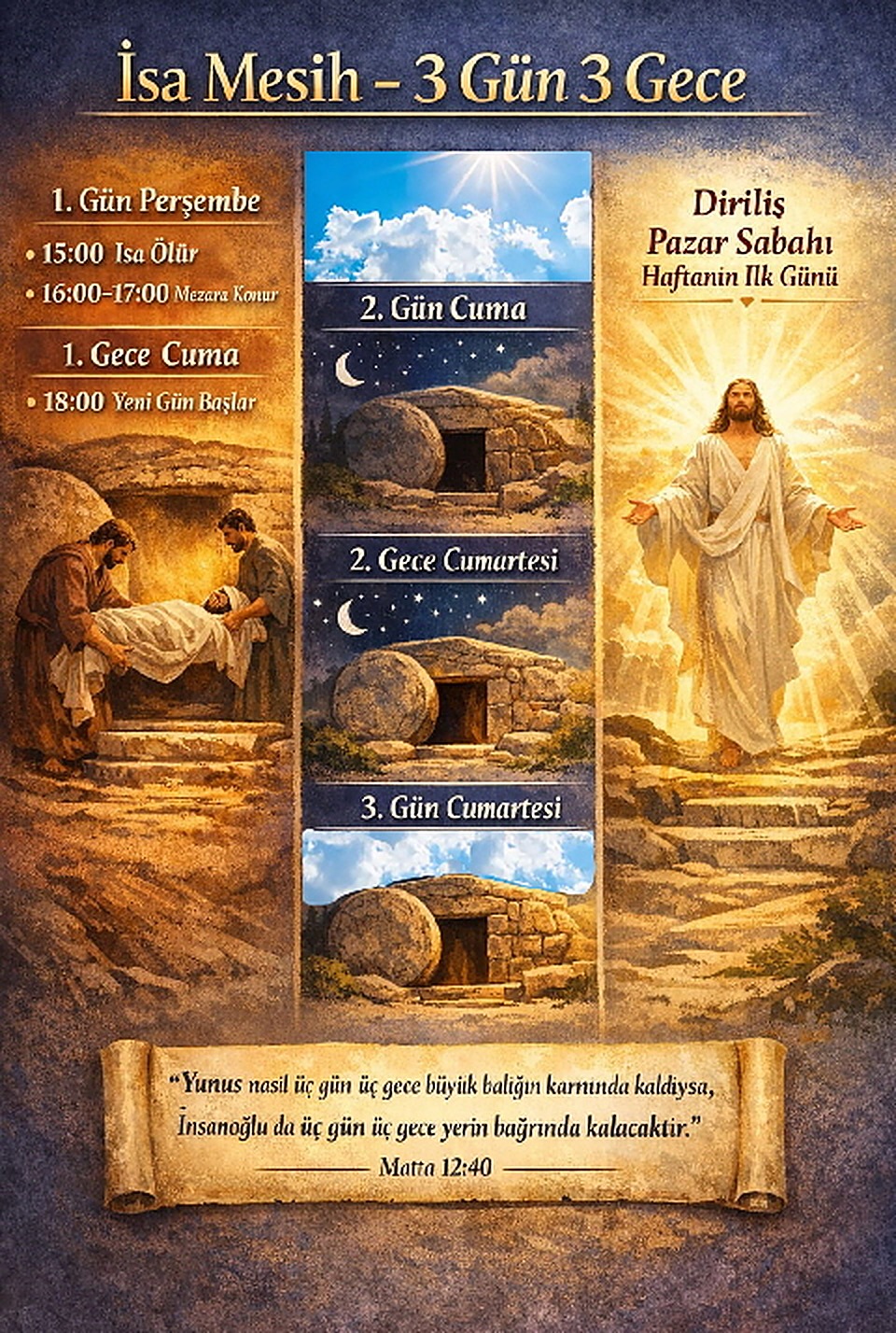
Finally!
Thursday, June 17, 2004
Even though many readers argue exactly the opposite, I have tried to keep the subjects I write about quite short. I admit that sometimes I may have gone on unnecessarily, and I apologize to you for that. As I have said, someone reading these writings of mine for the first time will perhaps not understand many things. Yet they may perhaps come to some understanding about the outcome, and even that only perhaps. For this reason, alongside knowledge of the Holy Scriptures and the Quran, a hunger for spiritual values is essential. More than anything, one also needs to investigate whether all these things are so, and to have understanding. Nor do I expect you to understand almost everything simply by reading this book. At the very least, if you pay attention to what you read, you will in time understand how right or wrong I am. I hope that time will not be too late for you.
Whether it be the Witnesses or people who are members of other religions, in the end their common characteristics all closely resemble one another. Without anything being explained, without being told how and on what grounds a thing is going to be this way or that, and even when it is explained, without understanding it; indeed, without those members even wanting to understand, they accept the information given to them just as it is and say they “believe it with all their heart”! When the meaning of a subject is asked, generally they go “hmm,” think for a moment, and then either produce a heap of clumsy, empty words, or if they are sincere, laugh and say, “Well, I hadn’t quite understood it either.” This is no joke; those people really have sacrificed their entire lives for things they do not understand, and if necessary they have died for them without batting an eye. Sometimes someone like me comes along and says different things about these subjects; then, even though they do not understand, like a drunkard who notices that the tone of the music has changed, they too notice it and are seized by a feeling within themselves that “this one is not one of us, this is a dangerous person.” Do not for a moment imagine that the people I am describing are ignorant, foolish, uneducated, or that they come from such societies. The people I am describing are American, German, French, English, Japanese, and many others — they are all the same. The people of these countries come before you with the comfort they possess, the education they have received, the things they have invented, their modern homes, cars, and the orderly, clever work they do; and yet when it comes to God they blindly defend that religion which they are caught up in, which they do not understand at all and do not wish to understand. Against a person whom they sense holds another belief, they not only defend that religion of their own — which they possess from birth but do not understand, do not believe, and do not apply in their lives — but if the means are available they will, if necessary, even wage war. They will even labor to destroy that person with all manner of bombs, missiles, tortures, and every kind of weapon. How dare those enemies have had the audacity to criticize and disparage the religion he automatically acquired at birth!
As for the politicians who instigate such hostilities, in truth they take no interest whatsoever in people’s religions and the like. Their concerns are other things: money, oil, self-interest, the war over seats of power. But this is the morale that is fed to those brainless soldiers who serve as pawns. However much they are made to be like robots, a soldier too is a human being. Do not think of the Witnesses as separate from these people just because they do not go into the army. They, for their part, are far more obedient robots. And of the kind that neither hears, nor thinks, nor can decide, nor wishes to see!
Again, what am I trying to say? If I tell you one of the questions I have often put to the Witnesses, perhaps you will understand. After discussing and debating a subject with them at great length, in order to make them aware that they hold a fanatical, blind belief, I would ask them this: “What I have been explaining — this belief, this idea, this rule, whatever it may be, which you so heatedly oppose — if your governing body were to proclaim it, would you have any problem believing it?” And upon my saying this, most of them would immediately reply, “Oh, in that case I would accept it.” A very few, because they understood what I meant, would wriggle out of it, saying, “But then they would have to explain it to me,” trying to create the impression that they obey them as though they understood everything. Yet when those people proclaim something, or when they explain it, they pay no attention whatsoever to what you think or believe, to the agonies that tens of thousands have suffered for such a belief, to their being crushed and destroyed. And if anyone among them so much as mumbles “um, well,” they send him flying with a kick. And as they send him off, they do not deliver that kick saying, “You opposed us”; they cast him out from among them saying, “You opposed Jehovah God; this kick too came to you from Him.” Whatever these men do, it is God who is making them do it! Even the kick is really delivered by God! Oppose it if you dare! And that resentful person, looking back as he goes, burns within himself saying, “Ah, what have I done!” In his own eyes he really has received this kick from God. Even if he believes he is a hundred percent in the right in the matter he opposed, over the years these people have manipulated the consciences of such persons in this way. Moreover, among them there is no distinction of just or unjust, fair or unfair, right or wrong. Whatever the case, to disobey and oppose them means to oppose God Himself. And, as some of the smart alecks among them say, supposedly they must first explain to him the thing he does not accept! At that moment, while he is quarreling with you, he will have proven himself to you with a pose as if his faith rested on the most solid foundations — how manly, how gallant, how honest and upright! Those who do not know them, who are unaware, fall for these tricks. If only people were as they puff themselves up to be and say they are. At least then they would not be donkeys. Yet their systems of education are just like the feelings of homeland and nation instilled in military armies. Just as love of the fatherland is instilled in a German, so too is loyalty to their organization instilled in these people. However virtuous, superior, gentlemanly, and trustworthy in his word the men or the kings of the state regarded as the enemy may be, whom they oppose; indeed, even if his own king, his own comrades, are far lower morally and ethically than that society, that soldier never once even entertains the thought of crossing over to the other side. This is the greatest betrayal. For the other side the situation is the same. Even if someone from the opposing side crosses over to their own, according to them too this is a great betrayal. However much they use that person for their own interests until the war is over, they never trust him. For they too reason among themselves about that person: “If in another war this man sees that the armies and nation of the opposing side possess a morality, ethics, and qualities of justice superior to ours, who can know whether or not he will switch sides against us?” And so, not even keeping such a person alive within their own ranks, they kill or destroy him gently. An accident occurs, he is poisoned, his heart suddenly stops, and so on. And for such people who are on the side of righteousness, they organize very grand ceremonies! They erect their statues. They write their names in their histories with praise. But in reality all this is show. In truth the rulers destroyed those people because they sensed that they could not hold sway over them. What they need is human-type robots who will carry out their orders unconditionally, blindly, at any cost, recognizing no obstacle. The other type — that is, people who can think, who possess the ability to discern, who have free will — are, to them, filth. The physicist Albert Einstein’s barely escaping being destroyed for being a Jew, saving his life by chance, and America’s taking him under its wing, is also a fine example of what I am describing. And now, shamelessly, they boast of him as a “German Nobel Prize winner in physics.” Their boasting, too, is not because of that person’s character, but because he was German — the aim, once again, being to draw for themselves a share of the glory. As if Einstein set great store by being German! When it suits their purposes they make him a German; when it does not, they make him a Jew.
What a terrible belief and education we possess! I say this not as a nation, but for the sake of humanity, taking it across the whole world. This is the moral education that our world tries to instill in us. When we read of God’s servants, of what they did, of the examples they left behind, the difference between them is so vast that it cannot even be compared.
To two brothers who killed a king who could be called an enemy of the prophet David as he lay sleeping in his bed and then joyfully brought his head, saying that “the Lord had granted him vengeance,” David in his day replied as follows: (Apparently such people too always did these deeds in the name of the Lord!)
But David answered Rechab and his brother Baanah, the sons of Rimmon the Beerothite, and said unto them: “As the LORD liveth, who hath redeemed my soul out of all adversity, when one told me, saying, Behold, Saul is dead, thinking to have brought good tidings, I took hold of him, and slew him in Ziklag, who thought that I would have given him a reward for his tidings! (Yet King Saul was one who had always unjustly sought to kill David)
How much more, when wicked men have slain a righteous person in his own house, upon his bed, is their death certain! Shall I not now require his blood of your hand, and take you away from the earth?”
And David commanded his young men, and they slew them, and cut off their hands and their feet, and hanged them up over the pool in Hebron. But they took the head of Ish-bosheth (the king they had killed), and buried it in the sepulchre of Abner in Hebron. 2 Samuel 4:9-12
We have read the reward David gave to those who put on the air of bringing joyful news — as it seemed to them — even for the mistreatment of one who sought David’s life, who was his enemy. Yet the death of that person meant for David becoming king over the whole country. But David was not thinking of these things. This means that David, no matter who it was, no matter against whom, displayed the superior qualities he possessed toward everyone, and wanted everyone else to be that way too. Were such a thing done in these times, those men would be given medals and proclaimed heroes in the newspapers. Germans set fire to Turks’ homes in the middle of the night every single day, and it is not even permitted to be reported in the news. Supposedly, disorder is being prevented! A Turkish thug beats up a German, and all the newspapers and parliament rise up in arms. A seventeen-year-old, two-meter-tall spoiled German thug rapes a thirteen-year-old English girl by force, and the entire press and public become enemies of Turkey and the Turks, asking why that thug was arrested. He is nonetheless released from prison in Turkey within a year, while the Turk who beat up the German is given a twelve-year prison sentence. As for those who set fire to Turks wholesale, they are neither caught nor punished. When we look at these examples, we cannot help but see how different the present-day understanding of justice, morality, gallantry, and obedience is from that of the servants of the true God. Moreover, David was not a person blinded by labels. Even though he thought about the kingship, he saw it as a gift given to him by God, a duty, indeed at times a great responsibility, heavy to bear. For David, being king meant serving his people. Not in words, but in deeds and with all his heart, David was such a person. And besides, the most important aspect that concerns me in this matter is the grief David felt over the death of someone who, in a sense, stood in the position of his enemy. Yet was it not God who wanted him to be king and who, for that purpose, anointed him over Israel? Right at that moment, after all the troubles he had been through, he had not a single enemy left. And these two men who took his side, thinking they had performed a great act of sacrifice, courage, and heroism in their own eyes, come joyfully to David. And David has their heads struck off! Is this a thing that can be? Why did David not rejoice that his enemy had died, but instead grieve?
Because David’s aim was not merely to consider his own interest, to obtain the kingship. Nor did he possess a mentality and a heart’s disposition that would deceive itself, saying, “At any cost — and besides, did God not anoint me as king? Surely He too willed it this way.” David’s stomach could not take joining a wrong deed to his own interest and saying, “God willed it this way,” and deceiving himself by saying, “If this is an evil, I did nothing, they did it, I have no guilt.” He did not sell himself for such things. David actively did holy works that were righteous, honest, virtuous, and marked by superior qualities. And as long as he did them, God was with him. When at times he sinned, his punishment was great. And God did not hide His anger toward him. But in the event I mentioned above, David grew great in God’s eyes; he did not diminish. Where is the morality, gallantry, honesty, ethics, and understanding that God gave to human beings; and where is our own understanding, our gallantry, our nationalism, our obediences, our loyalties, our heroisms that we try to create! And on top of it, while doing such crooked deeds, we shamelessly use His name. Is it for nothing that in Romans 2:24 God says through His apostle:
“...the name of God is blasphemed among the Gentiles because of you” !
Here I have given only a single David as an example, by chance. There are so many more that to write them all would not fit into books. Therefore, whatever happens, let us think not only of ourselves, and not of base and petty things just because we were taught them that way; let us think of superior, divine values. Let us know what these are, and, learning from the One who created us and the whole universe, let us embrace with love true virtue, holy things, gallantry, justice, freedom, love, righteousness, mercy, and those who do all these things — whoever they may be, from whatever nation, race, or color of person. Let us not sell ourselves even to those who never do these things, by breaking our neutrality, by deviating from justice and righteousness. David did not act according to the injustice and wickedness of his enemy. He lived with a character that would represent a superior personhood toward everyone. With the awareness that he would be accountable before God for his own deeds, he clung to virtuous works. In spite of his errors from time to time, he did not slacken. Let us too cling to these things. As I said, without inquiring into the identity, the label, the nationality, the race, the sex of those before us. For twenty years I learned these things from God. God looks at those who do the superior qualities I have listed — and the ones I did not list in order to be brief, indeed the ones I do not even know how to list — and He chooses them. Without looking at anyone’s identity, where they live, their past, where they came from, or which religion, nation, or race they belong to. (2 Chronicles 16:9; Ezekiel 18:1-32) All those who turn back from their evil ways and come to Him, whoever and whatever they may be, God accepts. (Ezekiel 18:32)
When I look back, the things I regret from those twenty years that passed were only my own mistakes and wrong deeds. I have never regretted those twenty years spent with the Witnesses, nor the empty customs and bad habits I left behind. Had I not entered among the Witnesses, perhaps I would neither have become so zealous and acquired knowledge about God, nor would I have learned of their filthiness, however much they conceal it. I could not have gained the experiences I possess, and I could never even have guessed how people sell themselves and make themselves slaves for such empty things. In fact, do people not already, for one reason or another, disparage one another and hate one another? But there is a great difference between those feelings of theirs and the things I call “what I have learned.” I acquired this knowledge, these experiences, those ugly things resting on proofs, and how they do them in the name of God, by sincerely believing in them. At the outset my aim was neither to oppose nor to make enemies. People feel hatred toward one another because of each other’s evil deeds. With an easy and clean conscience I confess that I do not recall having done evil to any of these people, or having expected any gain from them. My sibling, born of the same mother and father as me, also entered among them. Years later, confessing openly, he said that “among the reasons for starting there was everything except God.” Many people are like him. Not only in their relations with the Witnesses, but always, and with whomever they may be, the thought of seeking God is a feeling they have never sensed, from near or far, anywhere. There are billions of people who hold this disposition of heart. Moreover, through them I learned not only bad things but good things too. That they themselves did not practice them was no concern of mine. If, with the information I have given, I can help even a single soul to be saved, I say that all those years I spent were worth it. Even for a single human soul, is its salvation not worth all the struggles, all manner of hardships? To me it is worth it — even if it be only one, it is worth it. And this way of thinking, too, I learned from the Messiah.
“How does it seem to you? If a man has a hundred sheep and one of them strays, will he not leave the ninety-nine and go into the mountains and seek the one that strayed? And if he should find it, truly I say to you, he rejoices over it more than over the ninety-nine that did not stray. So it is not the will of your Father in heaven that one of these little ones should perish” says Jesus the Messiah (Matthew 18:12-14)
Had I not seen and come to know the Witnesses, how would I have known the Quran? Would I have investigated it in this way? I learned the Quran thanks to the unwitting encouragements and provocations of people who are enemies of the Quran. And it is the same for the Holy Scriptures. Again, I did not throw away the Holy Scriptures by looking at the Muslims. Had it not been for that Holy Scripture which they say was “altered,” I could never — but never — have recognized and understood the deceit, the lies, the hypocrisy of the Christians, and most importantly, God. By these I do not mean particular individuals one by one. I see this when I take those books as a measure and compare them by looking at the religions. Muslim and Christian are no different in this respect. There is a difference of cellophane and packaging, that is all. The insides of them all are, unfortunately, the same.
The things I learned were never a burden to me. I felt joy from what I learned about God. Thank God that He let me taste this joy in freedom. Had I been a member of any religion, I believe that I could never have walked this path with joy. Indeed, my breaking away from God too would have been a strong possibility. Listening to those who gave talks at the Witnesses’ meetings, I regarded, on my own behalf, as a privilege. But among themselves, by seeing people cast eyes full of anger at one another over why so-and-so had not come to the meetings, I realized how much they were doing this thing by force. Because he himself did it by dint of compulsion, they raged out of envy at another’s indifference, at his freedom. Otherwise, this false concern they displayed was not because they sought that person’s welfare or loved him. They were angry, thinking, “Why doesn’t he too come like us and suffer the same distresses?” As for me, I was only bewildered, and at the outset I could not even understand it. But I knew very well that the same things existed in Islam too. Because a person does not fast, or did not come to Friday prayers, the pressure those people face, depending on the community they are in, is no small thing. Especially the one who does not go to the festival prayer — I have seen and heard much of how they never take him back among them, and even refuse to do business with him. As for me, if a very fine speaker had come that day, I would feel sorry on behalf of the one who had not come, and would try, as much as I could keep it in mind, to relate the talk to him afterward; but if a bad and boring speaker had come, then this time I would rejoice on behalf of that person. I would say, “It’s a good thing you didn’t come, otherwise you would only have slept from boredom.” To them, however, people like me are very dangerous. Whatever happens, one must always come, and whatever happens, one must always praise, and whatever happens, one must always obey! In my view, by these things they are openly saying, “Learn now to be a two-faced and dishonorable person.” What they actually accomplish is to destroy the joy between God and His servant. And every one of them is a diligent, hardworking missionary working toward this aim.
I do not wish to prolong the book. It has already grown long enough. I believe that through this book too I will earn the hatred of many. In fact, I have written nothing new. None of this is a new idea either. In every age people have known what these religionists are. Either they have distanced themselves from them, or they have secretly hated them. And if they had the strength, they destroyed them. I am not in favor of anyone being destroyed; there should be freedom. Along with this, I know from the prophecies that very little of their time remains. Whatever the case, if through my book I have been able to give you even a single drop of knowledge, how happy that makes me. Truly, only a drop. If you are thirsty, if I have been able to stir your longing, then, in order to drink your fill, acquire the knowledge of God that God commands of everyone, that He asks separately of each of His servants. And apply it in your life. Being a slave to no one but God, without fear, thrusting aside your empty interests and pleasures, do this with joy. I neither graduated from faculties of divinity nor studied theology. Had I gone to such places, I believe they would have taught me everything except God, everything far from Him. These things, which I have written of as being only a drop, I learned and understood as an ordinary, simple person. God has no need whatsoever of the veeery wise, the learned, the powerful of this world. On the contrary, He says that in order to shame them, God chose the despised and seemingly useless things of this world. (1 Corinthians 1:26-31) And I am not ashamed to be one who is despised and, according to this world, useless. Whether it be the spelling errors in this book I have written, or from grammatical errors to faults in sentence construction, please overlook my shortcomings and my ignorance. Since those called writers and artists are busy writing fairy tales that please people and displaying their bodies, I too, being presumptuous, took such a duty upon myself. I did this not because I was worthy of it, but because I felt myself compelled to. With a Turkish I have nearly forgotten, I took great care to make this book understandable to everyone. As they say about us, we could learn properly neither Turkish nor German; they did not teach us. I also know how journalists mocked the Turkish of a footballer of Turkish descent who was born, raised, and became famous in Germany. Yet those journalists who mocked, not knowing a single foreign language themselves, who knows what jugglery they perform in the language they think they know. For this reason, please, let whoever would criticize this book criticize its content. Not its commas, its letters, its sentences, its grammar. I accept and confess that I am not qualified in these matters. So again and again, forgive me.
Beyond the spelling and grammatical errors, regarding the hatred many people will feel toward me over the content of this book, I would also like to say the following. If these writings of mine are baseless and false, then those persons, those establishments, those organizations have no need, I think, to fear or to be angry. Who am I, that you should gnash your teeth at me? Is not the reward and the punishment of everything in the presence of God? If those who are angry at me see themselves as being in the right in the thing they are angry about, and rewards await them in the presence of God, then hellfire will fall to me! For this reason, should they not rejoice on their own behalf and grieve on mine? But no — if these things I have written are exactly like what I have described; indeed if, for even one-millionth of the reasons I have spoken of, God’s great anger is being provoked, then I will grieve on their behalf. I will say, “Why did they not repent and turn back from all these evil ways of theirs?” Since everyone will therefore give account on their own behalf, it is a terrible thing too to fall into the hand of the living God. For our God is at the same time a God who takes vengeance. More than the religions and organizations, I counsel the very individuals who have become members of them to come to their senses. For whoever may accuse those establishments, they, on their own behalf, are always innocent; they are servants under orders! For this reason let everyone look to himself and not hide behind excuses. For such excuses will save no one.
I have had readers who accused me politely, and those who praised and commended me. Some accused me of spreading false prophecy. I am not a prophet, that there should be a false one of me. My writings supposedly carry the meaning of prophecy! If every teaching that gives an explanation from the Holy Scriptures and the Quran becomes prophecy, then what is it that all religions do? And it is those who accuse me who, unfortunately, do this most of all. I would not be ashamed to be a prophet. If I were a prophet, I would not shrink from saying so openly. But how can I claim a thing that is not? It may be that the historical information and understanding I have written or believed are wrong. I simply have not read anything more correct! And no one has shown me anything more correct, or could show me, or did show me and I was not satisfied and could not believe it. But no — if they cannot even tolerate anyone speaking other than themselves, I believe that with this kind of intolerance they possess, they will bring only themselves and those who follow them to ruin. And even if I am wrong, I am sincere. I have no gain, no expectation from anyone. Nor have I tried, nor am I trying, to make a donkey of anyone so that he would carry my burden. If I keep silent, if he keeps silent, if no one speaks, how are we to attain the correct understanding? For thousands of years the humanity of our world has seen what the religions have given us. They labored to take even that atom of truth in people and destroy it. If the number of those like me increases, what will those freeloading religionists, accustomed to sucking human blood, do? This has become a source of livelihood for them; would they want it snatched from their hands? There is already competition enough among all sorts of religions and sects. Would they then tolerate those like me who blurt out this and that at every turn?
Farewell, with the wish that you all remain in the peace that God will provide.
İhsan Kiper
Germany, Friday, August 13, 2004
Attention!
“Certain / some rights of the book are reserved”; no changes may be made to the book without the author’s consent. However, provided that you make no changes and that it is free of charge, you may continue to distribute it as much as you wish.
Section 303a alteration of data: (1) Whoever unlawfully deletes, suppresses, renders unusable, or alters data (Section 202a (2)) shall be punished with imprisonment of up to two years or with a fine. (2) Those who attempt all of this may also be punished. (3) Section 202c, paragraph 1, shall apply according to the preparation of an offense requiring punishment. And also § 303b computer sabotage law.
Comparative Verse Indexes
Do not look here for a complete index format. I brought these verses to light as a result of my own studies. My aim in preparing this little index was to make it easier, when speaking with Christians who say “The Quran cannot be the word of God” or “three Gods,” or to show the wrongness of the distorted understanding Islam holds on subjects such as dying, being resurrected, and worship, or to prove that the Holy Scriptures are the word of God. I hope this index, which I prepared about specially selected topics, helps you as well. Quotations from the Quran are Osman Nebioğlu’s translation. Quotations from the Holy Scriptures belong to both the new and the old Turkish translations.
GOD (Quran)
It is written in abbreviated form as: Sure Number : Verse Number.
20:52 He neither errs nor forgets…
3:117 God is not one who does wrong
3:112 God is not one who does wrong
7:29 Just as He first created you, so you will return to Him
8:51 God never does wrong
9:70 God had not wronged them
11:101 We did not wrong them
23:116 A blessed God
29:40 God is not among those who wronged them
40:31 God does not wrong His servants, He does not will it
42:46 God is not one who wrongs His servants
43:76 We do not wrong them
50:29 I (God) am not one who wrongs the servants
4:79 Every good thing is from God
4:117 God is just
16:33 God did not do injustice
14:47 God is mighty, the Lord of vengeance (retribution)
21:108 Your God is one single God.
10:61 Nothing is hidden from Him, neither in heaven nor on earth.
3:2 He is the everlasting and the eternally existing one.
6:59 Not a leaf falls without His knowing it
53:32 …when you were still embryos in your mothers’ wombs, He is the one who knows best
30:9 God does no injustice at all
32:7 The one who created everything He created beautifully
22:47 In His sight a single day is like a thousand of your years. The same subject also in 32:5
39:5 He is the mighty, the ever-forgiving one
42:51 No one has ever seen God
43:20 He does not will that you worship idols
59:22;23;24 He is such a God that peace and stillness, the giving, the watching over, the protecting, the most beautiful attributes are His.
112:4 Nothing is equal to Him
God ( Holy Scriptures )
1 John 4:8 God is love
Exodus 20:6 A jealous God
Exodus 34:6 A God of great compassion and grace, slow to anger, abounding in forgiveness and truth
Deuteronomy 4:31 A God of great compassion
Psalms 86:15 A forgiving and merciful God
James 5:11 The Lord is very compassionate and merciful
1 Timothy 1:11 A holy (blessed) God
1 Corinthians 8:4 There is no God but one
1 Timothy 2:4 He (God) wills that all men be saved and come to the truth
Job 41:11 Who has given to me (to God) beforehand, that I should repay him? Everything is Mine
2 Peter 3:8 In the Lord’s sight one day is like a thousand years, and a thousand years like one day
John 1:18 No one has ever at any time seen God
Exodus 3:15 – Isaiah 42:8 Jehovah, this is my name forever, and this is how I am to be remembered from generation to generation
Hell (Quran)
23:103 Their own souls suffer loss
4:97 When the angels take their souls
7:50 The water God has forbidden to the unbelievers
9:49 Hell surrounds the unbelievers
9:63 They remain in it forever
10:54 When they see the torment they will feel regret
11:106 There is groaning and sobbing there
13:34 The torment in this world and the torment in the hereafter
14:17 He will try to gulp it down but will never be able to swallow it, and death will surround him
16:27 They will be in a state of disgrace
18:53 When they see the fire they understand they will fall into it
25:69 On the day of resurrection the torment is multiplied for him, and he remains there, forever debased
32:21 He will taste the nearer punishment before that greater one
46:20 You will be punished with a humiliating torment
55:41 They are recognized by their faces
57:13 On that day those who have believed are told: “Wait for us, let us take a bit of light from your radiance”
75:21-23 Some faces will grow dark and they understand the calamity
74:38 Every soul is a pledge for what it has earned
78:22-27 The final abode of the transgressors, forever
18:102 A place of abiding for the unbelievers
47:10 They will meet the fate of those whose root has been cut off
7:37 They will attain the fate written in the book
20:74 There he neither dies nor lives
29:55 On that day, when it envelops their bodies
34:33 When they see the torment they feel regret
36:59 Stand apart this day, O you sinners
38:61 O our God! Whoever brought this upon us, punish him twofold
73:17 You cannot be protected from the day that turns the young old
104:6-7 It is the fire of God that will descend upon the hearts
2:80-81 Whoever works evil and is encompassed by the sin he has committed is eternally destined for hell
17:14 On the day of reckoning it is enough to give one’s own soul
30:55-56 and 20:103-104 When they are resurrected they will again deny God
37:62-67 Eating from the tree of Zaqqum
Hell ( Holy Scriptures )
Matthew 25:46 And these will go into eternal punishment
Matthew 10:28 Fear the one who can destroy both body and soul in hell
Matthew 5:22 Will be liable to the fire of hell
Matthew 13:42 They will throw them there into the fiery furnace
Matthew 18:9 It is better than being thrown into the fire of hell
Matthew 25:41 The eternal fire prepared for the Devil and his demons, for the accursed
Revelation 20:10 They were hurled into the lake of fire. They will be tormented day and night
Revelation 20:14 The lake of fire, this is the second death
Daniel 12:2 And these will awake to shame and everlasting contempt
Luke 13:28 They will see Abraham and Isaac, and they themselves will be cast outside
Luke 16:24 An illustration, a parable concerning hell
Isaiah 65:20 A child will die at a hundred years old, the sinner will be counted accursed
John 5:29 The evil ones will be resurrected for the judgment of the resurrection
James 5:3 And it will eat your flesh like fire
Paradise (Quran)
3:107 Their faces will shine and they attain God’s mercy
7:37 He does not fall into the evil state described in the book
7:44 The place where they will find what was promised
7:48 Those on the Heights are recognized by their faces
7:50 The fruit God has forbidden to the unbelievers
11:105 Some wretched, some blessed
44:56 There is no death there except the first death
47:15 Rivers of water, honey, wine, and milk will flow
37:59 Not to be subjected to any torment except the first death
31:9 They remain there forever
35:34 Praise be to God who has taken sorrow away from us
36:56 They and their spouses are in the shade
7:42 They will remain there forever
Paradise ( Holy Scriptures )
Isaiah 65:21-25 They will not labor in vain, nor bear children for calamity
Isaiah 65:19 In it there will be no sound of weeping and wailing
Daniel 12:2 They will live eternal life
Amos 9:13 The mountains will drip new wine
Matthew 5:3 Theirs is the kingdom of the heavens
Matthew 5:4 For they will be comforted
Matthew 5:6 For they will be satisfied
Revelation 21:4 He will wipe away every tear from their eyes; there will be no mourning, weeping, or pain there
Revelation 21:7 The victorious will inherit these things
Revelation 22:17 And the spirit says, come; let anyone who wishes take of the water of life free of charge (freely)
The World (Quran)
6:32 The life of this world is amusement and play; the hereafter is better than it
2:200 Whoever desires the bounty of this world has no share in the hereafter
2:212 To the unbelievers the life of this world seems adorned
3:14-15 Better than the things that seem beautiful in this world is what is in paradise, in God’s sight
21:105 My good servants will inherit the earth
4:74 Let whoever sacrifices the life of this world for the sake of the hereafter fight in the way of God; his reward is great
8:67 You desire the goods of this world, but God desires the hereafter for you
9:38 Are you content with the life of this world instead of the life of the hereafter?
14:3 They prefer the life of this world above the hereafter
17:18-19 Whoever desires this world, We then make hell his abode
19:104 Whose efforts in the life of this world will come to nothing, though they thought they were doing well
7:32 Who has forbidden the adornment and the good provision that God created for His servants? These are for those who believe, in the life of this world.
7:25 There you live, there you die, and from there you will be resurrected and brought forth
7:54 Your God created the heavens and the earth in six periods
9:69 Those who took their portion of this world rejoiced only for a short while
10:7-9 The abode of those who are content and satisfied with the life of this world and do not grasp Our verses is the fire
10:24 The life of this world is dazzling (explained with a parable)
13:26 The life of this world is a brief enjoyment beside the hereafter
14:27 God strengthens those who believe with firm words, both in the life of this world and in the hereafter
17:72 Whoever is blind in this world is blind in the hereafter too, and has strayed from the way
20:71-72 The judgment of the wicked lasts only in this life of the world
20:131 The brilliance of the life of this world is for testing; do not turn your eyes toward it
28:60 What is given to you is only the fleeting adornment and amusement of the life of this world
35:5 Beware, do not be deceived by the life of this world. Nor let the deceiver deceive you concerning God.
40:39 O my people, this life of the world is fleeting, but the hereafter is the lasting abode of settlement
53:29 Turn away from those who turn their backs on Our warning and value the life of this world
The World ( Holy Scriptures )
1 John 5:19 We know that the whole world lies in the power of the wicked one (is under the control of the evil one)
1 John 2:16-17 Everything that is of the world is not from God, and the things of the world pass away, but whoever does the will of God remains forever.
James 4:4 Friendship with this world is enmity with God
Hebrews 11:7 Noah, by his faith, condemned the world
John 15:19 Because you are not of this world, the world hates you
John 3:16 For God so loved the world that He gave His only-begotten Son
2 Corinthians 4:4 The god of this world (Satan) has blinded the minds of the unbelievers so that the light of the gospel would not dawn on them
John 18:36 The Messiah’s kingdom is not of this world
1 Corinthians 4:9 We have become a spectacle (a public show) to this world, to angels and to men, like men condemned to death
2 Peter 3:6-7 The world in Noah’s time perished, overwhelmed by water; the present heavens and earth are being kept for the day of fire
1 John 2:2 The Messiah is an atonement not only for our sins but for those of the whole world
Acts of the Apostles 17:31 For God has fixed a day on which He will judge the world in righteousness
Proverbs of Solomon 2:21-22 The upright will dwell in the land, and the wicked will be torn out of it
1 Corinthians 7:31 Let those who use the world not use it to excess (immoderately)
Revelation 11:18 The time has come to bring to ruin those who ruin (corrupt) the earth
Psalms 37:29 The righteous will inherit the earth and dwell in it forever
Religious practice (Quran)
4:142 They rise to prayer reluctantly and put on a show for people. They are corrupters.
3:19 In God’s sight the religion is the religion of Islam
5:63 How evil it is that the religious scholars do not restrain them from speaking sin and eating what is forbidden
6:137 …that He may bring them to ruin and, confounding their religion, leave them in bewilderment
10:99 Had God willed, everyone would have believed; so do you want to compel them?!
15:91 We will question those who split the Quran into pieces
16:62 They ascribe to God the very thing they themselves dislike
21:92 Truly your religion is one single religion
30:43 Turn to the true religion before that day comes
21:92-93 Truly your religion is one single religion. But they broke that unity.
22:17 Look! Those who believe, and the Jews, the Sabians, the Christians, the Magians, and those who associate partners — God will make these matters clear to them on the day of resurrection.
23:52-53 Your religion is one. But they fell into disagreement about the affairs of religion and became divided into sects.
30:32 Those who have divided in their religion and become fragmented
42:13 What We said to Abraham, to Moses, and to Jesus, He made a way for you to follow. Hold fast to the religion, do not fall into division in it, do not become divided.
48:28 He made it (the truth His Messenger, Muhammad, brought) supreme over all religions
107:4-6 Woe to those who pray, who do their deeds only for show.
Religious practice ( Holy Scriptures )
Titus 1:16 They claim to know God but deny Him by their works
Romans 2:21-25 Because of you the name of God is blasphemed among the nations
Matthew 15:9 / Isaiah 29:13 Teaching human commandments as doctrines, they worship me in vain
Matthew 7:16 You will recognize them by their fruits
Romans 1:28-31 Because they did not deem it fitting to acknowledge God in their knowledge, God handed them over to improper, detestable things.
Romans 1:32 …and although they know God’s decree that those who do such things deserve death, they not only do them but also approve of those who do them.
Ezekiel 33:31-32 They listen to your (the prophet’s) words like a song but do not do them.
Isaiah 9:12 and 17 and Isaiah 5:25 (God’s) For all this His anger has not turned back, but His hand is still stretched out.
Amos 9:10 All the sinners of my people, who say calamity will not reach us, will die by the sword.
Matthew 7:21 Not every man who says to me, O Lord, will enter the kingdom of the heavens. Those who do the will of God will enter.
Luke 6:49 He who hears my word and does not do it is like a man who built a house without a foundation.
John 9:31 We know that God does not listen to sinners, but He listens to those who do His will
Hosea 11:7 My people are inclined to be unfaithful to me; though they call upon the Most High, no one exalts Him.
Luke 21:8 Jesus also said: “See that you are not led astray; for many will come in my name, saying: I am he, and the time is near; do not go after them.
Matthew 7:21-22 Not every man who says to me: Lord, Lord, will enter the kingdom of the heavens. Only the one who does the will of my Father in the heavens will enter. On that day many will say to me….
Marriage (Quran)
2:221 Do not marry them until they come to faith
4:3 Four women are lawful, but it is best to remain with one
4:19 Even if you dislike them, be patient (except in adultery)
4:21 The spouses becoming one body
4:23-25 The relatives forbidden in marriage
5:5 One may marry women of the People of the Book (Jewish–Christian)
24:3-4 Only a believer marries a believer
24:5 Except the one who repents and reforms
33:37 It is not forbidden to marry the divorced wives of adopted sons
Marriage ( Holy Scriptures )
2 Samuel 12:8 The Lord said to David: I gave your master’s wives into your bosom.
Ecclesiastes 2:8 I acquired many women in whom the sons of men take delight (King Solomon)
1 Kings 11:3 Solomon had 700 wives and 300 concubines
Exodus 21:10 If he takes another woman for himself, he will not diminish the maintenance of the first one
Hebrews 13:4 Let your marriage bed be undefiled; for God will judge fornicators and adulterers.
Ephesians 5:31 For this reason a man will leave his father and mother and cling to his wife, and they will be one flesh
Ephesians 5:28-29 Whoever loves his wife (or her husband) loves himself
Matthew 5:32 Whoever divorces his wife for any cause other than adultery makes her an adulteress (pushes her into adultery); and whoever marries a divorced woman commits adultery
Matthew 19:8-9 Moses permitted you to divorce your wives because of your hardness of heart, but from the beginning it was not so.
Genesis 2:24 The man will cling to his wife and they will be one flesh
1 Corinthians 7:39 Let your marriages be only in the Lord
Deuteronomy – The Repetition of the Law 24:1 If you divorce a woman by giving her a certificate of divorce…
Leviticus 18:6-18 Concerning forbidden marriages between relatives
The Concept of Sin ( Holy Scriptures )
Romans 3:23 For all have sinned
Romans 5:12 If sin entered the world through one man, death also passed to all men.
Romans 6:23 For the wages of sin is death
Romans 6:7 A man who has died has been acquitted (freed) from sin
Forbidden and Lawful (Quran)
16:116 Do not invent, saying “this is lawful and that is forbidden”
3:93 Before the Torah was sent down, certain foods were lawful for the children of Israel
2:273 We forbade the flesh of dead animals, blood, the flesh of swine, and what is slaughtered for other than God.
10:59 You yourselves have made some things lawful or forbidden
6:145 In what has been revealed to me I do not find anything forbidden for one who eats, except carrion, spilled blood, the flesh of swine, which is impure, and what is slaughtered in the name of other than God….
22:30 All the animals have been made lawful except those recited to you
5:87 O you who believe! Do not forbid yourselves the good and pure things that God has made lawful for you.
Forbidden and Lawful ( Holy Scriptures )
Leviticus 11:7 The swine is unclean to you
Leviticus 11:3 Every animal with a split hoof that chews the cud is lawful, except for these…
Leviticus 11:24 Whoever touches a dead animal becomes unclean
1 Timothy 4:7 Reject unclean and old wives’ tales.
Colossians 2:16 Let no one judge you in matters of eating, drinking, or of a festival, or a Sabbath day
Acts of the Apostles 10:9-48 Do not call unclean what God has cleansed. (The foods forbidden throughout the Torah becoming permitted)
Concerning Ishmael son of Abraham (Quran)
3:104 Let there arise from you a people that calls to goodness and enjoins good deeds….
3:110 You are a good nation
5:3 I have completed the bounty I promised you
2:128 Raise up from our offspring, too, a people who submit to You
2:133 The God of Abraham, Isaac, and Ishmael
3:84 We believed in what was revealed to Abraham, Ishmael, Moses, and Jesus
4:163 We sent revelation to Noah, to the prophets, and to Ishmael as well
19:54 Mention Ishmael too; he was a prophet, a messenger
21:85 Ishmael, Idris, and Dhul-Kifl were among the patient ones
22:78 He (God) chose you… The religion of your father Abraham
38:48 Mention Ishmael, Elisha, and Dhul-Kifl. All of them were good men.
Concerning Ishmael son of Abraham ( Holy Scriptures )
Genesis – Creation 16:10-12 …you will name him Ishmael… His hand will be against everyone and everyone’s hand against him.
Genesis – Creation 17:20 As for Ishmael, I have heard you; I will bless him, make him fruitful, and multiply his offspring exceedingly.
Genesis – Creation 21:13 I will also make the son of the slave woman (Abraham’s wife, Ishmael’s mother) into a nation, because he is your seed.
Genesis – Creation 21:18 Get up, lift up the boy… for I will make him into a great nation.
Romans 2:29 He is a Jew who is a Jew inwardly, not in the flesh.
God’s Understanding of Nationhood (Quran)
2:124 The offspring of Abraham, not in the literal sense; those who know God attain the promise
God’s Understanding of Nationhood ( Holy Scriptures )
Romans 4:16 The one who is of Abraham’s faith becomes Abraham’s son
Romans 4:18 Abraham, who is the father of many nations
Romans 9:6 Not all who are of Israel are Israel
Romans 9:7 Not all are children just because they are Abraham’s seed
Romans 9:8 That is, the children of the flesh are not the children of God; the children of the promise are counted as the seed (offspring)
John 1:13 They were born not of the flesh, of blood, or of the will of man, but of God
John 8:39 If you were Abraham’s children, you would do the works of Abraham
Galatians 3:7 Those who are of faith are the sons of Abraham
Galatians 3:29 If you belong to the Messiah, then you are Abraham’s seed, heirs according to the promise
1 Peter 2:10 You were once not a people, but now you are the people of God
Revelation 2:9 I know the blasphemy of those who call themselves Jews but are not, being instead a synagogue of Satan.
Man (Quran)
2:29-30 Whatever is on the earth was created for man
4:28 God wills to lighten your hearts; man is weak
7:42 No one is burdened beyond their capacity
10:11 If God hastened evil for men as they hasten to seek good, their lives would swiftly come to an end.
17:11 Man prays for evil as if it were good. Man is very hasty.
17:100 Man is miserly.
18:54 Man is more contentious than anything.
21:37 Man was created hasty. I will show you My verses. Do not be in haste.
22:66 It is He who gives you life, then causes you to die, then will resurrect you. Truly man is very ungrateful.
33:72 Man is both wayward and ignorant.
80:23 No! He (man) has still not fulfilled what God commanded him.
Man ( Holy Scriptures )
1 John 1:10 If we say we have not sinned, we make God a liar.
1 Corinthians 10:13 You will not be allowed to be tested beyond your power.
Psalms 78:32-42 …and they were not faithful to His (God’s) covenant, their hearts were not right with Him.
1 Kings 8:46 There is no man who does not sin.
Concerning the unbelievers (Quran)
2:91 We believe in nothing but what was sent down to us
2:85 They believe in part of the book and deny part
2:170 We follow our forefathers, we do not follow God
3:7 The one with crookedness in his heart follows various interpretations
4:79 Every good thing that comes to you is from God
5:72 Whoever says God is the Messiah son of Mary has become an unbeliever
5:73 Whoever says God is the third of three is an unbeliever
5:90 Fortune-telling, intoxicants, gambling, and idols are of Satan
30:55-56 On the day of resurrection they deny, saying they stayed (in the graves) only a little while
37:59 Not to be subjected to any torment except the first death
5:104 Do not walk in the way of your forefathers instead of the way of God
31:33 Beware of that day when neither father can avail son, nor son avail father
57:15 This day no ransom will be accepted from you or from the unbelievers
40:85 After they have seen the torment, their faith is of no use
4:18 The repentance of those who say “I repent” when death comes, and of those who die as unbelievers, is not repentance
22:46 Truly it is not the eyes that are blind, but the hearts within the breasts.
14:10 The unbelievers said to the messengers: “You are only men like us. Do you want to turn us away from what our fathers worshiped? Then bring us clear proof.”
8:38 Say to those who disbelieve: If they desist, what they did in the past will be forgiven.
7:179 Truly We have created many jinn and men whose end is hell!
Concerning the unbelievers (Holy Scriptures)
Exodus 20:2-18 The Ten Commandments in full
Isaiah 29:13-14 This people honors me with their lips, but they keep their hearts far from me
Isaiah 29:21 They lead the righteous man astray for a mere nothing
Ezekiel 18:24 If the righteous man turns from the righteousness he practiced, he will die.
Ezekiel 18:19 If a son does what is just and right, he will live and will not bear the iniquity of his father
Ezekiel 18:4 The soul who sins, it is he who will die
Malachi 1:6 If I am a father, where is my honor; if I am a master, where is the fear of me? says the Lord
Concerning those who believe (Quran)
4:94 Do not withhold a greeting in pursuit of worldly gain
23:96 Repel (drive away) evil with what is best.
25:63 They walk in gentleness, and to those who provoke them they say “peace,” speaking mild words
25:68 They do not worship any but God, do not commit adultery, do not kill.
25:72 They do not bear false witness and turn away from vain things.
25:77 What worth would you have without your worship and devotion?
28:54-55 They are patient and answer evil with good.
28:88 Do not worship any but God; everything except Him is mortal. Judgment is His.
29:46 Do not dispute with those who have been given the Book except in the best manner.
10:99 Had your God willed, they would have believed. Do not compel them to believe.
53:32 …Do not claim purity for yourselves; He is the one who knows you
5:5 The good works of one who turns to disbelief after faith are not remembered.
29:64 The life of this world is nothing but play; the true life is the hereafter (the life after the resurrection).
31:14-19 …Be respectful to your mother and father… but if they strive to make you associate with Me something of which you have no knowledge, do not obey them… stand up for prayer (worship), do not boast, prevent evil… When you speak, lower your voice, and walk with a measured step..
3:28 Let the believers not take unbelievers as friends, forsaking the believers.
3:118 O you who believe, do not take as intimates those who are not of you
2:177 To be good is not to turn your face to the east or the west
9:23 If your fathers and brothers prefer disbelief to faith, do not take them as friends
22:11 Do not worship God as it were from the edge.
24:26 Bad things are for bad people, and good things are for good people.
41:34 Answer evil with good, and then you will see that your enemy becomes a devoted friend to you.
45:14 Forgive; vengeance belongs to God alone.
49:11 Do not mock and belittle one another. Do not seek out one another’s faults. Do not give one another bad nicknames…
49:12 Avoid suspicion. For some suspicions are sin. Do not try to pry into one another’s private matters. Do not go about backbiting one another…
Concerning those who believe (Holy Scriptures)
Romans 13:1 Let everyone be subject to the governing authorities over them
Romans 13:7 Pay to all what is due them: tax to whom tax is due, duty to whom duty is due, fear to whom fear is due, honor to whom honor is due; render everyone their dues (pay them).
Ephesians 4:23-24 …You have learned to strip off the old self belonging to your former way of life, which is corrupted by deceitful desires, to be renewed in your minds and in the spirit, and to put on the new man created according to God.
Ephesians 4:31 Let all malice, shouting, cursing, and wrath be removed from you.
Ephesians 5:18 Do not get drunk with wine, in which there is debauchery.
To arise, to be resurrected (Quran)
2:28 He gave you life. Then He will bring you to death, then again resurrect you.
2:259 God brings the earth to life after its death
16:38 Their swearing that the dead will not be resurrected
17:50-52 Whatever you may become, you will be resurrected
17:98 Even if they are bones and dust, they will be resurrected
18:48 They will stand in rows before God
22:7 The resurrection of those in the graves on the day of resurrection
21:105 My good servants will inherit the earth
10:45 On the day they arise, it will be as if they stayed (in the grave) only an hour
30:50 Truly He will resurrect the dead
35:41 Surely God preserves the heavens and the earth from vanishing away
39:67-69 The day of judgment and resurrection
30:11 God brings about the first creation, then He creates it again; then you will be returned to Him
30:25 He will resurrect you from the graves with a single call
36:51 They will come out from their graves, hastening to their Lord
20:102-104 They claim they stayed (in the grave) ten days
11:101-108 We did not wrong them, but they wronged their own souls
7:128 Truly the earth belongs to God. He gives it as an inheritance to whom He wills among His servants.
40:11 They say: “O our God, twice You have caused us to die, and twice You have brought us to life.
14:48 On that day this world and the heavens will become another world and be changed. They will be gathered before the One, the Most High God.
37:19 At a single cry they will begin to see
37:15-18 You will all be resurrected
39:68 On that day everyone dies except whom God wills, then again they are all resurrected.
46:35 They will be as if they stayed in the world only an hour
7:25 There you live, there you die, and there you are resurrected.
To arise, to be resurrected (Holy Scriptures)
John 5:28 In that hour all who are in the graves will hear his voice. Those who have done evil, to the resurrection of judgment…
Daniel 12:2 The resurrection of the good and the evil
Acts of the Apostles 24:15 The resurrection of the righteous and the unrighteous
Revelation 20:6 Happy is the one who has a share in the first resurrection
John 6:40 On the last day I will raise (resurrect) him up
Psalms 37:29 The righteous will inherit the earth and dwell in it forever.
Psalms 37:11 The meek (the gentle) will inherit the earth
Matthew 5:5 They will inherit the earth…
1 Corinthians 15:22 For just as all die in Adam, so all will be made alive in the Messiah.
Isaiah 65:17 For behold, I am creating new heavens and a new earth, and the former things will not be remembered nor come to mind.
Luke 13:28 When you see Abraham, Isaac, Jacob, and the prophets in the kingdom of God, and yourselves cast outside, there will be weeping and gnashing of teeth.
On the Scripture (Quran)
6:19 This Quran is to warn you and whoever it reaches
2:79 Woe to those who write with their own hands and then say it is from God
2:87 The Book and the messengers given to Moses and to Jesus
2:89 A Book from God confirming what they had
4:136 Belief in the Book and in the earlier scriptures
5:15 O People of the Book! A Book has come to you making clear many things you had hidden of the Scripture…
5:19 A bringer of good news has come
6:34 The word of God does not change
6:115 No one can change the word of God
7:2 A Book that warns, admonishes, and is revealed
15:91 The dividing up of the Quran by those who split it
2:91 They believe in what was sent down to them and disregard what came later
2:85 You believe in part and deny part. The punishment of those among you who do so…
5:47 Let the one who knows the Gospel judge by it (related verse 48:29)
5:48 The Quran, confirming the scriptures, came with the truth.
5:68 If you do not carry out the ordinances of the Torah, the Gospel, and what has been sent down to you from your God…
6:156 So that you may not say: “The Book was sent down only to two communities before us. We understood nothing of it.”
4:82 Do they not ponder and grasp the Quran?
7:198 It is God who sent down the Book, and He is the protector of those who love the truth
21:24 Here are the scriptures of those with me and of those before me
3:7 Because some of the verses are firm and some are ambiguous, they follow the wrong interpretation
27:76 This Quran explains much to the children of Israel
35:31 This Book We have revealed to you is the very truth. It confirms what came before
2:231 Do not toy with the verses of God
3:93 If you are truthful people, bring the Torah and read it
39:23 A Book that explains everything again and again
62:5 The state of those who were charged with the Torah but did not bear it is like a donkey carrying books
15:9 We ourselves will be the protector of this Book
2:63 Recall when We took a firm covenant from you concerning the Book
4:54 We gave the family of Abraham the Book and wisdom as well
10:15 They say, give us a different Quran or change this Book. Say, I cannot do that of my own accord. Follow the revelation.
On the Scripture ( Holy Scriptures )
Isaiah 34:16 Search out and read from the book of the Lord; none of these will be lacking
Hebrews 9:19 Moses took blood and sprinkled the very scroll
Exodus 34:28 Moses wrote the Ten Commandments on the tablets
Matthew 24:35 Heaven and earth will pass away, but my words will not pass away
Isaiah 40:8 The grass withers, the flower fades; but the word of our God stands forever
Romans 15:4 Whatever was written in the scriptures was written for our instruction, so that we may have hope
2 Peter 1:20-21 No prophecy of Scripture is of private origin; it is by the impulse of the Holy Spirit
2 Peter 3:16 Ignorant and unstable persons twist the parts of the writings that are hard to understand, as they do the other holy writings, to their own destruction.
John 5:39 You search the scriptures because you think you have eternal life in them
Psalms 12:6-7 O Lord, you will guard your words from this generation forever
Daniel 12:4 …keep these words secret and seal the book until the end comes. Many men will search, and knowledge will increase
1 Peter 1:24-25 The word of the Lord endures forever
The Quran and the reasons for its revelation
6:19 This book is so that you may warn whoever it reaches
10:37-39 It cannot be said that this Quran is from anyone but God. It confirms what came before it and explains the book.
7:2 This book was revealed to you so that you may warn people and admonish the believers
3:3 He sent down to you the book with the truth, confirming what came before it
2:2 This book is a guide for those who guard against opposing God
10:57 There has come to you an admonition from your God, a healing for your hearts, a guide to the right way and a mercy for the believers
5:48 We sent down to you the Quran with the truth, confirming the scriptures before it and as a guardian over them
3:7 It is He who sent down the book to you. Some verses are firm, some are ambiguous. Those with crookedness in their hearts follow these ambiguous ones in order to stray and lead astray…
16:64 We sent down the book to you only to make plain to them the thing about which they disagreed
16:101 And when We replace one verse with another — and God knows best what He sends down….
16:102 The Holy Spirit (Ruh al-Qudus) has brought it down from your God, with the truth, as a guide to the right way and good news for the Muslims
27:76 Truly this Quran explains to the children of Israel most of the things about which they disagreed
5:15 O People of the Book! A clear book has come to you making plain (declaring) many things you had hidden of the Scripture, and not declaring many others
18:1-2 A warner, a bearer of good news, to make known the rewards
18:4 To warn those who say “God has taken a son to Himself”
14:4 We do not send any messenger except in the language of his own people
12:2 We sent it down in Arabic so that you may understand
13:38 …It is not in the power of any messenger to bring a verse without God’s permission
2:185 The Quran, guiding people and bearing clear proofs, was sent down in the month of Ramadan
36:69-70 We did not teach him poetry. It would not be fitting for him either. It is only an admonition and a Quran that makes things clear.
38:87 This is an admonition to all nations
40:78 …We sent messengers… among them there are those whose stories We have told you, and there are also those whose stories We have not told you…
41:3 …its verses have been made clear. An Arabic Quran for a people who know.
41:44 Had We made it a Quran in a foreign tongue, they would have said…
43:3-5 We made it Arabic so that you may understand… Should We then withhold this message from you just because you are a transgressing people…?
44:58 We made it easy in your tongue so that they may reflect and take heed
45:20 This (book) is a light for people; for people who will gain sure knowledge…
26:192-193 It has come down from the Lord of the worlds, brought by the trustworthy spirit (Gabriel)
3:79 …Be servants of God in the way you learned and read the book
6:48 We send the messengers as bearers of good news and as warners
12:111 …This is not an invented tale. Rather it confirms what was sent before it.
14:1 We have sent down this book to you so that, by their Lord’s permission, you may bring all people out of darkness into light
16:89 On that day We will raise up from every nation a witness against them. And We will bring you as a witness against these… We have sent down the book bringing good news to the Muslims.
17:9 Truly this Quran guides to what is most upright, and gives the believers who do good works the good news of their reward
17:41 We have explained this Quran in various ways so that they may take heed. Yet this only increased their aversion.
17:82 …these only increase the loss of the wrongdoers
21:10 We have sent down to you a book in which is your honor; will you still not use your reason?
25:1 (God) has sent down the criterion (that which distinguishes)
38:29 …a book so that they may ponder its verses well, and that people of understanding may take heed…
46:12 Before it there was the book of Moses as a guide and a mercy. And this is such a book, confirming, in the Arabic tongue….
50:45 …You are not one to compel them. So admonish with the Quran those who fear the day of which I warn.
The Prophet Muhammad Mustafa (Quran)
3:144 Muhammad is only a messenger
17:93 What am I but a human messenger?
18:110 I too am a human being like you.
9:117 God accepted the prophet’s repentance
25:88 Everything except God is mortal
33:37 …You were hiding within yourself what God would bring to light and were fearing men. Yet God was the one most deserving to be feared…
33:40 Muhammad is not the father of any of your men; rather he is the messenger of God and the last of the prophets (original translation = the seal of the prophets)
39:30 Both you and they will die
47:19 Ask forgiveness for your own….. sins.
66:3-4 If both of you (Muhammad and his wife) repent…
29:48 You could never read before this, nor did you ever write with your hand
32:23 (Concerning Moses) …do not be in doubt about meeting him
40:55 Ask forgiveness for your sin
7:188 I have no power to bring benefit or harm to my own self, …nor do I know the future, …I am a warner
7:158 Follow his prophet who is unlettered (unable to read or write)
42:52 Yet you did not know what the book was, what faith was
52:29 You are neither a soothsayer nor a madman
53:2-4 He does not speak of his own accord; his speech is only a revelation that is revealed
61:6 Jesus said: “…giving good news of a messenger who will come after me and whose name will be Ahmad…
69:40-47 It is not the word of a poet nor a soothsayer; it has come down from the Lord of the worlds. Had he invented words in Our name...
72:21 I can do you neither harm nor good
80:1-11 It tells of an error Muhammad fell into concerning a certain person
48:1-2 Thus God forgives your past and future sins
37:37 Muhammad brought you the truth and confirmed all the messengers
6:50 I do not say to you, the treasures of God are with me; nor do I say, I know the unseen (the future); nor do I say, I am an angel. I only follow what is revealed to me…
9:43 May God forgive you! Why did you give them permission before it became clear to you who among them were truthful and who were liars?
17:73 …they nearly turned you astray, so that you might invent against Us something else
41:6 …I too am a human being like you…
26:69-82 Recite to them also the story of Abraham… He it is whom I hope will forgive my faults on the day of judgment (the Prophet Abraham says).
The Prophet Muhammad Mustafa (Holy Scriptures)
John 14:16 He will send you another comforter, the spirit of truth
John 15:26 The comforter I will send you from the Father…
John 16:13 When that spirit of truth comes, he will not speak of himself but will say whatever he hears
John 10:41 Many said: “John performed no miracle, but everything he said about this man came true,” and…
The Messiah Jesus (Quran)
2:38 Then a guide will come to you from Me. Whoever does not follow that guide of Mine…
2:129 O our God! Send among them such a messenger that… he will make them pure
3:45 O Mary! God gives you good news of a word from Himself (a word, that is, Jesus. See John 1:1-15): his name is the Messiah Jesus, son of Mary.
3:53 Our God, we have believed in the book sent down to Jesus. We have followed the prophet…
3:55 I will place those who follow you (Jesus) above those who disbelieve, until the day of resurrection.
2:98 Whoever is an enemy to God, His angels, His prophets, Gabriel, and Michael (Michael is the heavenly name of Jesus. It means “Who is like God?” See Daniel 12:1; Revelation 12:7)
2:136 …We have believed in what was sent to Moses and Jesus and to all the prophets from their Lord. We make no distinction between any of them…
4:150 …Those who wish to make a separation between God and His Messenger, who say, “We believe in some of the messengers and deny others”…
4:157 Yet they neither killed nor crucified Jesus. But so it appeared to them. In truth those who disagreed about it are in doubt…(According to this verse, no one else was crucified in place of Jesus. In many verses the Quran supports that Jesus was killed. It is not as the Muslims suppose. The Jews, for their part, supposed that they had killed and done away with someone called Jesus, and among them this saying has spread that way down to this day. See Matthew 28:1-15)
4:171 …The Messiah Jesus, son of Mary, is the Messenger of God, His word which He conveyed to Mary, and a spirit from Him. Believe in God and His messengers, and do not say “God is three.”
4:172 The Messiah does not disdain to be the servant of God. (see Acts of the Apostles 3:26; John 20:17)
5:72-73 “God is not the Messiah son of Mary”…. Those who say “God is the third of three” have also become unbelievers. Yet there is no God but one single God.
5:110 The support of Jesus by the Holy Spirit
5:116 God is openly against the trinity
9:31 They take their rabbis (Jewish religious scholars), their priests, and the Messiah son of Mary as gods besides God…
5:17 God is not the Messiah son of Mary
3:39 He is the Word that comes from God (a word, that is, Jesus. See John 1:1-15)
23:91 God has taken no son; He is one. (Since the Christians accept Jesus as one of three Gods, this verse rejects a notion of sonship of the kind applied among Christians and among human beings)
19:33-34 Peace was upon me on the day I was born, on the day I will die, and on the day I will be raised again. This is Jesus, son of Mary…
20:123 When a guide to the right way comes from Me (from God)
4:158 Rather, God raised him up to Himself
5:117 After I had taken my spirit (the death of Jesus) and parted them from it…
9:111 God has purchased from the believers their lives and their wealth, in exchange for the paradise that will be given to them. (See 1 Corinthians 6:20 and verse 74:38 in the Quran)
3:59 Before God, Jesus was like Adam. (Adam was perfect and Jesus too was perfect, that is, they were flawless. For they were created directly by God and had no bodily fathers. 1 Corinthians 15:45 and Romans 5:12-19)
2:253 We made some of the messengers superior to others… We gave Jesus son of Mary clear proofs and supported him with the Holy Spirit (Ruh al-Qudus)…
57:27 …We gave him the Gospel. Into the hearts of those who followed him We placed compassion and mercy. As for the monasticism (the practice of monks and nuns and their ban on marriage) that they devised, We did not prescribe it for them. They devised it in seeking God’s approval; yet they did not observe it properly. ..Many of them were people who had strayed from the path.
The Messiah Jesus (Holy Scriptures)
2 Corinthians 5:20-21 We serve as ambassadors for the sake of the Messiah, as though God were making appeal through us. He made the one who knew no sin to be sin for us, so that through the Messiah we might become the righteousness of God.
Hebrews 4:15 For we do not have a high priest who is unable to share in feeling for our weaknesses, but one who was tempted in every way as we are, yet without sin.
1 Peter 2:22 For to this we were called; since the Messiah too suffered for you, leaving you an example, so that you would follow in his footsteps…
1 Peter 2:24 …so that having died to sins we might live in righteousness, he himself bore our sins in his body on the cross; by his wounds you were healed.
Muslim, (Meaning: a man who believes) (Quran)
3:19 In God’s sight the religion is Islam (turning to God)
5:111 The disciples:…bear witness that we are Muslims…
3:67 Abraham was neither a Jew nor a Christian; rather he was an upright Muslim…
23:78 Your father Abraham, he gave you and those before you the name Muslim.
2:132 Abraham enjoined this upon his sons, and Jacob did the same: “O my sons! God has chosen this religion for you. So do not die except as Muslims (turning to God),” he said.
3:64 O People of the Book!…“Let us worship none but God. Let us not take any of us as gods besides God!” If they turn away, say: Bear witness that we are Muslims.
49:14 …You have not believed, but say instead: “We have become Muslims,” for faith has not yet entered your hearts.
3:52 …Then the disciples said: We are those who will help you for God’s sake. We have believed in God. So bear witness that we are Muslims!
6:163 He has no equal or partner. This is what I was commanded. I am the first of the Muslims. (In his own time Muhammad was the first)
10:72 …I have been commanded only to be among those who submit (the Muslims).
7:126 …You take vengeance on us only because we believed. Our God! Pour patience upon us and let us die as Muslims.
7:143 …I have repented to You. I (Moses) am the first of the believers. (He too was the first of the believers in his own time)
27:91 …I (Muhammad) have been commanded to be among those who submit (the Muslims).
26:51 We hope that our God will forgive our sins, for we are the first to believe.
Concerning the dead (Quran)
3:145 No one dies except by God’s permission.
3:169 Those who die in the way of God are alive in God’s sight.
2:154 Do not call those who are killed in the way of God dead.
27:80 The dead surely do not hear.
31:34 No one knows the place where he will die
46:5 They cannot answer until the day of resurrection
23:99 They wish to return after death.
23:100 Until the day they are resurrected and warned…
30:52 You cannot make the dead hear anything
35:22 You cannot make those lying in the graves hear
6:36 …As for the dead, God will resurrect them too
21:34-35 We gave immortality to no human being before you…Every soul will taste death
Concerning the dead (Holy Scriptures)
Matthew 22:32 …God is not the God of the dead, but of the living
Genesis – Creation 2:17 On the day you eat from it you will surely die!
Genesis – Creation 3:19 …until you return to the ground, by the sweat of your brow you will eat bread; for from it you were taken; for dust you are, and to dust you will return.
Deuteronomy – The Repetition of the Law 30:19 I set before you life and death; therefore choose life
Matthew 10:28 Do not fear those who kill the body but have no power to kill the soul
Isaiah 25:8 Death will be swallowed up forever by the Lord
Romans 5:17 If death reigned through the offense of one…they will reign in life all the more through Jesus the Messiah.
Psalms 115:17 The dead do not praise the Lord.
Deuteronomy – The Repetition of the Law 18:10-14 Let there be no one among you who sacrifices his son or daughter in the fire, a fortune-teller, a sorcerer, an amulet-maker, a medium, a caller of spirits, or one who consults the spirits of the dead. For the Lord detests those who do these things. The Lord your God will drive out these nations from before you because of these detestable customs…
Spirit (Quran)
17:85 …They ask you about the spirit. Say: “The spirit is by the command of my God, and you have been given only a little knowledge”
The great tribulation before the end (Quran)
22:1 The earthquake of the Hour will be great
22:2 On that day pregnant women will miscarry their children
22:55 When the Hour comes, a day that has no night
29:53 Were there not a set time appointed
31:34 It is God who knows the Hour
34:30 A day has been appointed for you
35:45 He delays these until a set time, and when the set time comes…
7:187 No one but God can reveal it before its time
40:15 He sends down the revelation by His command to whom He wills among His servants, to warn of the day of meeting
84:18 By the moon when it is full
14:31 Before a day comes in which there is no friendship
20:129 Were there not a fixed term appointed from your God
17:15 We do not punish until We have sent a messenger
21:97 When the promise draws near, the unbelievers are left in fear and bewilderment
21:103 In that greatest terror the believers will not grieve; the angels will meet them
22:55 But the unbelievers will keep doubting until the Hour comes upon them suddenly
43:67 On that day friends are enemies to one another, except the God-fearing
44:10 Watch for the day when the sky brings forth a clearly visible smoke
44:15 We will lift this torment for a short while, and then We will take severe retribution
39:68 On that day they all fall down senseless (dead), except whom God wills. Then again they all arise
76:11 Therefore God protected them from that day
The great tribulation before the end ( Holy Scriptures )
Matthew 24:21 Then there will be great tribulation
Matthew 24:22 If those days had not been cut short
Zechariah 14:13 On that day there will be a great panic from the Lord
Daniel 12:1 There will be a time of tribulation such as has never occurred until that time
Daniel 11:27 For the end will come at an appointed time
Matthew 24:29 Immediately after those days of tribulation the sun will be darkened and the moon will not give its light
Matthew 24:36 No one but God knows that day and hour
Amos 3:7 The Sovereign Lord Jehovah does nothing unless He reveals His secret to His servants the prophets
Zephaniah 1:17 And I will bring distress upon men, and they will walk like the blind, because they have sinned against the Lord; and their blood will be poured out like dust, and their flesh like dung.
Zechariah 14:12-15 The Lord will strike them with it: their flesh will rot away while they stand on their feet, and their eyes will rot in their sockets, and their tongues will rot in their mouths….and the plague of all the animals will be just like that plague.
Concerning war (Quran)
2:178 In the case of killing, retribution was prescribed
2:193 When the persecution for the sake of religion ceases, do not fight
4:92 It is not permitted for a believer to kill a believer
2:190 Fight in the way of God
2:216 Fighting was prescribed even though it seems evil
4:74 Fight in the way of God
4:90 Except those who take refuge with you
4:93 Whoever deliberately kills a believer, his punishment is hell, in which he will remain forever
5:32 …Whoever kills an innocent person is as if he had killed all of humanity
8:65 O prophet! Urge the believers to fight…
9:41 Fight in the way of God with your wealth and your lives
5:45 Life for life, eye for eye, …tooth for tooth is the retribution…Whoever forgives, his forgiveness is an atonement for his own sin
22:39 Permission is granted to those who are fought against, because of the wrong done to them.
22:40 They had been unjustly driven from their homes only for saying, Our God is God alone. Had God not repelled some people by means of others…
47:4 When you meet the unbelievers in battle, strike their necks… when the war ends, show them kindness…
49:9 If two parties of believers quarrel with each other, make peace between them at once. If one of them attacks the other, then fight against the party that attacks, until it returns to God’s command.
8:73 The unbelievers are protecting friends of one another. If you do not do likewise, corruption will break out in the earth…
17:33 Do not kill the soul that God has forbidden. Except by right…
4:84 So fight in the way of God. You will be held responsible only for yourself…
Concerning war (Holy Scriptures)
1 Chronicles 28:3 You will not build a house for my name, because you are a man of war and have shed blood
Exodus 32:27 …Let everyone strap his sword to his side…and let everyone (who worshiped the calf) kill his brother, his companion, and his neighbor.
Numbers 14:43 …and you will fall by the sword; since you have turned back from following the Lord…
Joshua 1:18 Whoever rebels against your command and does not obey your words in anything I have commanded him will be put to death…
Joshua 11:18 Joshua waged war against these kings for a long time.
Judges 14:19 By the spirit of the Lord…he struck down thirty men…
Judges 4:21 …Heber’s wife Jael took a tent peg and held the mallet in her hand,…and drove the peg into his temples…
Exodus 19:12 …whoever touches the mountain will surely be put to death…
Exodus 22:18-20 You will not let a sorceress live. Whoever lies with an animal will surely be put to death. Whoever sacrifices to any god other than the Lord will be destroyed.
Deuteronomy – The Repetition of the Law 20:1 …When you go out to war against your enemies …. you will not be afraid of them; for…the Lord your God is with you.
Deuteronomy – The Repetition of the Law 20:13 When the Lord your God gives it into your hand, you will put every male in it to the sword, but…
Deuteronomy – The Repetition of the Law 20:18-21 …so that they will not teach you to do all the detestable things they have done for their gods; otherwise you will sin against the Lord your God.
Deuteronomy – The Repetition of the Law 13:12-17 …If some worthless men from among you…say, come, let us serve other gods you have not known…then you will investigate and inquire thoroughly, and if it is established that this detestable thing has been done among you, you will put the people of that city…it and everything in it, to the sword. You will burn all its goods in the middle of the city….
Matthew 5:43-45 You have heard that it was said, You will love your neighbor and hate your enemy. But I say to you: Love your enemies, and pray for those who persecute (torment, torture) you, so that…
Matthew 5:21-22 You have heard that it was said to the men of old times: “You will not murder;” and whoever murders will be liable to judgment. But I say to you: Everyone who is angry with his brother will be liable to judgment, and whoever says, You fool, will be liable to the fire of hell.
Matthew 5:38-39 …You have heard that it was said, Eye for eye and tooth for tooth. But I say to you, do not resist the one who is evil. Whoever slaps you on the right cheek, turn the other to him also…
John 2:15 (Jesus) making a whip of cords, he drove them all out of the temple, along with the sheep and the cattle; he poured out the coins of the money changers and overturned their tables, …Do not make my Father’s house a place of trade…
Matthew 26:52 …Jesus said to him: Put your sword back in its place, for all who take up the sword will perish by the sword
Sharia (Quran)
16:124 The Sabbath was for those who disagreed about it
16:126 …do the same as was done to you by way of punishment
4:92 Whoever kills a believer by mistake…
22:34 For every nation We appointed a rite of sacrifice
22:37 Neither their flesh (of the sacrifices you offer) nor their blood ever reaches God…What reaches God is your devotion.
24:2 Give the adulteress and the adulterer a hundred lashes each
24:31 Concerning the covering and clothing of women
24:60 As for elderly women who have no hope of marriage, there is no blame on them in removing their outer garments without displaying their adornment…
24:61 ...You need not ask permission to eat in the homes of relatives…
17:33 Do not kill the soul that God has forbidden…Whoever is killed unjustly, We have given authority to his heir…
2:183-184 O you who believe! Fasting has been prescribed for you as it was prescribed for those before you…
4:103 …Prayer has become for the believers an obligation at fixed times.
30:17-18 Concerning the times of prayer
42:40 The recompense of an evil is an evil equal to it… but whoever forgives, his reward is with God
35:43 You will find no change in the law of God, and you will find no turning aside in it.
2:179 In retribution there is right and security. Thus you may guard against opposing what is right.
Sharia (Holy Scriptures)
Exodus 20:8 Remember to keep the Sabbath day holy (to sanctify it)
Deuteronomy – The Repetition of the Law 19:4-5 Concerning the one who strikes his neighbor unintentionally, that he may flee to the city set apart for him
Deuteronomy – The Repetition of the Law 19:19 You will do to him the same as he intended to do to his brother
Deuteronomy – The Repetition of the Law 25:12 You will cut off the woman’s hand for doing a shameful thing
Deuteronomy – The Repetition of the Law 19:21 Eye for eye, tooth for tooth, wound for wound, bruise for bruise…
Deuteronomy – The Repetition of the Law 23:19 …Let there be interest on everything lent; you will not lend to your brother at interest. You may lend to a foreigner, but not to your brother.
Genesis – Creation 22:13 Abraham took the ram and offered it up as a burnt offering to God
Genesis – Creation 4:4 Abel brought some of the firstborn of his flock and their fat. And the Lord looked with favor on Abel and his offering; but on Cain and his offering He did not look.
Psalms 51:16-17 For You take no delight in sacrifice…. The sacrifice of God is a broken and crushed spirit…
1 Chronicles 29:21 …The next day they sacrificed sacrifices to the Lord…
Exodus 21:12 Whoever strikes a man so that he dies will surely be put to death
Leviticus 24:16 Whoever blasphemes the name of the Lord will surely be put to death
Exodus 21:30 If a ransom is imposed on him, then he will give as the ransom for his life whatever is imposed on him
Leviticus 21:9 If a priest’s daughter acts as a prostitute…she will be burned with fire
Leviticus 20:9-10 Whoever curses his father or mother will surely be put to death…The adulteress and the adulterer will both surely be put to death.
Romans 3:19 …So that those under …the law may have their mouths stopped by their works, and the whole world may be guilty before God.
Romans 3:20 For the knowledge of sin comes through the law
Romans 10:4 The end of the law is the Messiah
Galatians 3:12 The law is not of faith, but the one who does them will live by them. (And since no one has been able to do them flawlessly!)
Colossians 2:16 Let no one judge you in matters of eating,… drinking, or of a festival, …or a Sabbath day
Romans 2:13-14 Those who sin without having the law…. and those who have the law but do not keep it will also perish…not the hearers of the law but only the doers of it will be counted righteous
Hebrews 9:22 According to the law almost everything is cleansed with blood, and without the shedding of blood there is no forgiveness
Hebrews 10:1 For the law has only a shadow of the good things to come, not the reality itself…
Galatians 3:24 …The law became a teacher (tutor) leading to the Messiah
Galatians 3:19 …Why then the law? It was added because of transgressions, until the seed to whom the promise was made should come (the Messiah), ordained through angels by the hand of an intermediary (a mediator).
Colossians 2:14 God has wiped out the record of commandments that was against us and opposed to us, and has done away with it, nailing it to the cross (He loaded it onto the body of Jesus)
Isaiah 58:4-9 God’s wishes concerning fasting (read it in its place)
Satan and His Demons (Quran)
7:27 He and his host see you from places where you cannot see them
37:9 Being driven out, they have continual torment
7:11 …then We said to the angels: “Bow down to Adam,” and they bowed down, only Satan was not among those who bowed down
7:18 God said, Get out, disgraced and cast down
17:53 Satan is a clear enemy of man
17:61-64 …Shall I bow down to this one You created from clay,…if You give me respite until the day of resurrection, I will bring his offspring under my sway, except a few. He (God) said, Away with you, go! …whoever follows you…
20:117 We said to Adam: “Satan is your enemy”
26:221-222 …The devils come down upon the liars and the sinners
34:20 Satan’s assumption concerning them (mankind) proved true…
35:6 For Satan is an enemy to you
36:60 Did I not command you, O children of Adam, not to worship Satan, for Satan is a clear enemy to you…
37:158 They invented a kinship between him (Muhammad) and the jinn…
7:200-201 …Satan whispers evil…
38:77-78 God said: You are now cast out, and My curse is upon you until the day of judgment
34:14 Had the jinn known the future, they would not have remained in the humiliating torment
16:63 …yet Satan made their deeds seem fair to them. This day he is again their protector…
41:36 If Satan should prompt you with a whispering…
38:85 …I will fill hell with you (Satan) and those who follow you
43:62 Beware, do not let Satan turn you away, for he is truly a clear enemy to you
46:29 Recall when We sent to you a few of the jinn to listen to the Quran…
114:5-6 From the jinn and men who whisper evil into the hearts of people
14:22 After the matter has been decided, Satan says: “God promised you the truth. I too made you a promise, but I did not keep my word. In truth I had no power over you; I only called you…do not blame me, blame yourselves
18:50 Recall when We said to the angels: “Bow down to Adam!” they bowed down, but Satan did not…
16:99-100 He has no power at all over those who believe
72:1-14 Please read these places concerning the jinn in their place
Satan and His Demons (Holy Scriptures)
1 Chronicles 21:1 Satan incited David against Israel
Zechariah 3:1 …He showed me the high priest Joshua standing before the angel of the Lord, and Satan standing at his right hand to be his adversary
Job 1:6 Satan too was among the sons of God
Matthew 12:26 If Satan casts out Satan, he is divided against himself…
Matthew 16:23 Jesus to Peter: Get behind me, Satan, you are a stumbling block to me…
Mark 1:11-13 Jesus… remained in the wilderness forty days, being tempted by Satan…
Romans 16:20 God will soon crush Satan under your feet…
Leviticus 19:31 Do not turn to mediums and spiritists…
2 Corinthians 11:14 …and it is no wonder, for Satan disguises himself as an angel of light…
Revelation 20:10 Satan, who is called the Devil, they were thrown into the lake of fire and sulfur…
Ezekiel 28:11-20 …Son of man, take up a lament over the king of Tyre (in a second sense, Satan) and say to him:…
2 Corinthians 4:4 The god of this world (Satan) has blinded the minds of the unbelievers so that the light of the glorious gospel of the Messiah, who is the image of God, would not dawn upon them
John 14:30 …the ruler of this world (Satan) is coming; and he has no hold on me
Luke 4:6 …and the Devil said to him (to Jesus): I will give you the dominion of all these and their glory; for it has been given to me, and I give it to whomever I wish.
To repent (Quran)
4:17-18 The repentance of those who say “I repent” when death comes… is not repentance
To repent (Holy Scriptures)
Ezekiel 3:18-21 …if the righteous man turns from his righteousness and does evil, and I place a stumbling block before him, he will die…
Ezekiel 18:21-24 …but if a righteous man turns from his righteousness and does evil according to all the detestable things the wicked man does, will he live? None of the righteous works he has done will be remembered; in the treachery he has committed and the sin he has committed, in them he will die.
Concerning God’s special name (Holy Scriptures)
That God has a special name occurs countless times in the Torah. Because this name was written in Hebrew, it was always set down in the form YHWH. In Hebrew there are no vowels. The reader supplies the vowel himself. For this reason there are doubts about how this name is pronounced. Some say Jehovah, while it is seen that those who have no sympathy for Jehovah’s Witnesses pronounce this name as Yahweh. In the Holy Scriptures we have, in what we call the old Turkish, Ali Bey’s translation, this name has been pronounced as “Jehovah.” The new translation, as I said, has, because of the Jehovah’s Witnesses who arose in the last century and use this name by making it a kind of talisman and label for themselves, avoided using it and translated it instead as “the Lord.” (Exodus 3:15) Apparently, out of anger at the infidel, they spoiled their own fast! Be that as it may, everyone holds some truth. They may even hold more than one truth. Even Satan, when he was about to deceive Eve, did not say everything as a lie. Only part of it was a lie. Can we throw away a truth just because a very bad person used it? A truth is a truth. If the other Christian religions, which see them as rivals, hid this name from their members for centuries and turned out to be liars, that is their problem. And if the Witnesses too, in order to gain advantage for themselves, made this name a label for themselves while being unworthy of that name (in my view not worthy of it at all), that too is their problem.
Moreover, this name does not appear at all in the Gospel. Jesus the Messiah never used this name. The Witnesses, in the Holy Scriptures they themselves translated, put this name in every place where “the Lord” or “God” appears, most of all in the Gospel. The other Christians, on the other hand, changed every occurrence of this name in the Torah either to “God” or to “the Lord.” (Please read Deuteronomy – The Repetition of the Law 4:2 and Revelation 22:19) This name does not appear in the Quran either. But it is not a matter of any discrepancy that this name did not appear in either book (the Gospel and the Quran). Perhaps God pursued in this a purpose we cannot comprehend. On the other hand, to those who live using this name and seeking salvation in such things, I say only that they are deceiving themselves. In every religion there are such idolatrous talismans. What turns a thing into an idol is, far more than the nature or meaning of that thing, the senseless weakness we ourselves display toward such things. Those who seek salvation in such senseless things are, in truth, feeling a mistrust toward themselves that stems from a conscience burdened by their own evil works. Because their relationship with God has fallen to what may be called the point of zero, they only imagine that they will be saved by those things. (1 John 3:20-21) It has nothing to do with faith in God and love for Him.
God had a special name and He used it. For this reason I will note the places of some of the verses below.
Genesis – Creation 15:8 O Lord Jehovah, how am I to know that I will inherit it?
Exodus 3:15 …The God of your fathers, the God of Abraham, the God of Isaac, the God of Jacob, Jehovah, has sent me to you; this is my name forever, and this is how I am to be remembered from generation to generation.
Exodus 6:3 …I appeared to Abraham, Isaac, and Jacob as God Almighty; but by my name Jehovah I did not make myself known to them.
Exodus 20:7 You will not take the name of the Lord your God in vain; for the Lord will not hold guiltless the one who takes His name in vain.
Isaiah 42:8 I am Jehovah, that is my name; and I will not give my glory to another, nor my praise to carved idols.
Ezekiel 36:22 Therefore say to the house of Israel, thus says the Lord Jehovah…
Hosea 11:7 …though they call upon the Most High, no one exalts Him.
Adultery (Illicit relations outside marriage) (Quran)
4:15 …Confine them in the houses until they die or until God makes a way for them
4:16 …Hurt them both; but if they repent… cease punishing them…
24:2 …Give the adulteress and the adulterer a hundred lashes each…
4:24-26 Marriage to married women is also forbidden, except women you have acquired (as captives of war)…
24:3 An adulterous man may marry none but an adulterous or idolatrous woman.
Adultery (Illicit relations outside marriage) (Holy Scriptures)
Leviticus 21:9 …if a priest’s daughter defiles herself by acting as a prostitute, …she will be burned with fire.
Leviticus 20:10 The one who commits adultery with another man’s wife, …both the man and the woman will surely be put to death
Leviticus 20:14 and if a man takes a woman and her mother as well, it is depravity; …he and the women will be burned with fire.
Deuteronomy – The Repetition of the Law 25:11-12 …if she reaches out her hand to rescue him and seizes him by his private parts; then you will cut off the woman’s hand, and your eye will show no pity on her.
John 8:4-5 They said to Jesus: “Teacher, this woman was caught in the act of adultery. Moses in the law commanded us that such ones should be stoned; what then do you say?”…
Matthew 19:9 …whoever divorces his wife, except for adultery, and marries another, commits adultery; and whoever marries the one who has been divorced commits adultery.